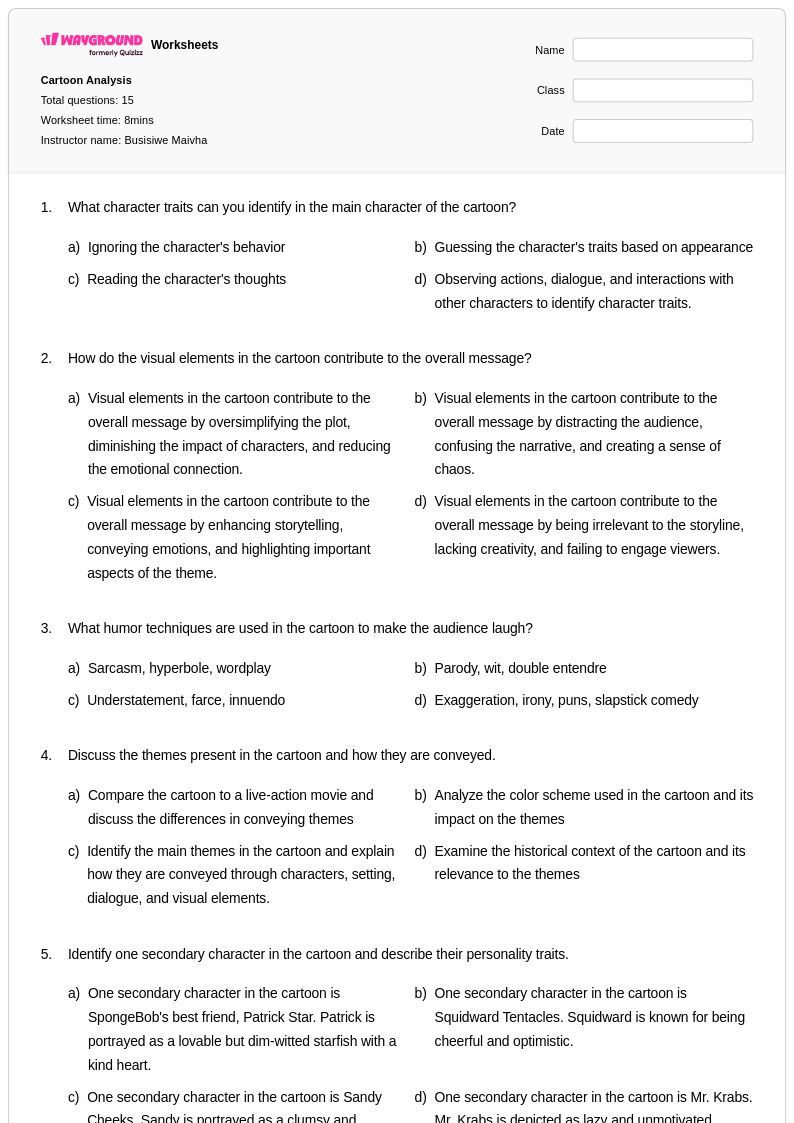
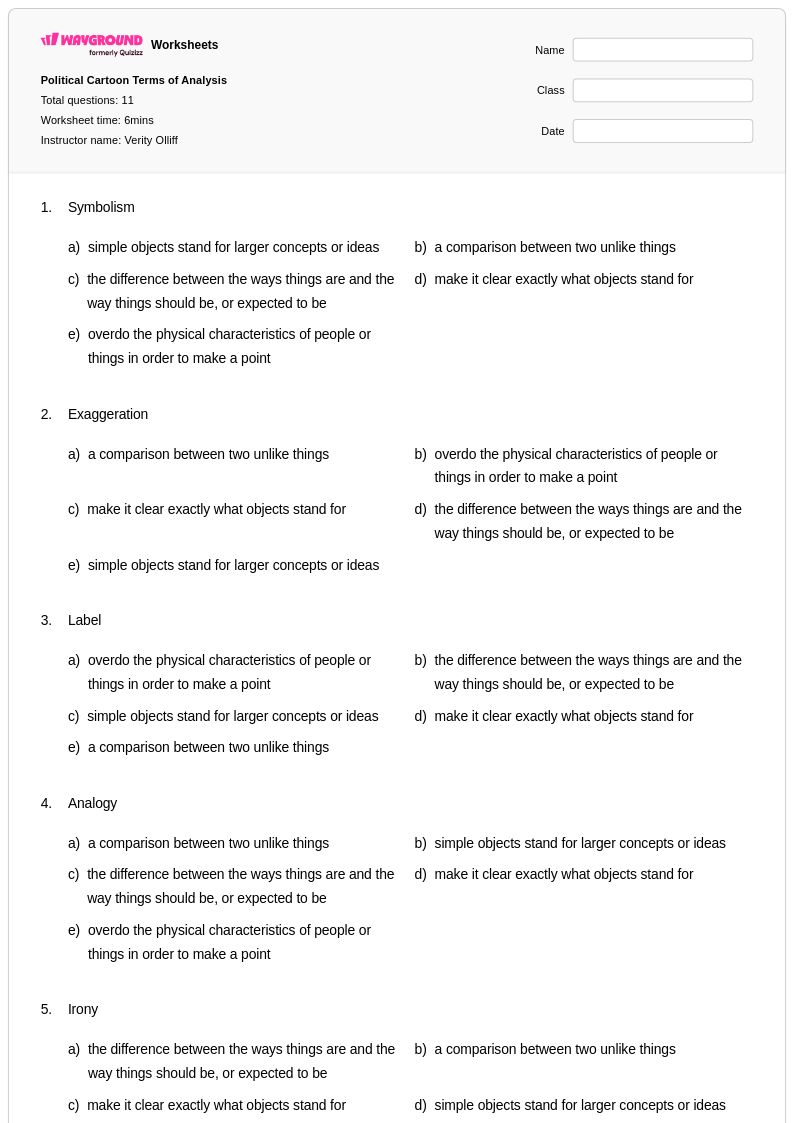
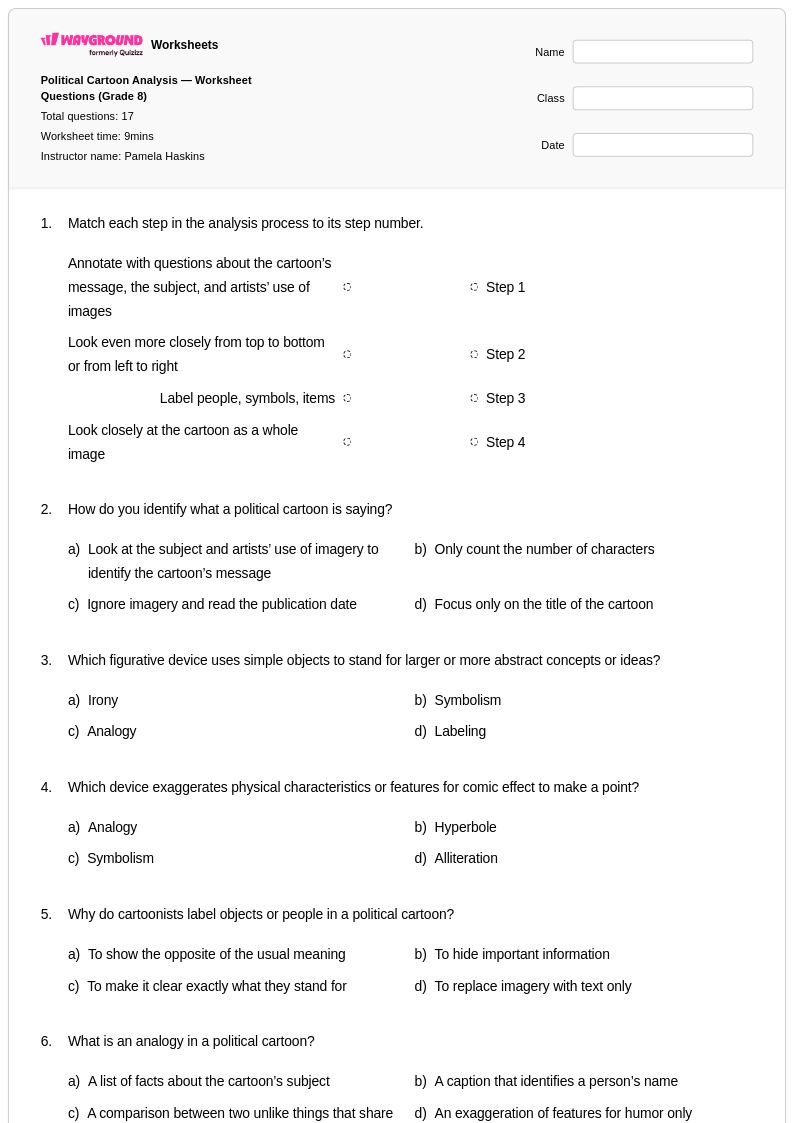
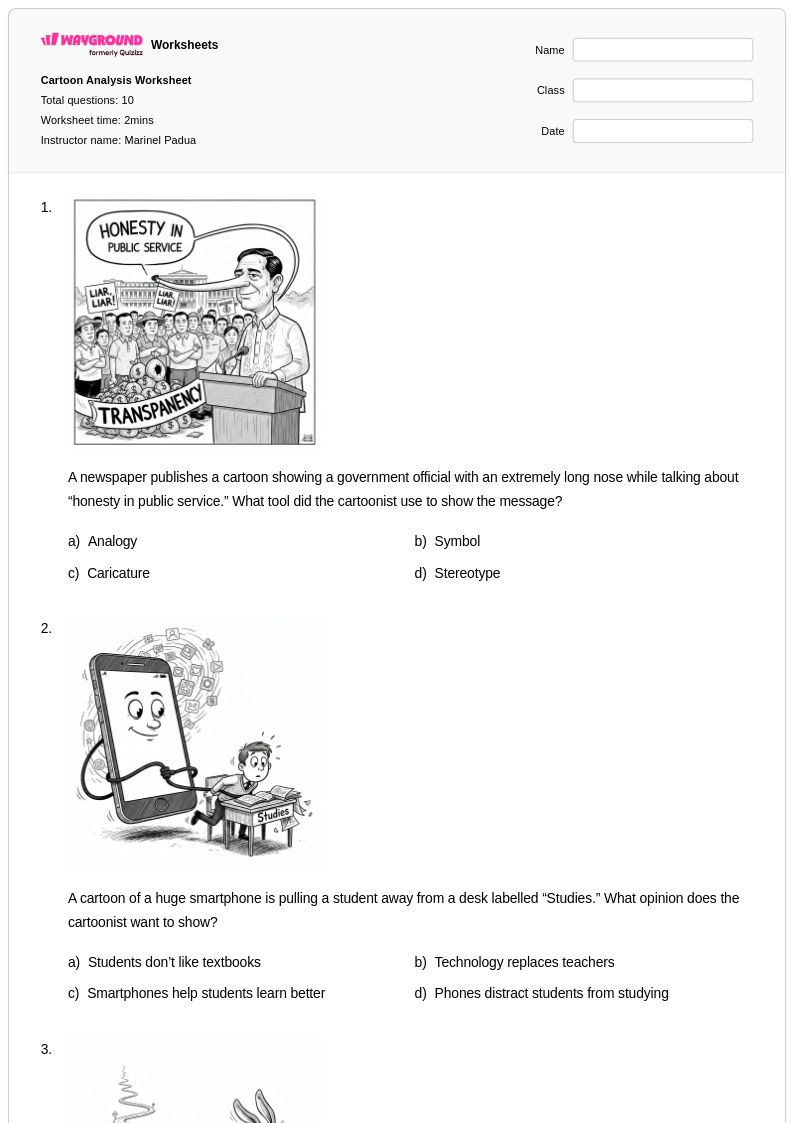
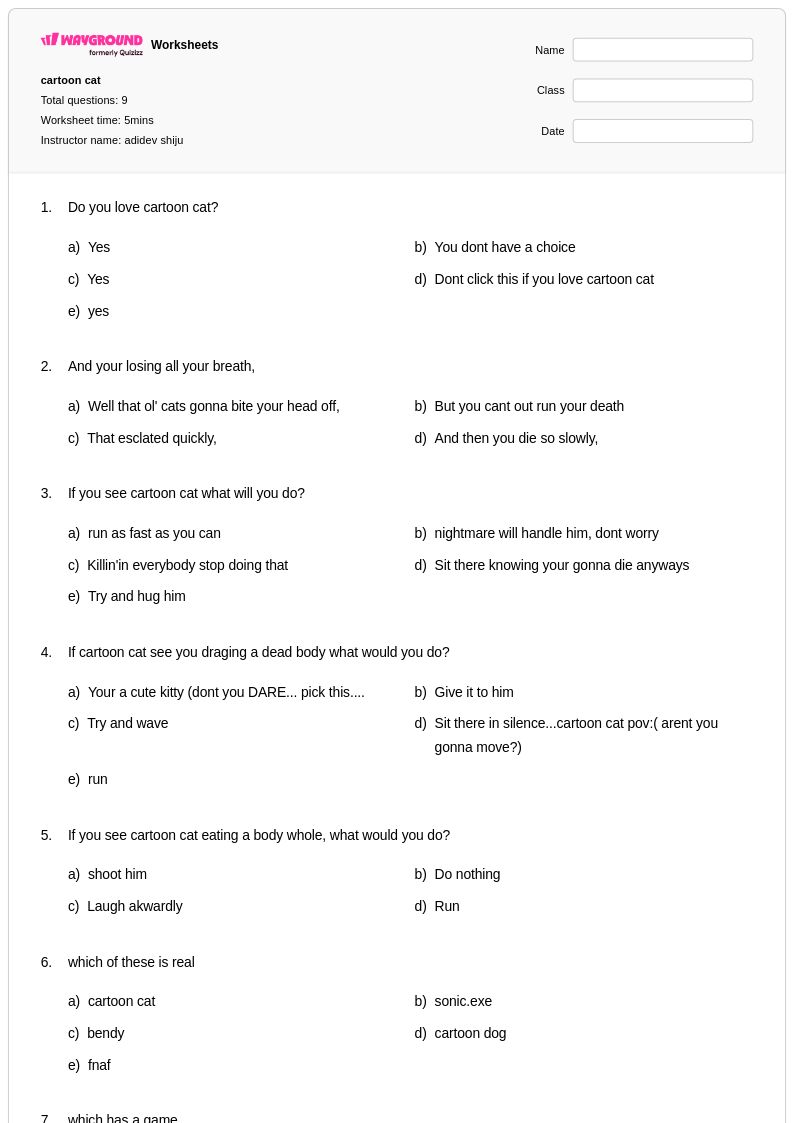
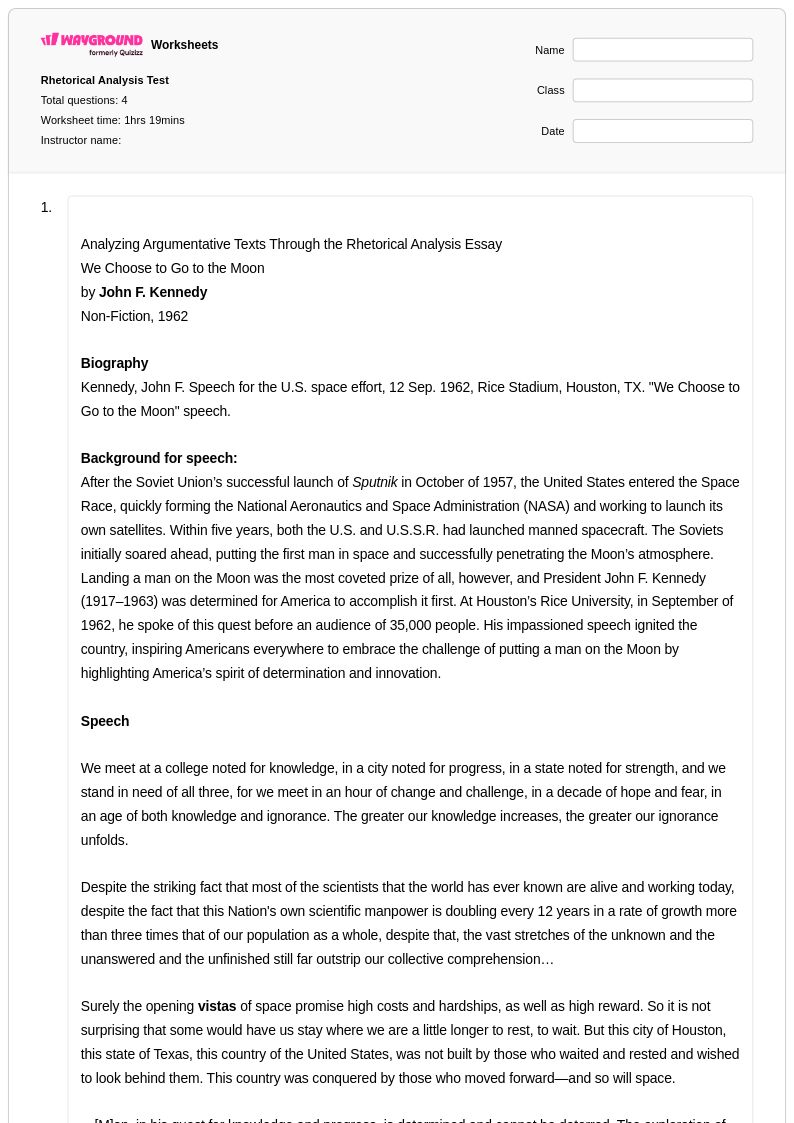
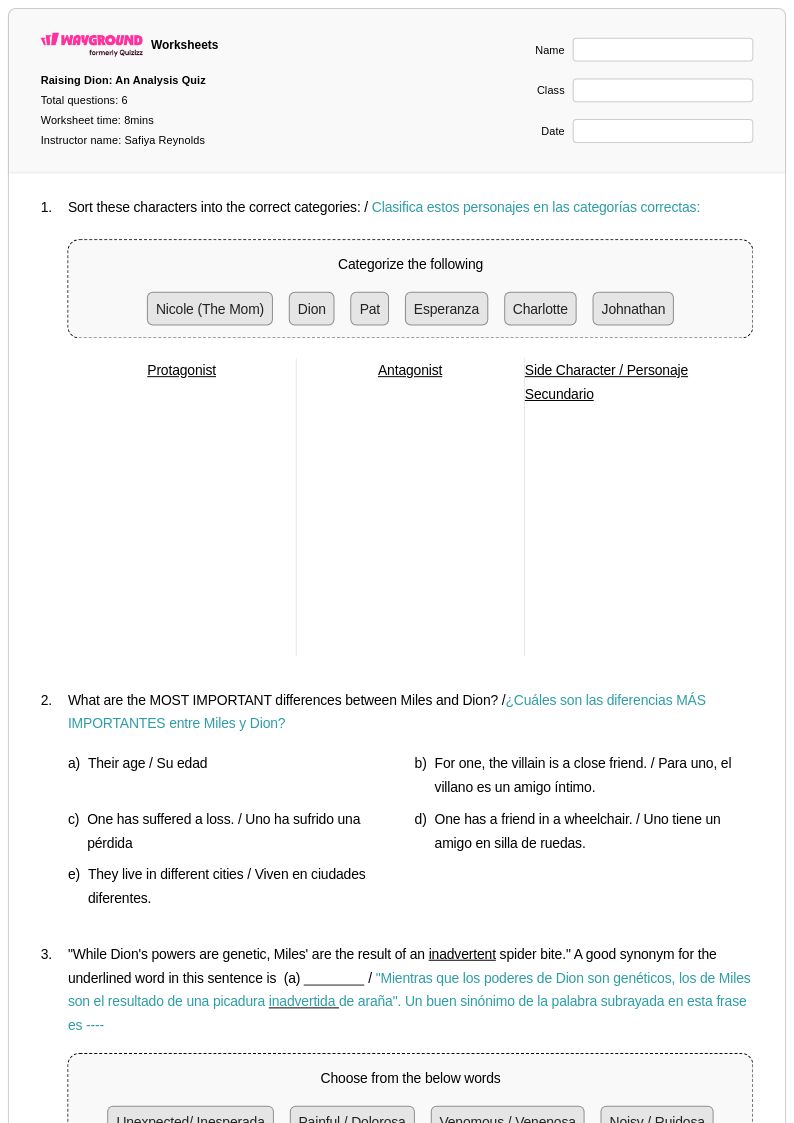
Enhance students' analytical skills with Wayground's free cartoon analysis worksheets and printables that help learners examine visual storytelling techniques, character development, and narrative elements through engaging practice problems and comprehensive answer keys.
Cartoon analysis worksheets available through Wayground (formerly Quizizz) provide students with engaging opportunities to develop critical reading and visual literacy skills by examining the artistic and narrative elements of comic strips, political cartoons, and animated sequences. These comprehensive practice problems guide learners through the systematic deconstruction of visual storytelling techniques, including character development, plot progression, symbolism, and artistic style, while strengthening their ability to identify genre-specific conventions and analyze the relationship between text and imagery. The free printable resources feature detailed answer keys that support both independent study and classroom instruction, offering structured approaches to interpreting visual narratives, understanding sequential art principles, and recognizing how cartoons function as distinct literary and artistic forms.
Wayground (formerly Quizizz) empowers educators with access to millions of teacher-created cartoon analysis worksheets that span diverse complexity levels and analytical approaches, featuring robust search and filtering capabilities that enable precise alignment with curriculum standards and learning objectives. The platform's differentiation tools allow teachers to customize content for varied reading abilities and analytical skills, while flexible formatting options provide both digital interactive experiences and traditional pdf printables suitable for homework assignments, classroom activities, and assessment preparation. These extensive resources support comprehensive lesson planning by offering materials for skill introduction, guided practice, independent reinforcement, and enrichment activities, enabling teachers to address diverse learning needs while building students' capacity to critically examine visual media and understand cartoons as sophisticated forms of communication and artistic expression.
FAQs
How do I teach cartoon analysis in the classroom?
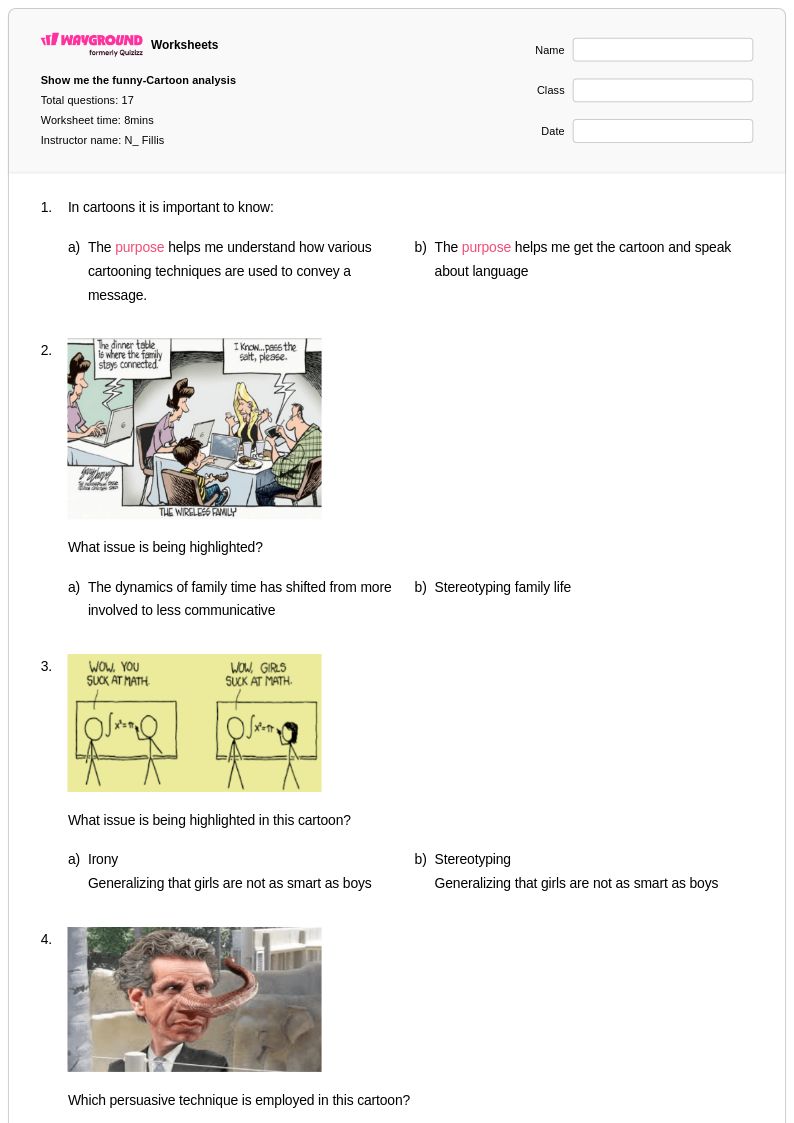
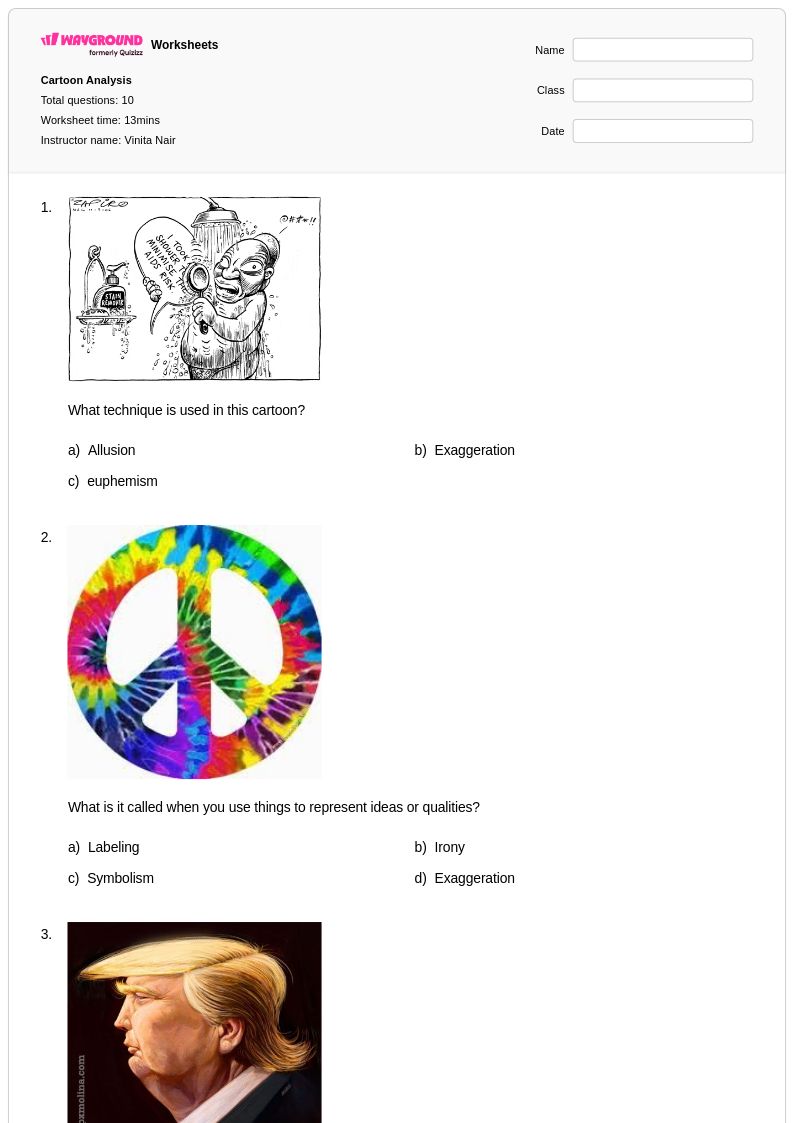
Teaching cartoon analysis works best when students are guided through a structured deconstruction process rather than asked to interpret freely from the start. Begin by introducing the key elements of visual storytelling: character development, symbolism, panel composition, and the relationship between text and imagery. Political cartoons are particularly effective entry points because their symbolism and exaggeration make analytical targets concrete and discussable. Once students can name what they see, scaffold toward interpreting why artistic choices were made and what effect they produce.
What kinds of exercises help students practice cartoon analysis?
Effective cartoon analysis practice involves systematically working through individual elements before synthesizing them into a full interpretation. Exercises that ask students to identify specific symbols, label visual techniques, or trace plot progression panel by panel build the foundational skills needed for deeper analysis. Practice problems that connect visual choices to narrative meaning, such as explaining how an artist's use of exaggeration reinforces a political message, push students toward the analytical thinking this skill requires.
What mistakes do students commonly make when analyzing cartoons?
The most common error is describing what is happening in a cartoon rather than analyzing how and why visual choices create meaning. Students often summarize the plot or list characters without connecting observations to broader themes, genre conventions, or authorial intent. Another frequent misconception is treating cartoons as simple or low-stakes texts, which leads students to underanalyze symbolism, artistic style, and the deliberate relationship between visual and textual elements. Prompting students to justify every claim with specific visual evidence addresses both tendencies.
How do I use Wayground's cartoon analysis worksheets in my class?
Wayground's cartoon analysis worksheets are available as printable PDFs for traditional classroom use and in digital formats for technology-integrated environments, making them adaptable for in-class work, homework, or blended learning. Teachers can also host the worksheets as a live or asynchronous quiz directly on Wayground, giving students an interactive experience while automatically tracking responses. Each worksheet includes a complete answer key, so teachers can use them for guided instruction, independent practice, or self-assessment without additional preparation.
How can I support students with different reading and analytical abilities during cartoon analysis activities?
Wayground offers built-in accommodation tools that allow teachers to differentiate at the individual student level without disrupting the rest of the class. Options include Read Aloud for students who benefit from audio support, reduced answer choices to lower cognitive load for students who need it, extended time settings configurable per student, and reading mode with adjustable font sizes and themes. These accommodations can be assigned to individual students while the rest of the class receives default settings, and the configurations save automatically for future sessions.
How does cartoon analysis connect to broader visual literacy and critical thinking skills?
Cartoon analysis develops the same close-reading and inferential reasoning skills students need for literary analysis, media literacy, and persuasive writing. When students learn to identify how sequential art uses symbolism, character expression, and compositional choices to construct meaning, they build transferable skills for interpreting any visual or multimodal text. Political cartoons in particular require students to understand context, recognize irony, and evaluate an argument made through imagery rather than words, which strengthens critical thinking across subject areas.