Free Printable Character and Setting Worksheets for Kindergarten
Enhance kindergarten students' understanding of character and setting with Wayground's free printable reading comprehension worksheets, featuring engaging practice problems and comprehensive answer keys to build foundational literacy skills.
Explore printable Character and Setting worksheets for Kindergarten
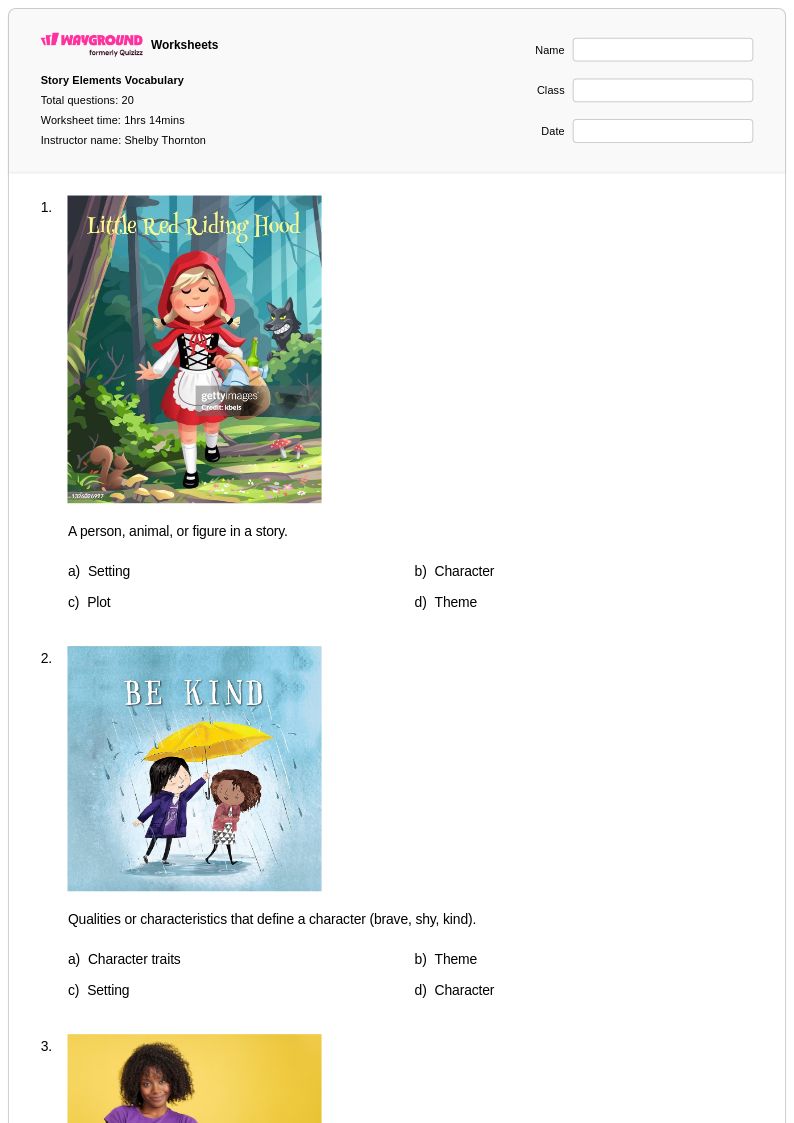
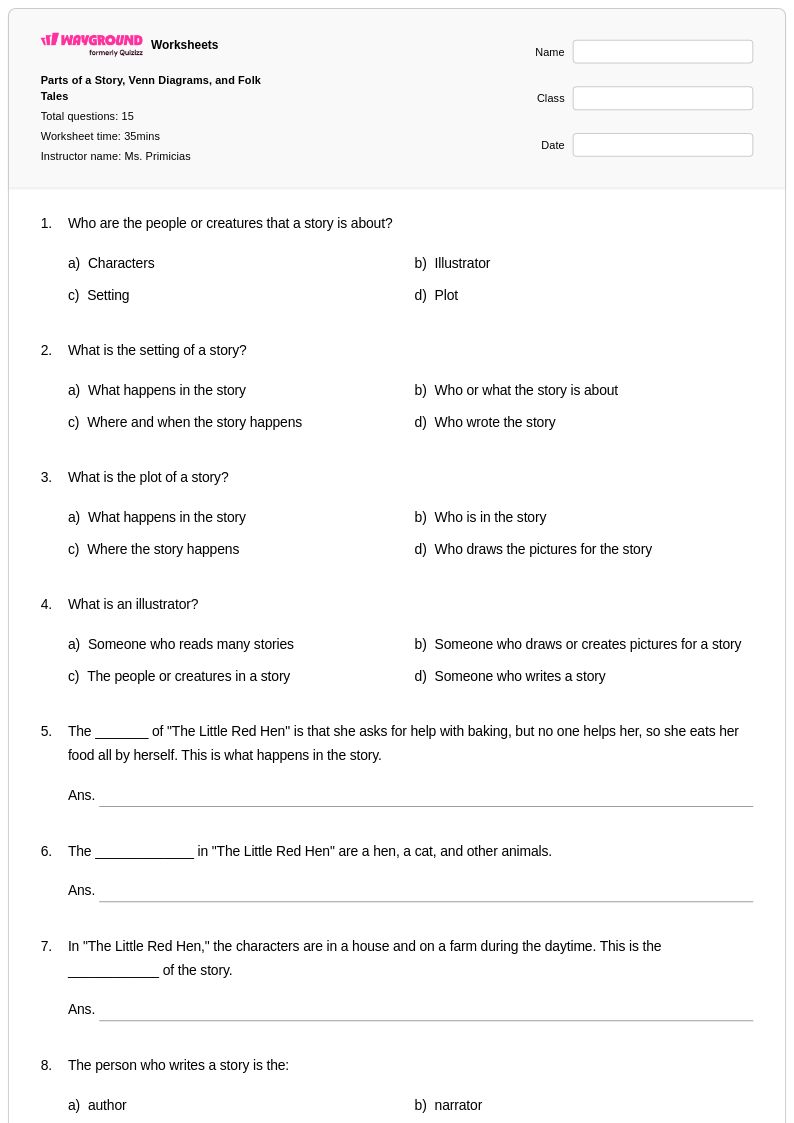
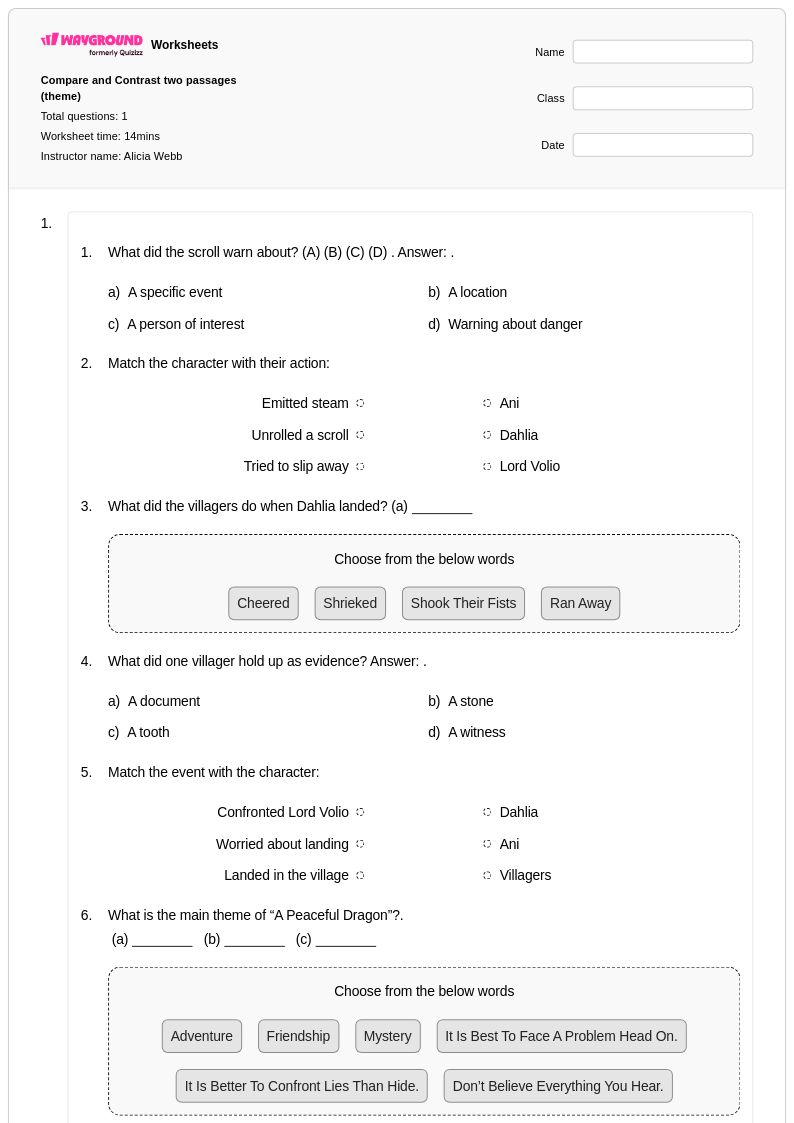
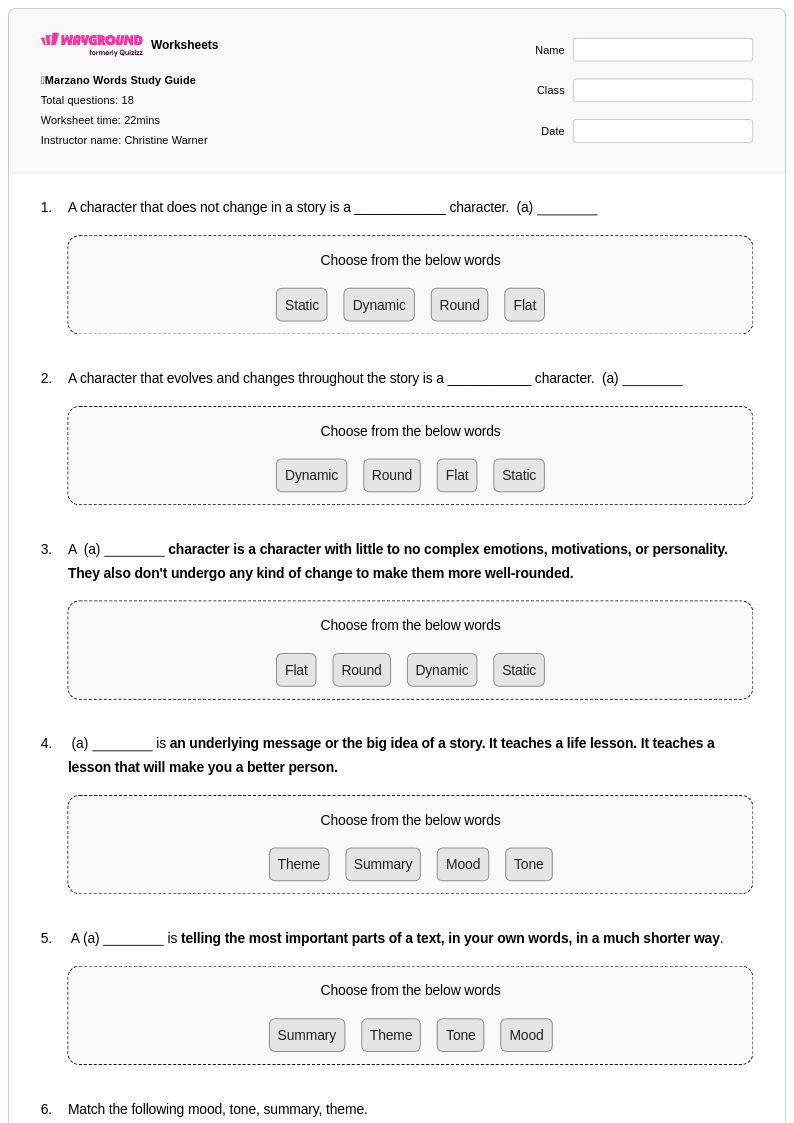
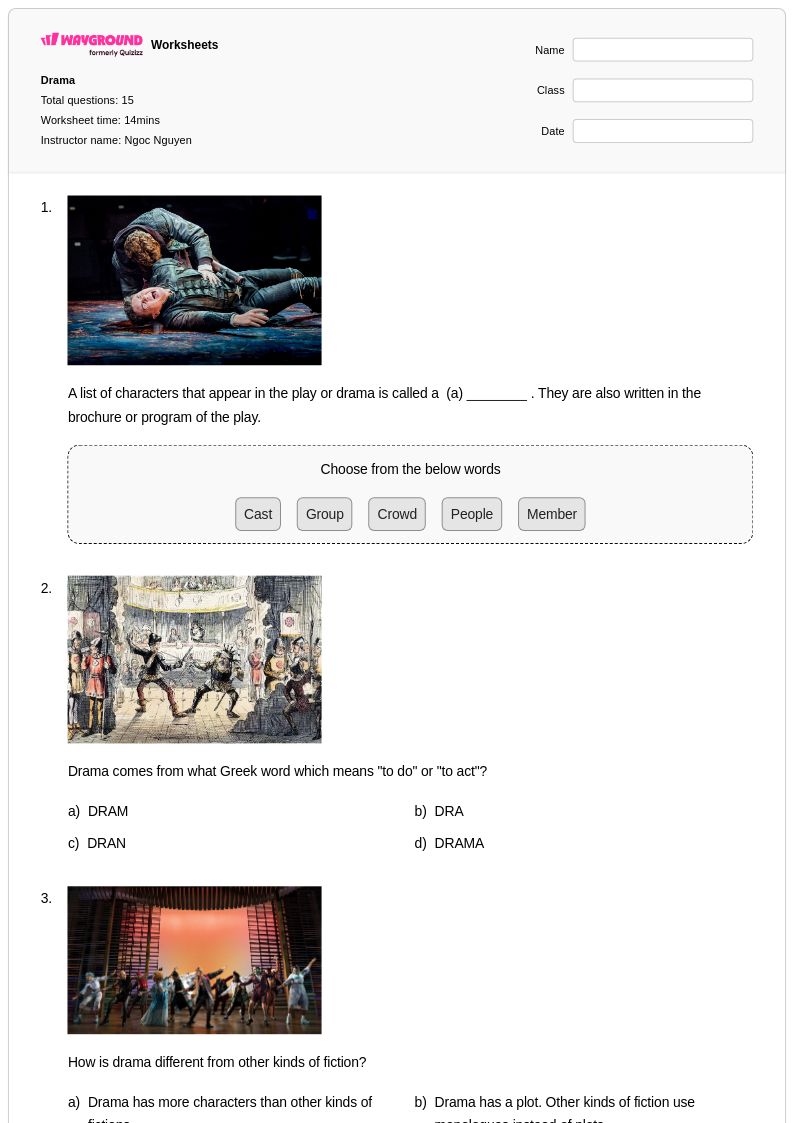
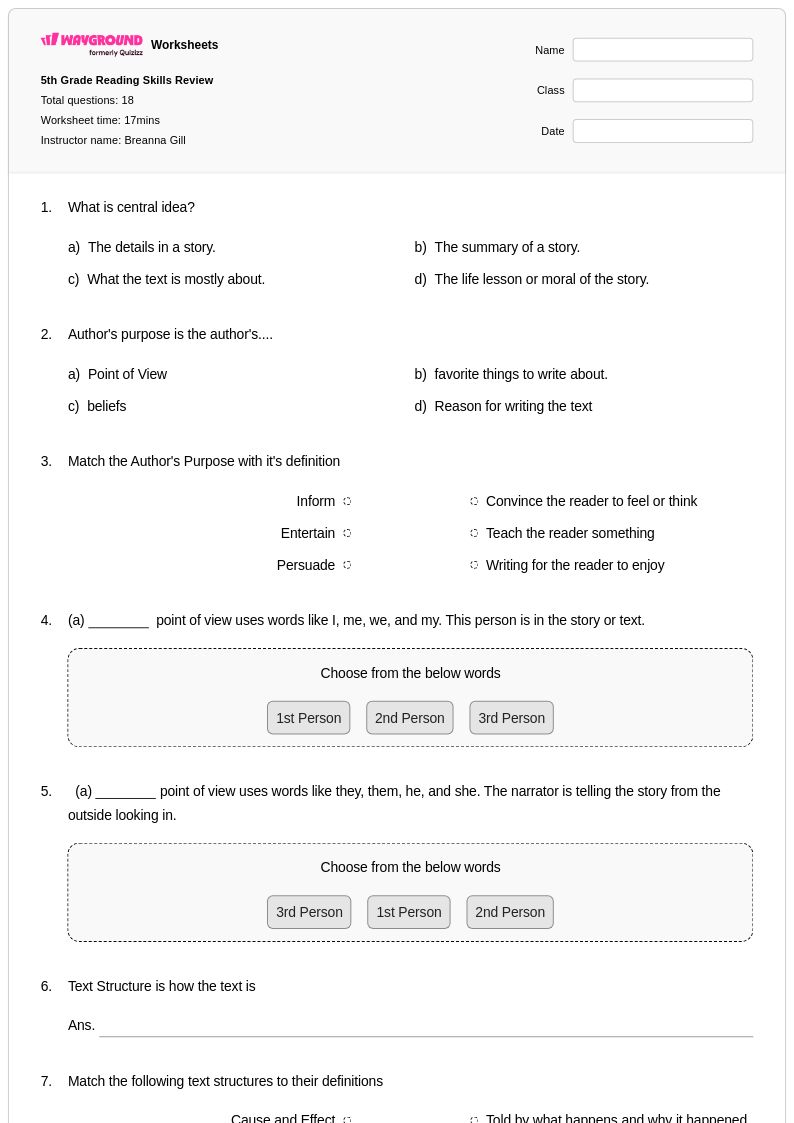
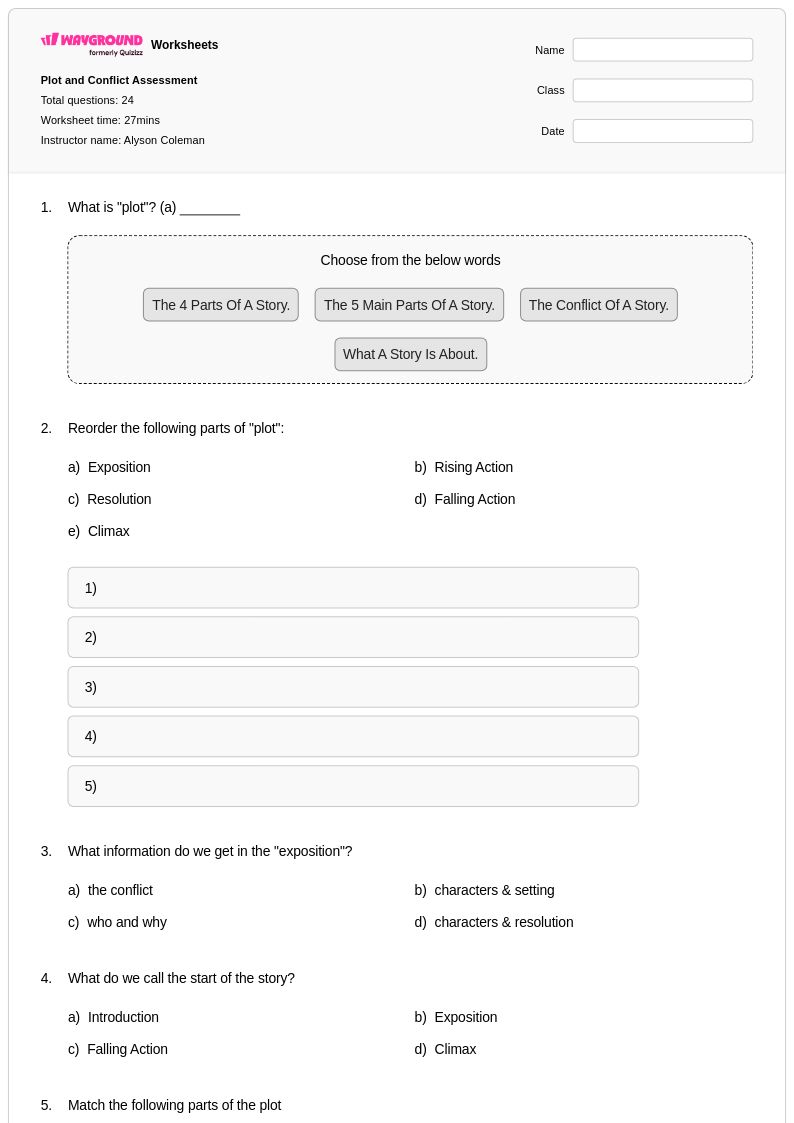
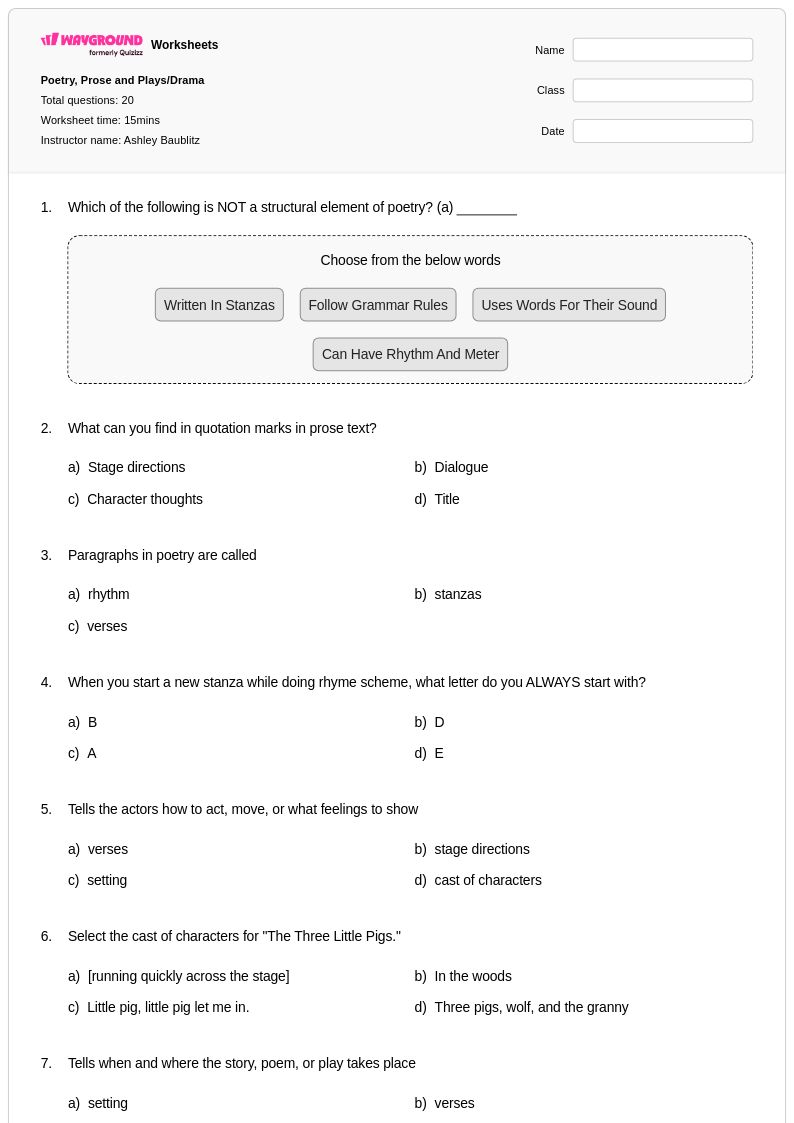
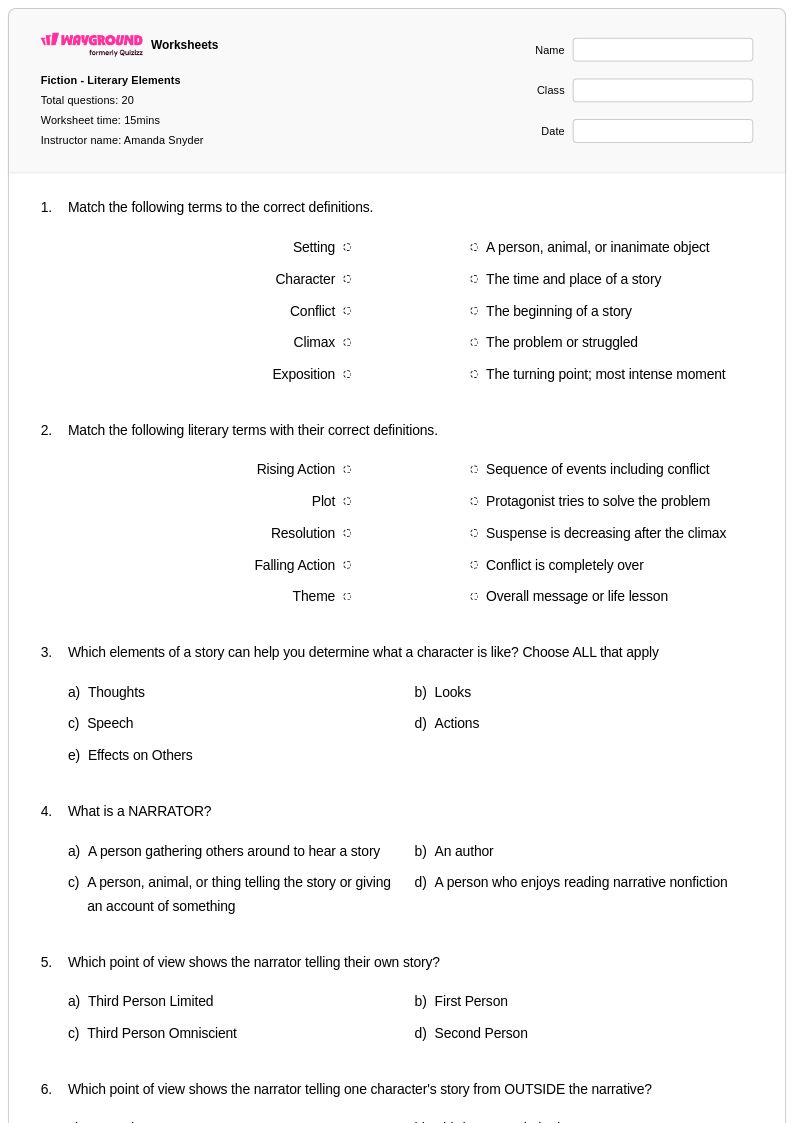
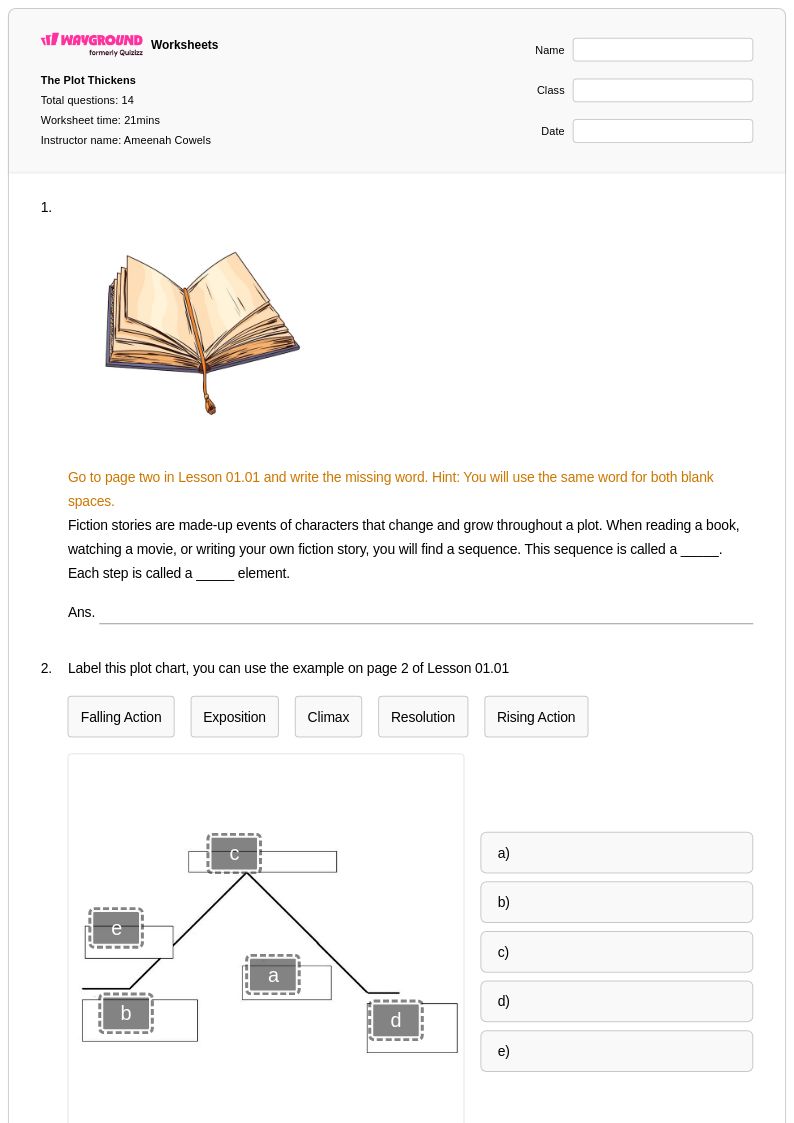
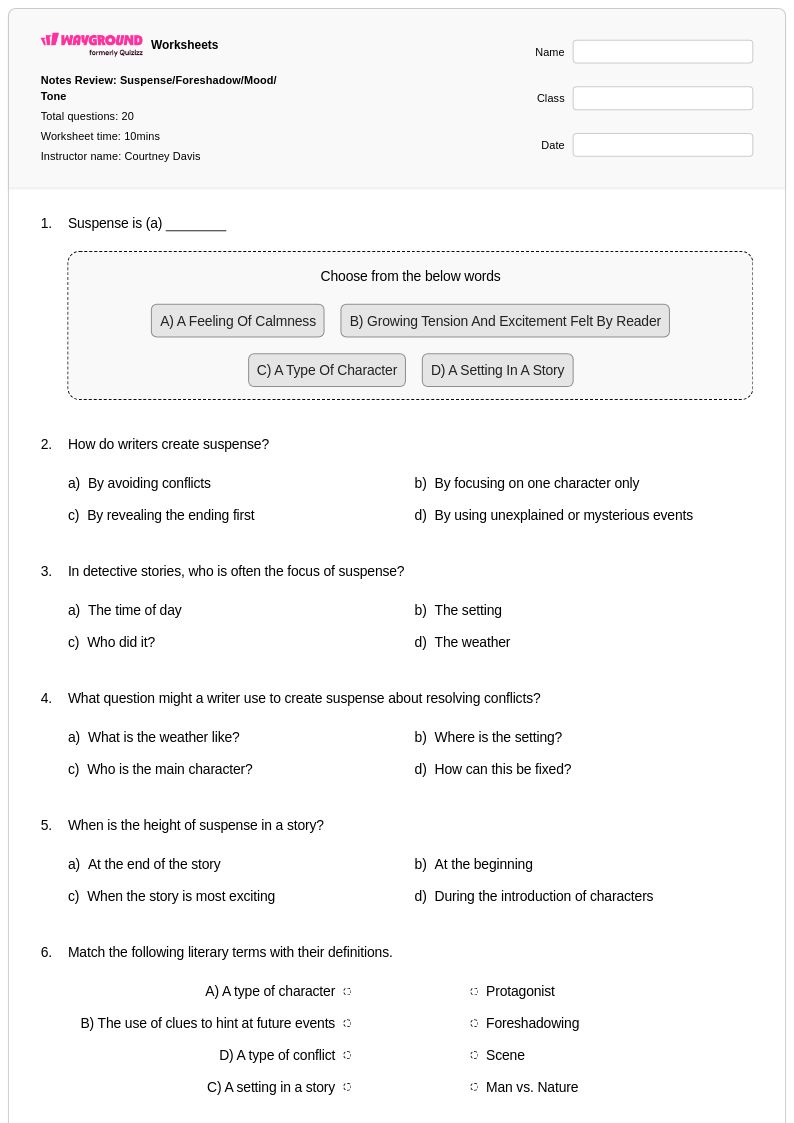
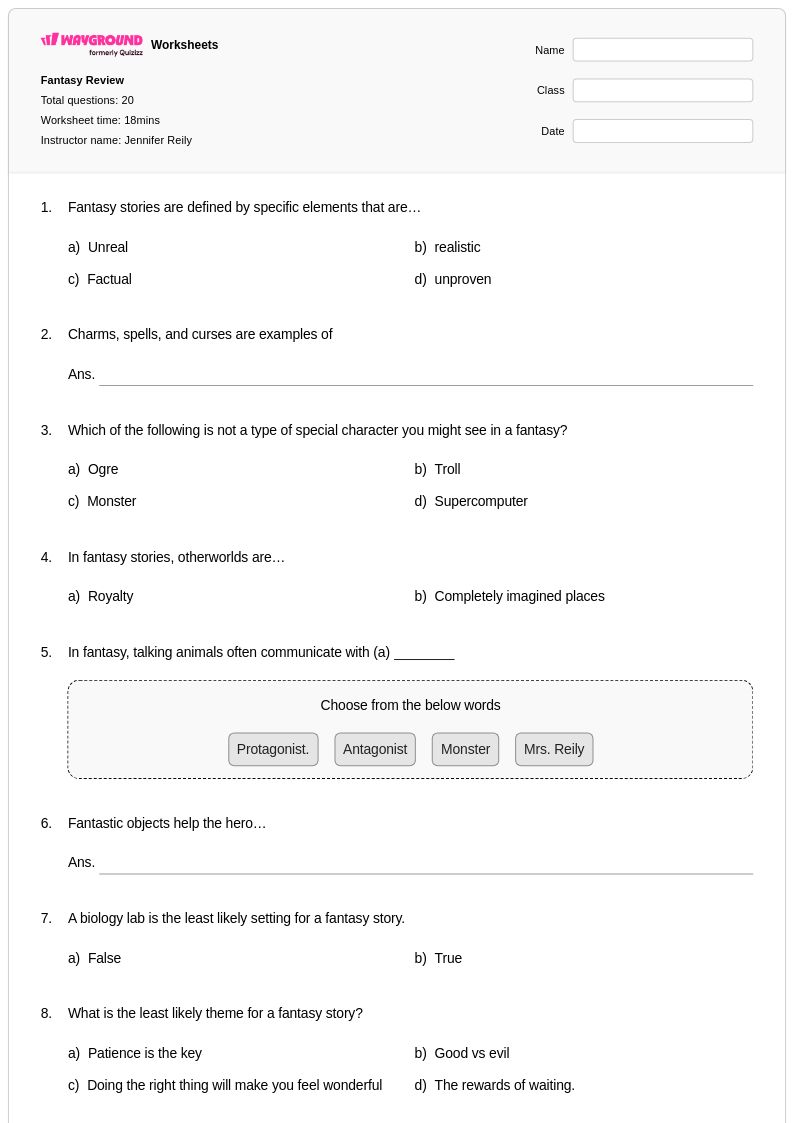
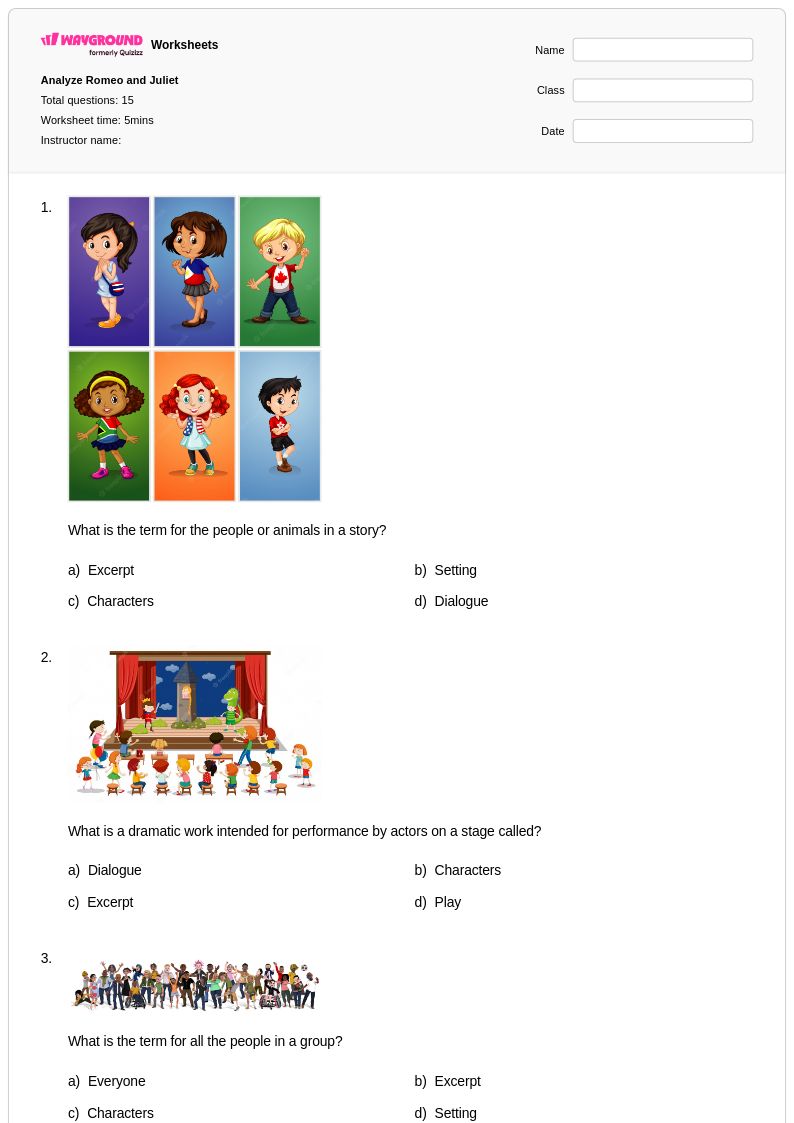
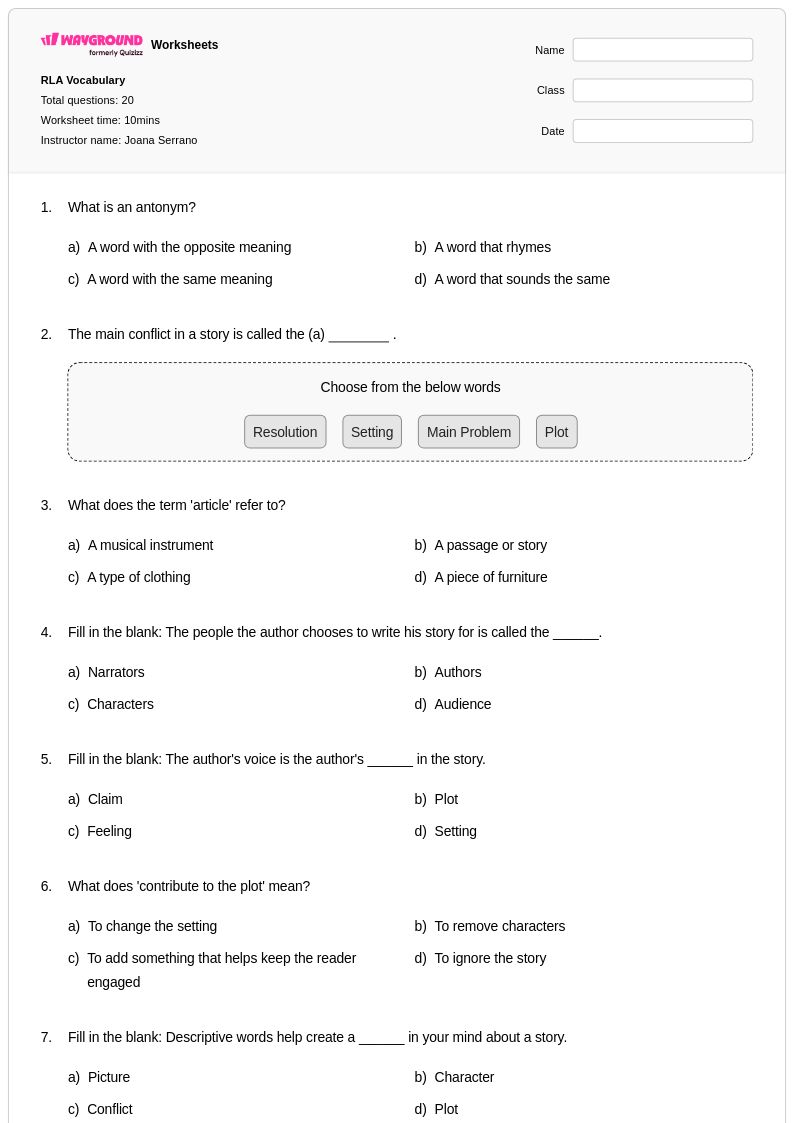
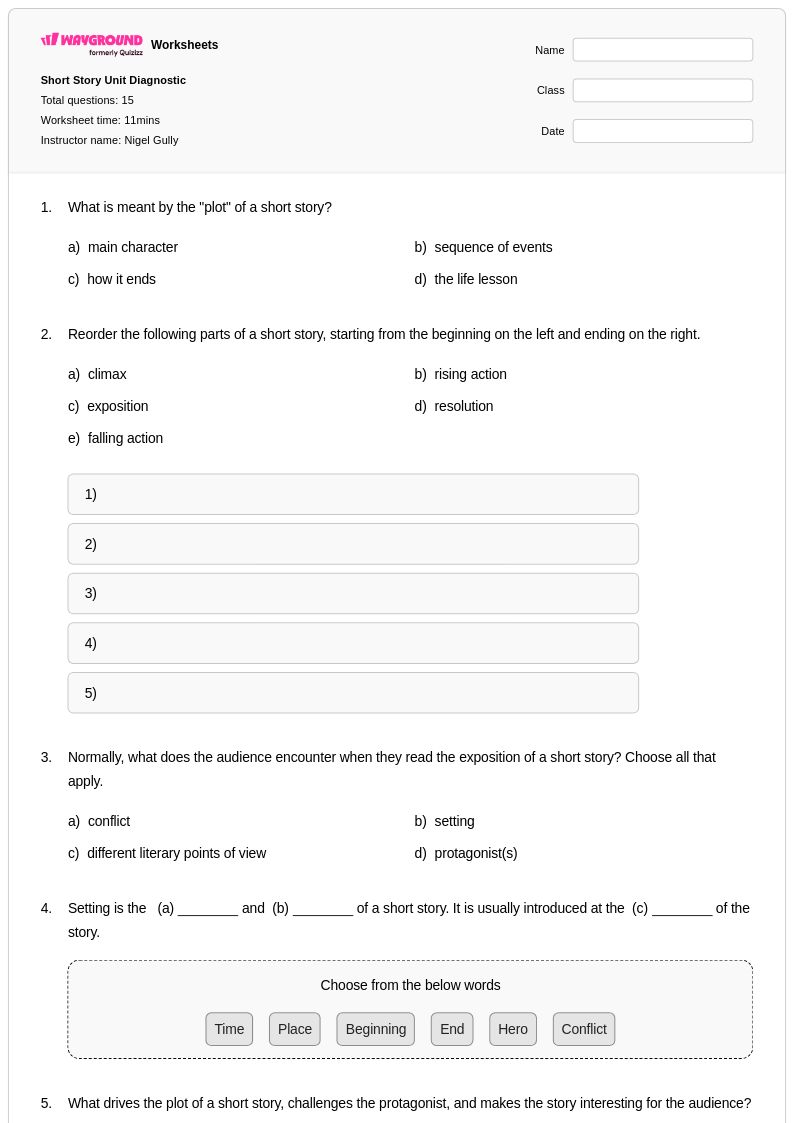
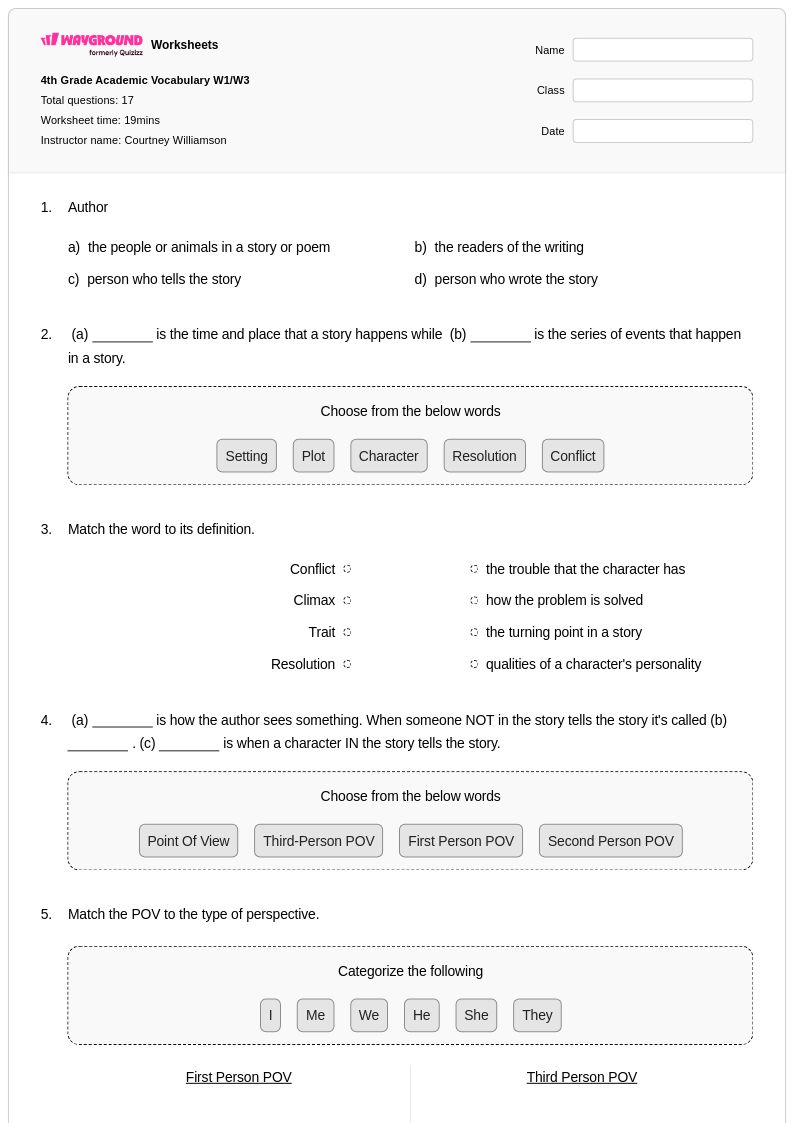
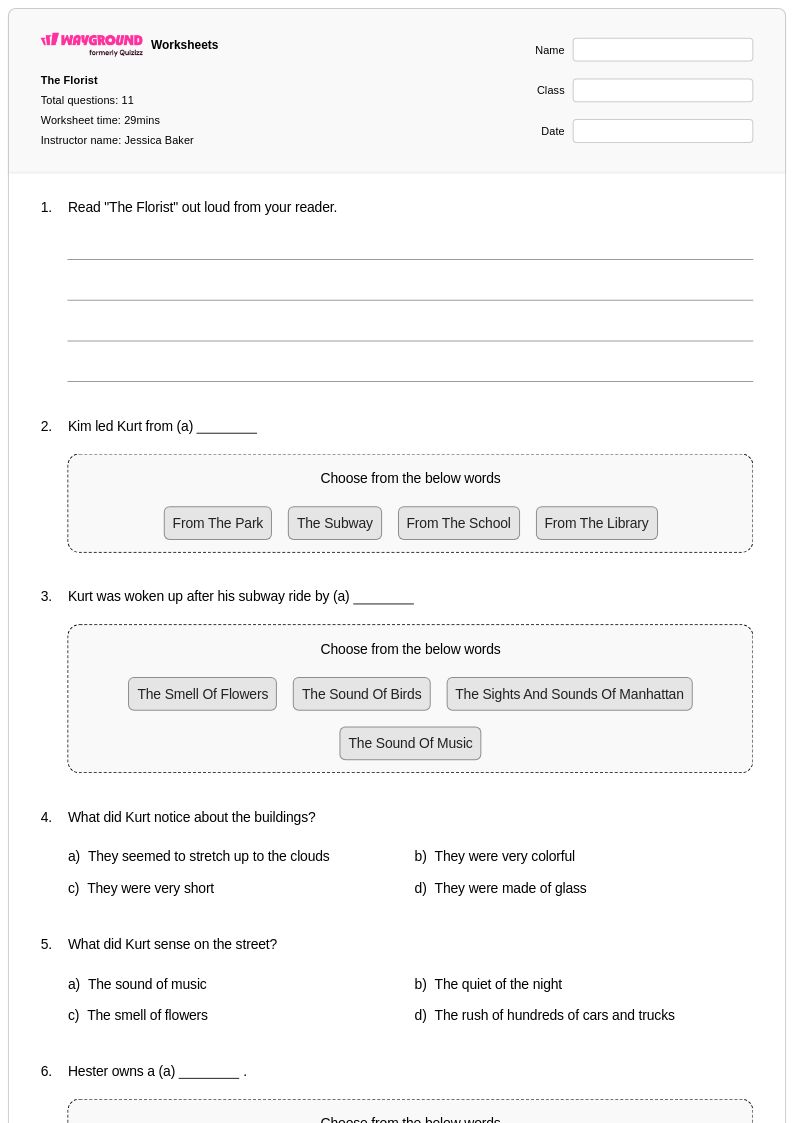
Character and setting worksheets for kindergarten students through Wayground (formerly Quizizz) provide foundational building blocks for developing essential reading comprehension skills in young learners. These carefully designed printables introduce kindergarteners to the fundamental story elements of who is in a story and where it takes place, using age-appropriate vocabulary and engaging visual supports. The worksheets strengthen critical thinking abilities as students learn to identify main characters, describe story settings, and make connections between characters and their environments through structured practice problems. Each resource includes comprehensive answer keys that support both independent learning and guided instruction, while the free pdf format ensures easy access for classroom implementation and home practice.
Wayground's extensive collection of teacher-created character and setting resources offers kindergarten educators powerful tools for differentiated instruction and targeted skill development. With millions of worksheets available through intuitive search and filtering capabilities, teachers can quickly locate materials that align with specific learning objectives and developmental needs. The platform's customization features enable educators to modify content difficulty levels, adjust visual supports, and personalize activities for diverse learning styles, supporting both remediation for struggling readers and enrichment for advanced students. Available in both printable and digital formats, these versatile resources seamlessly integrate into lesson planning workflows, small group instruction, and independent practice sessions, providing kindergarten teachers with flexible solutions for building strong foundational comprehension skills.
FAQs
How do I teach character and setting to elementary and middle school students?
Start by teaching character and setting as interconnected elements rather than isolated concepts. Use short mentor texts to show students how an author's word choices reveal character traits while simultaneously establishing a time and place that shapes the story's mood and conflict. Anchor charts comparing static vs. dynamic characters and prompts that ask 'How does where and when this story takes place change what the characters do?' help students move from surface-level identification to genuine literary analysis.
What exercises help students practice character analysis and setting identification?
Targeted reading passages paired with structured response questions are the most effective format for practicing these skills. Exercises that ask students to cite specific textual evidence for character traits, map a character's development across a story arc, and explain how the setting creates mood or drives conflict build the precise analytical habits that reading comprehension standards require. Mixing multiple-choice items with short-answer prompts within the same worksheet also helps students practice both recognition and explanation.
What mistakes do students commonly make when analyzing characters and setting?
The most common error is confusing character traits with character actions — students will write 'the character ran away' instead of inferring 'the character is fearful.' A related misconception is treating setting as mere background detail rather than a force that shapes character motivation and plot. Students also frequently overlook how setting shifts within a single story and fail to connect those shifts to changes in tone or conflict. Explicitly teaching the difference between literal description and inferential analysis helps correct all three patterns.
How can I differentiate character and setting worksheets for students at different reading levels?
Use shorter, less complex passages for struggling readers while keeping the analytical question types consistent across ability levels so all students practice the same thinking skills. On Wayground, teachers can apply individual student accommodations such as Read Aloud, which delivers audio reading of passages and questions, and reduced answer choices, which lowers cognitive load for students who need additional support. These settings can be assigned per student without affecting the rest of the class, making differentiation seamless within a single shared activity.
How do I use Wayground's character and setting worksheets in my classroom?
Wayground's character and setting worksheets are available as printable PDFs for traditional classroom use and in digital formats for technology-integrated or remote learning environments. Teachers can also host worksheets as a live or self-paced quiz directly on Wayground, enabling real-time feedback and automatic scoring. The collection includes complete answer keys with every worksheet, so implementation requires minimal preparation time whether you are using the materials for direct instruction, independent practice, or formative assessment.
How does setting influence character development in a story?
Setting shapes character development by creating the constraints, pressures, and opportunities that force characters to make choices and change over time. A character living through wartime, for example, faces moral decisions that a peacetime setting would never produce, which drives development that would otherwise be absent from the narrative. Teaching students to ask 'Would this character make the same choices in a different time or place?' is a reliable strategy for helping them see setting as an active narrative force rather than a backdrop.