Free Printable Chinese Worksheets for Kindergarten
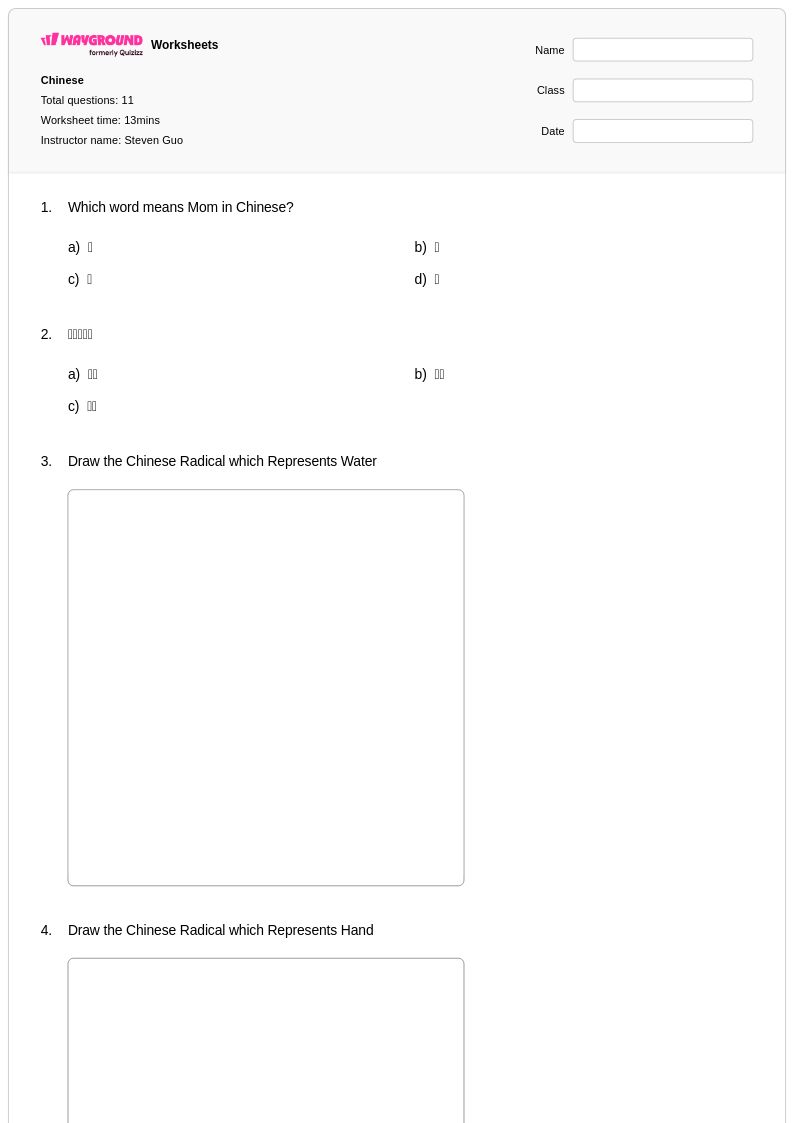
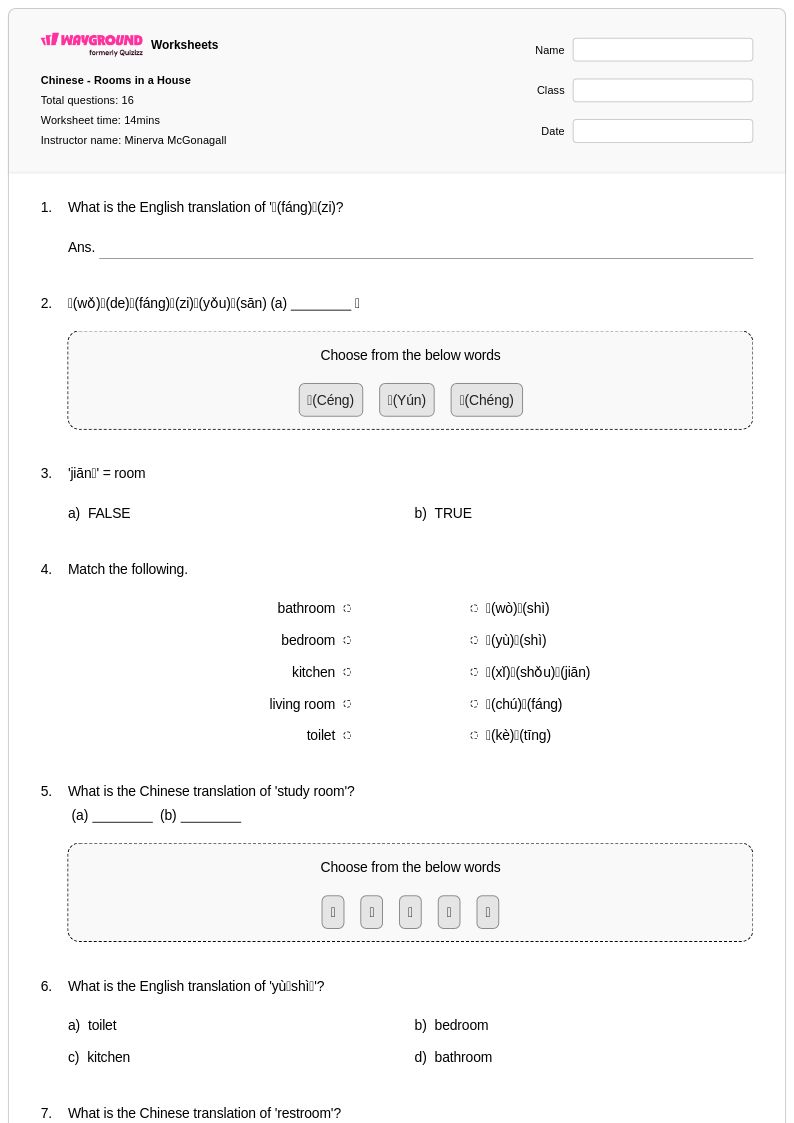
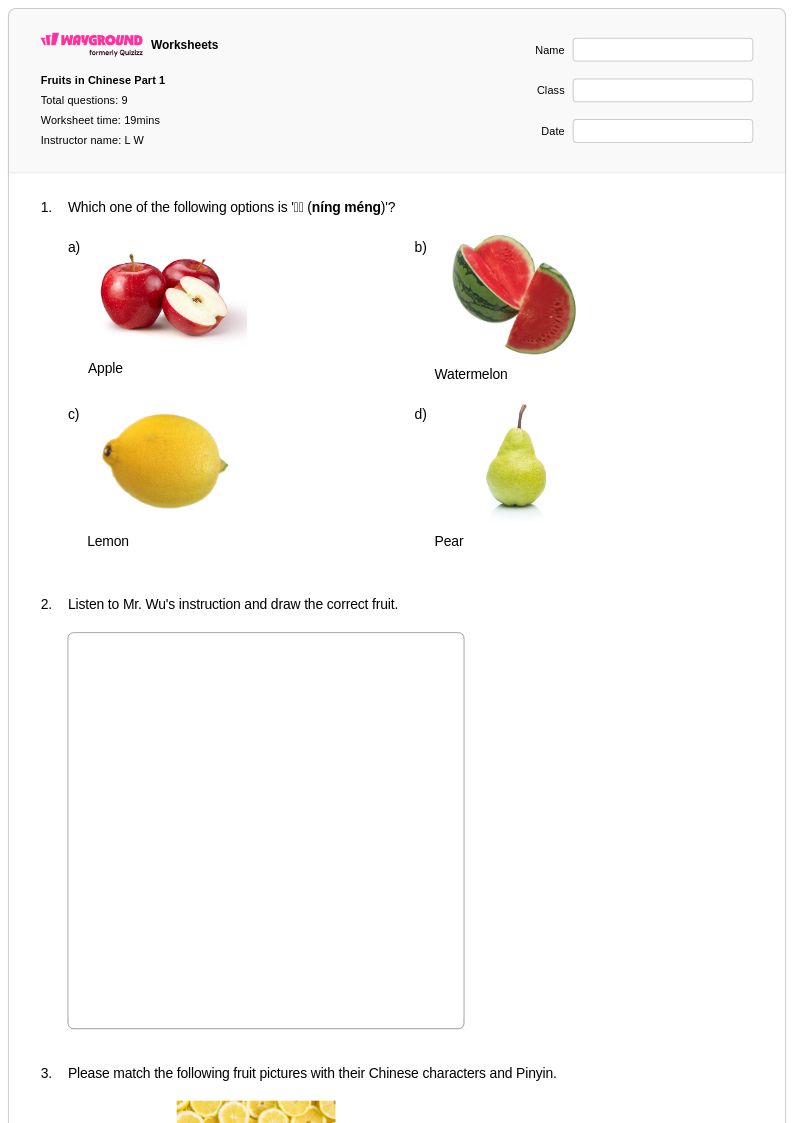
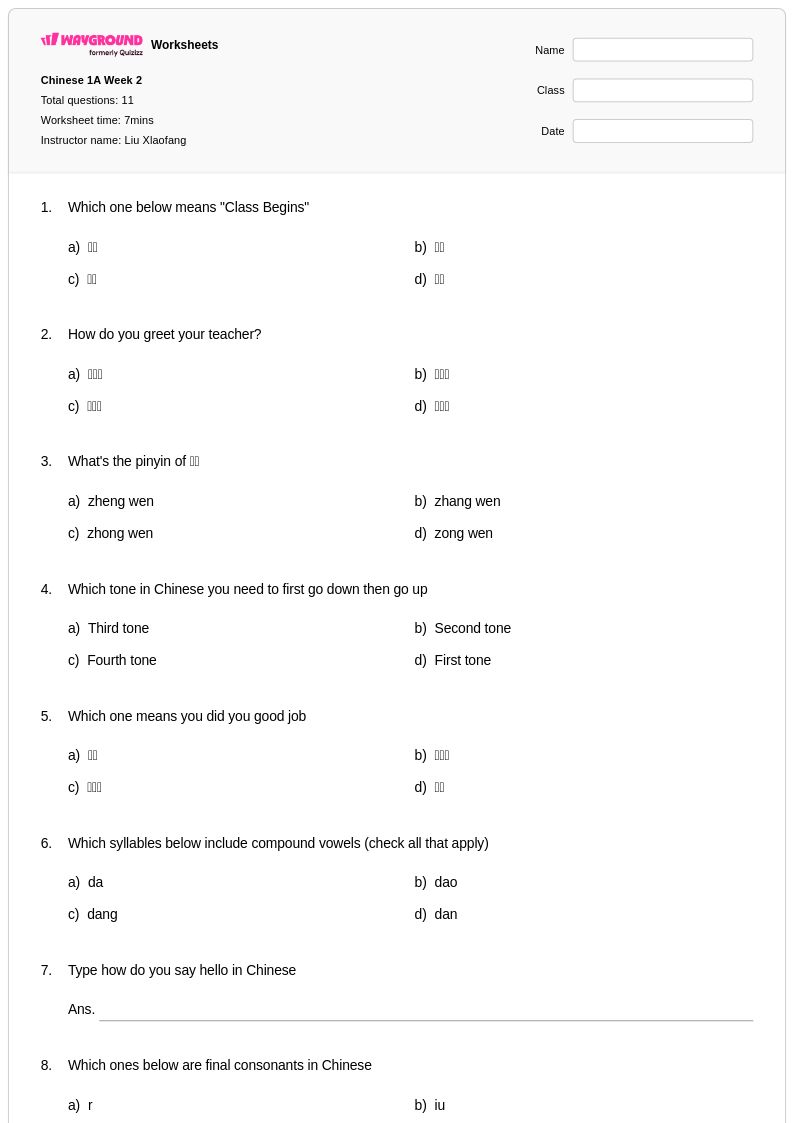
Discover free Chinese worksheets and printables for Kindergarten students through Wayground, featuring engaging practice problems and answer keys that help young learners develop foundational skills in Chinese language recognition and basic vocabulary.
Explore printable Chinese worksheets for Kindergarten
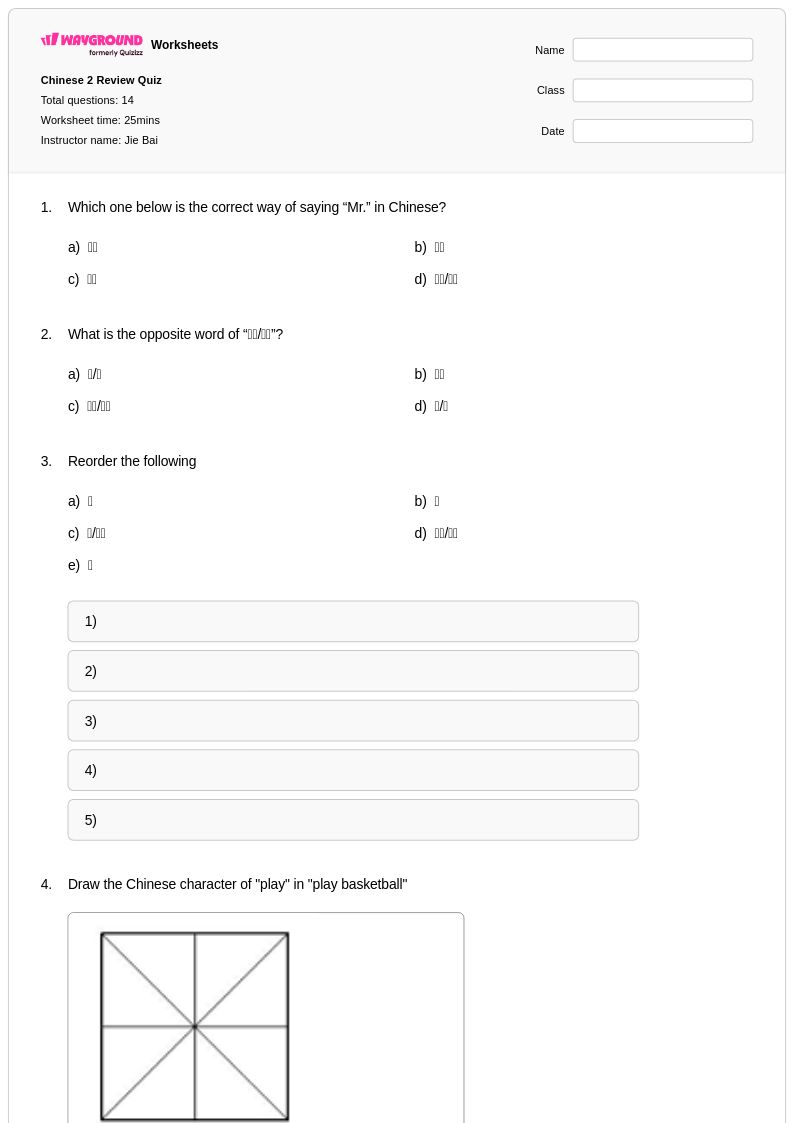
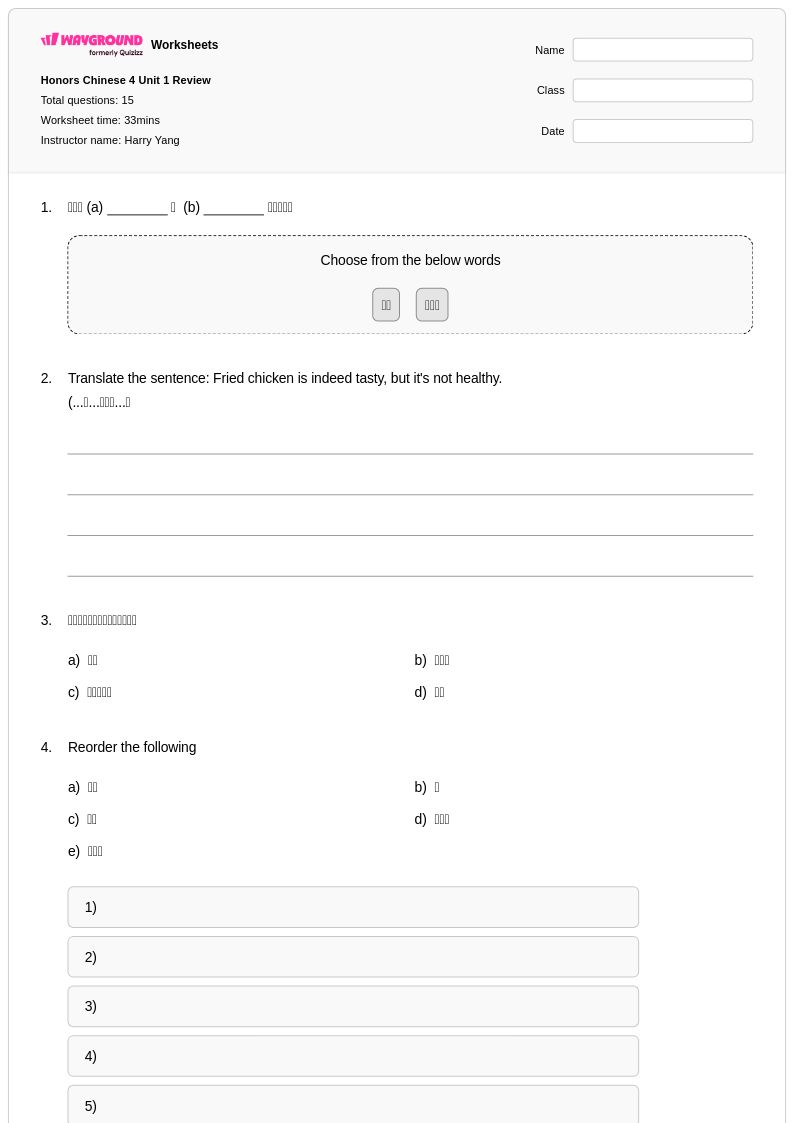
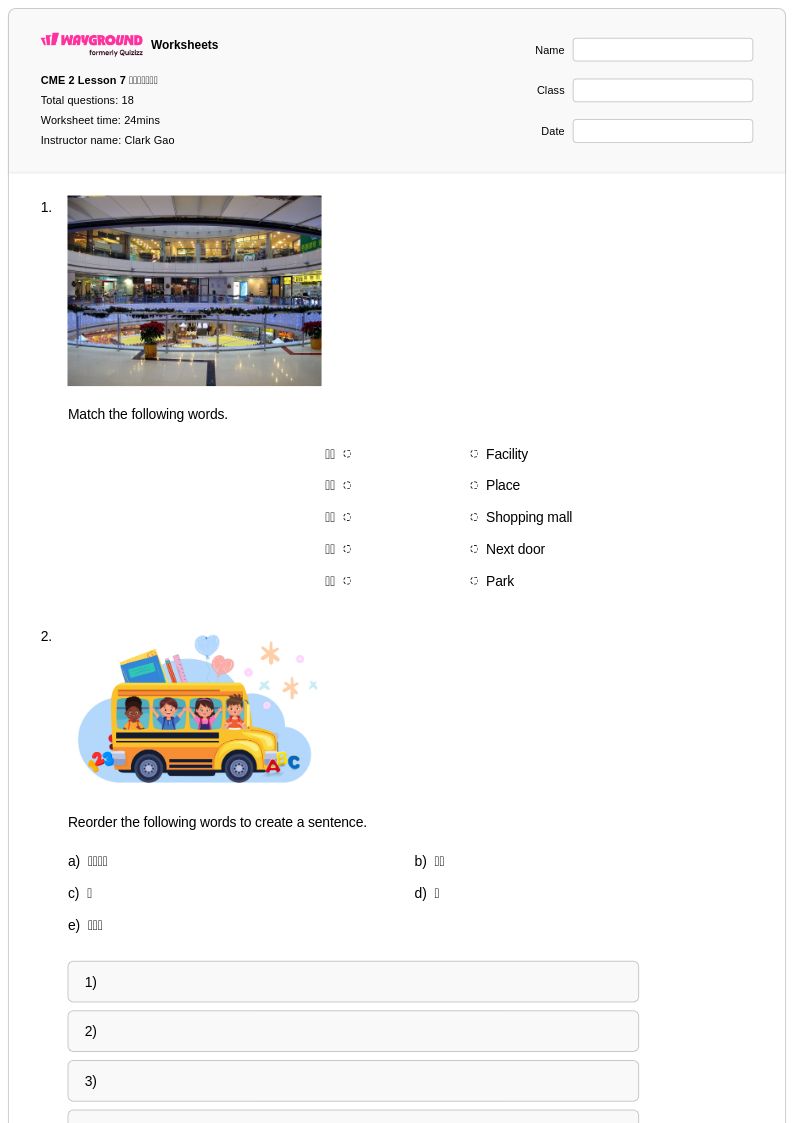
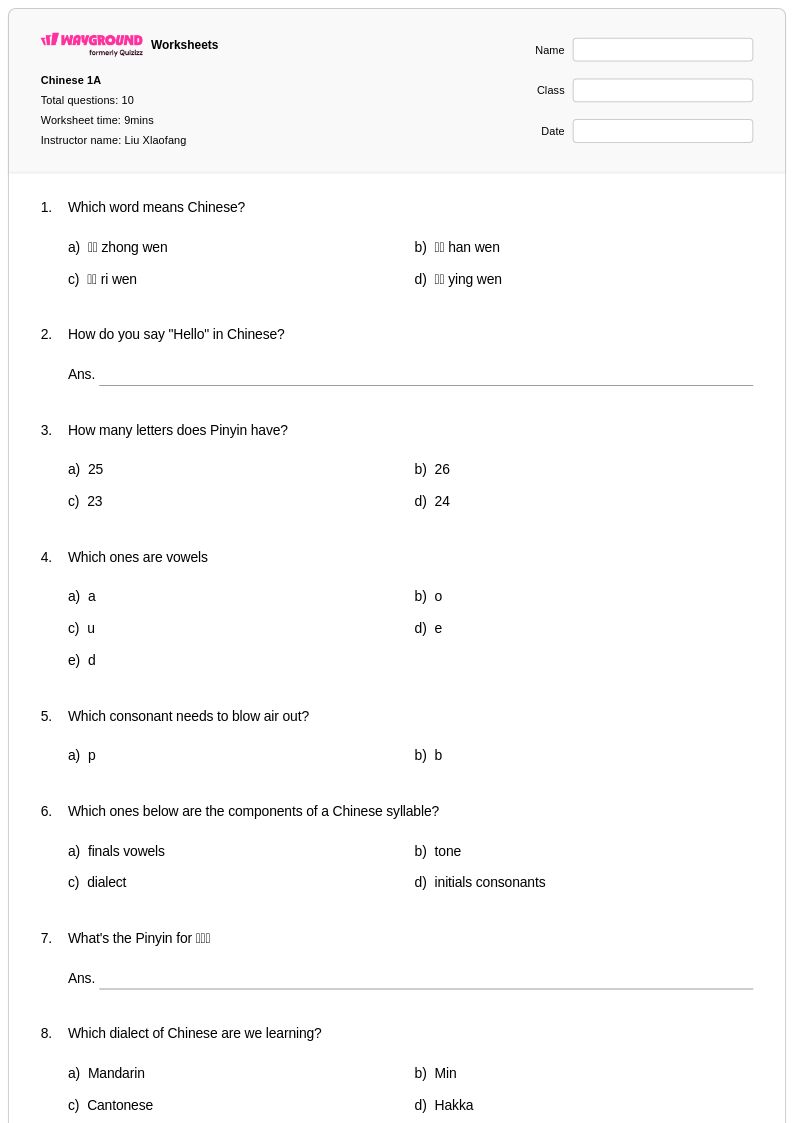
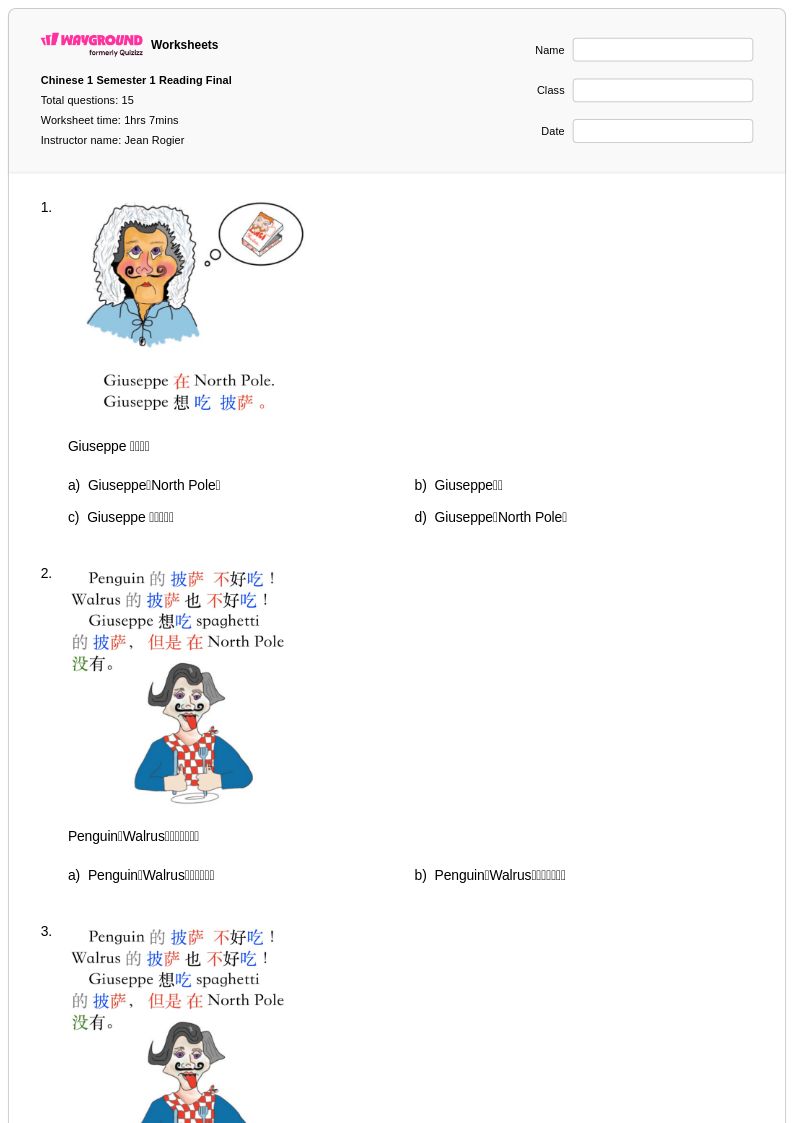
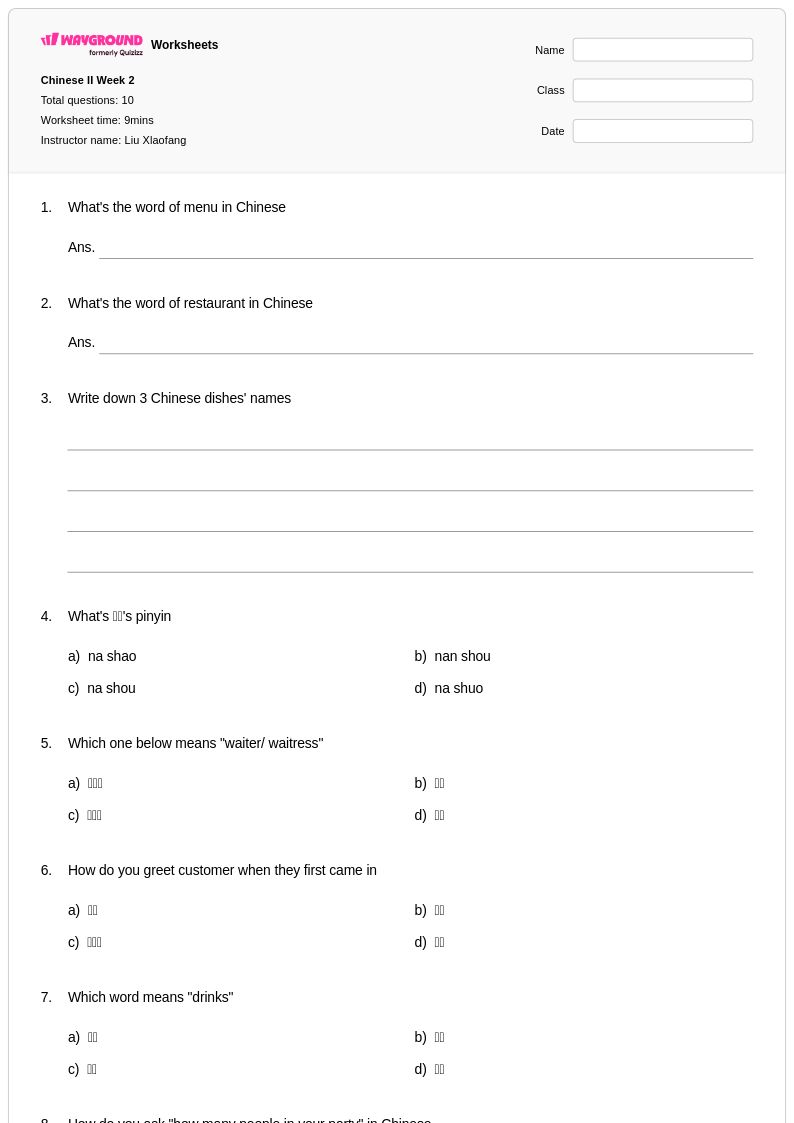
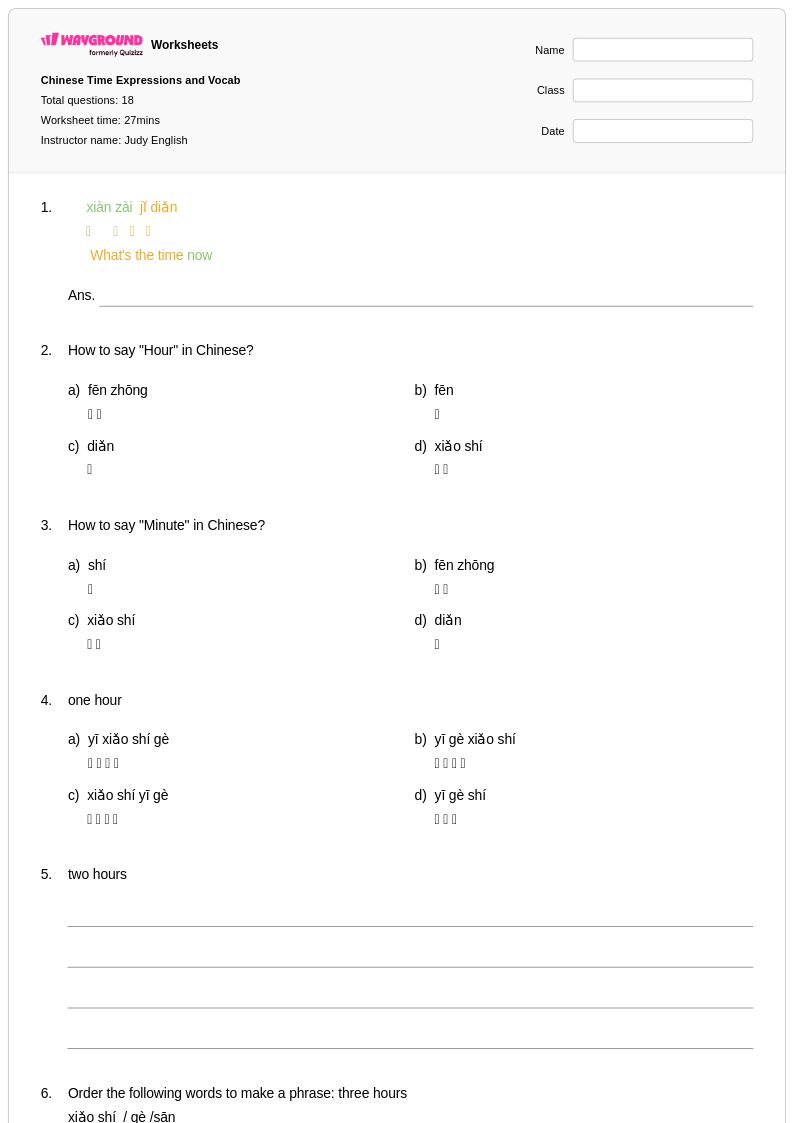
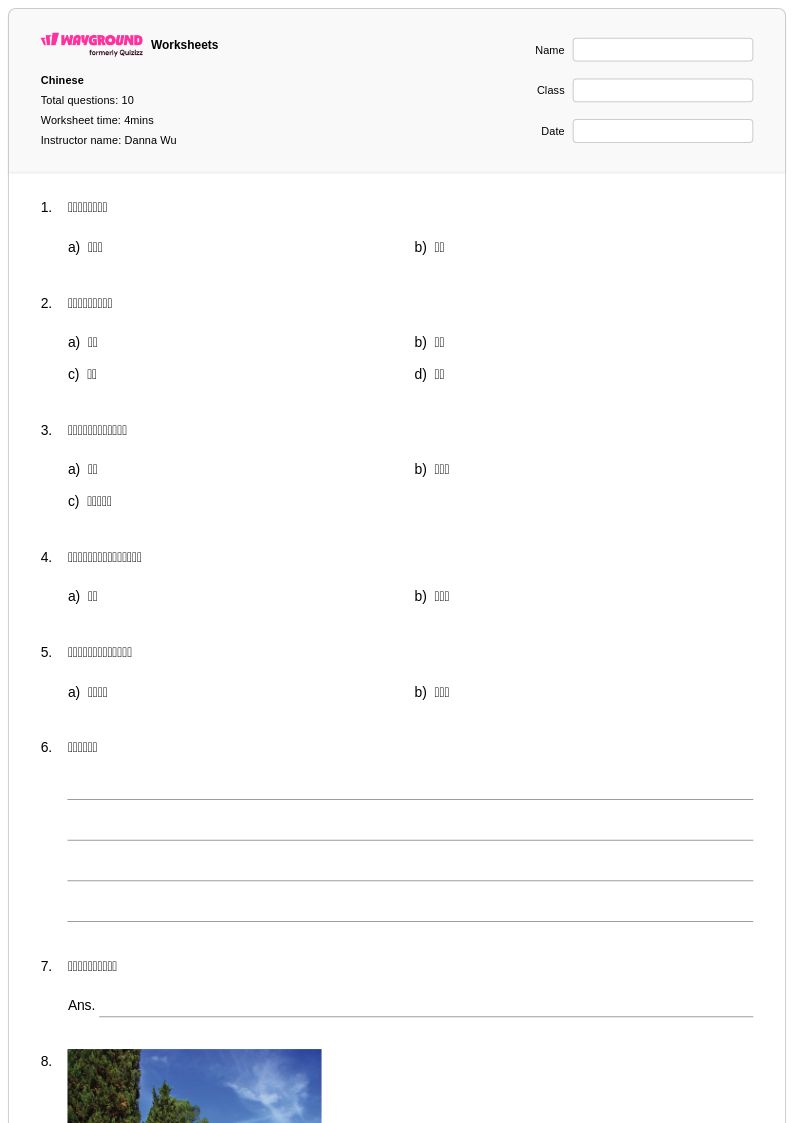
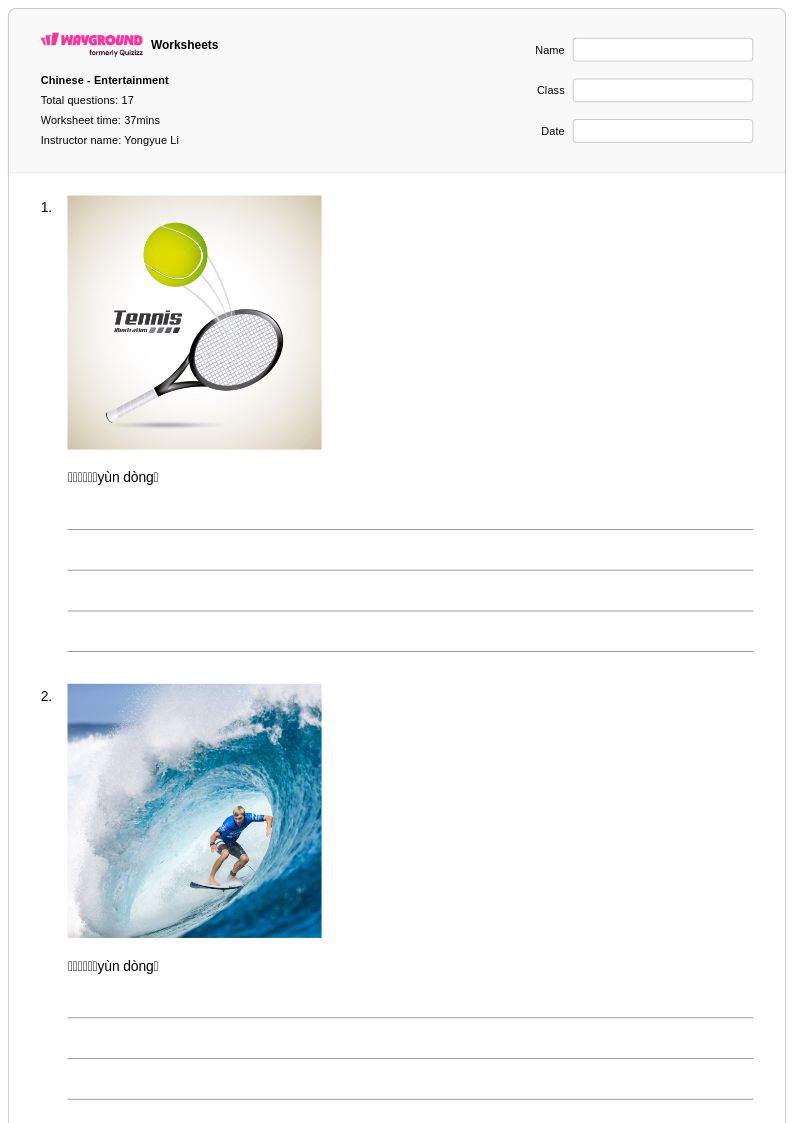
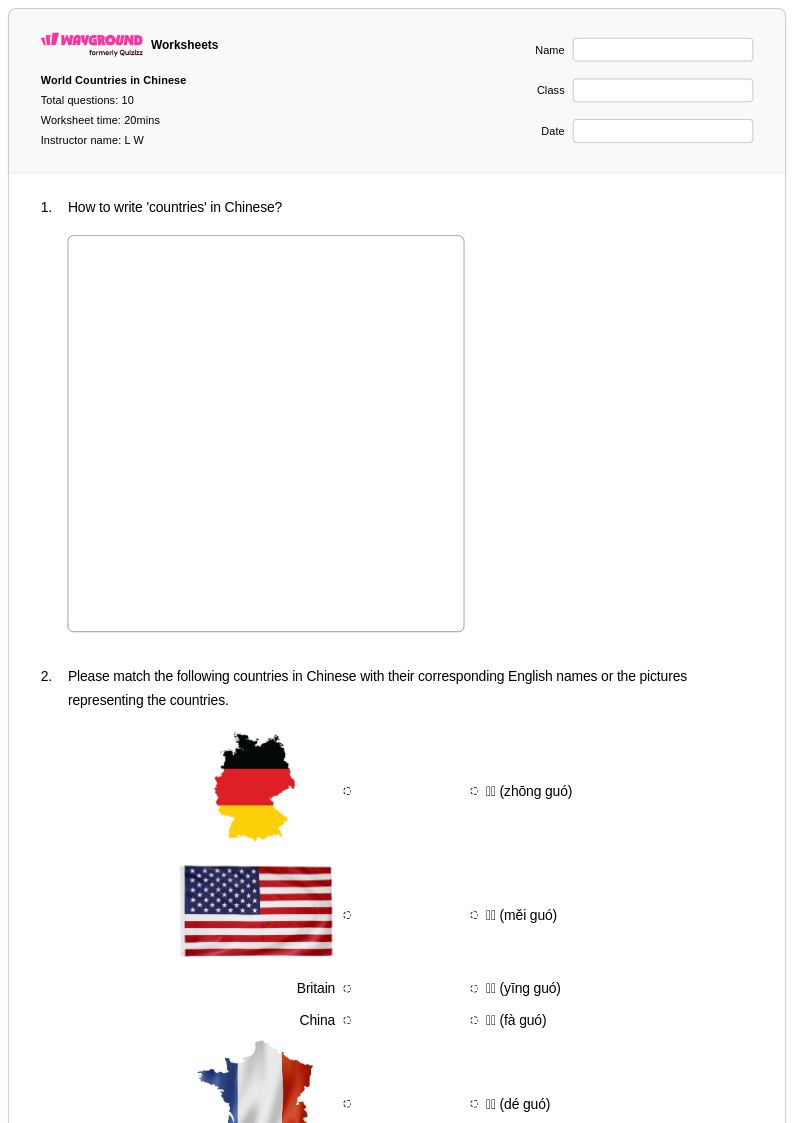
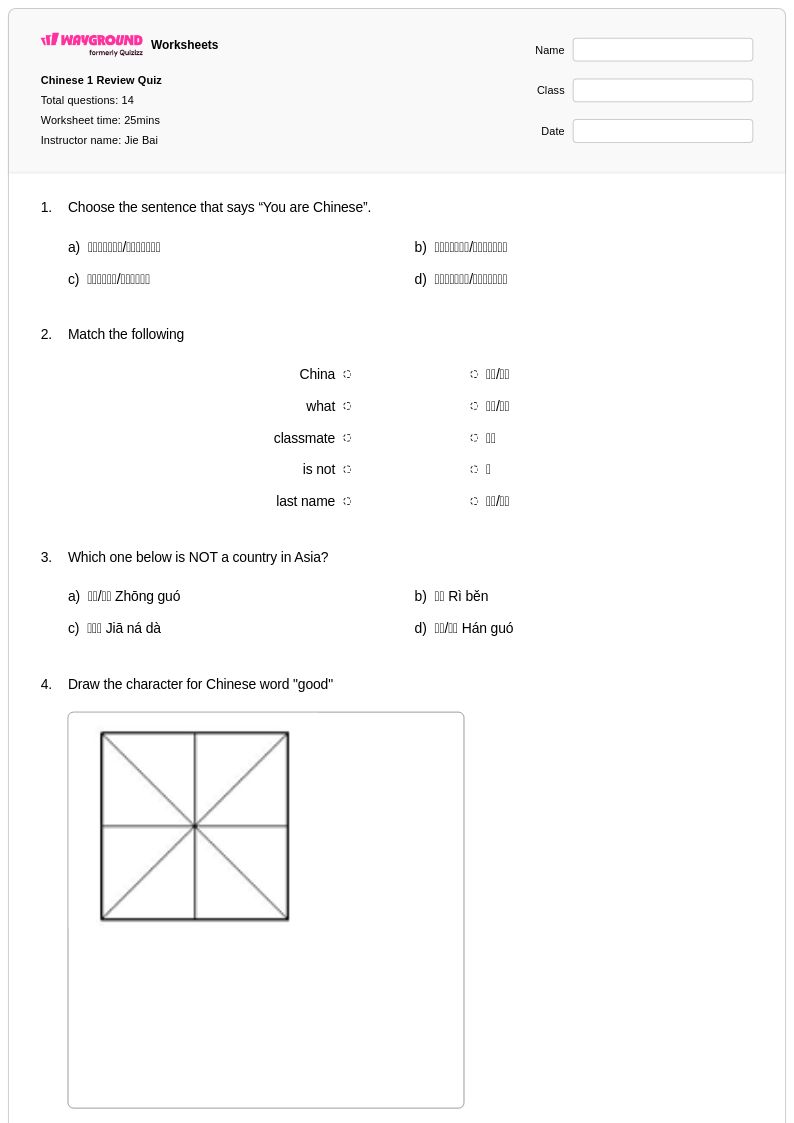
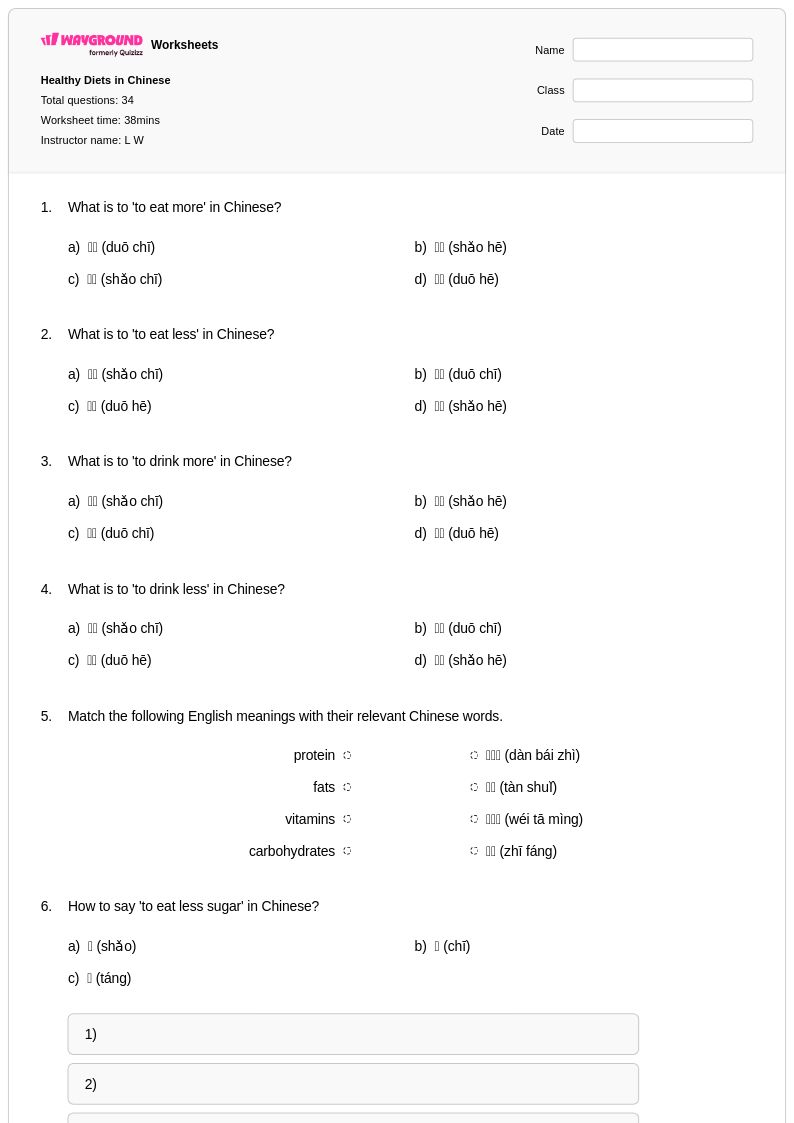
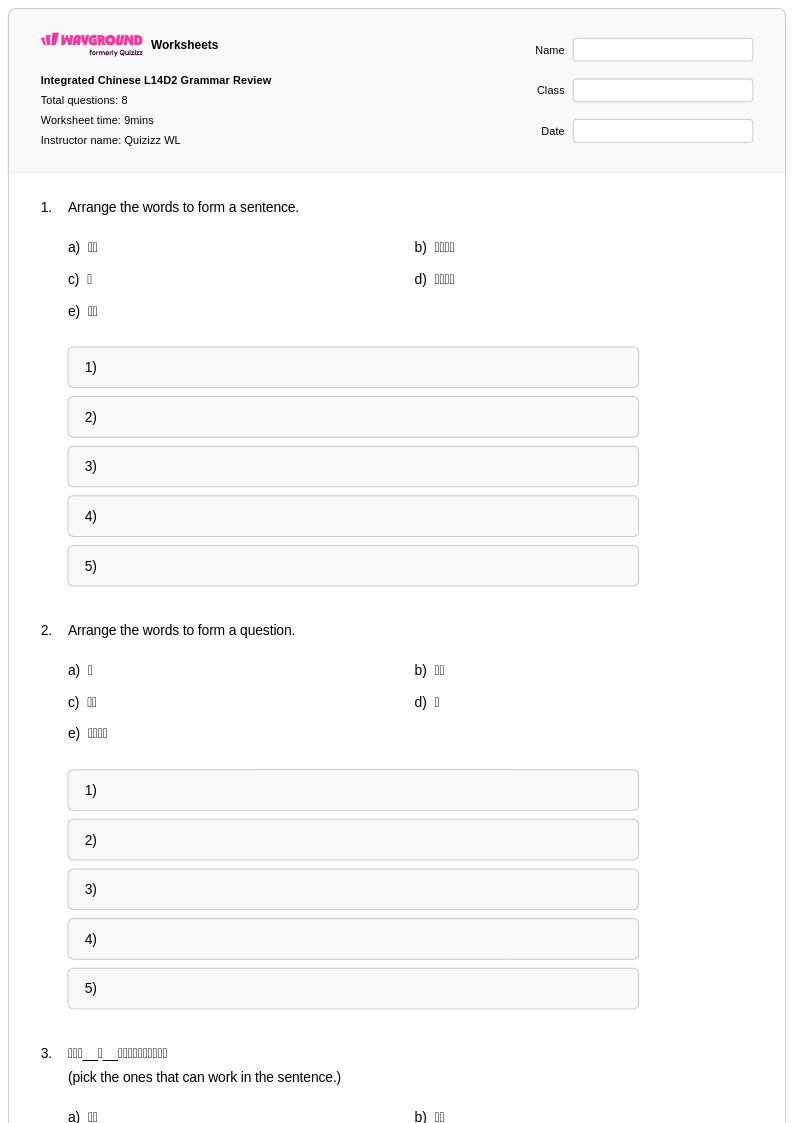
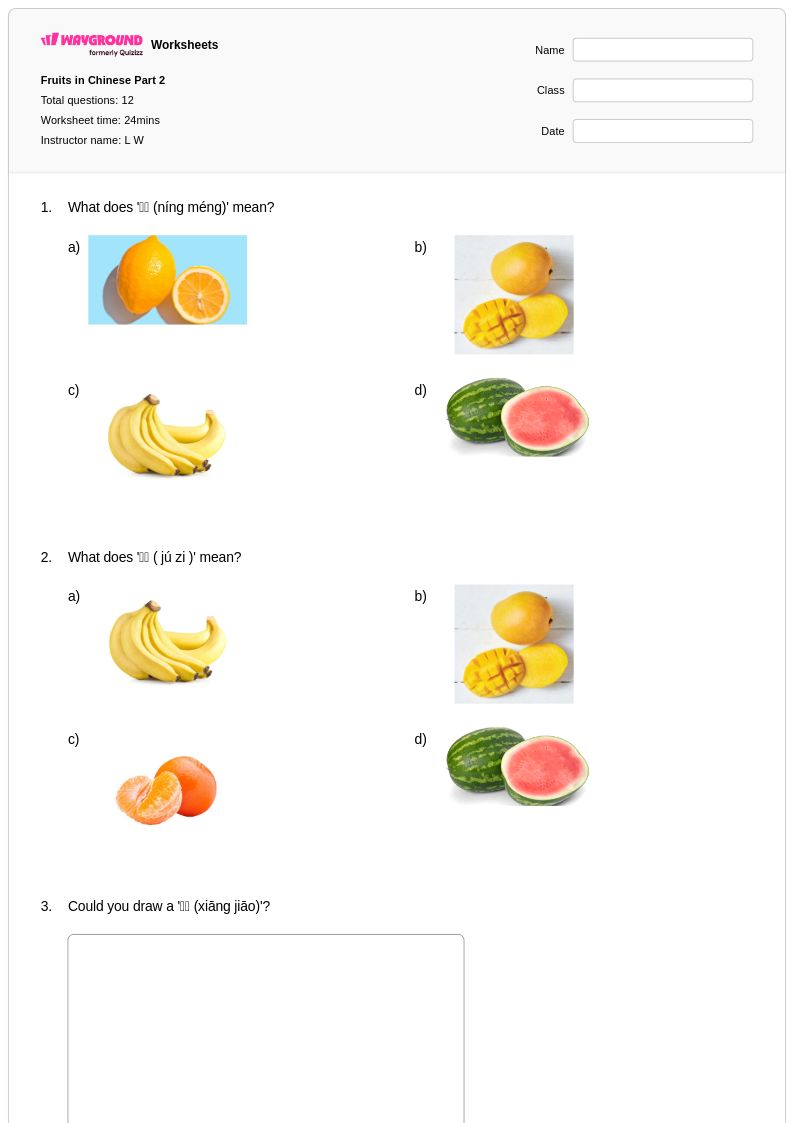
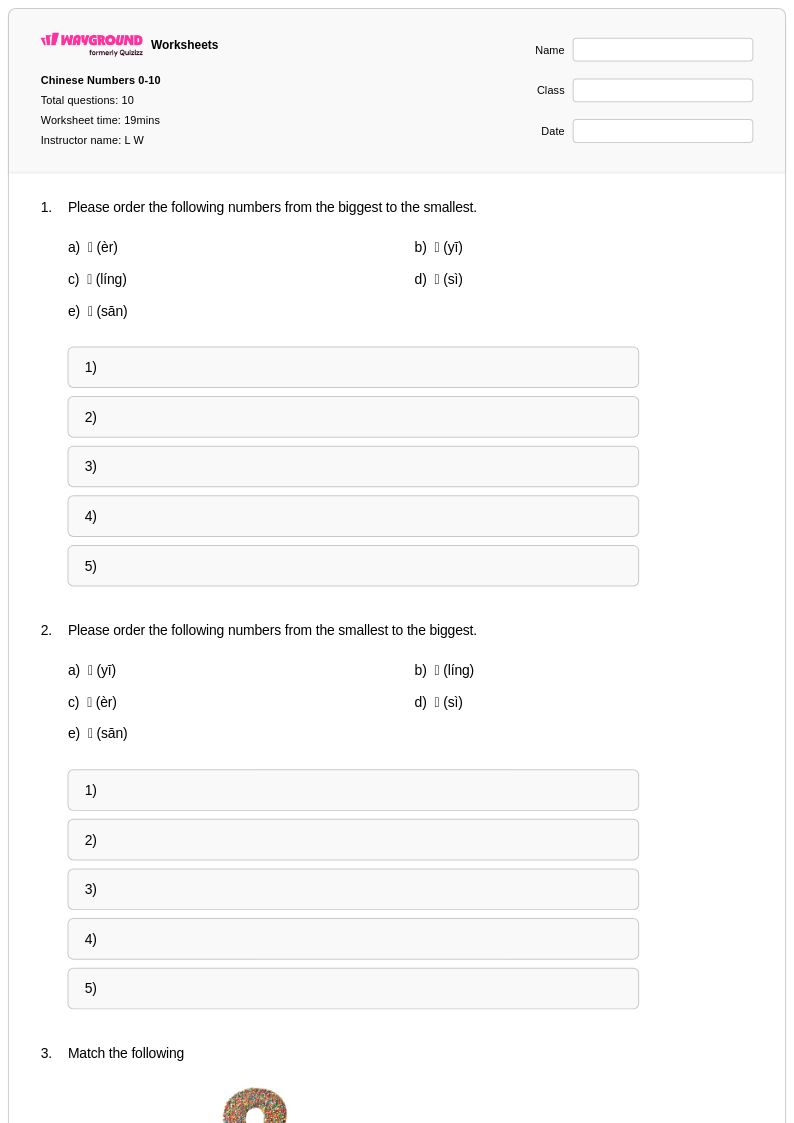
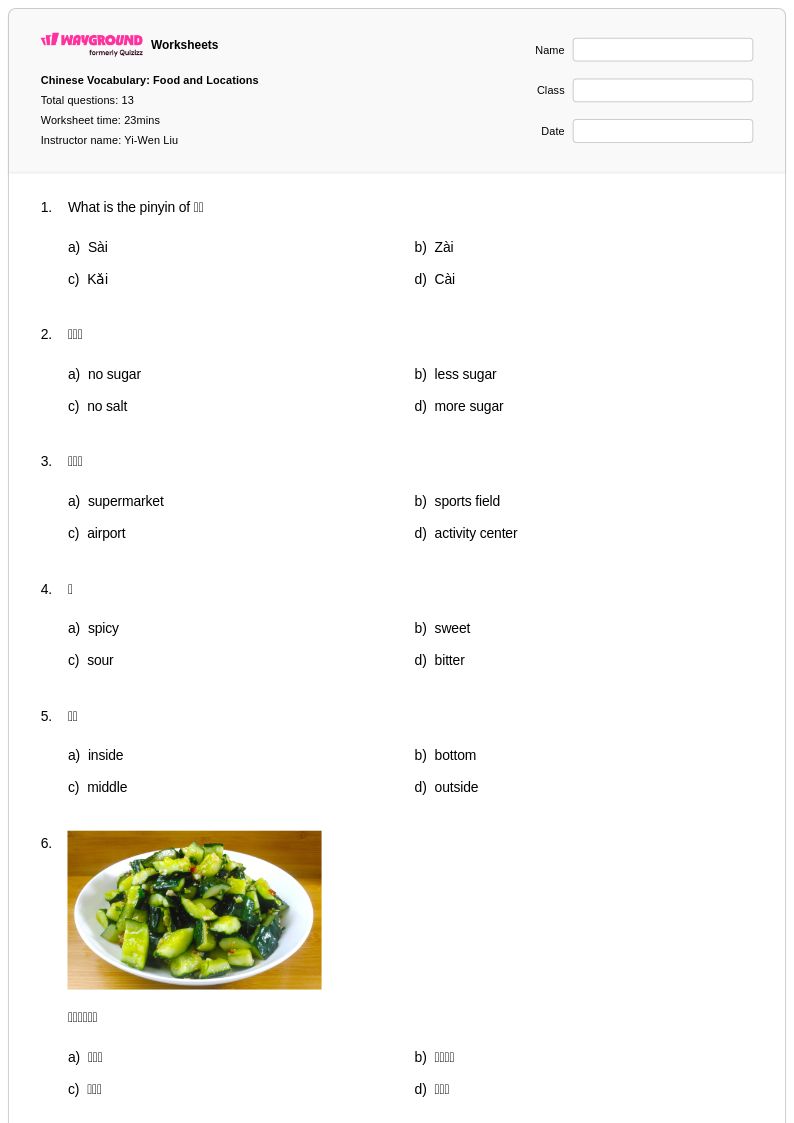
Chinese language worksheets for kindergarten students available through Wayground (formerly Quizizz) introduce young learners to foundational elements of Mandarin Chinese through age-appropriate activities and exercises. These carefully designed printables focus on essential early language skills including basic character recognition, simple vocabulary acquisition, pronunciation practice, and cultural awareness concepts that make Chinese accessible to kindergarten-aged children. The worksheets strengthen pre-literacy skills in Chinese while building phonemic awareness through pinyin introduction, visual recognition of common characters, and basic conversational phrases that connect to children's daily experiences. Each worksheet comes with a comprehensive answer key and is available as a free pdf download, providing teachers and parents with structured practice problems that support systematic language development and cultural understanding.
Wayground (formerly Quizizz) empowers educators with an extensive collection of millions of teacher-created Chinese language resources specifically curated for kindergarten instruction, featuring robust search and filtering capabilities that allow teachers to locate materials aligned with specific learning objectives and developmental standards. The platform's differentiation tools enable teachers to customize worksheets based on individual student needs, supporting both remediation for struggling learners and enrichment opportunities for advanced students ready for additional challenge. These flexible resources are available in both printable and digital formats, including downloadable pdf versions, making lesson planning efficient and adaptable to various classroom environments and teaching styles. Teachers can seamlessly integrate these materials into their curriculum for targeted skill practice, cultural exploration, and systematic language progression that builds confidence in young Chinese language learners.
FAQs
How do I teach Mandarin Chinese characters to beginners?
Begin with high-frequency characters and teach stroke order explicitly, as correct stroke sequence is foundational to writing accuracy and character recognition. Introduce characters in thematic clusters — family members, numbers, colors — so students build vocabulary with contextual meaning rather than isolated memorization. Pairing character practice with pinyin supports pronunciation development alongside reading and writing skills.
What exercises help students practice Chinese stroke order and character writing?
Stroke order tracing worksheets are among the most effective tools for building muscle memory and writing accuracy in Mandarin. Exercises that require students to trace, copy, and then independently reproduce characters in sequence reinforce correct form progressively. Regular timed writing drills and character recognition matching activities further consolidate both production and recall skills.
What mistakes do students commonly make when learning Mandarin Chinese?
Students frequently confuse visually similar characters, such as 人 (rén) and 入 (rù), due to insufficient attention to stroke detail and proportions. Tone errors are also widespread — many learners default to flat, toneless pronunciation because English does not use lexical tone, making consistent pinyin tone-marking practice essential. A third common error is applying English grammar patterns to Chinese sentence structure, particularly with verb-object word order and the placement of time expressions.
How can I differentiate Chinese language worksheets for students at different proficiency levels?
Scaffold tasks by offering character tracing and basic vocabulary matching for novice learners while providing reading passages and open-ended grammar application exercises for intermediate and advanced students. On Wayground, teachers can apply student-level accommodations such as reduced answer choices to lower cognitive load for struggling learners, and enable Read Aloud support for students who benefit from audio reinforcement of tones and pronunciation. These settings can be assigned to individual students without affecting the experience of the rest of the class.
How do I use Wayground's Chinese worksheets in my classroom?
Wayground's Chinese language worksheets are available as printable PDFs for traditional classroom use and in digital formats for technology-integrated or remote learning environments, giving teachers flexibility regardless of their instructional setting. Teachers can also host worksheets as a quiz directly on Wayground, enabling interactive practice with built-in answer key support. The platform's search and filtering tools allow teachers to quickly locate materials targeting specific skills such as pinyin, stroke order, grammar patterns, or cultural context.
How do I incorporate Chinese cultural context into language lessons?
Effective Chinese language instruction weaves cultural understanding directly into vocabulary and reading practice — for example, teaching holiday-related characters alongside the traditions they represent, or using authentic texts that reflect everyday Mandarin usage. Worksheets that include cultural notes alongside language content help students understand why certain expressions, honorifics, or grammatical structures exist, deepening both comprehension and retention.