Free Printable Christianity Worksheets for Grade 3
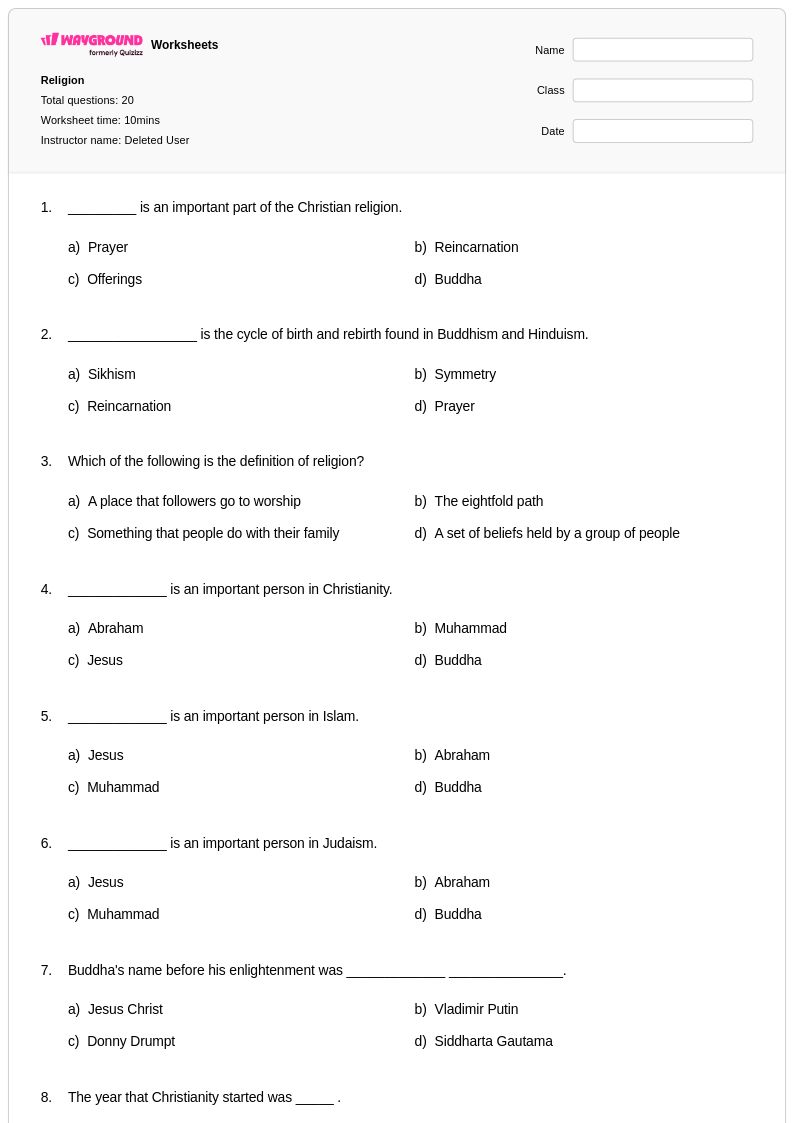
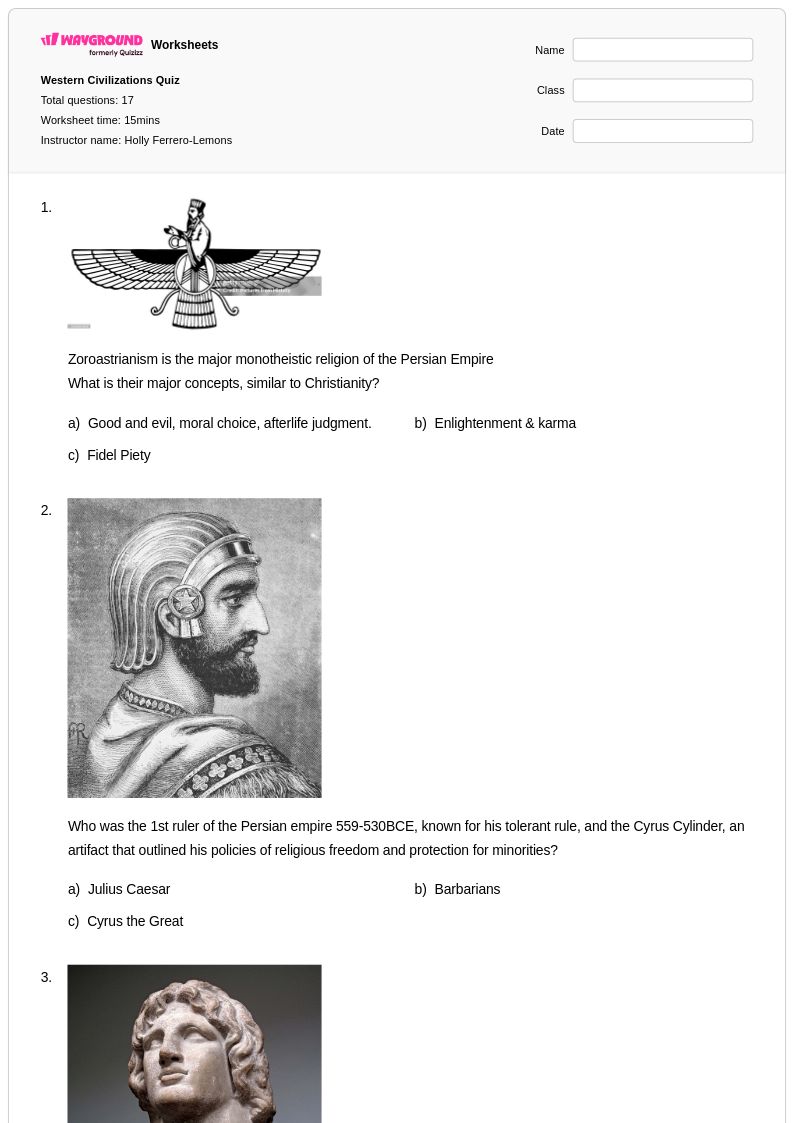
Explore free Grade 3 Christianity worksheets and printables from Wayground that help students learn about Christian traditions, beliefs, and practices through engaging practice problems with complete answer keys.
Explore printable Christianity worksheets for Grade 3
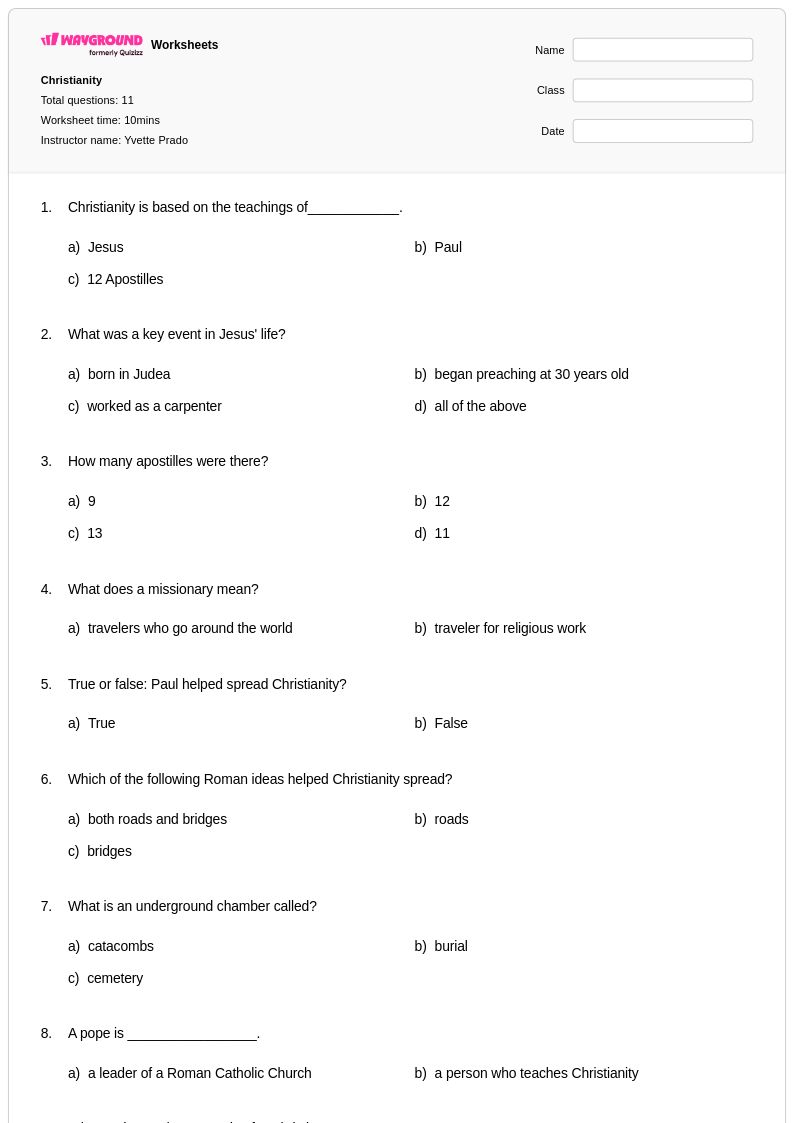
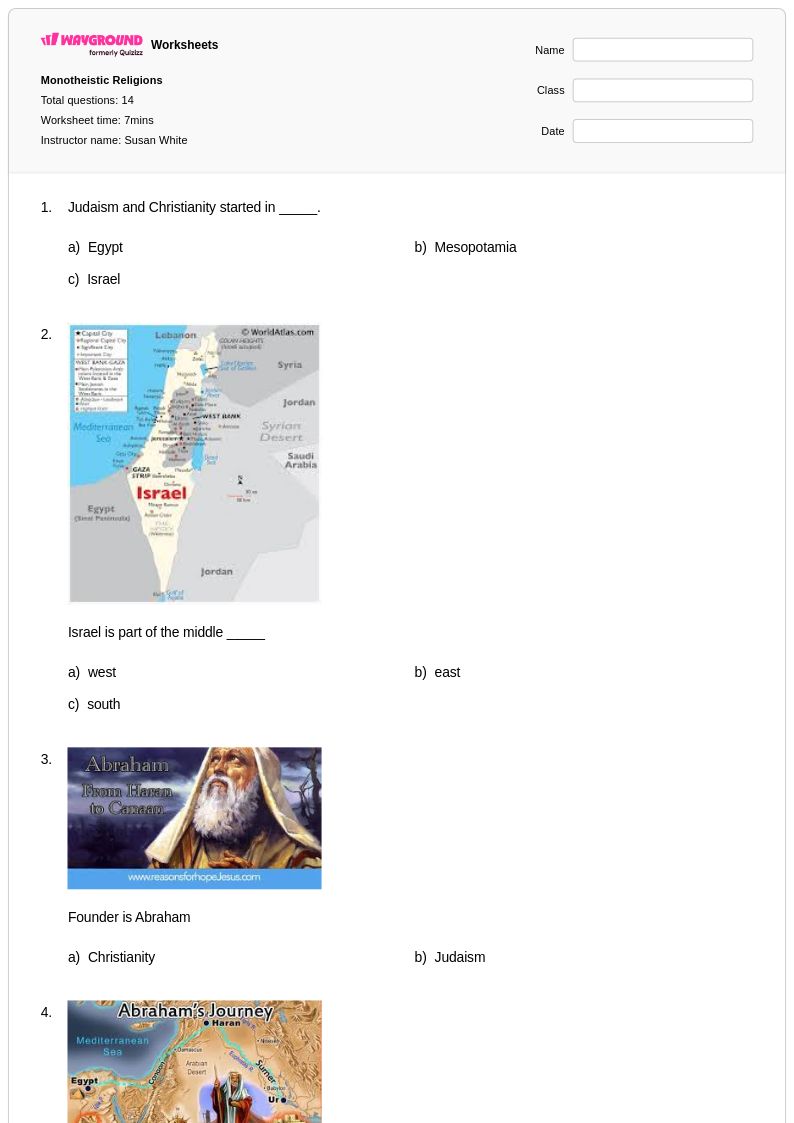
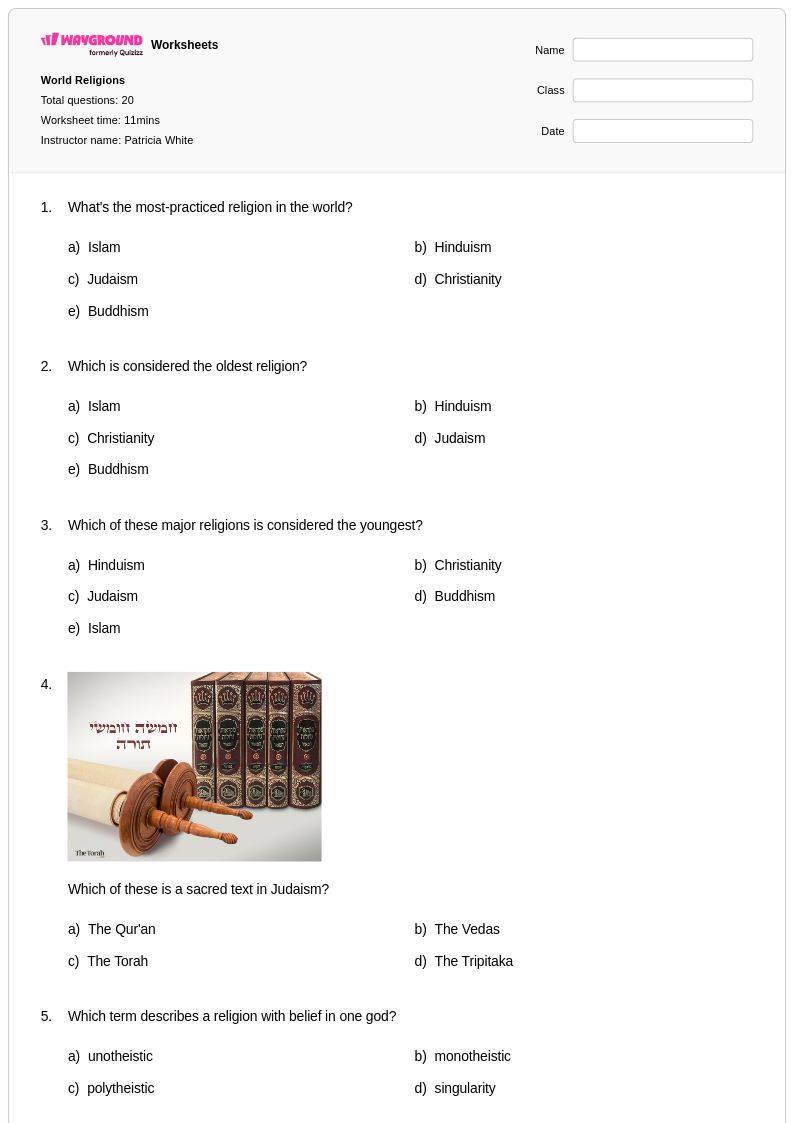
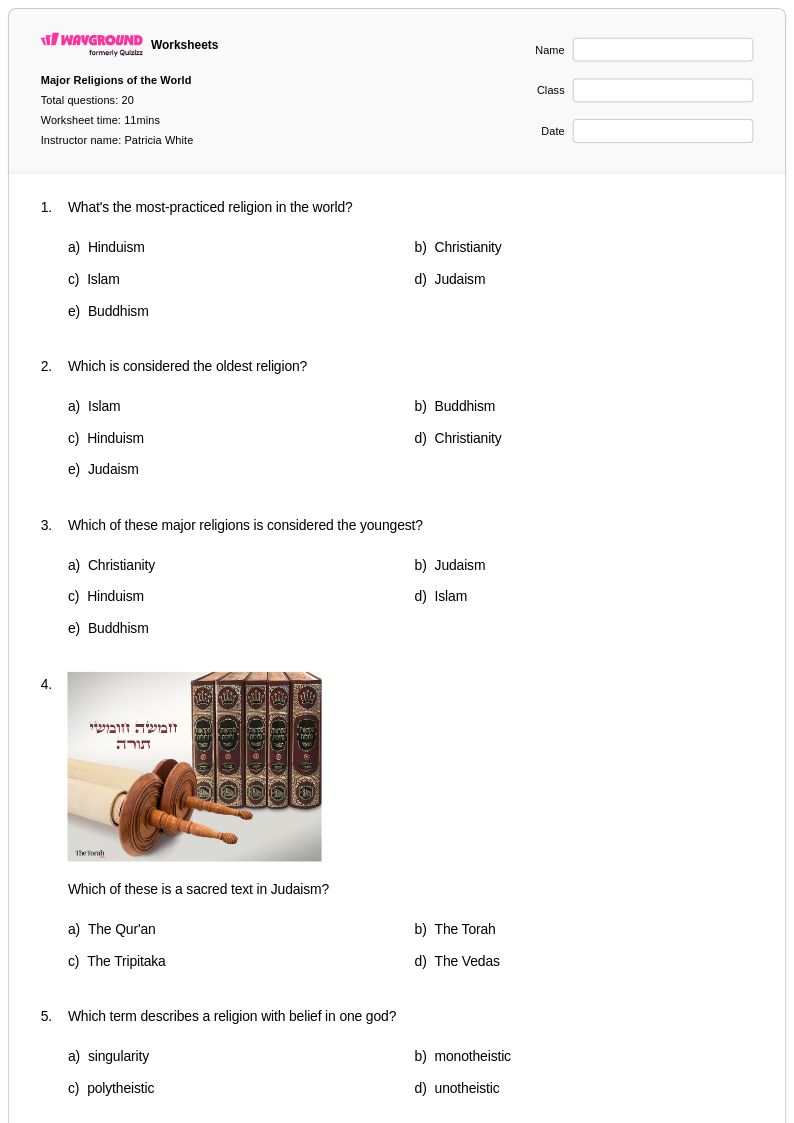
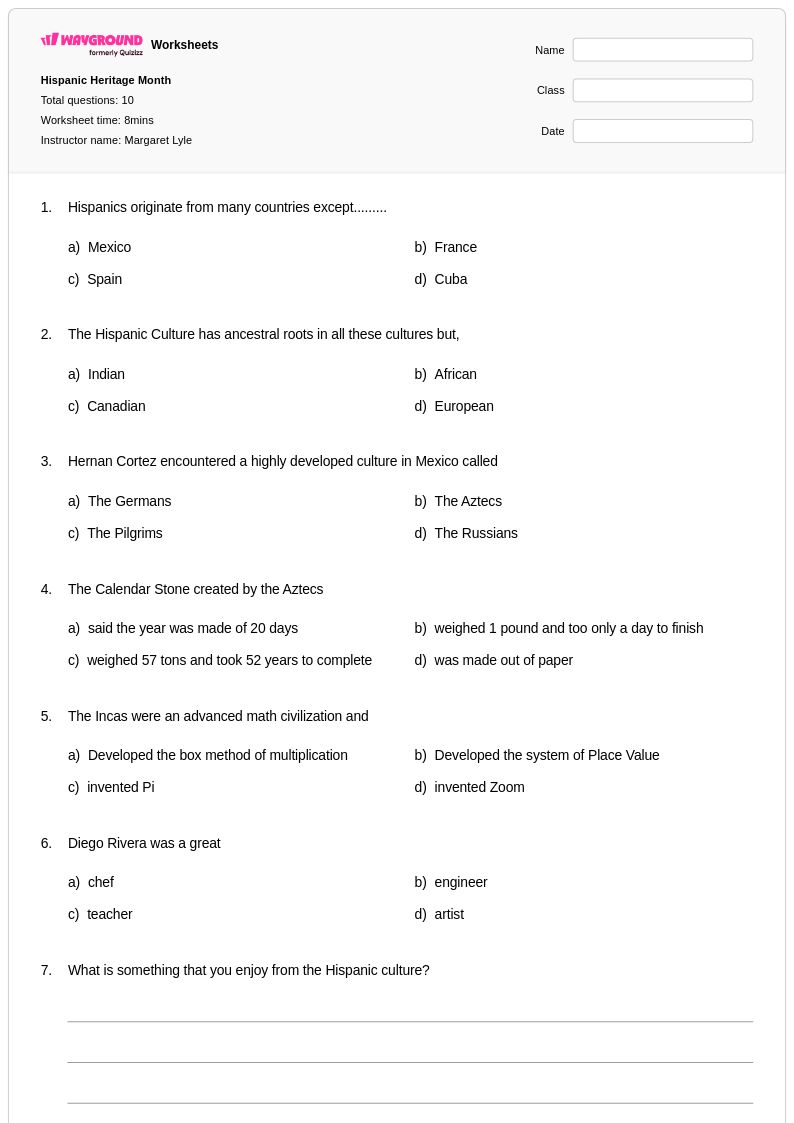
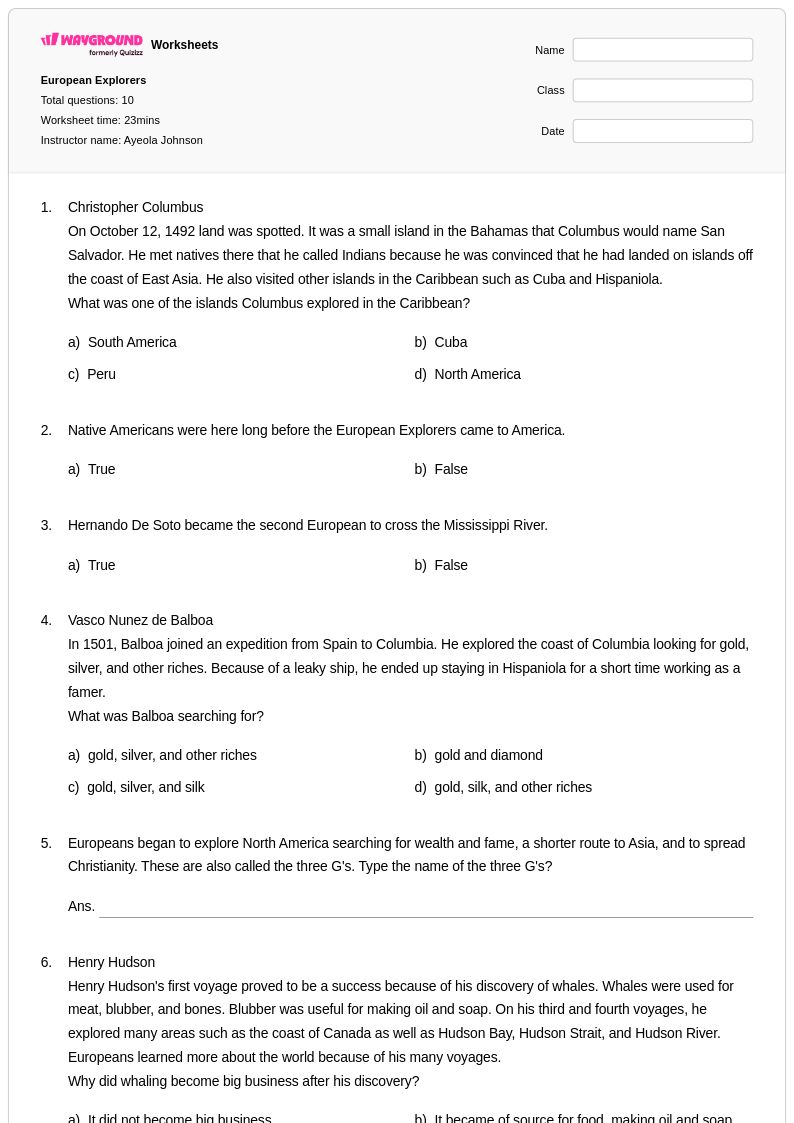
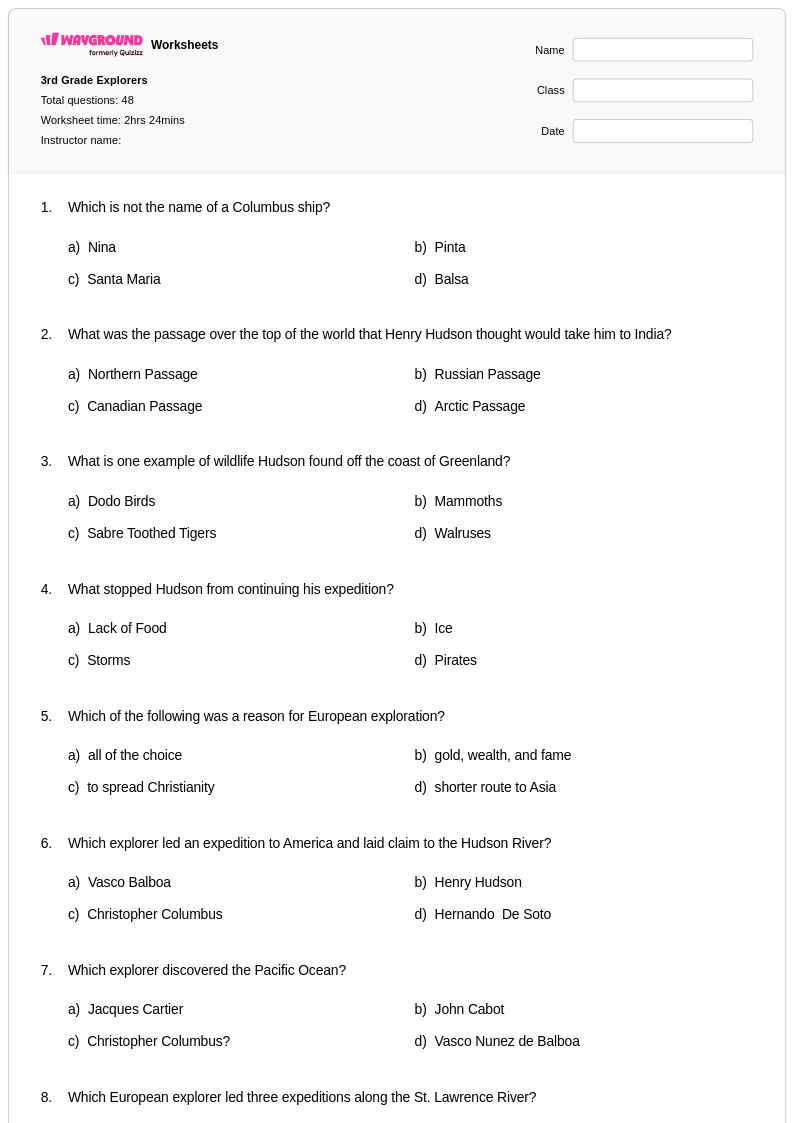
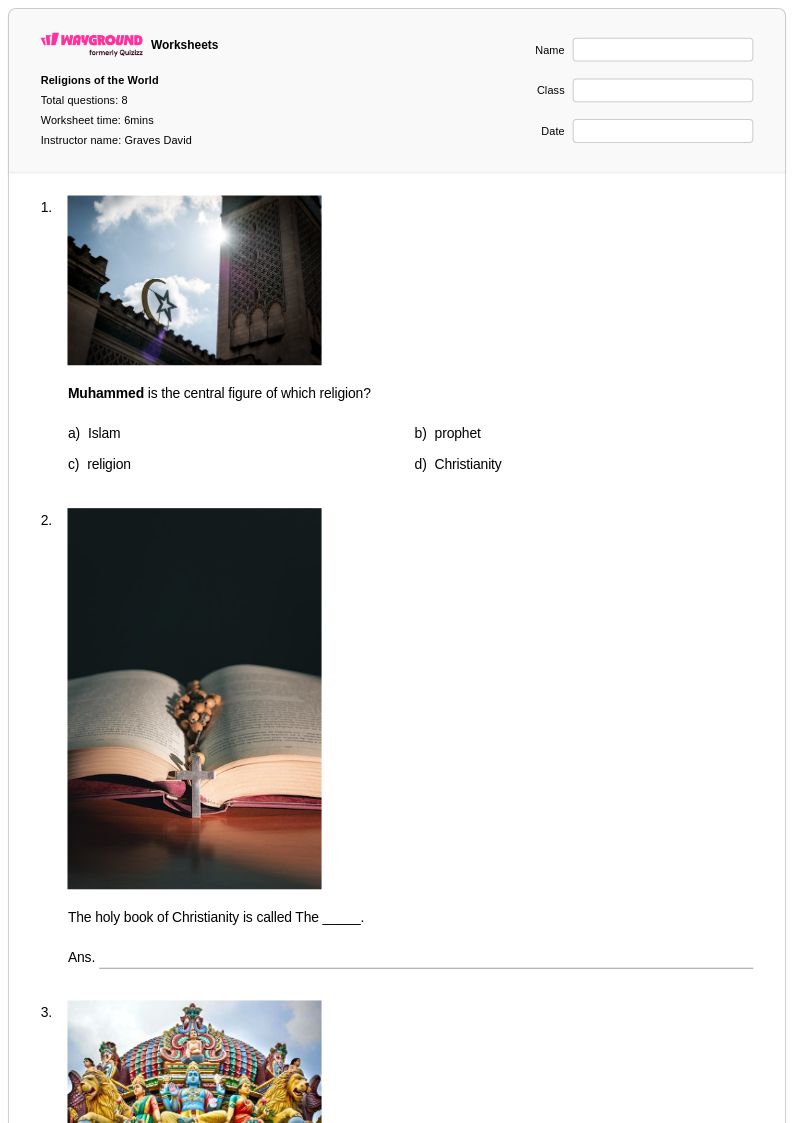
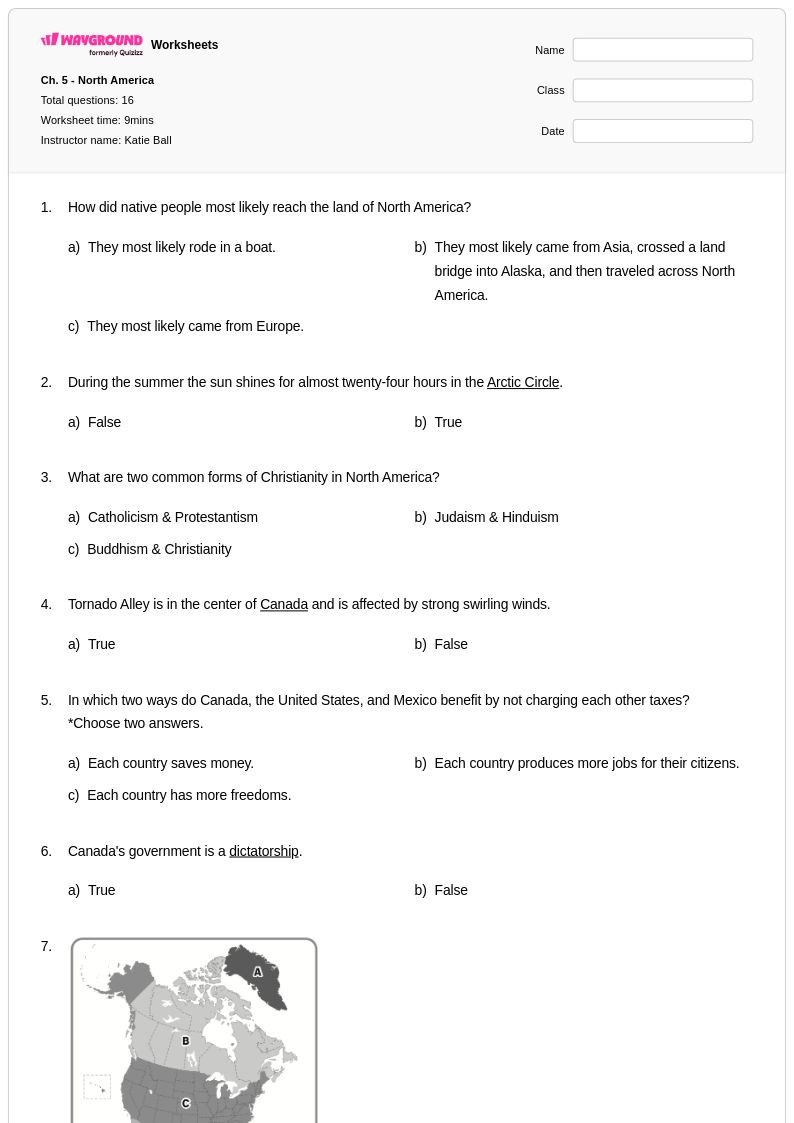
Christianity worksheets for Grade 3 students available through Wayground (formerly Quizizz) provide essential foundational learning about one of the world's major religions within the broader context of community and cultures education. These comprehensive resources help young learners develop critical thinking skills about religious diversity, cultural understanding, and the role faith communities play in society. The worksheets focus on age-appropriate concepts such as basic Christian beliefs, important figures, holidays and traditions, and how Christianity influences community life around the world. Each printable resource includes structured practice problems that encourage students to explore connections between religious practices and cultural expressions, while accompanying answer keys support both independent learning and guided instruction. These free educational materials strengthen students' ability to recognize and respect religious diversity while building foundational knowledge about Christian traditions and their impact on various communities.
Wayground (formerly Quizizz) empowers teachers with millions of educator-created Christianity resources specifically designed for Grade 3 social studies instruction, offering robust search and filtering capabilities that align with curriculum standards for community and cultures education. The platform's extensive collection supports differentiated instruction through customizable worksheets that can be adapted for various learning levels, ensuring every student can engage meaningfully with content about Christian traditions and beliefs. Teachers benefit from flexible formatting options, including both digital and printable PDF versions, making these resources ideal for classroom instruction, homework assignments, and assessment preparation. The comprehensive nature of these materials facilitates effective lesson planning while providing targeted support for remediation and enrichment activities, enabling educators to address diverse learning needs when teaching about Christianity's role in shaping communities and cultural practices worldwide.
FAQs
How do I teach Christianity in a social studies or world religions class?
Teaching Christianity effectively means grounding students in its core beliefs, key texts, and historical development before exploring its cultural and social impact. Start with foundational concepts like the role of the Bible, the life of Jesus, and the major branches of Christianity (Catholic, Protestant, Orthodox), then connect these to real-world examples in art, literature, architecture, and social movements. Using primary-source excerpts alongside structured worksheets helps students analyze rather than simply memorize religious content.
What exercises help students practice their understanding of Christianity?
Effective practice exercises for Christianity include analyzing biblical stories for themes and historical context, identifying Christian holidays and their significance, comparing denominations, and examining Christianity's influence on art and architecture. Worksheet activities that ask students to connect Christian traditions to broader cultural and social movements reinforce critical thinking alongside content knowledge. These types of tasks move students beyond rote recall and into genuine religious literacy.
What misconceptions do students commonly have about Christianity?
A common misconception is that Christianity is a monolithic religion with uniform beliefs and practices, when in fact it encompasses hundreds of denominations with significant theological and cultural differences. Students also frequently conflate Christian history with Western history broadly, overlooking the religion's global reach and diverse expressions in Africa, Asia, and Latin America. Addressing these misconceptions directly through structured comparison activities builds more accurate and nuanced understanding.
How can I teach Christianity in a way that is culturally sensitive and inclusive?
Frame instruction around religious literacy rather than promotion or critique, focusing on what Christians believe and why those beliefs matter to communities rather than evaluating their truth claims. Use comparative frameworks that treat Christianity alongside other world religions with equal rigor and respect, and include diverse voices within Christianity itself, such as liberation theology or African Christian traditions, to avoid presenting a single cultural perspective as universal.
How do I use Wayground's Christianity worksheets in my classroom?
Wayground's Christianity worksheets are available as printable PDFs, making them easy to distribute for in-class activities, homework, or assessment preparation, and in digital formats for technology-integrated classrooms. Teachers can also host the content as a quiz directly on Wayground, which supports interactive engagement and instant feedback. Each worksheet includes a complete answer key, so they work equally well for independent student practice or teacher-led instruction.
How do I differentiate Christianity instruction for students with different learning needs?
For students who need additional support, simplify reading passages and focus on concrete, visual elements like church architecture or Christian holiday traditions before introducing abstract theological concepts. Wayground's platform supports individual student accommodations including Read Aloud for audio support, reduced answer choices to lower cognitive load, and extended time settings, all of which can be assigned to specific students without affecting the rest of the class.