
15 Q
8th - Uni
15 Q
8th - Uni
15 Q
8th - Uni
15 Q
8th - Uni
15 Q
8th - Uni
15 Q
8th - Uni
5 Q
12th
16 Q
9th - 12th
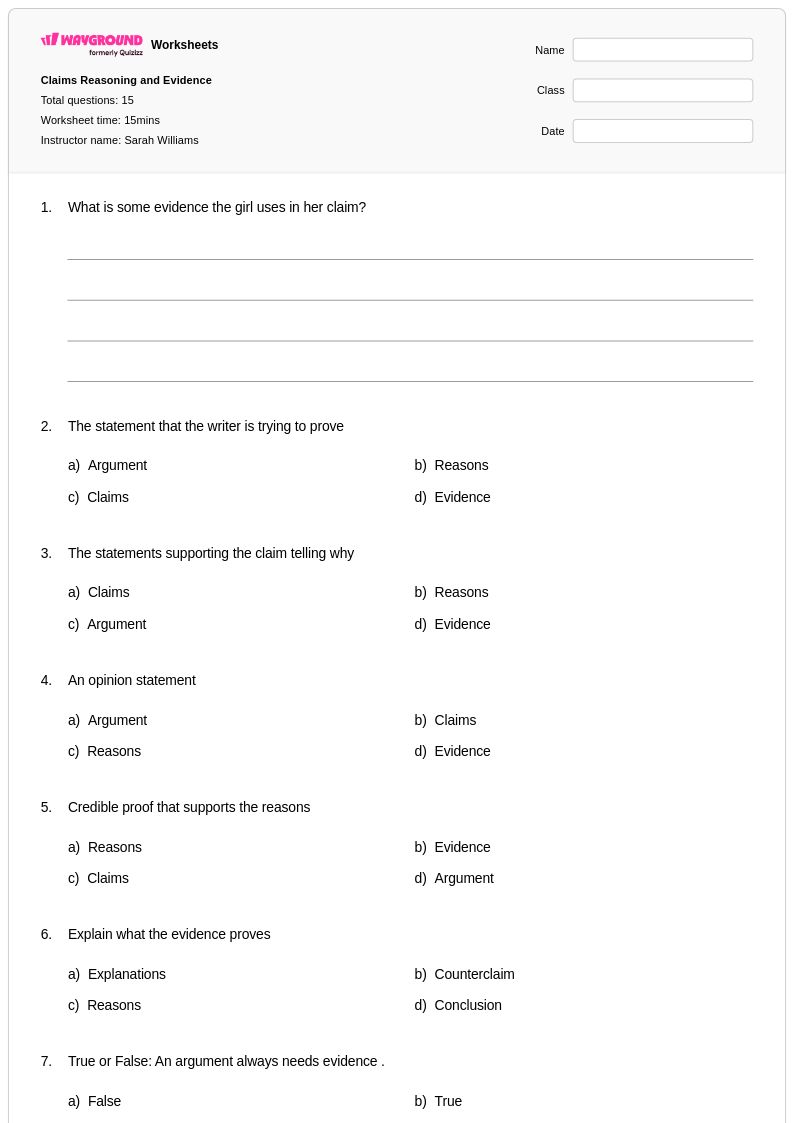
15 Q
8th - Uni
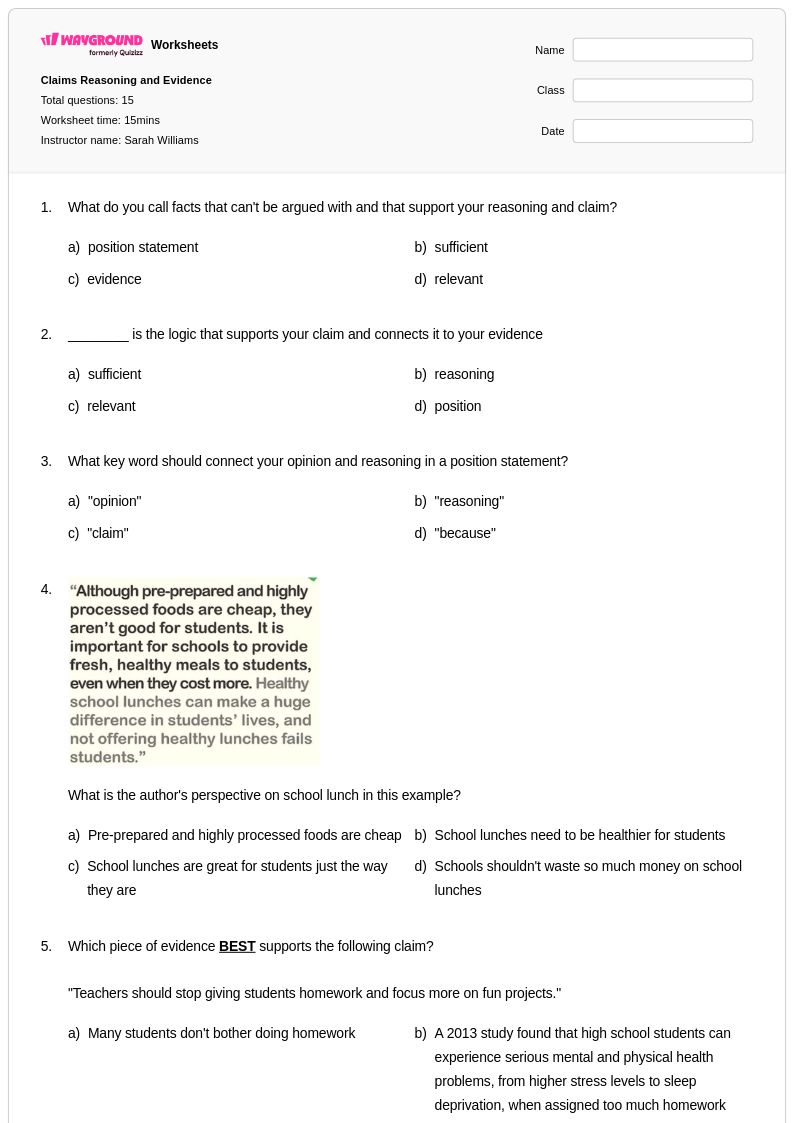
15 Q
8th - Uni
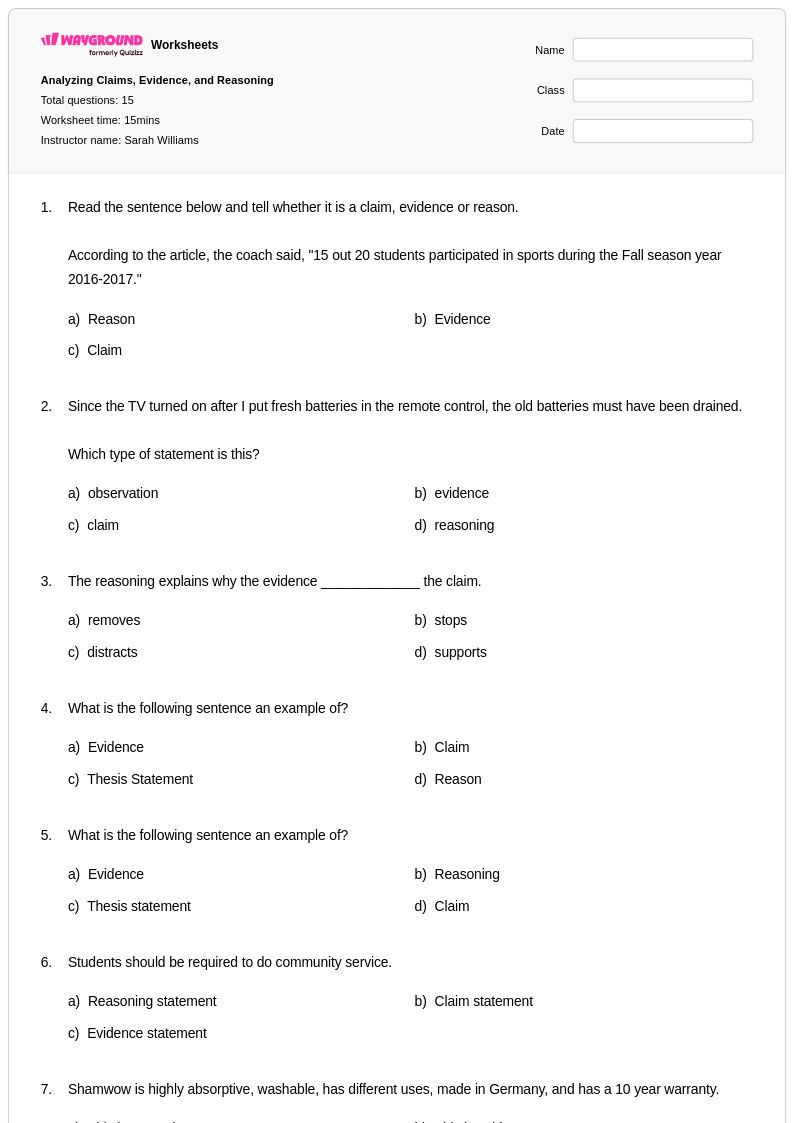
15 Q
8th - Uni
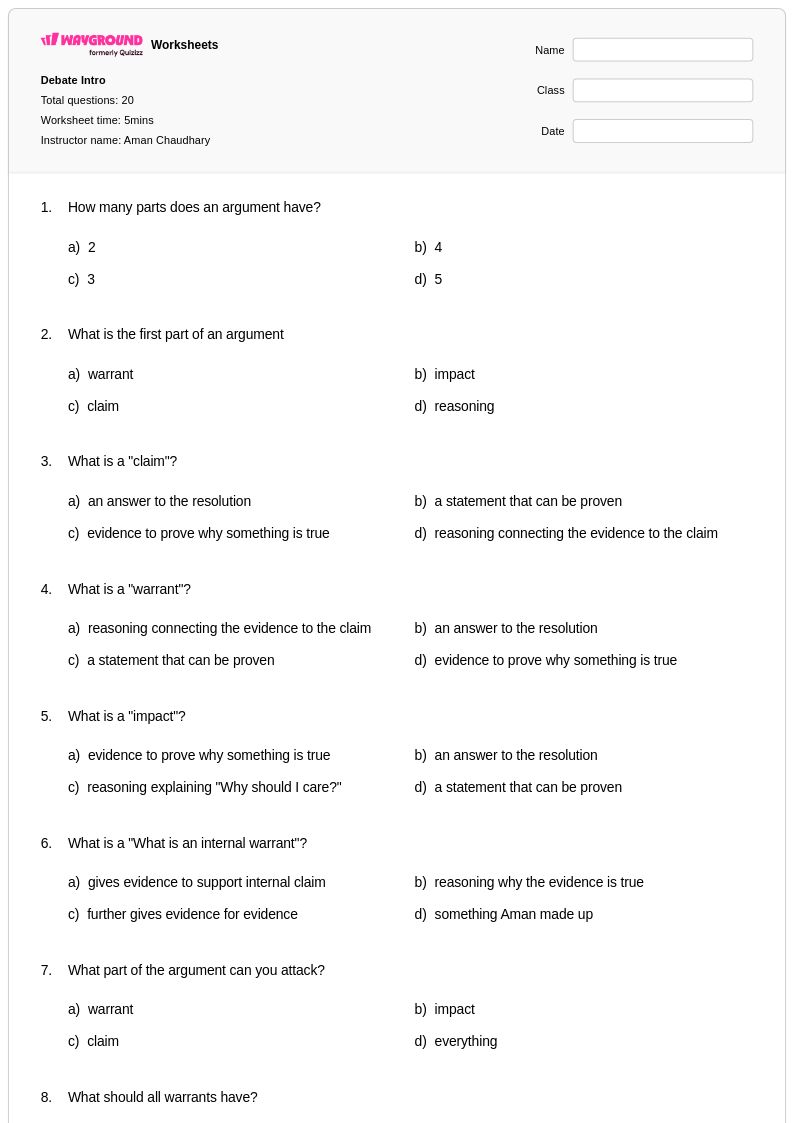
20 Q
9th - 12th
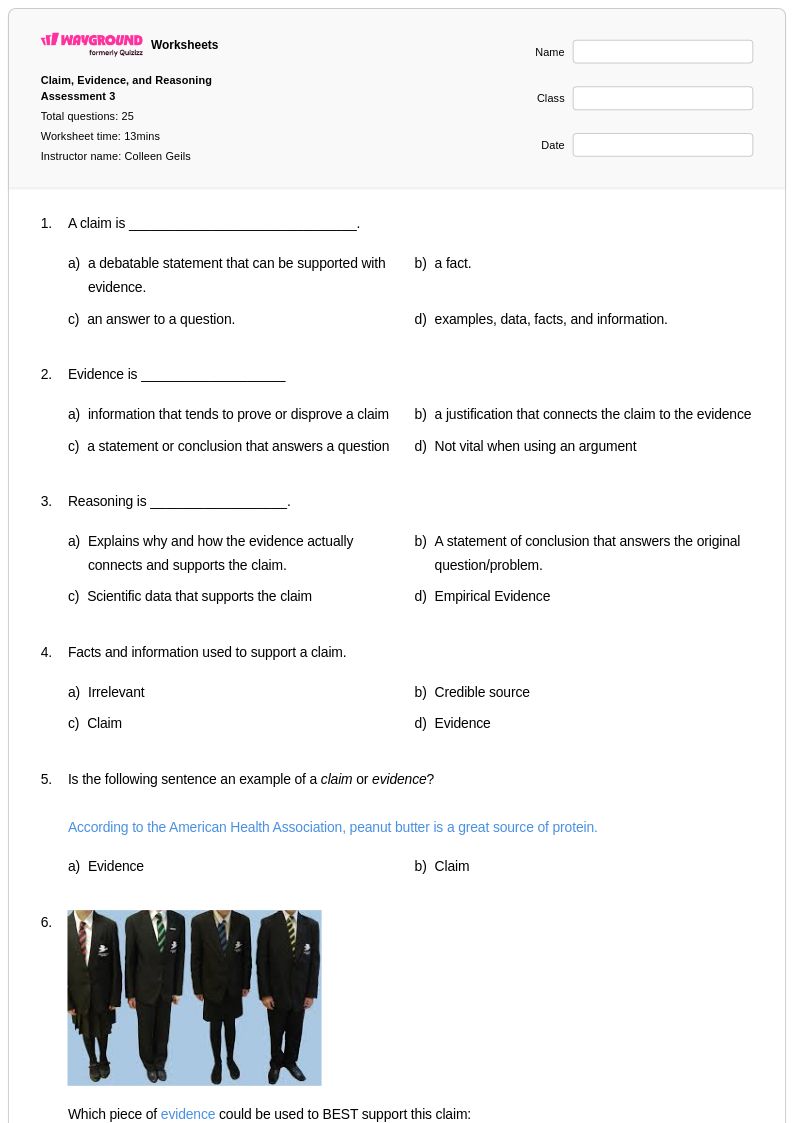
25 Q
9th - 12th
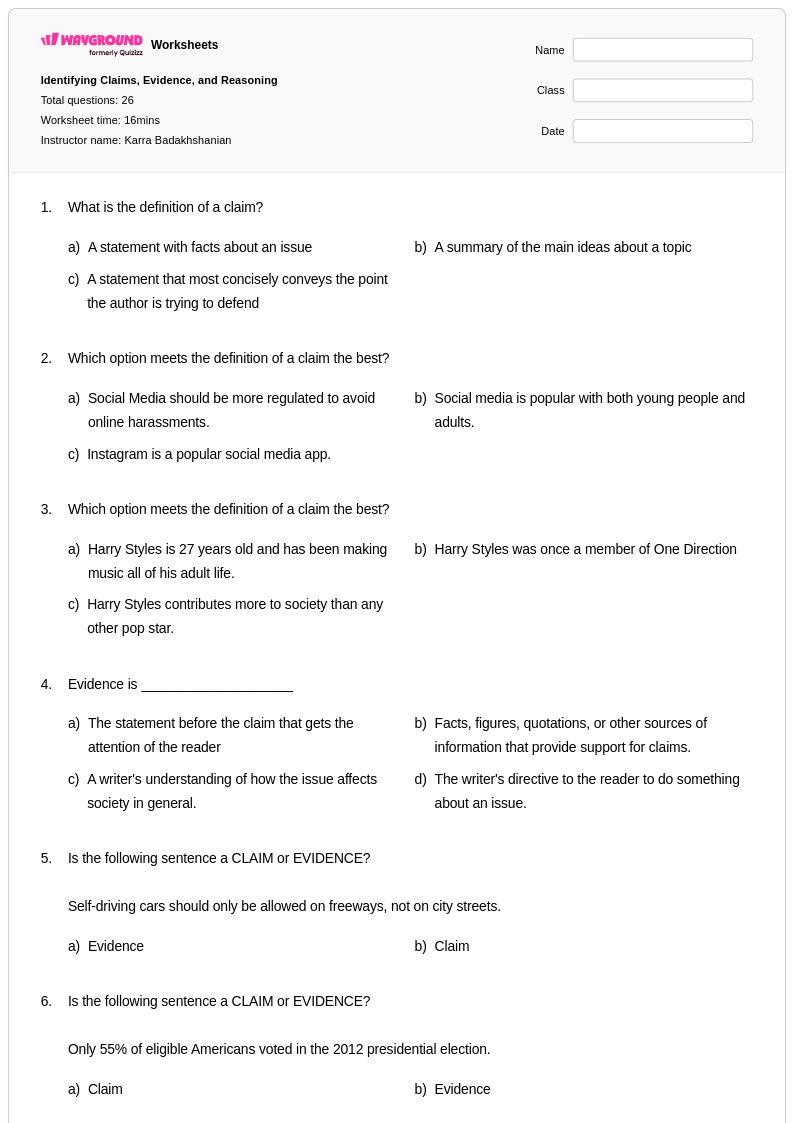
26 Q
9th - 12th
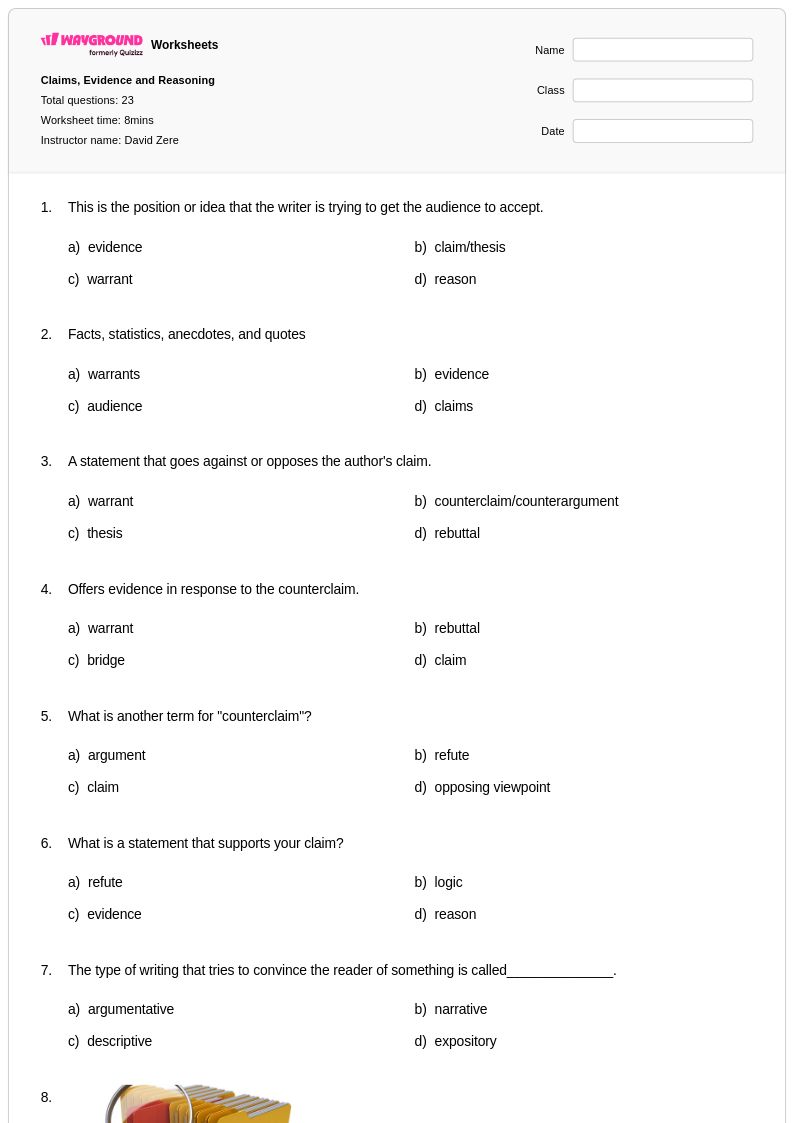
23 Q
9th - 12th
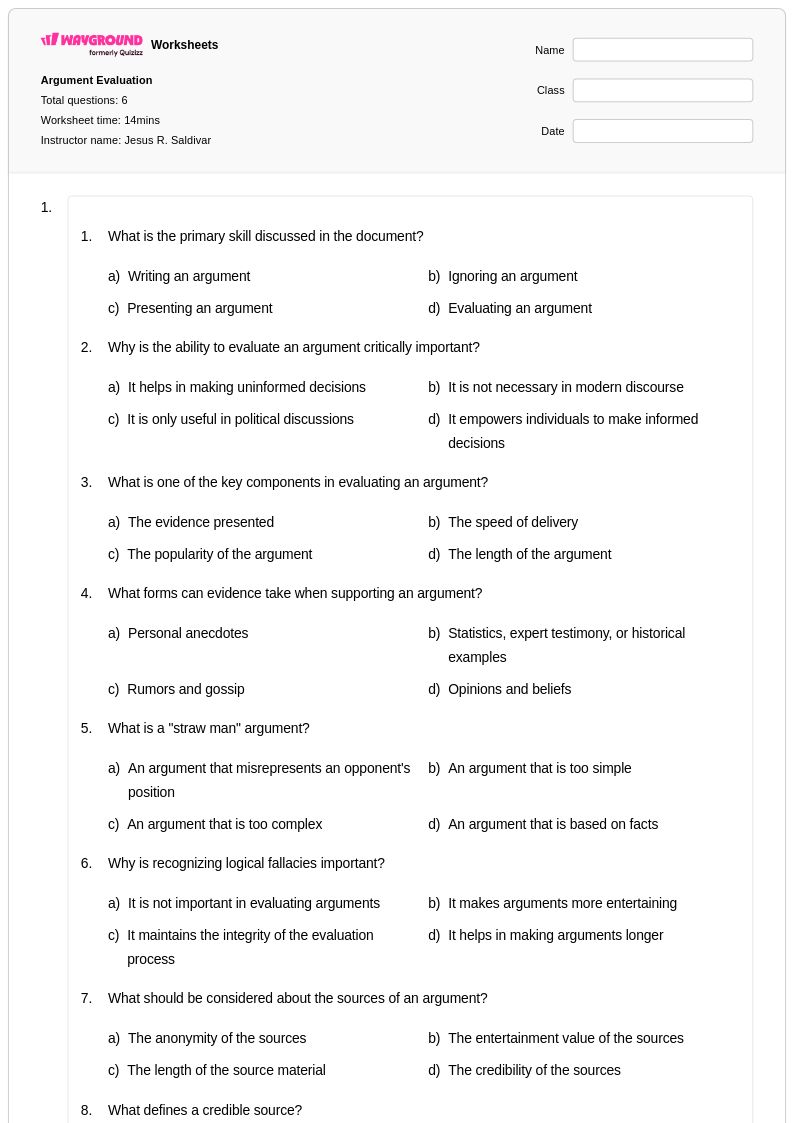
21 Q
12th
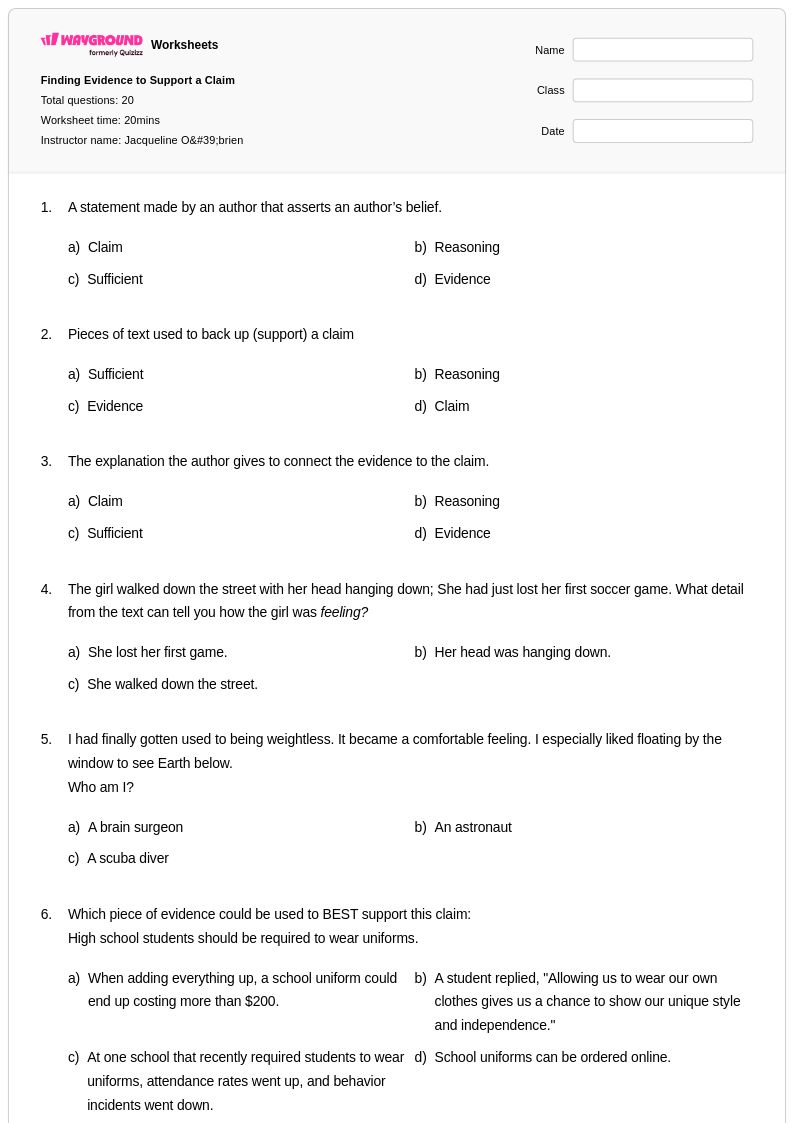
20 Q
9th - 12th
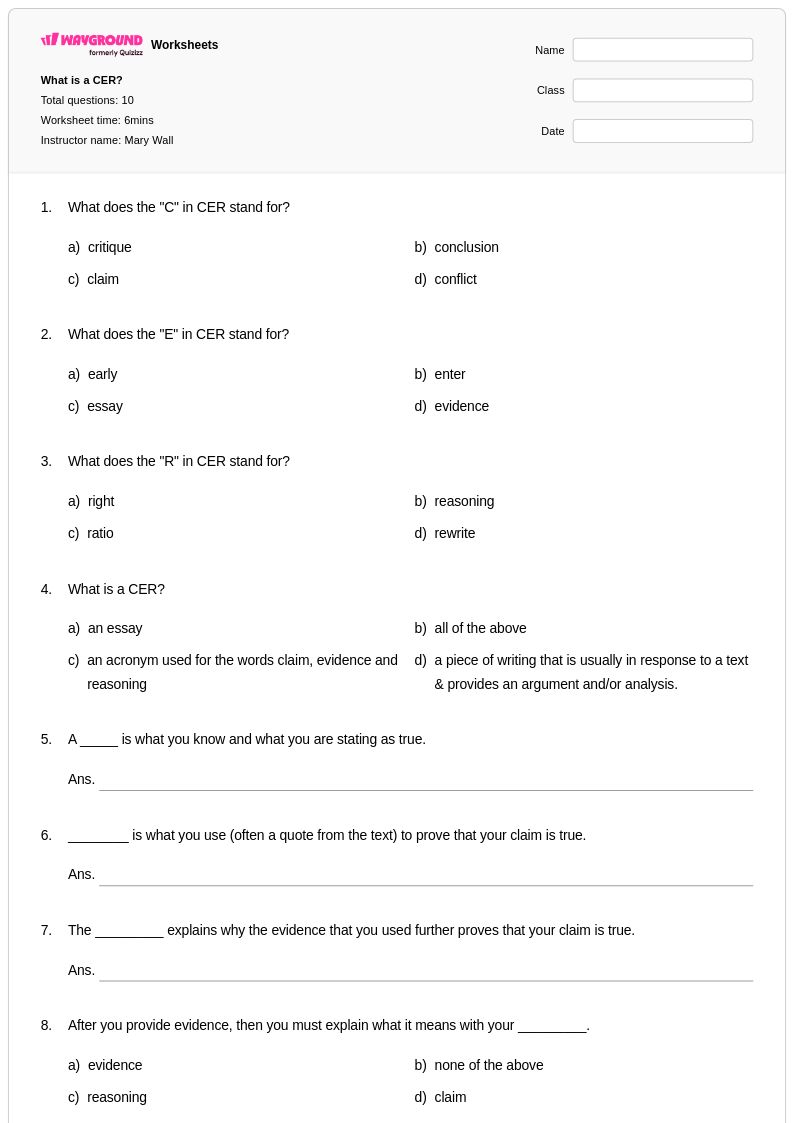
10 Q
9th - 12th
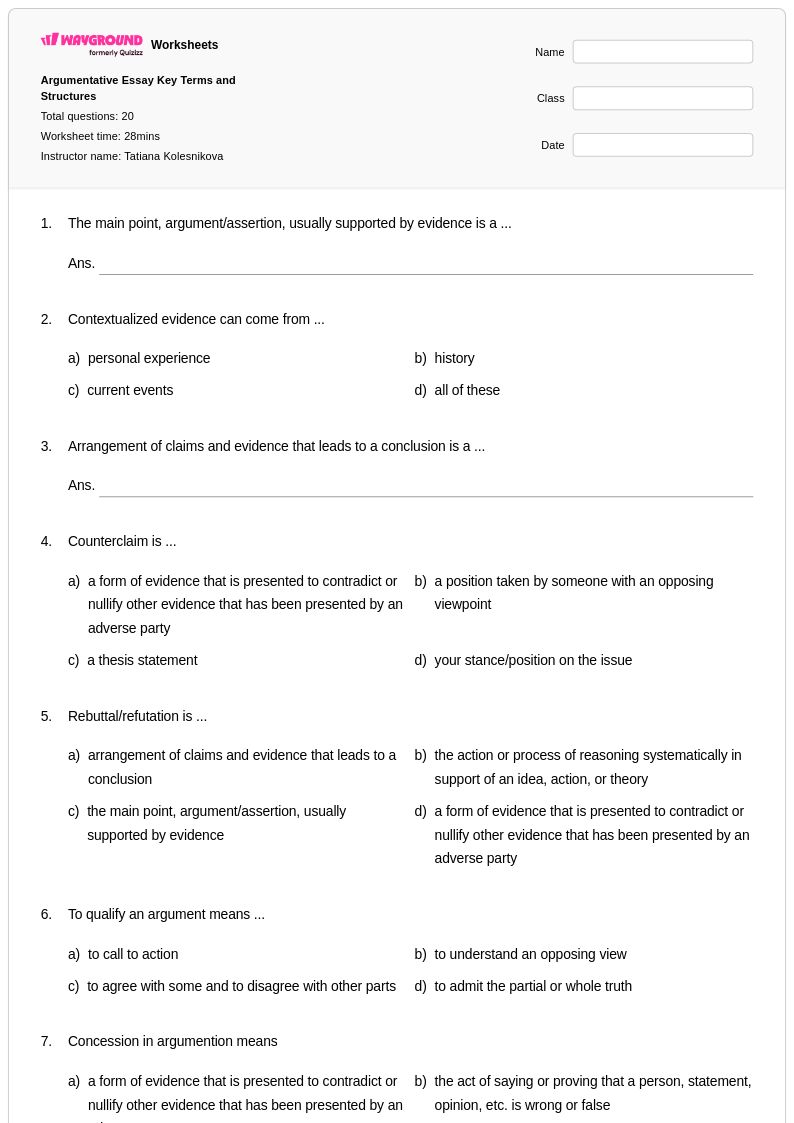
20 Q
11th - 12th
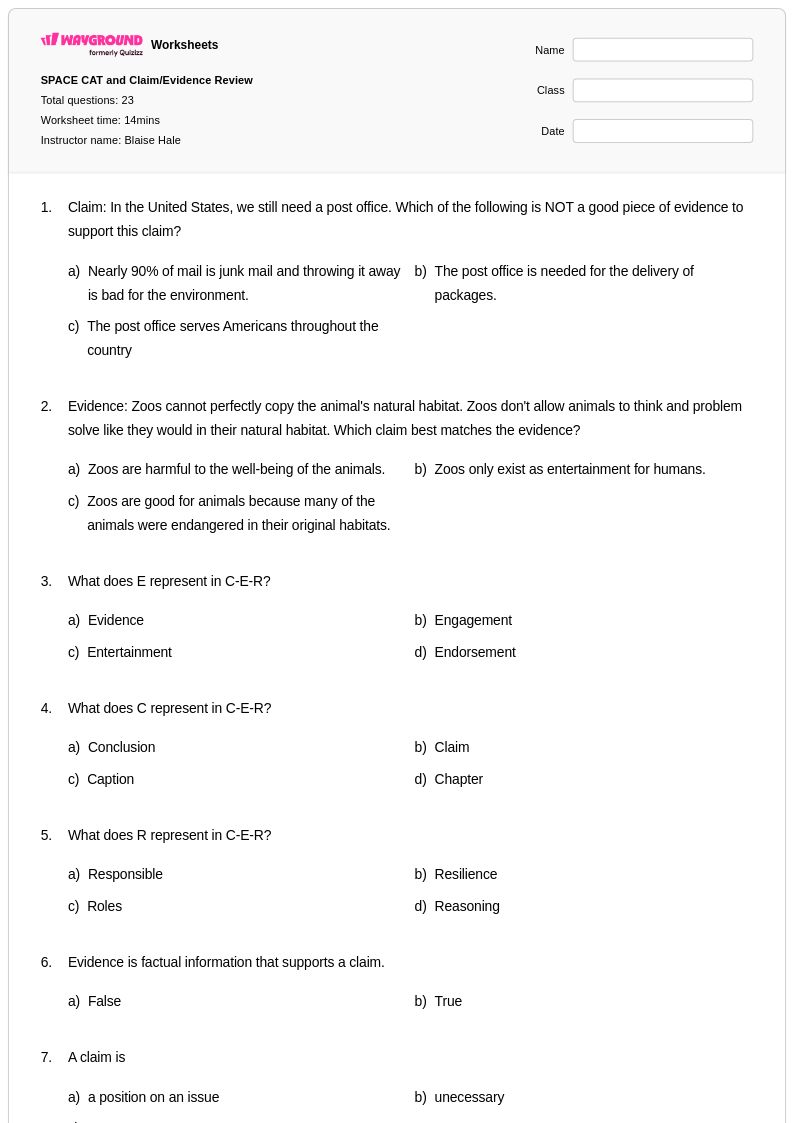
23 Q
11th - 12th
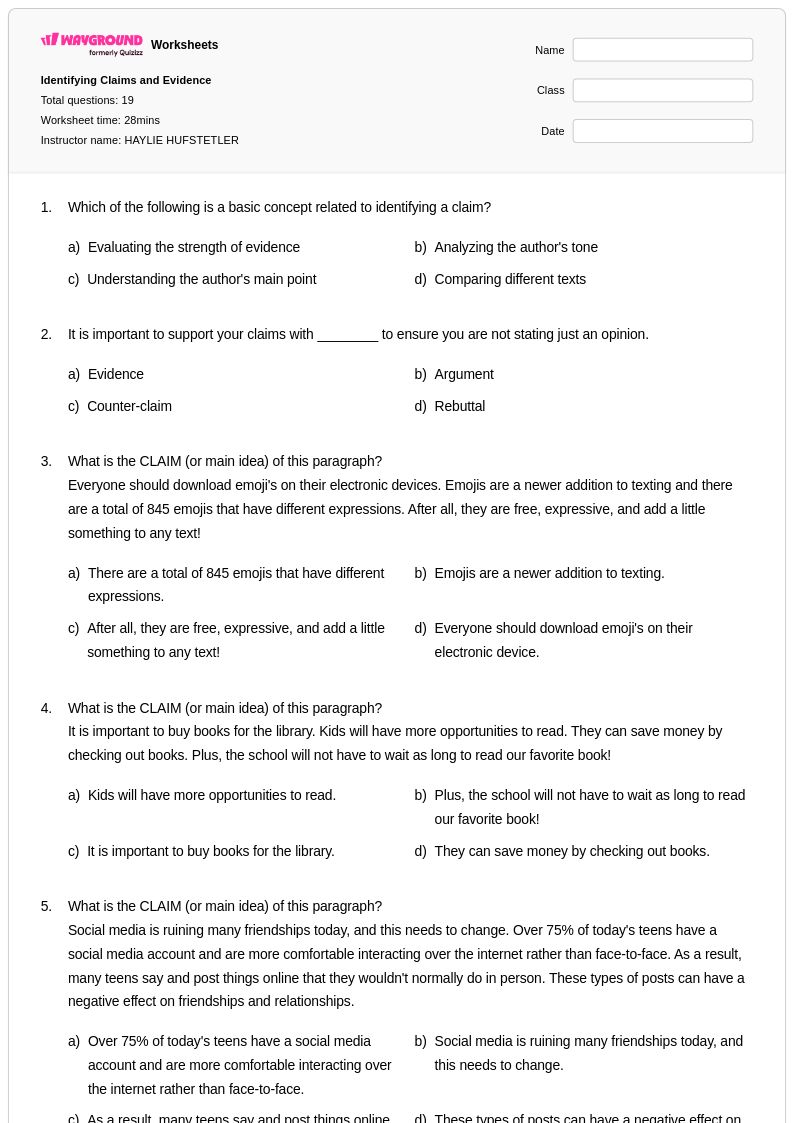
19 Q
7th - Uni
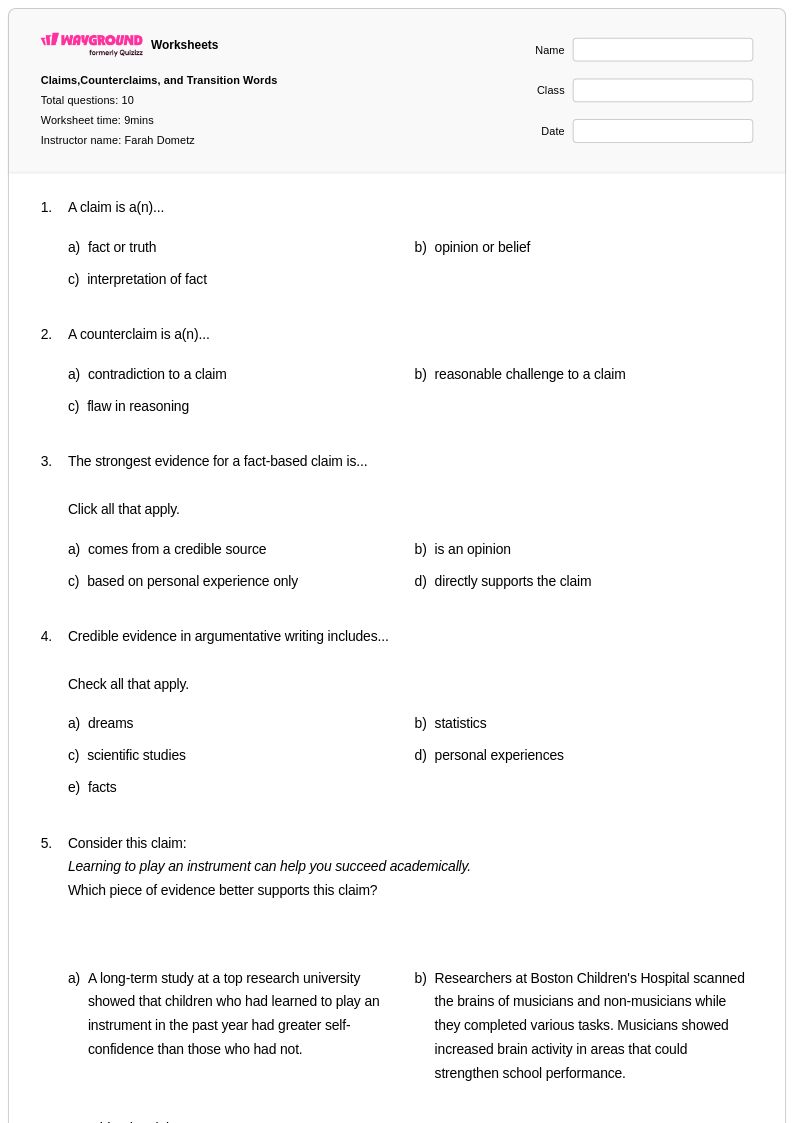
10 Q
9th - Uni
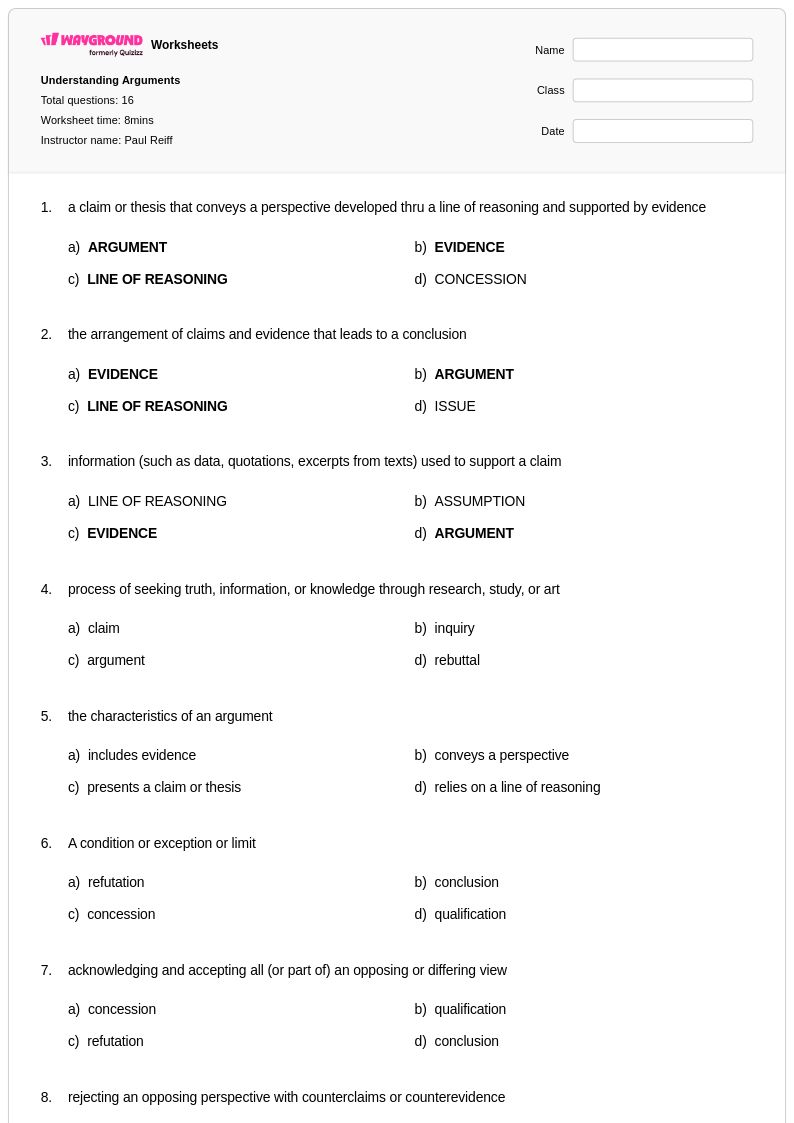
16 Q
9th - 12th
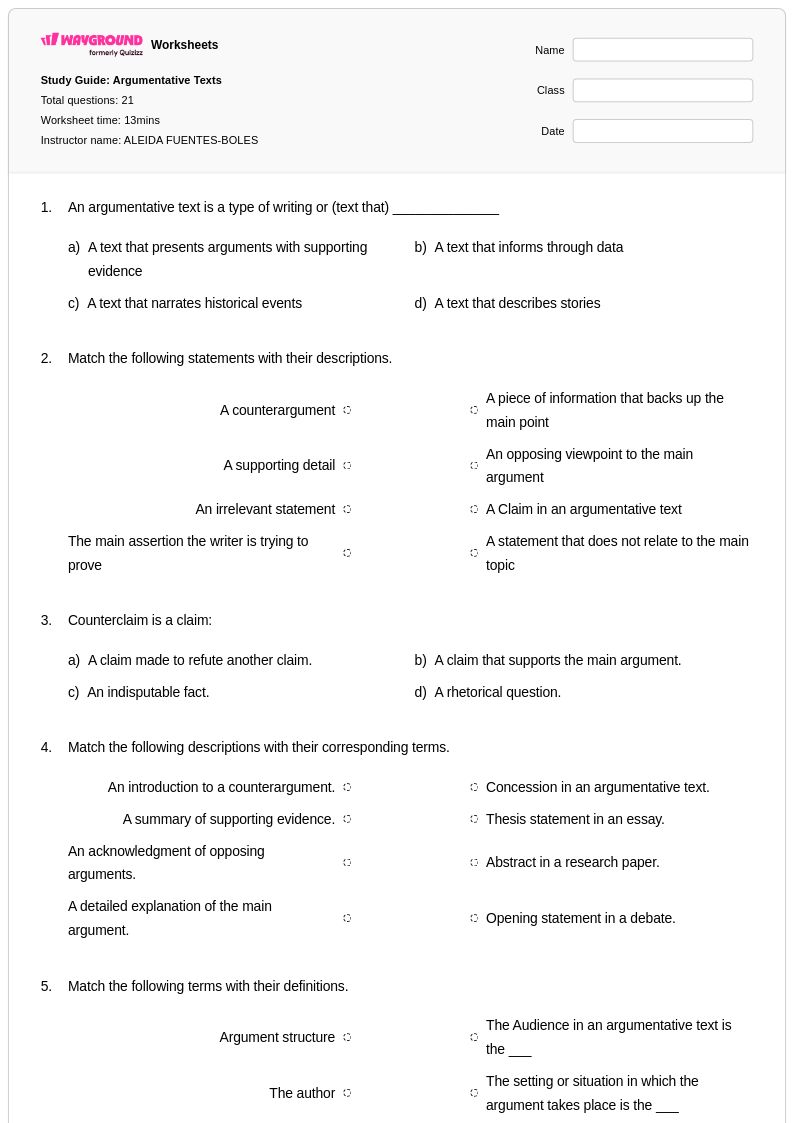
21 Q
12th
Explore Claims, Evidence, and Reasoning Worksheets by Grades
Explore Other Subject Worksheets for grade 12
Explore printable Claims, Evidence, and Reasoning worksheets for Grade 12
Claims, Evidence, and Reasoning worksheets for Grade 12 students available through Wayground (formerly Quizizz) provide comprehensive practice in the fundamental components of effective nonfiction writing and argumentation. These expertly designed resources strengthen students' ability to construct compelling arguments by teaching them to formulate clear, defensible claims, identify and evaluate credible evidence from multiple sources, and articulate logical reasoning that connects evidence to conclusions. The worksheets include varied practice problems that challenge students to analyze authentic texts, distinguish between strong and weak evidence, and craft sophisticated reasoning statements that demonstrate critical thinking skills. Each worksheet comes with detailed answer keys that support both independent study and classroom instruction, while the free printable format ensures accessibility for all learning environments.
Wayground's extensive collection of millions of teacher-created resources makes it effortless for educators to locate high-quality Claims, Evidence, and Reasoning materials tailored specifically for Grade 12 English instruction. The platform's advanced search and filtering capabilities allow teachers to quickly identify worksheets that align with curriculum standards and meet diverse student needs, while built-in differentiation tools enable customization for varying skill levels within the classroom. These versatile resources are available in both printable pdf format and interactive digital versions, providing flexibility for traditional homework assignments, in-class practice sessions, or remote learning scenarios. Teachers can seamlessly integrate these worksheets into lesson planning for initial skill introduction, targeted remediation for struggling students, or enrichment activities for advanced learners, ensuring that all students develop mastery of these essential nonfiction writing skills.
FAQs
How do I teach claims, evidence, and reasoning to students?
What exercises help students practice constructing claims, evidence, and reasoning?
What mistakes do students commonly make with claims, evidence, and reasoning?
How can I use CER worksheets to support students who struggle with argumentative writing?
How do I use claims, evidence, and reasoning worksheets from Wayground in my classroom?
How is reasoning different from evidence in a CER argument?