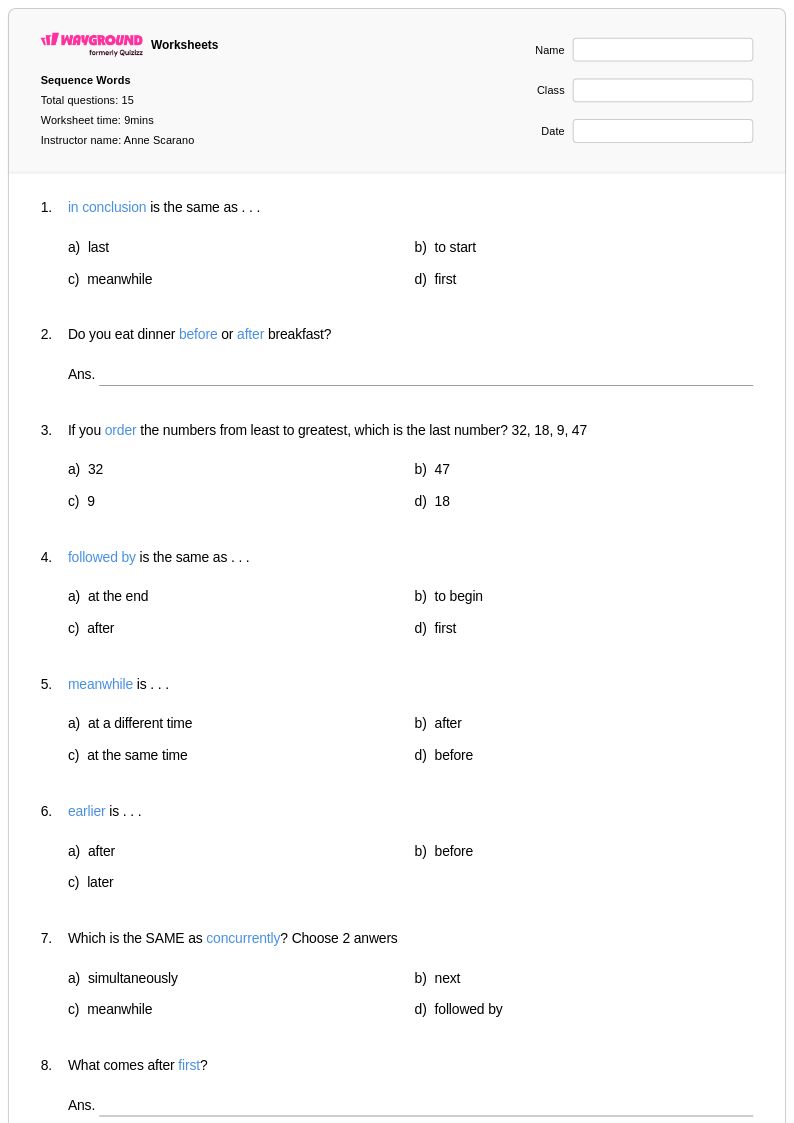
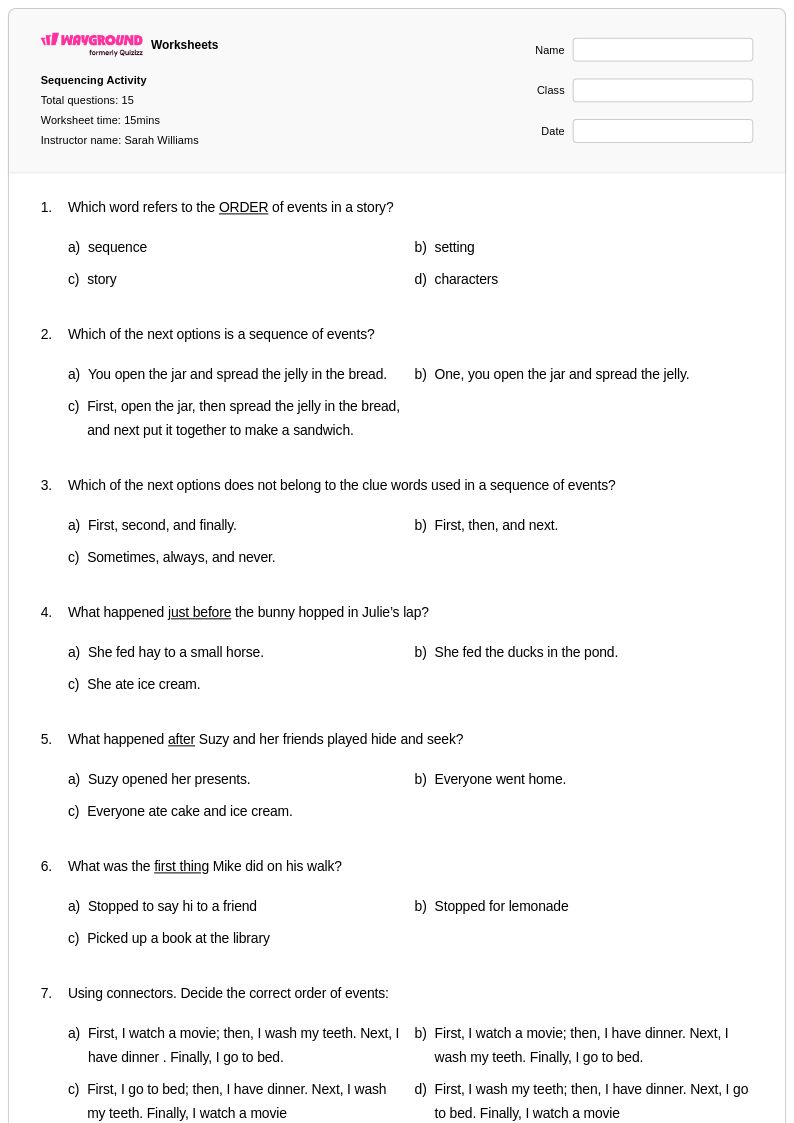
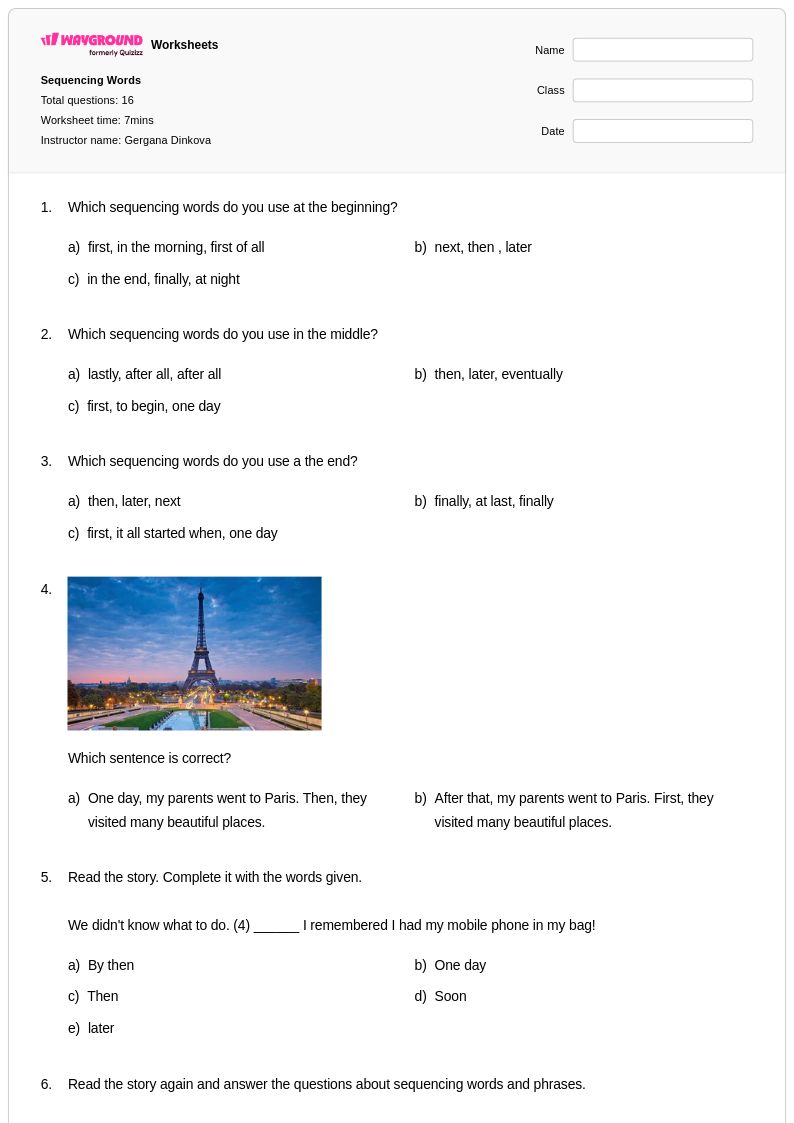
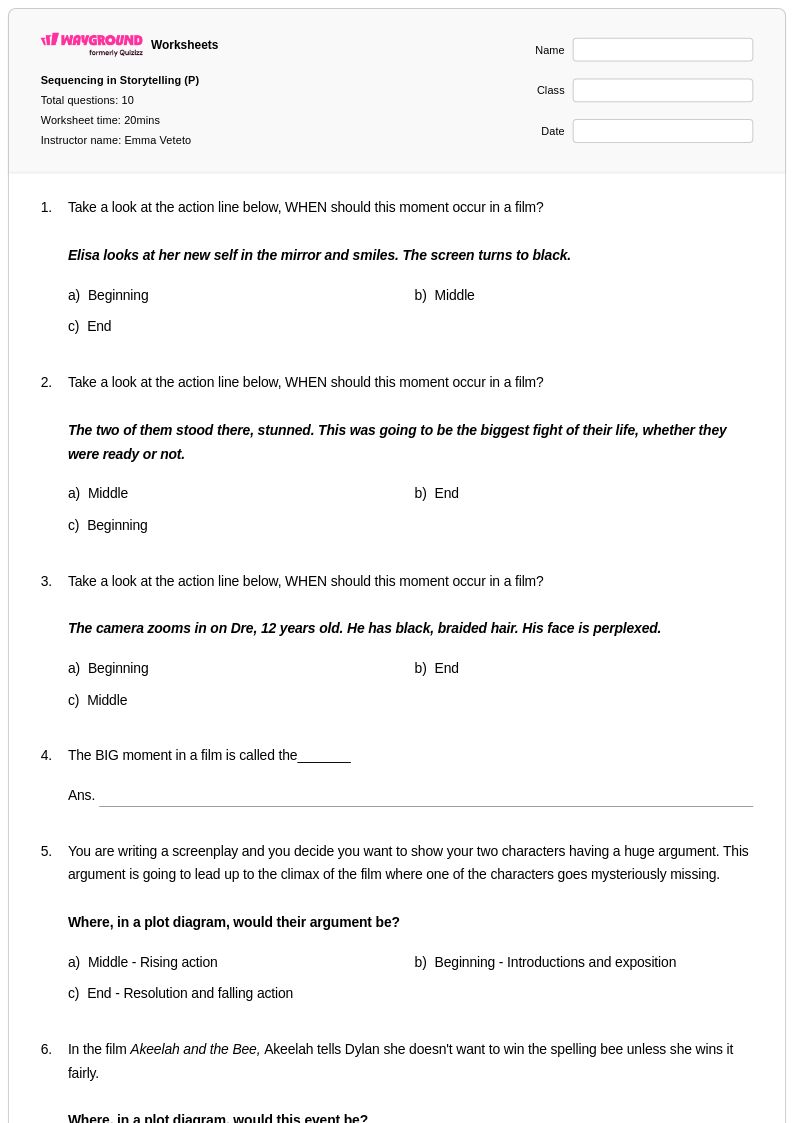
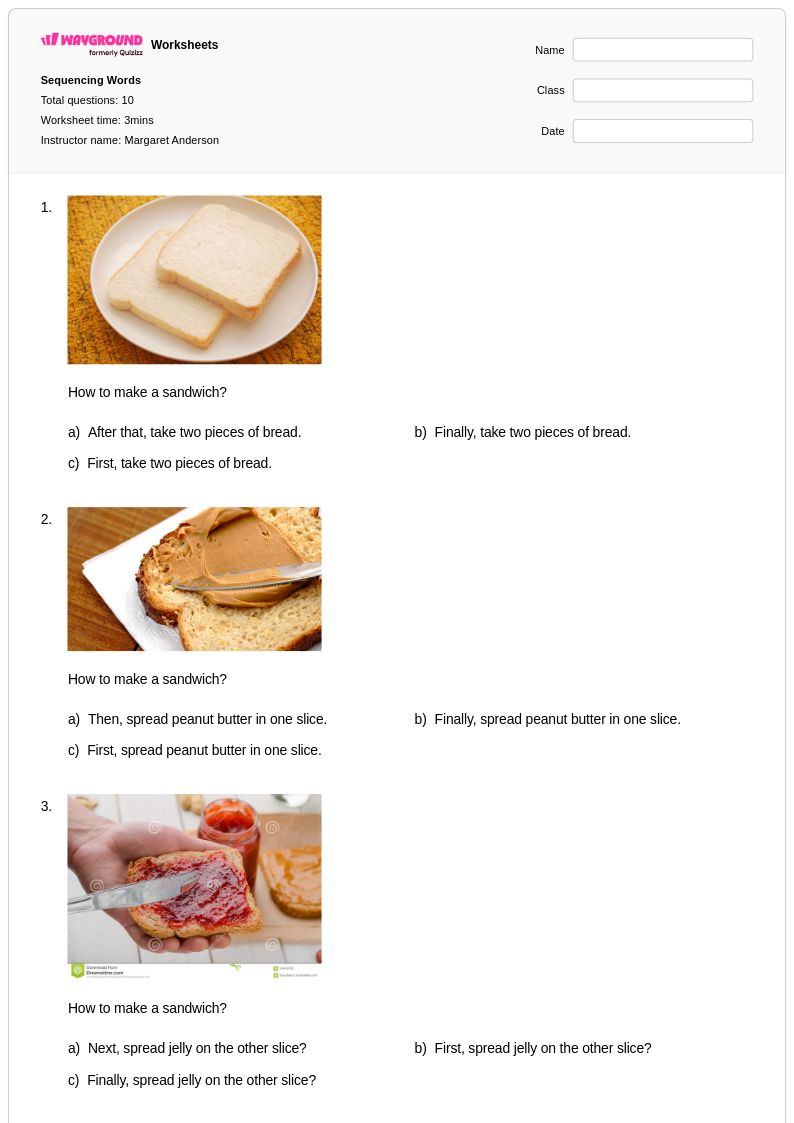
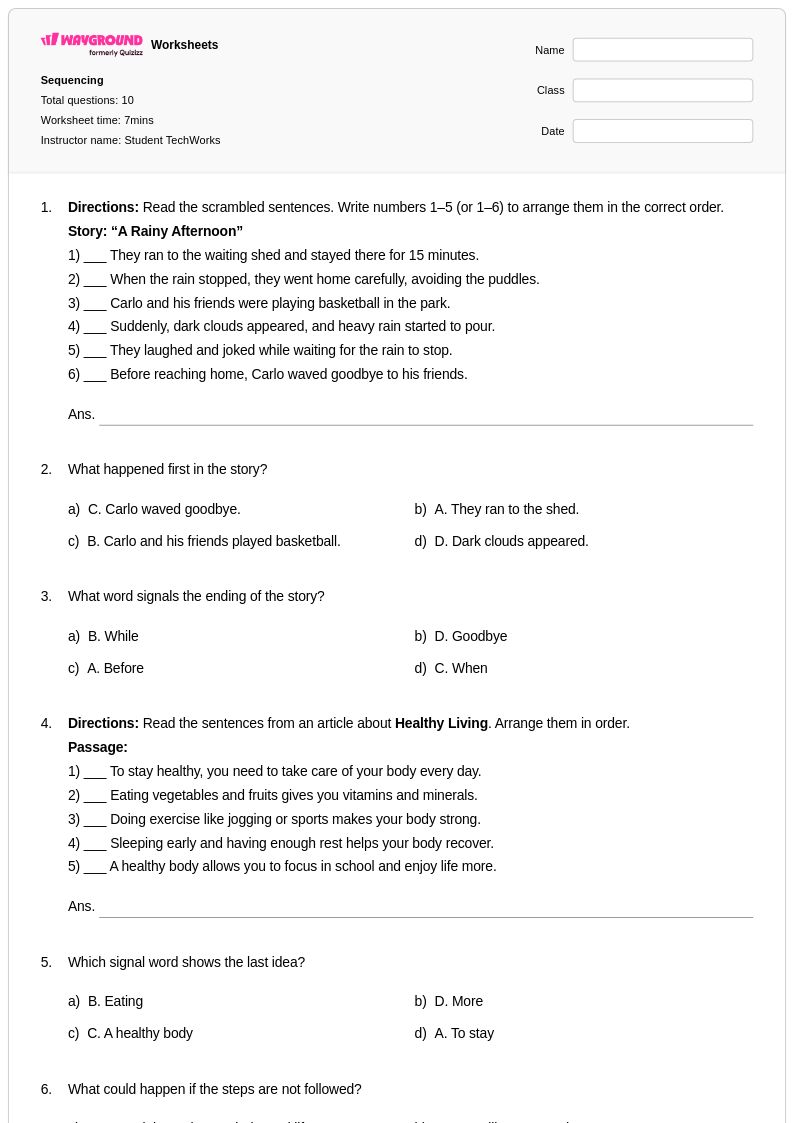
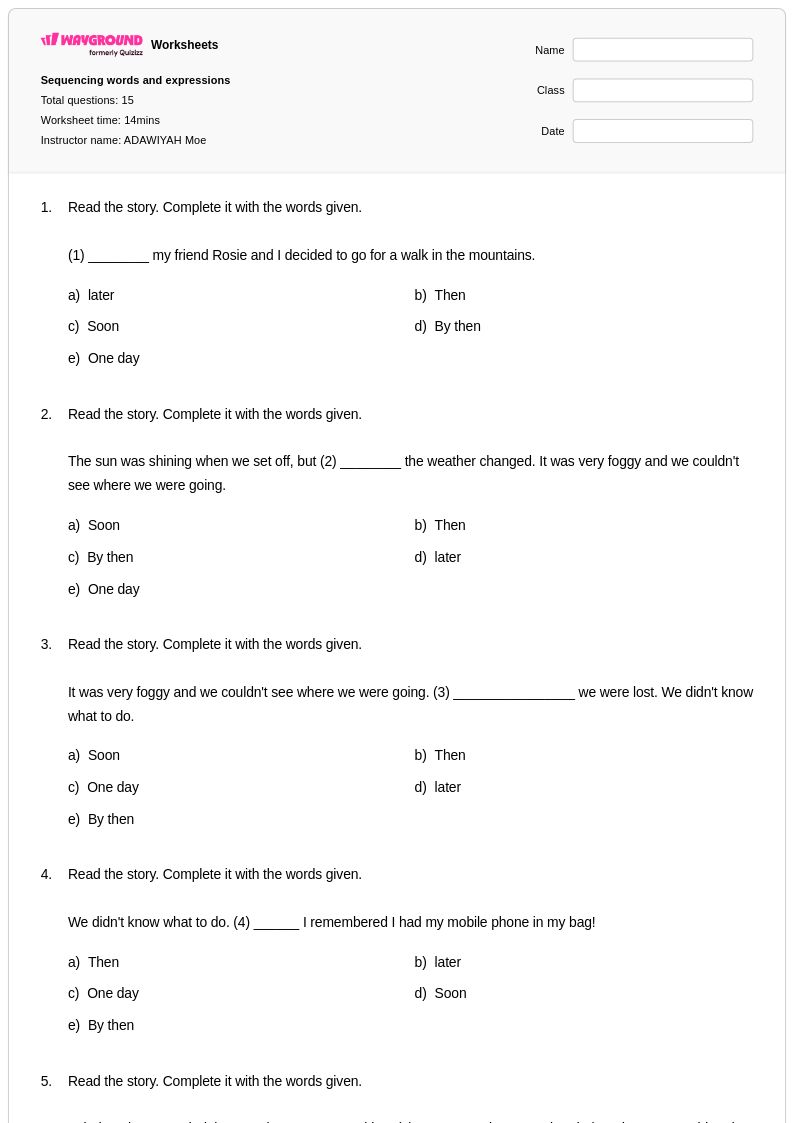
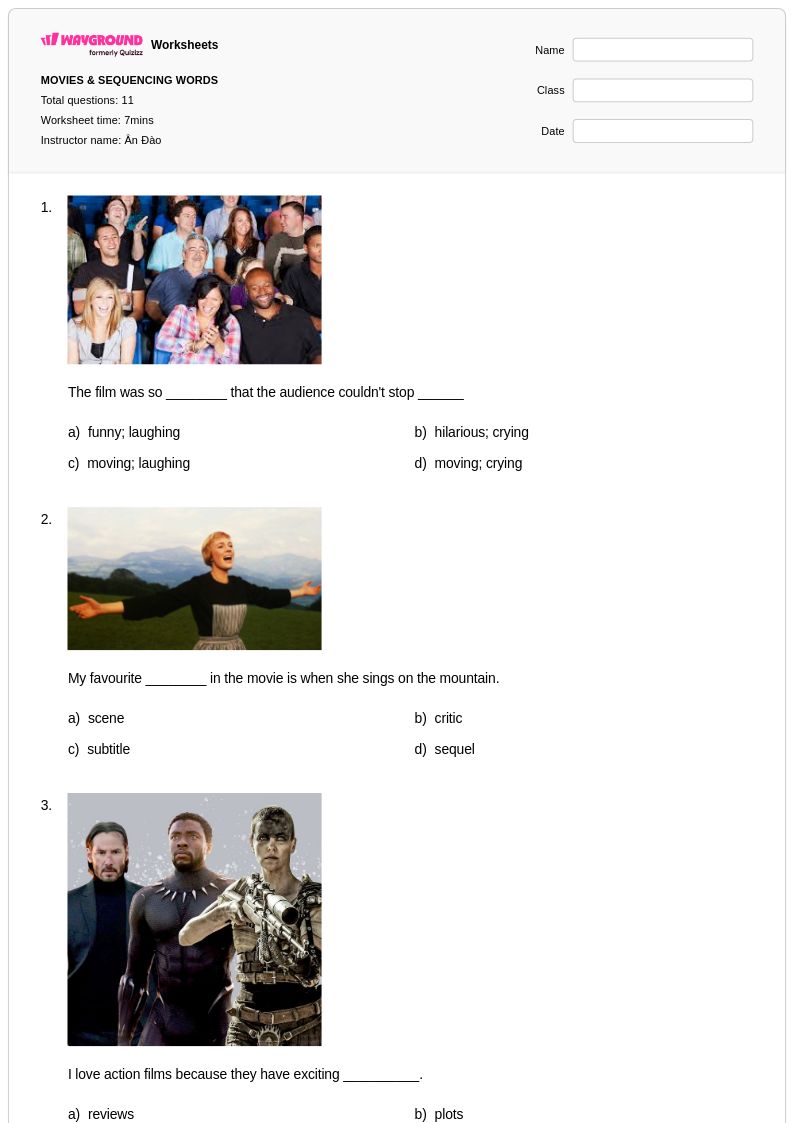
Enhance your Grade 7 students' sequencing skills with Wayground's comprehensive collection of free worksheets and printables that provide targeted practice problems and answer keys to master proper writing organization and structure through engaging PDF exercises.
Explore printable Sequencing worksheets for Grade 7
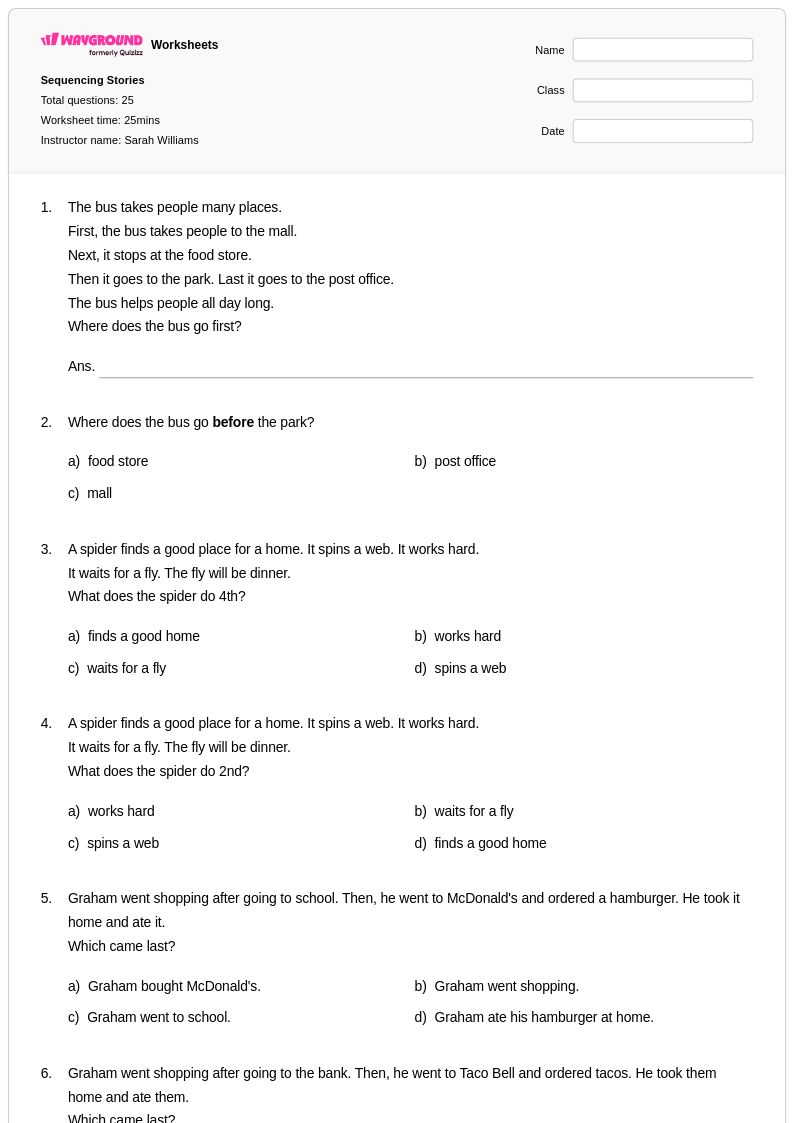
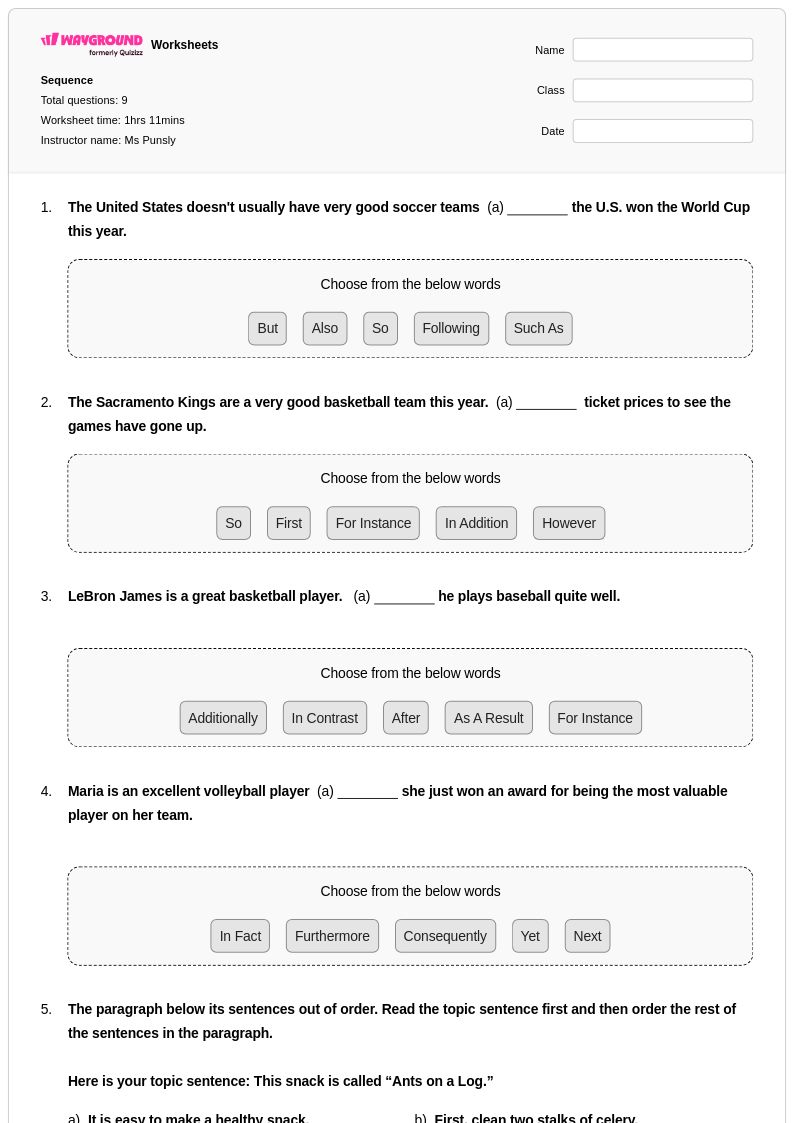
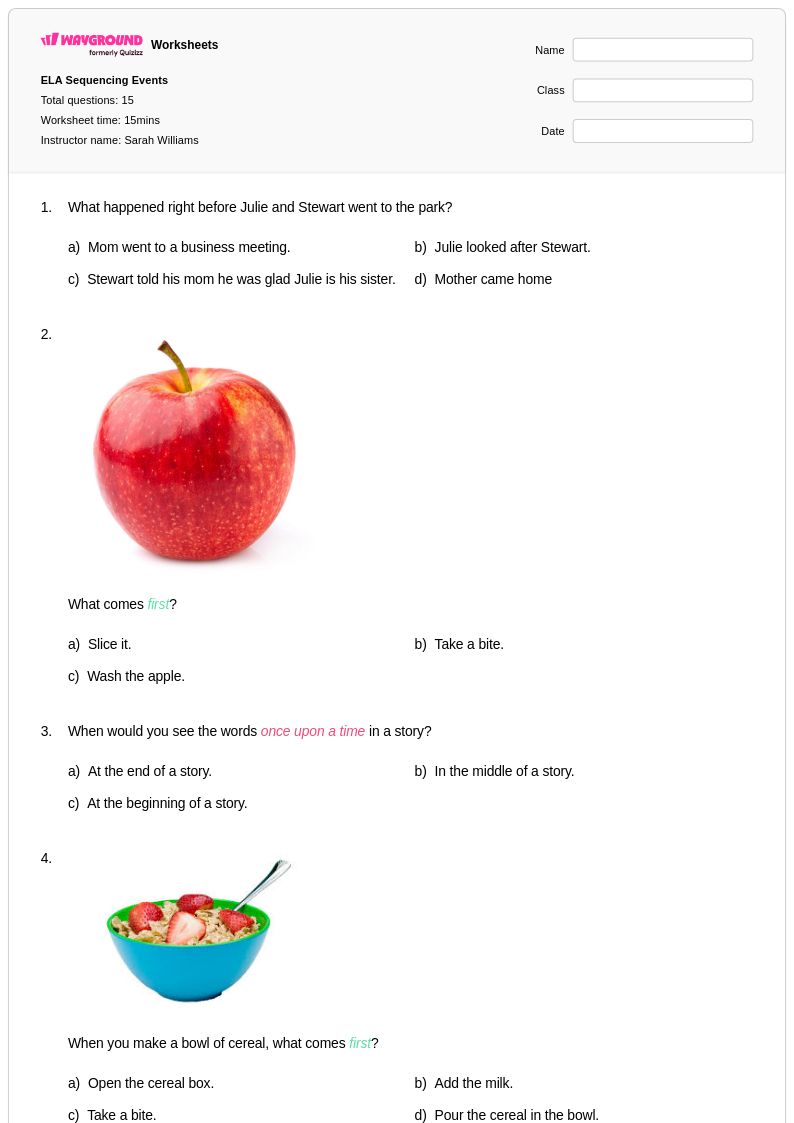
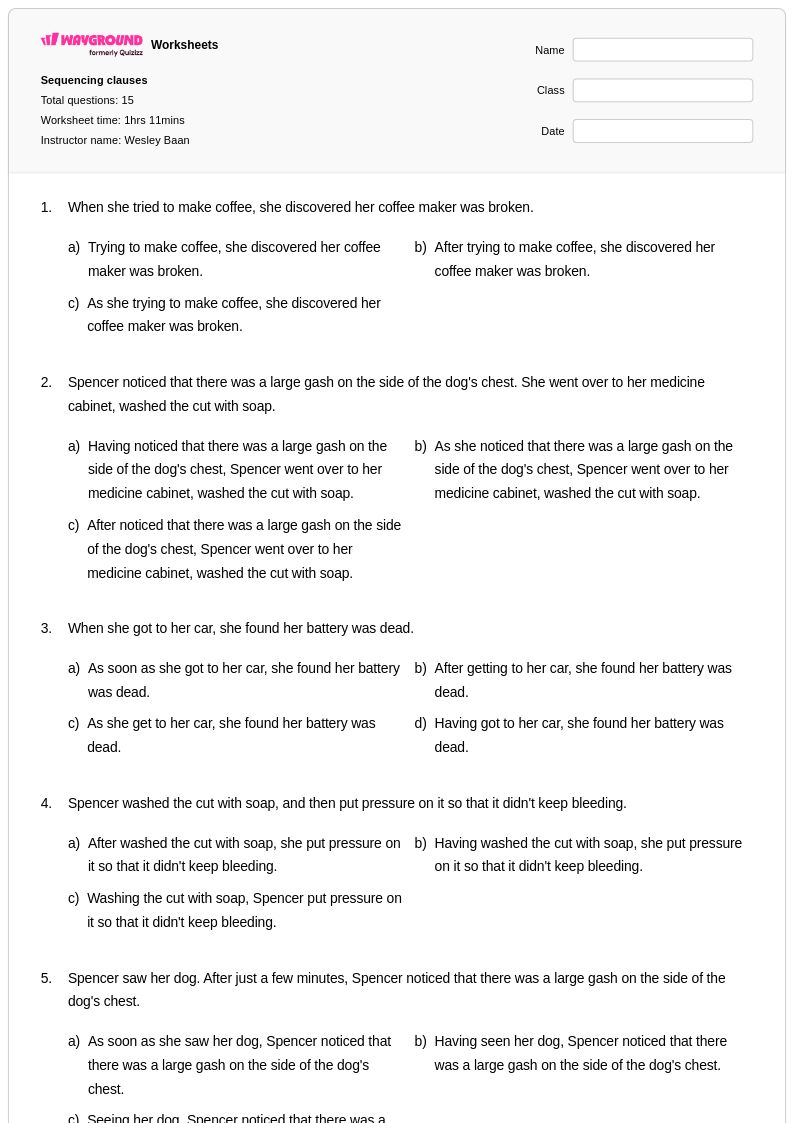
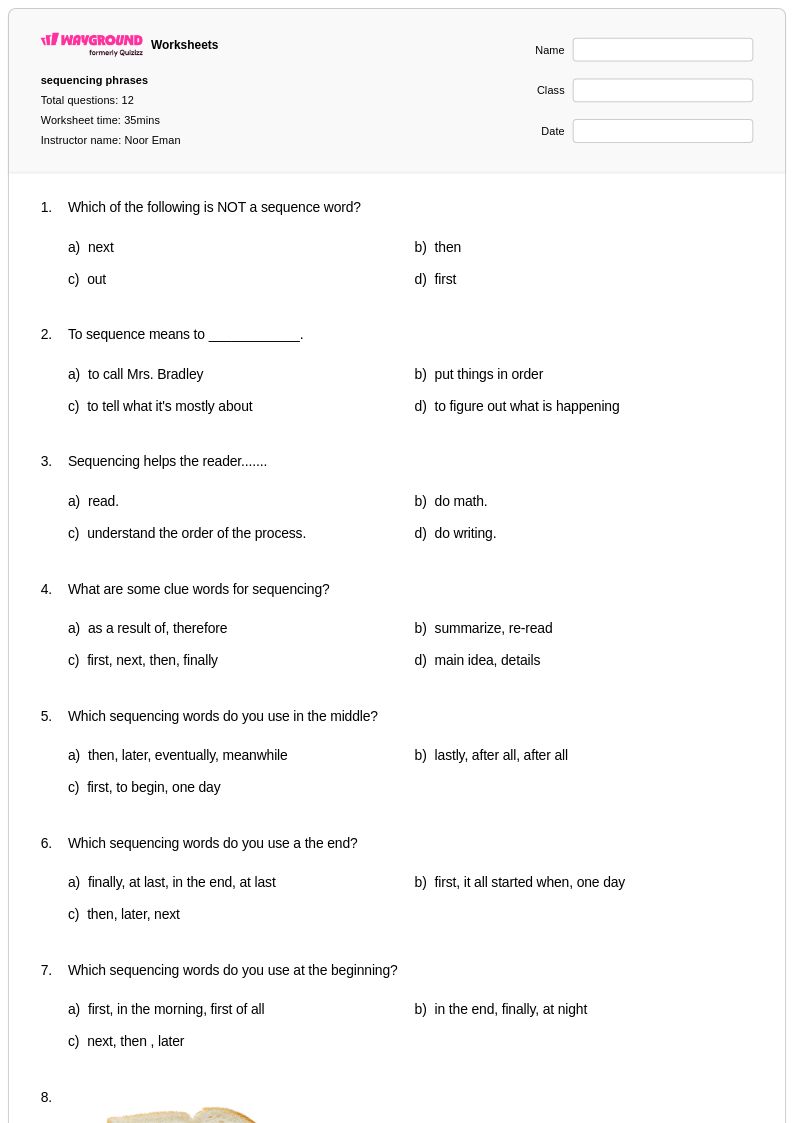
Sequencing worksheets for Grade 7 students available through Wayground (formerly Quizizz) provide essential practice in organizing ideas, events, and information in logical order within written compositions. These comprehensive resources strengthen students' ability to arrange narrative elements chronologically, organize expository content from general to specific or cause to effect, and structure persuasive arguments with appropriate transitions and flow. The practice problems included in these printable materials challenge seventh graders to identify proper sequence in existing texts, rearrange jumbled paragraphs into coherent order, and create original writing that demonstrates clear organizational patterns. Each worksheet collection includes detailed answer keys and is available as free pdf downloads, making them accessible for both classroom instruction and independent study sessions focused on developing stronger writing organization skills.
Wayground (formerly Quizizz) supports educators with millions of teacher-created sequencing and writing organization resources specifically designed for Grade 7 English instruction. The platform's robust search and filtering capabilities allow teachers to quickly locate materials aligned with specific writing standards and learning objectives, while differentiation tools enable customization for students at varying skill levels within the same classroom. These sequencing worksheets are available in both printable pdf formats for traditional paper-based activities and digital formats for interactive online practice, providing flexibility for diverse teaching environments and learning preferences. Teachers utilize these resources for targeted skill practice during writing workshops, remediation support for students struggling with organizational concepts, and enrichment activities that challenge advanced learners to master complex sequencing techniques essential for effective written communication.
FAQs
How do I teach sequencing to students?
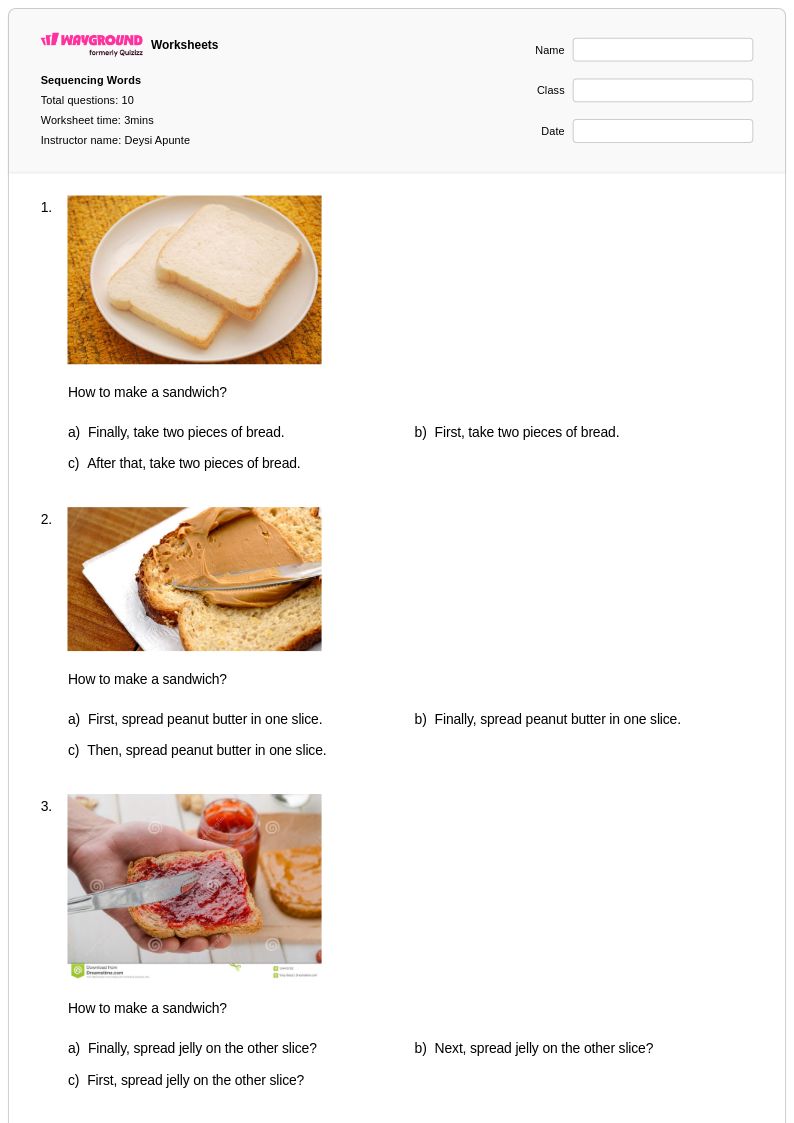
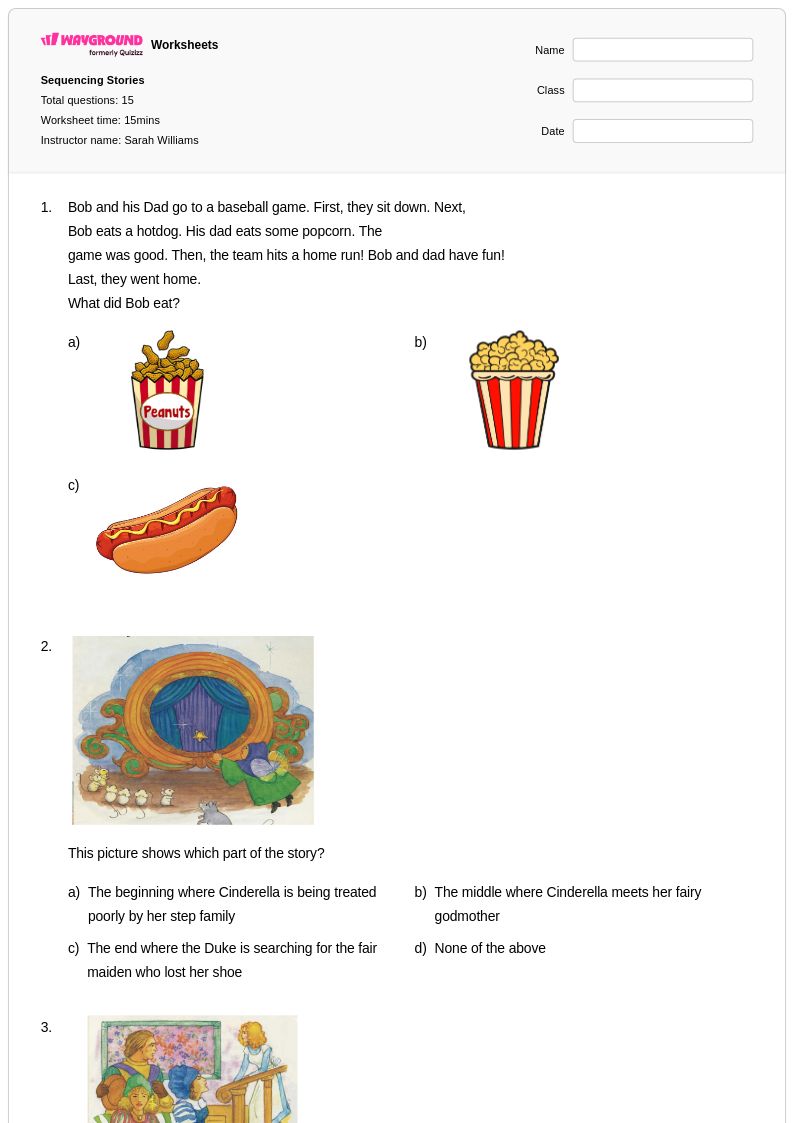
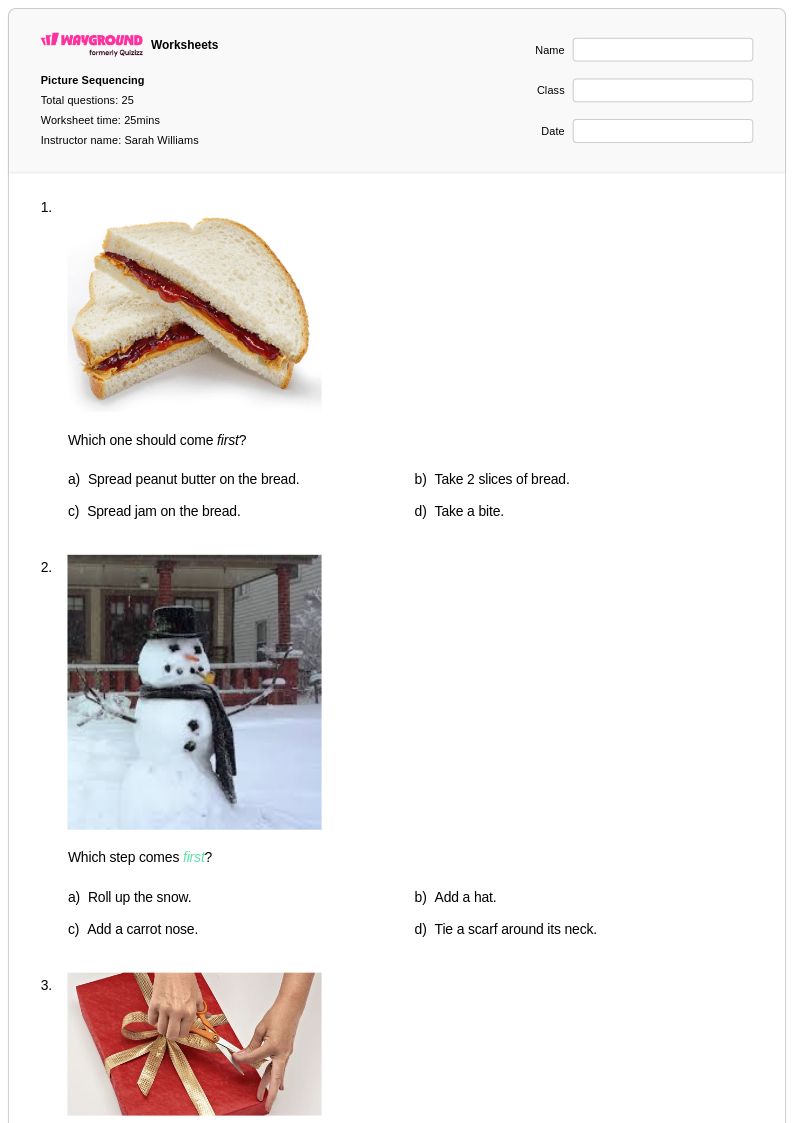
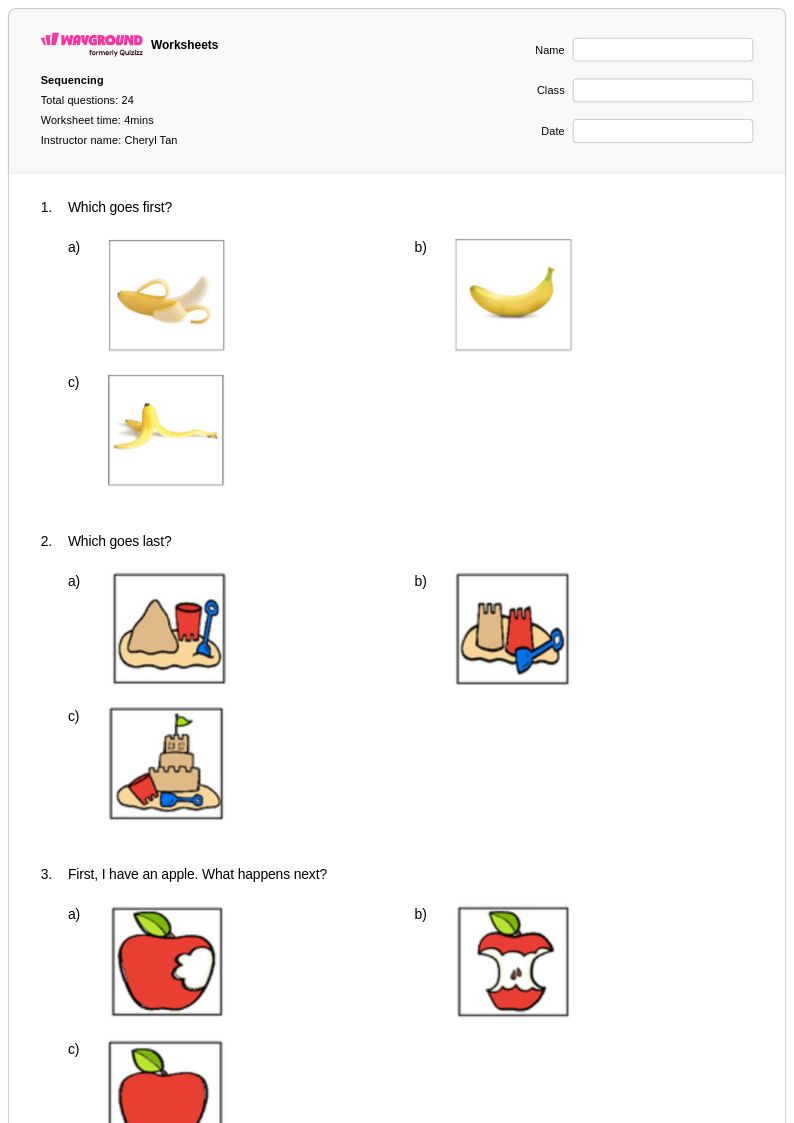
Sequencing is best taught by starting with familiar, concrete processes students already know, such as how to make a sandwich or the steps in a morning routine, before moving to text-based sequencing tasks. Introduce signal words like 'first,' 'next,' 'then,' and 'finally' explicitly, and model how to identify them within narratives and informational passages. Gradually increase complexity by moving from picture sequencing to sentence-level ordering to multi-paragraph texts.
What exercises help students practice sequencing?
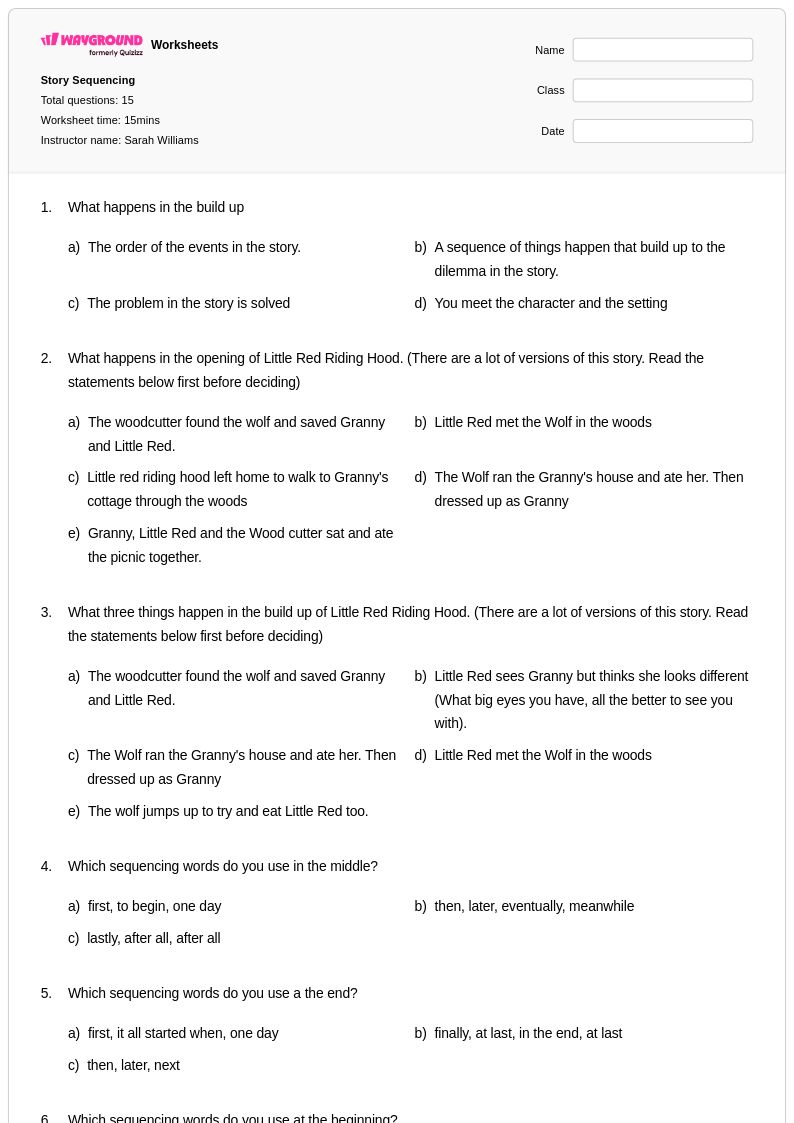
Effective sequencing practice includes scrambled sentence activities where students reorder events from a story, cut-and-paste tasks for sequencing procedural steps, and retelling exercises where students summarize events in order. Worksheets that ask students to arrange story events on a timeline or fill in missing steps in a multi-step process are especially useful for reinforcing chronological and procedural order across different text types.
What common mistakes do students make with sequencing?
Students frequently rely on surface-level clues rather than comprehending the full passage, which leads them to misplace events that lack obvious signal words. Another common error is confusing cause-and-effect relationships with chronological order, especially in complex narratives or science-based procedural texts. Students also struggle with multi-step processes where intermediate steps seem interchangeable, making it critical to practice explaining why order matters, not just what the order is.
How do I use Wayground's sequencing worksheets in my classroom?
Wayground's sequencing worksheets are available as printable PDFs for traditional classroom use and in digital formats for technology-integrated environments, giving you flexibility depending on your setting. You can assign them as independent practice, use them for small-group remediation with struggling readers, or host them as a quiz directly on Wayground for interactive assessment. Answer keys are included with each worksheet, making it straightforward to check student work or use the activity for self-paced learning.
How can I differentiate sequencing instruction for students at different reading levels?
Differentiation for sequencing starts with adjusting text complexity: use simple, familiar narratives for struggling readers and content-area or multi-step procedural texts for advanced students. On Wayground, teachers can filter resources by skill focus and text complexity to match materials to student readiness. For students who need additional support during digital assignments, Wayground also offers accommodations such as read-aloud, reduced answer choices, and extended time, which can be configured individually per student without affecting the rest of the class.
How does sequencing connect to reading comprehension and writing skills?
Sequencing is a foundational comprehension skill because understanding the order of events is essential for retelling, summarizing, and making inferences about cause-and-effect relationships in a text. In writing, students who can sequence ideas logically produce more organized paragraphs and clearer procedural or narrative compositions. Practicing sequencing across both reading and writing tasks reinforces that logical order is not just a text feature to identify but a structure students themselves need to control as writers.