Free Printable Comparing and Ordering Length worksheets
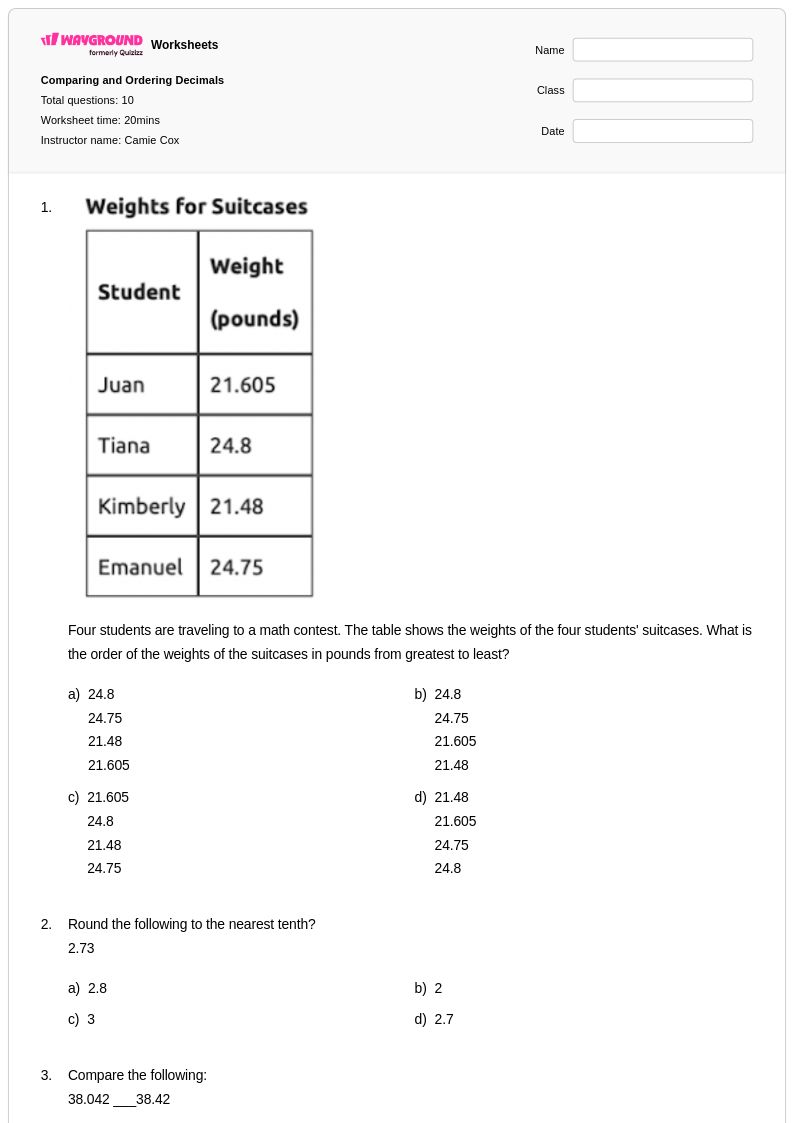
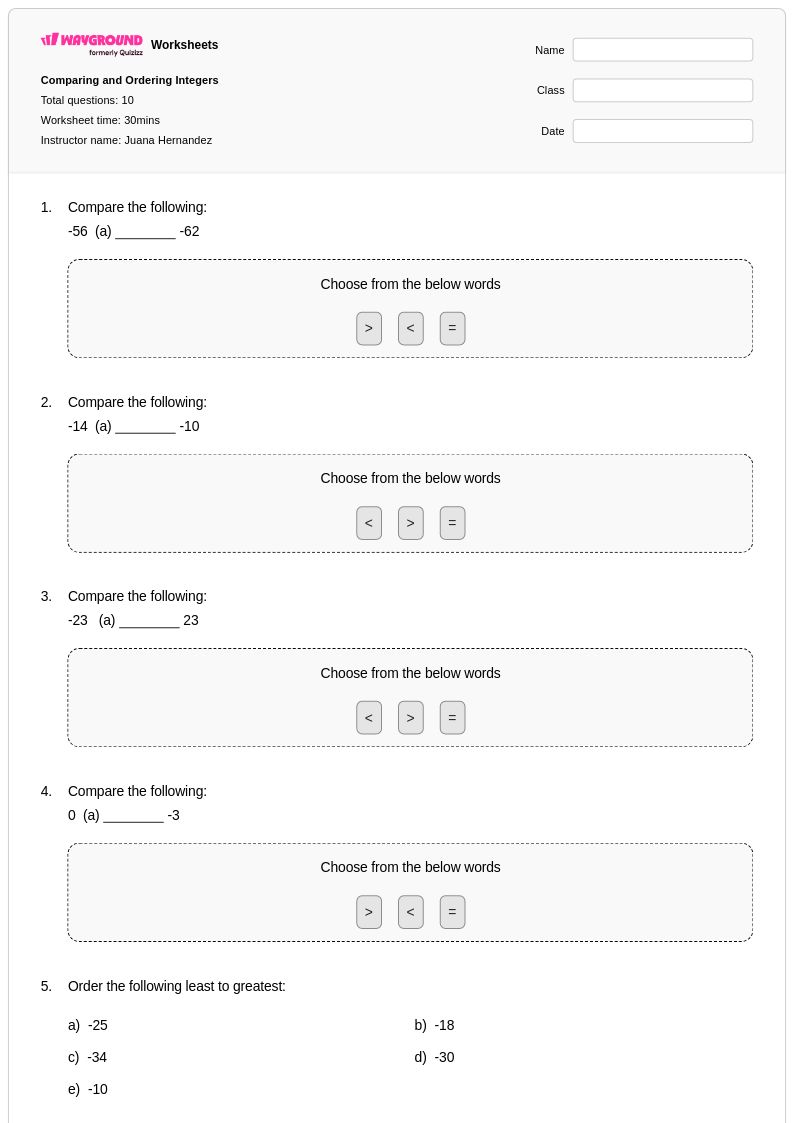
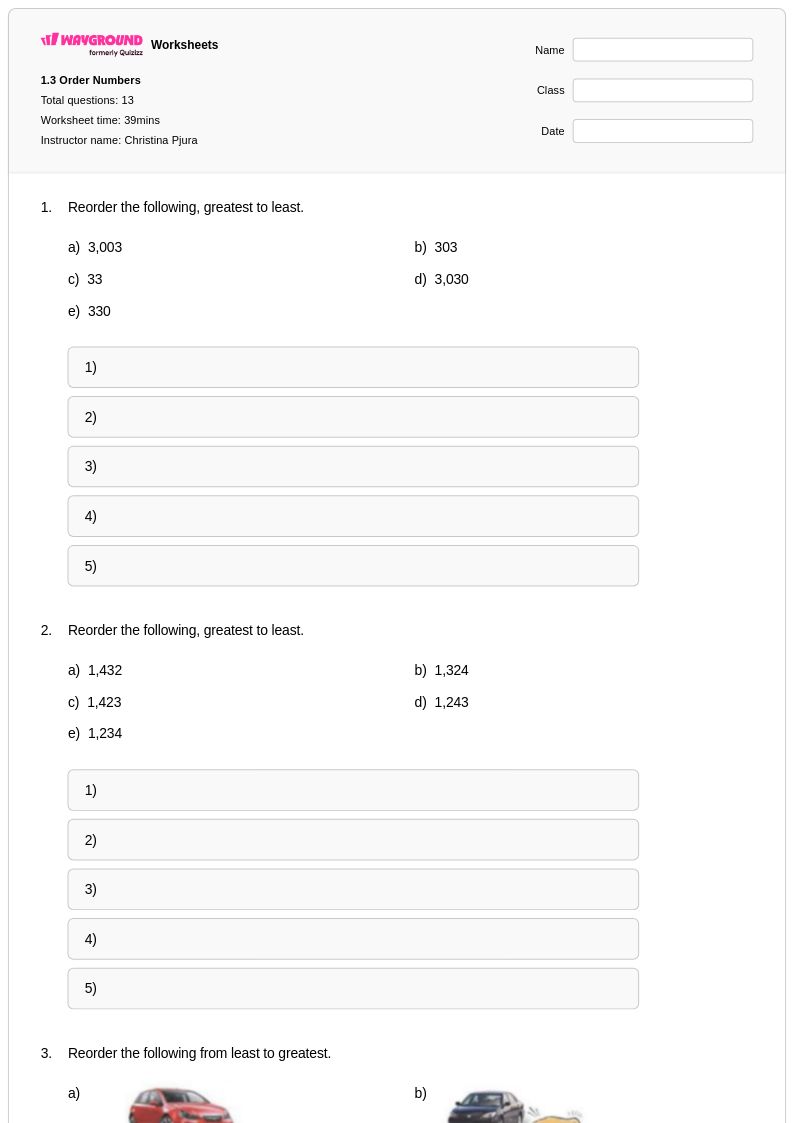
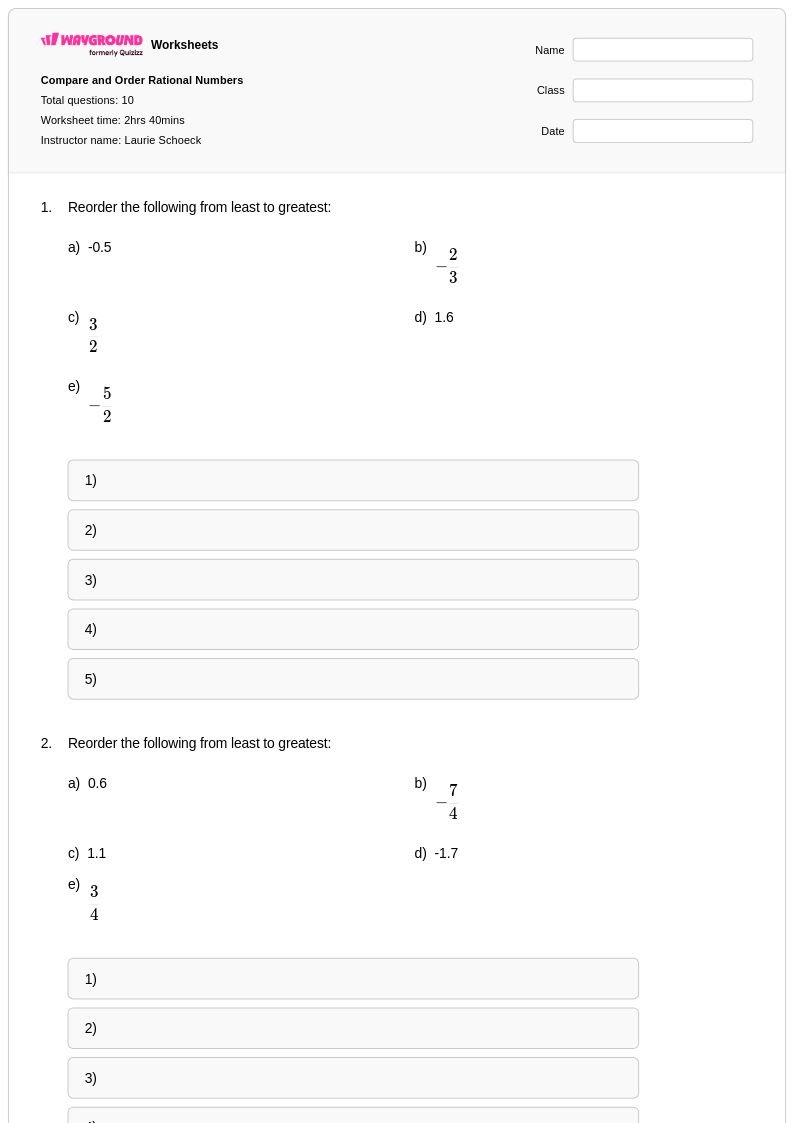
Explore Wayground's free printable worksheets and practice problems that help students master comparing and ordering length through engaging exercises with comprehensive answer keys and downloadable PDFs.
Explore printable Comparing and Ordering Length worksheets
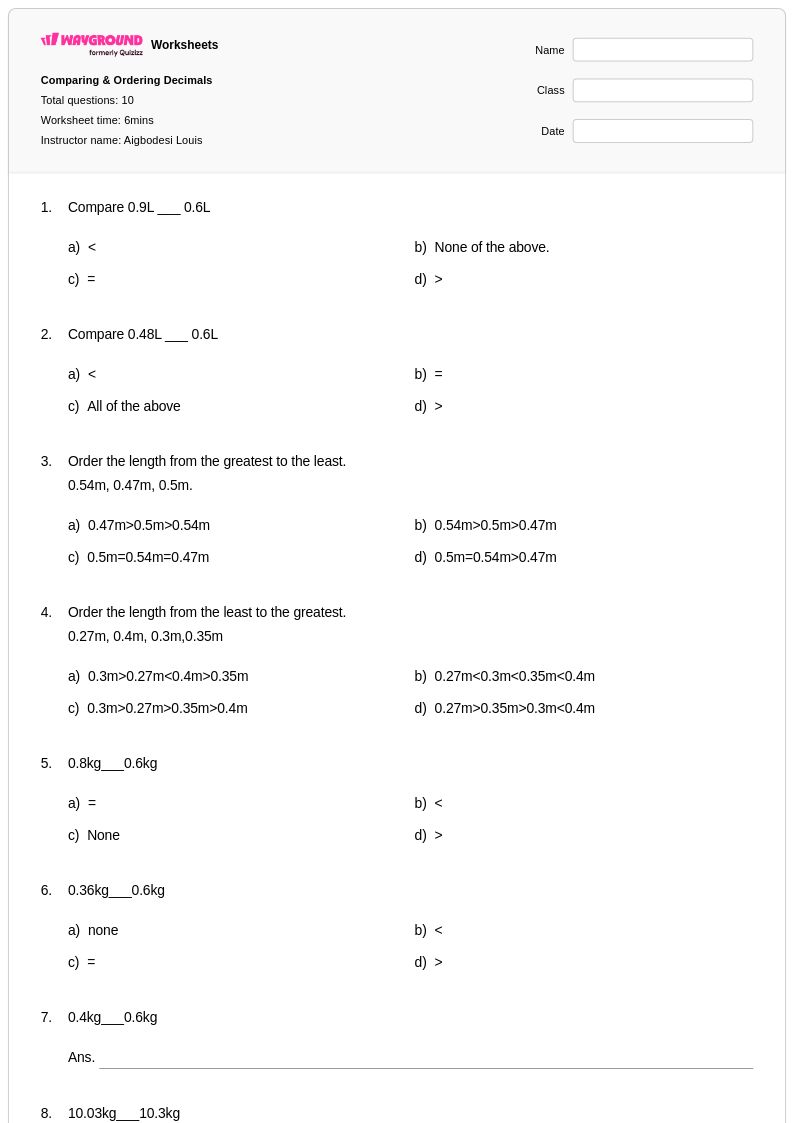
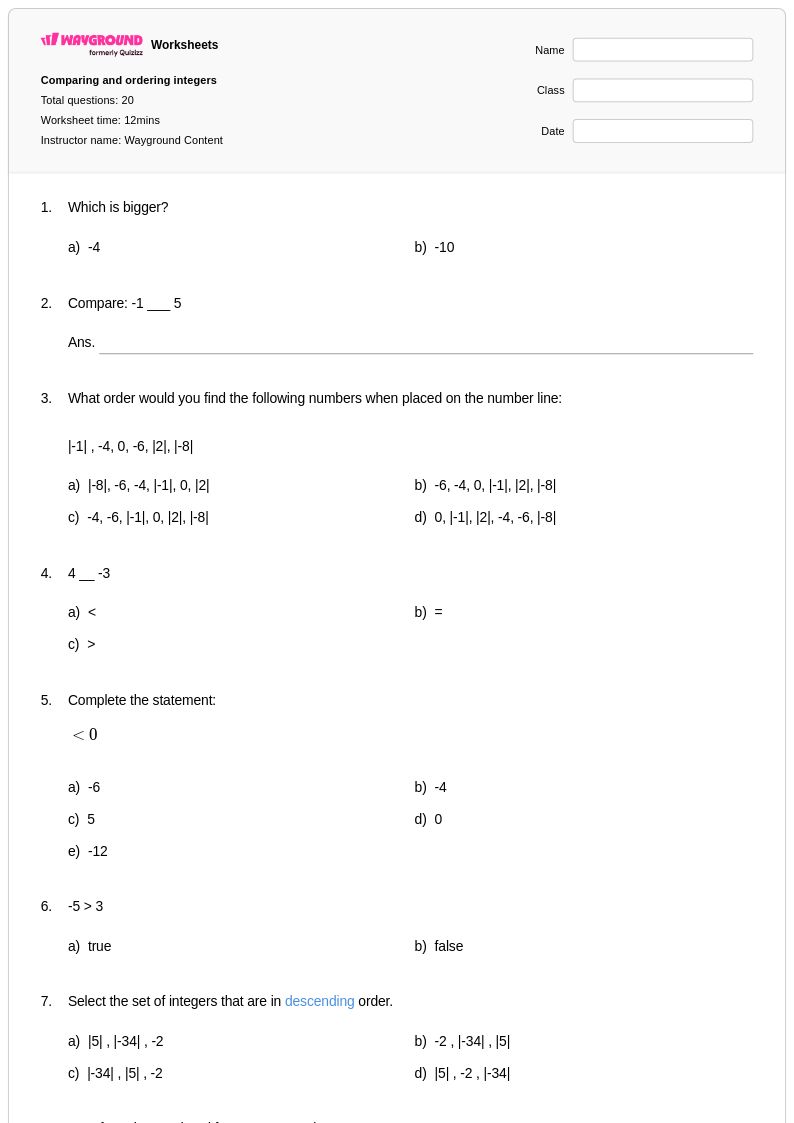
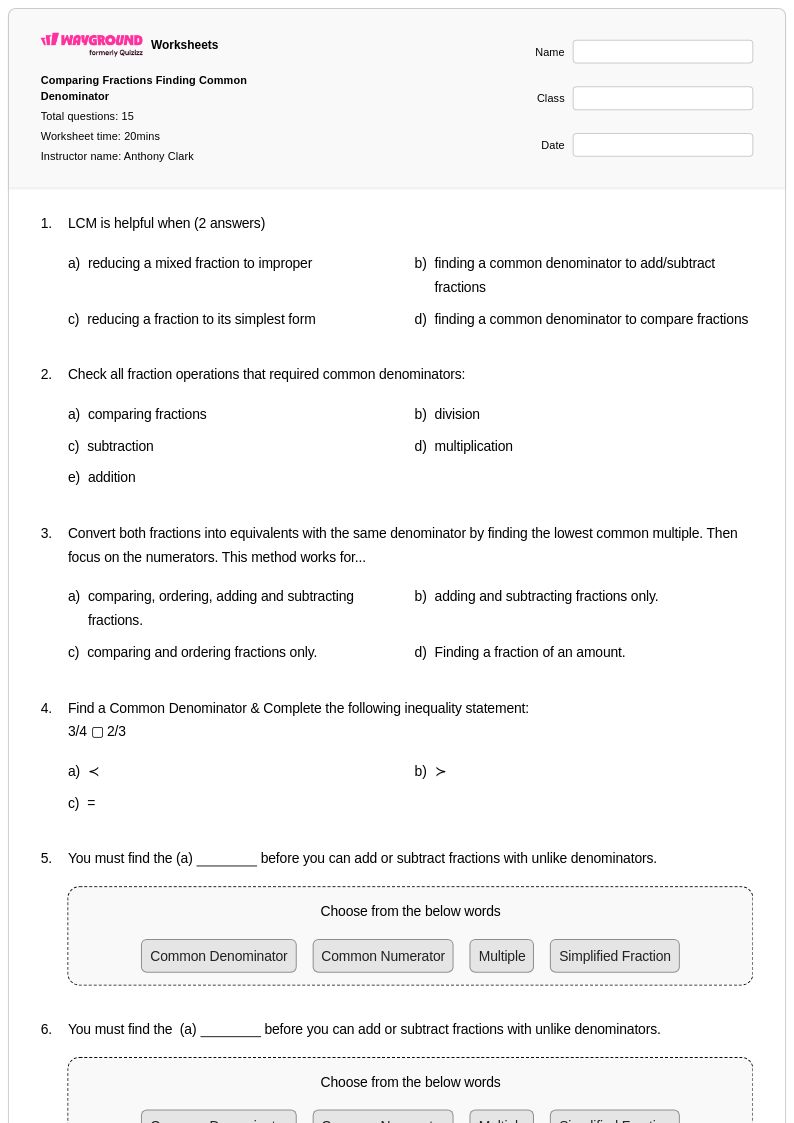
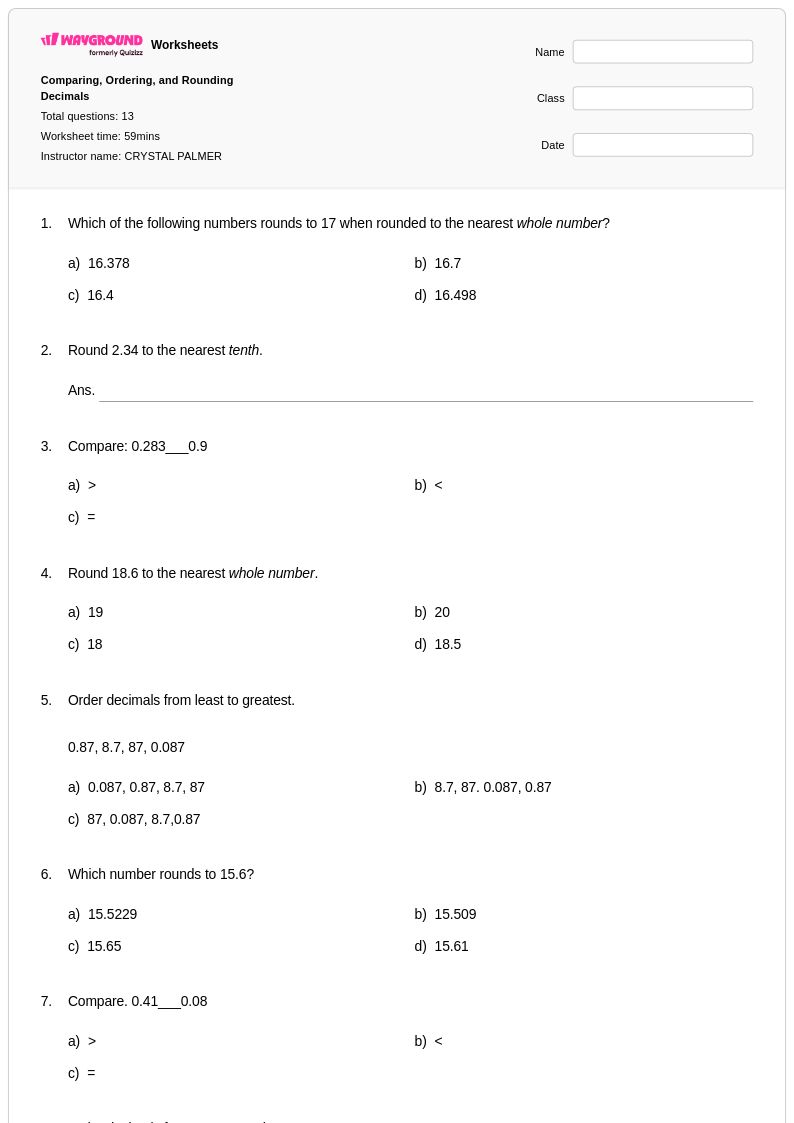
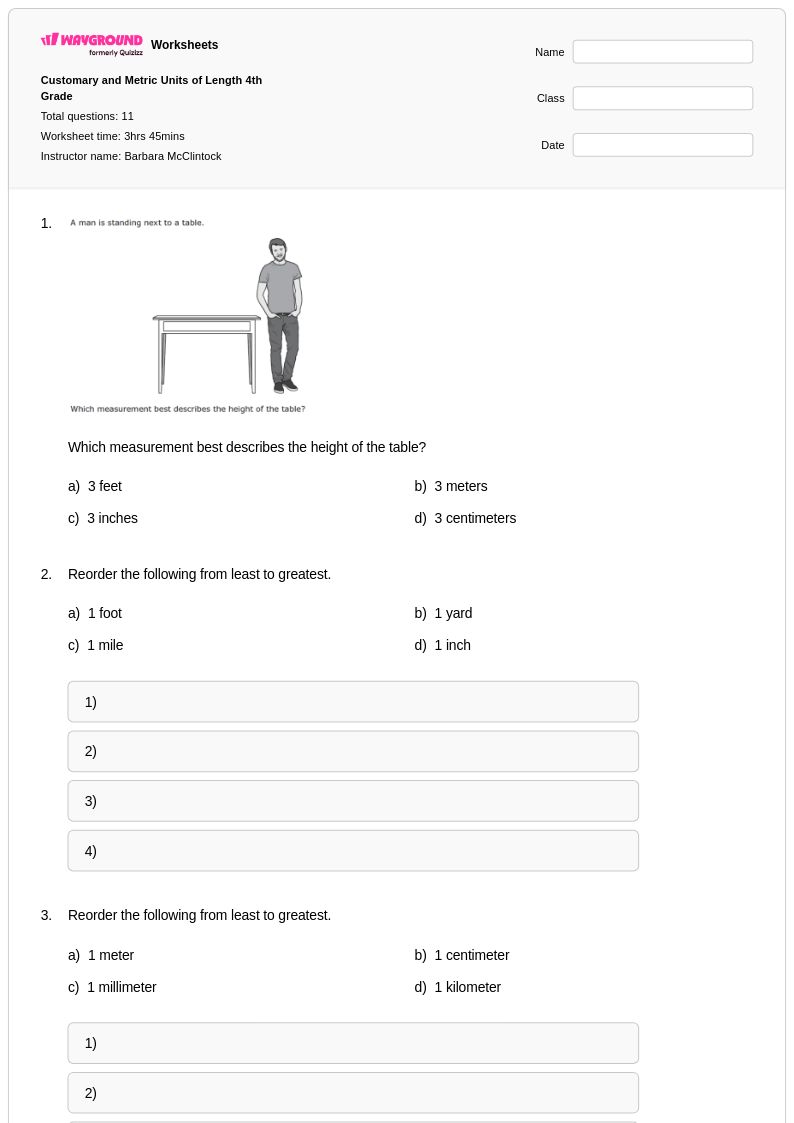
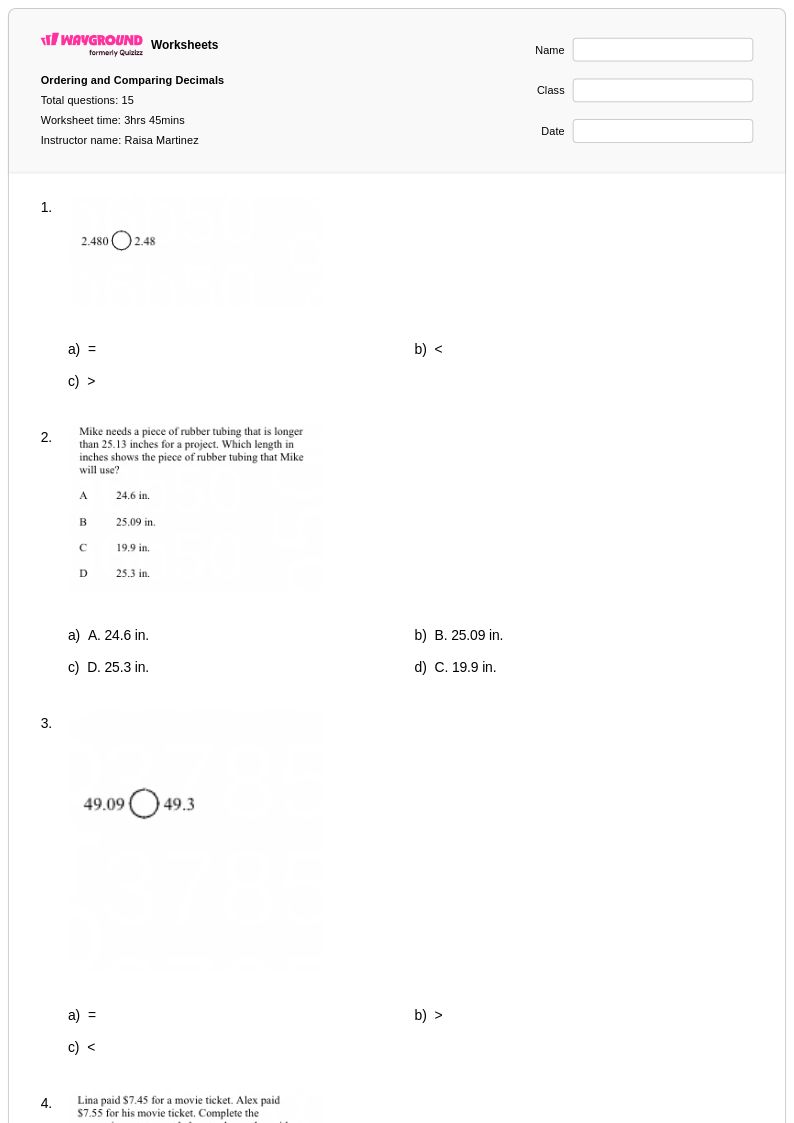
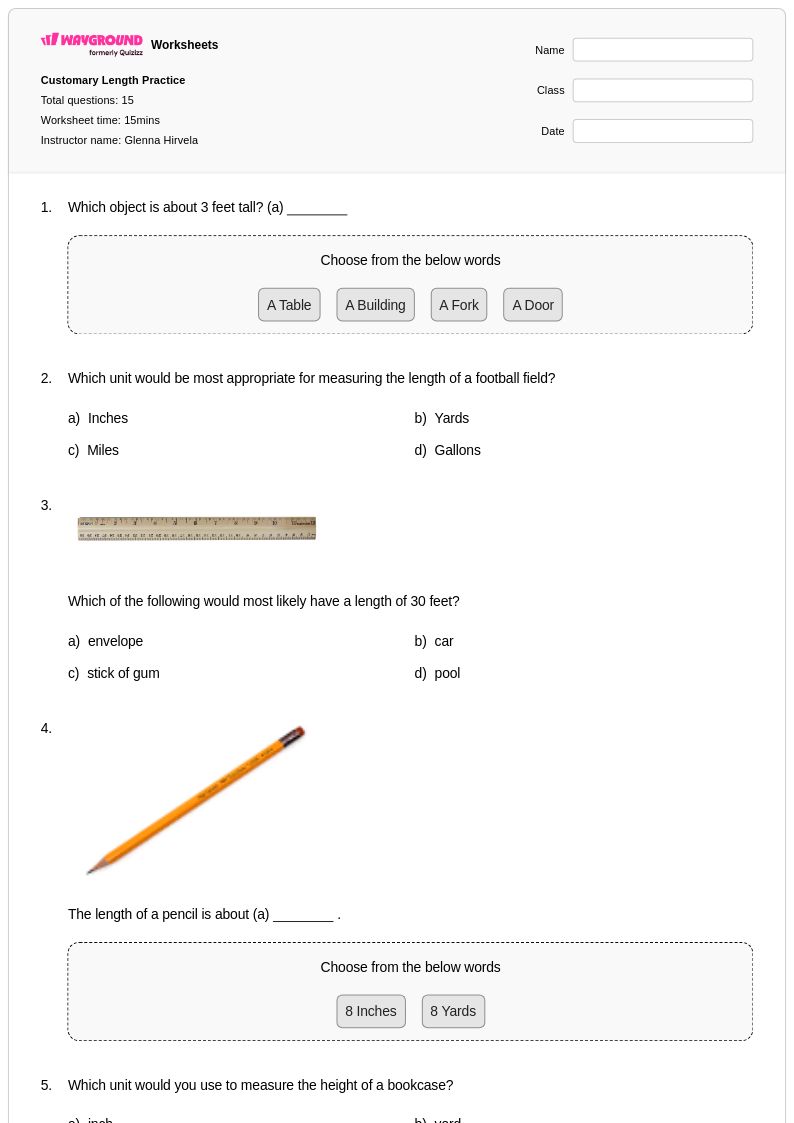
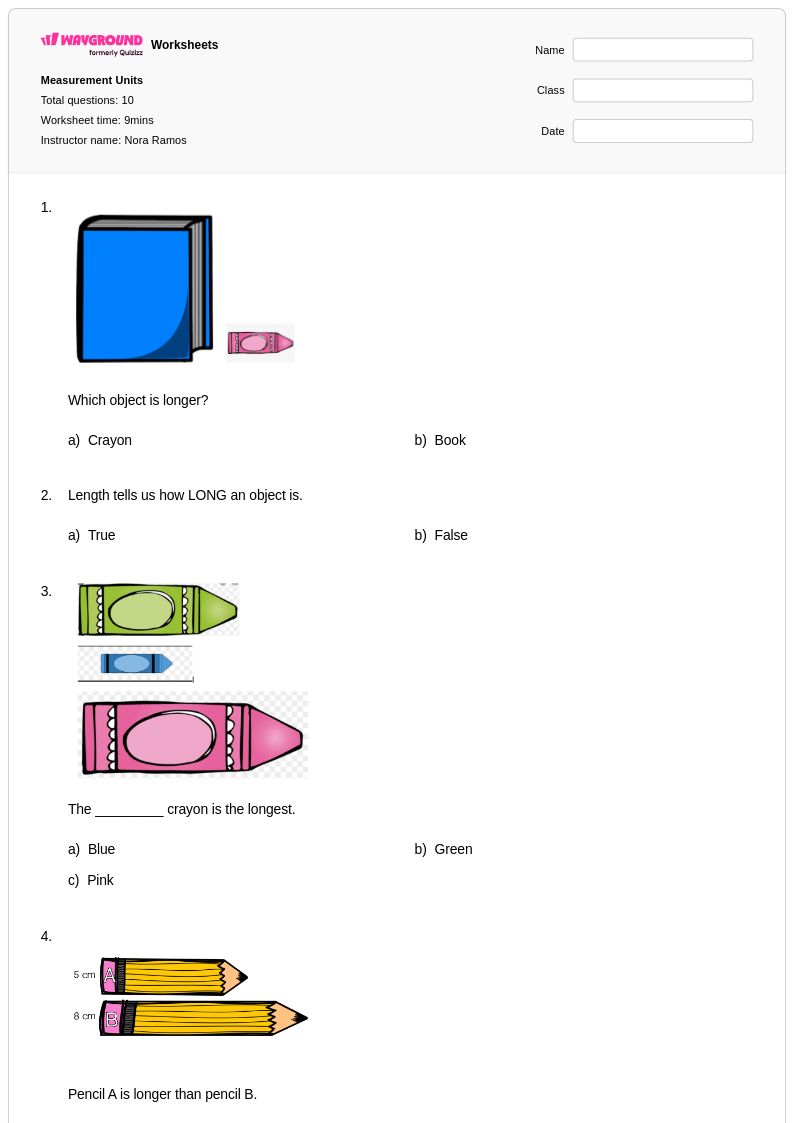
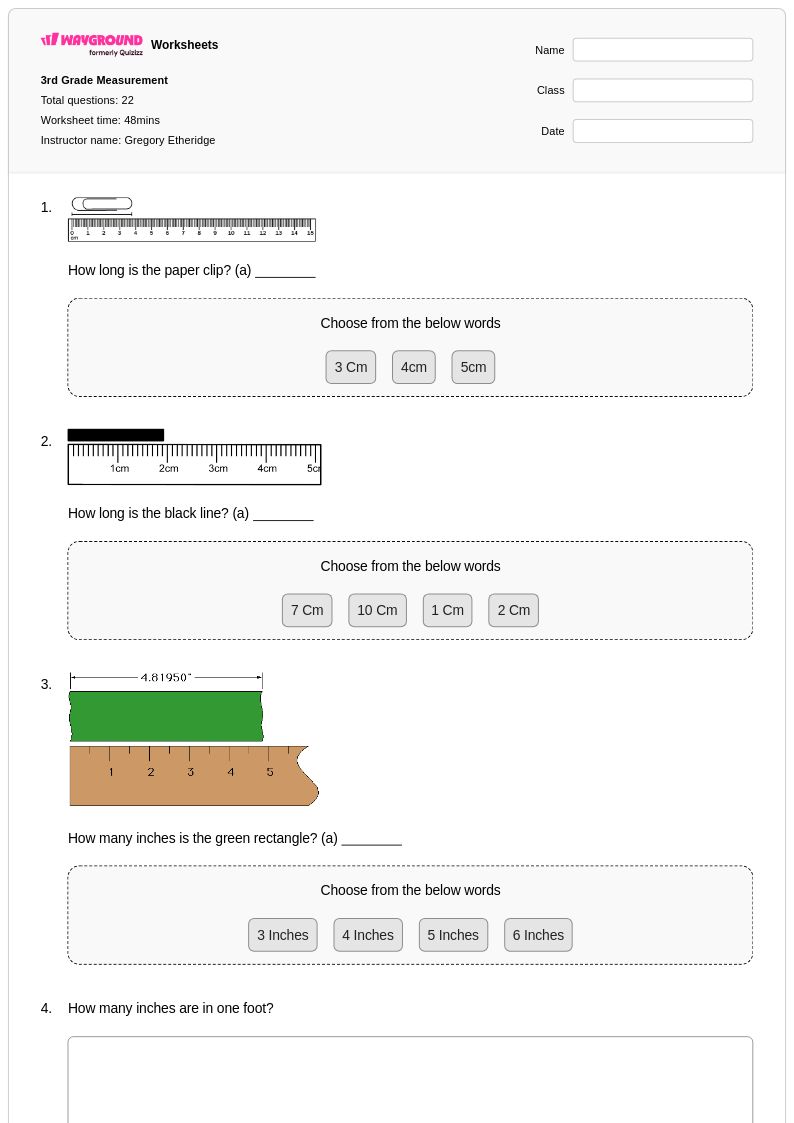
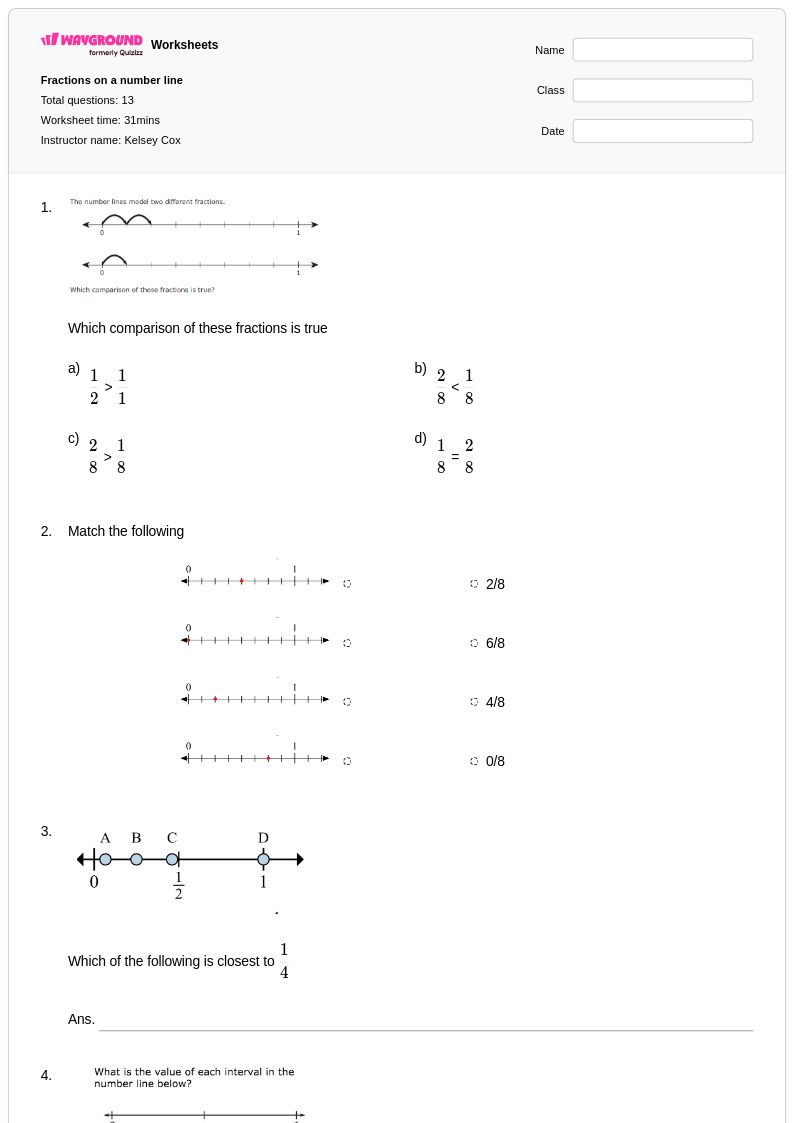
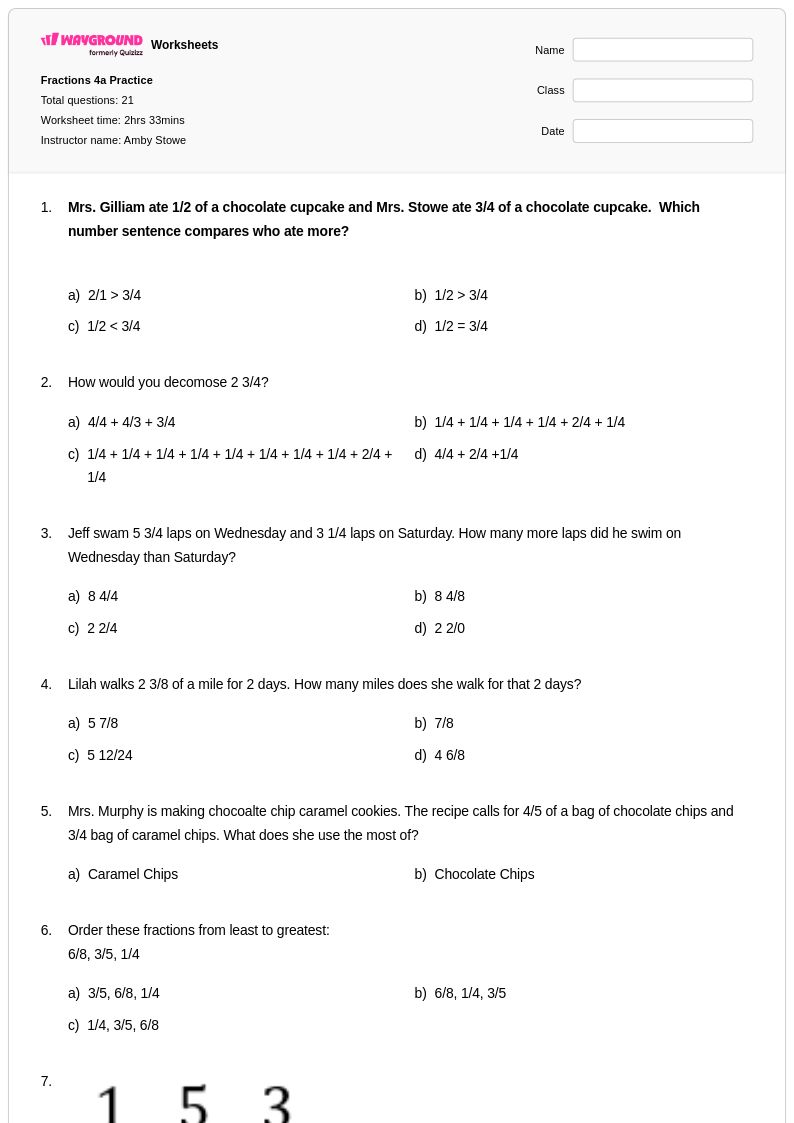
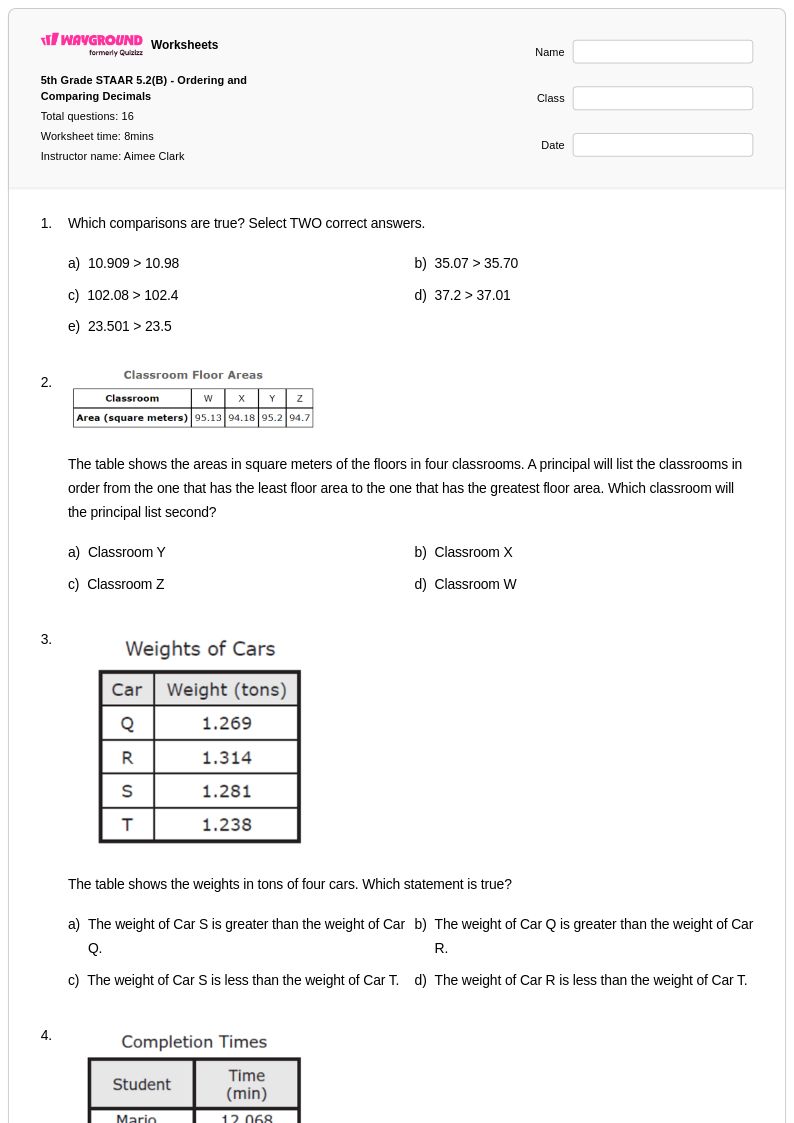
Comparing and ordering length worksheets available through Wayground (formerly Quizizz) provide students with systematic practice in analyzing and sequencing objects by their linear measurements. These comprehensive resources strengthen fundamental spatial reasoning skills by challenging learners to examine various items, determine their relative sizes, and arrange them in ascending or descending order based on length. The worksheets feature diverse practice problems that progress from simple visual comparisons to more complex measurement scenarios, helping students develop critical thinking abilities essential for mathematical success. Each printable resource includes detailed answer keys and is available in convenient pdf format, ensuring teachers have access to free, high-quality materials that support both classroom instruction and independent practice.
Wayground (formerly Quizizz) empowers educators with an extensive collection of teacher-created resources specifically designed for comparing and ordering length instruction, drawing from millions of classroom-tested materials that span multiple skill levels and learning objectives. The platform's robust search and filtering capabilities enable teachers to quickly locate worksheets that align with specific curriculum standards while offering differentiation tools to accommodate diverse learning needs within the classroom. These customizable resources are available in both printable and digital formats, including downloadable pdf versions, making them ideal for flexible lesson planning, targeted remediation sessions, and enrichment activities. Teachers can seamlessly integrate these worksheets into their instruction to provide focused skill practice, assess student understanding, and reinforce key measurement concepts through varied problem-solving opportunities.
FAQs
How do I teach students to compare and order lengths?
Begin with direct comparisons by aligning two familiar objects at the same starting point and discussing which is longer, shorter, or the same length. Then introduce indirect comparisons and non-standard or standard units before asking students to arrange several objects or measurements from shortest to longest and longest to shortest.
What exercises help students practice comparing and ordering length?
Useful exercises include identifying the longer or shorter of two objects, finding objects of equal length, measuring familiar items, and sequencing three or more lengths. A strong practice set progresses from visual comparisons to measurement-based problems that require students to interpret values and justify the order.
What mistakes do students make when comparing lengths?
Students often compare objects without aligning their endpoints, rely on an object's position or orientation, or confuse height with length. They may also order measurement numbers correctly while overlooking different units, so teachers should require students to check both the numerical value and the unit.
How can I use comparing and ordering length worksheets from Wayground?
Wayground worksheets are available as printable PDFs and digital formats, accommodating different teaching environments and student preferences. Teachers can host a worksheet as a digital quiz on Wayground or print it for paper-based practice, which can help reduce screen time; every worksheet includes a complete answer key, and physical submissions can be scanned or captured for grading with the Wayground for Teachers app.
How does comparing and ordering length fit into the Common Core math progression?
Comparing length supports the Common Core progression from describing measurable attributes and making direct comparisons to measuring with units and comparing numerical measurements. Students build toward more advanced measurement, data, and geometry work by learning to align endpoints, use consistent units, and sequence lengths accurately.
How can I differentiate comparing and ordering length practice?
Teachers can scaffold the worksheet by starting some students with two-object visual comparisons while assigning multi-object measurement and estimation problems to learners ready for enrichment. Wayground also supports extended time, Read Aloud, reduced answer choices, and reading mode, along with alternate worksheet versions using adjusted spacing, larger text, a dyslexia-friendly font, or translation.