Free Printable Compromise of 1850 Worksheets for Grade 9
Explore Grade 9 Compromise of 1850 worksheets and printables from Wayground that help students analyze this pivotal historical agreement through engaging practice problems, free PDF resources, and comprehensive answer keys.
Explore printable Compromise of 1850 worksheets for Grade 9
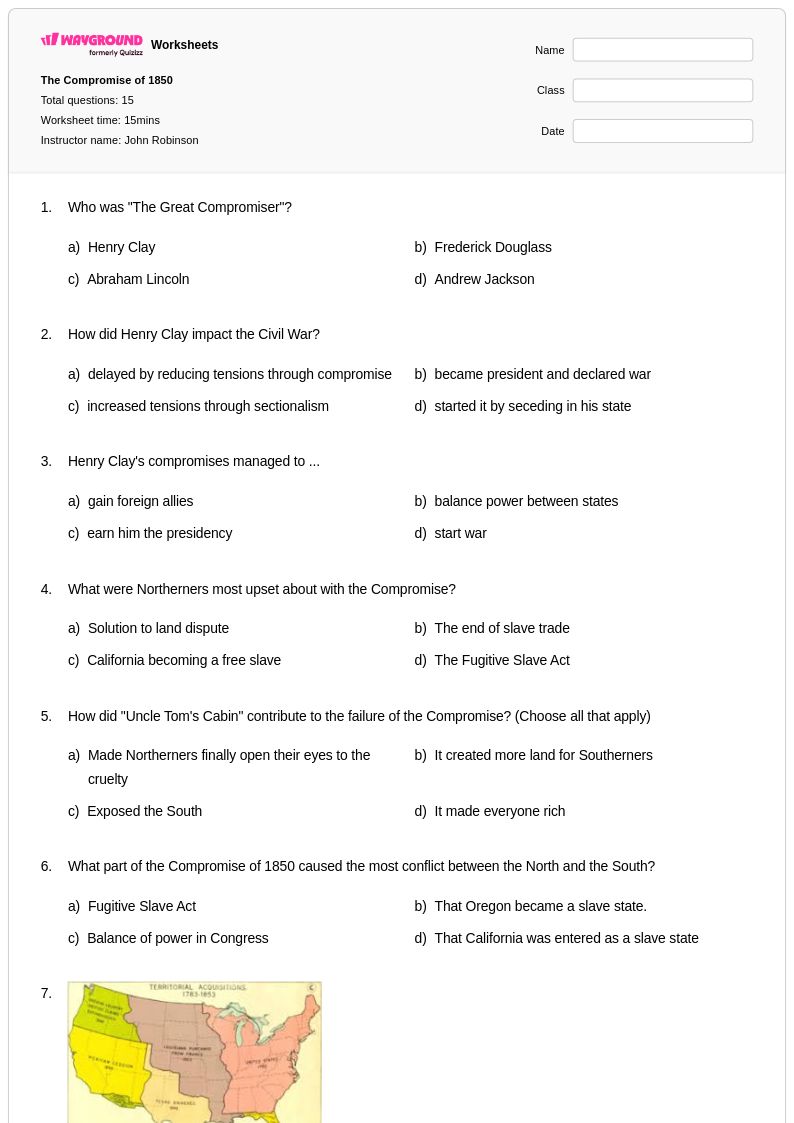
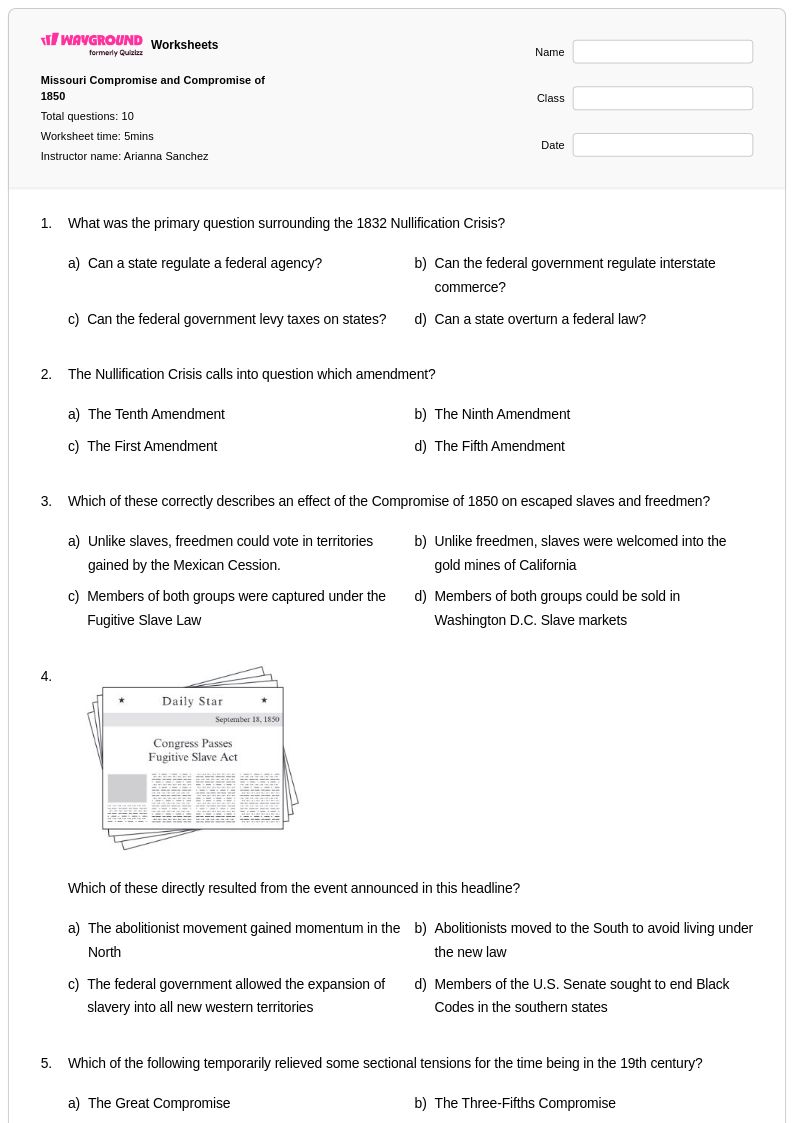
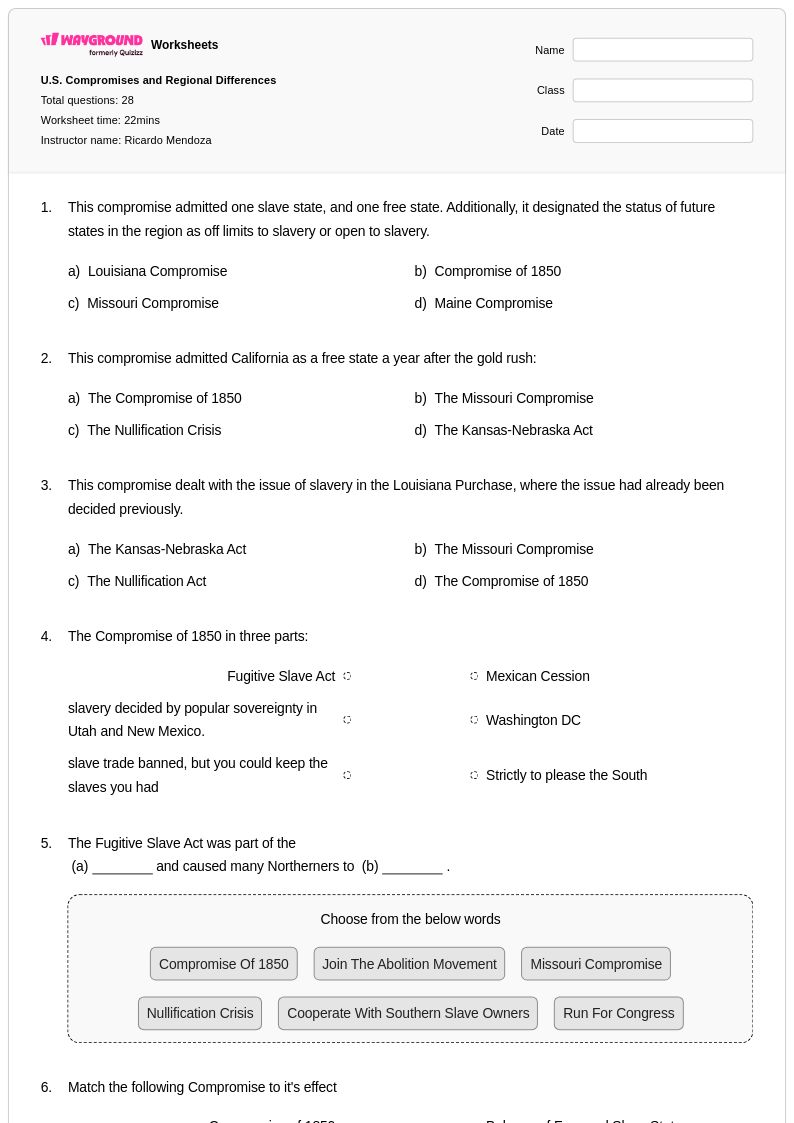
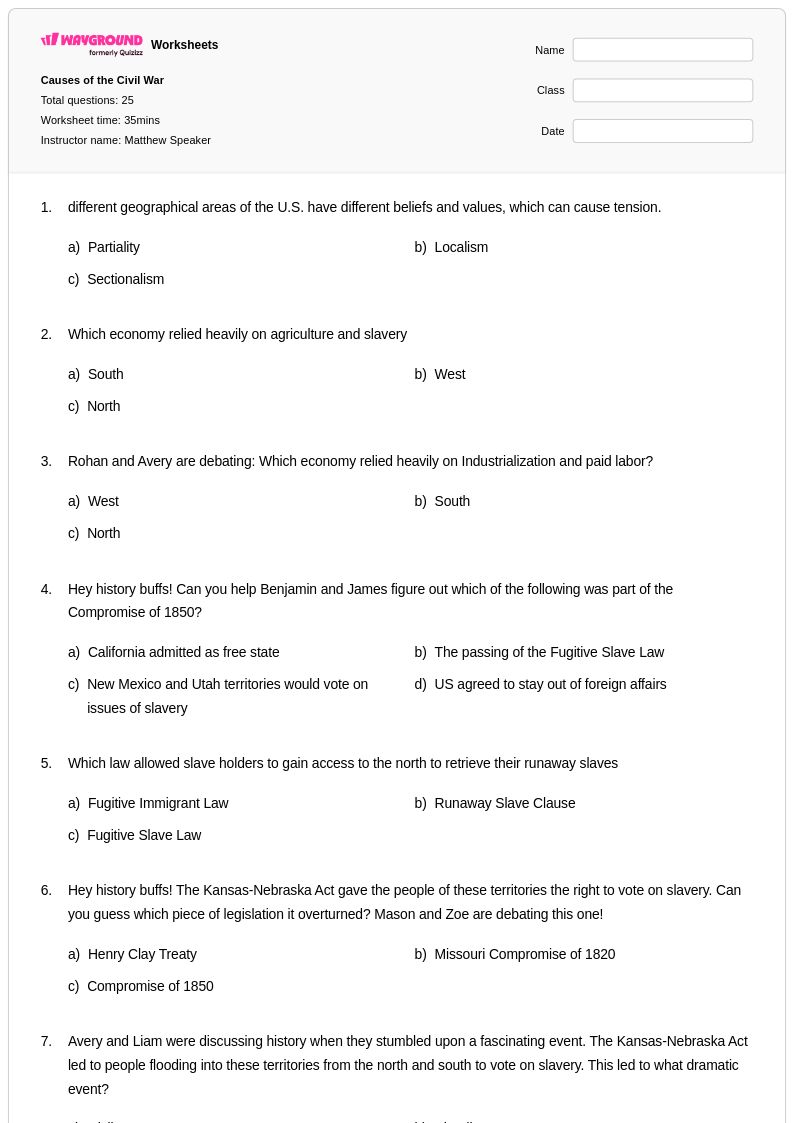
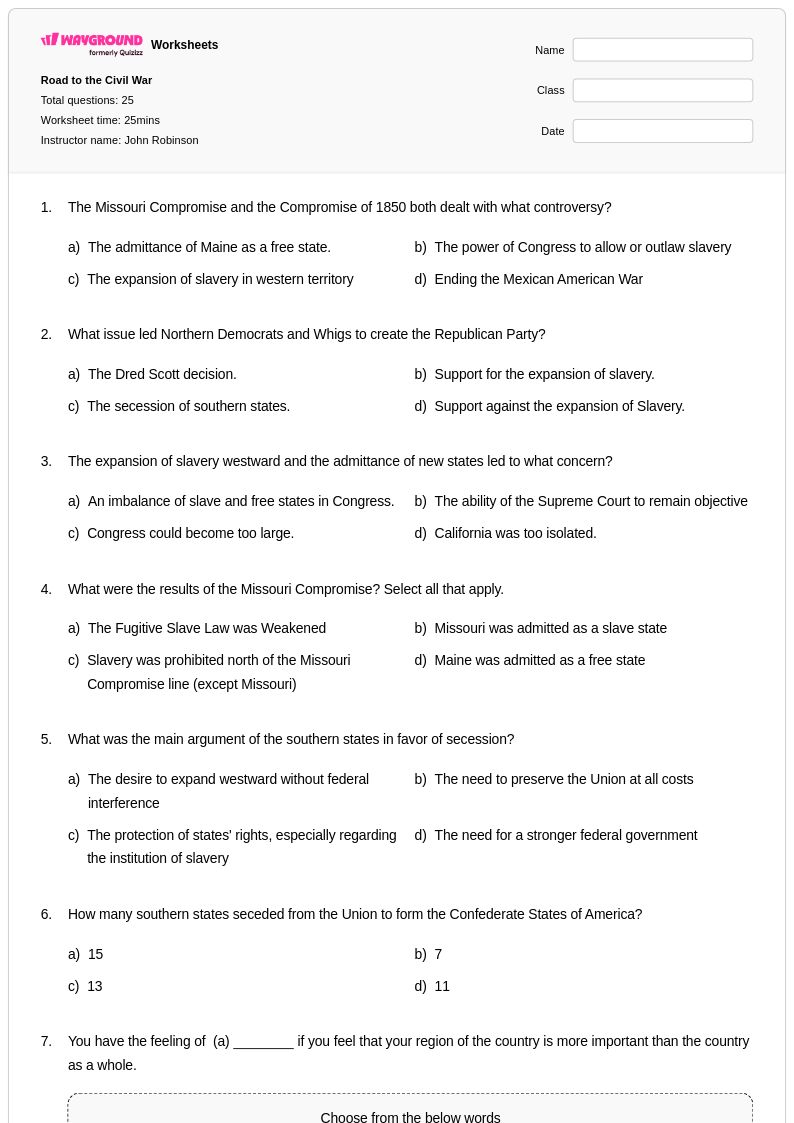
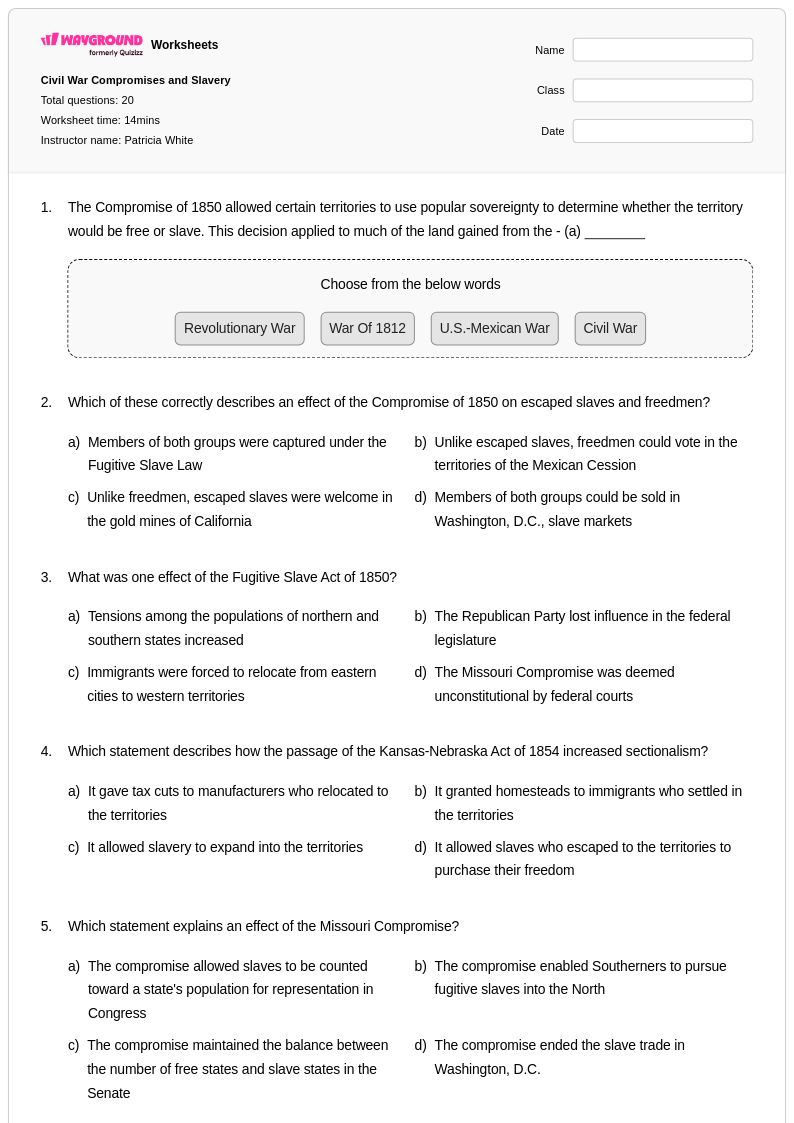
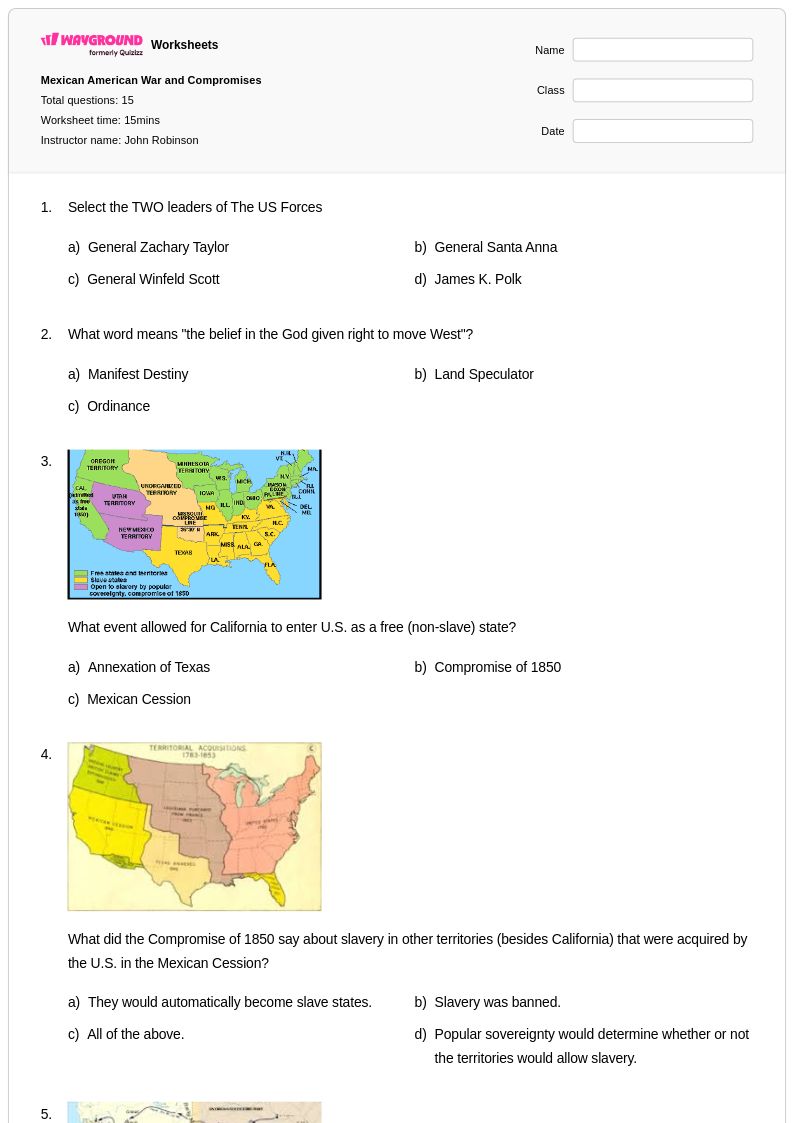
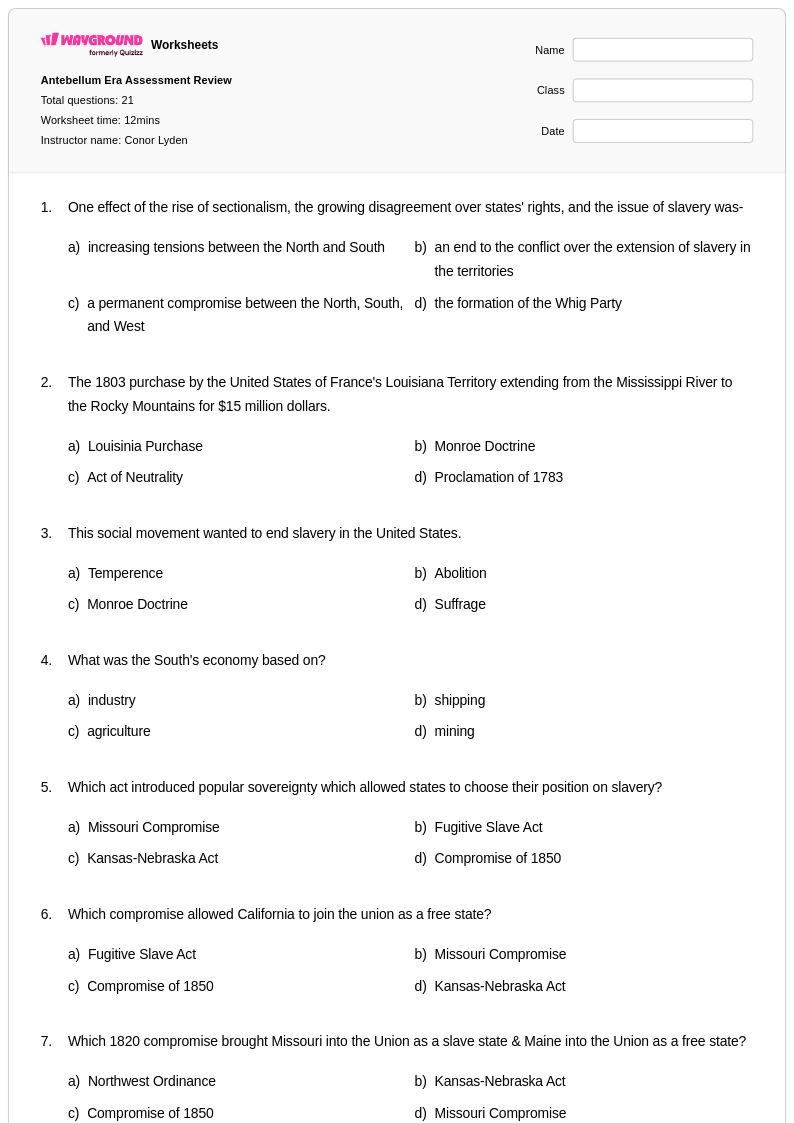
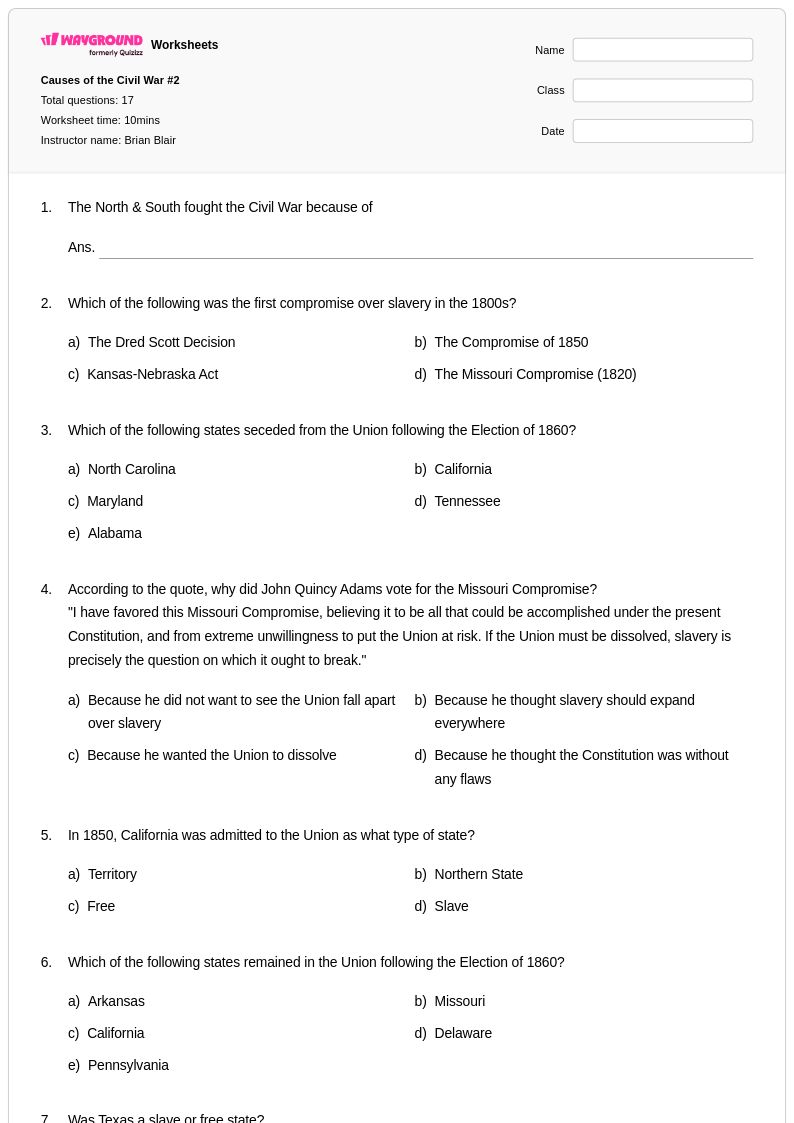
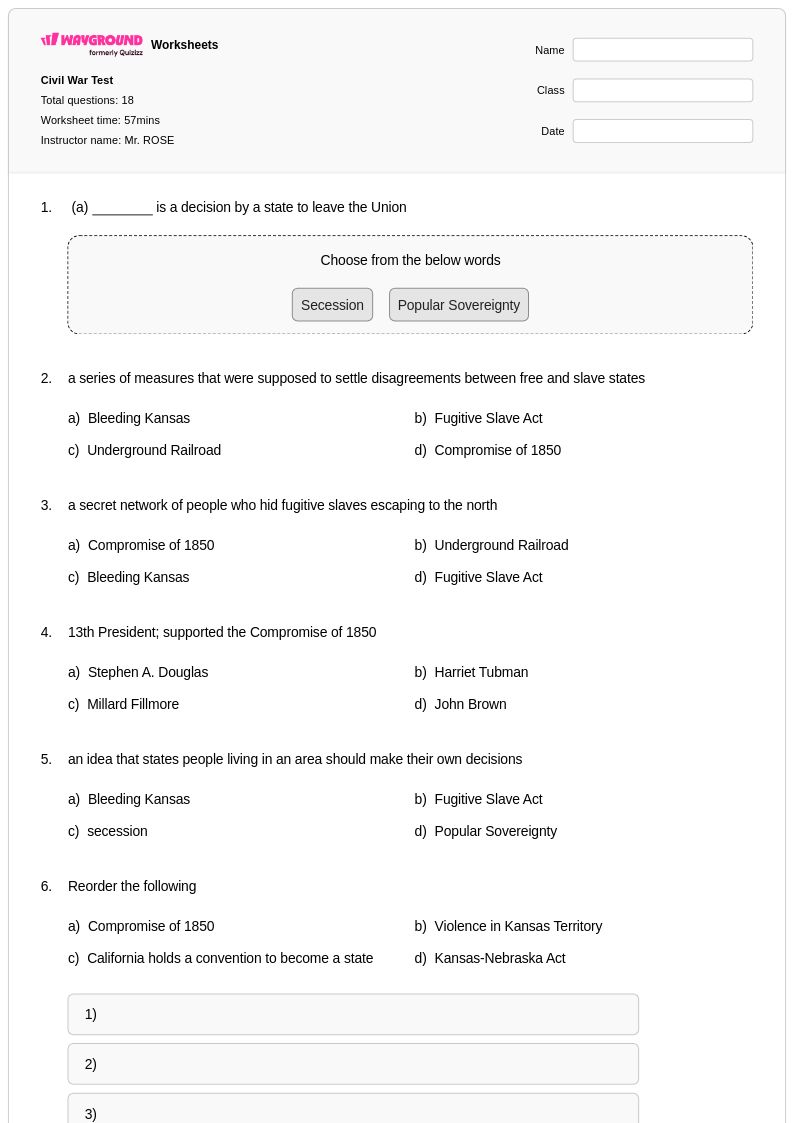
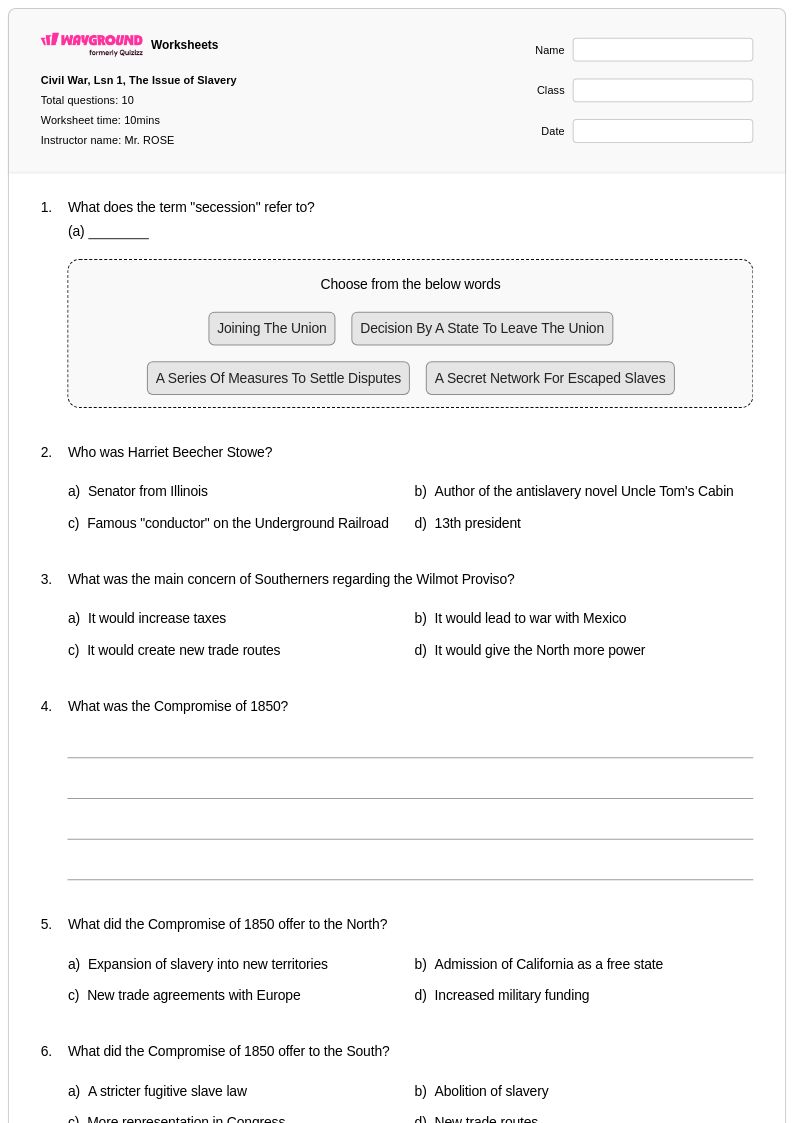
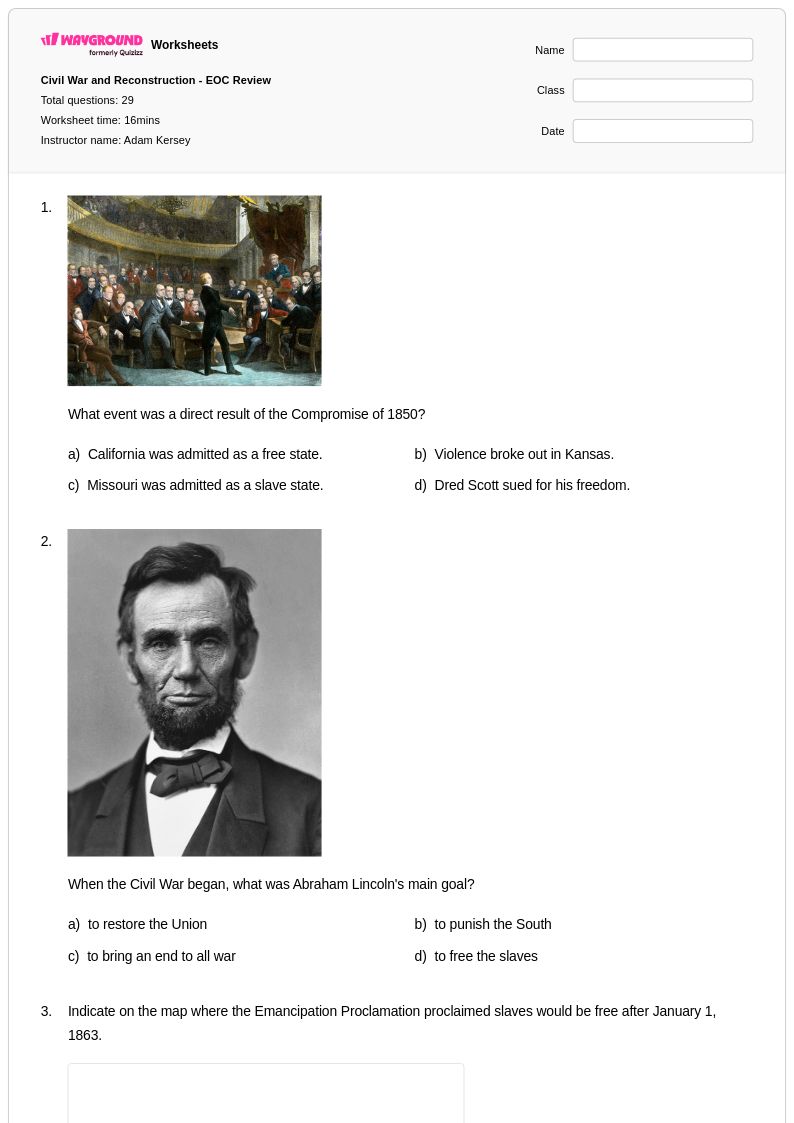
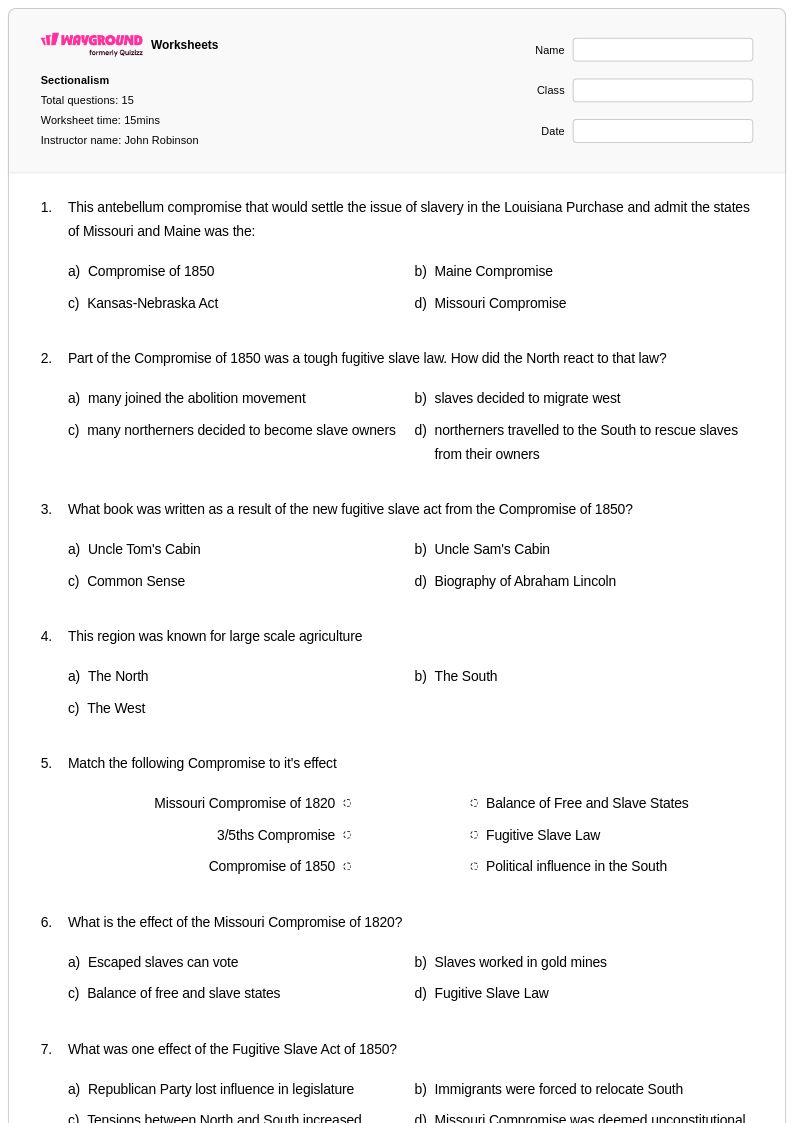
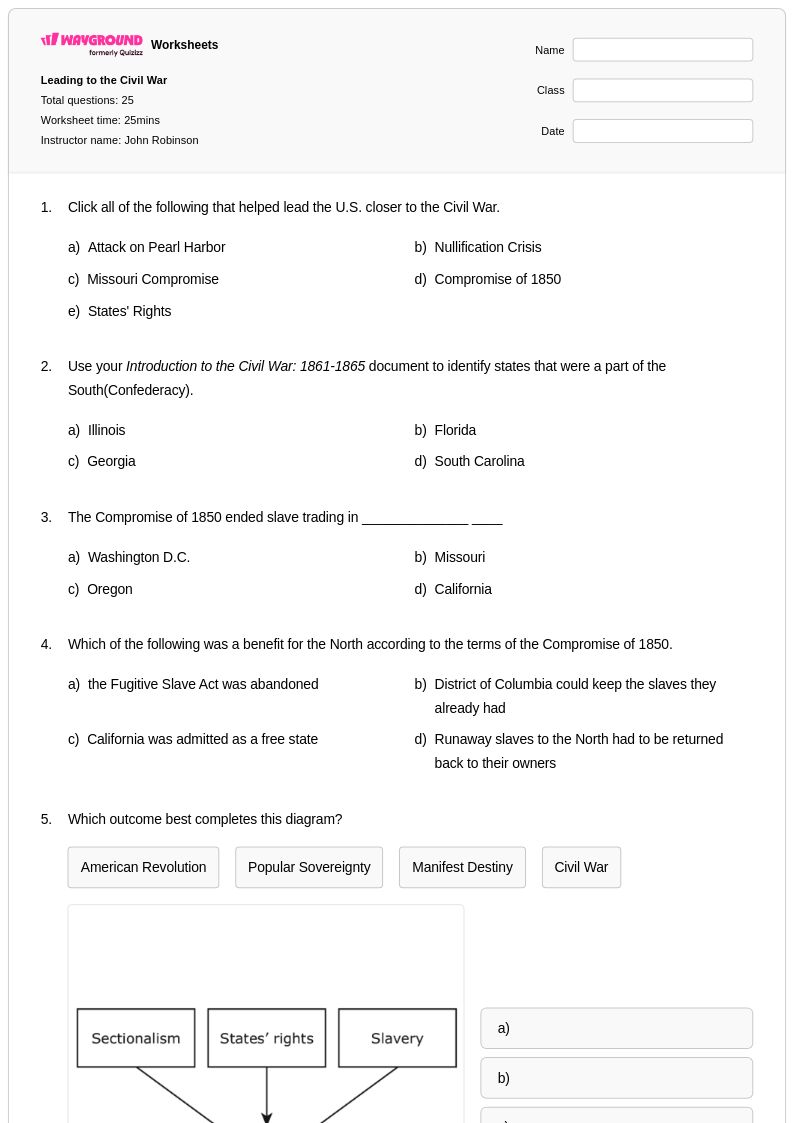
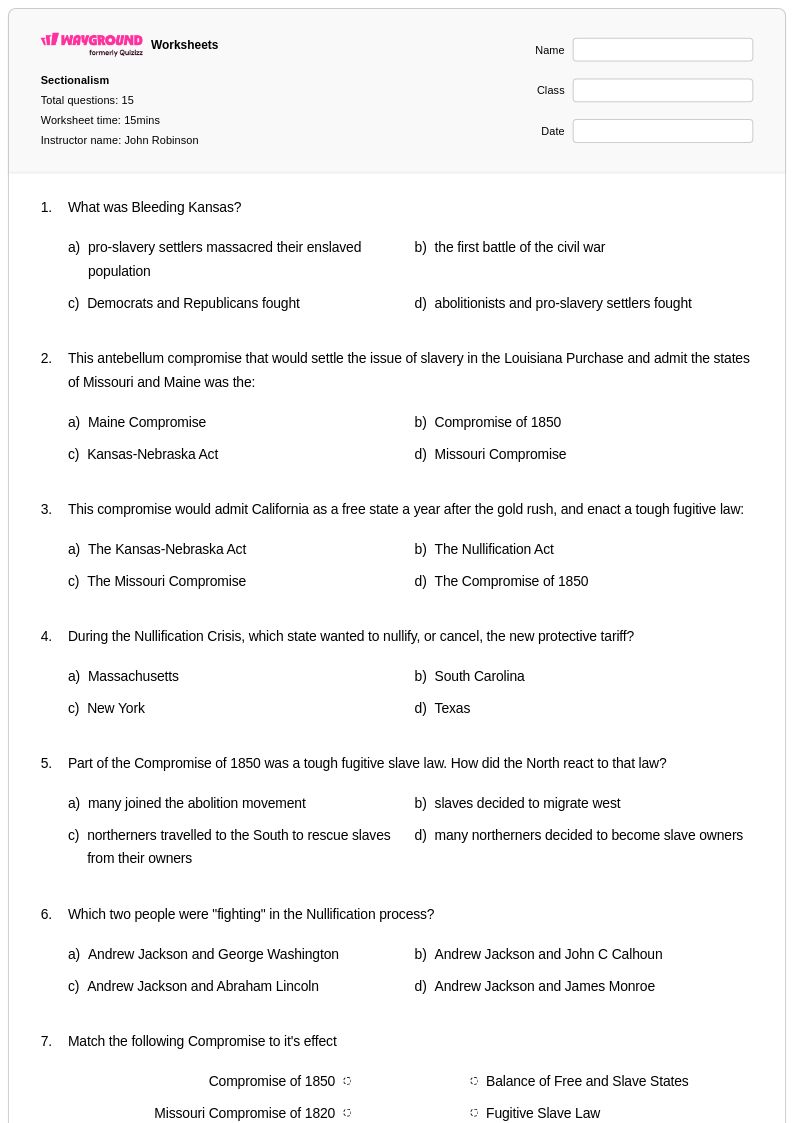
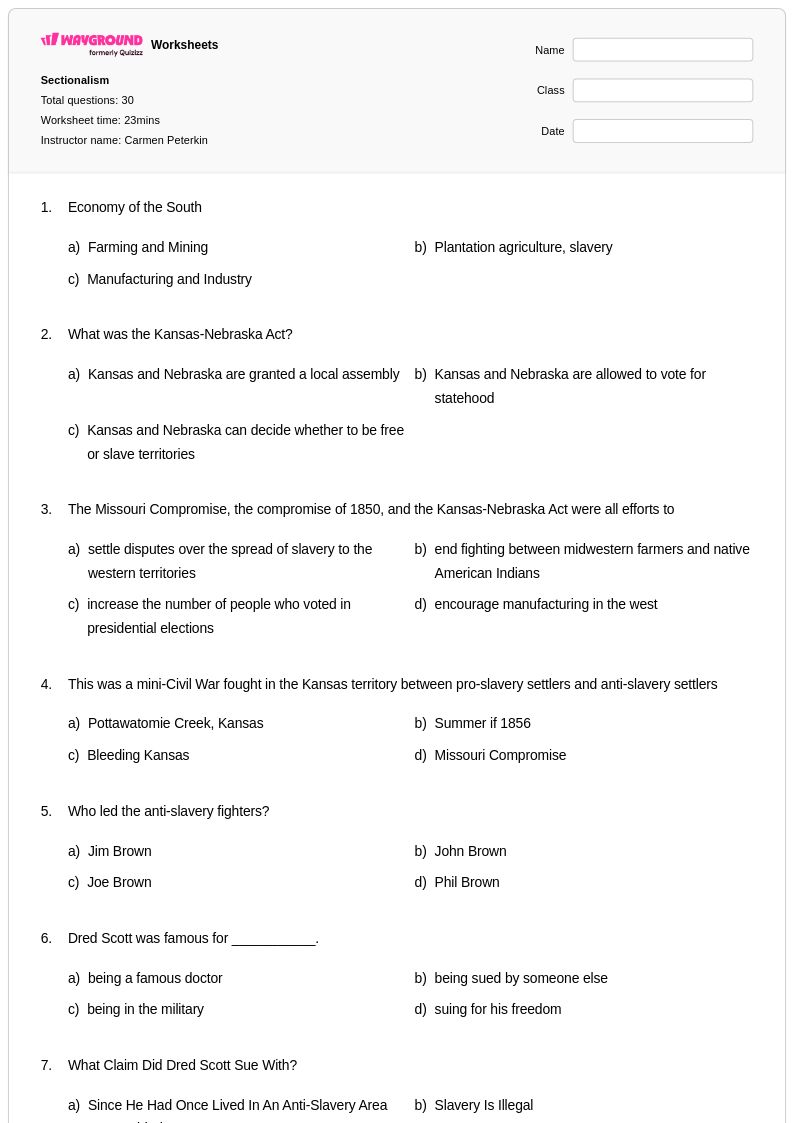
The Compromise of 1850 worksheets available through Wayground (formerly Quizizz) provide Grade 9 students with comprehensive practice materials that explore this pivotal moment in American history when Congress attempted to resolve the growing tensions between free and slave states. These expertly designed worksheets strengthen critical thinking skills by examining the five key components of Henry Clay's legislative package, including California's admission as a free state, the strengthened Fugitive Slave Act, and the organization of Utah and New Mexico territories under popular sovereignty. Students engage with primary source documents, analyze the political motivations of key figures like Stephen Douglas and Daniel Webster, and evaluate the short-term success and long-term failures of this crucial compromise. Each worksheet collection includes detailed answer keys and is available as free printables in pdf format, offering practice problems that help students understand how the Compromise of 1850 temporarily delayed but ultimately failed to prevent the Civil War.
Wayground (formerly Quizizz) supports educators with an extensive library of millions of teacher-created resources specifically designed for Compromise of 1850 instruction, featuring robust search and filtering capabilities that allow teachers to quickly locate materials aligned with state social studies standards and curriculum requirements. The platform's differentiation tools enable teachers to customize worksheets for varying skill levels within their Grade 9 classrooms, while the flexible format options provide both printable pdf versions for traditional classroom use and digital formats for online learning environments. These comprehensive worksheet collections facilitate effective lesson planning by offering teachers ready-to-use materials for initial instruction, targeted remediation for struggling students, and enrichment activities for advanced learners, ensuring that all students develop a thorough understanding of this complex period in American political history through structured skill practice and historical analysis.
FAQs
How do I teach the Compromise of 1850 to middle or high school students?
Start by grounding students in the underlying tensions: the balance between free and slave states, the aftermath of the Mexican-American War, and the role of westward expansion in reigniting sectional conflict. Introduce the five key provisions as a package deal rather than isolated laws, emphasizing that Henry Clay designed them to give each side partial wins. Then push students to evaluate whether the compromise actually resolved anything or simply delayed the inevitable conflict, which helps build analytical thinking about political compromise as a concept.
What are the key provisions of the Compromise of 1850 students need to know?
Students should understand the five main components: California's admission as a free state, the organization of Utah and New Mexico territories under popular sovereignty, the resolution of the Texas-New Mexico border dispute, the abolition of the slave trade (but not slavery itself) in Washington D.C., and the strengthened Fugitive Slave Act. The Fugitive Slave Act is particularly important because it inflamed Northern opposition and ultimately undermined the compromise's goal of sectional peace.
What exercises help students analyze the Compromise of 1850?
Cause-and-effect mapping is especially effective for this topic because it forces students to trace how each provision responded to a specific sectional grievance. Primary source analysis of speeches by Henry Clay, Daniel Webster, and John C. Calhoun helps students understand the political motivations behind the compromise. Worksheets that ask students to evaluate why the compromise ultimately failed to prevent the Civil War build higher-order thinking and connect this legislation to the broader arc of antebellum history.
What mistakes do students commonly make when learning about the Compromise of 1850?
The most common error is treating the Compromise of 1850 as a single law rather than a legislative package of five separate bills. Students also frequently confuse it with the Missouri Compromise of 1820, conflating the two as the same event. Another persistent misconception is assuming the compromise was universally accepted as a success — in reality, the Fugitive Slave Act generated fierce Northern backlash almost immediately, and students need to understand that the compromise deepened sectional distrust as much as it eased it.
How do I use Compromise of 1850 worksheets in my classroom?
Compromise of 1850 worksheets on Wayground are available as printable PDFs for traditional classroom use and in digital formats for technology-integrated or remote learning environments, giving you flexibility in how you assign and collect them. You can also host them as a quiz directly on Wayground, which allows for immediate feedback and streamlined assessment. The included answer keys make it easy to grade efficiently or use the worksheets as self-checking review tools for students.
How does the Compromise of 1850 connect to the Civil War, and how do I teach that link?
The Compromise of 1850 is best understood as a ten-year postponement rather than a resolution, which is the conceptual bridge students need to connect it to the Civil War. The Fugitive Slave Act radicalized many Northern moderates and energized the abolitionist movement, while popular sovereignty in the territories set the stage for Bleeding Kansas. Teaching students to identify how the compromise created new grievances even as it resolved old ones helps them see the Civil War not as a sudden break but as the culmination of decades of failed political bargaining.