Free Printable Compromises of the US Constitution Worksheets for Grade 6
Explore Grade 6 Social Studies worksheets on the Compromises of the US Constitution, featuring free printables and practice problems with answer keys that help students understand the critical negotiations and agreements that shaped America's founding document.
Explore printable Compromises of the US Constitution worksheets for Grade 6
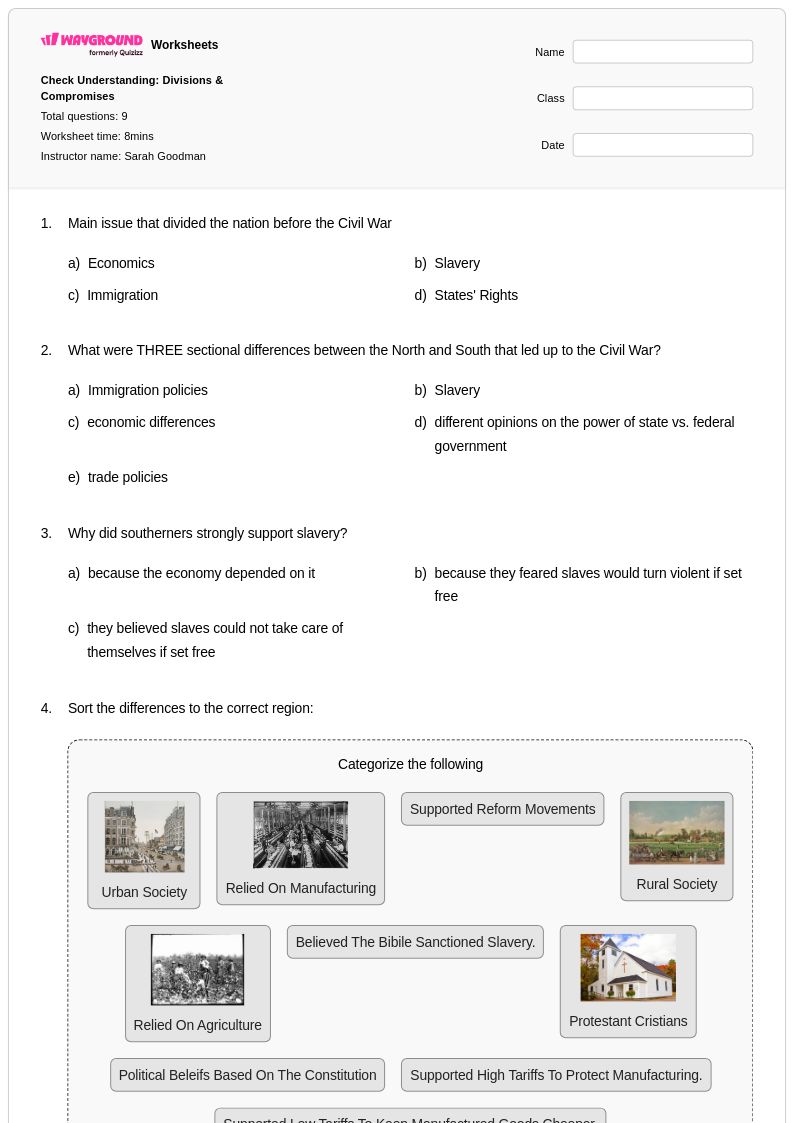
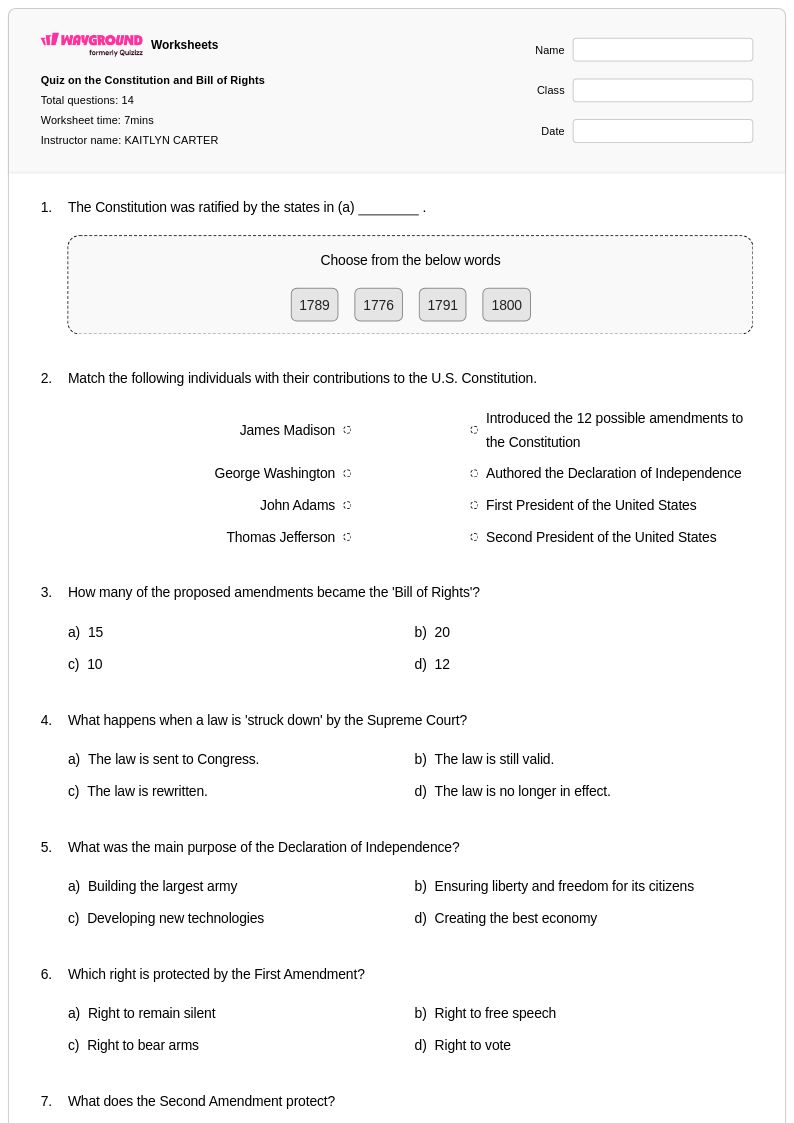
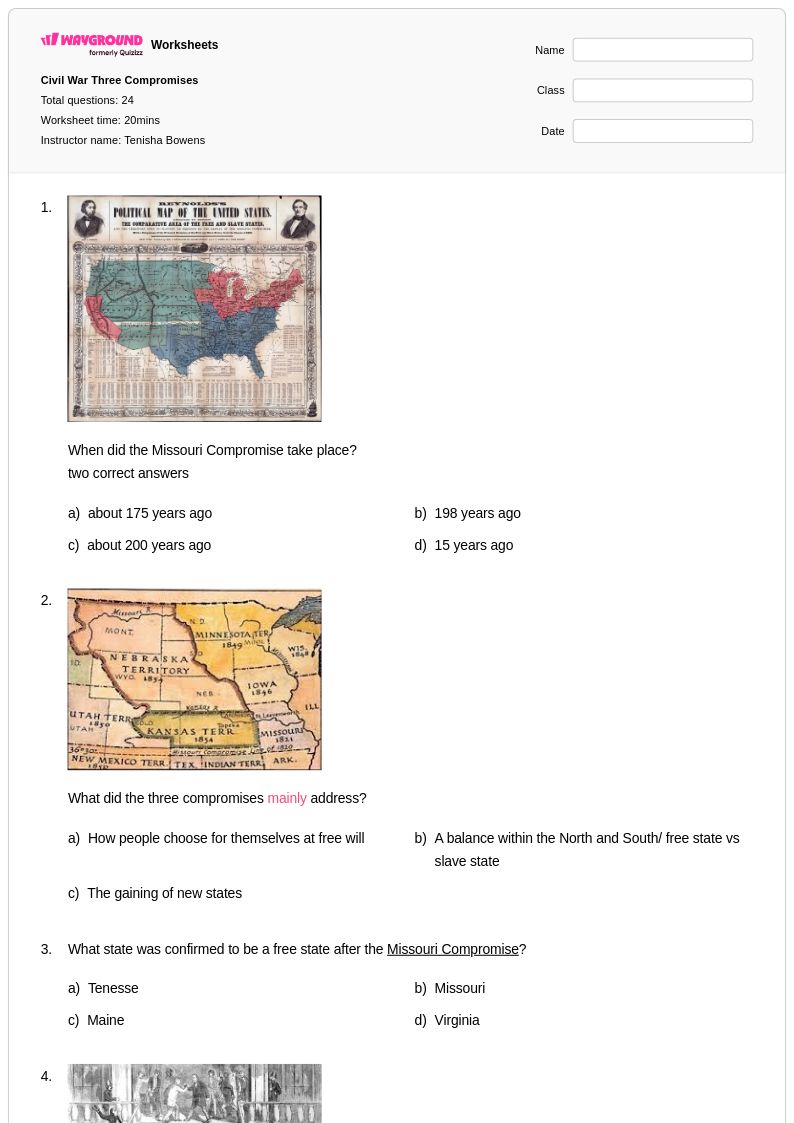
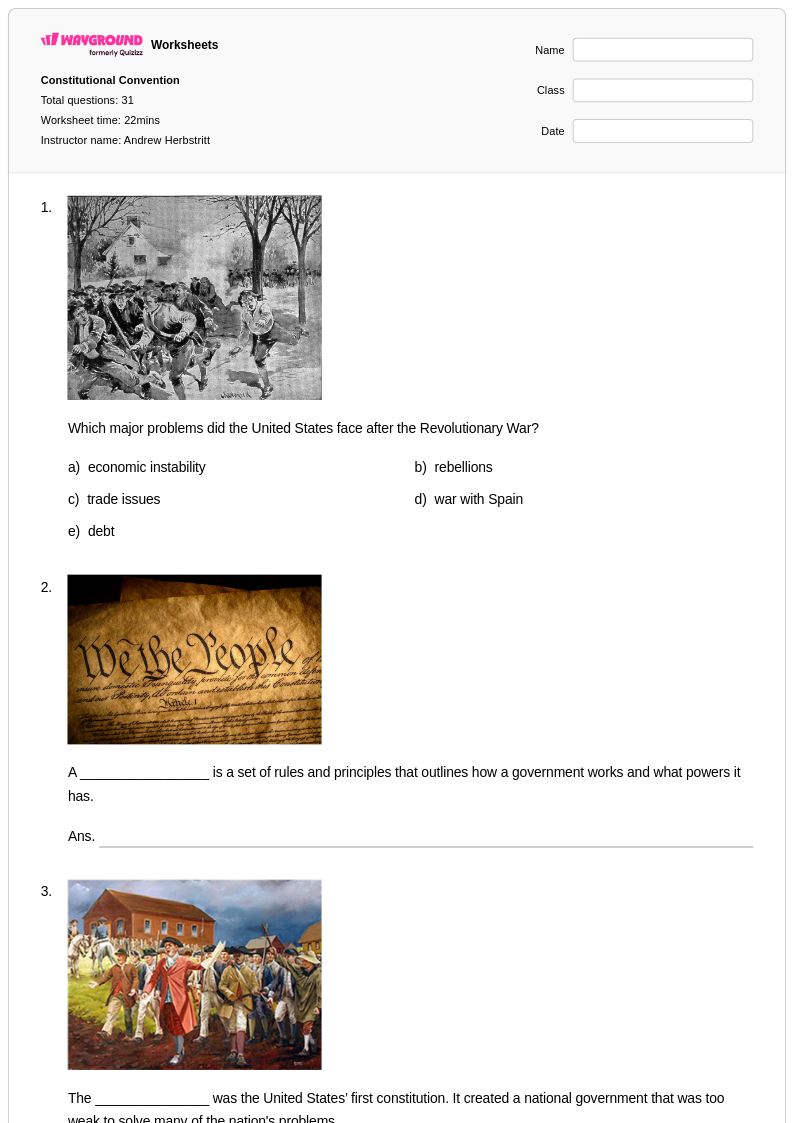
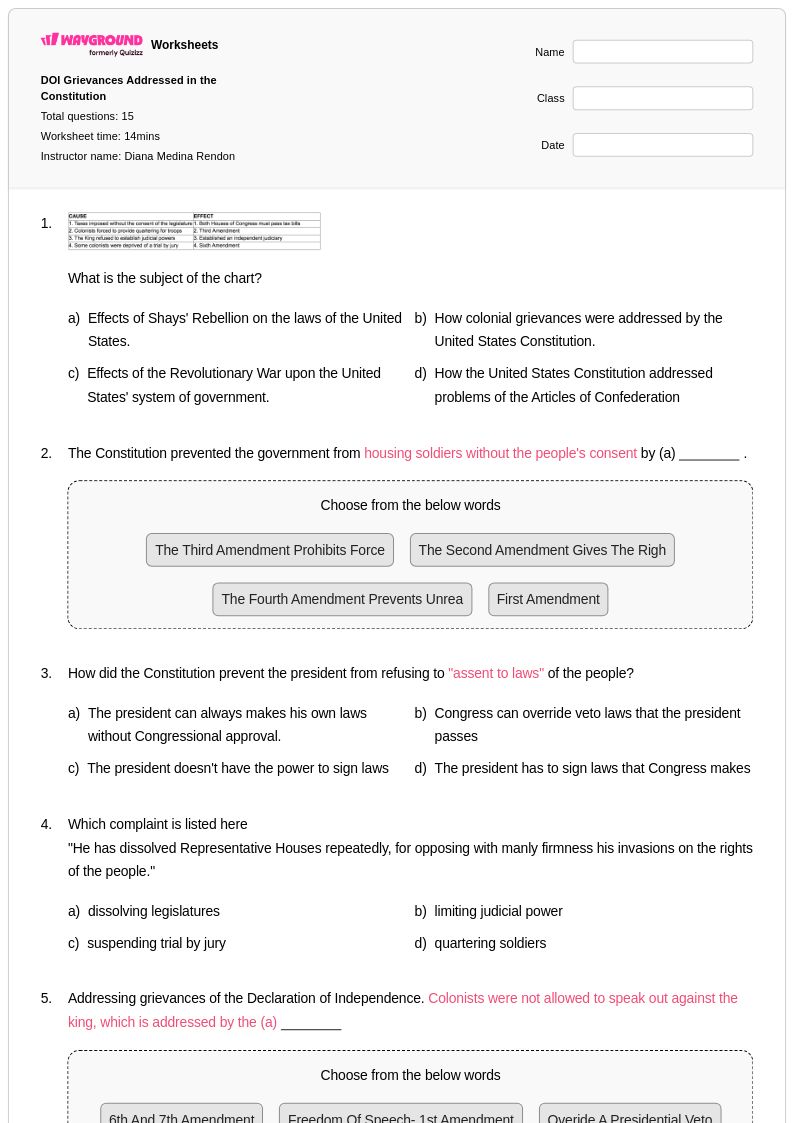
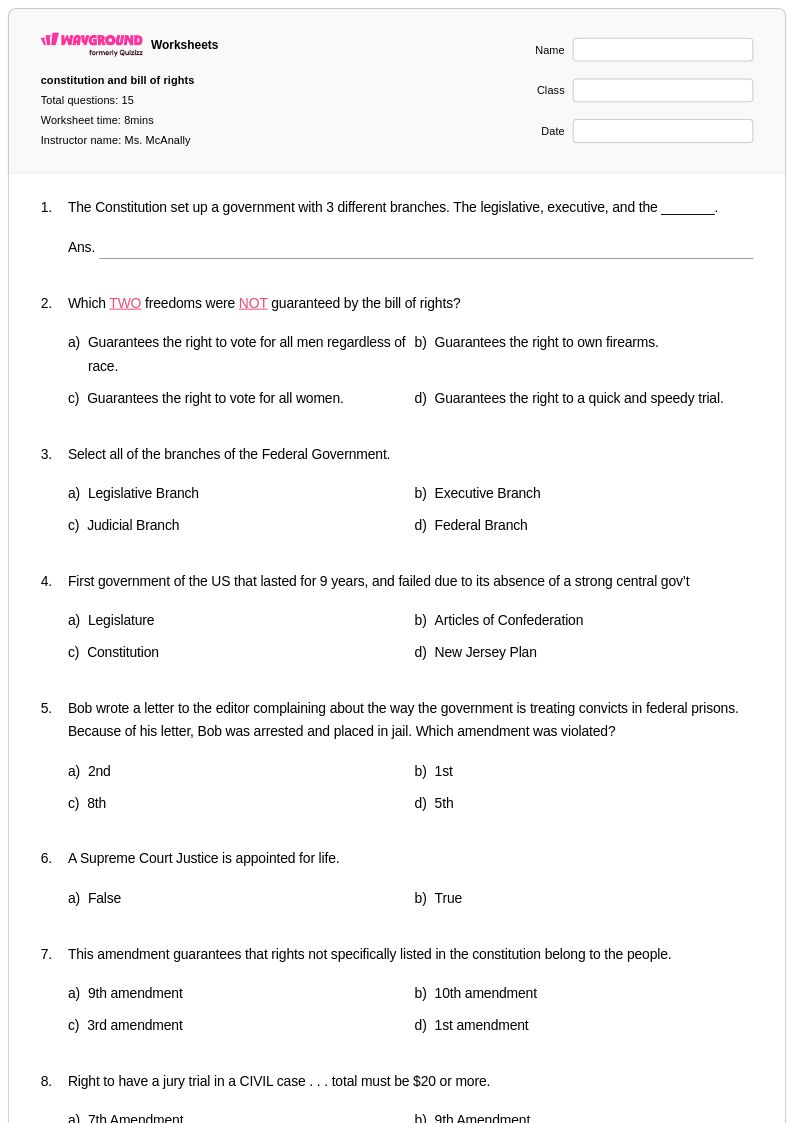
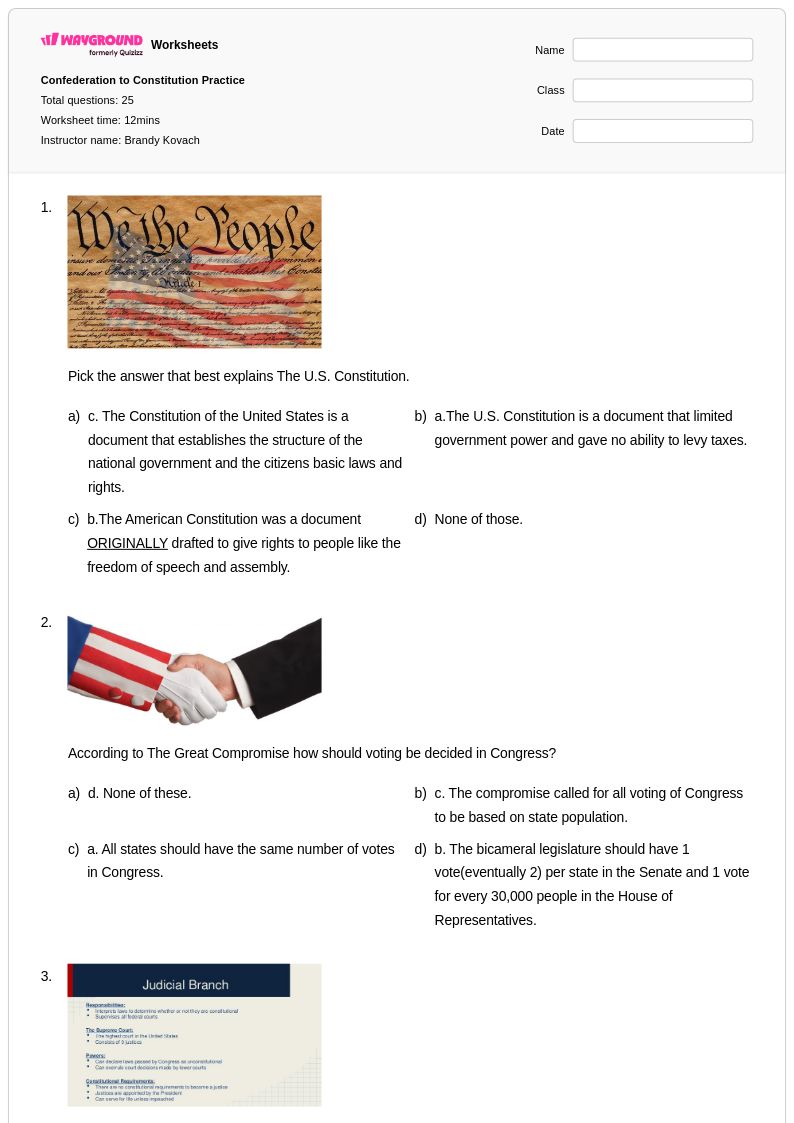
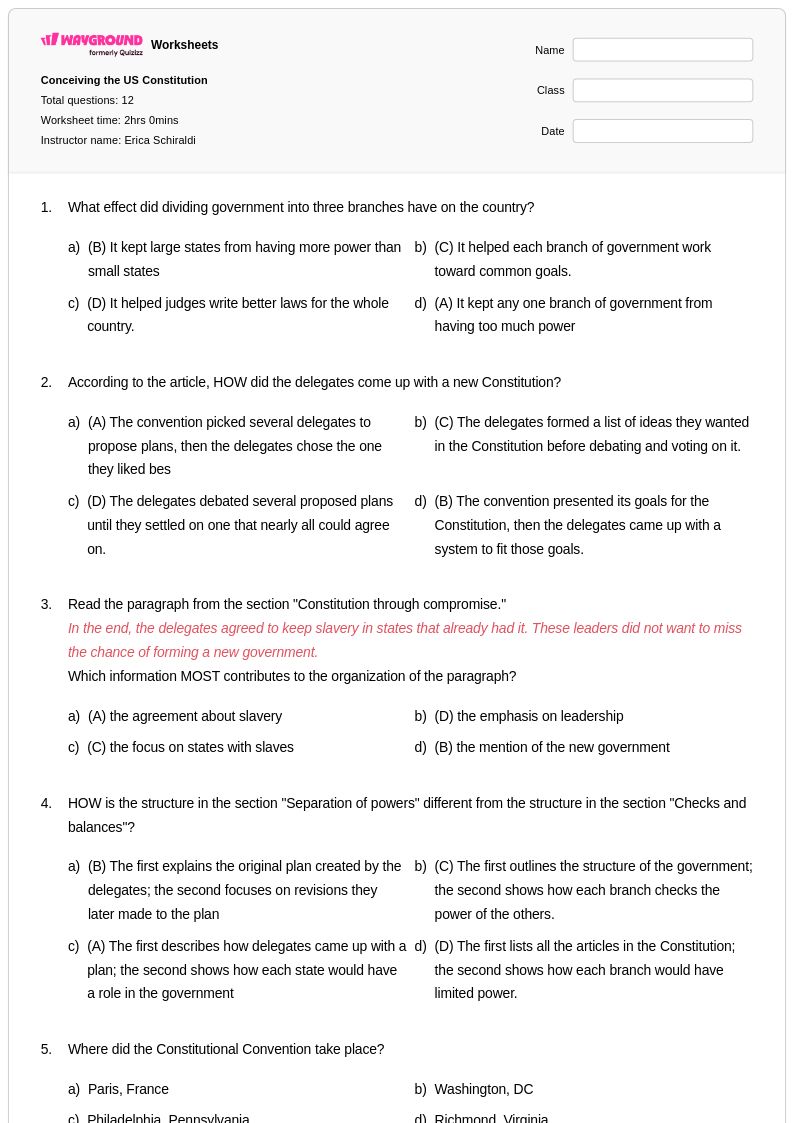
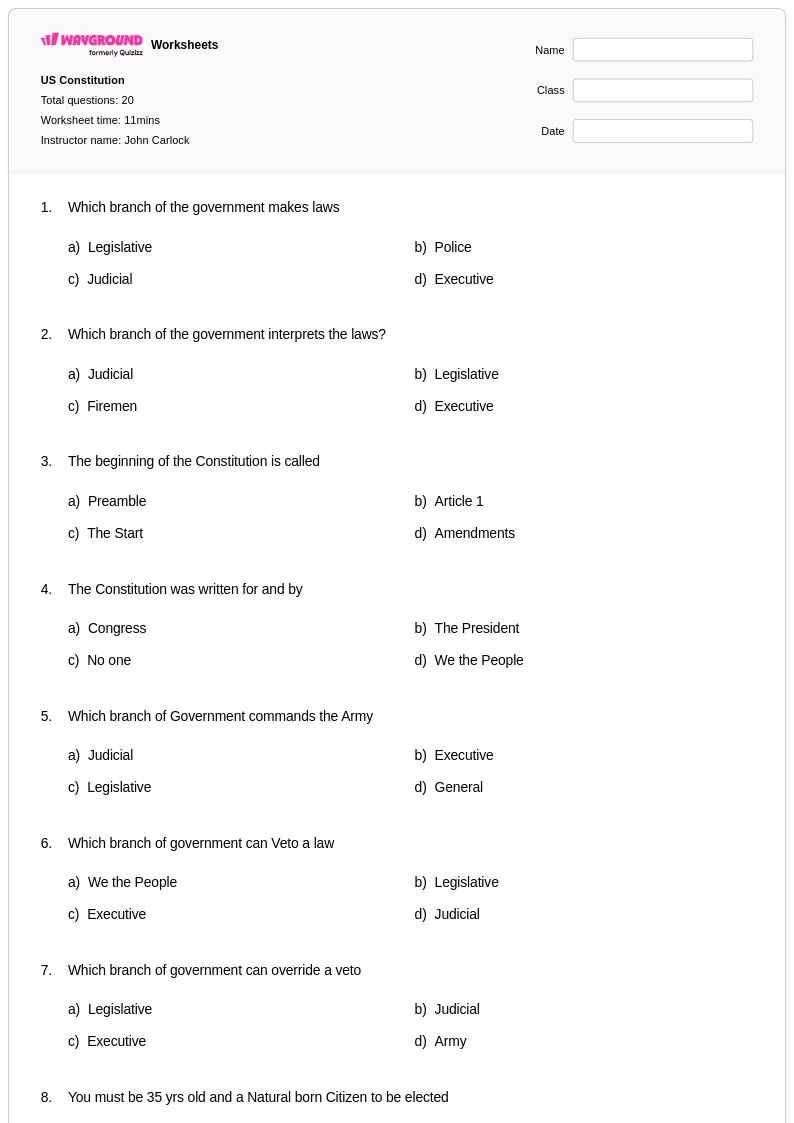
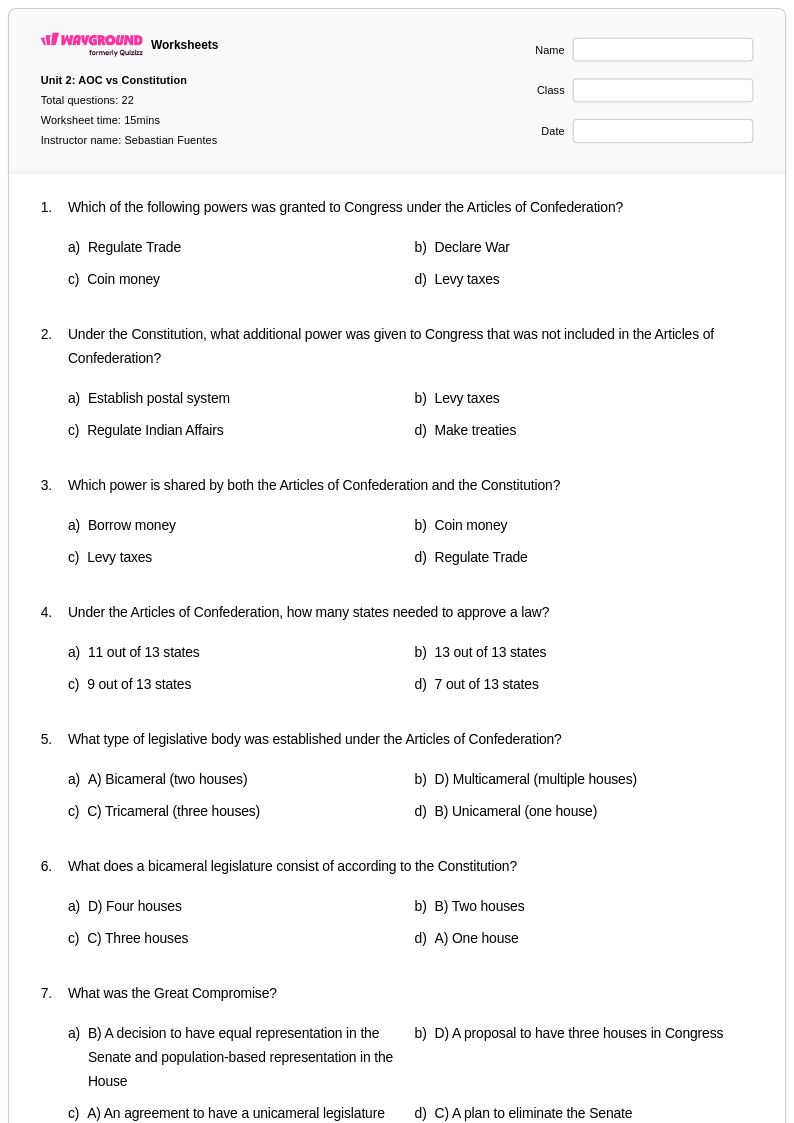
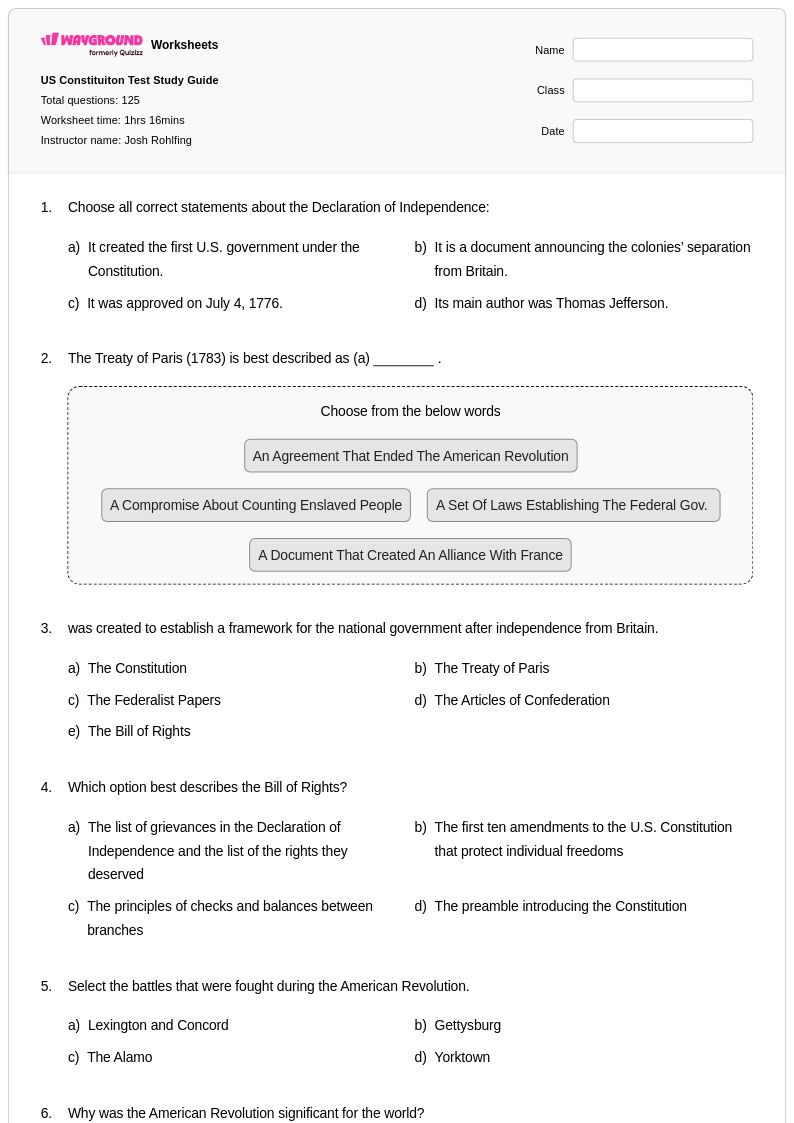
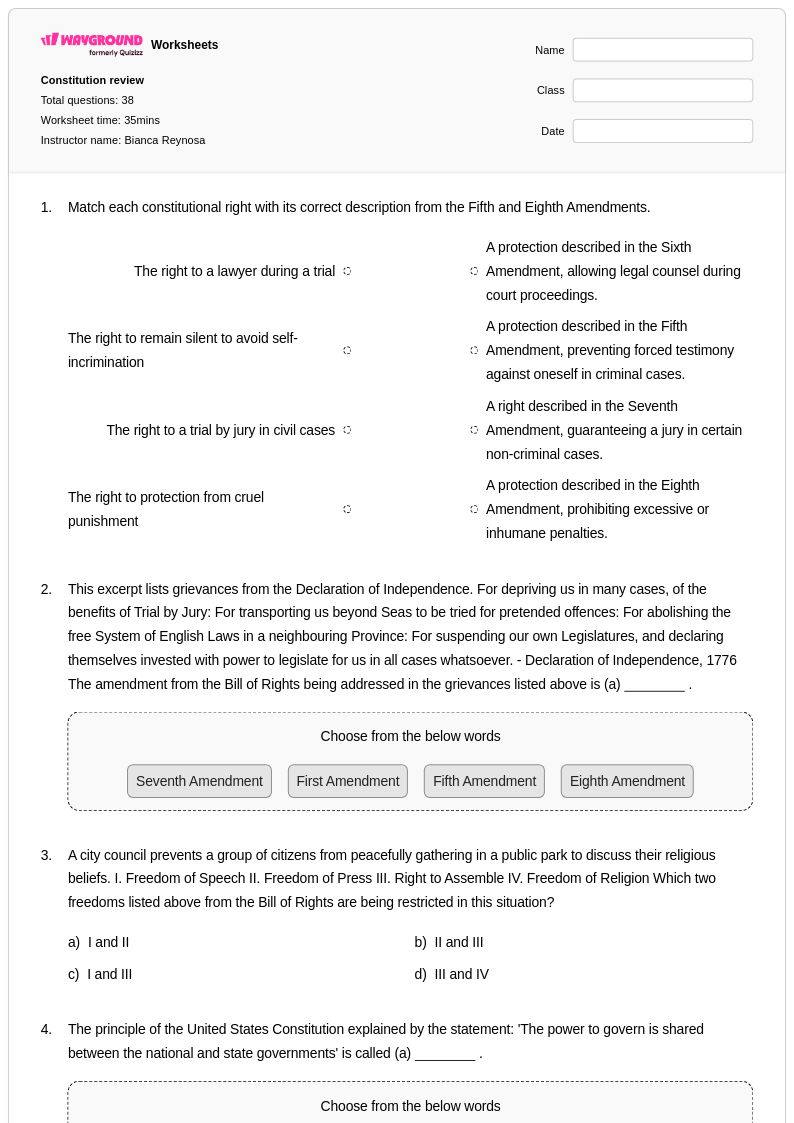
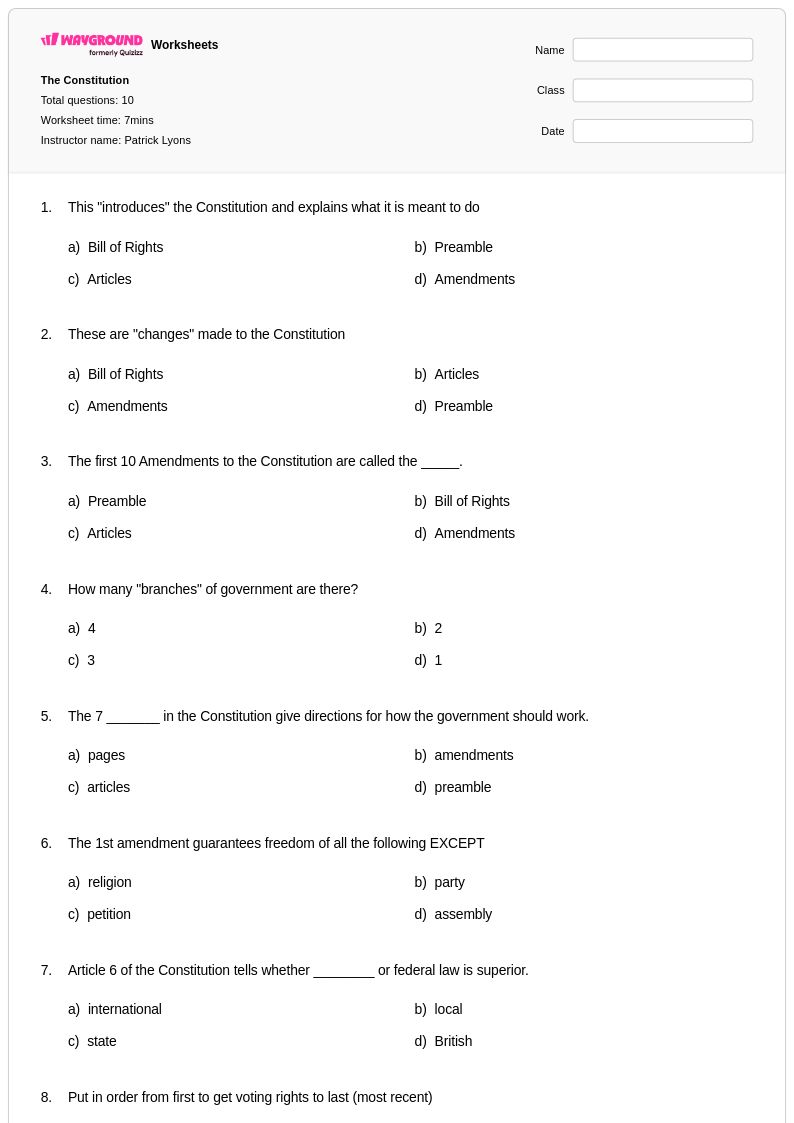
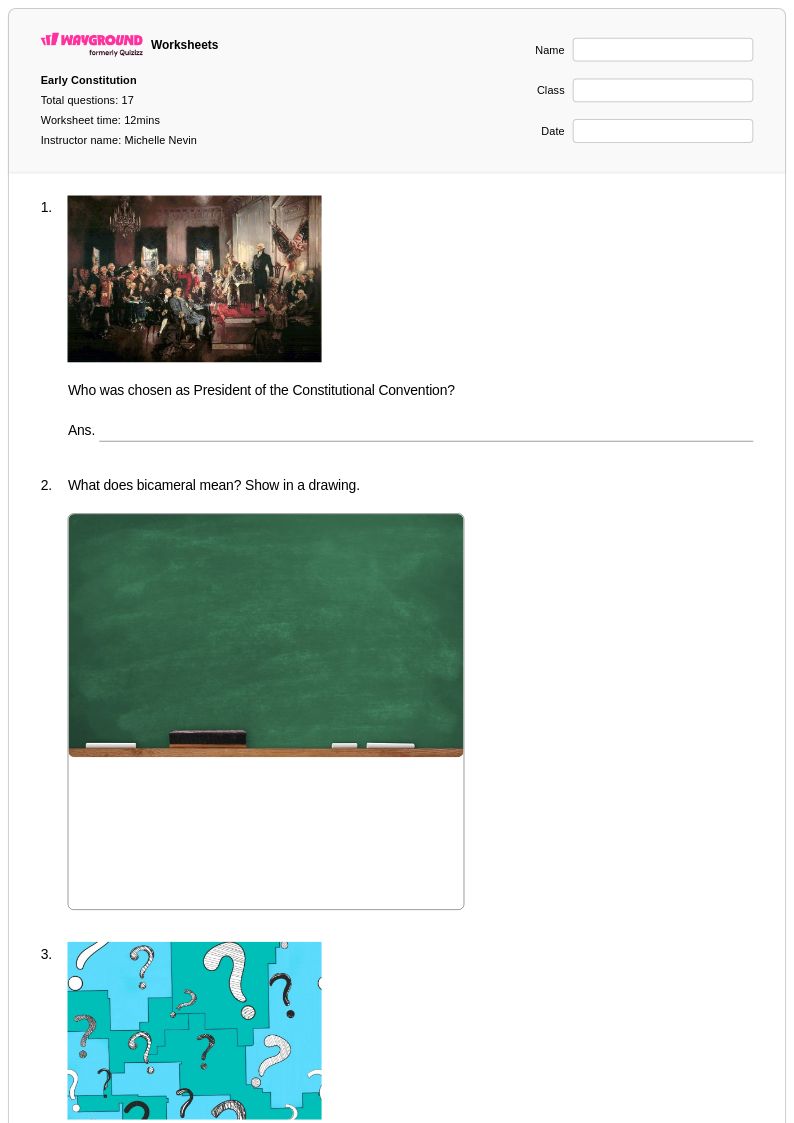
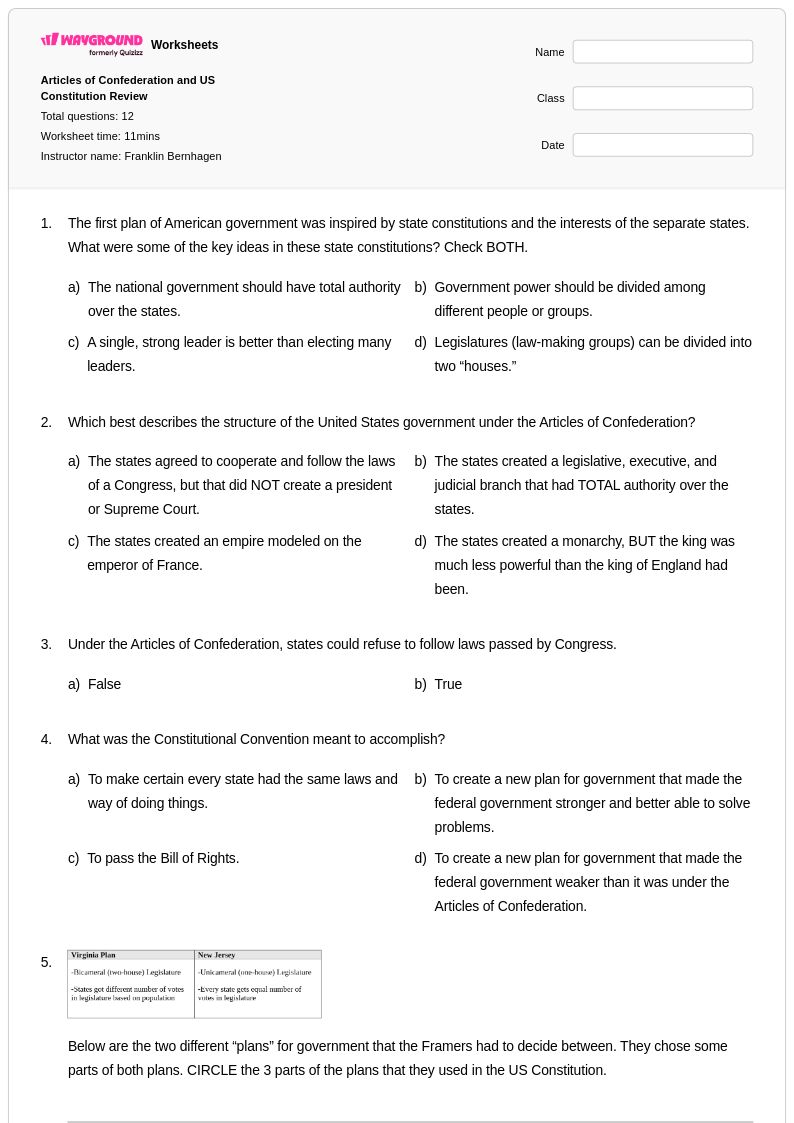
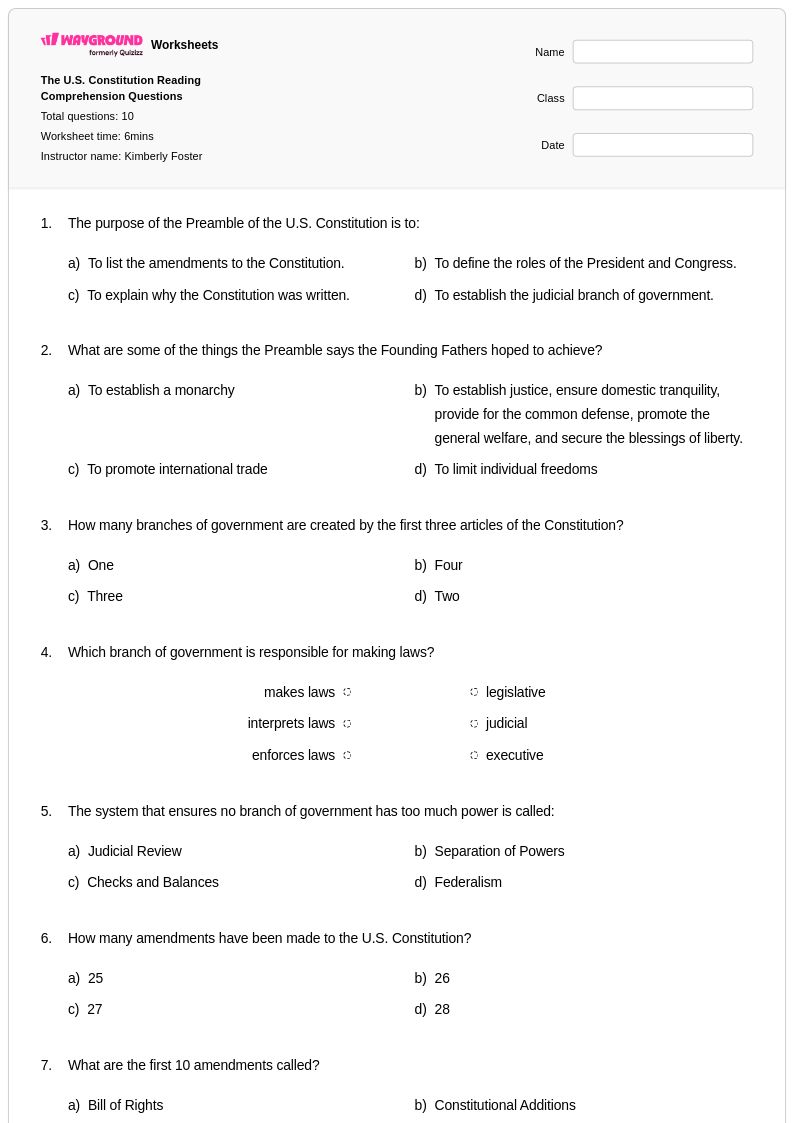
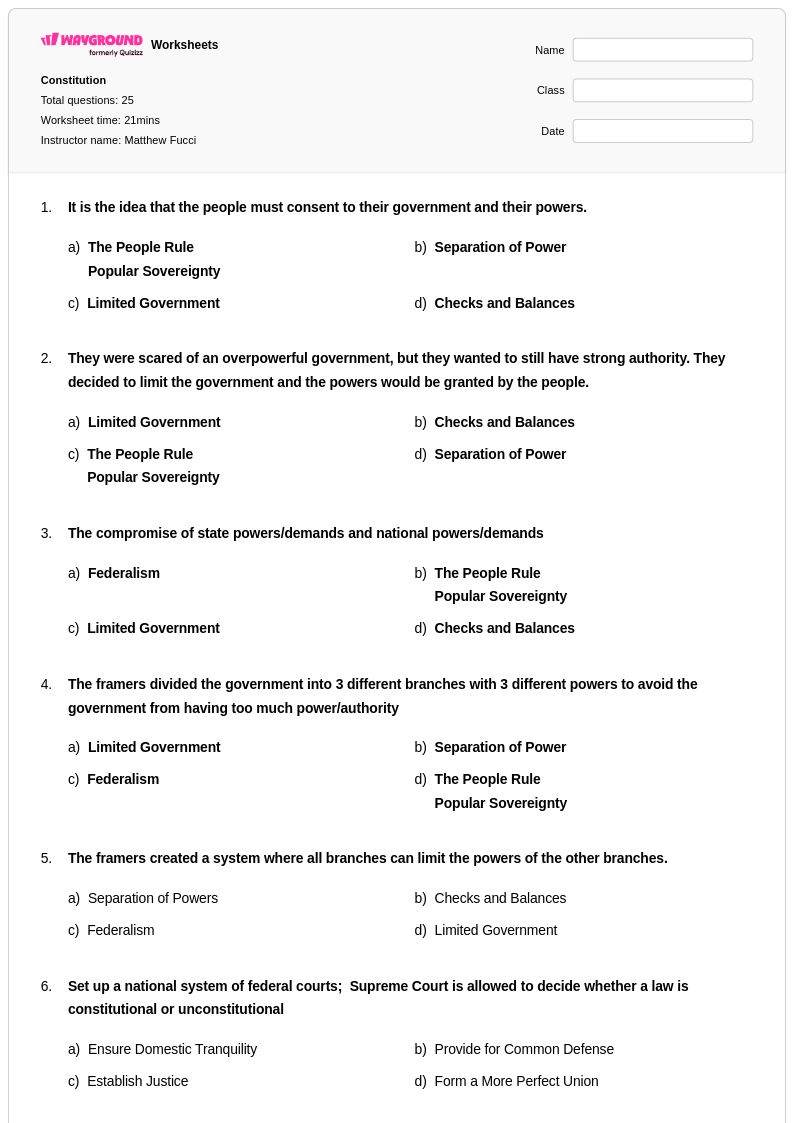
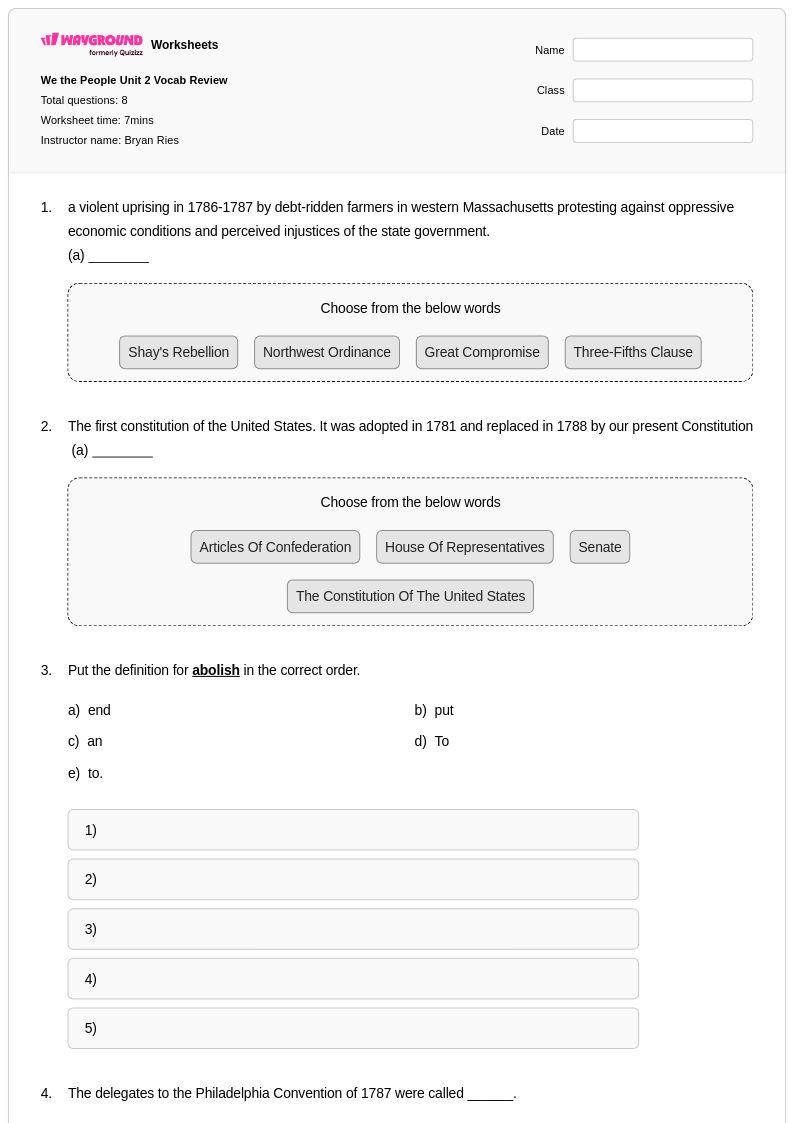
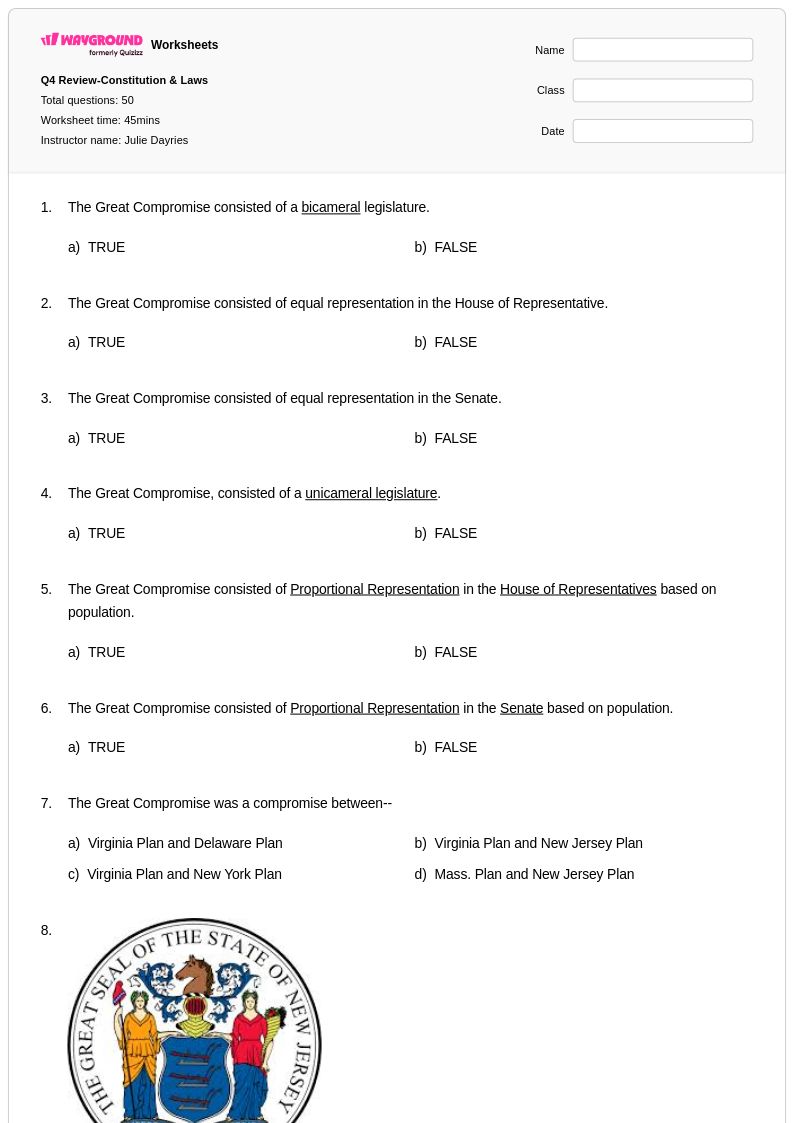
Compromises of the US Constitution worksheets for Grade 6 students provide essential practice materials that help young learners understand the critical negotiations and agreements that shaped America's founding document. These comprehensive worksheets guide students through the major constitutional compromises, including the Great Compromise between large and small states, the Three-Fifths Compromise regarding representation and slavery, and the Commerce Compromise balancing federal and state economic powers. Each worksheet strengthens analytical thinking skills as students examine primary source excerpts, compare different viewpoints, and evaluate how these historic agreements continue to influence American government today. The collection includes detailed answer keys to support both independent study and classroom instruction, with free printables available in convenient pdf format for immediate use.
Wayground, formerly Quizizz, empowers educators with millions of teacher-created resources specifically designed to make complex constitutional concepts accessible to Grade 6 students. The platform's robust search and filtering capabilities allow teachers to quickly locate worksheets that align with state social studies standards while offering differentiation tools to meet diverse learning needs. Teachers can customize existing materials or create new practice problems that target specific aspects of constitutional compromises, ensuring students receive appropriate challenge levels for both remediation and enrichment activities. Available in both printable and digital formats, these resources streamline lesson planning while providing flexible options for classroom instruction, homework assignments, and skill-building practice that deepens student understanding of how compromise shaped the foundation of American democracy.
FAQs
How do I teach the compromises of the US Constitution to students?
Start by framing each compromise as a political problem that needed solving: who gets representation, how is population counted, and who controls trade. Walking students through the competing proposals before revealing the agreed-upon compromise builds critical thinking and helps them understand why these negotiations were necessary. Primary source excerpts from the Constitutional Convention debates are especially effective for grounding abstract political concepts in real historical voices.
What are the key compromises of the US Constitution students need to know?
The three core compromises students must understand are the Great Compromise, the Three-Fifths Compromise, and the Commerce Compromise. The Great Compromise resolved the dispute between large and small states over congressional representation by creating a bicameral legislature. The Three-Fifths Compromise addressed how enslaved people would be counted for taxation and representation, while the Commerce Compromise balanced federal authority over interstate trade against Southern states' concerns about export taxes.
What exercises help students practice understanding the constitutional compromises?
Structured comparison activities work well, asking students to identify the original position of each side and then analyze what each gave up in the final agreement. Practice problems that use primary source excerpts from the Constitutional Convention encourage students to evaluate competing proposals before reaching the compromise outcome. Having students evaluate the long-term consequences of each compromise deepens analytical skills beyond surface-level recall.
What misconceptions do students commonly have about the Three-Fifths Compromise?
Students often misread the Three-Fifths Compromise as a statement about the worth or humanity of enslaved people, rather than understanding it as a political calculation about taxation and congressional representation. It is important to clarify that the fraction arose from a negotiation between Southern states wanting full population counts for more representation and Northern states wanting enslaved people excluded entirely. Contextualizing this compromise within the broader moral contradictions of the founding era helps students grapple with its legacy accurately.
How can I use constitutional compromise worksheets in my classroom?
Wayground's Compromises of the US Constitution worksheets are available as both printable PDFs and in digital formats, making them suitable for traditional classroom instruction, remote learning, and hybrid environments, and teachers can also host them as a quiz directly on Wayground. The worksheets include comprehensive answer keys, so they can be used for guided practice, independent work, or formative assessment with minimal preparation time. Digital formats are especially useful for assigning individual work while Wayground's accommodation settings, such as read aloud and extended time, allow teachers to differentiate for students with varying needs.
How do I help struggling students understand the Great Compromise?
Break the Great Compromise into two distinct problems: the dispute over representation in Congress and the solution of creating a bicameral legislature with a House and a Senate. Visual scaffolds such as comparison charts showing the Virginia Plan, the New Jersey Plan, and the final compromise side by side help students track the negotiation clearly. On Wayground, teachers can apply accommodations such as reduced answer choices or read aloud to support students who need additional help processing complex political concepts.