Free Printable Conflict Resolution Worksheets for Grade 6
Grade 6 conflict resolution worksheets from Wayground help students develop essential problem-solving and communication skills through engaging printables, practice problems, and comprehensive answer keys for effective social interaction learning.
Explore printable Conflict Resolution worksheets for Grade 6
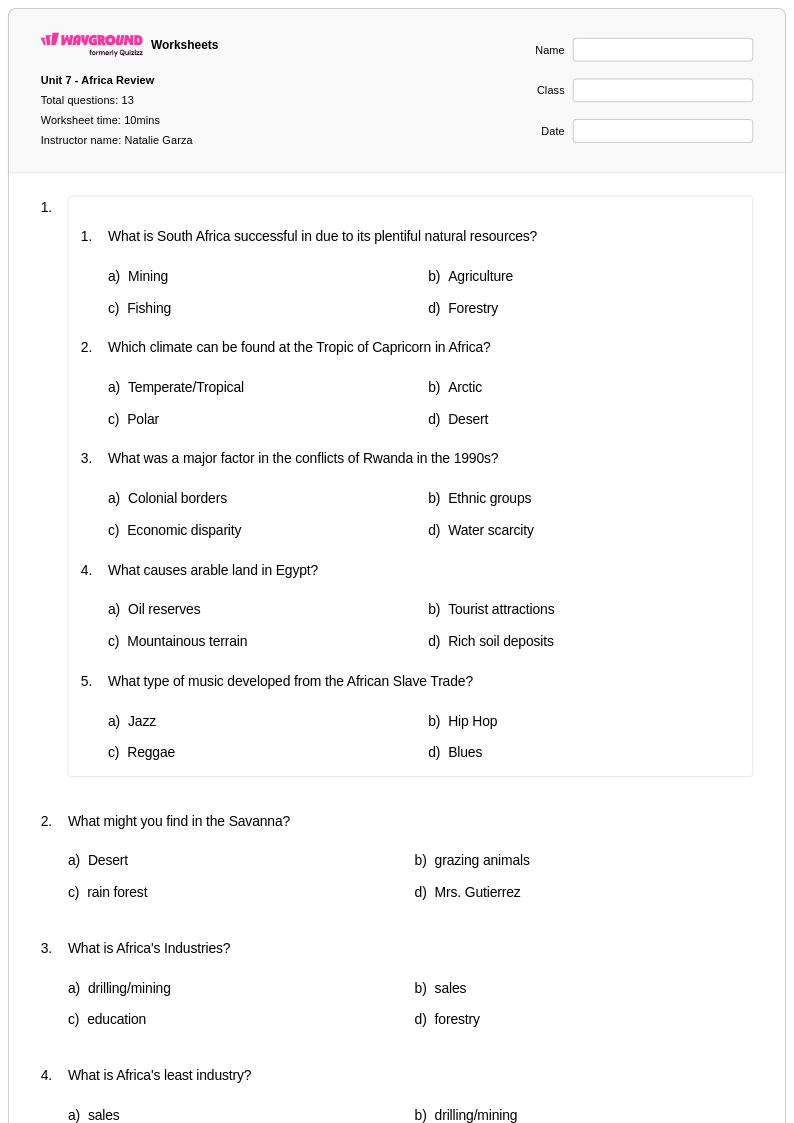
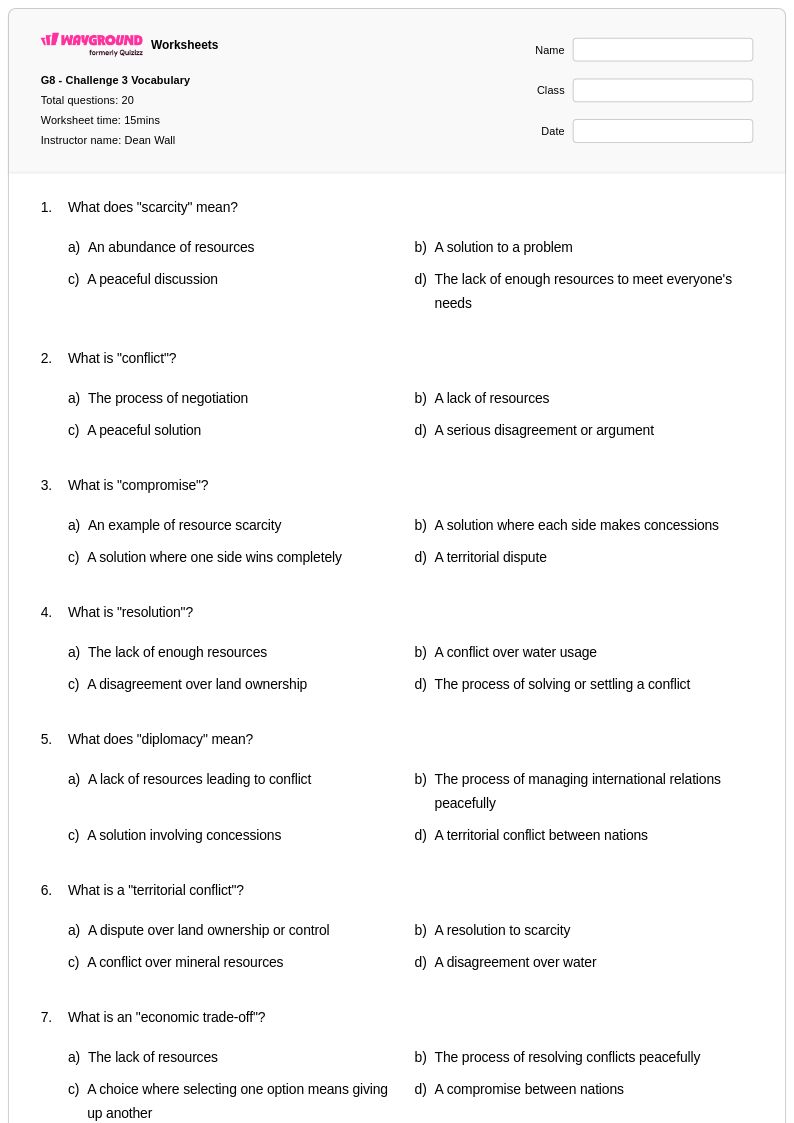
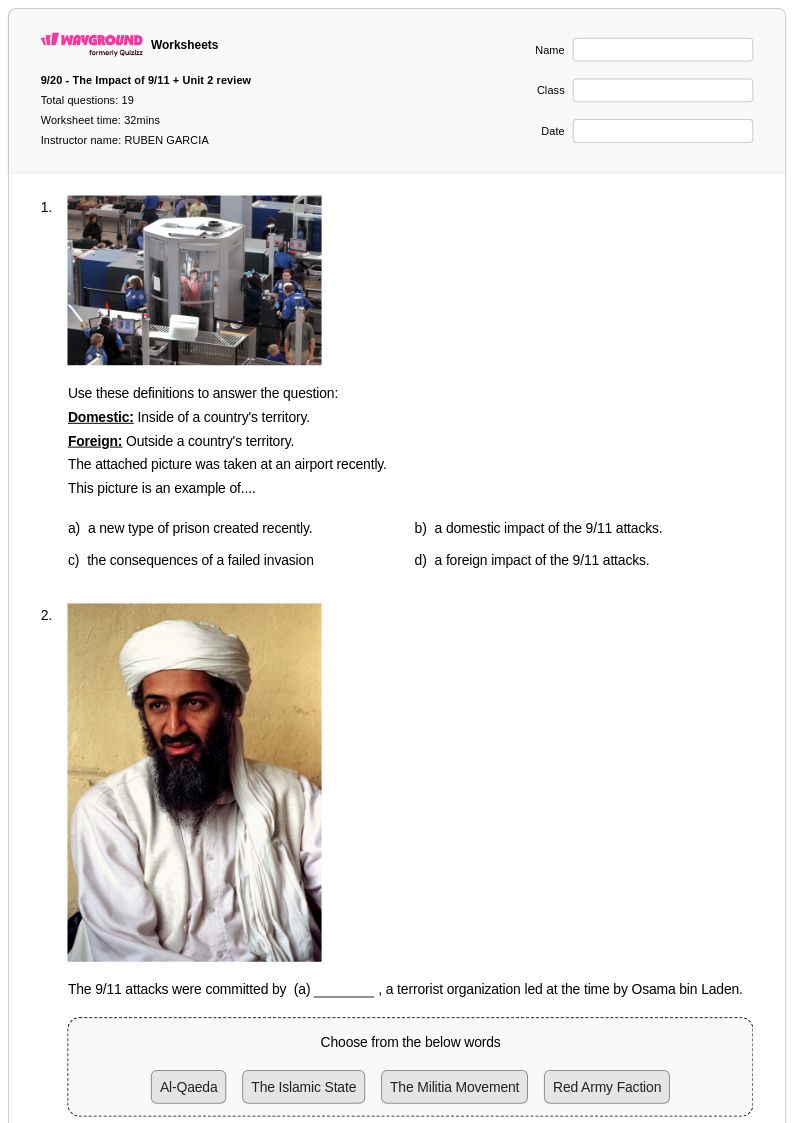
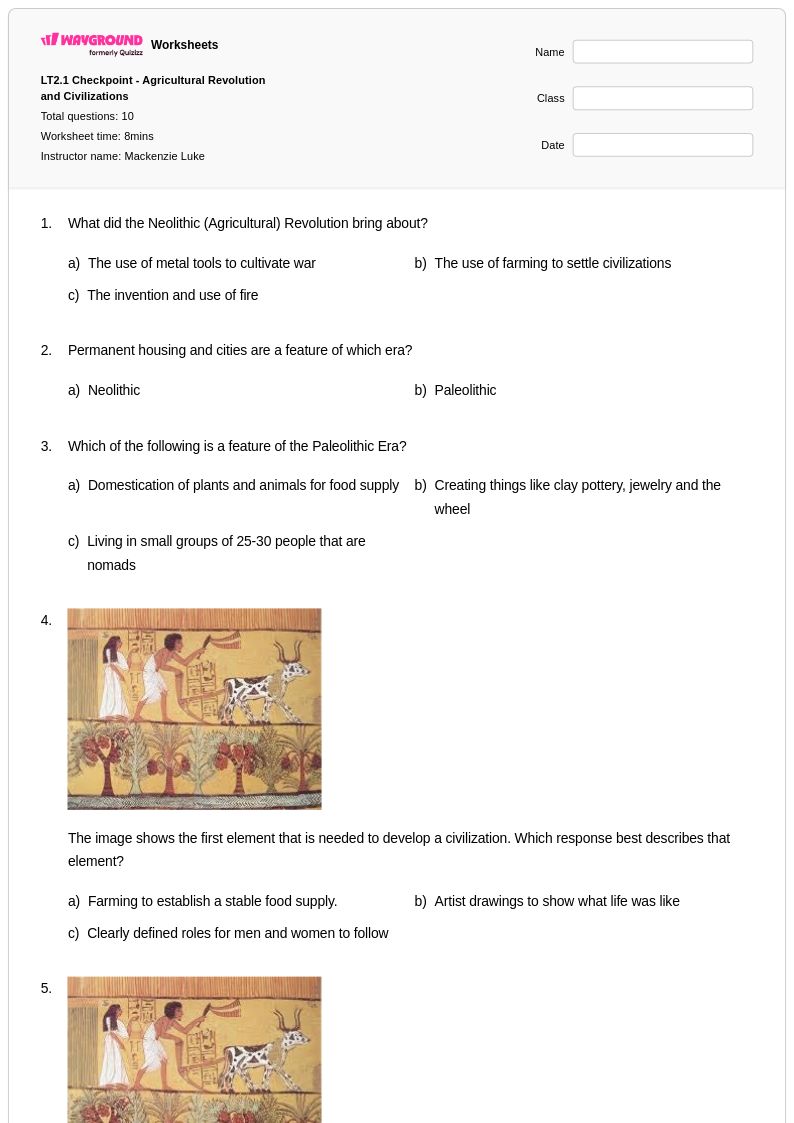
Conflict resolution worksheets for Grade 6 students available through Wayground (formerly Quizizz) provide comprehensive practice in essential social skills that help young adolescents navigate interpersonal challenges effectively. These educational resources strengthen critical abilities including identifying conflict triggers, understanding different perspectives, applying problem-solving strategies, and practicing peaceful communication techniques. Students work through realistic scenarios that mirror common middle school situations, developing emotional intelligence and learning to manage disagreements constructively. Each worksheet includes structured practice problems that guide learners through step-by-step conflict resolution processes, with answer keys that help educators assess student understanding and provide targeted feedback. These free printables cover topics such as active listening, compromise strategies, peer mediation techniques, and recognizing when adult intervention is necessary.
Wayground (formerly Quizizz) supports educators with an extensive collection of teacher-created conflict resolution resources that make lesson planning and skill development more effective for Grade 6 classrooms. The platform's millions of educational materials include standards-aligned worksheets that can be easily searched and filtered by specific conflict resolution concepts, learning objectives, and difficulty levels. Teachers benefit from flexible customization tools that allow them to modify existing worksheets or create personalized versions that address their students' particular social dynamics and needs. These resources are available in both printable pdf formats for traditional classroom use and digital formats for interactive learning experiences. The comprehensive collection supports differentiated instruction by offering materials suitable for remediation, grade-level practice, and enrichment activities, enabling educators to provide targeted social skills instruction that helps students build confidence in managing conflicts independently and maintaining positive relationships with peers.
FAQs
How do I teach conflict resolution skills to students?
Effective conflict resolution instruction typically begins with teaching students to identify the underlying needs or feelings driving a disagreement, rather than focusing only on surface-level behaviors. From there, structured practice with perspective-taking exercises and compromise strategies helps students internalize a repeatable process for resolving disputes. Incorporating realistic scenarios drawn from school, family, and peer settings makes the skills feel relevant and transferable. Whole-class modeling followed by small group practice is a common and effective sequence.
What activities help students practice conflict resolution?
Scenario-based exercises are among the most effective tools for practicing conflict resolution because they require students to apply skills like active listening, emotional regulation, and generating multiple solutions in context. Role-play activities, written reflection prompts, and structured problem-solving frameworks give students repeated practice identifying issues and evaluating fair resolutions. Worksheets that present realistic conflicts from school or peer environments are especially useful because they allow students to rehearse responses before encountering real disagreements.
What mistakes do students commonly make when learning conflict resolution?
One of the most common errors is students focusing on winning the argument rather than understanding the other person's perspective, which short-circuits the listening and empathy steps essential to resolution. Students also frequently jump to solutions before fully identifying the underlying issue, resulting in agreements that don't address the real source of conflict. Another common misconception is equating compromise with one side losing, which can make students reluctant to negotiate. Practice with structured frameworks that explicitly sequence listening before problem-solving helps address all three patterns.
How can I use conflict resolution worksheets to support different learners in my classroom?
Conflict resolution worksheets on Wayground can be assigned digitally, which allows teachers to apply individual accommodations such as read aloud support for students who need text read to them, reduced answer choices to lower cognitive load, and extended time for students who need additional processing time. These settings can be configured per student without alerting the rest of the class, so differentiation happens seamlessly. Printable PDF versions are also available for students who work better on paper or in settings without consistent device access.
How do I integrate conflict resolution worksheets into my existing social-emotional learning curriculum?
Conflict resolution worksheets work well as structured practice components within a broader SEL curriculum, reinforcing skills introduced through direct instruction or class discussion. They are effective for independent practice after a lesson, as small group discussion starters, or as formative check-ins to gauge where students are in applying the process. Because the worksheets include answer keys, teachers can use them efficiently without additional preparation time, and students can self-check their reasoning during guided practice.
At what grade level should students start learning conflict resolution strategies?
Conflict resolution skills can be introduced as early as elementary school using age-appropriate scenarios involving sharing, fairness, and hurt feelings. By middle school, instruction can expand to include more complex emotional dynamics, peer pressure, and multi-party disagreements. High school students benefit from frameworks that address identity-based conflicts, negotiation, and restorative practices. The appropriate entry point depends less on grade level and more on students' current social-emotional development and the types of conflicts they regularly encounter.