Free Printable Controls and Variables Worksheets for Grade 8
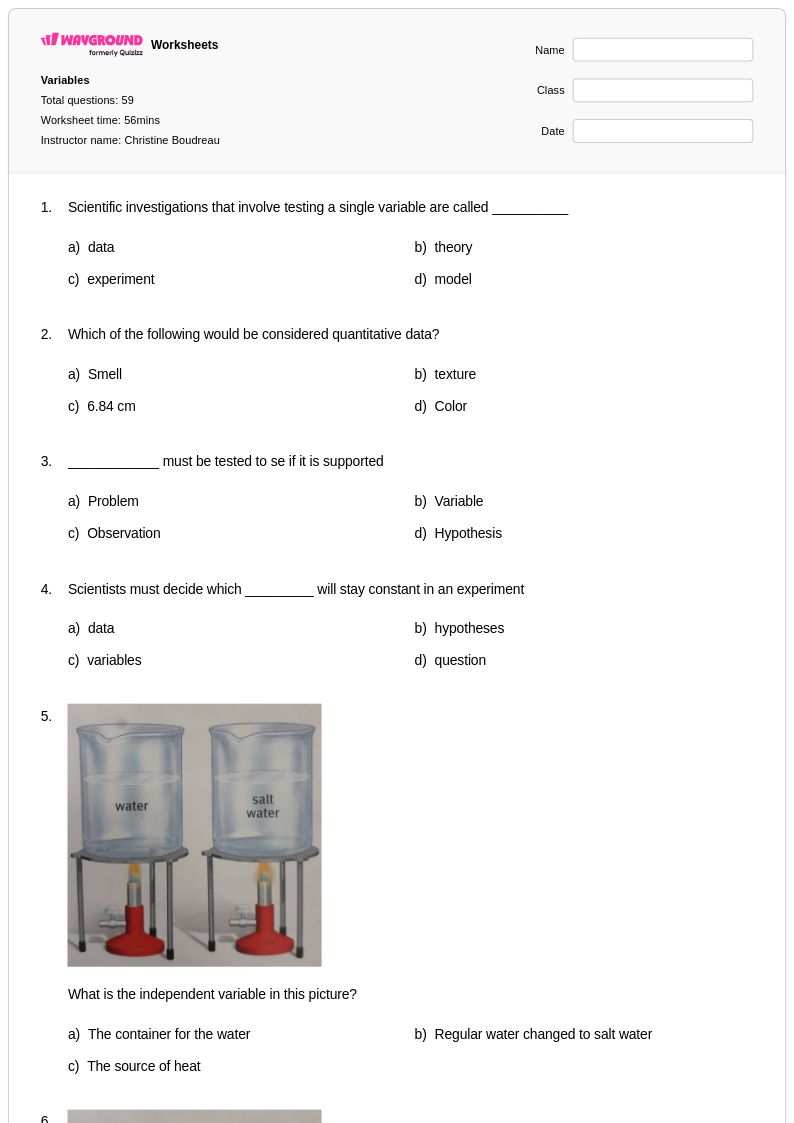
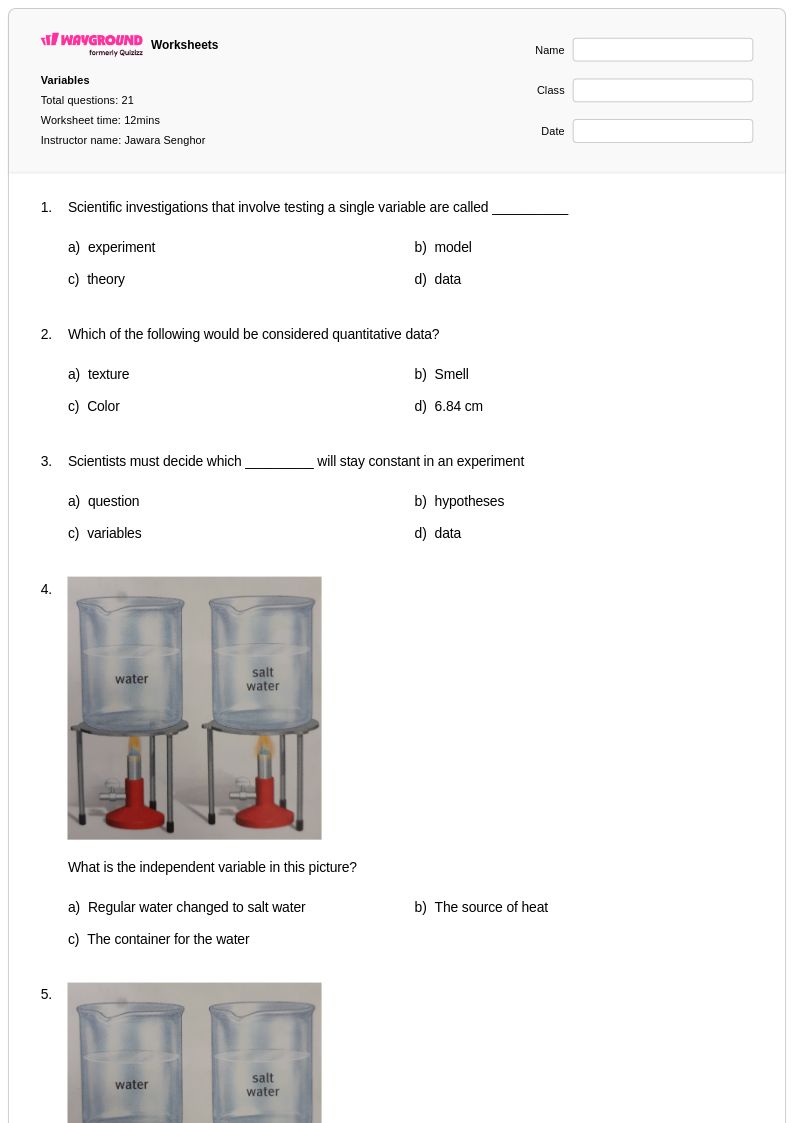
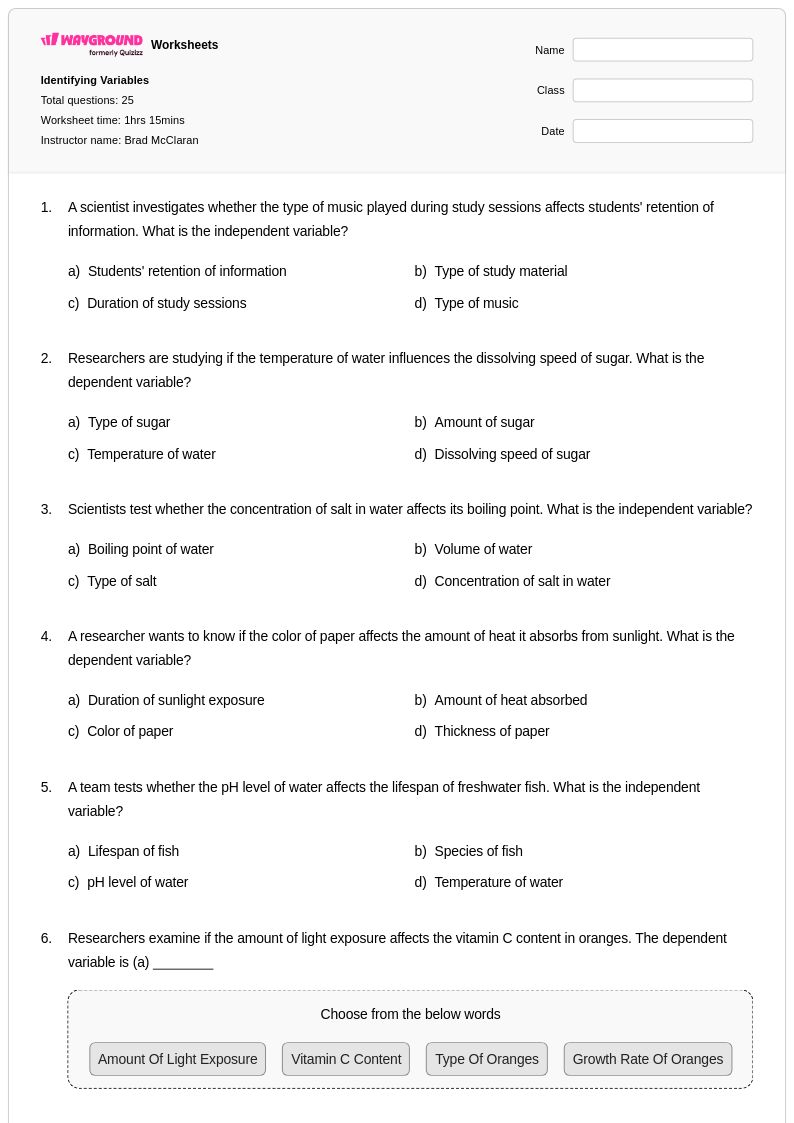
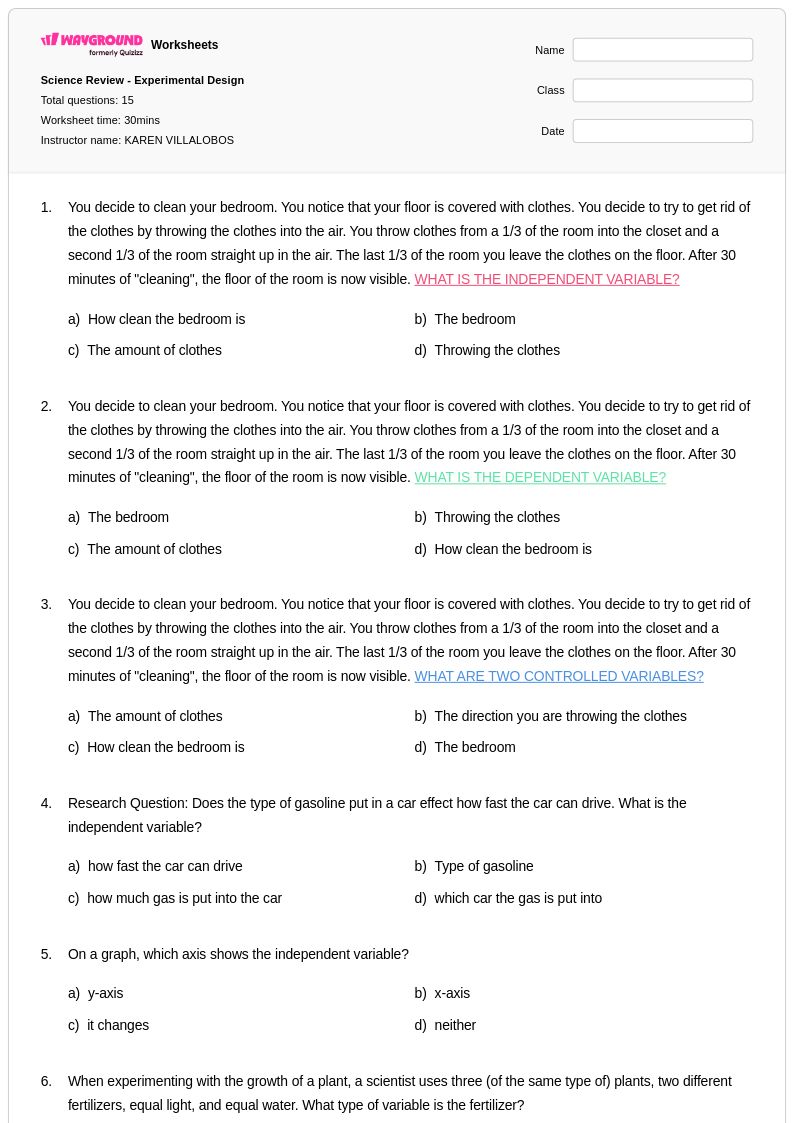
Grade 8 controls and variables free worksheets and printables help students master identifying independent and dependent variables through engaging practice problems with comprehensive answer keys available as downloadable PDFs.
Explore printable Controls and Variables worksheets for Grade 8
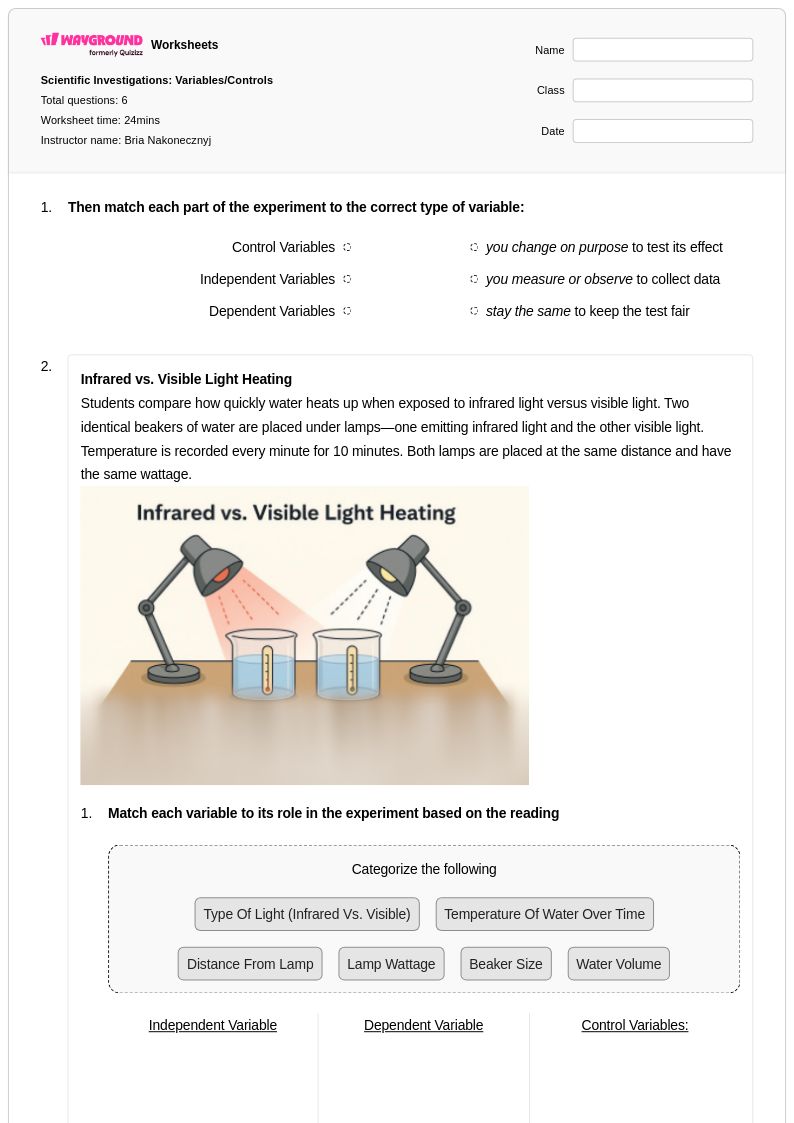
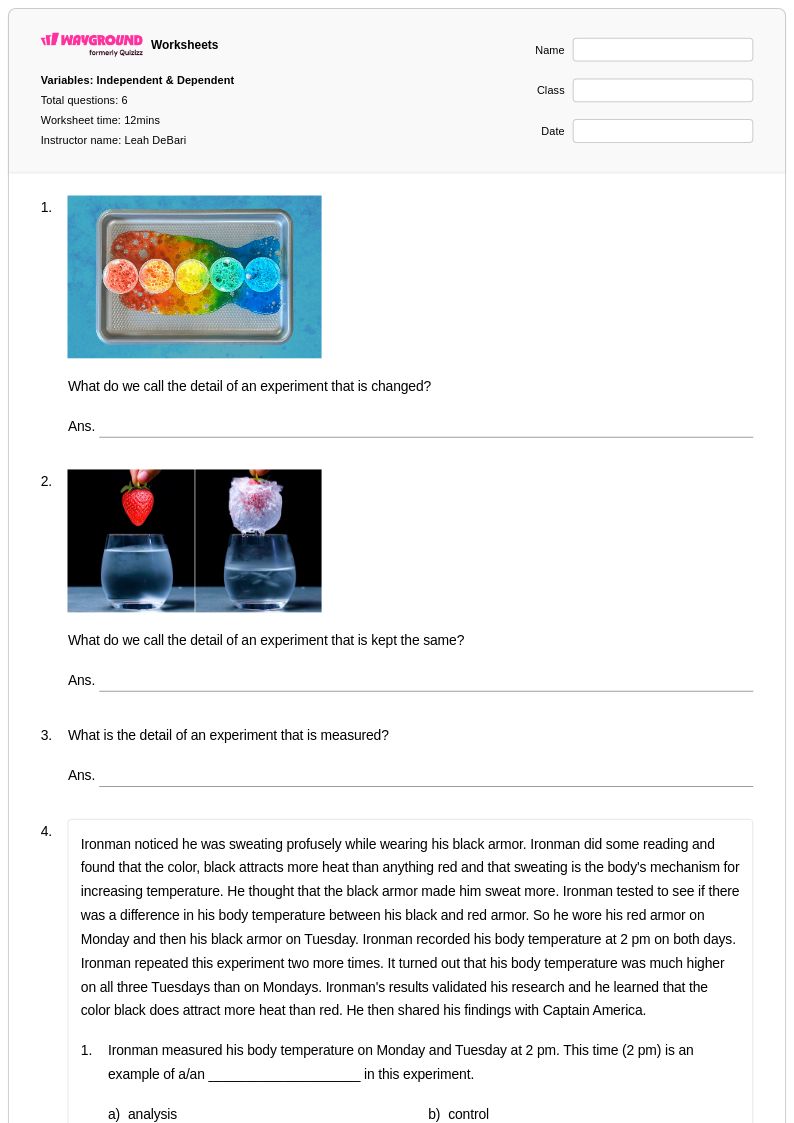
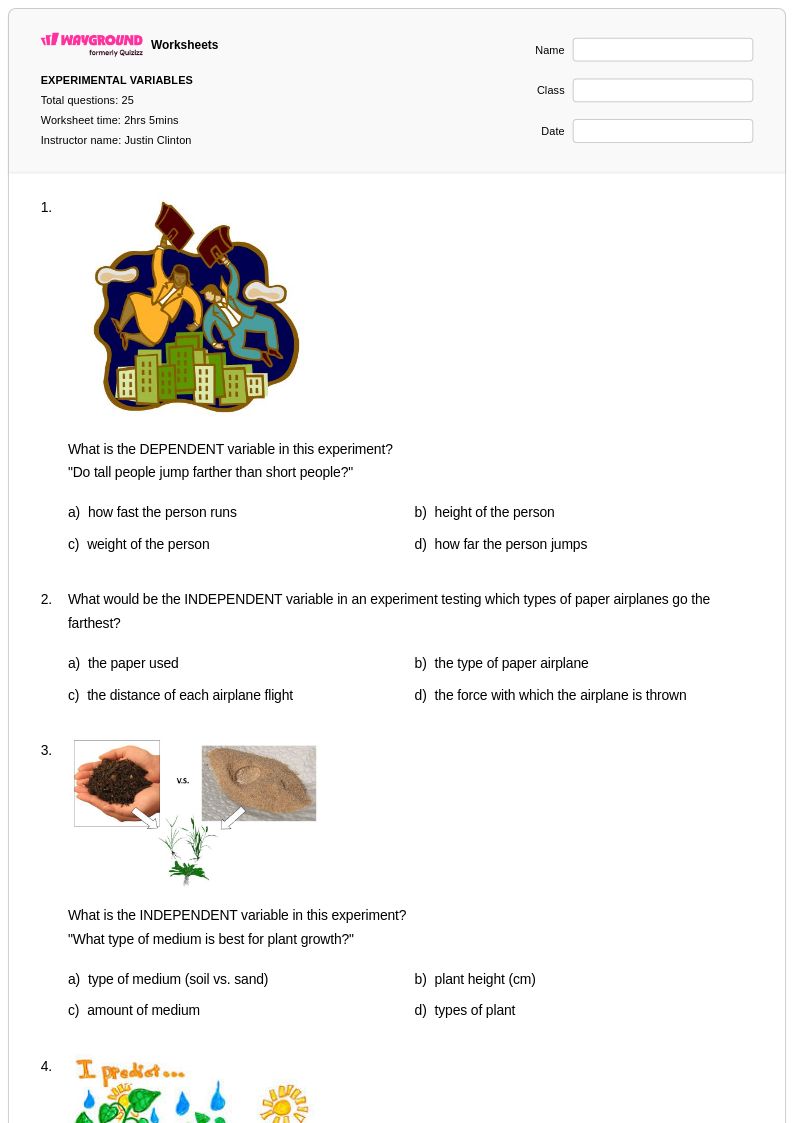
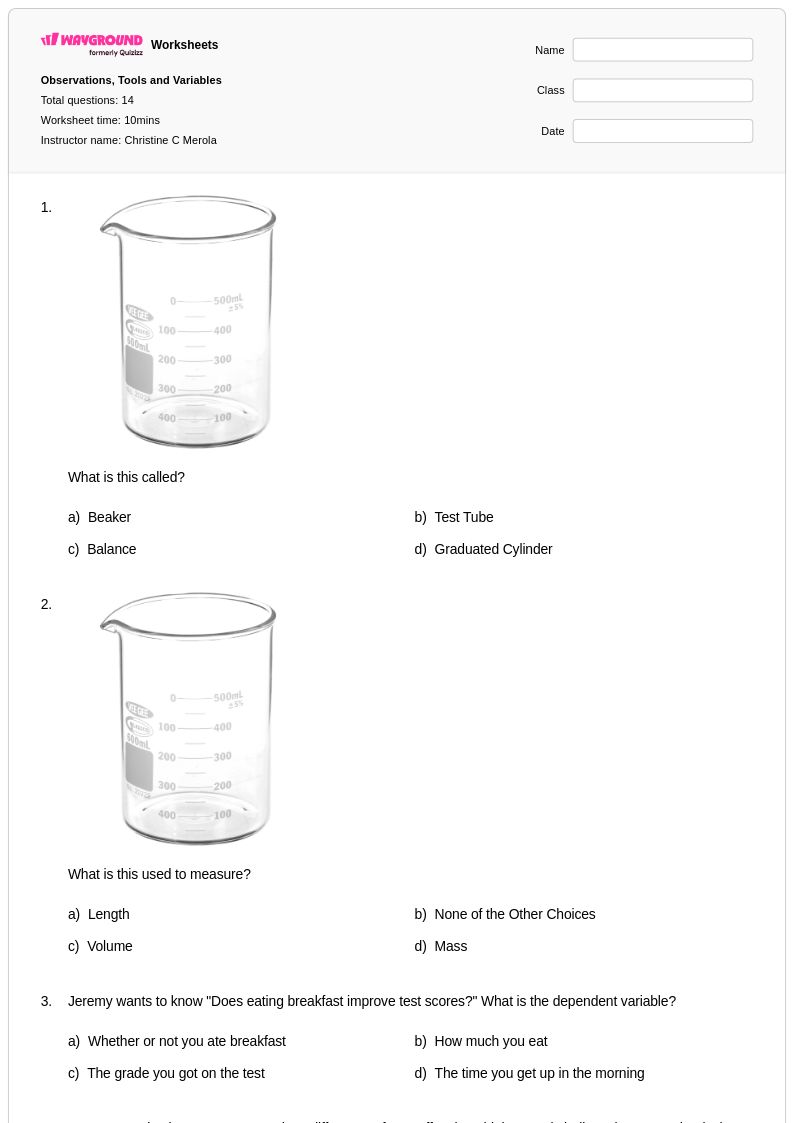
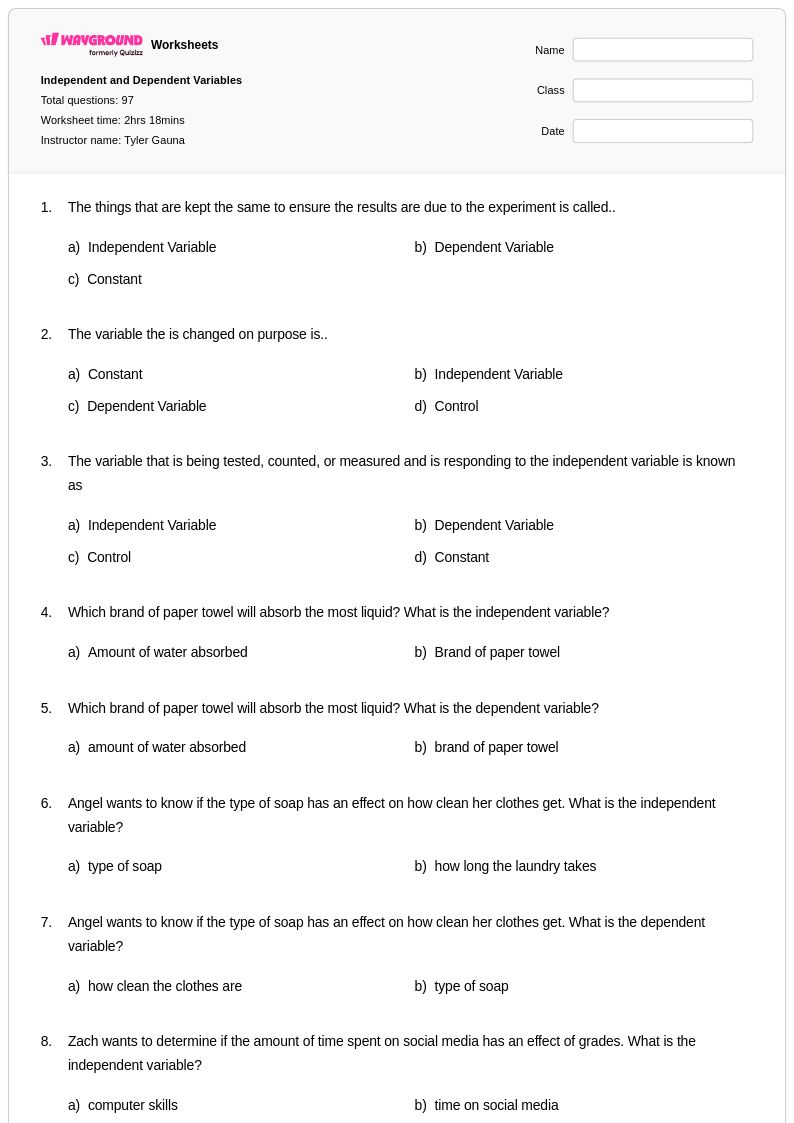
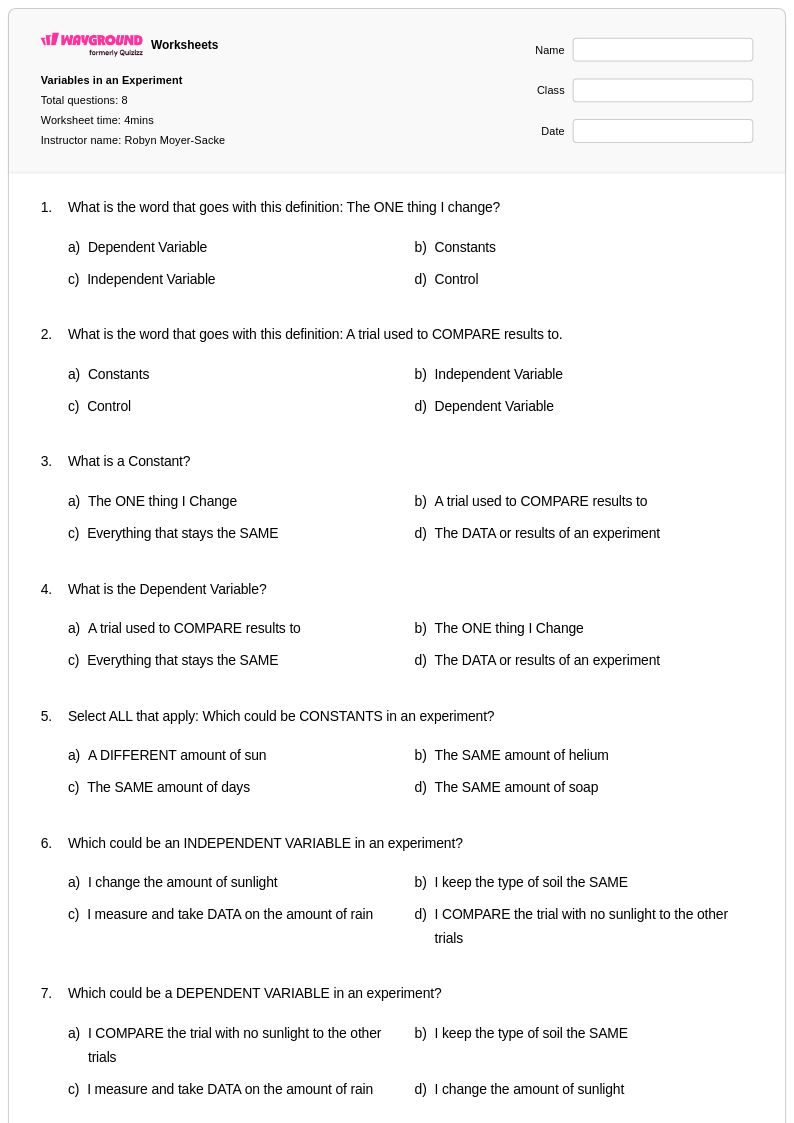
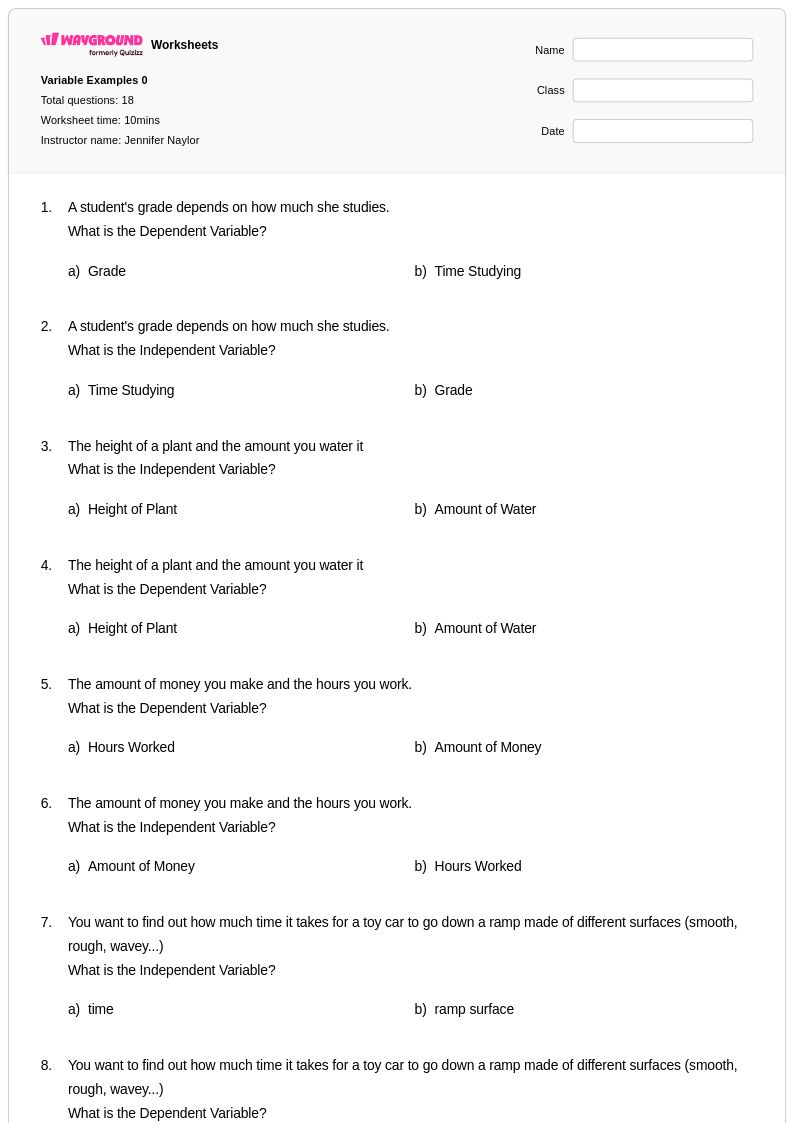
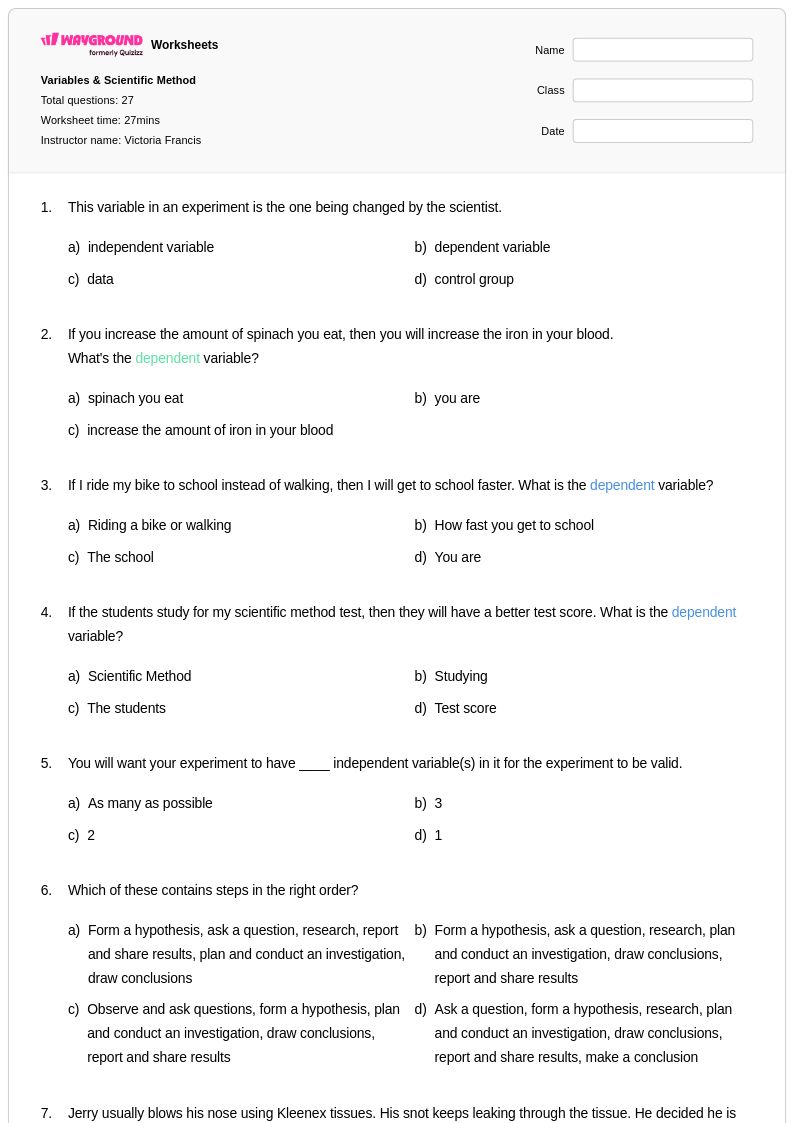
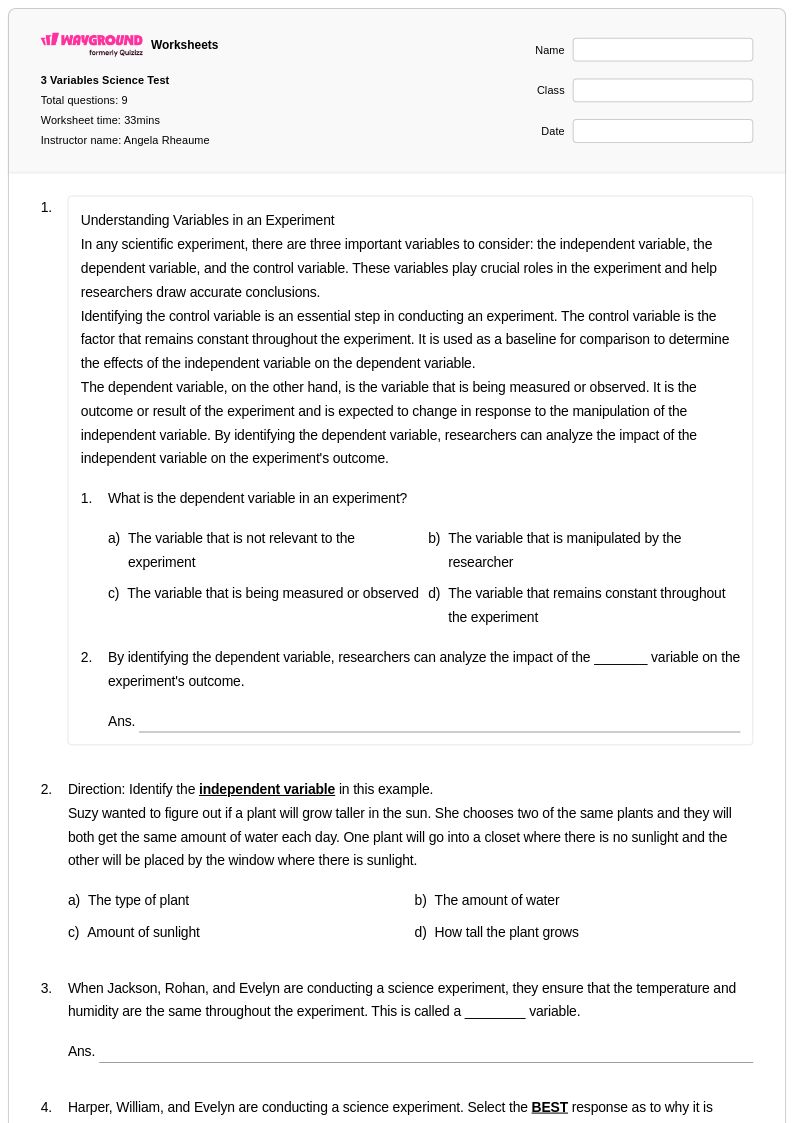
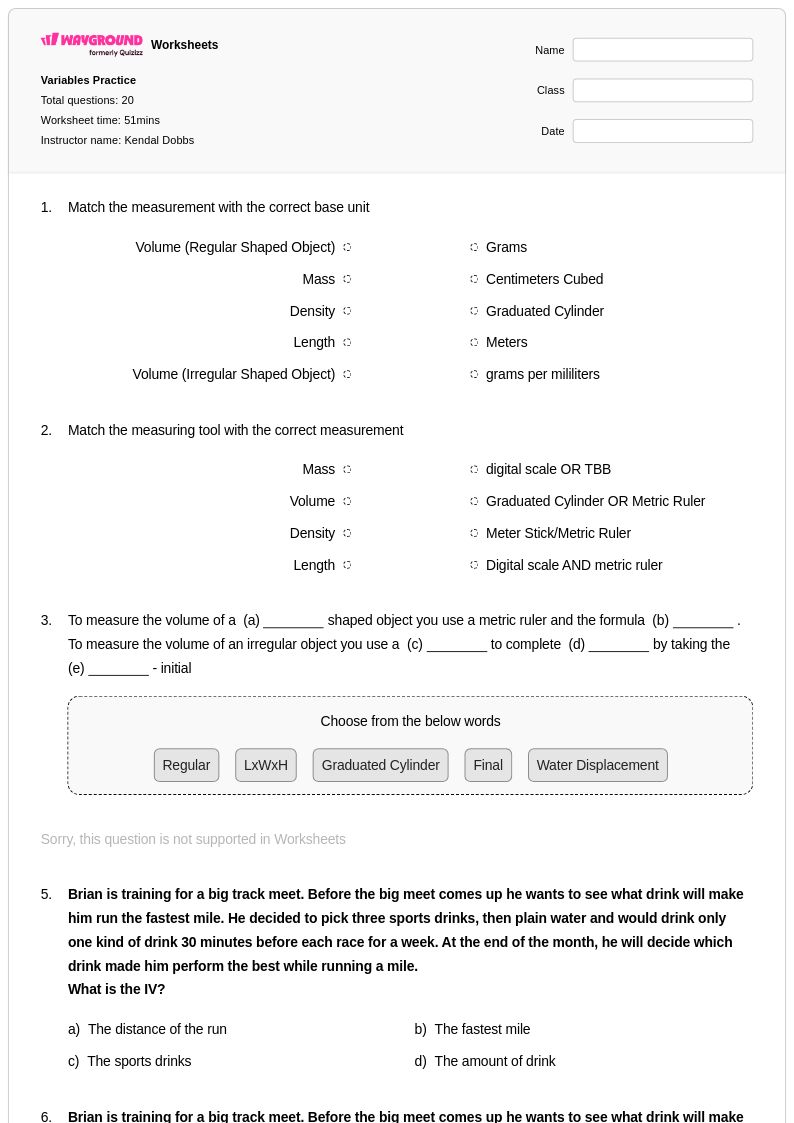
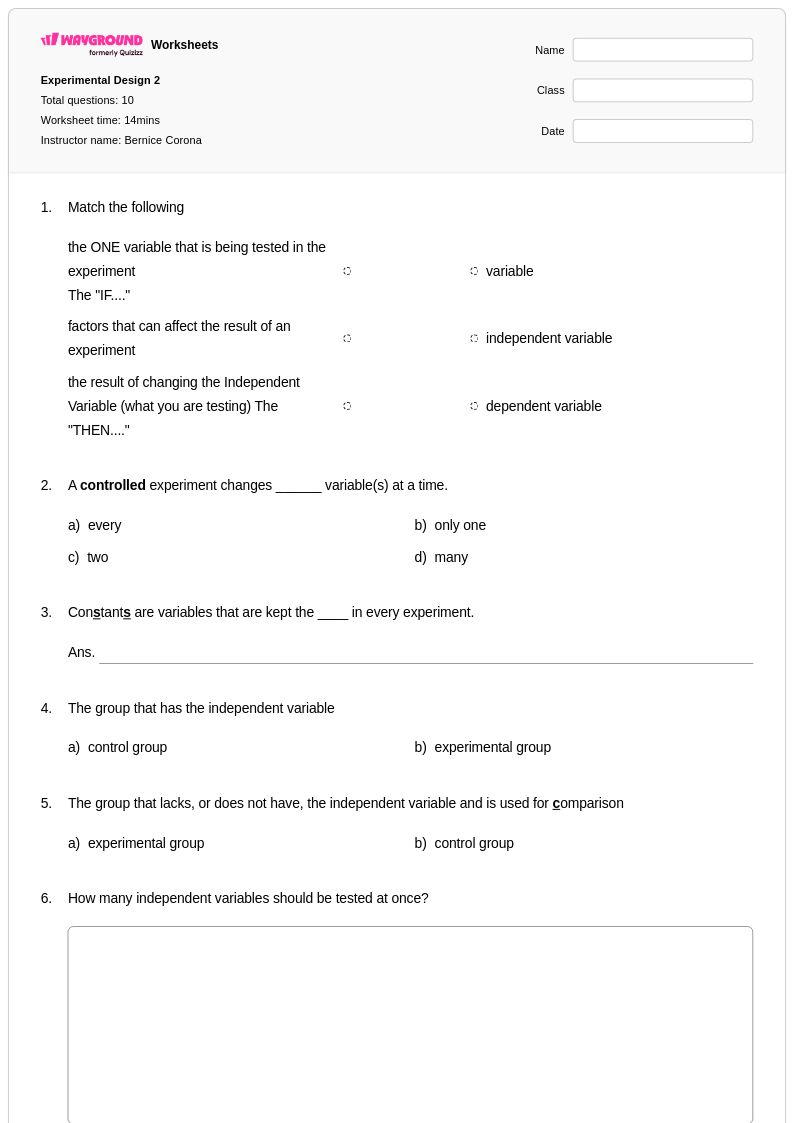
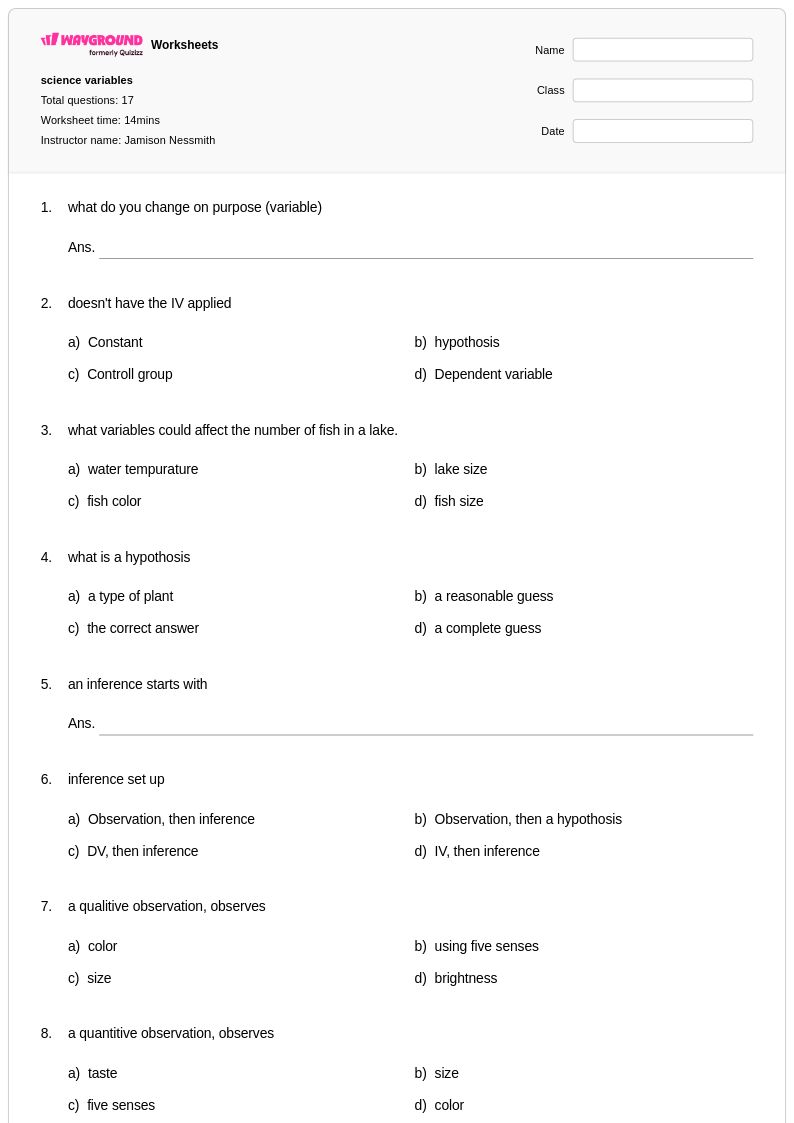
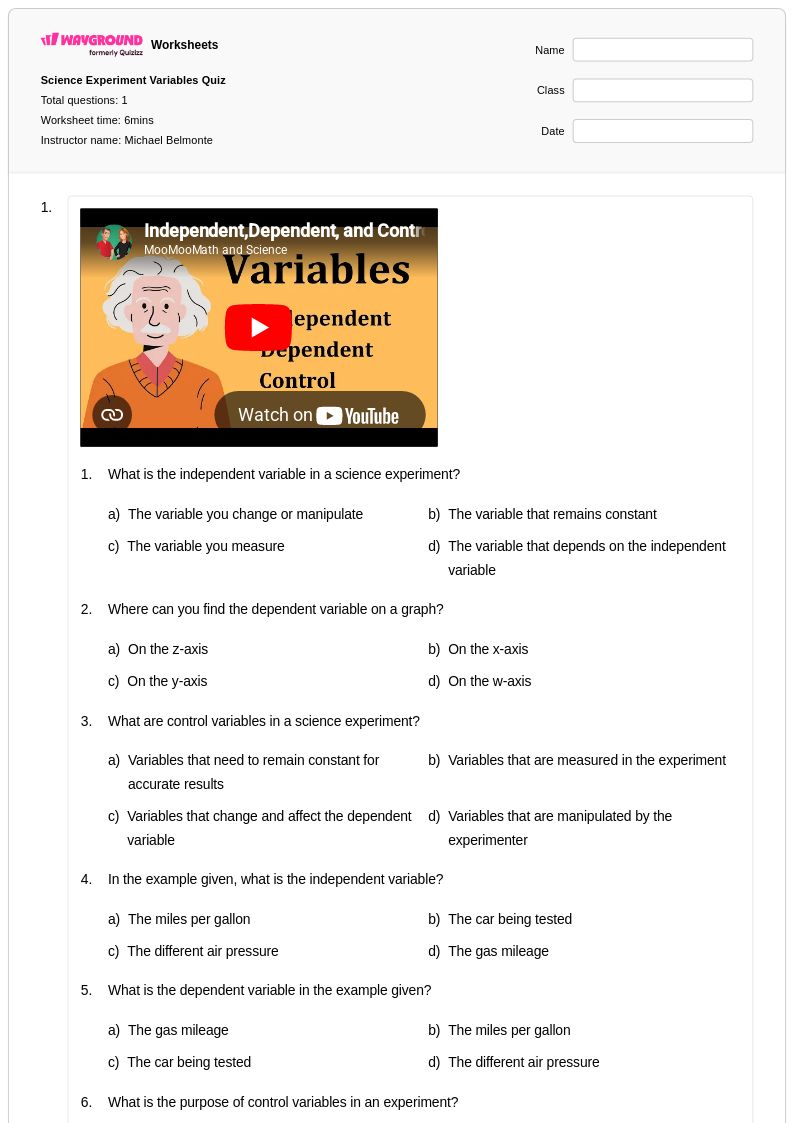
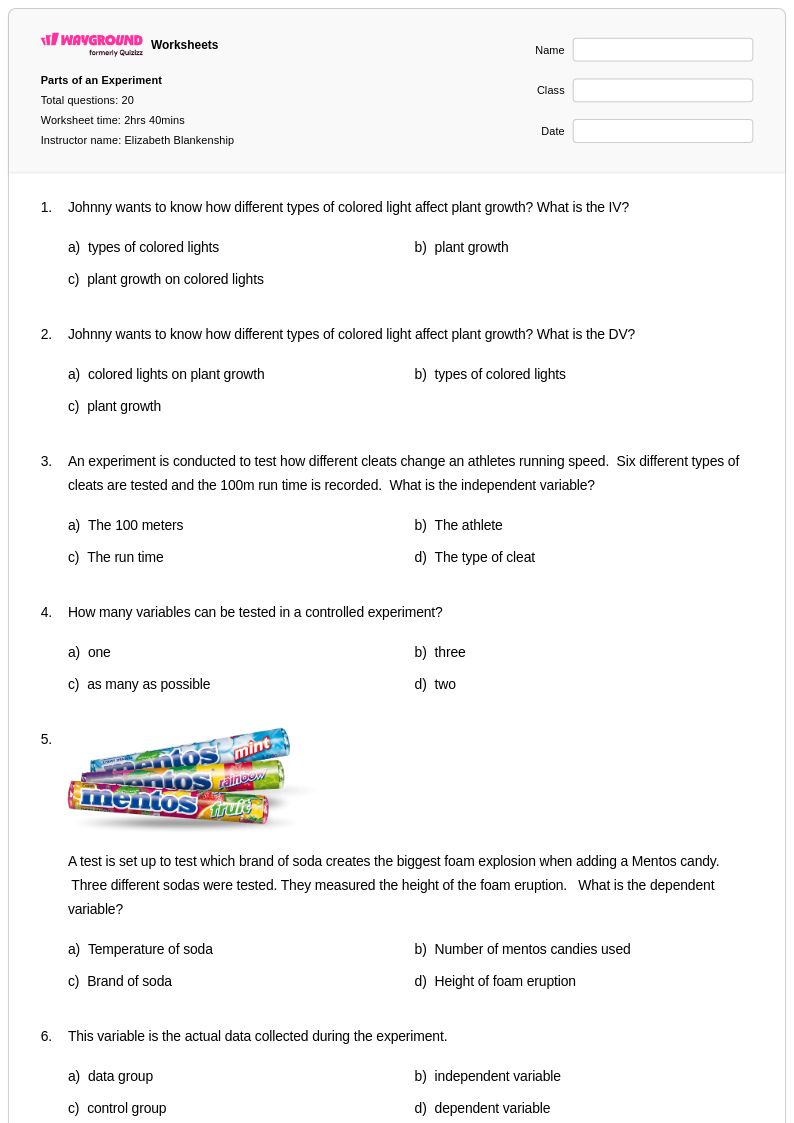
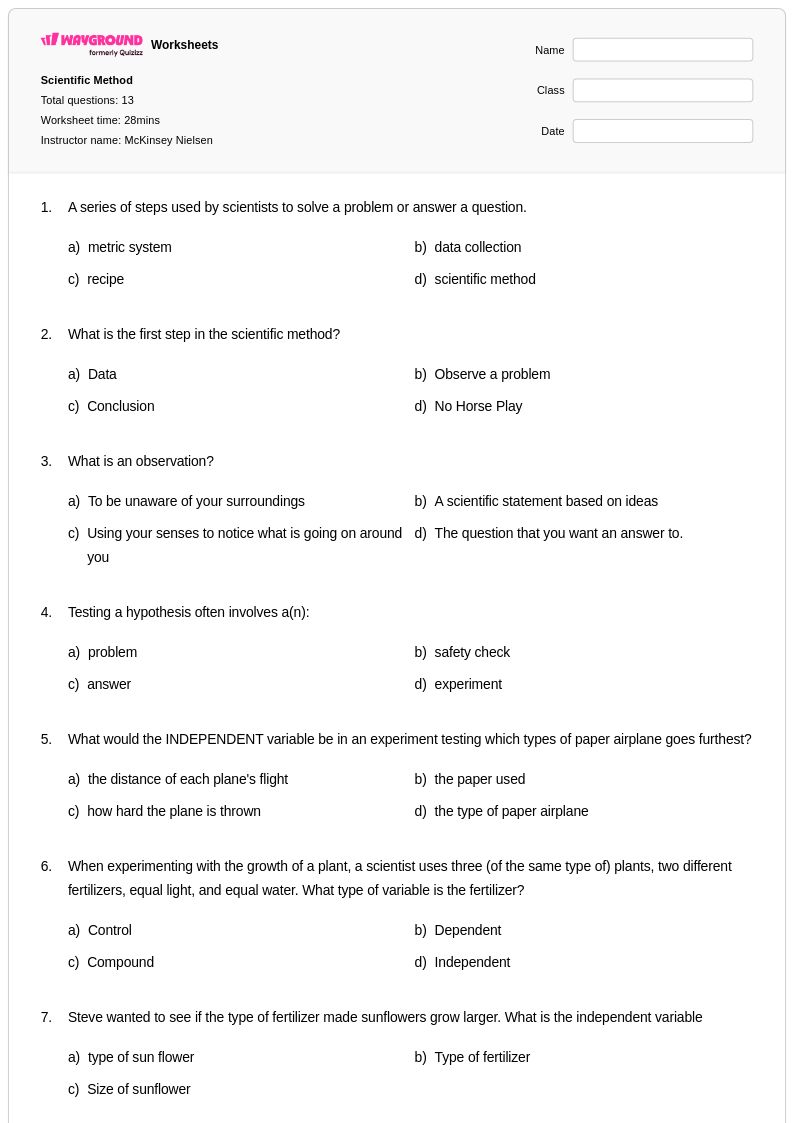
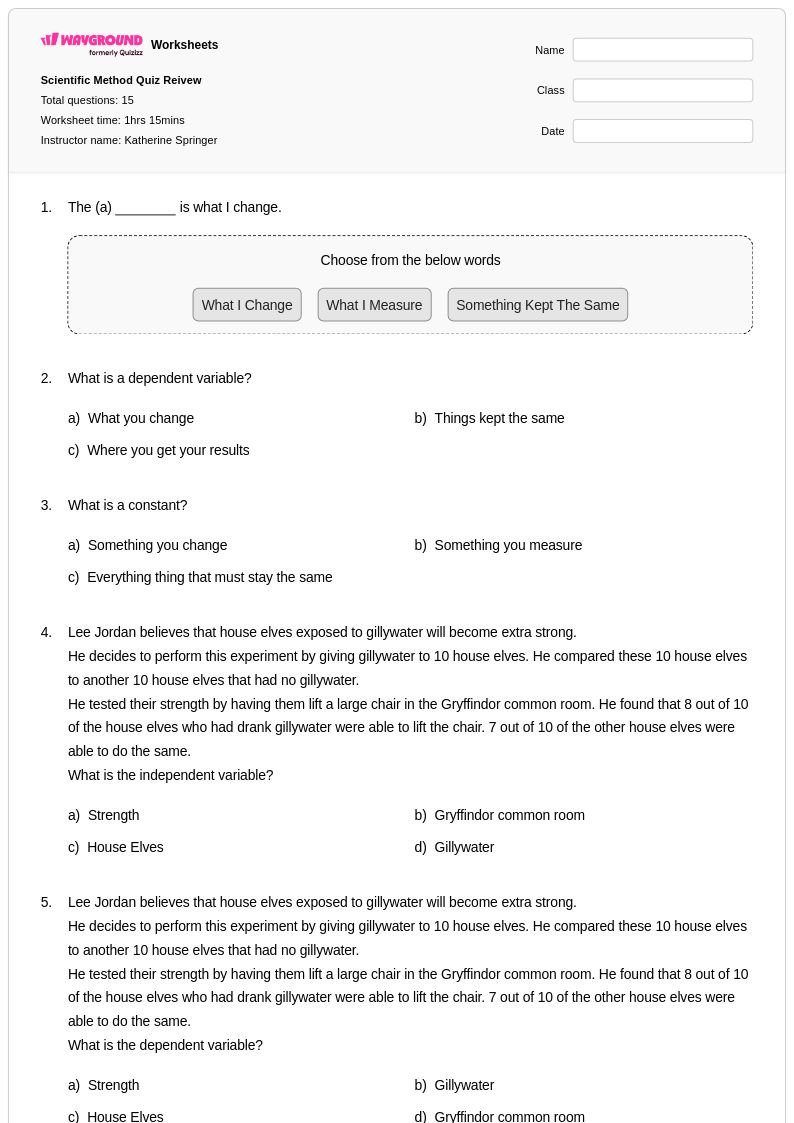
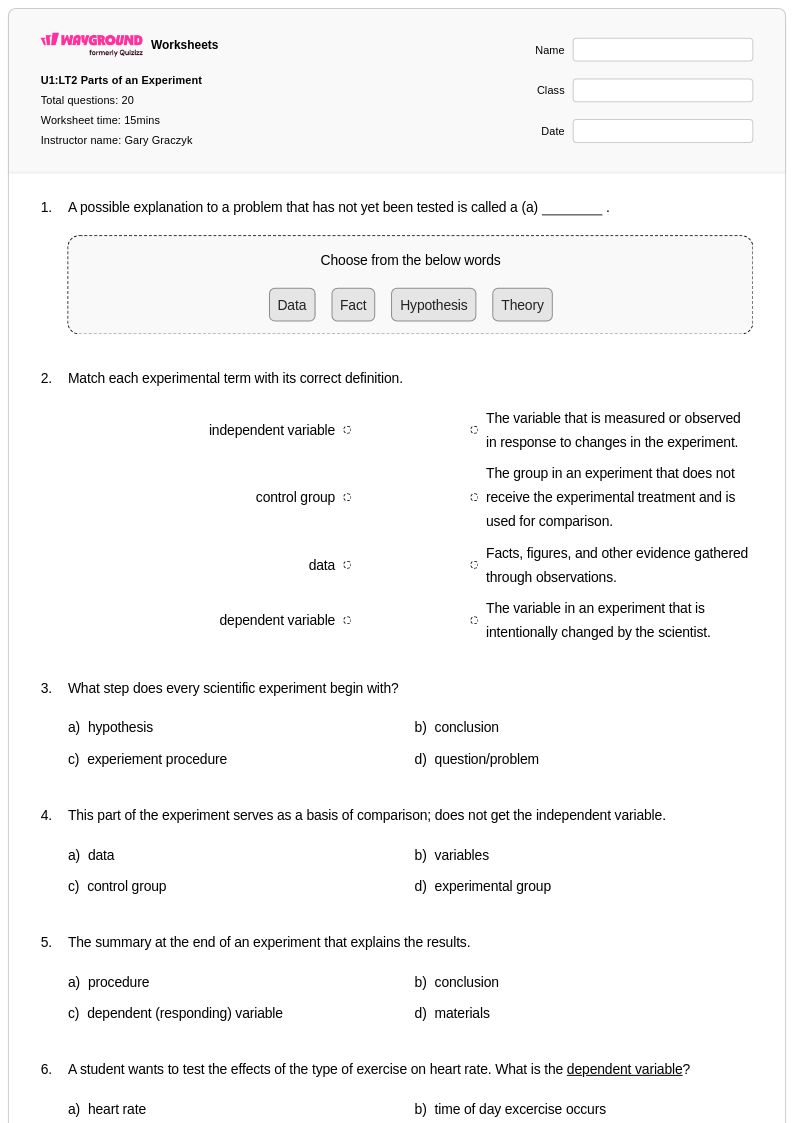
Controls and variables worksheets for Grade 8 students provide essential practice in understanding the fundamental components of scientific experimentation and engineering design processes. These comprehensive resources help students distinguish between independent variables, dependent variables, and controlled variables while developing critical thinking skills necessary for designing fair tests and valid experiments. Through carefully structured practice problems, students learn to identify what factors should remain constant in an investigation, which variables should be manipulated, and how to measure outcomes effectively. The worksheets include detailed answer keys that guide students through the reasoning process, and many are available as free printables in pdf format, making them accessible for both classroom instruction and independent study.
Wayground, formerly Quizizz, supports educators with an extensive collection of millions of teacher-created resources focused on controls and variables, offering robust search and filtering capabilities that allow teachers to quickly locate materials aligned with specific learning standards and student needs. The platform's differentiation tools enable instructors to customize worksheets for various skill levels, ensuring that struggling students receive appropriate scaffolding while advanced learners encounter challenging extensions. These resources are available in both printable and digital formats, including downloadable pdfs, providing maximum flexibility for lesson planning, targeted remediation, skill-building practice, and enrichment activities. Teachers can efficiently adapt these materials to support diverse learning environments, from traditional classrooms to hybrid and remote instruction settings, while maintaining focus on developing students' understanding of experimental design principles.
FAQs
How do I teach students the difference between independent, dependent, and controlled variables?
Start by anchoring each variable type to a concrete role in an experiment: the independent variable is what the scientist deliberately changes, the dependent variable is what gets measured as a result, and controlled variables are everything else kept constant to ensure a fair test. Using a simple, familiar scenario — like testing how sunlight affects plant growth — lets students apply these definitions before moving to more complex experimental designs. Once students can correctly label variables in a given setup, shift to having them design their own experiments from scratch, which deepens conceptual ownership.
What exercises help students practice identifying controls and variables in an experiment?
Scenario-based exercises are the most effective format for practicing this skill — present students with a written experimental setup and ask them to identify each variable type and justify their reasoning. Error-analysis tasks are equally valuable: give students a flawed experiment and ask them to identify which variables were not properly controlled and how that affects the validity of the results. Layering both exercise types helps students move from recognition to application.
What mistakes do students commonly make when identifying variables in an experiment?
The most frequent error is confusing the independent and dependent variables — students often reverse which variable is being manipulated and which is being measured. A second common misconception is treating controlled variables as unimportant, rather than understanding that uncontrolled variables are the primary source of experimental error. Students also frequently list only one controlled variable when multiple factors must be held constant for the experiment to be valid.
How can I use controls and variables worksheets to support students who are struggling with experimental design?
For struggling learners, start with worksheets that present simple, single-variable experiments before introducing multi-variable scenarios. Scaffolded exercises that label one or two variable types for students and ask them to complete the rest reduce cognitive load while still requiring active thinking. On Wayground, teachers can enable accommodations such as read aloud support and reduced answer choices for individual students, making the same worksheet accessible to learners at different readiness levels without singling anyone out.
How do I use Wayground's controls and variables worksheets in my classroom?
Wayground's controls and variables worksheets are available as printable PDFs for traditional classroom use and in interactive digital formats for technology-integrated environments, giving teachers flexibility for in-class work, homework, or independent study. Teachers can also host worksheets directly as a quiz on Wayground for real-time practice. Each worksheet includes a complete answer key, so grading and feedback are straightforward regardless of the format chosen.
At what grade level should students begin learning about controls and variables?
Most science curricula introduce the concept of controlled experiments in middle school, typically grades 6 through 8, as part of the scientific method unit. However, foundational exposure — distinguishing what changes from what stays the same in a simple experiment — can begin as early as upper elementary. The complexity of the experimental scenarios should scale with grade level, moving from everyday observations to discipline-specific investigations in high school science courses.