Free Printable Conversions Worksheets for Grade 10
Master Grade 10 unit conversions with Wayground's comprehensive collection of free science worksheets, featuring printable PDFs with practice problems and complete answer keys to strengthen measurement skills.
Explore printable Conversions worksheets for Grade 10
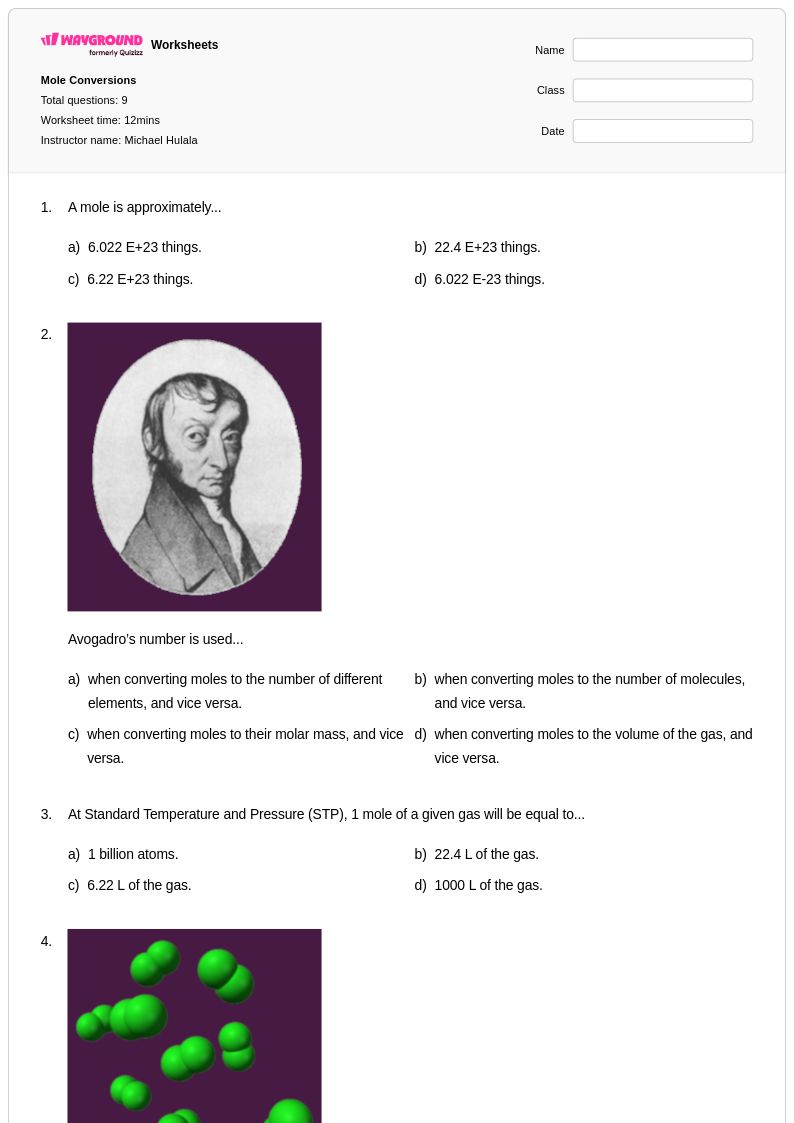
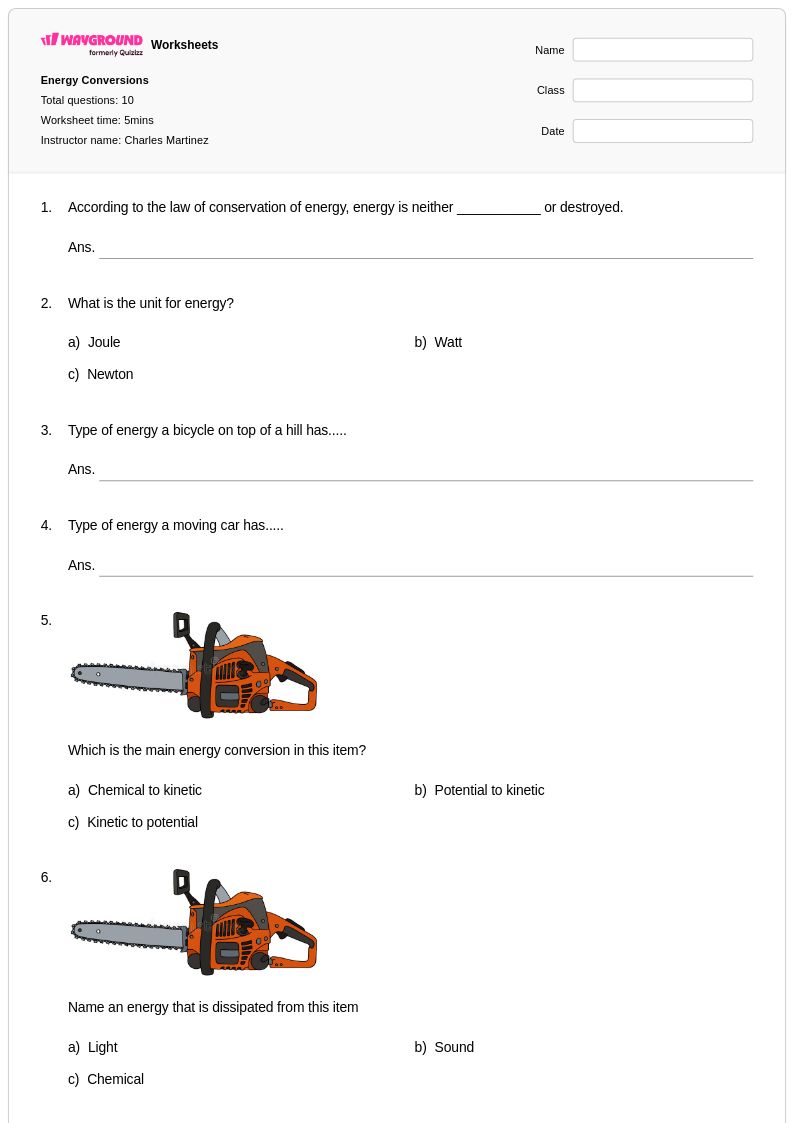
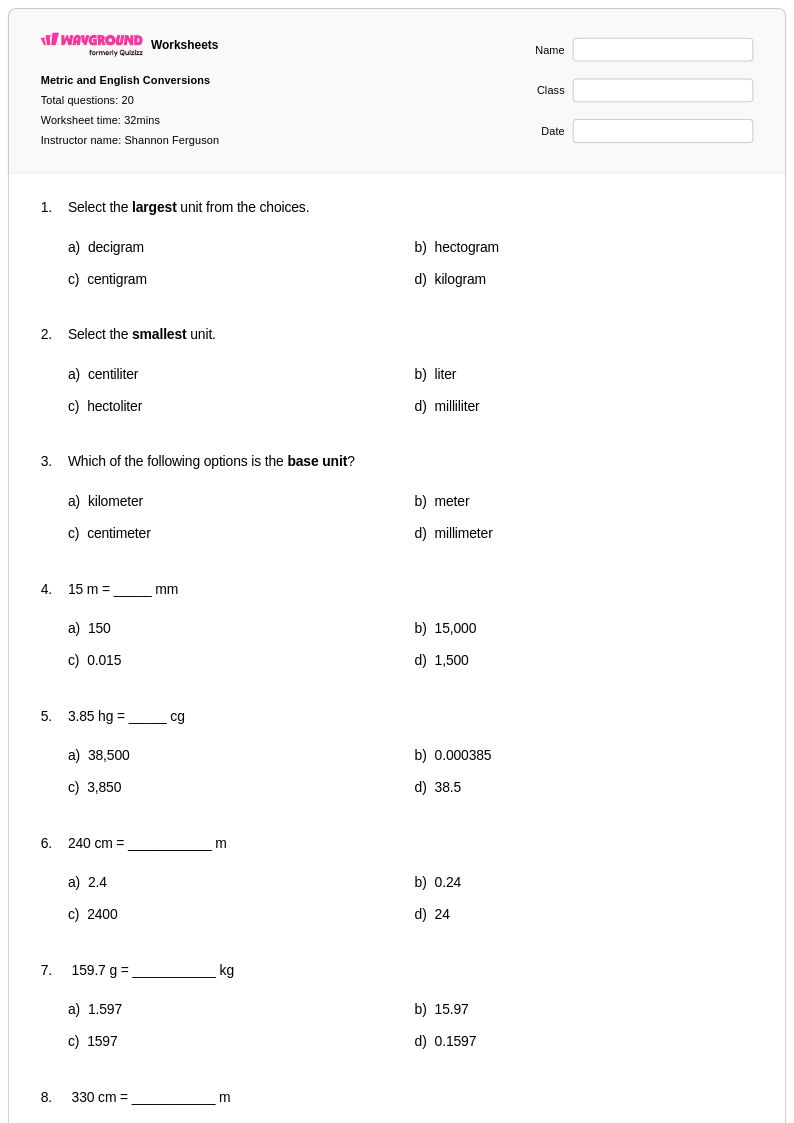
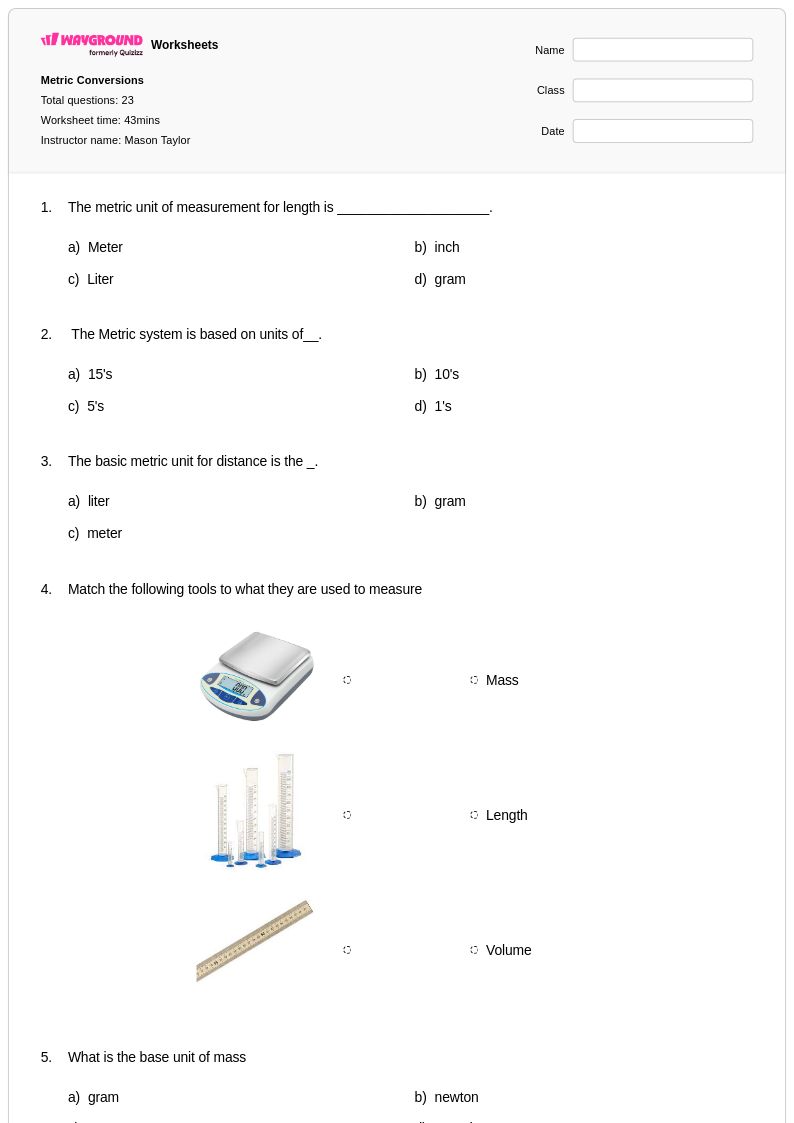
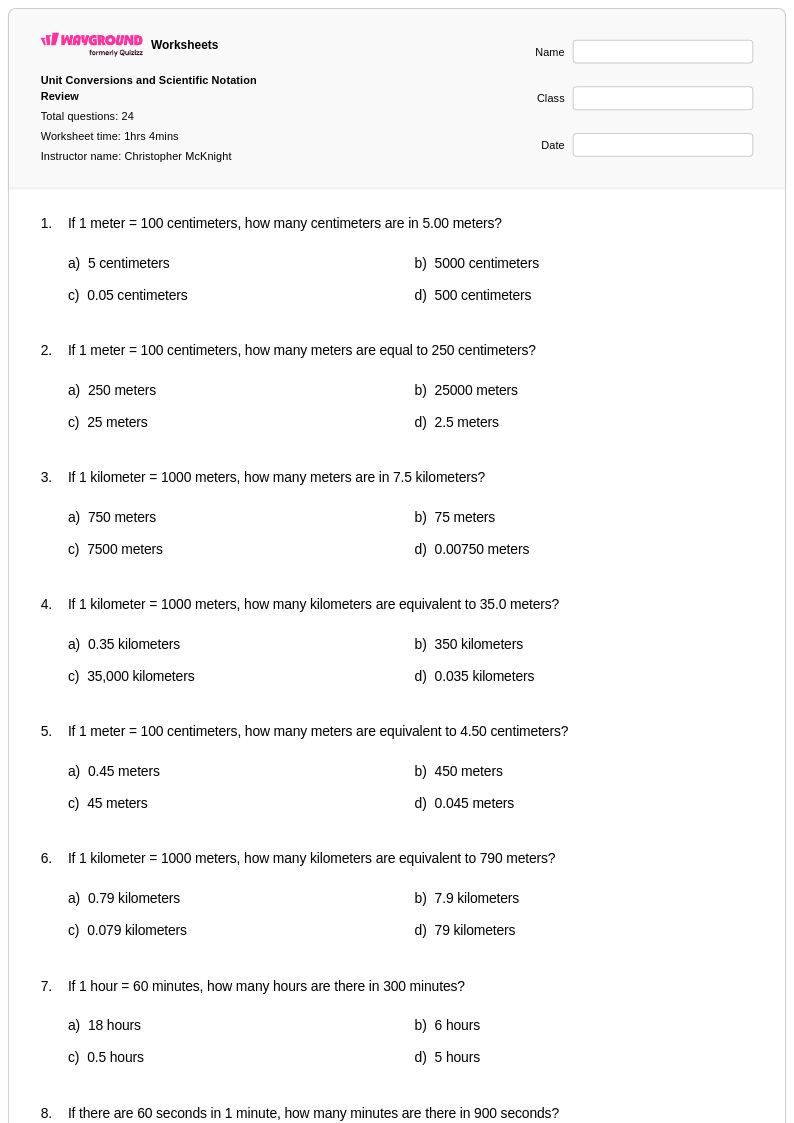
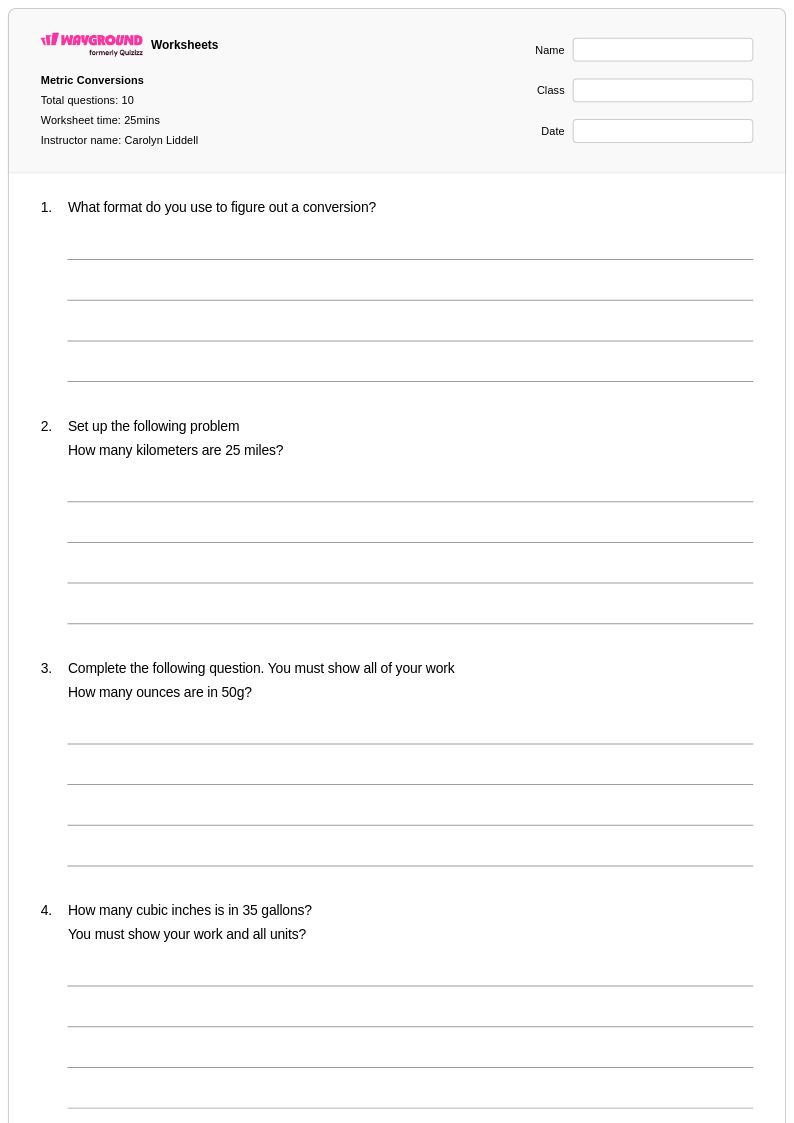
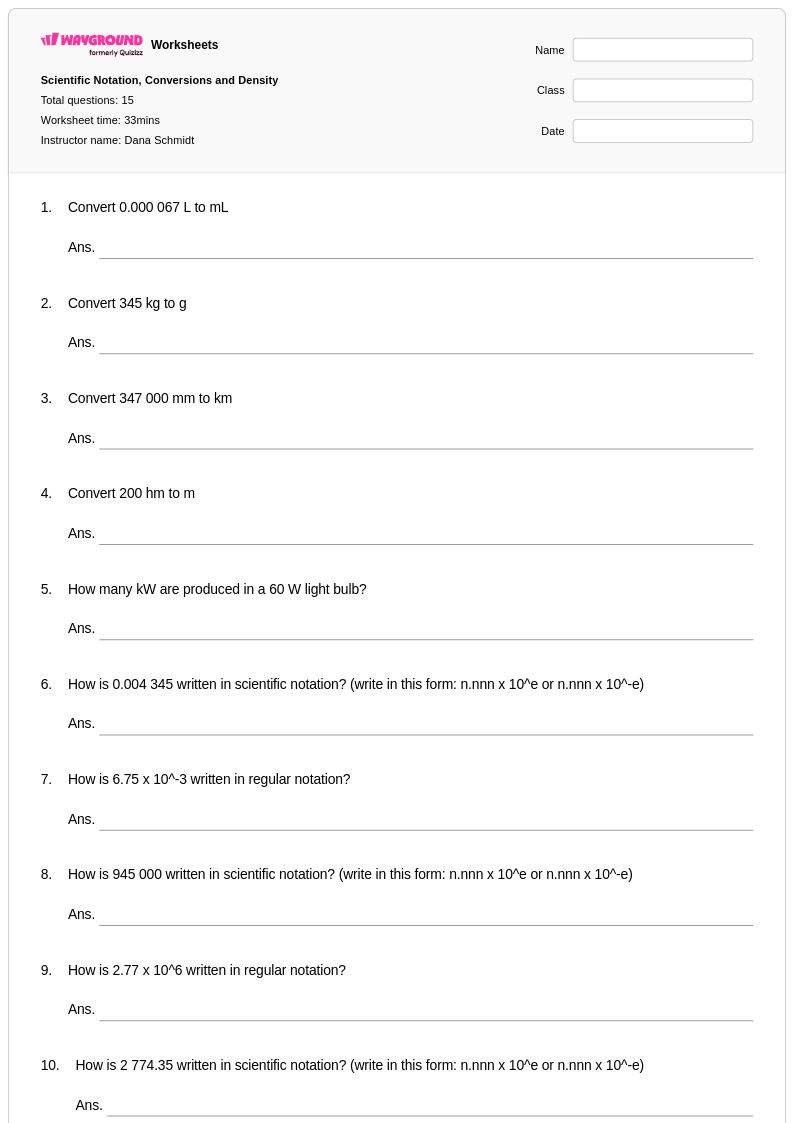
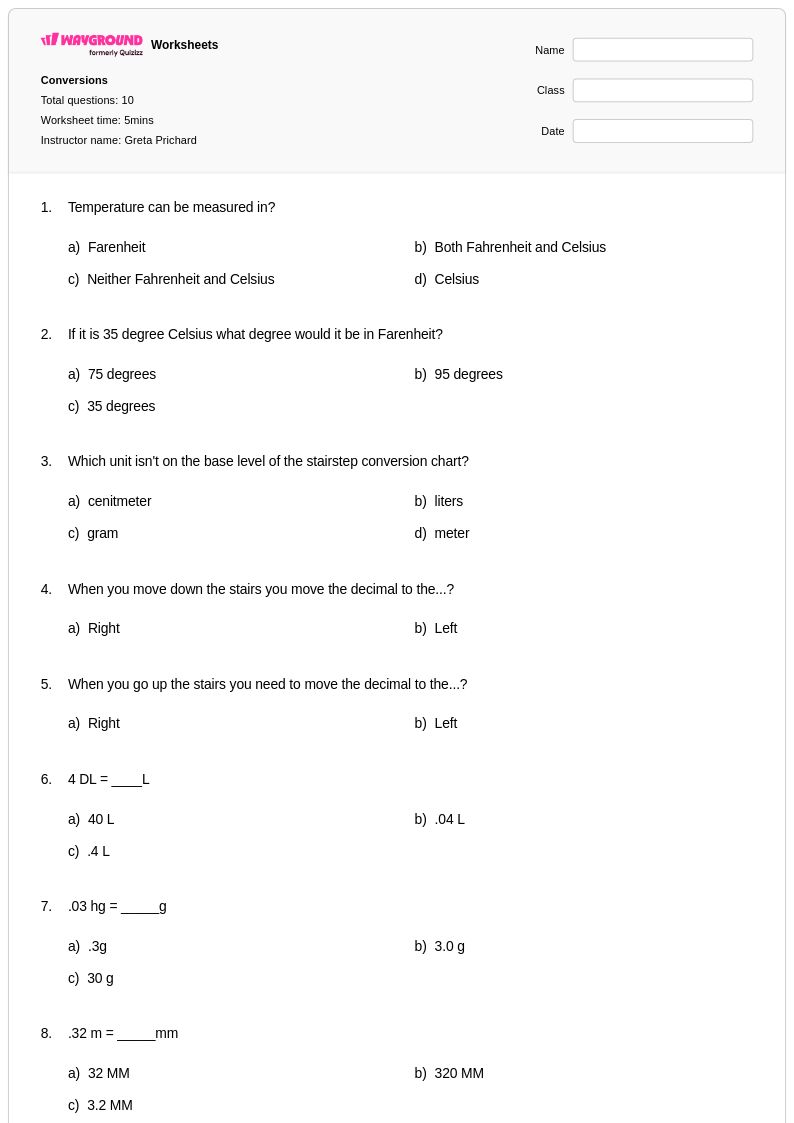
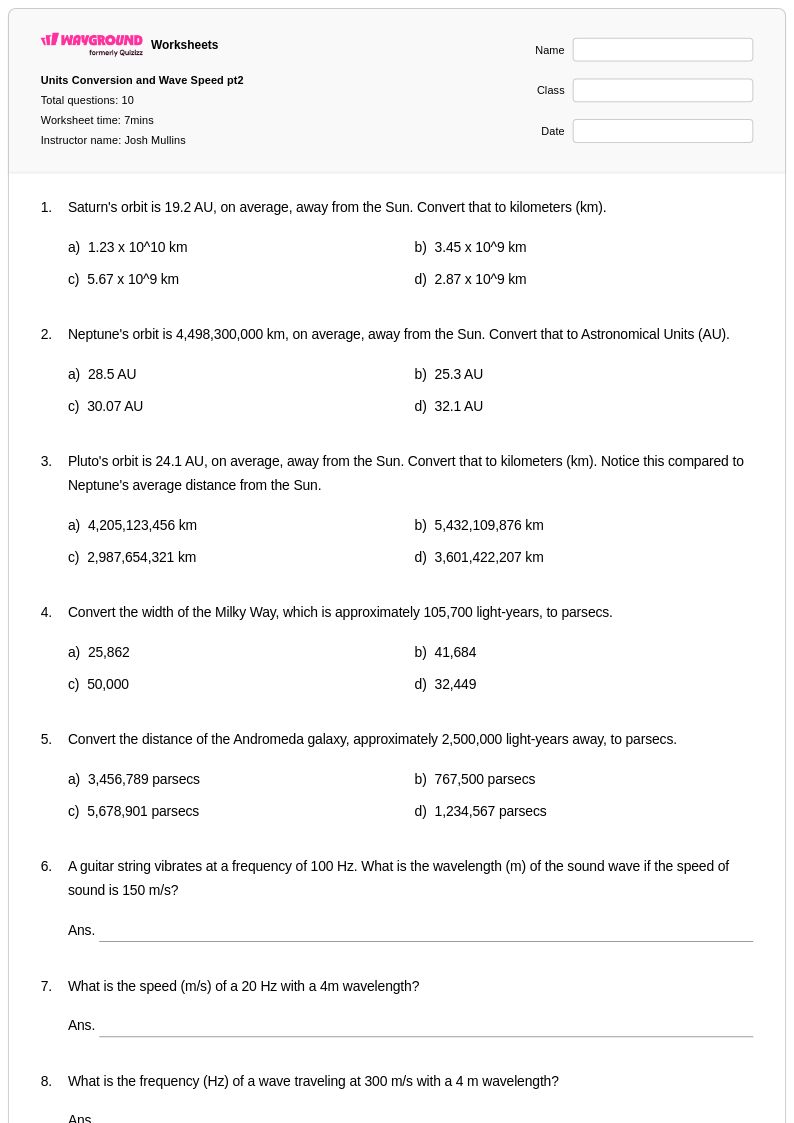
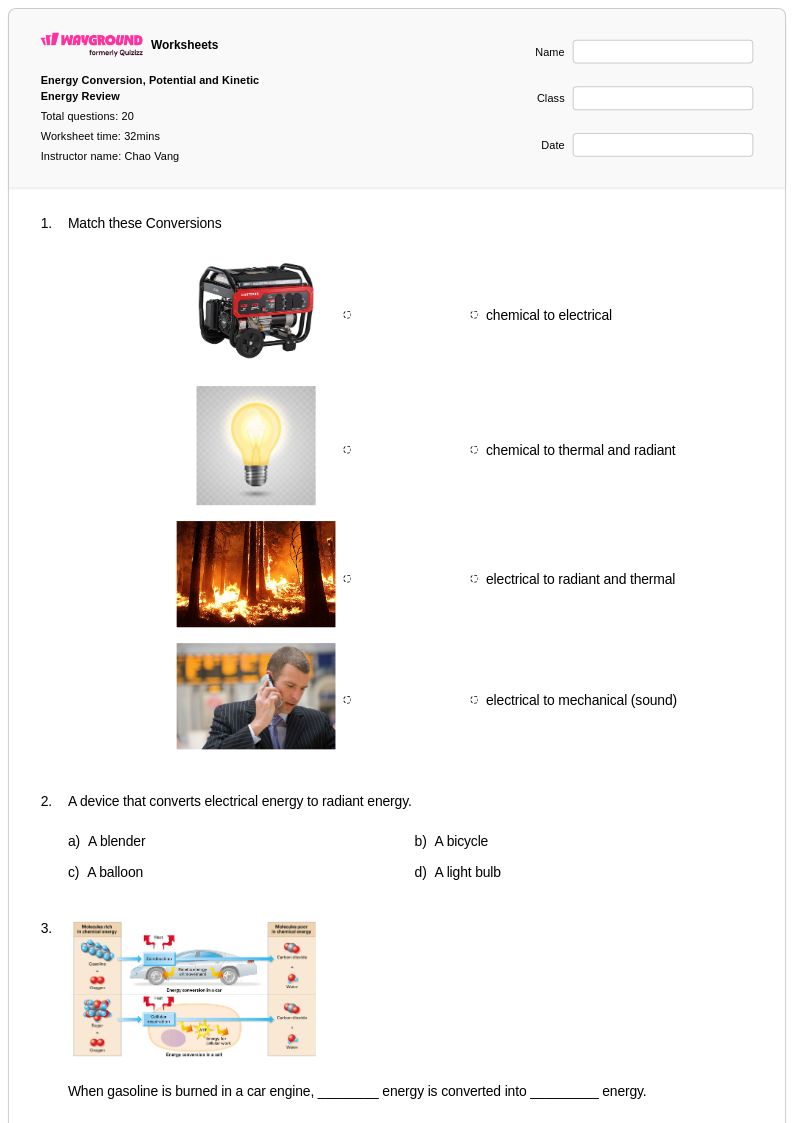
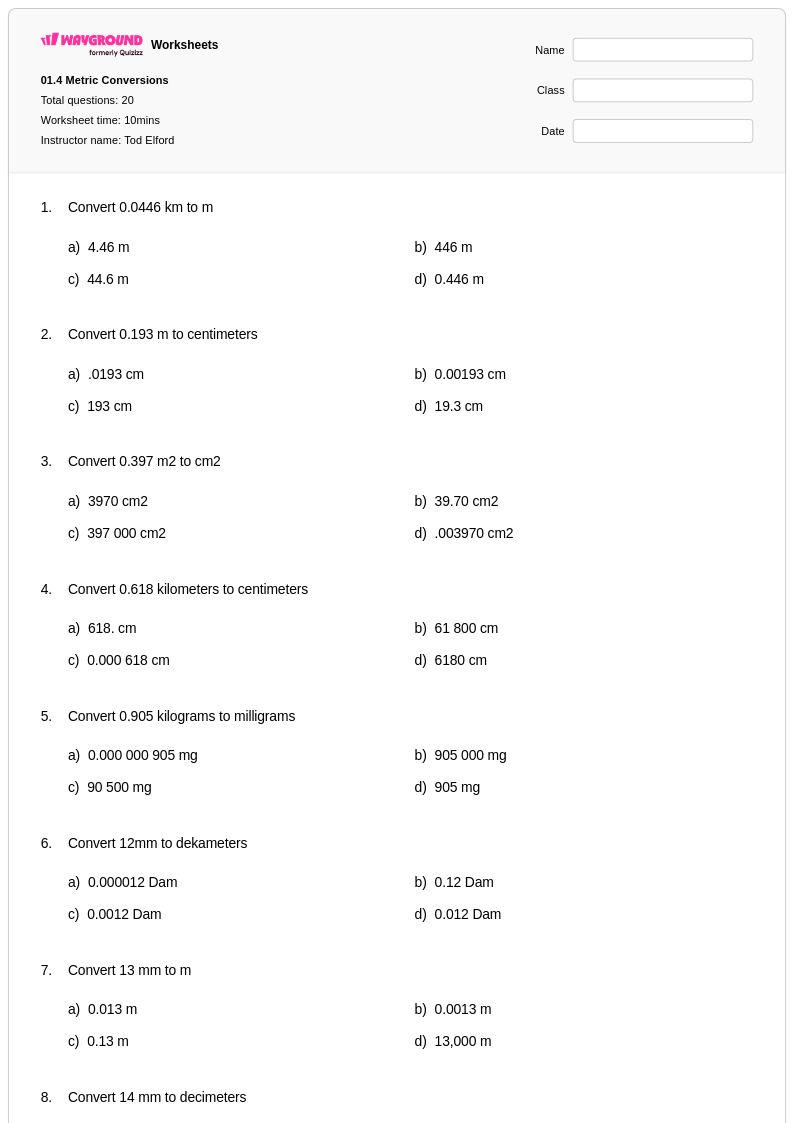
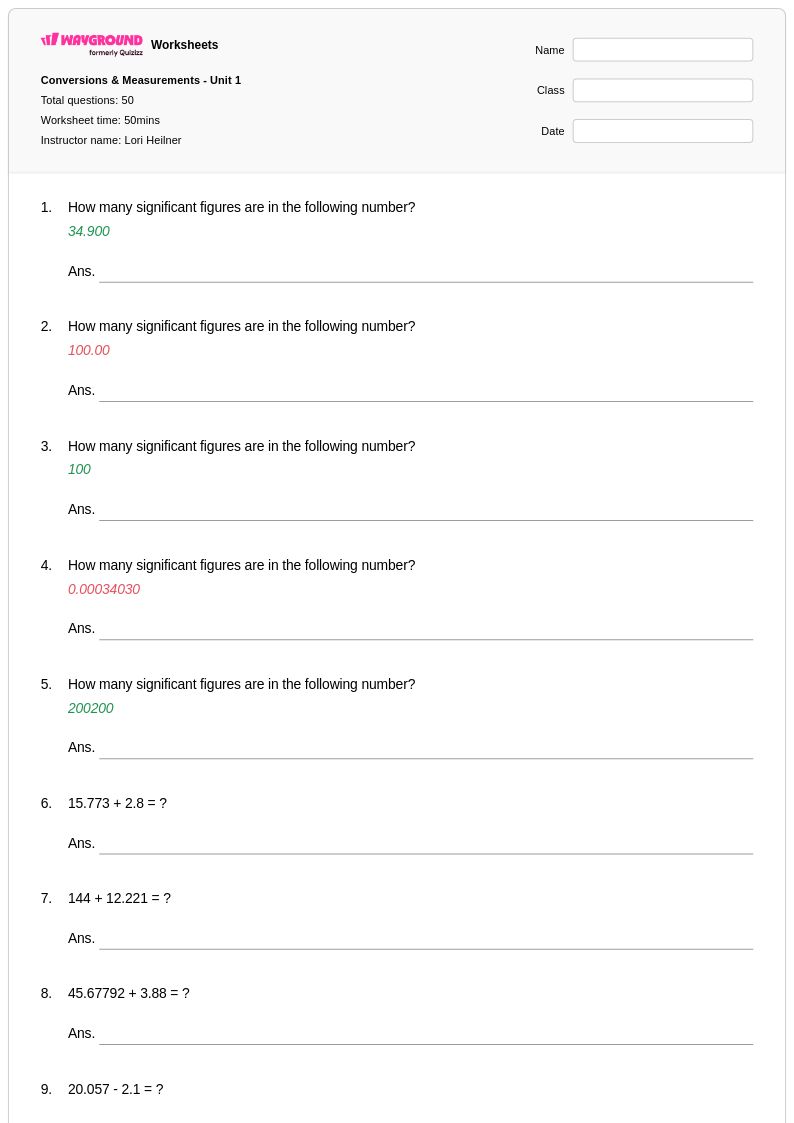
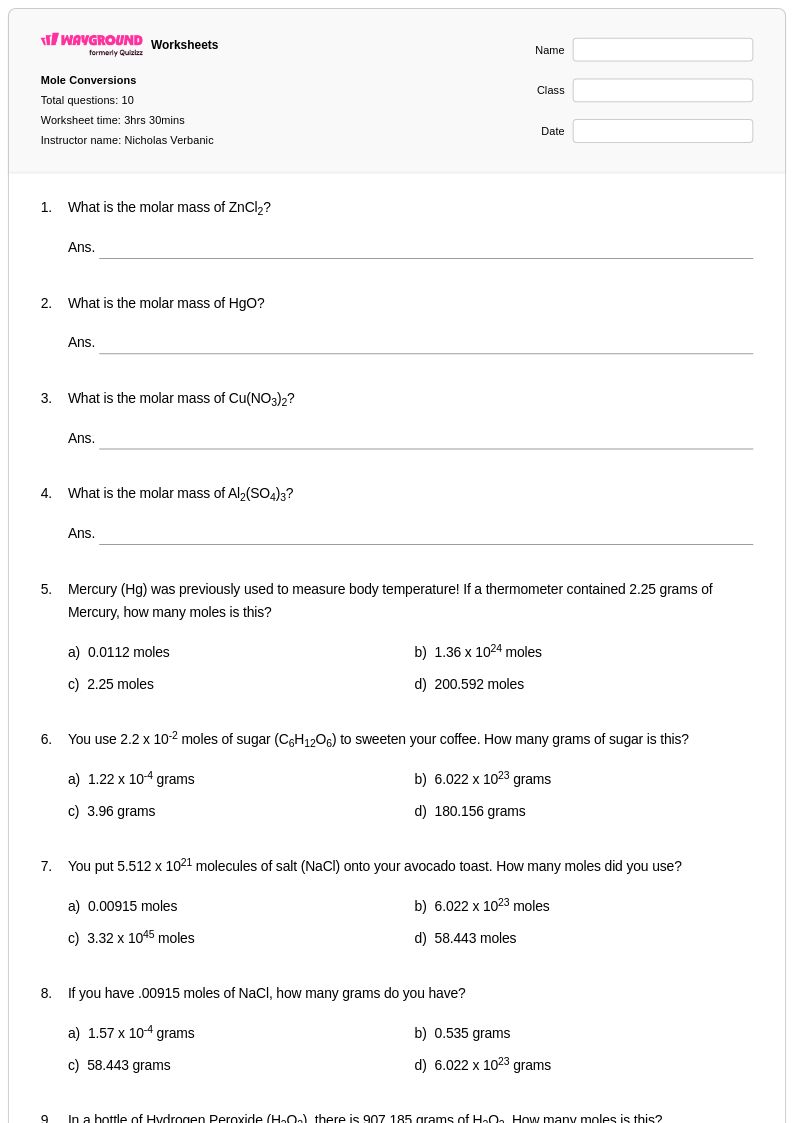
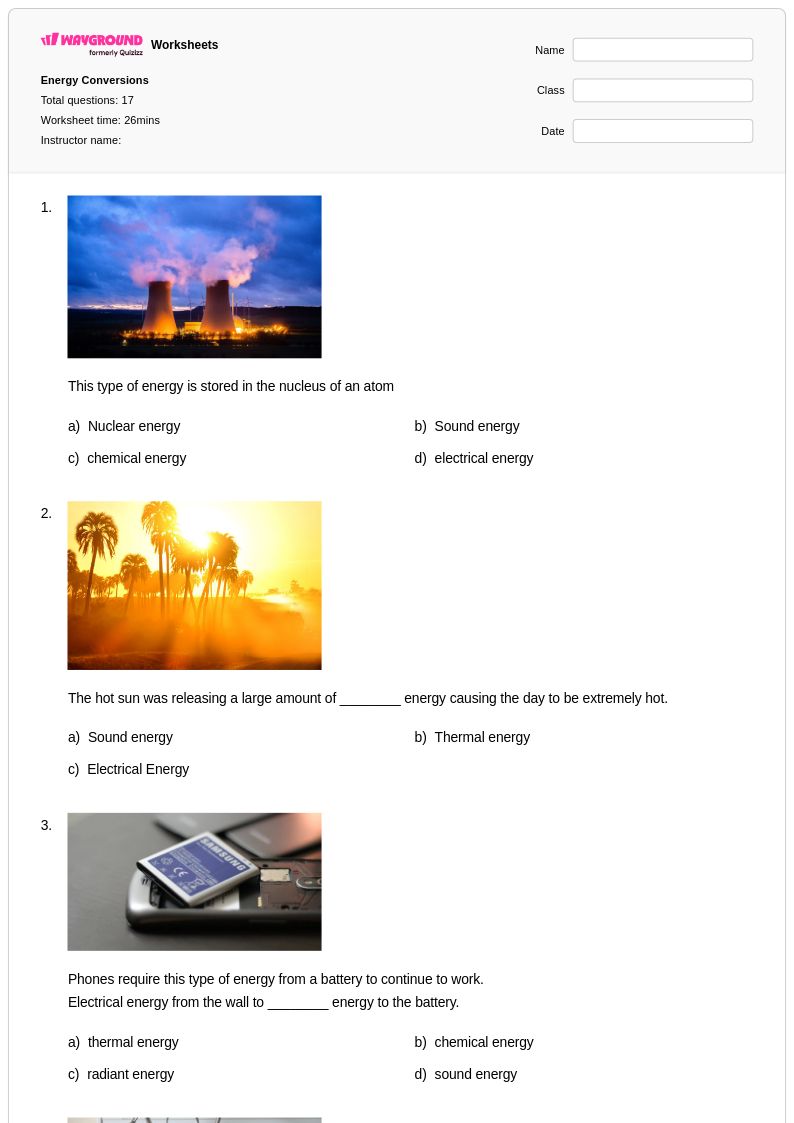
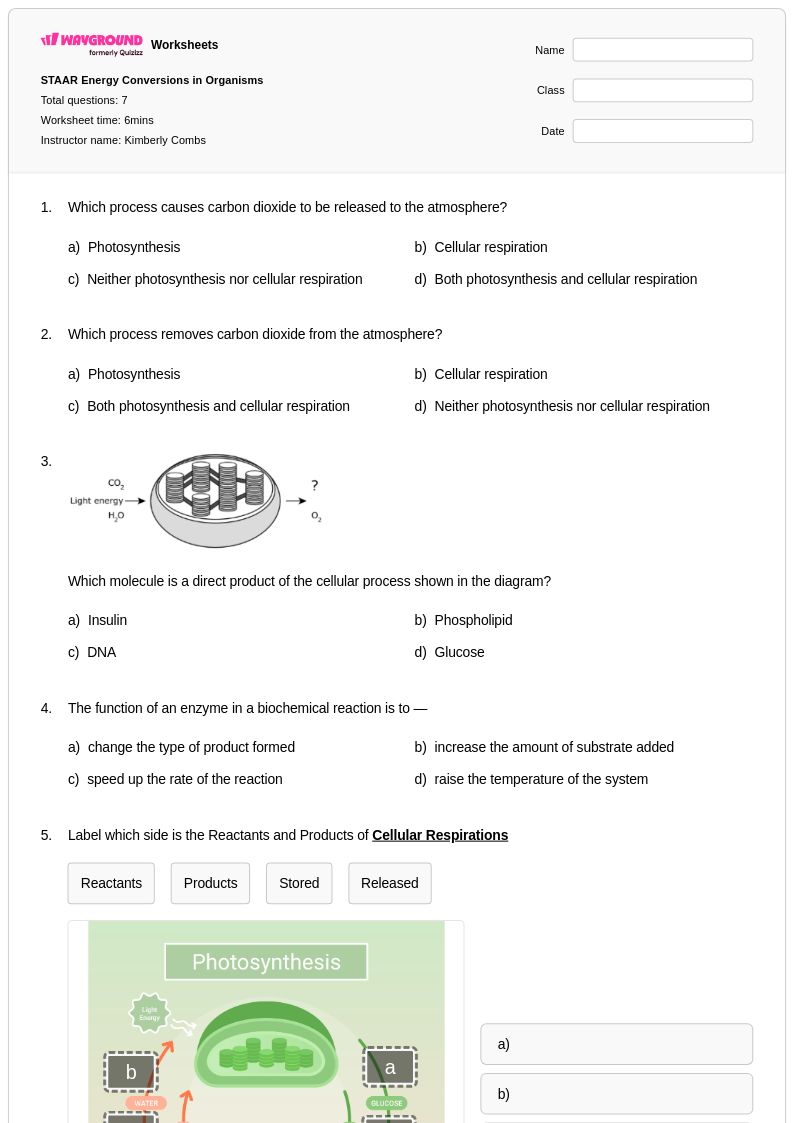
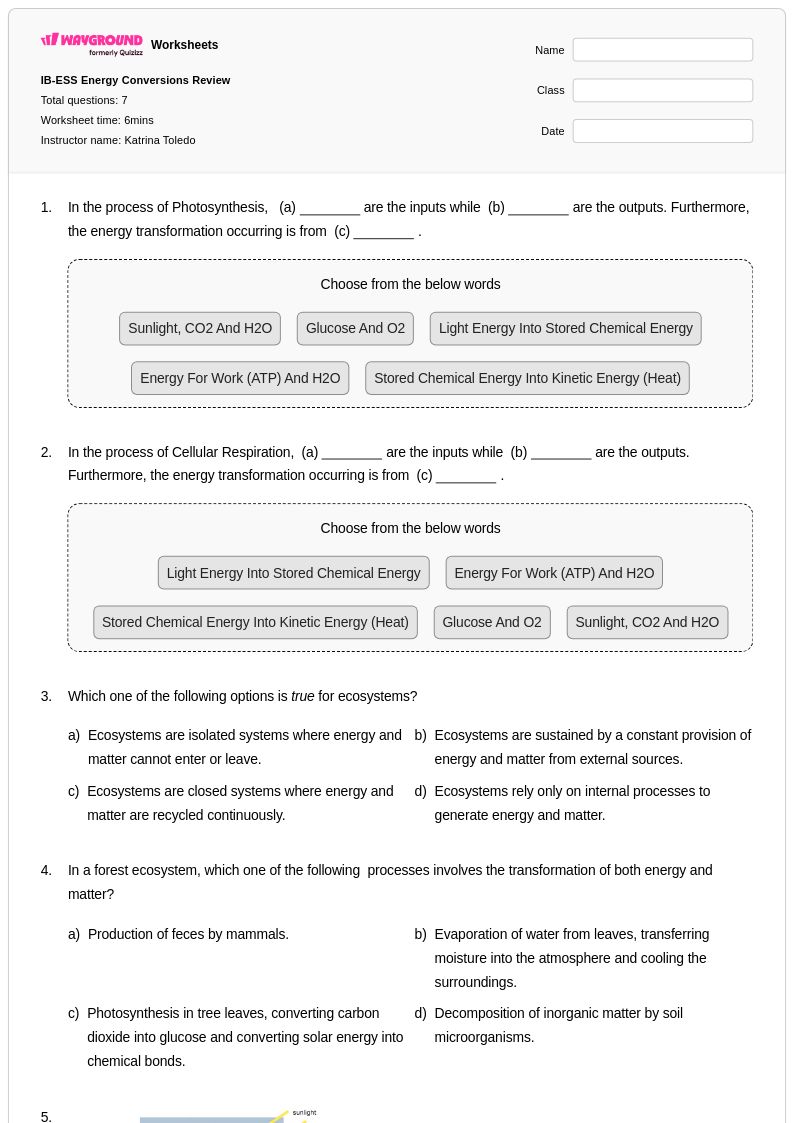
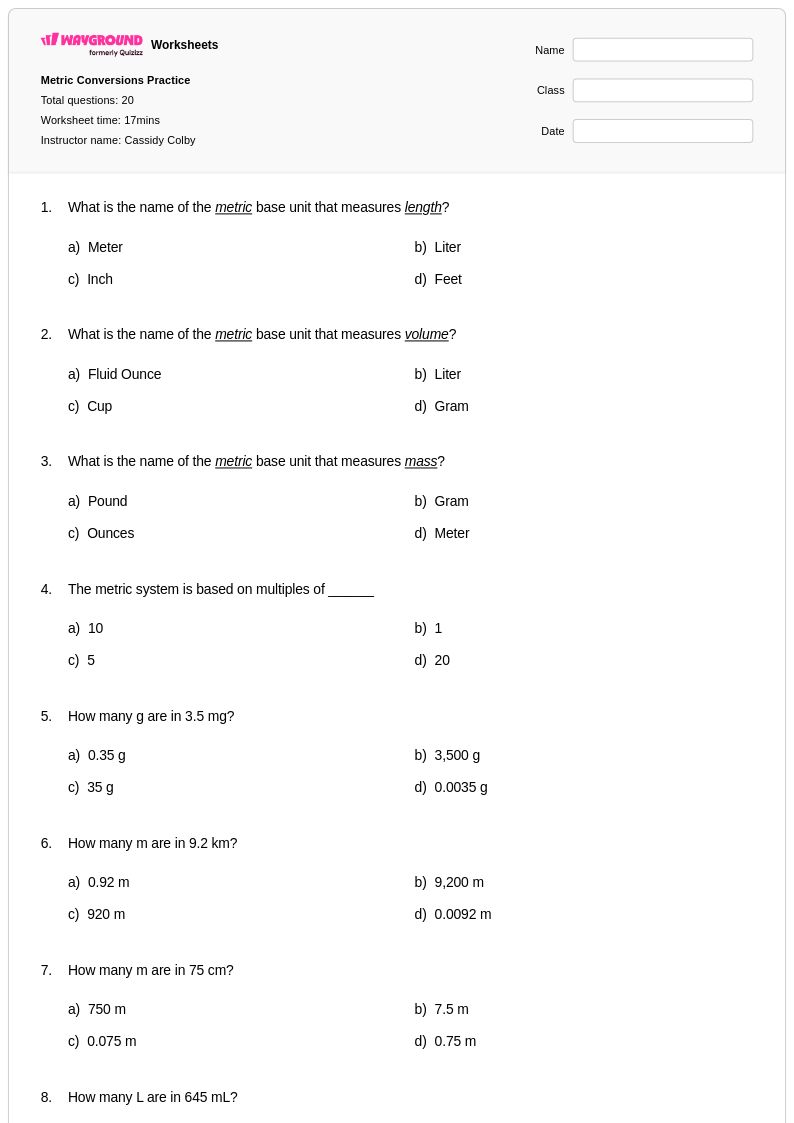
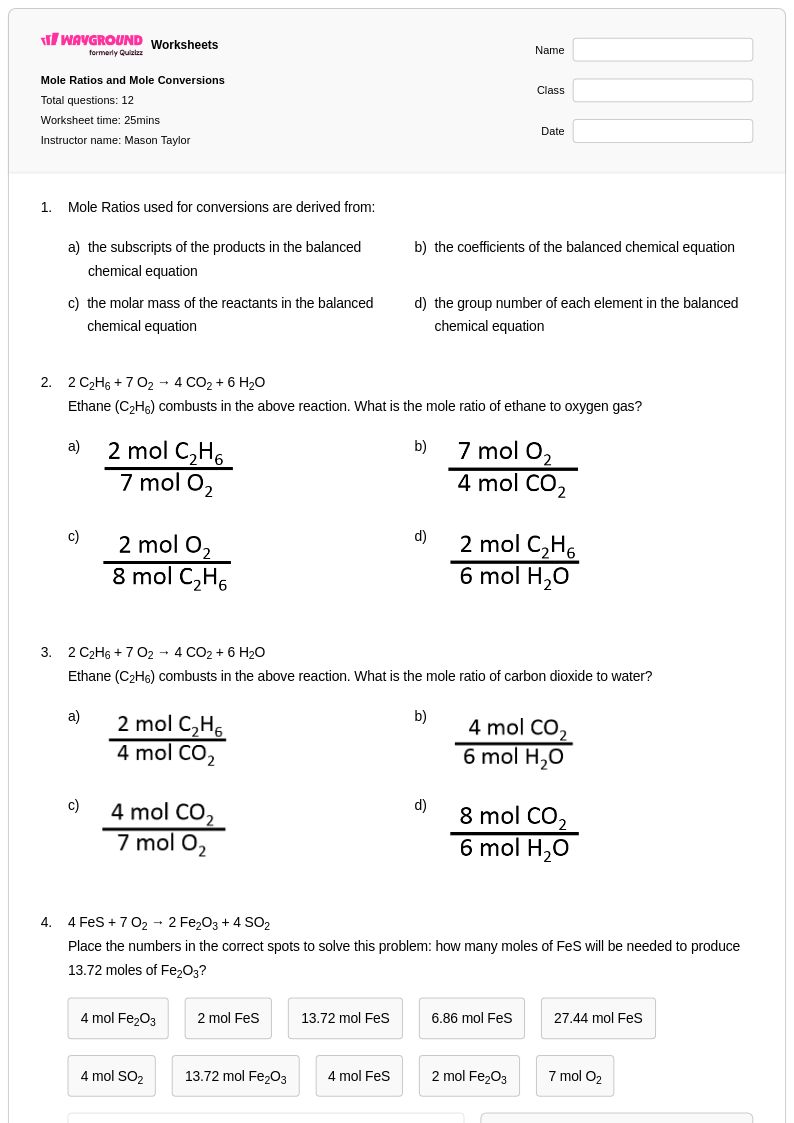
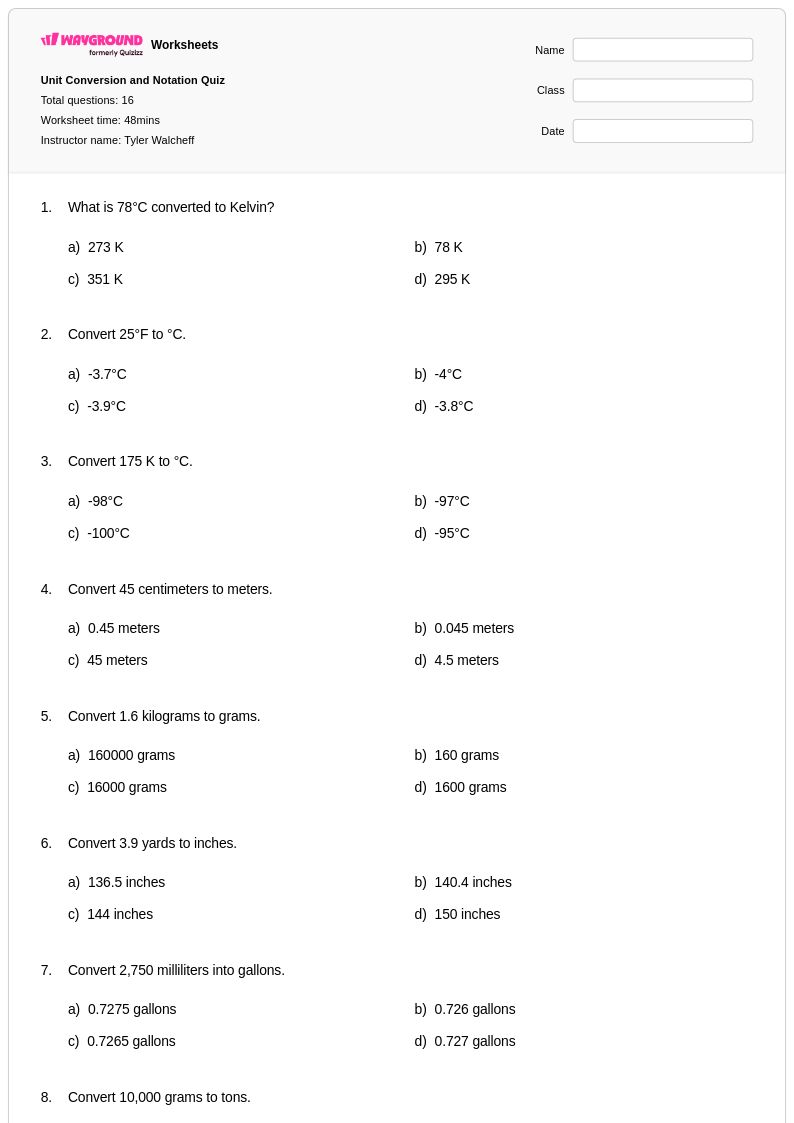
Conversions worksheets for Grade 10 science students available through Wayground (formerly Quizizz) provide comprehensive practice with unit transformations across multiple measurement systems including metric, imperial, and scientific notation. These expertly designed resources strengthen students' ability to convert between different units of length, mass, volume, temperature, and time while reinforcing their understanding of dimensional analysis and scientific problem-solving techniques. Each worksheet collection includes detailed answer keys and step-by-step solutions that help students master the systematic approaches needed for accurate unit conversions, whether working with simple single-step problems or complex multi-step calculations involving derived units. The free printable materials and downloadable pdf formats ensure students can access quality practice problems both in classroom settings and for independent study sessions.
Wayground (formerly Quizizz) supports educators with millions of teacher-created conversion worksheet resources that feature advanced search and filtering capabilities, allowing instructors to quickly locate materials aligned with specific curriculum standards and learning objectives. The platform's differentiation tools enable teachers to customize worksheets based on individual student needs, offering varying levels of complexity from basic metric conversions to advanced scientific unit transformations involving prefixes, exponential notation, and compound measurements. These flexible resources are available in both printable and digital formats, including ready-to-use pdf downloads that streamline lesson planning while providing effective tools for remediation, enrichment, and targeted skill practice. The comprehensive collection ensures teachers have access to high-quality conversion practice materials that support student mastery of this fundamental scientific skill across diverse learning environments and instructional approaches.
FAQs
How do I teach unit conversions to students who keep getting confused by the process?
The most effective approach is to anchor instruction in dimensional analysis, teaching students to treat units as algebraic quantities that cancel when multiplied by a conversion factor. Start with single-step conversions within a familiar system (such as inches to feet) before moving to cross-system problems. Visual scaffolds like unit fraction chains help students see why multiplying by a ratio equal to 1 doesn't change the measurement's value, only its unit.
What kinds of practice problems help students get better at unit conversions?
Students build fluency through a progression from single-step conversions (e.g., kilometers to meters) to multi-step problems that require chaining multiple conversion factors together. Real-world application problems, such as converting a recipe from metric to US customary units or interpreting scientific data across measurement systems, deepen understanding beyond procedural repetition. Mixing problem types across length, mass, volume, time, and temperature within the same practice session reinforces the generalizability of the conversion process.
What mistakes do students most commonly make when solving unit conversion problems?
The most frequent error is inverting the conversion factor, which causes students to multiply when they should divide or vice versa. Students also commonly confuse within-system conversions (e.g., milligrams to grams) with across-system conversions (e.g., pounds to kilograms), applying the wrong ratio. A third persistent mistake is dropping or misidentifying units entirely, which is why requiring students to write out units at every step of dimensional analysis significantly reduces errors.
How do I use Wayground's conversions worksheets in my classroom?
Wayground's conversions worksheets are available as printable PDFs for traditional classroom use and in digital formats for technology-integrated environments, giving teachers flexibility for in-person, hybrid, or remote instruction. You can also host any worksheet as a live or asynchronous quiz directly on Wayground, which allows students to complete problems digitally and receive immediate feedback. Each worksheet includes detailed answer keys and step-by-step solutions, making them practical for independent practice, small-group work, or guided instruction.
How can I differentiate unit conversion practice for students at different skill levels?
For students who are still building foundational skills, start with single-step conversions within one measurement system and provide a reference sheet of conversion factors to reduce cognitive load. Advanced learners can be challenged with multi-step dimensional analysis problems involving mixed unit systems, such as converting a speed from miles per hour to meters per second. On Wayground, teachers can also apply accommodations such as reduced answer choices or read-aloud support for individual students, allowing the same worksheet session to serve the full range of learners in the class.
How do I help students who understand the concept but consistently get the wrong numerical answer?
Students who understand conversion conceptually but produce incorrect numbers are usually making arithmetic errors or misremembering conversion factors. Have them slow down by requiring written unit labels at every step and by double-checking their answer using estimation — for example, knowing that 1 inch is roughly 2.5 centimeters helps flag an answer that is wildly off. Providing a standard conversion factor reference during practice (and gradually removing it) builds accuracy without letting recall errors undermine procedural understanding.