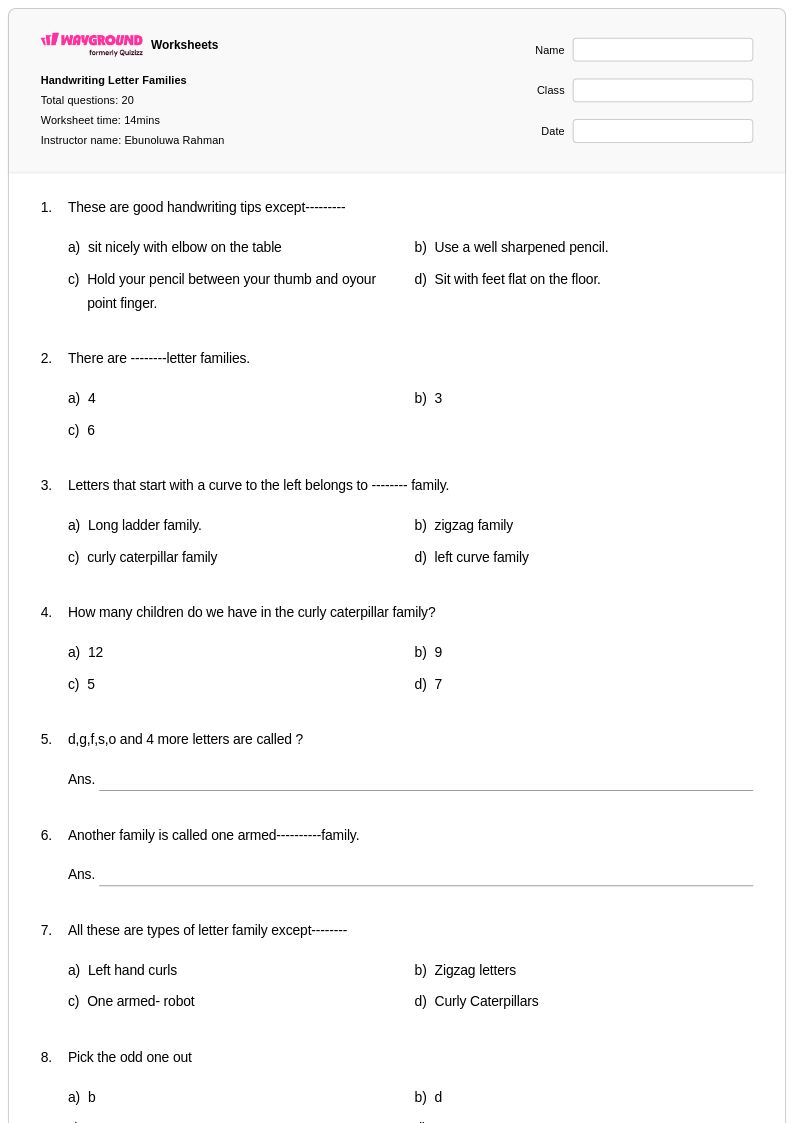
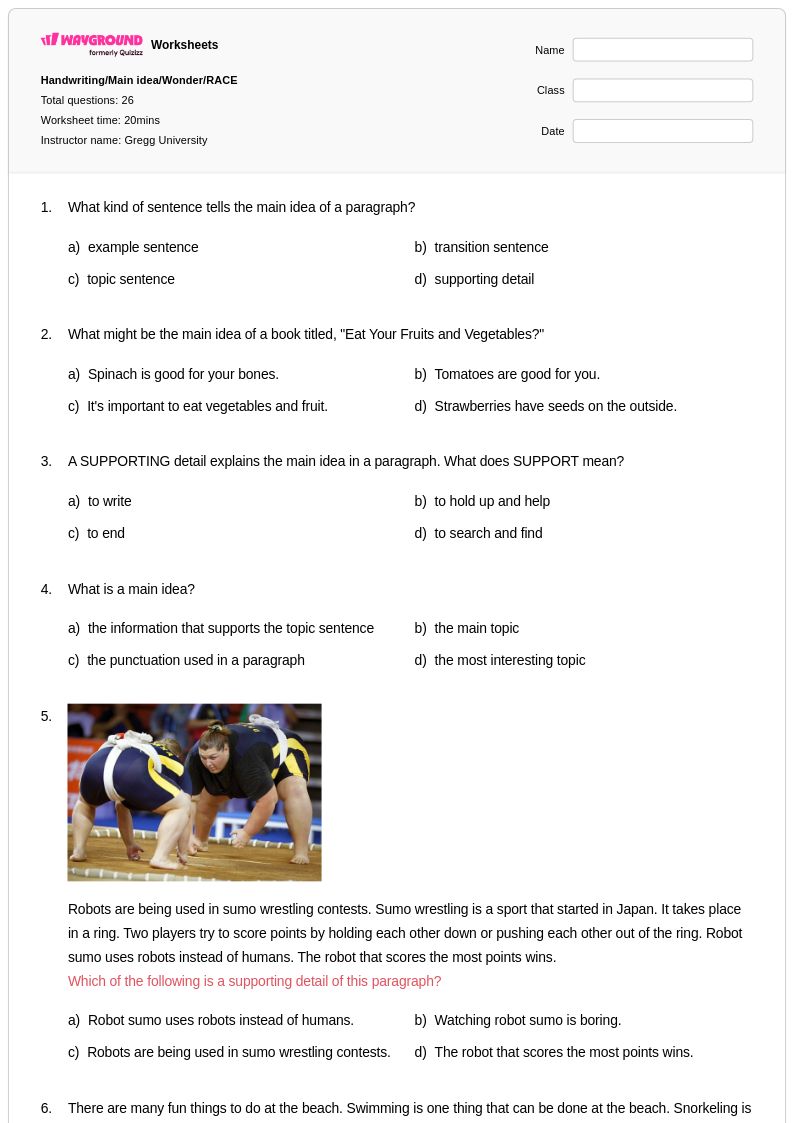
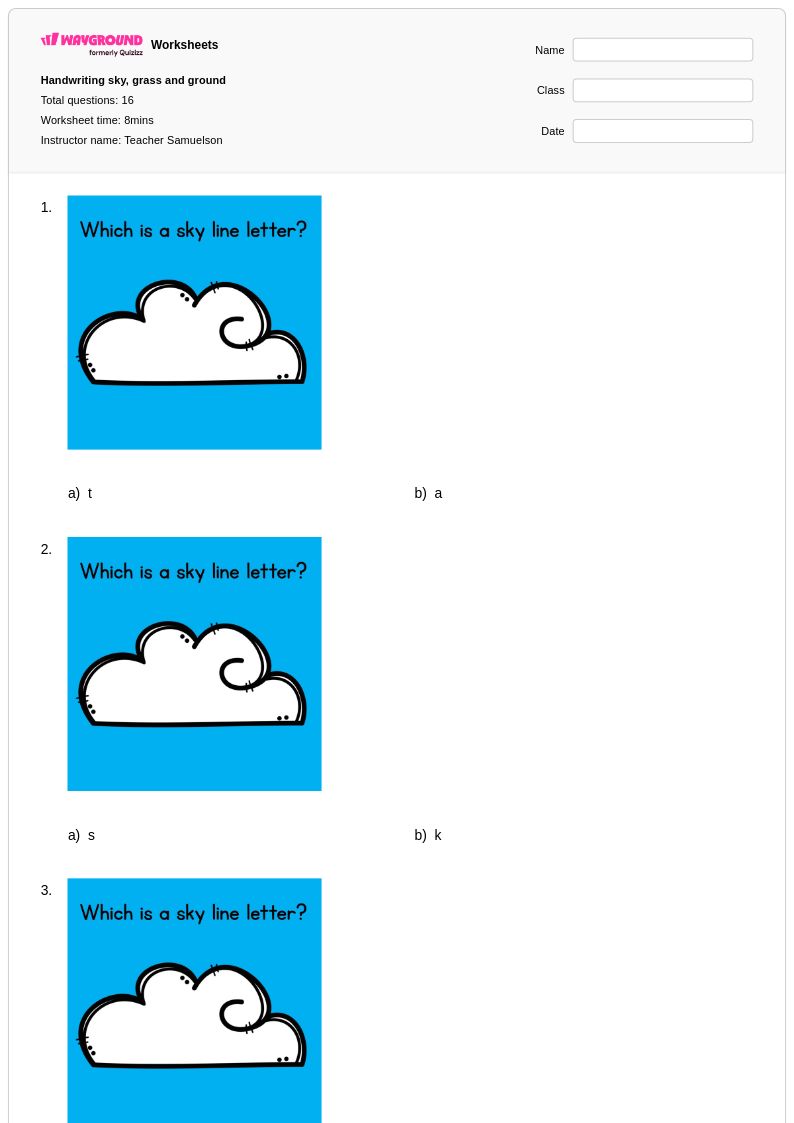
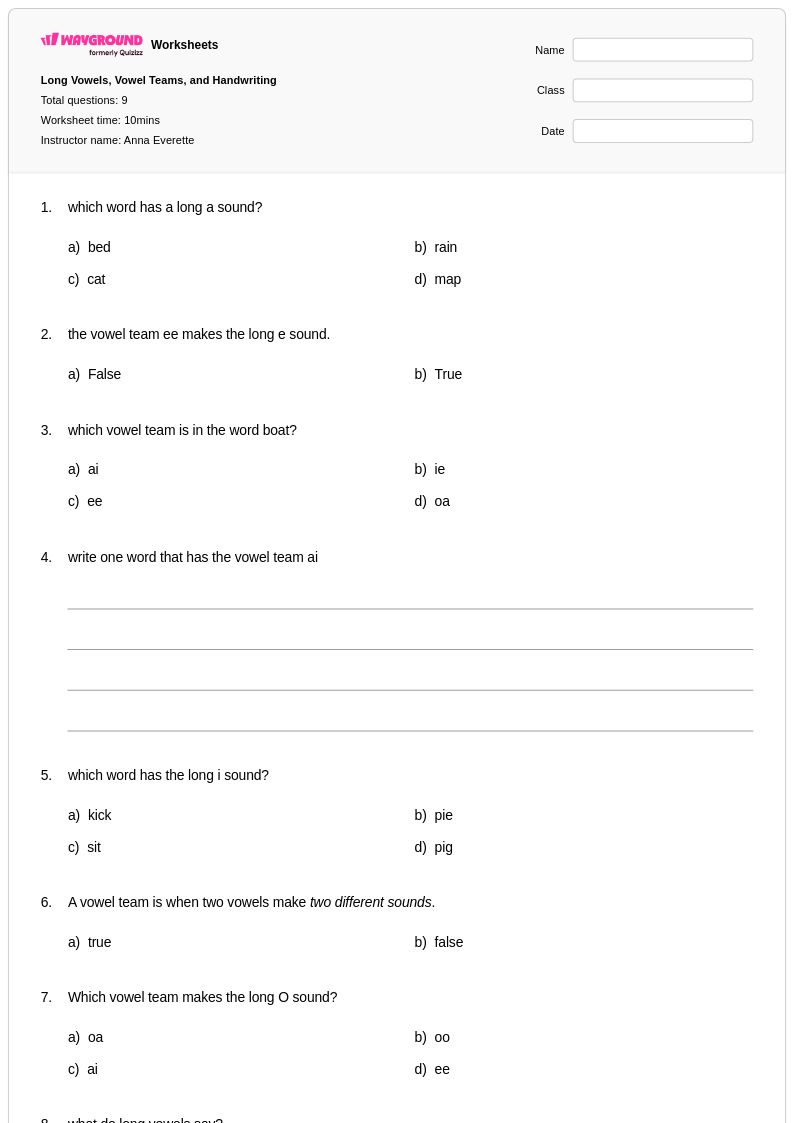
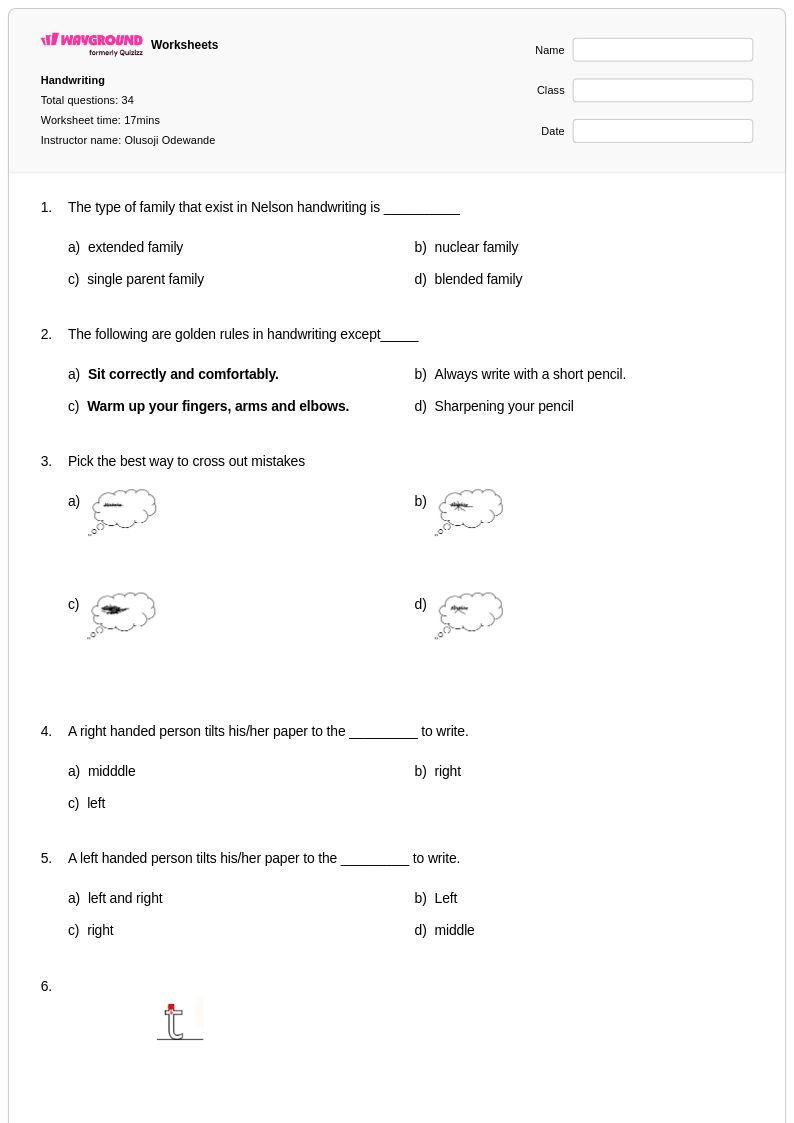
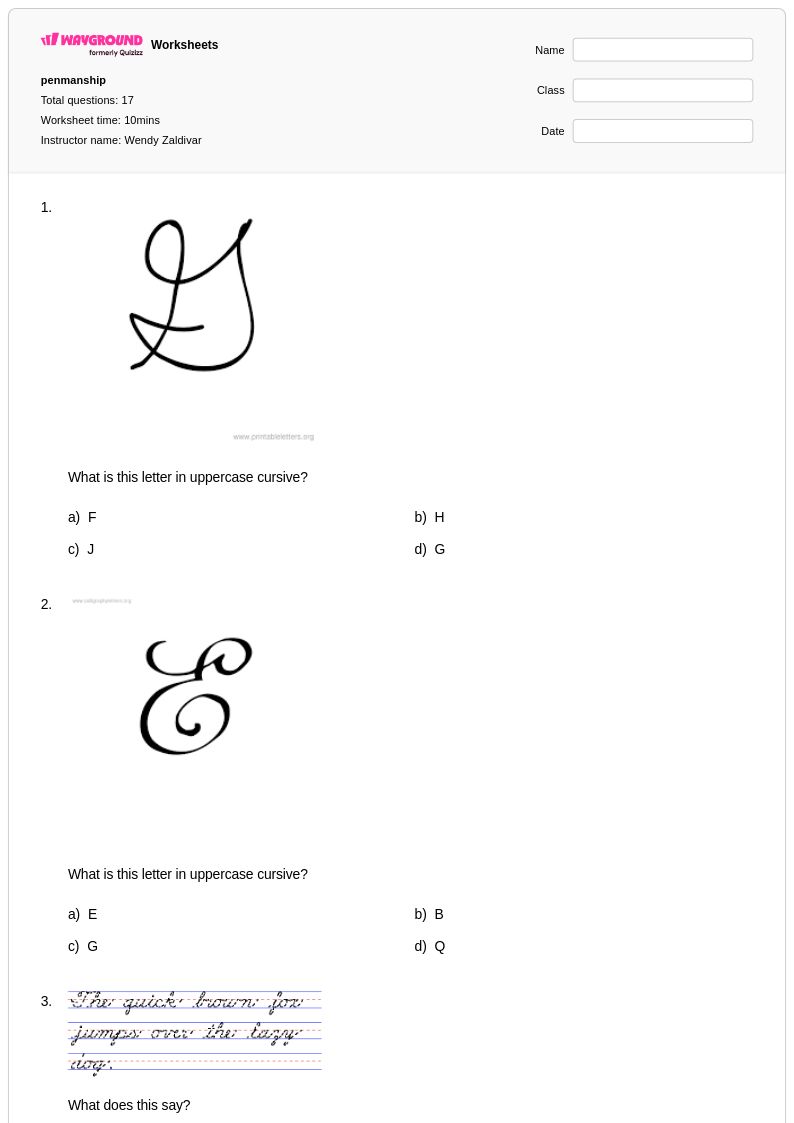
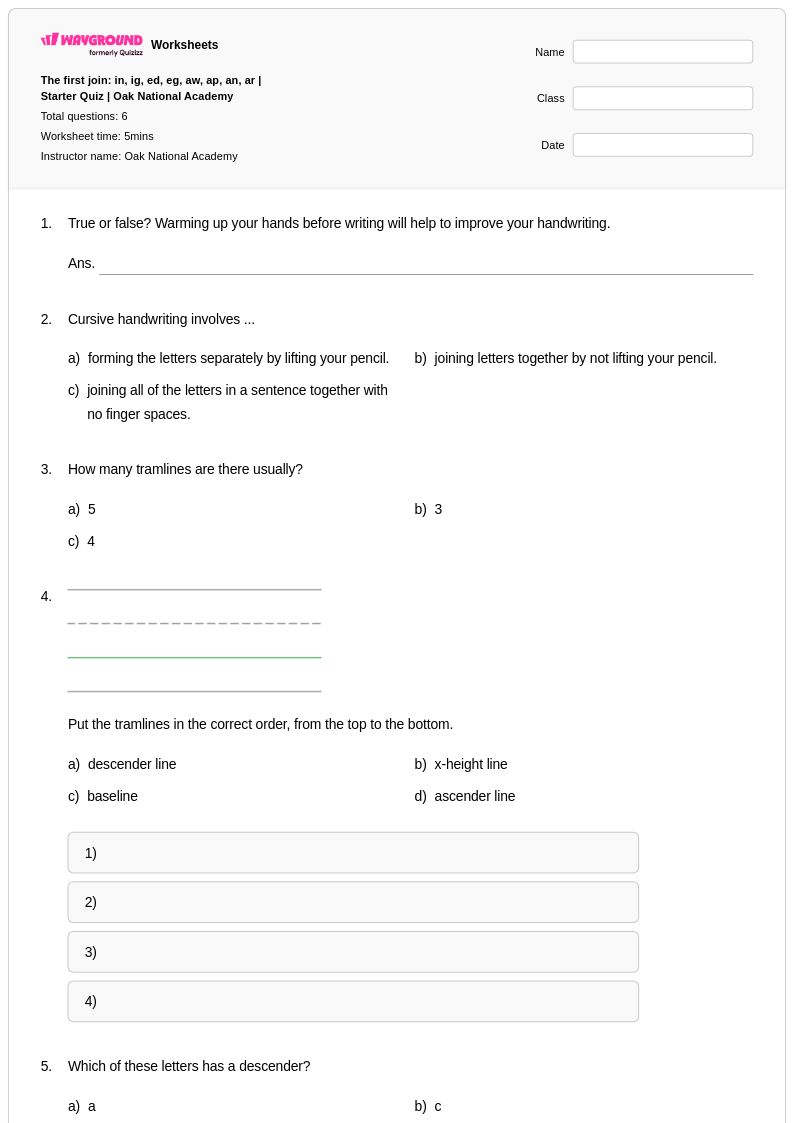
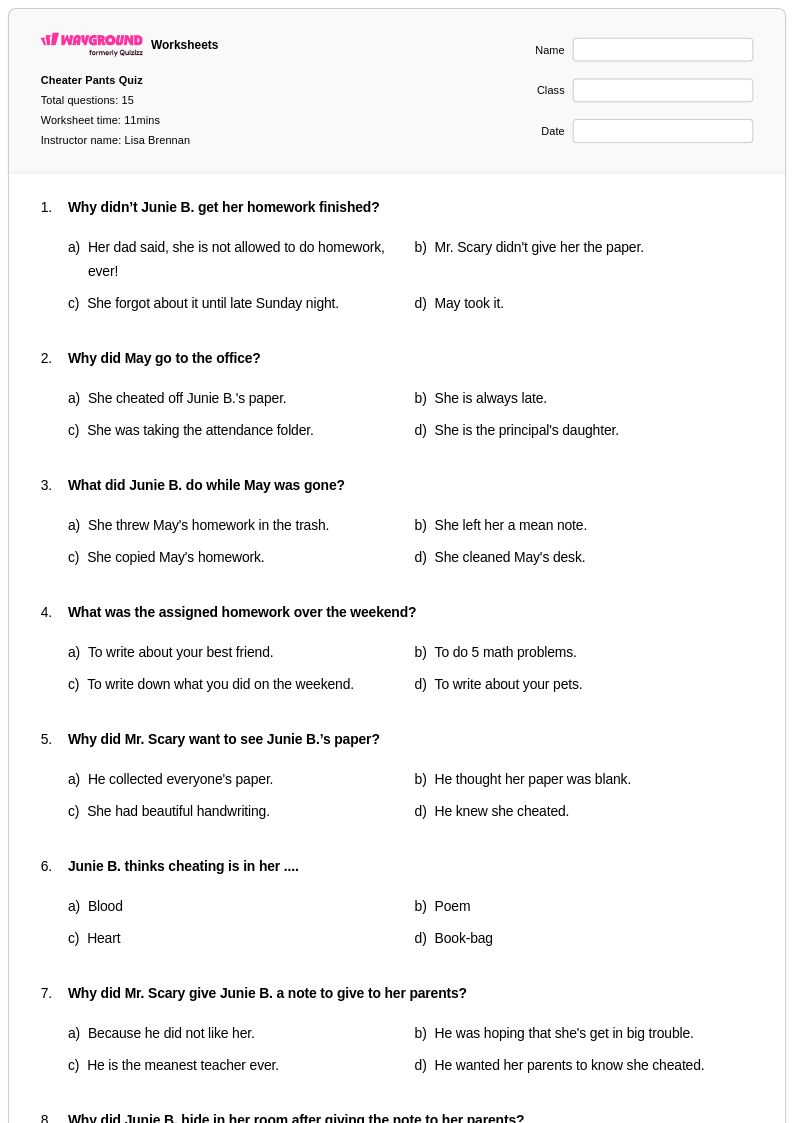
Grade 2 handwriting worksheets and printables from Wayground help students develop proper letter formation, pencil grip, and writing skills through engaging practice problems with answer keys available as free PDF downloads.
Explore printable Handwriting worksheets for Grade 2
Grade 2 handwriting worksheets available through Wayground provide essential foundational practice for young learners developing proper letter formation, spacing, and motor control skills. These carefully designed printables focus on building muscle memory through repetitive practice of uppercase and lowercase letters, number formation, and basic word copying exercises. Each worksheet includes clear guidelines and starting points to help students develop consistent letter sizing and proper pencil grip techniques. The comprehensive collection features answer keys for easy assessment, and teachers can access these free resources as downloadable pdf files that support both classroom instruction and at-home practice. Students strengthen fine motor coordination, visual-motor integration, and the fundamental writing mechanics necessary for future academic success through these structured practice problems.
Wayground's extensive library empowers educators with millions of teacher-created handwriting resources specifically tailored for Grade 2 students' developmental needs. The platform's robust search and filtering capabilities allow teachers to quickly locate worksheets targeting specific handwriting challenges, whether focusing on individual letter formation, cursive introduction, or transitional writing skills. Standards-aligned materials ensure curriculum compatibility, while differentiation tools enable teachers to customize worksheets for varying skill levels within the classroom. These versatile resources are available in both printable and digital formats, including easily accessible pdf downloads that facilitate seamless lesson planning and homework assignments. Teachers can efficiently support remediation for struggling writers, provide enrichment opportunities for advanced students, and maintain consistent skill practice that builds confident, legible handwriting habits throughout the academic year.
FAQs
How do I teach handwriting to beginners?
Start by establishing correct pencil grip and posture before introducing any letter forms. Teach letters in stroke-family groups (e.g., letters formed with circles, letters formed with straight lines) so students build muscle memory through repeated, related movements. Consistent daily practice with guided tracing and then independent formation is more effective than occasional longer sessions, because short repetitions reinforce the motor pathways that produce legible writing over time.
What is the best order to teach letter formation?
Most handwriting programs recommend introducing letters by stroke similarity rather than alphabetical order. For example, c, o, a, d, g, and q share a common circular starting stroke and are often taught as a group. Teaching letters this way reduces the cognitive load on beginners, because each new letter feels like a variation of a movement they already know rather than an entirely new skill.
What exercises help students practice pencil control and pen control?
Line tracing exercises are the most direct way to build pencil and pen control, as they train students to guide their tool along a path without lifting or wavering. Progressing from wide, simple lines to narrow, curved, and zigzag paths mirrors the demands of actual letter strokes. Copying practice and sentence tracing extend these skills into functional writing contexts, reinforcing both accuracy and fluency.
What mistakes do students commonly make with letter formation?
The most frequent errors include incorrect starting points on letters, inconsistent letter size relative to the baseline, and reversed letterforms (most commonly b/d and p/q). Students also frequently apply uneven pressure, which affects stroke consistency and legibility. Catching these patterns early through regular progress checks matters because formation habits become increasingly difficult to correct once they are automatized through repeated practice.
How do I support students who are struggling with handwriting?
Remediation should target the specific breakdown point, whether that is pencil grip, stroke direction, letter spacing, or size consistency, rather than having students redo general practice. Multi-sensory approaches such as tracing letters in sand or on textured surfaces can reinforce the motor pattern alongside paper-and-pencil work. On digital platforms like Wayground, features such as extended time and read-aloud support can reduce cognitive load for students who also have processing or attention challenges, allowing them to focus their effort on the handwriting skill itself.
How do I use Wayground's handwriting worksheets in my classroom?
Wayground's handwriting worksheets are available as printable PDFs, making them ready for traditional paper-and-pencil practice with no additional setup, as well as in digital formats for classrooms using devices. Teachers can host worksheets as a quiz on Wayground to assign them directly to students and monitor progress. The library covers subtopics from letter tracing and name tracing to cursive writing and penmanship, so teachers can assign the specific skill a student or class is currently working on rather than using a one-size-fits-all resource.