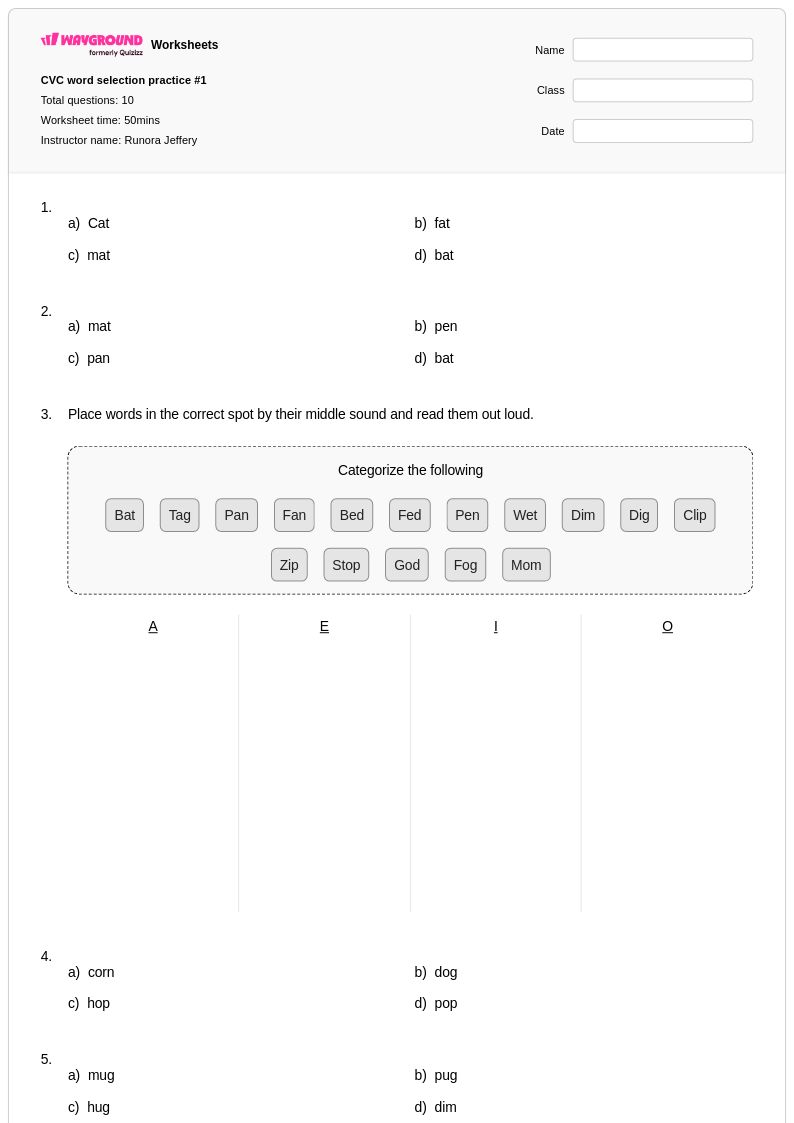
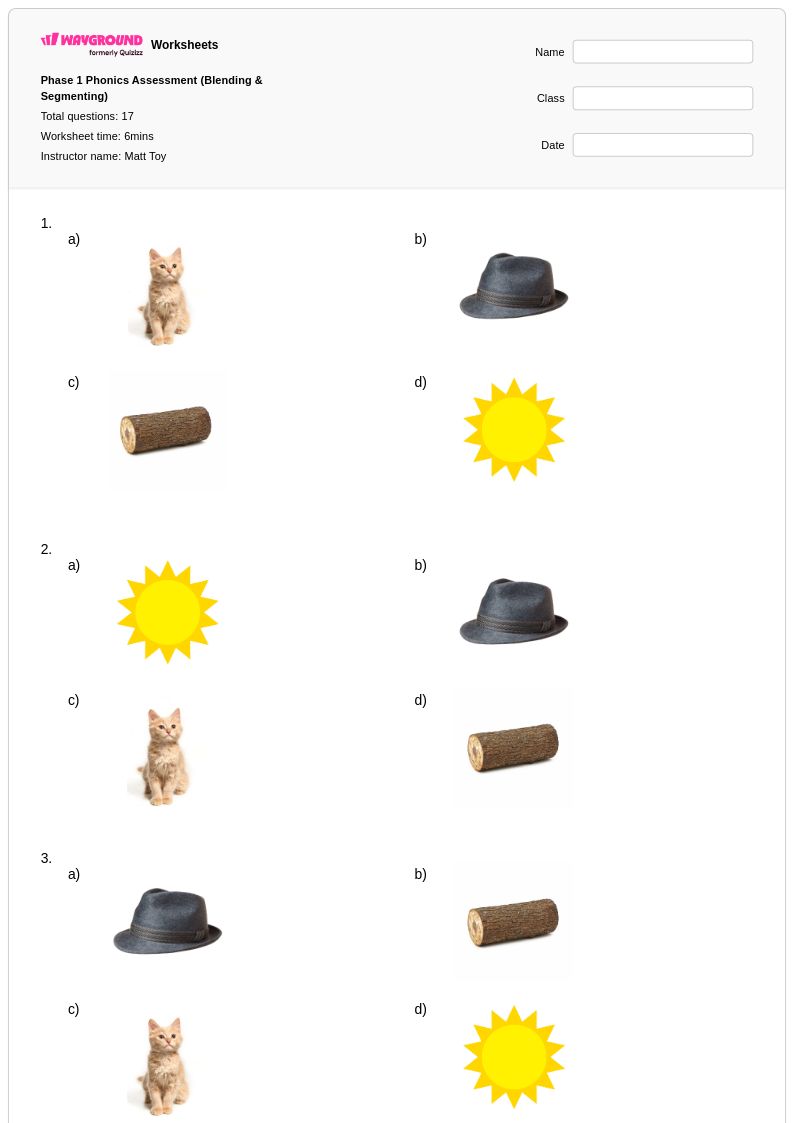
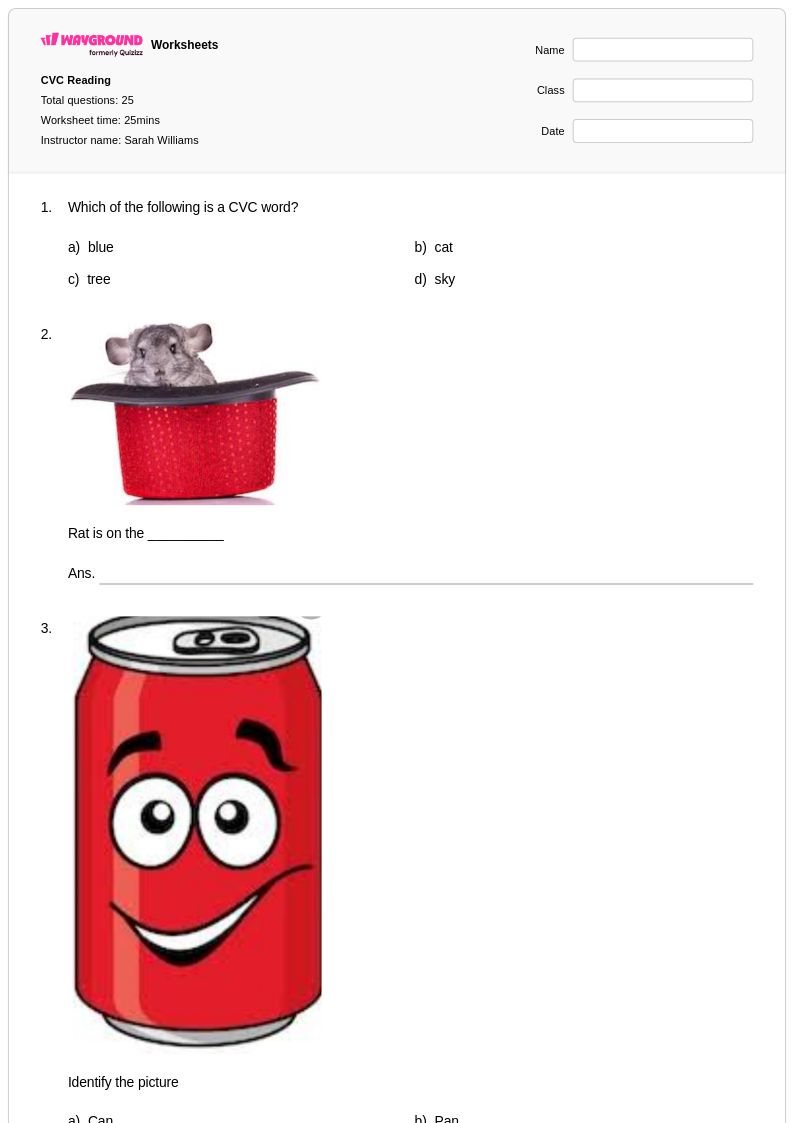
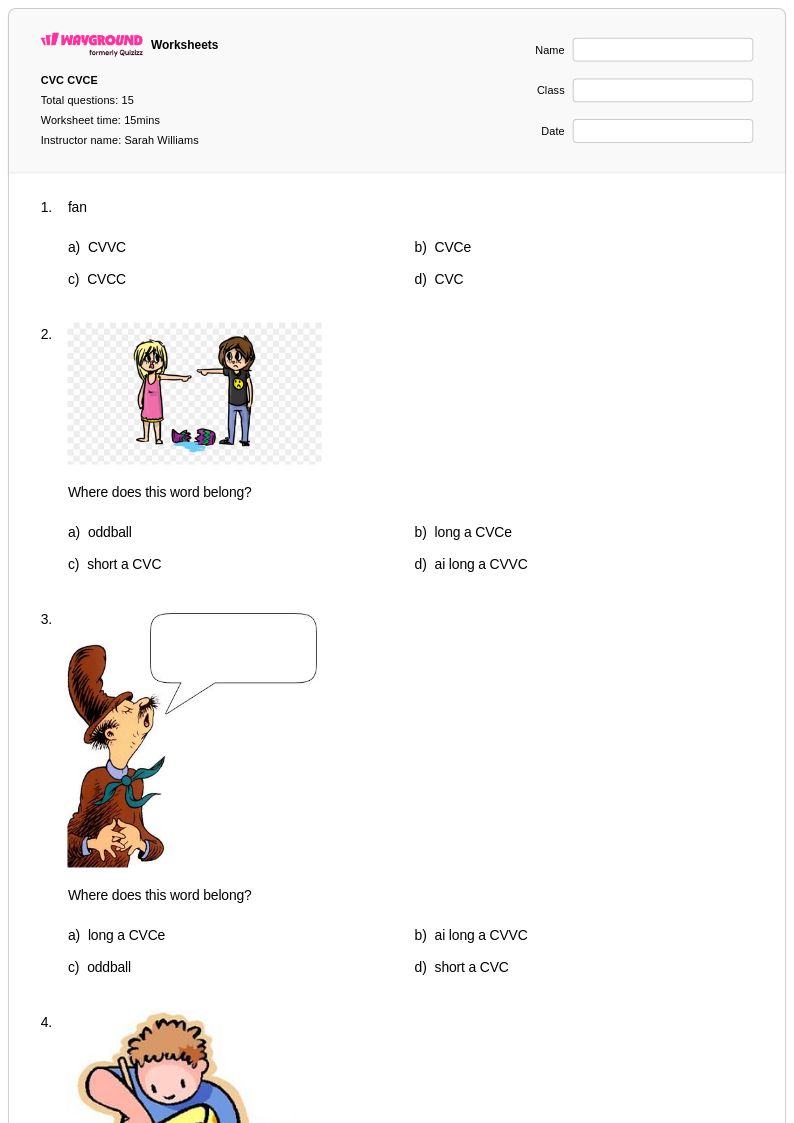
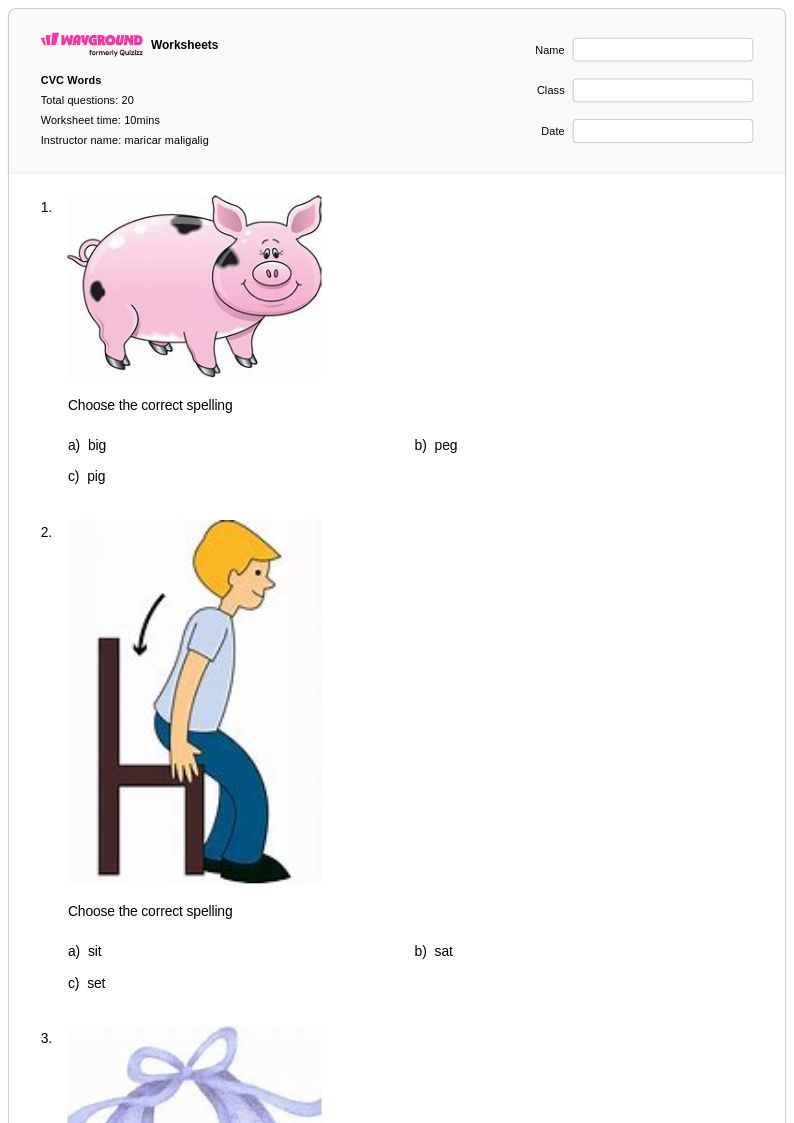
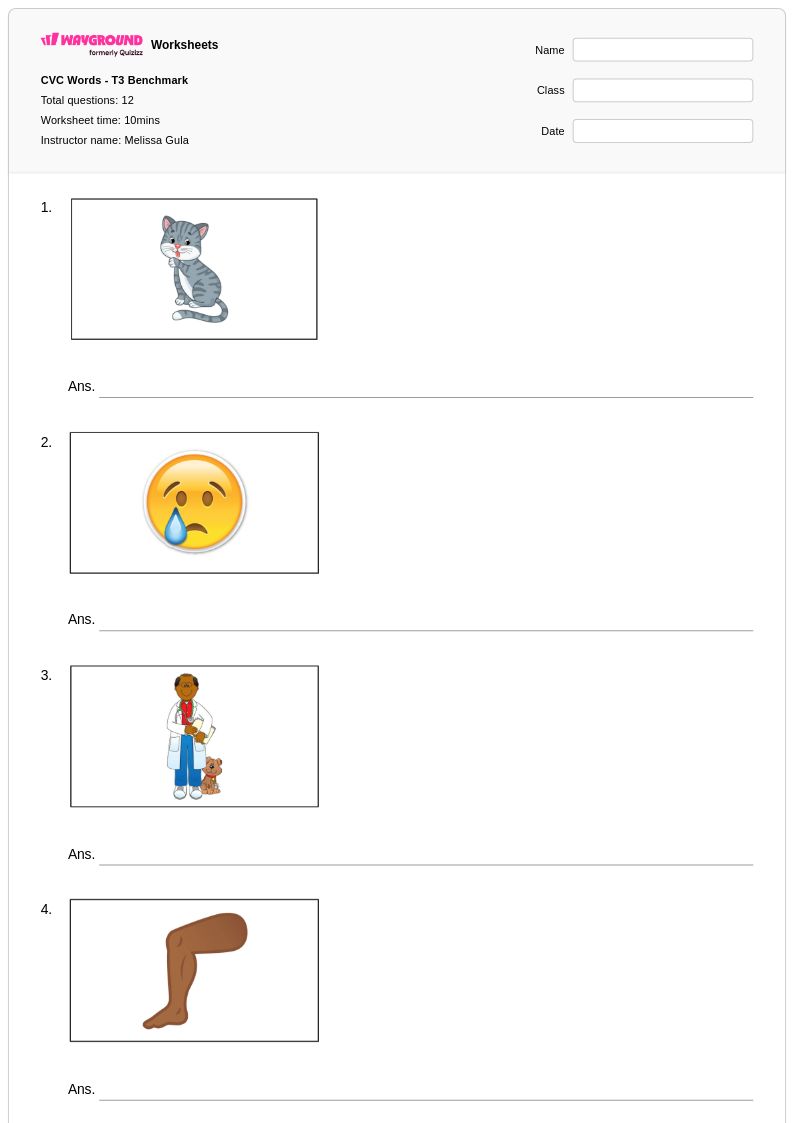
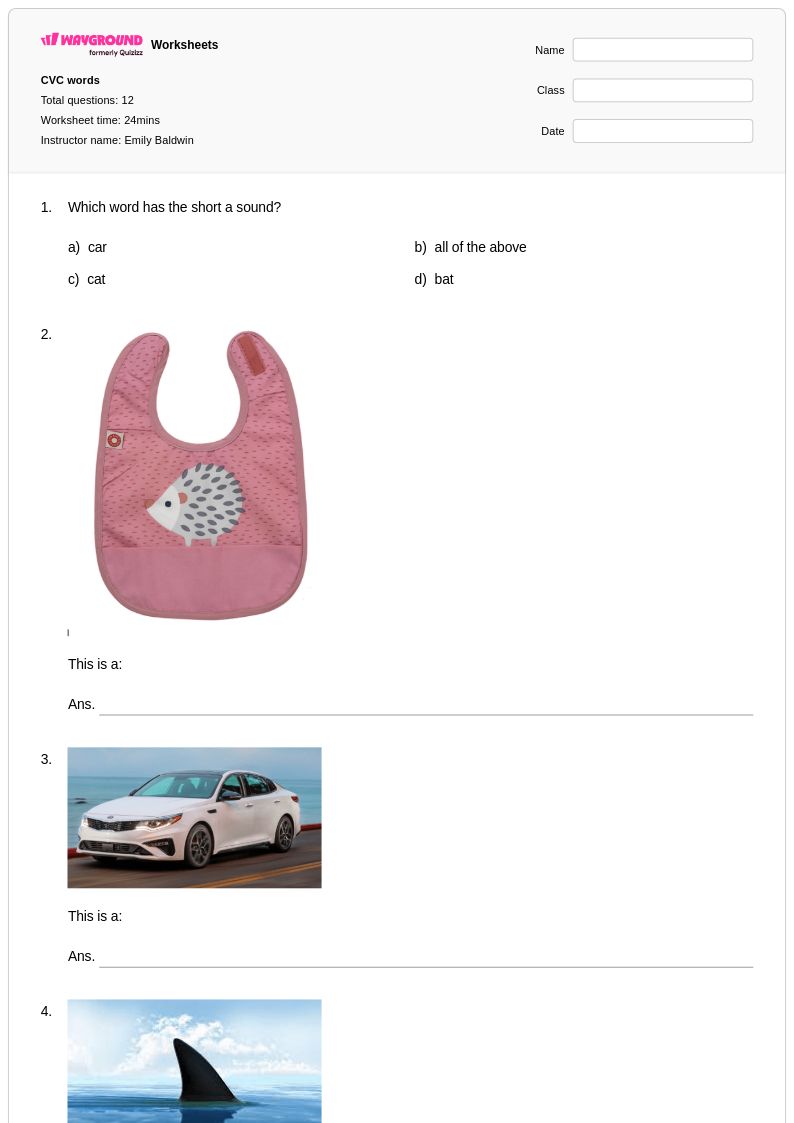
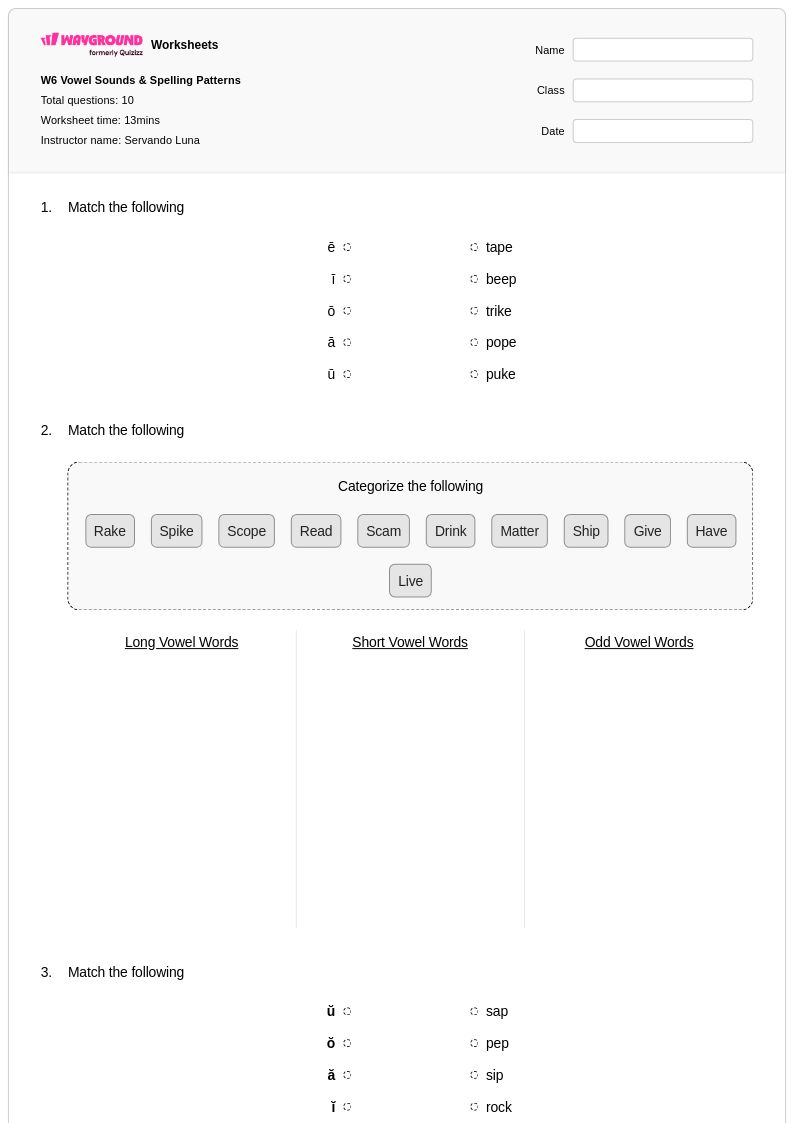
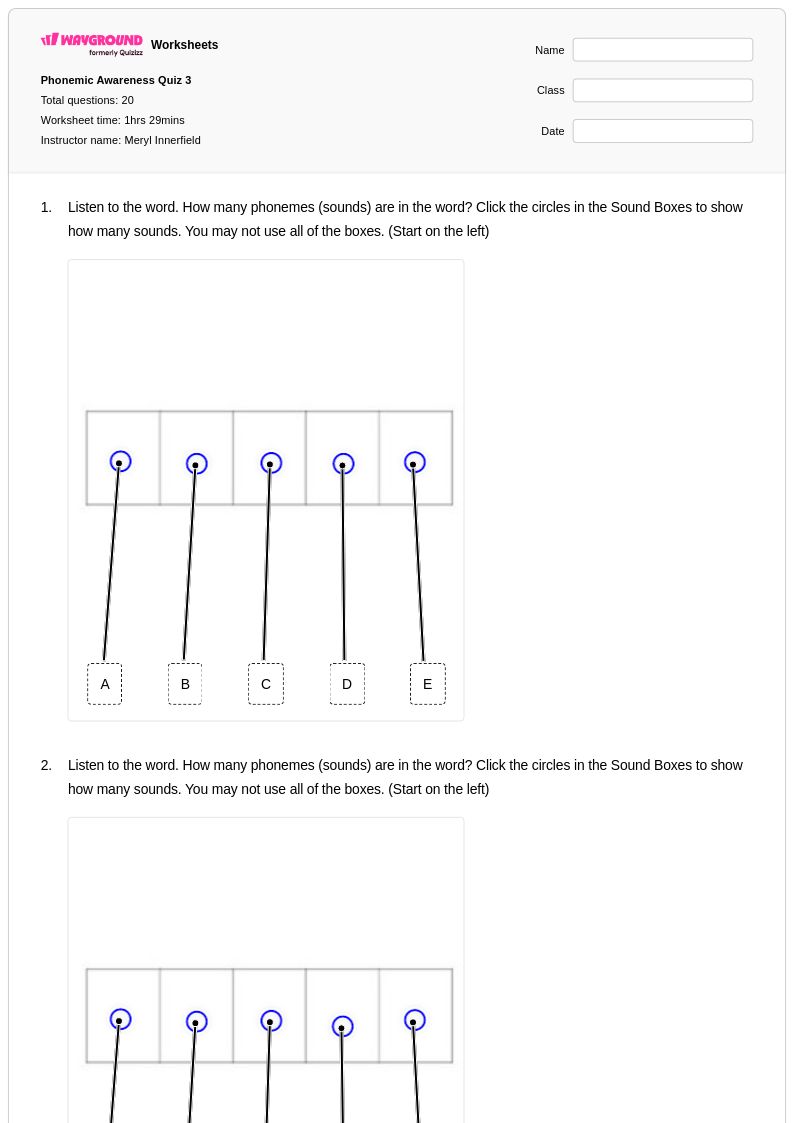
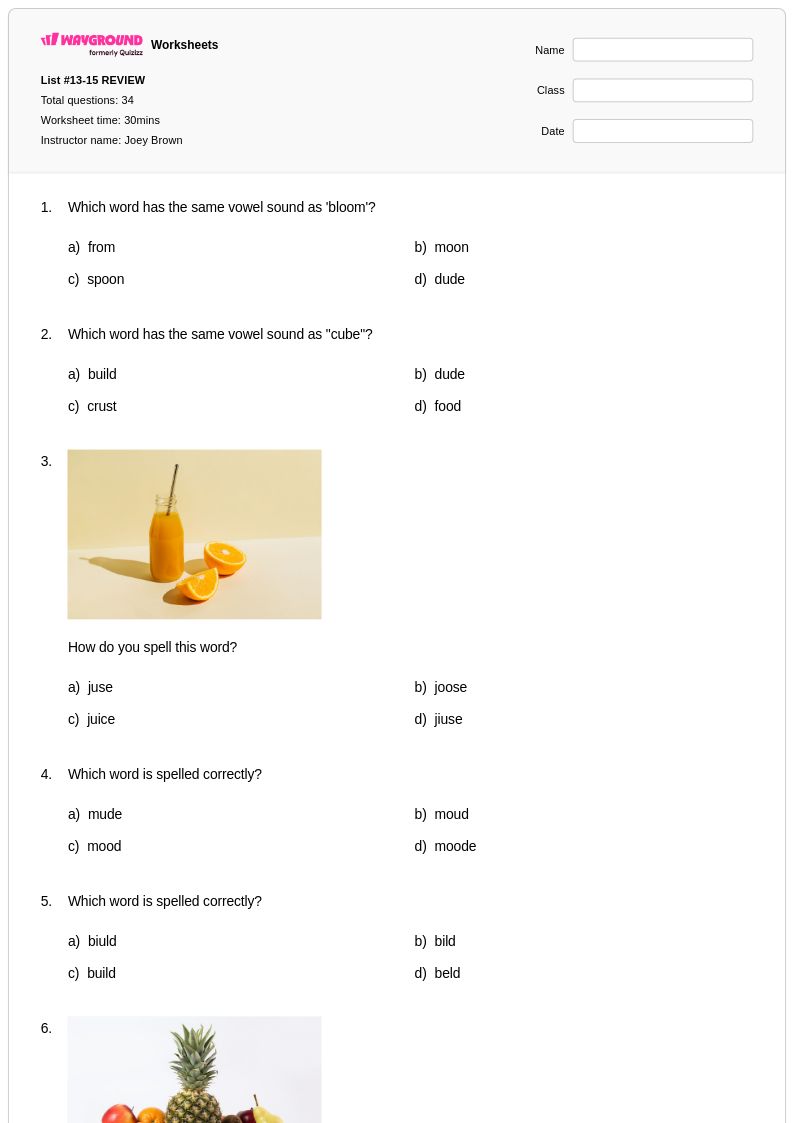
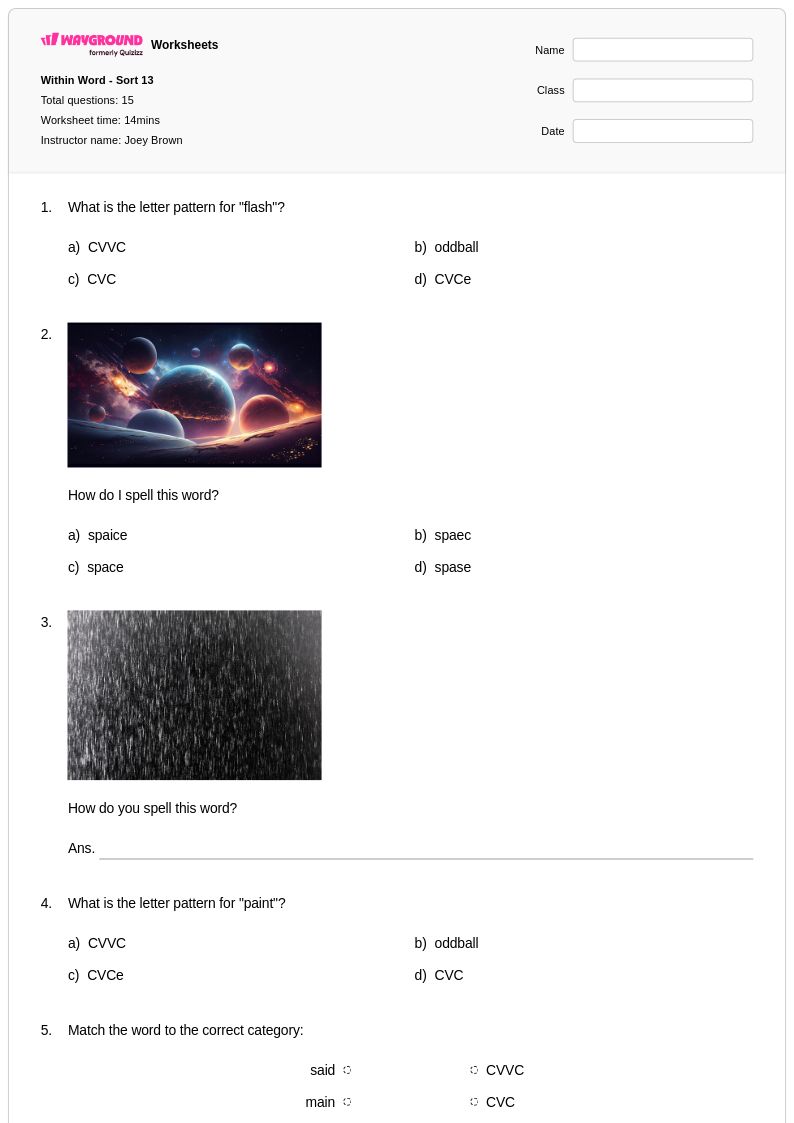
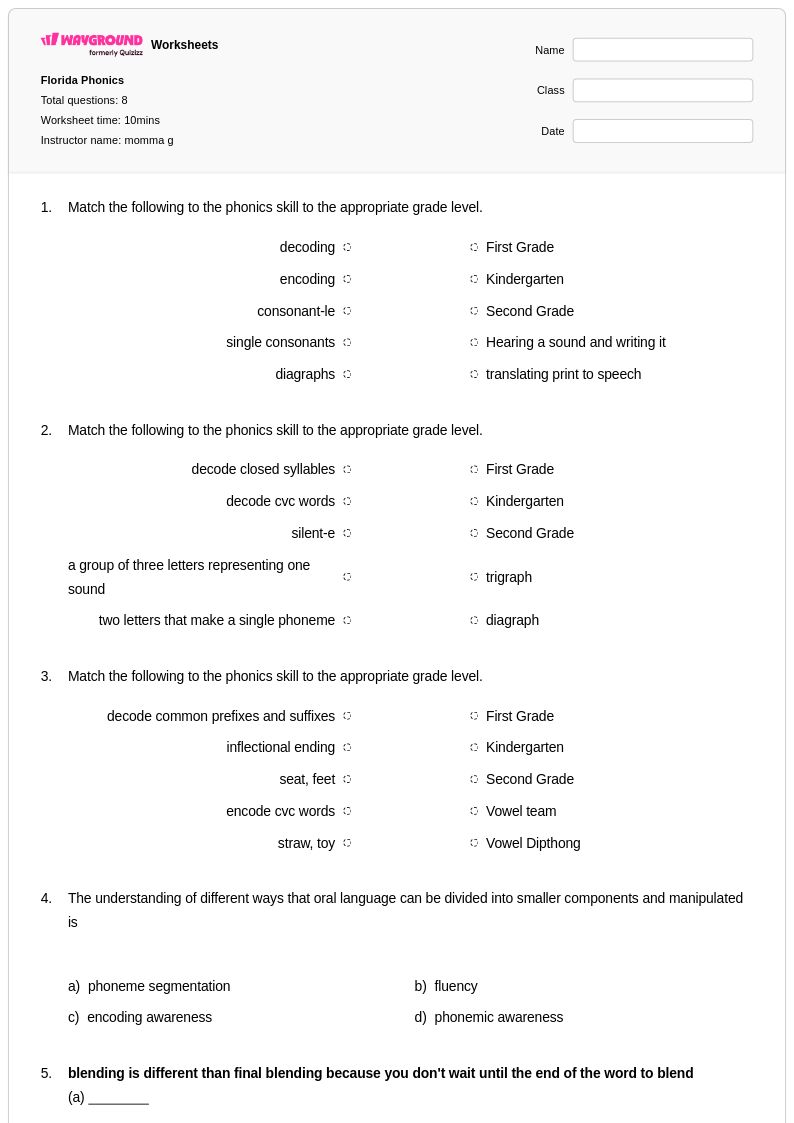
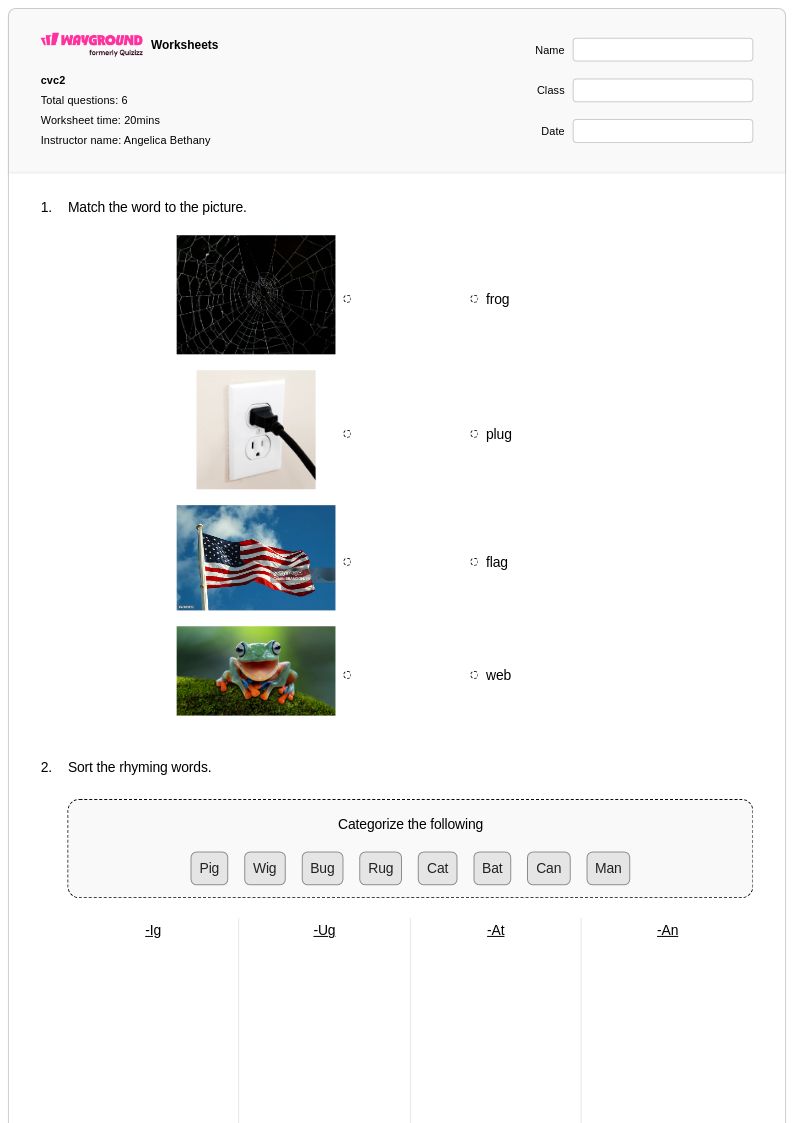
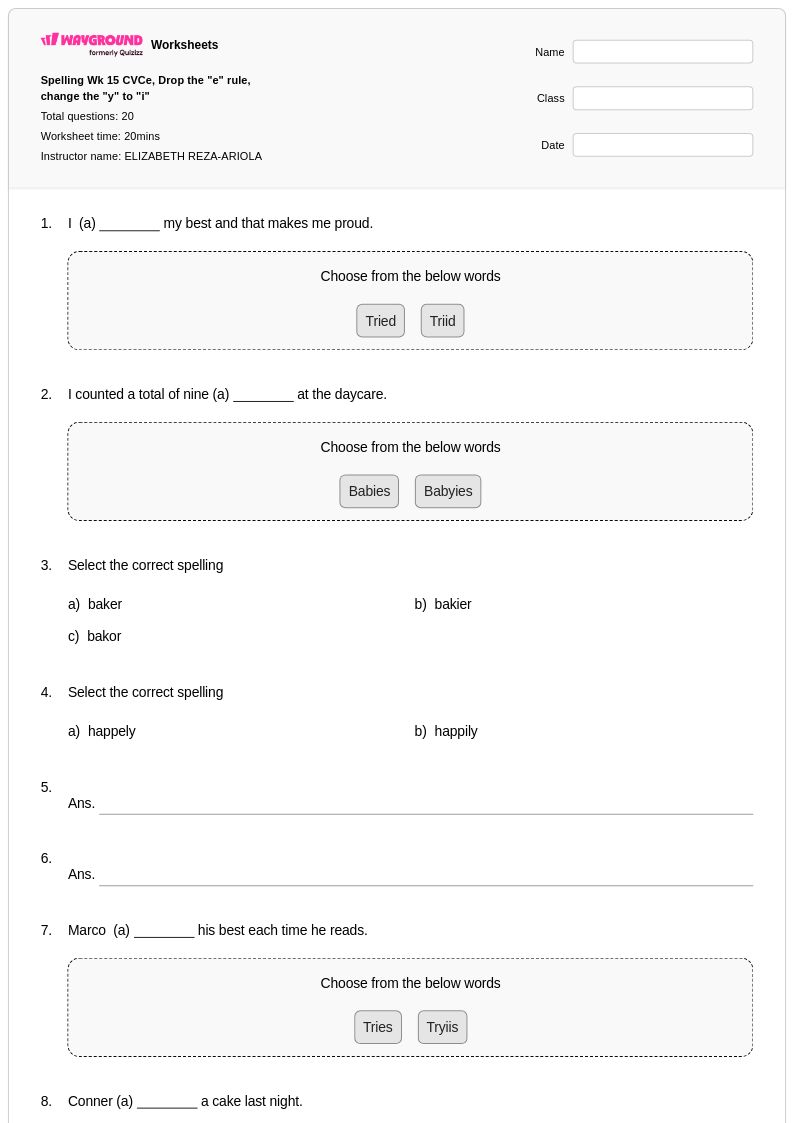
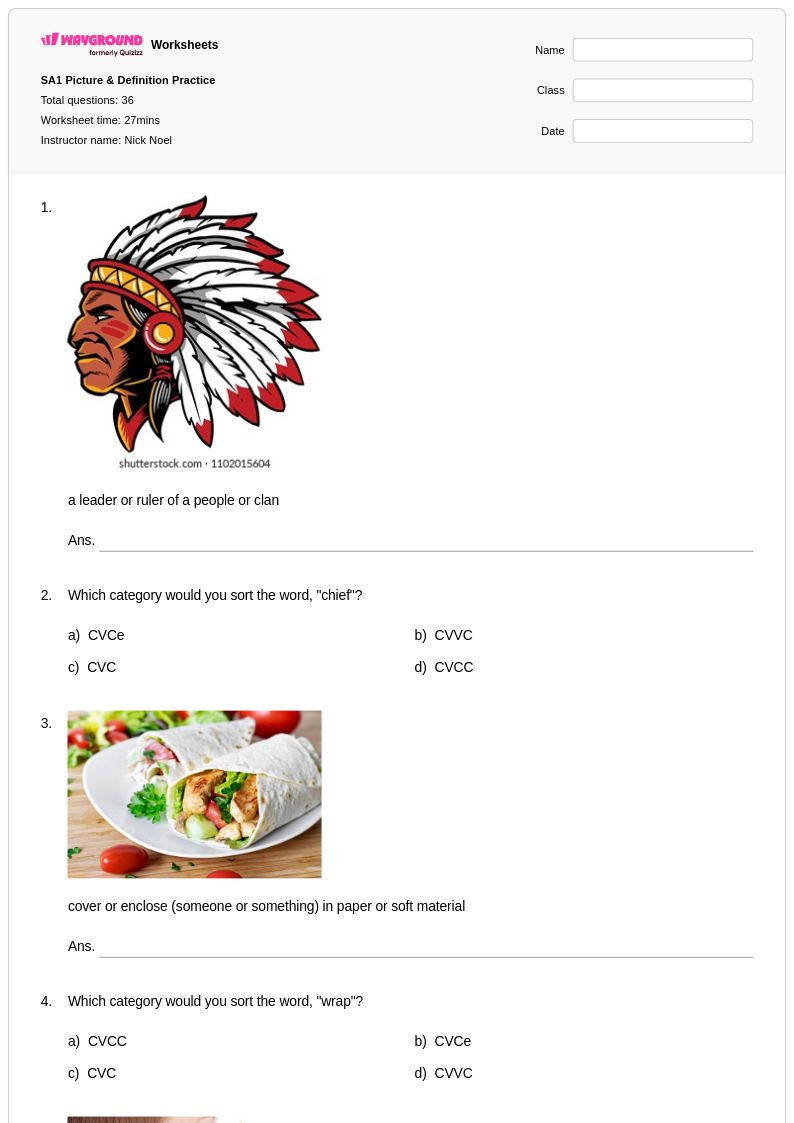
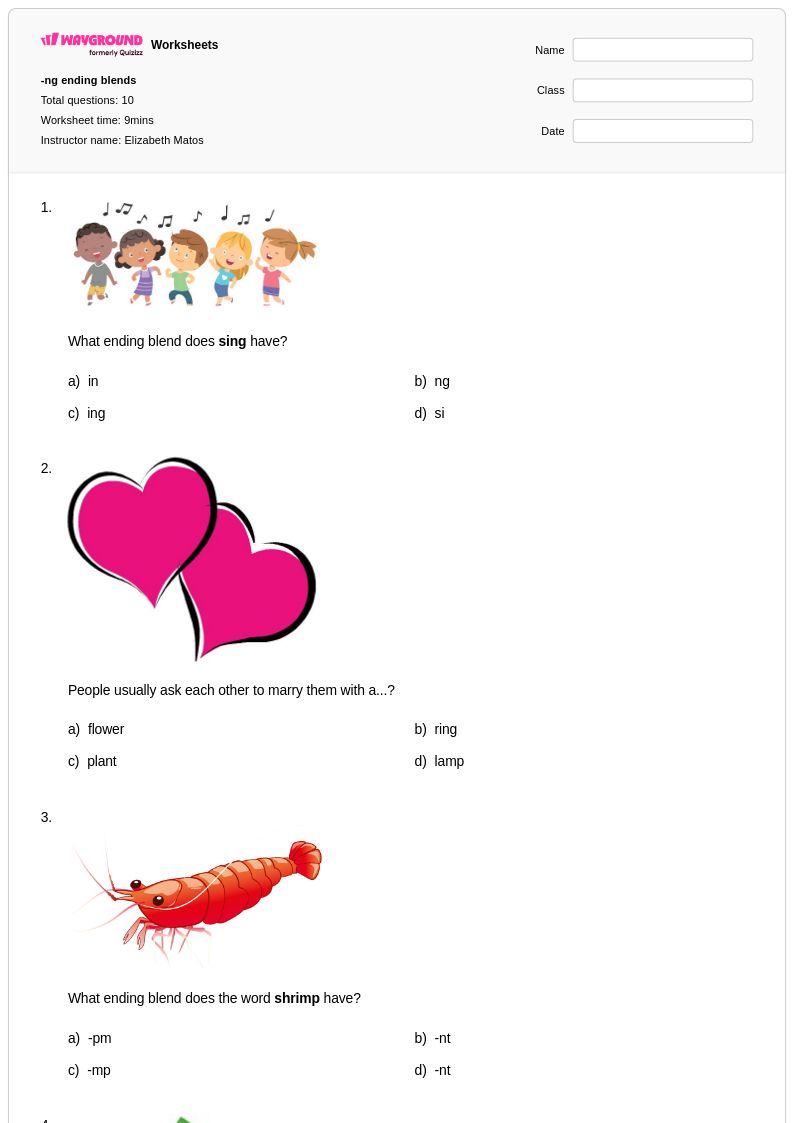
Discover free CVC blending worksheets and printables from Wayground that help students master consonant-vowel-consonant word patterns through engaging practice problems with comprehensive answer keys included.
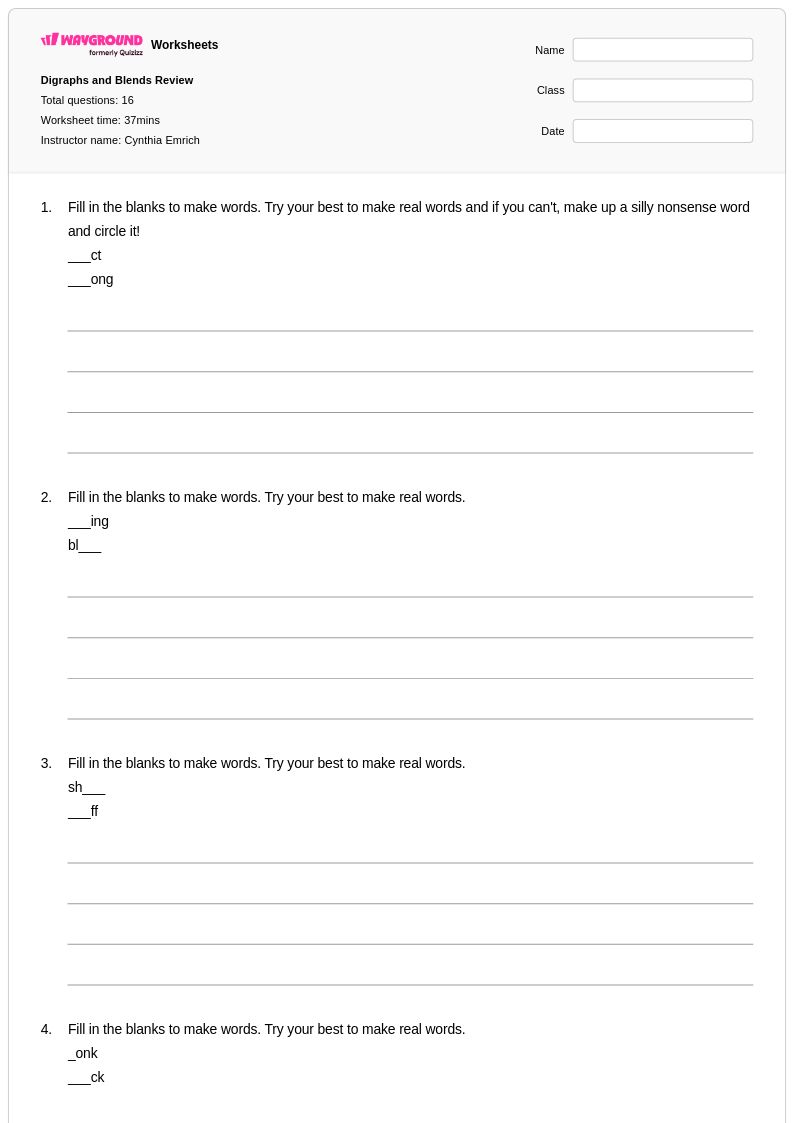
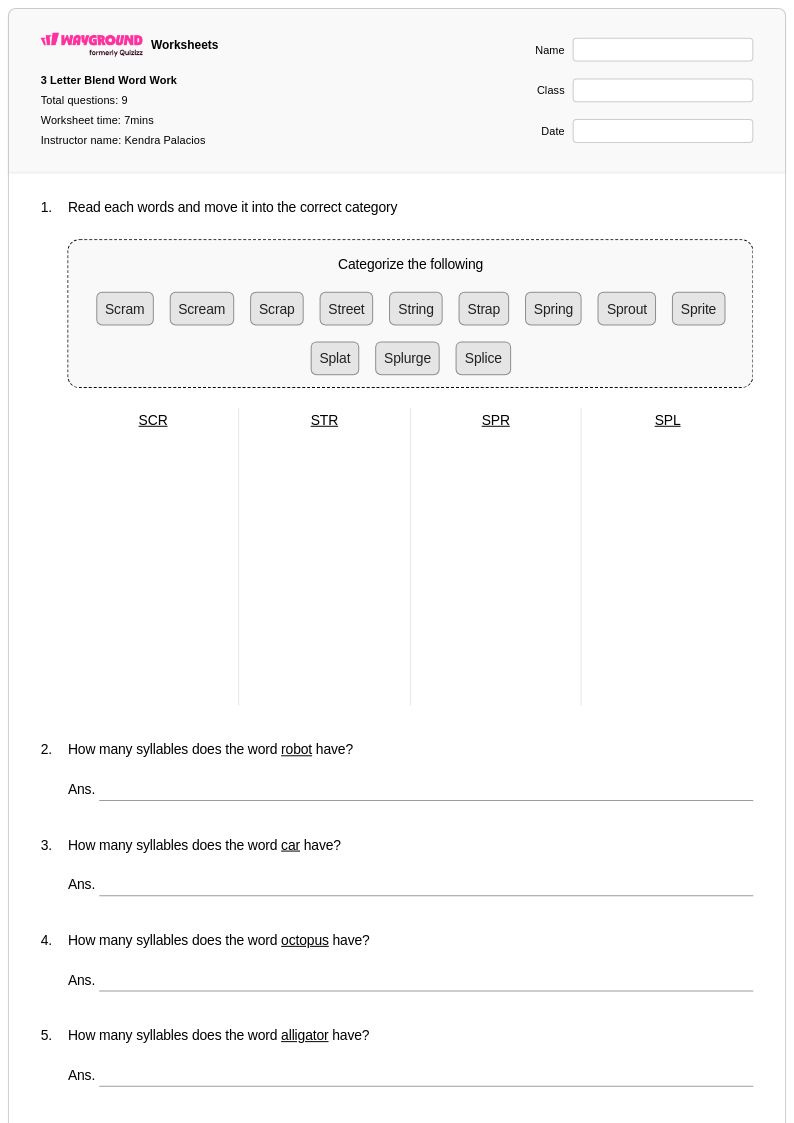
CVC blending worksheets available through Wayground (formerly Quizizz) provide essential foundational practice for developing phonemic awareness and early reading skills. These comprehensive printables focus specifically on consonant-vowel-consonant word patterns, helping students master the critical skill of blending individual sounds together to form complete words like "cat," "sit," and "run." Each worksheet systematically guides learners through the process of connecting phonemes, strengthening their ability to decode simple three-letter words that form the building blocks of reading fluency. The collection includes varied practice problems that progress from basic sound isolation to complete word recognition, with answer keys provided to support both independent learning and instructor-guided instruction. These free resources target the fundamental decoding strategies that students need before advancing to more complex phonetic patterns and multisyllabic words.
Wayground (formerly Quizizz) empowers educators with an extensive library of millions of teacher-created CVC blending resources that can be easily searched, filtered, and customized to meet diverse classroom needs. The platform's robust differentiation tools allow teachers to modify worksheets for various skill levels, ensuring that struggling readers receive appropriate scaffolding while advanced students can access enrichment activities. These materials are available in both printable PDF format for traditional paper-based instruction and digital formats for interactive learning experiences. The comprehensive search functionality enables educators to quickly locate resources aligned with specific phonics standards, streamlining lesson planning and providing targeted practice for remediation or skill reinforcement. Teachers can efficiently organize these materials to create cohesive phonics instruction sequences that build systematically from basic sound recognition to confident word blending across multiple learning sessions.
FAQs
How do I teach CVC blending to beginning readers?
Start by ensuring students can isolate individual phonemes before asking them to blend. Use a left-to-right pointing routine where students say each sound separately (/c/ /a/ /t/) and then sweep their finger under the word while saying it as a whole. Consistent repetition with short vowel families (short a, short i, short o) builds the pattern recognition that makes blending automatic over time.
What exercises help students practice CVC blending?
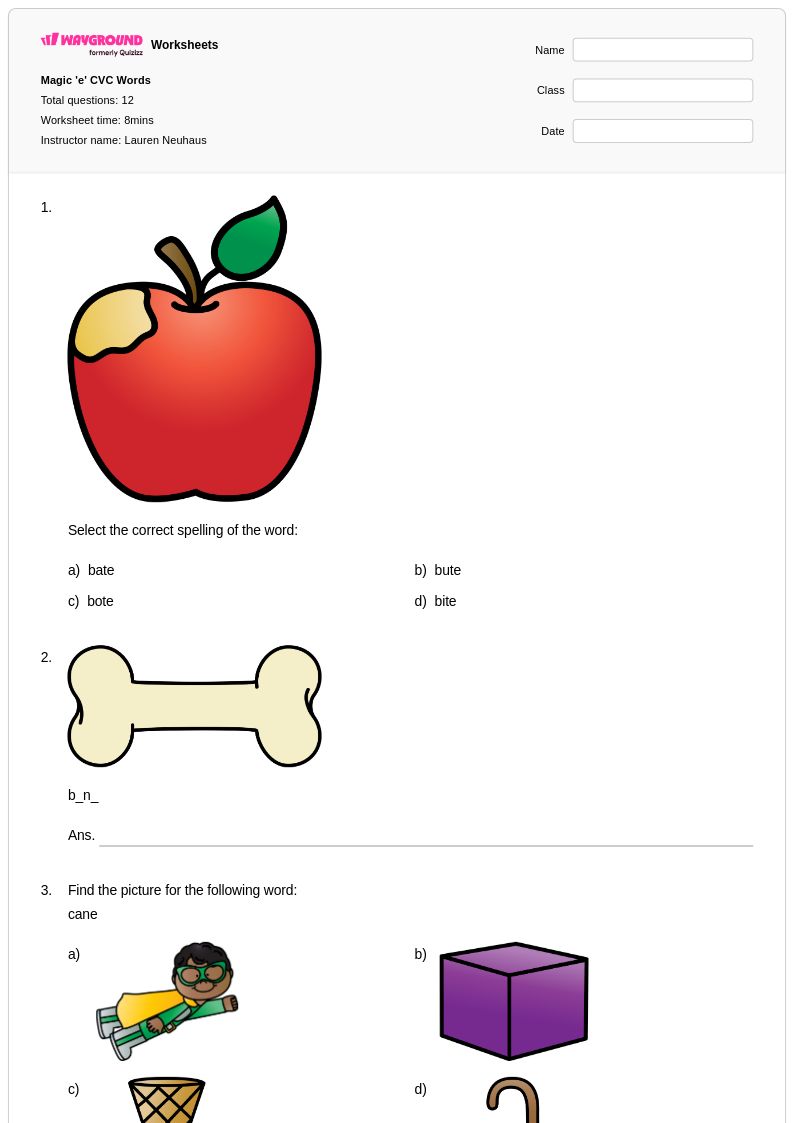
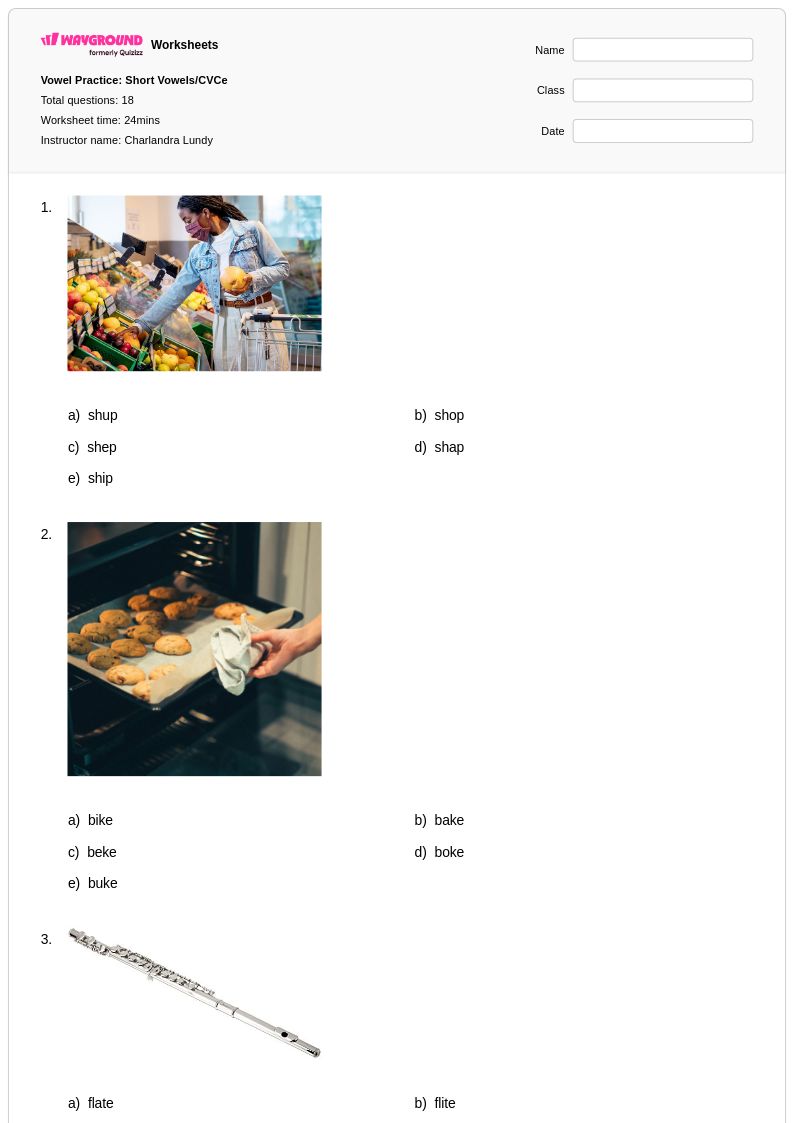
Effective CVC blending practice includes sound-by-sound decoding drills, word-building activities where students assemble onset and rime cards, and picture-matching tasks that ask students to connect a written CVC word to its corresponding image. Worksheets that progress from sound isolation to complete word recognition are especially useful because they mirror the mental process of decoding rather than jumping straight to whole-word reading.
What mistakes do students commonly make when blending CVC words?
The most common error is over-relying on the initial consonant and guessing the rest of the word, rather than decoding each phoneme in sequence. Students also frequently confuse short vowel sounds, mixing up /e/ and /i/ or /o/ and /u/, which leads to misreads like saying 'bit' for 'bet.' Targeted practice with minimal pairs, such as 'pin' and 'pan,' helps students attend to the medial vowel, which is the most frequently skipped sound during blending.
How do I support struggling readers during CVC blending practice?
Struggling readers benefit most from explicit, step-by-step phoneme blending routines paired with reduced cognitive load. On Wayground, teachers can enable the Read Aloud accommodation so audio support is available for students who need to hear the sounds modeled, and Reduced Answer Choices can limit the number of response options shown to individual students without alerting the rest of the class. Extended time settings can also be applied per student, giving developing readers the processing space they need without disrupting pacing for the whole group.
How do I use Wayground's CVC blending worksheets in my classroom?
Wayground's CVC blending worksheets are available as printable PDFs, making them ready to use for independent seat work, small-group instruction, or take-home practice. They are also available in digital formats for technology-integrated classrooms, and teachers can host them directly as a quiz on Wayground for real-time student response tracking. Every worksheet includes a complete answer key, which supports both teacher-led review and self-checking during independent practice.
At what reading level should students begin CVC blending practice?
CVC blending practice is appropriate once students have solid phonemic awareness at the phoneme isolation level and have learned the basic short vowel sounds and most consonant sounds. This typically corresponds to kindergarten and early first grade instruction, though students entering second grade who are still developing decoding skills often benefit from CVC review as a fluency foundation before moving to blends and digraphs.