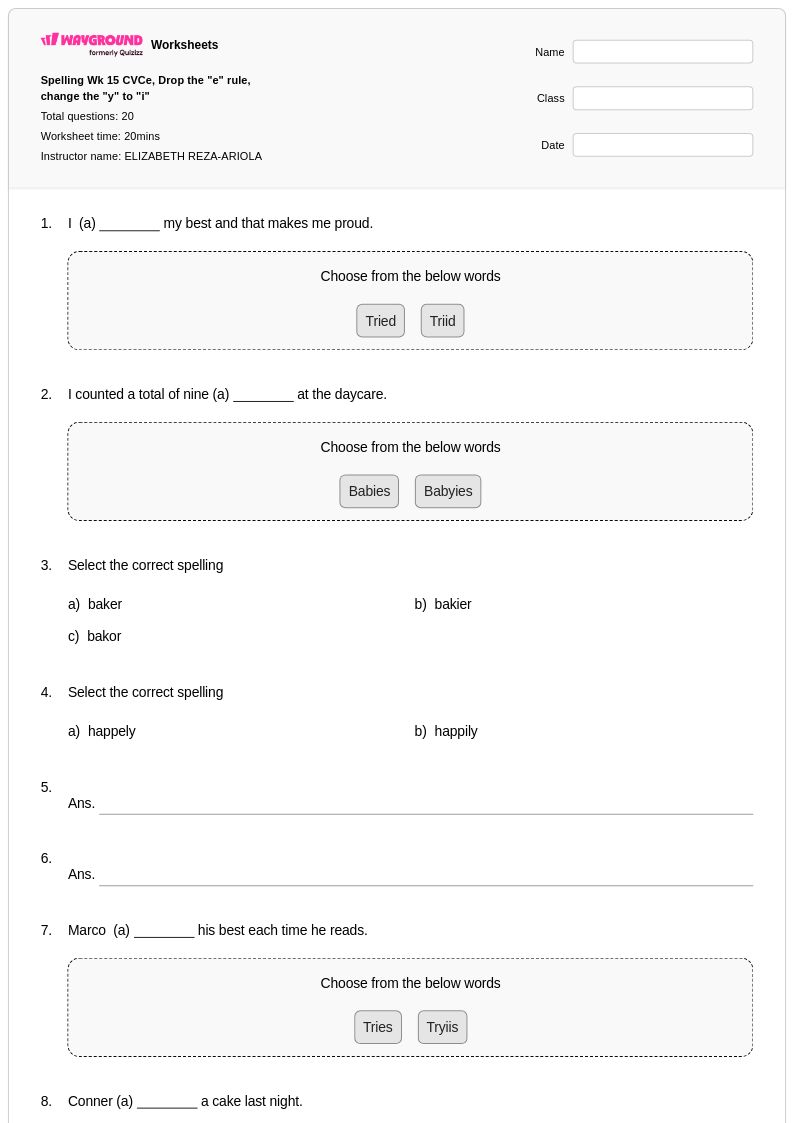
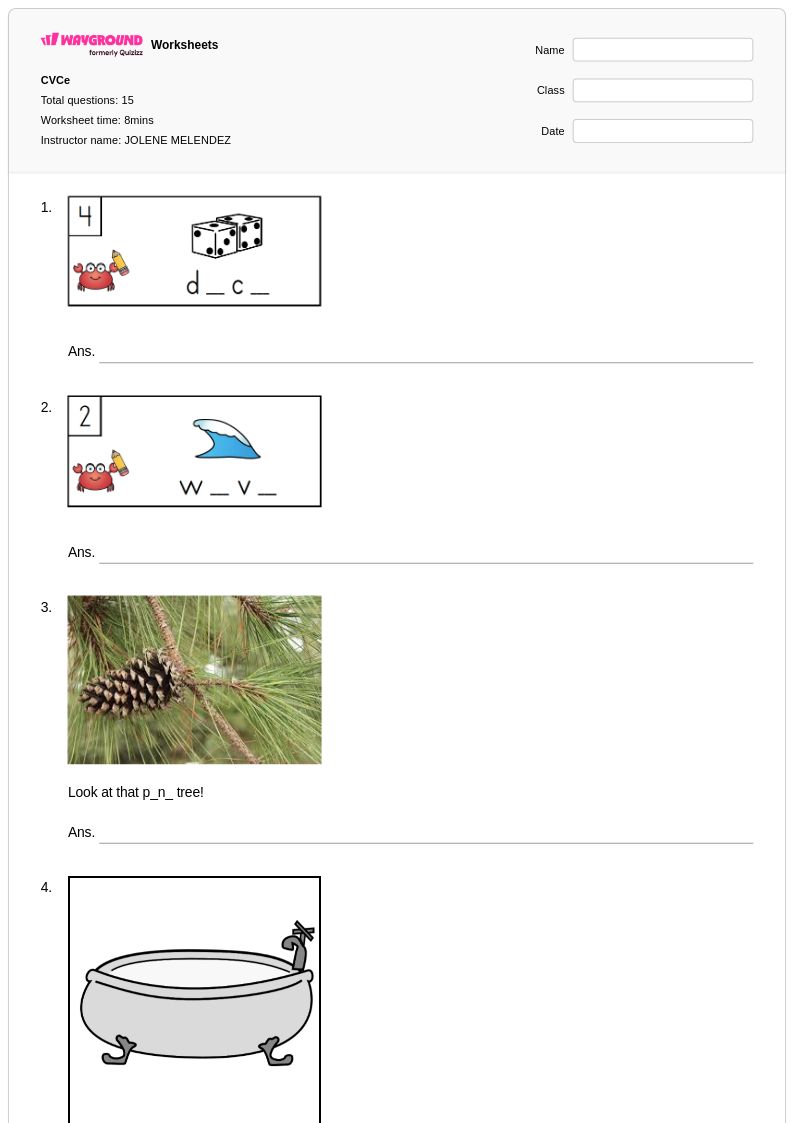
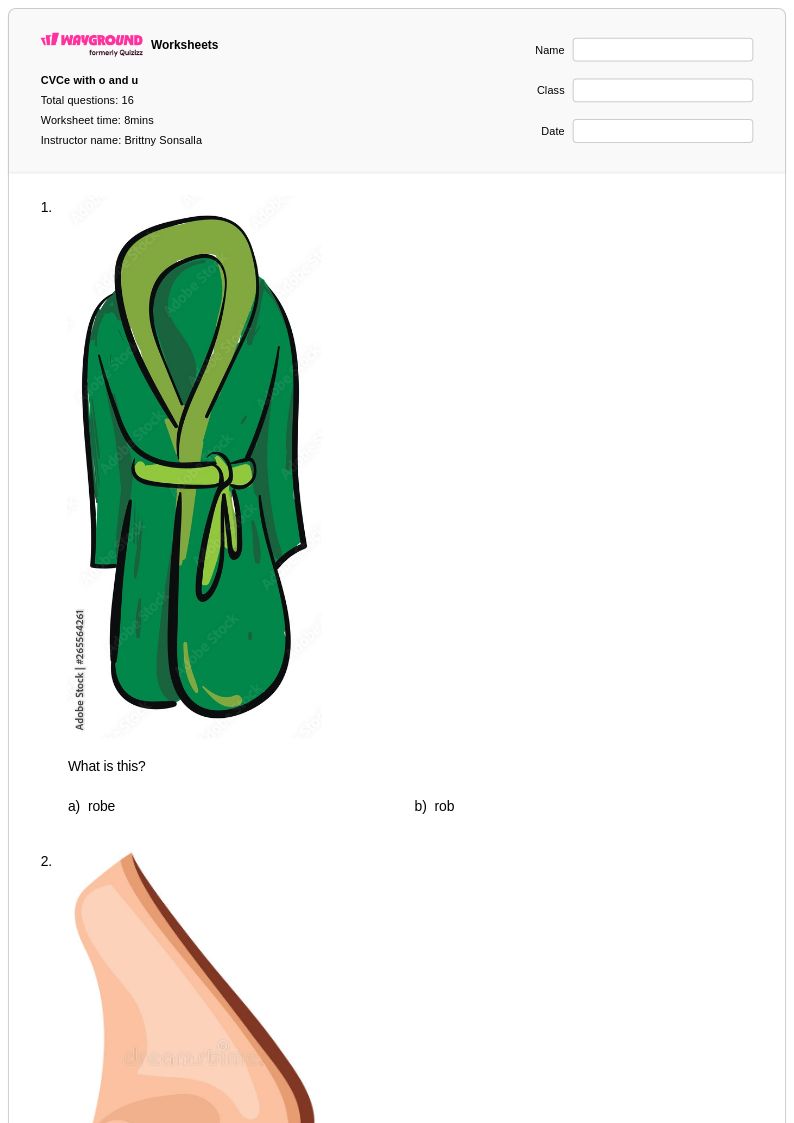
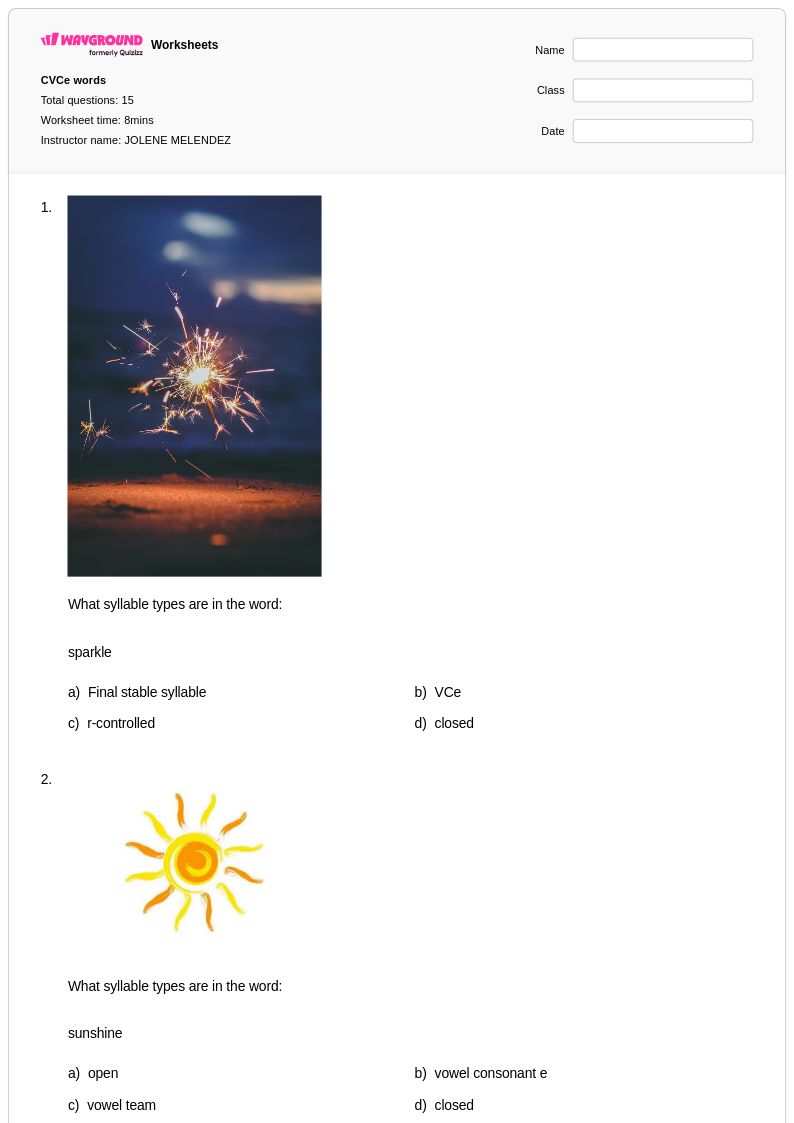
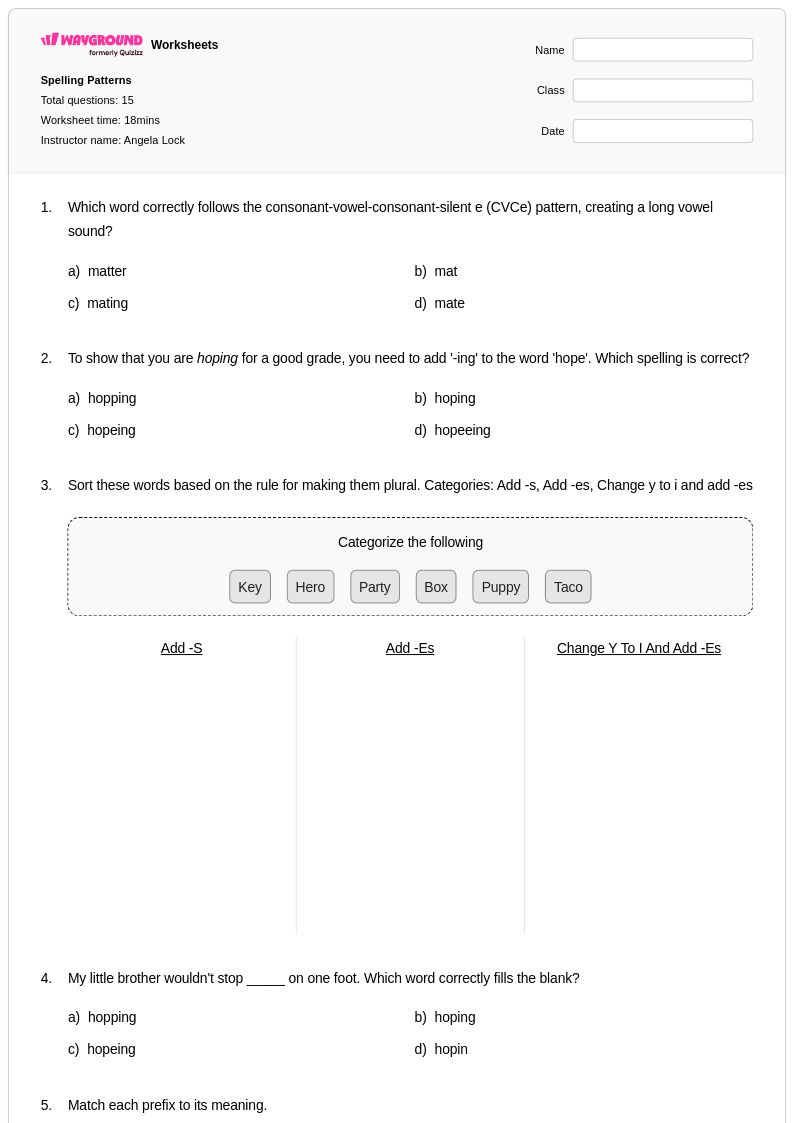
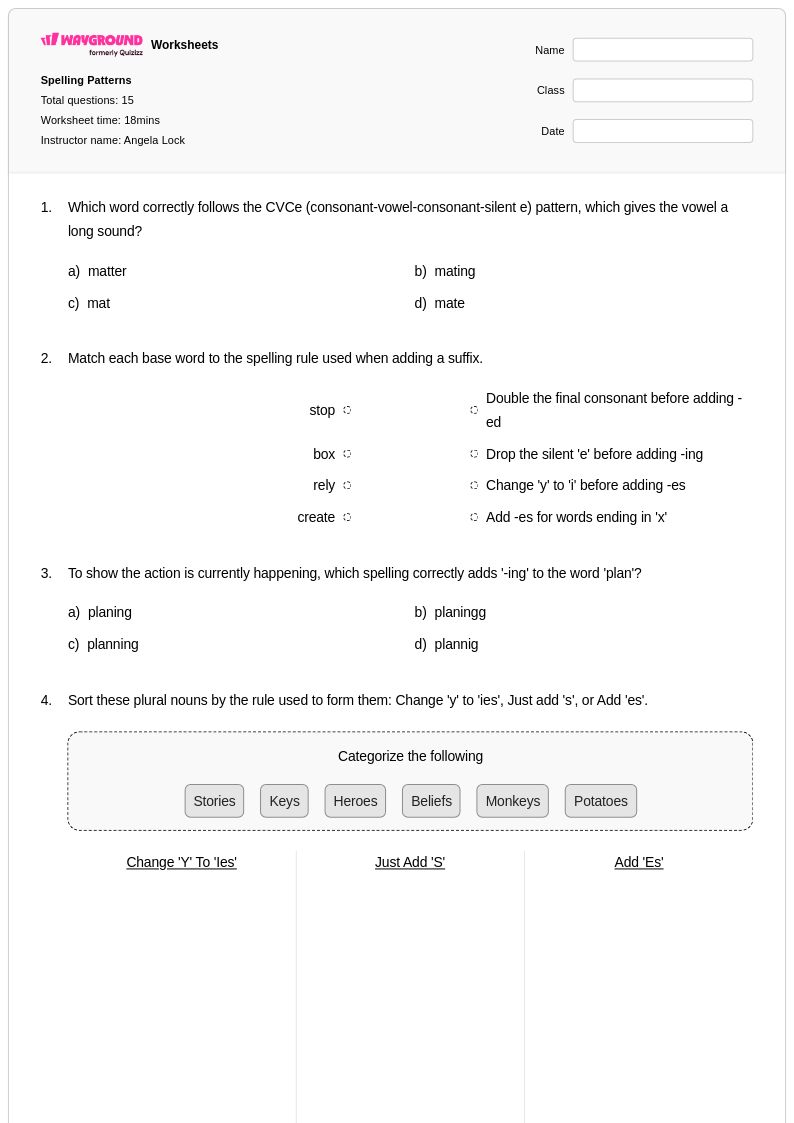
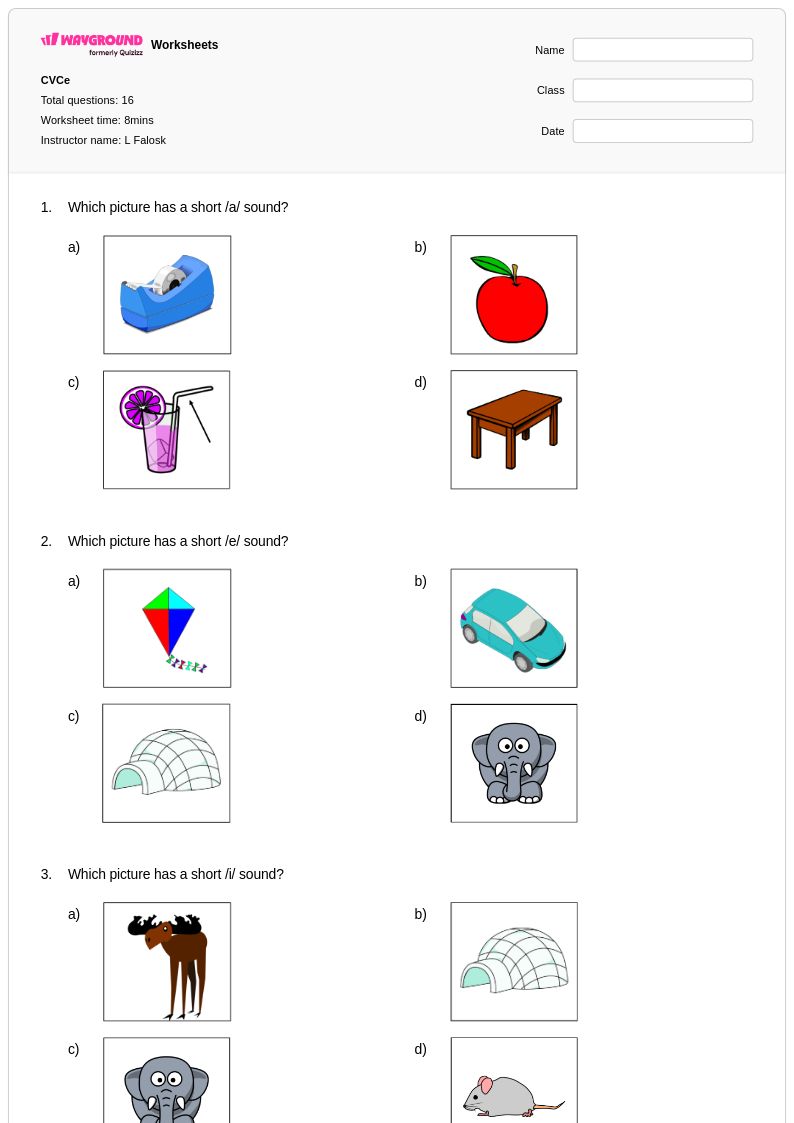
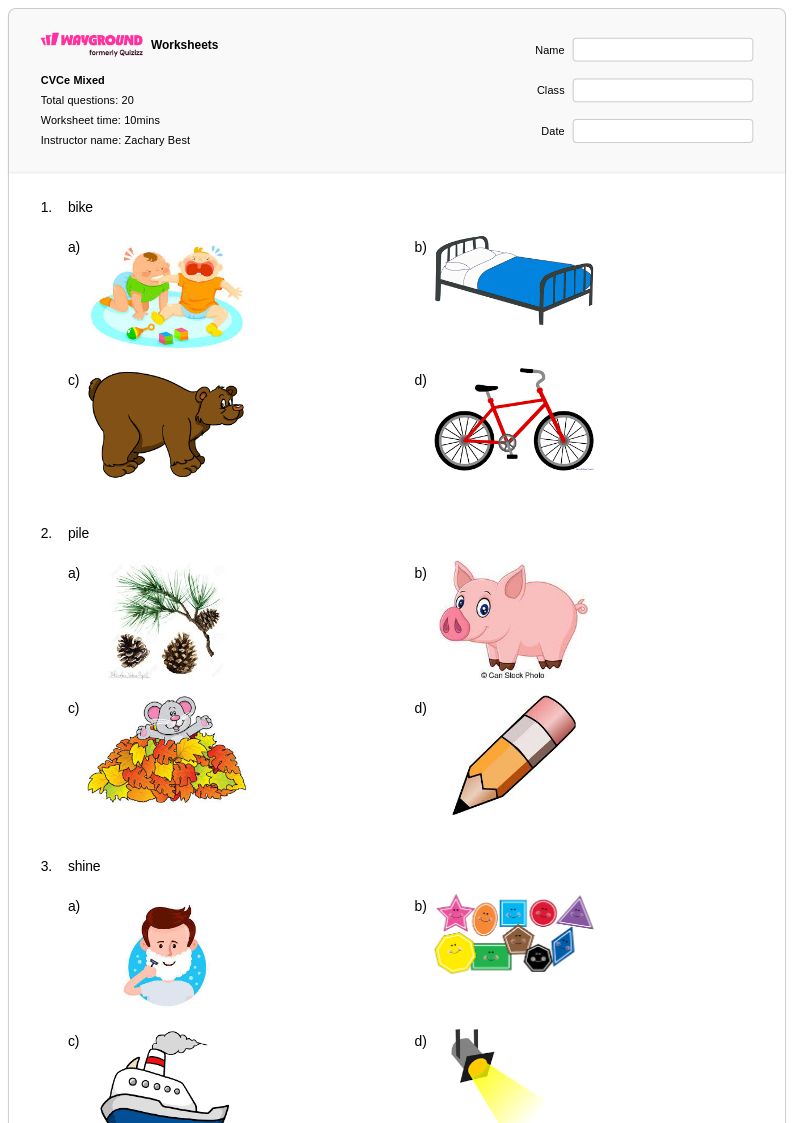
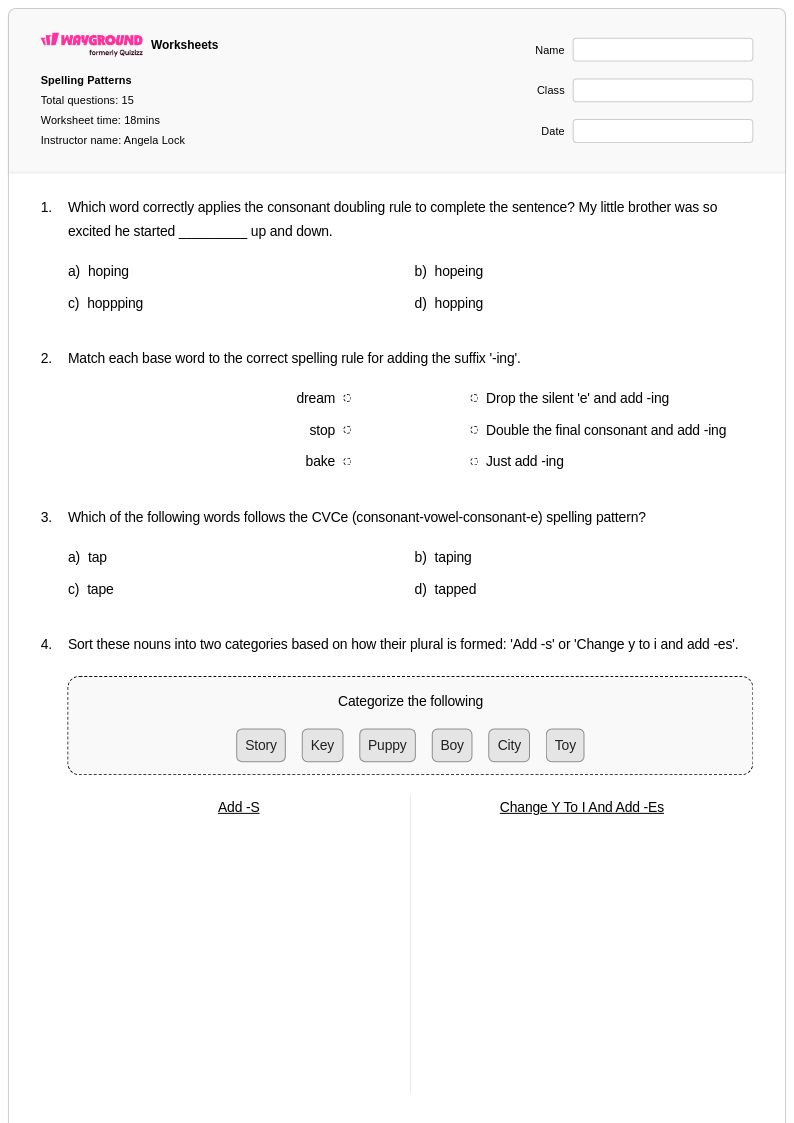
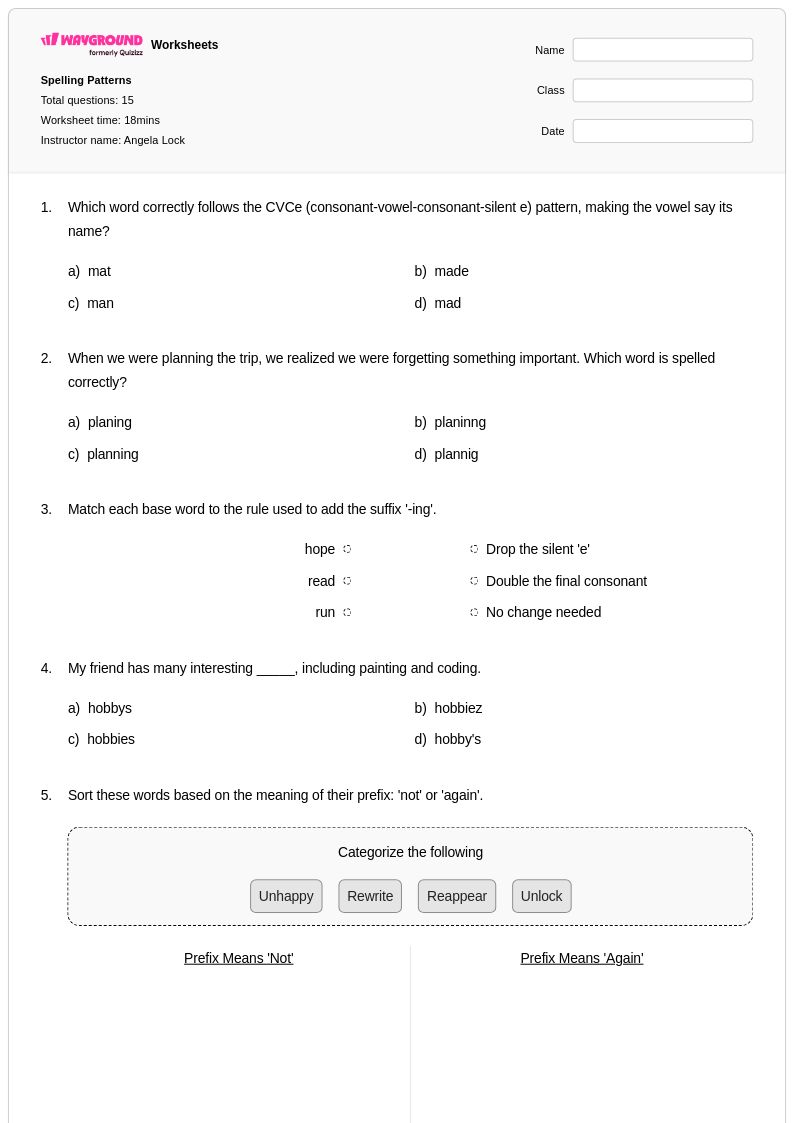
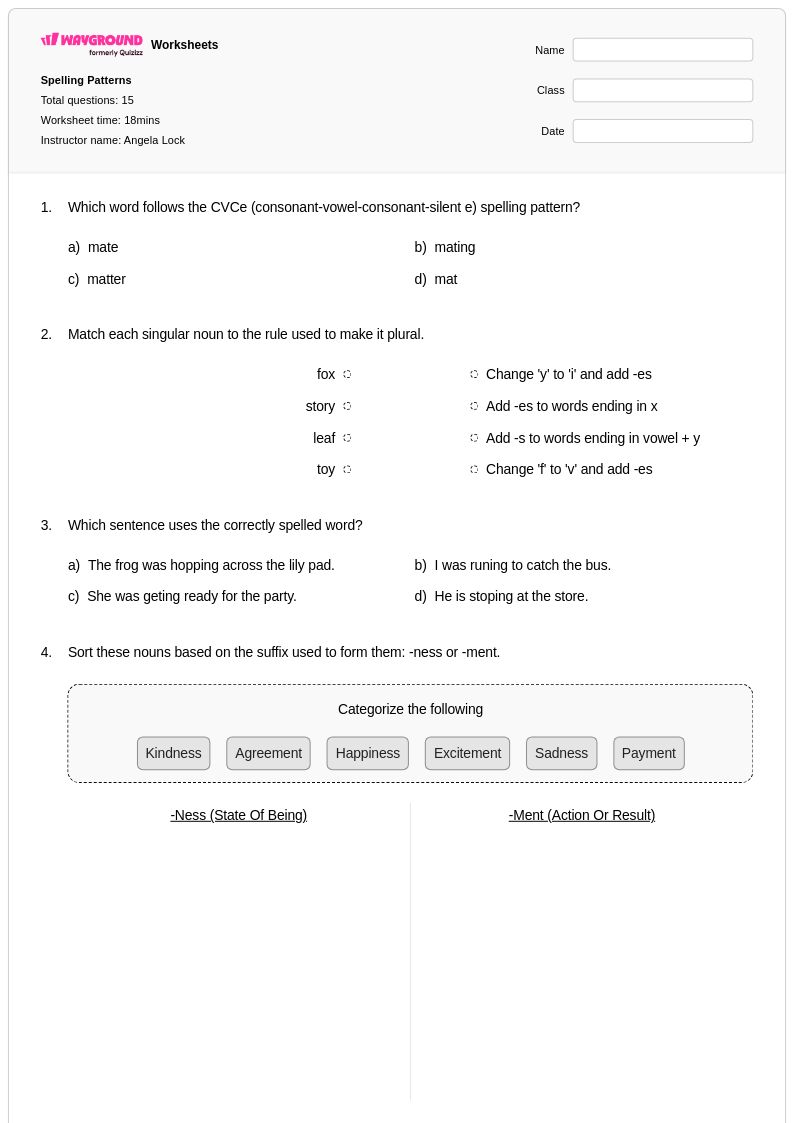
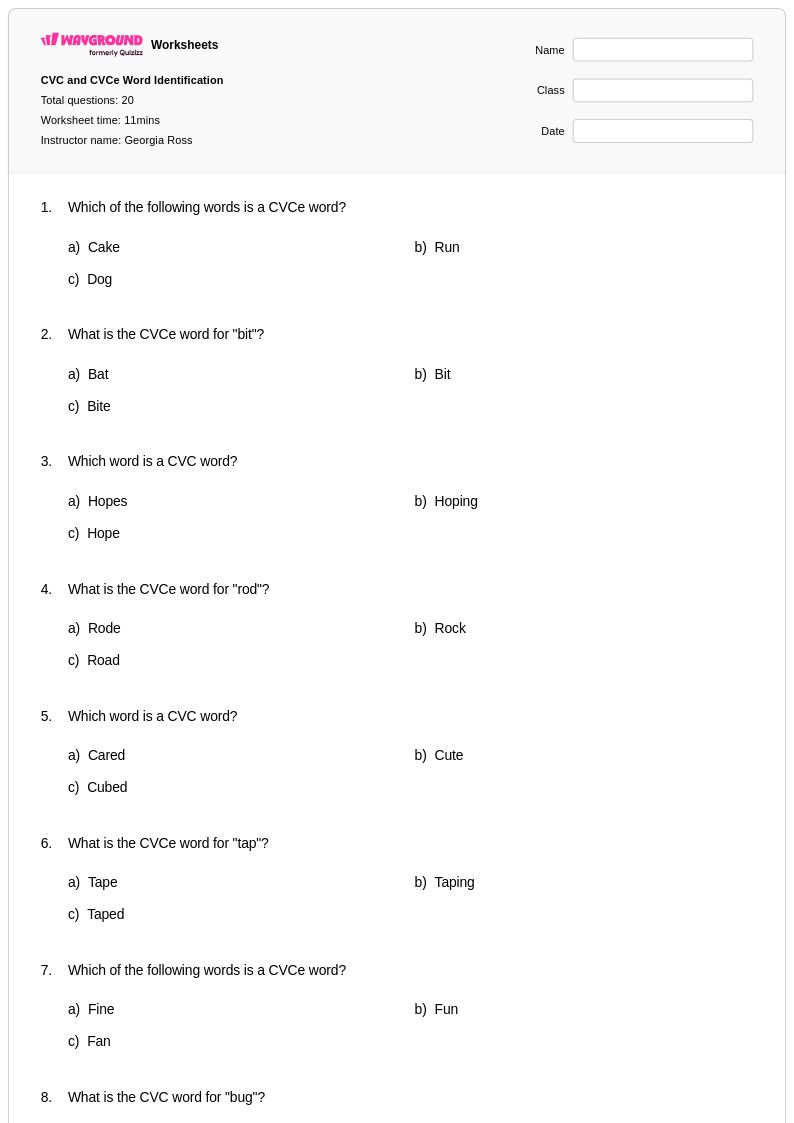
Master CVCE patterns with Wayground's comprehensive collection of free worksheets, printables, and practice problems that help students recognize consonant-vowel-consonant-e word structures through engaging PDF exercises with complete answer keys.
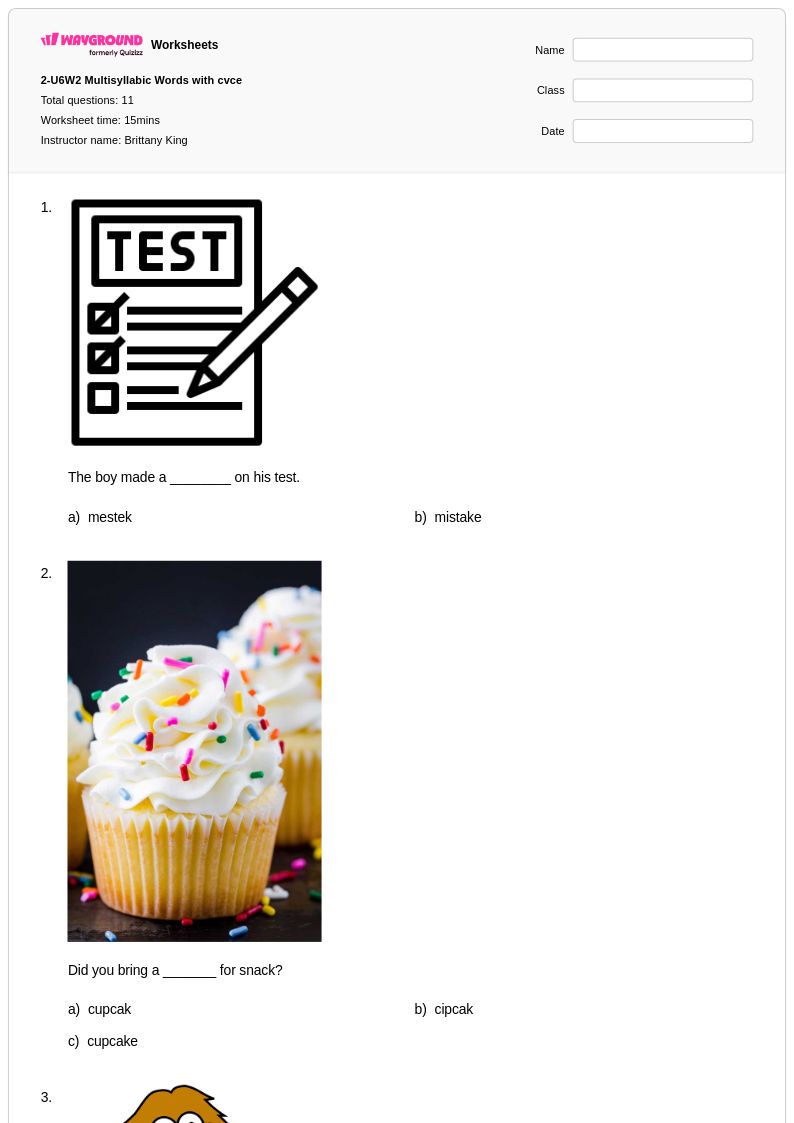
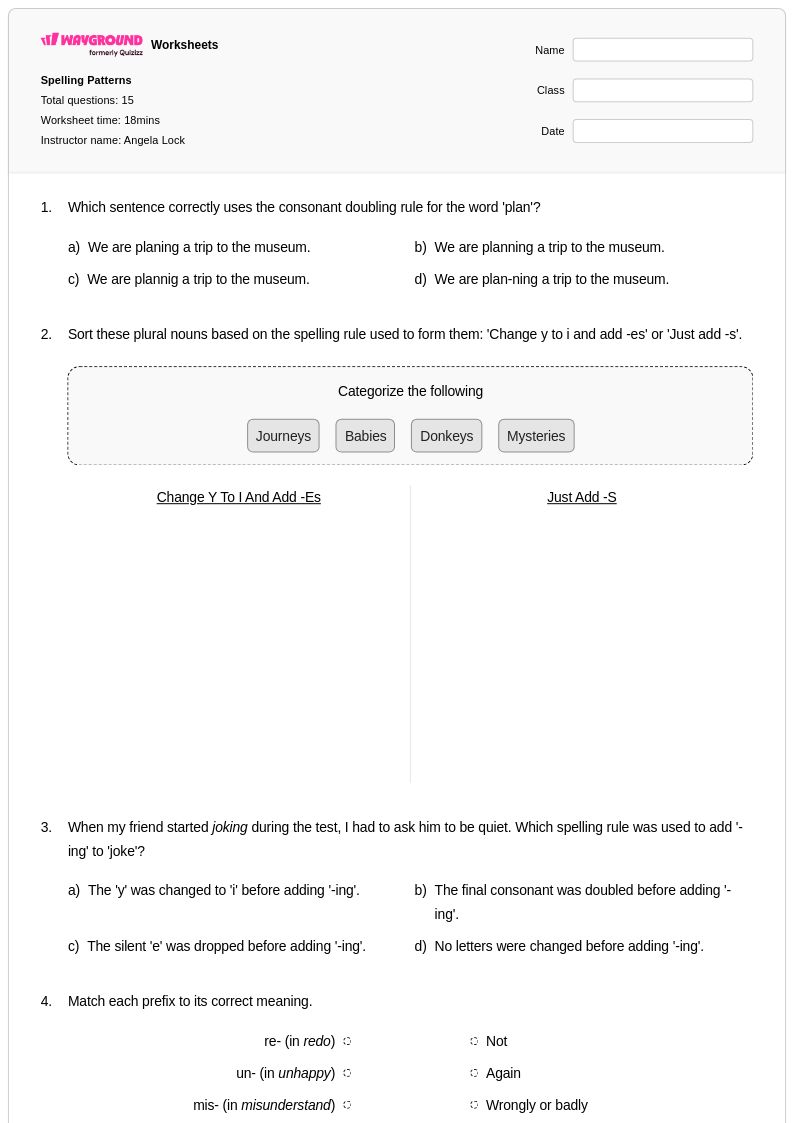
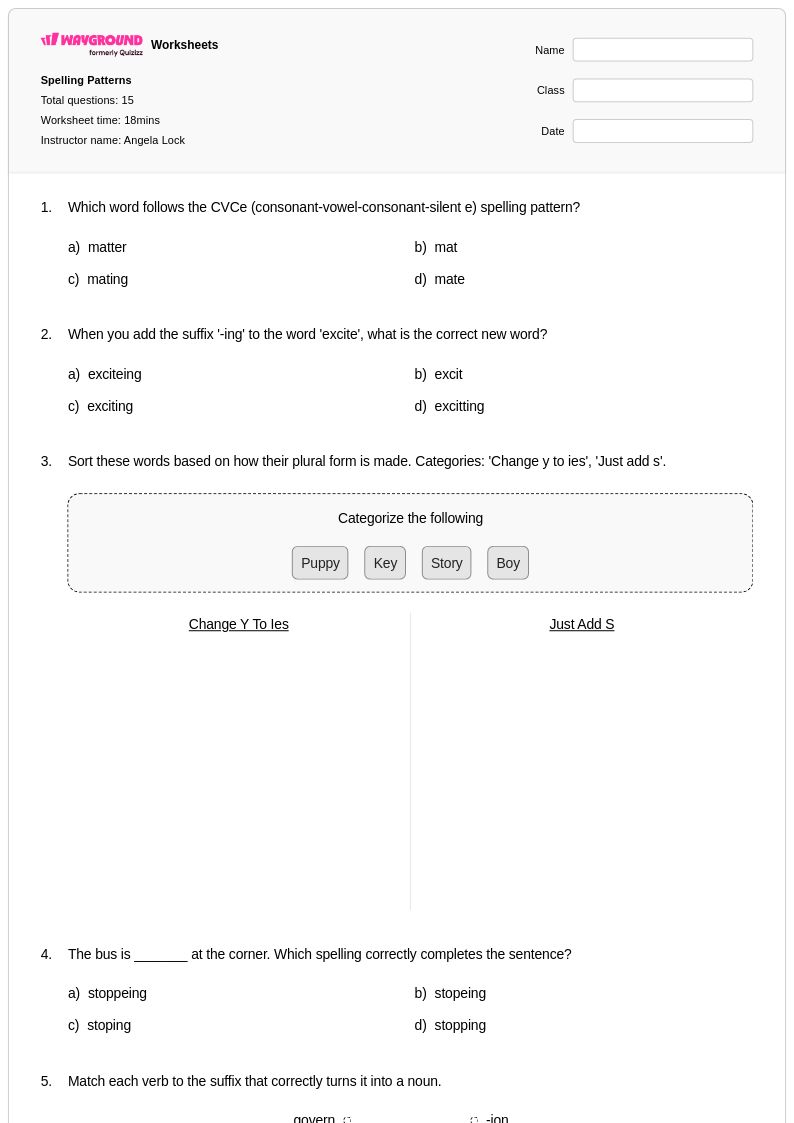
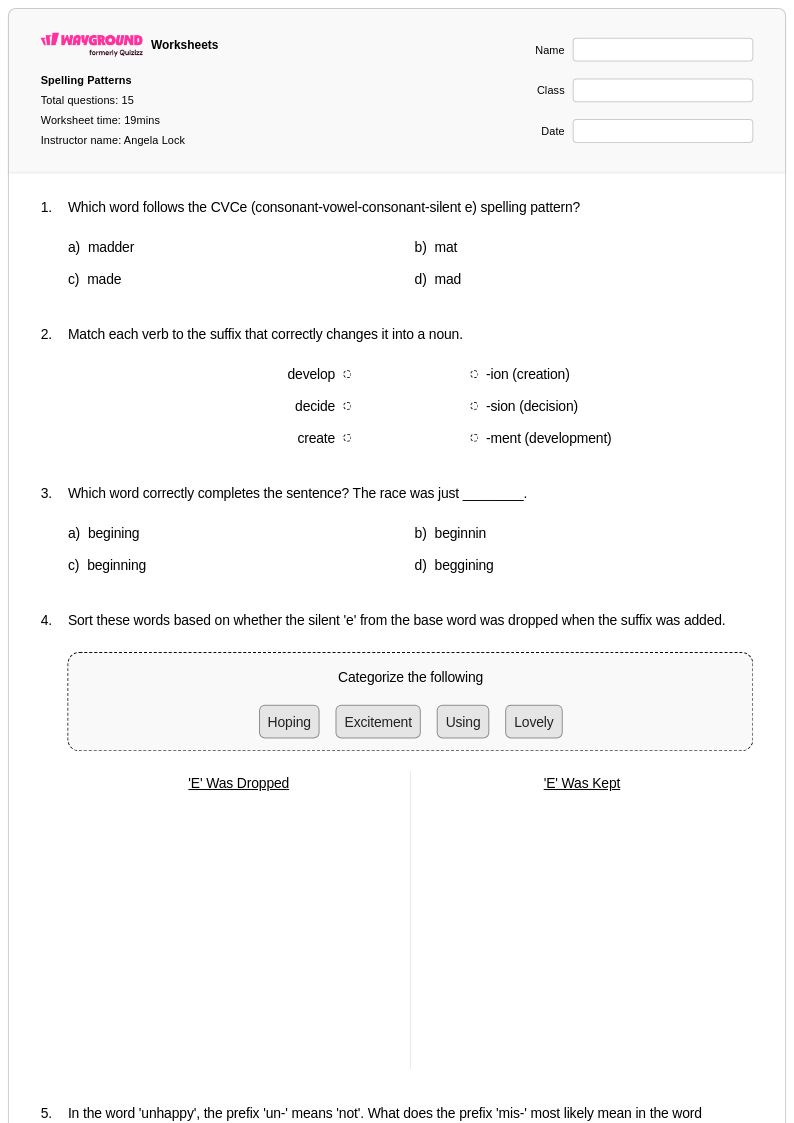
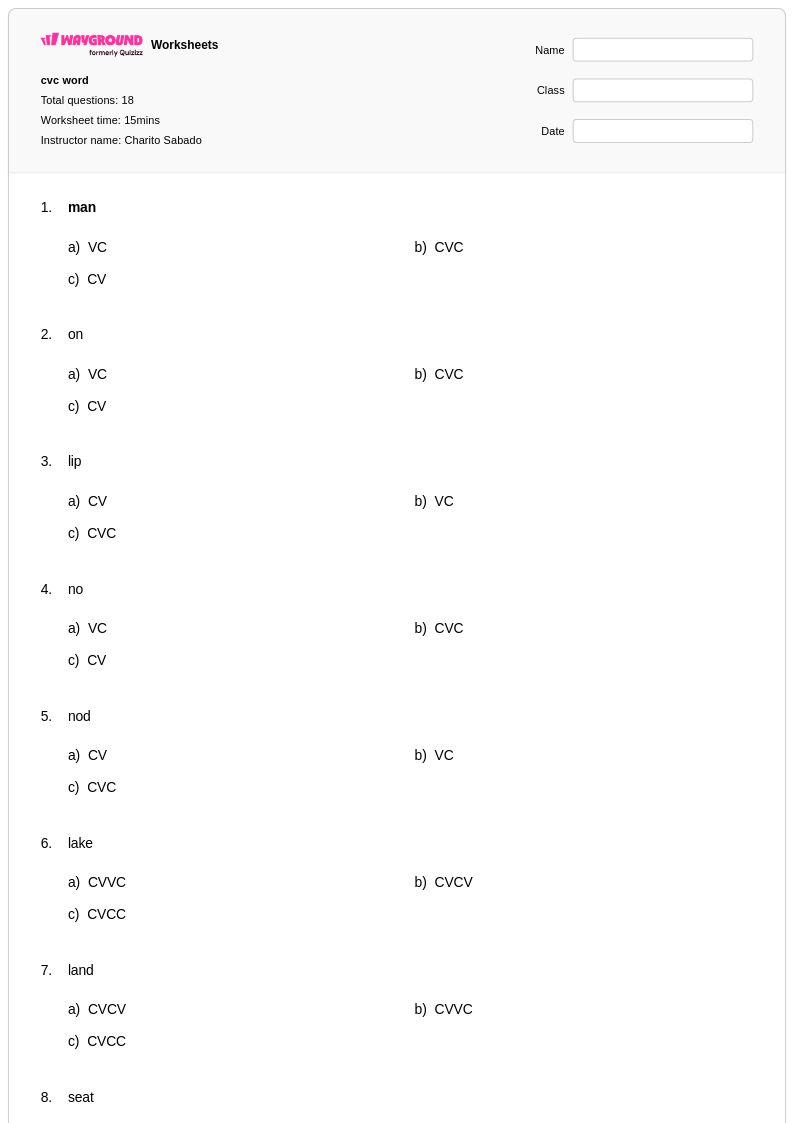
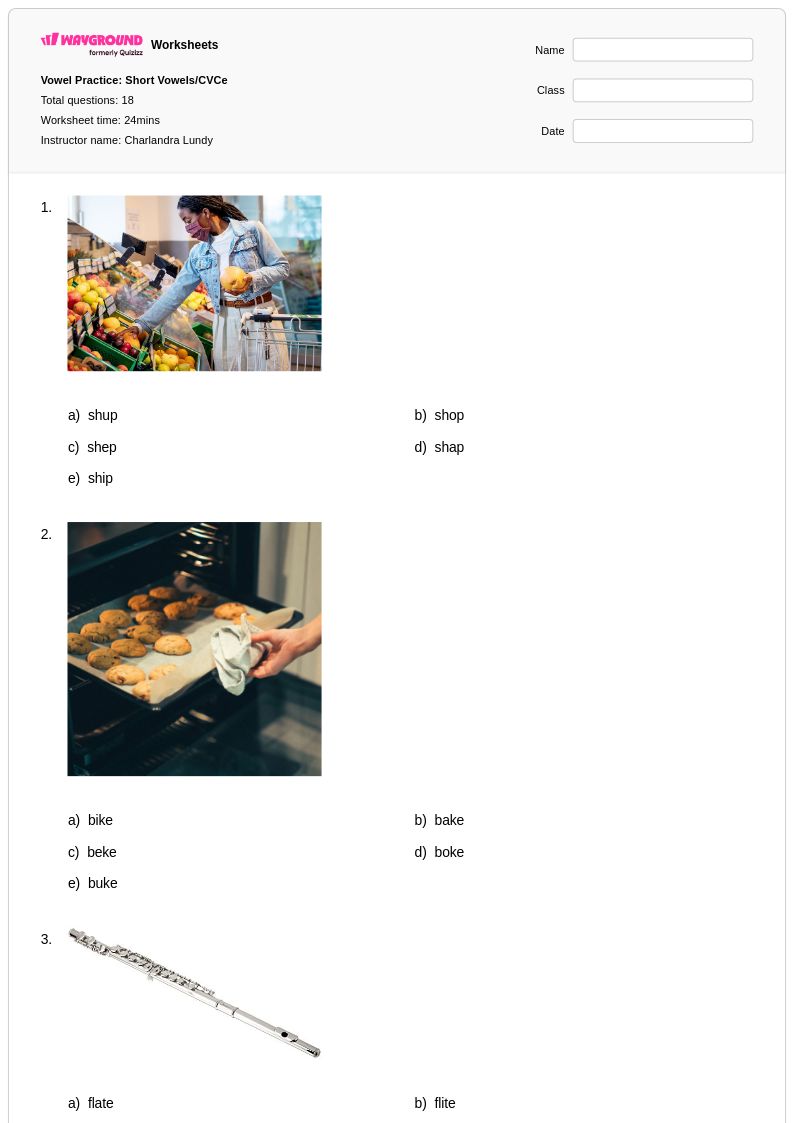
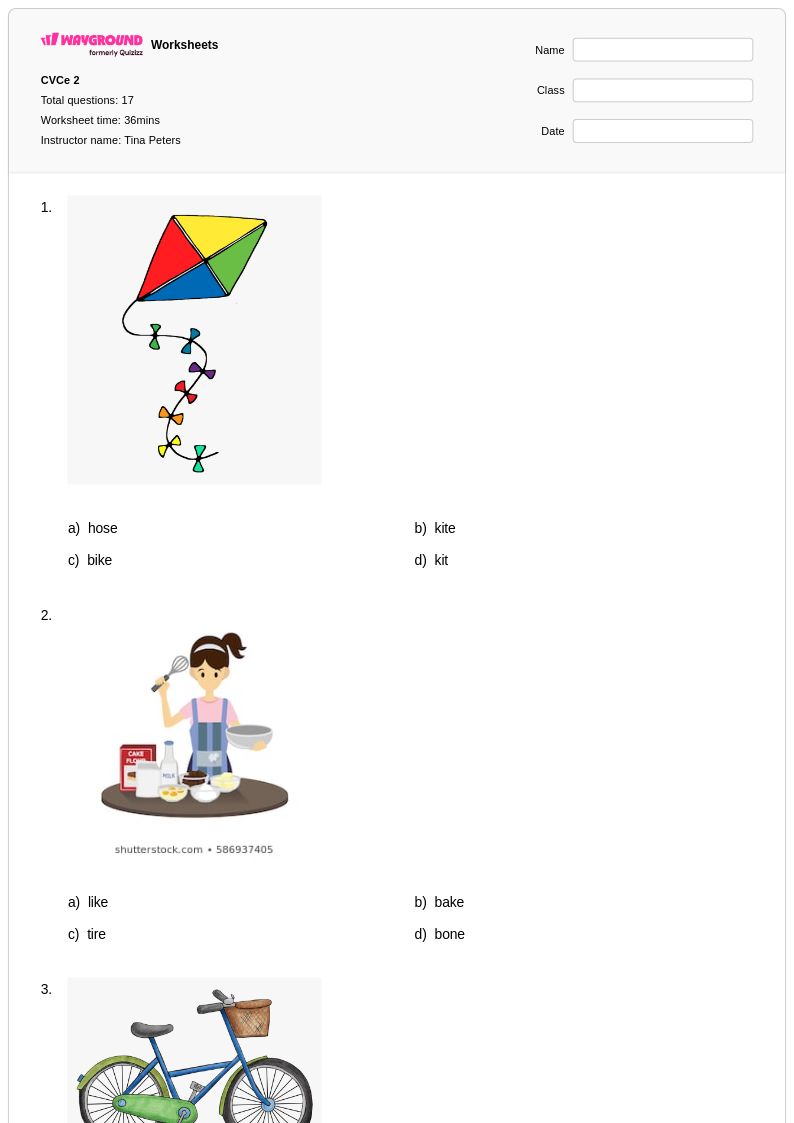
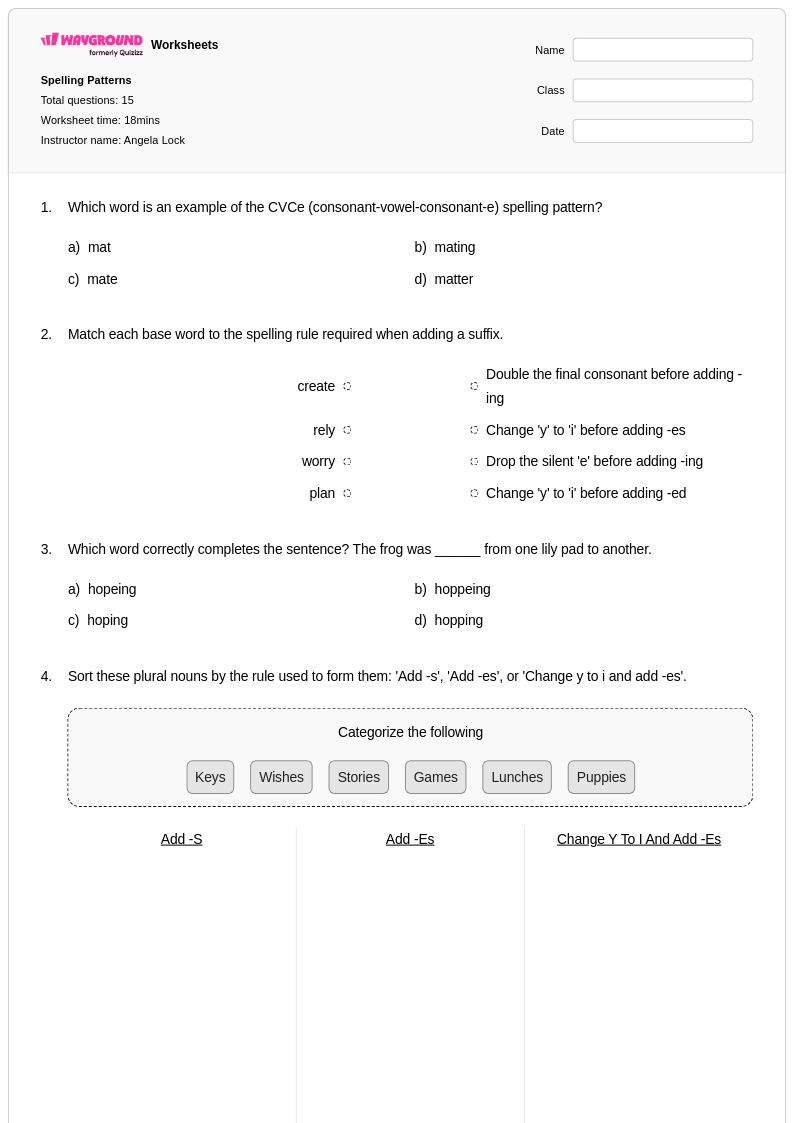
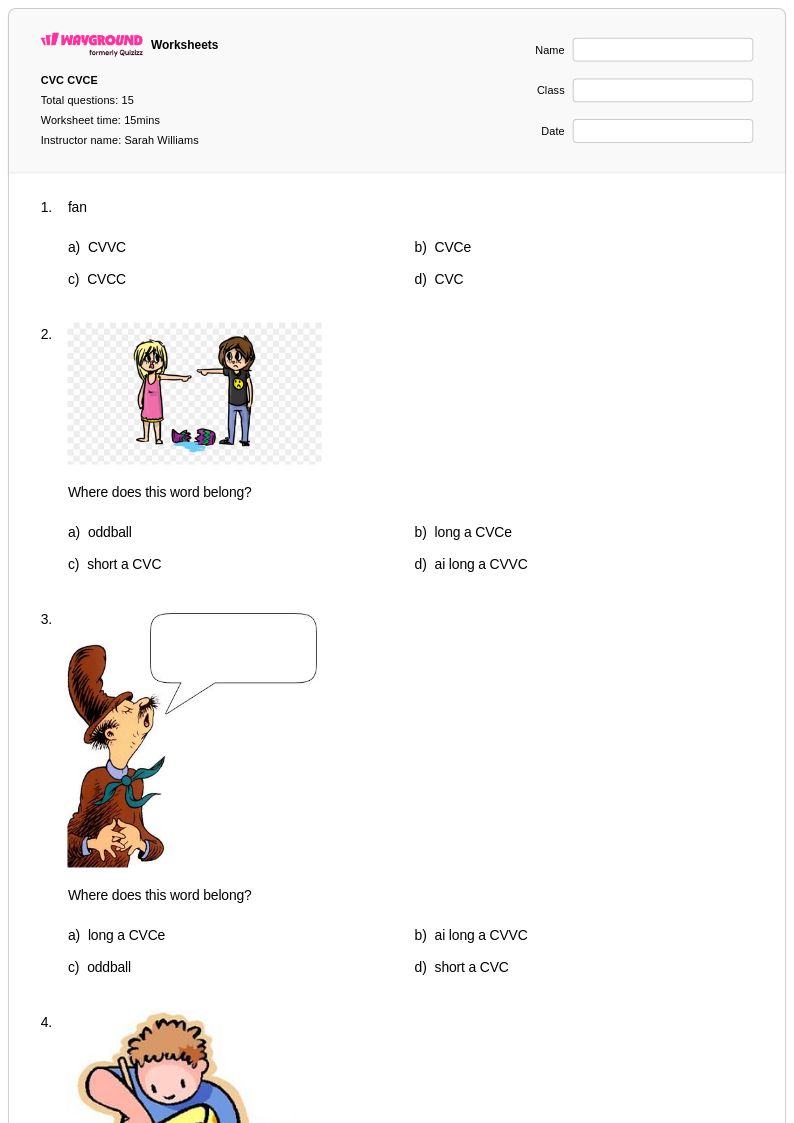
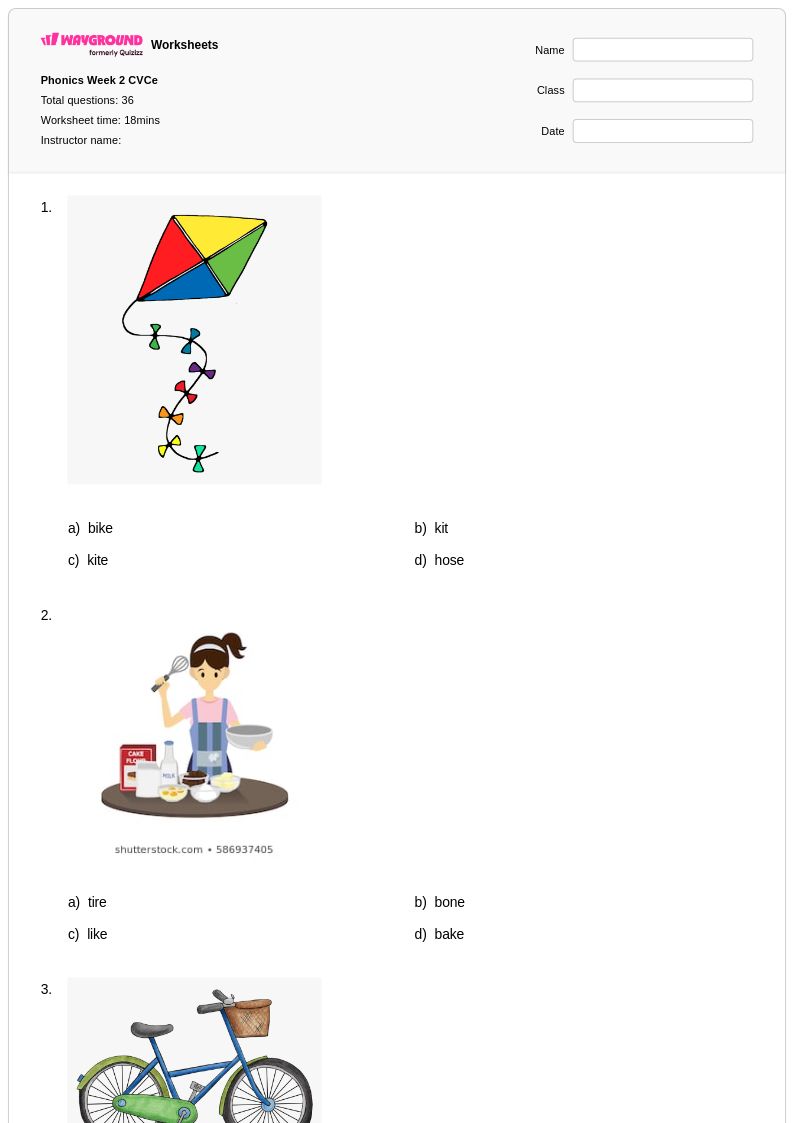
CVCE pattern worksheets available through Wayground (formerly Quizizz) provide comprehensive practice opportunities for students learning consonant-vowel-consonant-e word structures, one of the most fundamental phonics patterns in English reading instruction. These expertly designed resources strengthen essential decoding skills by helping students recognize how the silent 'e' at the end of words changes the vowel sound from short to long, transforming words like 'can' to 'cane' or 'hop' to 'hope'. The collection includes diverse practice problems that reinforce pattern recognition, reading fluency, and spelling accuracy through engaging activities such as word sorts, fill-in-the-blank exercises, and sentence completion tasks. Teachers can access these materials as free printables with comprehensive answer keys, making assessment and self-checking straightforward while supporting independent learning and targeted phonics instruction.
Wayground (formerly Quizizz) empowers educators with millions of teacher-created CVCE pattern resources that streamline lesson planning and differentiate instruction to meet diverse learning needs. The platform's robust search and filtering capabilities allow teachers to quickly locate materials aligned with specific reading standards and grade-level expectations, while customization tools enable modification of existing worksheets to match individual student requirements. These versatile resources are available in both printable PDF formats for traditional classroom use and digital formats for interactive learning environments, supporting seamless integration into remediation programs, enrichment activities, and daily skill practice routines. The extensive collection ensures teachers have access to varied approaches for reinforcing CVCE patterns, from basic recognition exercises for struggling readers to advanced application tasks that challenge accelerated learners.
FAQs
How do I teach CVCE patterns to early readers?
Start by ensuring students have a solid grasp of short vowel sounds before introducing the silent 'e' rule. Present minimal pairs side by side, such as 'cap' and 'cape' or 'pin' and 'pine', so students can hear and see exactly how the final 'e' changes the medial vowel from short to long. Using word-building activities where students physically add and remove the 'e' helps make the pattern concrete before moving to independent reading tasks.
What exercises help students practice CVCE word patterns?
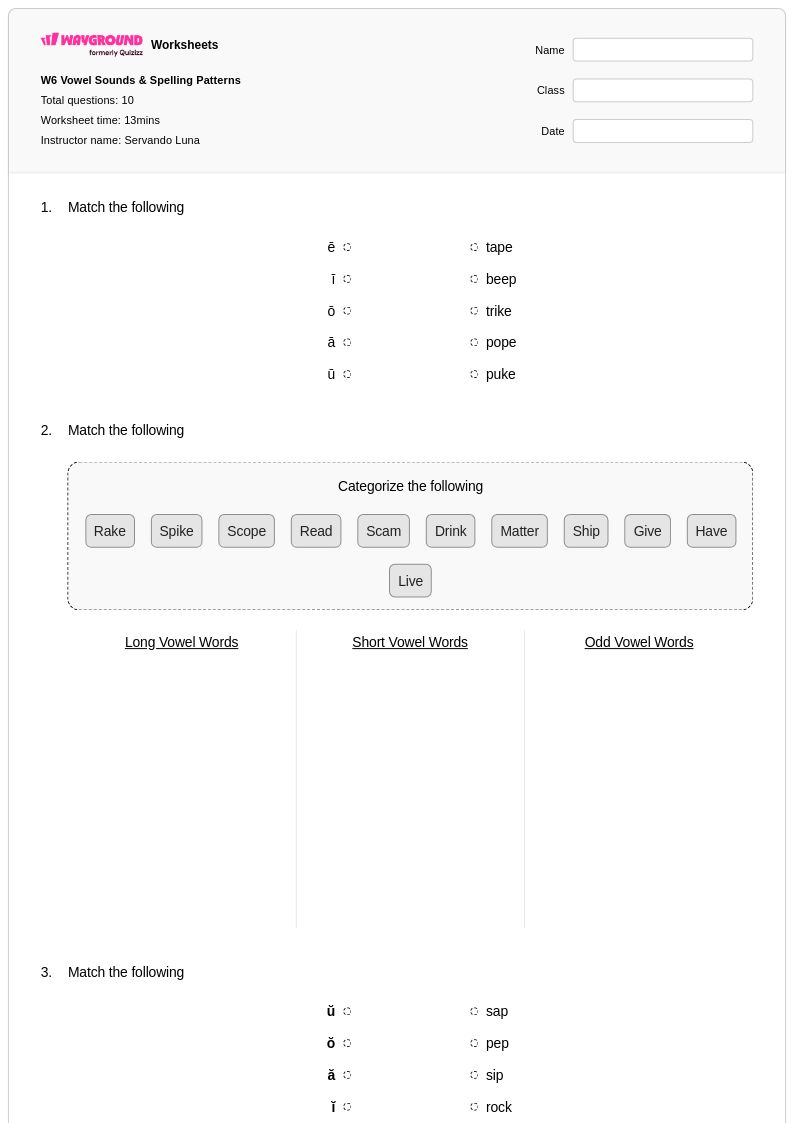
Word sorts are particularly effective because they require students to categorize words by vowel sound, reinforcing pattern recognition without rote memorization. Fill-in-the-blank and sentence completion tasks push students to apply the pattern in context rather than in isolation, which builds reading fluency and spelling accuracy simultaneously. Combining these exercise types across multiple practice sessions gives students repeated, varied exposure to the same core structure.
What mistakes do students commonly make with CVCE patterns?
The most frequent error is treating the silent 'e' as a separate syllable, leading students to read 'cape' as two syllables instead of one. Students also frequently overgeneralize the rule, applying it to words where a final 'e' does not trigger a long vowel, such as 'give' or 'have'. Targeted practice with both true CVCE words and exception words helps students build accurate, flexible decoding rather than mechanical rule-following.
How can I differentiate CVCE pattern instruction for struggling readers?
For struggling readers, reduce the number of words in a task and pair visual cues, such as color-coding the vowel and the silent 'e', to make the relationship explicit. On Wayground, teachers can enable the Read Aloud accommodation so students can hear words modeled correctly, and the reduced answer choices setting lowers cognitive load during practice activities. Adjustable font sizes through Wayground's reading mode can also reduce visual fatigue for students who find dense word lists overwhelming.
How do I use CVCE pattern worksheets from Wayground in my classroom?
Wayground's CVCE pattern worksheets are available as free printable PDFs for use in traditional classroom settings and in digital formats for technology-integrated or remote learning environments. Teachers can also host the worksheets as a quiz directly on Wayground, enabling real-time tracking of student responses. Complete answer keys are included with every worksheet, making self-checking, small-group review, and independent practice straightforward to manage.
At what reading level should students begin working on CVCE patterns?
CVCE patterns are typically introduced once students have mastered short vowel CVC words and basic consonant blends, which generally corresponds to late kindergarten or early first grade in a structured phonics sequence. Students who are still developing phonemic awareness or who struggle to decode simple CVC words reliably should consolidate those skills before CVCE instruction begins. For older struggling readers, CVCE practice remains appropriate and can be delivered through age-neutral, content-relevant materials.