Free Printable Daily Routine Worksheets for Kindergarten
Free kindergarten daily routine worksheets and printables help young learners practice writing about their everyday activities through engaging genre writing exercises with answer keys included.
Explore printable Daily Routine worksheets for Kindergarten
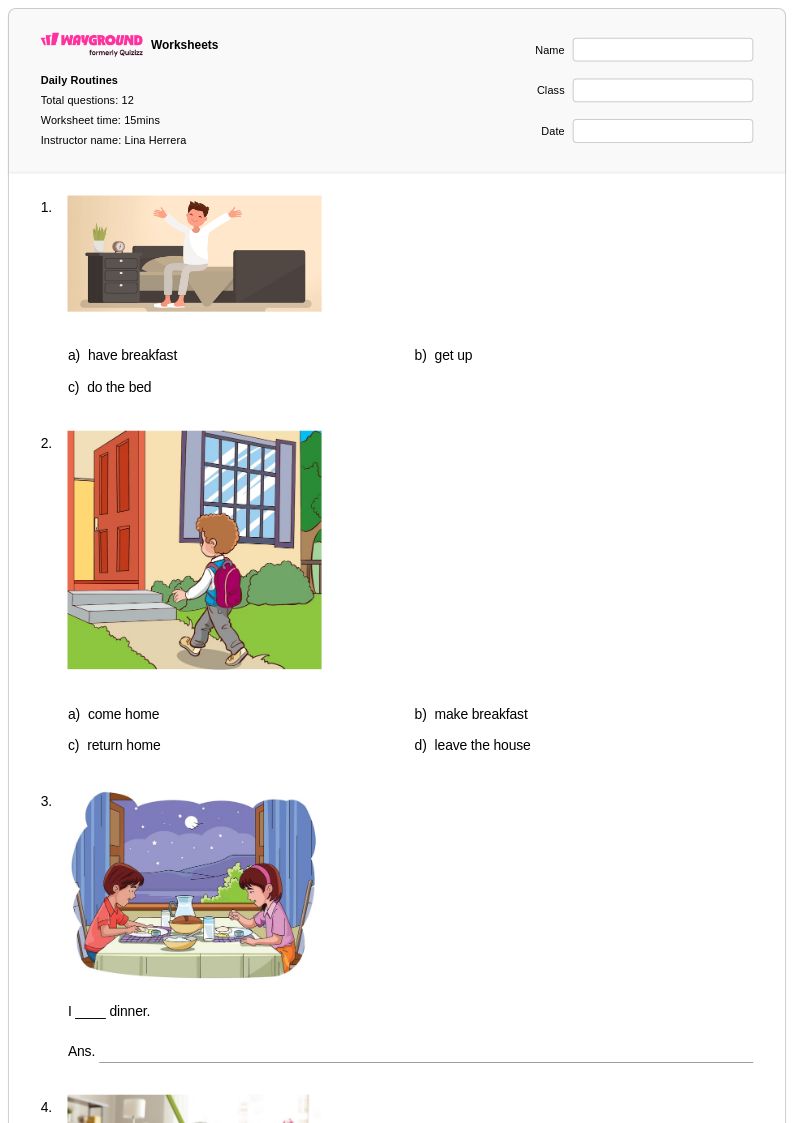
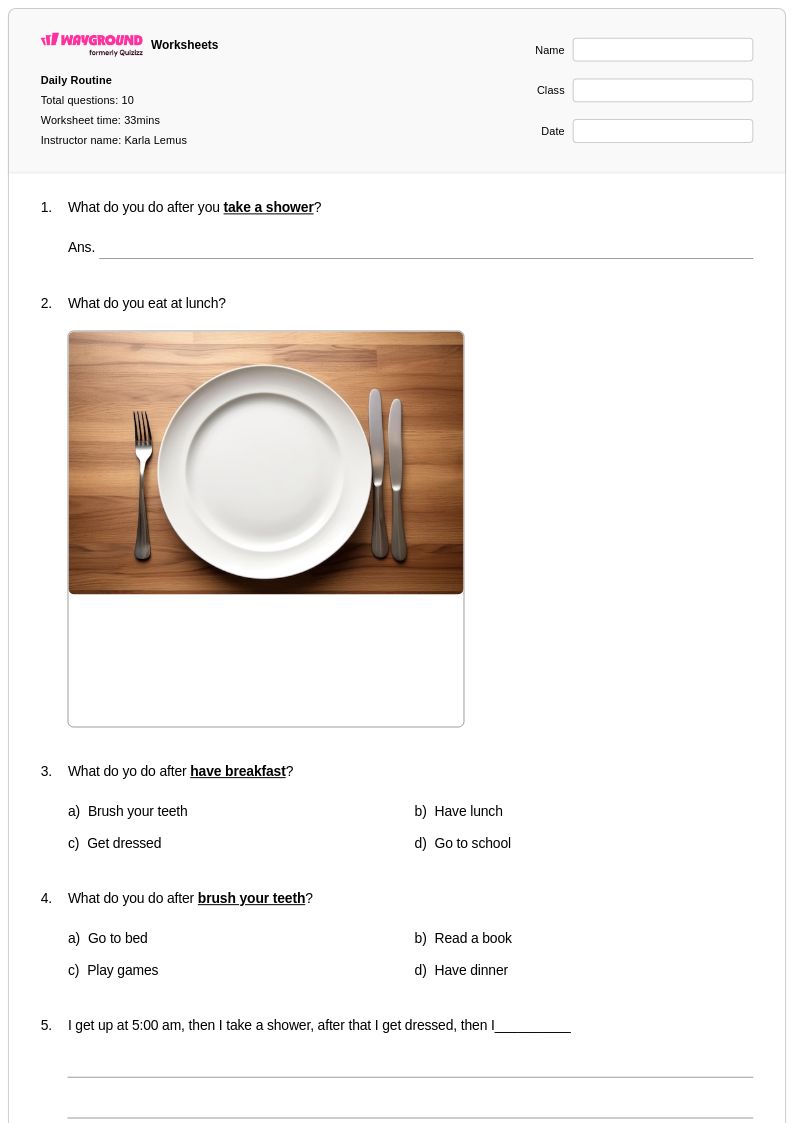
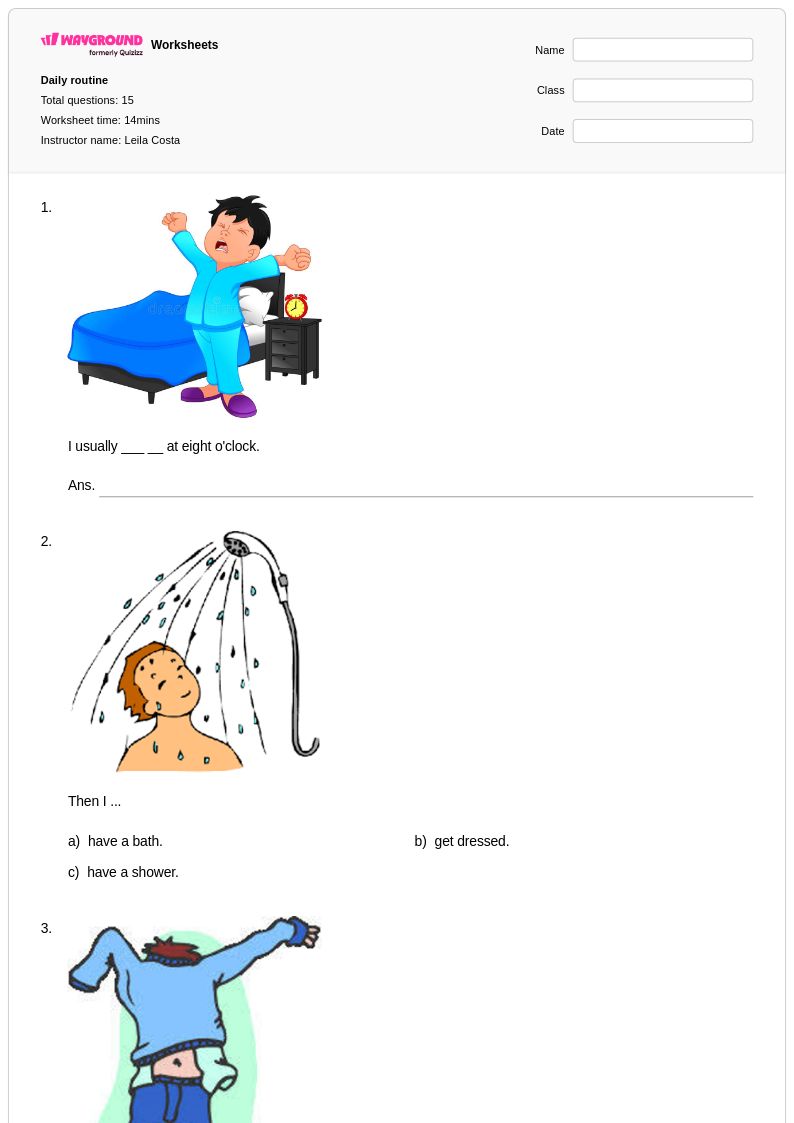
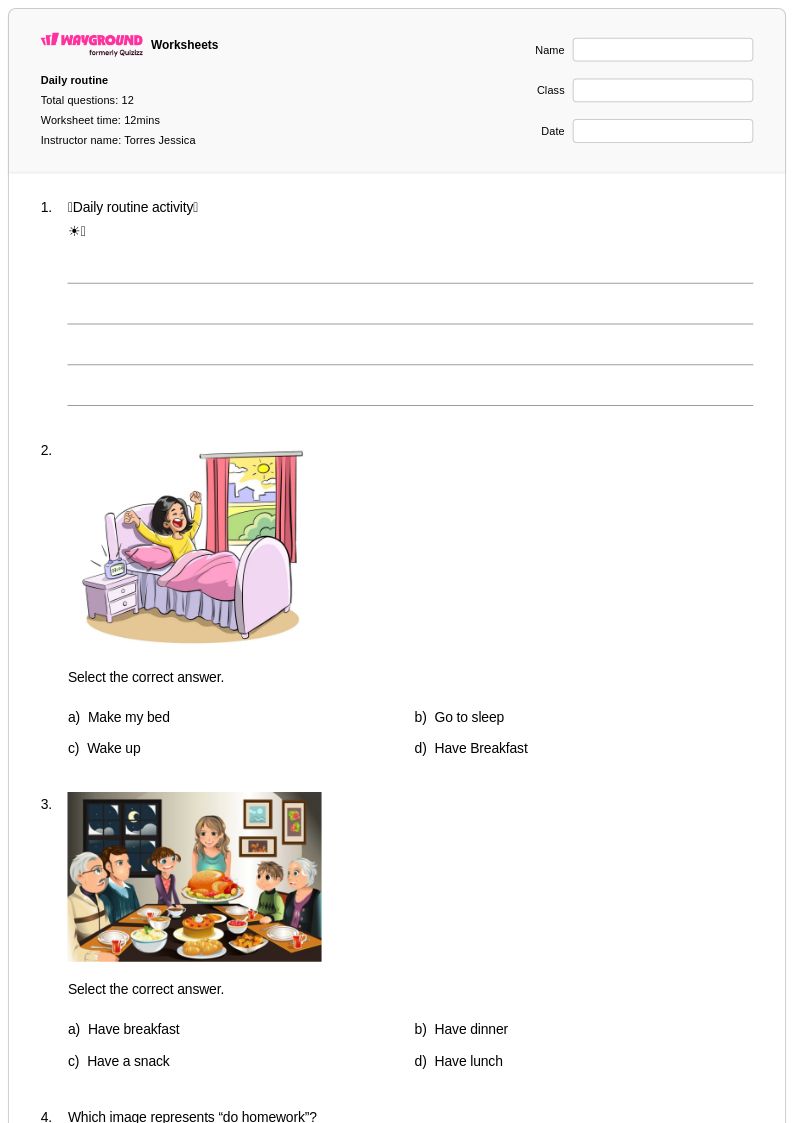
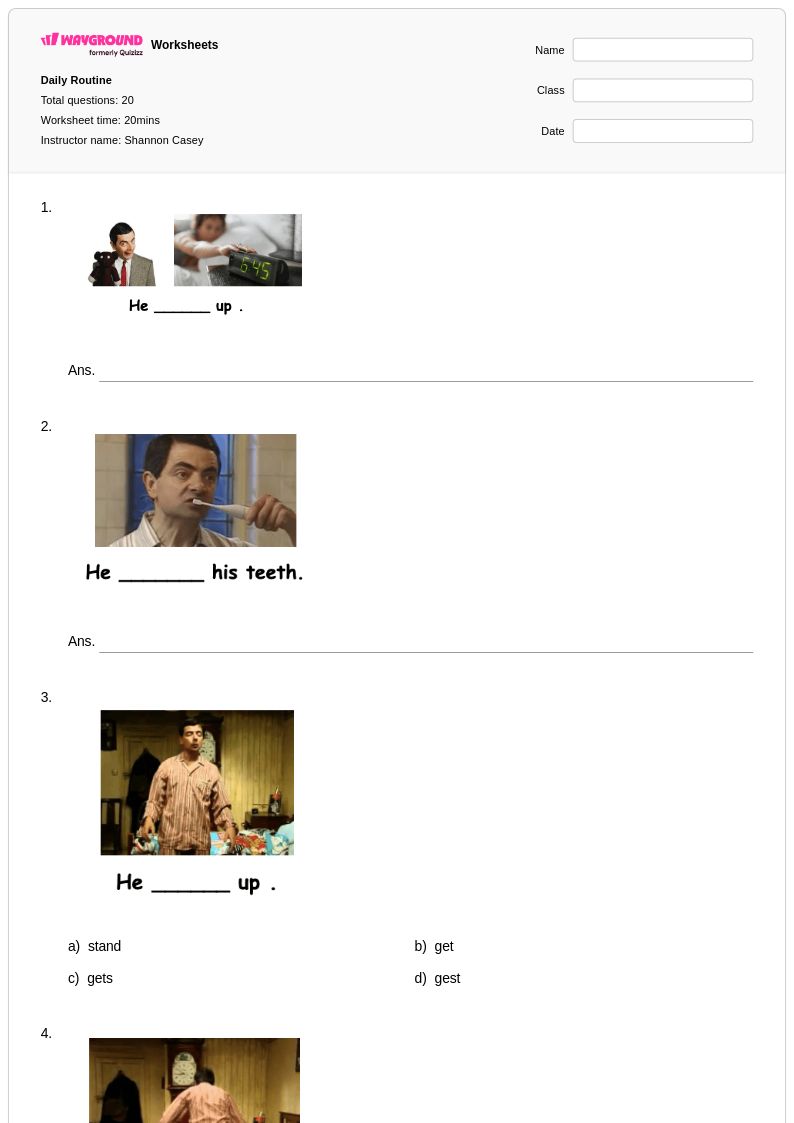
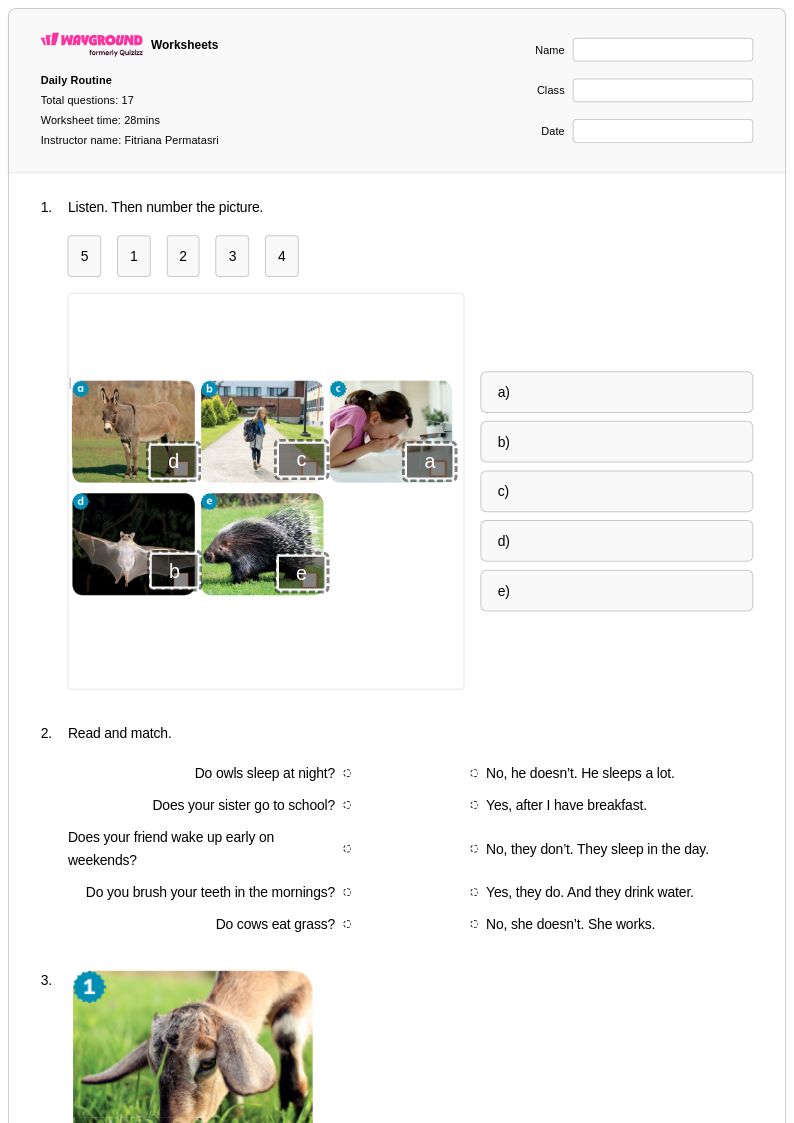
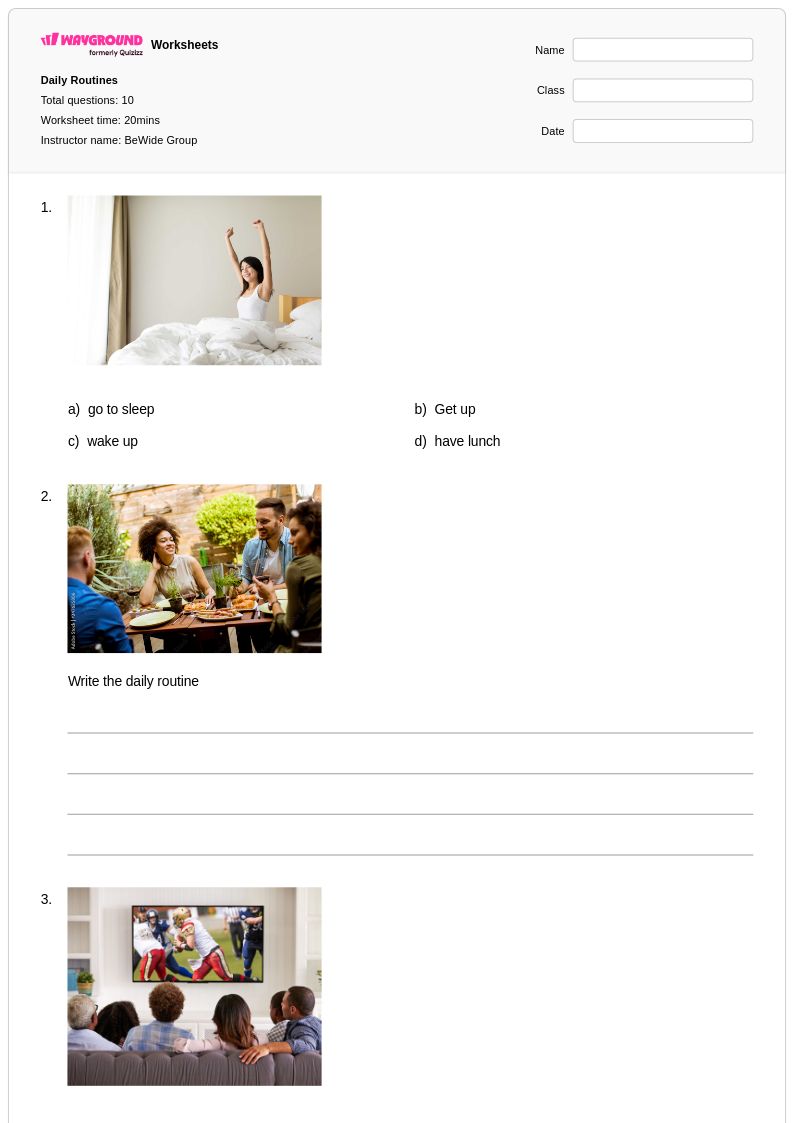
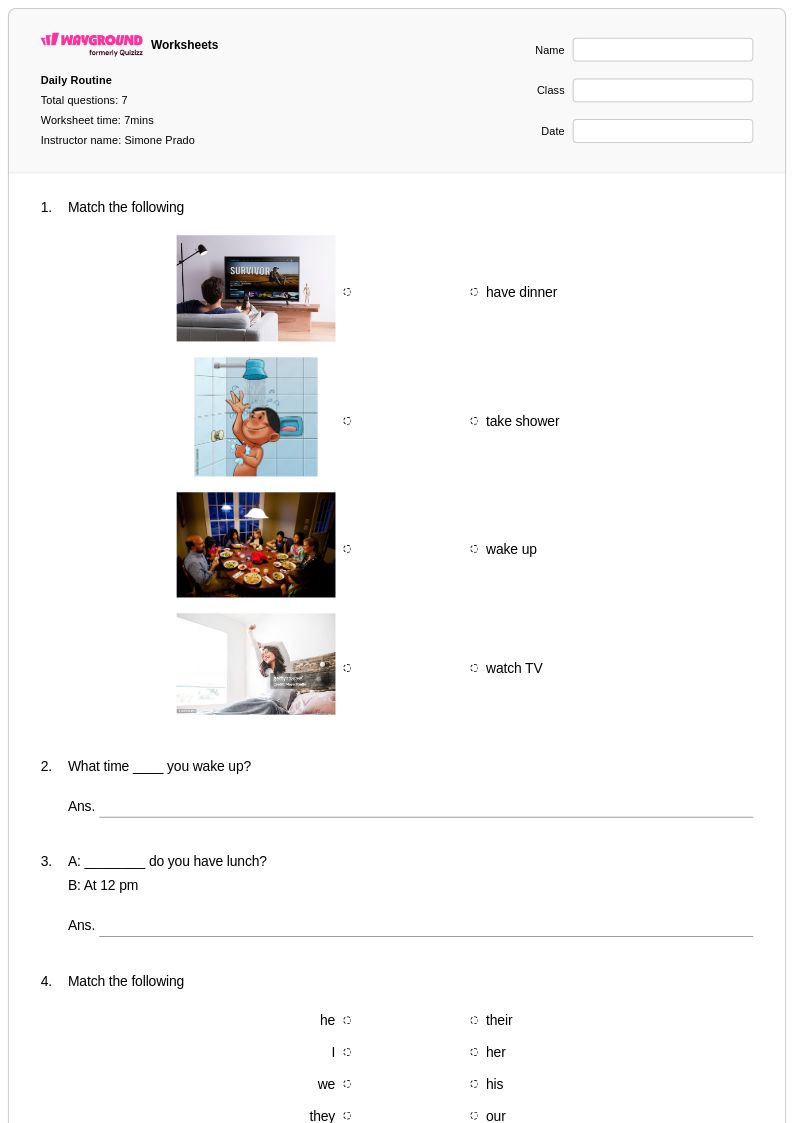
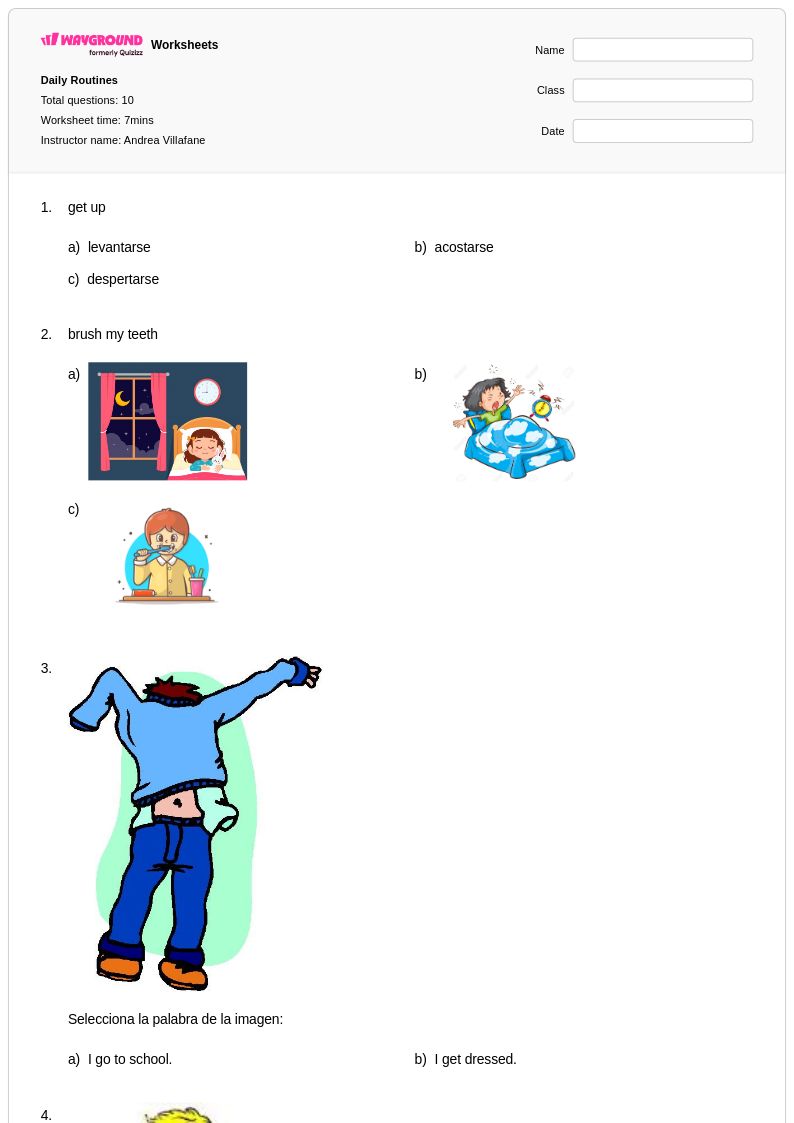
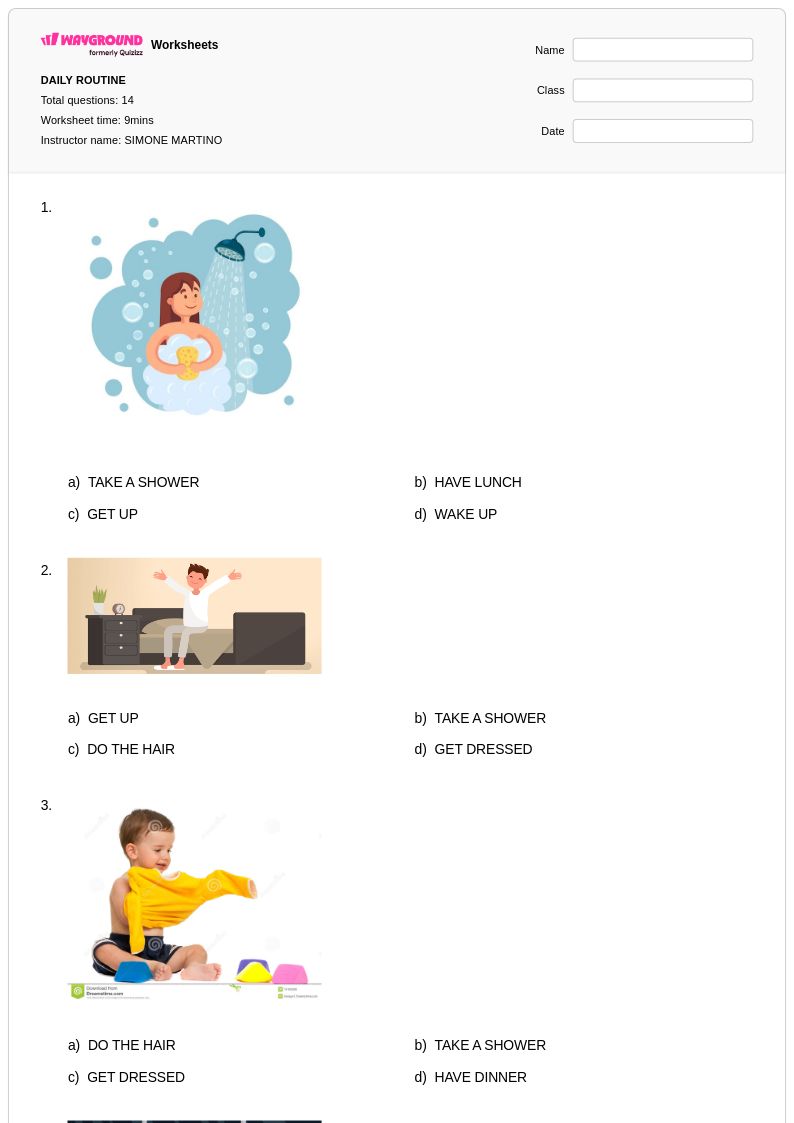
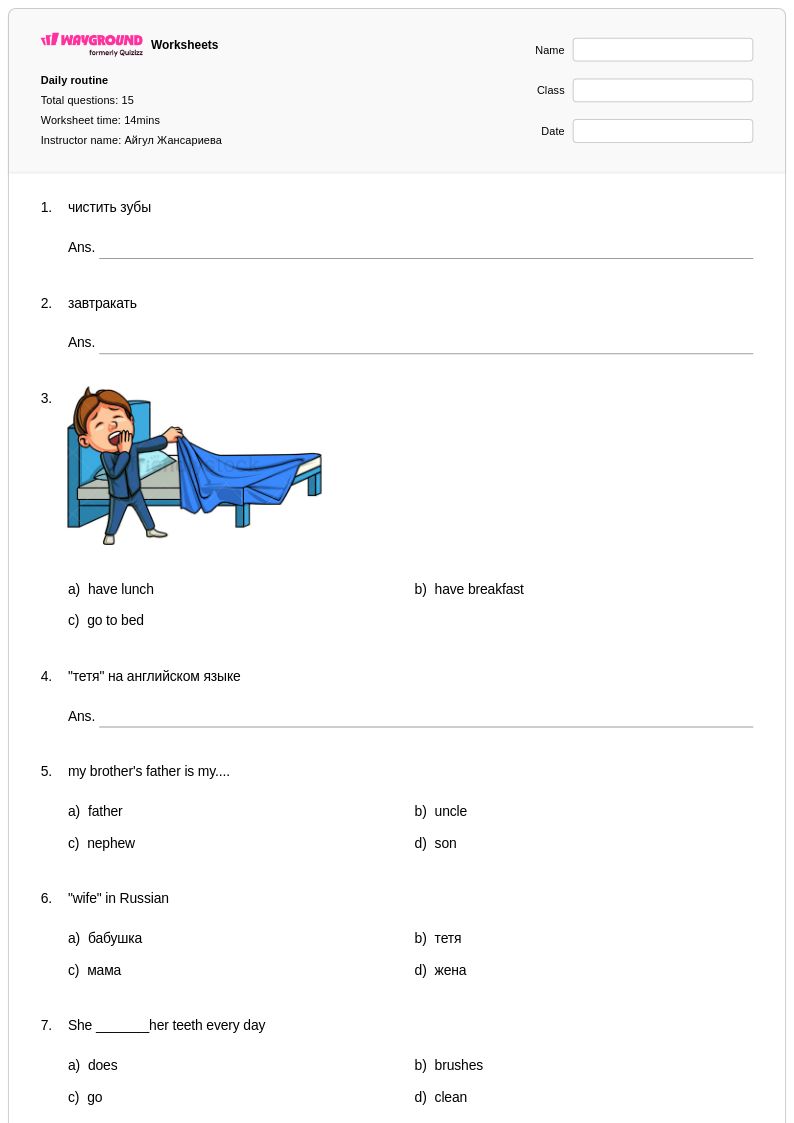
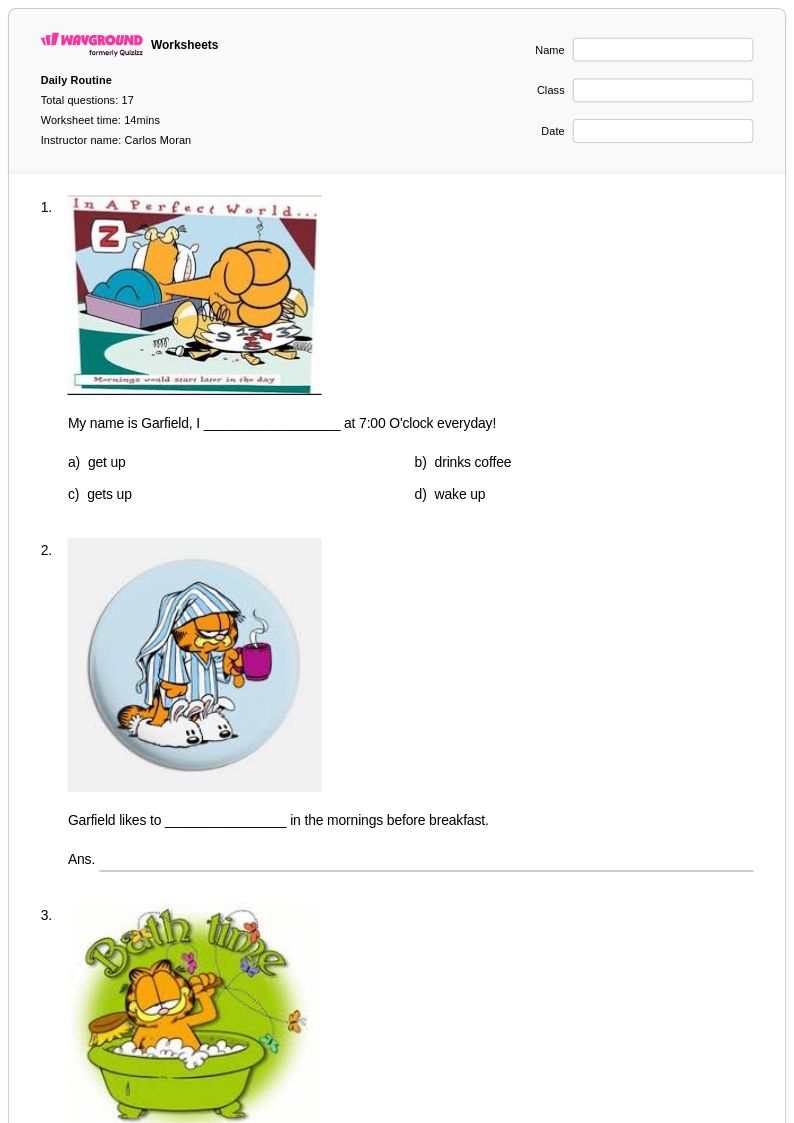
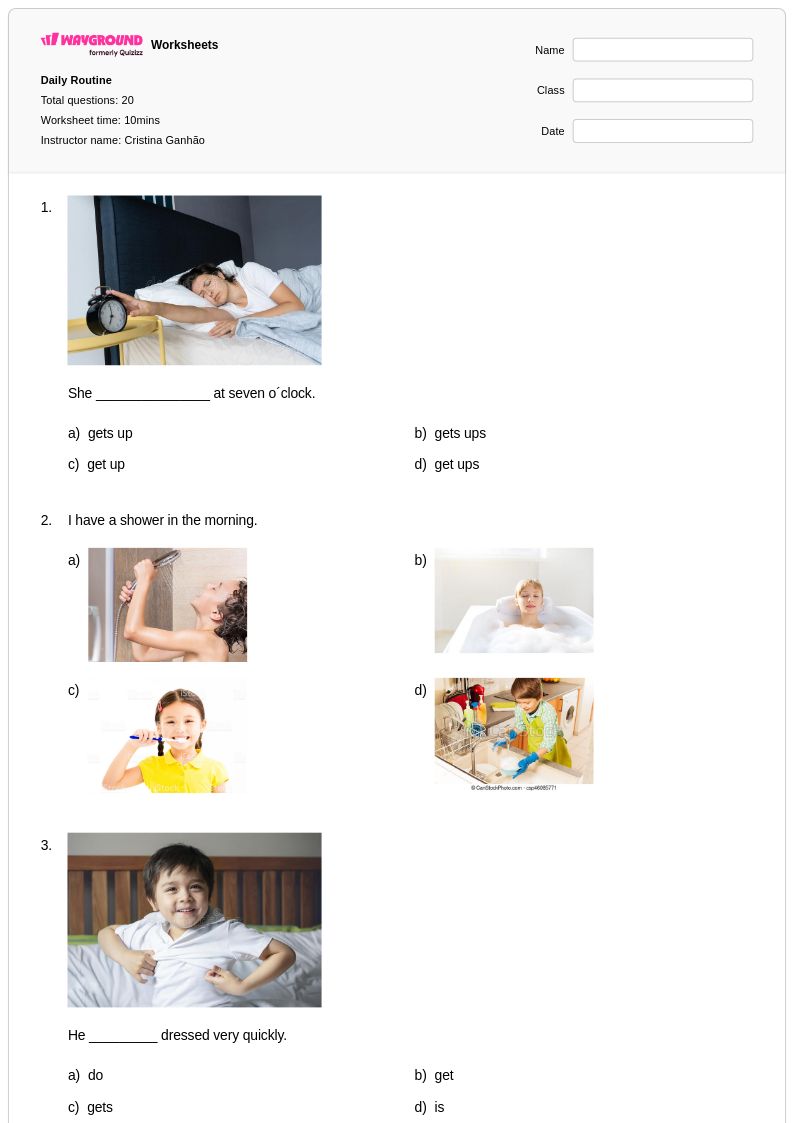
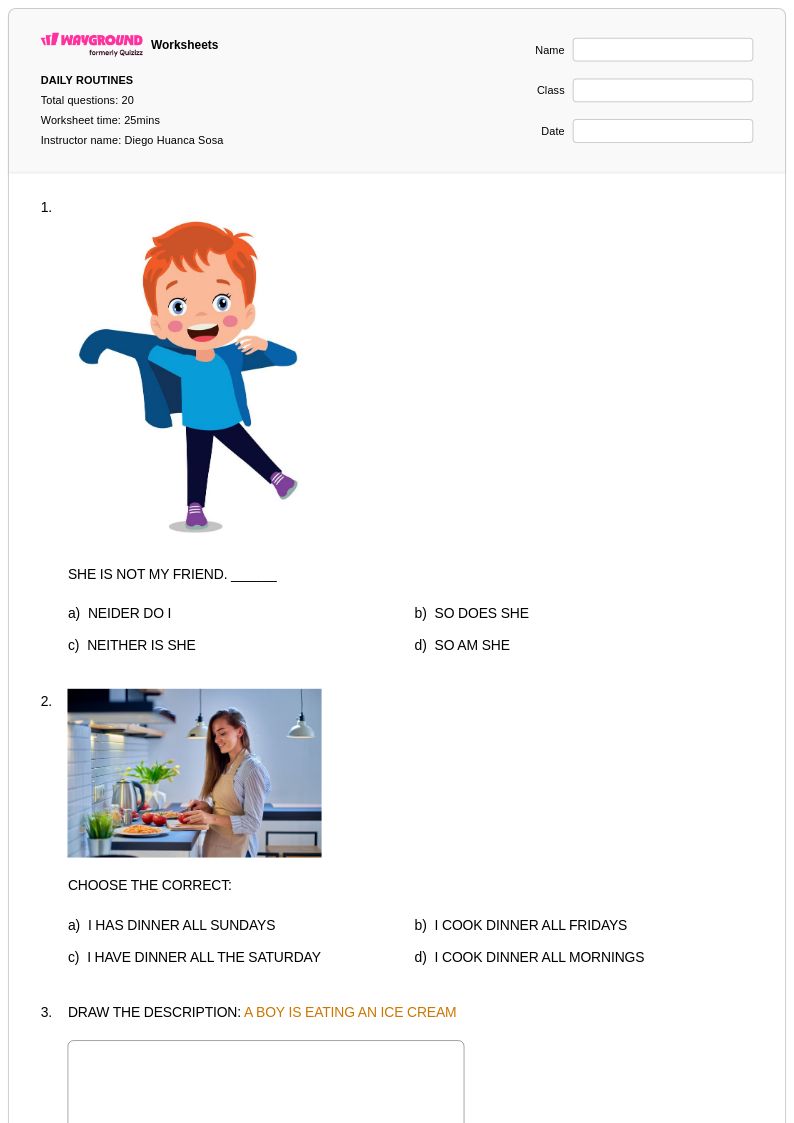
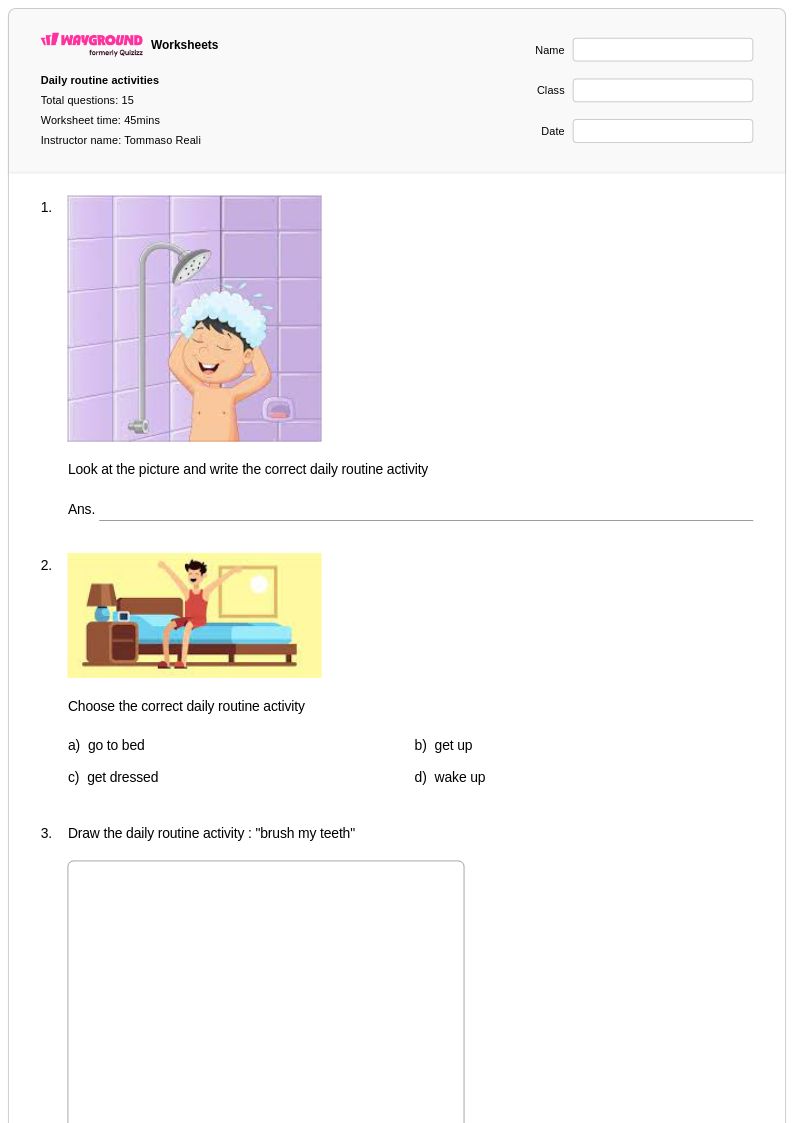
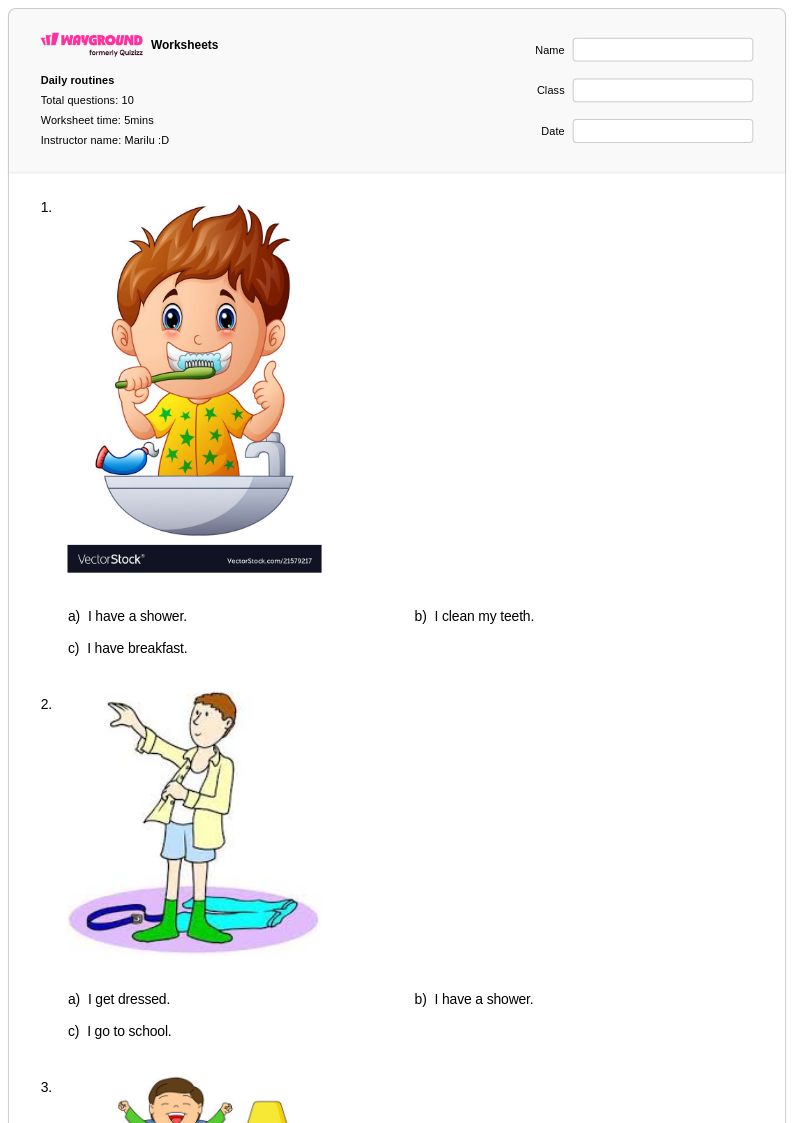
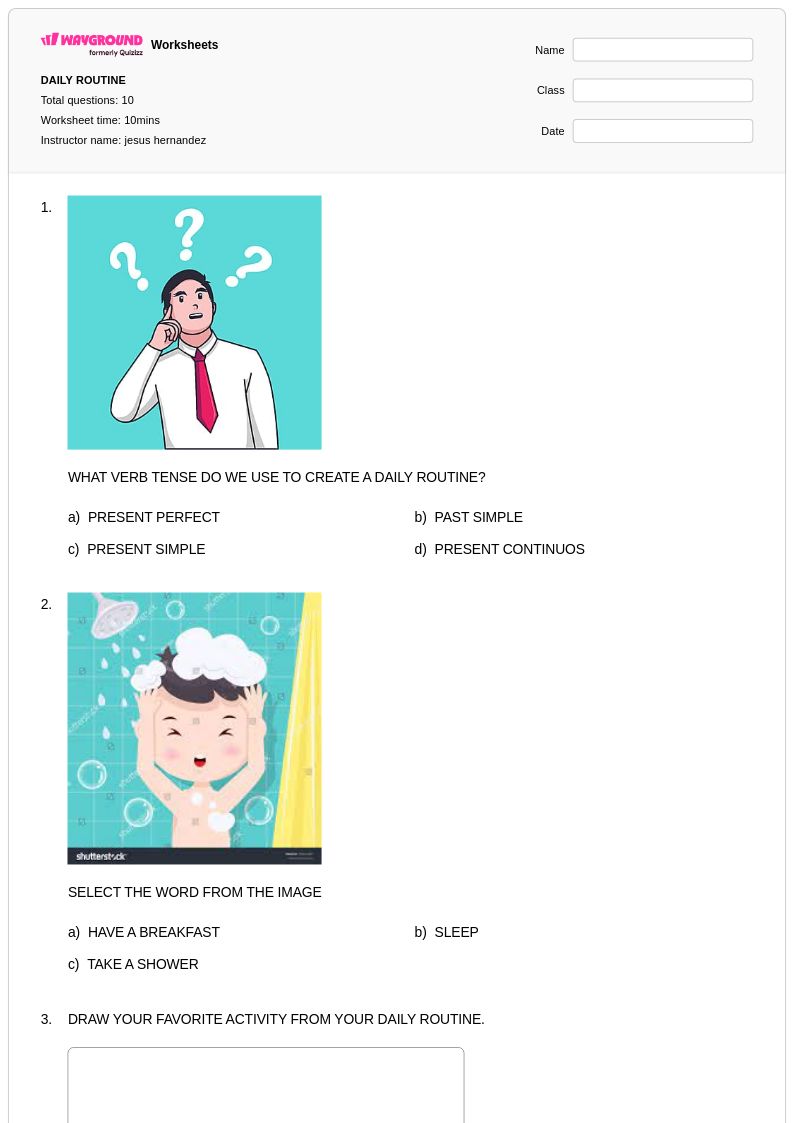
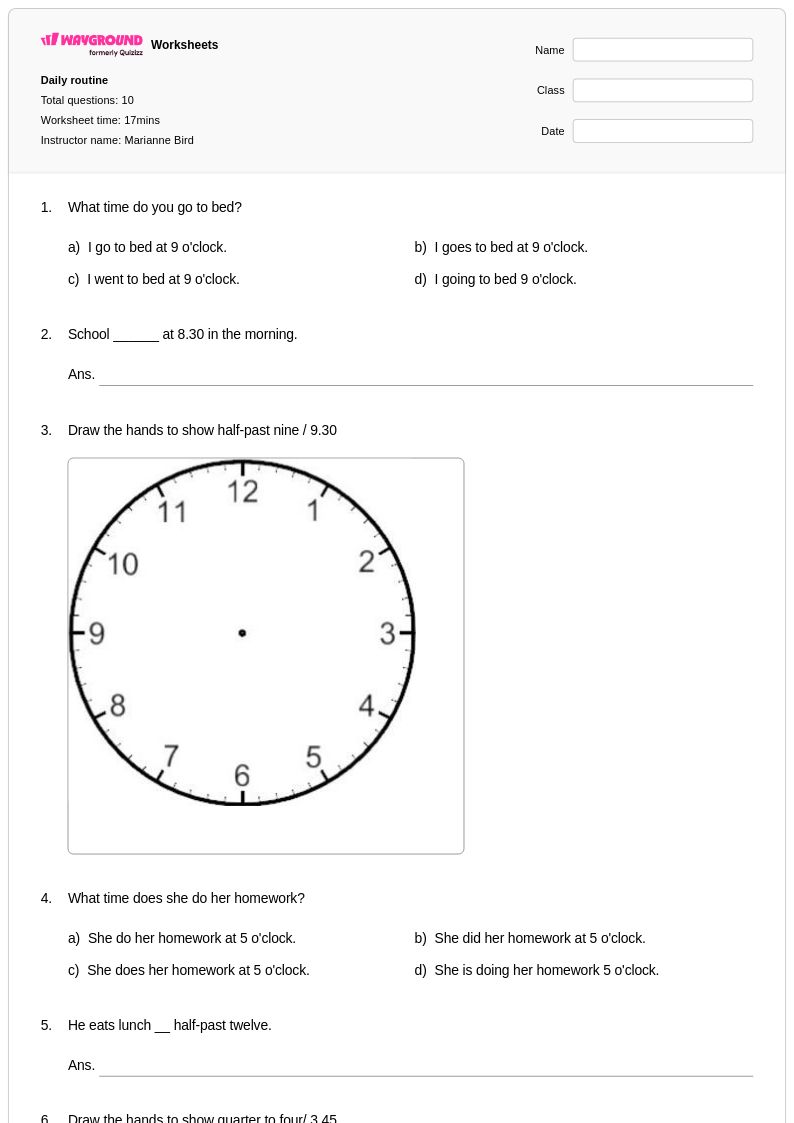
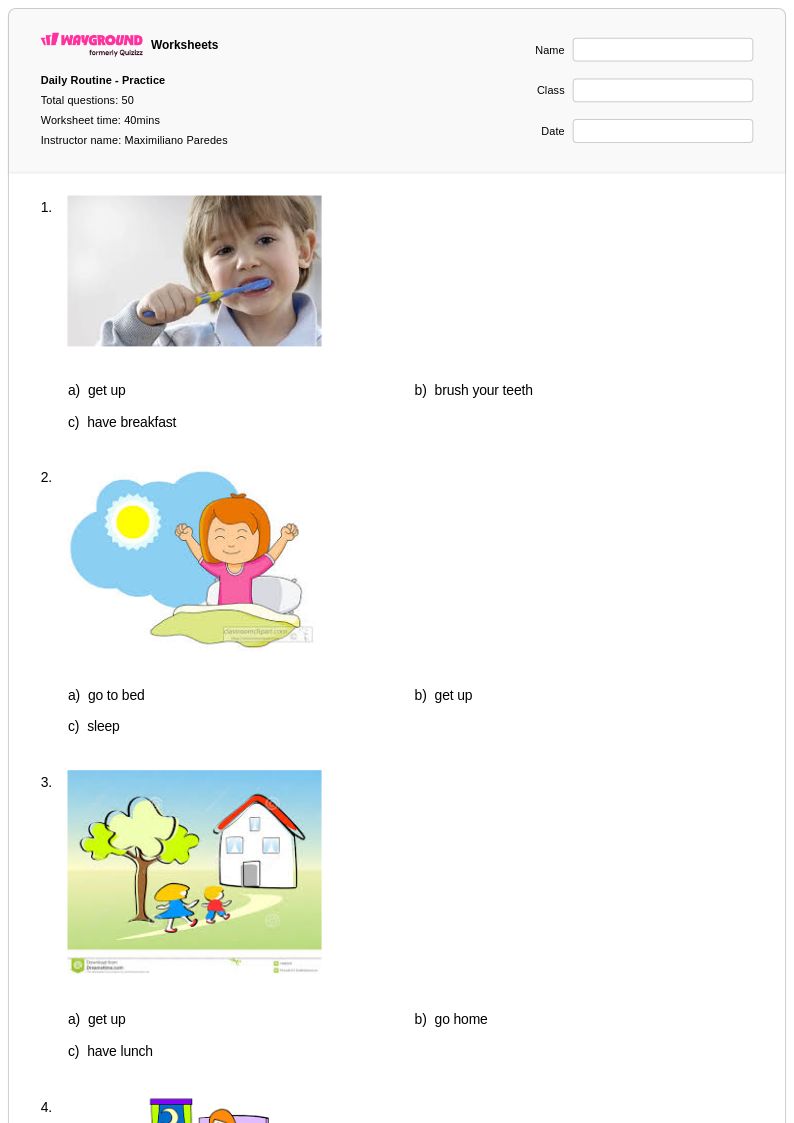
Daily routine worksheets for kindergarten students through Wayground (formerly Quizizz) provide foundational support for young learners developing their understanding of sequencing, time concepts, and descriptive writing within the genre writing framework. These carefully crafted printables help kindergarteners practice identifying and organizing the events that make up their day, from morning wake-up routines to bedtime preparations. Students strengthen essential pre-writing and early literacy skills as they work through practice problems that involve drawing, labeling, and simple sentence construction about familiar activities like brushing teeth, eating breakfast, and getting dressed. Each worksheet includes a comprehensive answer key to support both independent learning and guided instruction, with free pdf formats that make classroom implementation seamless and accessible.
Wayground's extensive collection of daily routine worksheets draws from millions of teacher-created resources specifically designed to meet kindergarten developmental needs and learning standards. The platform's robust search and filtering capabilities enable educators to quickly locate materials that align with their specific curriculum requirements and student ability levels. Teachers benefit from built-in differentiation tools that allow for easy customization of content complexity, ensuring that emerging writers and more advanced students can all engage meaningfully with daily routine concepts. These resources are available in both printable and digital formats, including downloadable pdfs, giving educators the flexibility to use them for whole-class instruction, small group work, individual skill practice, or take-home reinforcement activities that support comprehensive genre writing development.
FAQs
How do I teach daily routine writing to students?
Teaching daily routine writing works best when students begin with familiar, concrete experiences before moving toward more polished narrative prose. Start by having students brainstorm their own morning or after-school routines using a simple timeline, then introduce chronological transition words like 'first,' 'next,' 'after that,' and 'finally' to give their writing structure. From there, guide students to layer in sensory details and authentic voice so their descriptions move beyond a bare list of events and become engaging narratives. Modeling with a shared class example before independent writing is especially effective at this stage.
What exercises help students practice daily routine writing?
Structured writing exercises that scaffold from sentence-level to paragraph-level work are the most effective for practicing daily routine writing. Students benefit from exercises that ask them to reorder scrambled routine sentences, fill in missing transition words, expand bare-bones event descriptions with sensory detail, and ultimately write a full descriptive paragraph about a personal routine. Combining these practice types in a single worksheet helps students internalize chronological organization and descriptive language techniques simultaneously.
What mistakes do students commonly make when writing about daily routines?
The most common error students make in daily routine writing is producing a flat, list-like sequence of events without any descriptive language or personal voice, for example writing 'I wake up. I eat breakfast. I go to school.' without elaboration. Students also frequently neglect transition words, which makes their writing feel choppy and disconnected. A third common issue is inconsistent verb tense, particularly shifting between present and past tense mid-paragraph. Targeted exercises that require students to revise weak routine paragraphs are an efficient way to address all three of these patterns.
How can I differentiate daily routine writing worksheets for students at different skill levels?
For struggling writers, provide sentence starters, a word bank of transition phrases, and a graphic organizer that maps the routine before any writing begins. For on-level students, supply a structured paragraph frame that prompts chronological order and one or two sensory details per event. Advanced writers benefit from open-ended prompts that challenge them to write from a different perspective or incorporate figurative language into their routine descriptions. When using Wayground's digital format, teachers can apply individual accommodations such as Read Aloud support or reduced answer choices to specific students without alerting the rest of the class.
How do I use Wayground's daily routine worksheets in my classroom?
Wayground's daily routine worksheets are available as printable PDFs for traditional classroom use and in digital formats for technology-integrated or hybrid learning environments, including the option to host them as an interactive quiz directly on Wayground. Teachers can assign digital versions for independent practice, homework, or formative assessment, while PDF versions work well for in-class writing sessions or small-group instruction. All worksheets include complete answer keys, which makes them practical for self-checking, peer review, or teacher-led correction.
How do daily routine writing worksheets connect to broader writing standards?
Daily routine writing directly supports standards related to narrative and descriptive writing, including skills such as chronological organization, use of transitional language, sensory detail incorporation, and development of an authentic authorial voice. Because the subject matter is immediately familiar to all students, this genre serves as an accessible entry point for building these transferable writing skills before students apply them to less familiar topics. It also addresses conventions standards when exercises focus on consistent verb tense and sentence fluency within a descriptive paragraph.