
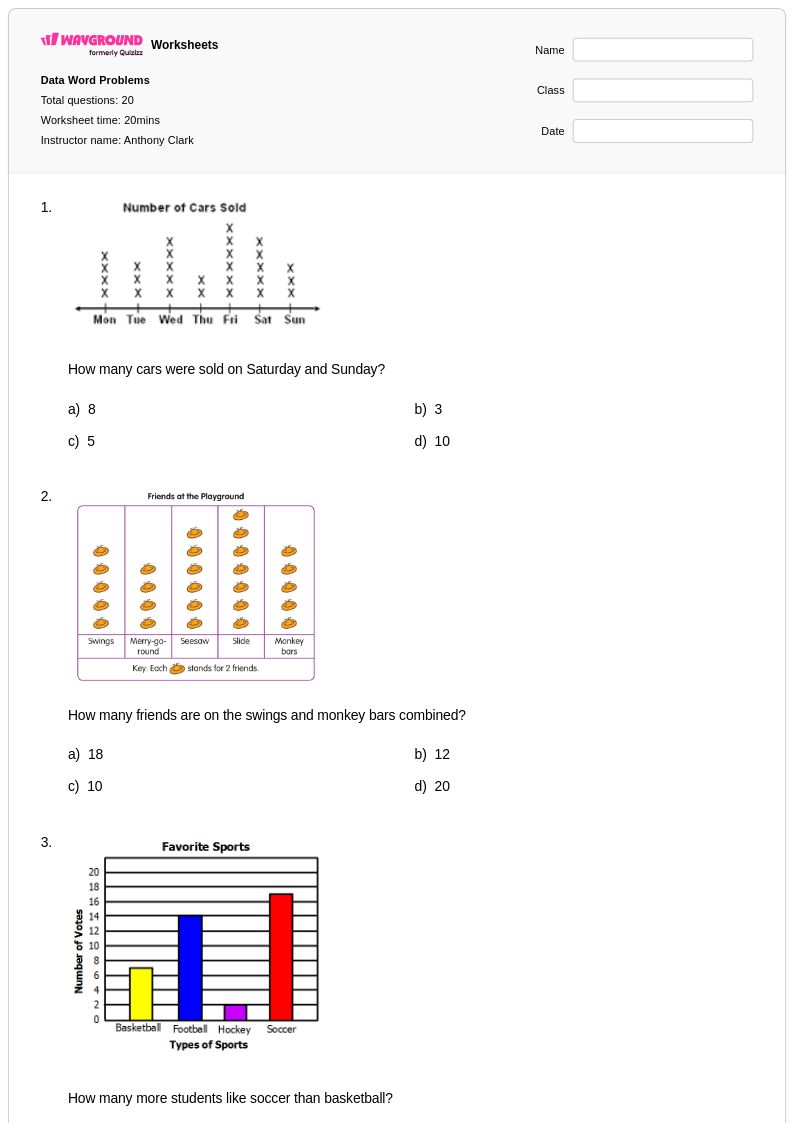
20 Q
3rd - Uni
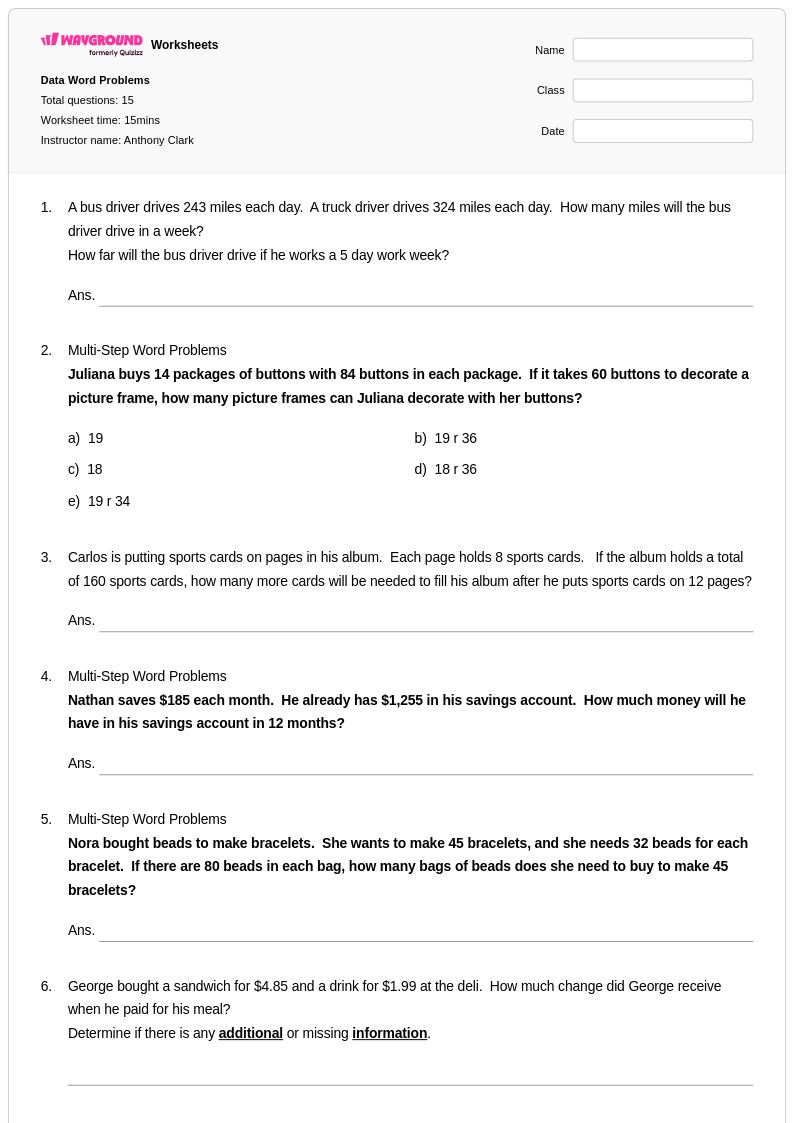
15 Q
3rd - Uni
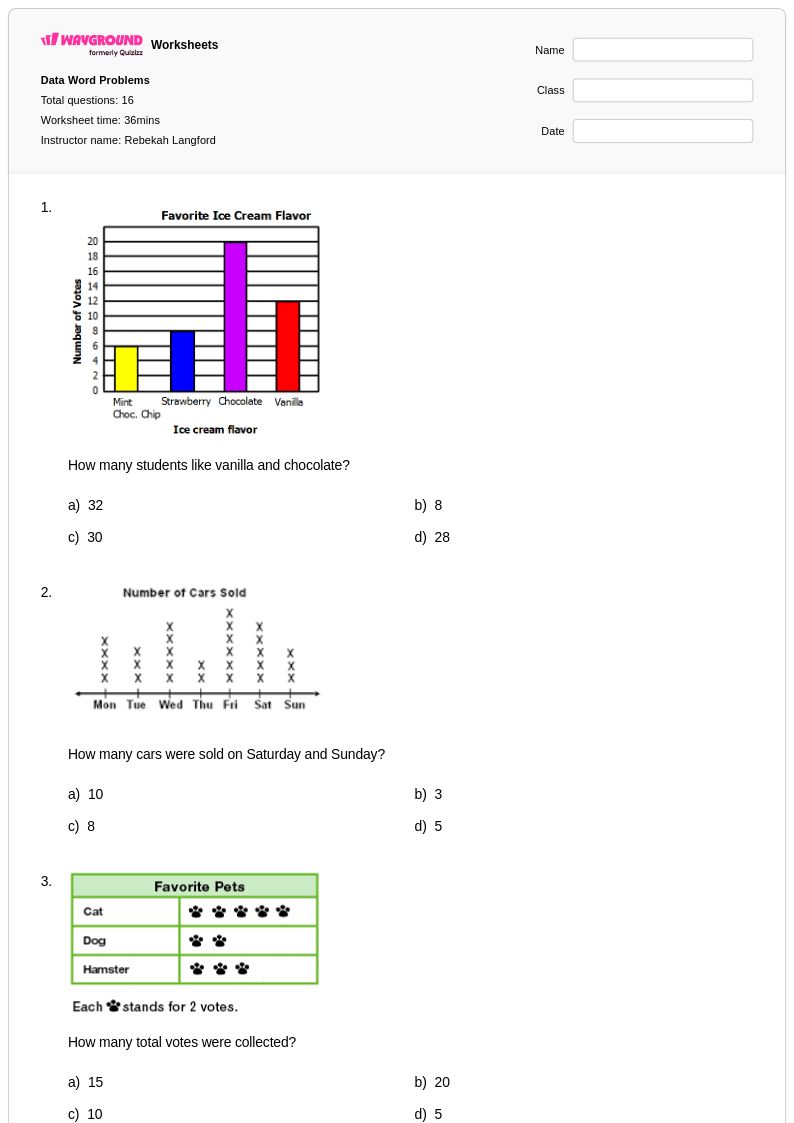
16 Q
3rd
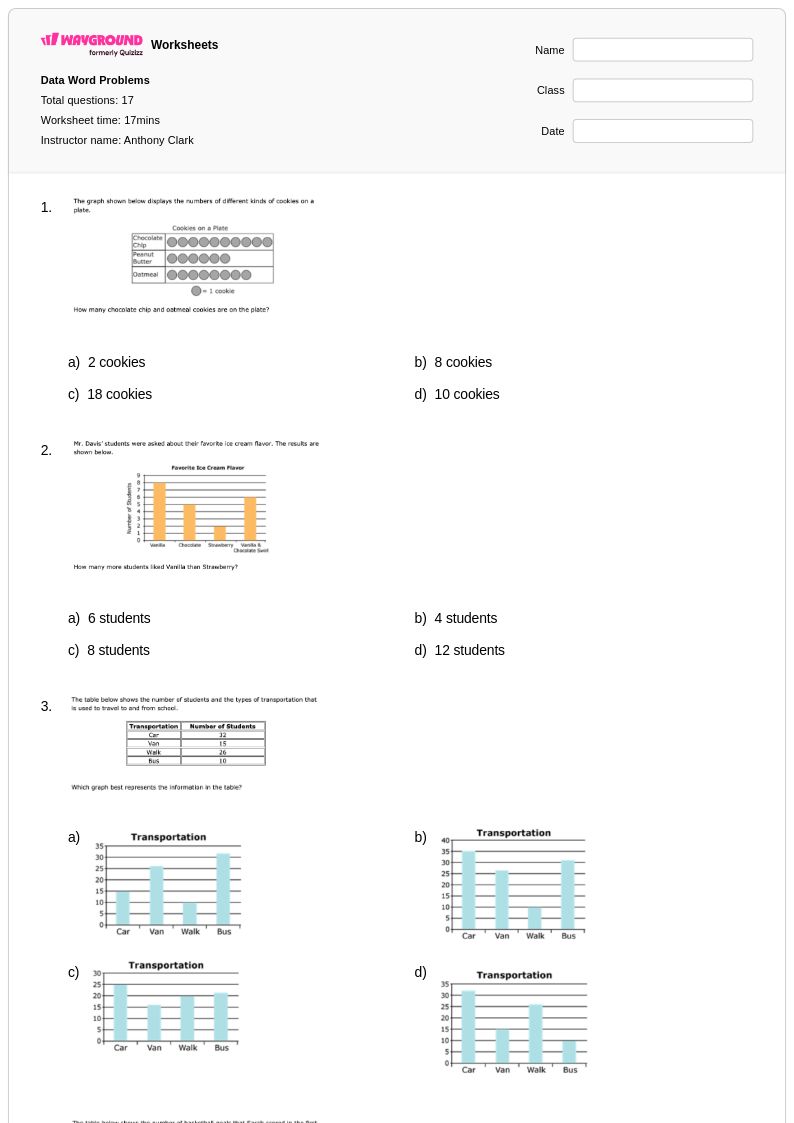
17 Q
3rd - Uni
20 Q
3rd - Uni
10 Q
3rd
17 Q
1st - PD
10 Q
3rd - 5th
15 Q
3rd - Uni
10 Q
3rd
10 Q
3rd
10 Q
3rd
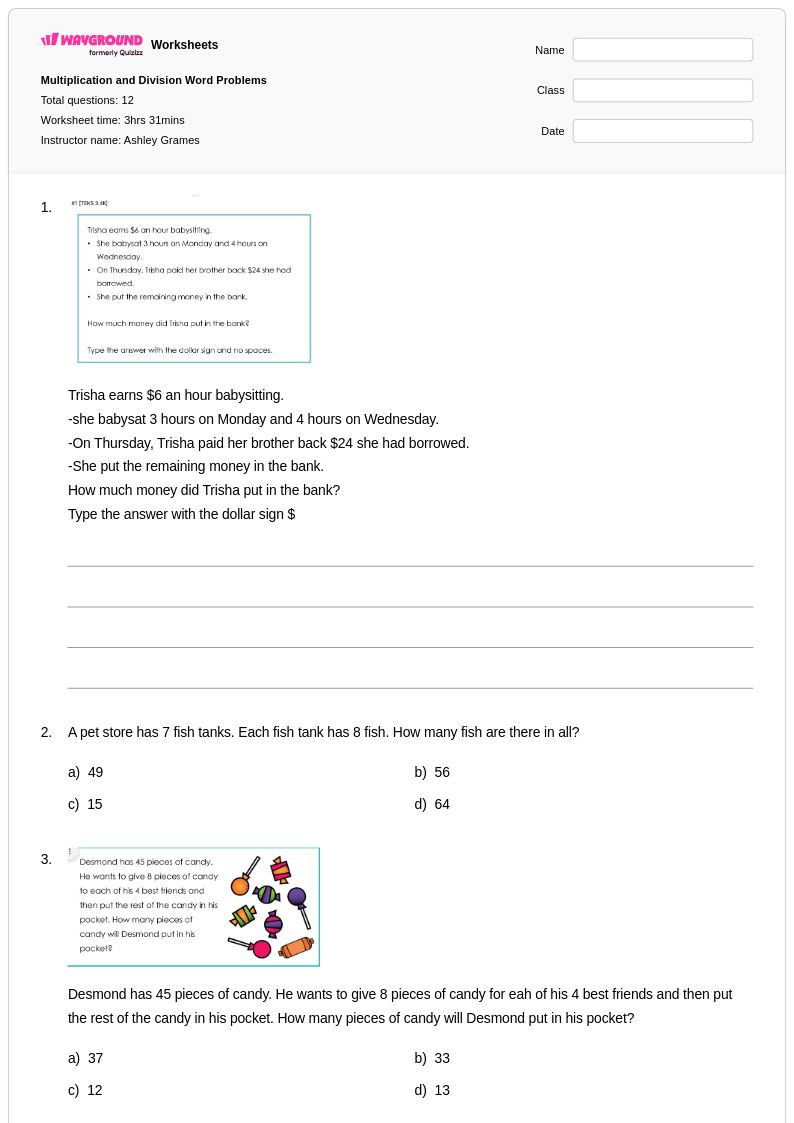
12 Q
3rd
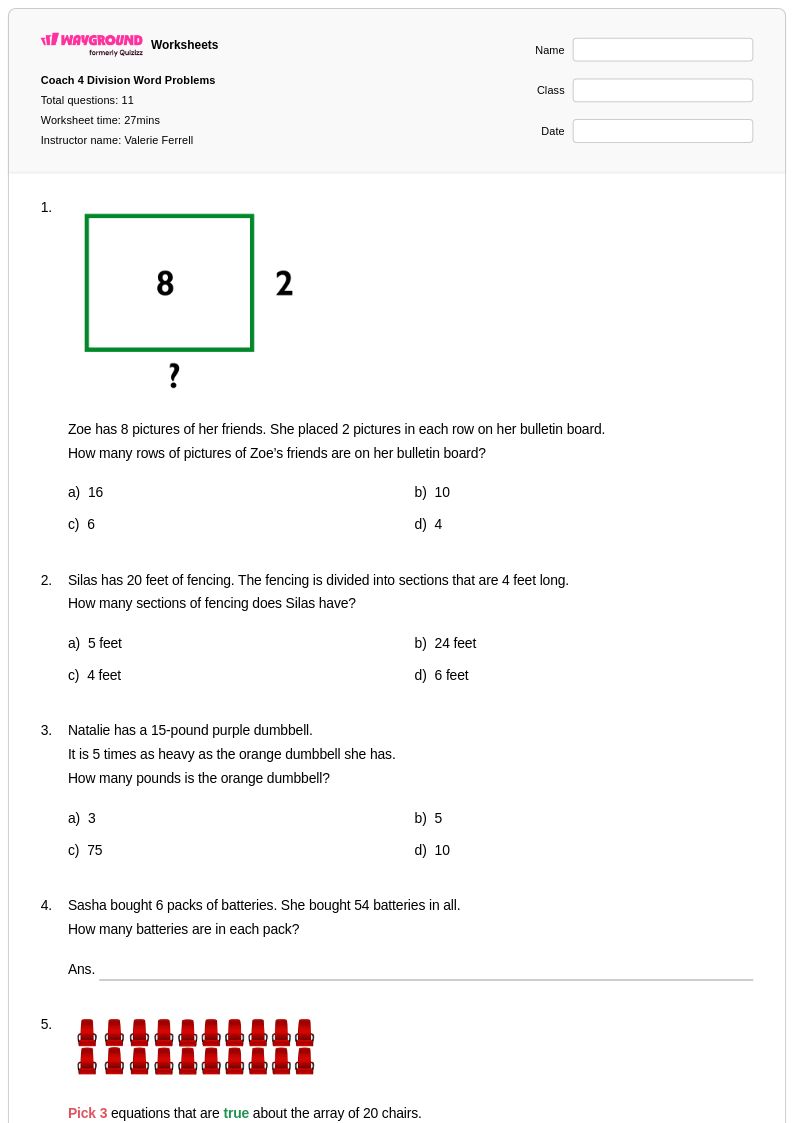
11 Q
3rd
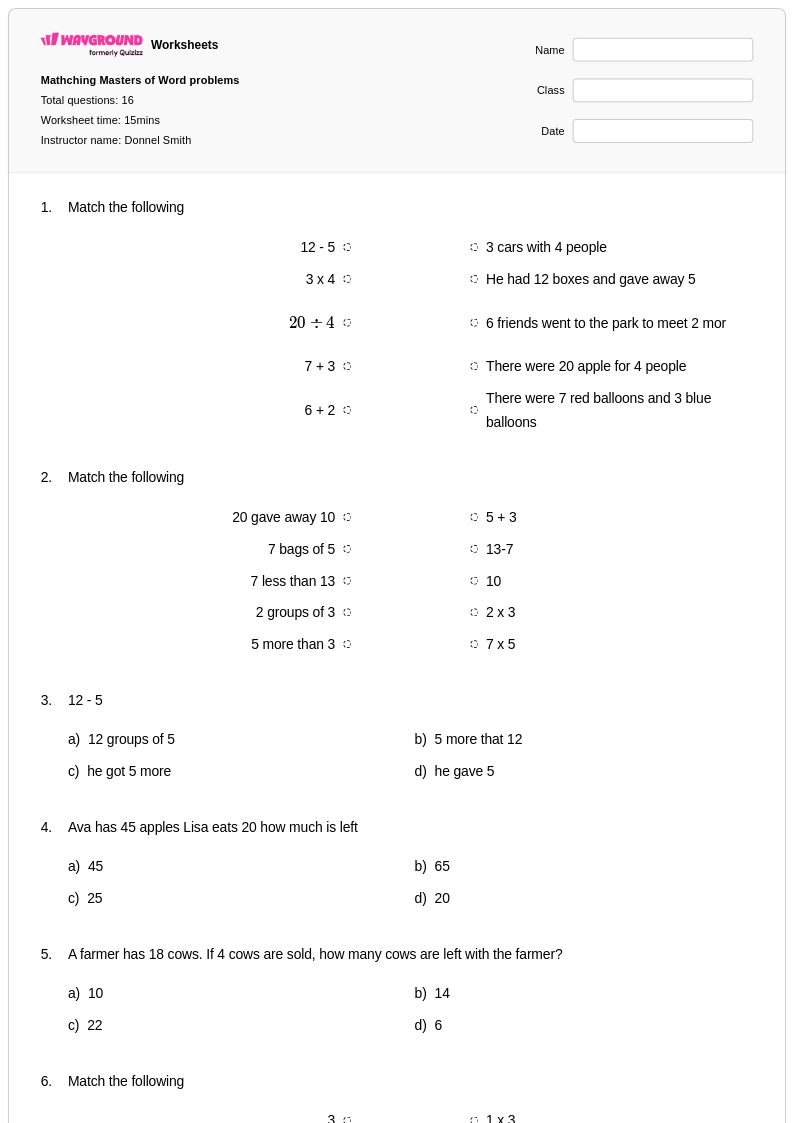
16 Q
3rd
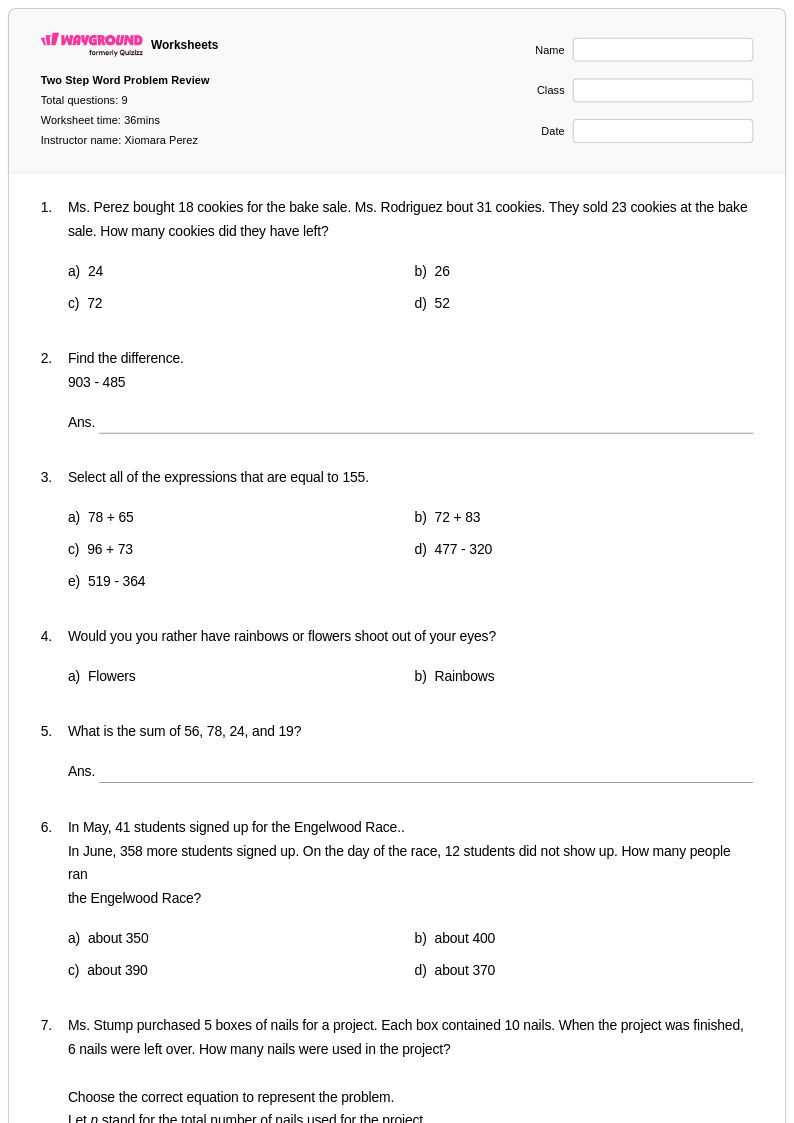
9 Q
3rd
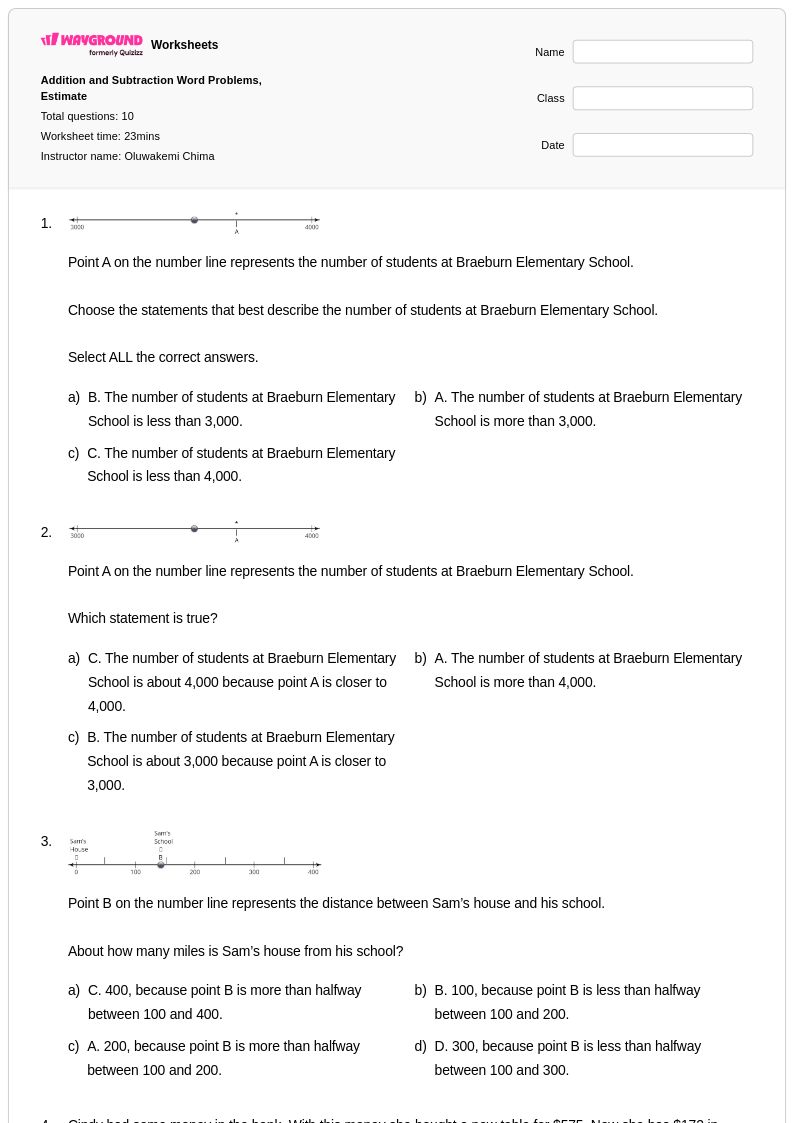
10 Q
3rd
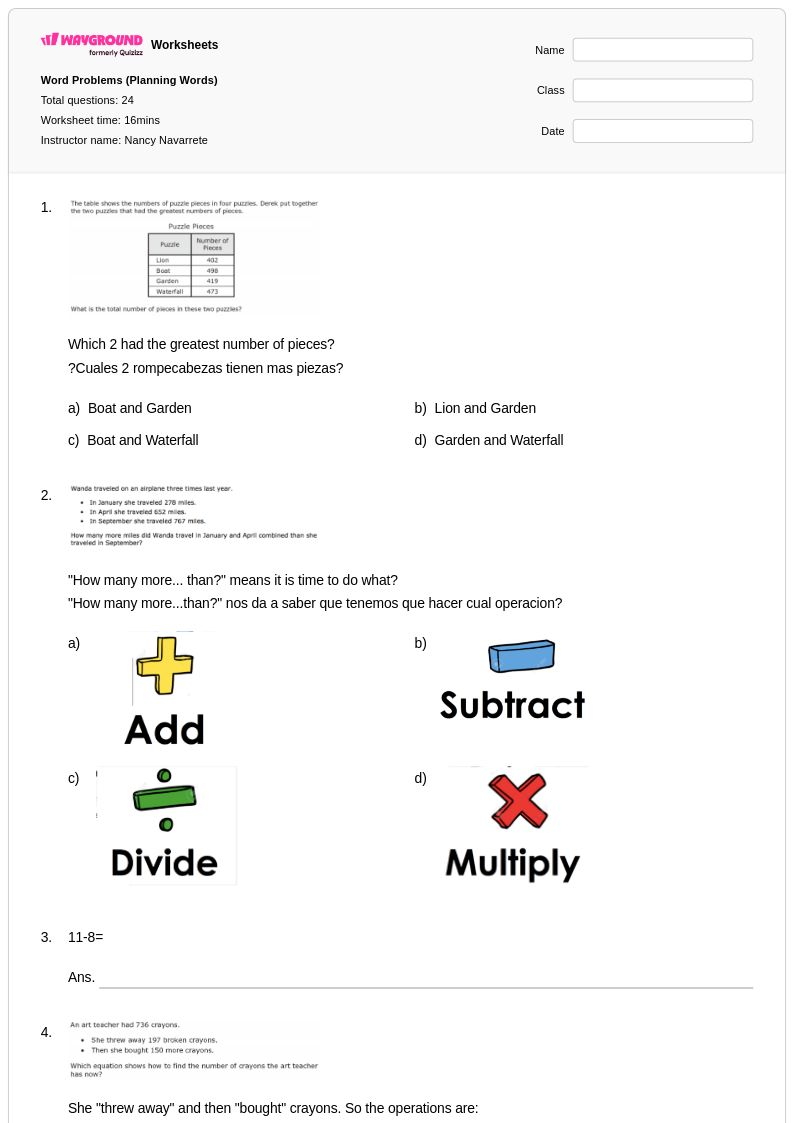
24 Q
3rd
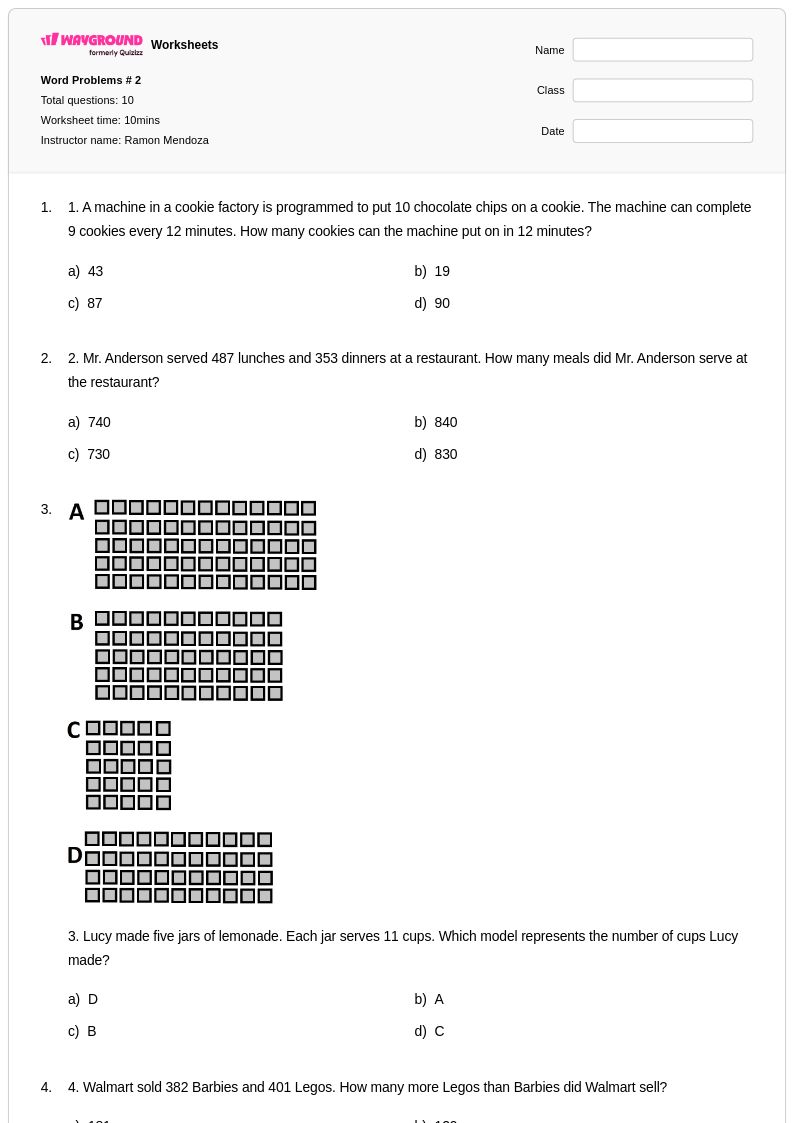
10 Q
3rd
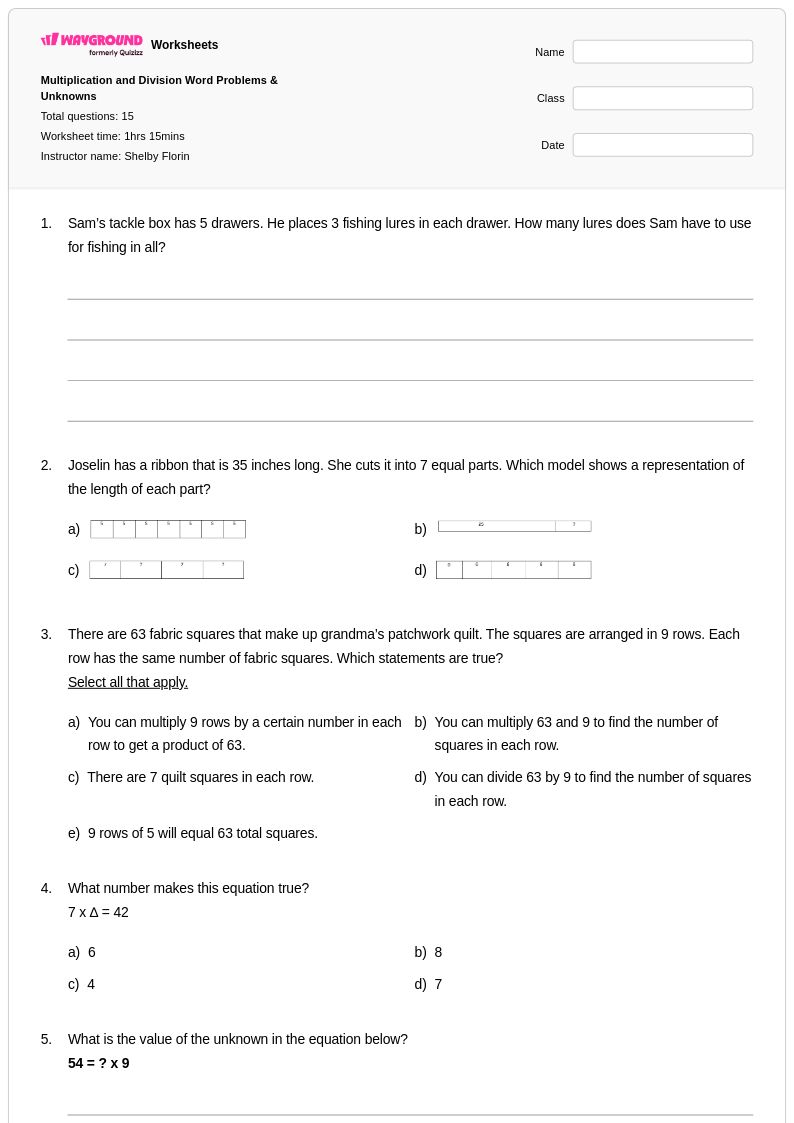
15 Q
3rd
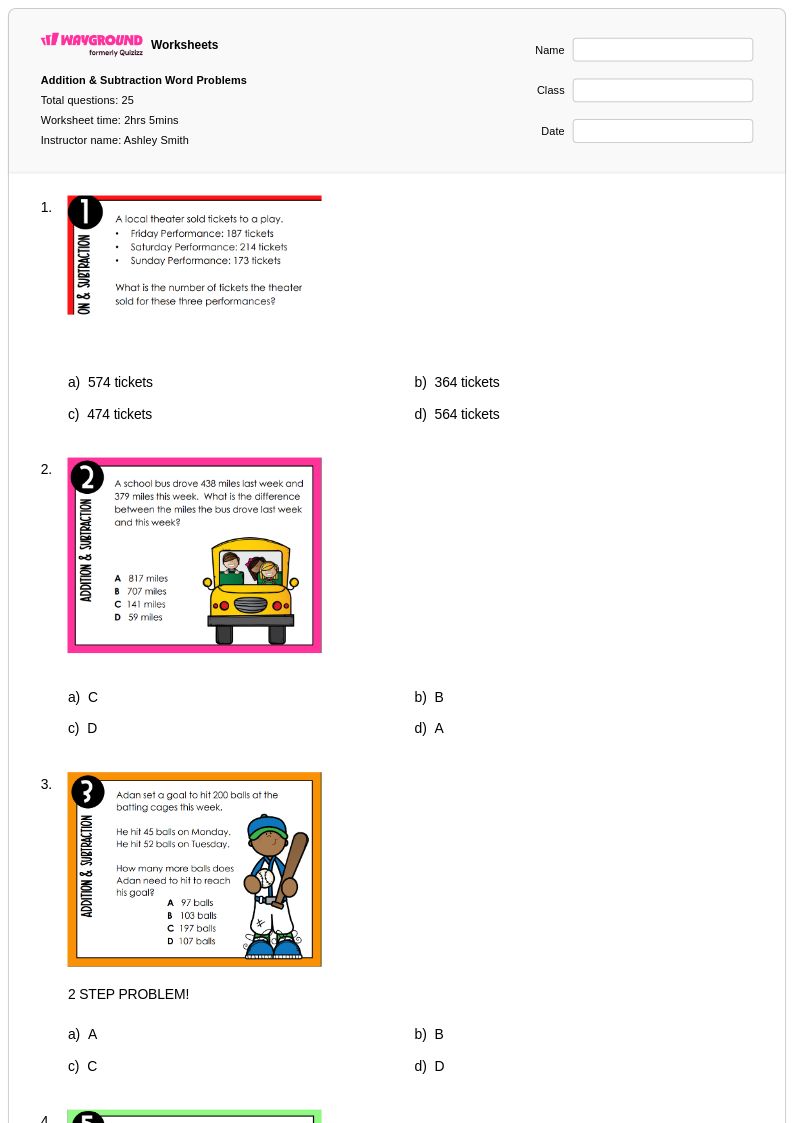
25 Q
3rd
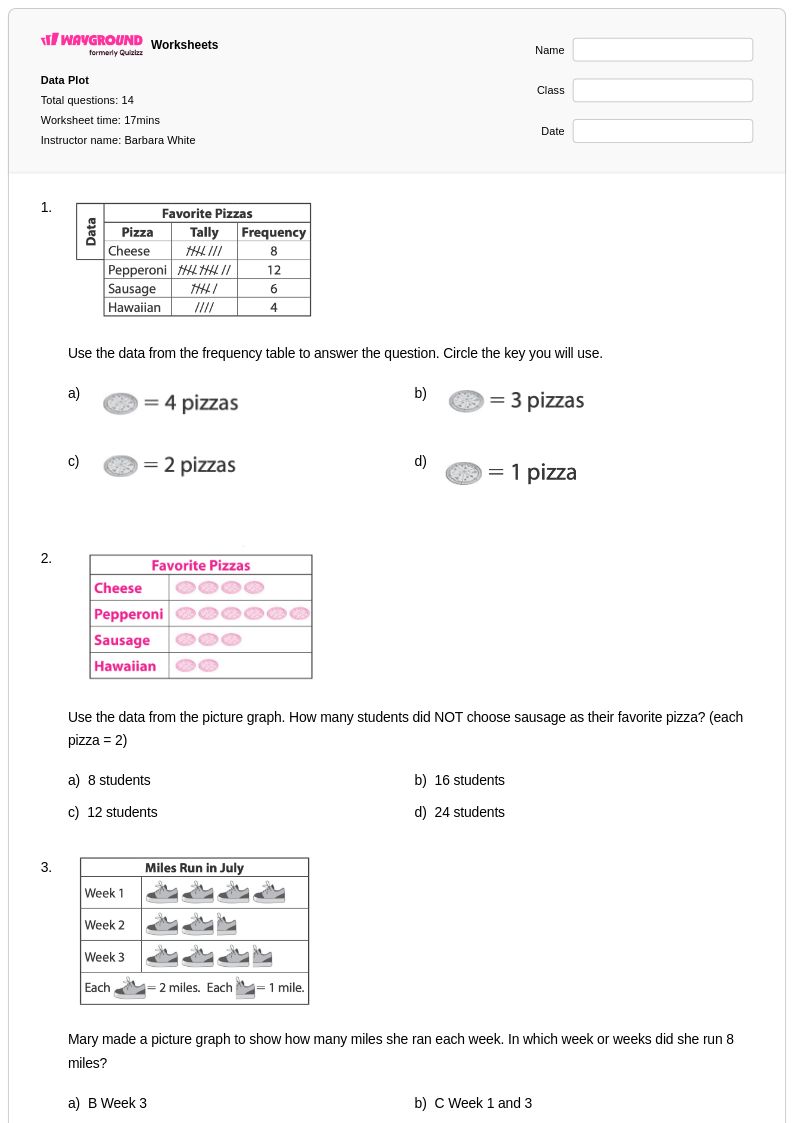
14 Q
3rd
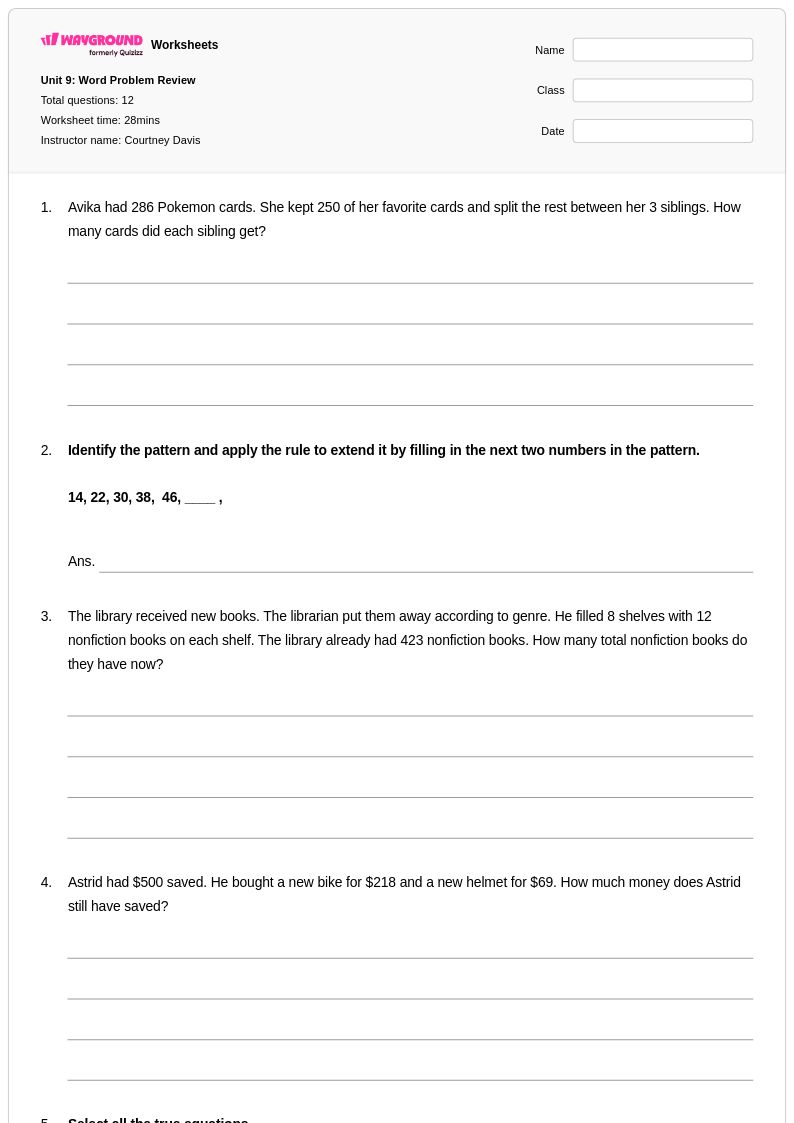
12 Q
3rd
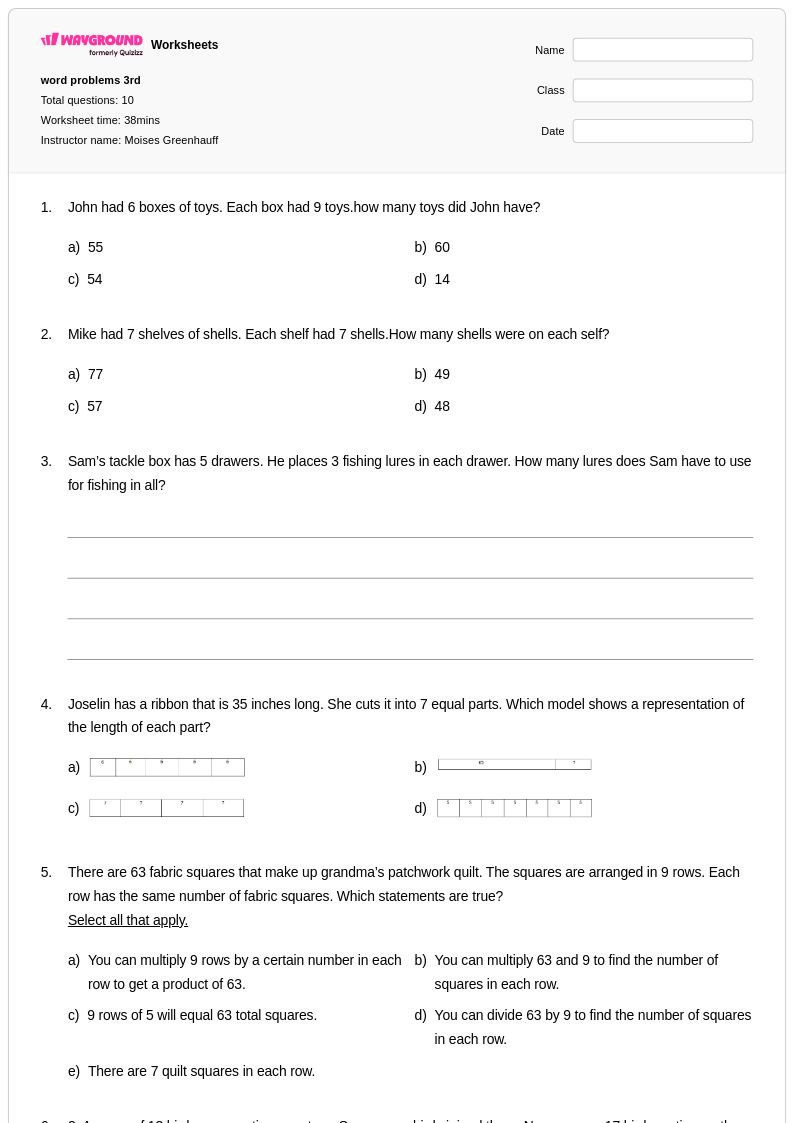
10 Q
3rd
Explore Other Subject Worksheets for grade 3
Explore printable Data Word Problems worksheets for Grade 3
Data word problems for Grade 3 students represent a crucial bridge between mathematical concepts and real-world application, helping young learners develop critical thinking skills while working with charts, graphs, tables, and surveys. These comprehensive worksheets available through Wayground (formerly Quizizz) focus specifically on interpreting and analyzing data presented in various formats, from simple bar graphs showing favorite pets to picture graphs displaying weather patterns throughout a month. Students strengthen essential skills including reading scaled graphs, comparing quantities, identifying patterns in data sets, and drawing logical conclusions from visual information. Each worksheet collection includes detailed answer keys and is available as free printables in convenient pdf format, ensuring teachers have ready access to practice problems that reinforce data literacy concepts aligned with third-grade mathematical standards.
Wayground (formerly Quizizz) empowers educators with an extensive library of millions of teacher-created data word problem resources specifically designed for Grade 3 classrooms, offering robust search and filtering capabilities that allow teachers to quickly locate materials matching their exact instructional needs. The platform's standards-aligned worksheet collections support differentiated instruction through customizable difficulty levels and varied problem types, enabling teachers to address diverse learning needs within their classrooms. These versatile resources are available in both printable and digital formats, including downloadable pdf versions, making them ideal for traditional classroom settings, homework assignments, remediation sessions, and enrichment activities. Teachers can seamlessly integrate these data-focused word problems into their lesson planning to provide targeted skill practice, assess student understanding of graphical representations, and build foundational statistical reasoning abilities that prepare students for more advanced mathematical concepts.
FAQs
How do I teach data word problems to third graders?
What exercises help Grade 3 students practice data word problems?
What mistakes do third graders commonly make with data word problems?
How can I use Grade 3 data word problem worksheets on Wayground?
How do Grade 3 data word problems align with Common Core math?
How can I differentiate Grade 3 data word problem practice?
What grade level are these data word problem worksheets designed for?