
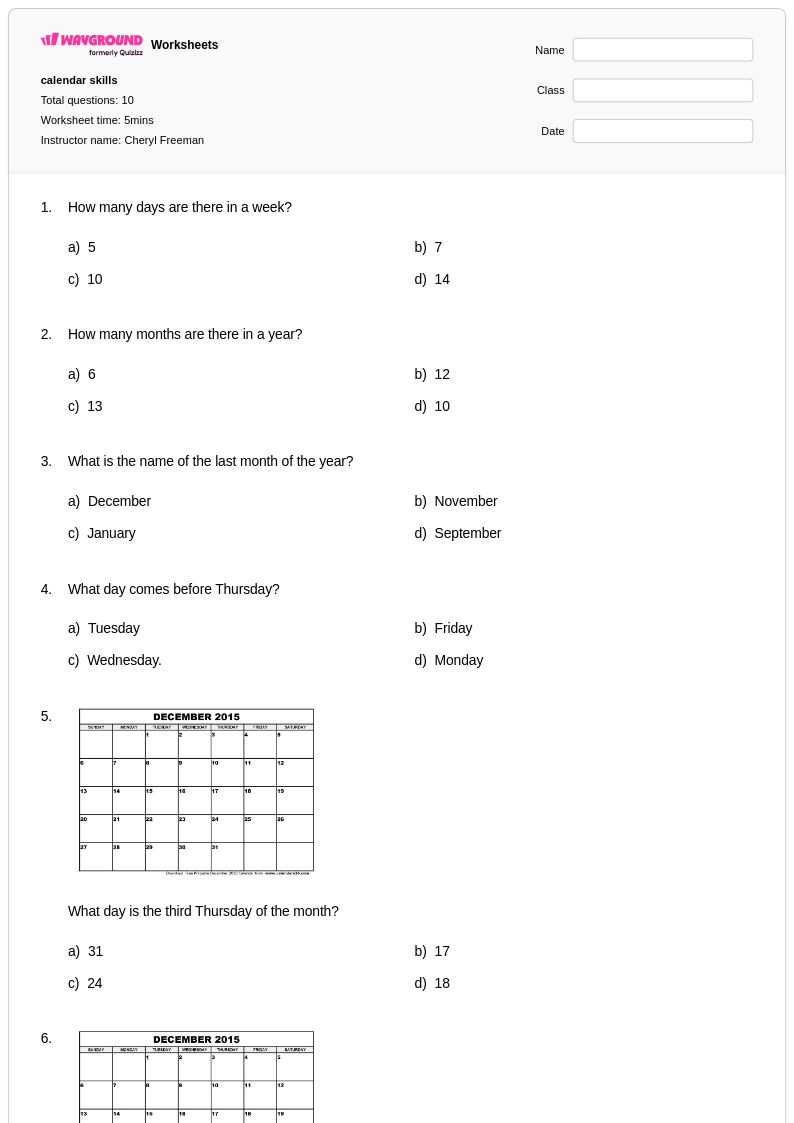
10 Q
1st
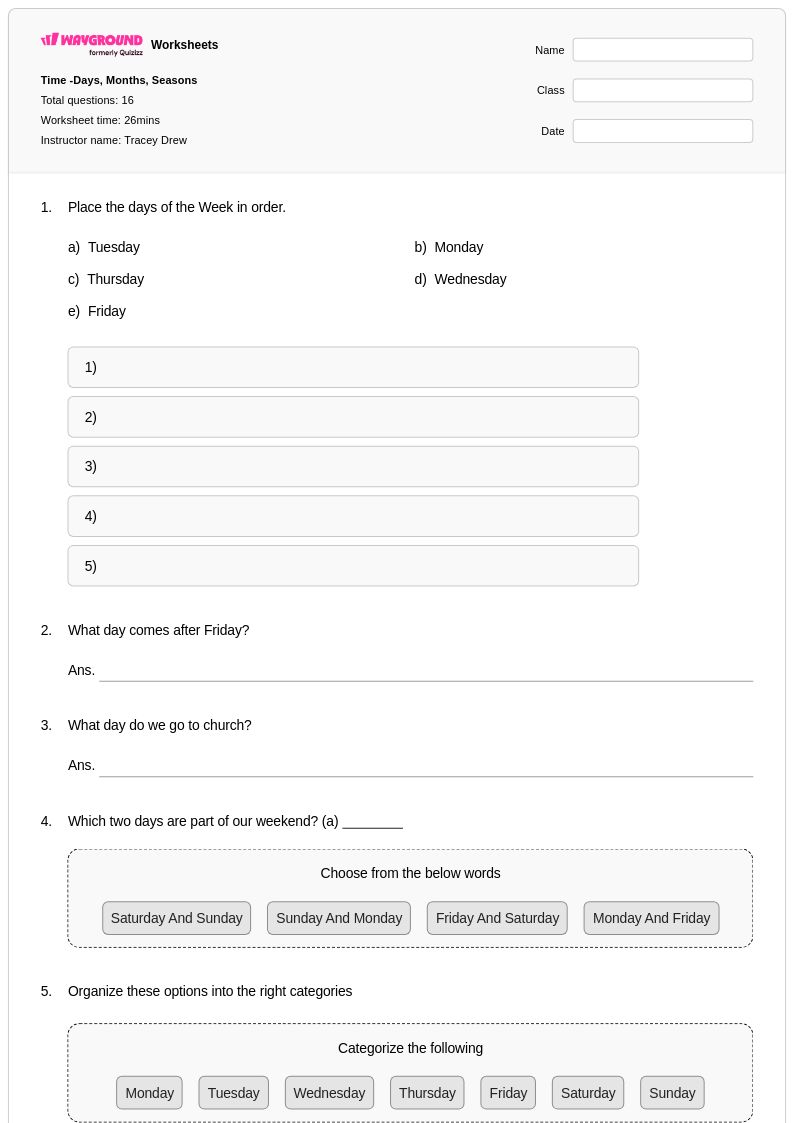
16 Q
2nd
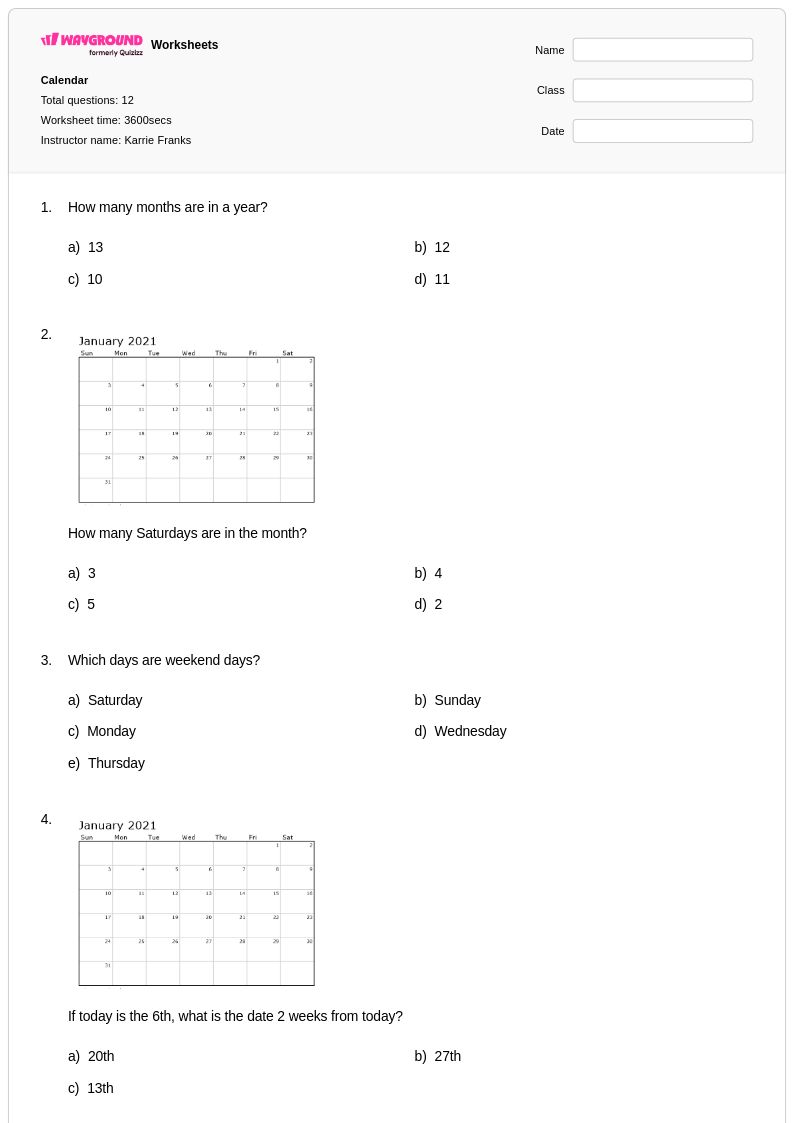
12 Q
3rd
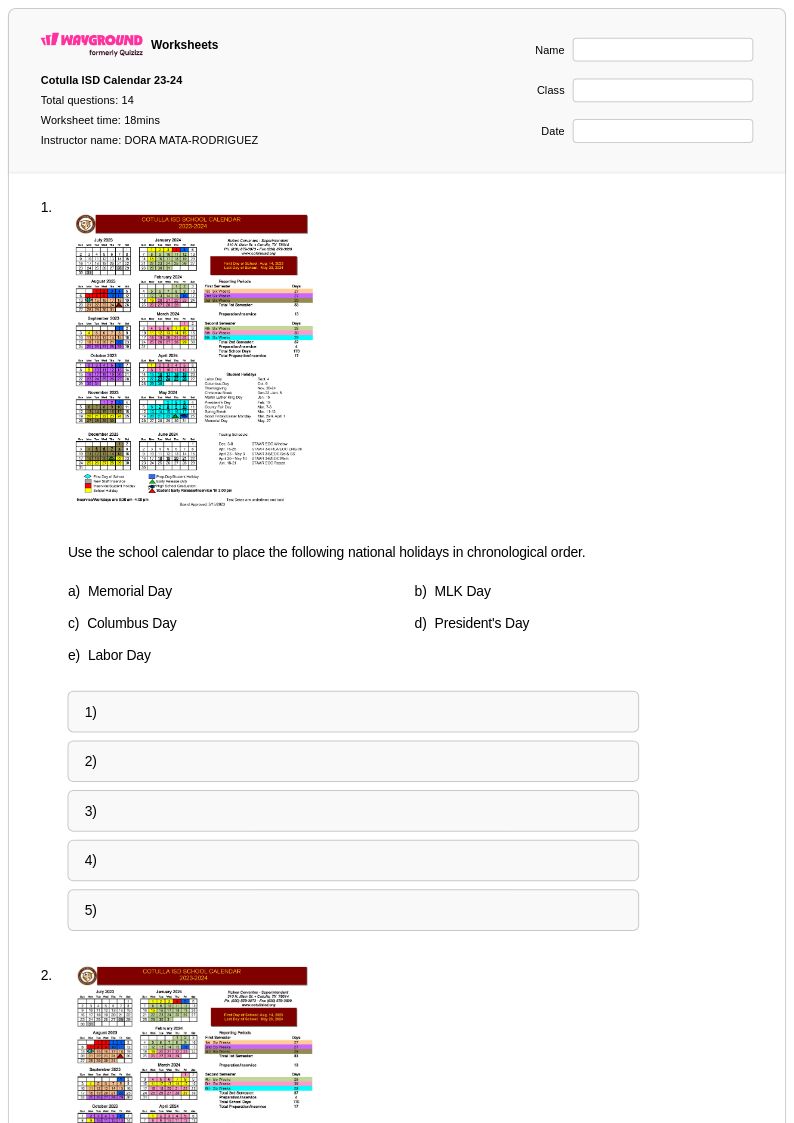
14 Q
6th - 8th
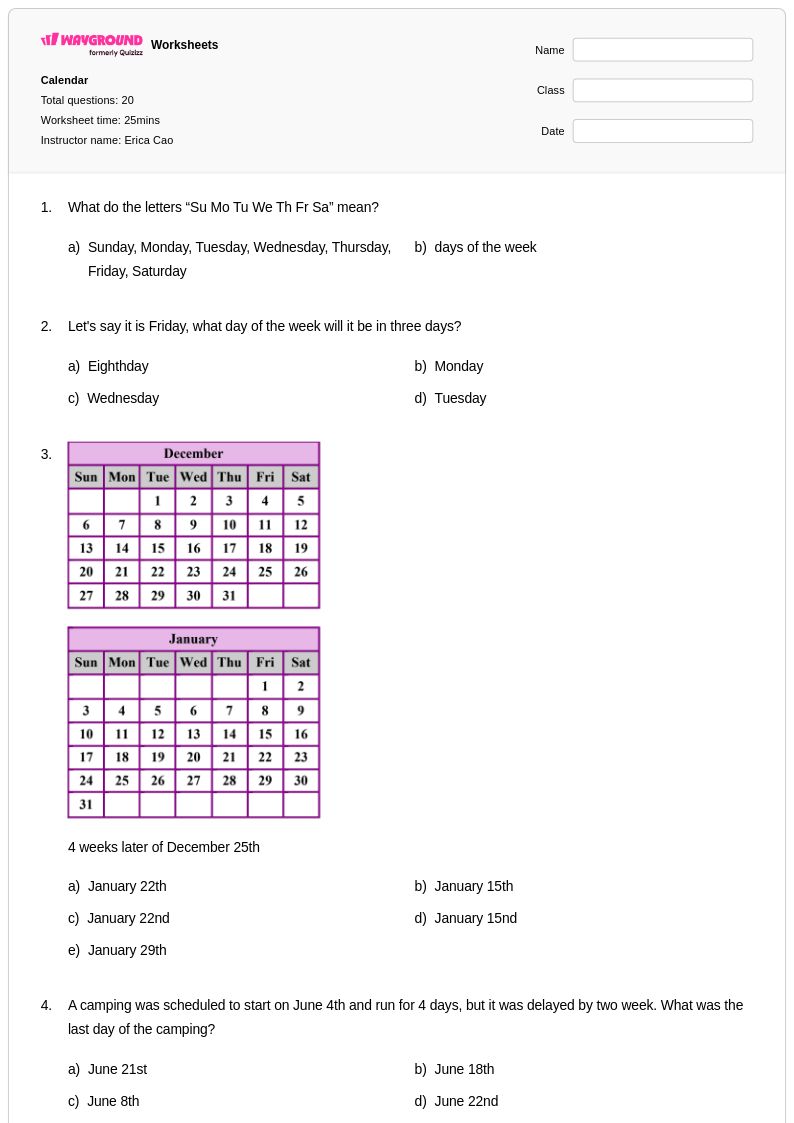
20 Q
1st - 2nd

11 Q
2nd
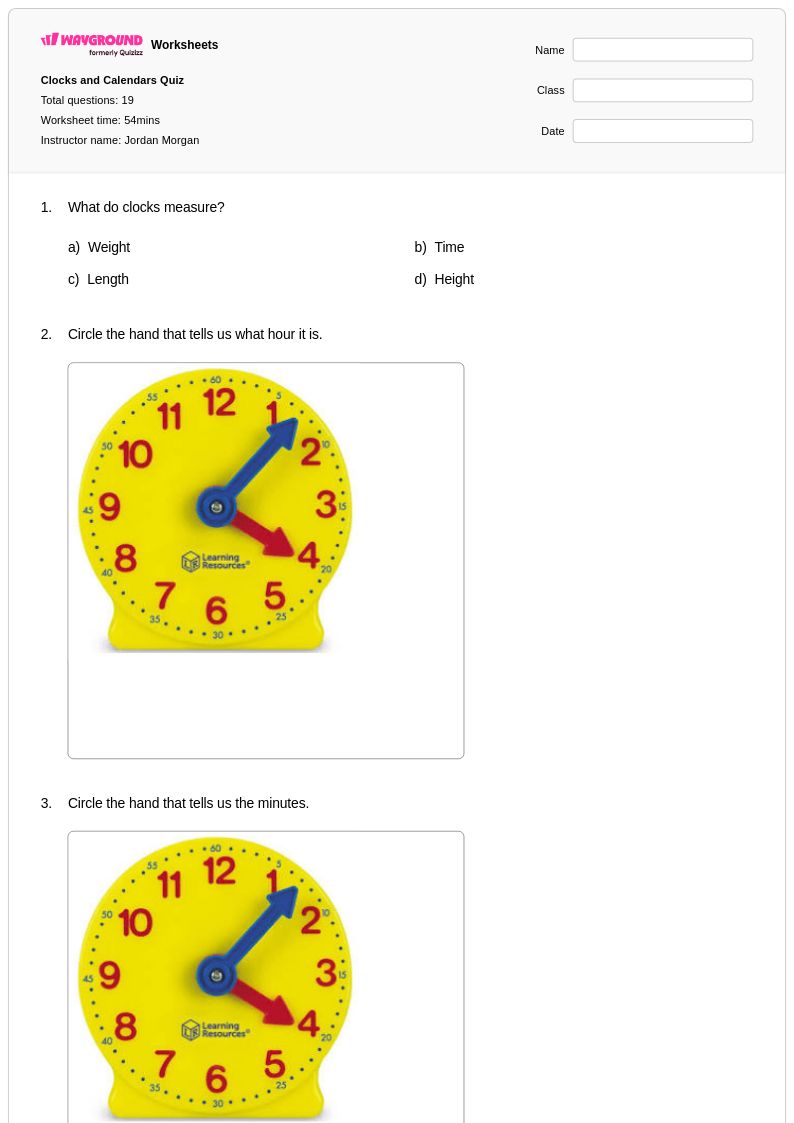
19 Q
1st
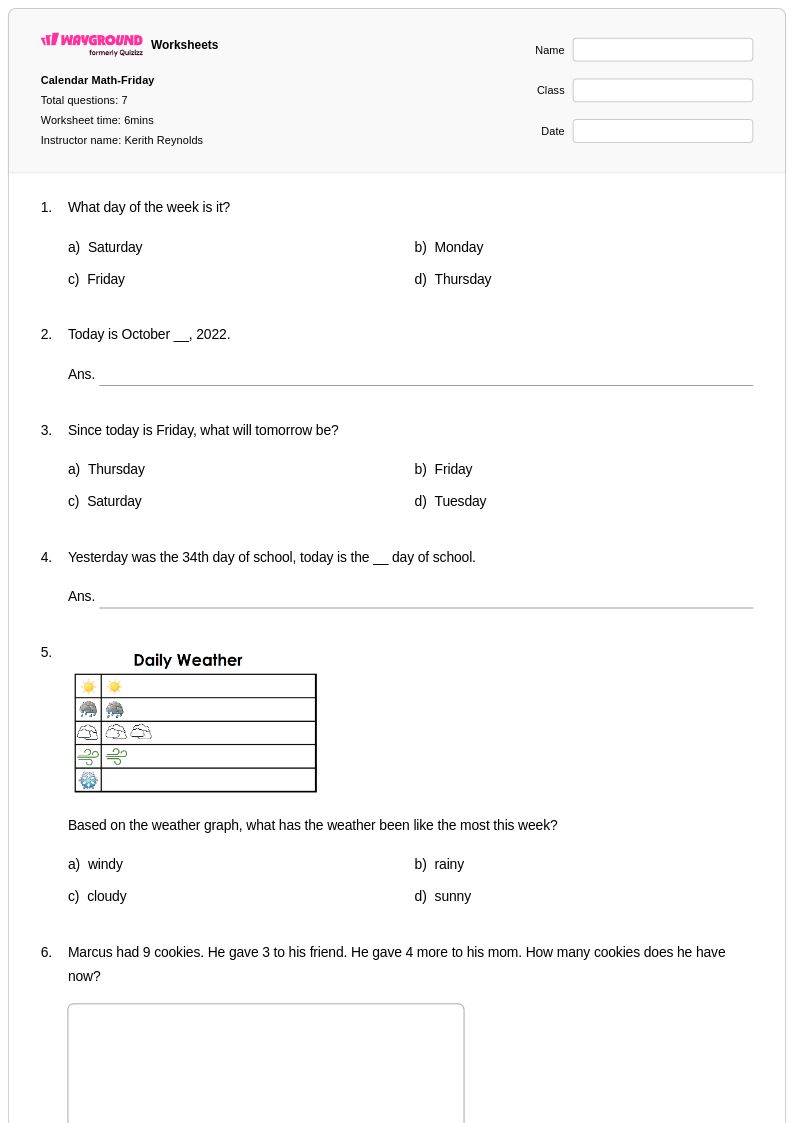
7 Q
1st - 3rd
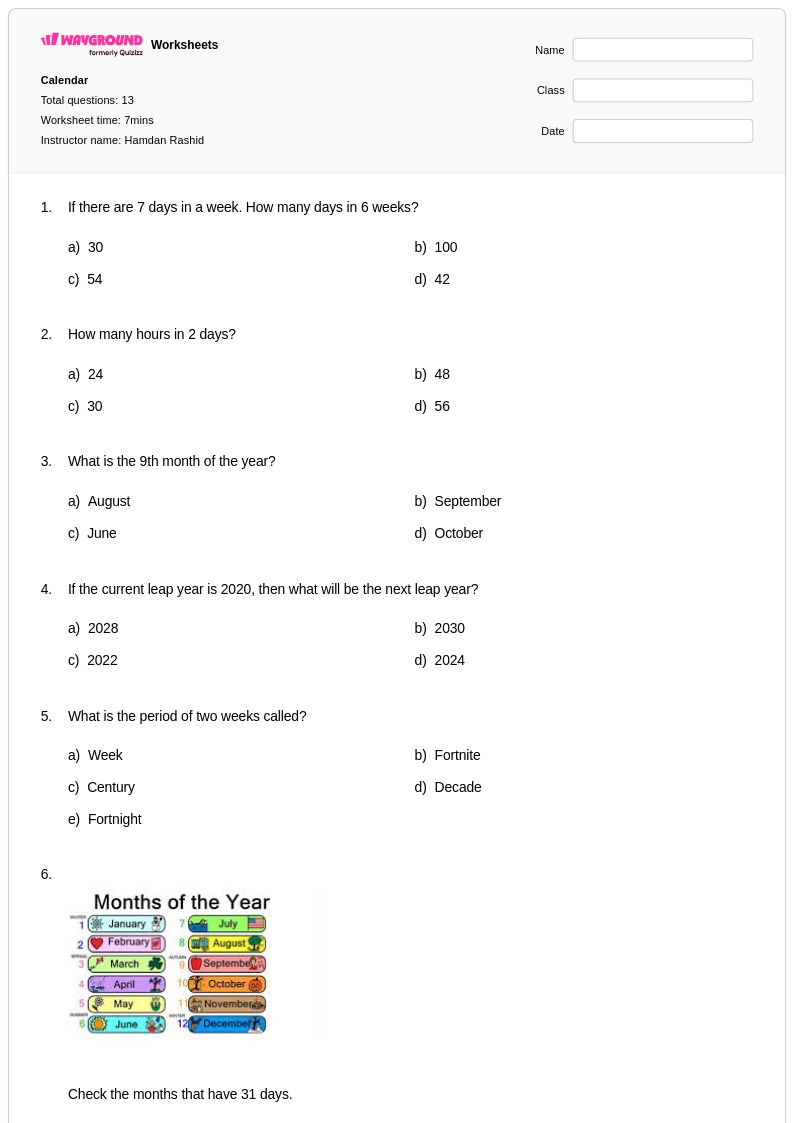
13 Q
KG - 12th
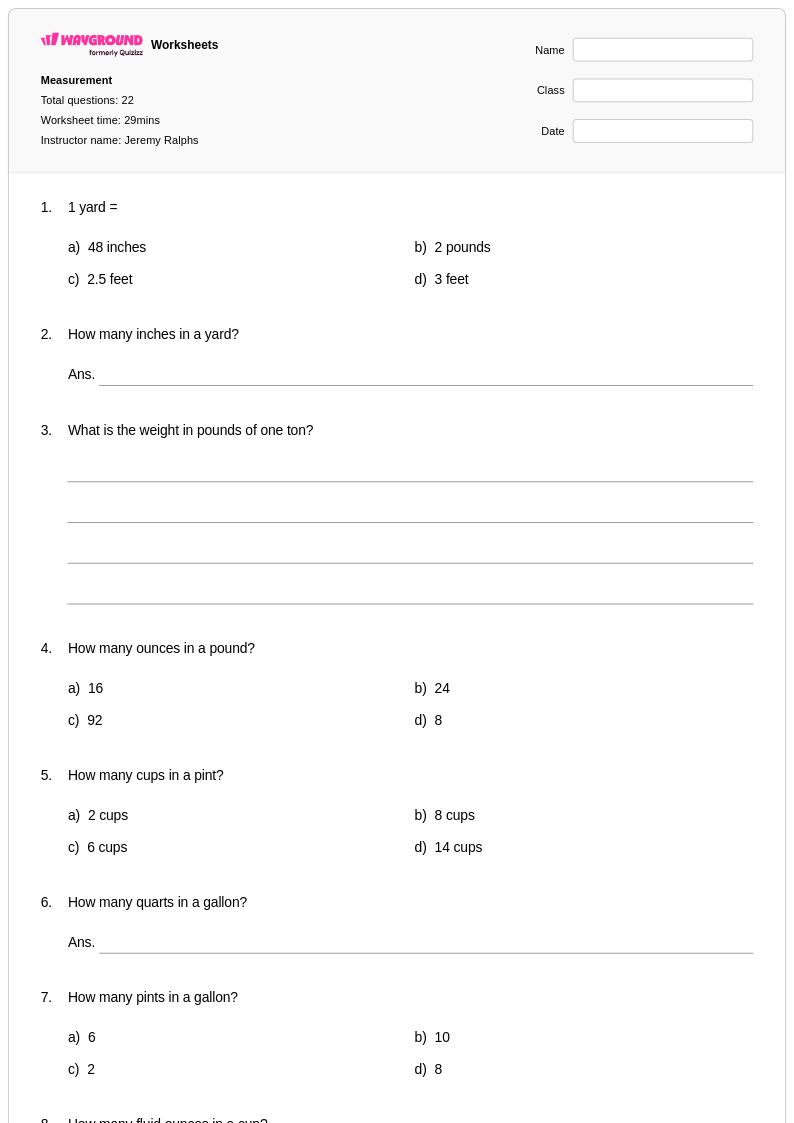
22 Q
4th
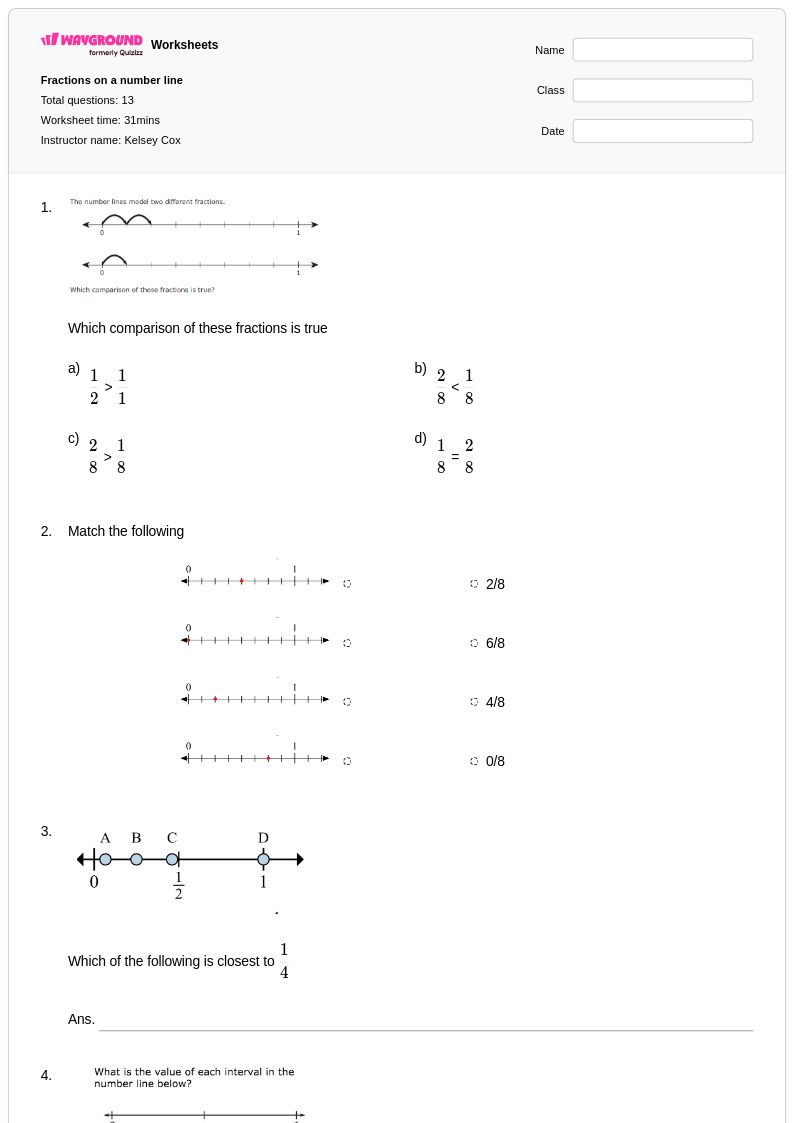
13 Q
3rd
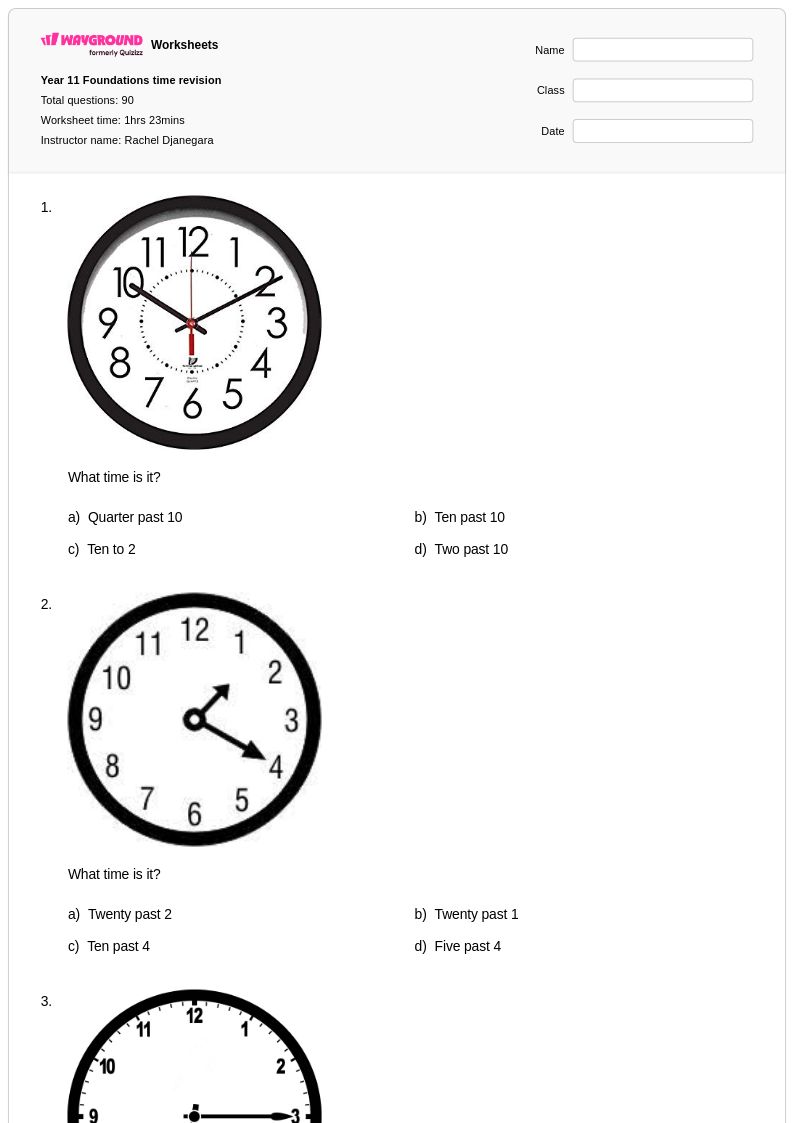
90 Q
11th
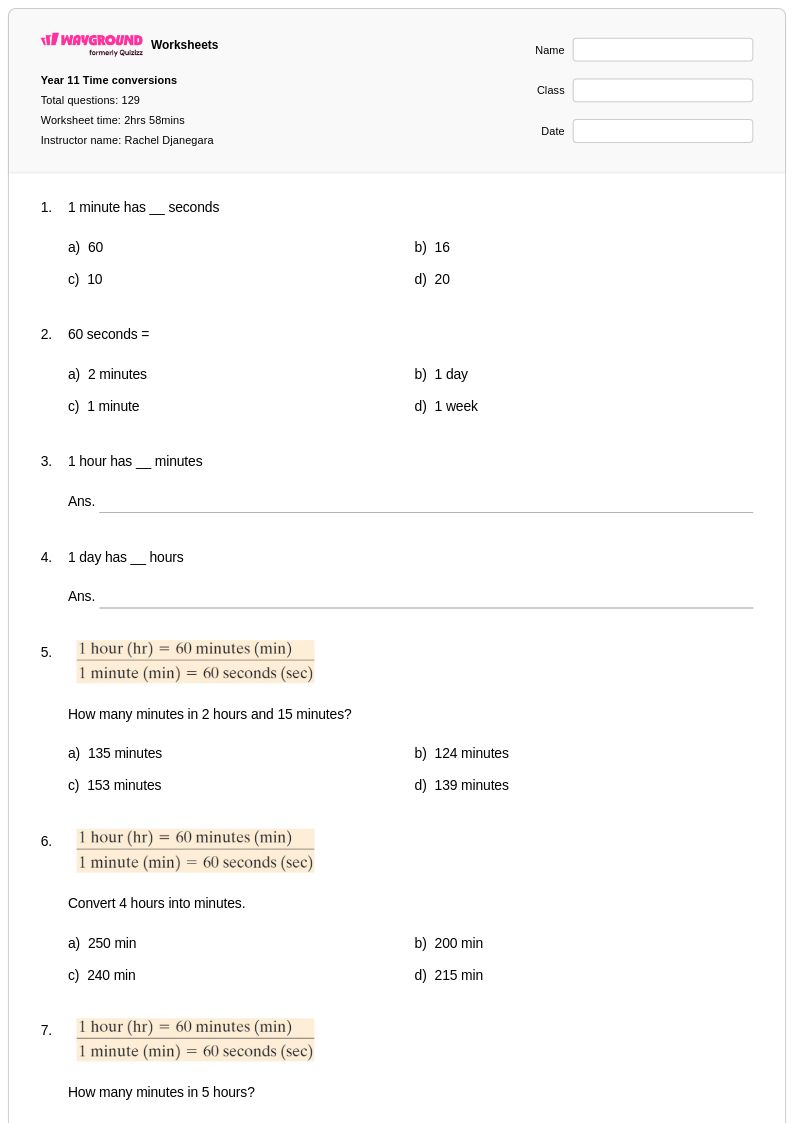
129 Q
11th
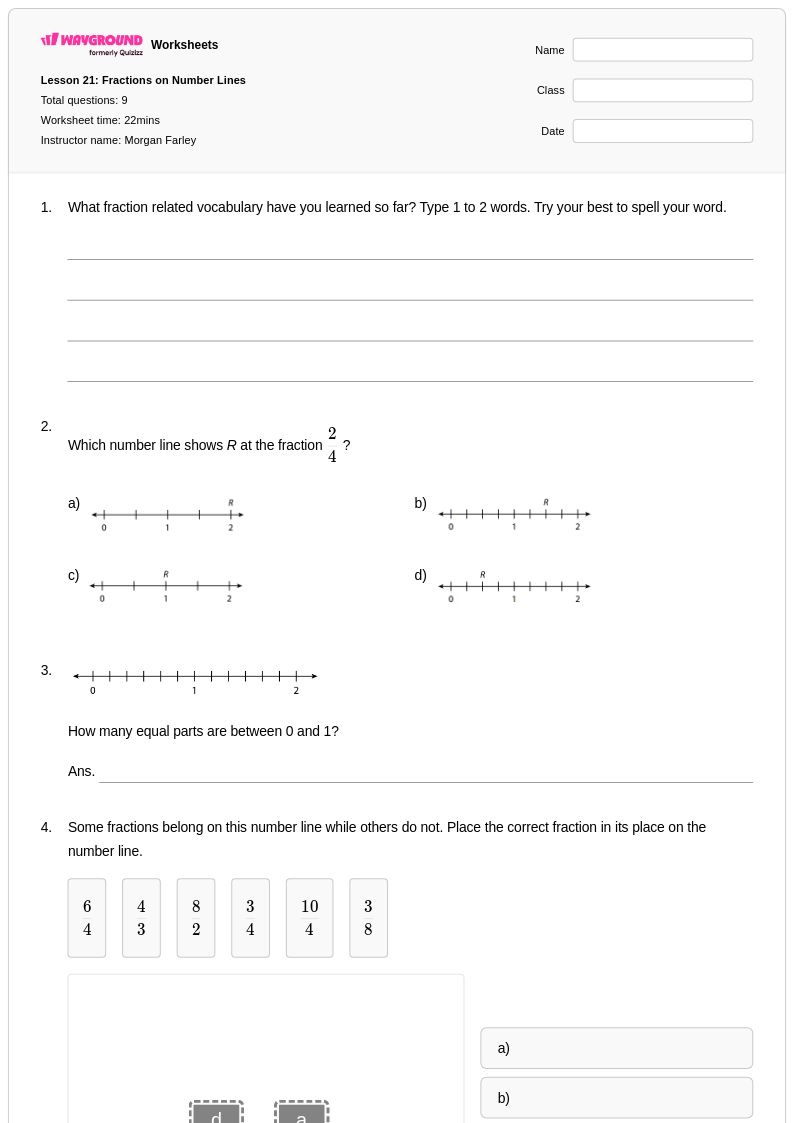
16 Q
3rd
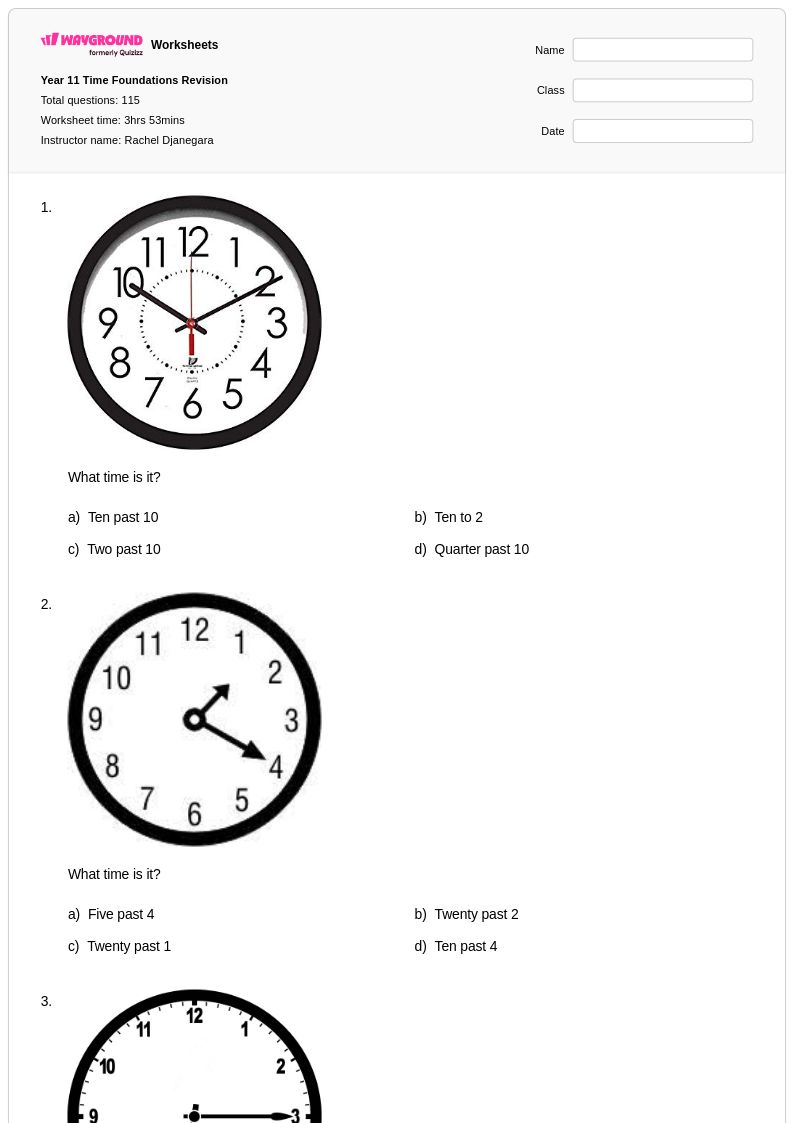
115 Q
11th
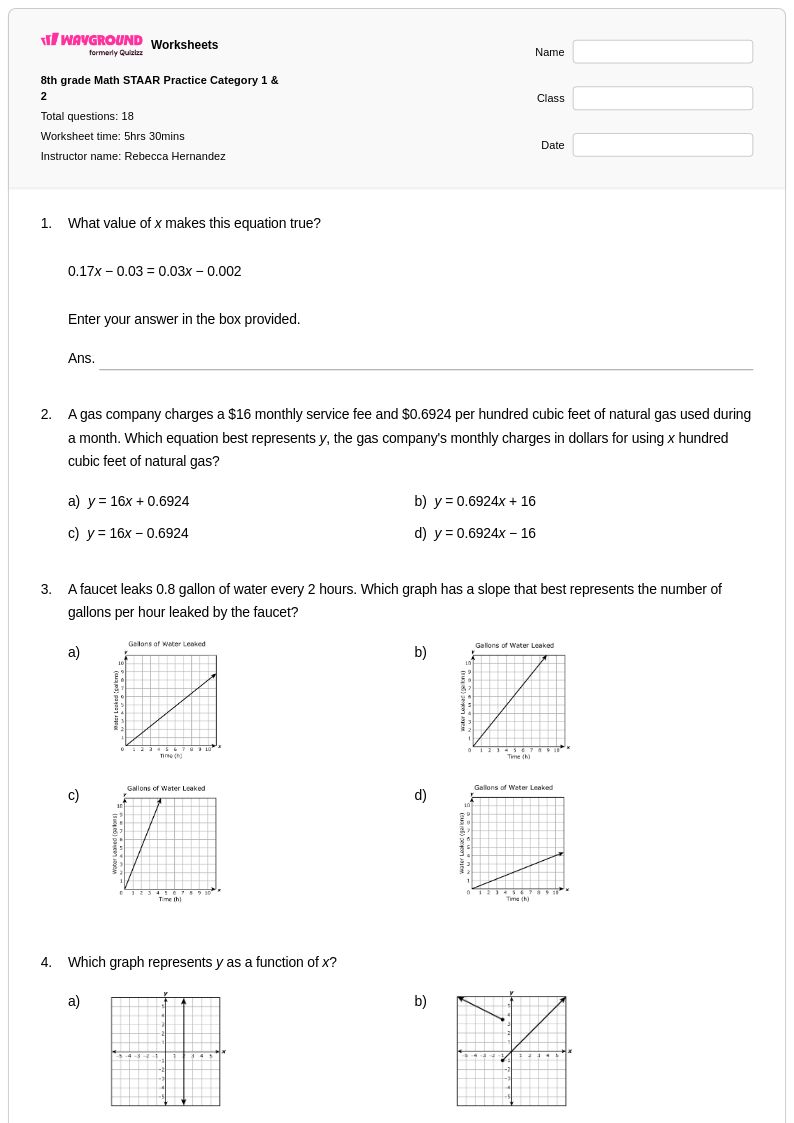
18 Q
8th
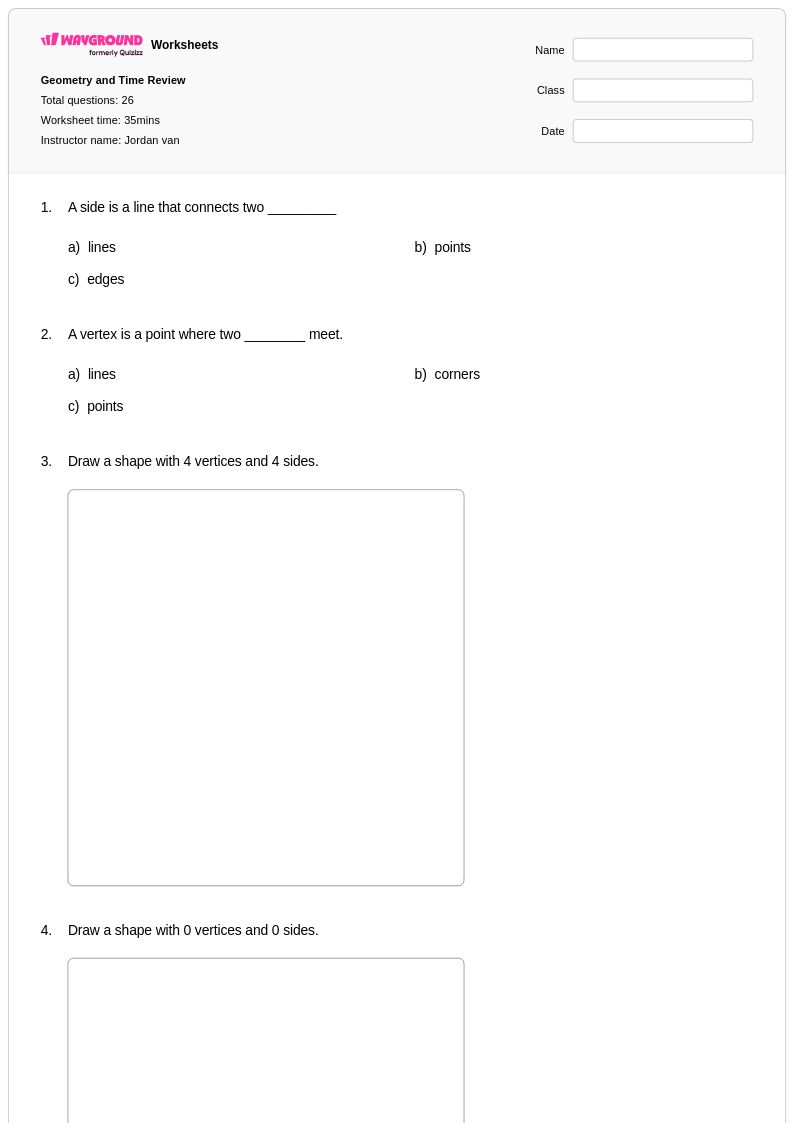
26 Q
1st
17 Q
8th
20 Q
3rd - Uni
19 Q
4th
20 Q
6th
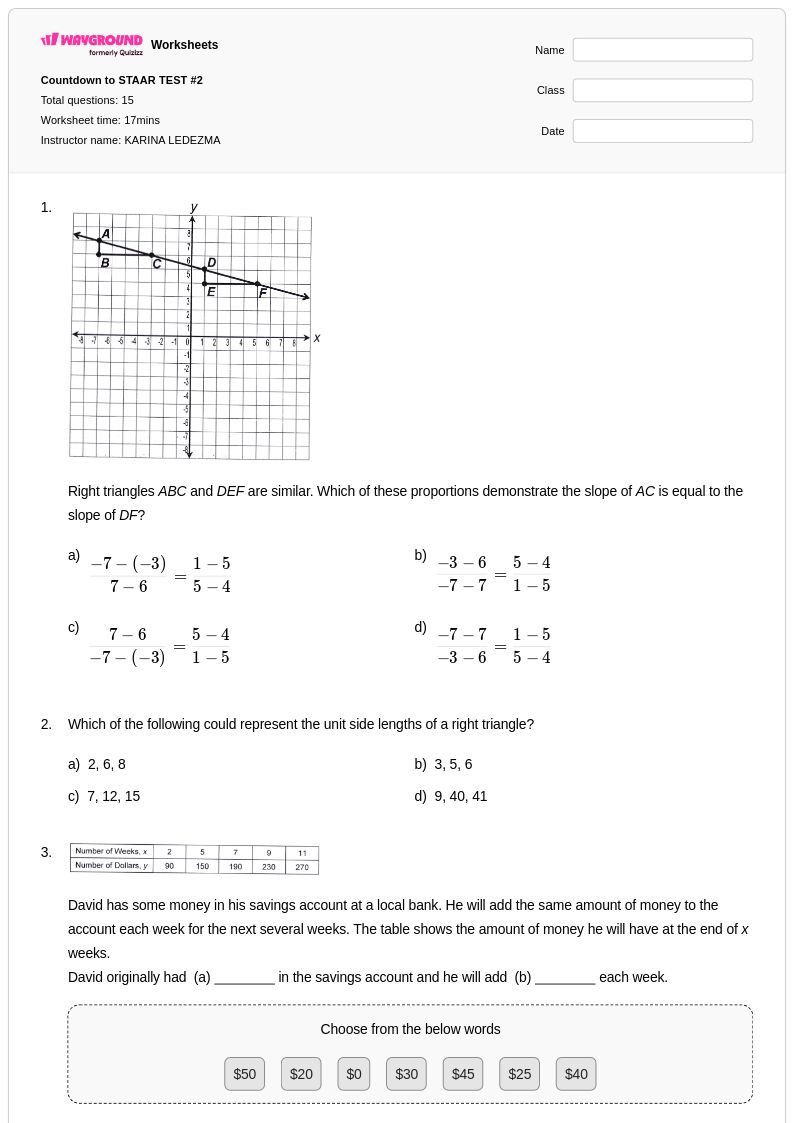
15 Q
8th
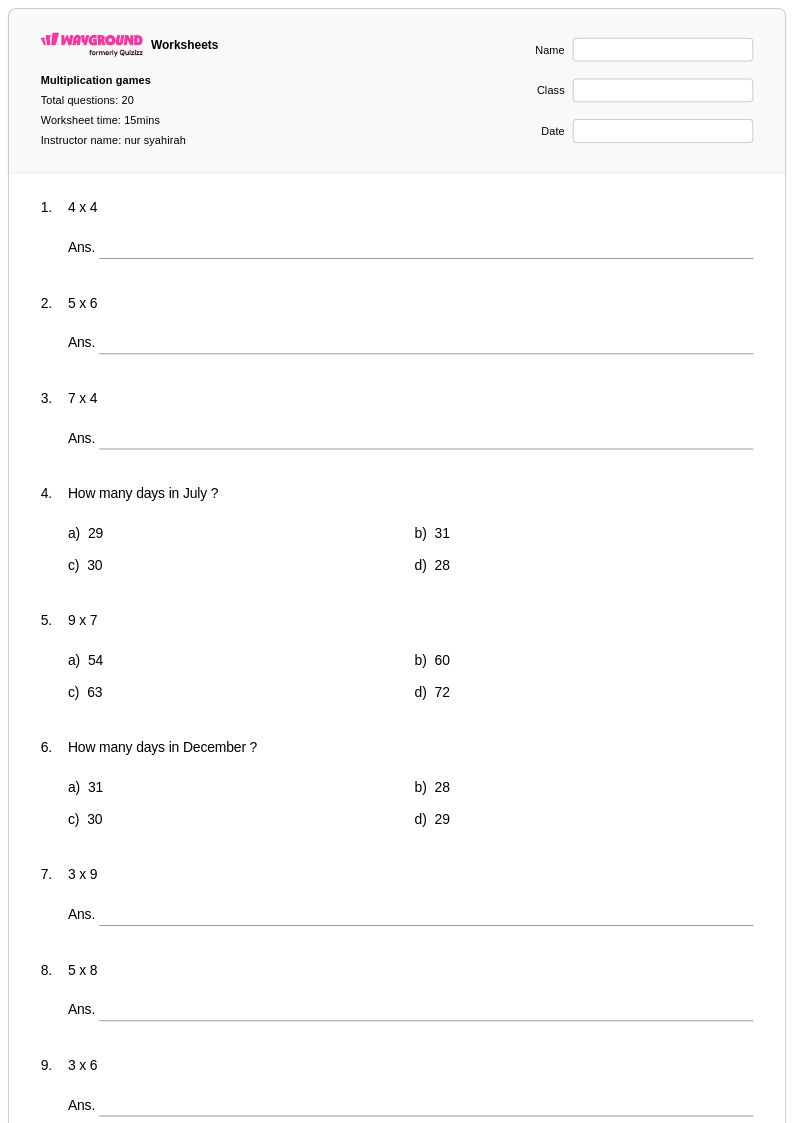
20 Q
4th
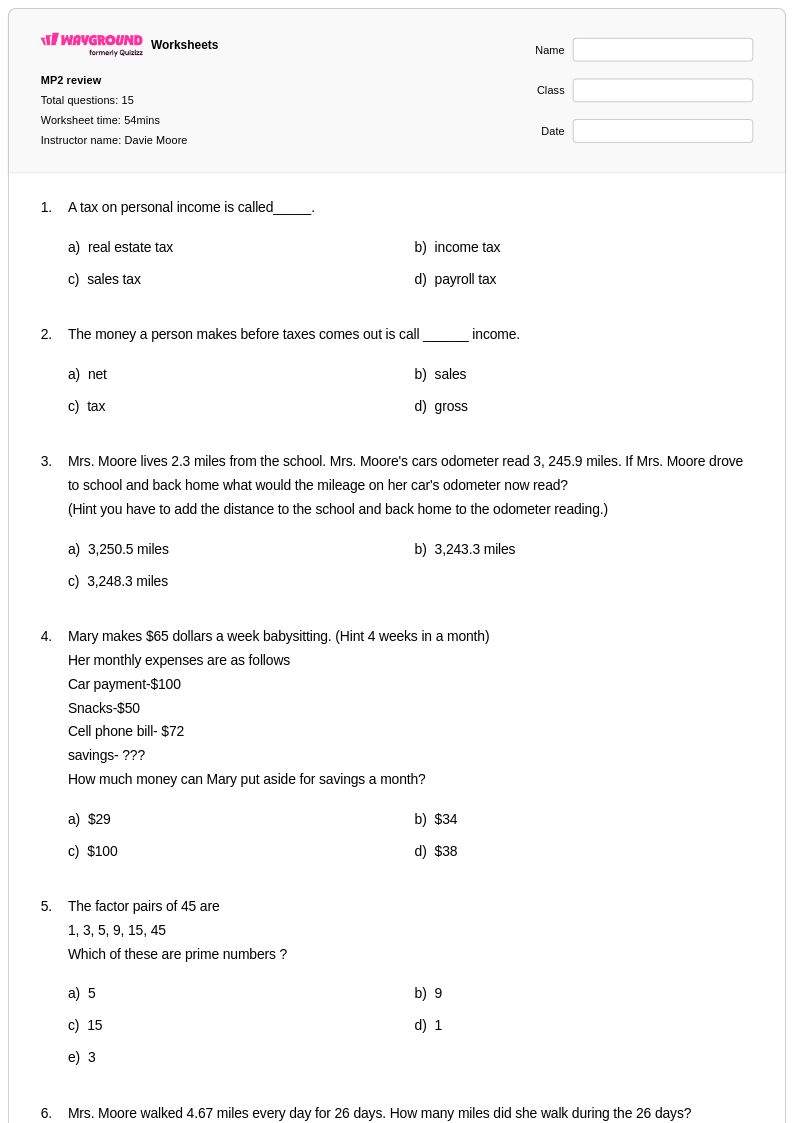
15 Q
5th
Explore Worksheets by Grade
Explore Worksheets by Subjects
Explore printable Days, Weeks, and Months on a Calendar worksheets
Days, weeks, and months on a calendar worksheets available through Wayground (formerly Quizizz) provide students with essential practice in understanding temporal relationships and calendar navigation skills. These comprehensive mathematical resources strengthen students' ability to identify days of the week, recognize month sequences, calculate time intervals, and interpret calendar layouts through engaging practice problems. The worksheets systematically build conceptual understanding of how time units connect, helping learners master skills like counting days between dates, identifying specific calendar patterns, and solving real-world scheduling problems. Each printable resource includes detailed answer keys and spans various difficulty levels, offering free access to professionally designed materials that support both classroom instruction and independent study in time-related mathematics concepts.
Wayground (formerly Quizizz) empowers educators with millions of teacher-created calendar and time worksheets that feature robust search and filtering capabilities, enabling quick identification of materials aligned to specific learning standards and student needs. The platform's differentiation tools allow teachers to customize worksheet difficulty, modify problem types, and adjust content complexity to meet diverse learner requirements for calendar skills instruction. These flexible resources are available in both printable pdf formats and interactive digital versions, supporting seamless integration into lesson planning whether for whole-class instruction, small group remediation, or individual enrichment activities. Teachers can efficiently organize skill practice sessions, create targeted interventions for students struggling with time concepts, and provide advanced challenges for learners ready to explore more complex calendar calculations and temporal reasoning problems.
FAQs
How do I teach students to understand days, weeks, and months on a calendar?
What exercises help students practice calendar skills?
What mistakes do students commonly make when reading calendars?
How can I use Wayground calendar worksheets in my classroom?
How do calendar skills fit into the Common Core math progression?
How can I differentiate calendar practice for mixed-ability learners?