Free Printable Dial Caliper Worksheets for Grade 6
Grade 6 dial caliper worksheets from Wayground help students master precise measurement techniques through engaging printables, practice problems, and comprehensive answer keys for effective science learning.
Explore printable Dial Caliper worksheets for Grade 6
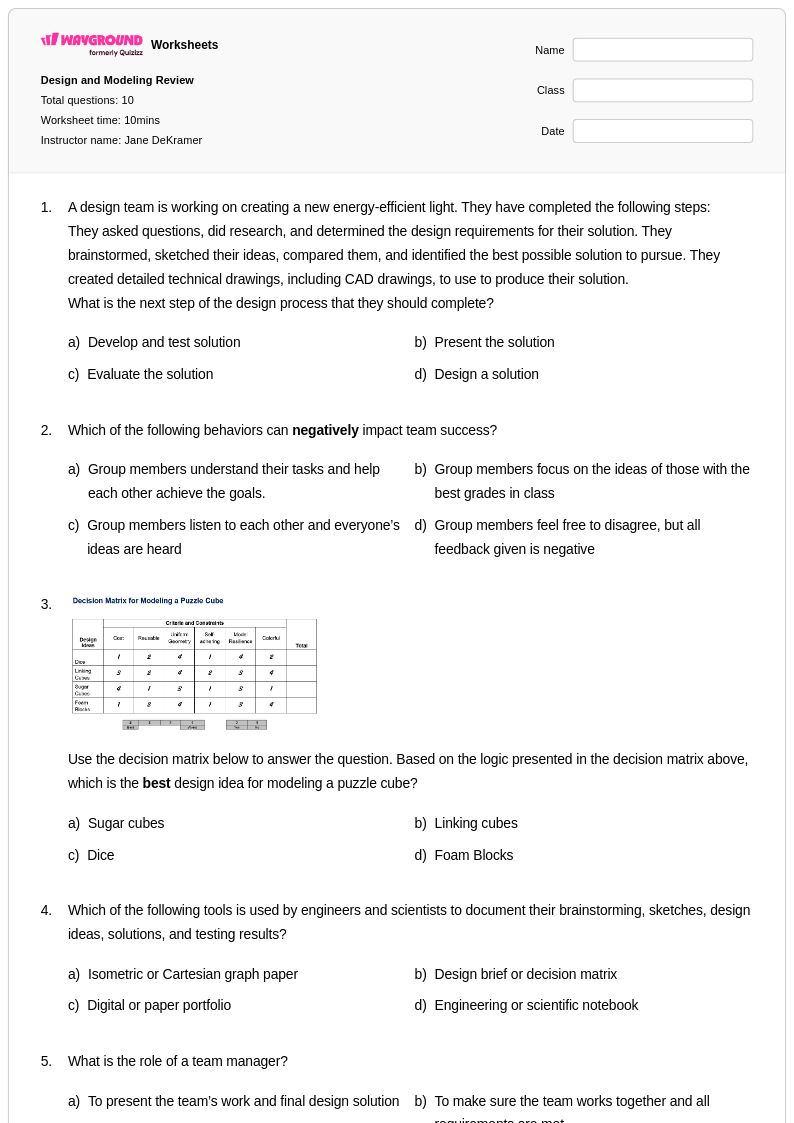
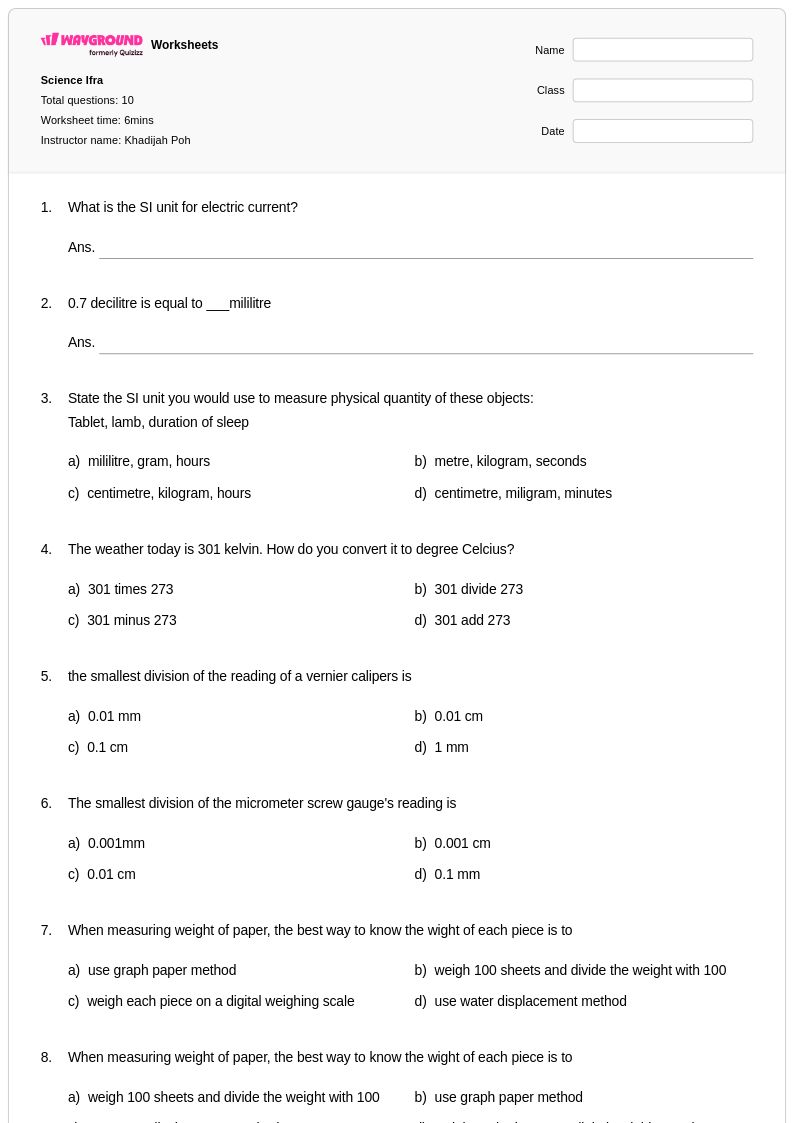
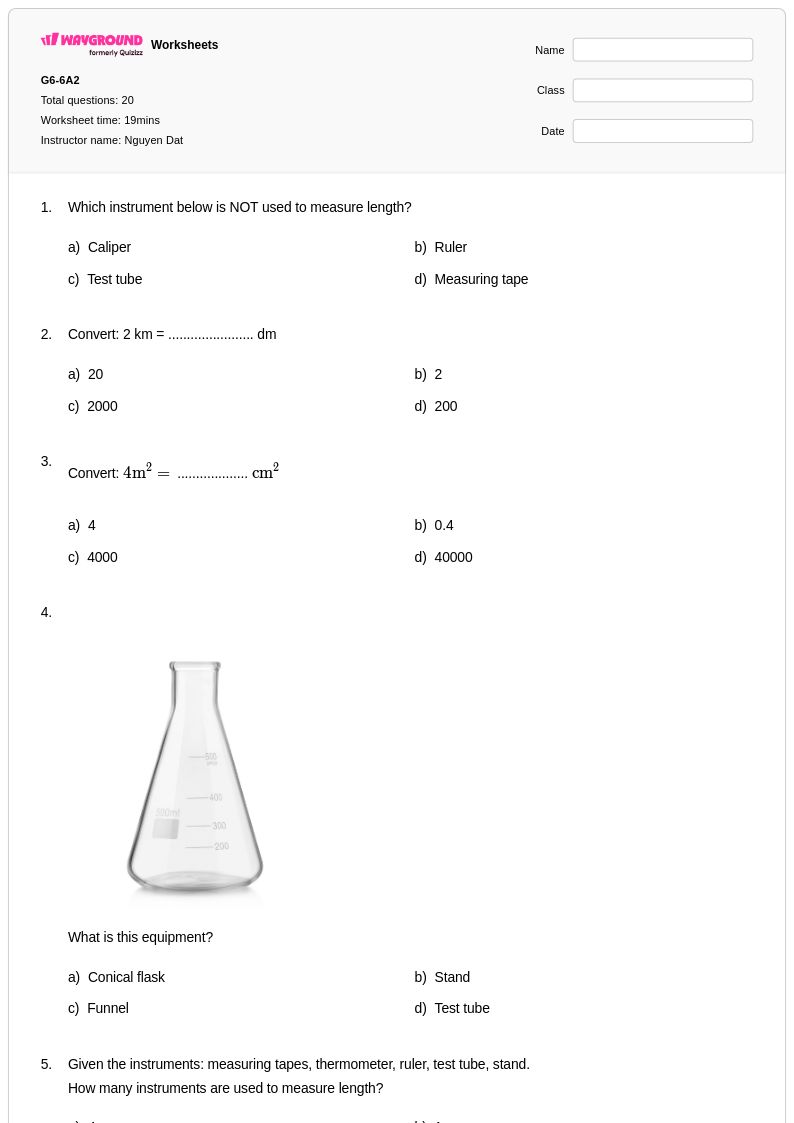
Dial caliper worksheets for Grade 6 students provide essential hands-on practice with one of science's most important precision measuring instruments. These comprehensive educational resources guide students through the fundamentals of using dial calipers to measure external dimensions, internal dimensions, and depth with accuracy to the nearest millimeter or fraction of an inch. The worksheets feature carefully structured practice problems that progress from basic caliper reading exercises to more complex measurement scenarios, helping students develop the technical skills necessary for scientific investigation and data collection. Each worksheet collection includes detailed answer keys and step-by-step explanations, making these free printable resources invaluable for both classroom instruction and independent study as students master this critical scientific tool.
Wayground, formerly Quizizz, empowers educators with an extensive library of millions of teacher-created dial caliper worksheet resources specifically designed for Grade 6 science instruction. The platform's robust search and filtering capabilities allow teachers to quickly locate worksheets that align with curriculum standards and match their students' specific learning needs, whether for initial skill introduction, remediation, or advanced enrichment activities. Teachers can easily customize these digital and printable pdf worksheets to differentiate instruction, modify difficulty levels, and adapt content for diverse learning styles within their classrooms. This comprehensive collection supports effective lesson planning by providing ready-to-use materials that seamlessly integrate into units on measurement, scientific tools, and laboratory techniques, ensuring students develop confidence and competency with dial caliper usage across various scientific contexts.
FAQs
How do I teach students to read a dial caliper for the first time?
Start by introducing the three main measurement types a dial caliper performs: external, internal, and depth measurements. Teach students to identify the main scale and the dial face separately before combining readings, and emphasize zero adjustment as a non-negotiable first step before any measurement is taken. Hands-on practice with physical calipers alongside structured worksheets helps students build muscle memory and reading confidence simultaneously.
What exercises help students practice reading dial calipers accurately?
Effective practice moves students progressively from reading simple external diameter measurements to more complex internal and depth measurements. Exercises that present illustrated dial faces at various positions and ask students to record readings to hundredths of millimeters or thousandths of inches are particularly useful for building precision. Structured worksheets that pair each problem with a correct answer key allow students to self-assess and immediately correct misreadings before the error becomes habit.
What mistakes do students commonly make when reading a dial caliper?
The most common error is forgetting to zero the caliper before measuring, which introduces a systematic offset into every reading. Students also frequently misread the main scale by one full millimeter increment before adding the dial reading, leading to answers that are consistently off by a whole unit. A third common mistake is confusing metric and imperial scales when a dual-scale caliper is used, particularly when the problem set switches between unit systems.
How do I differentiate dial caliper instruction for students with different skill levels?
For beginning students, start with problems that isolate the dial face reading before introducing the combined main-scale-plus-dial calculation. More advanced students can be challenged with problems requiring internal and depth measurements, which demand greater spatial reasoning and procedural care. On Wayground, teachers can apply accommodations such as reduced answer choices to decrease cognitive load for struggling learners, or enable Read Aloud so that question text is accessible to students who need additional support, all without notifying the rest of the class.
How do I use Wayground's dial caliper worksheets in my classroom?
Wayground's dial caliper worksheets are available as printable PDFs, making them straightforward to distribute during lab preparation or as homework assignments where formatting consistency matters. They are also available in digital formats, so teachers can assign them through the platform for technology-integrated lessons, or host them as a live quiz on Wayground for real-time student response and immediate feedback. Both formats include complete answer keys, which support independent student review and reduce grading time.
How do dial caliper measurements relate to vernier calipers, and should I teach both?
Dial and vernier calipers measure the same dimensions but differ in how the fractional reading is displayed: a vernier caliper uses a sliding engraved scale, while a dial caliper uses a circular dial face that many students find easier to read accurately. Teaching dial calipers first is a sound instructional sequence because the dial eliminates the interpolation step that trips up beginners on vernier scales. Once students are fluent with dial calipers, transitioning to vernier calipers reinforces the same underlying measurement logic with added precision skill.