Free Printable Dyslexia Intervention Worksheets for Grade 9
Grade 9 dyslexia intervention worksheets from Wayground provide specialized reading support through printables and practice problems designed to help students overcome learning challenges with comprehensive answer keys included.
Explore printable Dyslexia Intervention worksheets for Grade 9
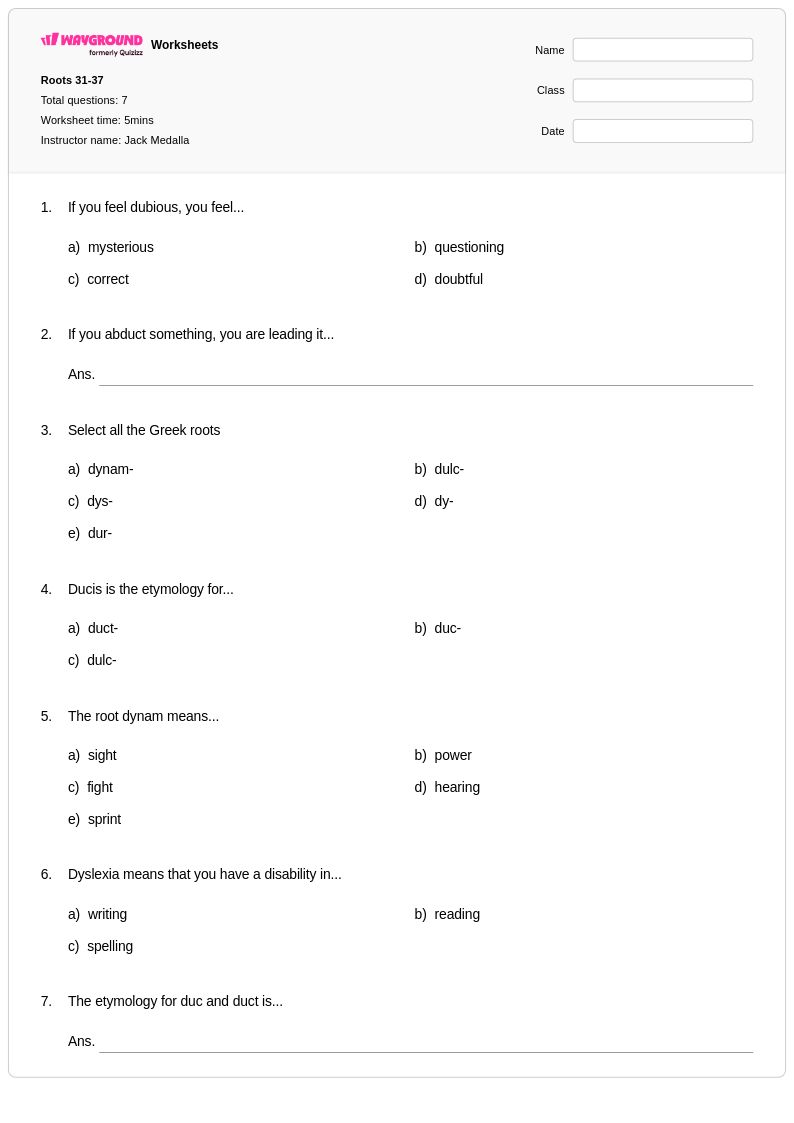
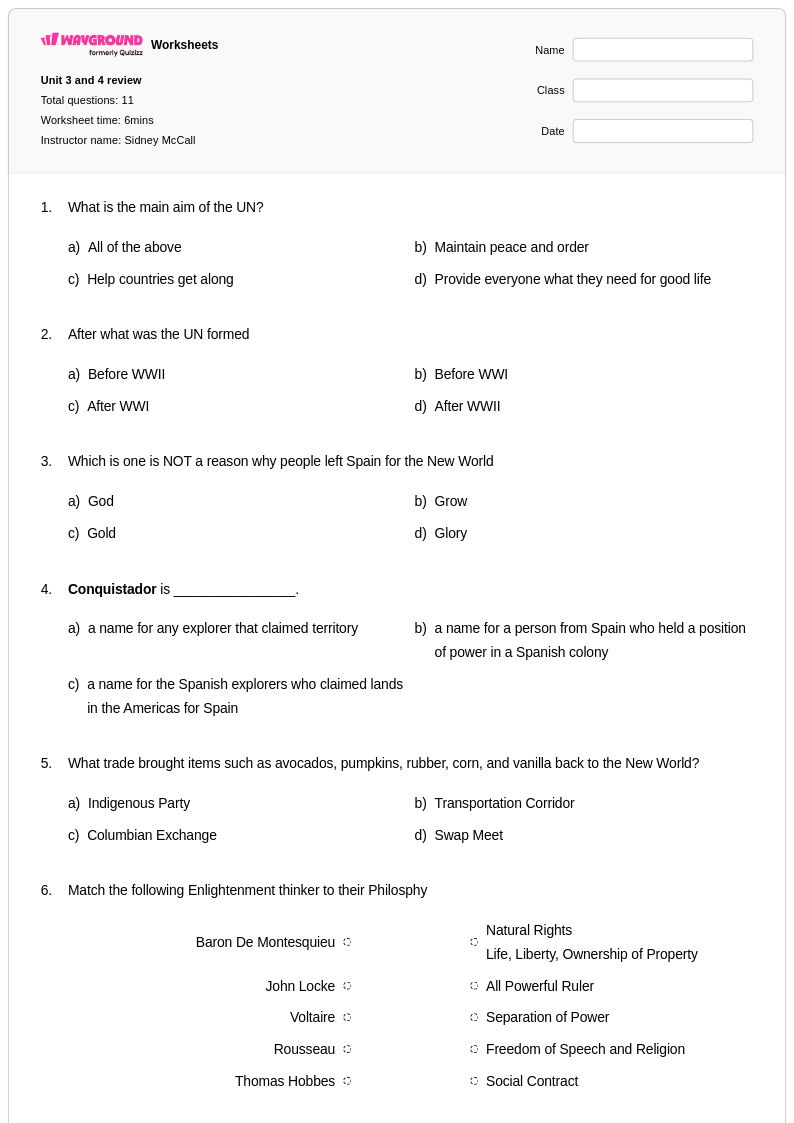
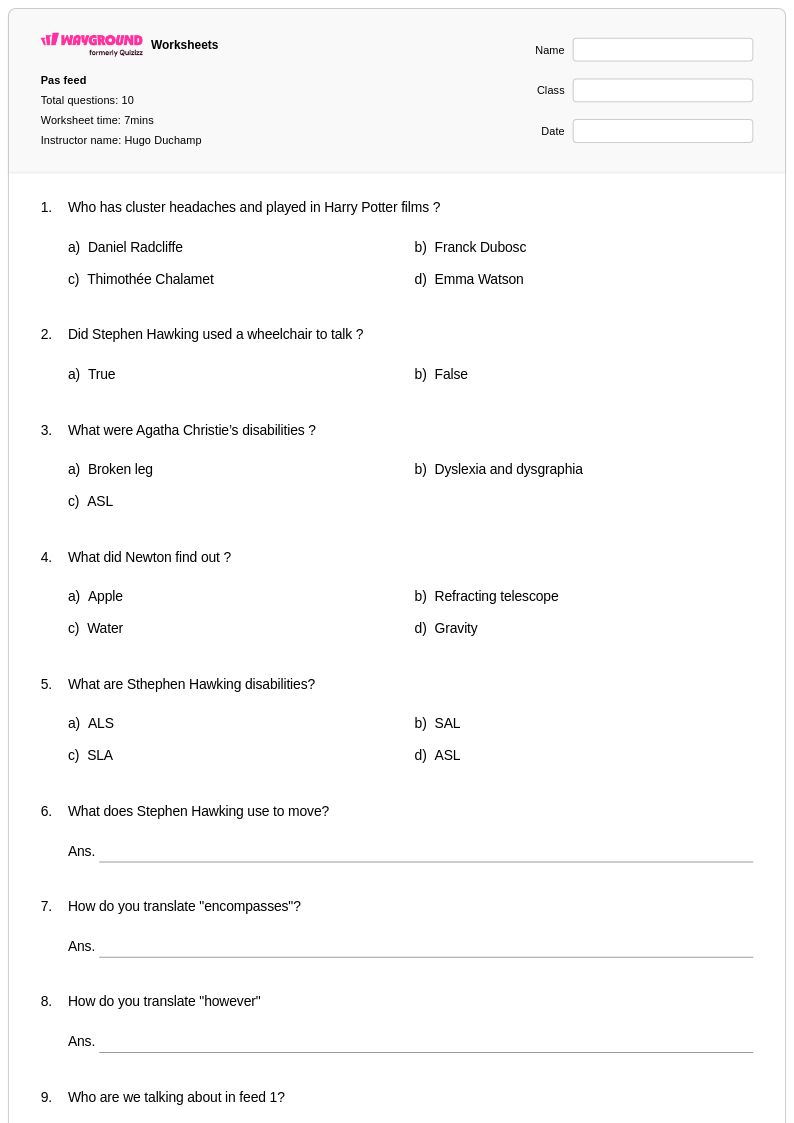
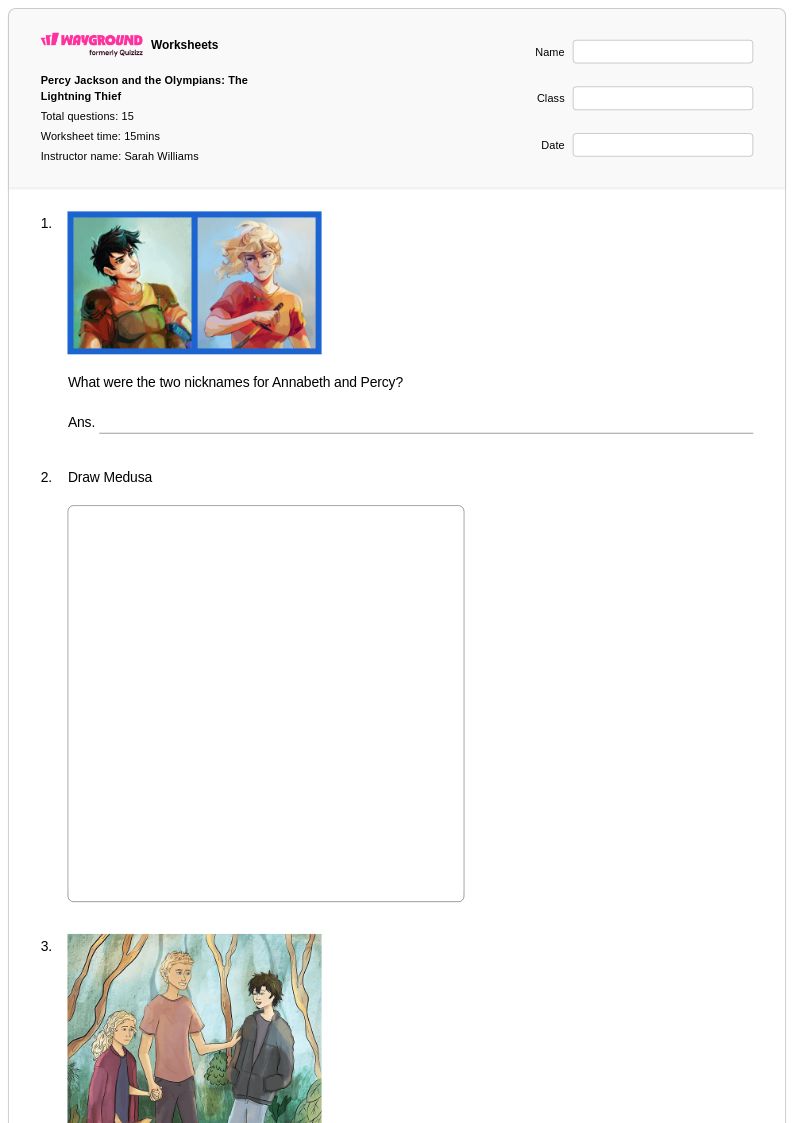
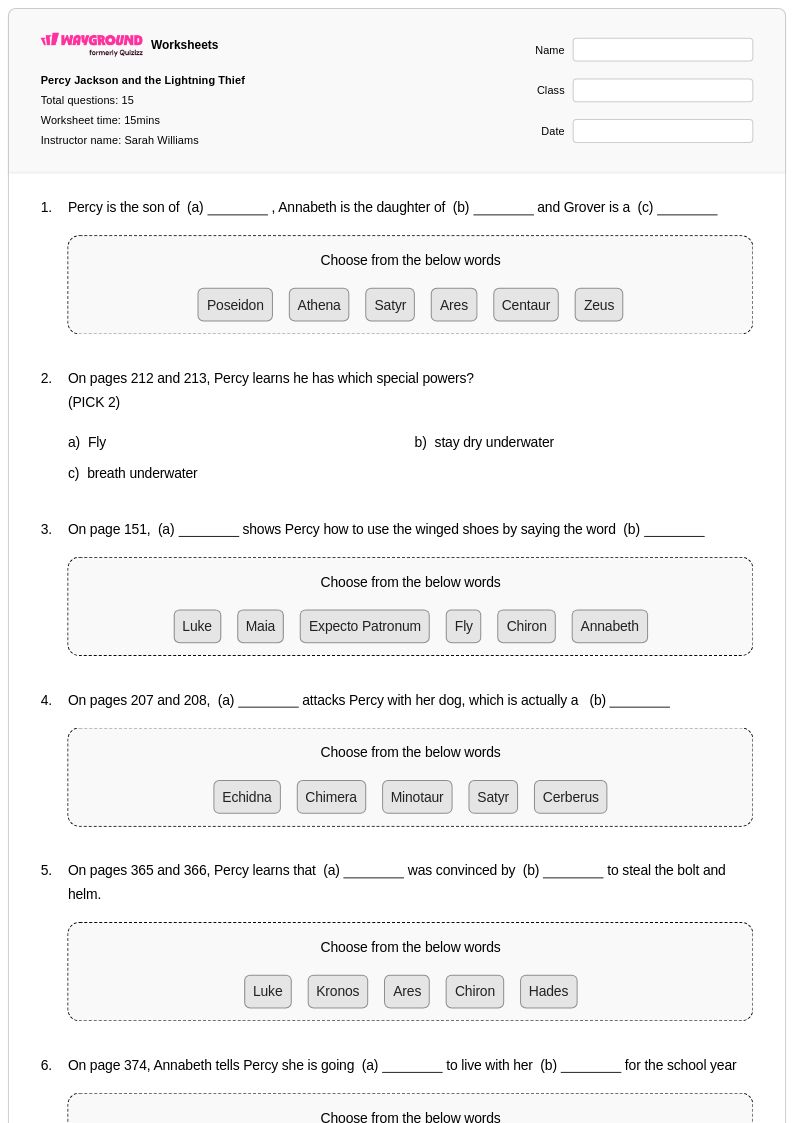
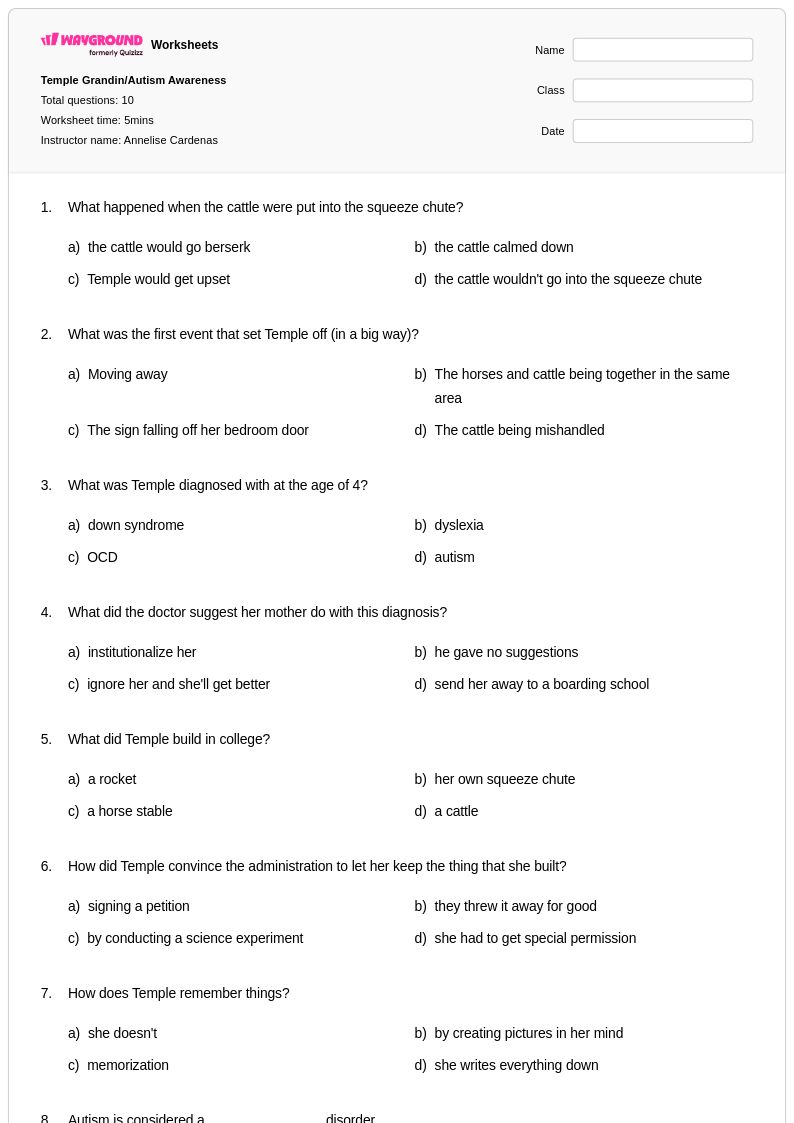
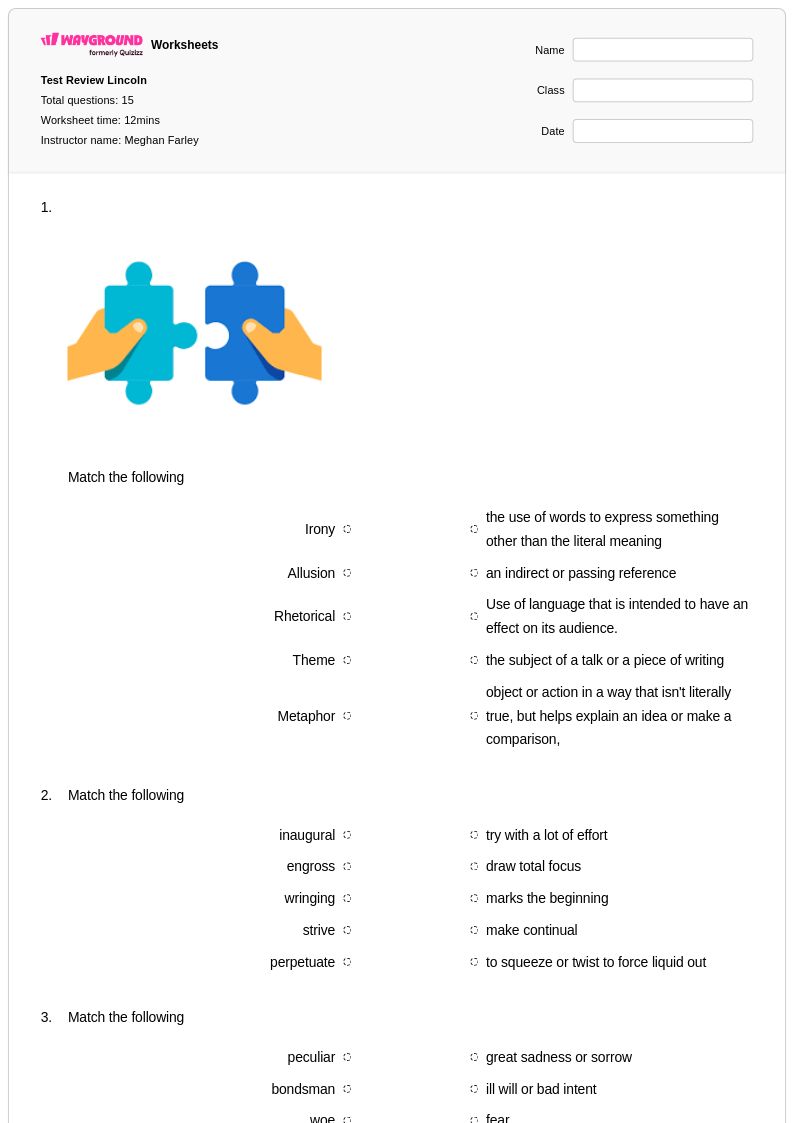
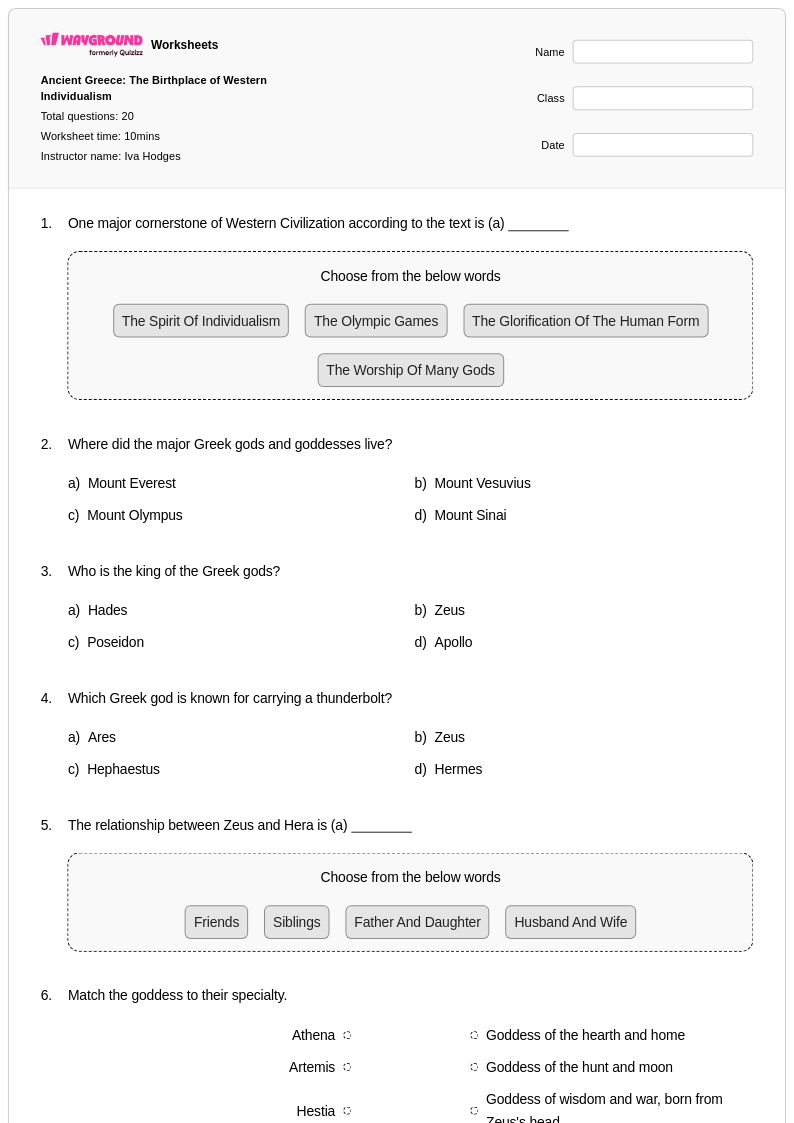
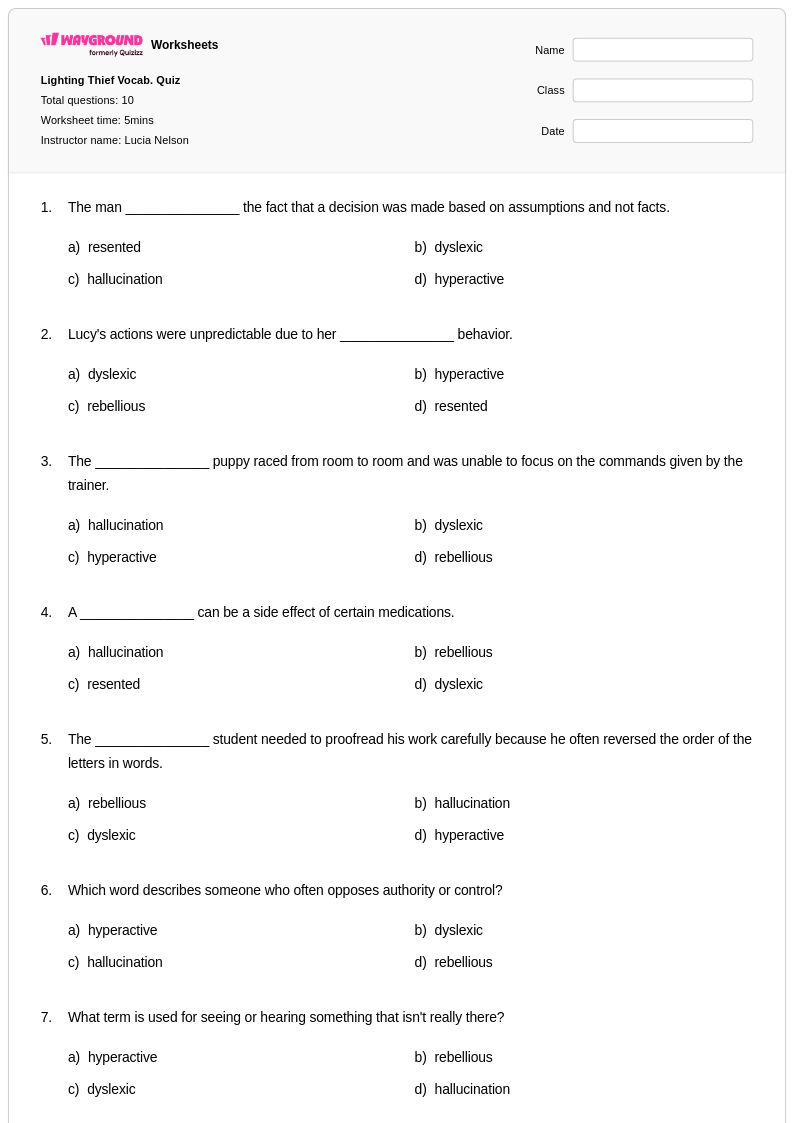
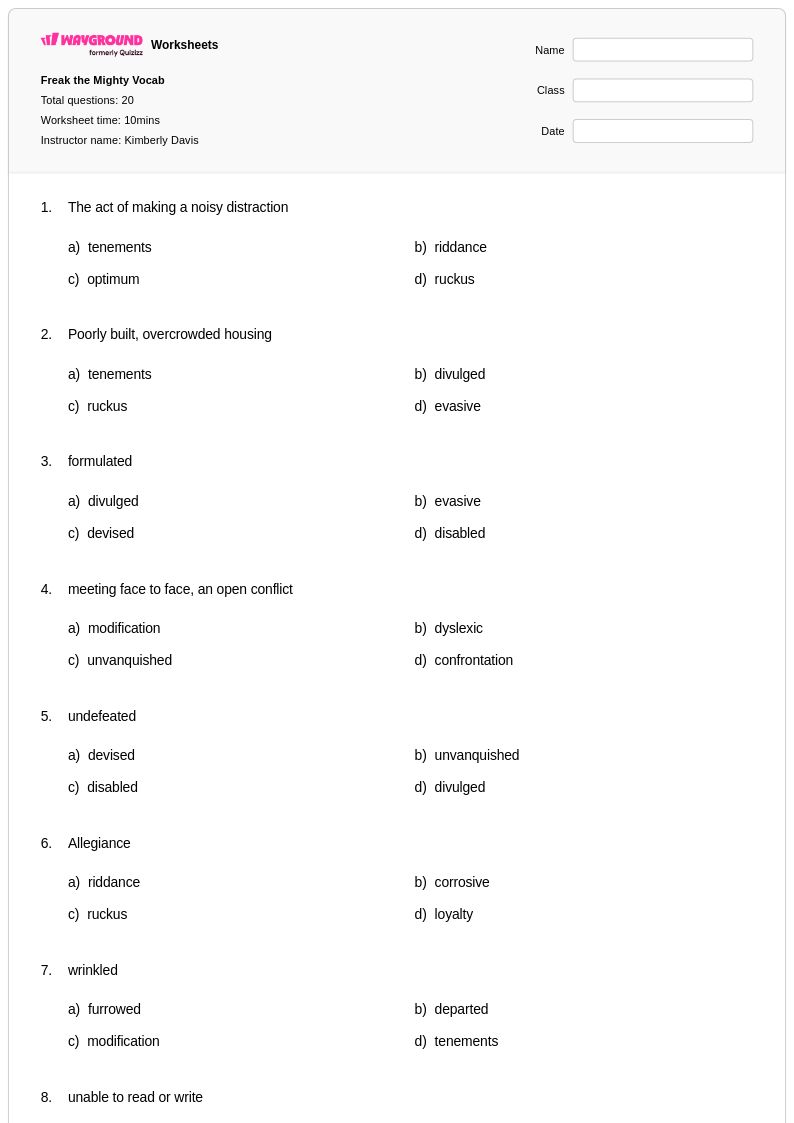
Dyslexia intervention worksheets for Grade 9 students available through Wayground (formerly Quizizz) provide specialized reading support designed to address the unique learning challenges faced by students with dyslexia. These comprehensive worksheets focus on essential skills including phonemic awareness, decoding strategies, sight word recognition, and reading fluency development tailored specifically for ninth-grade academic expectations. Each worksheet incorporates evidence-based intervention techniques such as multisensory learning approaches, structured literacy methods, and systematic phonics instruction that research has proven effective for dyslexic learners. Teachers can access complete answer keys alongside each worksheet, ensuring accurate assessment and immediate feedback opportunities, while the free printables offer convenient practice problems that students can work through at their own pace in both classroom and home environments.
Wayground's extensive collection of teacher-created dyslexia intervention resources empowers educators with millions of specialized worksheets that can be easily located through advanced search and filtering capabilities. The platform's standards alignment features ensure that Grade 9 dyslexia intervention materials meet appropriate academic benchmarks while supporting individualized education plan goals and accommodation requirements. Teachers benefit from robust differentiation tools that allow customization of reading difficulty levels, font sizes, and visual layouts to optimize accessibility for students with varying degrees of dyslexic processing differences. Available in both printable pdf formats and interactive digital versions, these worksheets facilitate flexible lesson planning approaches that support remediation of reading deficits, enrichment of comprehension strategies, and consistent skill practice essential for building reading confidence and academic success in ninth-grade students with dyslexia.
FAQs
What are the most effective strategies for teaching students with dyslexia?
The most effective strategies for teaching students with dyslexia are grounded in structured literacy approaches that are explicit, systematic, and multisensory. These include direct instruction in phonemic awareness, phonics patterns, and decoding strategies, with repeated exposure to letter-sound correspondences and syllable segmentation. Research consistently supports combining auditory, visual, and kinesthetic methods to reinforce reading skills for dyslexic learners.
What kinds of practice exercises help dyslexic students build reading skills?
Dyslexic students benefit most from structured, repeated practice in phonemic awareness, phonics decoding, syllable segmentation, sight word recognition, and fluency building. Exercises should isolate specific skill gaps rather than presenting broad reading tasks, since dyslexic learners typically need targeted reinforcement of foundational components before applying them in connected text. Short, focused practice sessions with clear feedback are more effective than extended unstructured reading time.
What reading mistakes or misconceptions are most common in students with dyslexia?
Students with dyslexia commonly reverse or transpose letters such as b/d and p/q, misread phonetically irregular sight words, and struggle to blend individual phonemes into whole words during decoding. They may also skip syllables in multisyllabic words, guess based on initial letters rather than decoding fully, and have difficulty retaining high-frequency words despite repeated exposure. Identifying which specific error patterns a student exhibits is essential for designing an effective intervention plan.
How can I differentiate dyslexia intervention worksheets for students at different reading levels?
Effective differentiation for dyslexia intervention means matching the phonics scope and sequence to each student's current decoding level rather than their grade level, since dyslexic students often have significant gaps between their reading ability and their age-appropriate peers. On Wayground, teachers can filter resources by specific phonics patterns or intervention goals and modify existing worksheets to create personalized versions suited to individual students. For students who need additional support during digital practice, Wayground also offers built-in accommodations such as read aloud, extended time, and reduced answer choices, which can be assigned to individual students without disrupting the rest of the class.
How do I use Wayground's dyslexia intervention worksheets in my classroom?
Wayground's dyslexia intervention worksheets are available as printable PDFs for small group pull-out sessions, one-on-one intervention, or independent practice, and in digital formats for technology-integrated learning environments. Teachers can also host worksheets as a quiz on Wayground, allowing students to complete activities interactively while the platform tracks responses. Each worksheet includes a comprehensive answer key, making it straightforward to review student work and identify which phonics patterns or decoding skills need further targeted instruction.
How do I track student progress during dyslexia intervention?
Tracking progress in dyslexia intervention requires monitoring performance on specific skill areas rather than overall reading scores, since growth is typically incremental and skill-specific. Using worksheets with clear answer keys allows teachers to document which phonics patterns, sight words, or decoding strategies a student has mastered and which still require reinforcement. Consistent data collection across repeated practice sessions helps teachers adjust intervention plans and communicate progress to specialists, parents, and support teams.