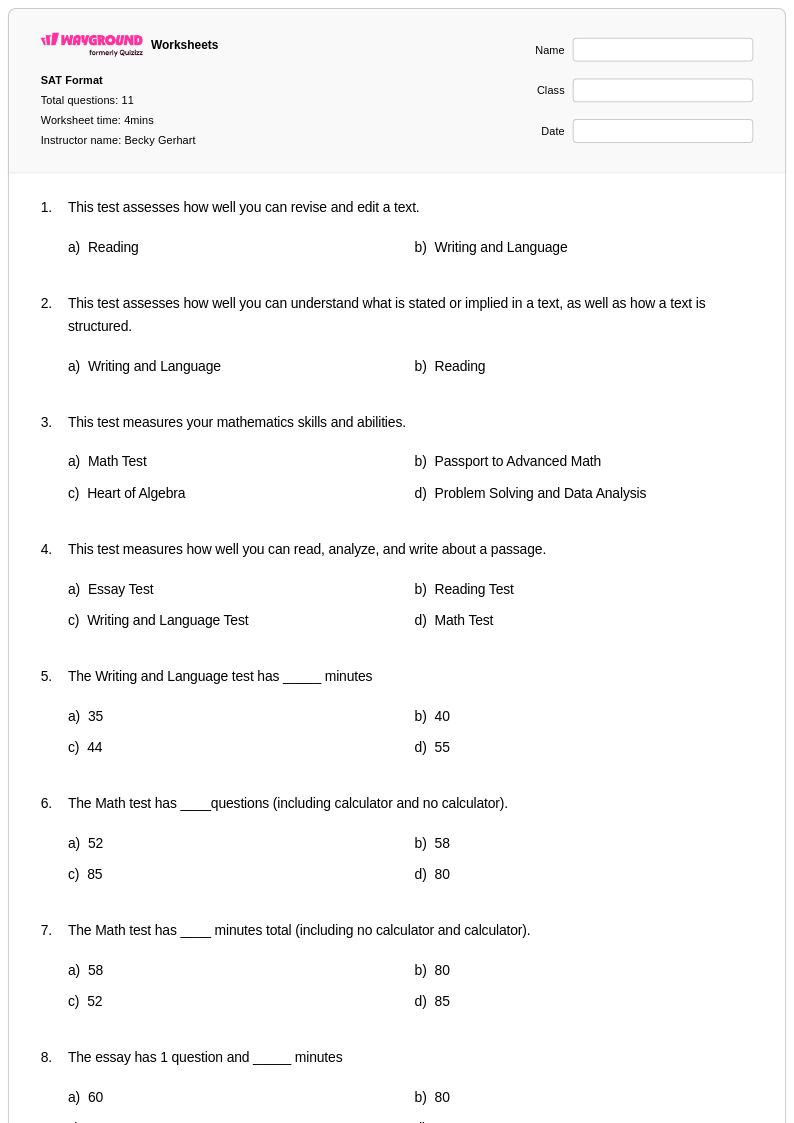
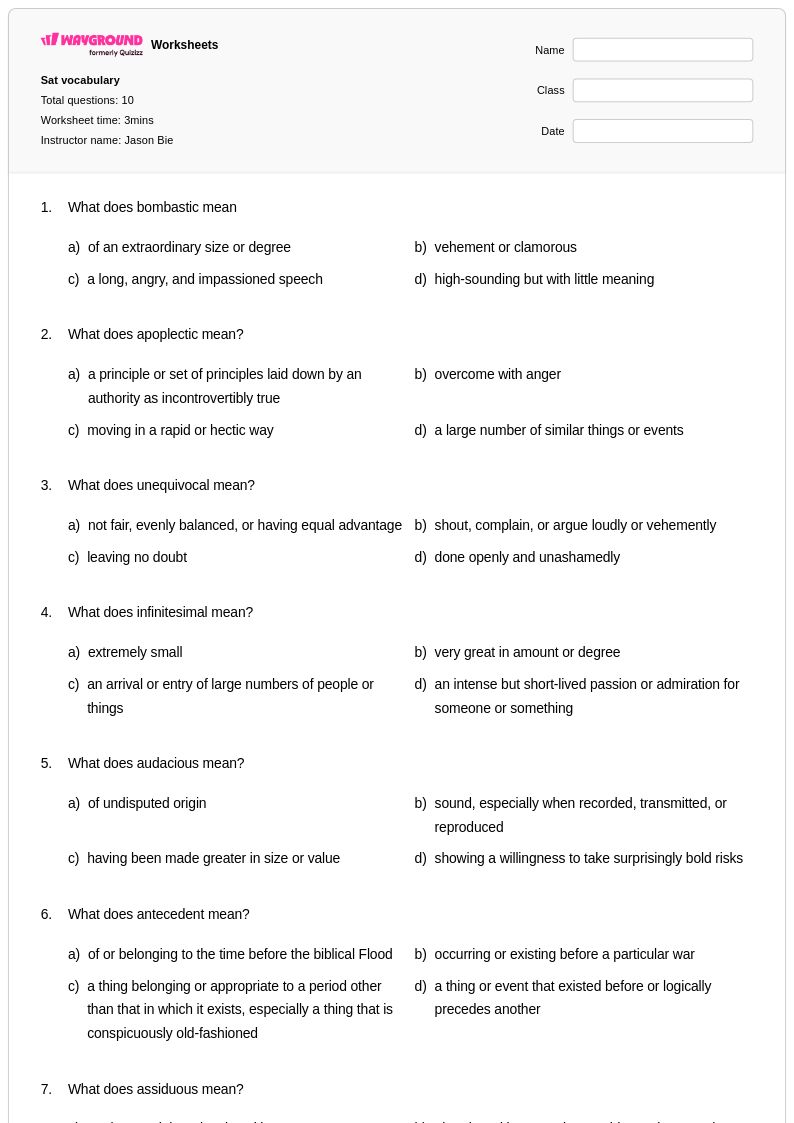
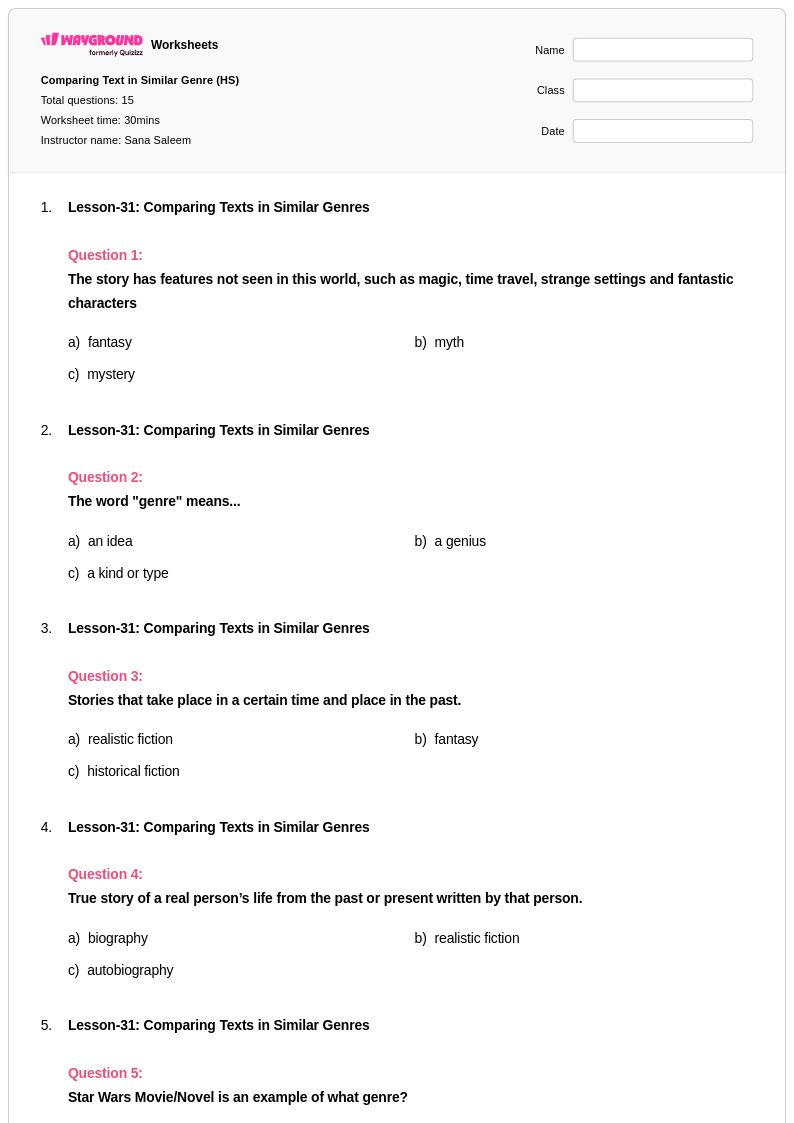
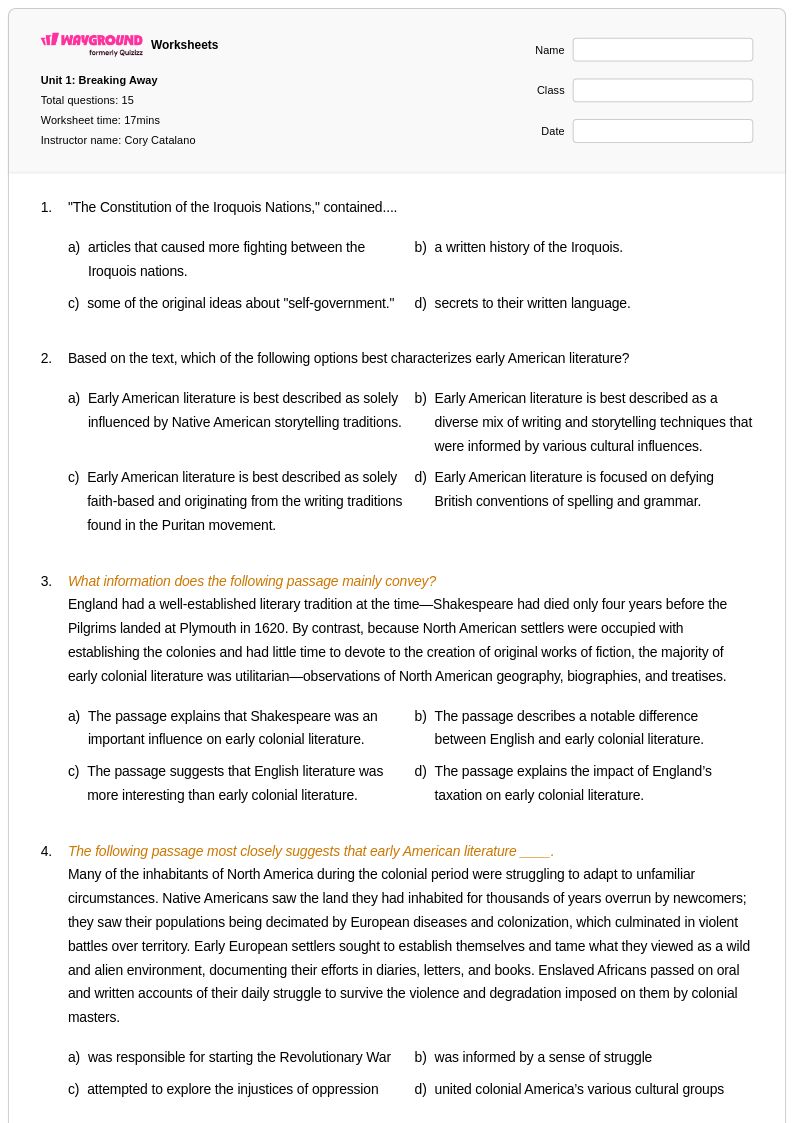
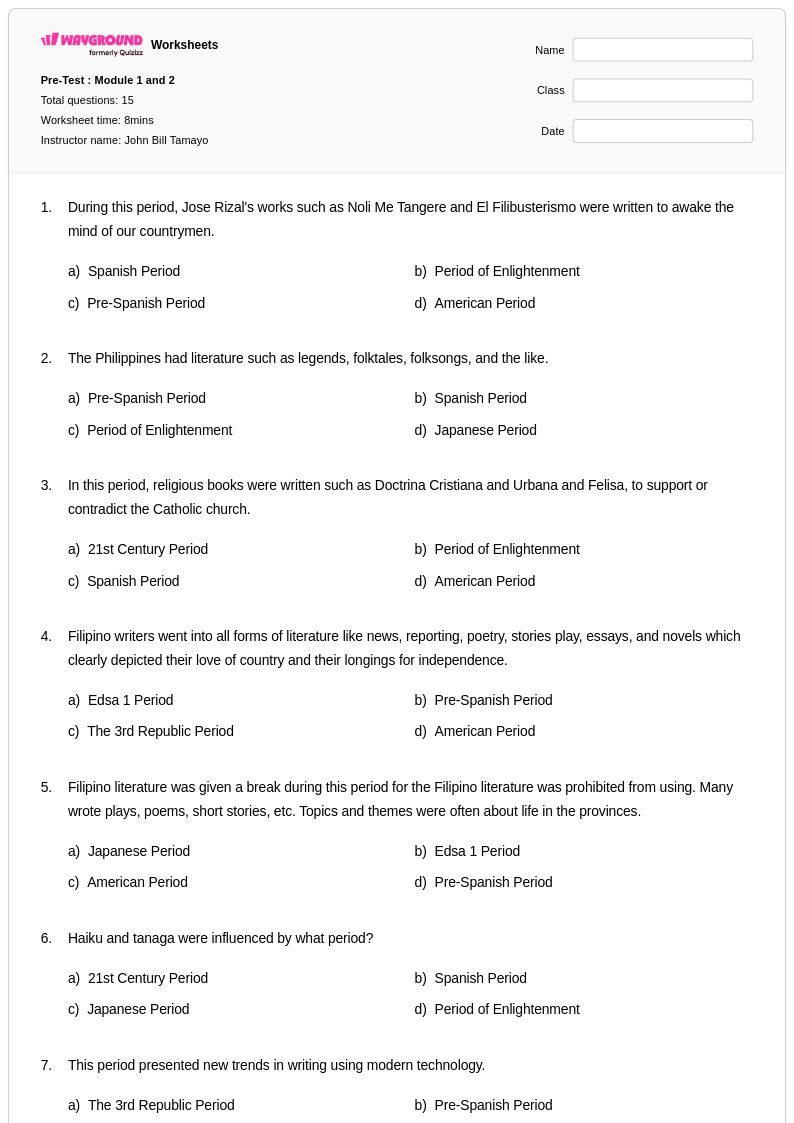
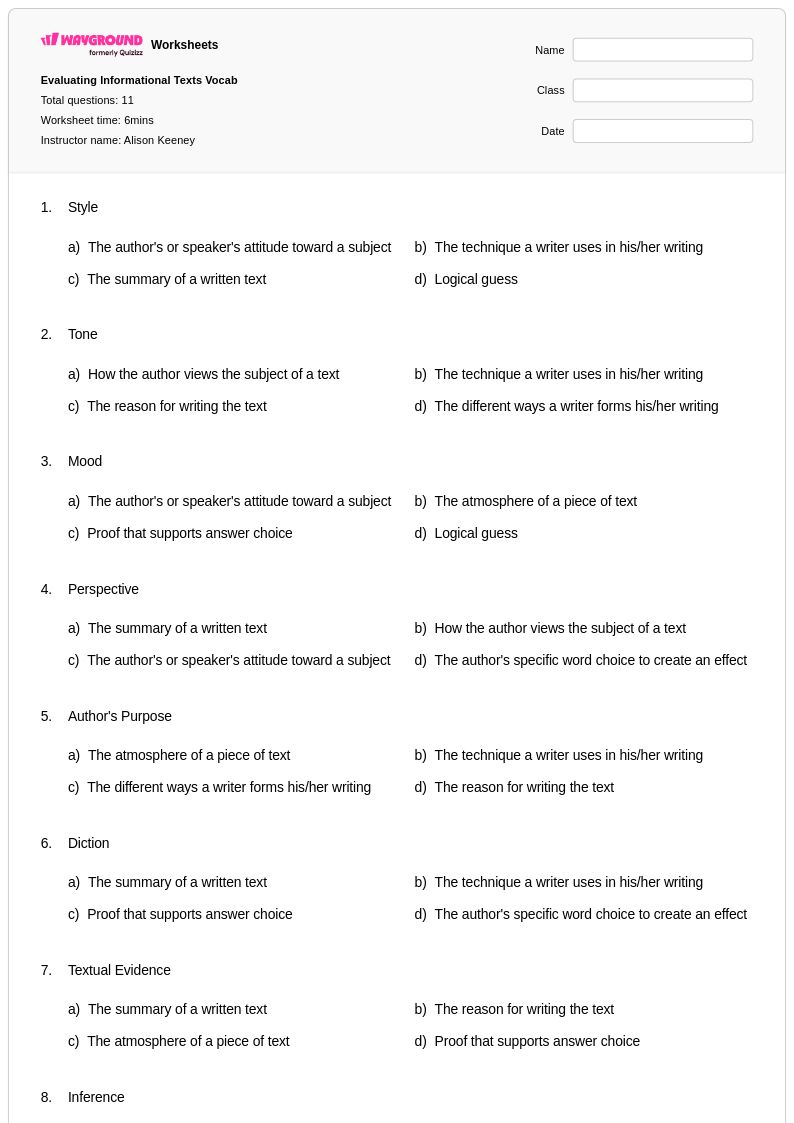
Enhance Grade 11 ELA skills with Wayground's comprehensive collection of free printable worksheets and practice problems, complete with answer keys to support advanced English language arts learning.
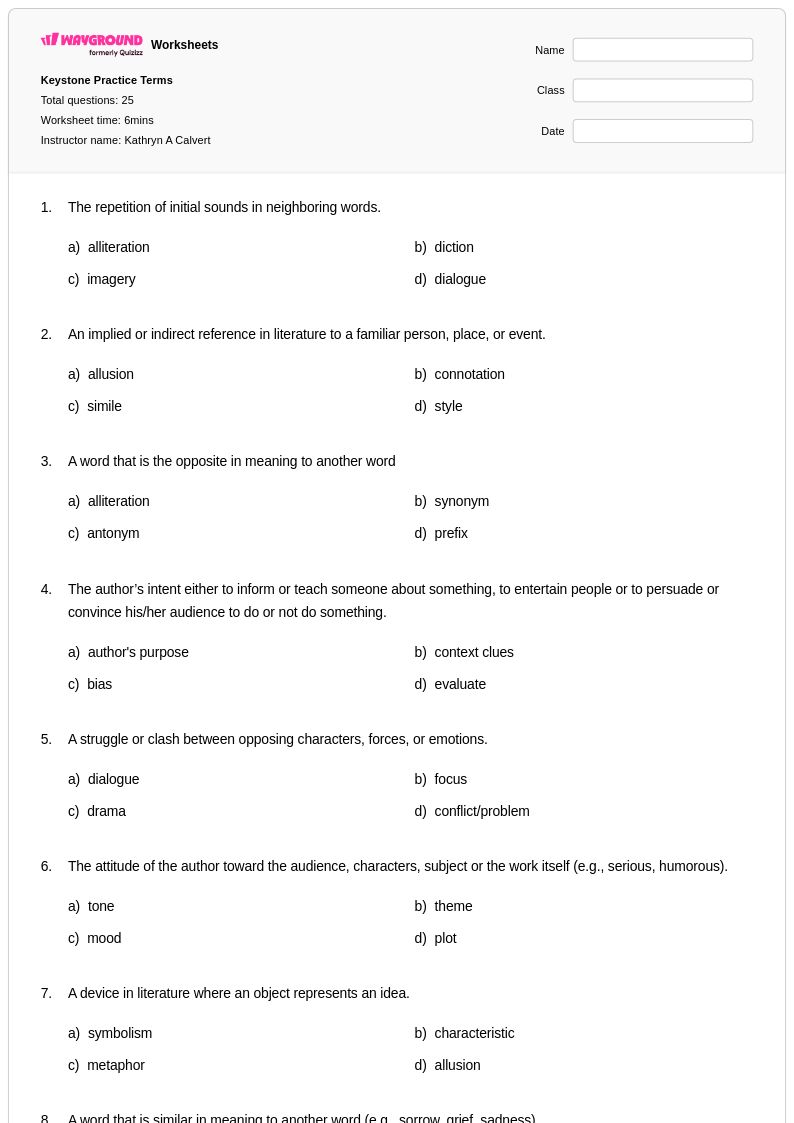
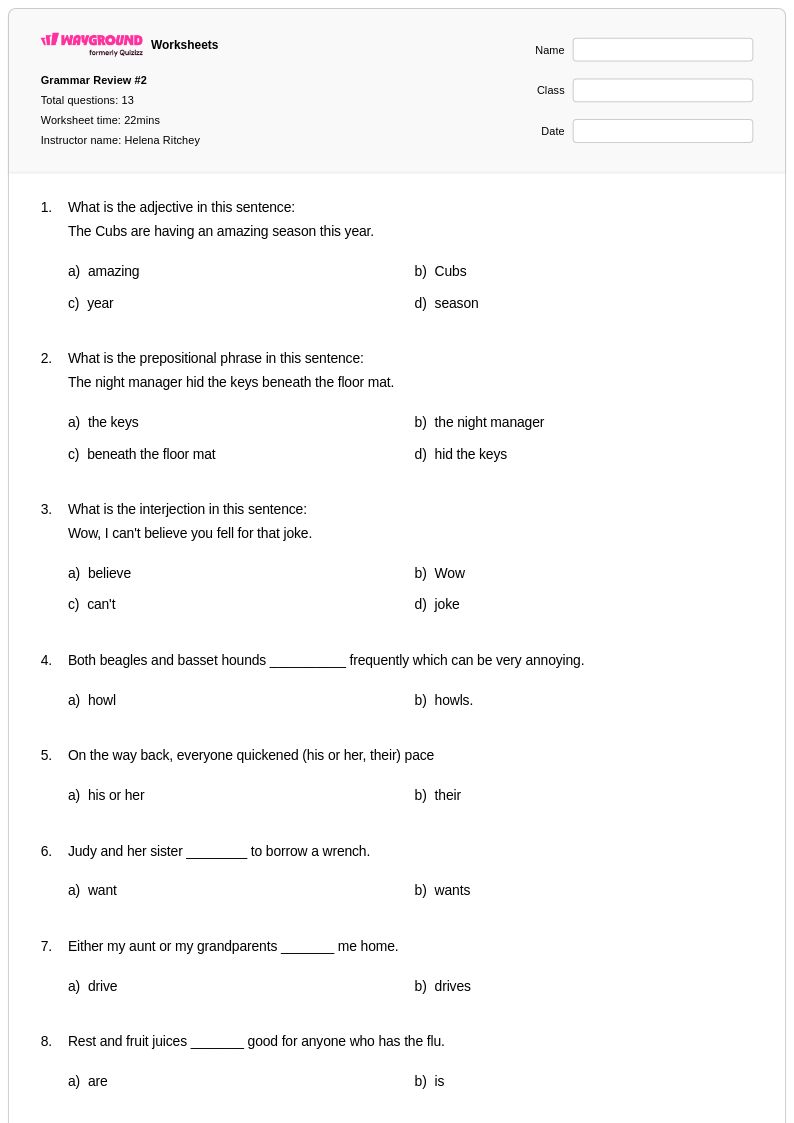
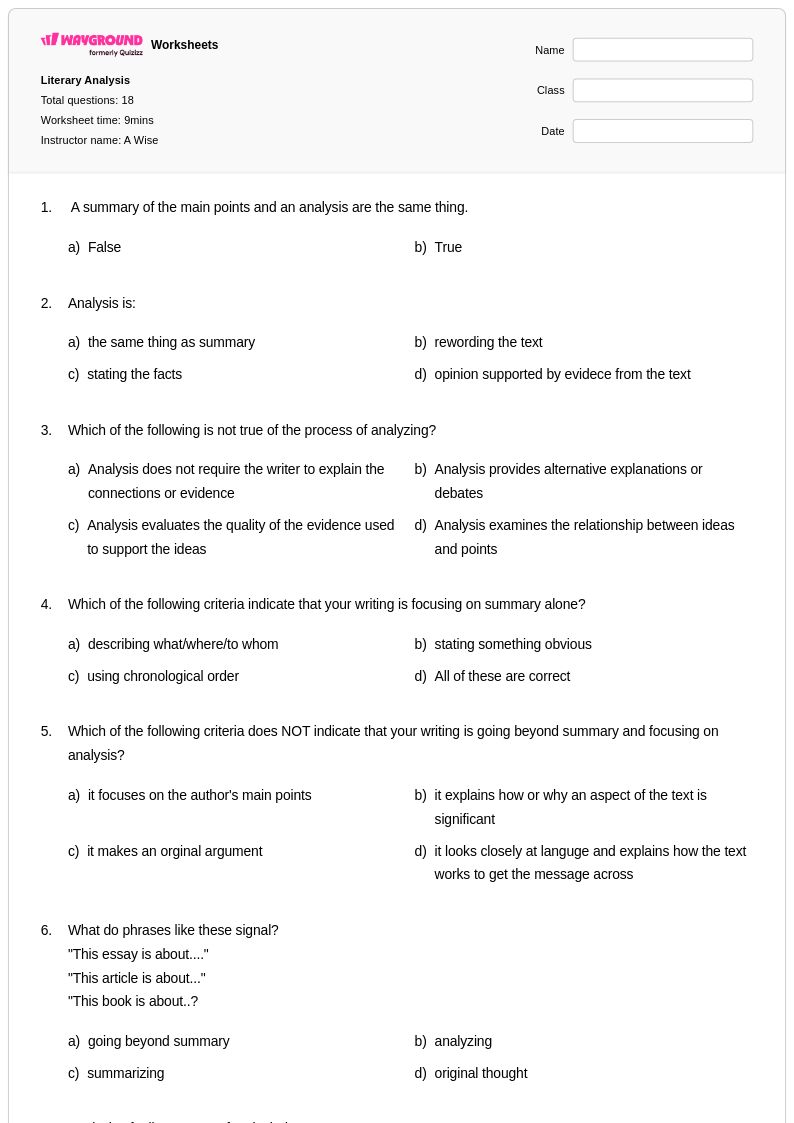
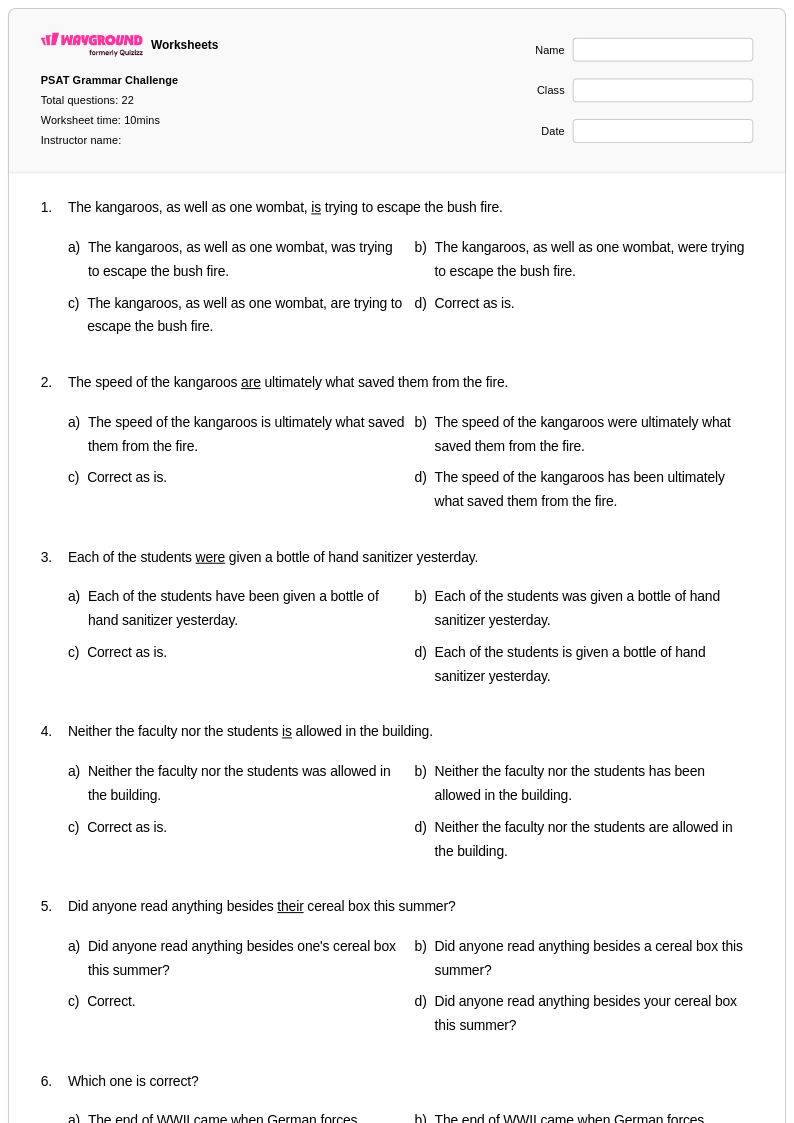
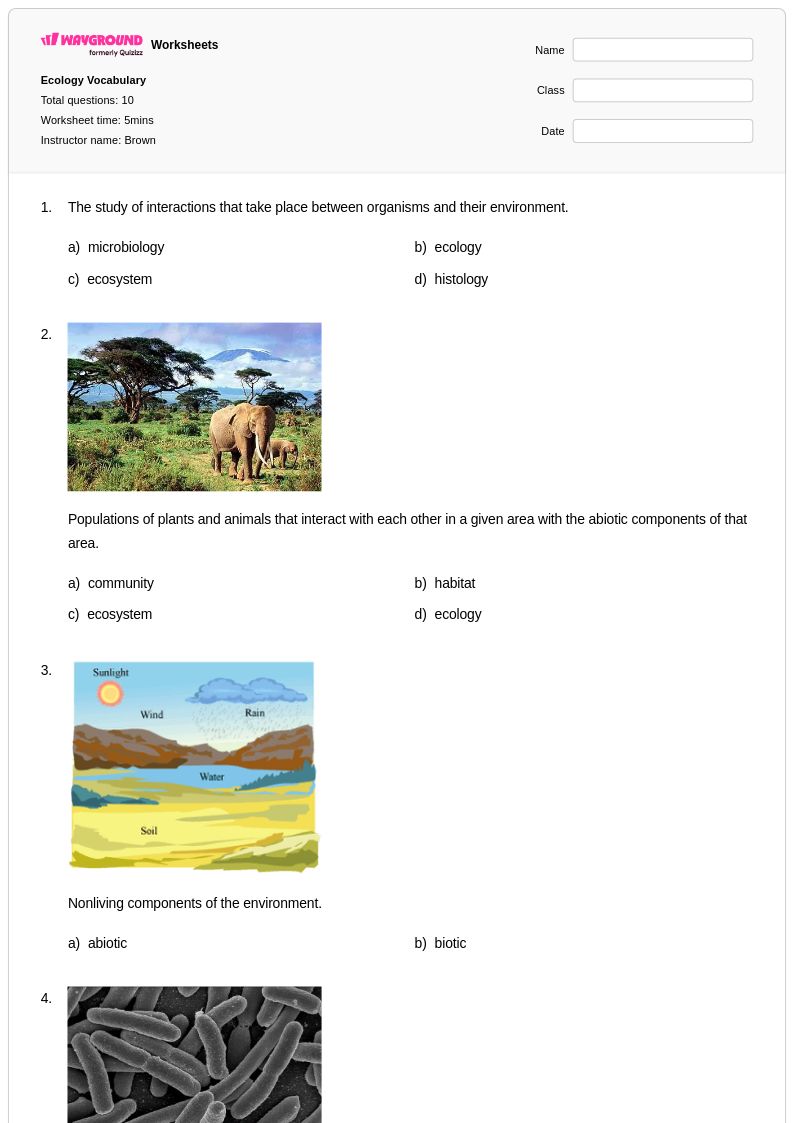
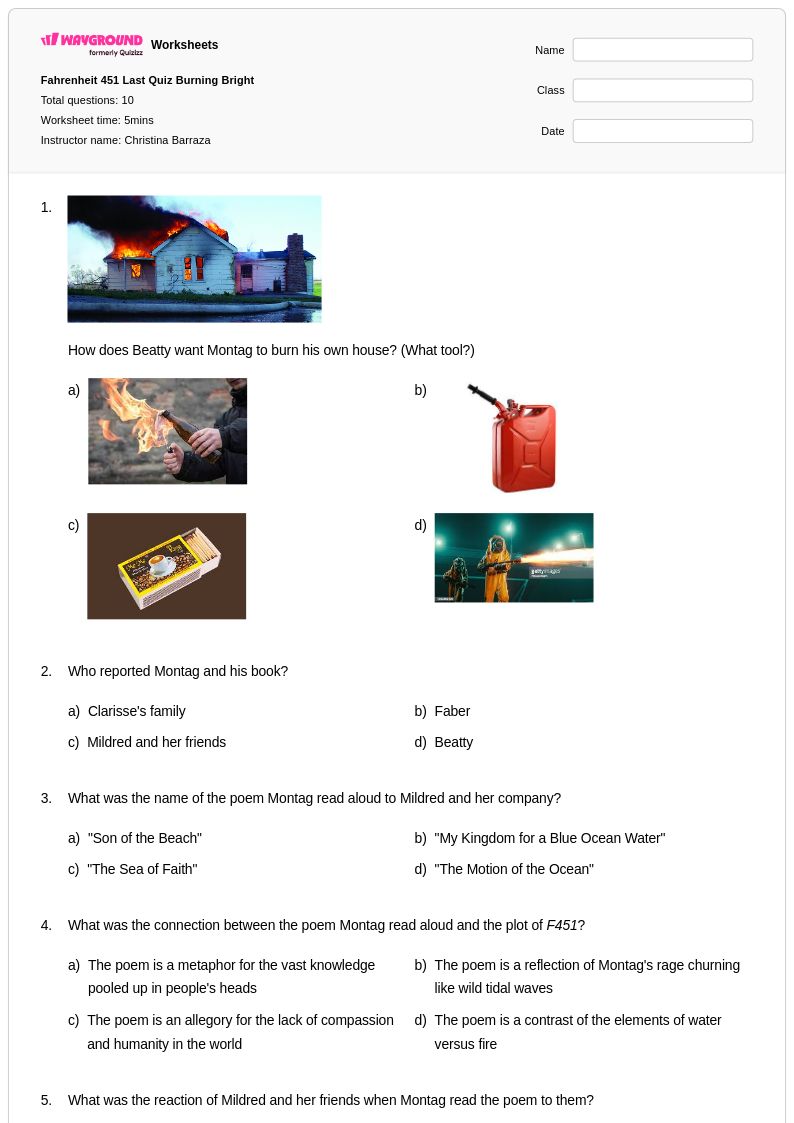
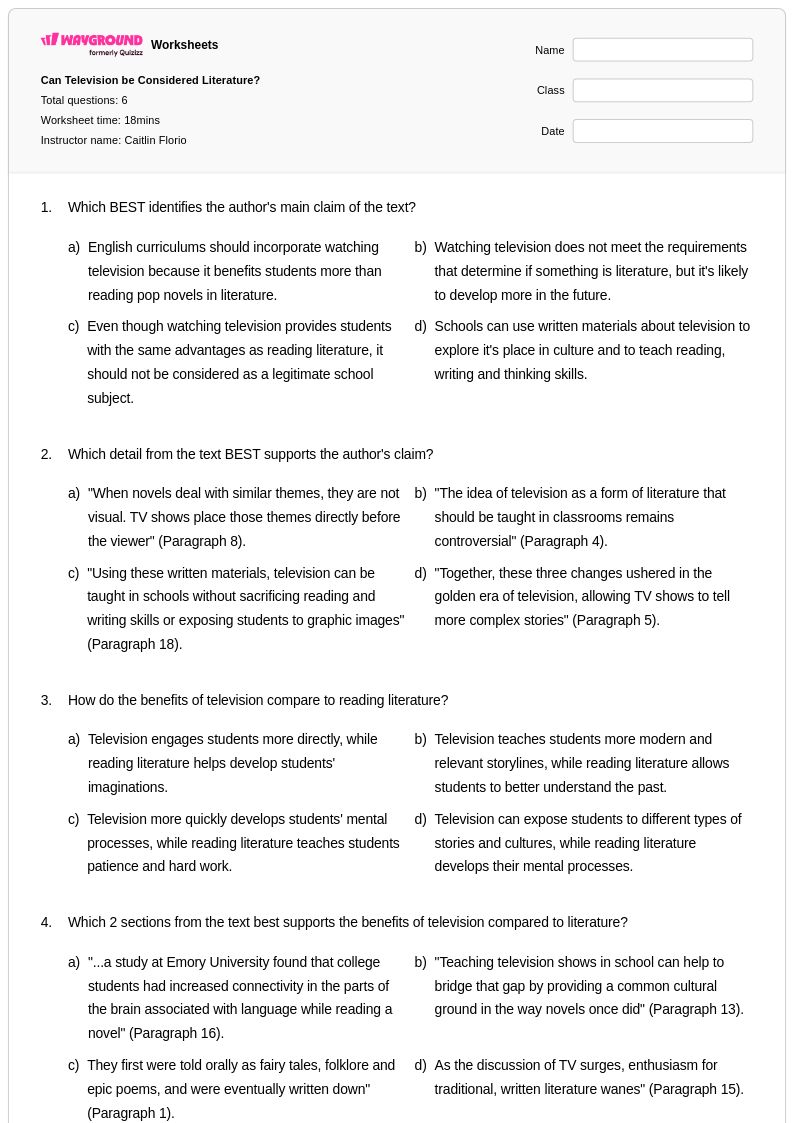
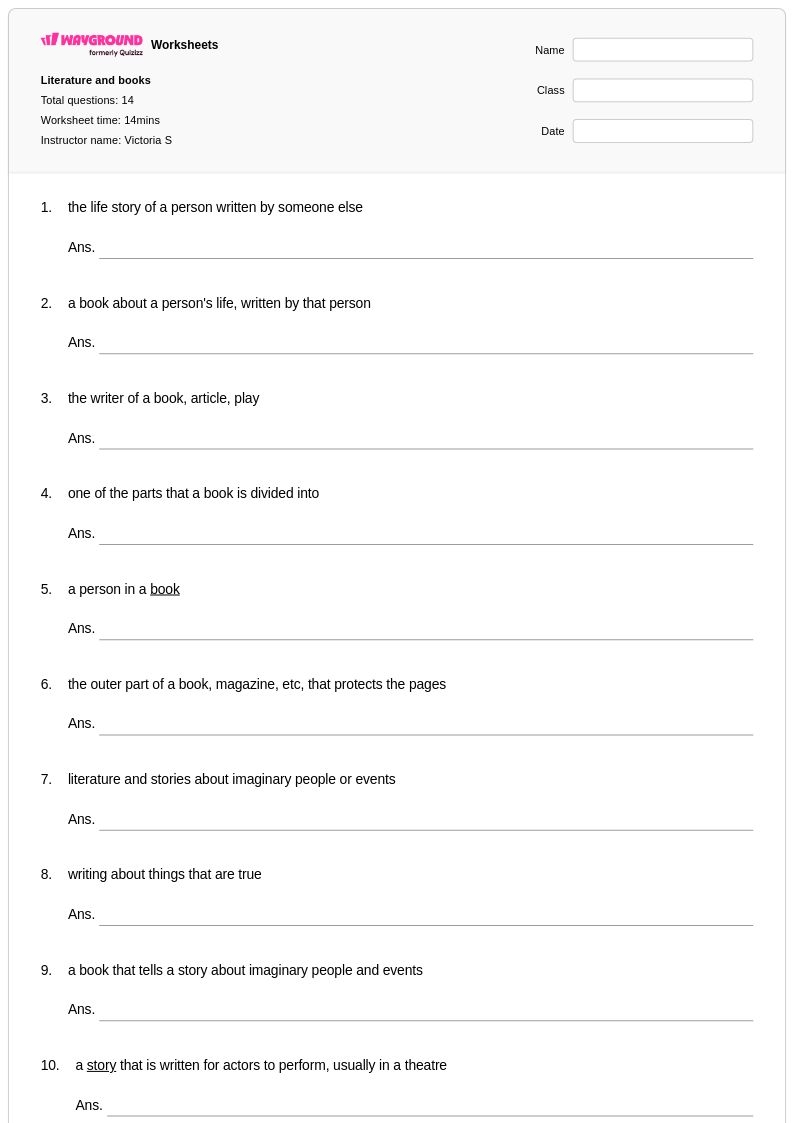
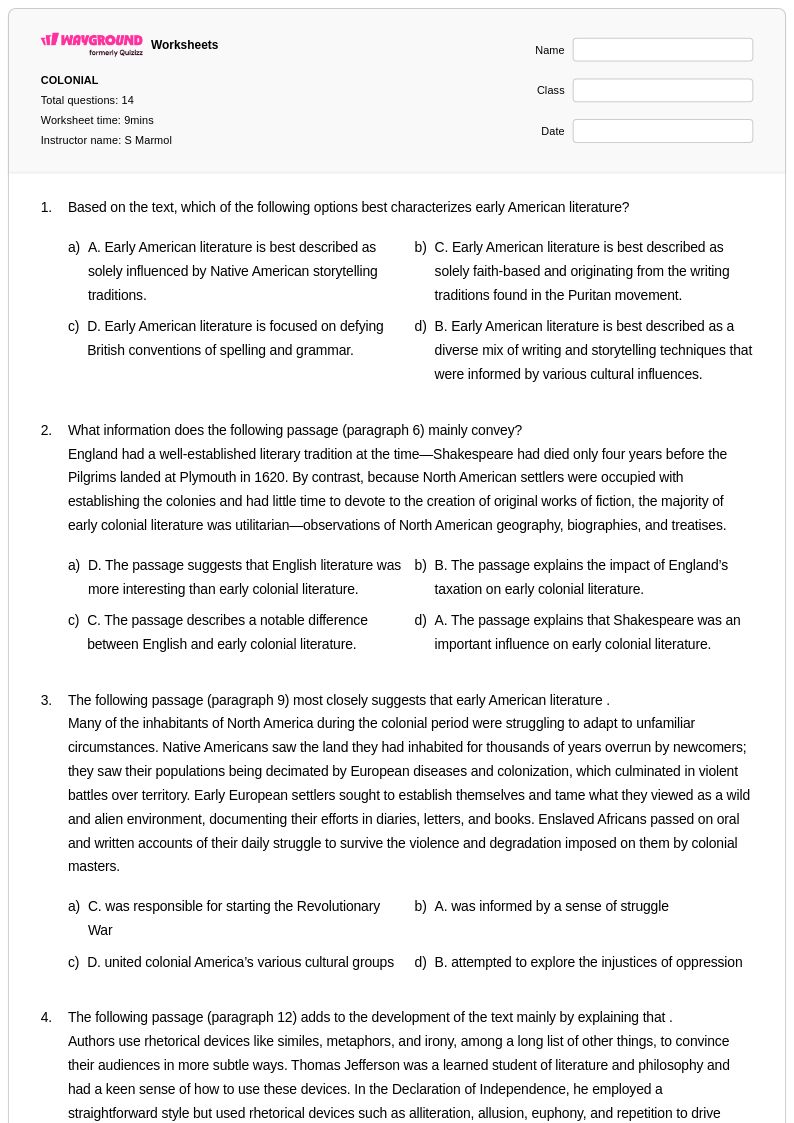
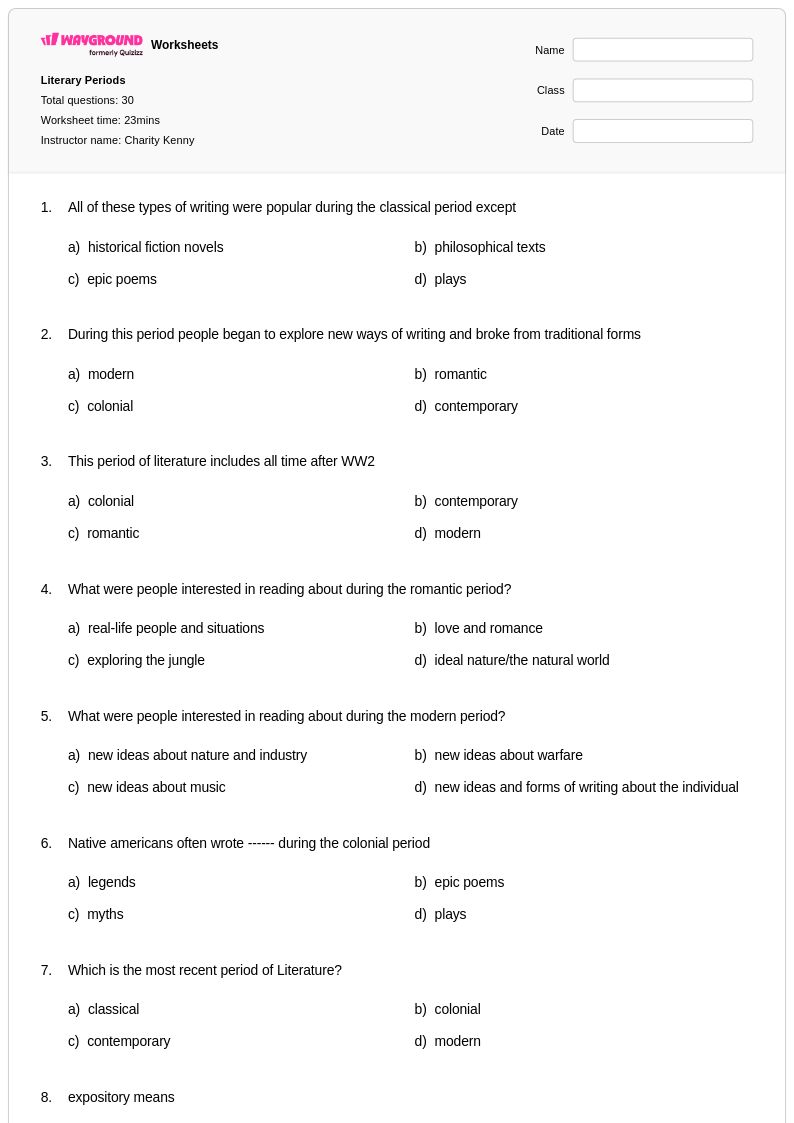
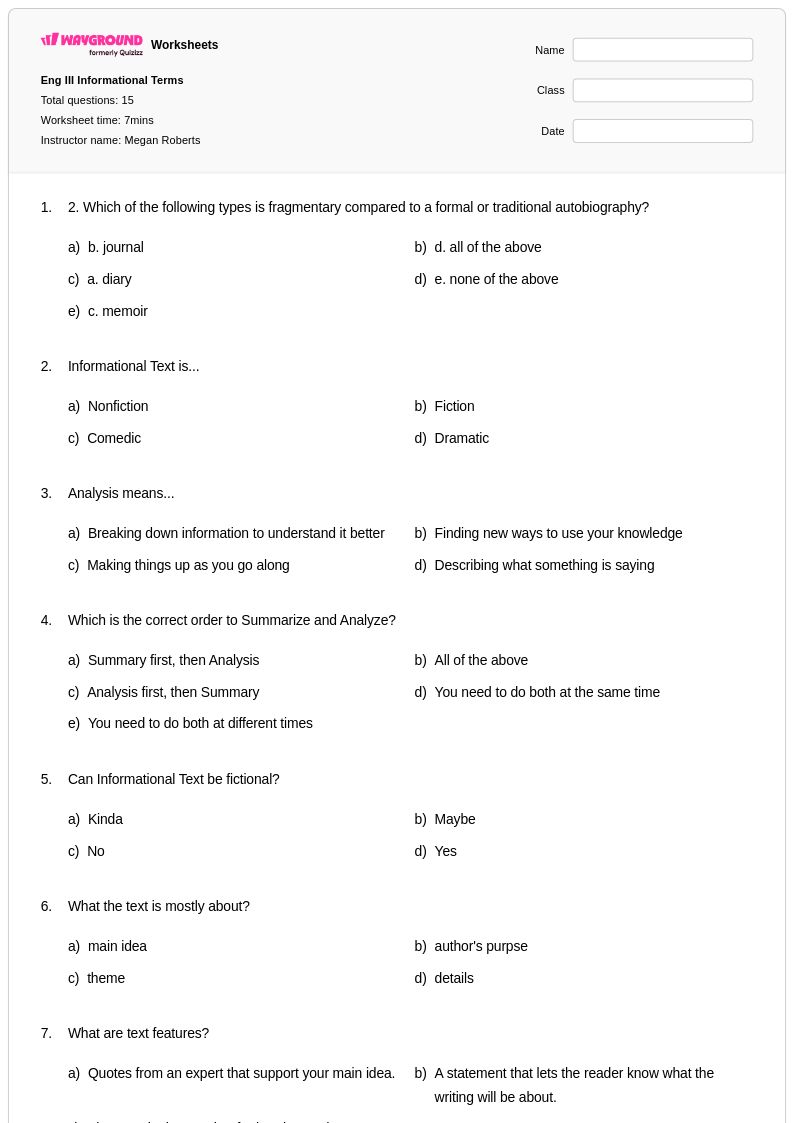
Grade 11 ELA worksheets available through Wayground (formerly Quizizz) provide comprehensive coverage of advanced English Language Arts concepts essential for junior-year students. These expertly designed resources strengthen critical reading comprehension skills, advanced literary analysis techniques, sophisticated writing strategies, and complex grammar applications that align with eleventh-grade academic expectations. Students engage with challenging texts, practice rhetorical analysis, develop argumentative writing skills, and master advanced vocabulary through carefully structured practice problems that build upon foundational knowledge. Each worksheet collection includes detailed answer keys and is available as free printables in convenient pdf format, allowing educators to seamlessly integrate targeted skill practice into their curriculum while providing students with immediate feedback on their progress.
Wayground (formerly Quizizz) supports English teachers with an extensive library of millions of teacher-created Grade 11 ELA resources that can be easily located through robust search and filtering capabilities. The platform's standards alignment ensures that worksheets meet state and national ELA benchmarks, while differentiation tools allow educators to customize content complexity for diverse learning needs within their classrooms. Teachers can access these materials in both printable and digital formats, including downloadable pdf versions, making lesson planning more efficient and flexible. These comprehensive worksheet collections serve multiple instructional purposes, from targeted remediation for struggling students to enrichment opportunities for advanced learners, while providing consistent skill practice that reinforces essential eleventh-grade English Language Arts competencies across reading, writing, speaking, and listening domains.
FAQs
How do I teach English Language Arts skills effectively across different grade levels?
Effective ELA instruction integrates the five core domains: reading comprehension, writing, grammar, vocabulary, and speaking and listening. Teachers should scaffold instruction by building foundational skills first, such as phonics and sentence structure, before advancing to literary analysis and argumentative writing. Using a mix of whole-class modeling, small-group practice, and independent work helps students at different levels engage with grade-appropriate content meaningfully.
What exercises help students practice grammar and writing skills in ELA?
Targeted exercises such as sentence combining, error correction, paragraph revision, and guided writing prompts are highly effective for reinforcing grammar and writing mechanics. Practice problems that progress in difficulty allow students to build confidence before tackling complex tasks like multi-paragraph essays or literary analysis. Consistent, structured practice with immediate feedback is key to helping students internalize rules rather than memorize them temporarily.
What are the most common mistakes students make in ELA, and how can teachers address them?
Common ELA errors include subject-verb agreement mistakes, misuse of punctuation, weak thesis statements, and confusion between literal and inferential comprehension. Students also frequently struggle with distinguishing between evidence and analysis in writing, often summarizing instead of interpreting. Teachers can address these patterns through targeted error-analysis activities and explicit modeling of correct structures before independent practice.
How can I differentiate ELA worksheets for students with different learning needs?
Differentiation in ELA can include adjusting text complexity, offering sentence starters for writing tasks, and reducing answer choices on comprehension questions to lower cognitive load for struggling learners. On Wayground, teachers can apply student-level accommodations such as read aloud, extended time, and reduced answer choices, which are saved and reusable across sessions without notifying other students. These tools make it practical to support IEP and 504 accommodations alongside whole-class instruction.
How do I use ELA worksheets on Wayground in my classroom?
Wayground's ELA worksheets are available as printable PDFs for traditional classroom use and in digital formats for technology-integrated environments, including the option to host them as a quiz directly on Wayground. Teachers can use them for whole-class instruction, independent practice, homework, or assessment preparation. Complete answer keys are included with each worksheet, making grading and review straightforward for educators.
How do I build critical thinking skills through ELA instruction?
Critical thinking in ELA develops when students are asked to evaluate author's purpose, compare perspectives across texts, and support claims with textual evidence rather than simply recalling information. Activities like Socratic seminars, close reading with annotation, and compare-contrast writing tasks push students beyond surface comprehension. Pairing these strategies with structured worksheets that require reasoning, not just recall, reinforces higher-order thinking across all ELA domains.