Free Printable Election Vocabulary Worksheets for Grade 3
Free Grade 3 election vocabulary worksheets and printables help students learn essential civics terms through engaging practice problems, with PDF downloads and answer keys available on Wayground.
Explore printable Election Vocabulary worksheets for Grade 3
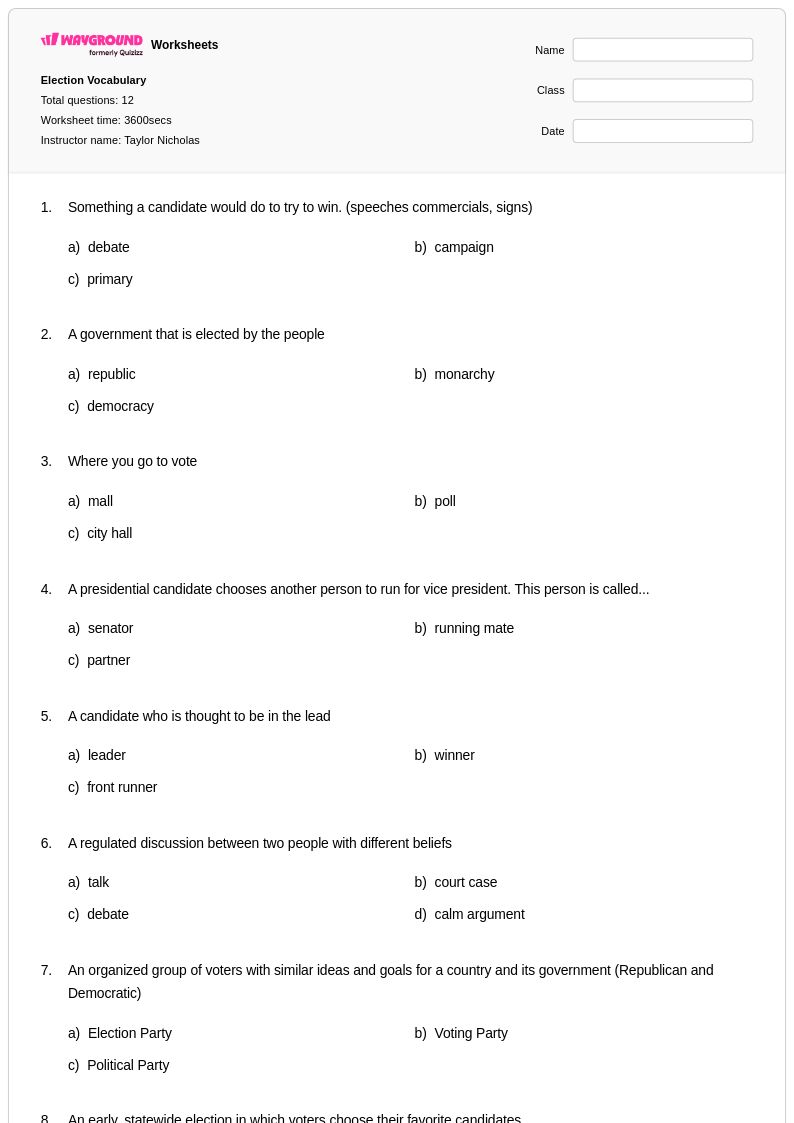
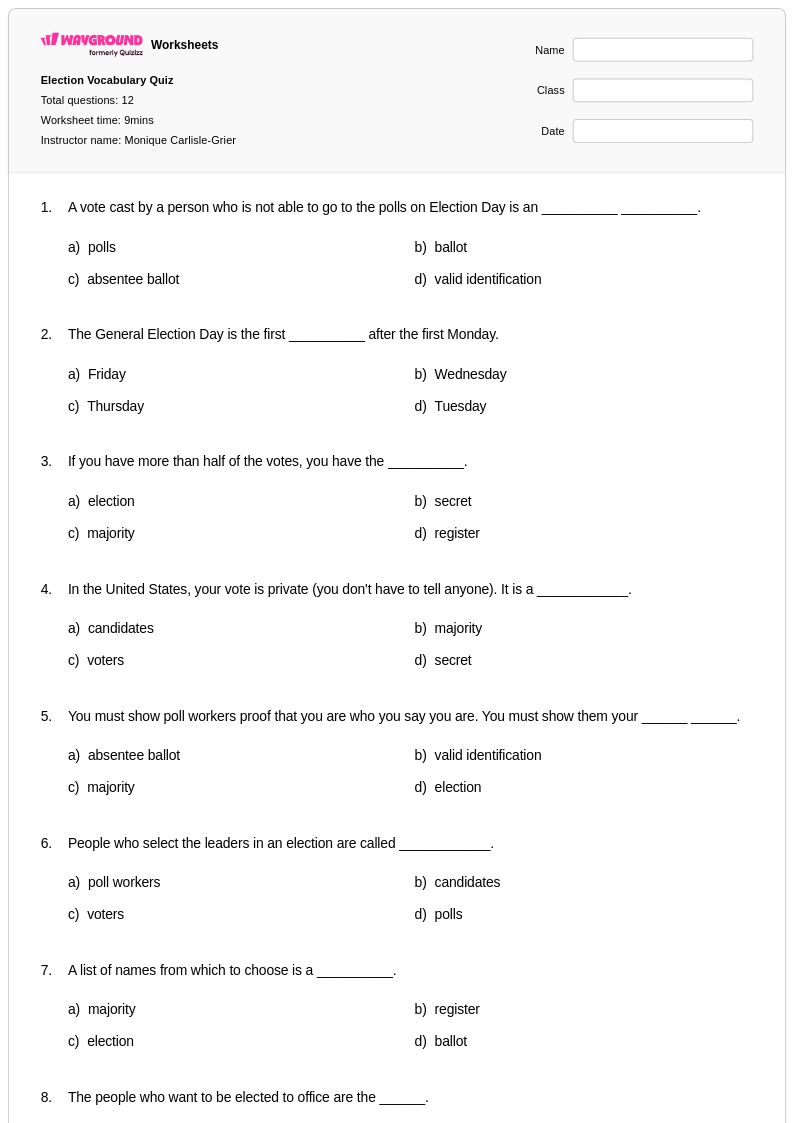
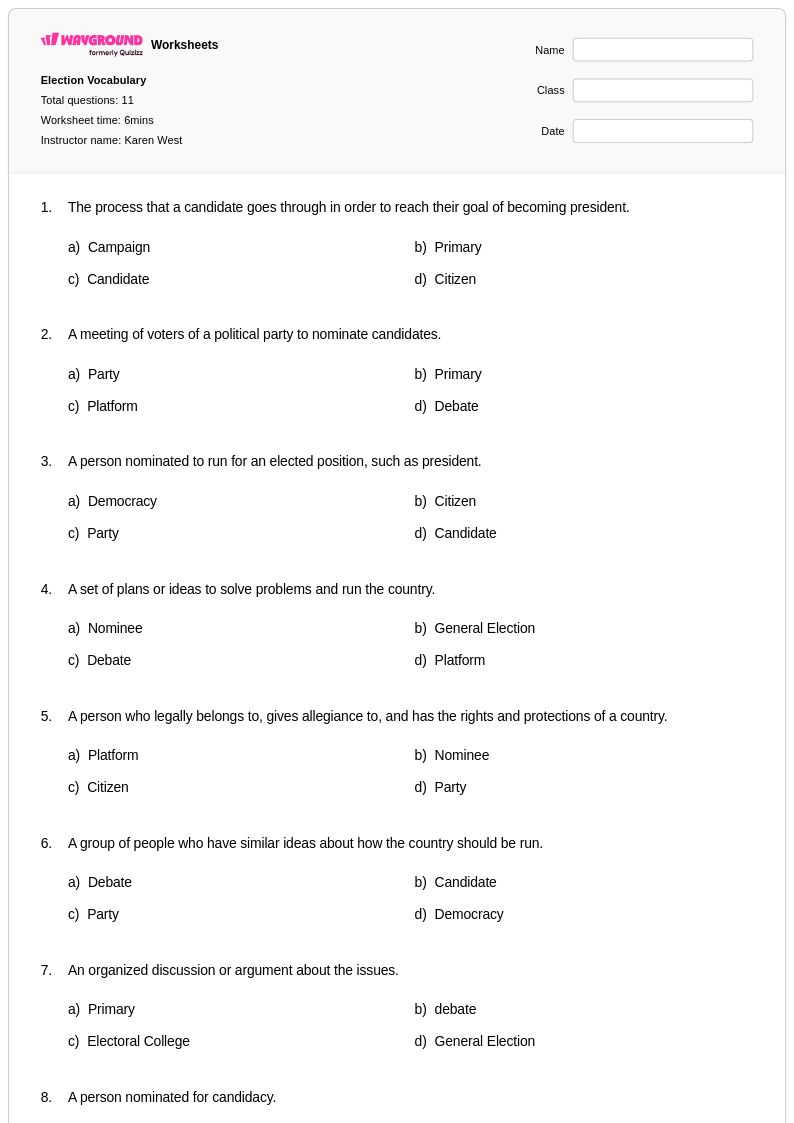
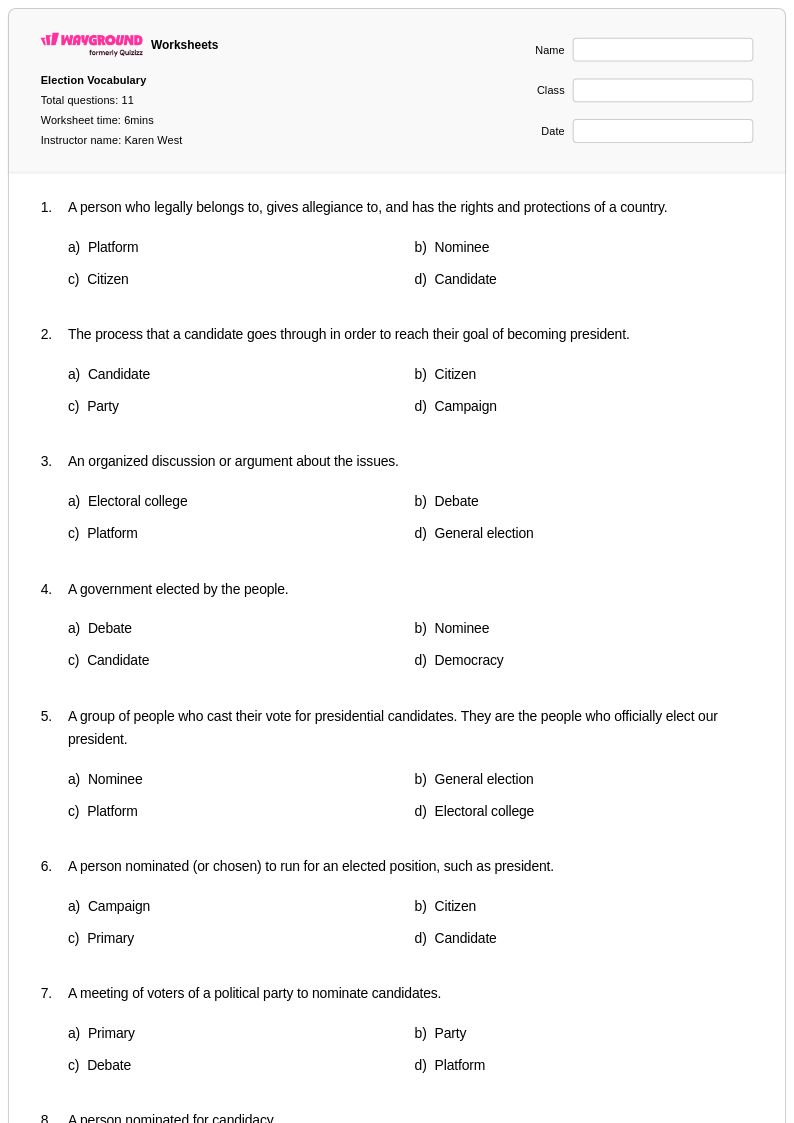
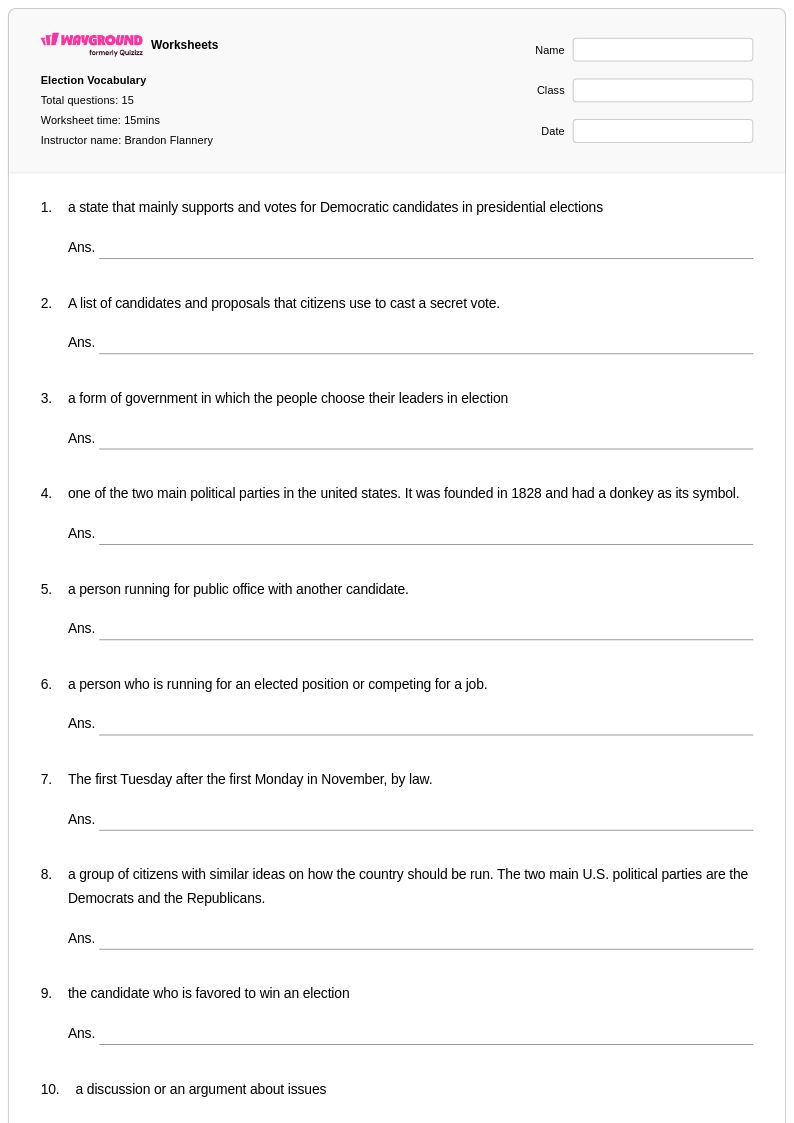
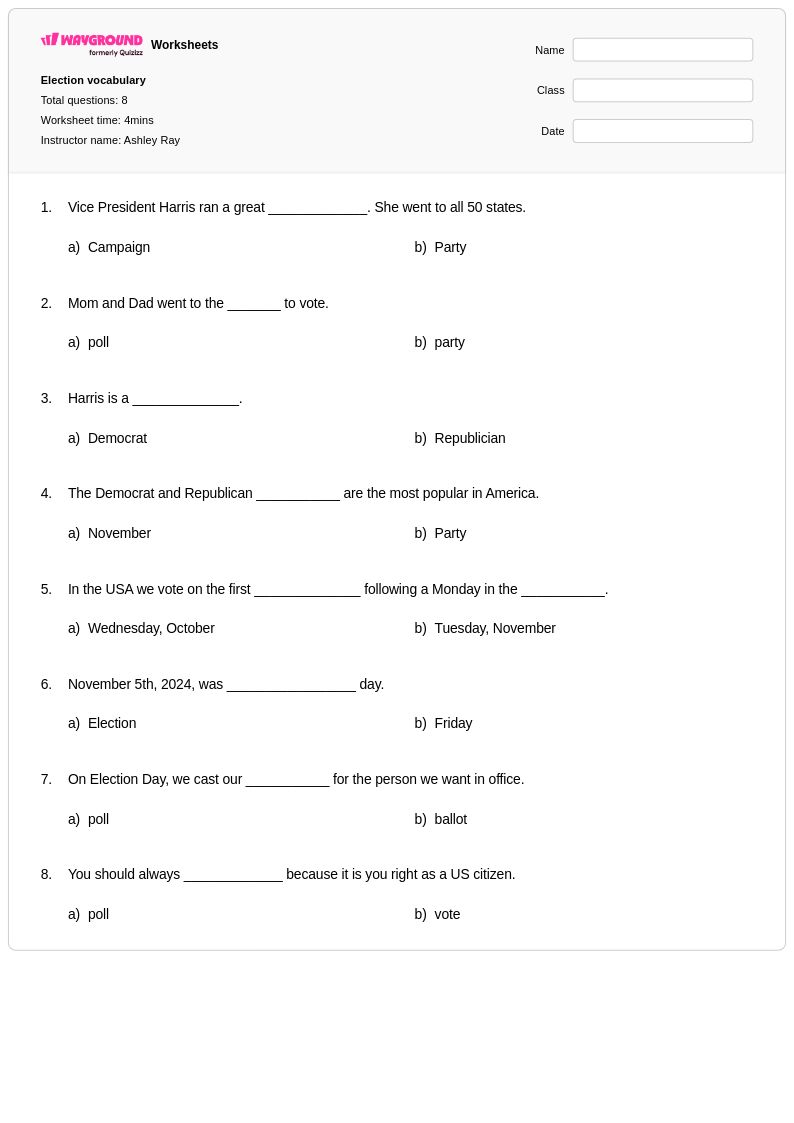
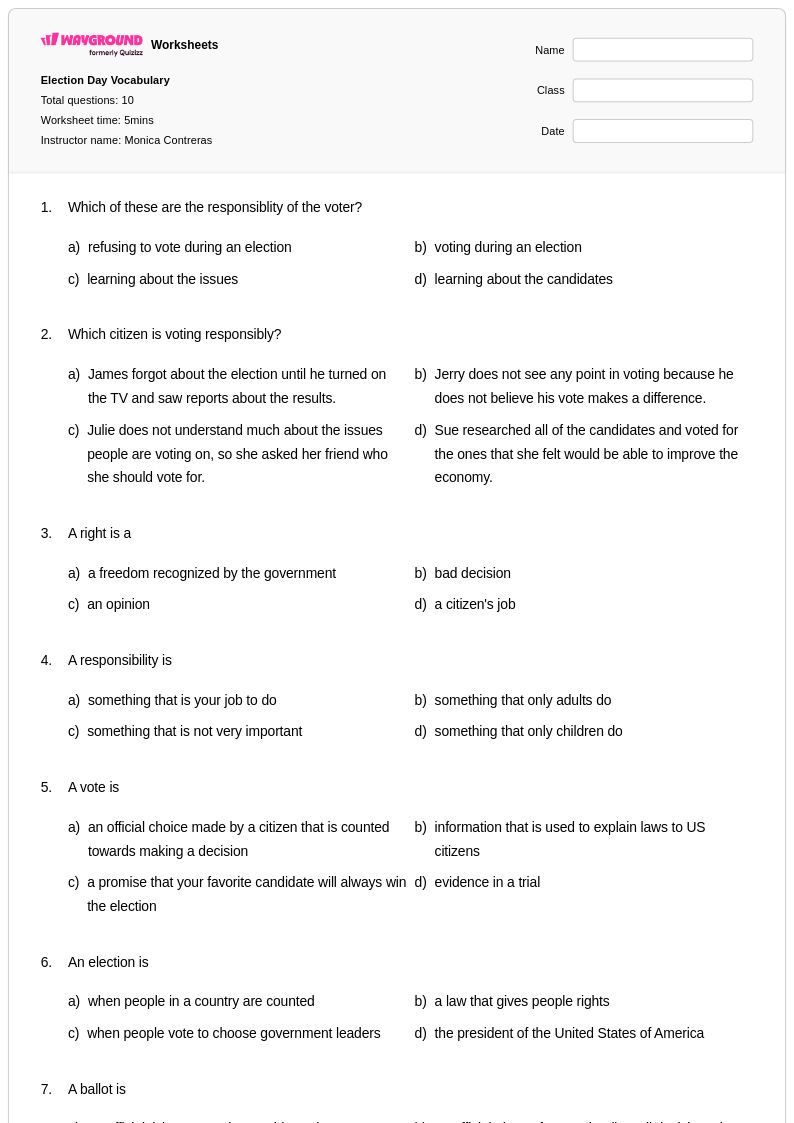
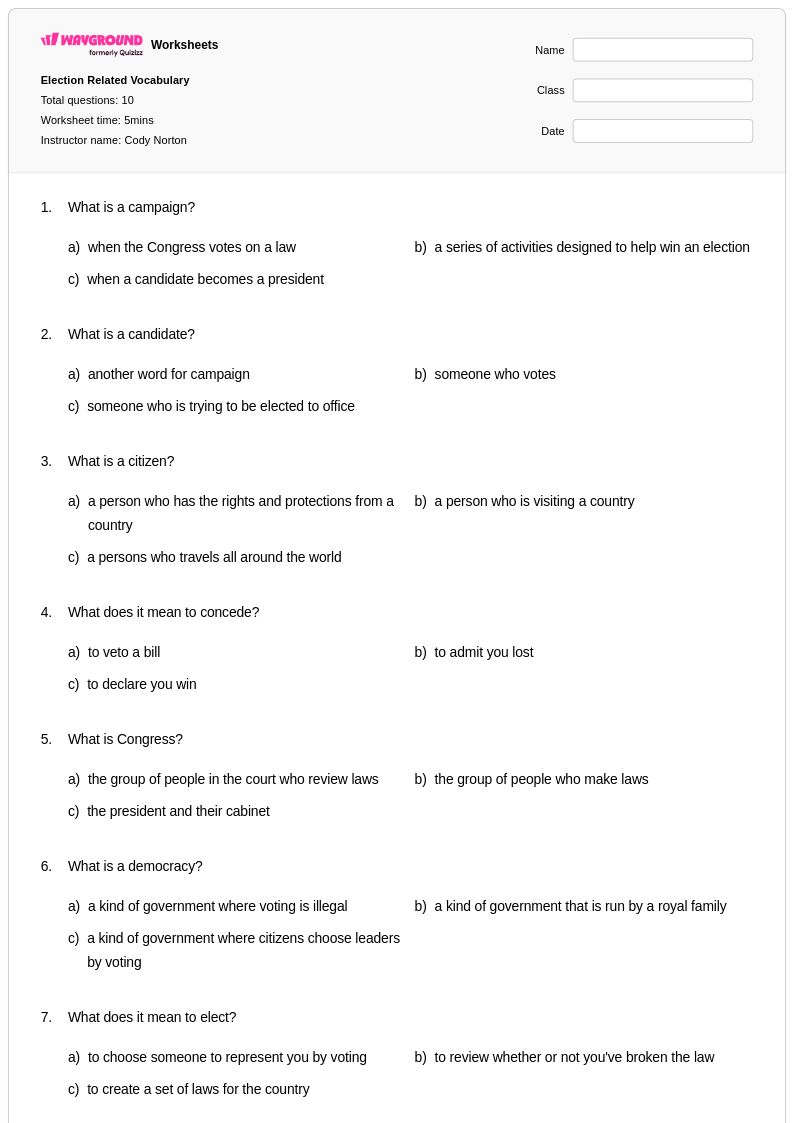
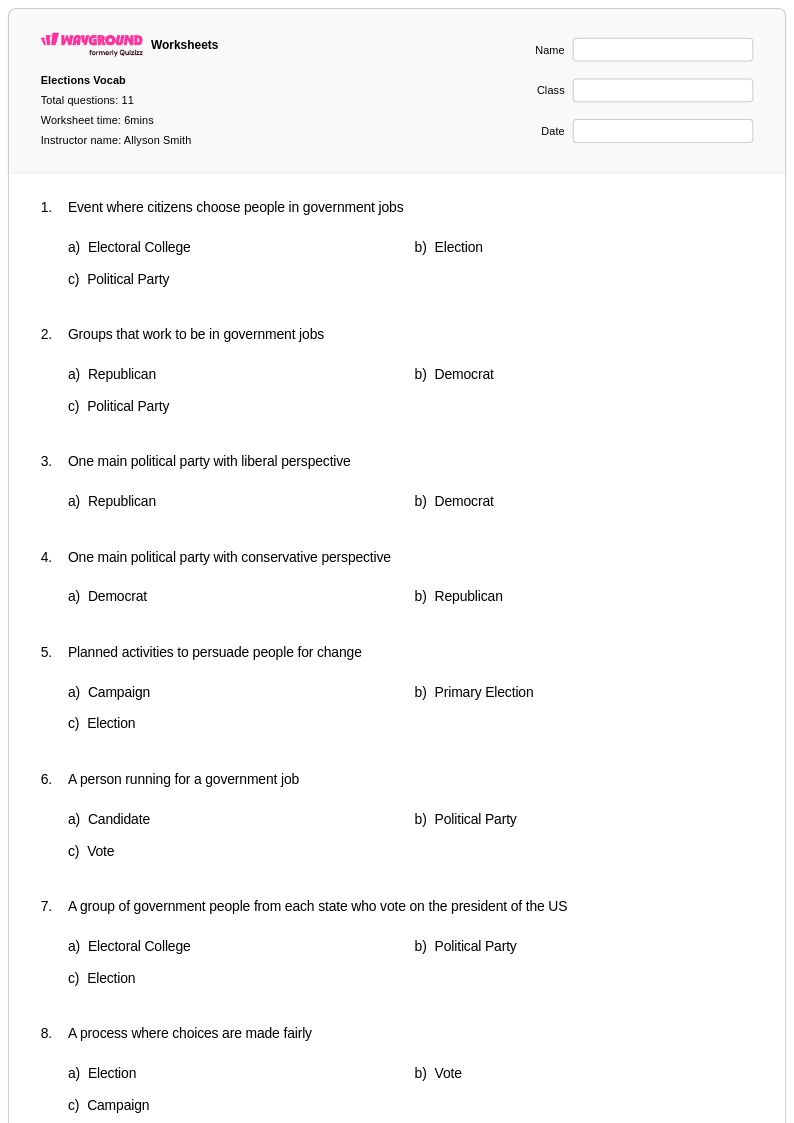
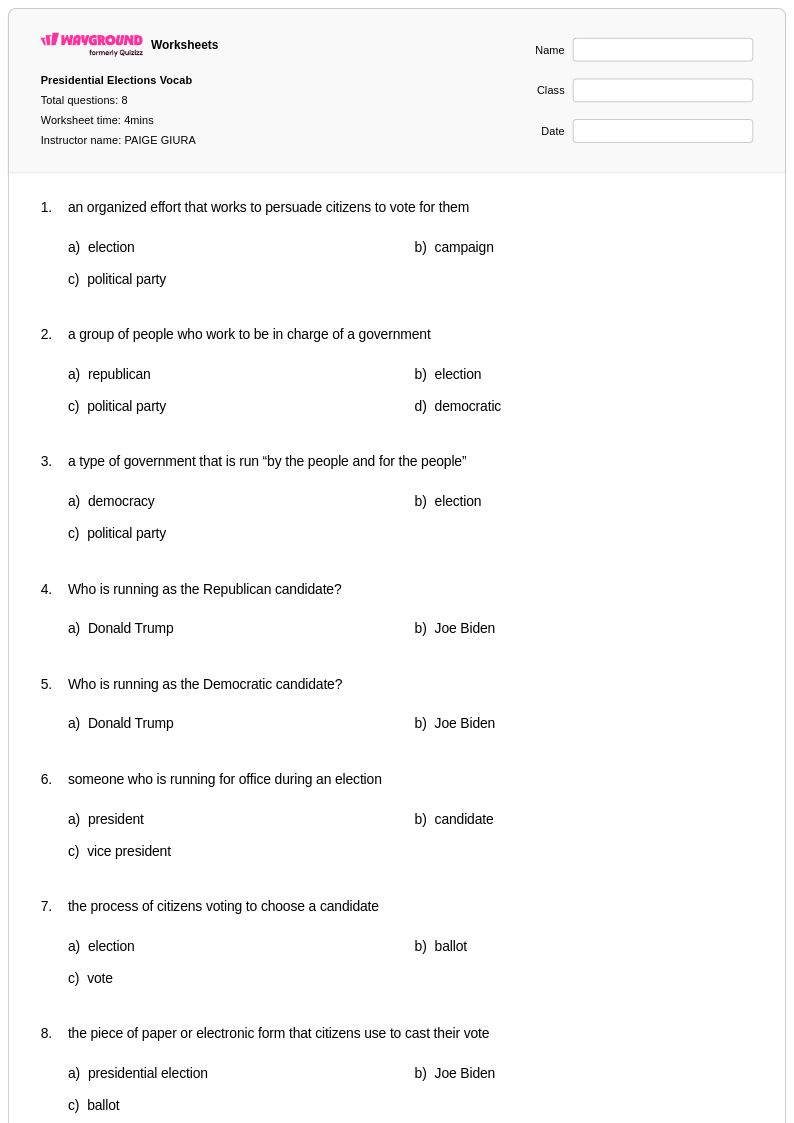
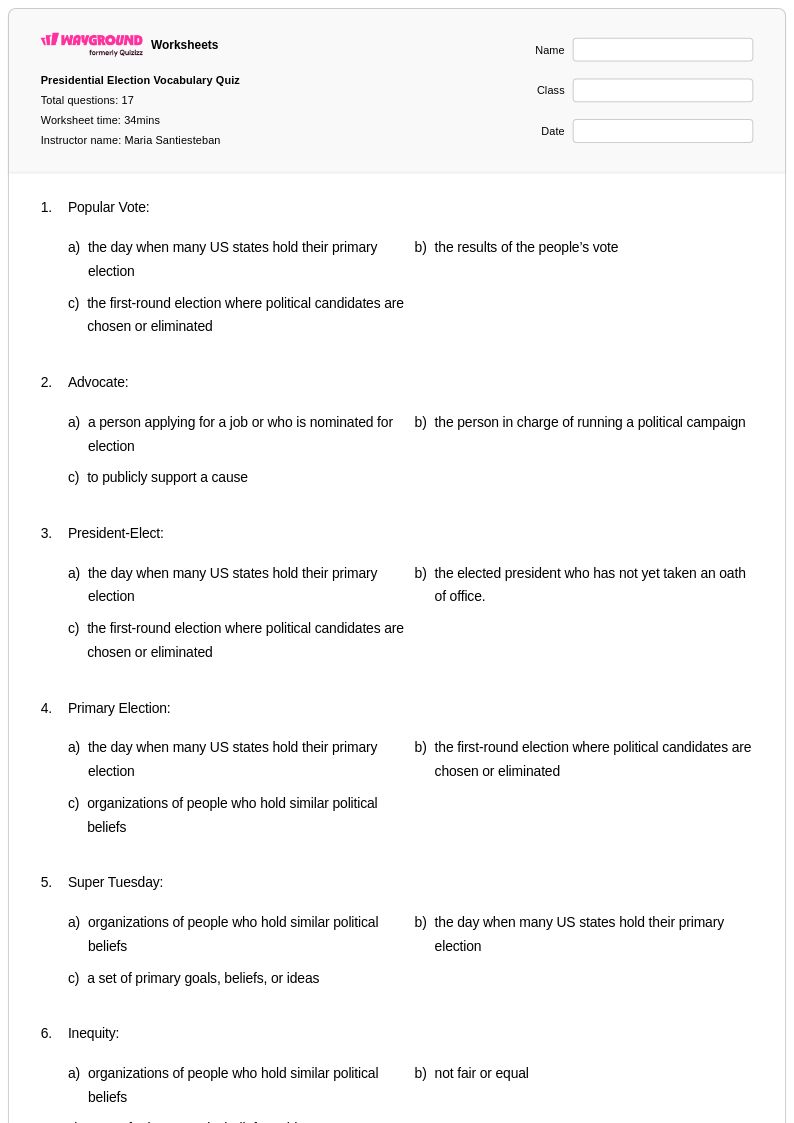
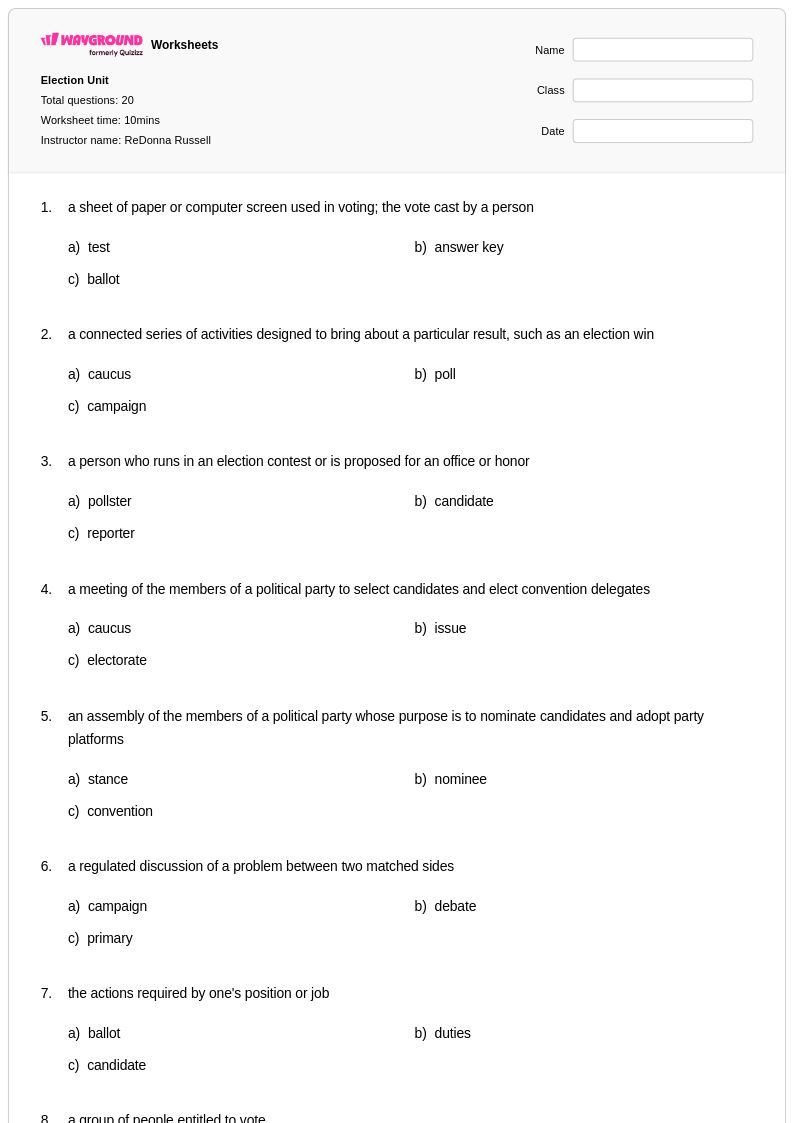
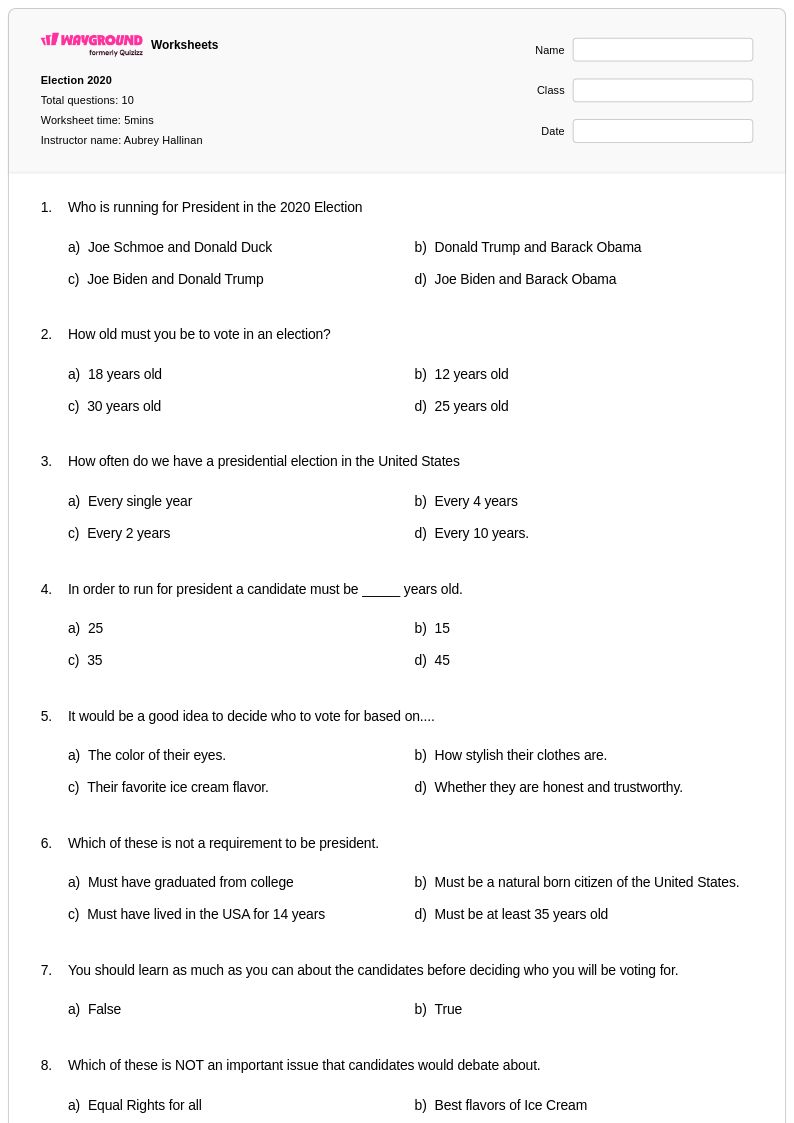
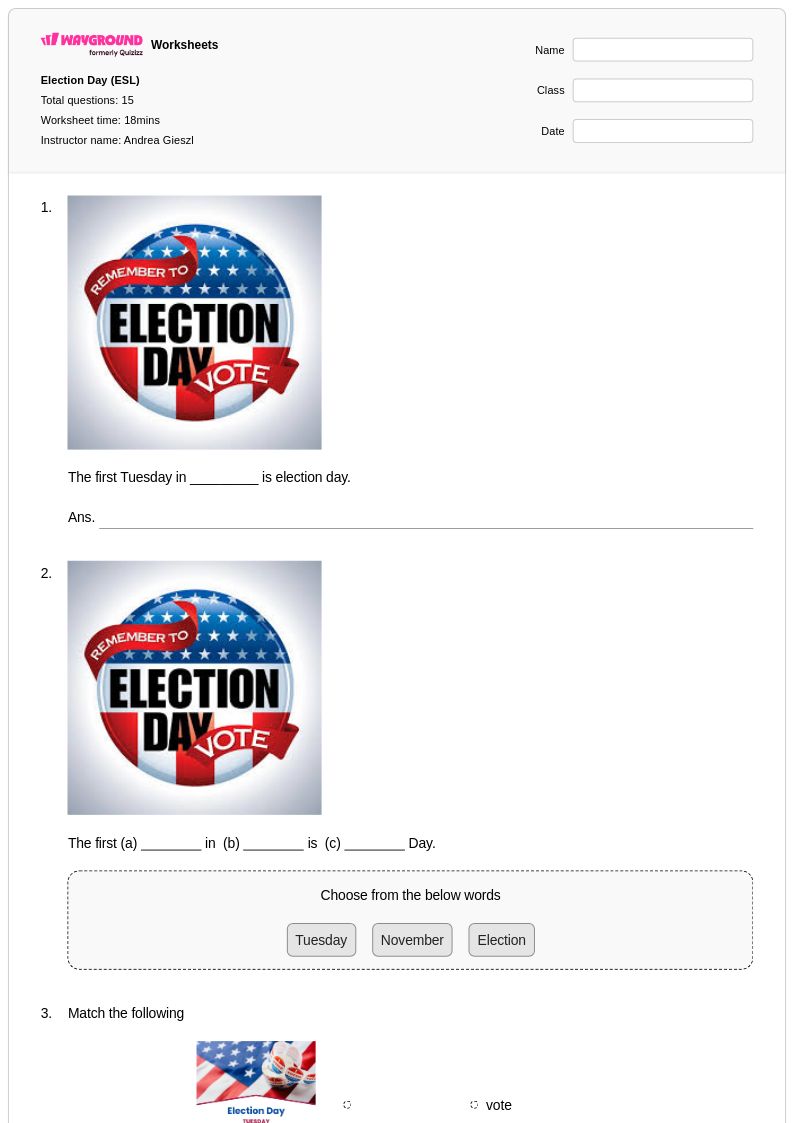
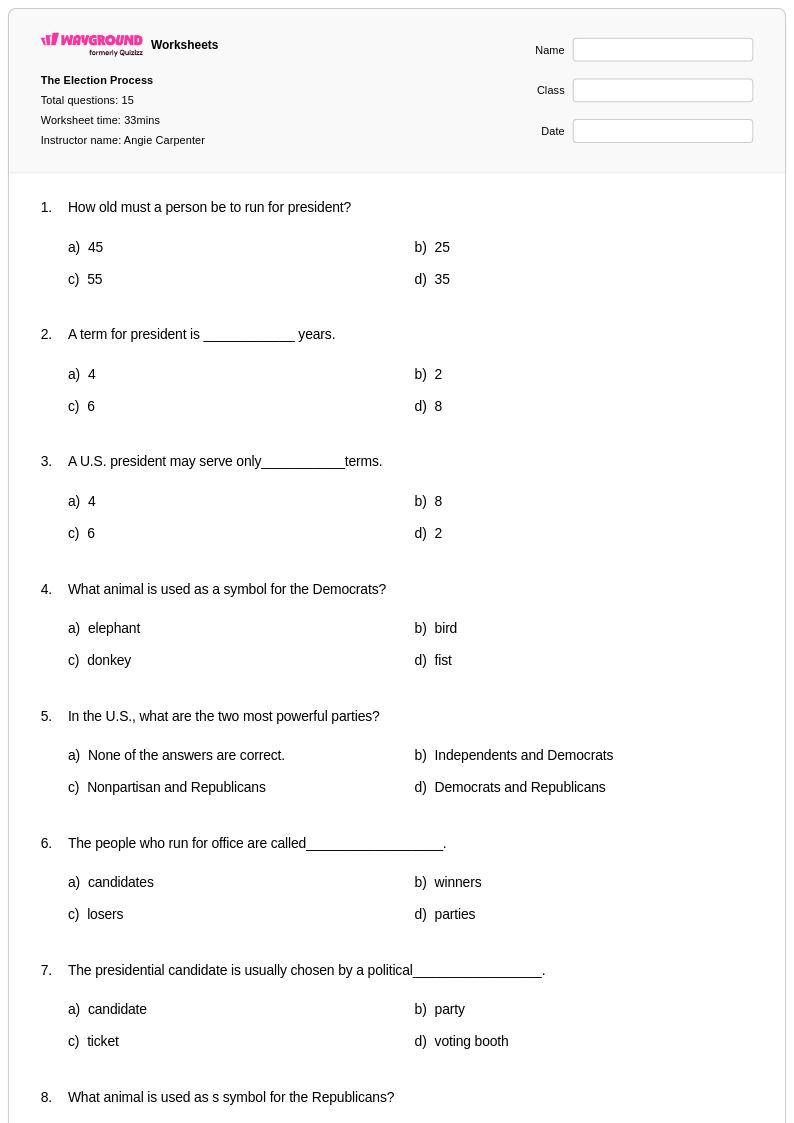
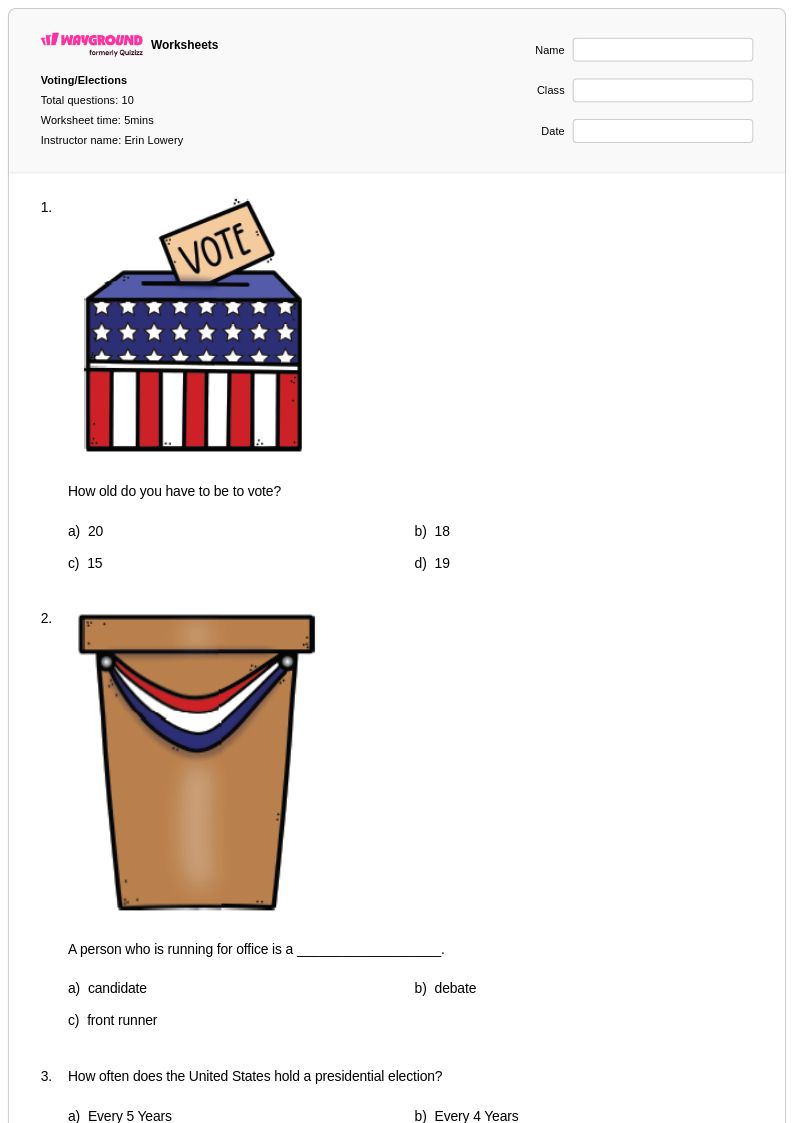
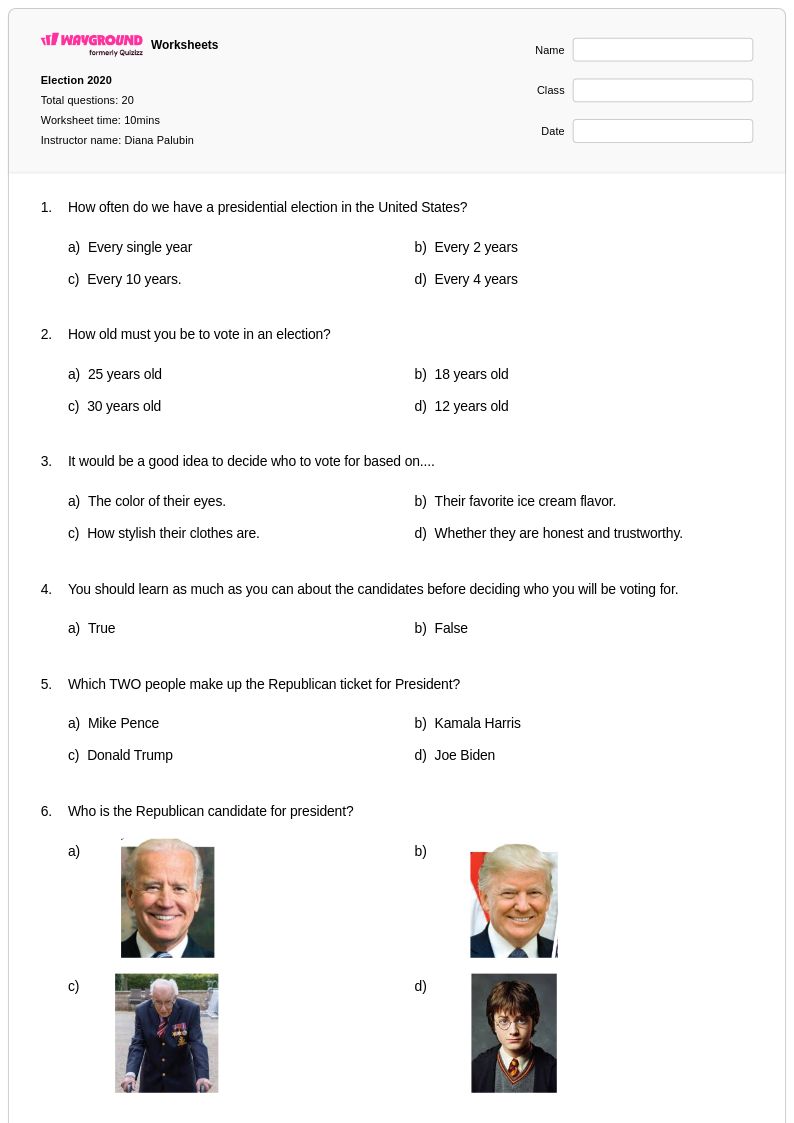
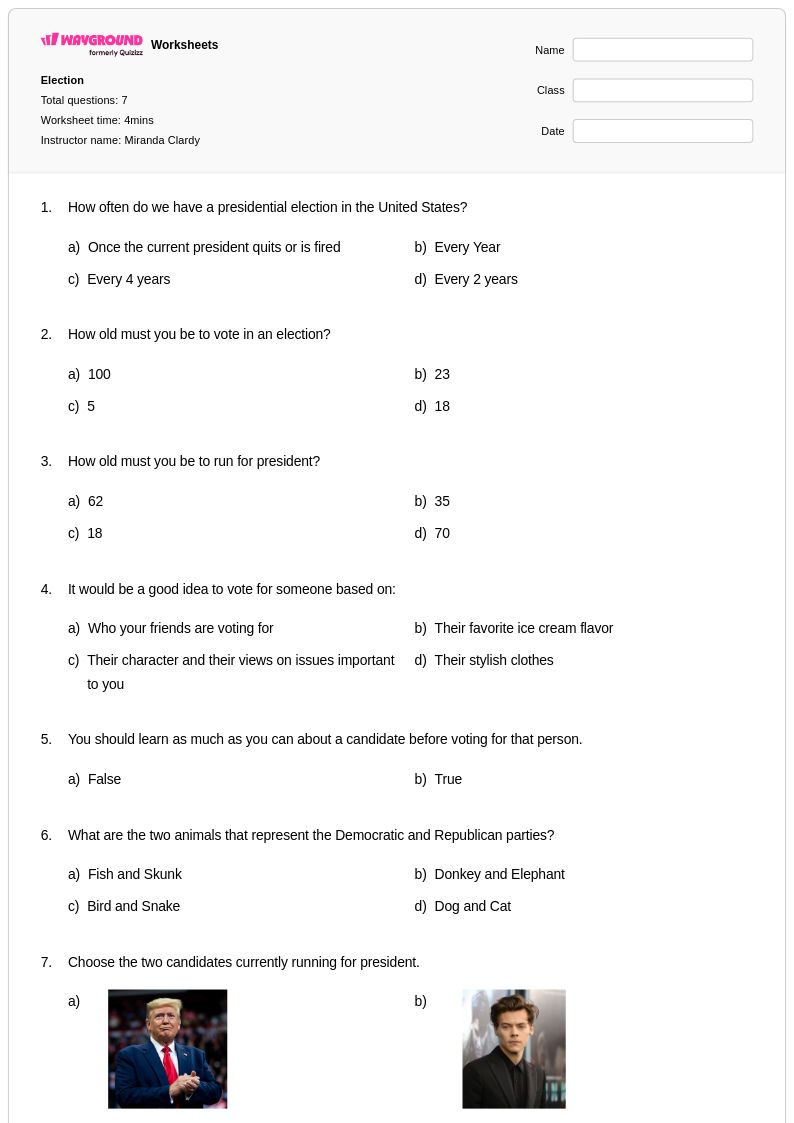
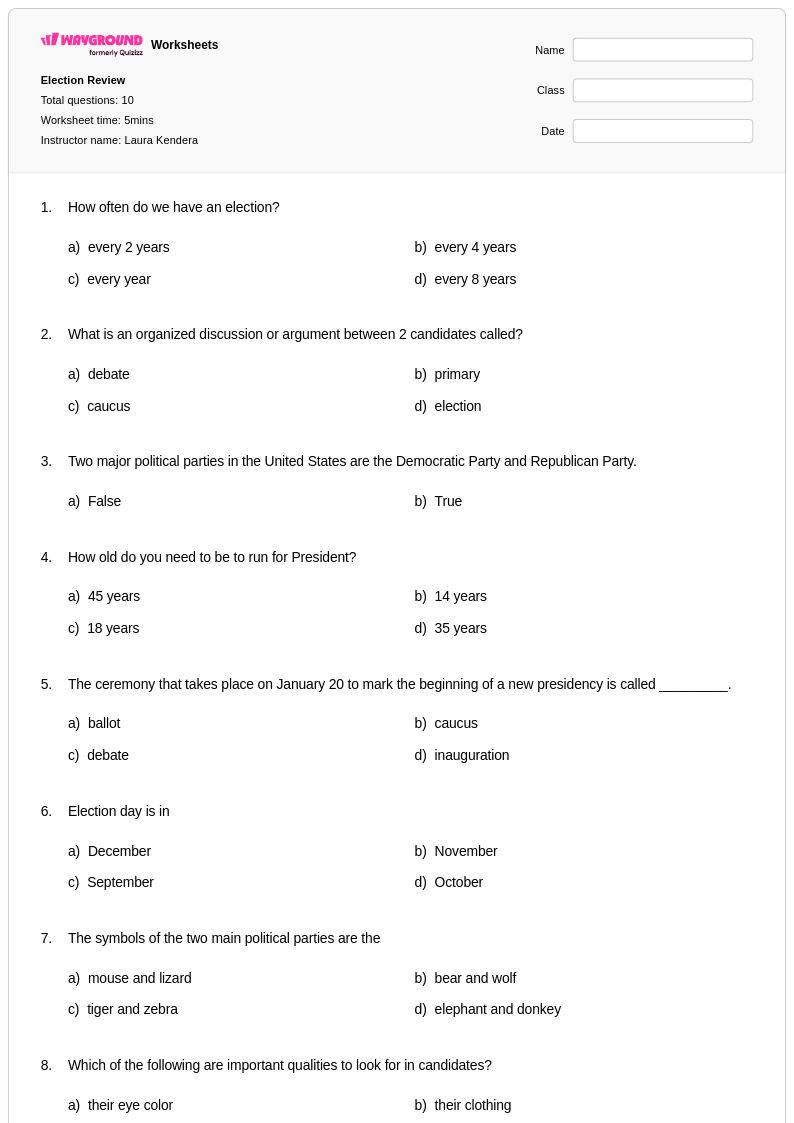
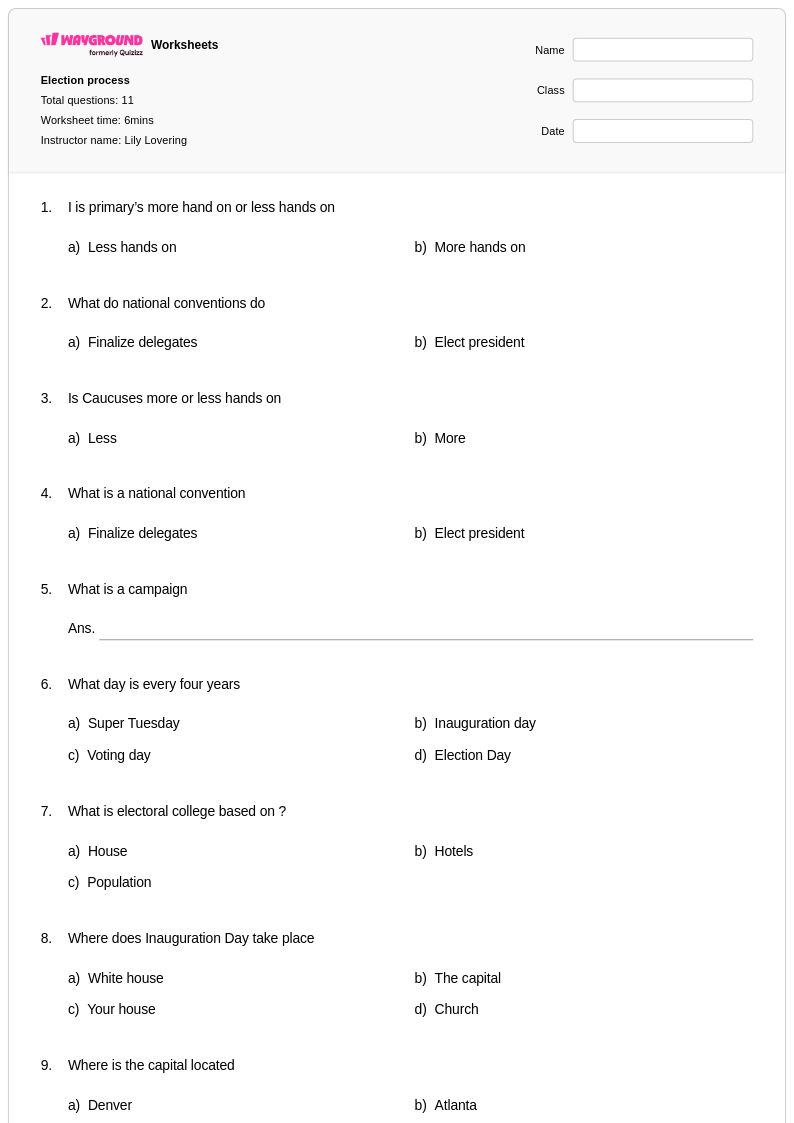
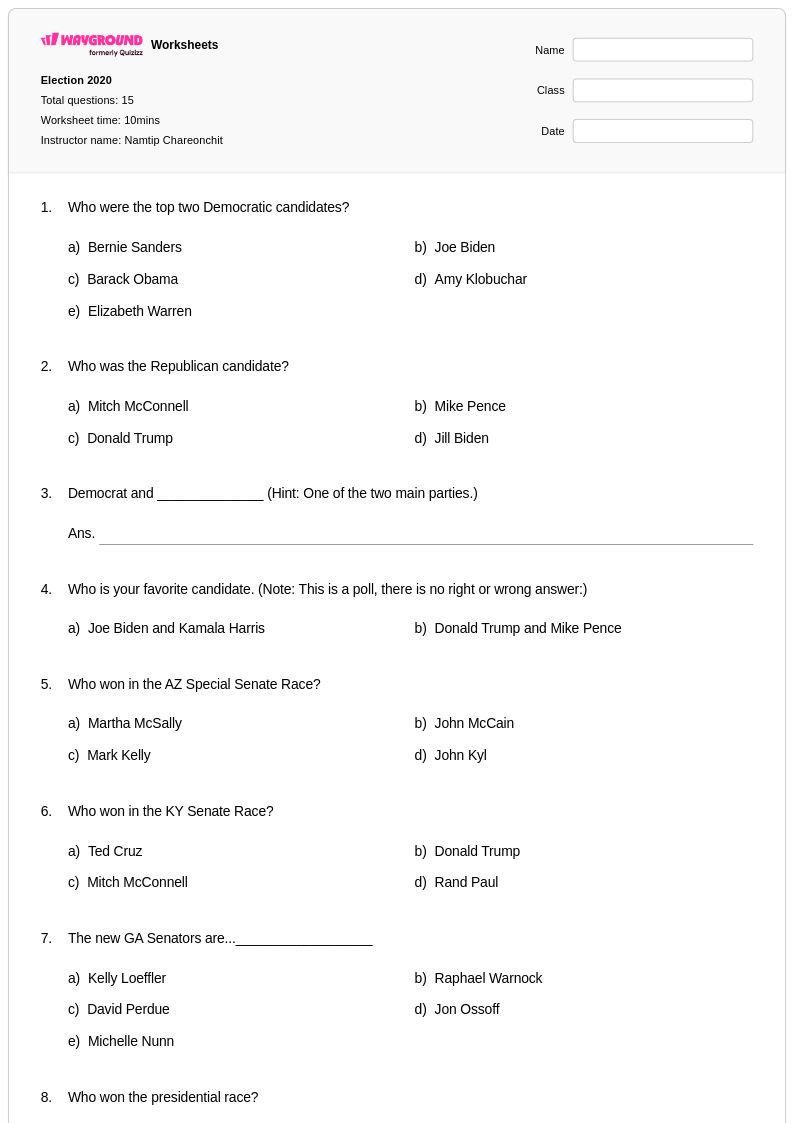
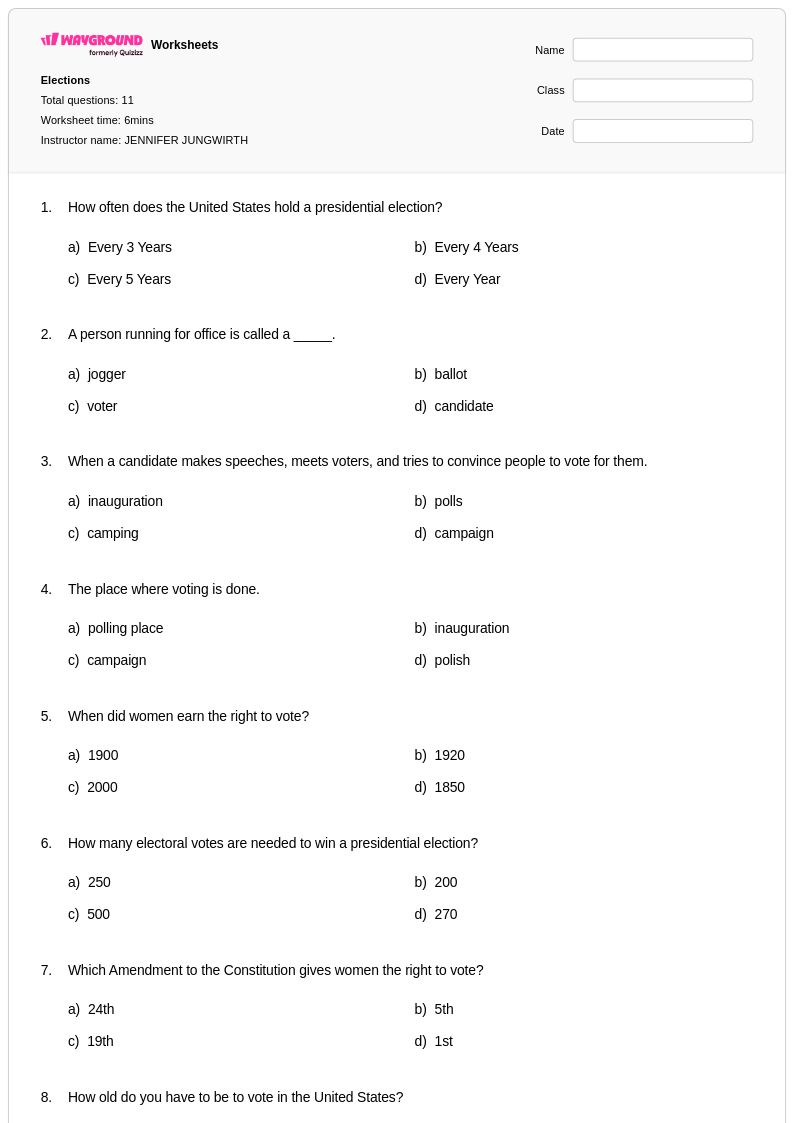
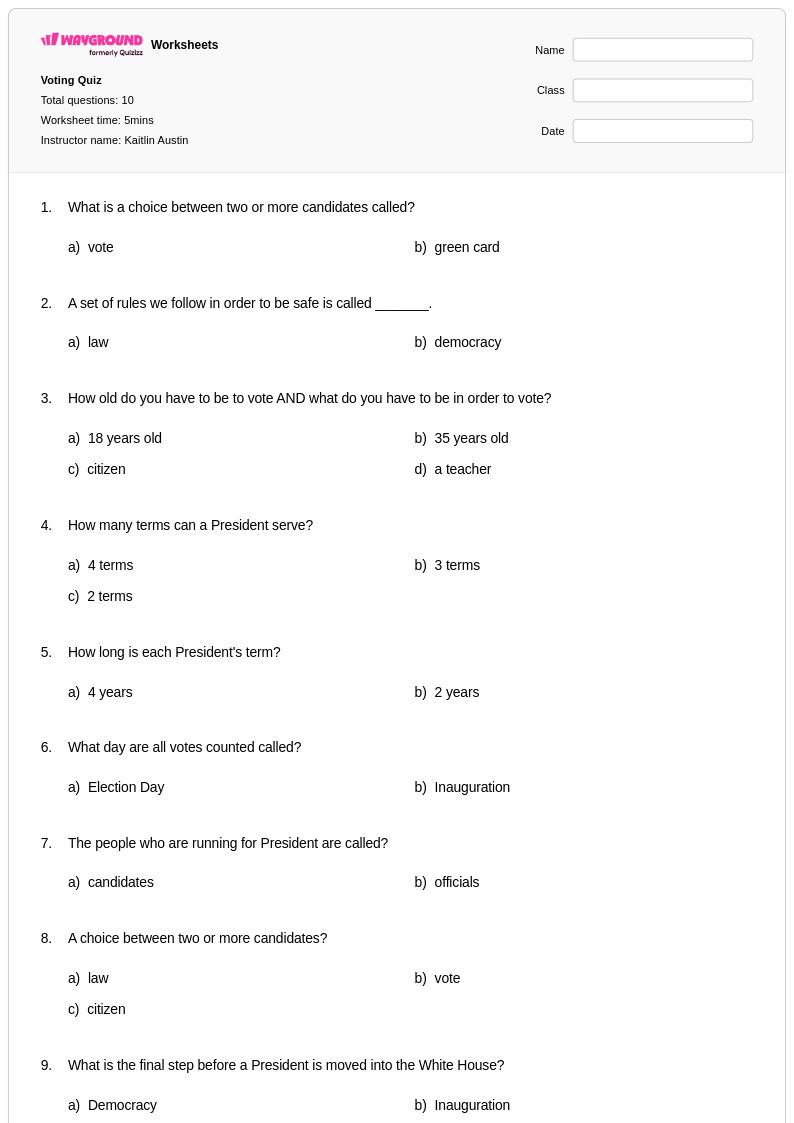
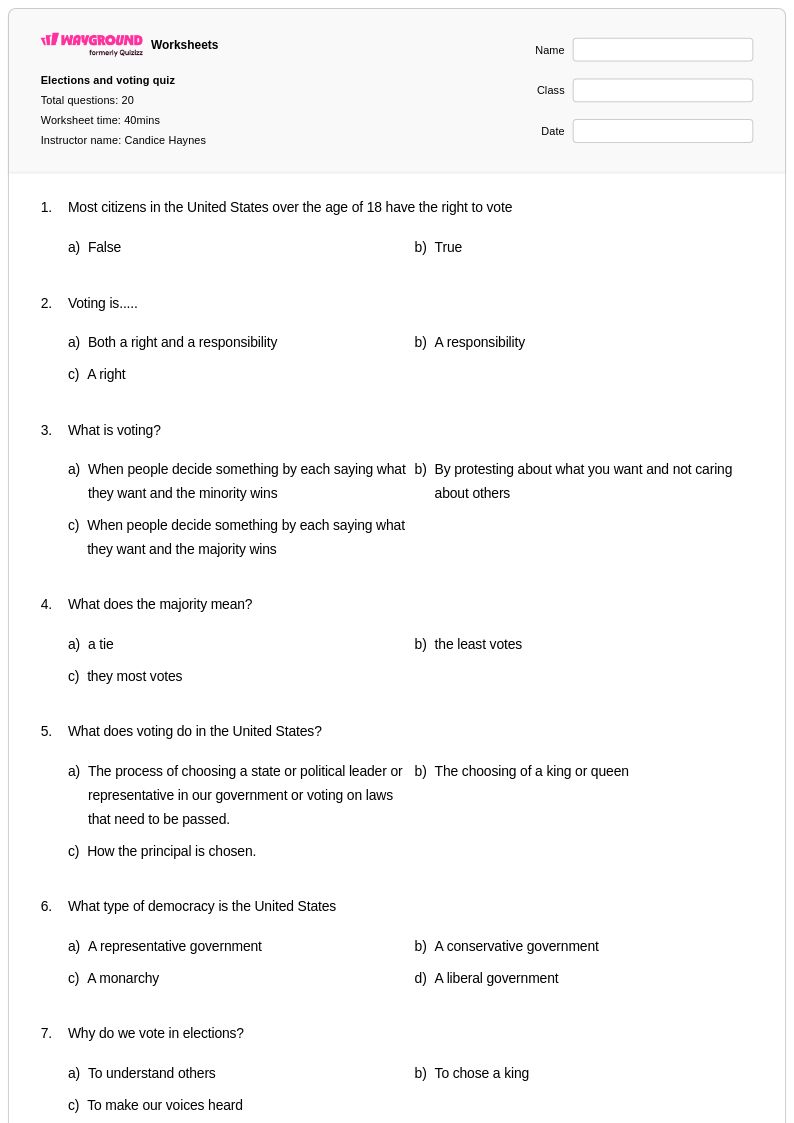
Election vocabulary worksheets for Grade 3 students provide essential foundation-building resources that introduce young learners to the fundamental terms and concepts of democratic participation. These comprehensive worksheets available through Wayground (formerly Quizizz) focus on age-appropriate election terminology such as vote, ballot, candidate, election, democracy, and citizen, helping third-grade students develop civic literacy skills through engaging practice problems and interactive exercises. The materials strengthen vocabulary recognition, reading comprehension, and conceptual understanding of how elections function in American society, with each worksheet featuring clear answer keys and structured activities designed to reinforce learning. Teachers can access these free printables in convenient PDF format, making it easy to incorporate election vocabulary instruction into social studies lessons while building students' civic knowledge and democratic awareness.
Wayground (formerly Quizizz) empowers educators with an extensive collection of teacher-created election vocabulary resources specifically designed for Grade 3 civics instruction, drawn from millions of high-quality worksheets developed by experienced classroom professionals. The platform's robust search and filtering capabilities allow teachers to quickly locate materials that align with state social studies standards and match their specific instructional needs, whether for introducing new vocabulary concepts, providing remediation support, or offering enrichment opportunities for advanced learners. These differentiation tools enable seamless customization of election vocabulary content to accommodate diverse learning styles and ability levels, while the flexible availability of both printable and digital formats ensures teachers can adapt materials for various classroom environments and teaching approaches, supporting effective lesson planning and meaningful civic education that prepares young citizens for future democratic participation.
FAQs
How do I teach election vocabulary to students?
Start by anchoring each term to a concrete, real-world context — show students an actual ballot or walk through a mock voting scenario before introducing written definitions. Group related terms together, such as pairing 'primary election' with 'general election' or 'candidate' with 'campaign', so students build conceptual clusters rather than isolated definitions. Repeated exposure through multiple activity types, including matching, fill-in-the-blank, and short-answer application, helps students retain and transfer election vocabulary to broader civics discussions.
What exercises help students practice election vocabulary?
Effective practice exercises for election vocabulary include matching terms to definitions, using words in context-based sentences, and applying terms to short reading passages about real elections. Activities that ask students to categorize terms — for example, separating voting process terms from government structure terms — build deeper conceptual understanding. Wayground's election vocabulary worksheets include matching activities, definition exercises, and contextual application tasks designed to reinforce the specialized language of American elections and democratic processes.
What election vocabulary words should students know?
Core election vocabulary students should know includes ballot, candidate, polling place, electoral college, primary election, and general election. Students should also understand terms related to voter registration, campaign, incumbent, and constituents, as these appear frequently in civics texts and news coverage of elections. Mastery of this vocabulary is foundational for understanding how democratic systems function and for engaging meaningfully with current events.
What mistakes do students commonly make when learning election vocabulary?
One of the most common misconceptions is confusing 'primary election' with 'general election' — students often do not understand that a primary narrows candidates within a party before the broader public vote occurs. Students also frequently misunderstand the Electoral College, often assuming the President is elected purely by popular vote. Worksheets that use contextual application tasks, rather than simple memorization drills, are especially effective at surfacing and correcting these conceptual errors.
How do I use Wayground's election vocabulary worksheets in my classroom?
Wayground's election vocabulary worksheets are available as printable PDFs for traditional classroom use and in digital formats for technology-integrated or hybrid learning environments, including the option to host them as a quiz directly on Wayground. Teachers can use them for direct instruction support, independent practice, or formative assessment during a civics or social studies unit. Each worksheet includes a complete answer key, so they are ready for immediate implementation without additional preparation.
How can I support struggling students when teaching election vocabulary?
For students who need additional support, Wayground offers built-in accommodation tools that can be applied individually or to the whole class, including Read Aloud for audio delivery of questions, reduced answer choices to lower cognitive load, and extended time per question. These settings are saved and reusable across future sessions, so you only need to configure them once per student. Pairing these accommodations with contextual practice tasks — rather than rote definition recall — gives struggling learners more entry points into the material.