Free Printable Emergency Preparedness Worksheets for Grade 5
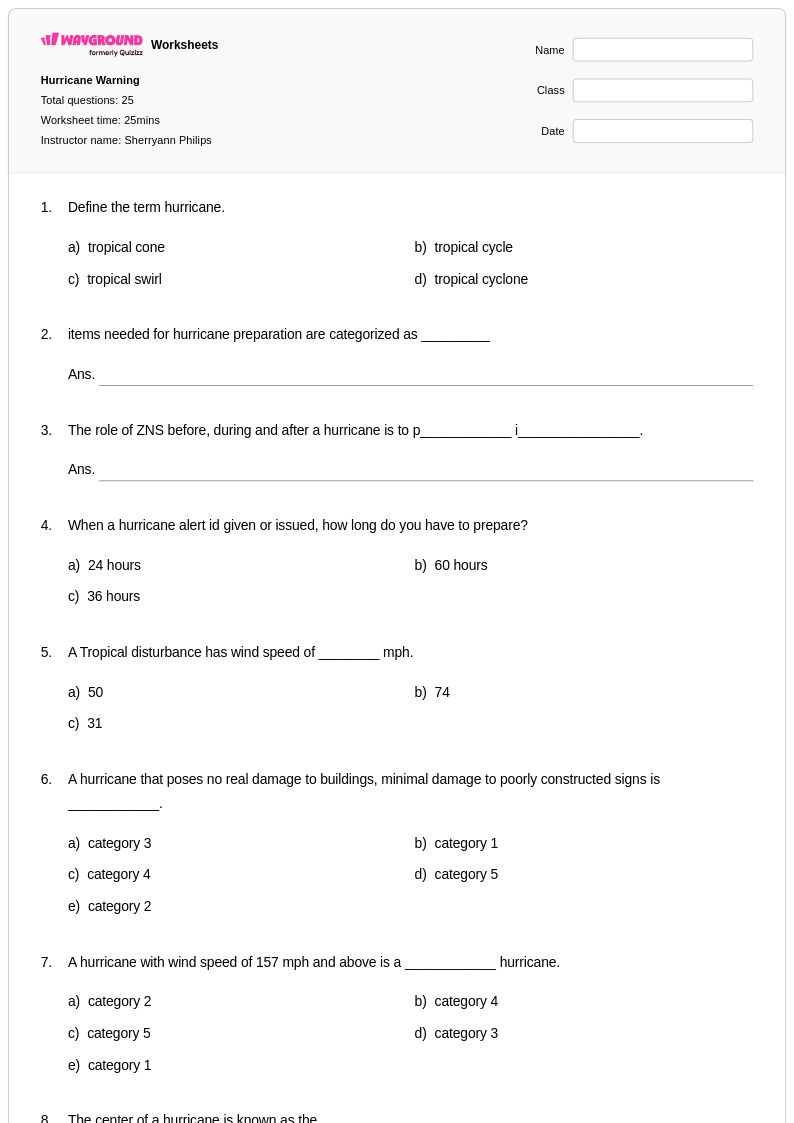
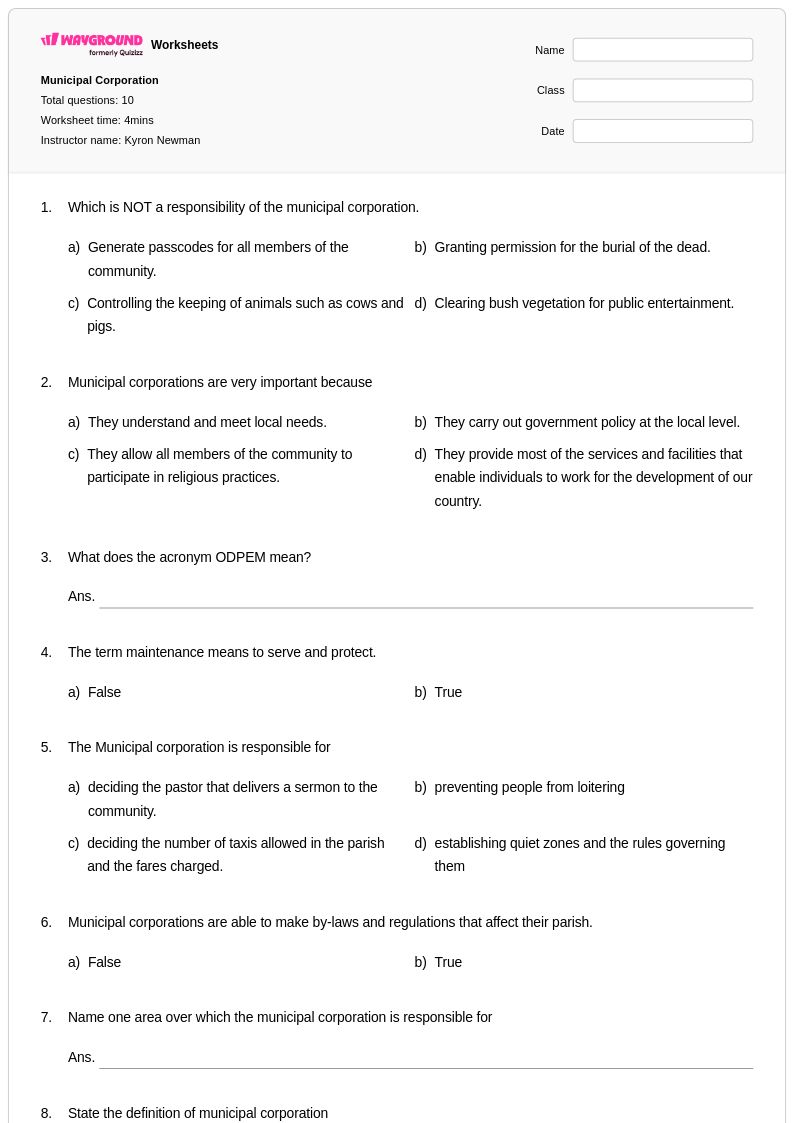
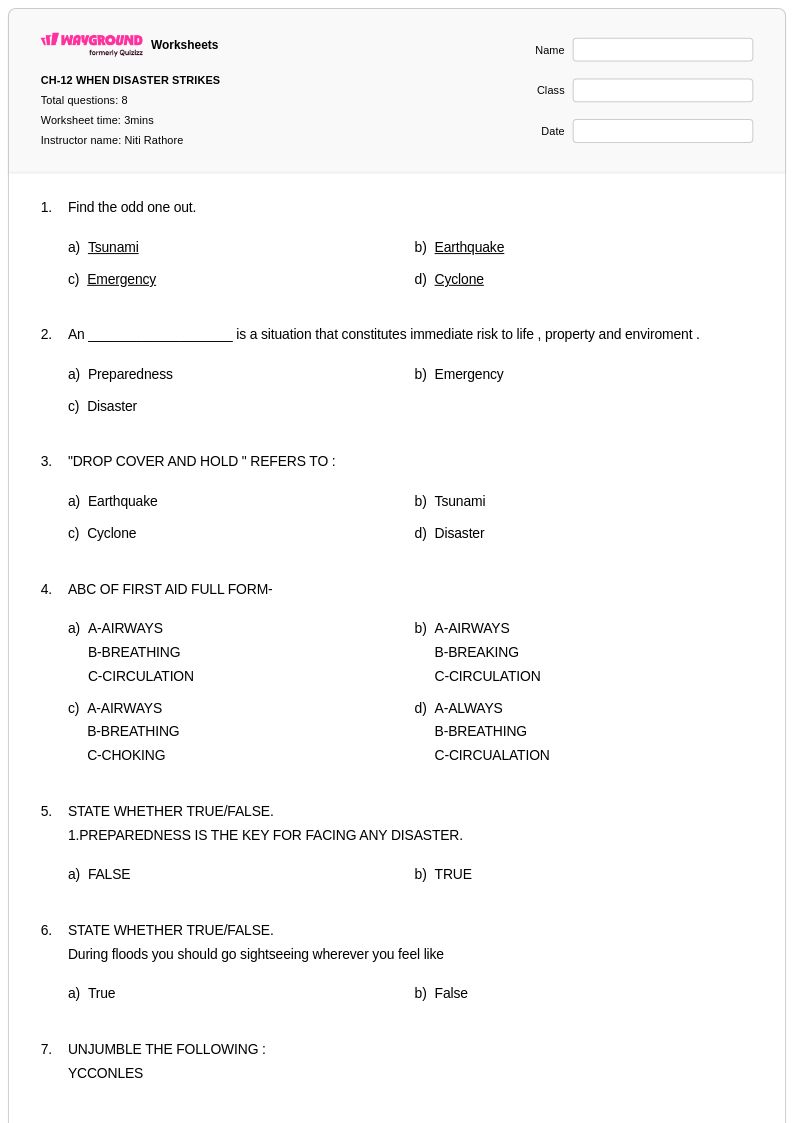
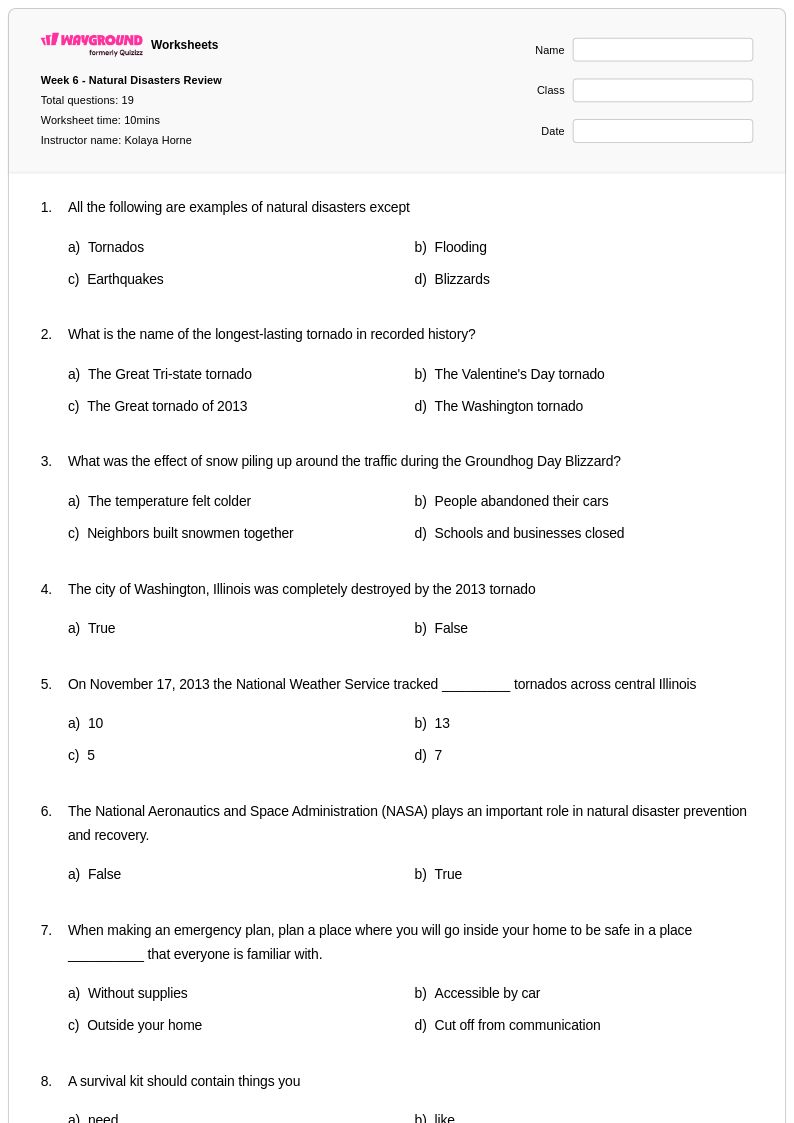
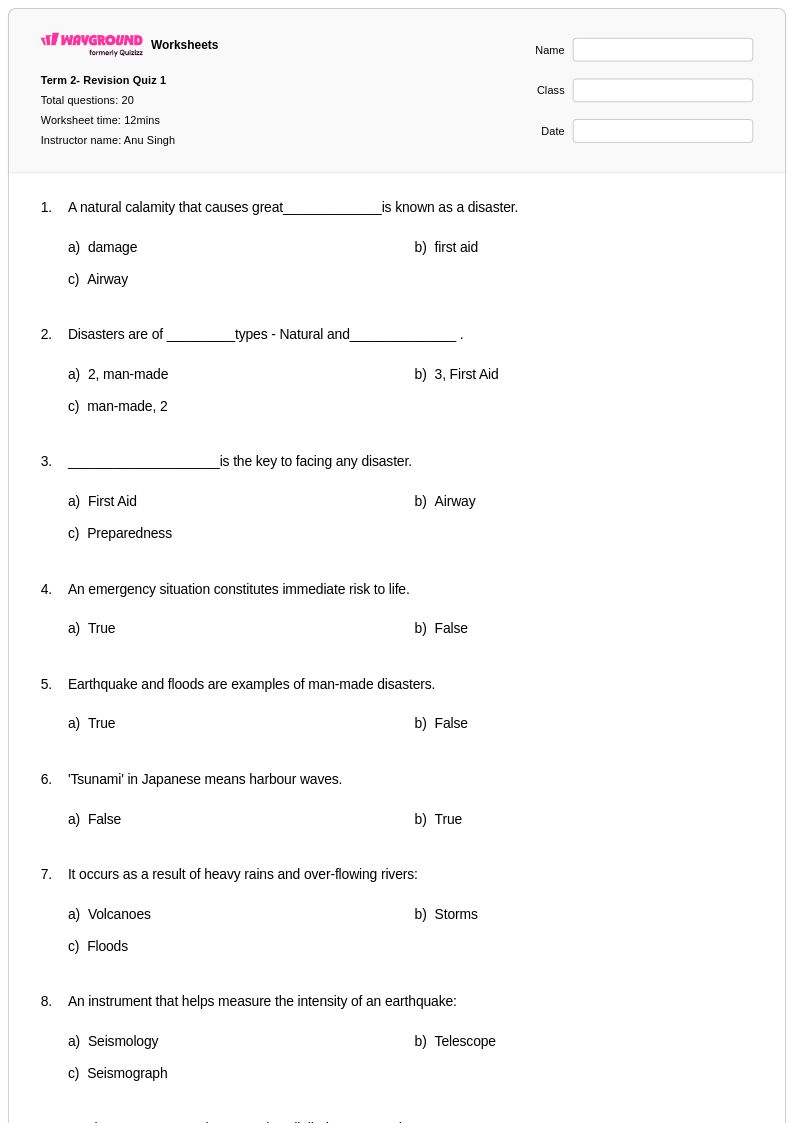
Grade 5 emergency preparedness worksheets from Wayground help students develop essential safety skills through engaging printables covering disaster planning, emergency contacts, and survival strategies with comprehensive answer keys.
Explore printable Emergency Preparedness worksheets for Grade 5
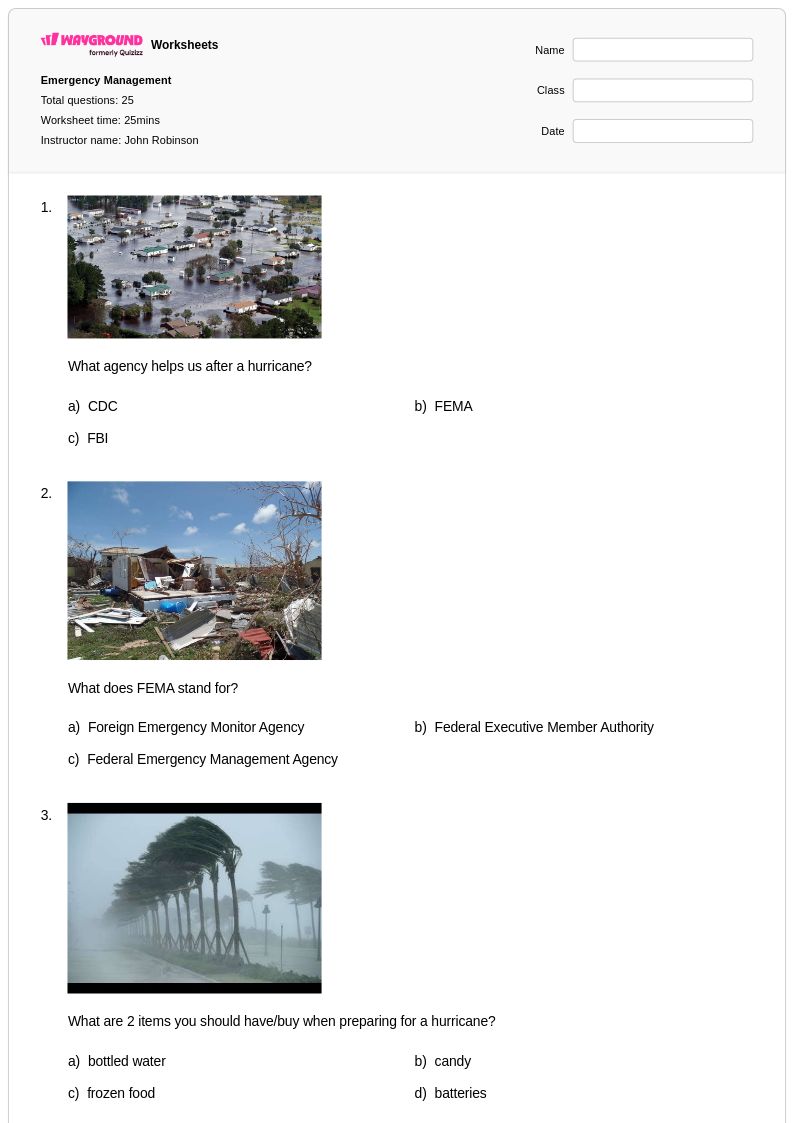
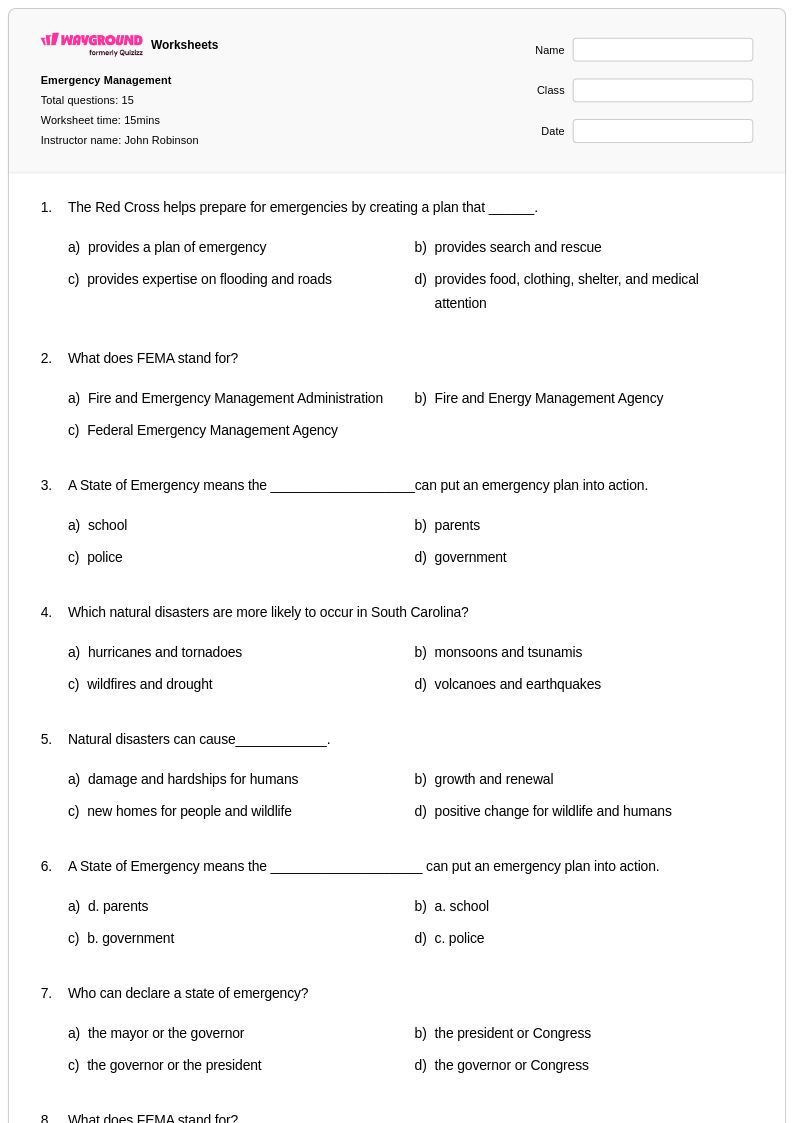
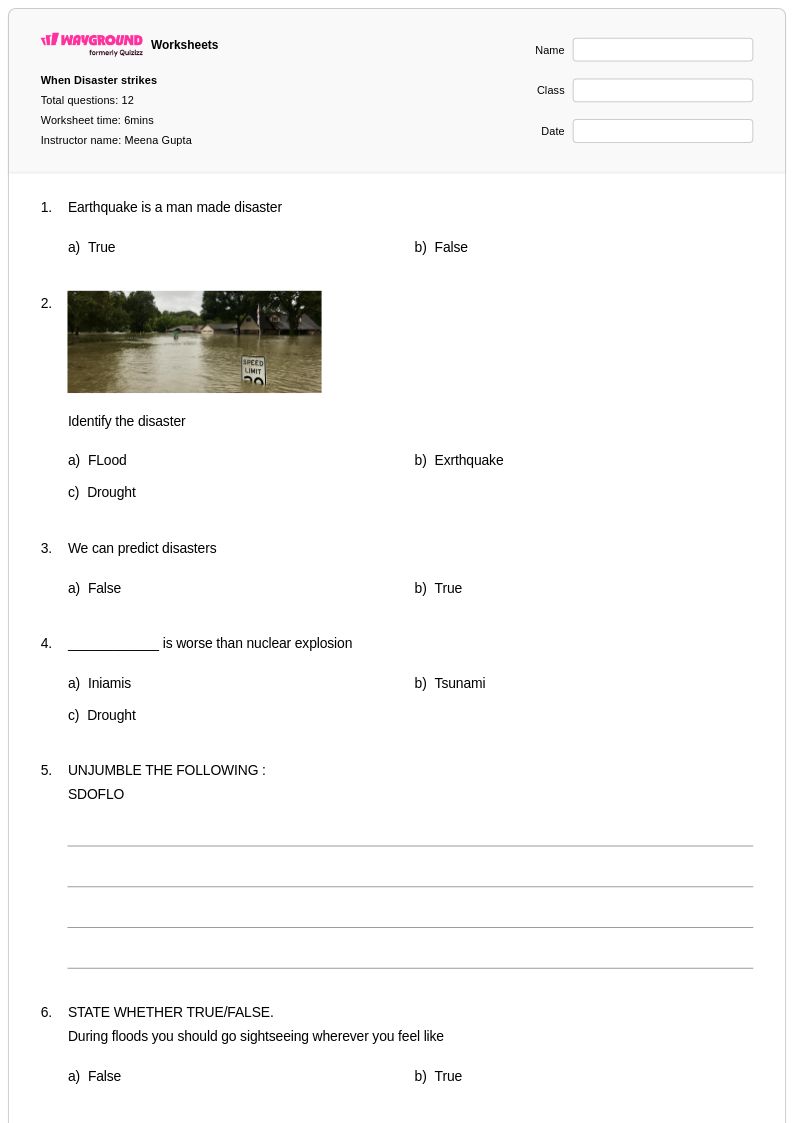
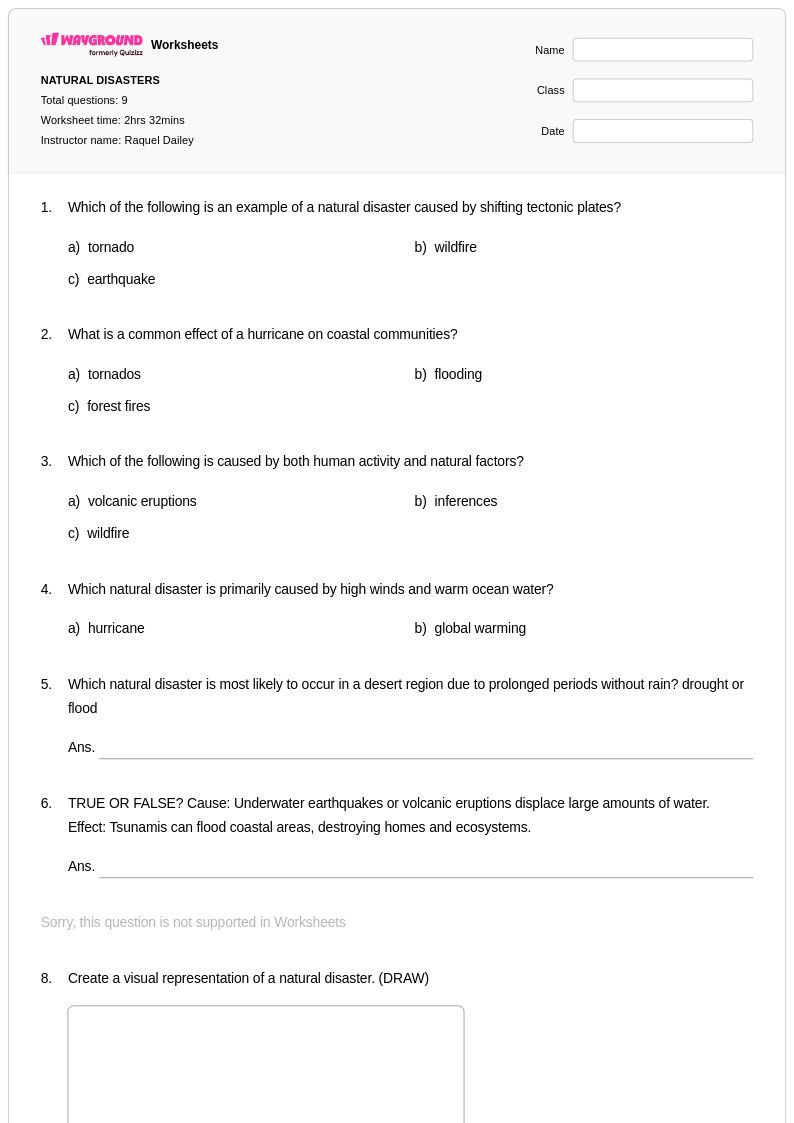
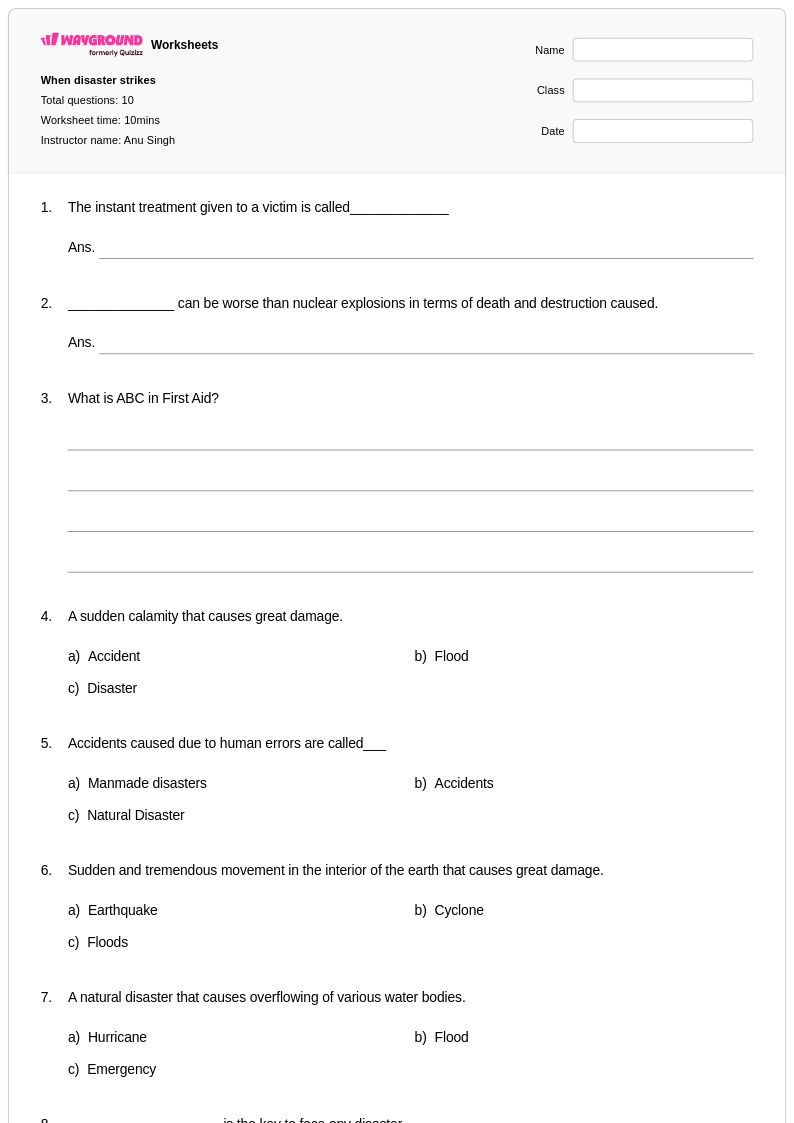
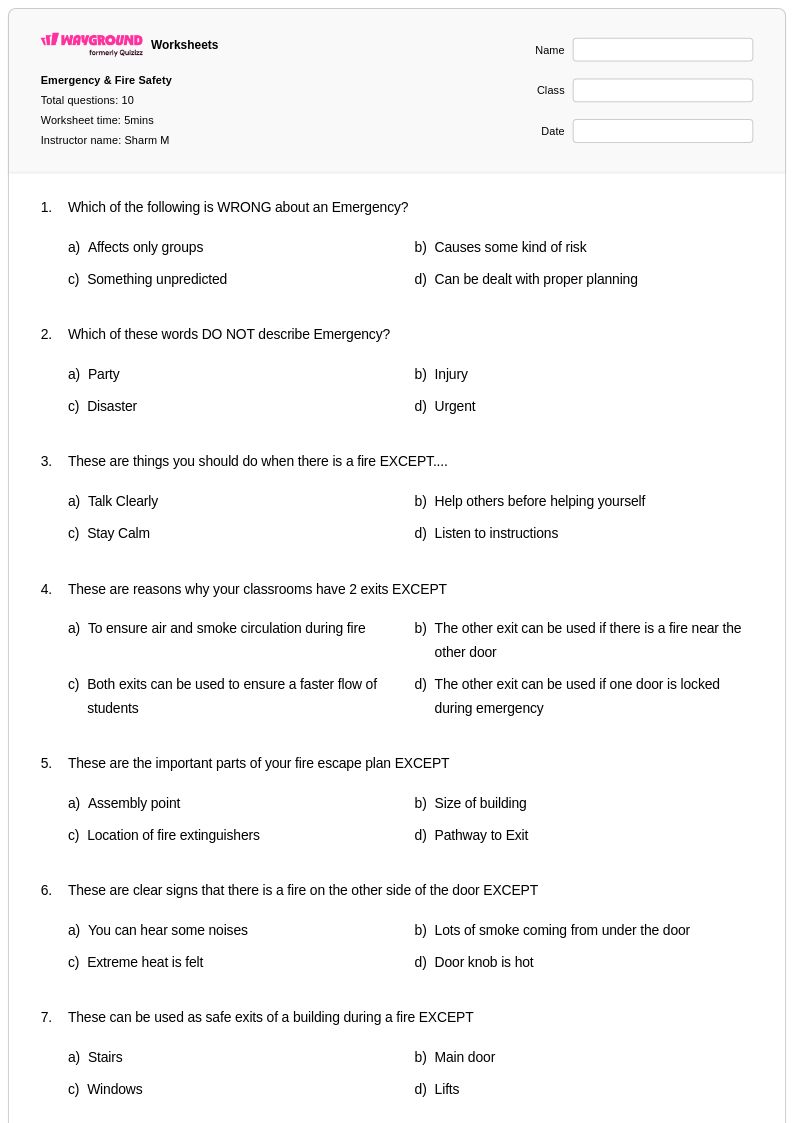
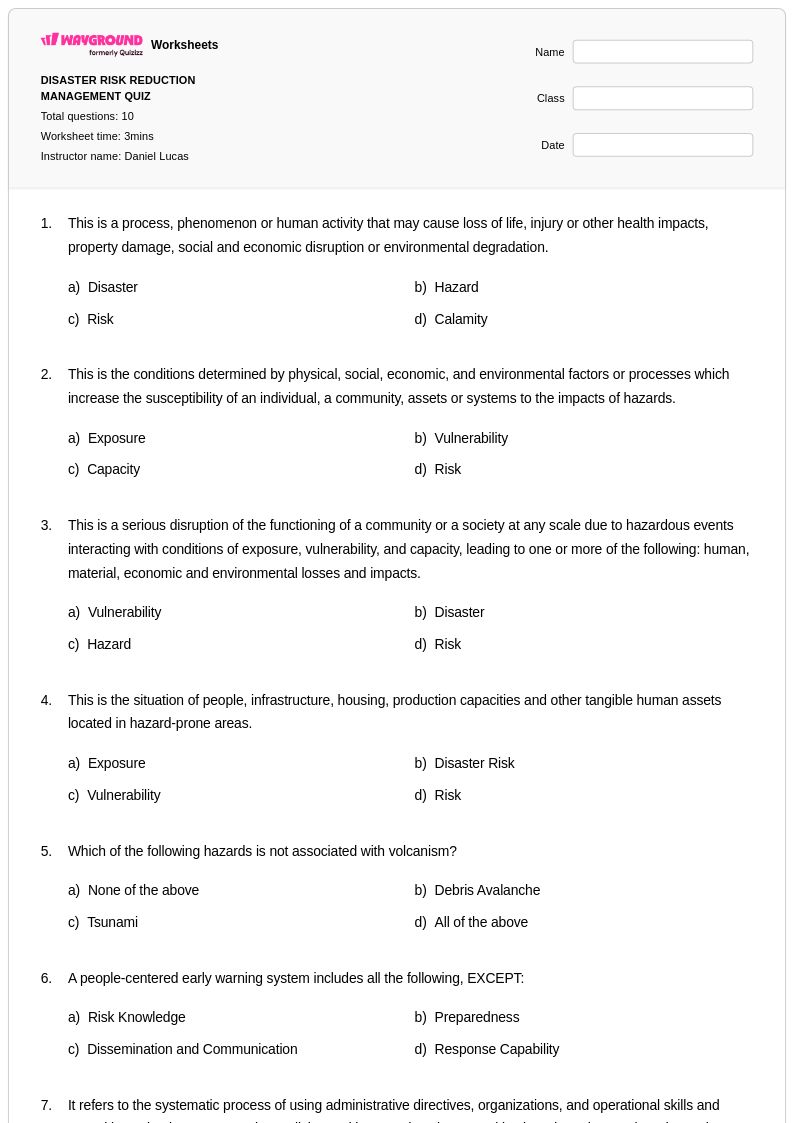
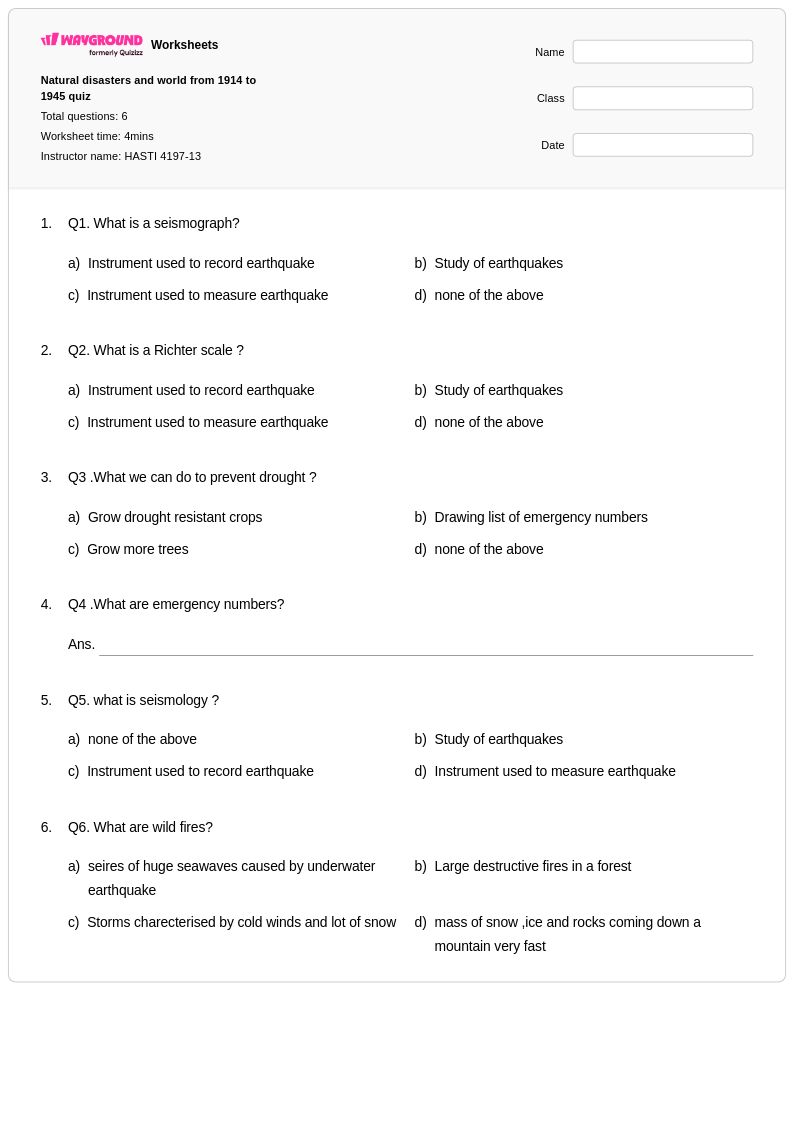
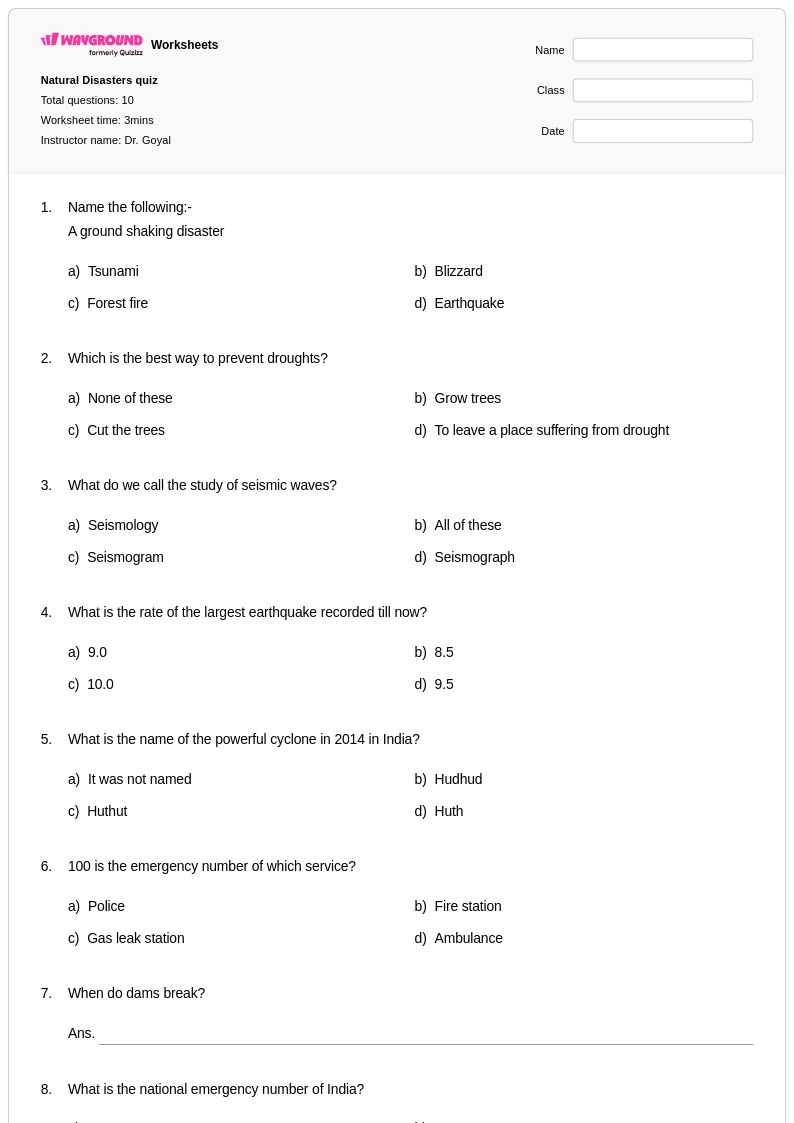
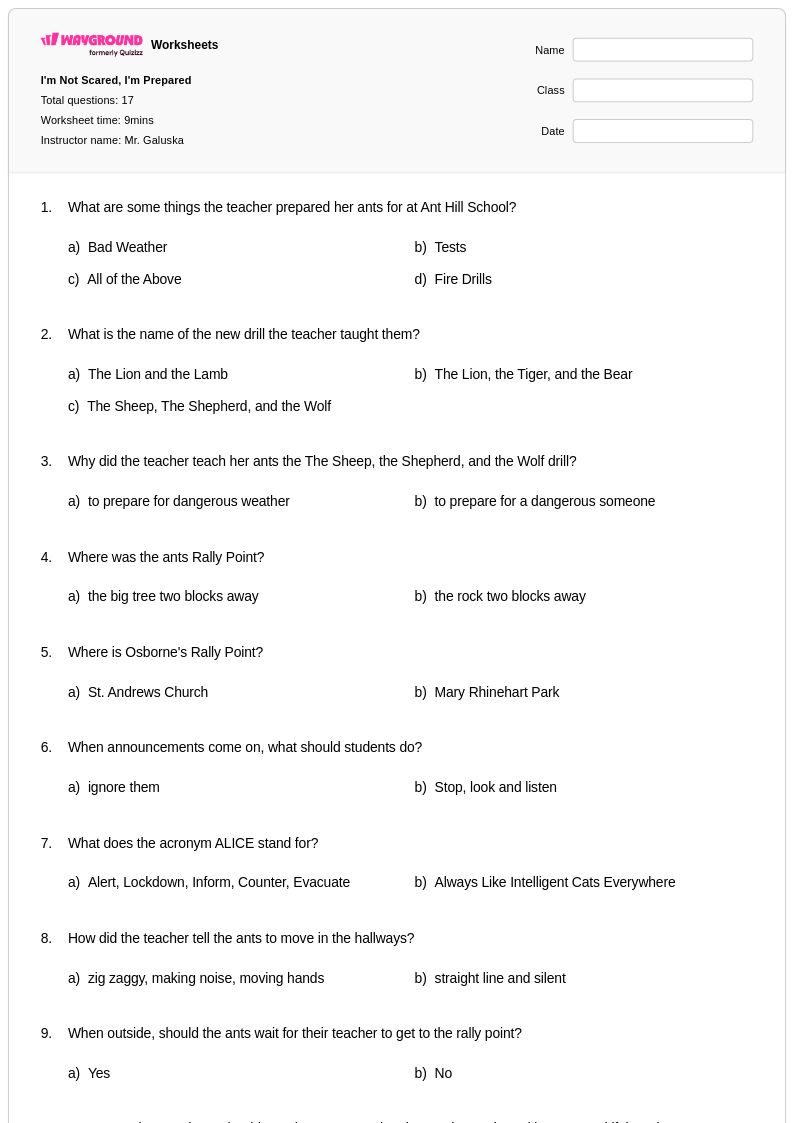
Emergency preparedness worksheets for Grade 5 students through Wayground (formerly Quizizz) provide essential social studies content that builds critical life skills and civic awareness. These comprehensive resources help fifth-grade learners understand disaster readiness, safety protocols, and community response systems through engaging practice problems and real-world scenarios. Students develop analytical thinking as they explore emergency planning concepts, identify potential hazards in their communities, and learn appropriate responses to various crisis situations. The worksheets feature age-appropriate content that strengthens decision-making abilities, builds confidence in emergency situations, and reinforces the importance of preparation and communication. Each resource includes detailed answer keys to support independent learning, and the free printables are available in convenient PDF format for classroom or home use.
Wayground (formerly Quizizz) empowers educators with millions of teacher-created emergency preparedness resources specifically designed for Grade 5 social studies instruction. The platform's robust search and filtering capabilities allow teachers to quickly locate worksheets aligned with state and national standards, ensuring content meets curriculum requirements while addressing diverse learning needs. Advanced differentiation tools enable educators to modify worksheets for various skill levels, supporting both remediation for struggling learners and enrichment opportunities for advanced students. Teachers can customize content to reflect local emergency protocols and community-specific hazards, making lessons more relevant and meaningful. Available in both printable and digital formats including PDF downloads, these resources streamline lesson planning while providing flexible options for skill practice, formative assessment, and reinforcement of critical emergency preparedness concepts that prepare students to be informed and responsible citizens.
FAQs
How do I teach emergency preparedness to students in a classroom setting?
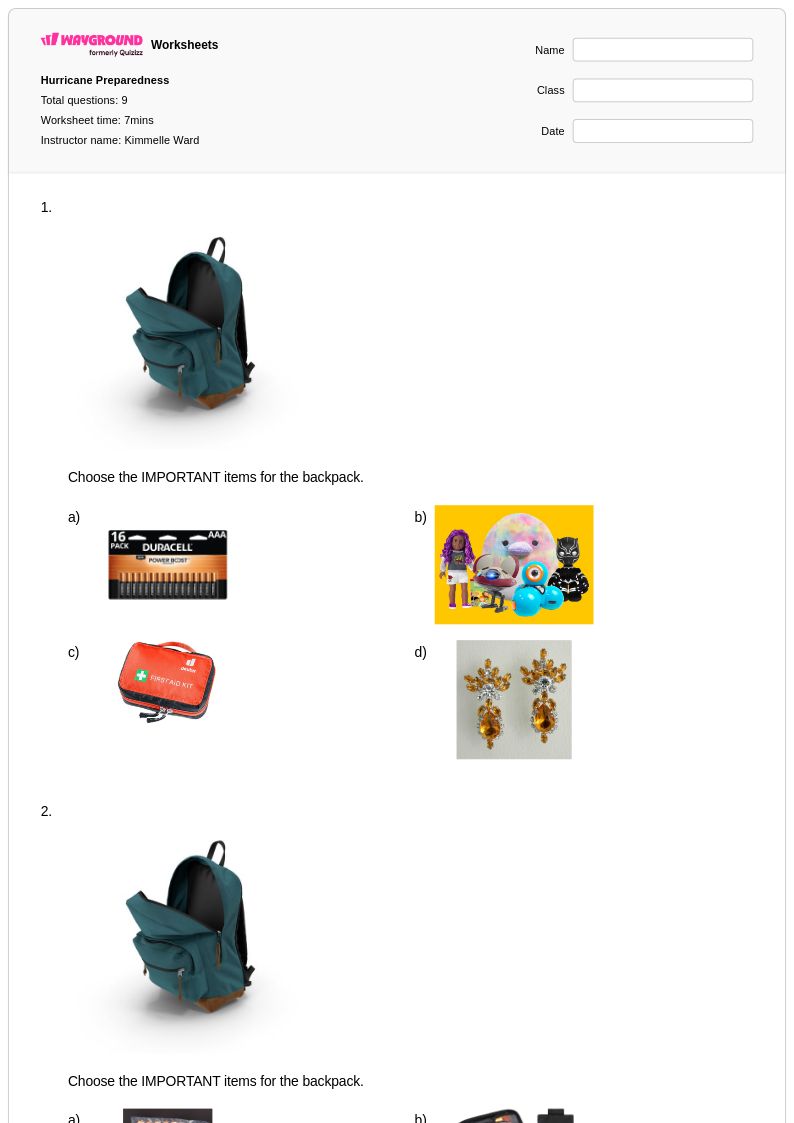
Teaching emergency preparedness works best when abstract crisis scenarios are made concrete and personally relevant. Start with students' immediate environment by reviewing school evacuation routes and lockdown procedures, then expand outward to home and community contexts. Scenario-based activities, where students must decide what to pack in a go-bag or map an escape route, build decision-making skills that transfer to real emergencies. Connecting lessons to local hazards, such as earthquakes, floods, or tornadoes, increases engagement and practical relevance.
What topics should an emergency preparedness worksheet cover?
A well-rounded emergency preparedness worksheet should address evacuation procedures, emergency supply planning, communication strategies during disasters, and basic first aid principles. Students should also practice identifying the appropriate response to different types of emergencies, such as natural disasters versus shelter-in-place scenarios. Including scenario-based problems helps students apply knowledge rather than simply recall it, which is critical for real-world readiness.
What common mistakes do students make when learning about emergency preparedness?
Students frequently confuse evacuation and shelter-in-place protocols, applying one when the other is appropriate. They also tend to underestimate the importance of communication plans, assuming cell phones will always be functional during a crisis. Another common gap is treating emergency supply lists as generic rather than tailored to personal or family needs, such as medications, pets, or mobility considerations. Addressing these misconceptions explicitly during instruction improves retention and practical application.
How can I use emergency preparedness worksheets to support cross-curricular learning?
Emergency preparedness connects naturally to social studies, science, health, and even math curricula. In social studies, students can examine community and government roles in disaster response. In science, weather events and geological hazards provide natural entry points. Health classes can address first aid and mental health during crises. Using worksheets that are designed with cross-curricular connections allows teachers to reinforce preparedness skills without sacrificing core content time.
How do I use Wayground's emergency preparedness worksheets in my classroom?
Wayground's emergency preparedness worksheets are available as printable PDFs for traditional classroom distribution and in digital formats for technology-integrated or remote learning environments. Teachers can also host these materials as an interactive quiz directly on Wayground, which supports self-paced student practice and immediate feedback. Each worksheet includes a complete answer key, making them practical for both guided instruction and independent assignments. Wayground's search and filtering tools help teachers quickly locate materials that align with local and national safety standards.
How can I differentiate emergency preparedness instruction for students with different learning needs?
Wayground supports several built-in accommodation tools that are particularly useful for emergency preparedness content, which can involve complex vocabulary and high-stakes scenarios. Teachers can enable Read Aloud so questions and content are read to students who need audio support, and Reduced Answer Choices can lower cognitive load for students who find multiple-option scenarios overwhelming. Extended time settings can be configured per student, and Reading Mode allows font size and theme adjustments for accessibility. These accommodations can be assigned individually without notifying other students, keeping the classroom experience consistent.