Free Printable Ending Punctuation Worksheets for Grade 2
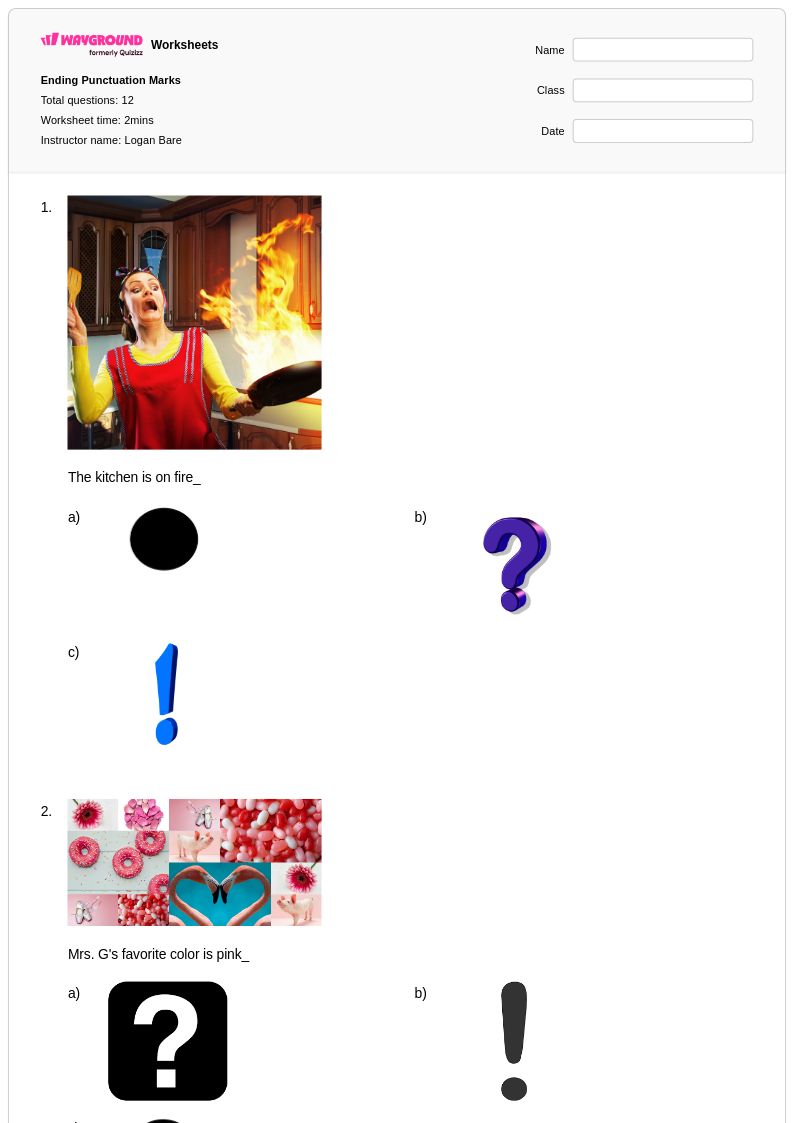
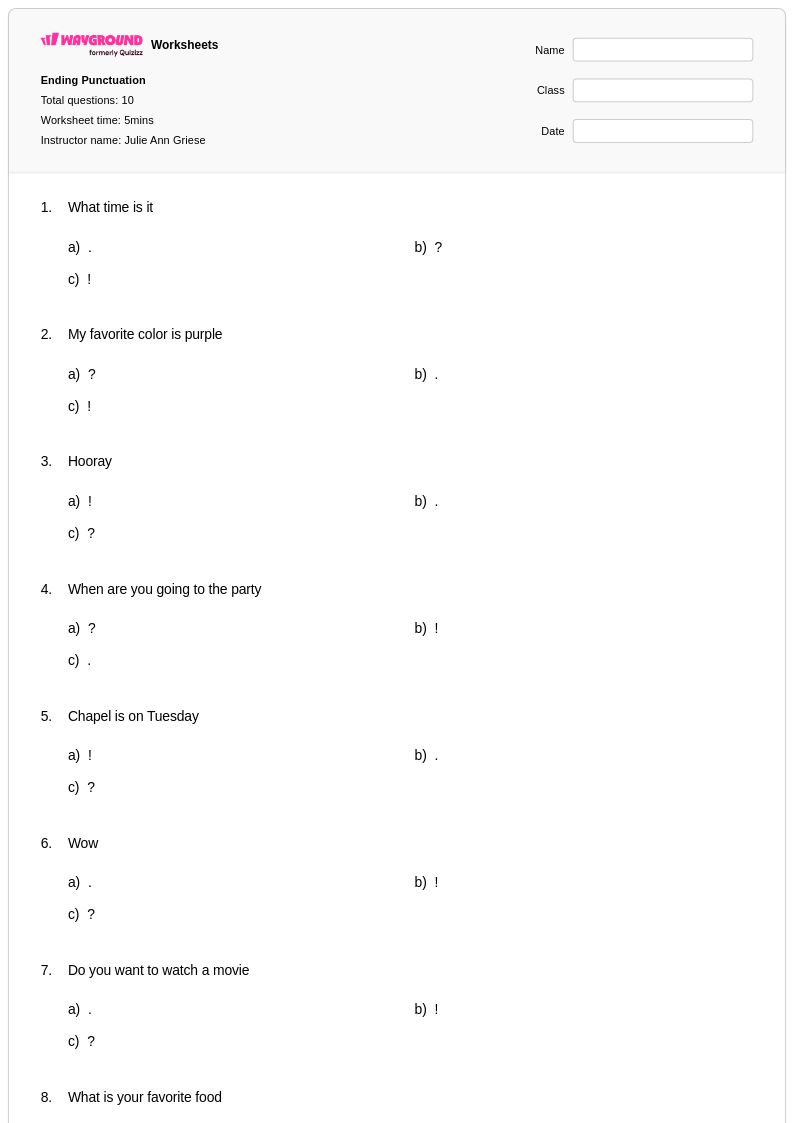
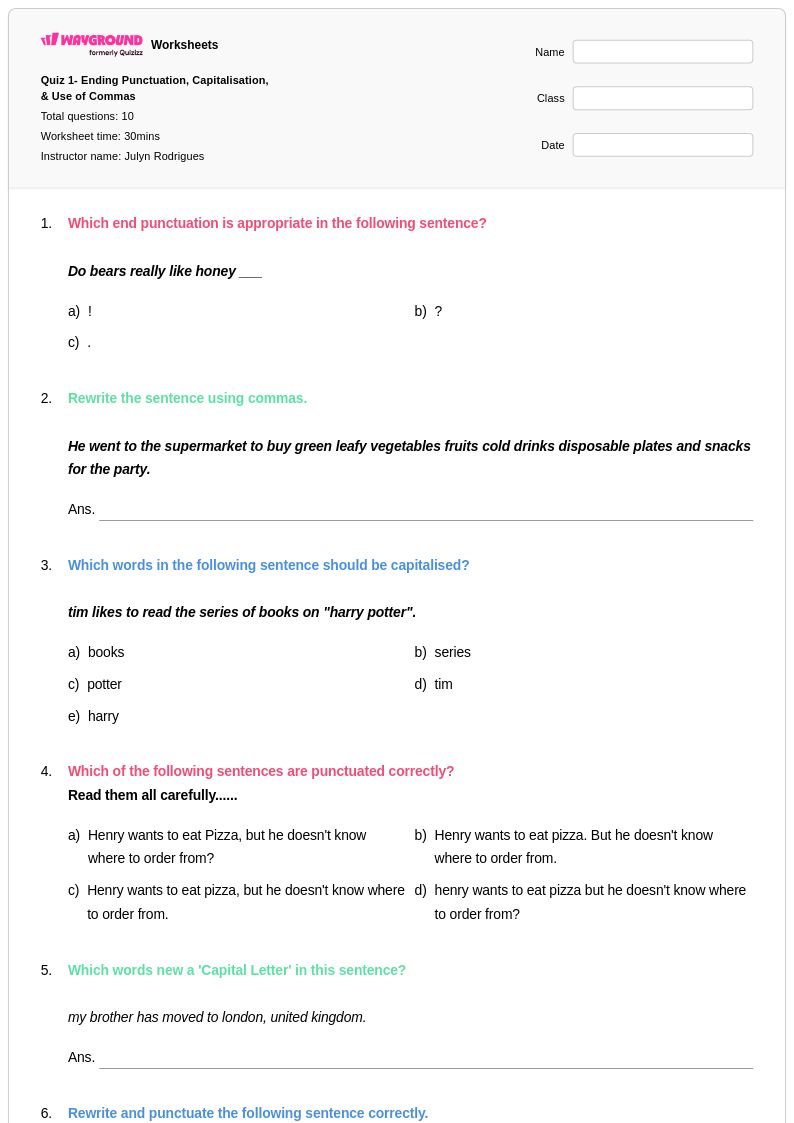
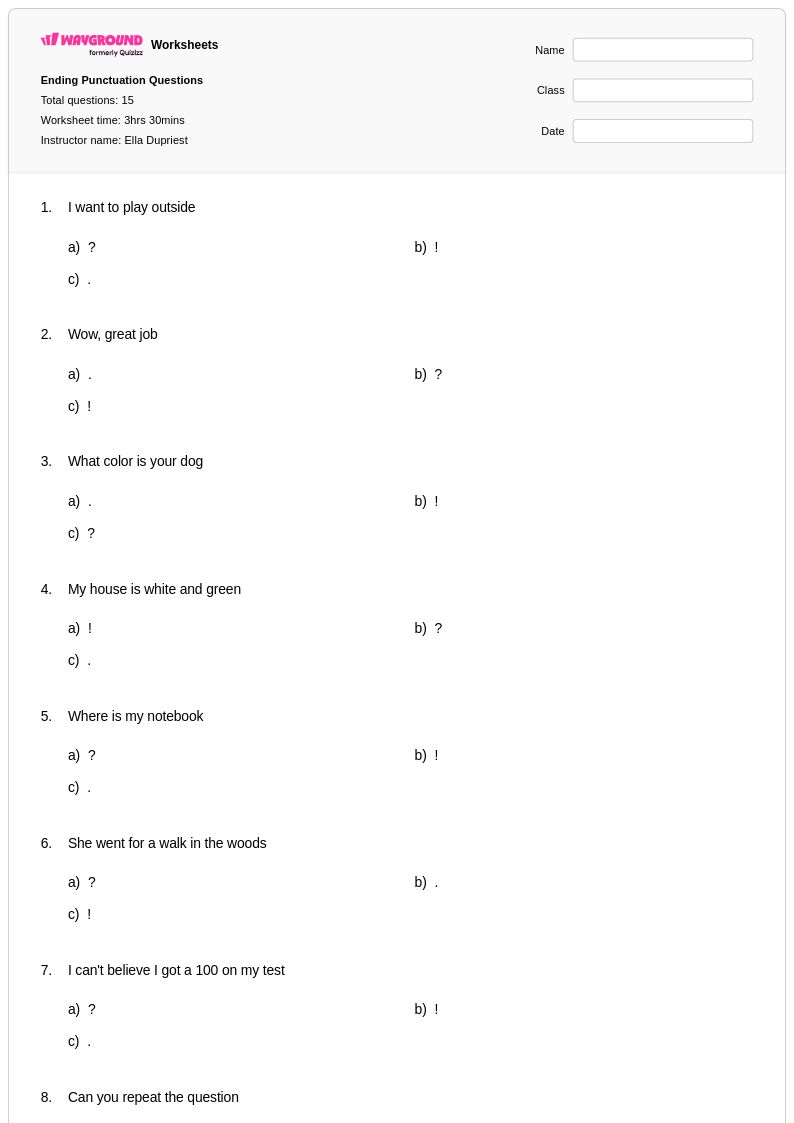
Grade 2 ending punctuation worksheets from Wayground provide free printables and practice problems that help young students master periods, question marks, and exclamation points with comprehensive answer keys included.
Explore printable Ending Punctuation worksheets for Grade 2
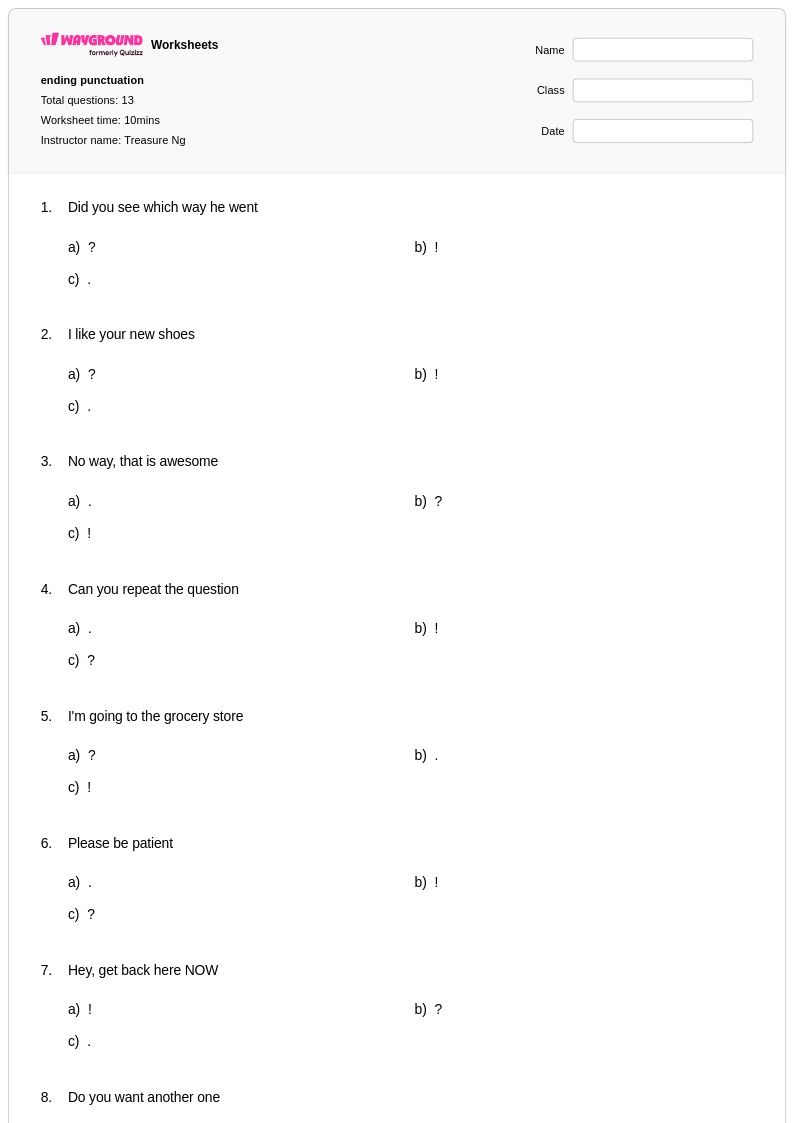
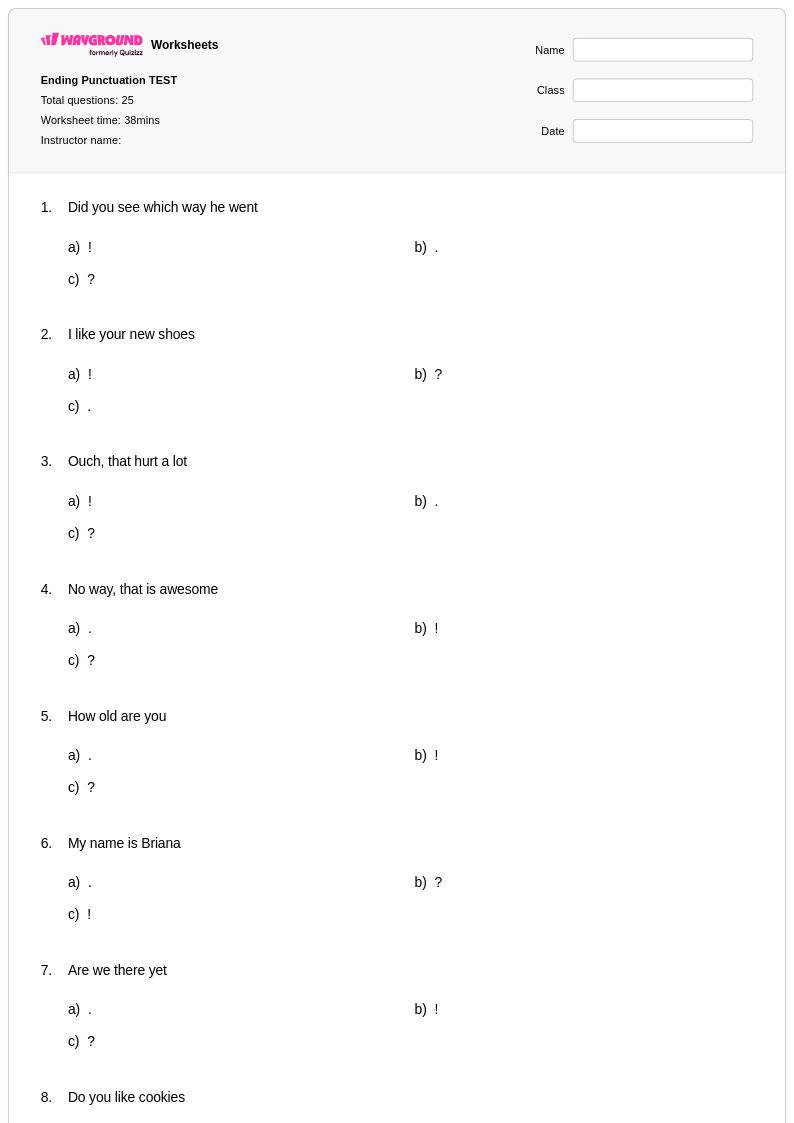
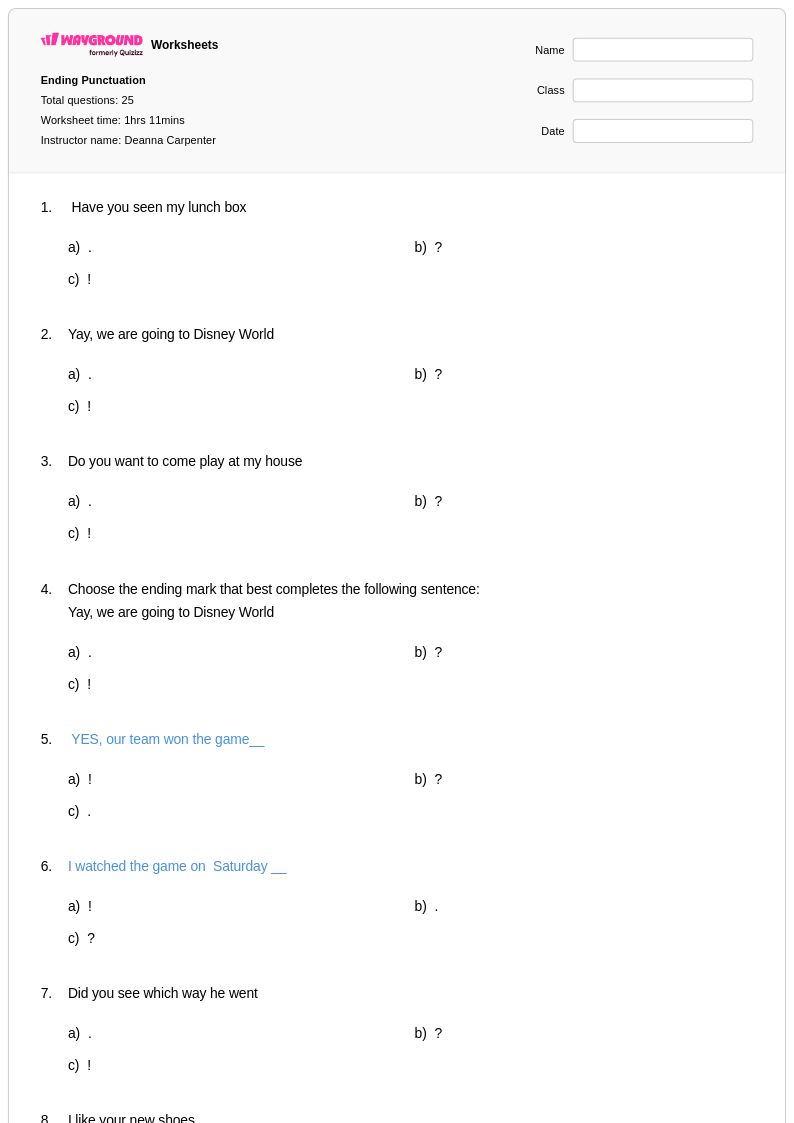
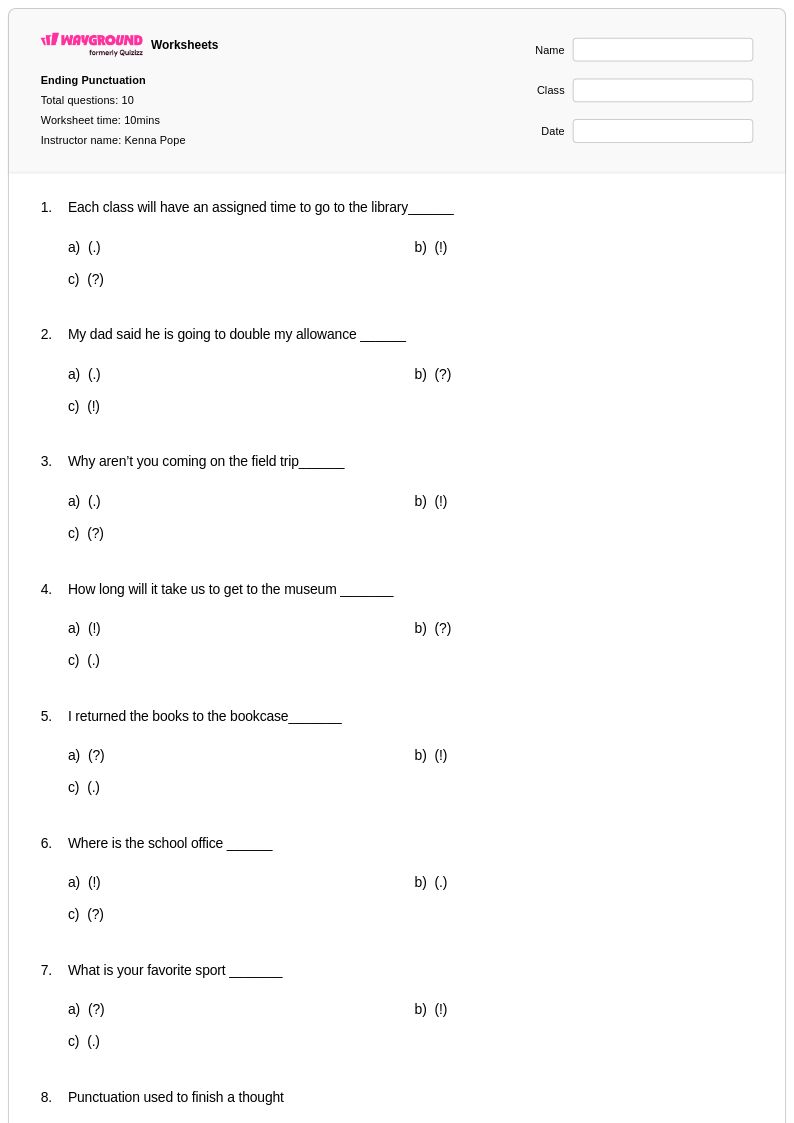
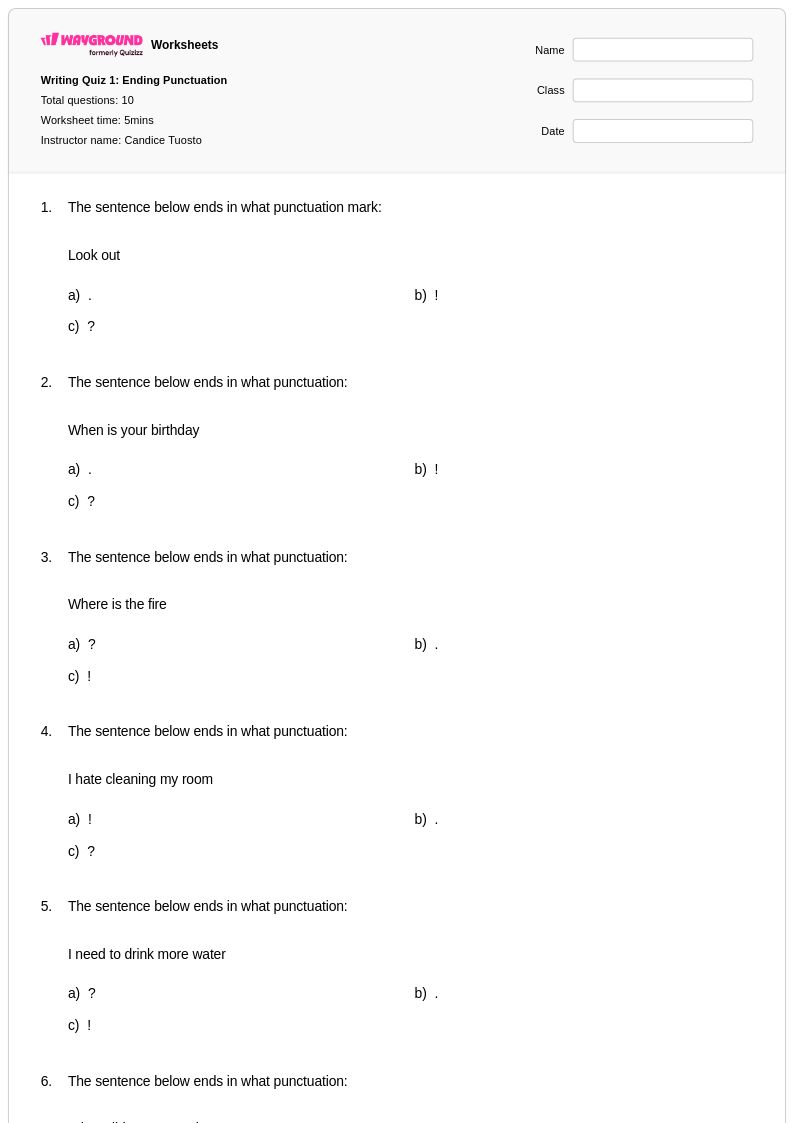
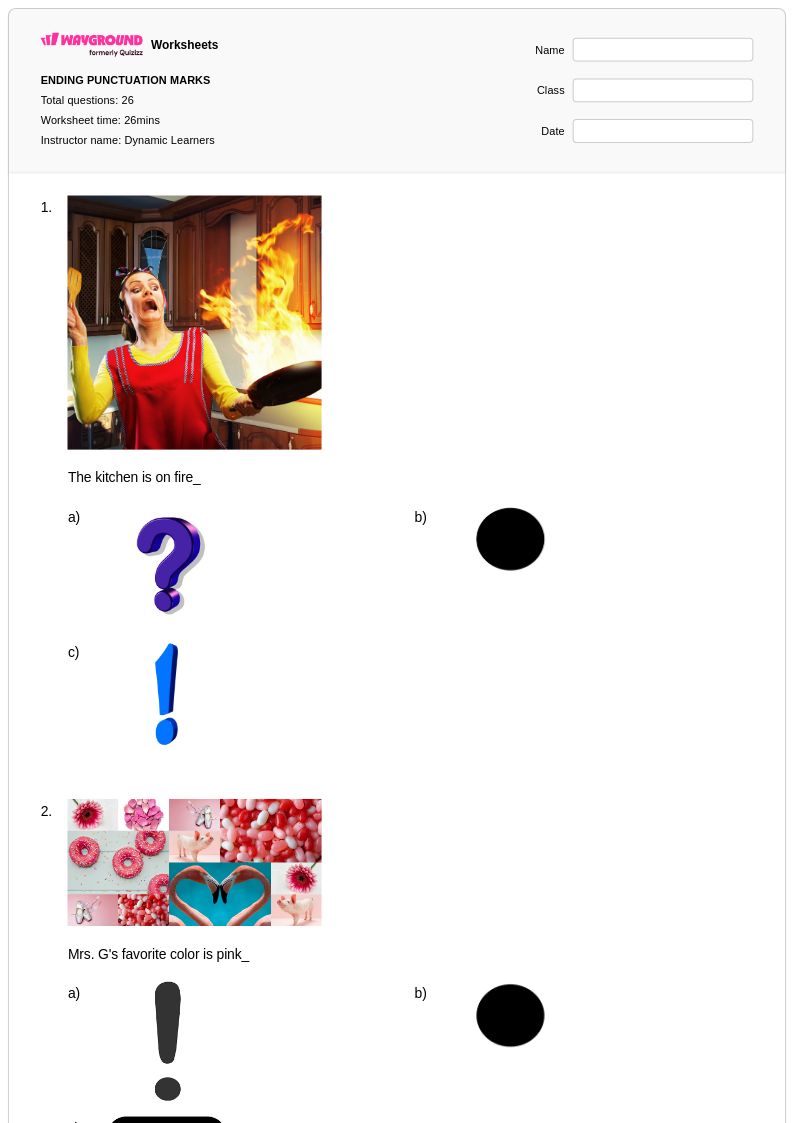
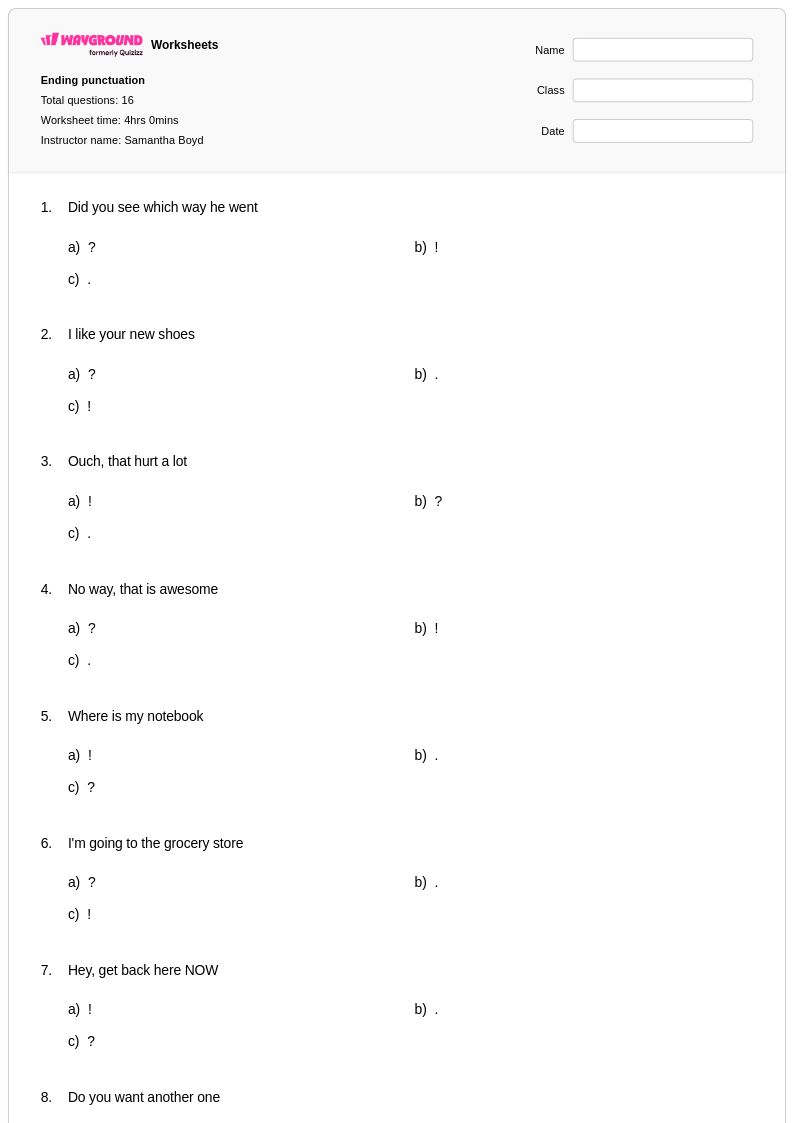
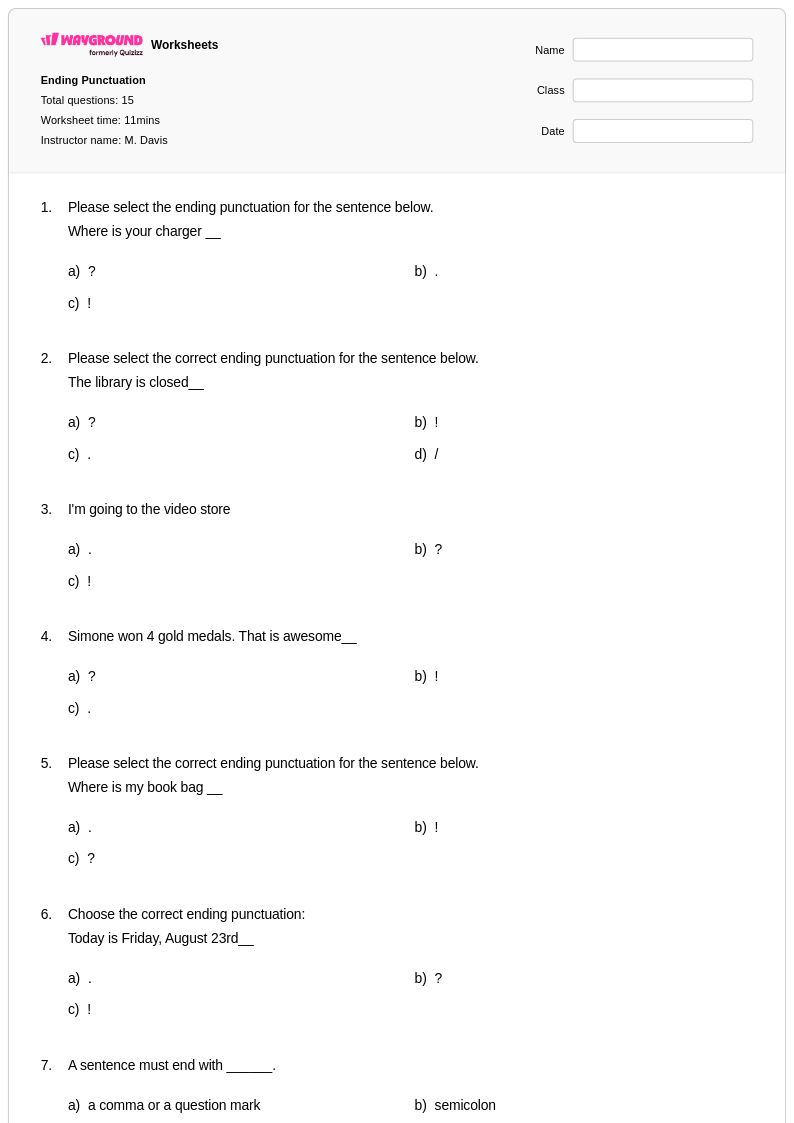
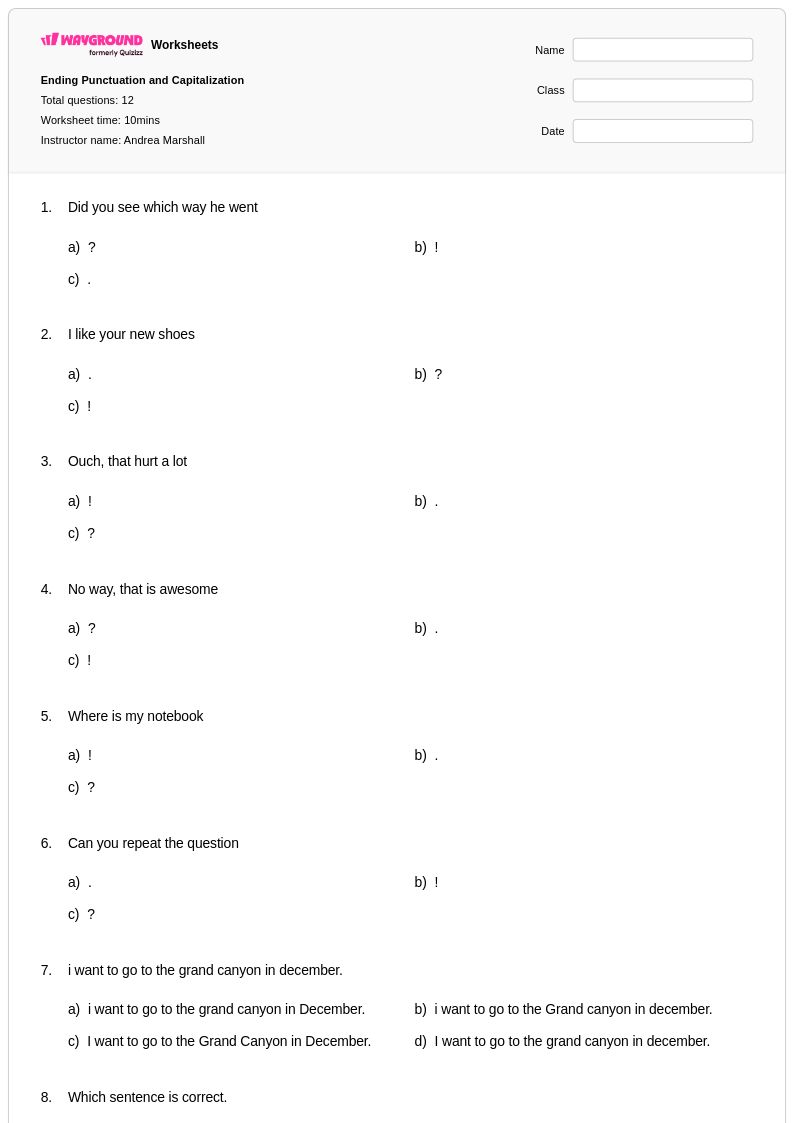
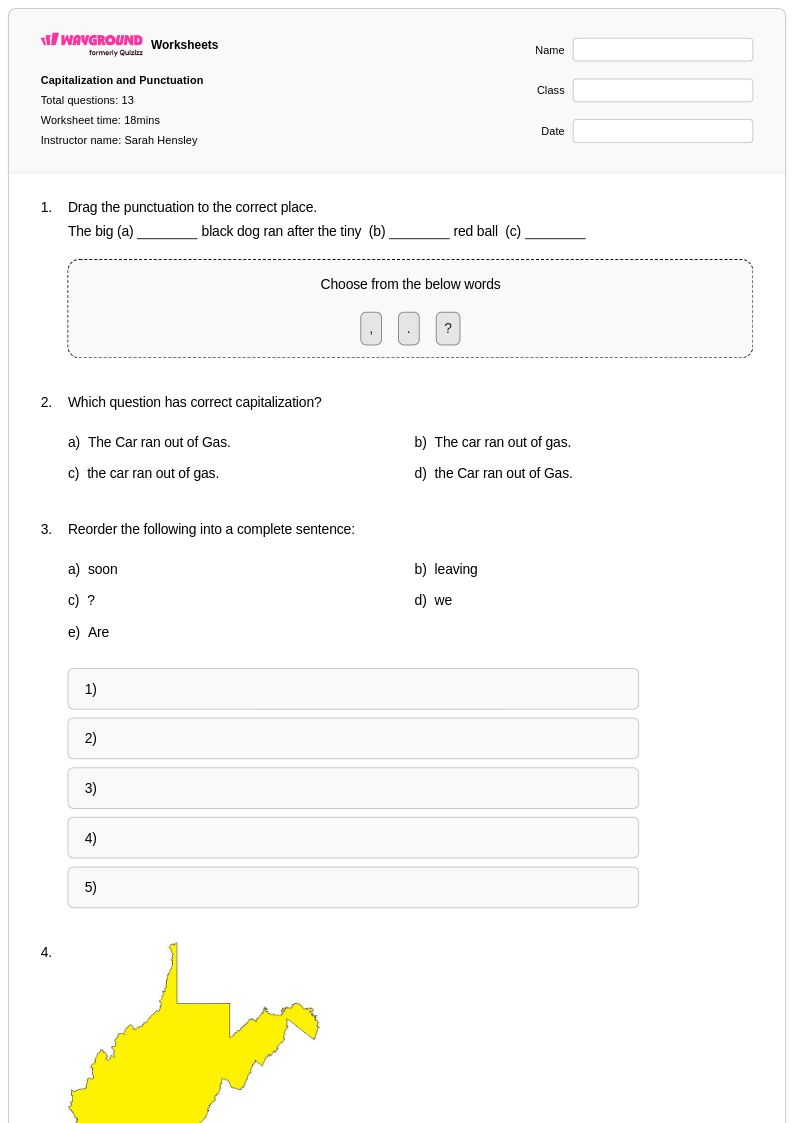
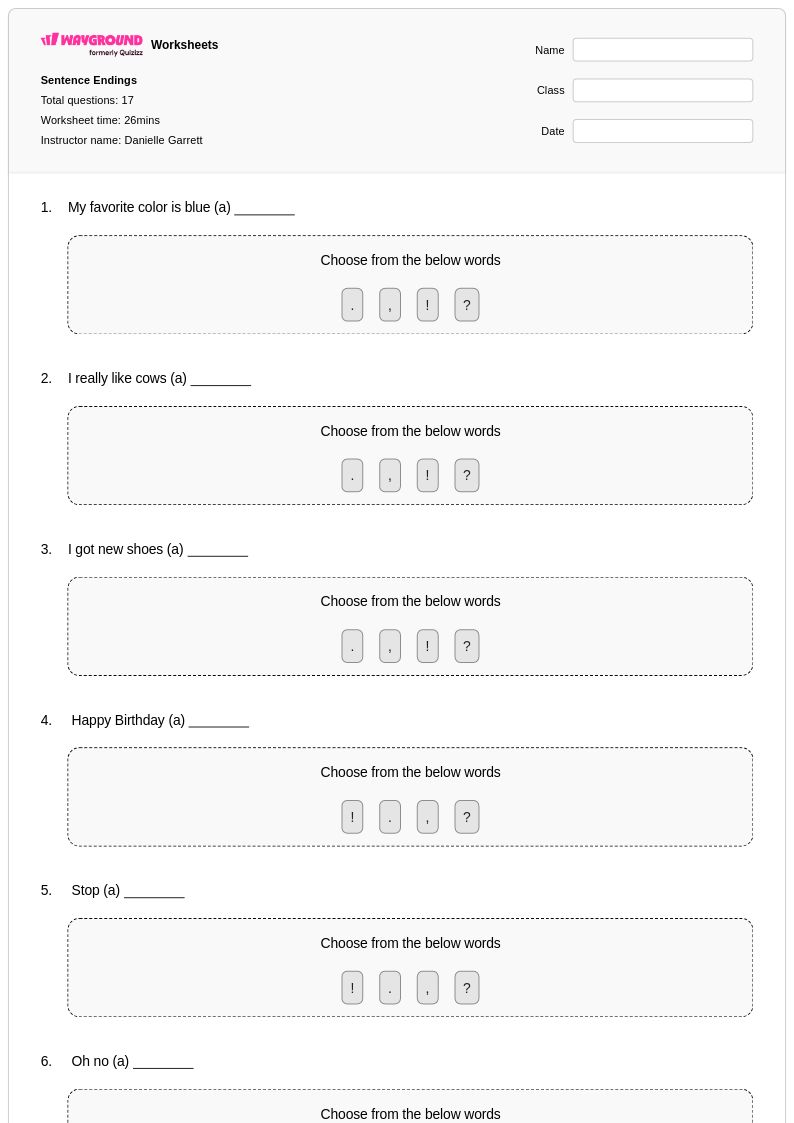
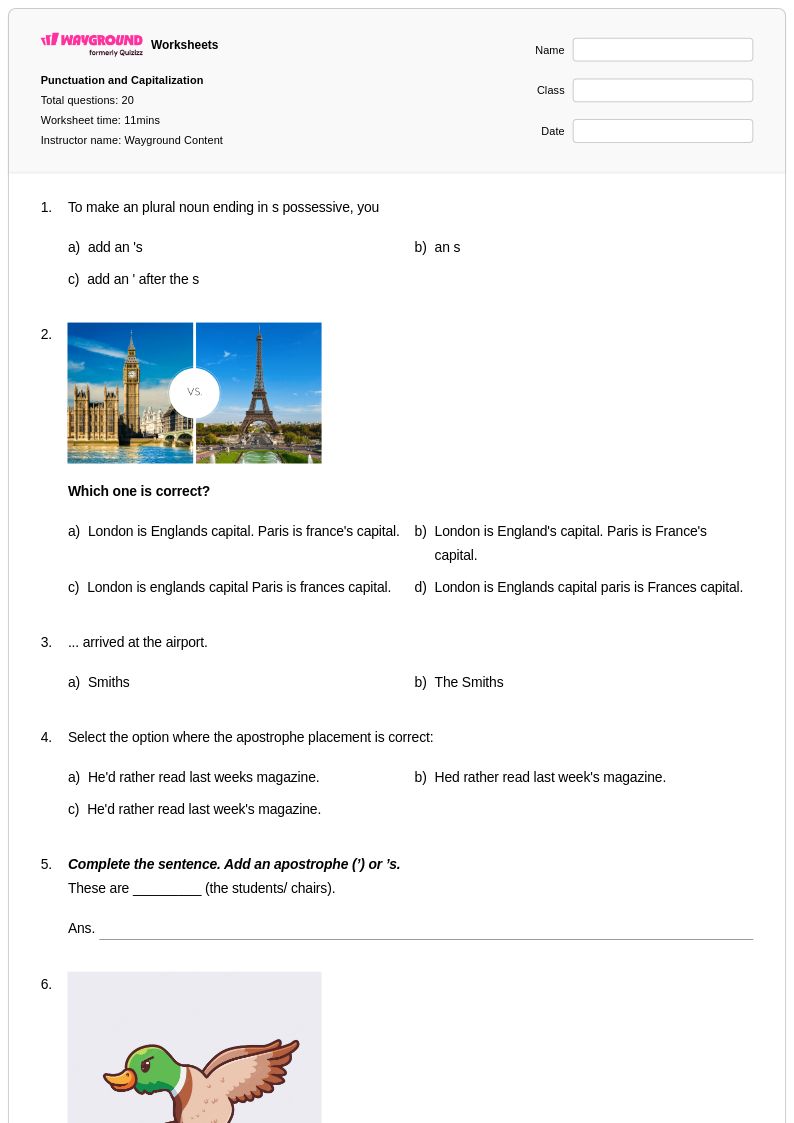
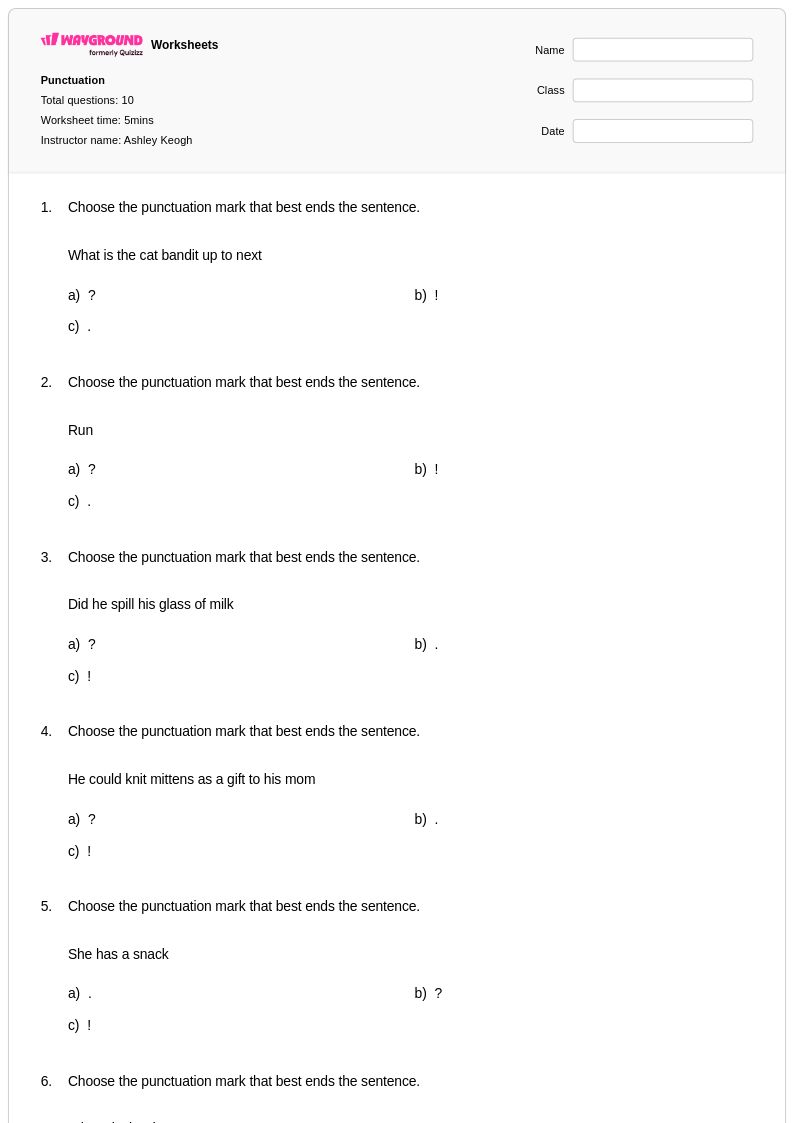
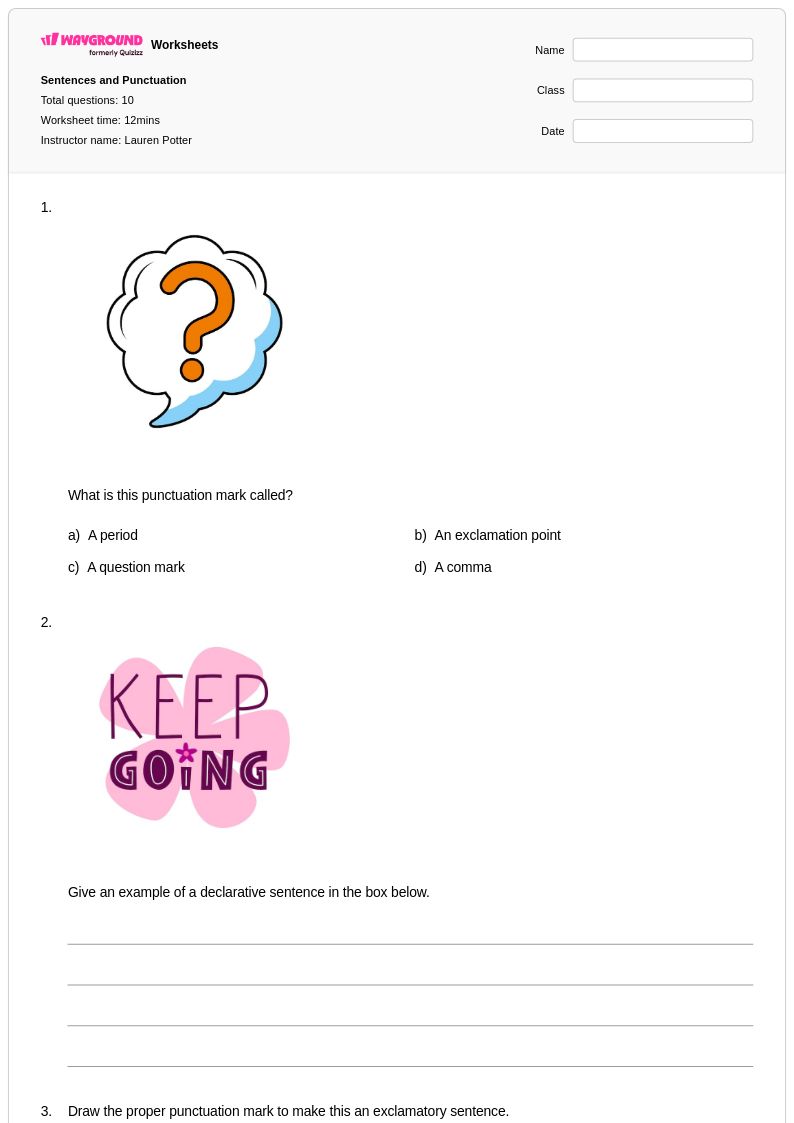
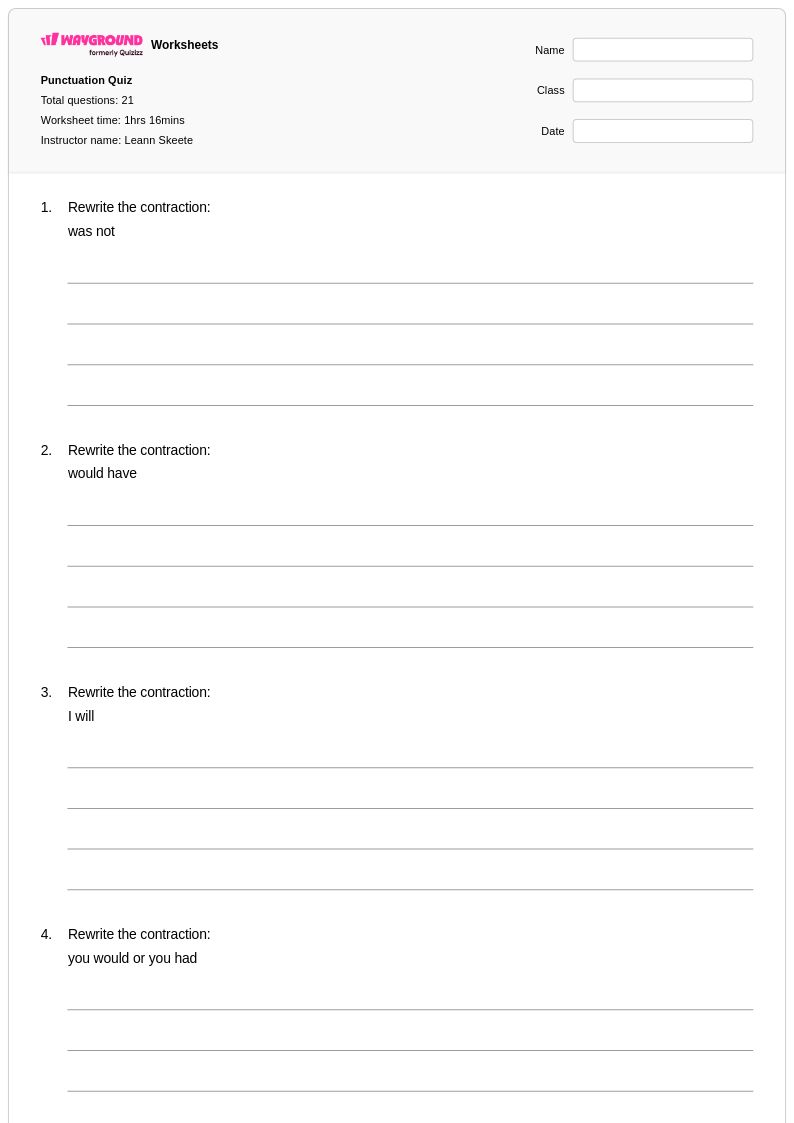
Ending punctuation worksheets for Grade 2 students available through Wayground (formerly Quizizz) provide essential practice for young learners developing fundamental writing mechanics. These carefully crafted educational resources help second-grade students master the correct use of periods, question marks, and exclamation points at the end of sentences. The worksheets strengthen critical literacy skills by teaching students to recognize different sentence types and apply appropriate punctuation marks based on meaning and context. Each printable resource includes comprehensive practice problems that guide students through identifying statements, questions, and exclamatory sentences, while accompanying answer keys enable teachers and parents to provide immediate feedback and support independent learning.
Wayground (formerly Quizizz) empowers educators with access to millions of teacher-created ending punctuation worksheets specifically designed for Grade 2 instruction. The platform's robust search and filtering capabilities allow teachers to quickly locate resources that align with state standards and match their students' specific learning needs. These differentiation tools enable seamless customization of worksheet difficulty levels, supporting both remediation for struggling learners and enrichment opportunities for advanced students. Available in both printable pdf format and interactive digital versions, these ending punctuation resources streamline lesson planning while providing flexible options for classroom instruction, homework assignments, and targeted skill practice that reinforces proper grammar and mechanics foundations.
FAQs
How do I teach ending punctuation to elementary students?
Start by anchoring each punctuation mark to a sentence purpose: periods close statements of fact, question marks signal a question, and exclamation points express strong emotion or surprise. Use read-alouds to help students hear the difference in tone before asking them to identify or apply punctuation in writing. Sorting activities, where students categorize sentences by type before adding the correct mark, build conceptual understanding before moving to production tasks.
What exercises help students practice using periods, question marks, and exclamation points correctly?
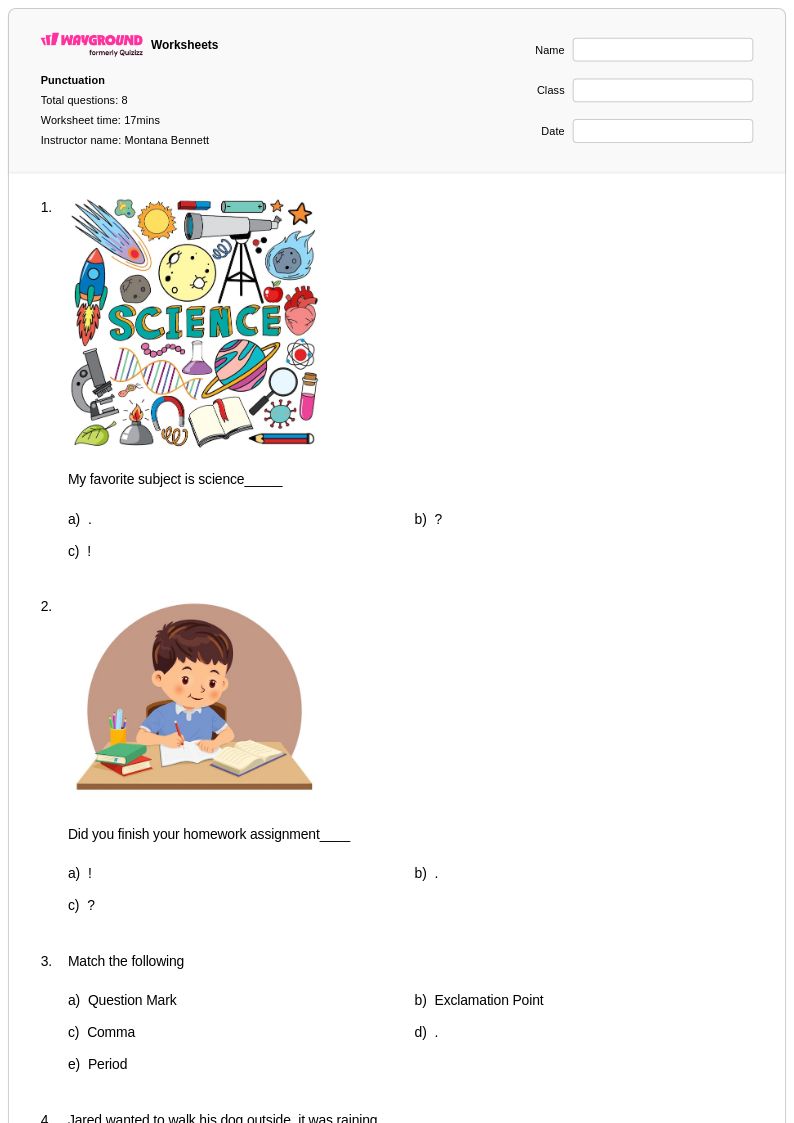
Effective practice includes sentence-completion tasks where students read a sentence and select or write the correct ending mark, as well as editing exercises where students correct improperly punctuated sentences. Sentence-writing prompts that require students to produce one of each type reinforces understanding of how sentence purpose drives punctuation choice. Repeated exposure across varied formats helps the rules become automatic rather than a conscious step in the writing process.
What mistakes do students commonly make with ending punctuation?
The most frequent error is defaulting to a period for every sentence regardless of type, which usually signals that students understand punctuation as a visual convention rather than a functional one. Students also confuse exclamation points and question marks in sentences that could be read as either emphatic or interrogative, such as indirect questions. Overuse of exclamation points in early writing is another common pattern, which can be addressed by explicitly discussing when strong emotion is and is not present in a sentence.
How do I use Wayground's ending punctuation worksheets in my classroom?
Wayground's ending punctuation worksheets are available as printable PDFs for traditional classroom distribution and as digital formats for technology-integrated or remote learning environments, giving teachers flexibility in how they assign practice. Teachers can also host worksheets as a quiz directly on Wayground, which allows for real-time progress monitoring. Both formats include complete answer keys, making them suitable for independent student work, homework assignments, or instructor-guided review sessions.
How can I differentiate ending punctuation practice for students at different skill levels?
For students who are still developing, reduce cognitive load by presenting shorter, clearly contextualized sentences and focusing on distinguishing just two punctuation types before introducing the third. For more advanced learners, introduce compound or complex sentences where the punctuation choice is less obvious, or ask students to rewrite sentences so they require a different ending mark. On Wayground, teachers can apply accommodations such as reduced answer choices for individual students who need additional support, without affecting the experience of the rest of the class.
At what grade level should students have ending punctuation mastered?
Most ELA standards introduce ending punctuation in kindergarten and first grade, with the expectation that students can correctly identify and apply periods, question marks, and exclamation points by the end of second grade. However, consistent application in independent writing often requires reinforcement through third grade and beyond, particularly for exclamation points and questions embedded in longer sentences. Targeted practice worksheets are useful for remediation at any grade level where gaps persist.