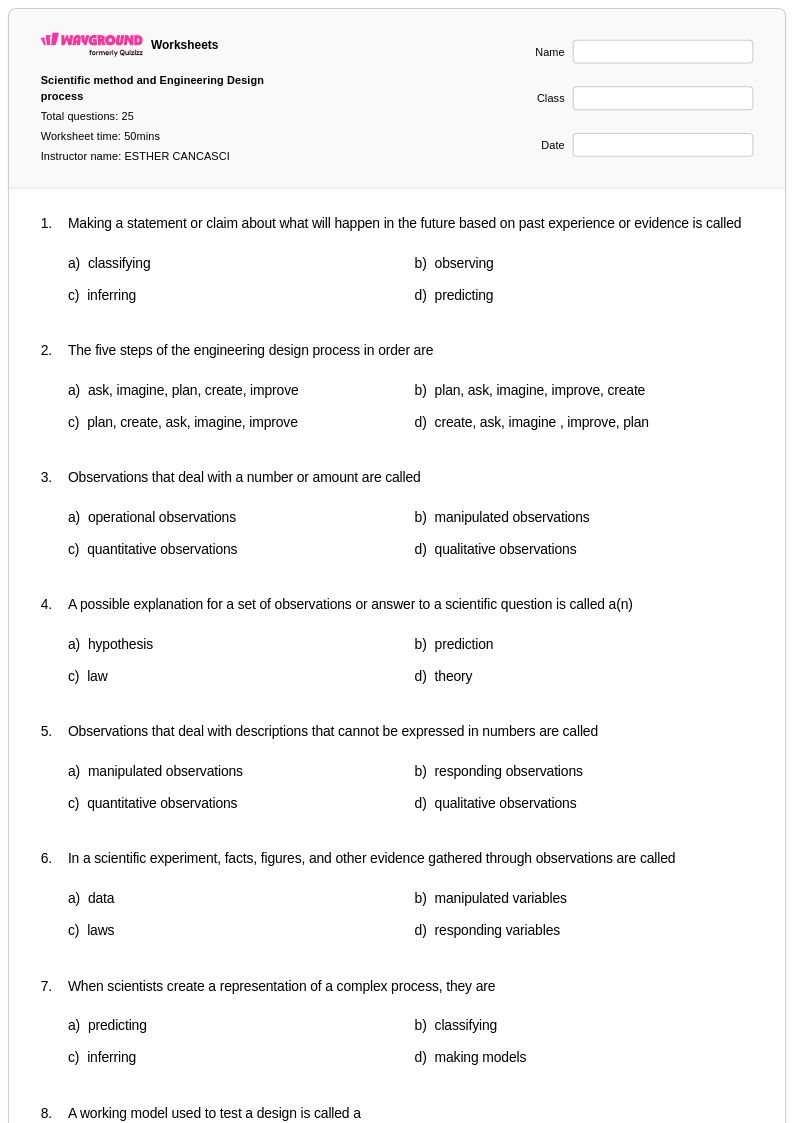
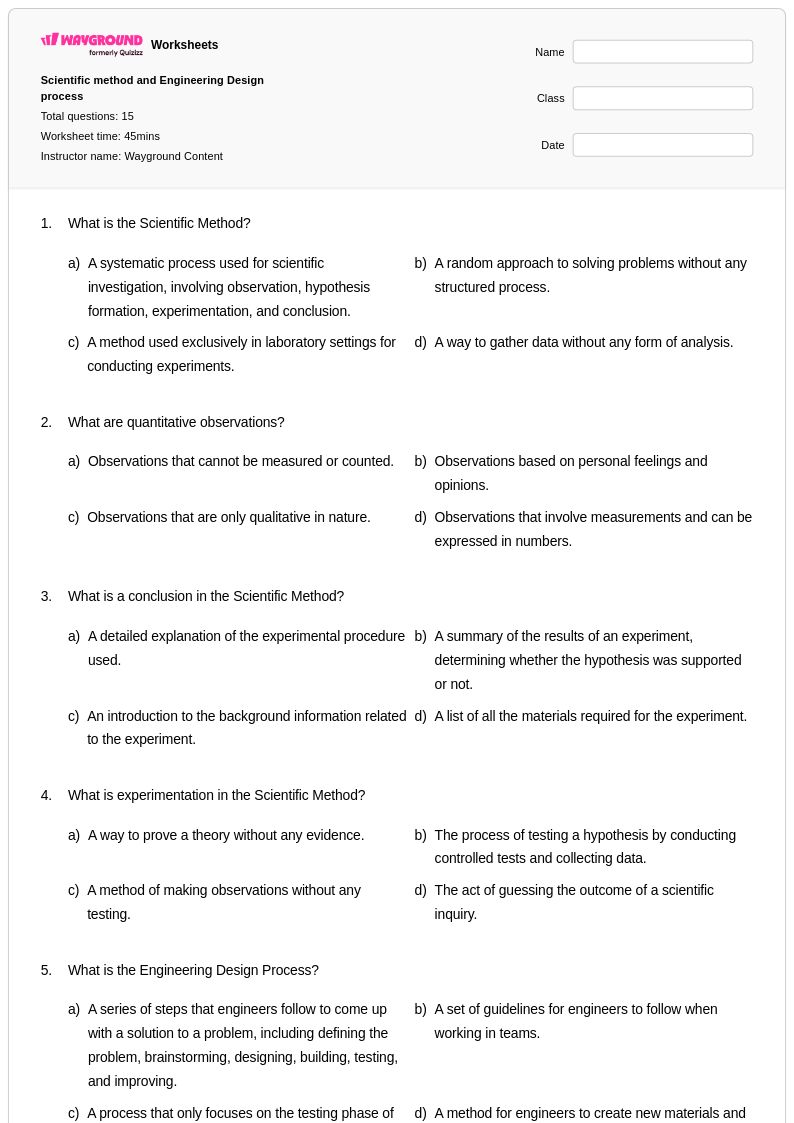
Free Printable Engineering Design Process Worksheets for Grade 5
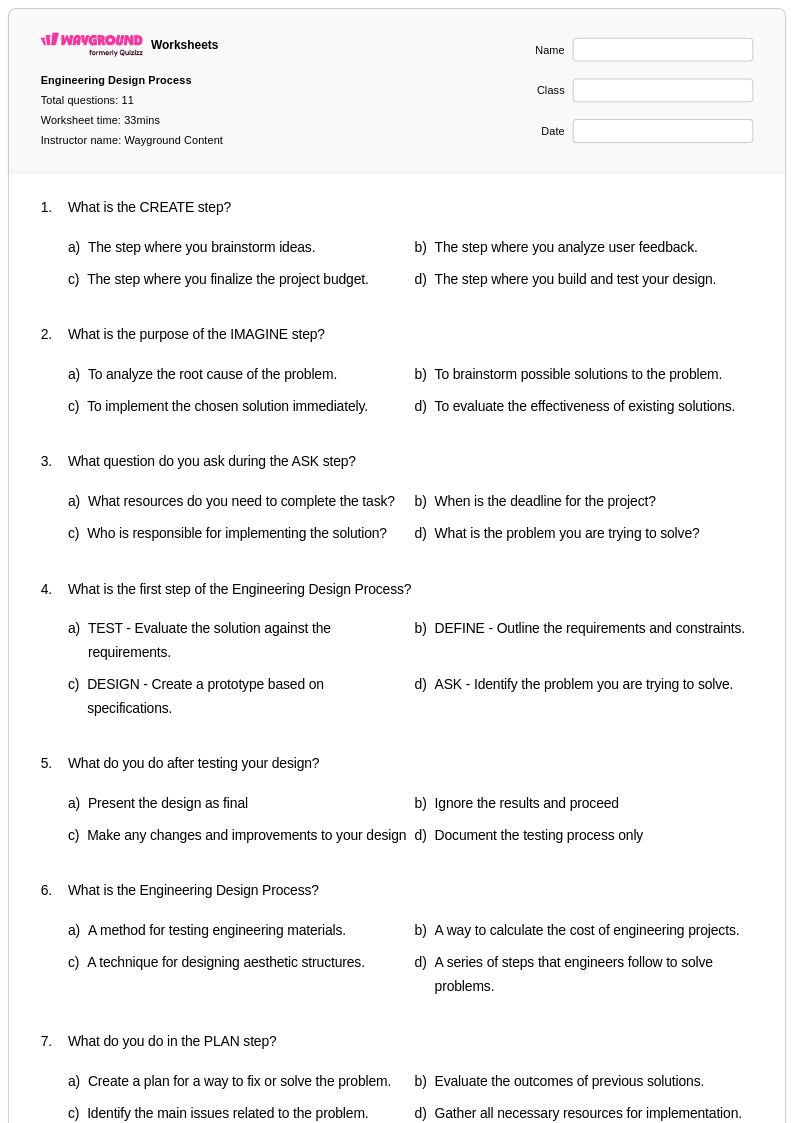
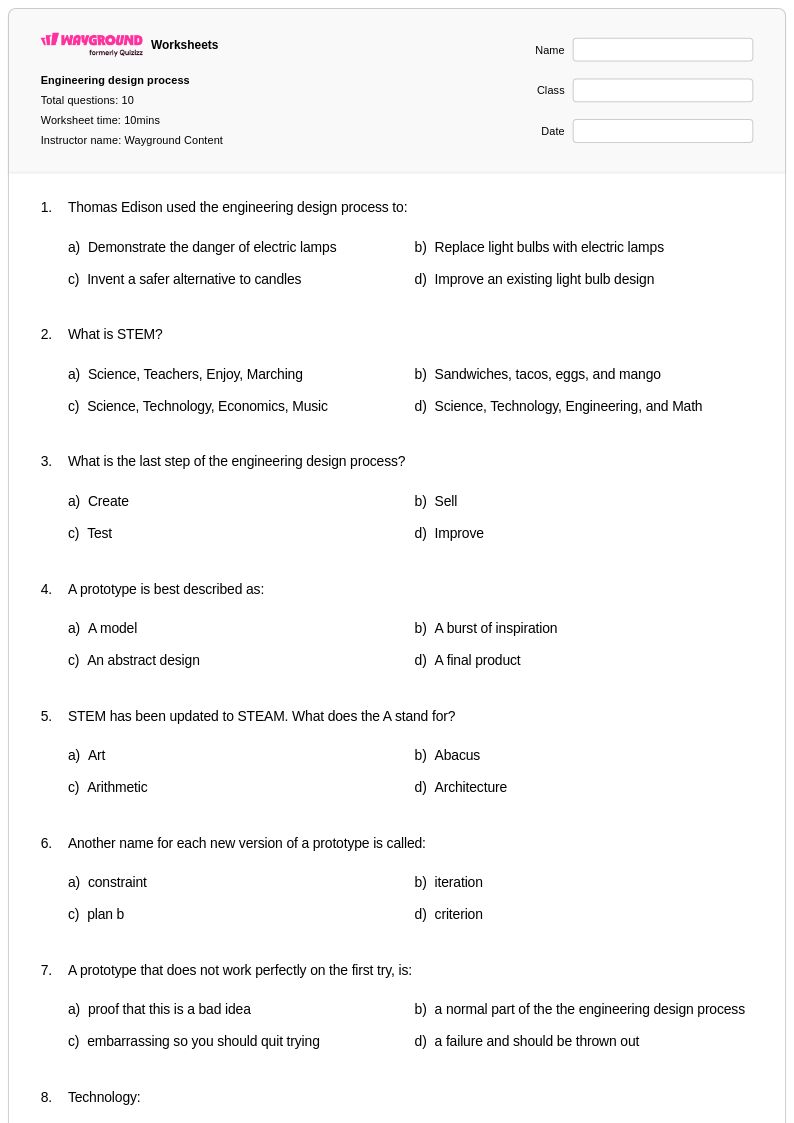
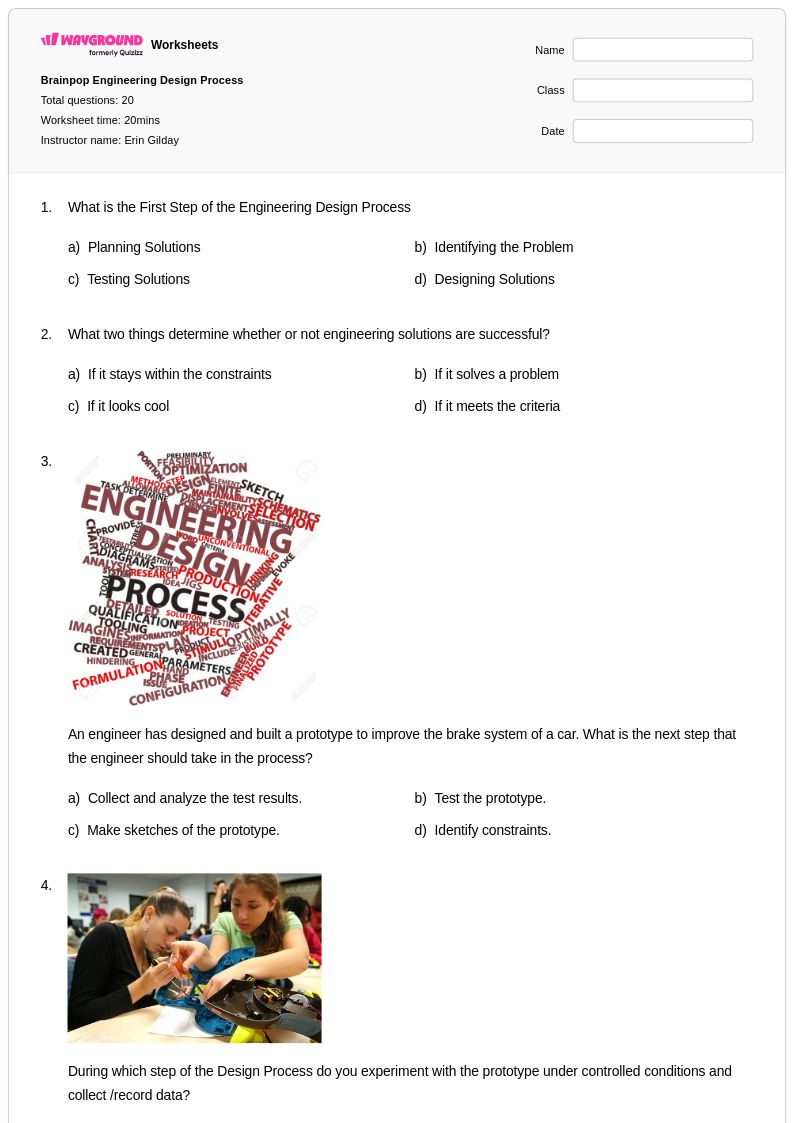
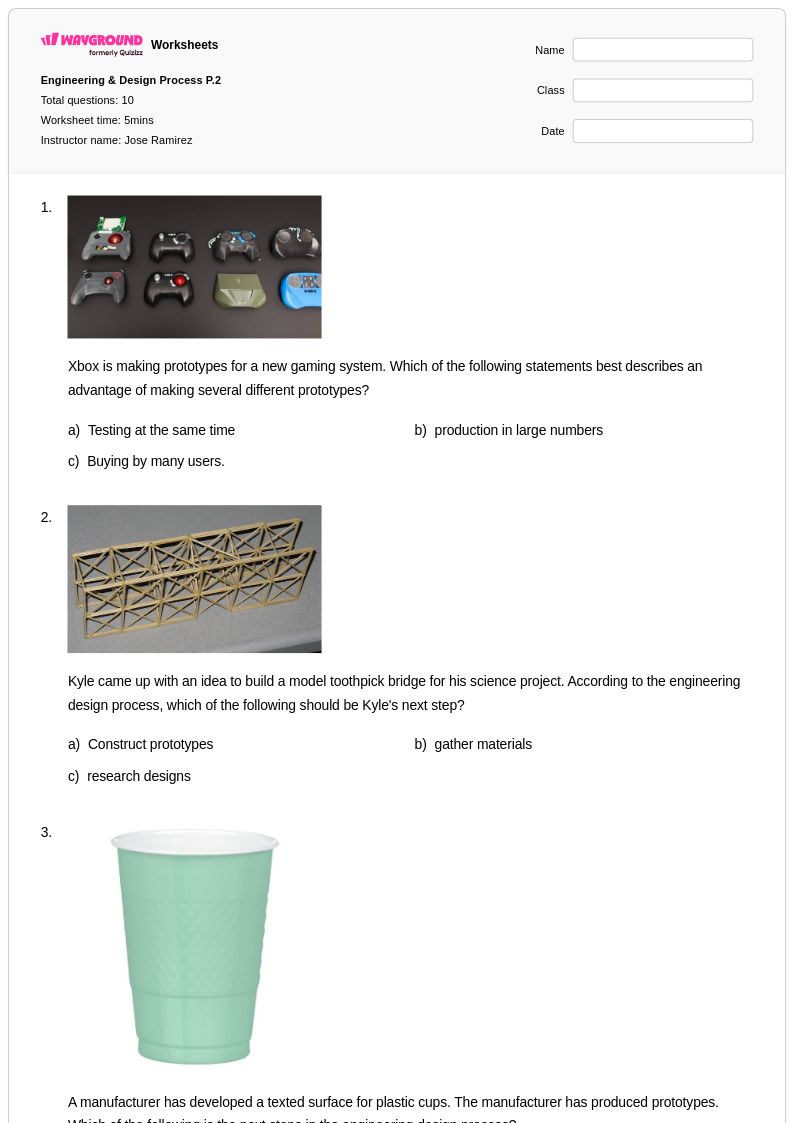
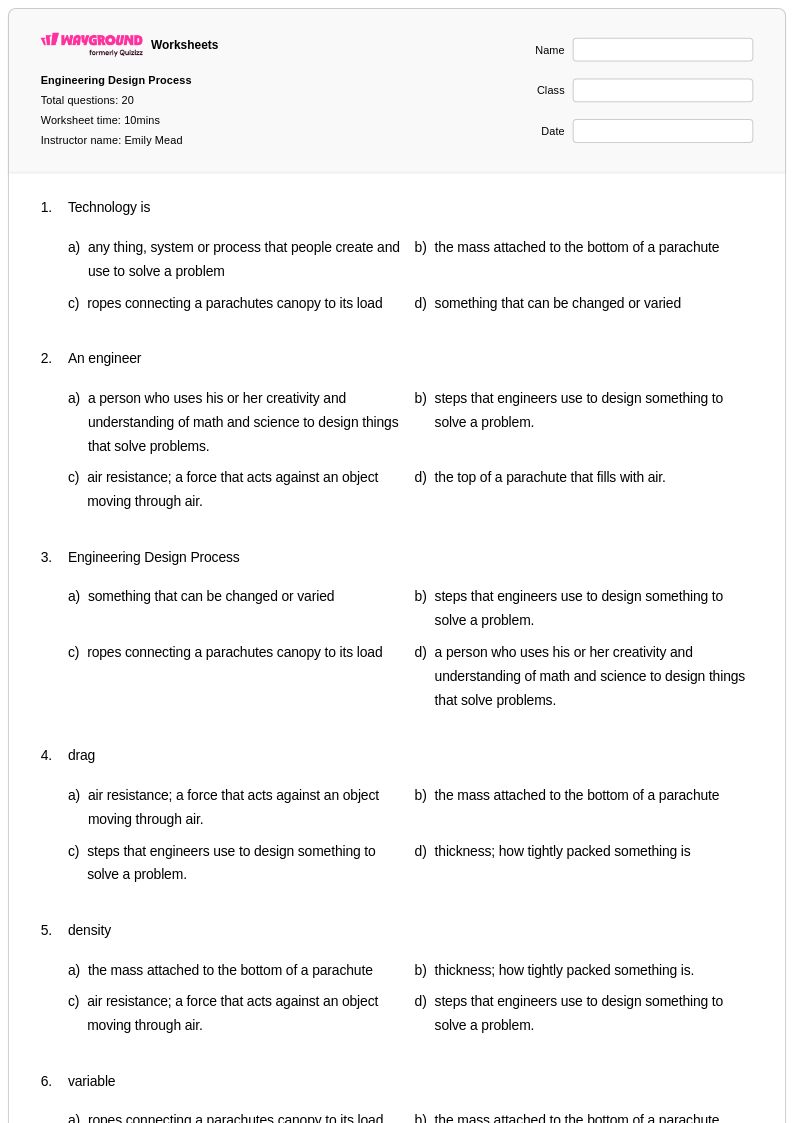
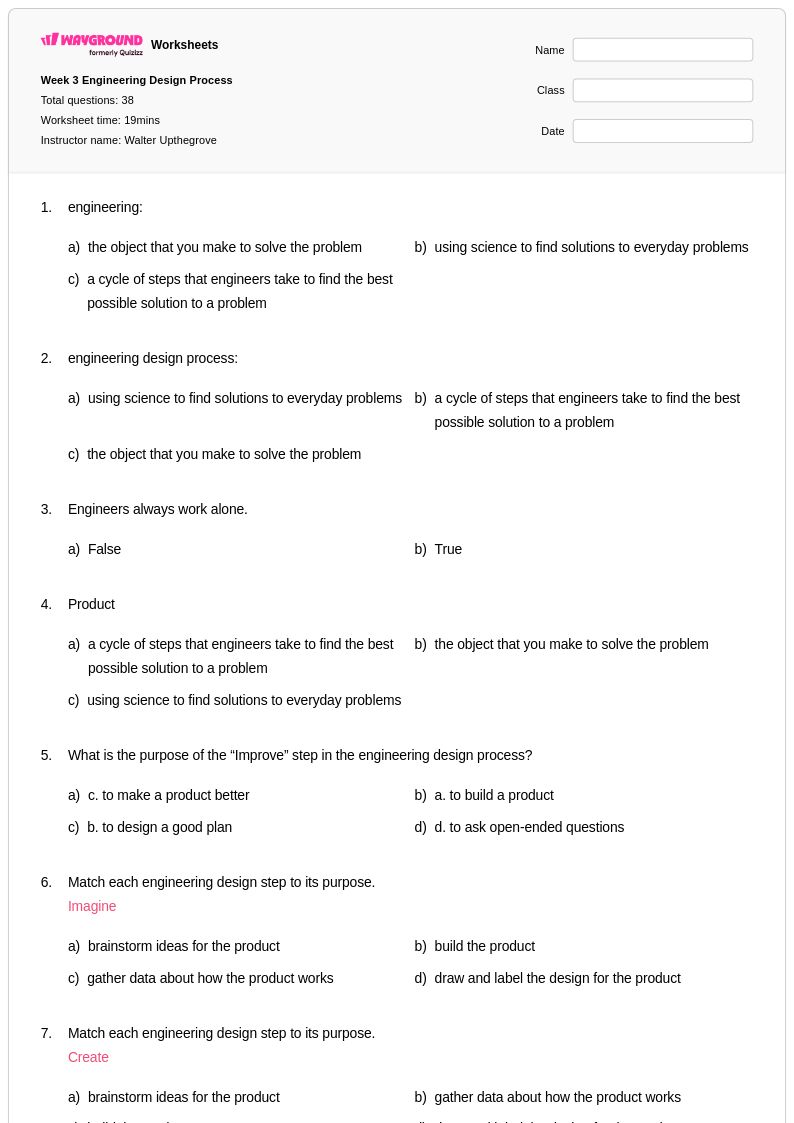
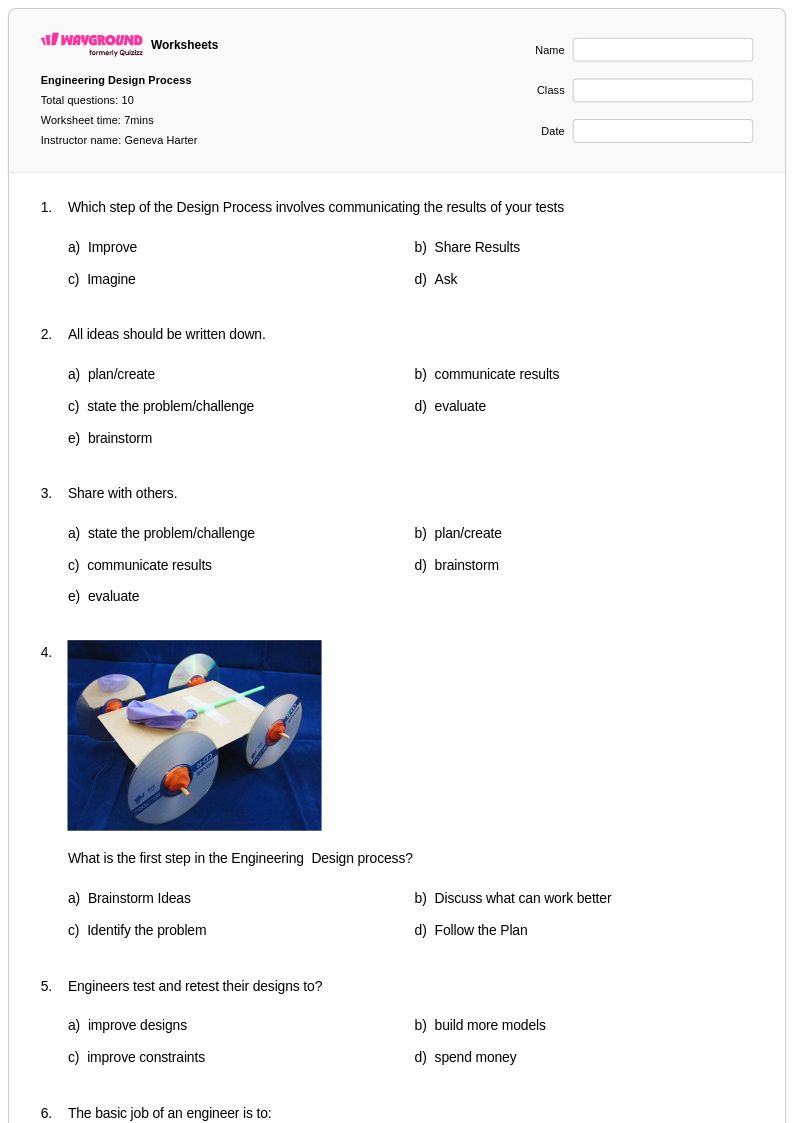
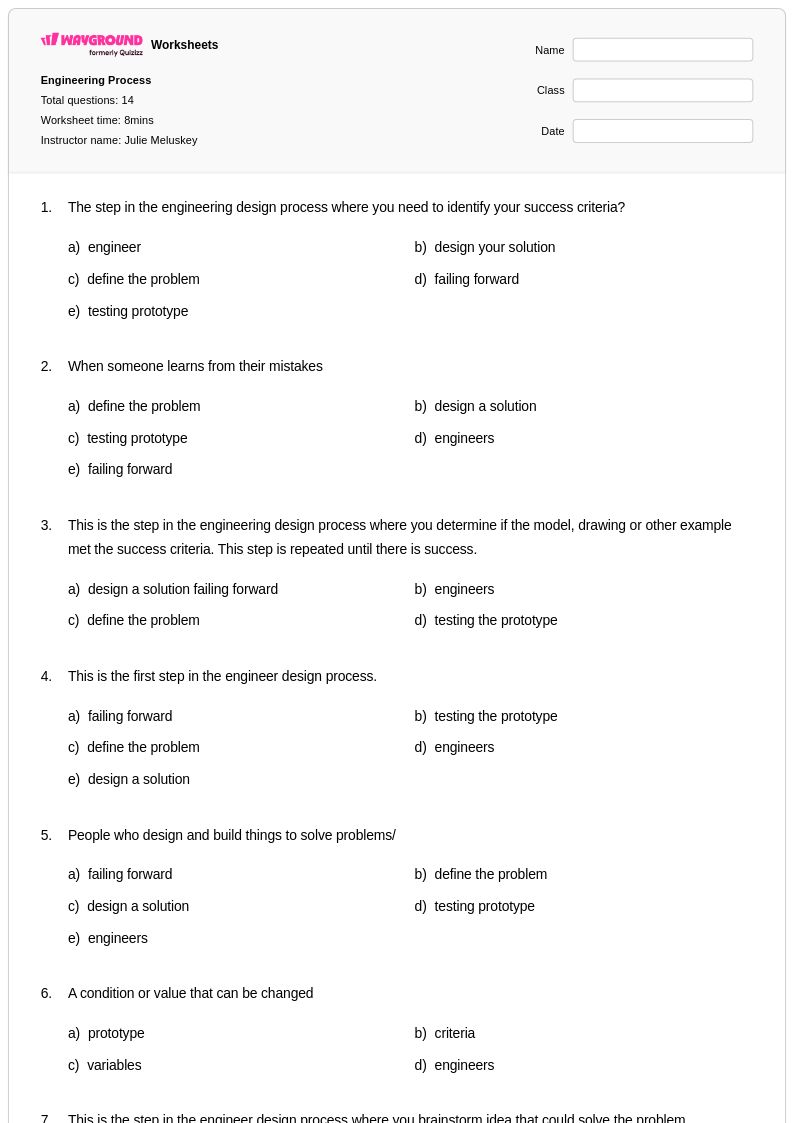
Free Grade 5 Engineering Design Process worksheets and printables help students master the systematic approach to solving problems through planning, creating, testing, and improving solutions with comprehensive practice problems and answer keys.
Explore printable Engineering Design Process worksheets for Grade 5
Grade 5 Engineering Design Process worksheets available through Wayground (formerly Quizizz) provide students with structured practice in applying systematic problem-solving methodologies that form the foundation of engineering thinking. These comprehensive printables guide fifth-grade learners through each critical phase of the design cycle, from identifying problems and conducting research to brainstorming solutions, creating prototypes, and evaluating results. The worksheets strengthen essential skills including critical thinking, creative problem-solving, collaboration, and iterative improvement while introducing students to real-world engineering challenges appropriate for their developmental level. Each practice problem set includes detailed answer keys and step-by-step guidance, allowing students to work independently while building confidence in applying scientific reasoning to design authentic solutions.
Wayground (formerly Quizizz) supports educators with an extensive collection of teacher-created Engineering Design Process resources, featuring millions of worksheets that can be easily searched and filtered by specific design phase, complexity level, or curriculum standard. The platform's robust differentiation tools enable teachers to customize materials for diverse learning needs, while flexible formatting options provide both digital and printable pdf versions to accommodate various classroom environments and instructional preferences. These comprehensive worksheet collections streamline lesson planning by offering ready-to-use materials for skill practice, remediation, and enrichment activities, while built-in standards alignment ensures that assignments support required learning objectives and help students develop the systematic thinking processes essential for success in STEM fields.
FAQs
How do I teach the engineering design process to students?
Teach the engineering design process by walking students through each phase sequentially: defining the problem, brainstorming solutions, selecting and building a prototype, testing it, and iterating based on results. Anchoring each phase in a concrete, relatable challenge (such as designing a bridge from limited materials) helps students internalize the methodology rather than memorize steps. Consistent practice with structured scenarios builds the analytical and creative thinking habits engineers rely on.
What exercises help students practice the engineering design process?
Effective practice exercises present students with authentic engineering scenarios that require them to move through each design phase in writing, justifying decisions at each step. Worksheets that prompt students to document their brainstorming, evaluate trade-offs between solutions, record test results, and propose iterations are especially valuable because they mirror professional engineering workflows. This kind of structured practice develops both the procedural knowledge and the reflective thinking the design process demands.
What mistakes do students commonly make when learning the engineering design process?
The most common mistake is treating the design process as a linear checklist rather than an iterative cycle, causing students to skip directly from brainstorming to a final solution without testing or refining. Students also frequently define problems too vaguely, which makes it difficult to evaluate whether a solution actually works. Worksheets that require explicit problem statements and post-test reflection help address both of these patterns.
How can I differentiate engineering design process instruction for different skill levels?
For struggling learners, reduce cognitive load by providing partially completed graphic organizers or limiting the number of solution options students must evaluate. Advanced students benefit from open-ended design challenges with fewer constraints, pushing them toward more complex trade-off analysis. On Wayground, teachers can apply individual accommodations such as reduced answer choices, read aloud support, and extended time to specific students, while the rest of the class works under default settings without any notification.
How do I use Wayground's Engineering Design Process worksheets in my classroom?
Wayground's Engineering Design Process worksheets are available as printable PDFs for traditional classroom use and in digital formats for technology-integrated or remote learning environments. Teachers can also host worksheets directly as a quiz on Wayground, enabling real-time student responses and streamlined assessment. All worksheets include complete answer keys, making them practical for both guided instruction and independent student practice.
How does the engineering design process connect to broader STEM skills?
The engineering design process is a foundational STEM framework because it builds systematic problem analysis, evidence-based decision-making, and iterative thinking, all of which transfer across science, technology, and mathematics contexts. When students practice defining constraints, generating and testing solutions, and revising based on data, they develop the computational and analytical reasoning that underpins more advanced STEM work. Regular exposure to design process challenges helps students approach novel problems with structured confidence rather than guesswork.