
Recommended Topics for you
- Claim Evidence Reasoning
- Controls and Variables
- Curiosity
- Data Types
- Dependent Variable
- Engineering Design Process
- Experiment
- Experimental Design
- Hypothesis
- Hypothesis, Theory and Law
- Independent Variable
- Lab Safety
- Observation and Inference
- Procedure
- Qualitative and Quantitative Observations
- Reality Testing
- Safety Equipment
- Safety Rules and Symbols
- Science Practices Vocabulary
- Scientific Inquiry
- Scientific Observation
- Scientific Tools
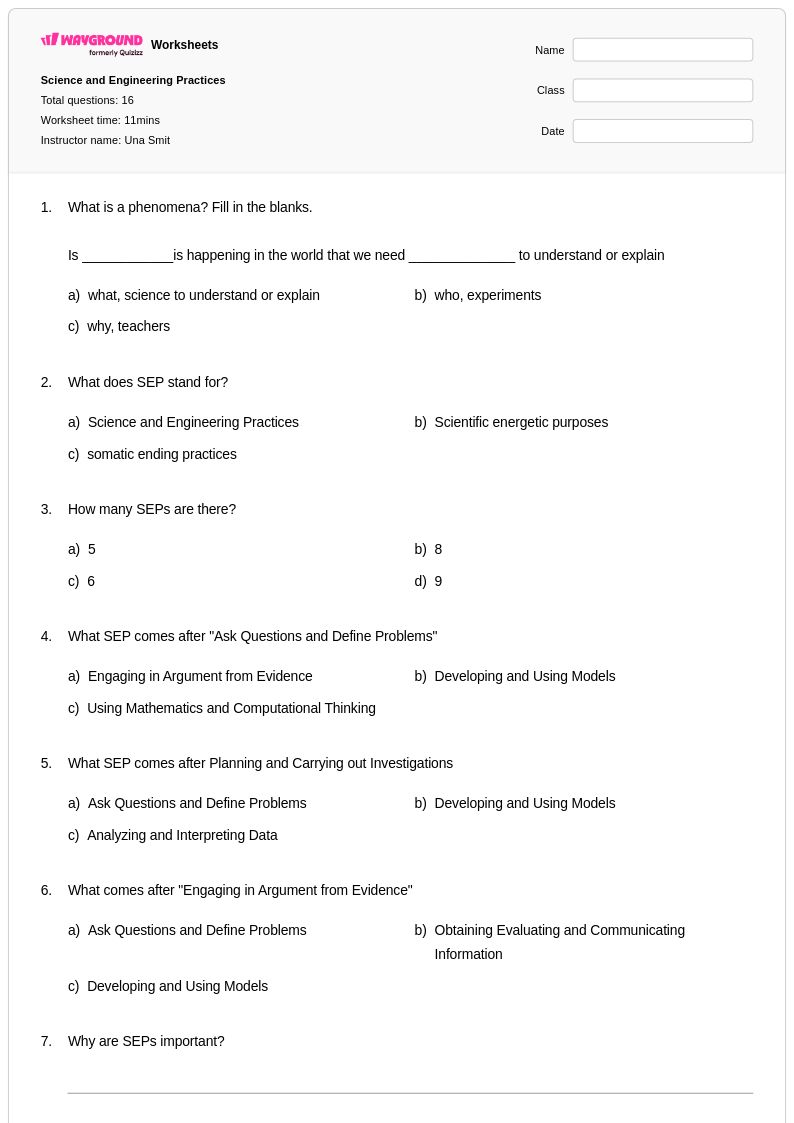
16 Q
8th
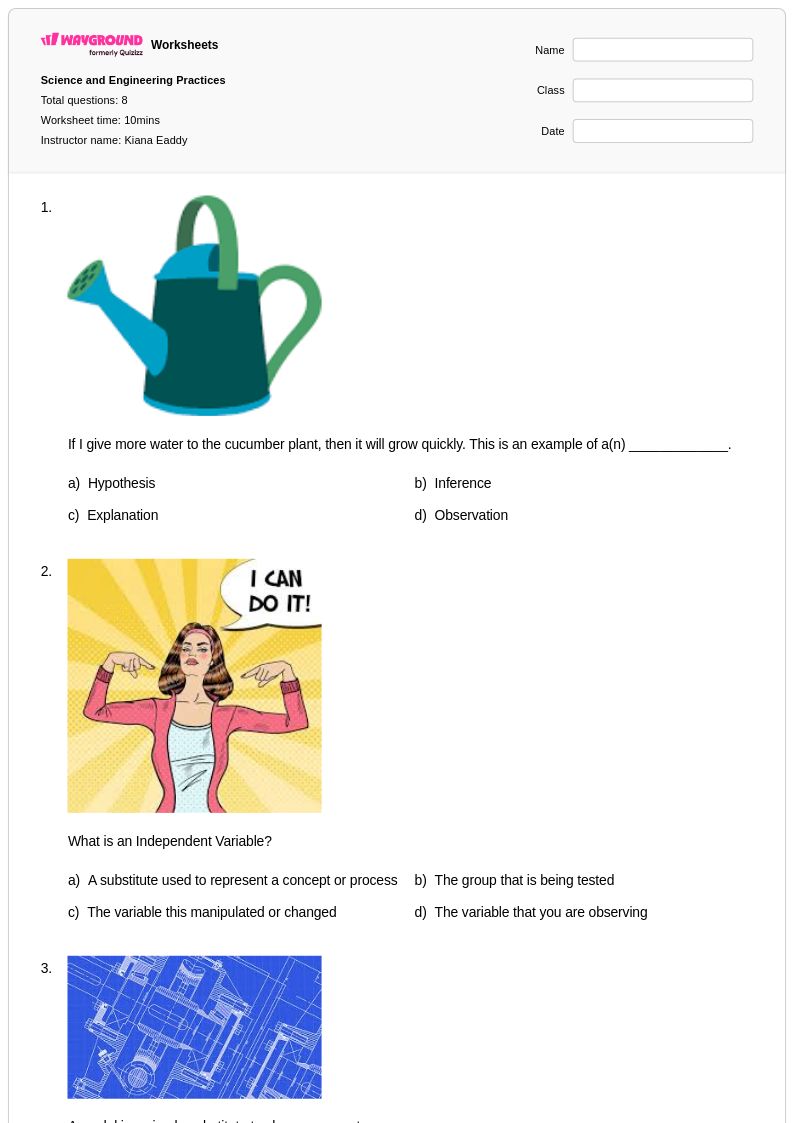
8 Q
6th - 8th
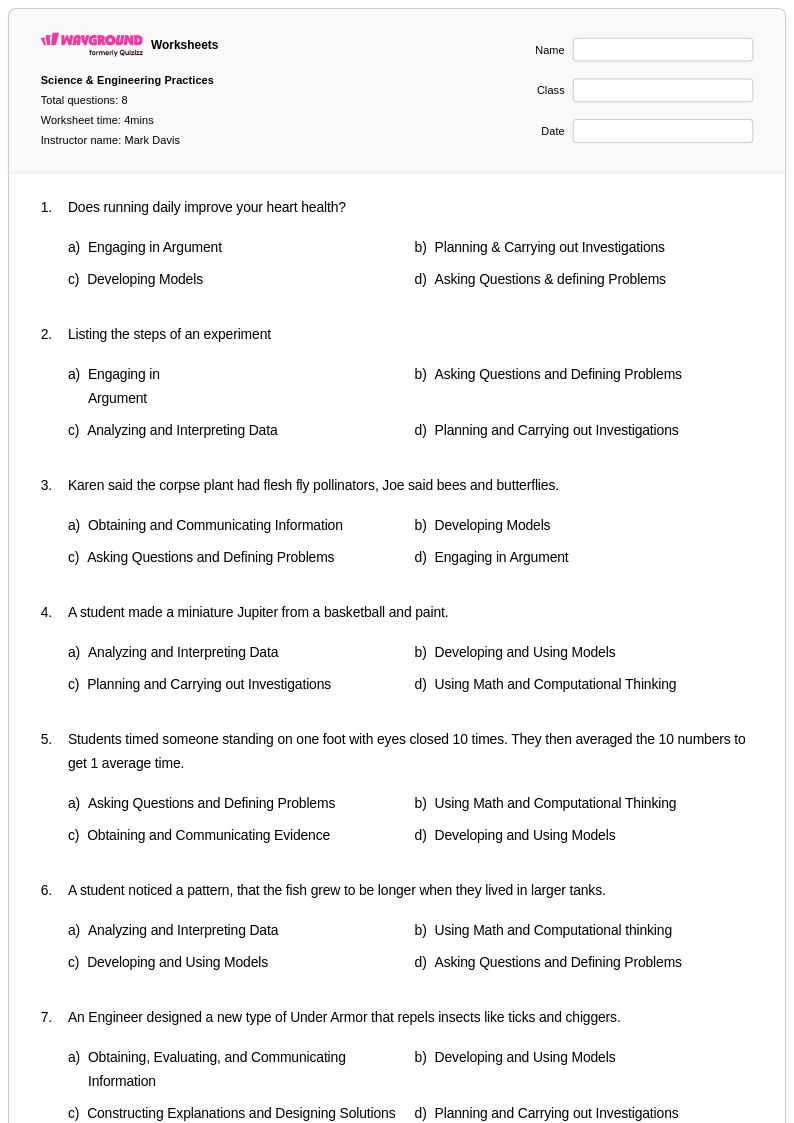
8 Q
6th - 8th
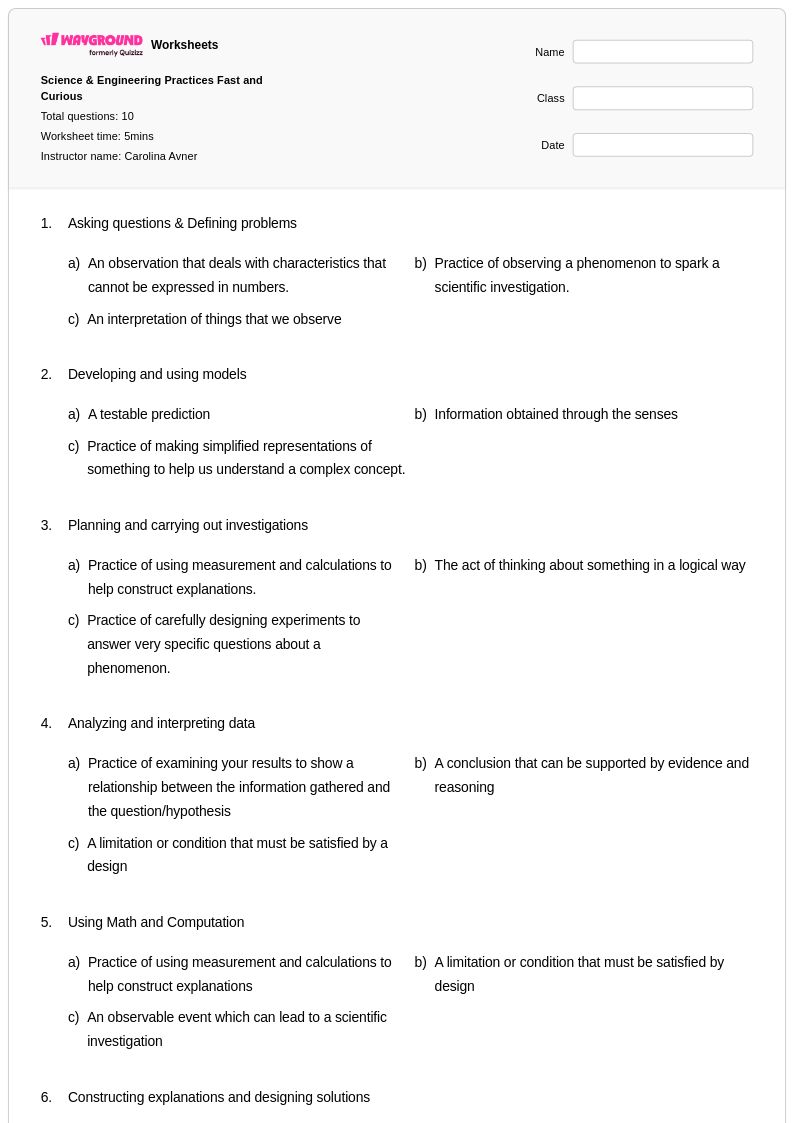
10 Q
7th - 8th
21 Q
5th - 8th
15 Q
7th - Uni
20 Q
8th
112 Q
8th
51 Q
8th
10 Q
8th
11 Q
8th
21 Q
6th - 8th
36 Q
8th
24 Q
8th
13 Q
6th - 8th
12 Q
6th - Uni
20 Q
6th - 8th
17 Q
6th - 8th
25 Q
8th
15 Q
8th
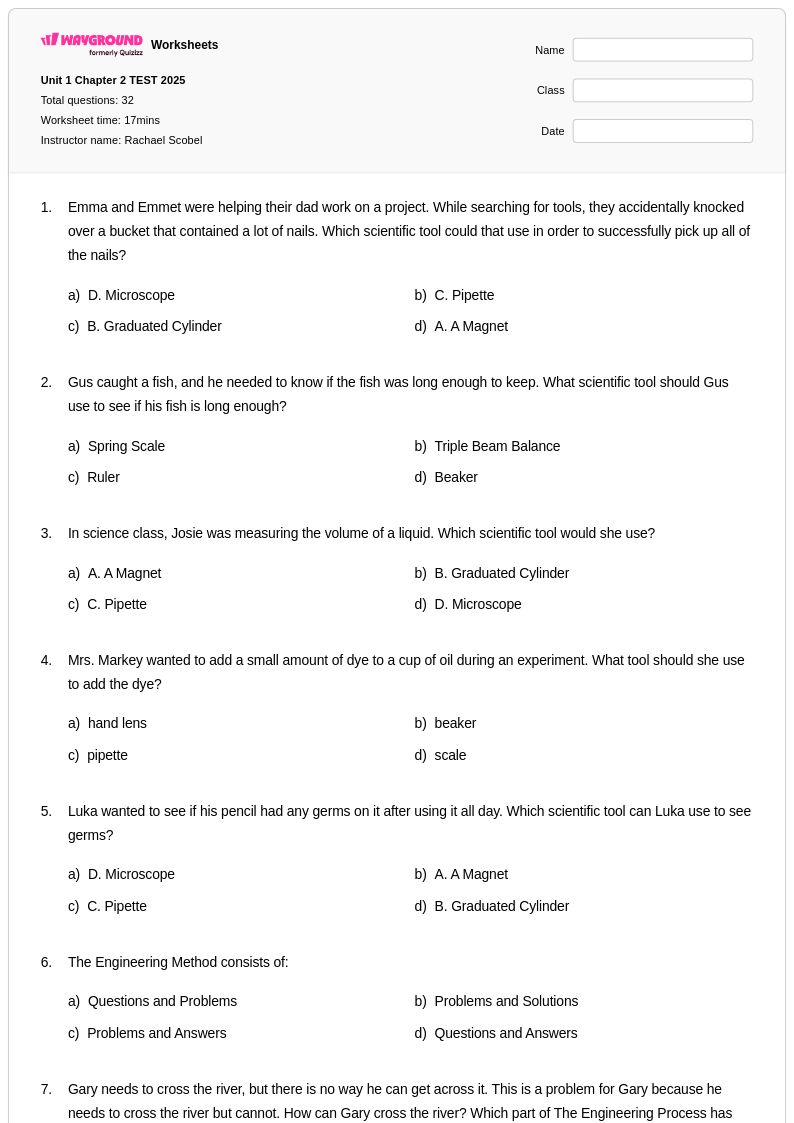
32 Q
5th - Uni
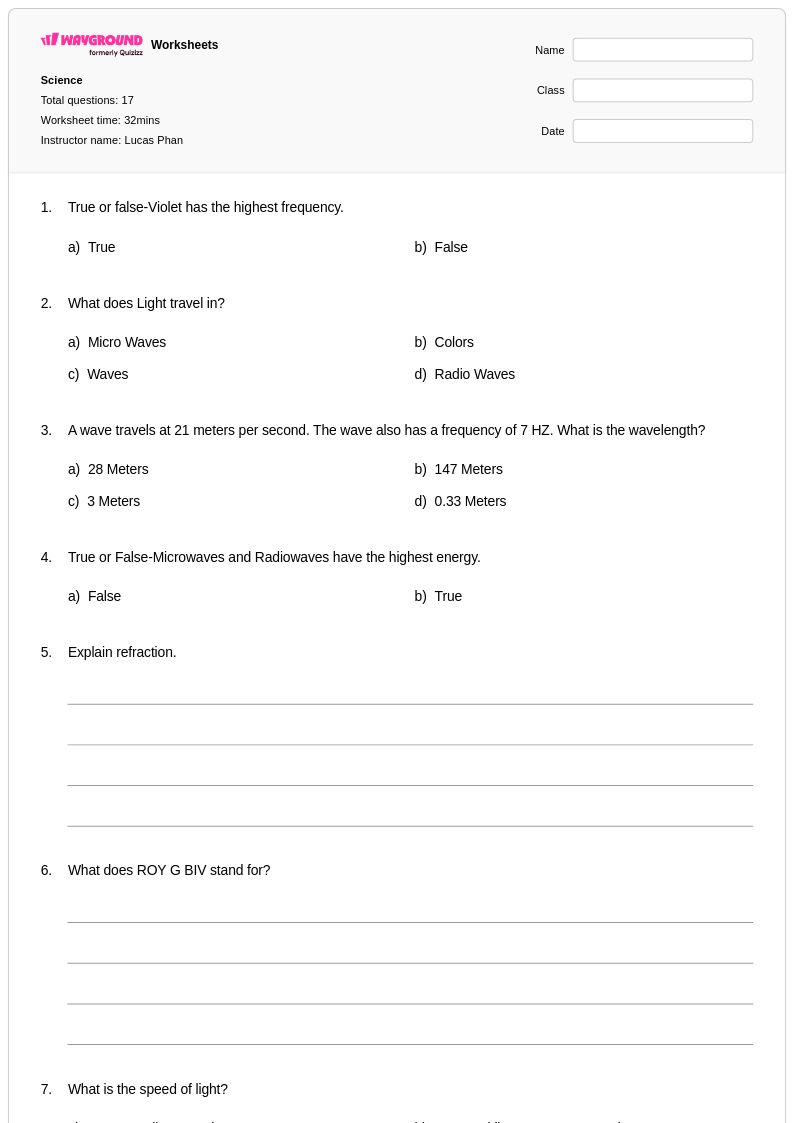
17 Q
8th
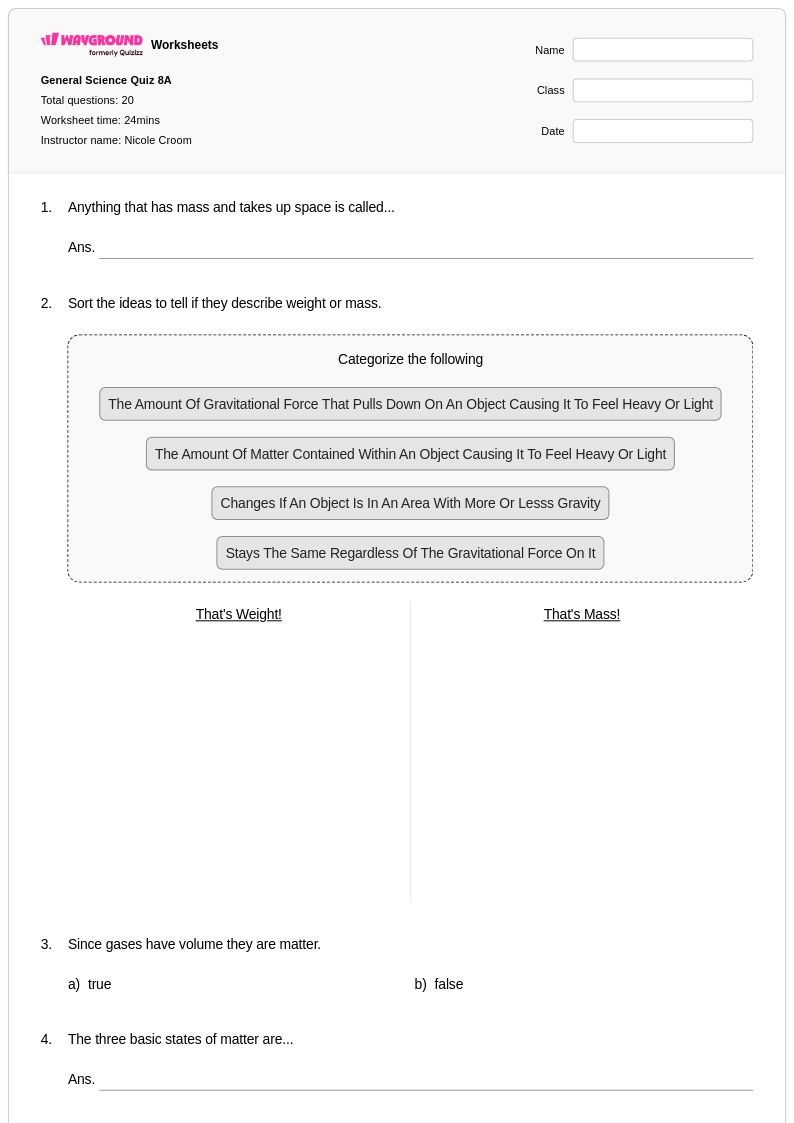
20 Q
8th
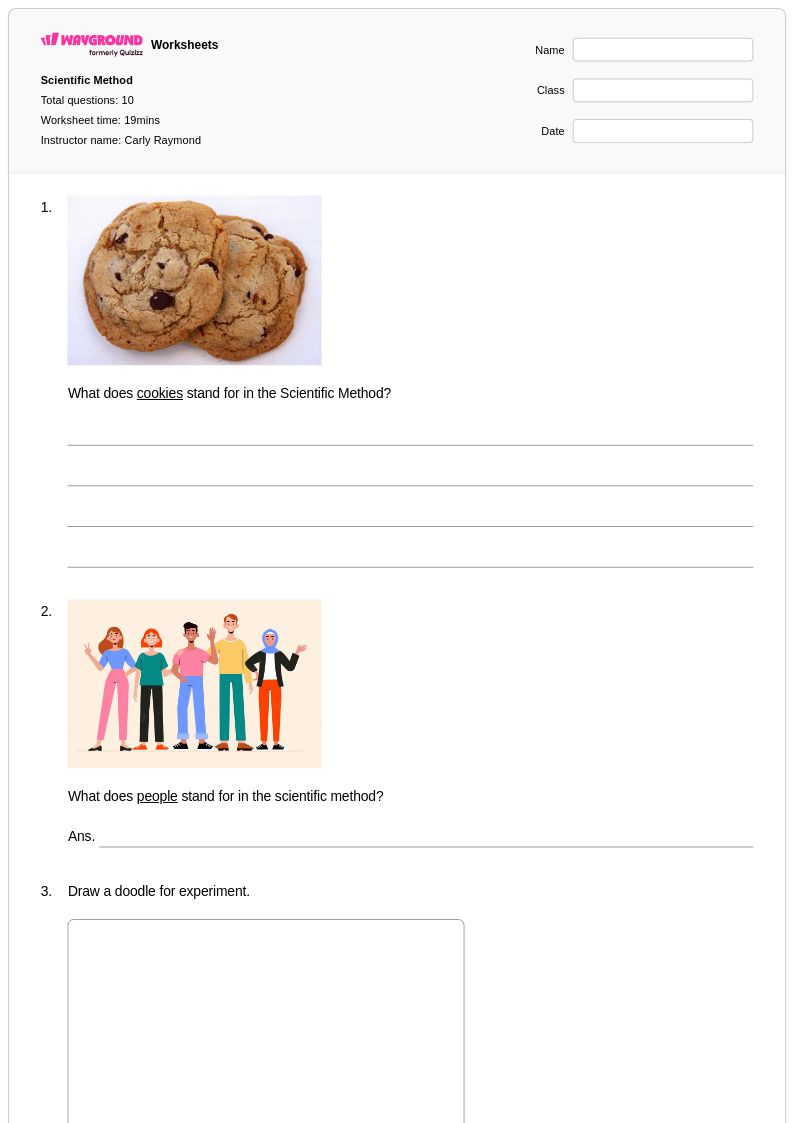
10 Q
6th - 8th
Explore Engineering & Science Practices Worksheets by Grades
Explore Engineering & Science Practices Worksheets for grade 8 by Topic
- Claim Evidence Reasoning
- Controls and Variables
- Curiosity
- Data Types
- Dependent Variable
- Engineering Design Process
- Experiment
- Experimental Design
- Hypothesis
- Hypothesis, Theory and Law
- Independent Variable
- Lab Safety
- Observation and Inference
- Procedure
- Qualitative and Quantitative Observations
- Reality Testing
- Safety Equipment
- Safety Rules and Symbols
- Science Practices Vocabulary
- Scientific Inquiry
Explore Other Subject Worksheets for grade 8
Explore printable Engineering & Science Practices worksheets for Grade 8
Engineering and Science Practices worksheets for Grade 8 students available through Wayground (formerly Quizizz) provide comprehensive coverage of the fundamental scientific inquiry skills that form the backbone of authentic scientific investigation. These expertly designed resources strengthen students' abilities to ask testable questions, develop and use models, plan and carry out investigations, analyze and interpret data, use mathematical thinking, construct explanations, engage in argument from evidence, and communicate scientific information effectively. Each worksheet collection includes detailed answer keys and is available as free printable pdf resources, featuring practice problems that mirror real-world scientific scenarios where students must apply multiple engineering design principles and scientific reasoning skills simultaneously.
Wayground (formerly Quizizz) empowers educators with millions of teacher-created Engineering and Science Practices resources that can be easily searched and filtered to match specific learning objectives and standards alignment requirements. The platform's robust differentiation tools allow teachers to customize worksheet difficulty levels, modify practice problems, and adapt content to meet diverse student needs, whether for remediation of foundational inquiry skills or enrichment of advanced scientific reasoning capabilities. Available in both printable pdf format and interactive digital versions, these comprehensive worksheet collections streamline lesson planning while providing teachers with flexible options for skill practice, formative assessment, and targeted intervention that develops students' capacity to think and work like professional scientists and engineers.
FAQs
How do I teach the engineering design process in middle or high school science?
What's the difference between a hypothesis, a theory, and a law in science, and how do I explain it to students?
What exercises help students practice identifying independent and dependent variables?
What mistakes do students commonly make when writing a hypothesis?
How do I help students distinguish between qualitative and quantitative observations?
How do I use Engineering and Science Practices worksheets in my classroom?
How can I support students who struggle with science practices vocabulary?