Free Printable Equitable Distribution Worksheets for Grade 3
Grade 3 equitable distribution printables and free worksheets help students master fair sharing concepts through engaging practice problems with comprehensive answer keys and downloadable PDFs from Wayground.
Explore printable Equitable Distribution worksheets for Grade 3
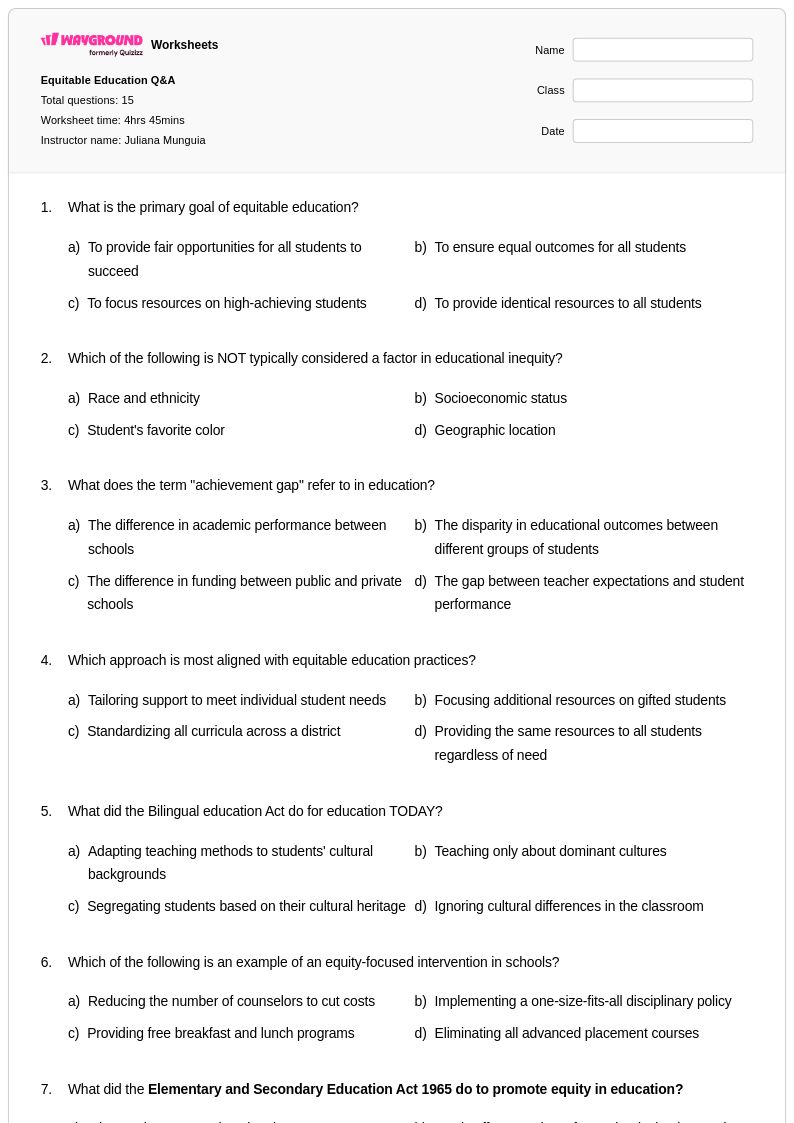
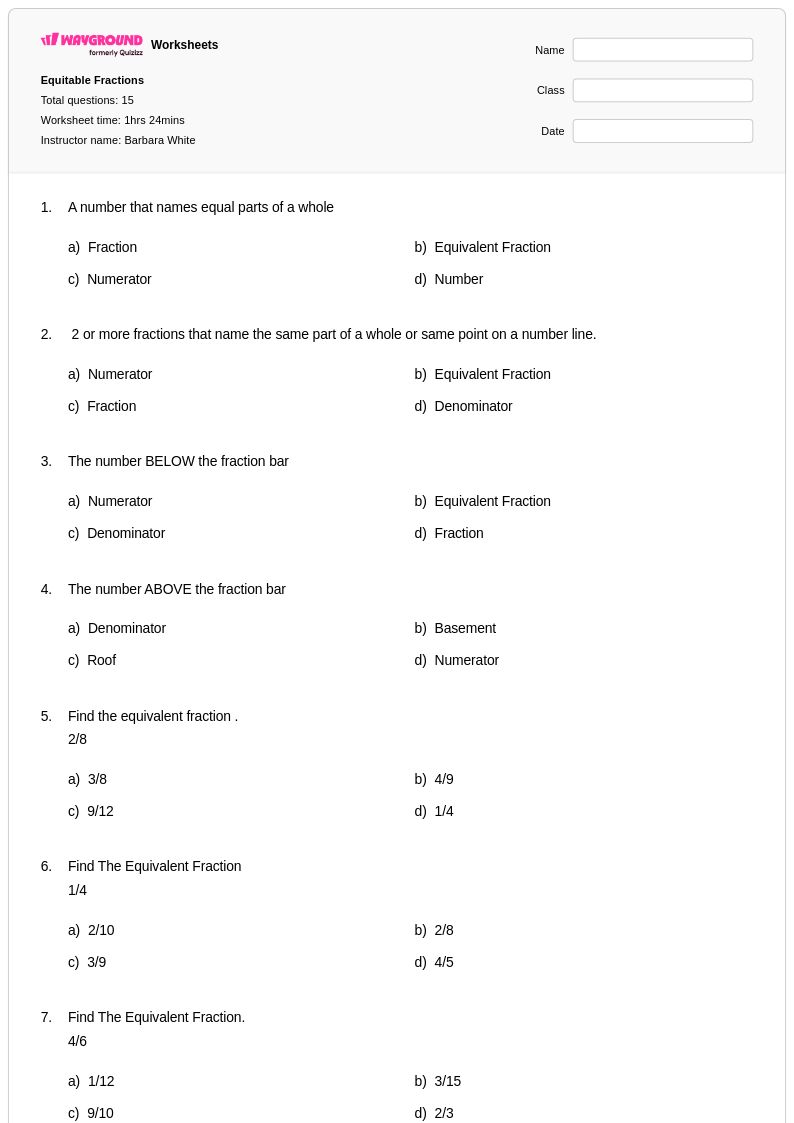
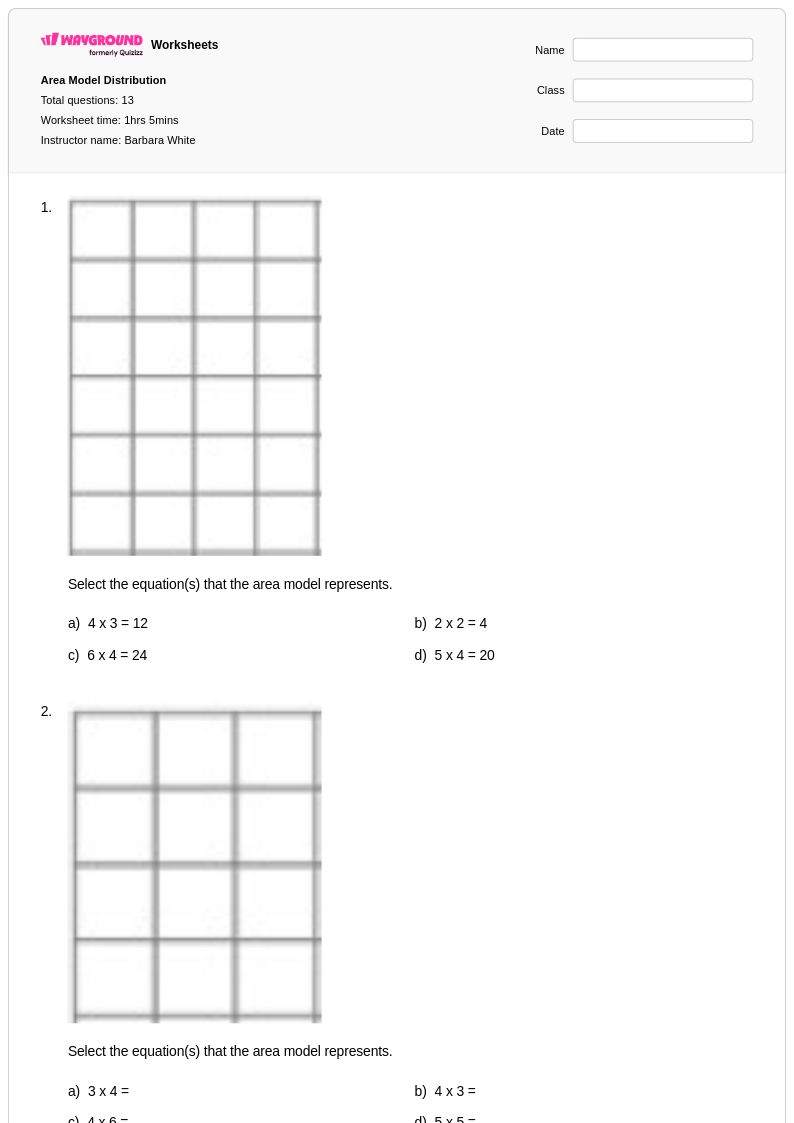
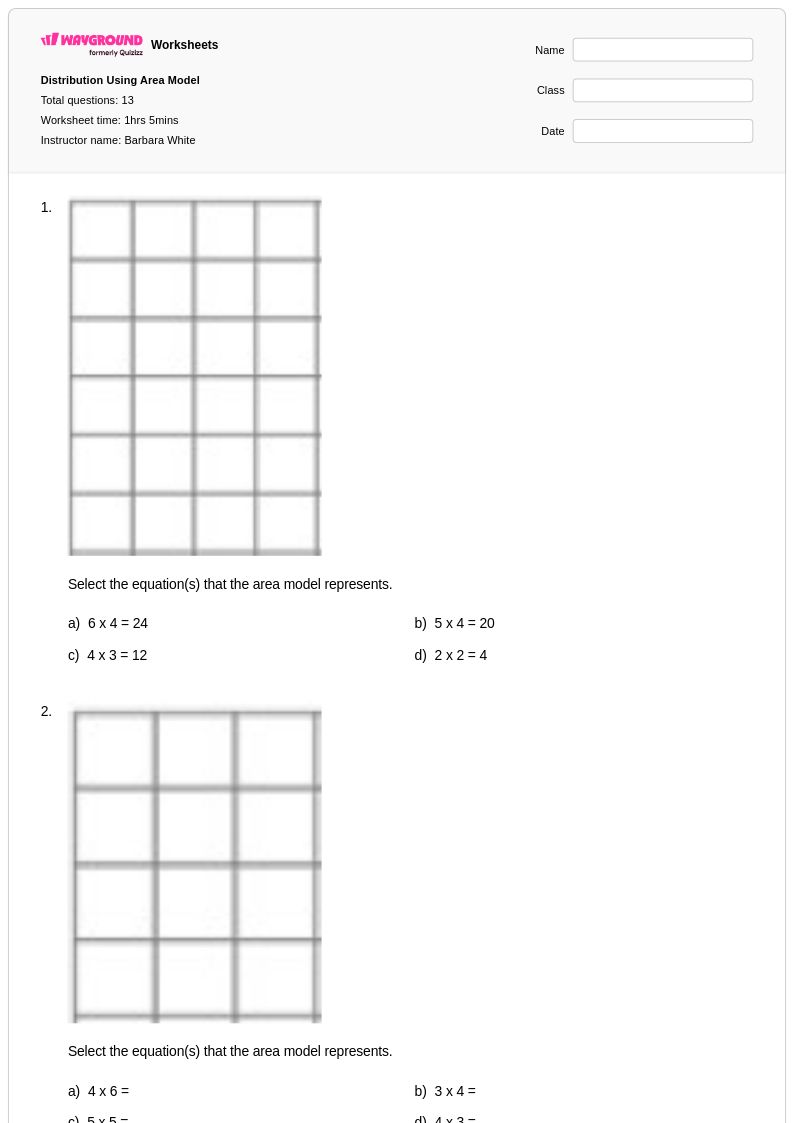
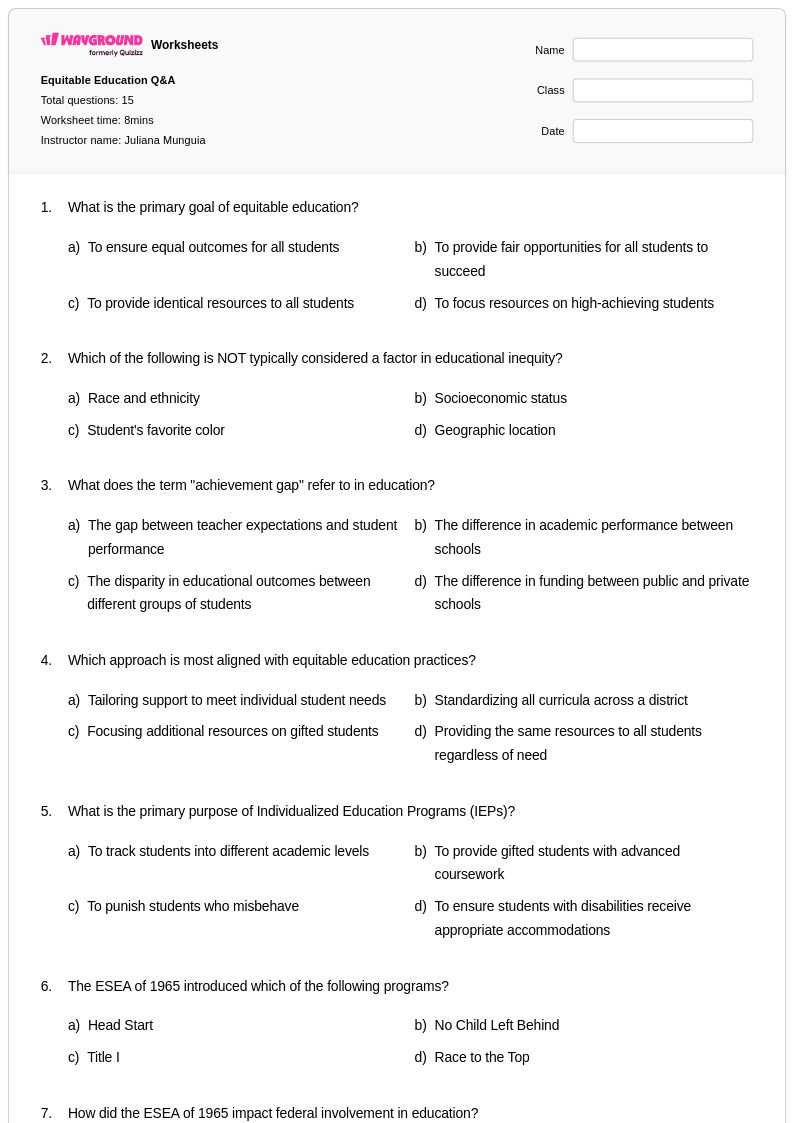
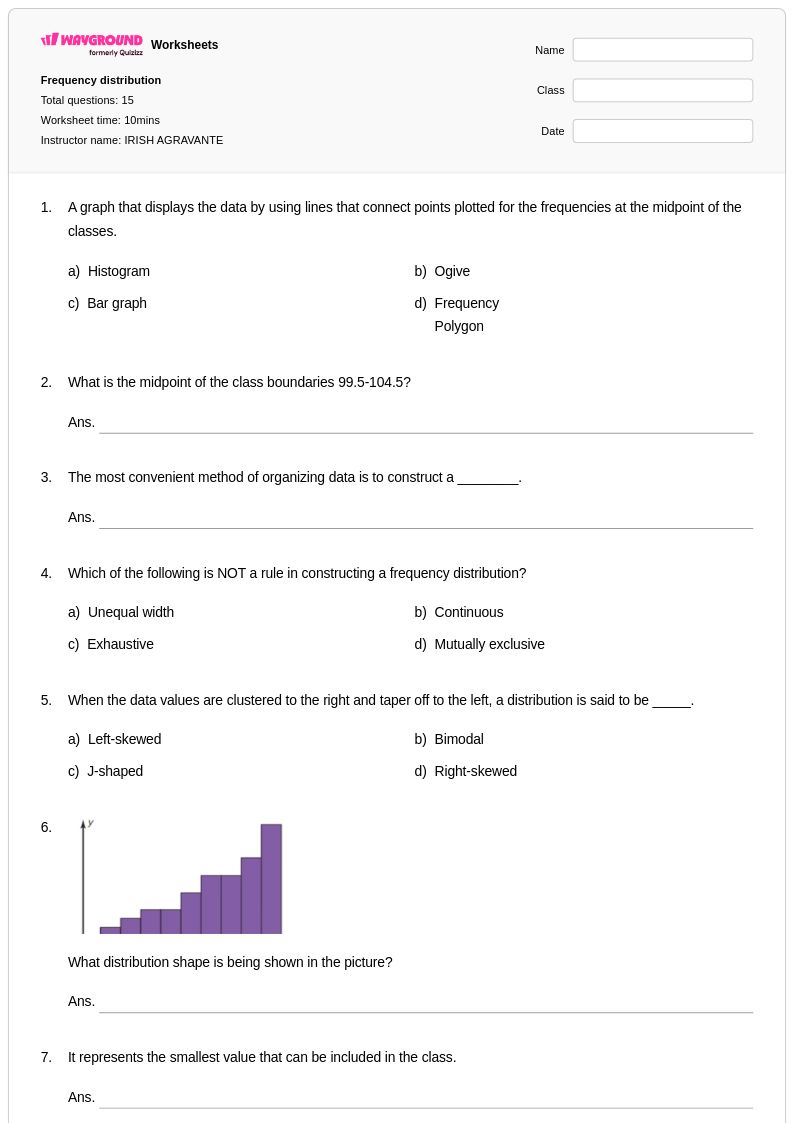
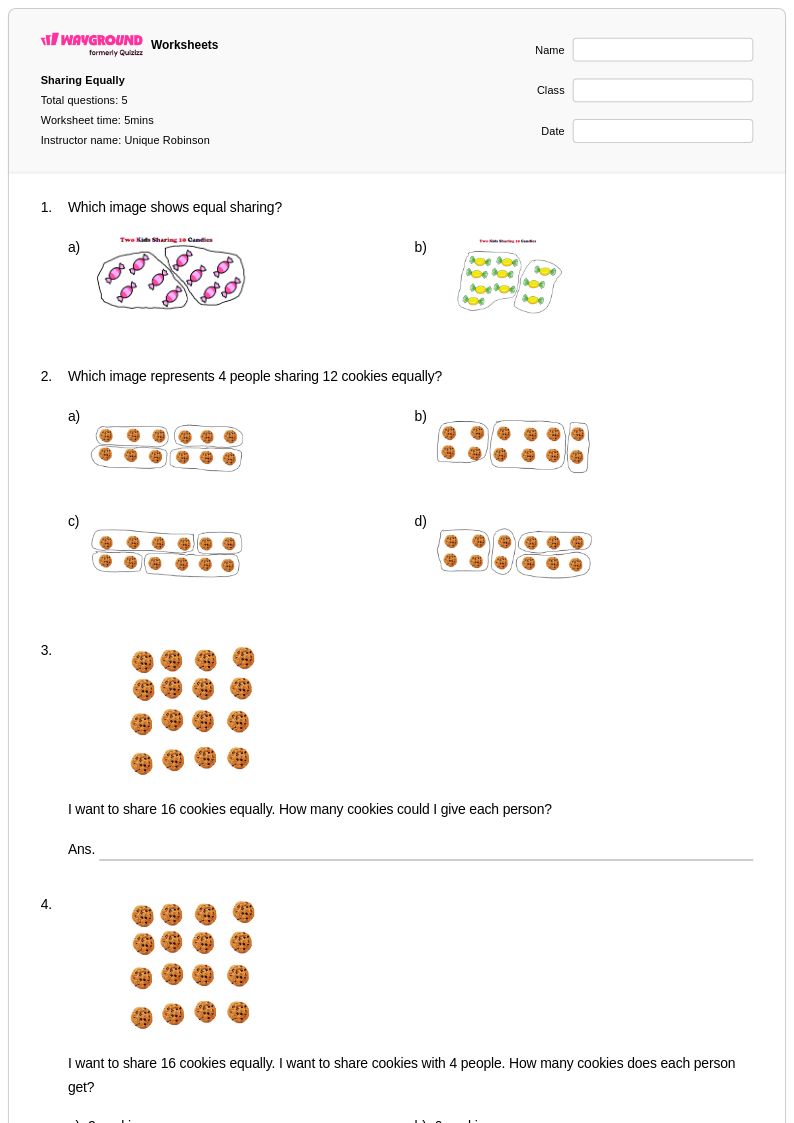
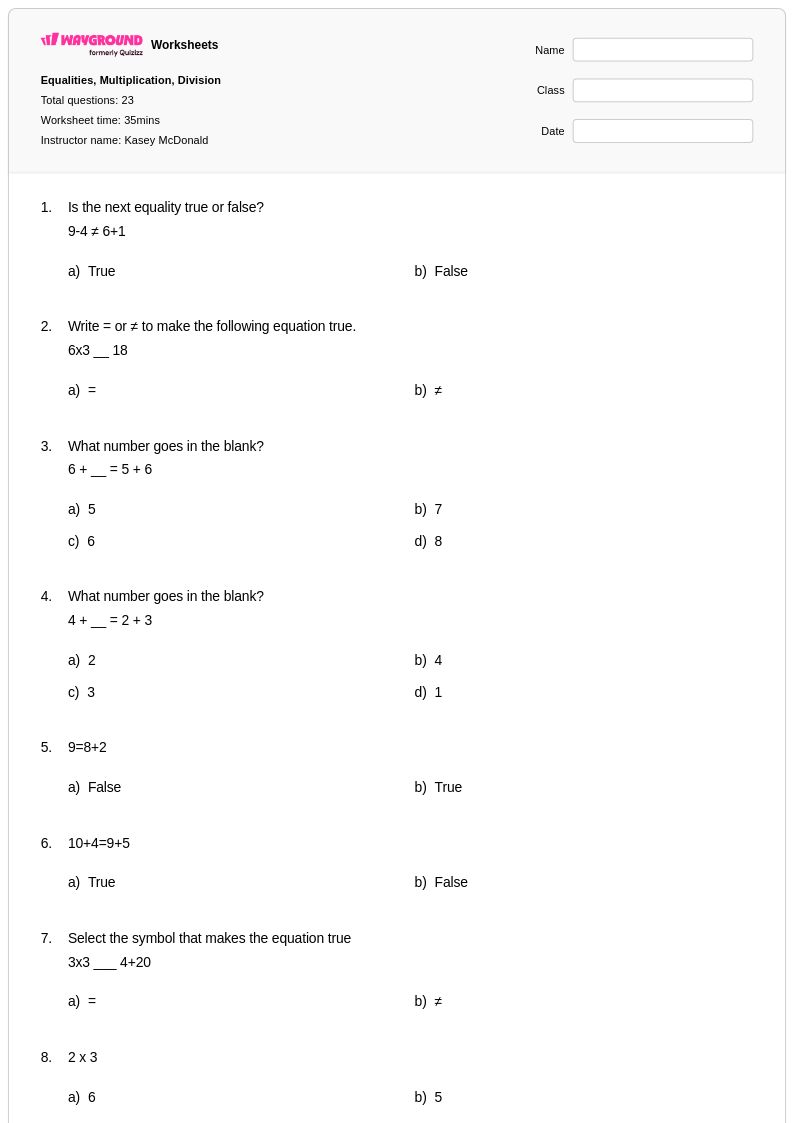
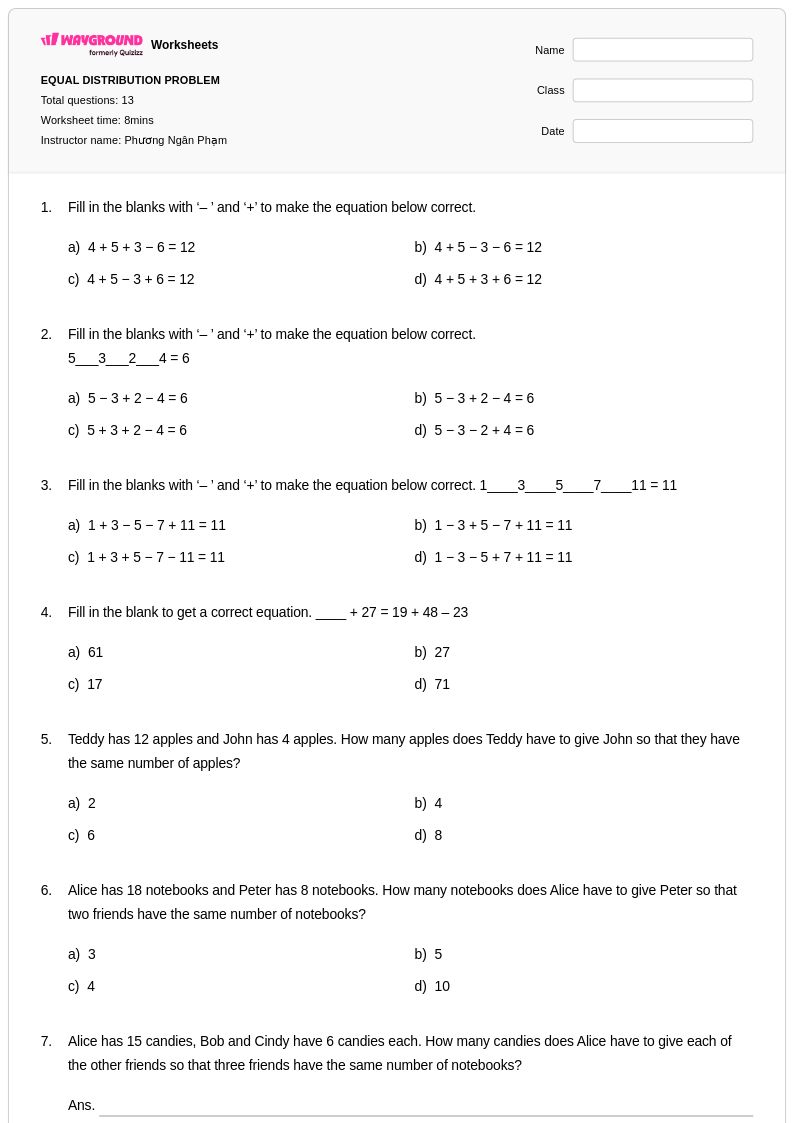
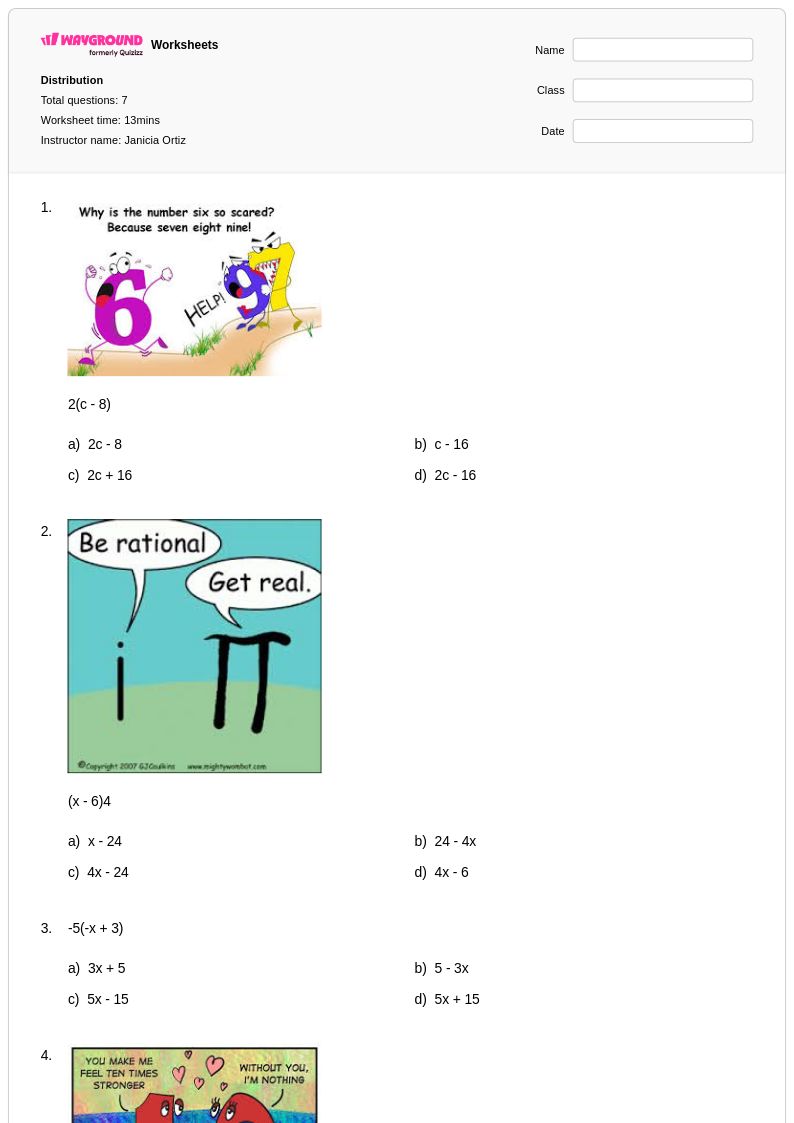
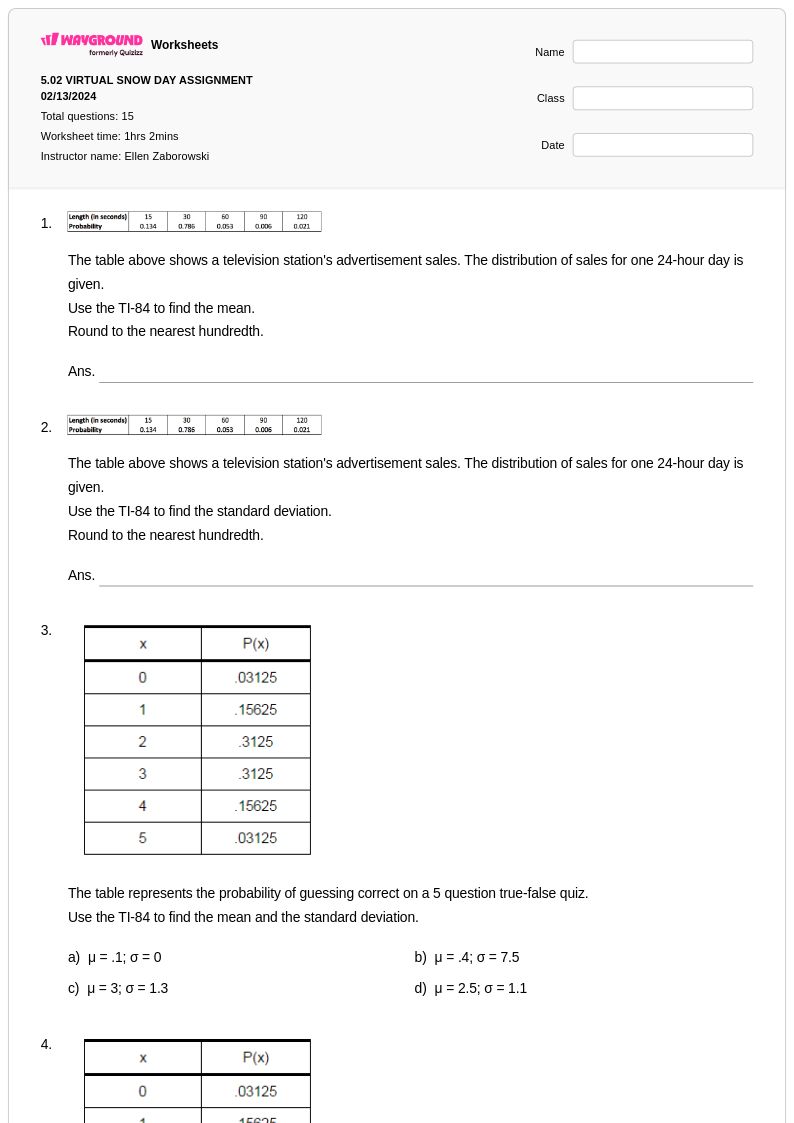
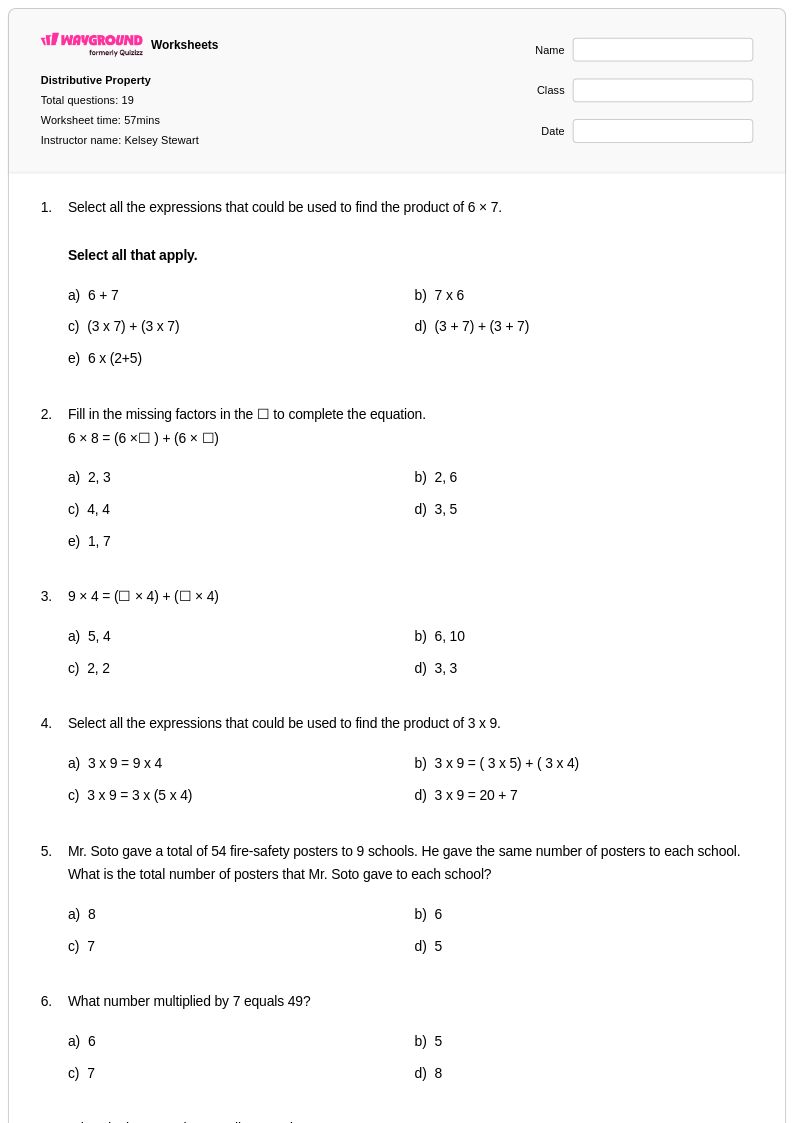
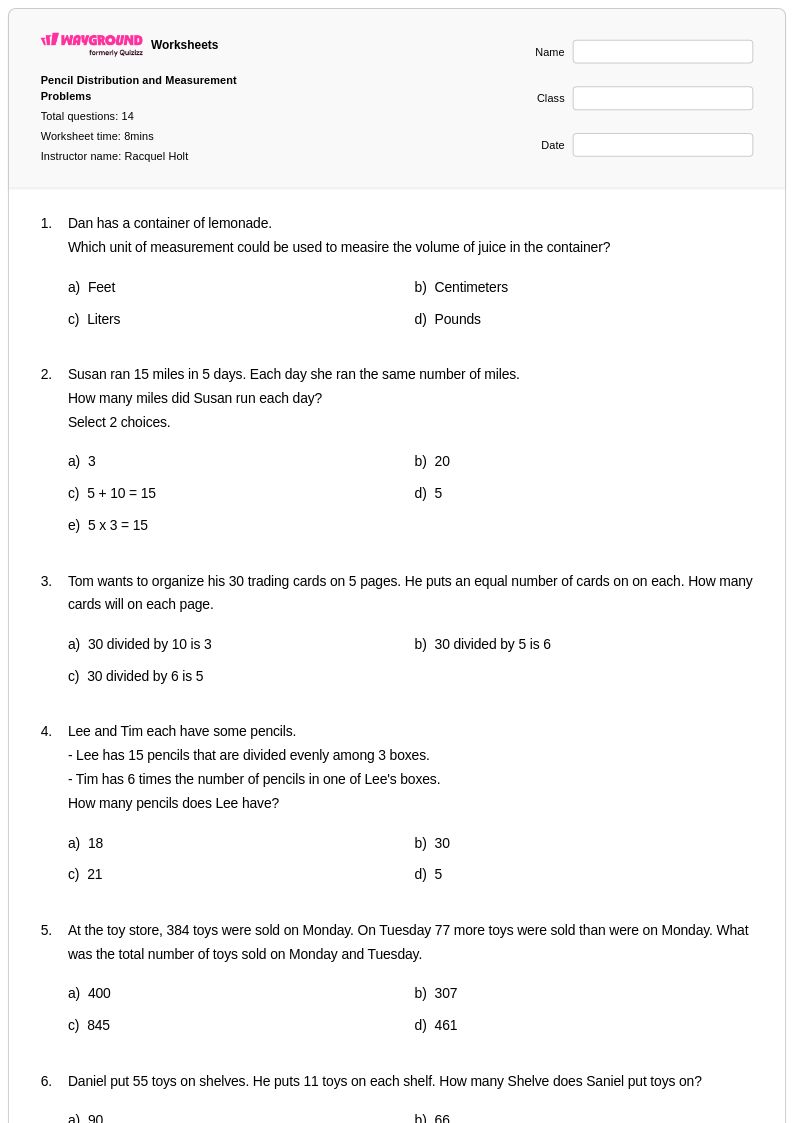
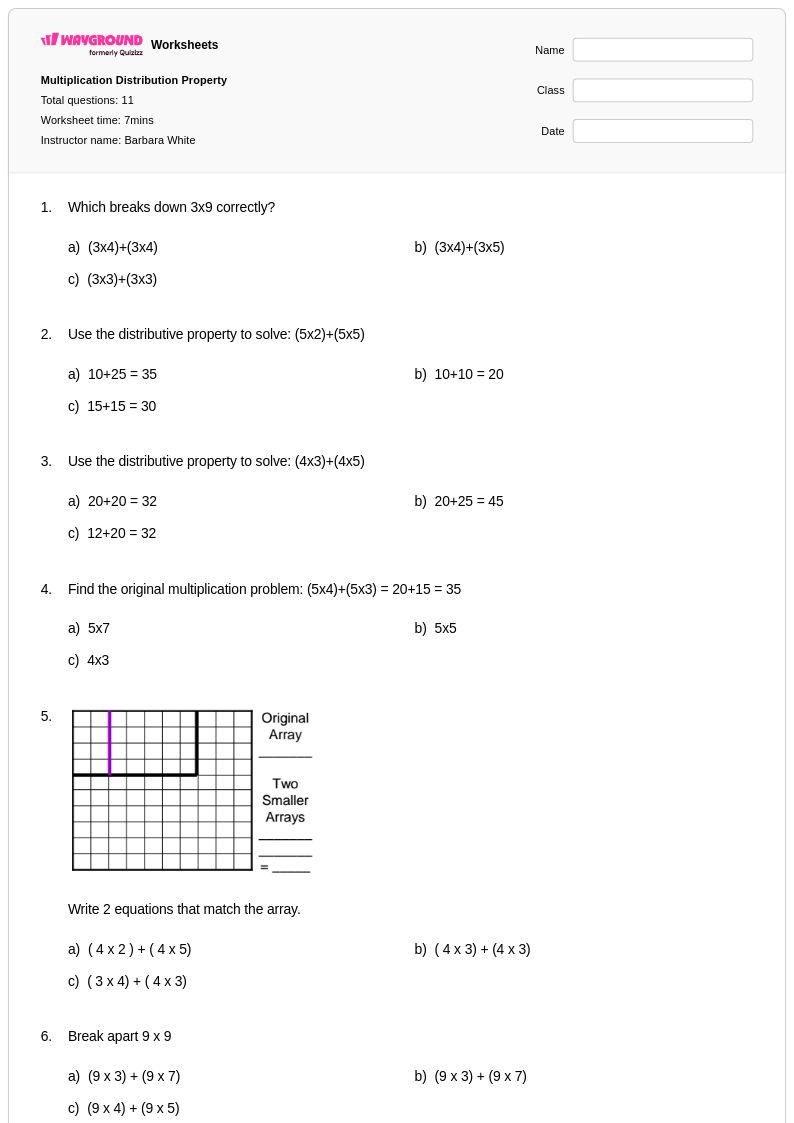
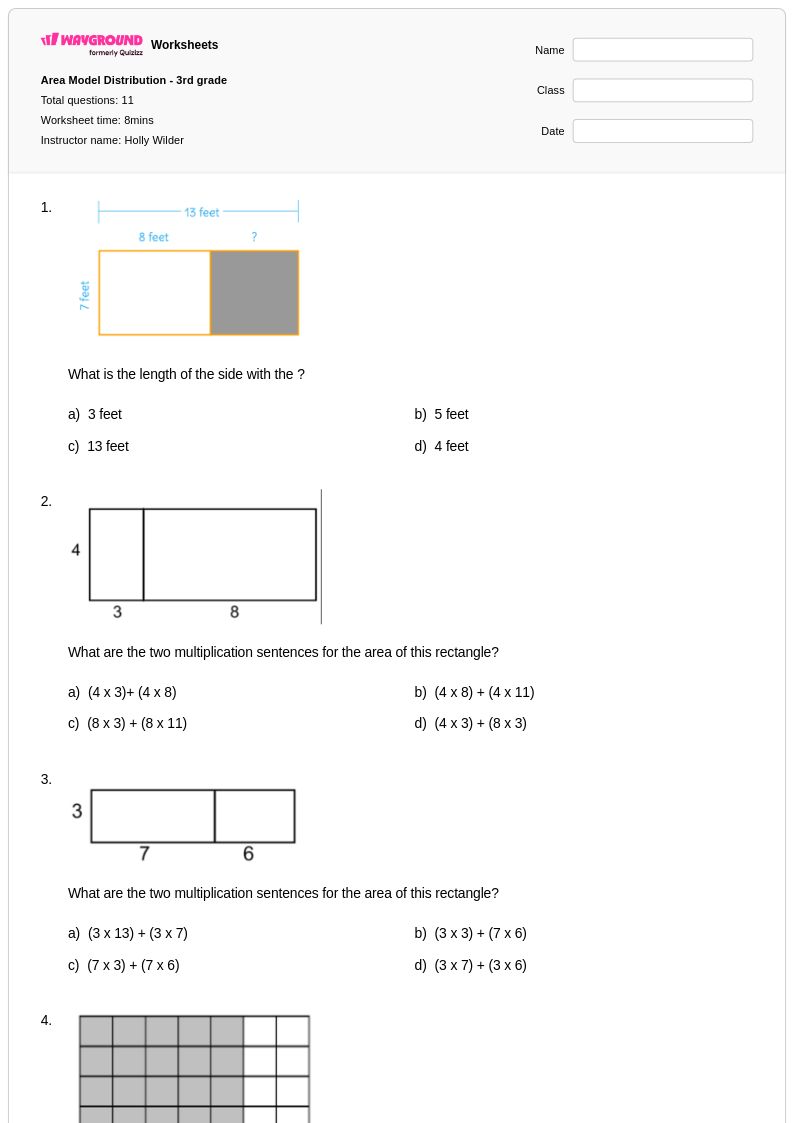
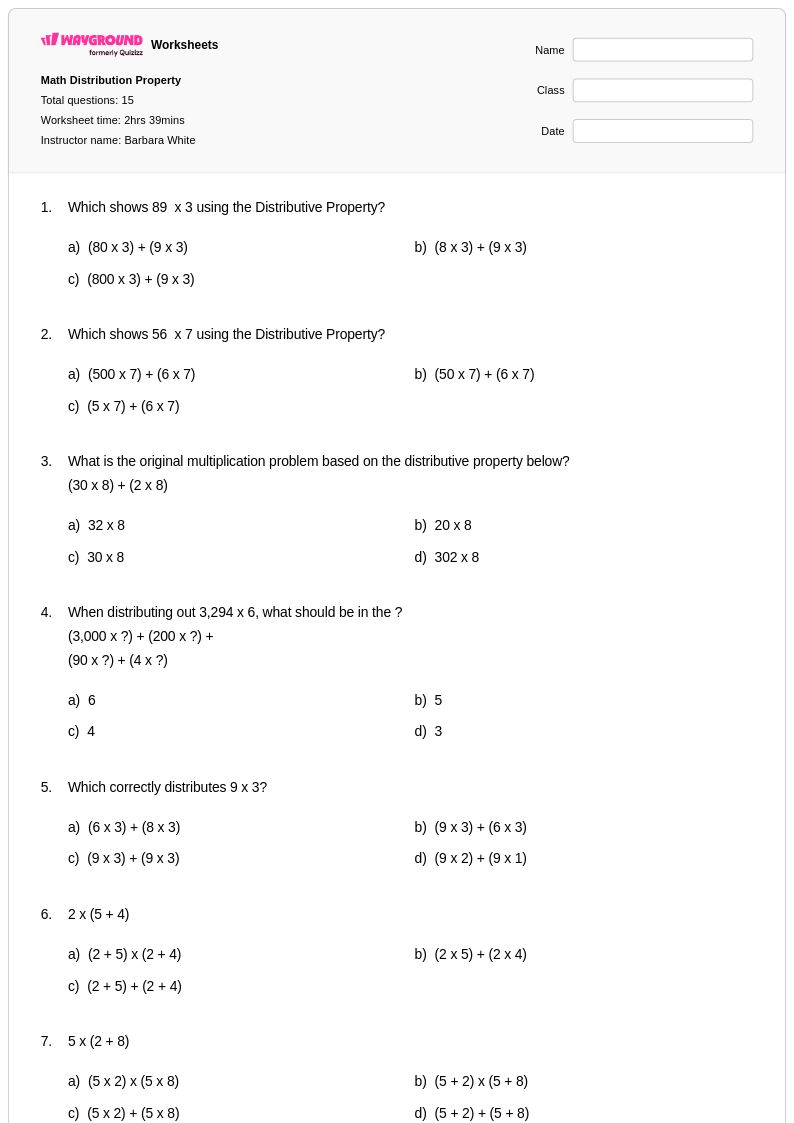
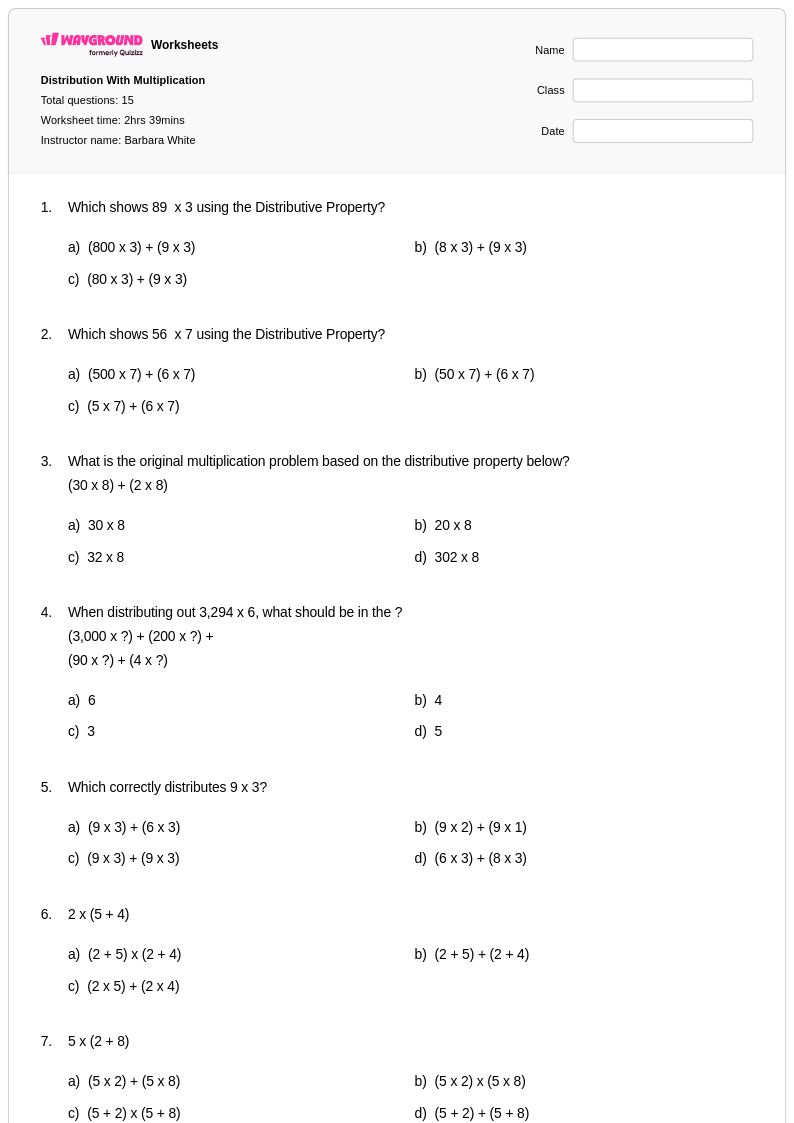
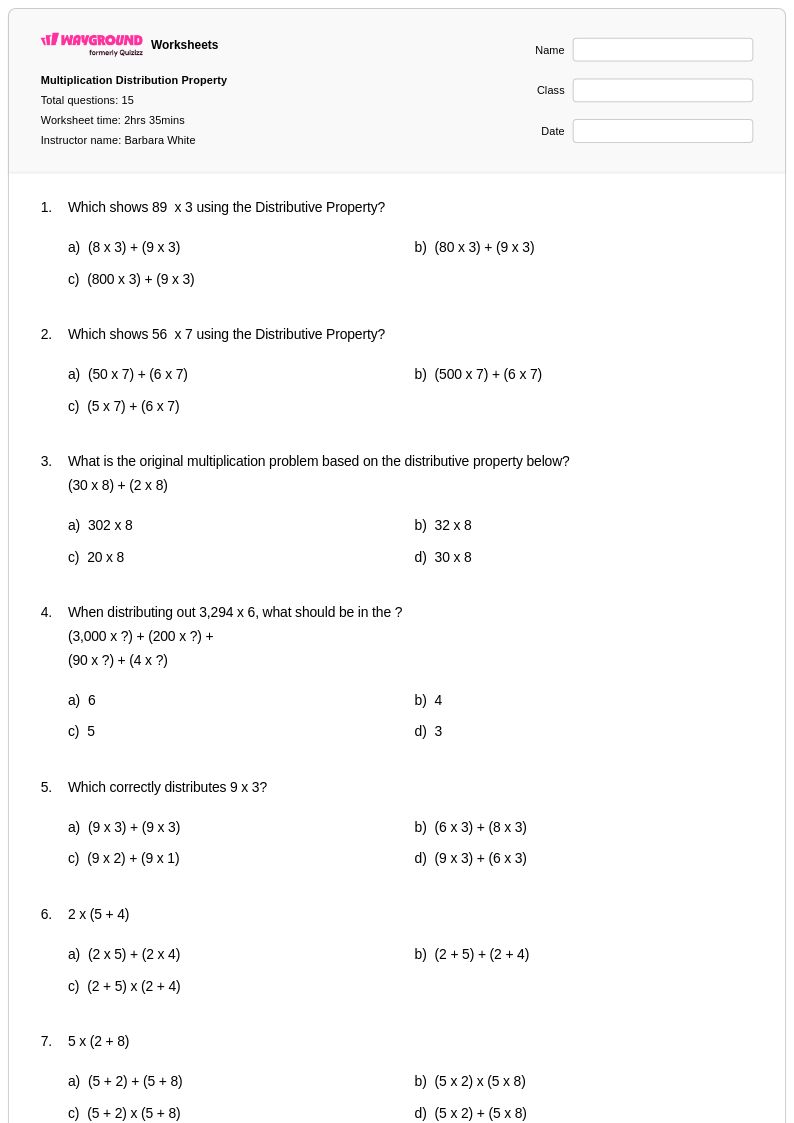
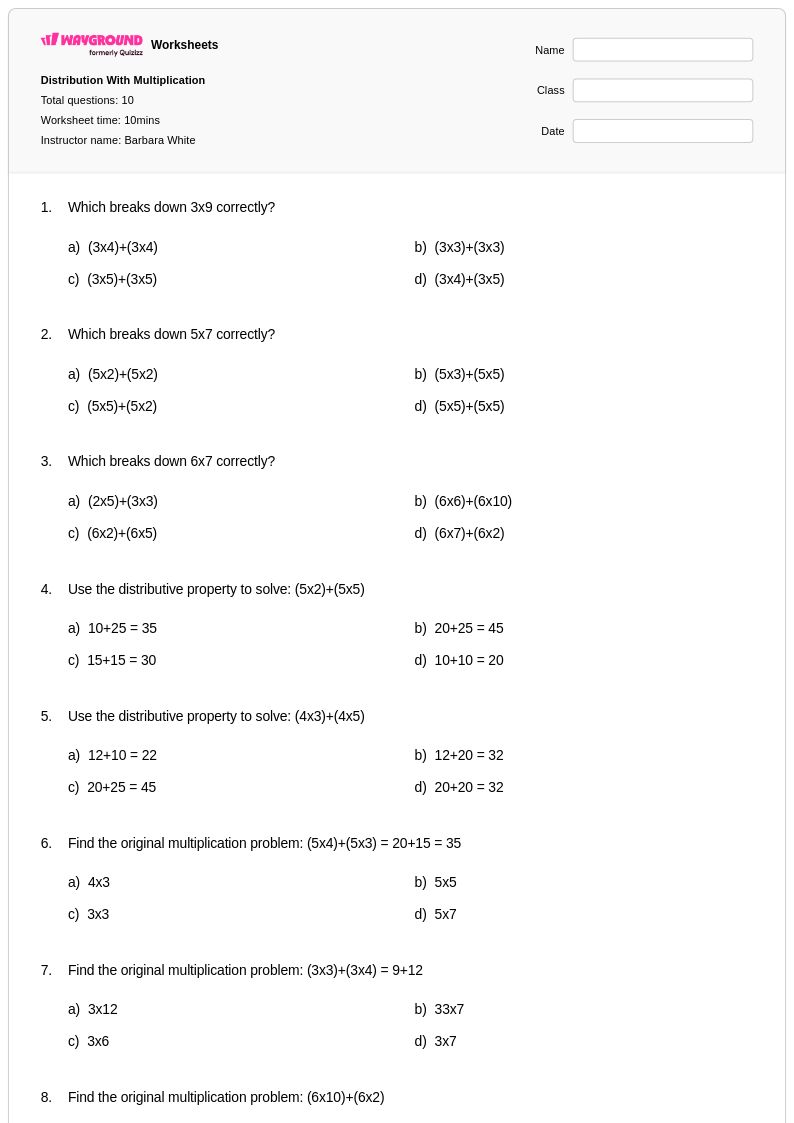
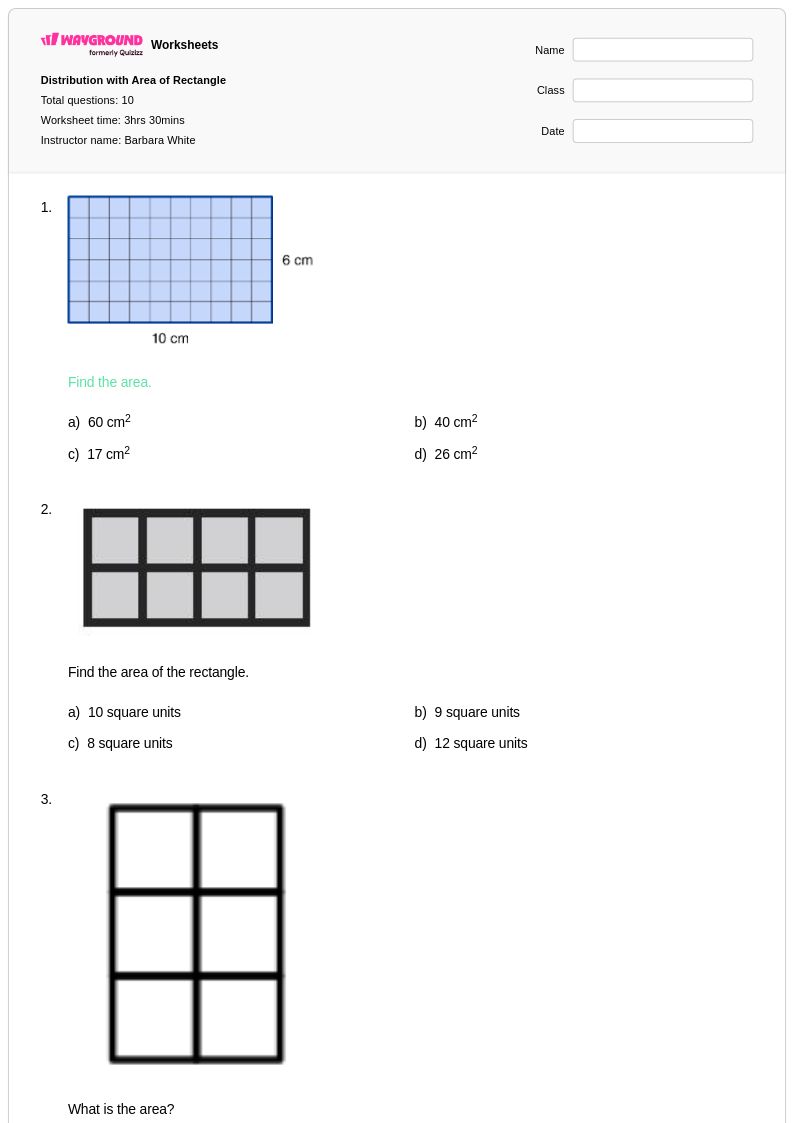
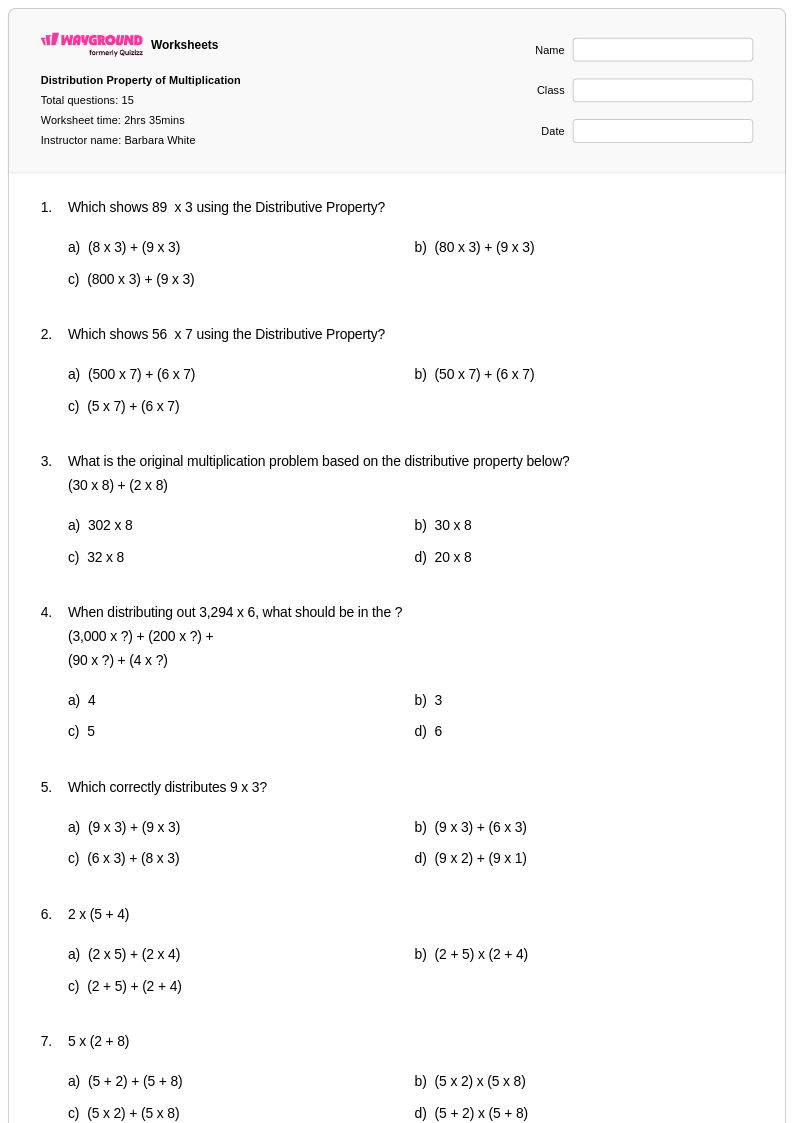
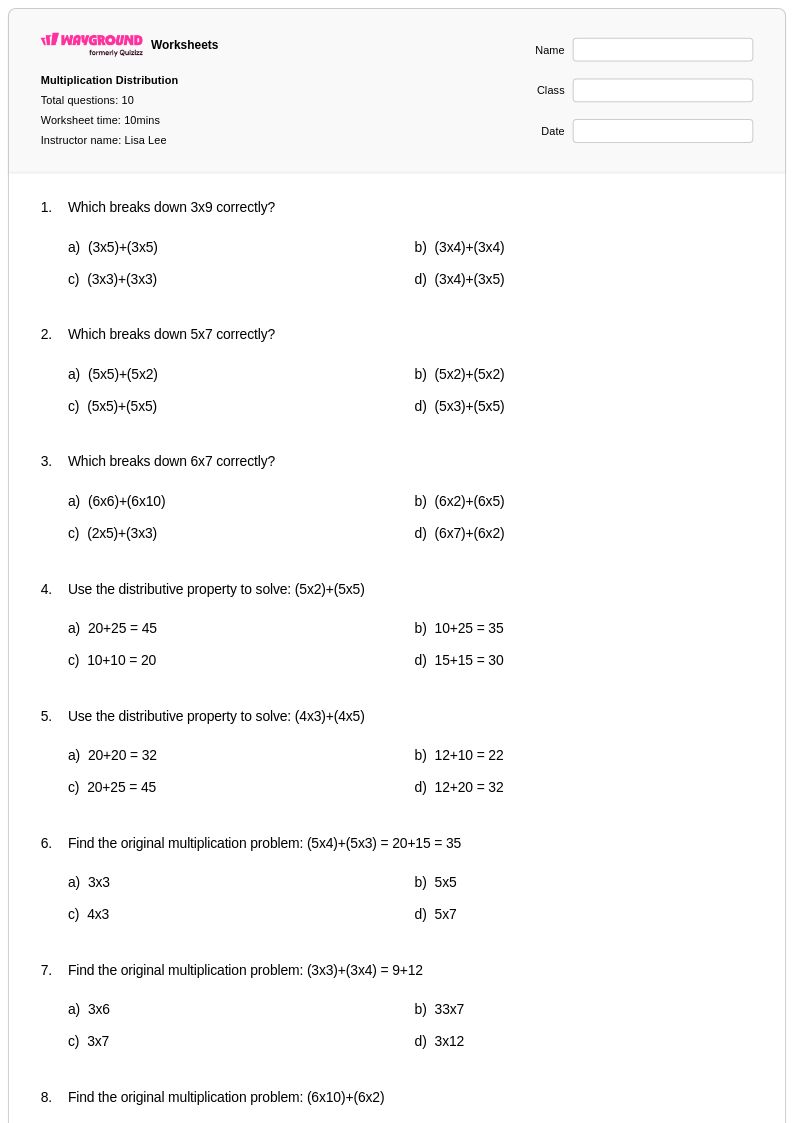
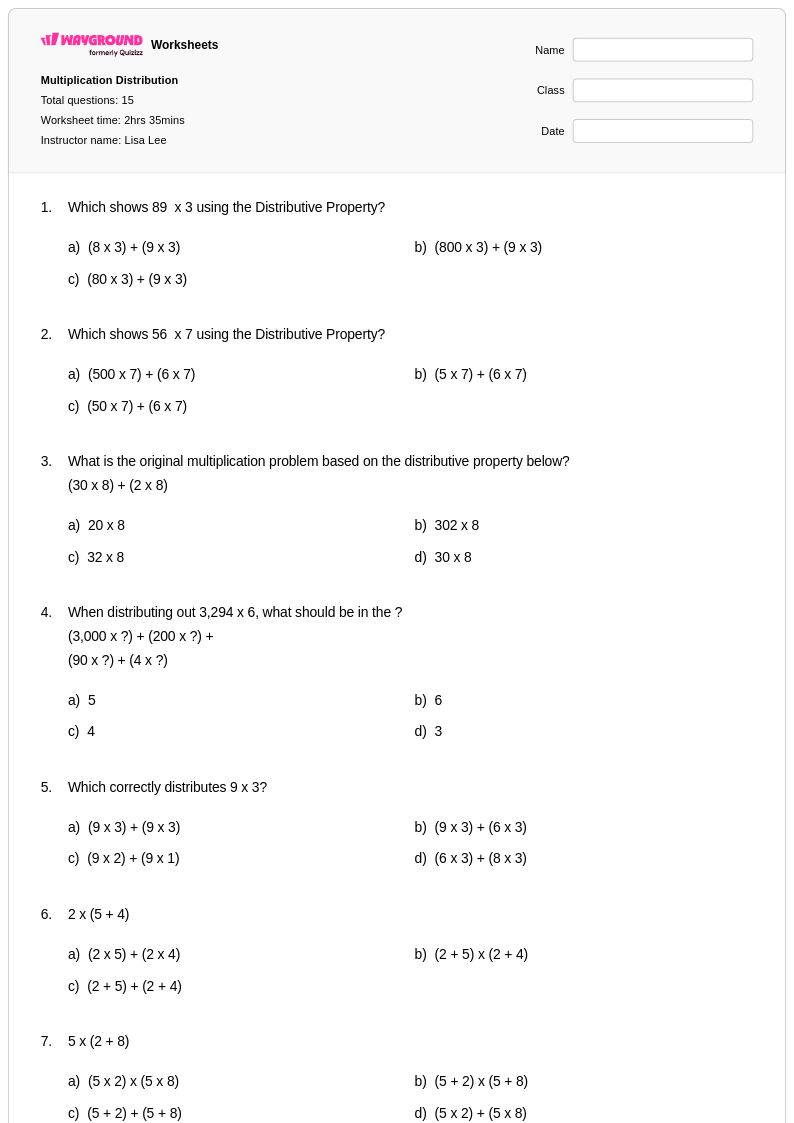
Equitable distribution worksheets for Grade 3 students available through Wayground (formerly Quizizz) provide essential practice in understanding how to share quantities fairly among equal groups, a foundational concept that bridges basic division skills with real-world problem-solving. These comprehensive printables strengthen students' ability to recognize when objects, numbers, or resources should be divided equally, helping them develop both computational fluency and conceptual understanding of division as fair sharing. Each worksheet includes carefully crafted practice problems that progress from concrete scenarios using manipulatives and visual representations to more abstract numerical expressions, with complete answer keys provided to support independent learning and immediate feedback. The free pdf resources emphasize hands-on activities where students must determine how to distribute items such as cookies among friends, stickers among classmates, or supplies among teams, building critical thinking skills while reinforcing division facts and mathematical reasoning.
Wayground (formerly Quizizz) supports educators with millions of teacher-created equitable distribution resources that feature robust search and filtering capabilities, enabling quick access to grade-appropriate materials aligned with mathematics standards and learning objectives. The platform's differentiation tools allow teachers to customize worksheets based on individual student needs, offering both printable pdf versions for traditional classroom use and digital formats for technology-integrated instruction. These flexible resources facilitate targeted skill practice during whole-group instruction, small-group remediation sessions, or independent enrichment activities, while the extensive collection ensures teachers can find materials that match their specific pacing guides and curriculum requirements. The comprehensive search functionality and standards alignment features streamline lesson planning by helping educators quickly identify worksheets that target specific equitable distribution concepts, from basic fair sharing scenarios to more complex word problems involving remainders and multi-step reasoning.
FAQs
How do I teach equitable distribution to third graders?
Grade 3 is where fair sharing becomes formal division, so the teaching goal is making that connection explicit. Start with a concrete scenario — 18 cookies shared among 3 friends — and have students solve it by drawing, then write the division equation that matches. The key move is asking students to explain what each number in the equation represents: 18 ÷ 3 = 6 means 18 total, 3 groups, 6 in each group. That translation between story, picture, and equation is the core skill at this level.
What practice problems are most useful for Grade 3 equitable distribution?
Third graders need problems that push past simple sharing into situations with remainders and multi-step reasoning — for example, 'You have 25 stickers to share equally among 4 friends. How many does each friend get? How many are left over?' These worksheets include that progression, moving from straightforward equal-groups problems to word problems that require students to interpret what a remainder means in context.
What mistakes do third graders make with equitable distribution and division?
Three errors show up consistently at this grade. First, students confuse the divisor and quotient — they know the answer is one of the numbers in the problem but swap which is which. Second, when there's a remainder, students either ignore it or treat it as a separate, unrelated number rather than interpreting it in context. Third, students sometimes apply multiplication facts incorrectly when working backward to find a missing share. Requiring students to write a sentence explaining their answer ('Each friend gets ___ stickers') catches the first two errors quickly.
How do I use Wayground's Grade 3 equitable distribution worksheets?
These worksheets are available as printable PDFs — each one includes a complete answer key, so they work well for independent practice, centers, or homework. You can also assign them as a digital quiz on Wayground, which is useful when you want to see class-wide results quickly and identify which students are struggling with remainders or multi-step problems before the next lesson.
How does Grade 3 equitable distribution align with Common Core math standards?
Grade 3 is the year Common Core formally introduces division, and equal sharing is the conceptual model at the center of that introduction. Students are expected to understand division as partitioning a quantity into equal groups — exactly what equitable distribution practice builds. This work also connects directly to the relationship between multiplication and division that Grade 3 students are developing: if 4 groups of 6 equals 24, then 24 shared among 4 groups gives 6. Fluency with fair-sharing scenarios makes that inverse relationship intuitive rather than abstract.
How can I differentiate equitable distribution practice for my Grade 3 class?
For students still building confidence with basic division facts, reducing answer choices in Wayground's digital format lowers the cognitive load so they can focus on the reasoning rather than guessing among too many options. For students ready for extension, move them to multi-step problems involving remainders and real-world interpretation. You can also generate a worksheet version with a dyslexia-friendly font or translated into another language for students who need it — without creating a separate assignment from scratch.