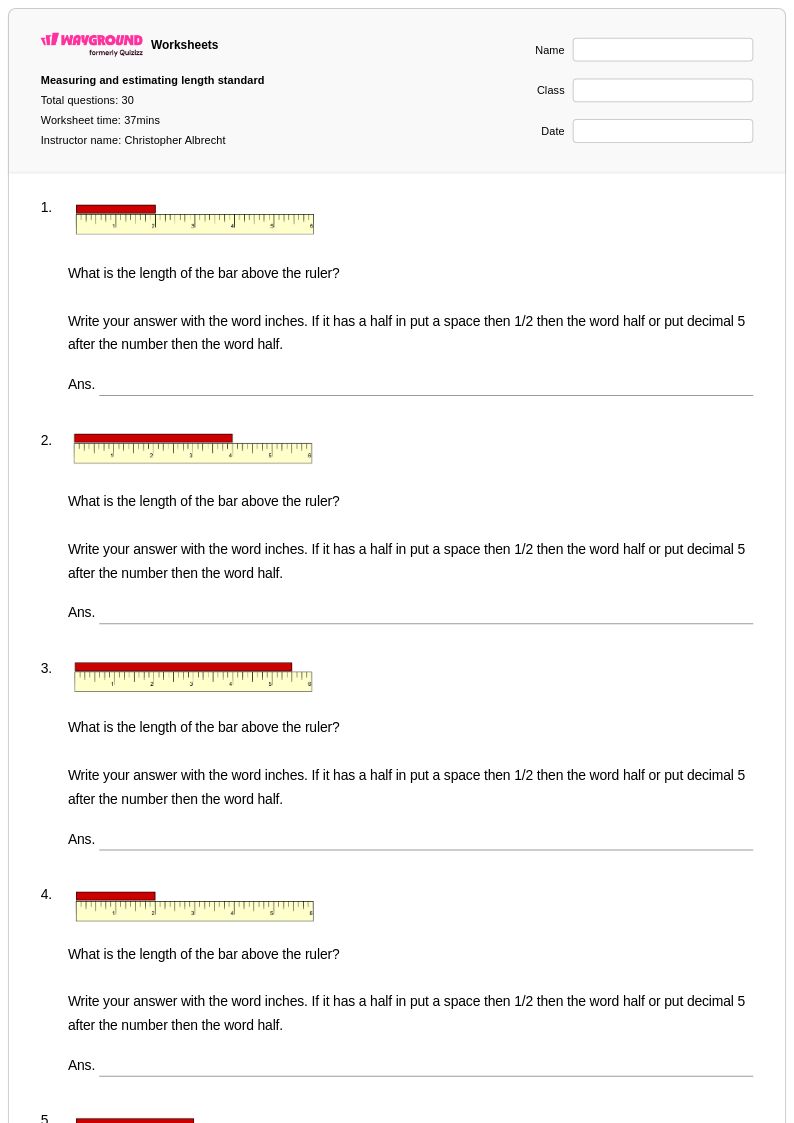
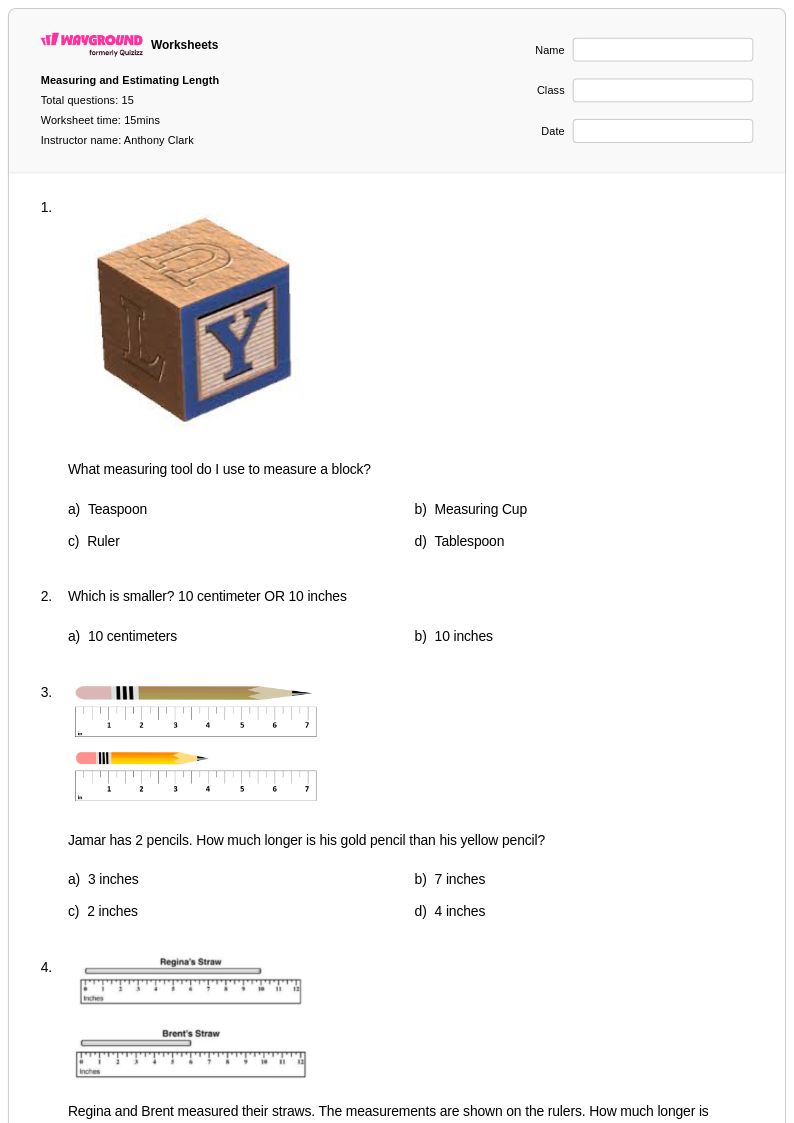
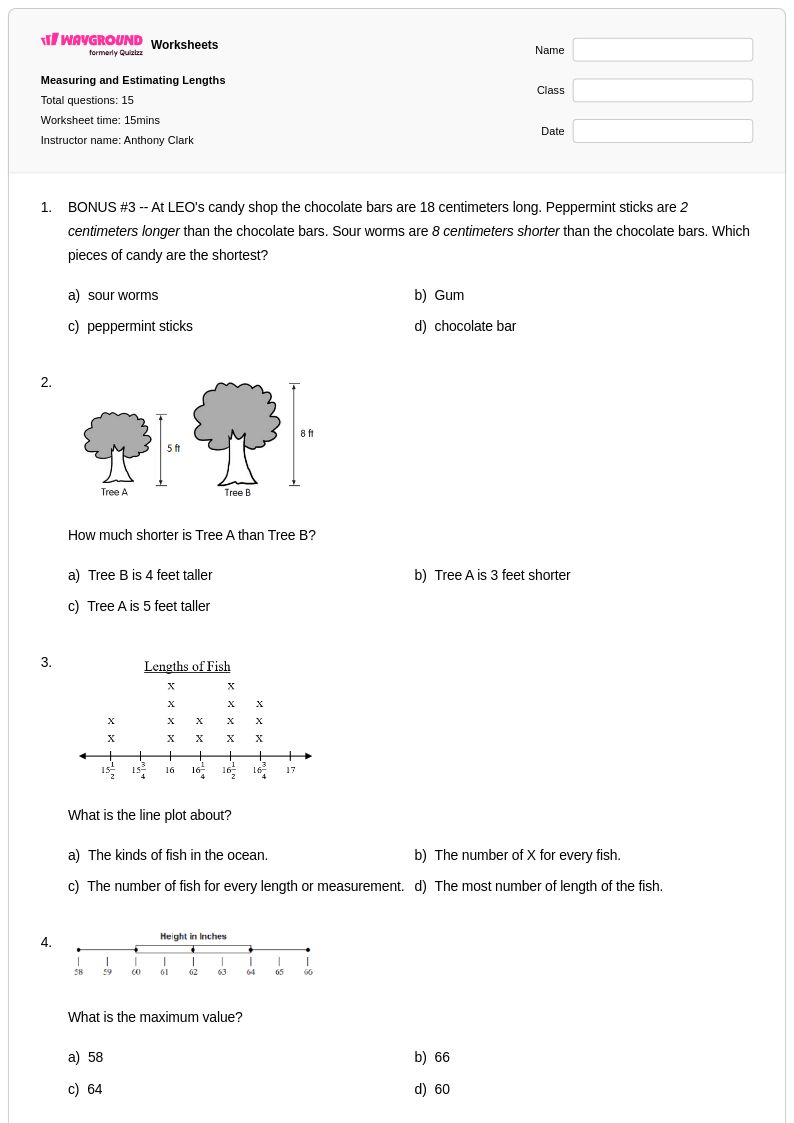
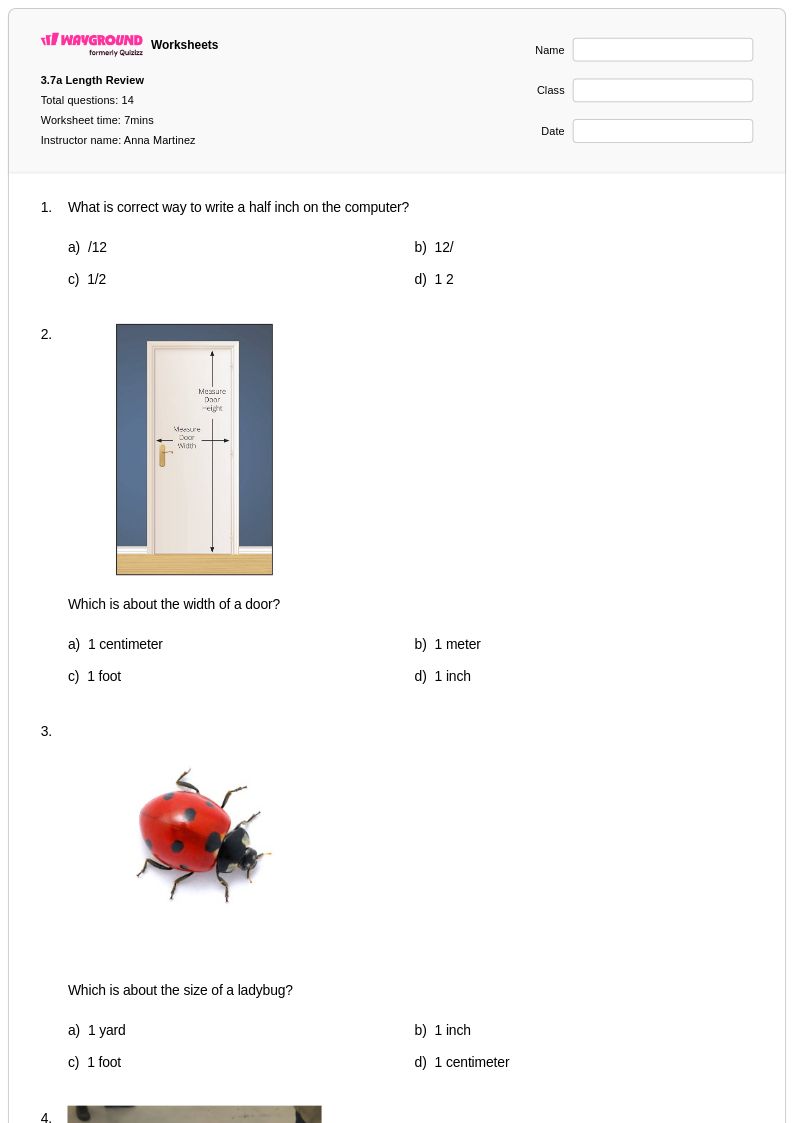
Free Printable Estimating Length Worksheets for Grade 3
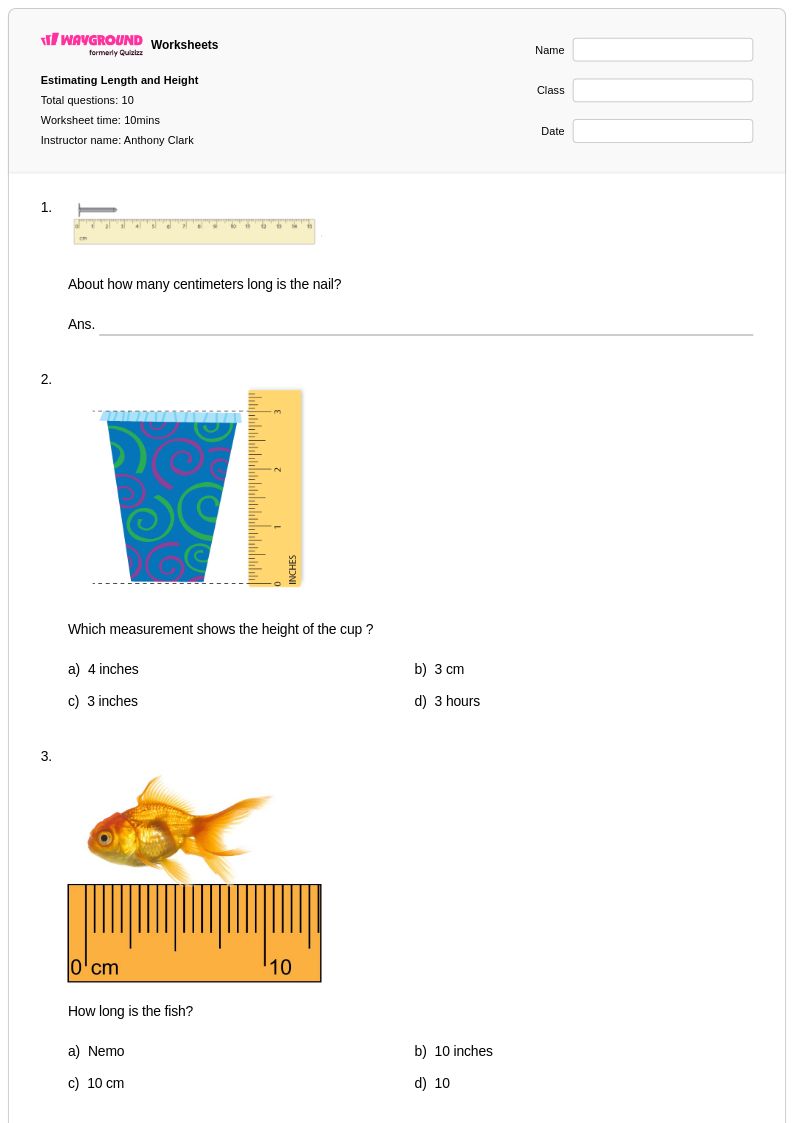
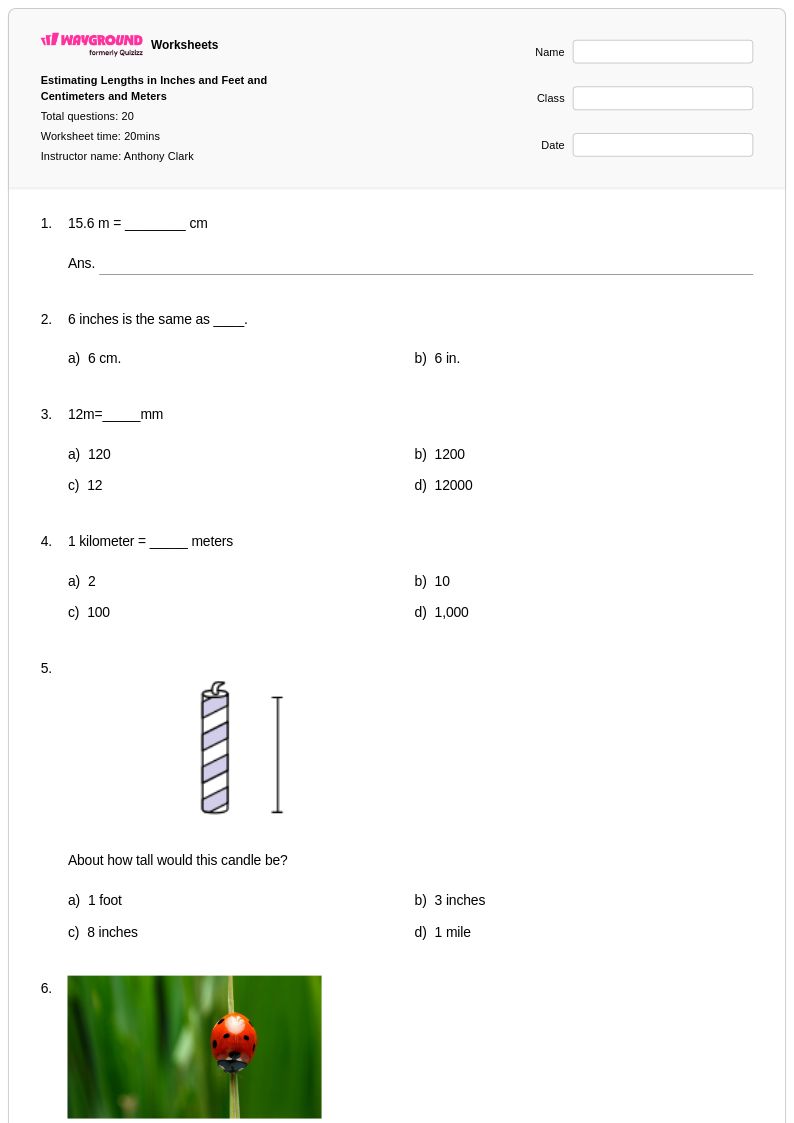
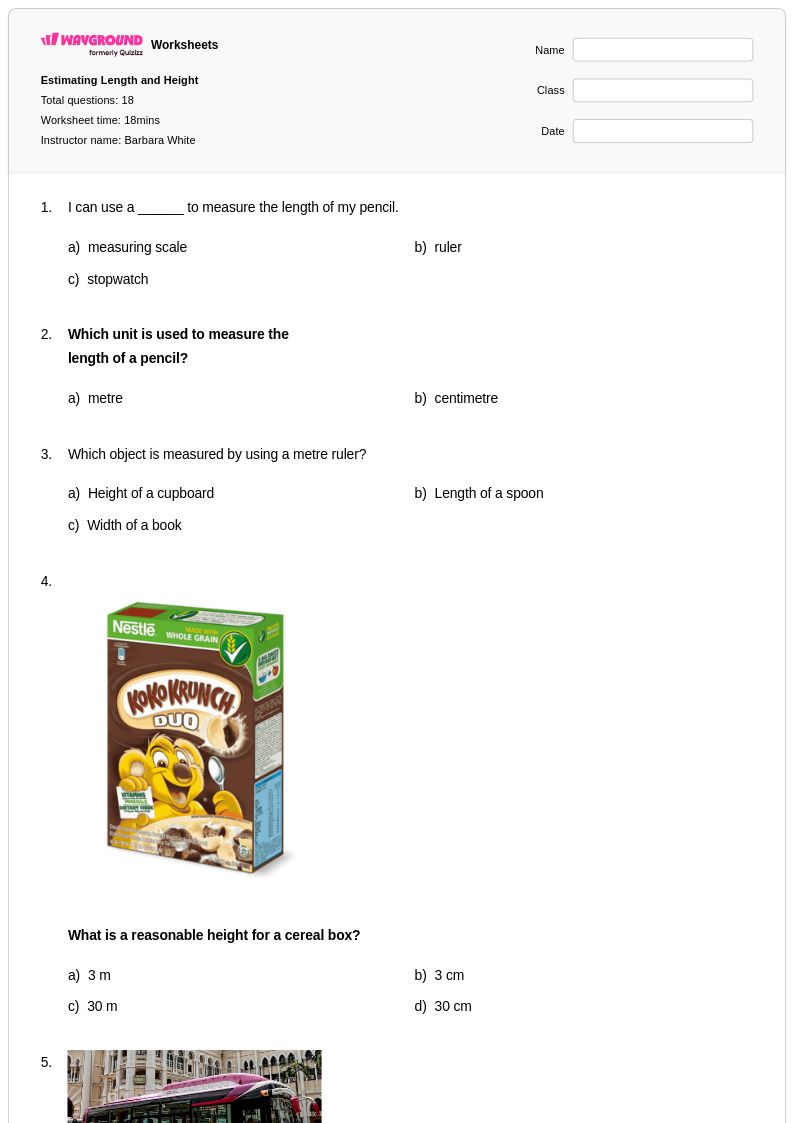
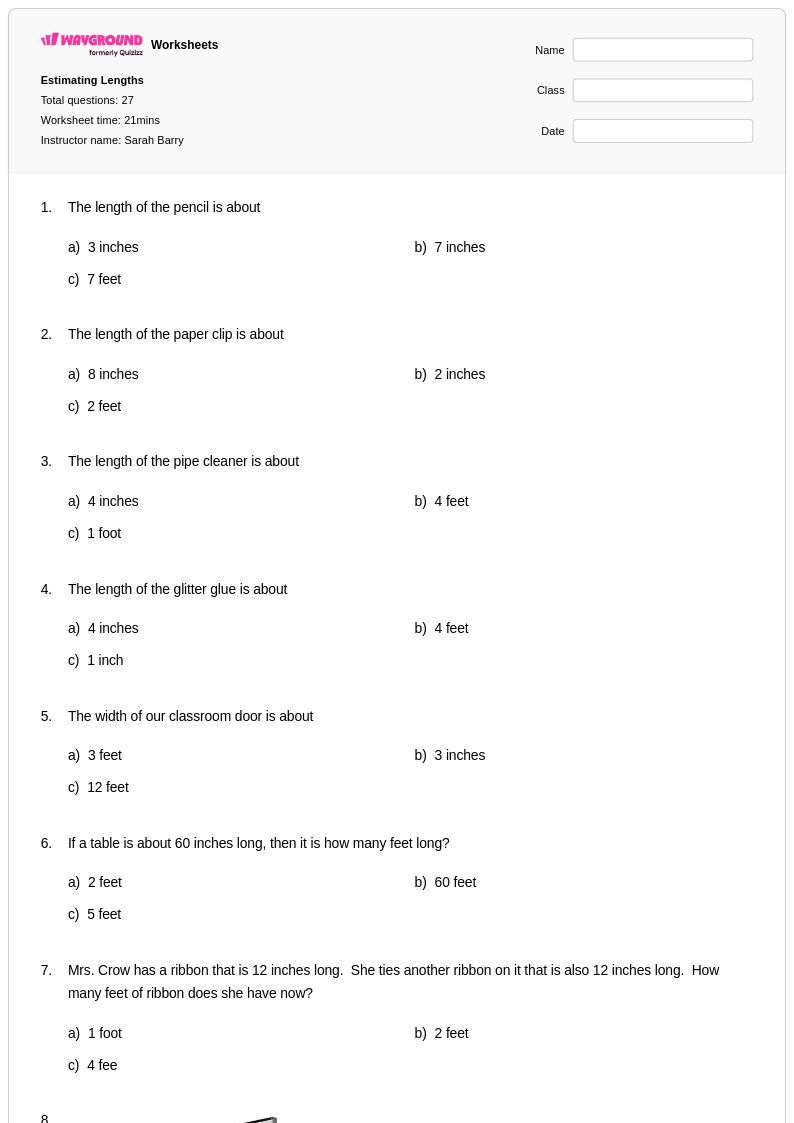
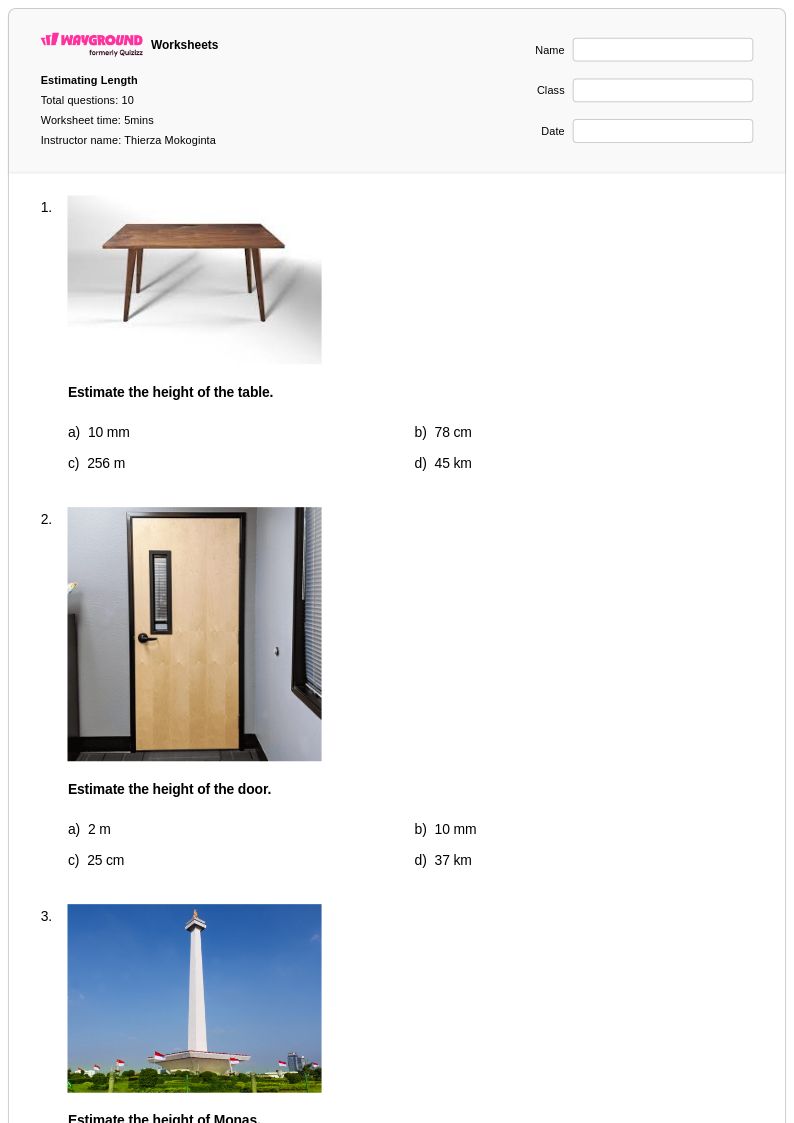
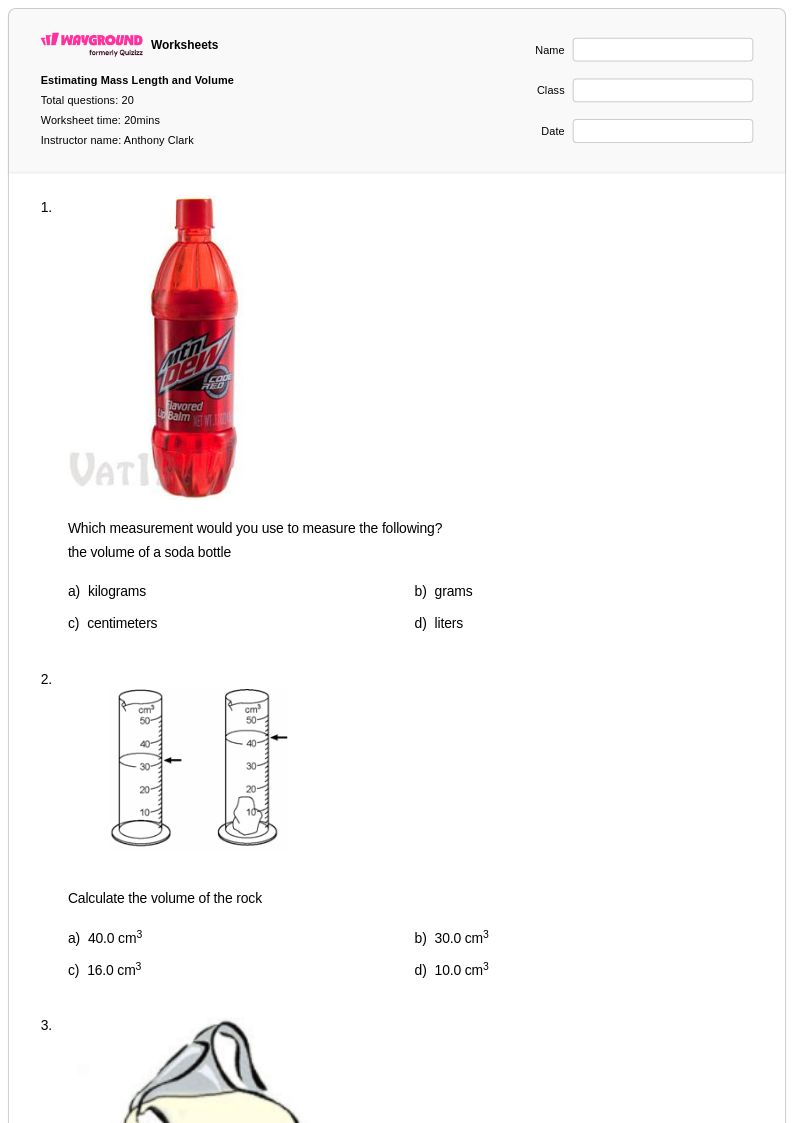
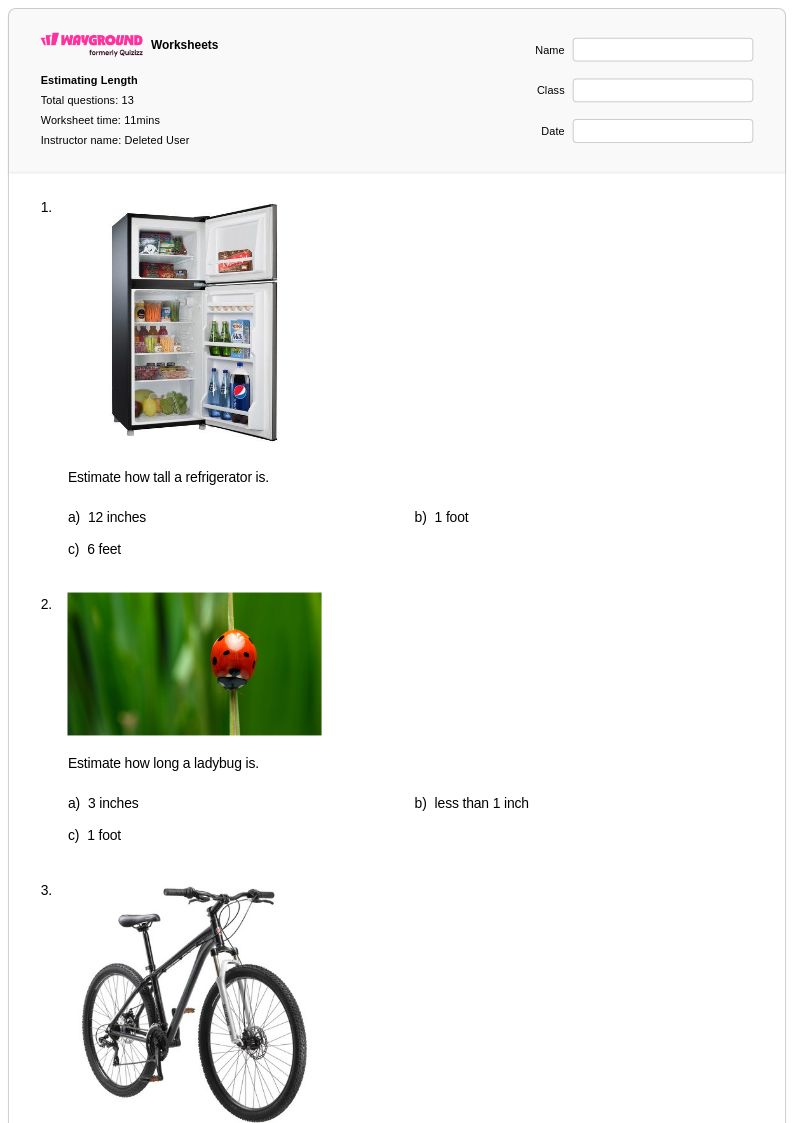
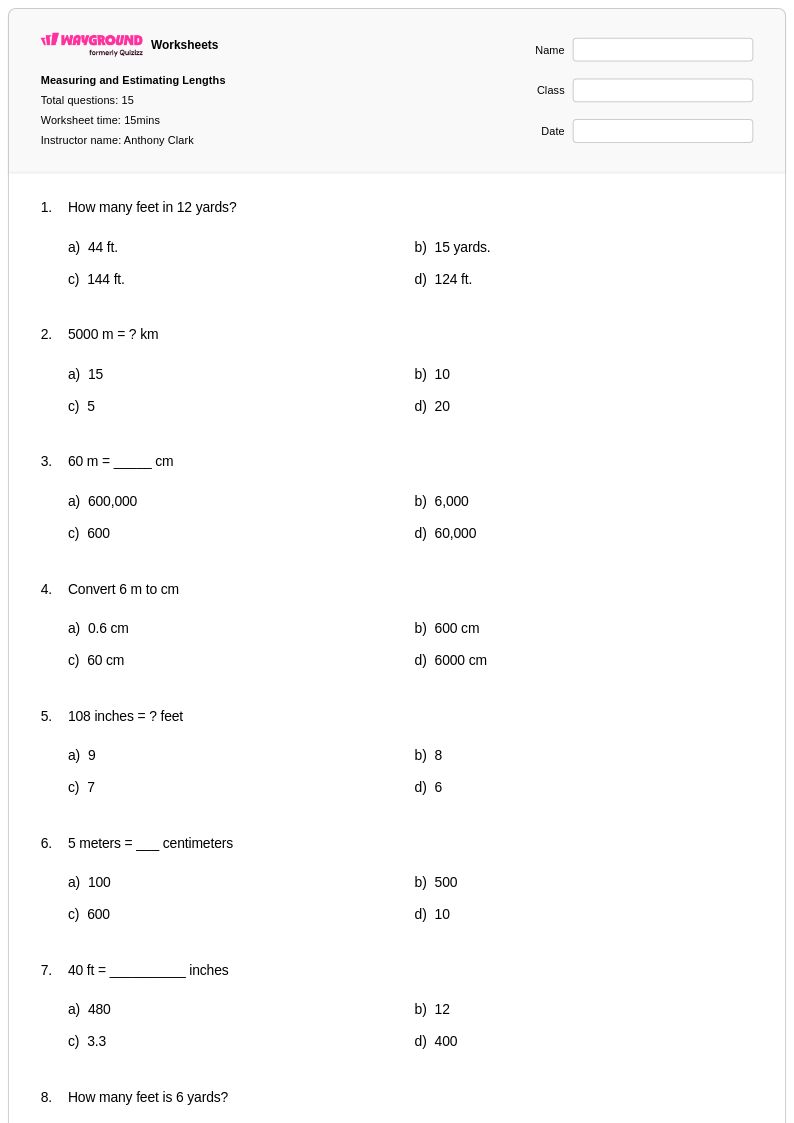
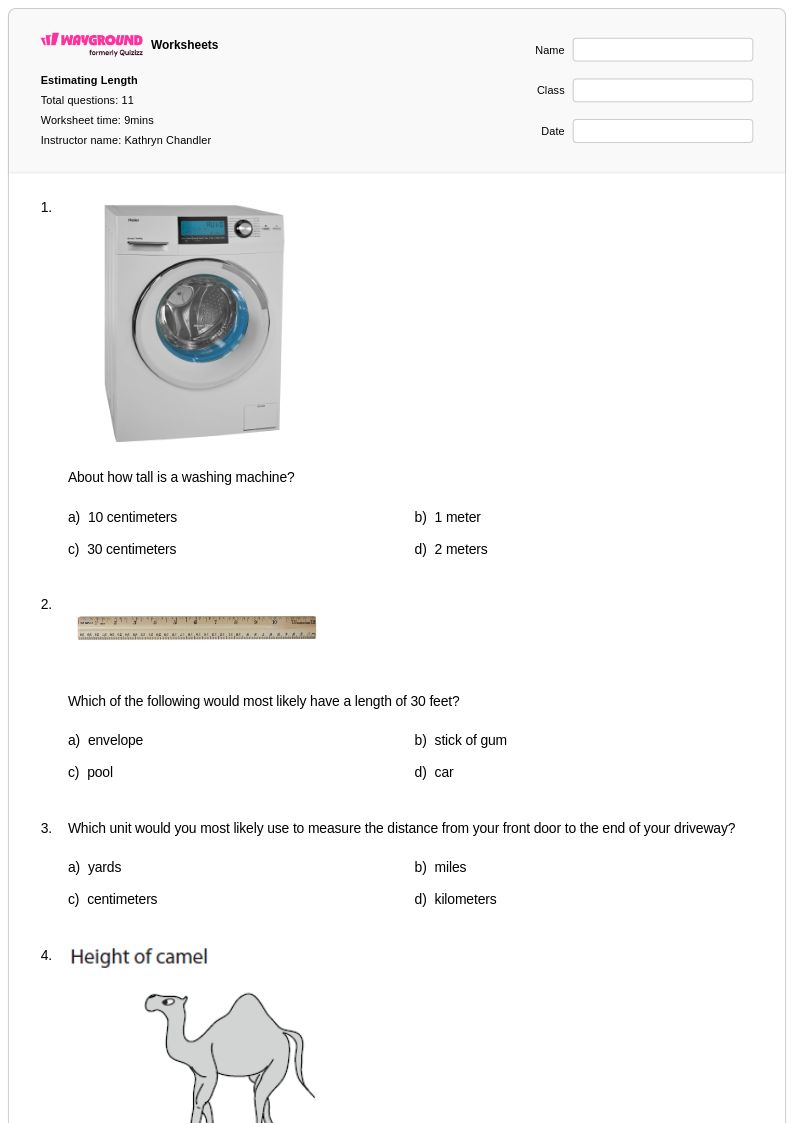
Wayground's free Grade 3 estimating length worksheets provide engaging printables and practice problems that help students develop measurement skills through hands-on activities, complete with answer keys for effective learning assessment.
Explore printable Estimating Length worksheets for Grade 3
Estimating length worksheets for Grade 3 students available through Wayground (formerly Quizizz) provide essential practice in developing spatial reasoning and measurement sense that forms the foundation for advanced mathematical concepts. These comprehensive worksheets guide students through systematic approaches to visual estimation, teaching them to use familiar objects as reference points and apply logical reasoning to determine approximate measurements without tools. Students strengthen critical skills including comparative analysis, proportional thinking, and the ability to make reasonable approximations using standard and non-standard units. Each worksheet collection includes detailed answer keys and is available as free printables in convenient PDF format, making it simple for educators to incorporate meaningful practice problems into daily instruction and assessment routines.
Wayground (formerly Quizizz) empowers teachers with access to millions of educator-created resources specifically designed to support Grade 3 measurement instruction and estimating length skill development. The platform's robust search and filtering capabilities allow instructors to quickly locate worksheets that align with specific curriculum standards while offering differentiation tools that accommodate diverse learning needs within the classroom. Teachers can customize existing materials or create new variations to target individual student requirements, with all resources available in both printable PDF and interactive digital formats for maximum instructional flexibility. These comprehensive features streamline lesson planning while providing targeted options for remediation, enrichment, and ongoing skill practice that helps students master the fundamental concept of length estimation through engaging, developmentally appropriate activities.
FAQs
How do I teach estimating length in third grade?
By third grade, students should have personal benchmarks for common units — an inch, a foot, a centimeter, a meter — and the goal is getting them to apply those benchmarks flexibly. A useful classroom routine: before any measurement activity, ask students to estimate and explain their reasoning out loud. 'I think the window is about 1 meter wide because it looks like about the same as my arm span' is the kind of thinking you're building toward. Estimation should feel like a first step, not an afterthought.
What exercises help third graders practice estimating length?
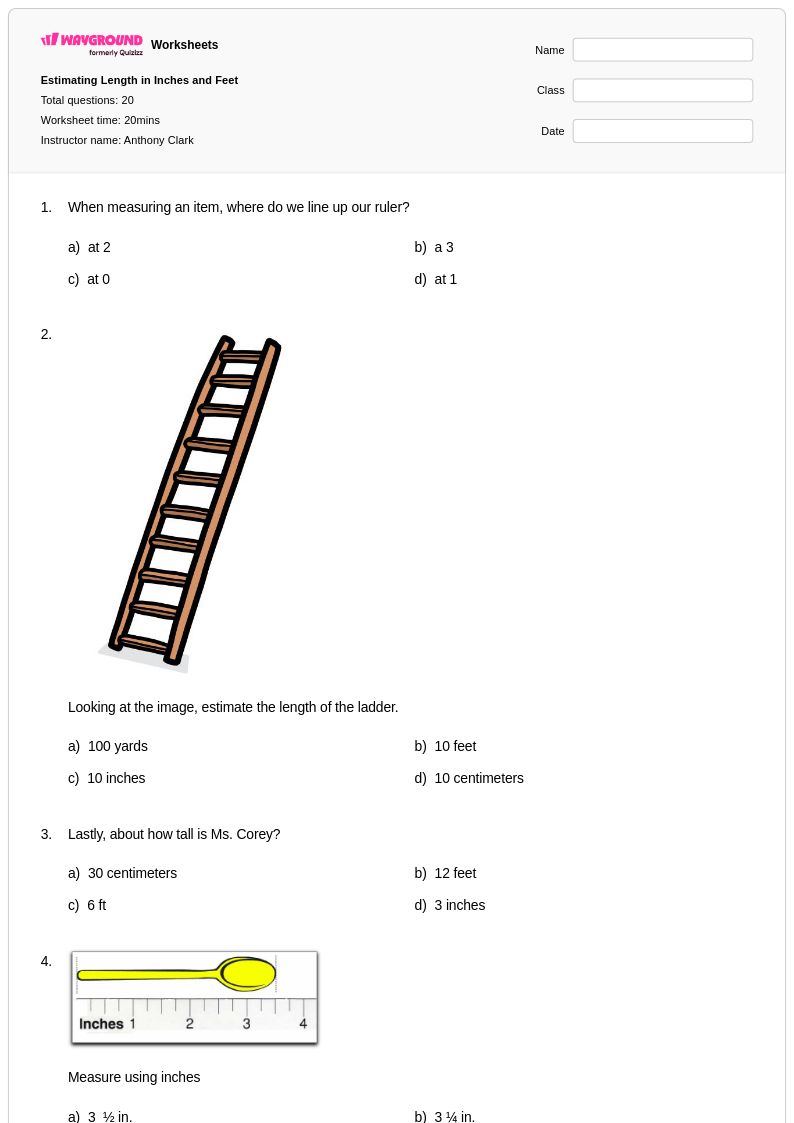
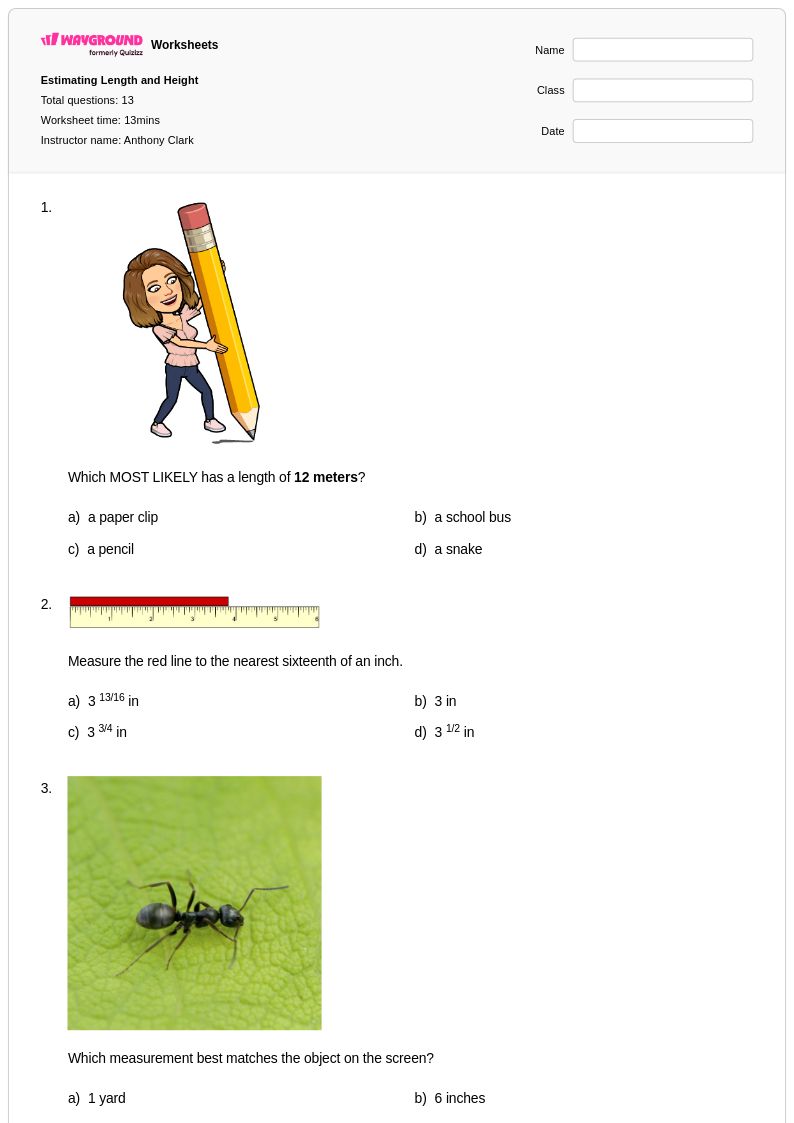
Three formats work well at this level: estimating real-world lengths from photographs or diagrams, selecting the most reasonable unit for a given object (would you measure a hallway in inches or feet?), and multi-step problems where students estimate a total length by combining two estimated parts. The last type is particularly valuable because it connects estimation to the addition and subtraction work students are doing in third grade math.
What mistakes do third graders make when estimating length?
The most common issue is over-reliance on a single benchmark. A student who only knows 'a ruler is 12 inches' will struggle to estimate anything much longer or shorter. Watch also for students who estimate in the right ballpark but choose the wrong unit — '6 inches' for a classroom door instead of '6 feet.' That error signals the student has the number sense but hasn't internalized the scale of the unit.
How do I use these Grade 3 estimating length worksheets?
These worksheets are available as printable PDFs with a complete answer key included, making them easy to drop into independent practice, homework, or a math center rotation. You can also host them as a digital quiz on Wayground — useful when you want to review class-wide results quickly. If students submit printed versions, the Wayground for Teachers app lets you scan and grade their work without manual re-entry.
How does estimating length fit into the third-grade Common Core math progression?
Common Core expects third graders to measure and estimate liquid volumes and masses as well as lengths, so by this grade estimation is applied across multiple measurement contexts, not just length. For length specifically, students are expected to use their knowledge of standard units to solve problems — which means estimation is no longer just a pre-measurement step but a tool for checking whether an answer is reasonable. That shift from 'guess before measuring' to 'use estimation to verify' is the key progression move at this grade.
How can I differentiate these worksheets for third graders with different needs?
For students who need language support, Wayground can translate the worksheet into another language without creating a separate assignment. For students with reading difficulties, the dyslexia-friendly font option and adjustable font size reduce decoding friction so the focus stays on measurement reasoning. These are set at the worksheet level and can be applied to individual students while the rest of the class works from the standard version.