Free Printable Fact-checking Worksheets for Grade 12
Enhance Grade 12 students' fact-checking abilities with Wayground's comprehensive collection of free worksheets, printables, and practice problems featuring detailed answer keys to develop critical research evaluation skills.
Explore printable Fact-checking worksheets for Grade 12
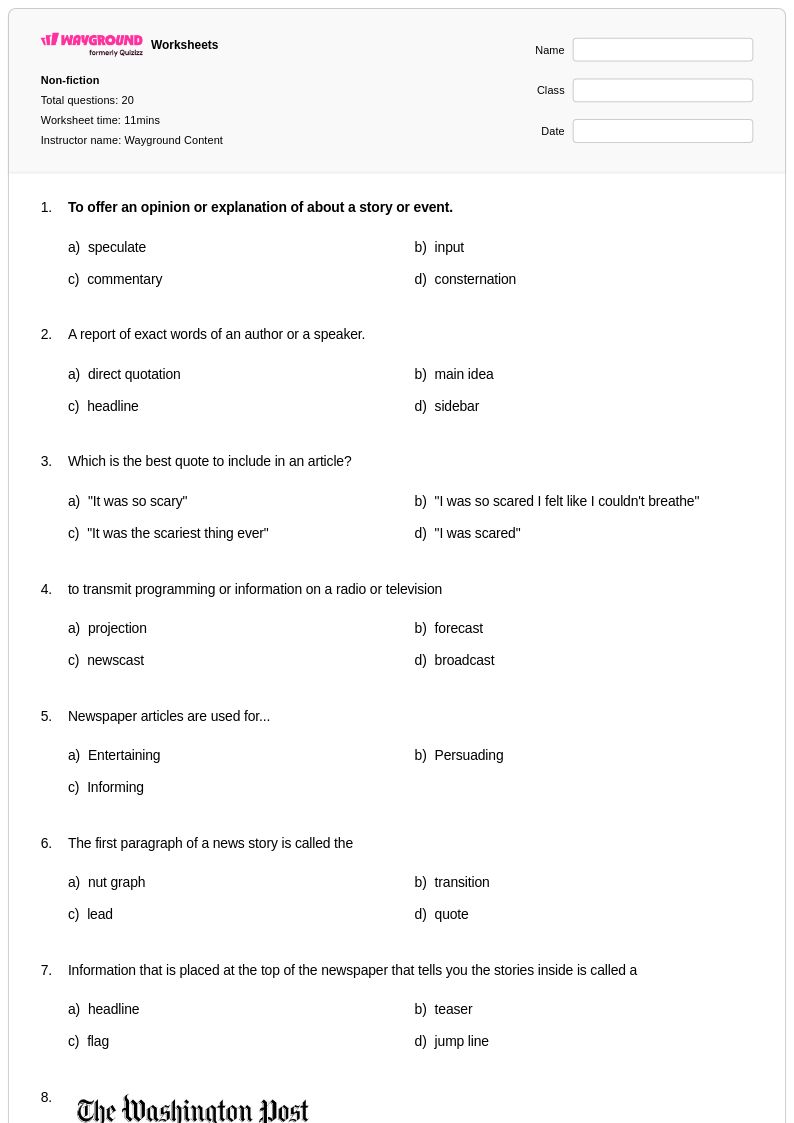
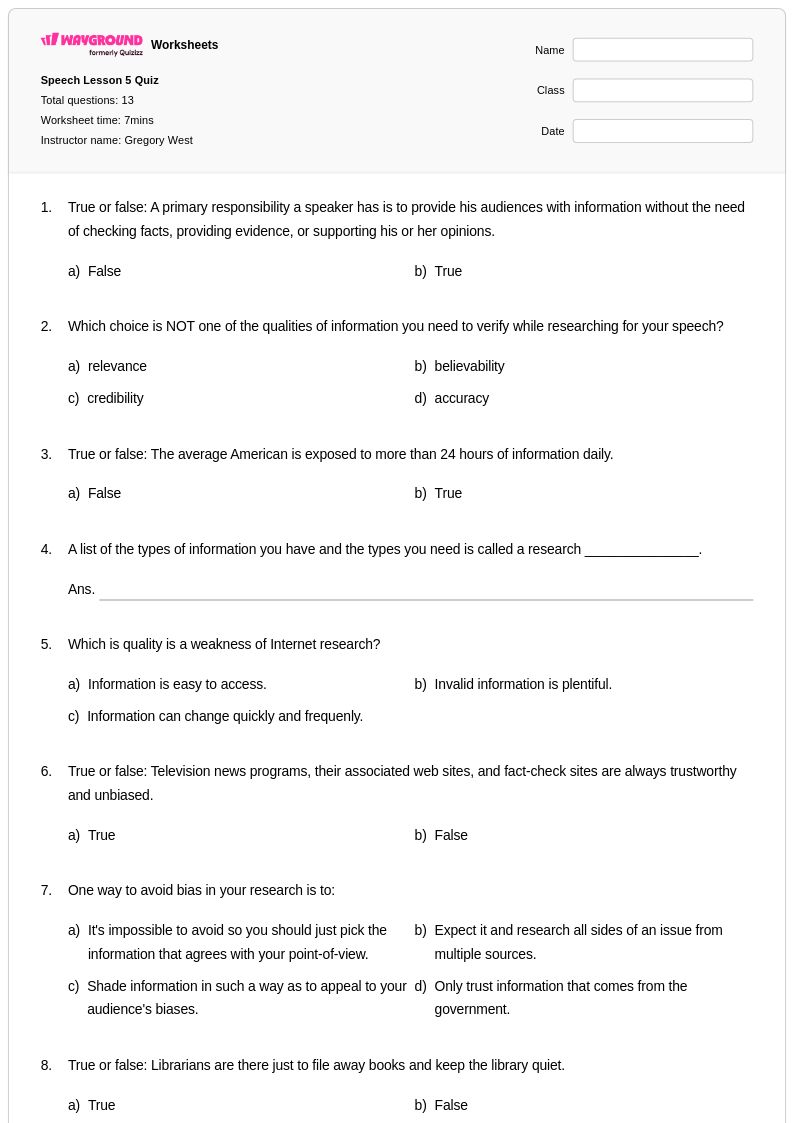
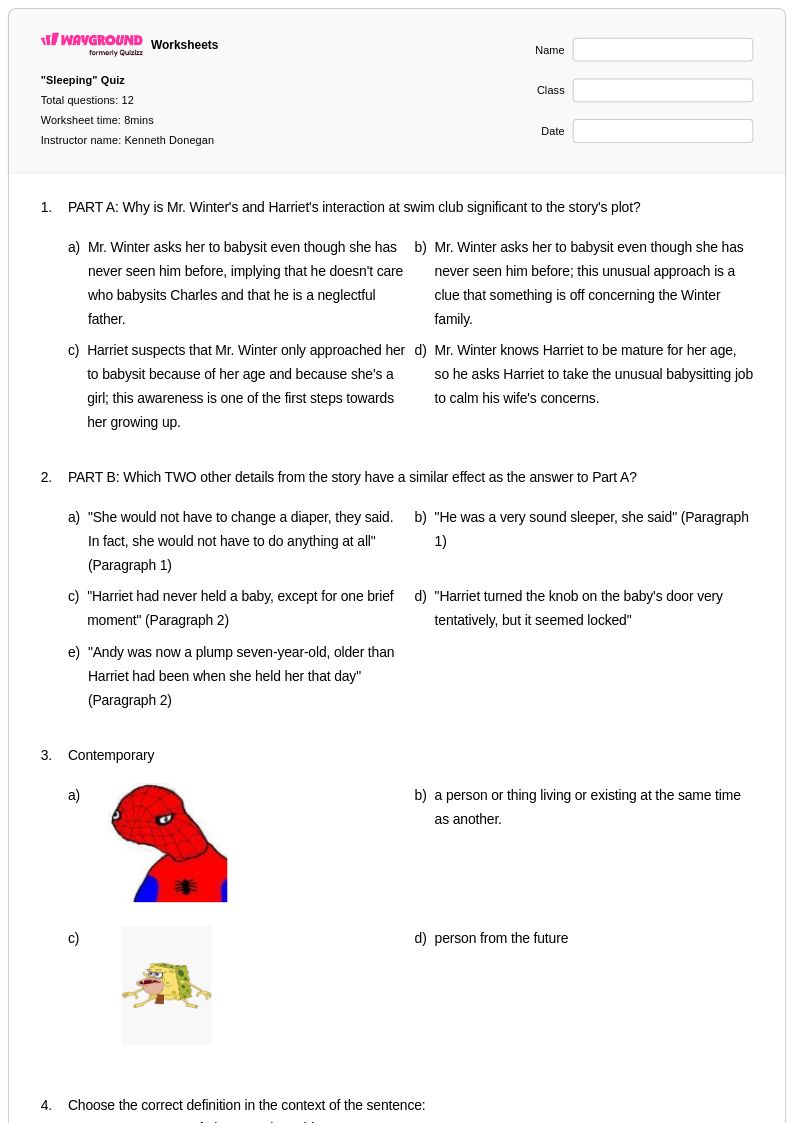
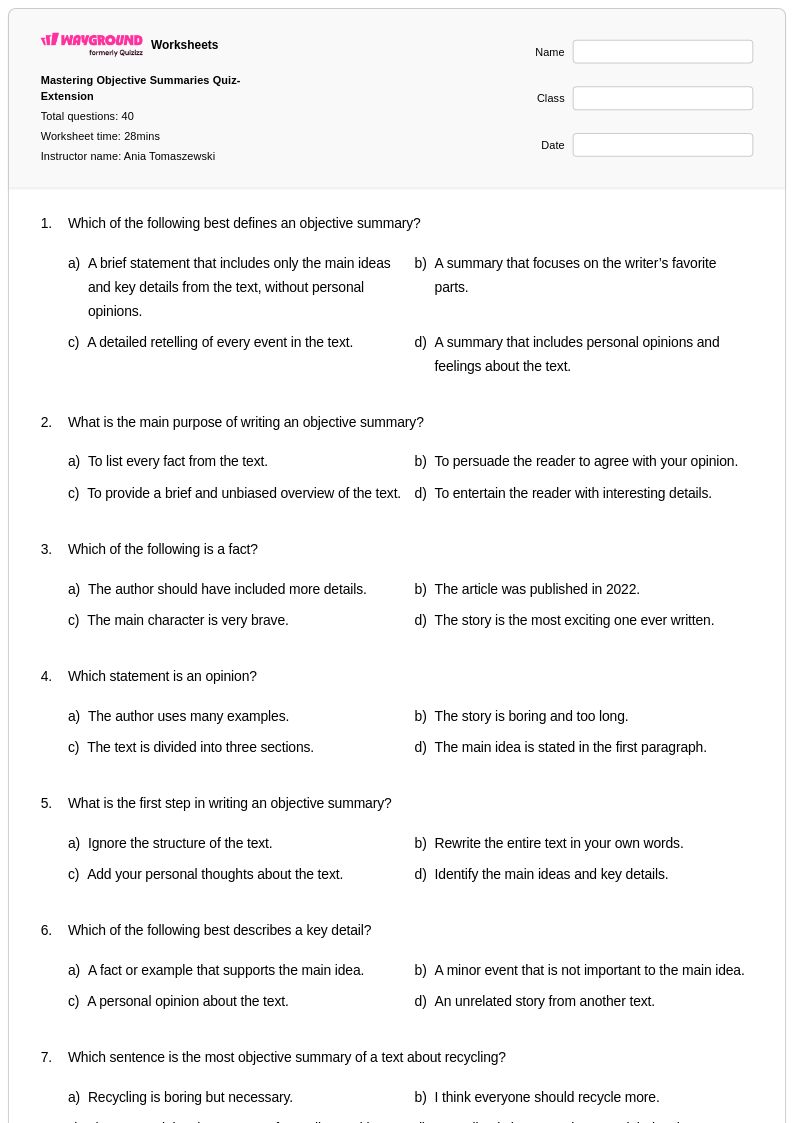
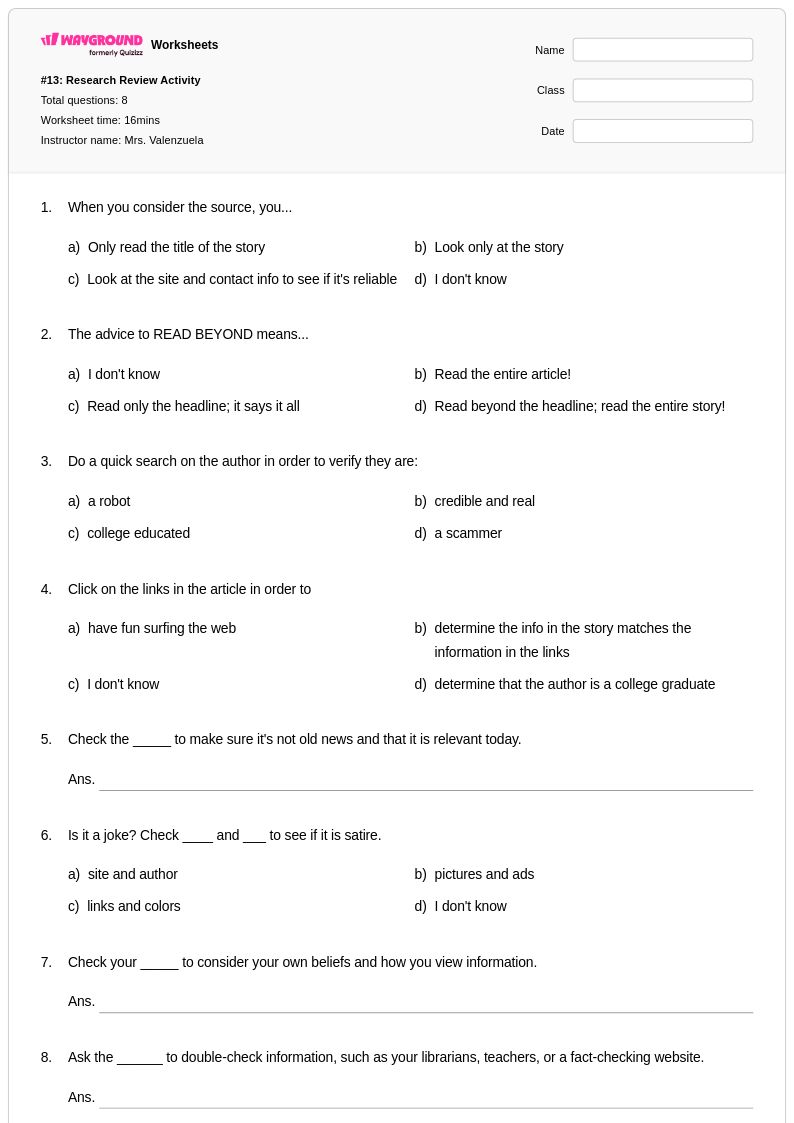
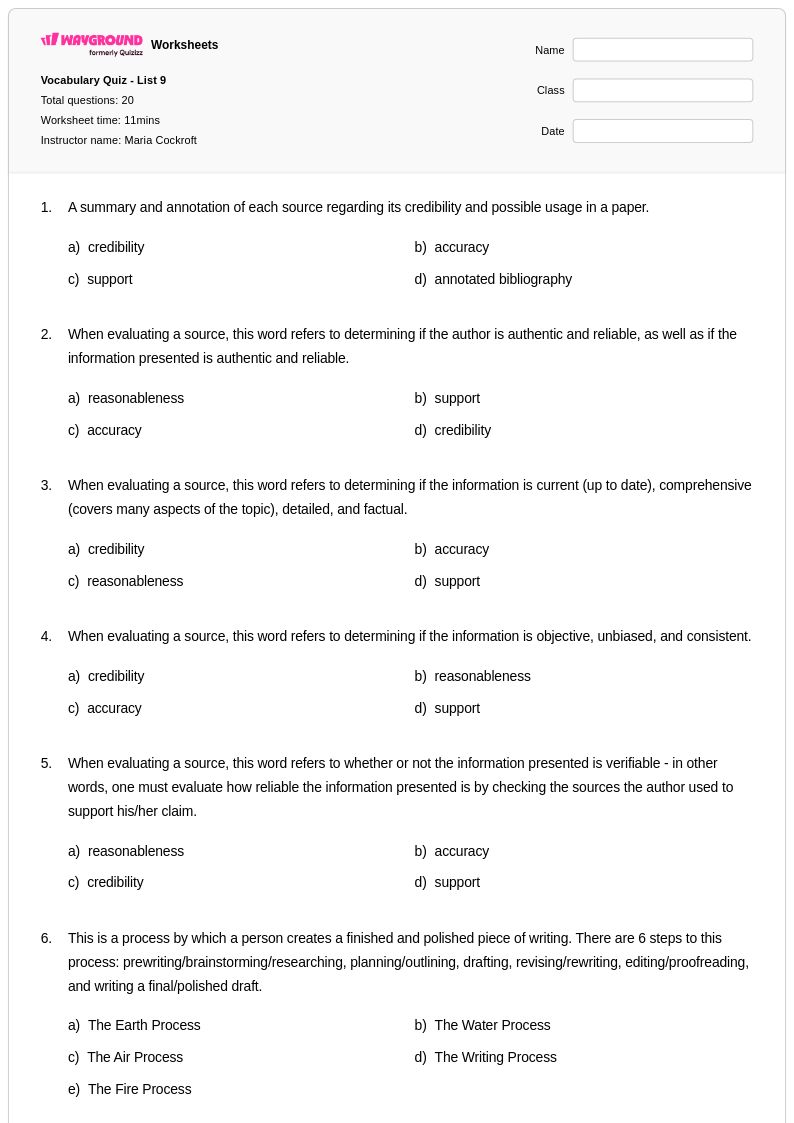
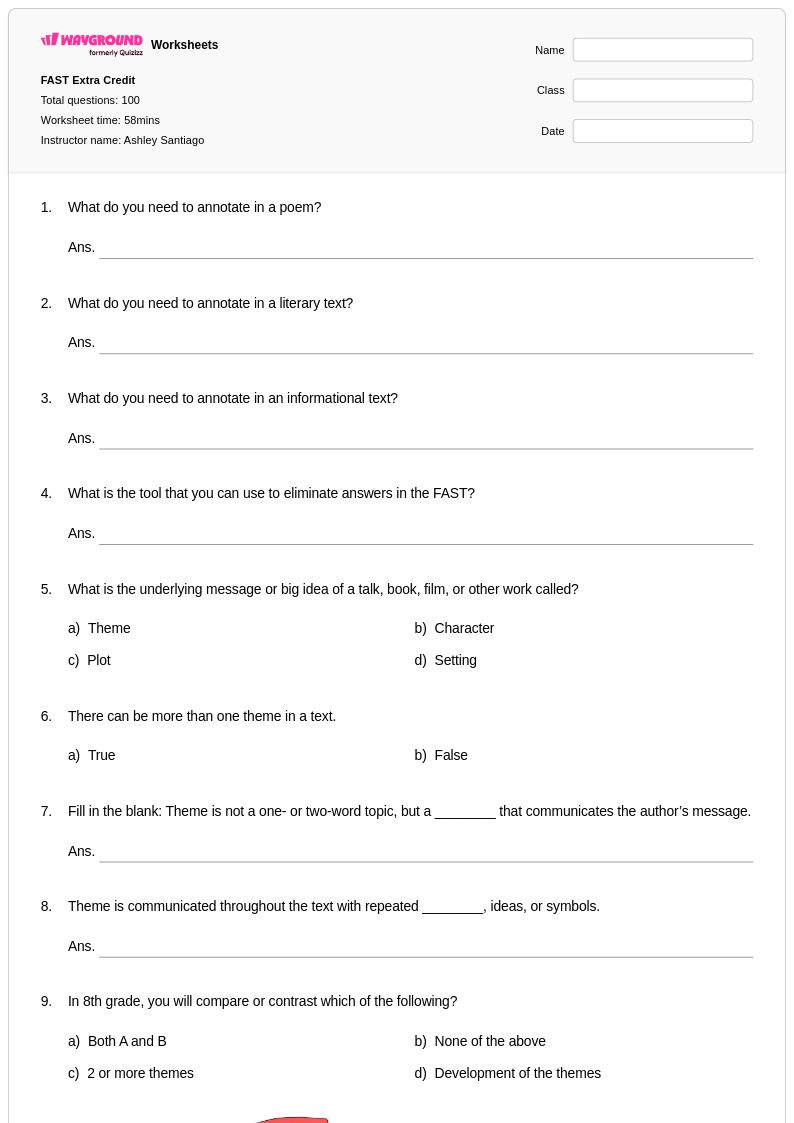
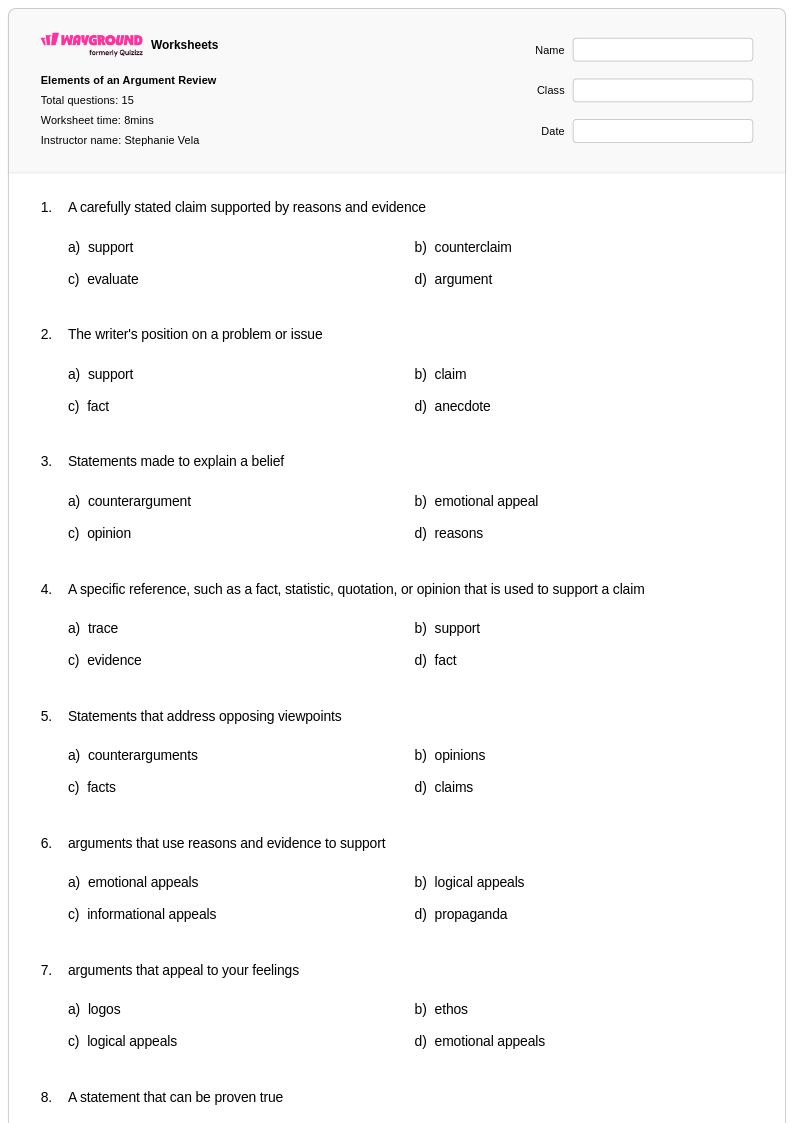
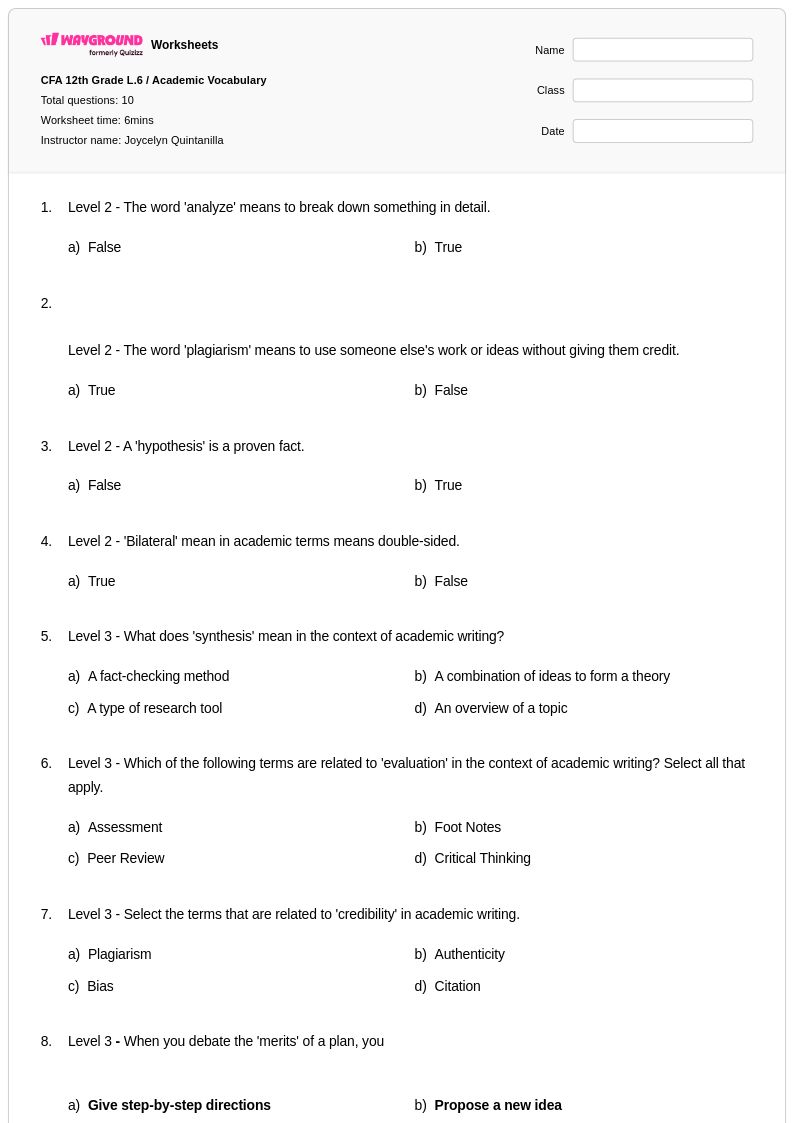
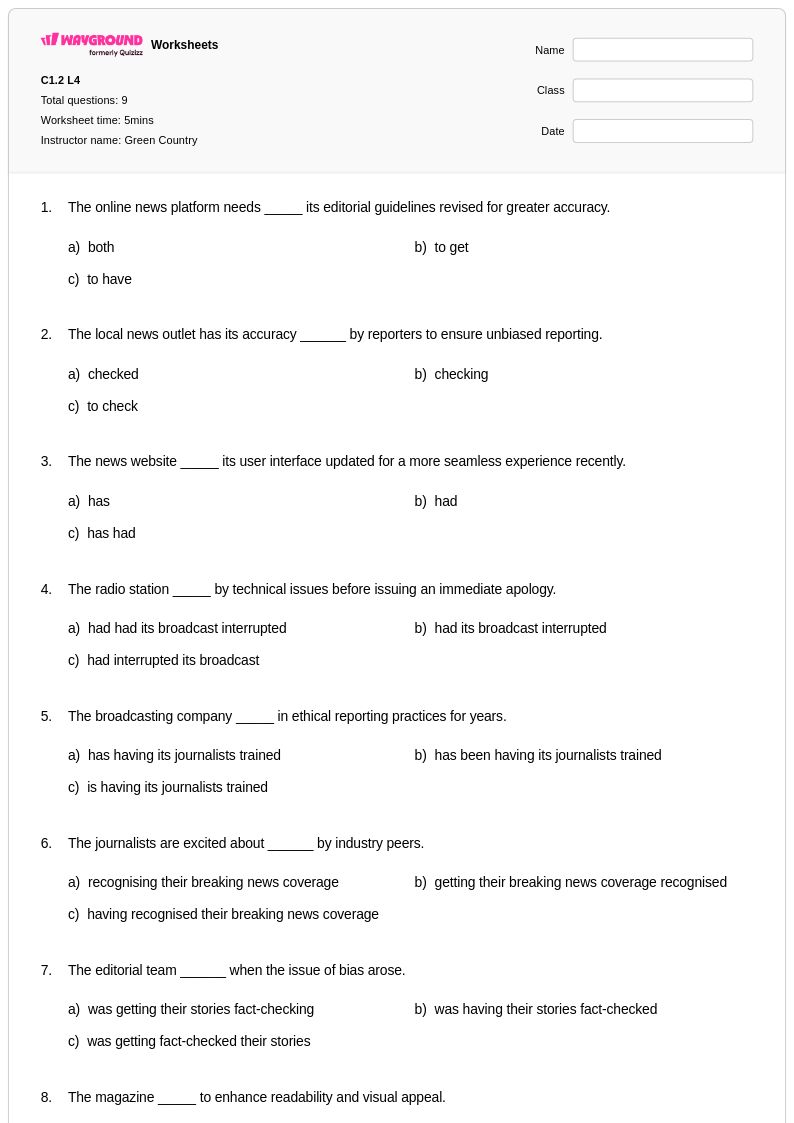
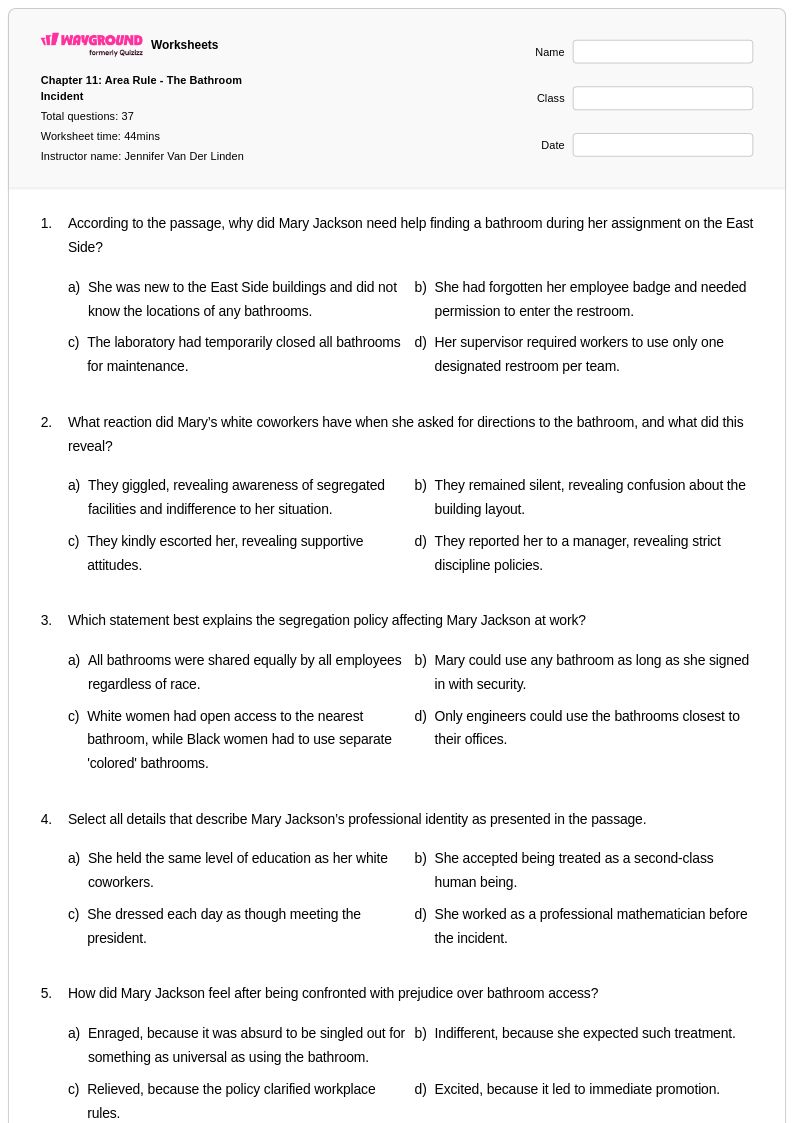
Fact-checking worksheets for Grade 12 students available through Wayground (formerly Quizizz) provide essential practice in evaluating source credibility, identifying bias, and distinguishing between reliable and unreliable information in our digital age. These comprehensive resources strengthen critical thinking skills by challenging students to analyze news articles, social media posts, academic sources, and online content through systematic verification processes. Students develop proficiency in cross-referencing information, examining author credentials, checking publication dates, and identifying logical fallacies while working through carefully designed practice problems. Each worksheet includes detailed answer keys that guide educators through complex evaluation criteria, and the free printable pdf format ensures accessibility for diverse classroom environments where students need structured practice in distinguishing fact from opinion, propaganda, and misinformation.
Wayground (formerly Quizizz) empowers educators with millions of teacher-created fact-checking resources that can be searched, filtered, and customized to match specific curriculum standards and student needs. The platform's robust differentiation tools allow teachers to modify worksheet complexity, adjust reading levels, and target particular fact-checking methodologies, whether focusing on scientific claims, historical sources, or contemporary media literacy challenges. These versatile materials are available in both printable and digital formats, including downloadable pdfs, making them ideal for classroom instruction, homework assignments, remediation support, and enrichment activities for advanced learners. Teachers can efficiently plan comprehensive fact-checking units by accessing aligned resources that progress from basic source evaluation to sophisticated analysis of complex, multi-layered information sources that Grade 12 students encounter in academic and real-world contexts.
FAQs
How do I teach fact-checking skills to students?
Effective fact-checking instruction begins with teaching students a systematic verification process: identifying the original source, checking author credentials and publication dates, cross-referencing claims across multiple outlets, and recognizing potential bias. Start with concrete, low-stakes examples such as verifiable news headlines before moving to more complex or contested information. Building this as a repeatable habit, rather than a one-time lesson, is key to lasting information literacy.
What exercises help students practice fact-checking?
Structured practice problems that walk students through each step of source evaluation are most effective. Useful exercises include analyzing a claim and identifying at least two corroborating sources, comparing a factual article with an opinion piece on the same topic, and evaluating a source's credibility using criteria like authority, accuracy, and purpose. Repeated exposure to diverse content types builds the habit of systematic verification.
What mistakes do students commonly make when fact-checking?
The most common error is accepting the first result they find as authoritative without cross-referencing. Students also frequently confuse opinion-based content with factual reporting, especially when the writing style sounds confident or professional. Another widespread misconception is equating popularity or social media shares with credibility. Teaching students to slow down and apply consistent evaluation criteria directly addresses these patterns.
How can I use fact-checking worksheets to build information literacy across subjects?
Fact-checking skills transfer across every subject area because evaluating sources is relevant whether students are researching a science topic, analyzing a historical claim, or interpreting data in math. Incorporating fact-checking worksheets into existing research assignments reinforces the skill in context rather than in isolation. This cross-curricular approach signals to students that source evaluation is a universal academic expectation, not a standalone media literacy unit.
How do I use Wayground's fact-checking worksheets in my classroom?
Wayground's fact-checking worksheets are available as printable PDFs for traditional classroom use and in digital formats for technology-integrated environments, including the option to host them as a quiz directly on Wayground. Each worksheet includes a complete answer key, making it straightforward to assess student understanding and facilitate class discussion around fact-checking methodologies. Teachers can use the platform's search and filtering tools to locate resources that match specific skill levels or learning objectives.
How can I support struggling readers or students with learning differences during fact-checking activities?
On Wayground, teachers can apply individual accommodations such as Read Aloud, which provides audio reading of questions and content for students who need it, and reduced answer choices to lower cognitive load for selected students. Extended time can also be configured per student, which is especially helpful when fact-checking tasks require careful reading and multi-step evaluation. These settings are saved and reusable across future sessions without notifying other students, keeping the experience equitable and discreet.