Free Printable Fact Families Worksheets for Grade 3
Discover free Grade 3 fact families worksheets and printables that help students master the relationships between addition and subtraction through engaging practice problems with complete answer keys.
Explore printable Fact Families worksheets for Grade 3
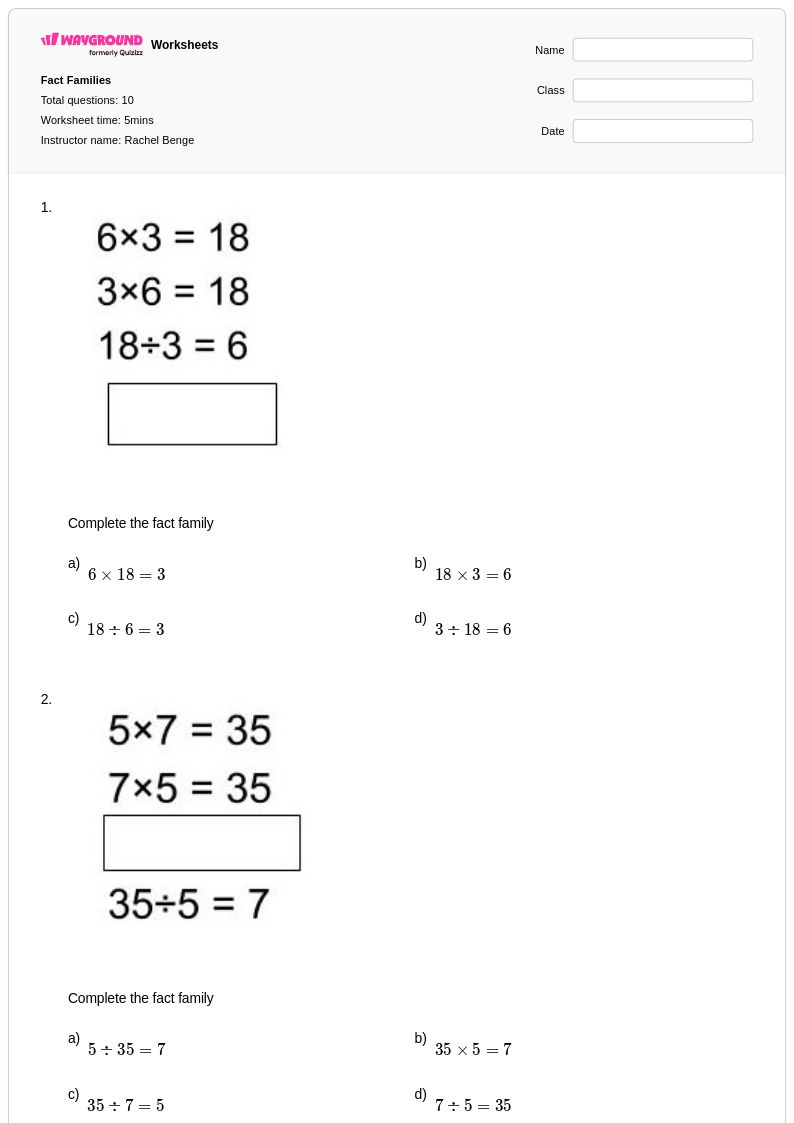
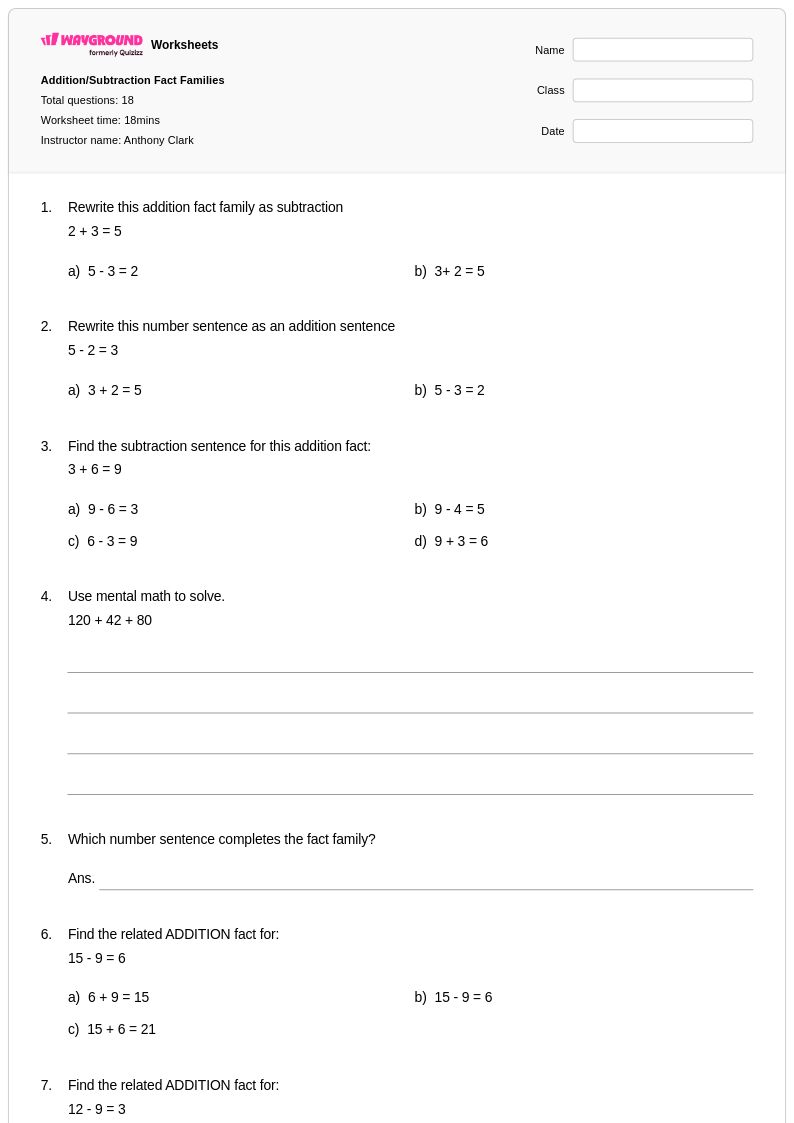
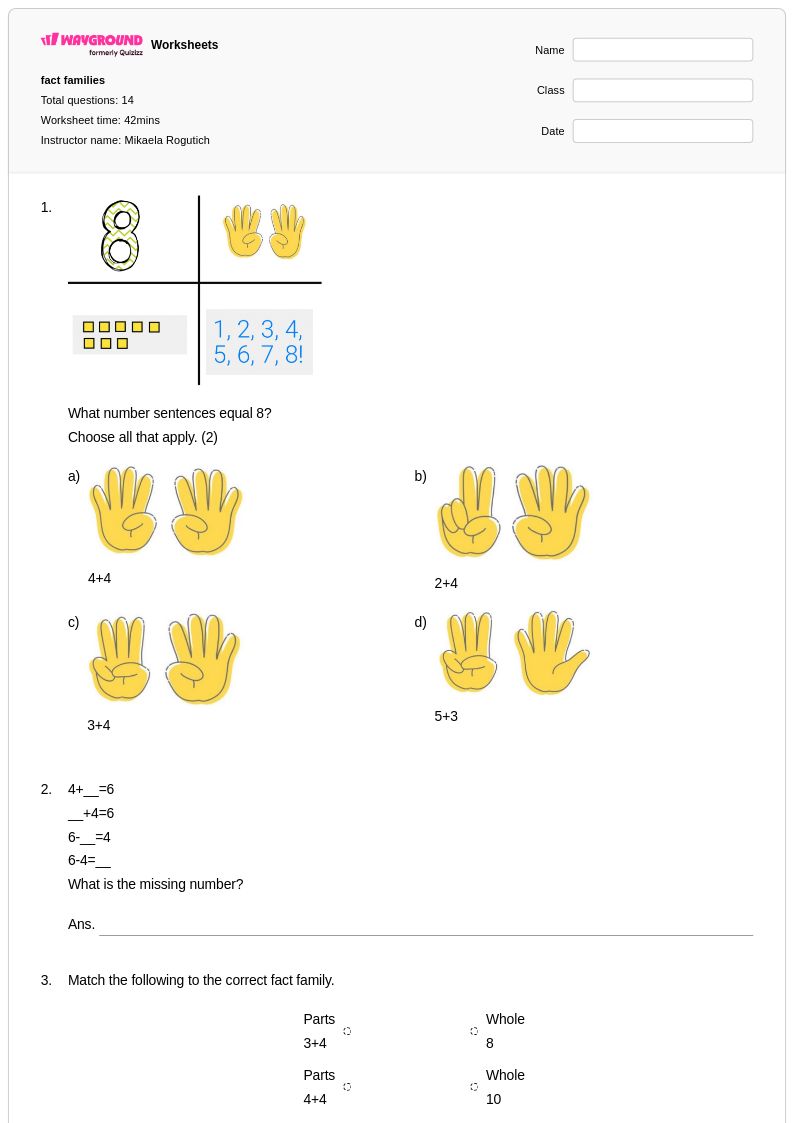
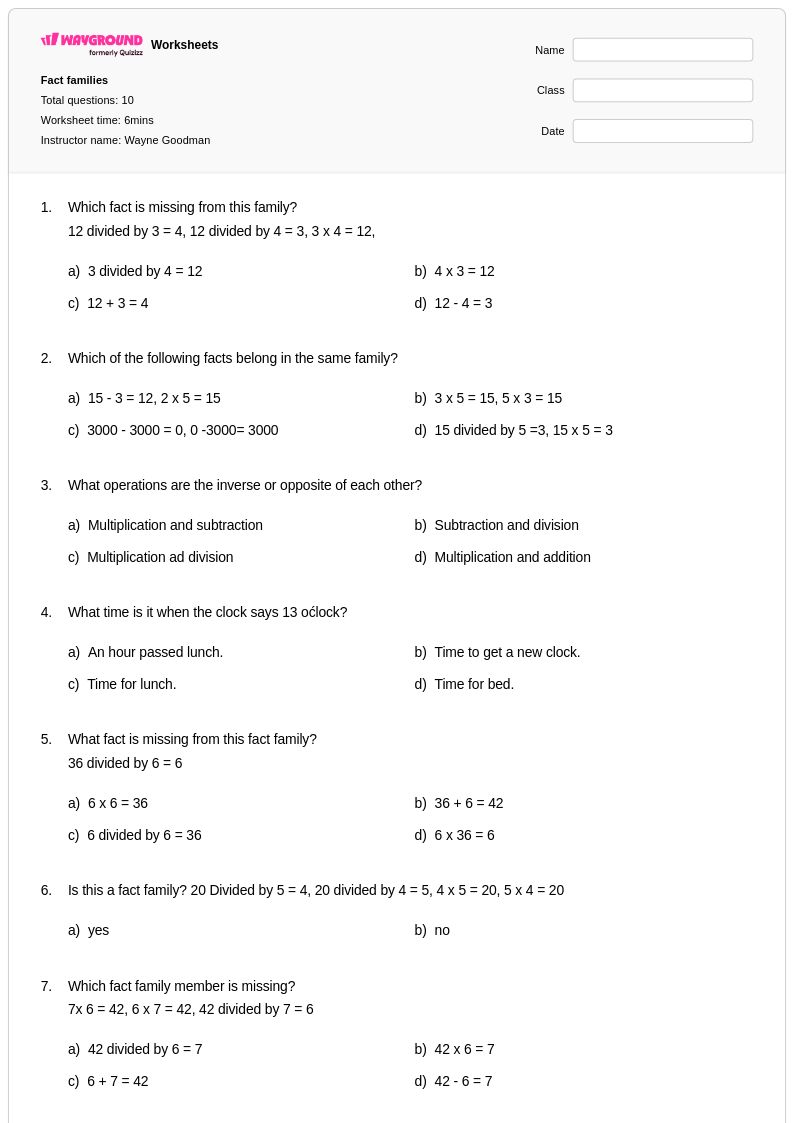
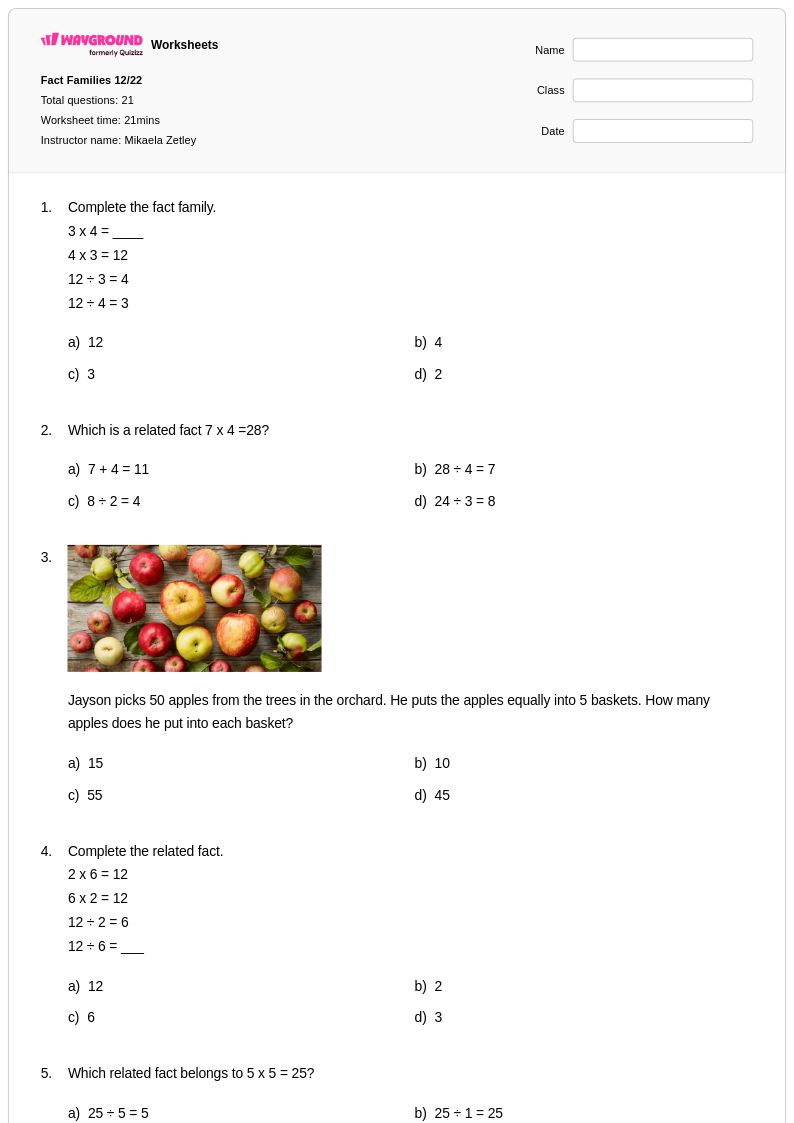
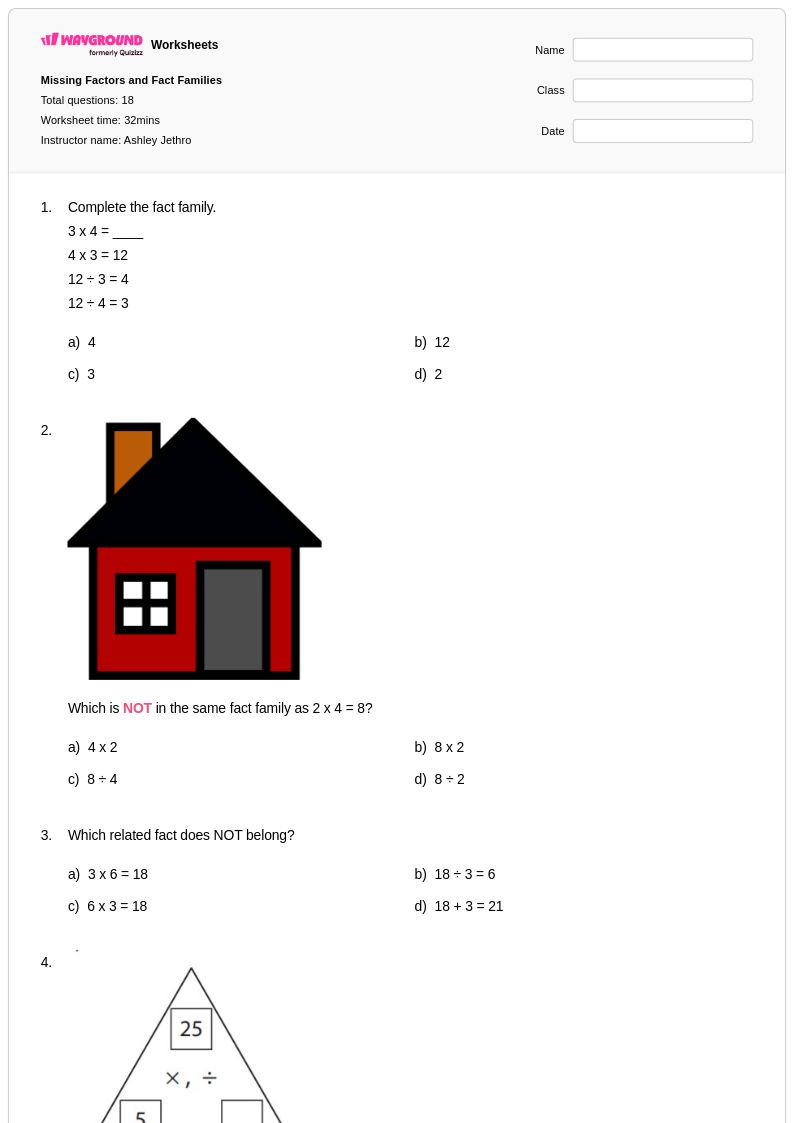
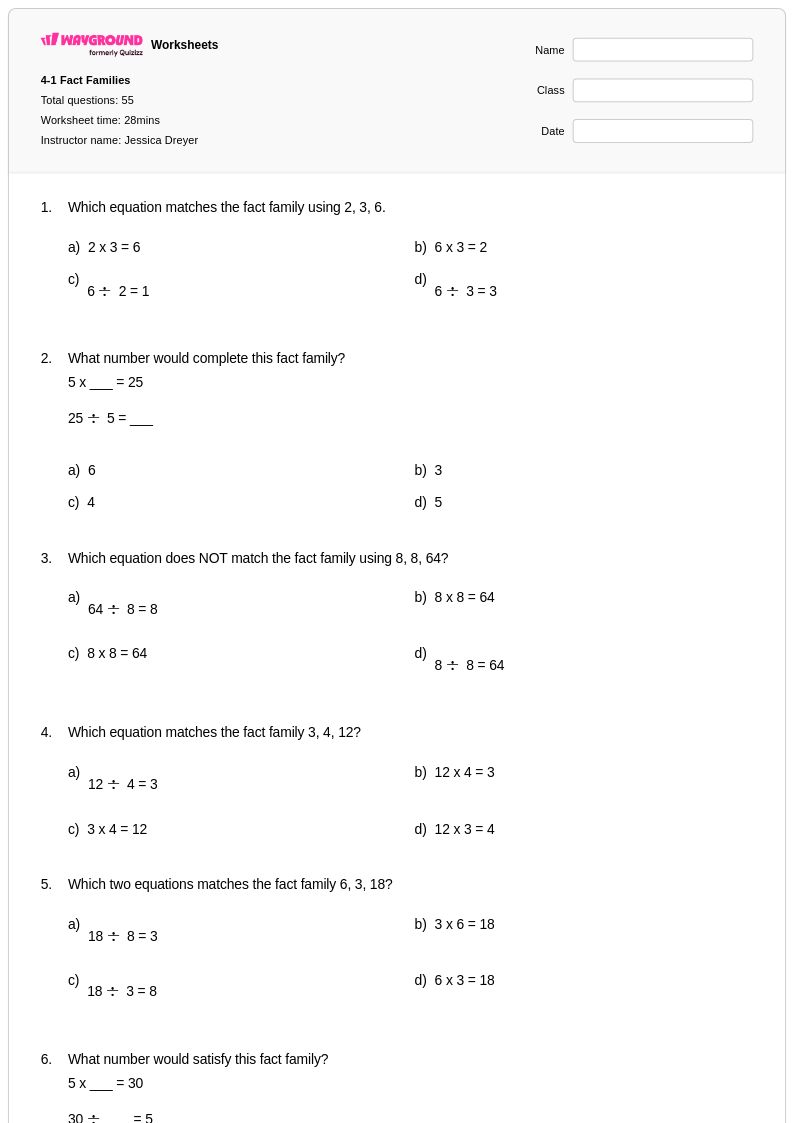
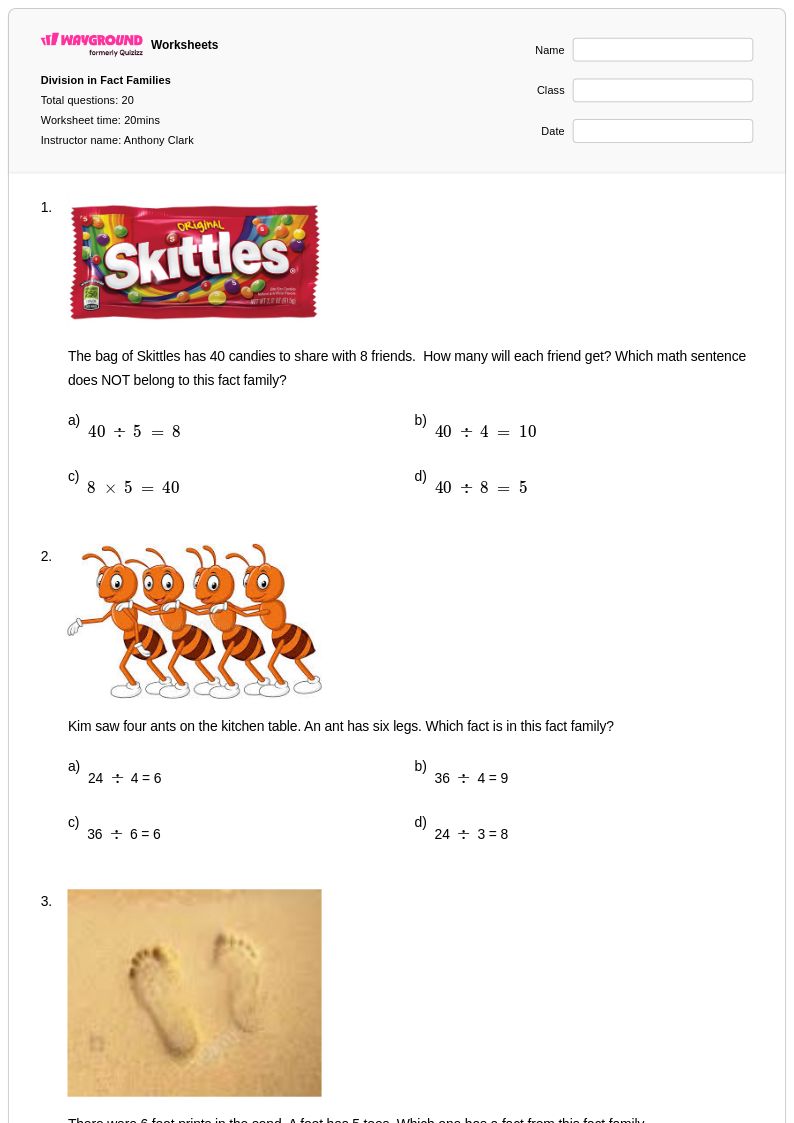
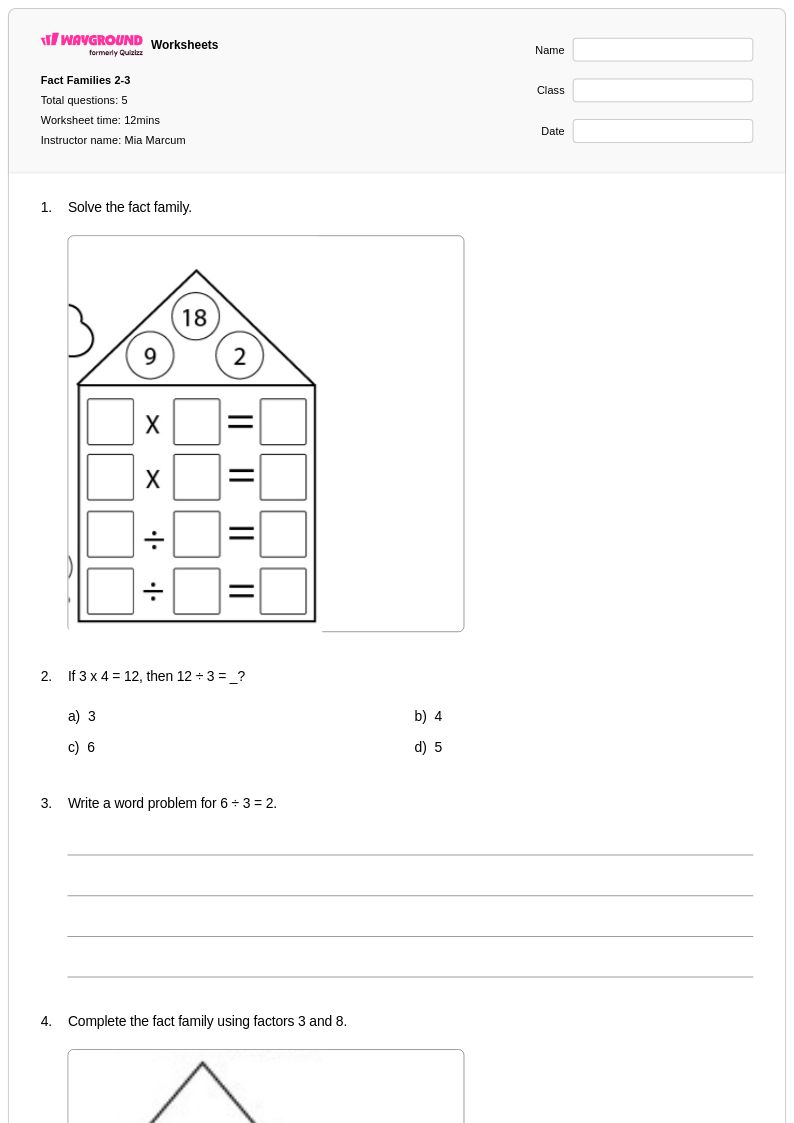
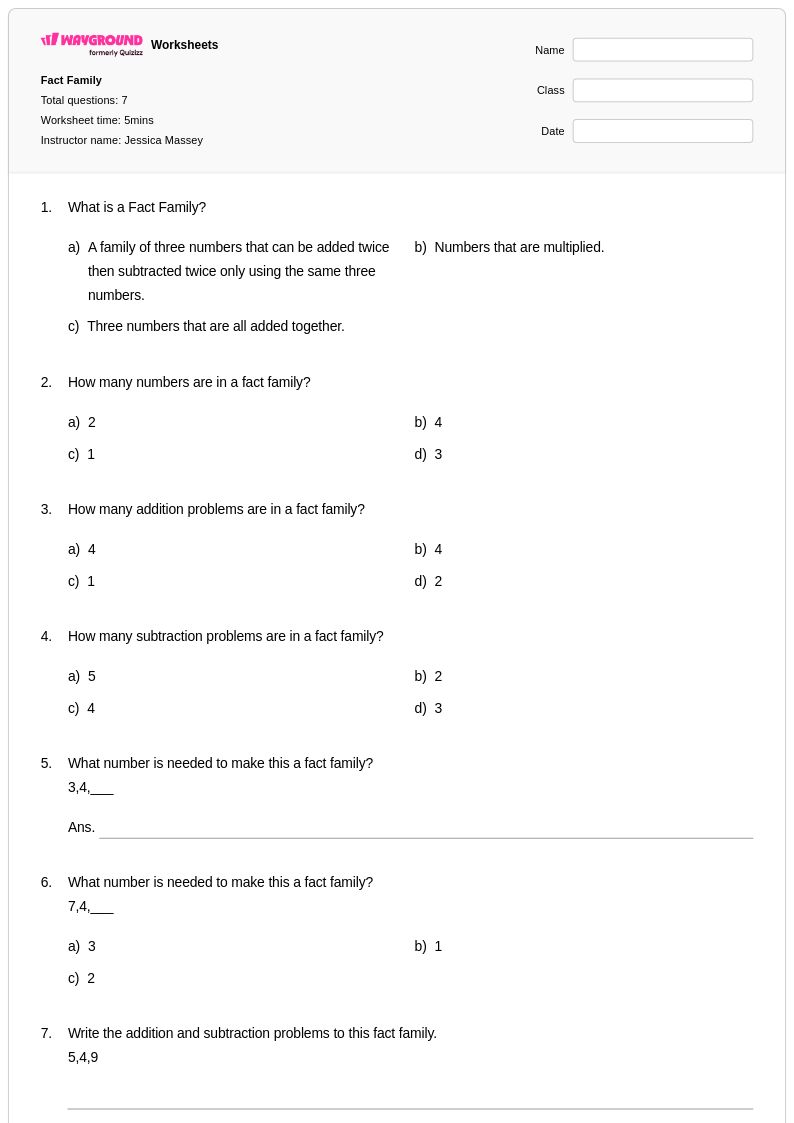
Fact families worksheets for Grade 3 students available through Wayground (formerly Quizizz) provide comprehensive practice with the fundamental relationship between addition and subtraction operations. These educational resources help third-grade students understand how numbers work together in mathematical relationships, such as recognizing that 3 + 4 = 7, 4 + 3 = 7, 7 - 3 = 4, and 7 - 4 = 3 form a complete fact family. The worksheets strengthen critical thinking skills by requiring students to identify missing numbers in fact family triangles, complete fact family sets, and solve related addition and subtraction problems. Each printable worksheet comes with a detailed answer key, making it easy for educators to assess student understanding and provide immediate feedback. These free practice problems help students develop fluency with basic math facts while building a deeper conceptual understanding of the inverse relationship between addition and subtraction operations.
Wayground (formerly Quizizz) empowers teachers with an extensive collection of fact family worksheets created by millions of educators worldwide, offering robust search and filtering capabilities that allow instructors to quickly locate materials aligned with specific learning standards and student needs. The platform's differentiation tools enable teachers to customize worksheets for various skill levels within their Grade 3 classrooms, supporting both remediation for struggling learners and enrichment opportunities for advanced students. Available in both printable pdf format and interactive digital versions, these resources provide flexibility for diverse teaching environments and learning preferences. Teachers can efficiently plan lessons, assign targeted skill practice, and monitor student progress using these comprehensive fact family materials that seamlessly integrate into existing mathematics curricula and support standards-based instruction in elementary classrooms.
FAQs
Why are third graders still practicing fact families?
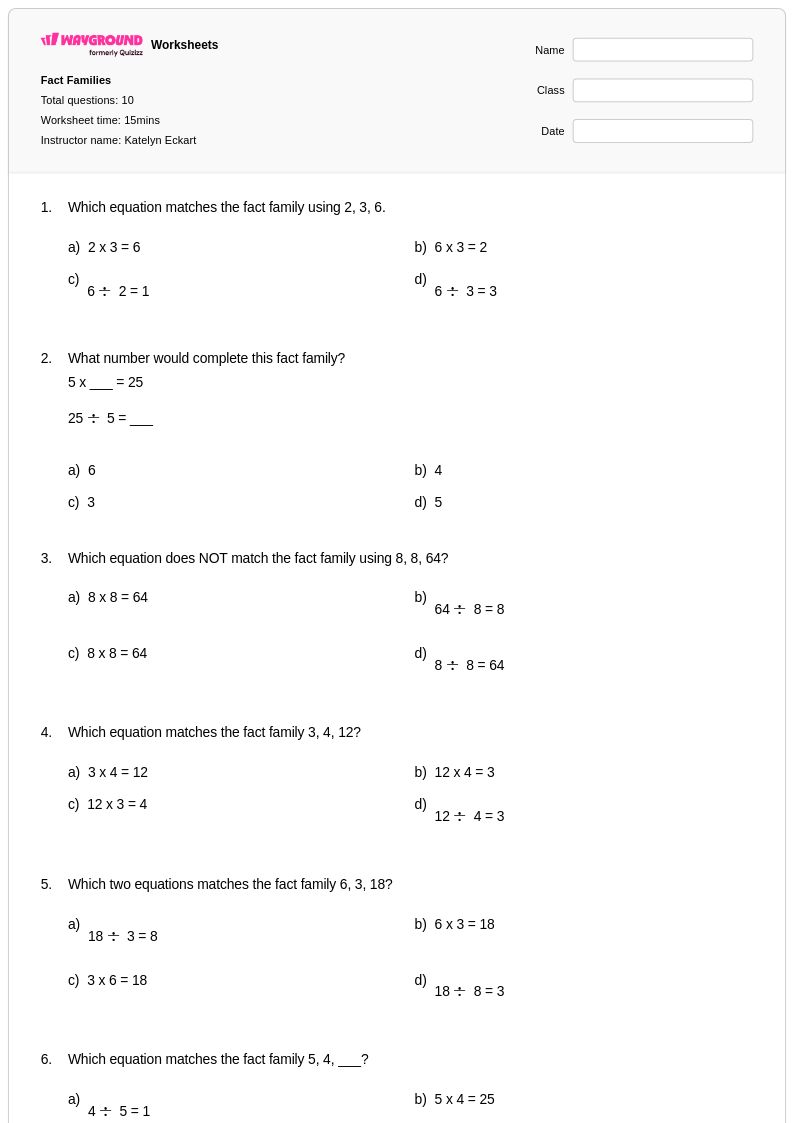
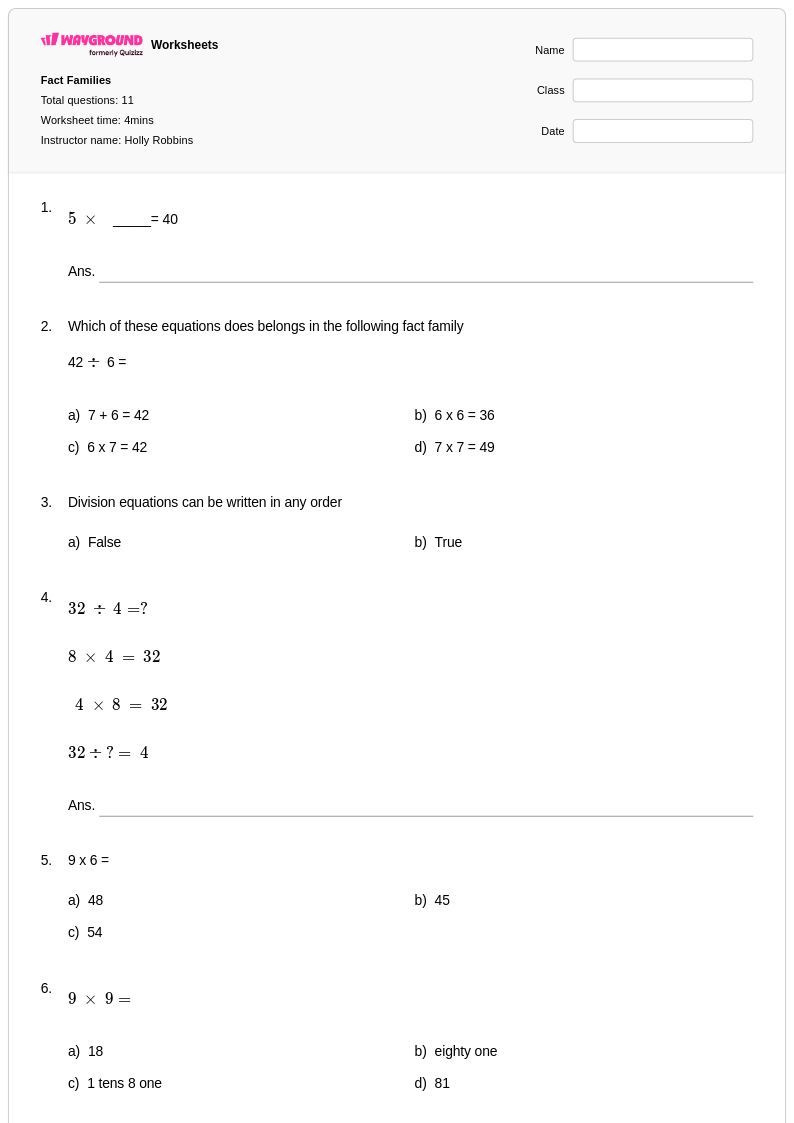
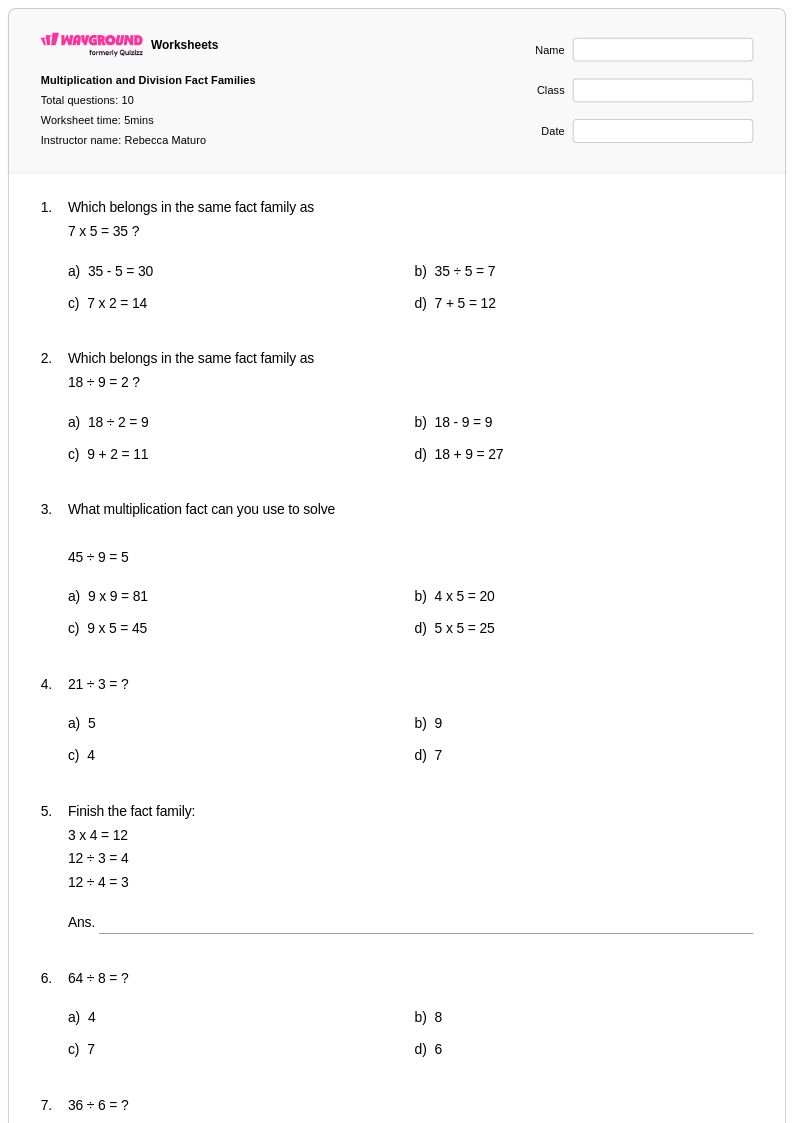
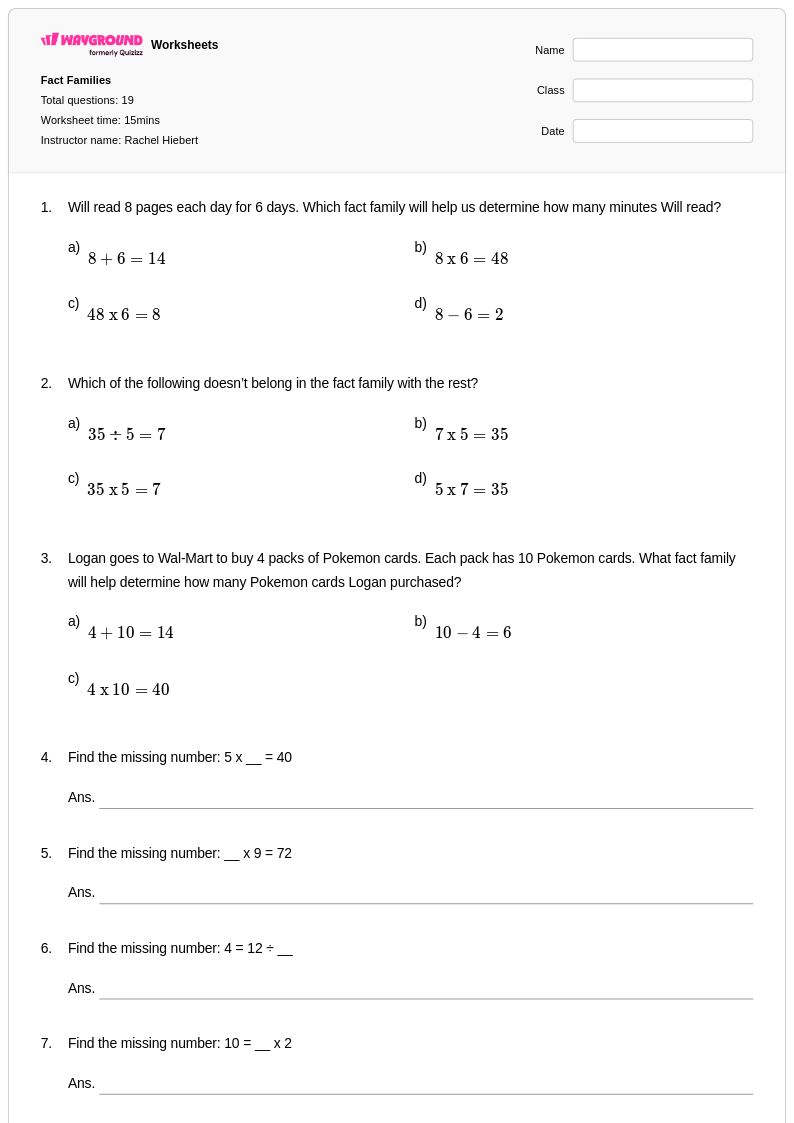
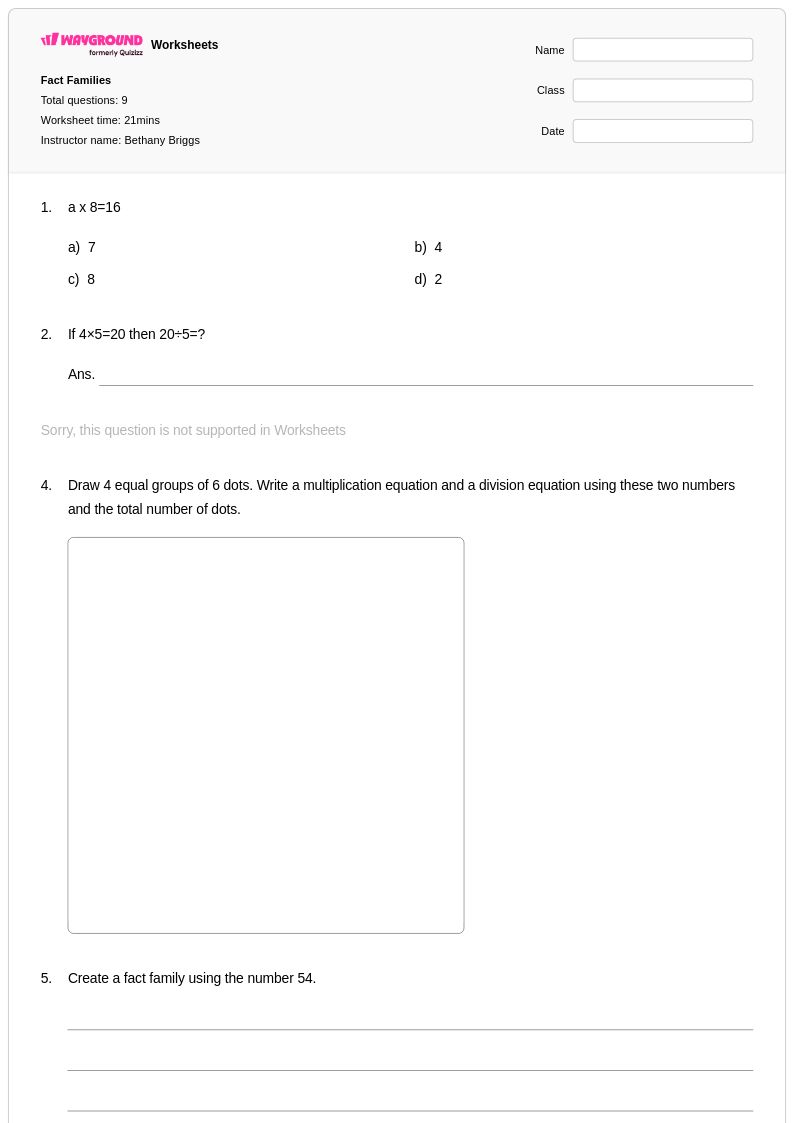
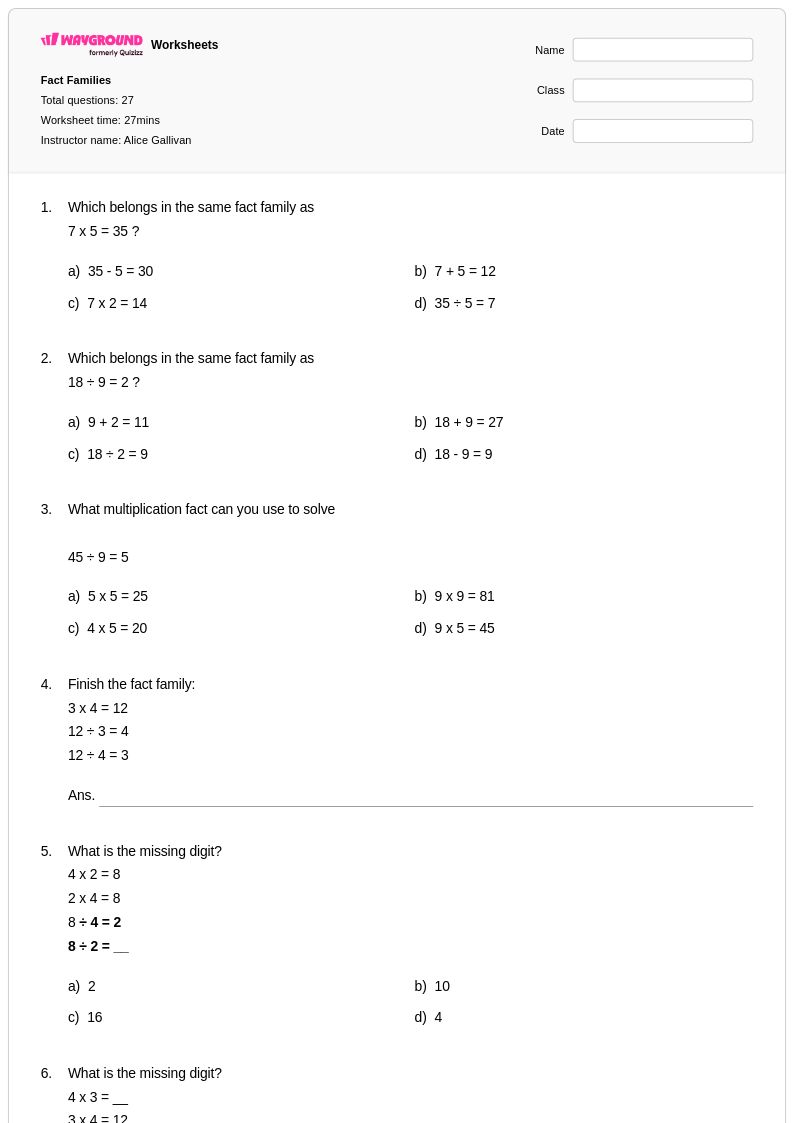
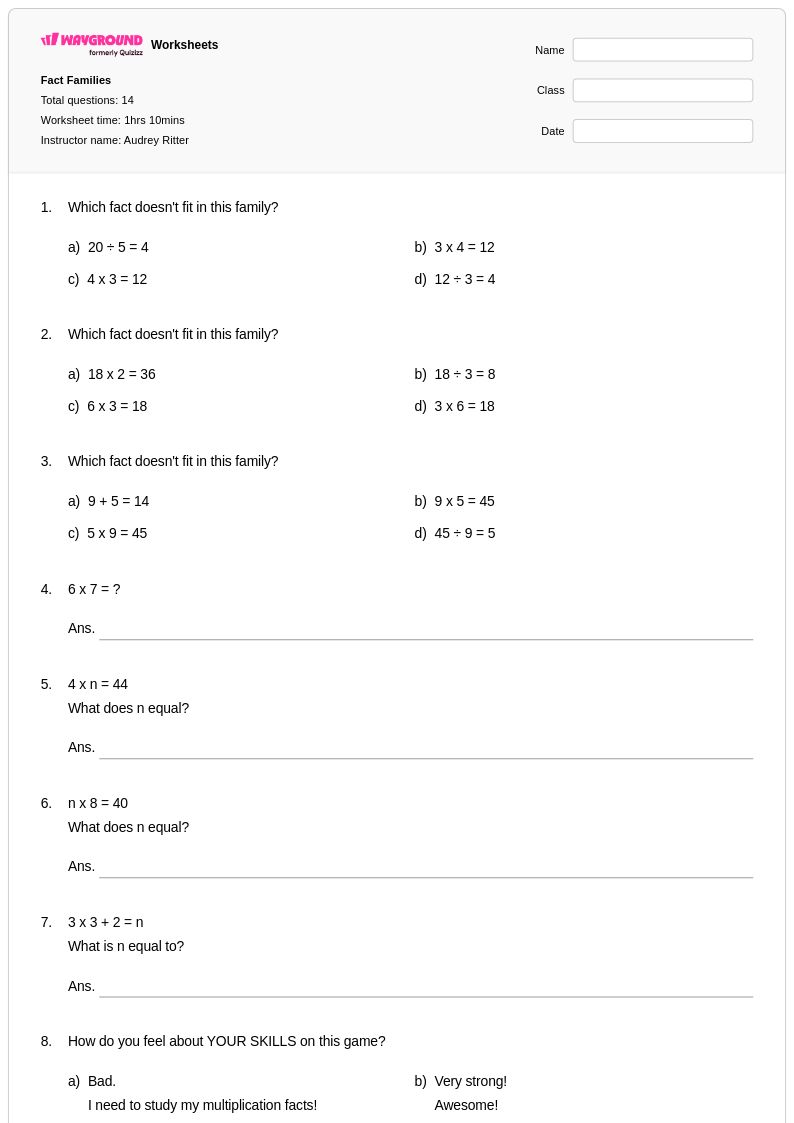
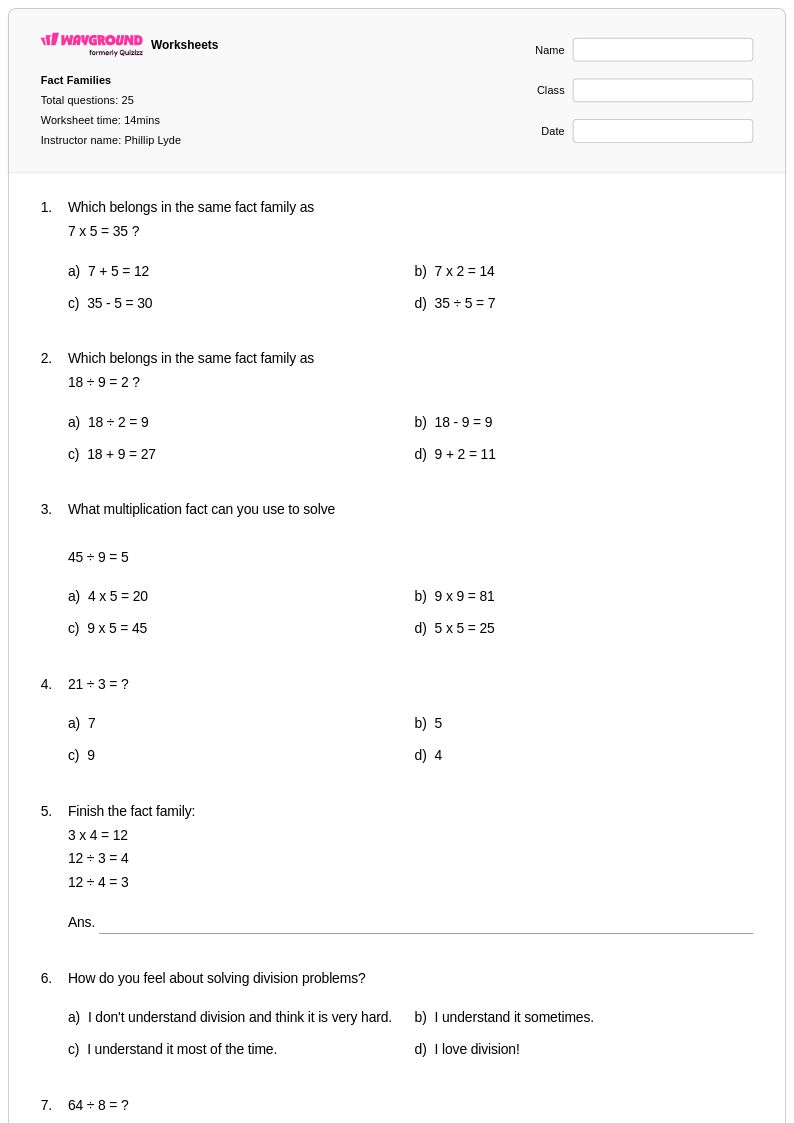
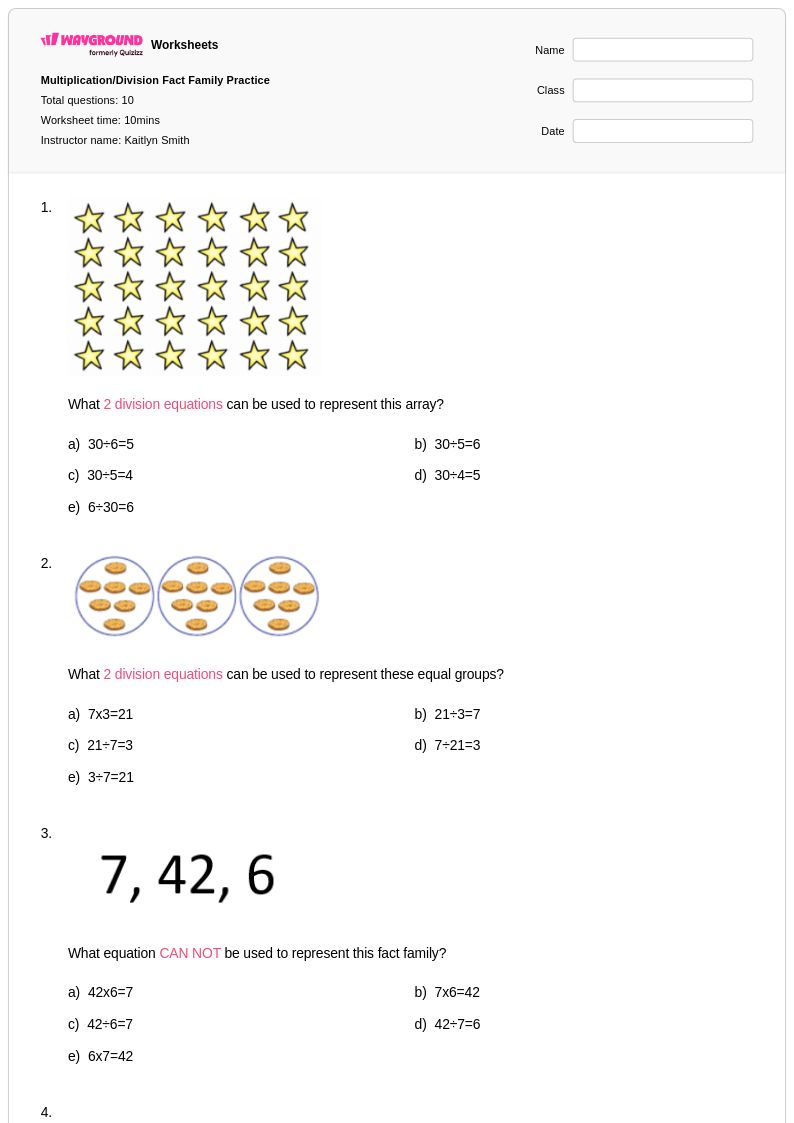
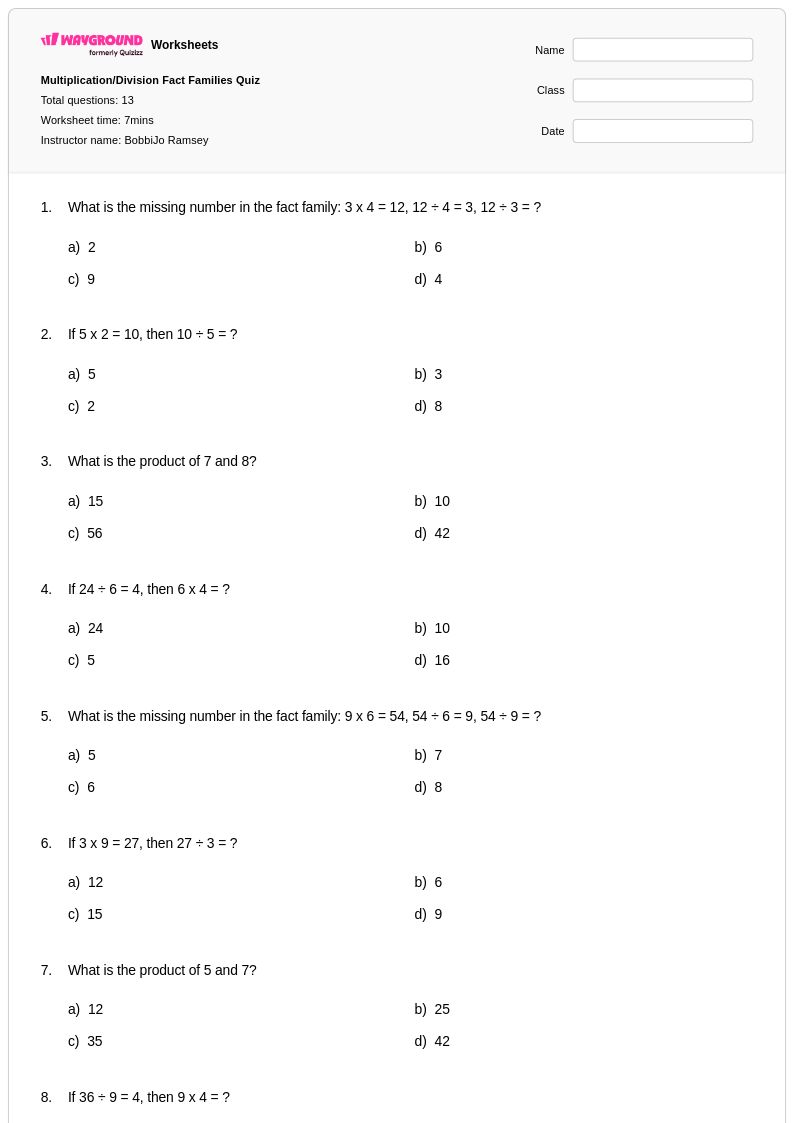
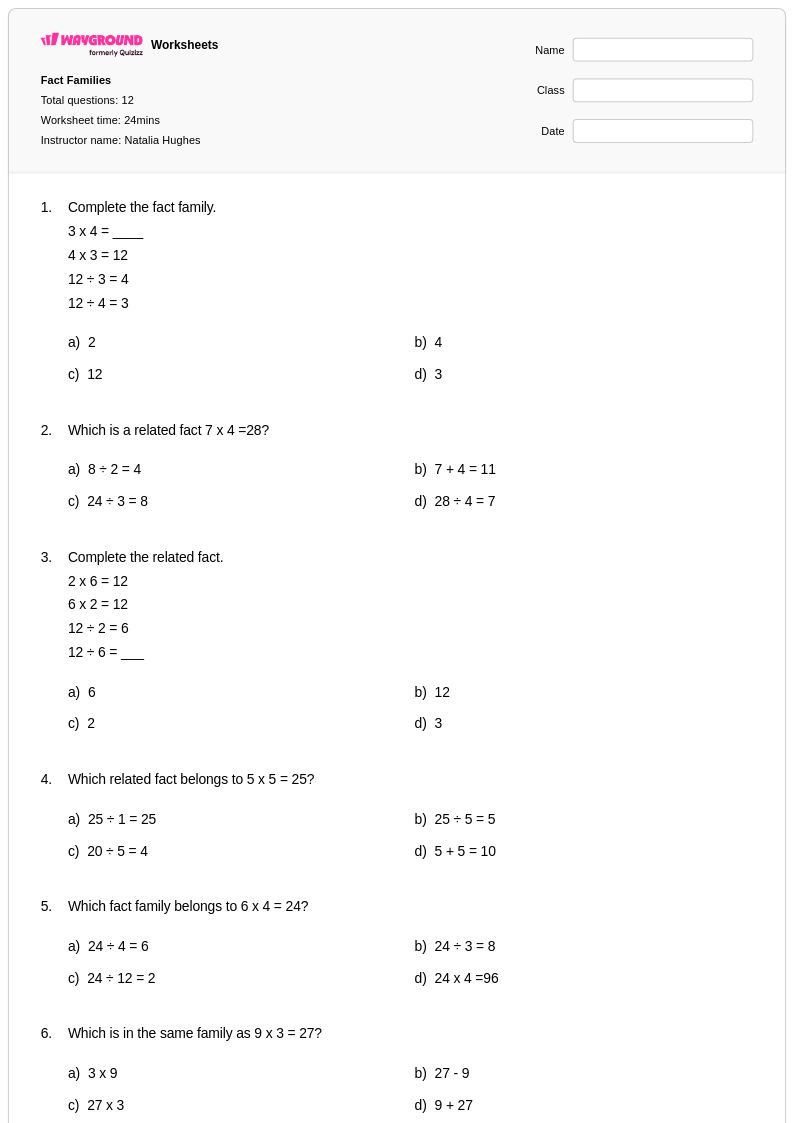
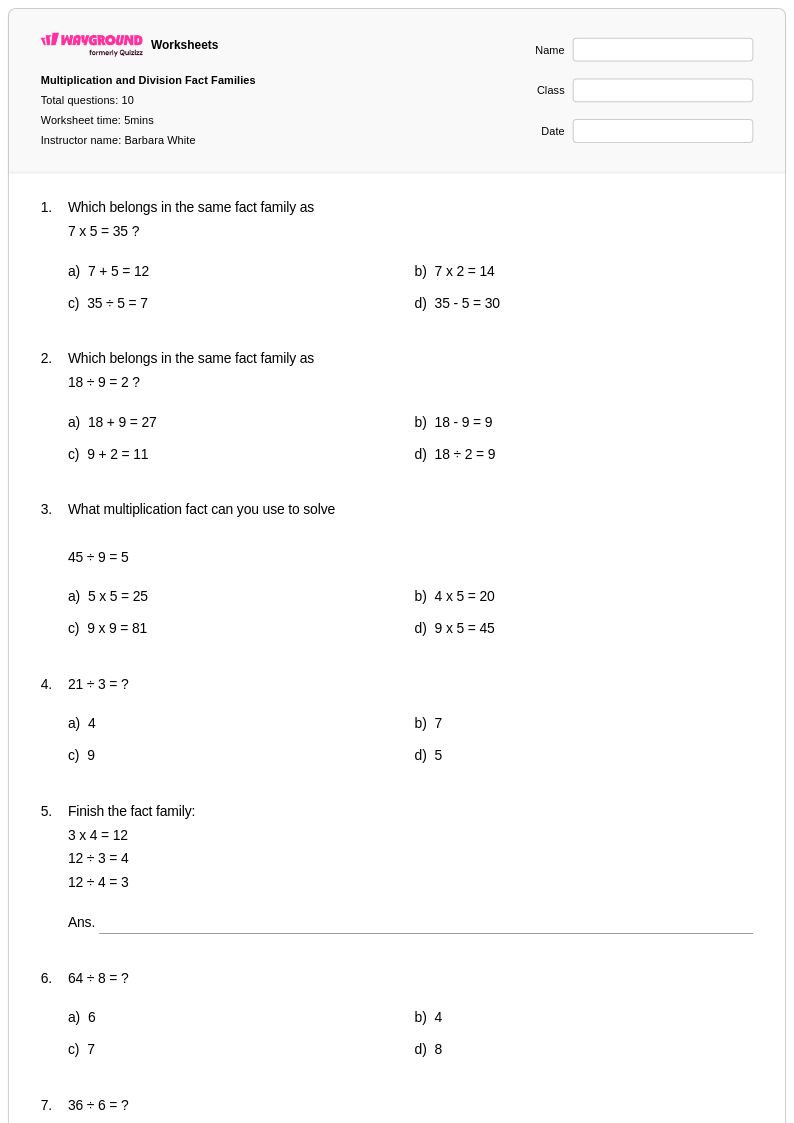
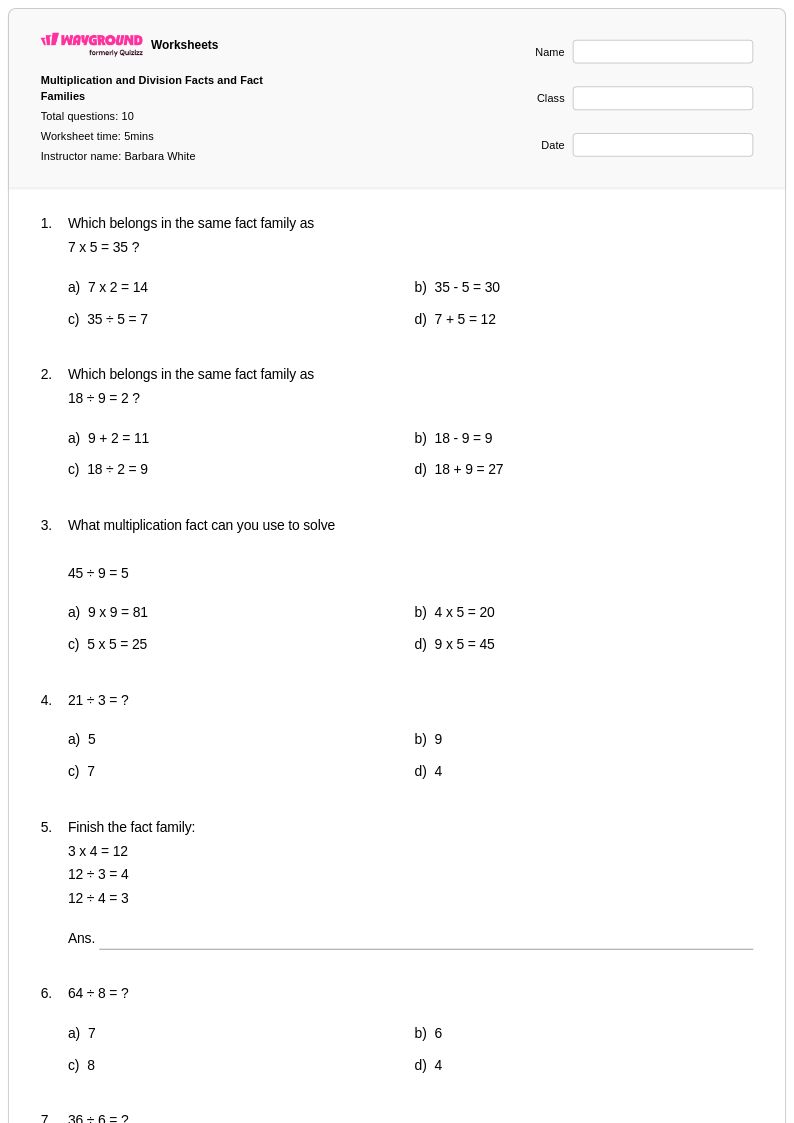
In third grade, fact families extend beyond addition and subtraction to multiplication and division — and that's where the concept does its most important work. Understanding that 3 × 4 = 12, 4 × 3 = 12, 12 ÷ 3 = 4, and 12 ÷ 4 = 3 form a family is the conceptual foundation for division fluency. Students who grasp this relationship can derive unknown division facts from multiplication facts they already know, rather than treating division as an entirely separate skill to memorize.
How do I teach multiplication and division fact families to third graders?
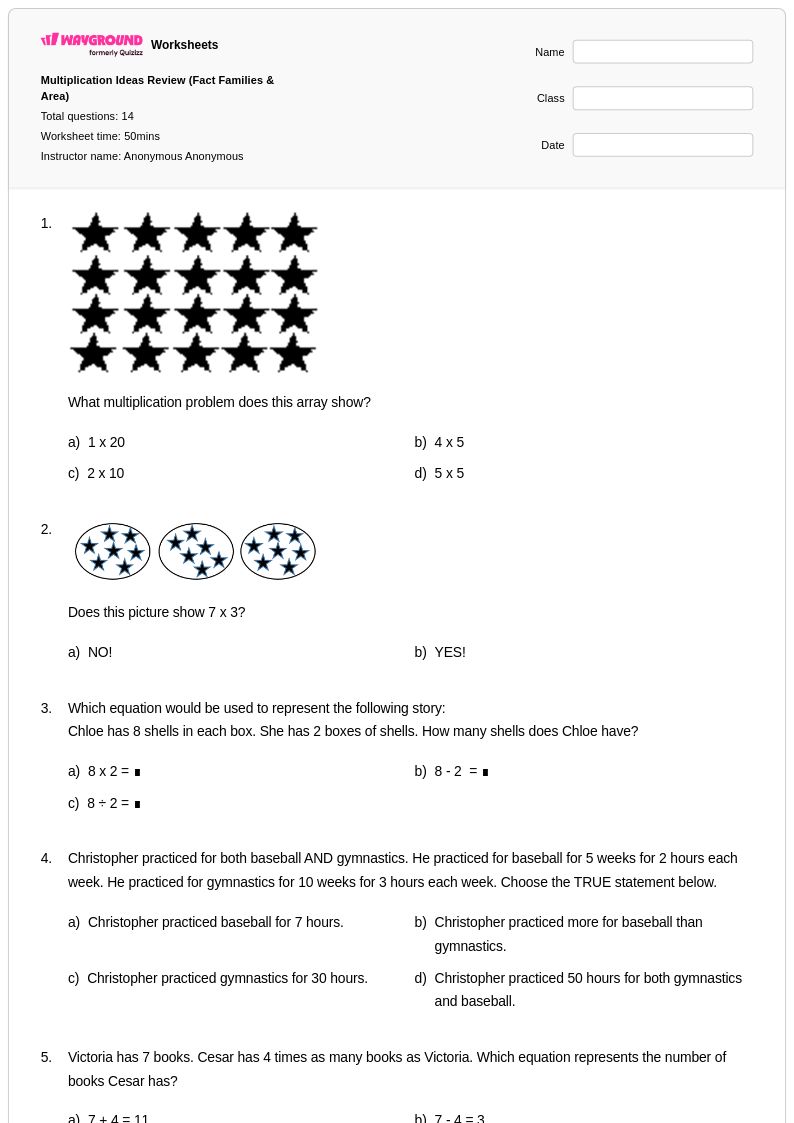
Start by drawing the parallel to addition/subtraction fact families students already know — same triangle structure, same logic, just different operations. Use arrays to make the relationship concrete: a 3-by-4 array shows both 3 × 4 and 4 × 3 visually, and splitting it into rows or columns shows the corresponding division. Once students can build the triangle from an array, move to writing all four equations from a number trio like 3, 4, 12. The transition from visual to symbolic usually takes a few sessions.
What mistakes do third graders make with multiplication and division fact families?
The most common error is placing a factor — rather than the product — at the top of the fact family triangle, which cascades into four wrong equations. Students also frequently write only two equations (both multiplication) and forget the two division equations, especially early in the unit when division still feels unfamiliar. A subtler mistake: writing 12 ÷ 12 = 1 or other equations that aren't part of the family, which signals the student is guessing rather than reasoning from the three numbers.
How do I use Wayground's Grade 3 fact families worksheets?
Each worksheet includes a detailed answer key, so you can assign it for independent practice or small-group work without extra prep. Print the PDF for paper practice — the Wayground for Teachers app lets you scan and grade student submissions quickly, which is useful when you want to check whether students are correctly identifying the product as the whole before moving on. For a faster feedback loop, assign it digitally as a Wayground quiz so students see whether each equation is correct as they go.
How do multiplication and division fact families fit into the Common Core Grade 3 standards?
Common Core makes the relationship between multiplication and division a central third-grade expectation. Students are required to understand division as an unknown-factor problem — meaning that to solve 12 ÷ 3, a student should think 'what times 3 equals 12?' That's the fact family relationship in action. Third grade is where students build fluency with products up to 100, and fact family practice is one of the primary tools for making multiplication and division feel like one concept rather than two.
How can I differentiate fact family practice for my third-grade class?
Students still consolidating addition/subtraction fact families can work on those trios while the rest of the class tackles multiplication/division — the worksheet format is the same, just different operations. For students with reading difficulties, Wayground's dyslexia-friendly font option and Read Aloud accommodation reduce barriers so the focus stays on the math. For students ready to go further, extend the number trios beyond the basic multiplication table — fact families with larger products like 6, 9, 54 apply the same structure with more demanding mental math.