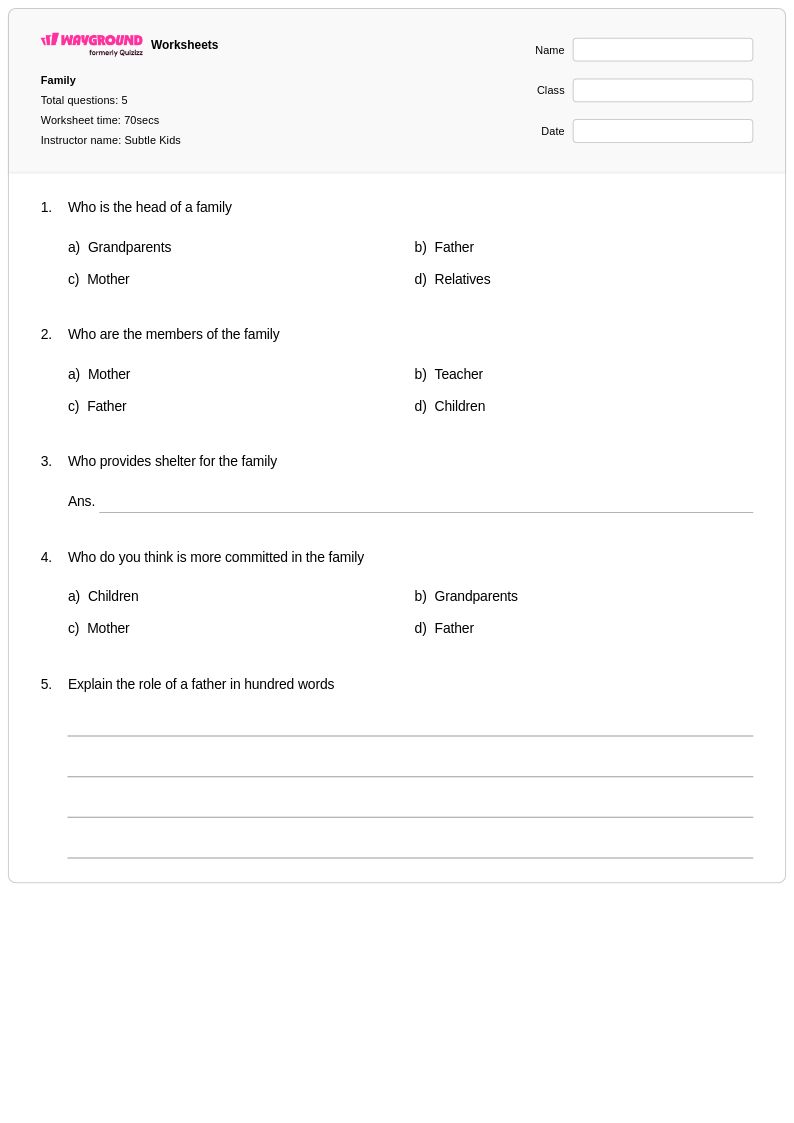
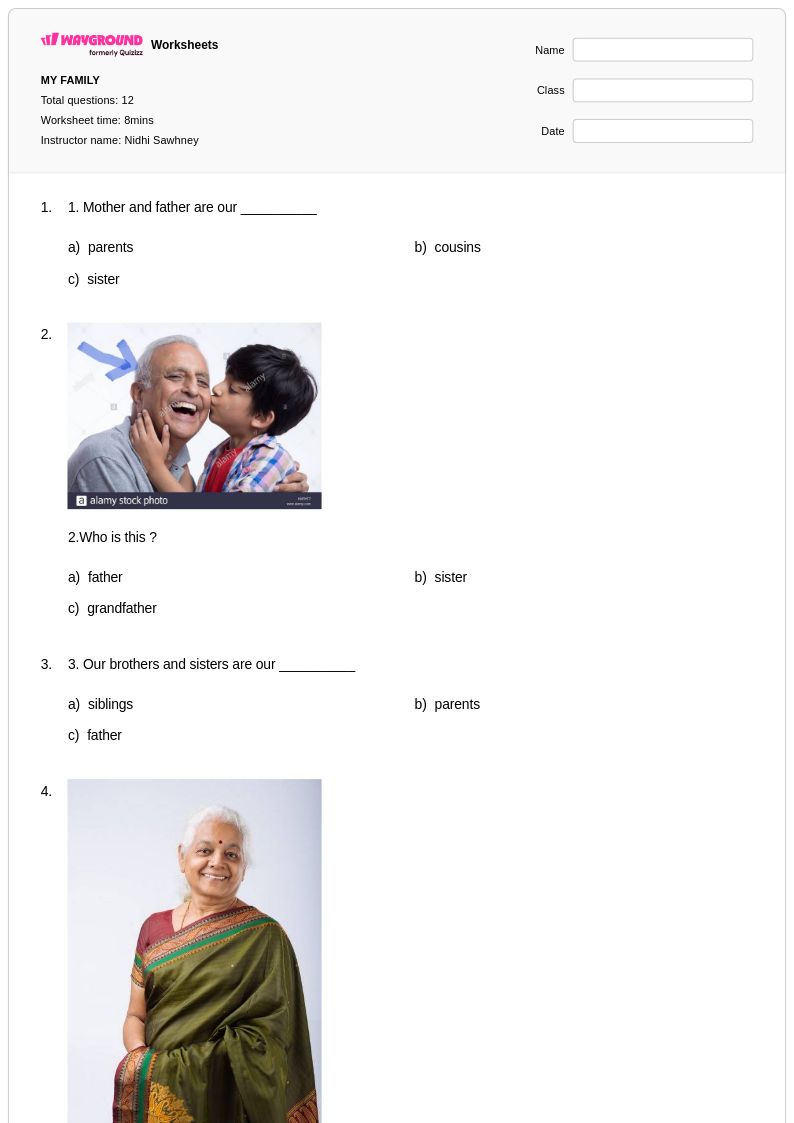
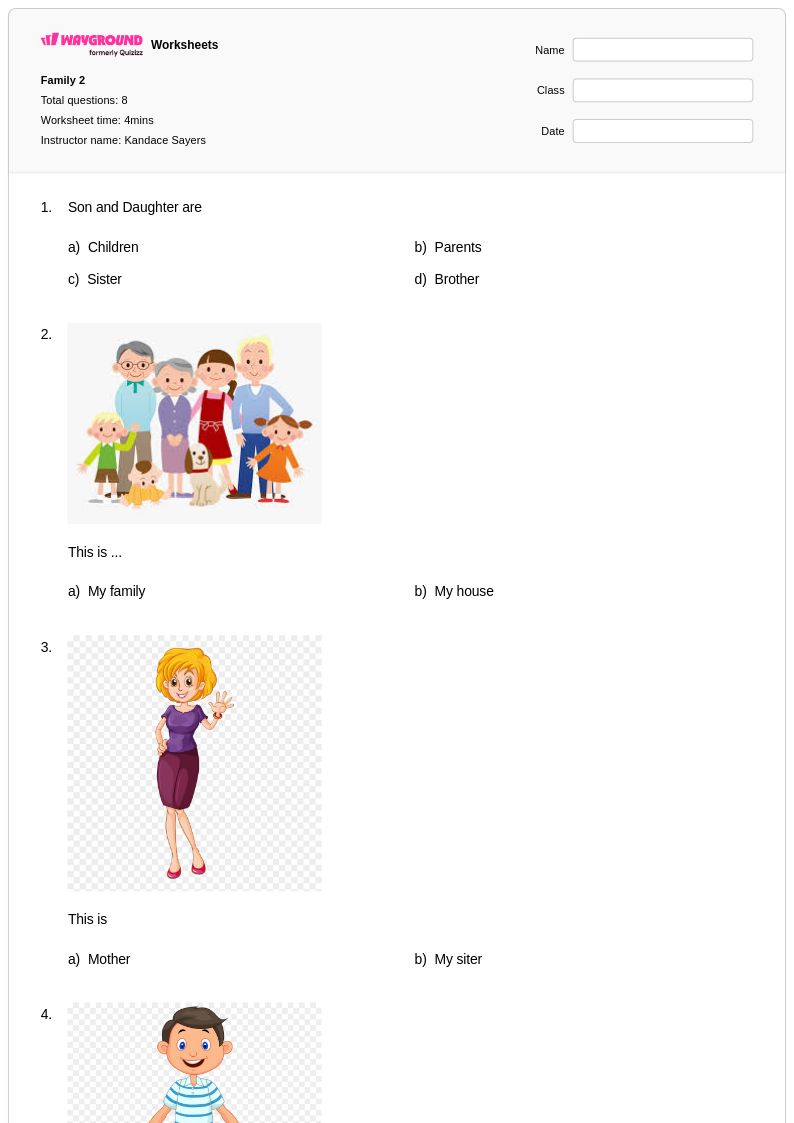
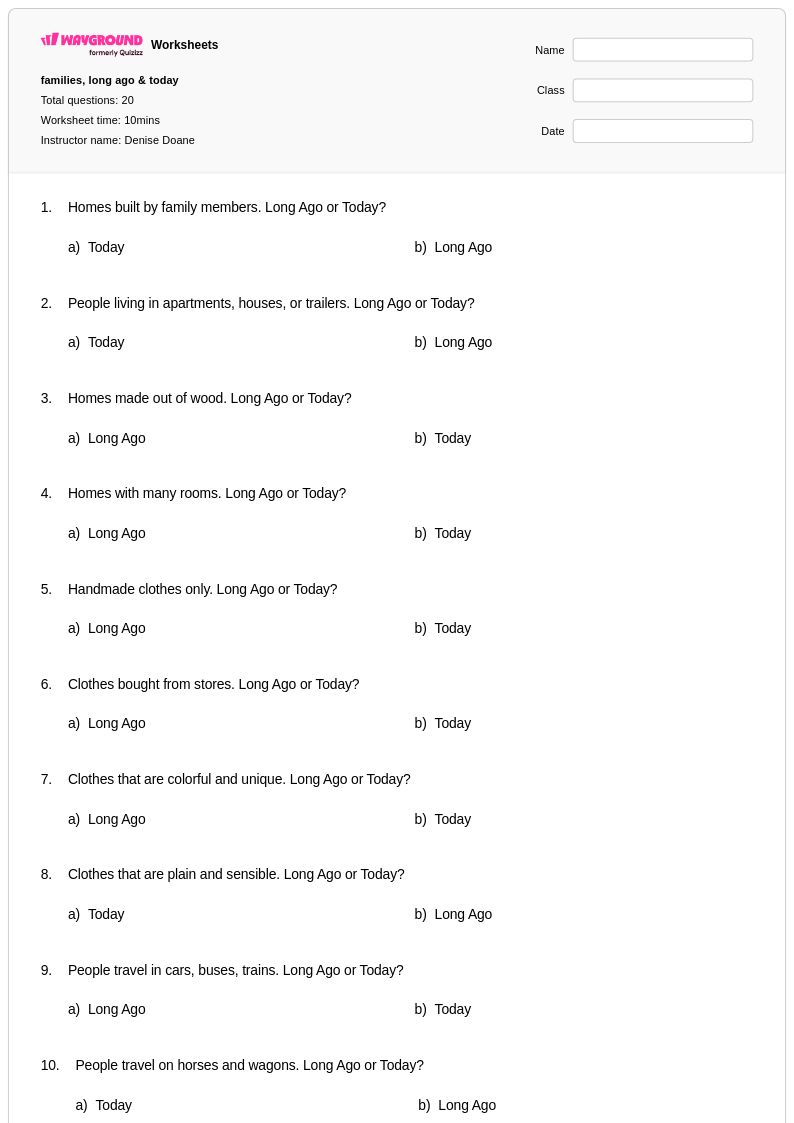
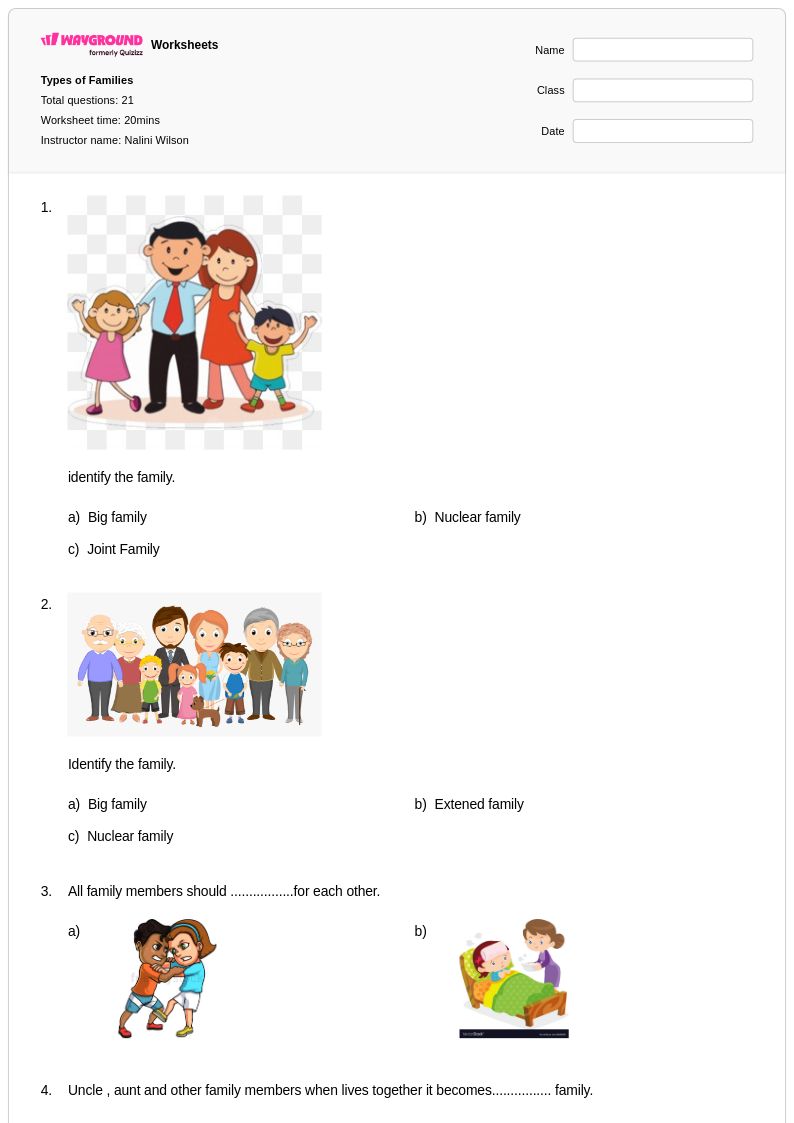
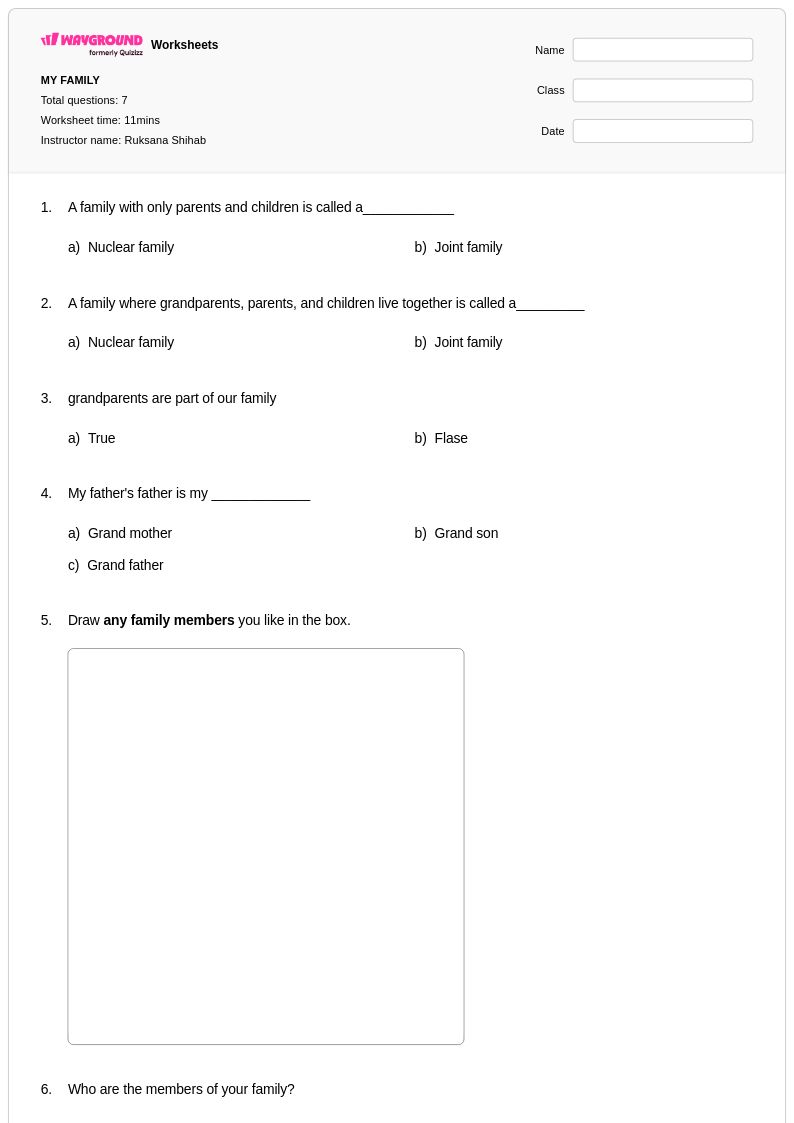
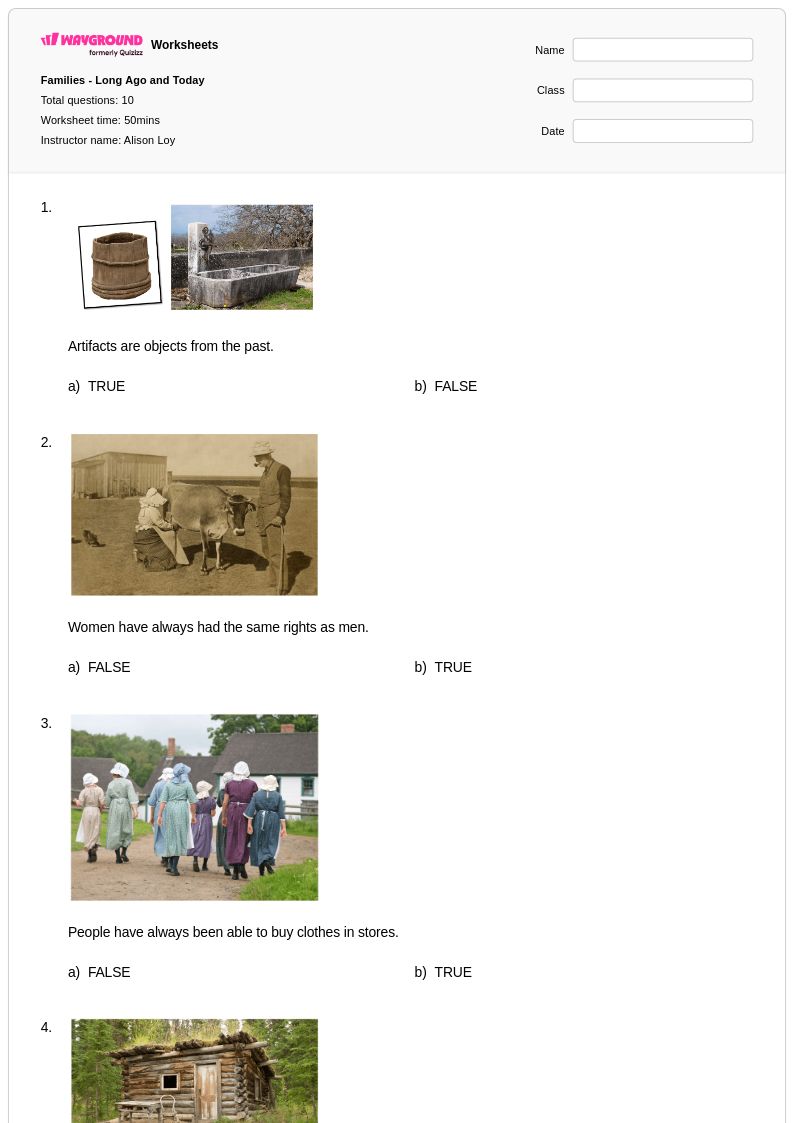
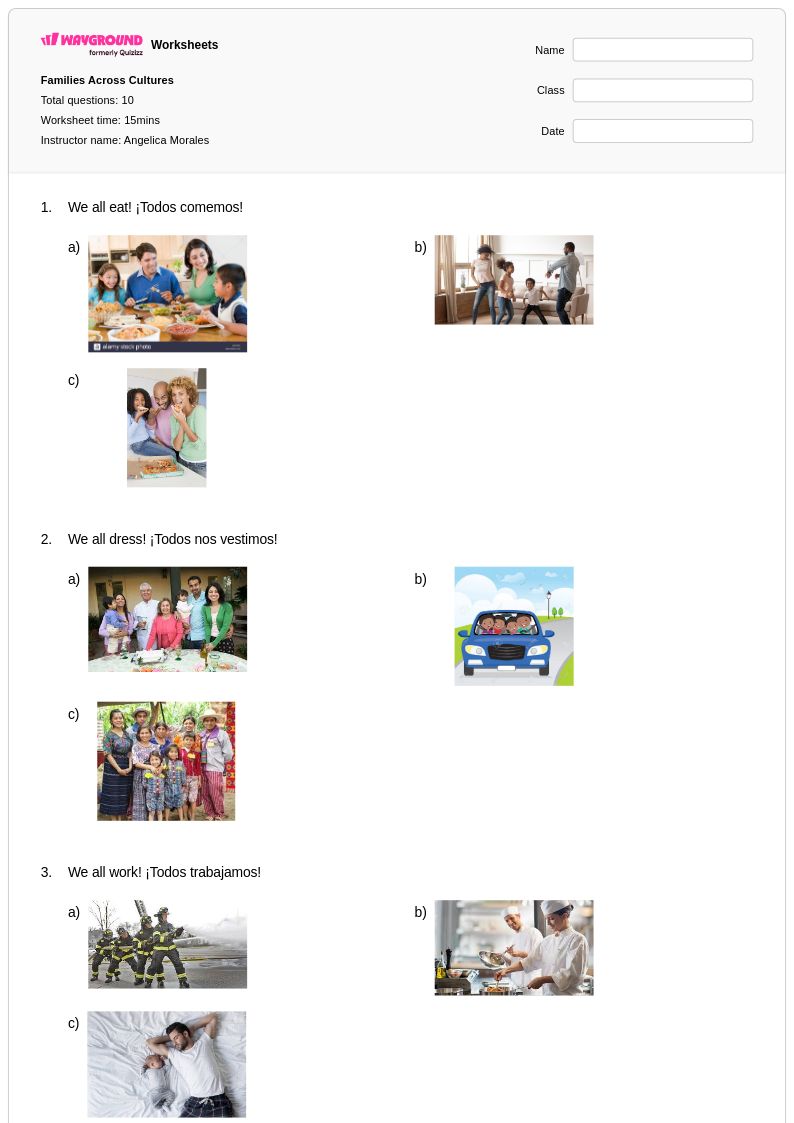
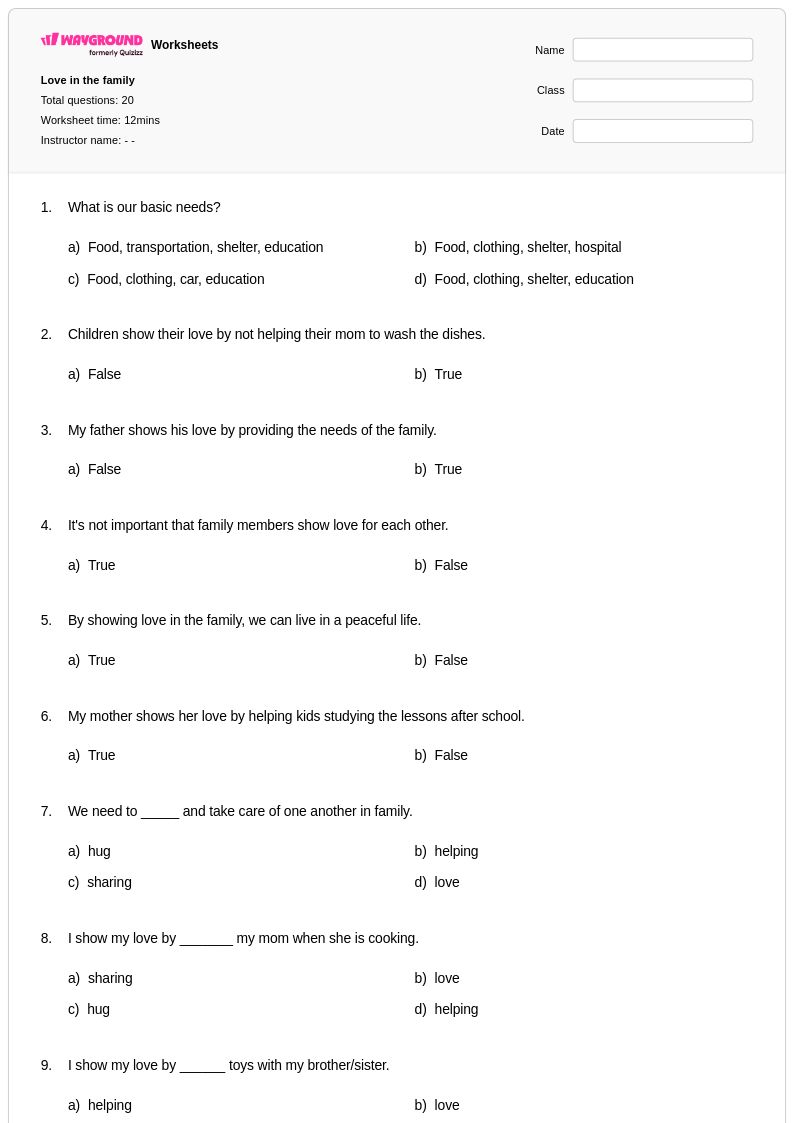
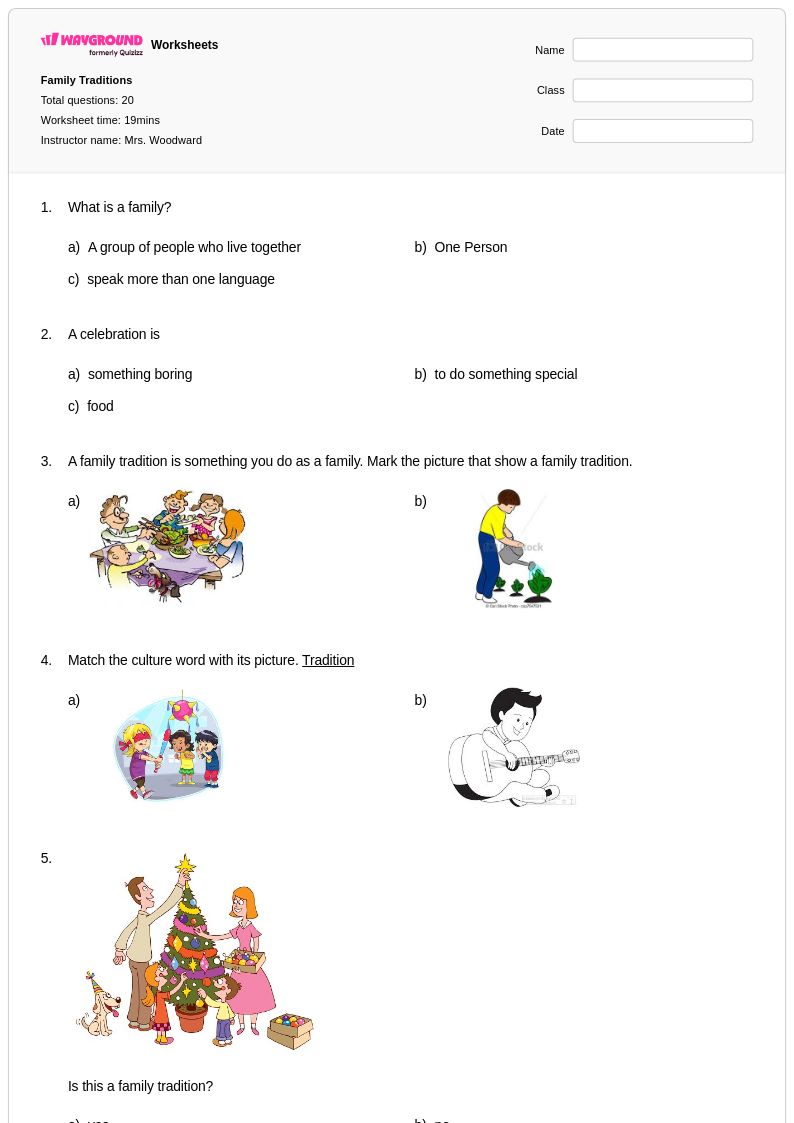
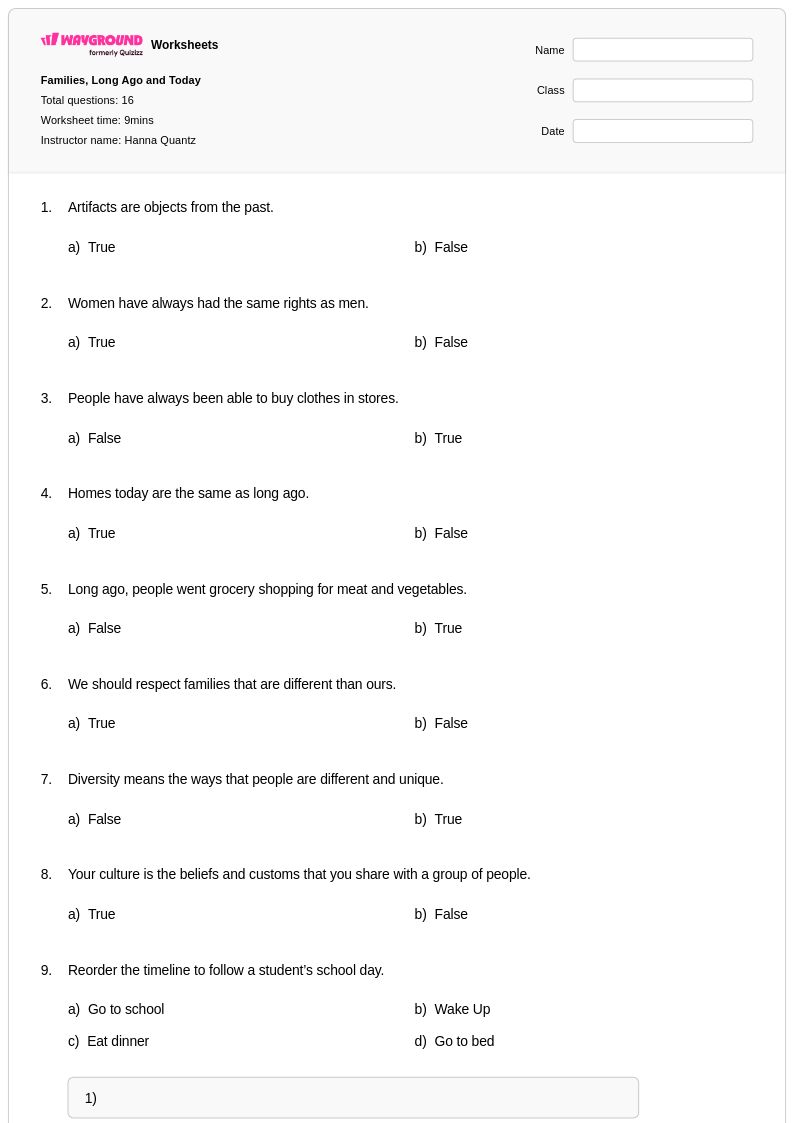
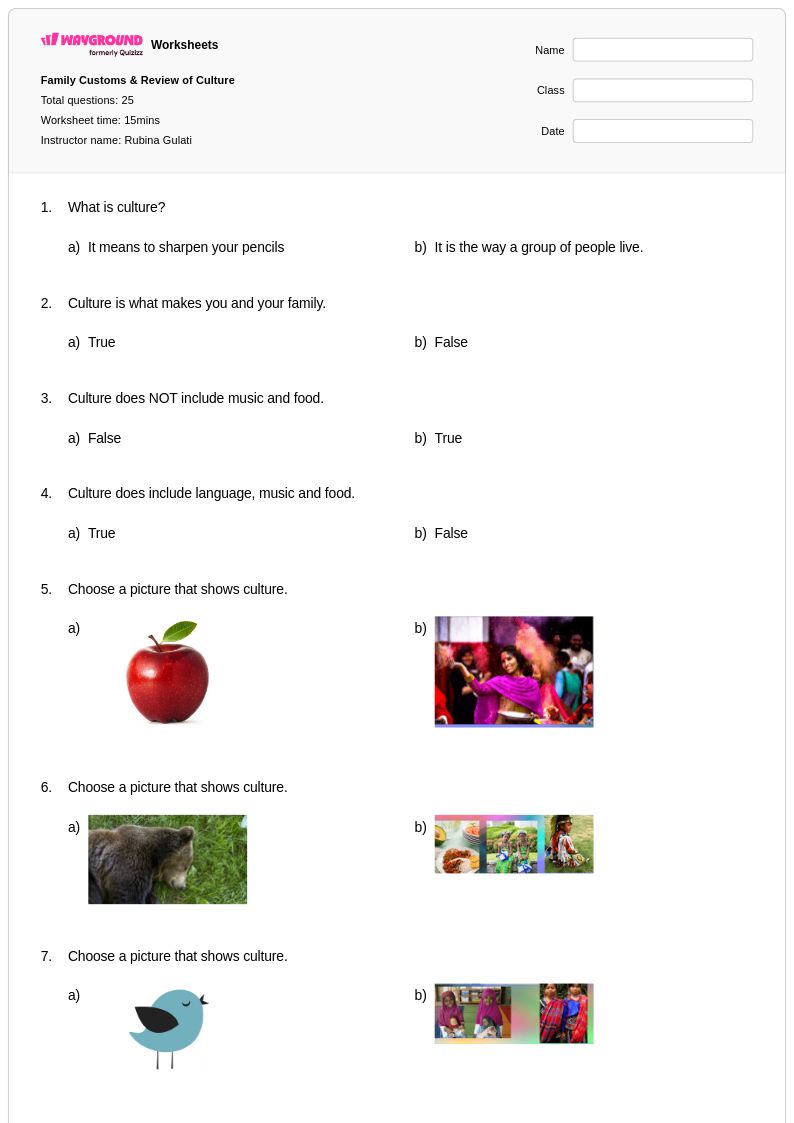
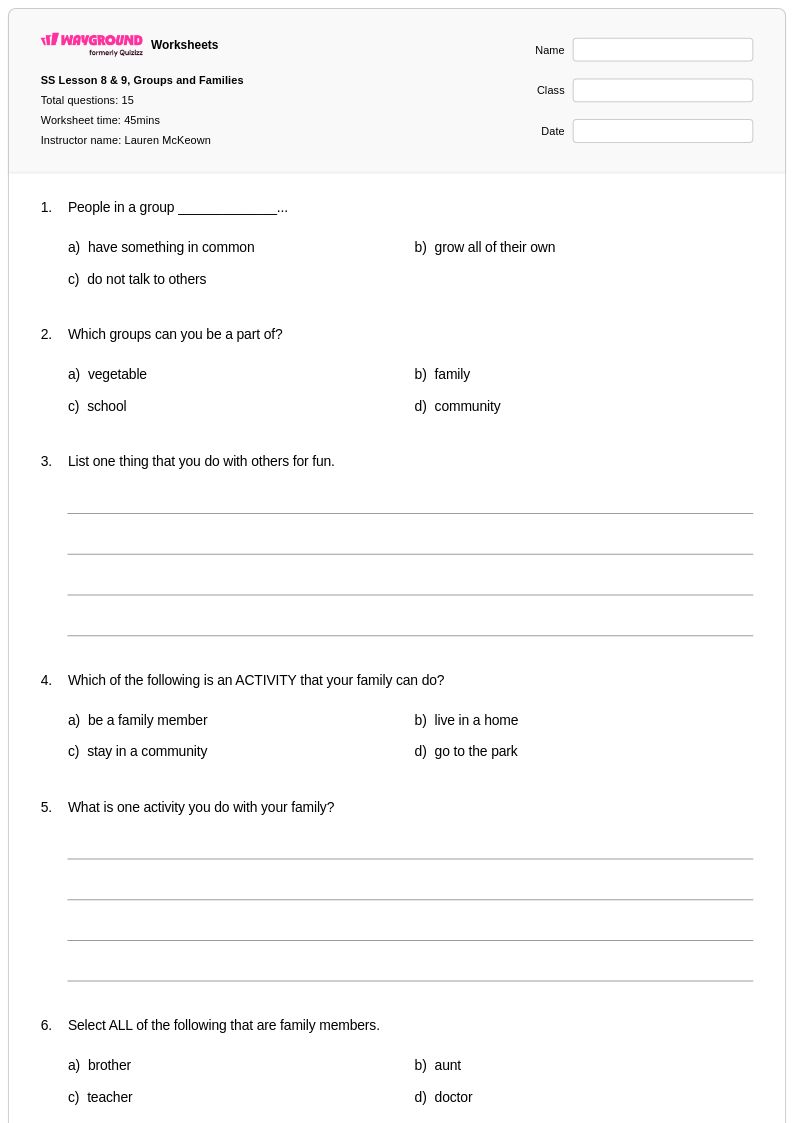
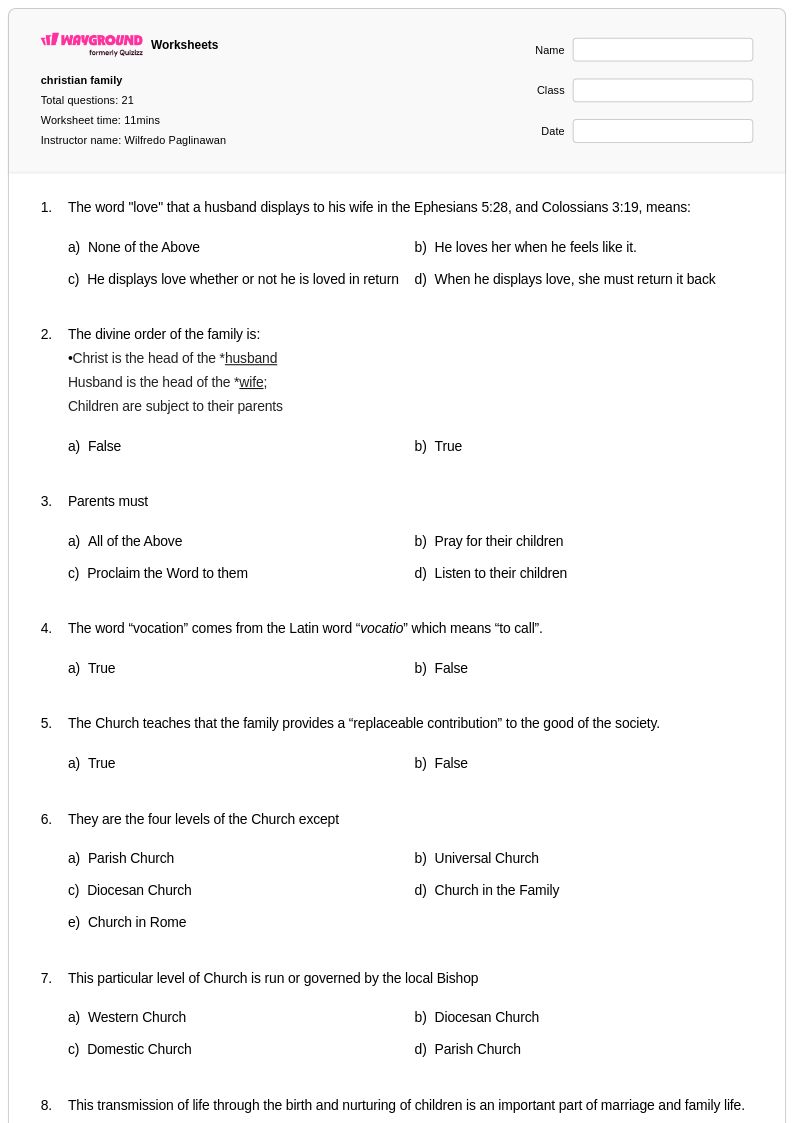
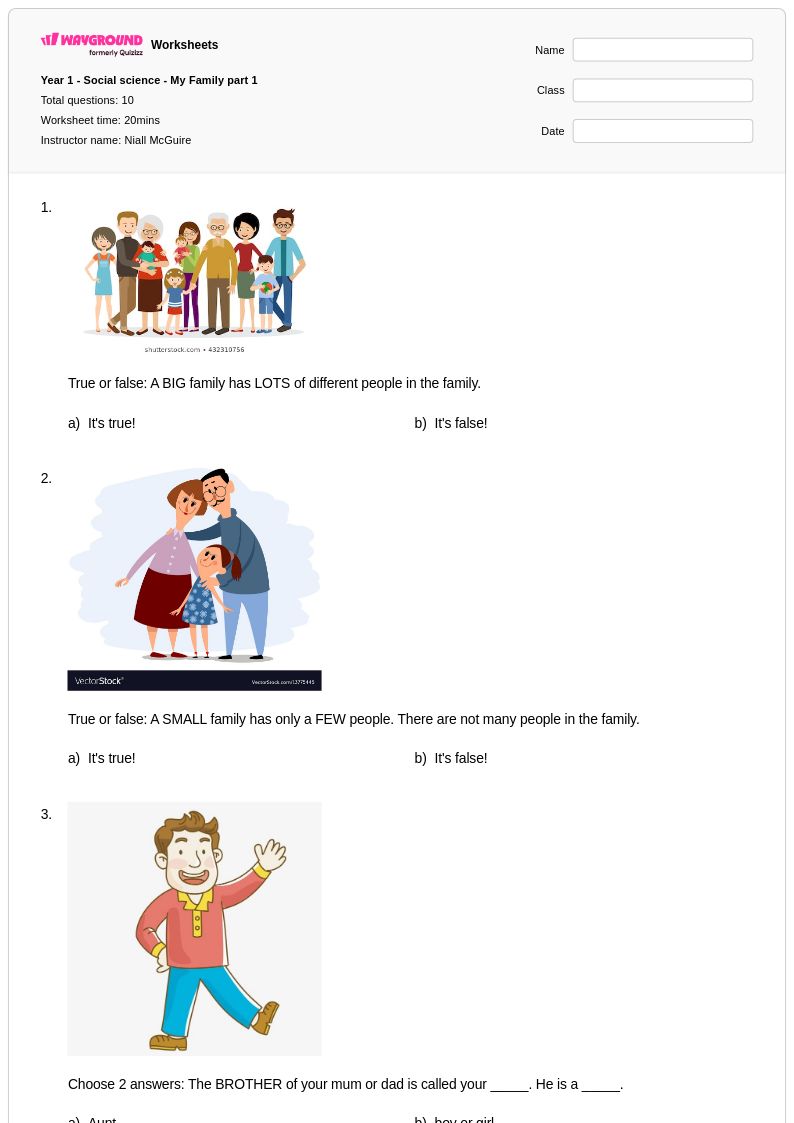
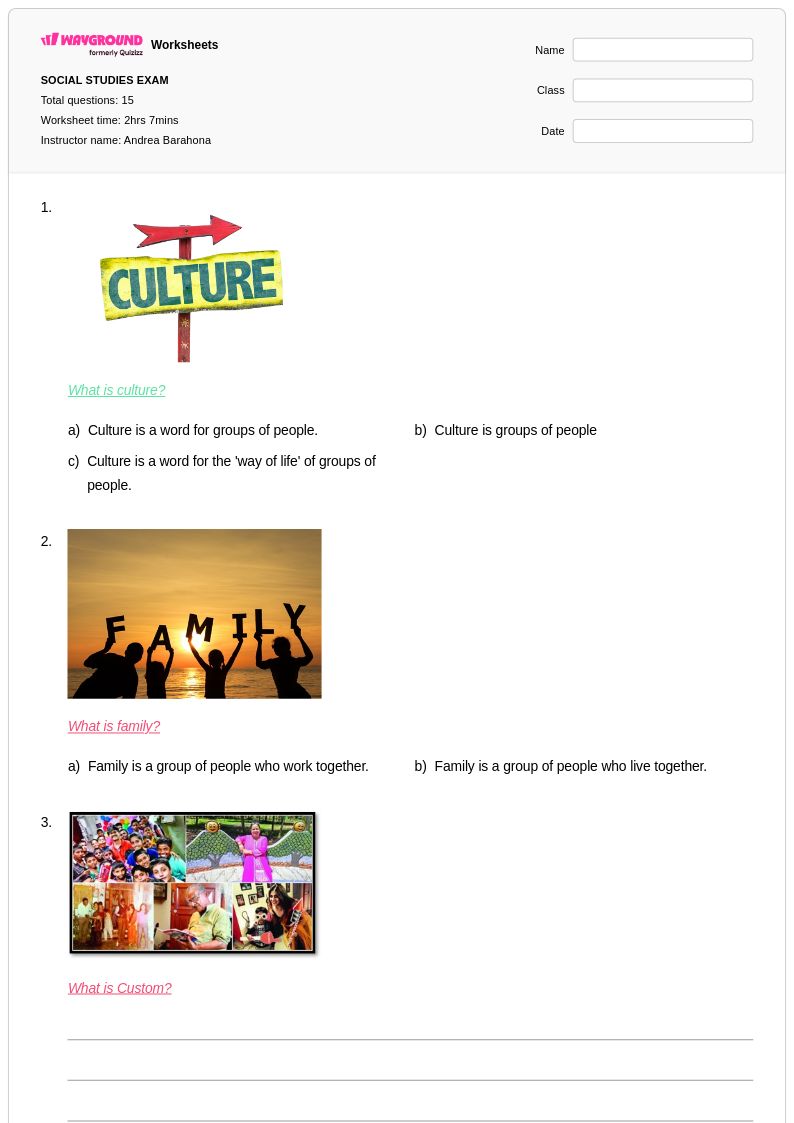
Explore free Grade 1 Family Life worksheets and printables from Wayground that help young learners understand different family structures, roles, and traditions through engaging practice problems with comprehensive answer keys.
Explore printable Family Life worksheets for Grade 1
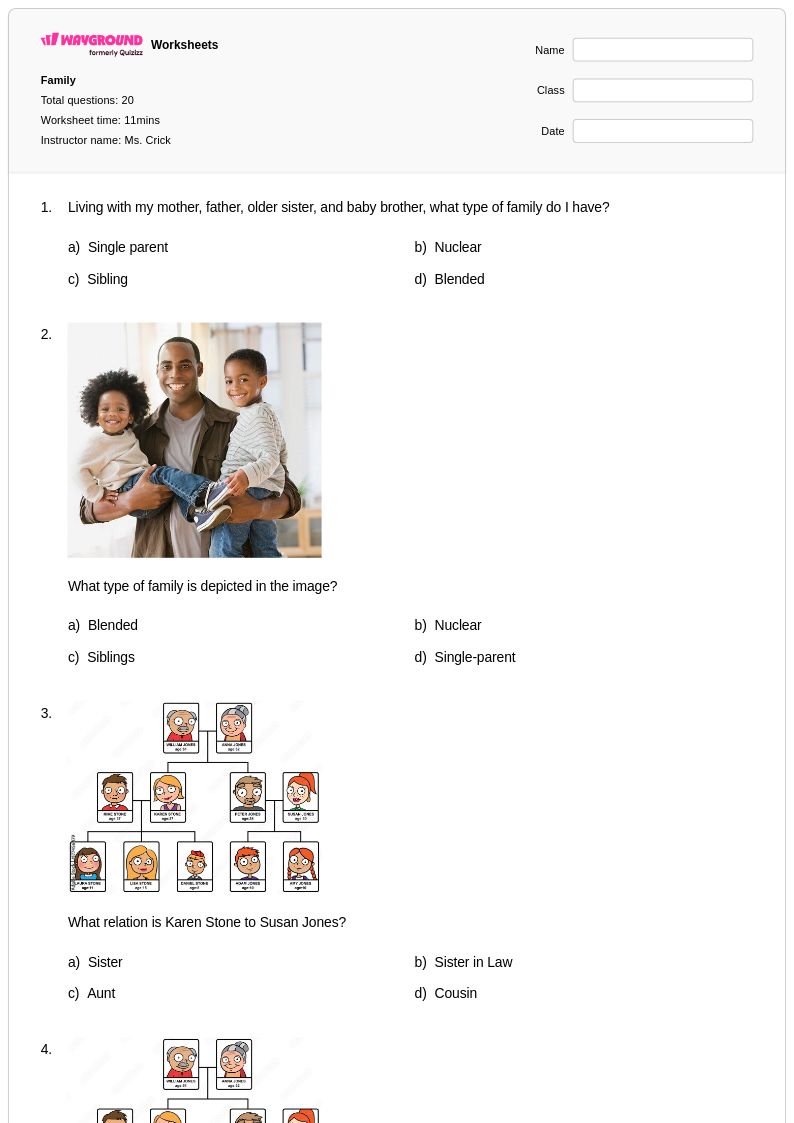
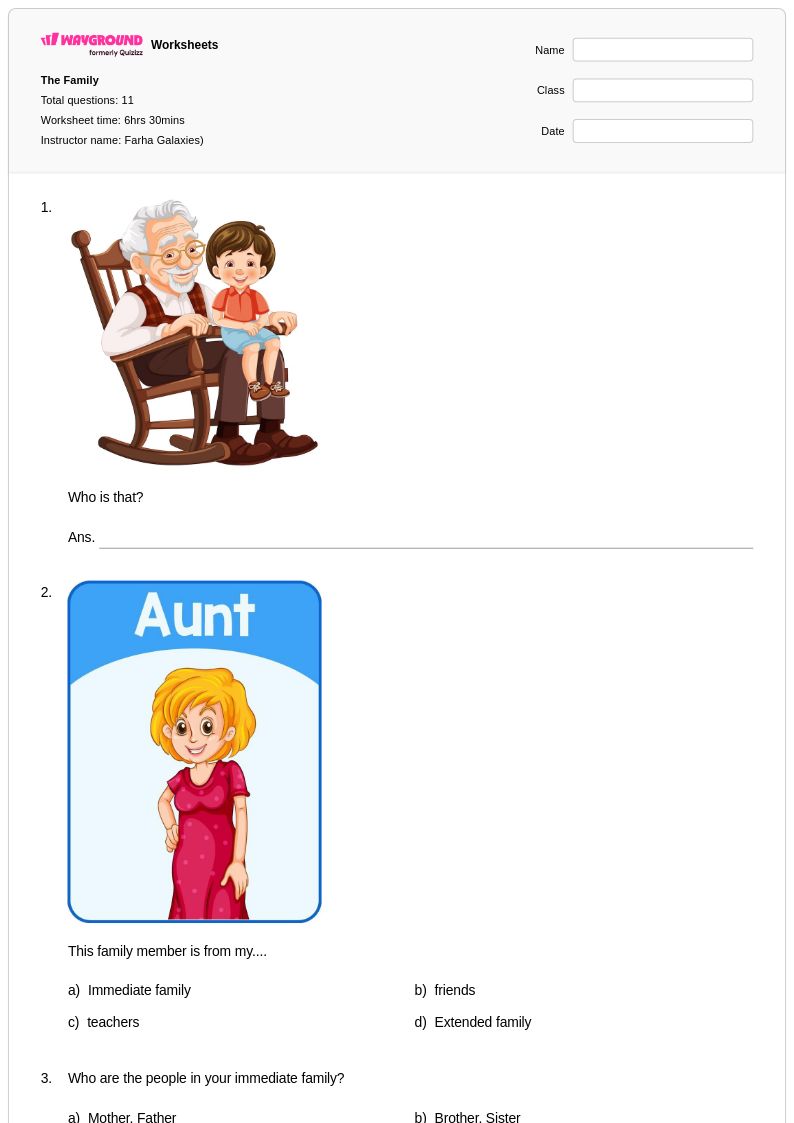
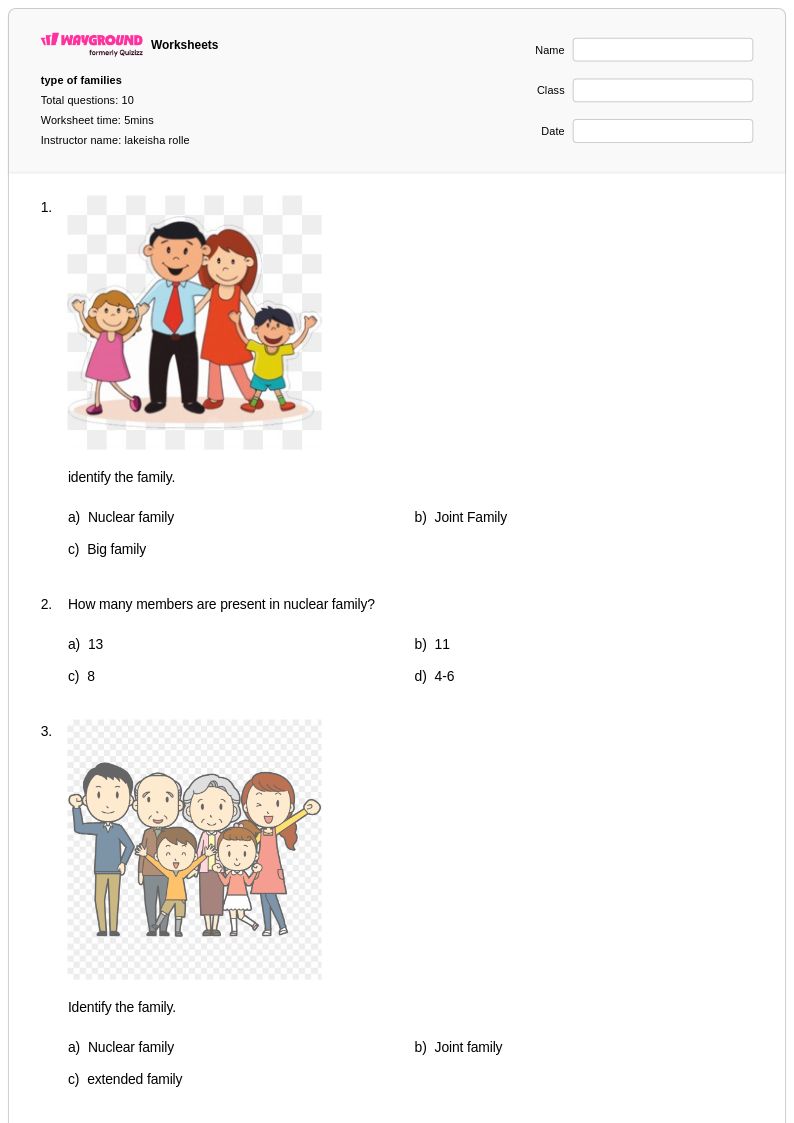
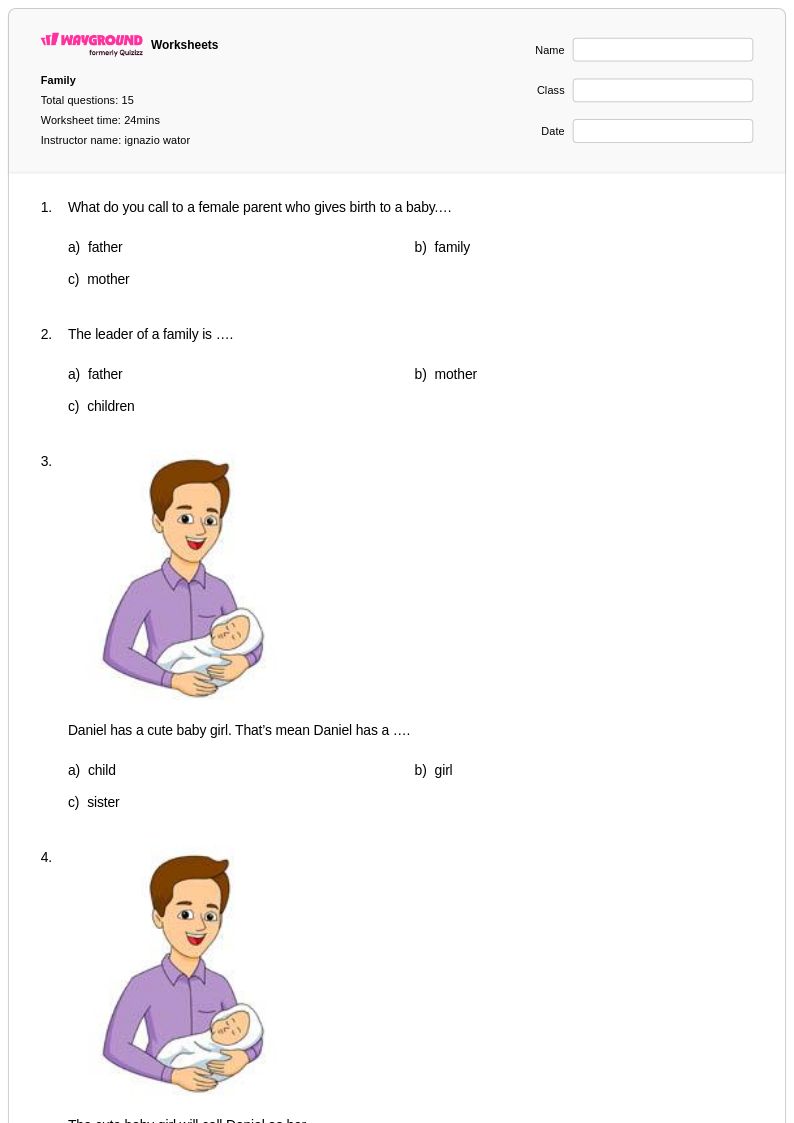
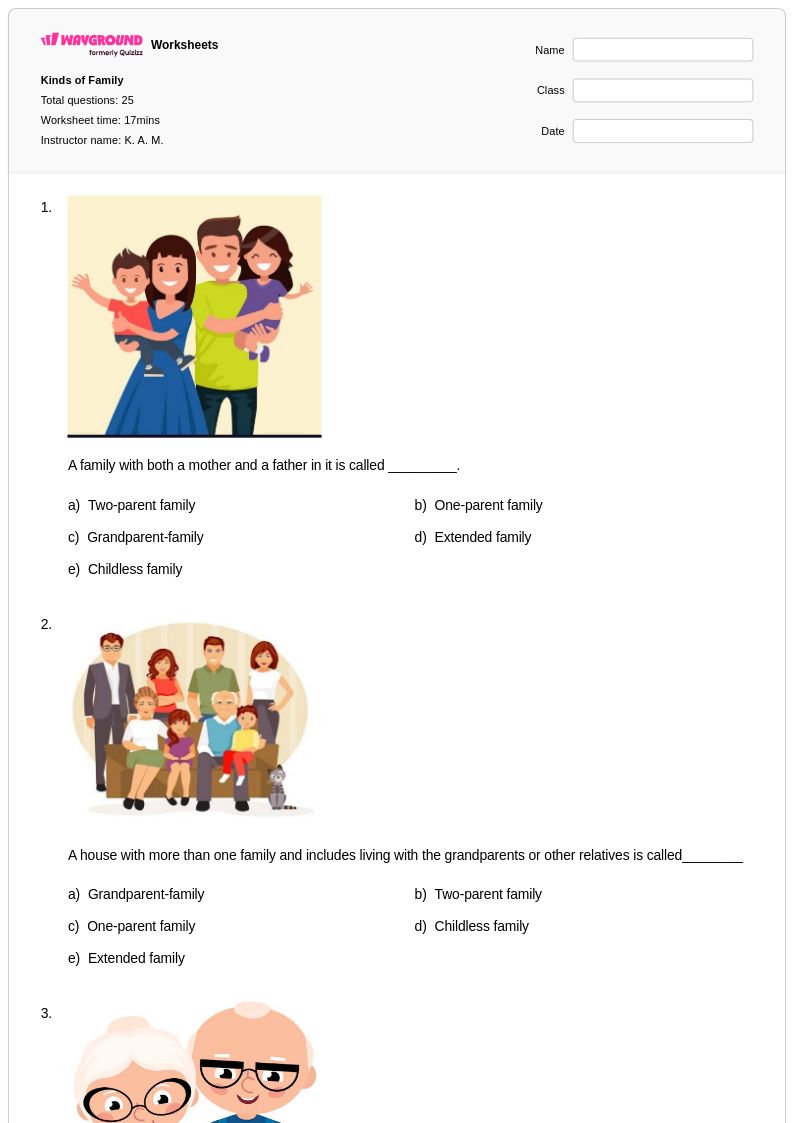
Family Life worksheets for Grade 1 through Wayground (formerly Quizizz) provide young learners with engaging activities that explore the fundamental aspects of family structures, roles, and traditions. These educational resources help first-grade students develop essential social studies skills by examining different types of families, understanding family member responsibilities, and recognizing how families celebrate special occasions and maintain cultural practices. The worksheets strengthen critical thinking abilities as students compare and contrast family experiences, while building vocabulary related to family relationships and household activities. Teachers can access comprehensive collections that include practice problems requiring students to identify family members, match family roles with appropriate responsibilities, and sequence family traditions throughout the year. Each worksheet set comes with a detailed answer key and is available as free printables in convenient pdf format, making classroom implementation seamless and cost-effective.
Wayground (formerly Quizizz) empowers educators with millions of teacher-created Family Life resources specifically designed for Grade 1 social studies instruction. The platform's robust search and filtering capabilities allow teachers to quickly locate worksheets that align with curriculum standards and match their students' developmental needs. Differentiation tools enable instructors to customize content difficulty levels, ensuring that all learners can engage meaningfully with family life concepts regardless of their academic starting point. These versatile resources are available in both printable and digital formats, including downloadable pdf versions that support flexible lesson planning and accommodate various classroom environments. Teachers utilize these comprehensive worksheet collections for targeted skill practice, remediation support for struggling learners, and enrichment opportunities for advanced students, while the platform's organizational features streamline lesson preparation and help educators track student progress in understanding family structures and cultural diversity within their communities.
FAQs
How do I teach students about diverse family structures in the classroom?
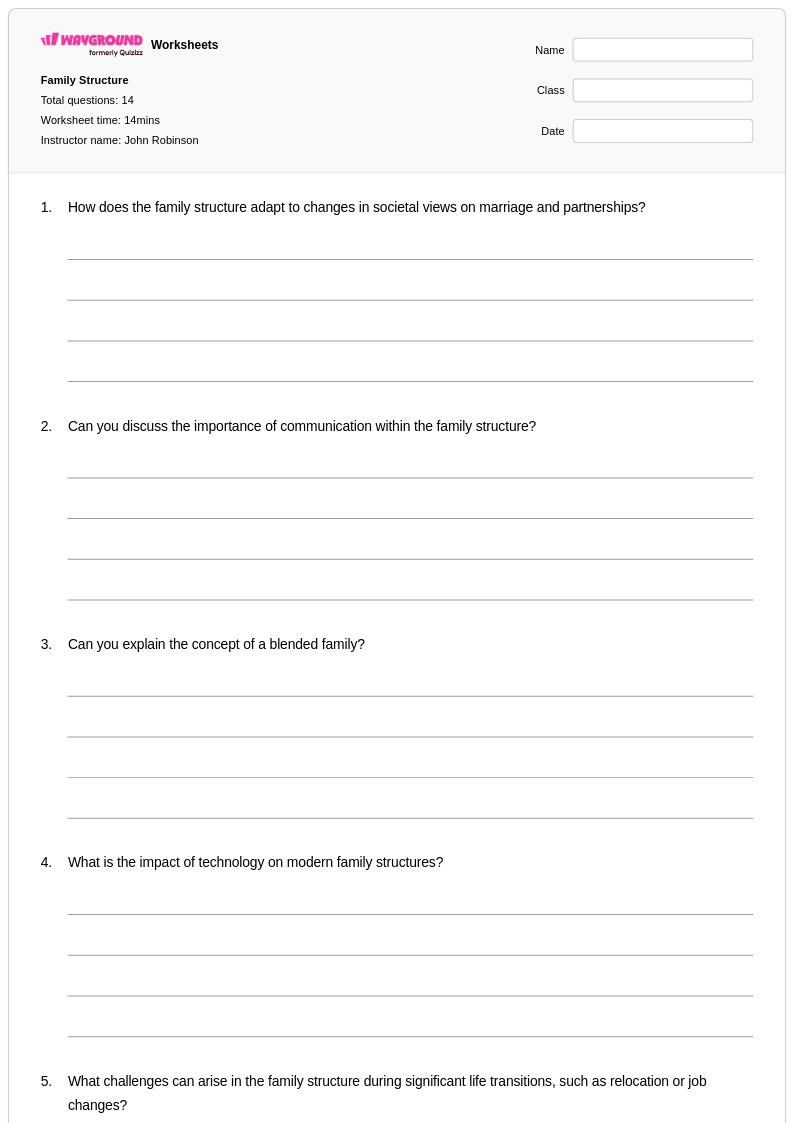
Teaching diverse family structures works best when students can compare and contrast different family compositions through guided reflection and structured discussion. Start by anchoring lessons in what students already know about their own families, then broaden the lens to include extended families, single-parent households, multigenerational homes, and culturally distinct family models. Using worksheets that prompt analysis and comparison helps students build critical thinking skills alongside social awareness.
What exercises help students practice understanding family roles and traditions?
Effective practice exercises for family roles and traditions ask students to identify the responsibilities of different family members, compare cultural traditions across communities, and reflect on how family structures shape daily life. Activities that involve comparing and contrasting family types or analyzing real-world scenarios tend to deepen comprehension beyond simple recall. Worksheets that include both analytical prompts and personal reflection questions are especially effective for building meaningful understanding.
What misconceptions do students commonly have about family structures?
A common misconception is that there is one universal or 'correct' family structure, which can cause students to misclassify or undervalue non-traditional family compositions. Students may also conflate cultural traditions with universal norms, assuming that practices familiar to them apply broadly. Worksheets that explicitly ask students to compare diverse family models and cultural practices help surface and correct these assumptions through structured reasoning rather than passive reading.
How can I differentiate family life worksheets for students at different skill levels?
Differentiation for family life topics can include scaffolded reading prompts for developing readers, extended reflection questions for advanced students, and reduced answer choices for students who need lower cognitive load. On Wayground, teachers can apply individual accommodations such as read aloud support, reduced answer choices, and extended time on a per-student basis without affecting the experience of the rest of the class. These settings are reusable across sessions, making differentiation manageable at scale.
How do I use Wayground's family life worksheets in my classroom?
Wayground's family life worksheets are available as printable PDFs for traditional classroom use and in digital formats for technology-integrated environments, giving teachers flexibility across in-person, hybrid, and remote settings. Teachers can also host worksheets directly as a quiz on Wayground, enabling real-time student interaction and immediate feedback. Each worksheet includes a comprehensive answer key, which supports both formal assessment and self-paced student review.
Are family life worksheets appropriate for social studies instruction?
Yes, family life worksheets align directly with social studies standards that address community, culture, and civic identity, making them a natural fit for elementary and middle school social studies instruction. These materials help students understand how families function as the foundational unit of communities and how cultural diversity shapes family traditions and roles. They are particularly useful for units on community helpers, cultural awareness, and social-emotional learning integrated into academic content.