
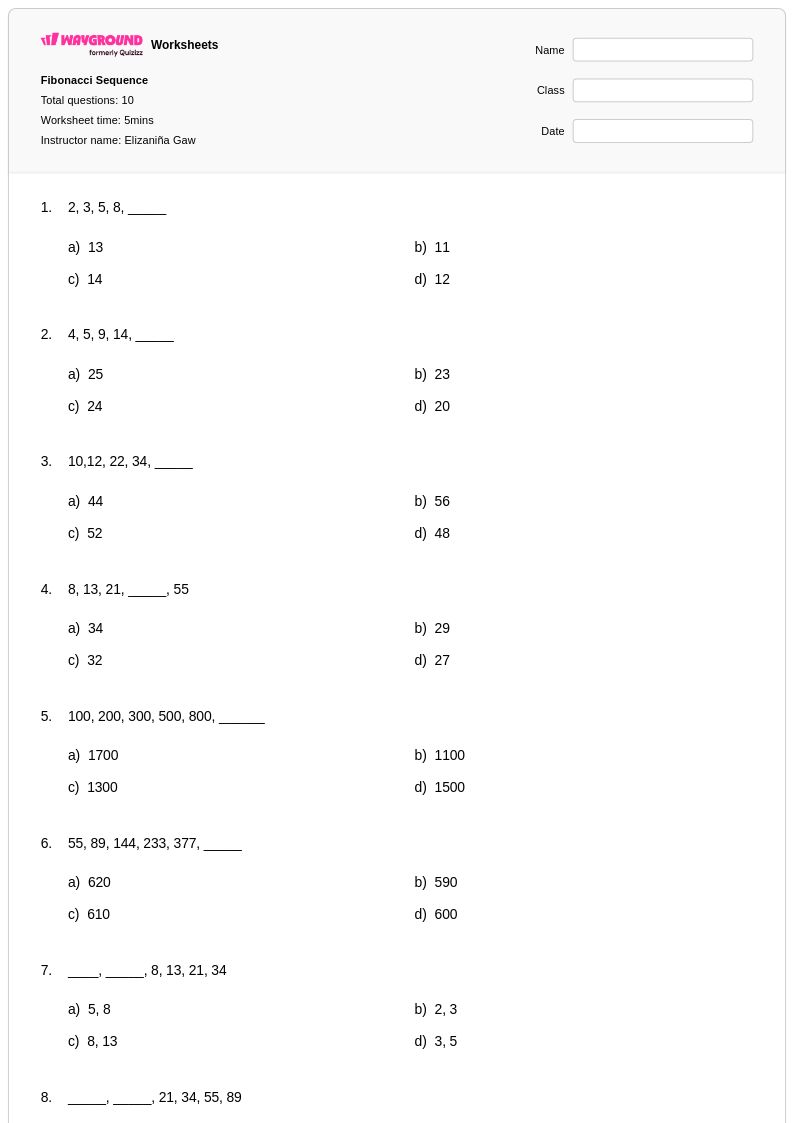
10 Q
5th - 6th
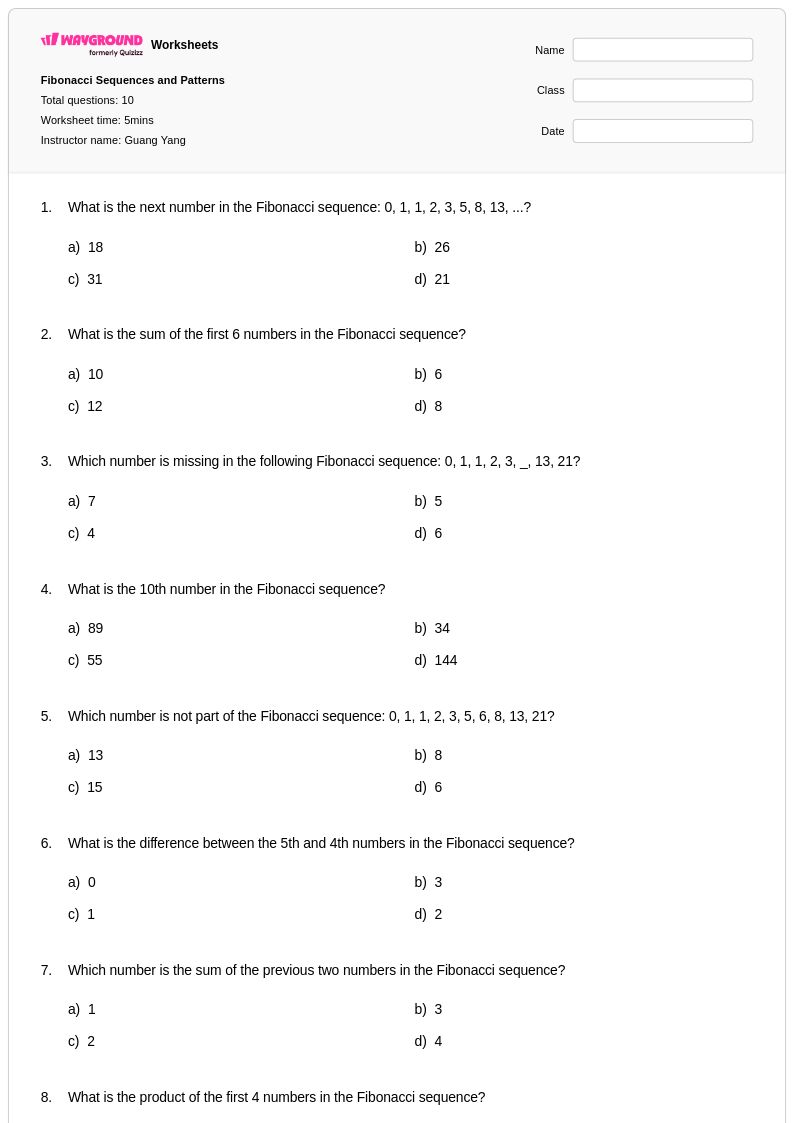
10 Q
5th
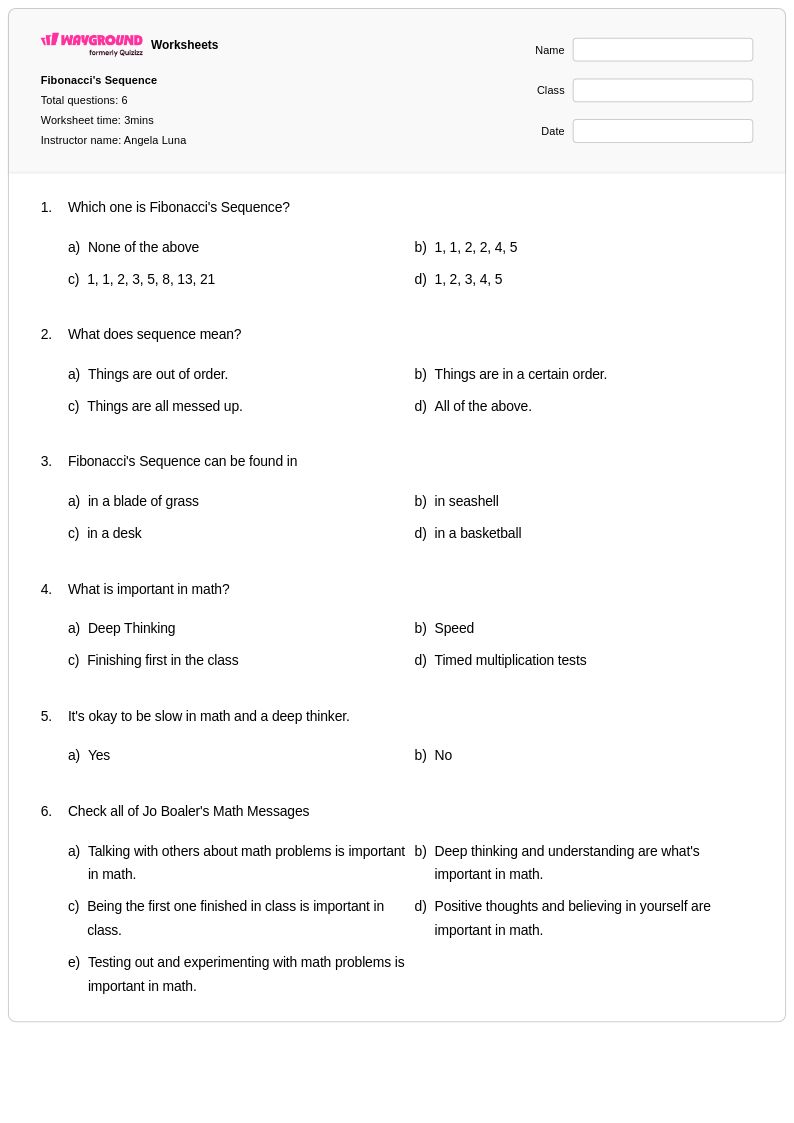
6 Q
5th
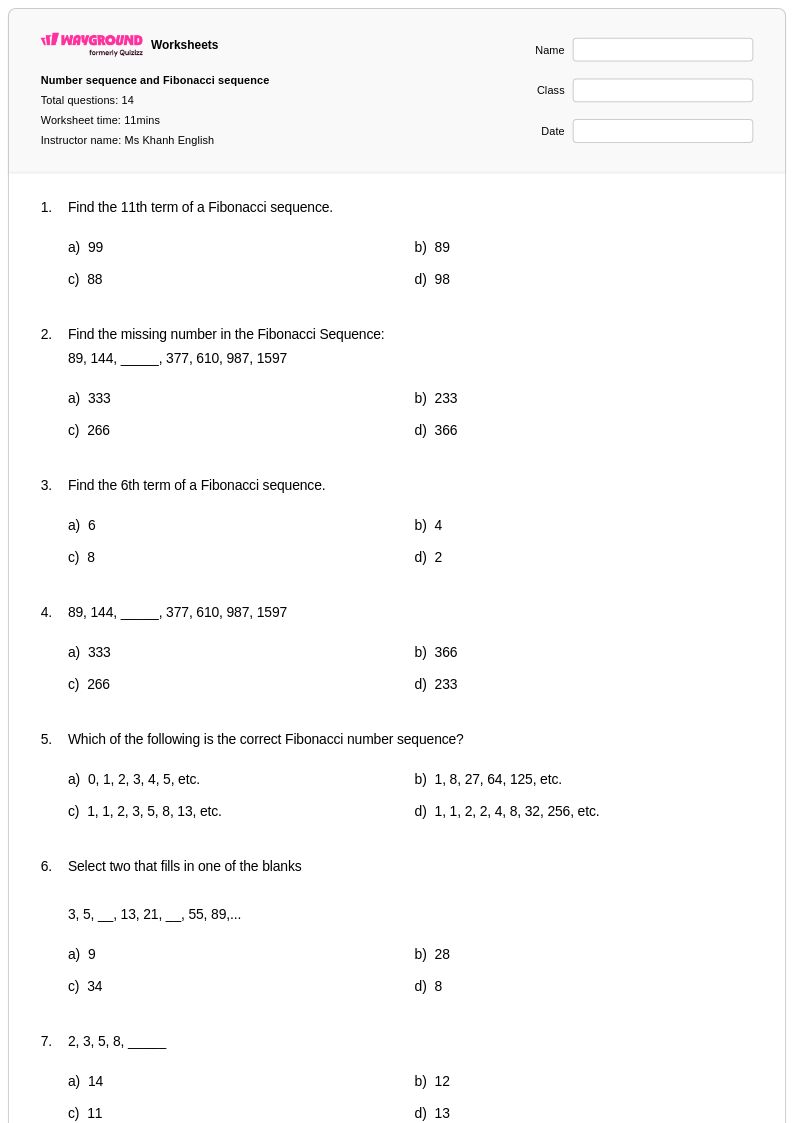
14 Q
5th
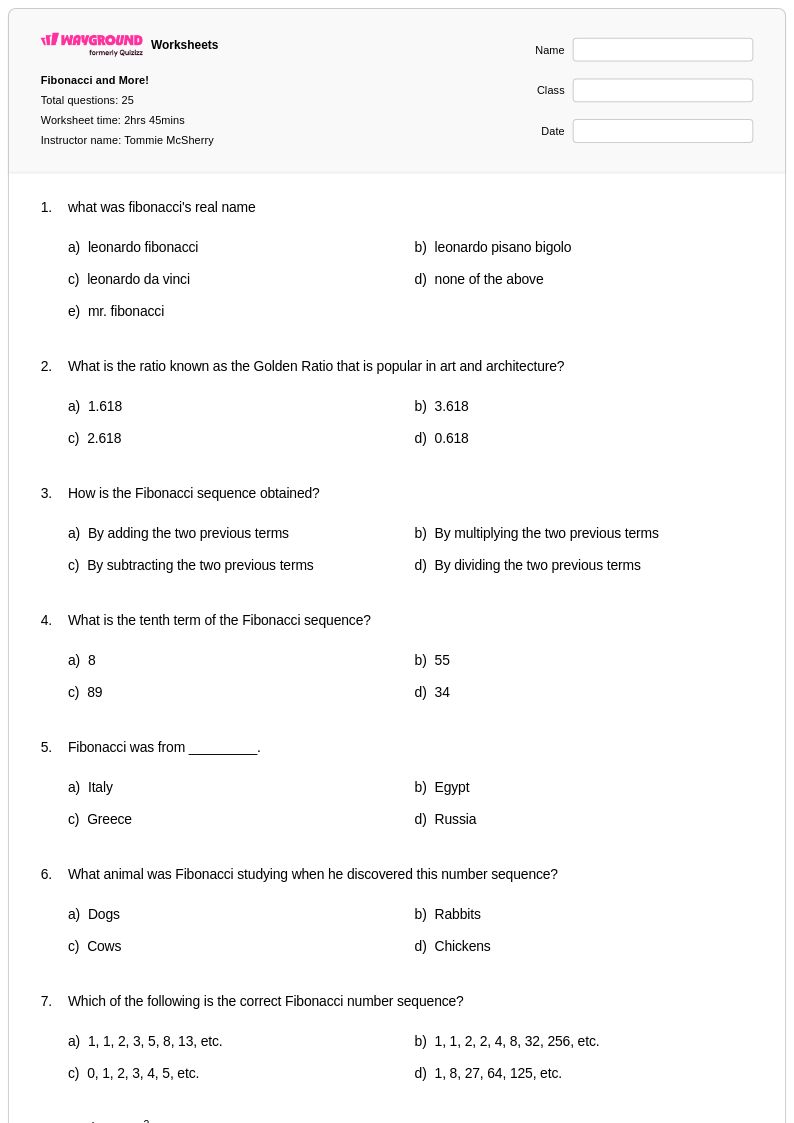
25 Q
5th
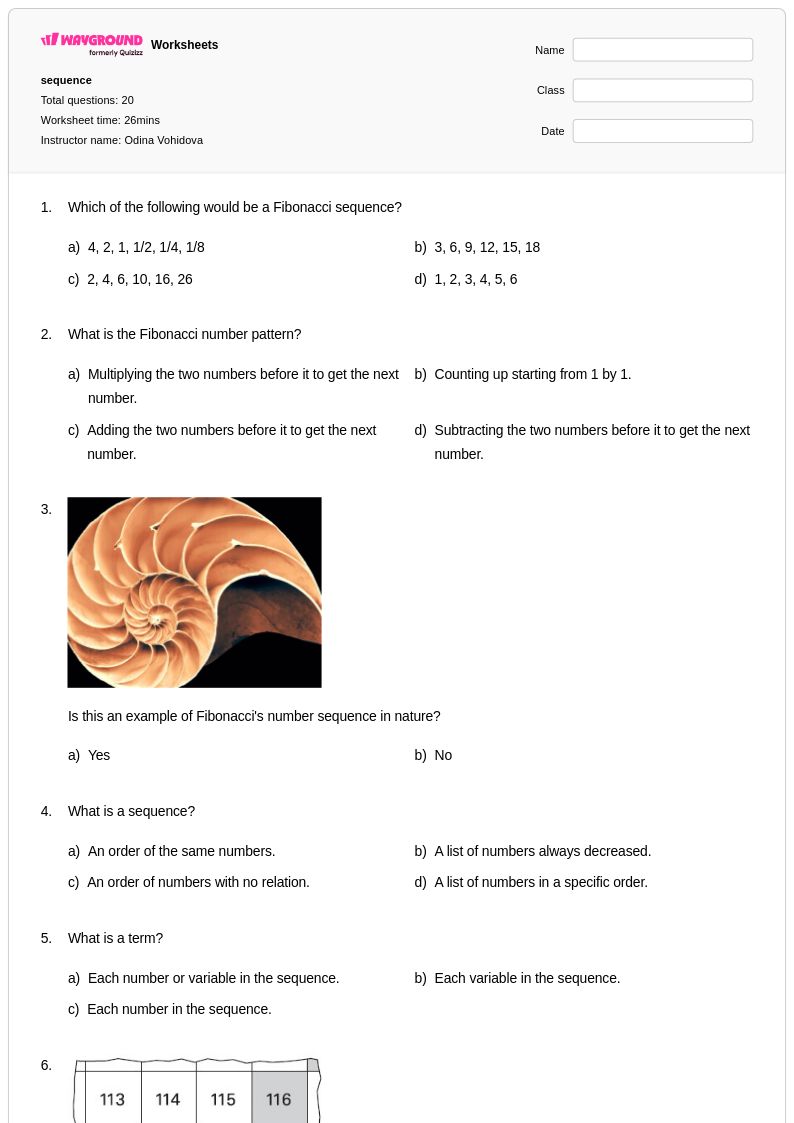
20 Q
5th
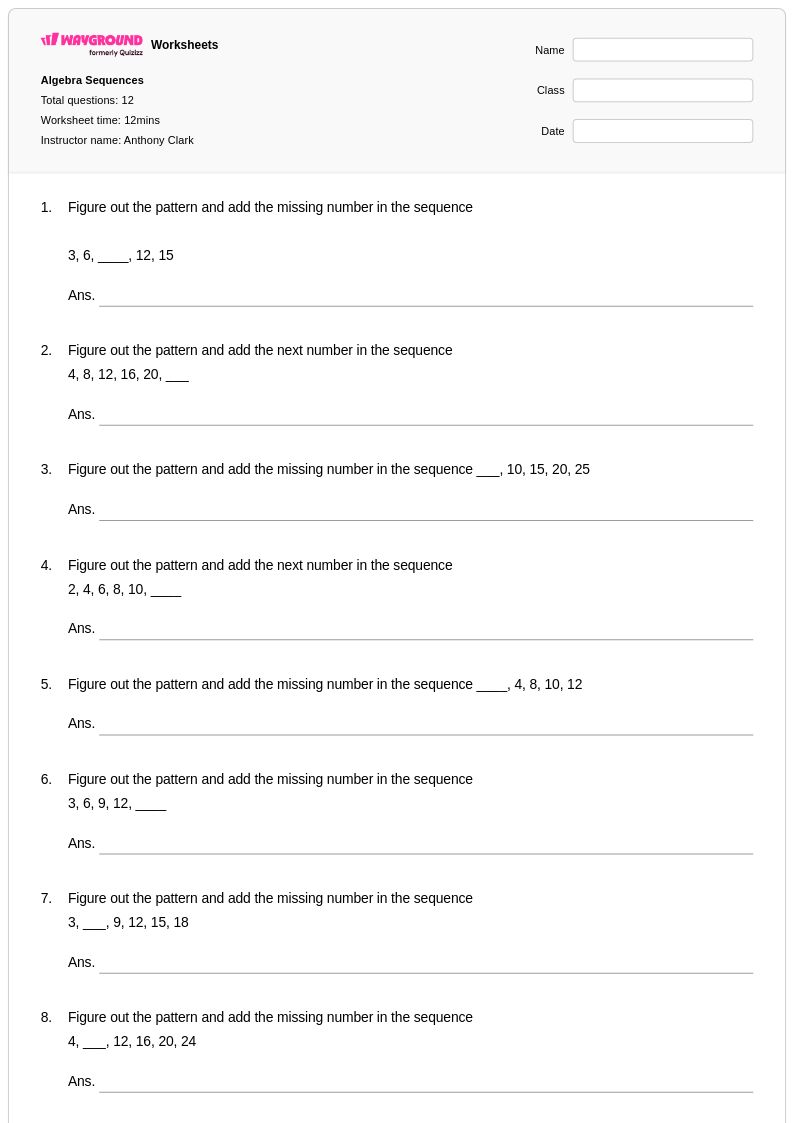
12 Q
4th - Uni
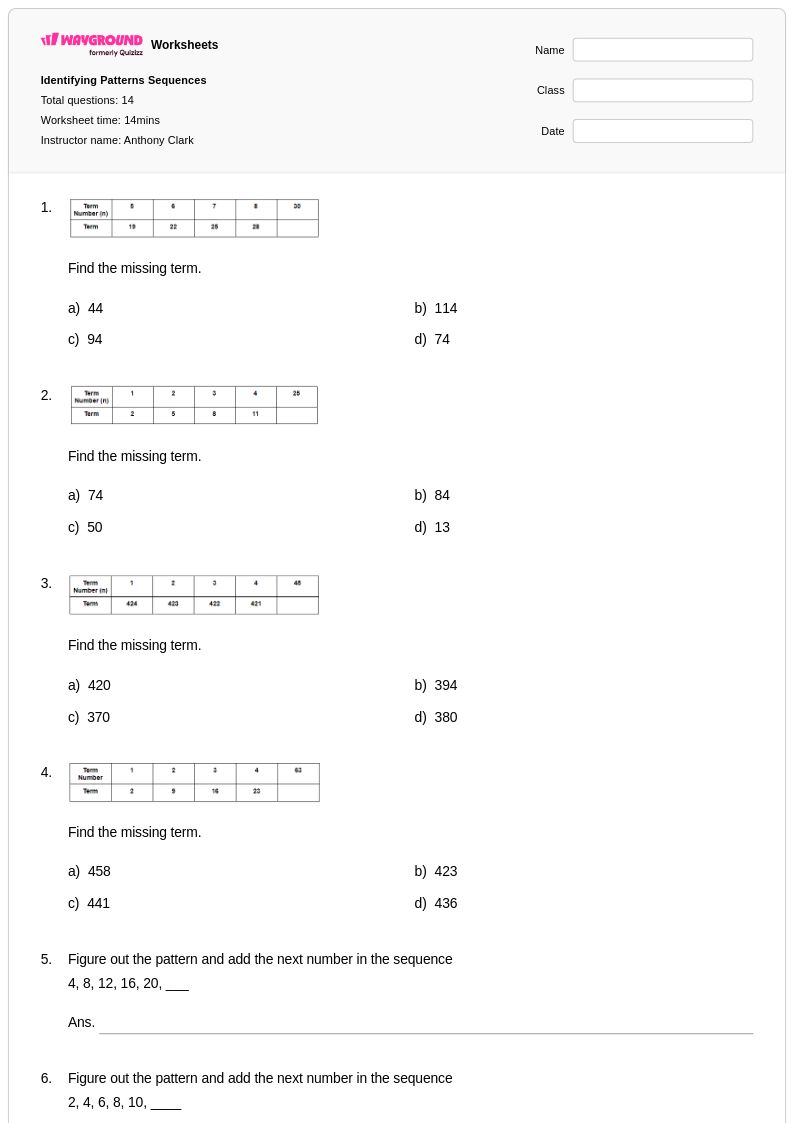
14 Q
5th - Uni
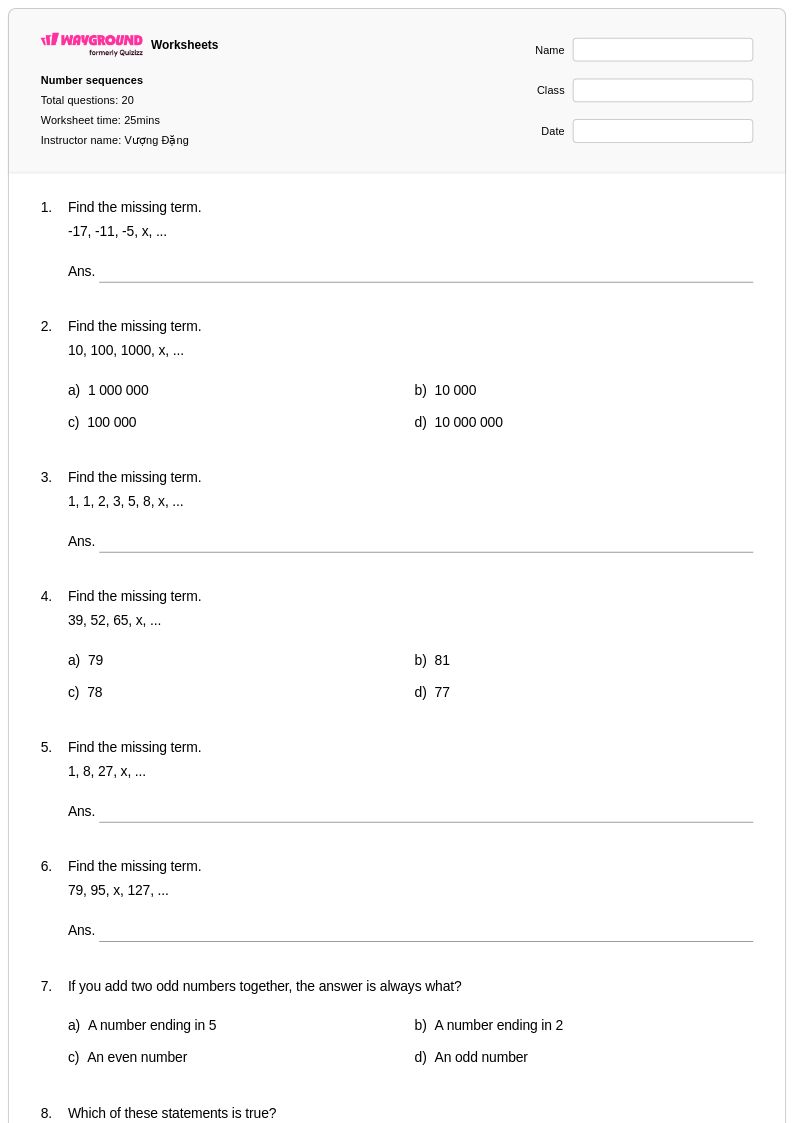
20 Q
5th - 8th
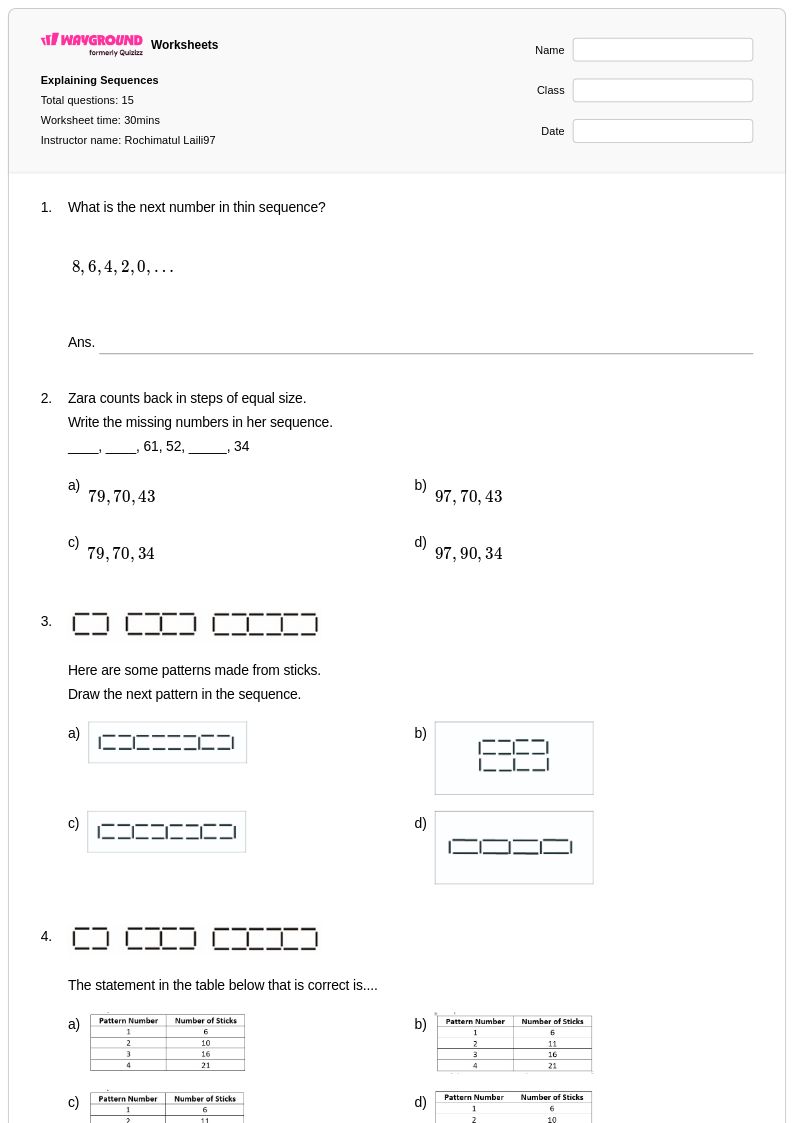
15 Q
5th
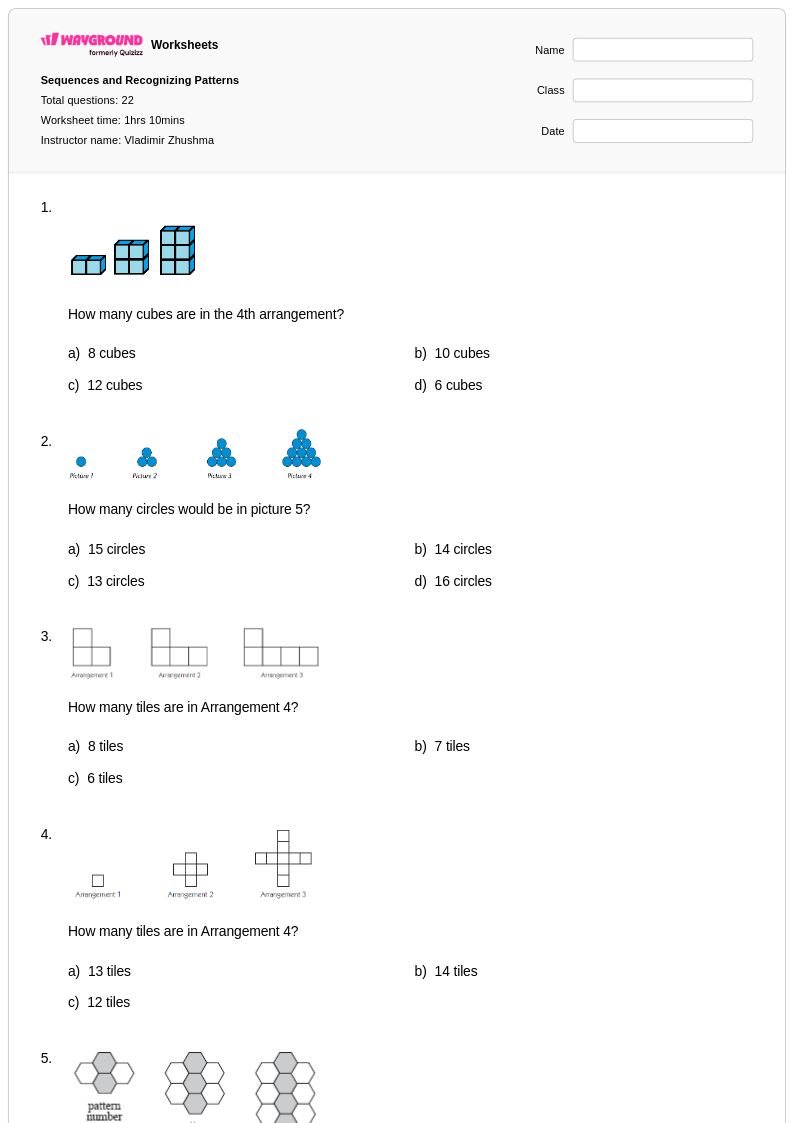
22 Q
5th - 10th
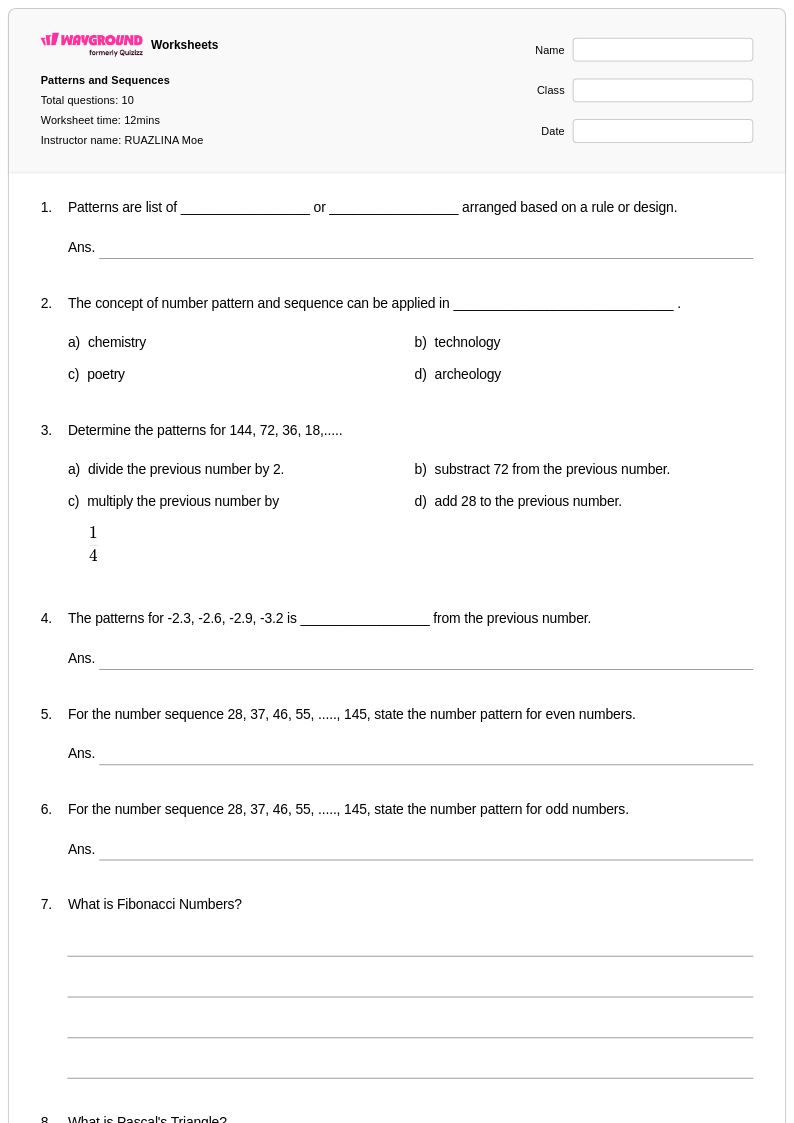
10 Q
1st - 12th
21 Q
4th - 7th
15 Q
1st - 12th
16 Q
3rd - Uni
8 Q
2nd - 12th
20 Q
5th
20 Q
5th - 12th
16 Q
4th - 7th
20 Q
5th
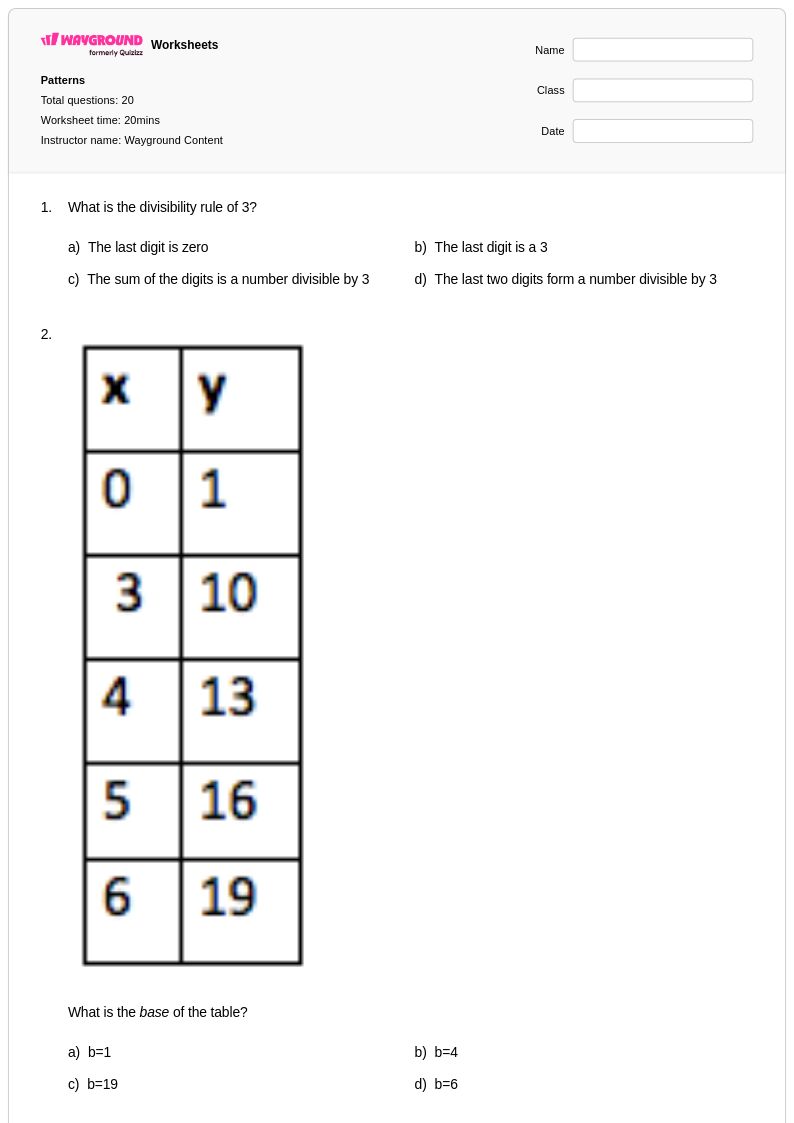
20 Q
5th
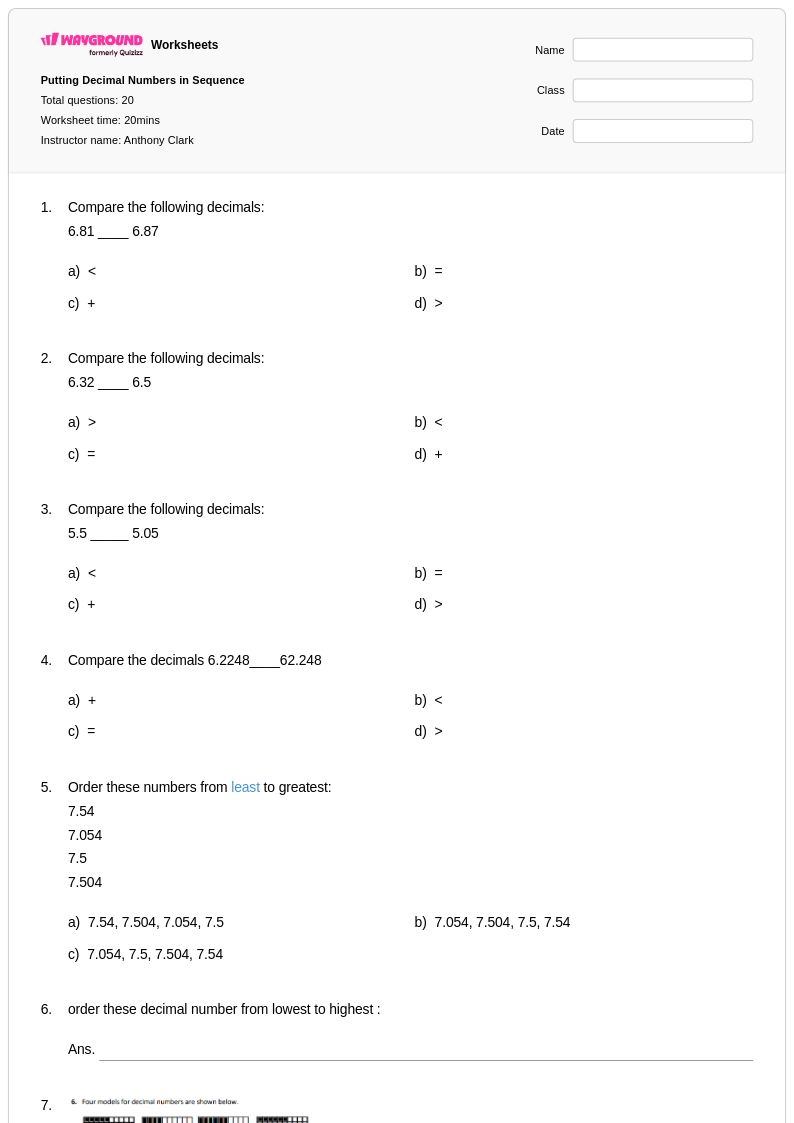
20 Q
4th - Uni
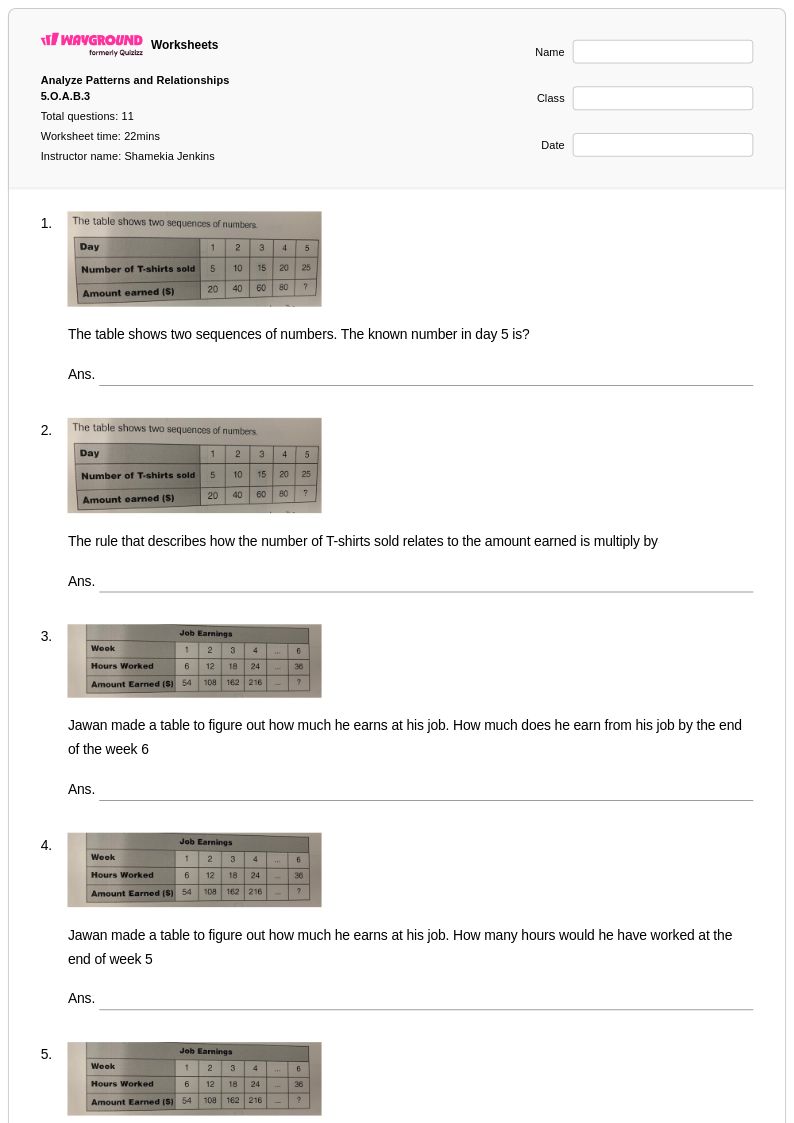
11 Q
5th
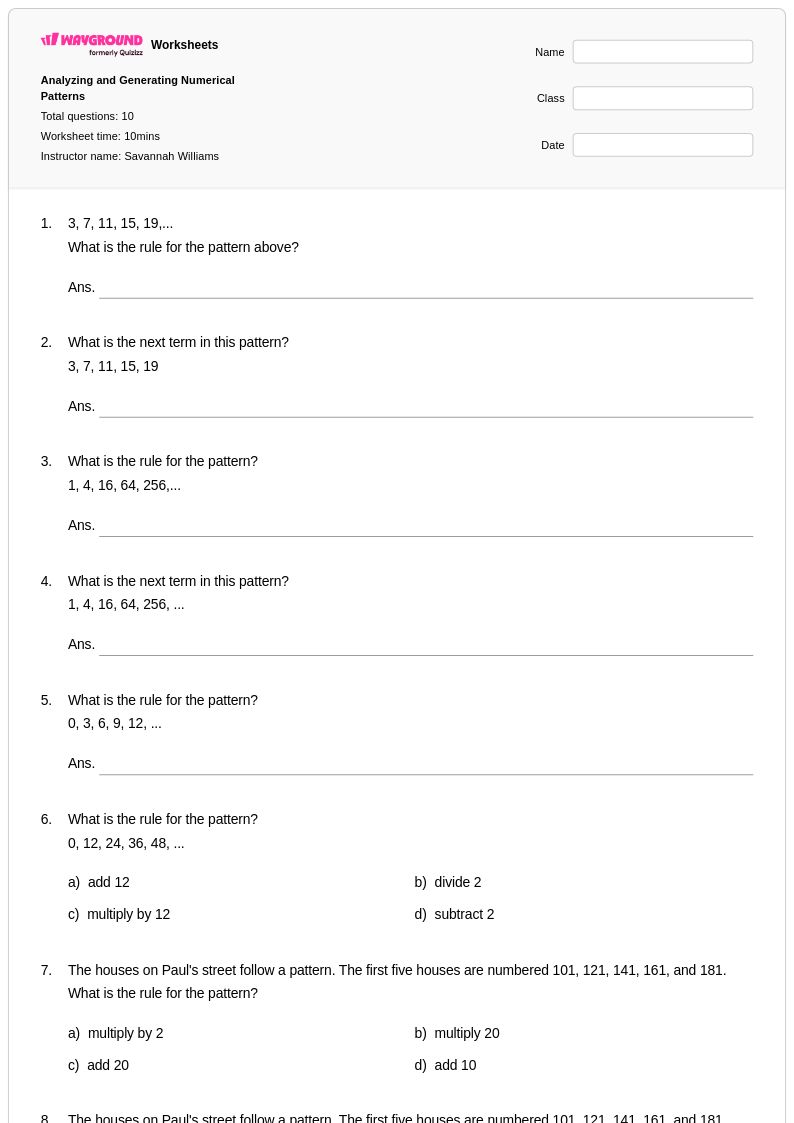
10 Q
5th
Explore Fibonacci Sequence Worksheets by Grades
Explore Other Subject Worksheets for grade 5
Explore printable Fibonacci Sequence worksheets for Grade 5
Fibonacci Sequence worksheets for Grade 5 students available through Wayground (formerly Quizizz) introduce young mathematicians to one of mathematics' most fascinating numerical patterns. These carefully designed practice problems guide fifth graders through the fundamental concepts of the Fibonacci sequence, where each number is the sum of the two preceding numbers (1, 1, 2, 3, 5, 8, 13...). Students develop critical pattern recognition skills, logical thinking abilities, and number sense through engaging exercises that explore how this sequence appears in nature and mathematical contexts. The comprehensive worksheet collection includes free printables with complete answer keys in convenient PDF format, allowing students to work independently while building confidence in identifying, extending, and analyzing Fibonacci patterns.
Wayground (formerly Quizizz) empowers educators with millions of teacher-created Fibonacci Sequence resources specifically tailored for Grade 5 mathematics instruction. The platform's robust search and filtering capabilities enable teachers to quickly locate worksheets that align with curriculum standards and match their students' specific learning needs. Advanced differentiation tools allow instructors to modify existing materials or create customized versions that provide appropriate challenge levels for diverse learners, supporting both remediation for struggling students and enrichment opportunities for advanced mathematicians. Available in both printable and digital formats, these flexible resources streamline lesson planning while providing teachers with reliable tools for skill practice, formative assessment, and reinforcing the mathematical reasoning essential for understanding sequences and series concepts.
FAQs
How do I teach the Fibonacci sequence to Grade 5 students?
What Fibonacci sequence exercises are right for fifth graders?
What errors do Grade 5 students commonly make with the Fibonacci sequence?
How do I use Wayground's Grade 5 Fibonacci worksheets in my class?
How does Fibonacci sequence work fit into the Grade 5 Common Core math progression?
How can I differentiate Fibonacci practice for my Grade 5 students?