Free Printable Finding Average Worksheets for Grade 4
Explore Wayground's free Grade 4 finding average worksheets and printables that help students master calculating mean values through engaging practice problems with comprehensive answer keys.
Explore printable Finding Average worksheets for Grade 4
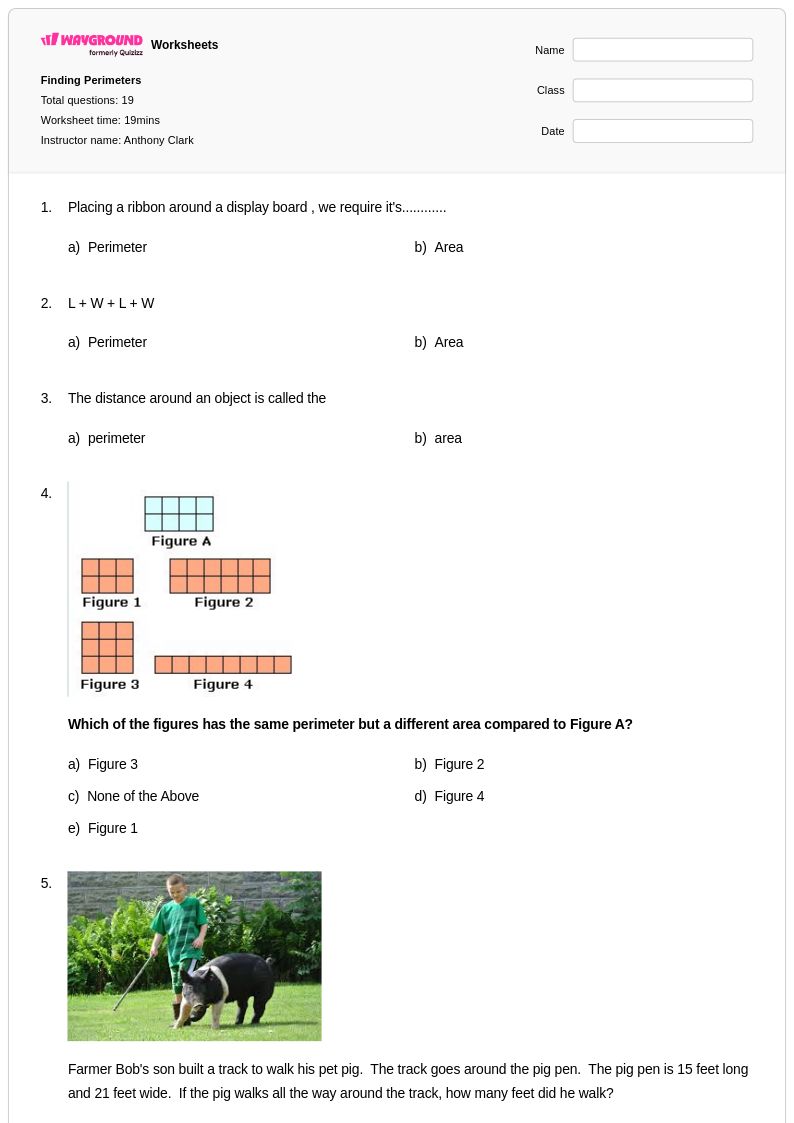
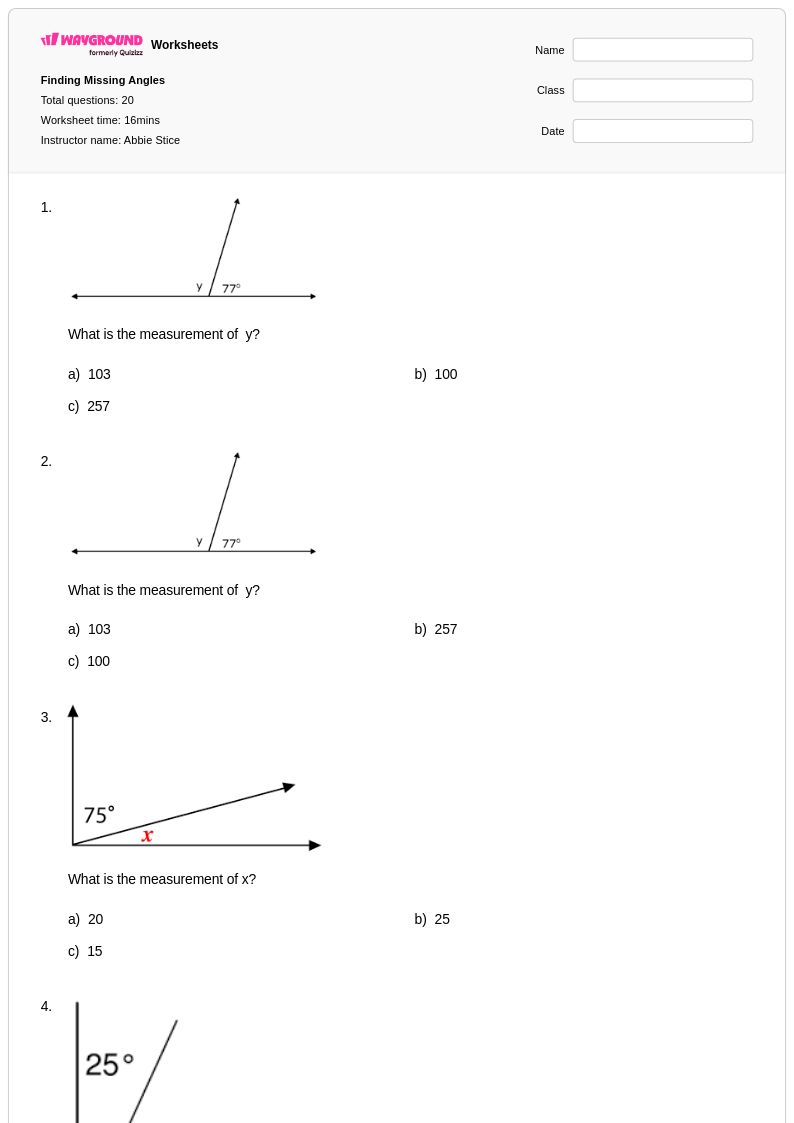
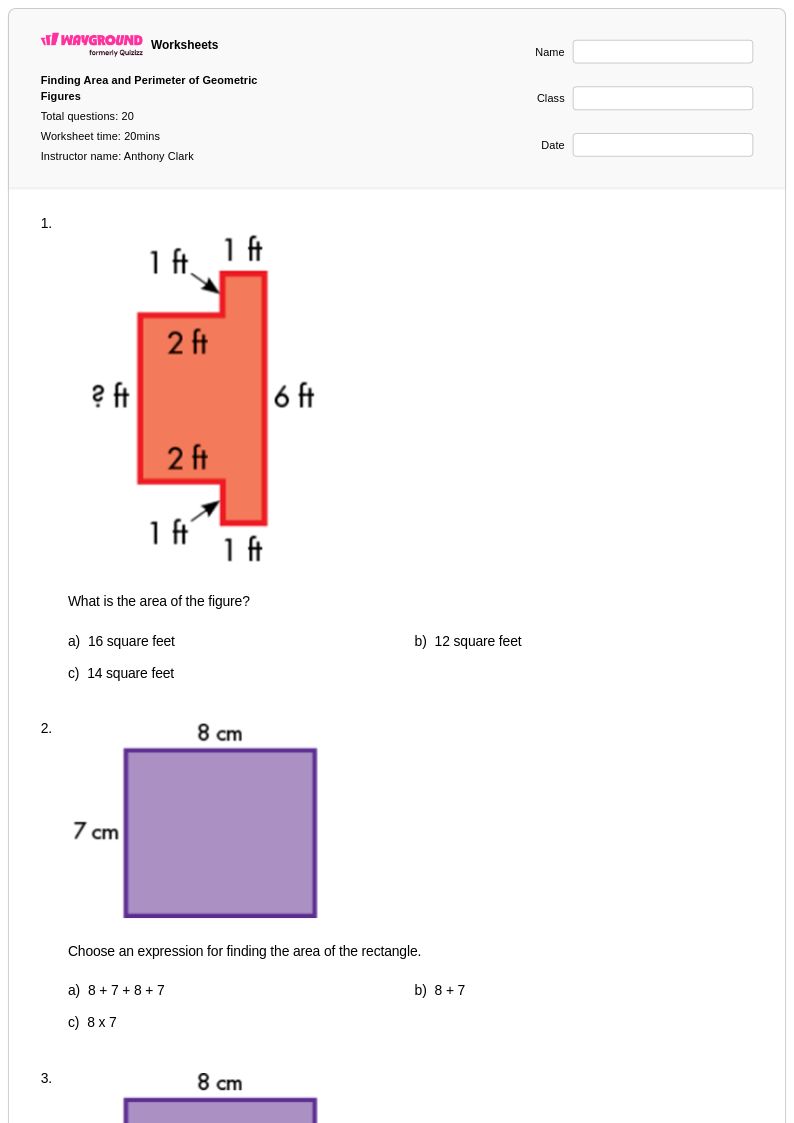
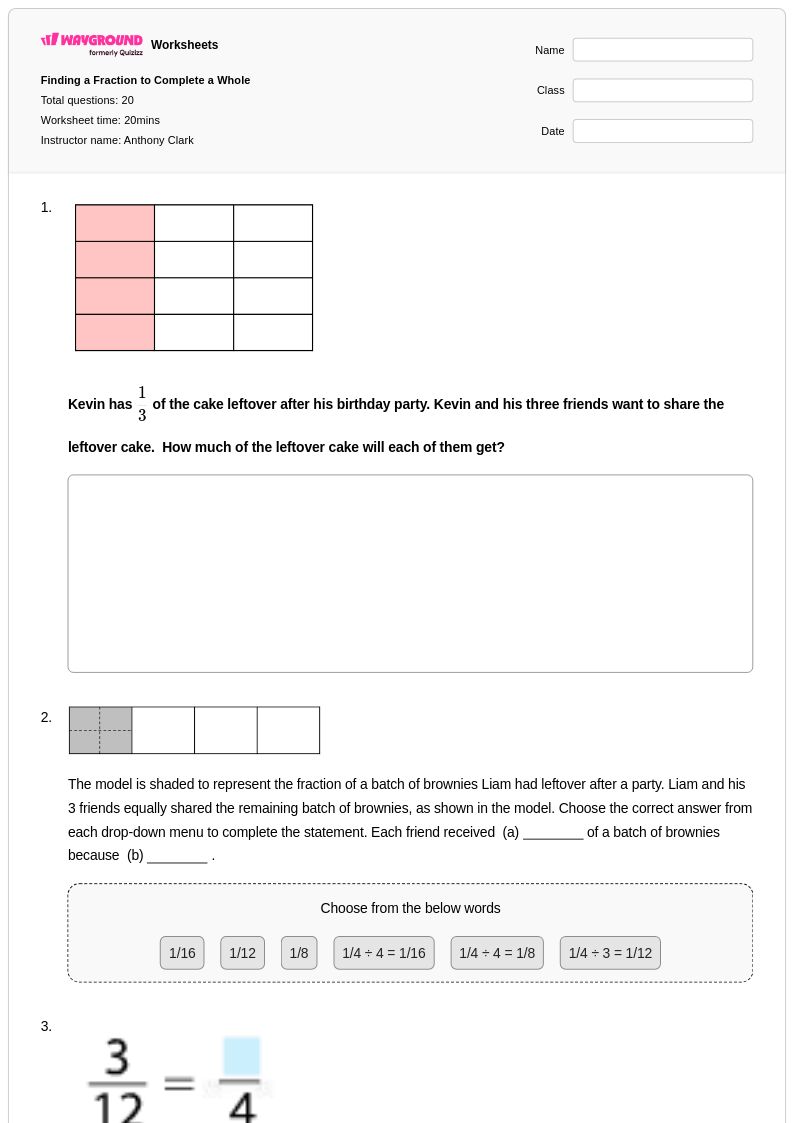
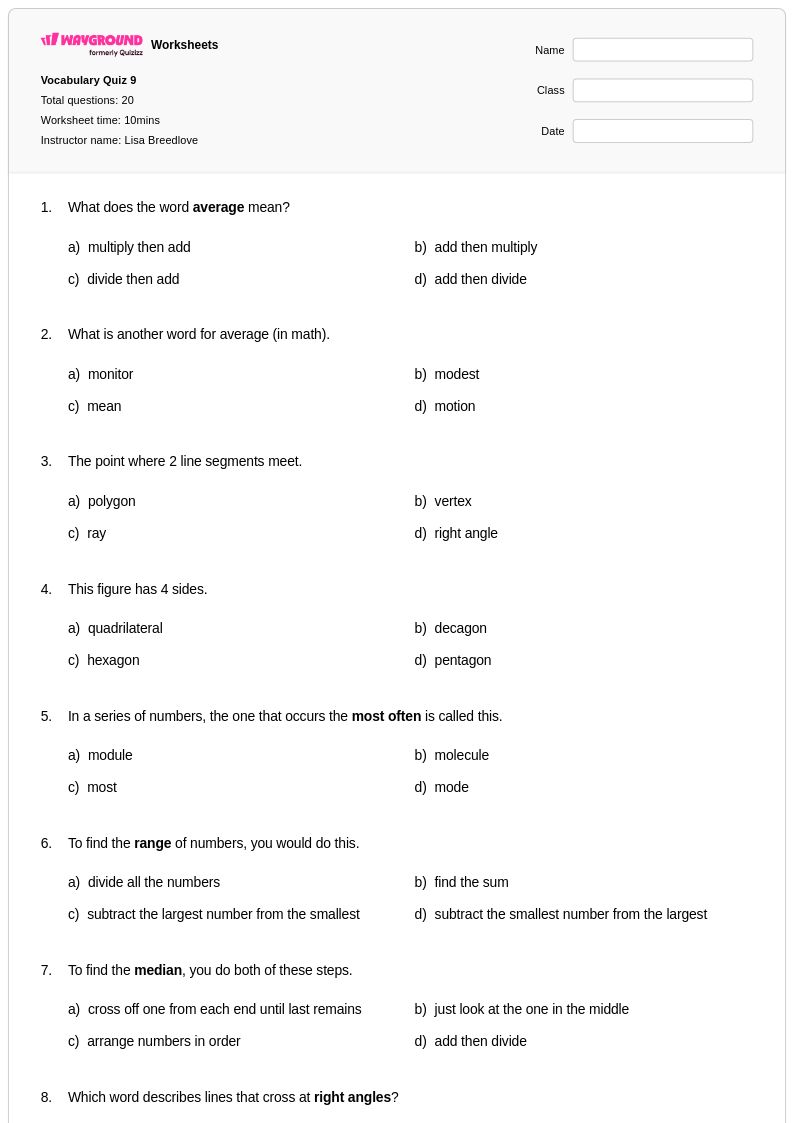
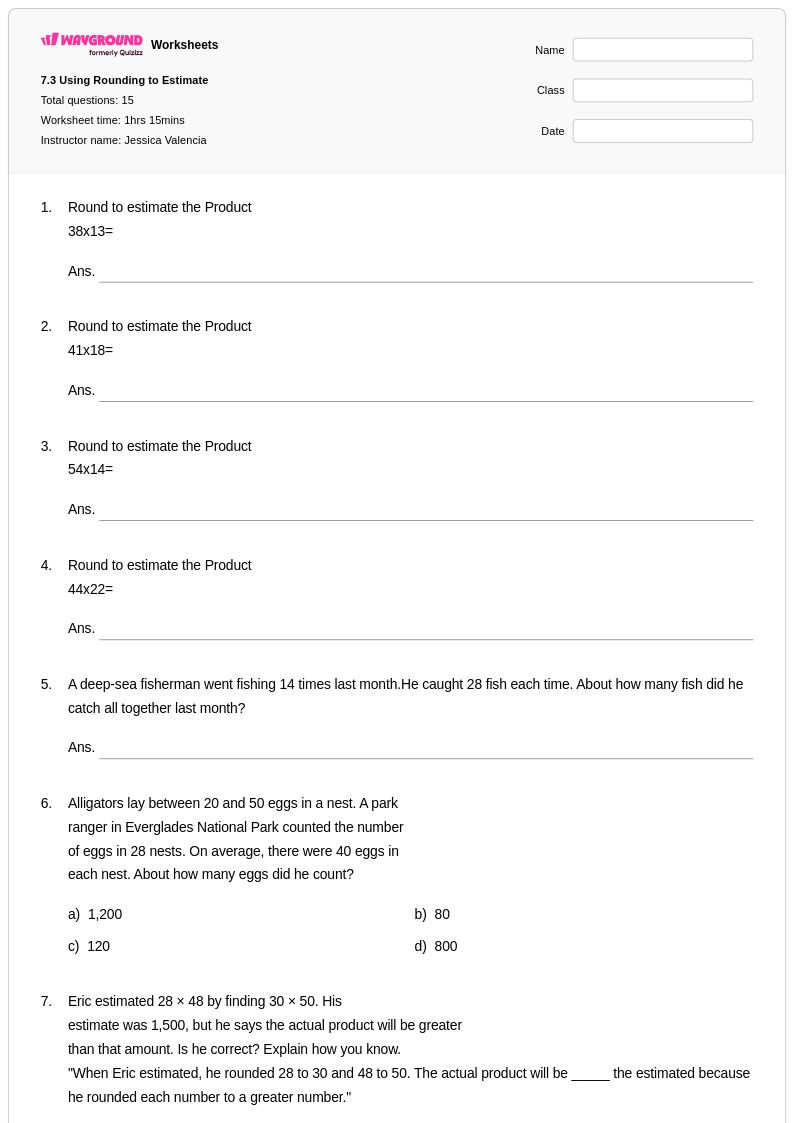
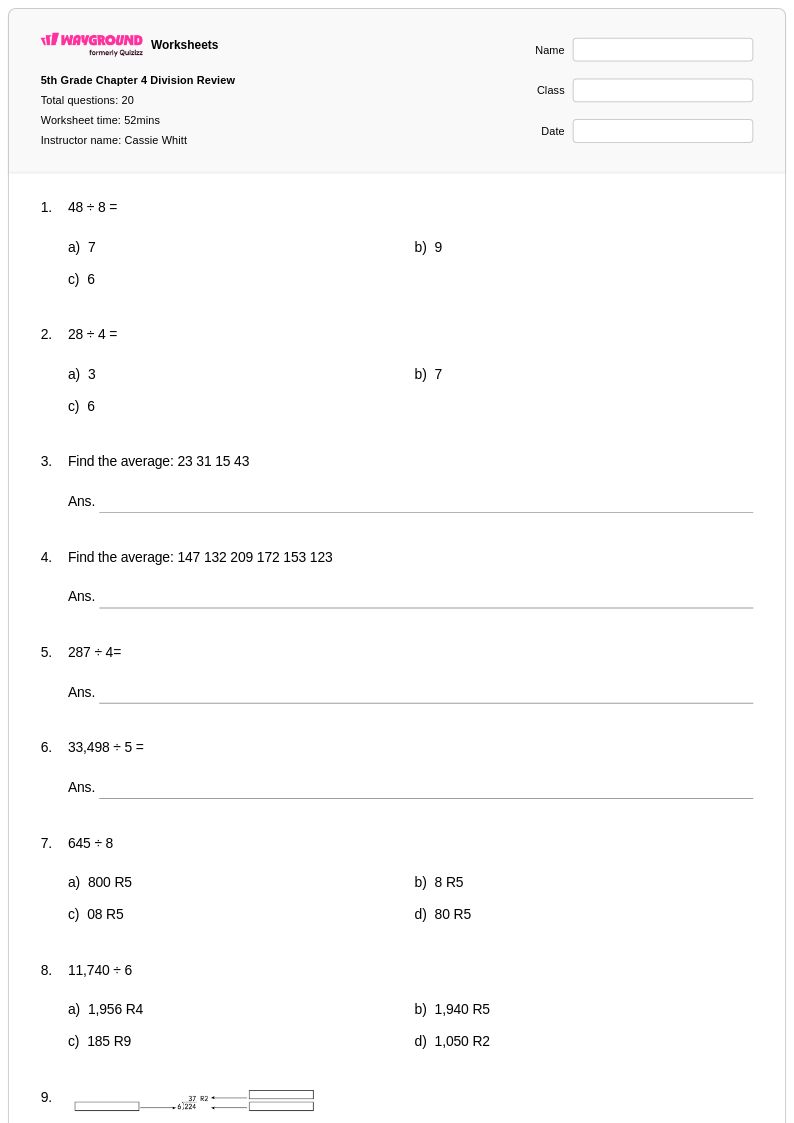
Finding average worksheets for Grade 4 mathematics provide essential practice in developing foundational statistical reasoning and computational skills that fourth-grade students need to master. These comprehensive worksheets available through Wayground (formerly Quizizz) guide students through calculating the mean of data sets using age-appropriate numbers and real-world contexts, such as finding the average number of books read by classmates or the average temperature over a week. The practice problems systematically build understanding by starting with simple datasets containing just a few numbers before progressing to more complex scenarios, ensuring students grasp both the conceptual meaning of average and the step-by-step process of adding values and dividing by the count. Each worksheet includes detailed answer keys and explanations, making these free printables valuable resources for both classroom instruction and independent practice at home.
Wayground (formerly Quizizz) empowers educators with an extensive collection of teacher-created finding average worksheets specifically designed for Grade 4 mathematics instruction. The platform's robust search and filtering capabilities allow teachers to quickly locate resources that align with specific curriculum standards and match their students' diverse learning needs. These differentiation tools enable educators to customize worksheets by adjusting difficulty levels, modifying problem contexts, or adding visual supports, ensuring every student can access meaningful practice with calculating averages. Available in both printable PDF format and interactive digital versions, these worksheets seamlessly support various teaching approaches, from whole-class instruction to small group remediation and enrichment activities, while the millions of resources available ensure teachers always have fresh, engaging materials for skill practice and assessment preparation.
FAQs
How do I teach finding averages to Grade 4 students?
By fourth grade, students have multi-digit addition and basic division, so the algorithm is within reach — the teaching challenge is making sure they understand what the average represents, not just how to compute it. A reliable approach: present a small data set (e.g., books read by five students), ask what a 'fair' number would be if everyone read the same amount, then show how adding and dividing gets you there. Real-world contexts like weekly temperatures or quiz scores keep the concept grounded once the procedure is introduced.
What practice problems are most effective for Grade 4 average skills?
Start with 3–5 value data sets using numbers students can add mentally or with one regrouping step, then gradually increase the set size and the size of the numbers. Effective problem types include: finding the average from a simple table, determining a missing value when the average is given, and comparing the averages of two small groups. That last type — comparison — is worth including early because it pushes students to interpret the average rather than just produce a number.
What mistakes do fourth graders commonly make when finding averages?
Two errors show up most often. First, students divide by the wrong number — typically the largest value in the set instead of the count of values. Second, addition errors in the first step cascade into a wrong final answer, making it look like the student doesn't understand averages when the real issue is arithmetic. A structured approach — write the sum, write the count, then divide — makes both errors visible and easier to address.
How do I use Wayground's Grade 4 average worksheets?
Assign the worksheet as a digital quiz on Wayground for self-paced practice with immediate feedback, or print the PDF for independent work or small-group instruction. Every worksheet includes a complete answer key. For printed assignments, the Wayground for Teachers app lets you scan student work to grade it efficiently — no manual re-entry needed.
How does finding averages fit into the Grade 4 math curriculum?
Common Core doesn't formally assess mean until Grade 6, but Grade 4 is when students solidify the multi-digit addition and division with remainders that the algorithm requires. Introducing averages at this grade gives those operations a meaningful application — students aren't just dividing abstractly, they're answering a real question about a data set. It also builds the intuition for center and spread that becomes explicit in the statistics strand in Grades 6 and beyond.
How can I differentiate average practice for my Grade 4 class?
For students still shaky on multi-digit addition, use Wayground's worksheet editor to create a version with wider spacing so they have room to show their work clearly — small formatting changes reduce careless errors at this age. The Reduced Answer Choices accommodation helps students who get overwhelmed by multiple-choice options focus on the math itself. For students ready for a challenge, direct them to problems that include a missing value or require comparing two averages, while the rest of the class works through standard computation problems.