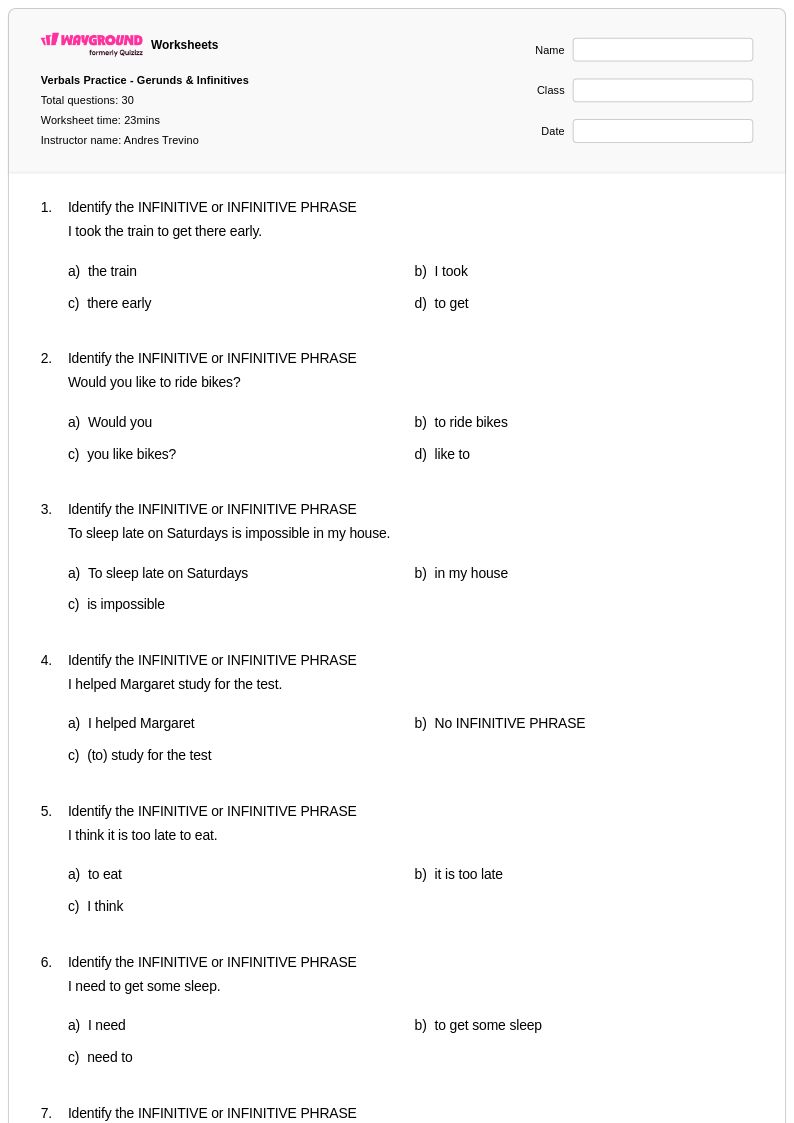
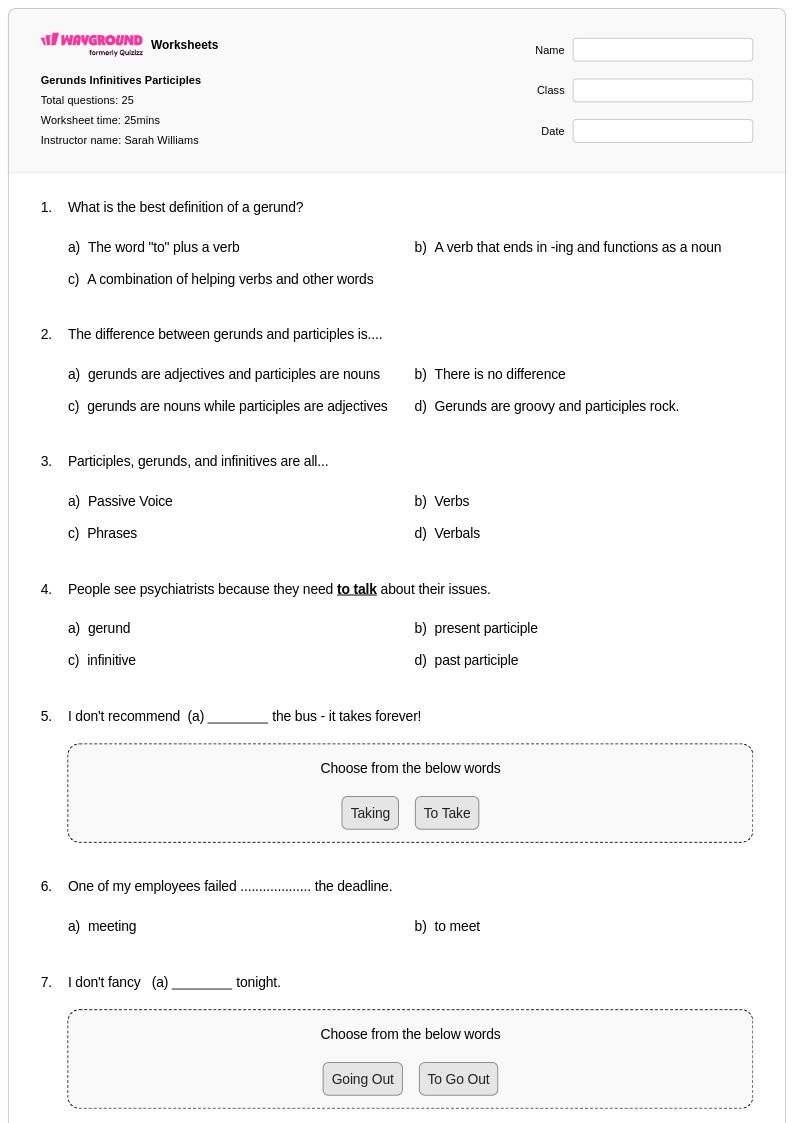
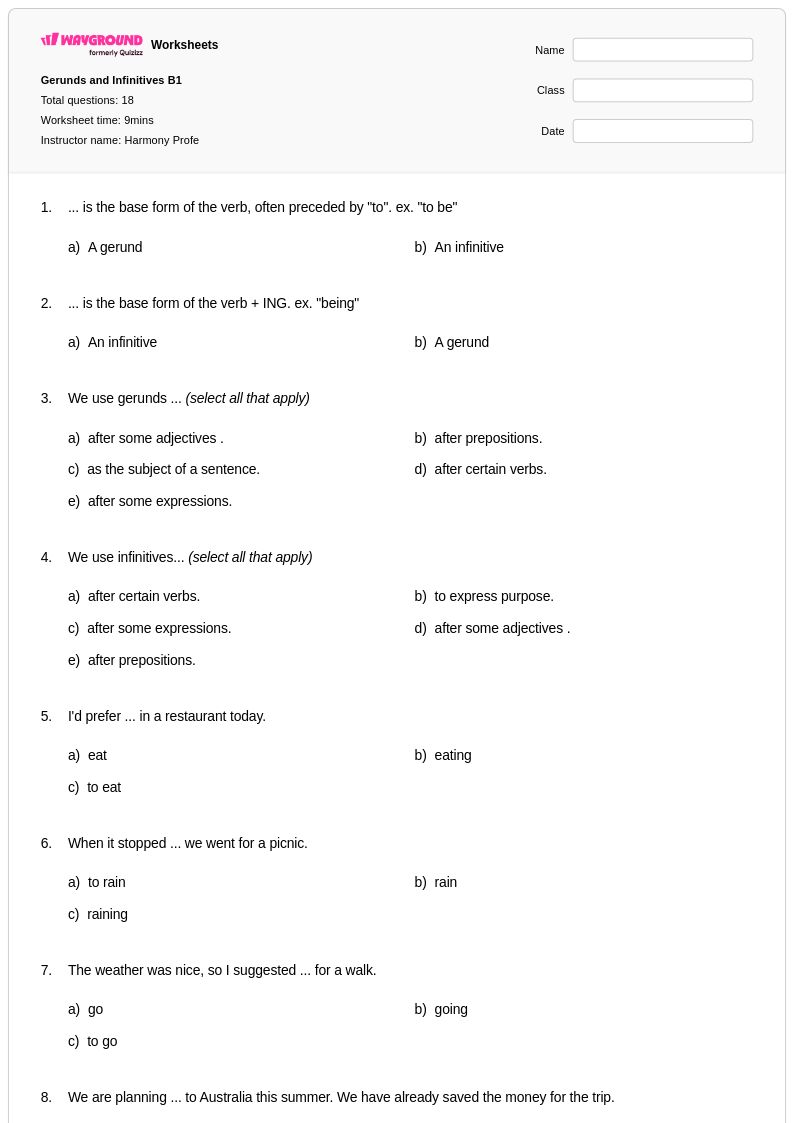
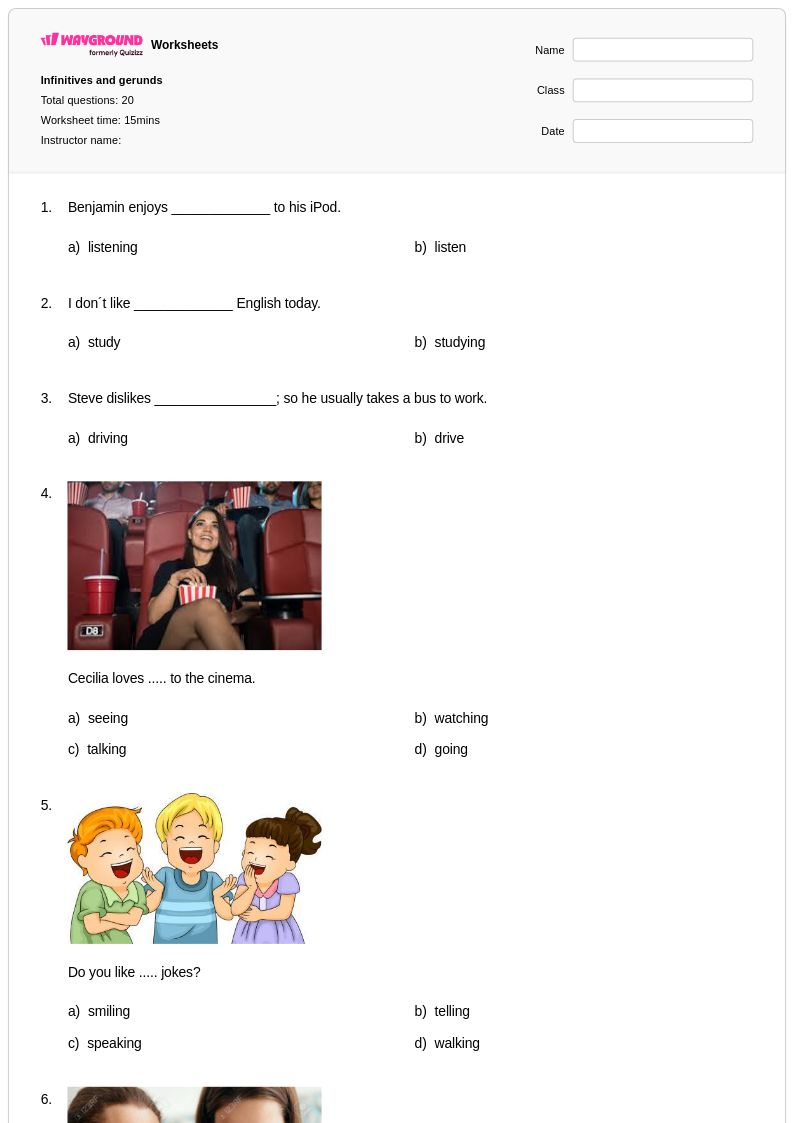
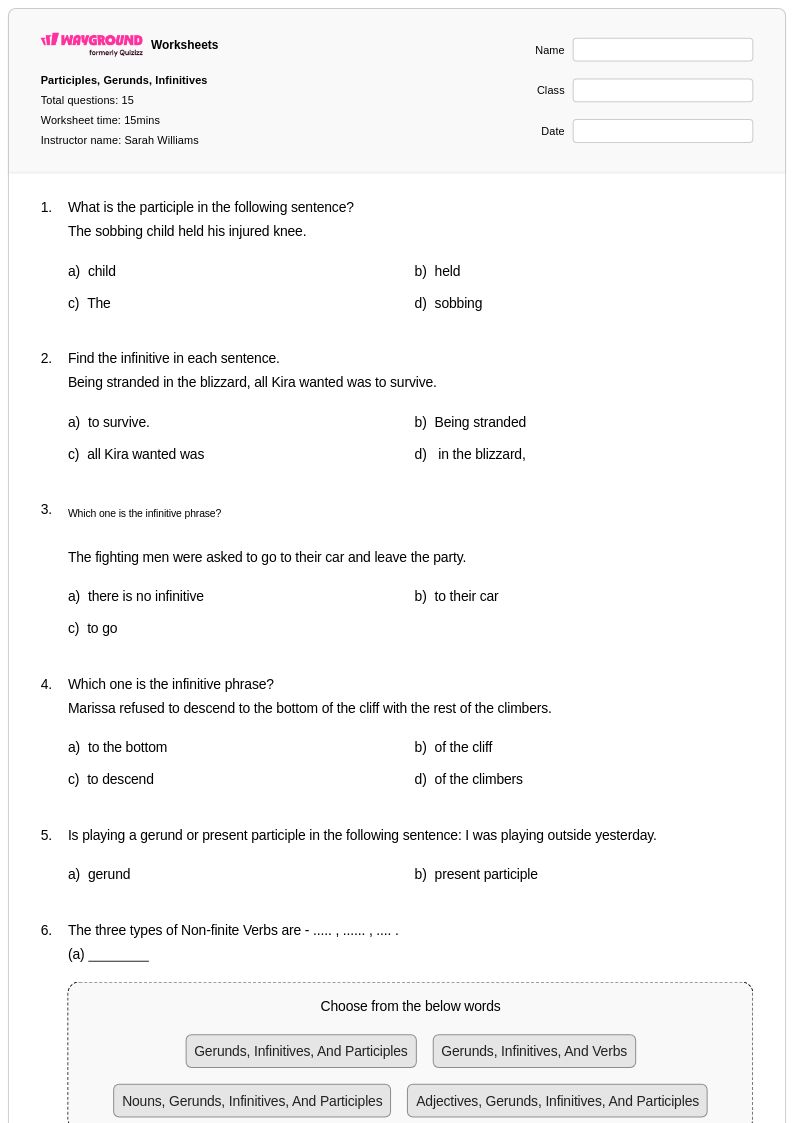
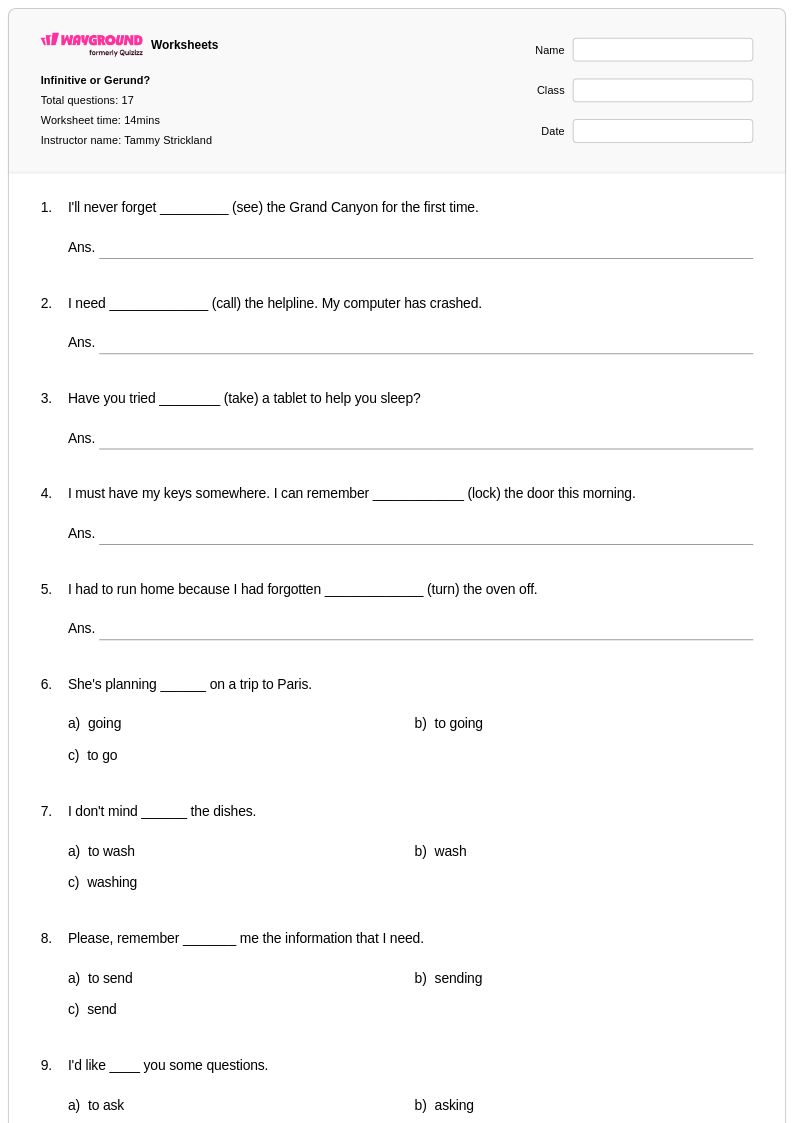
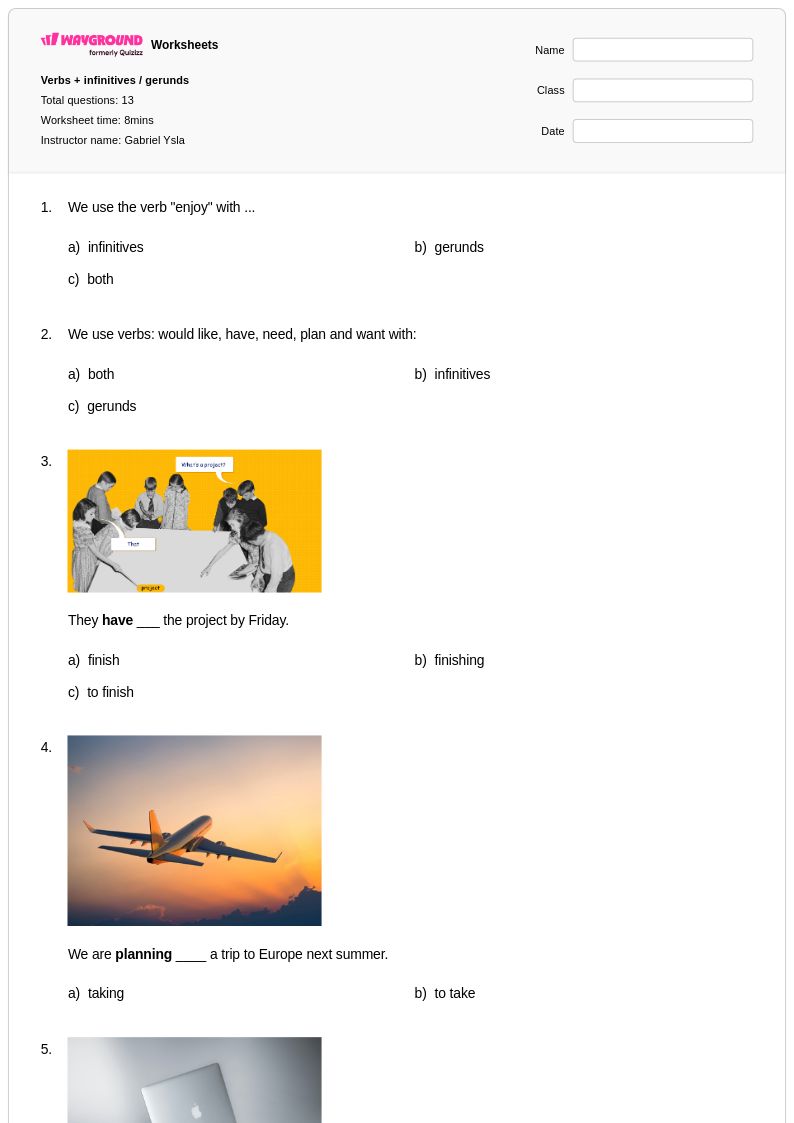
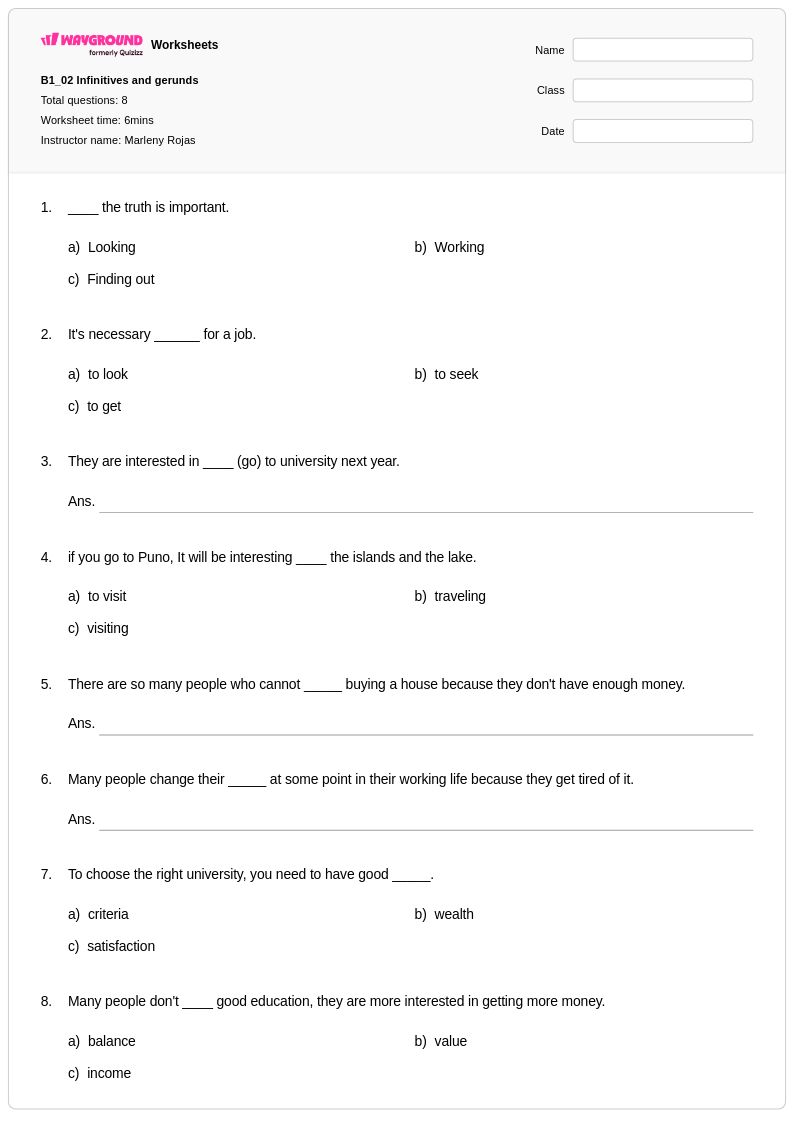
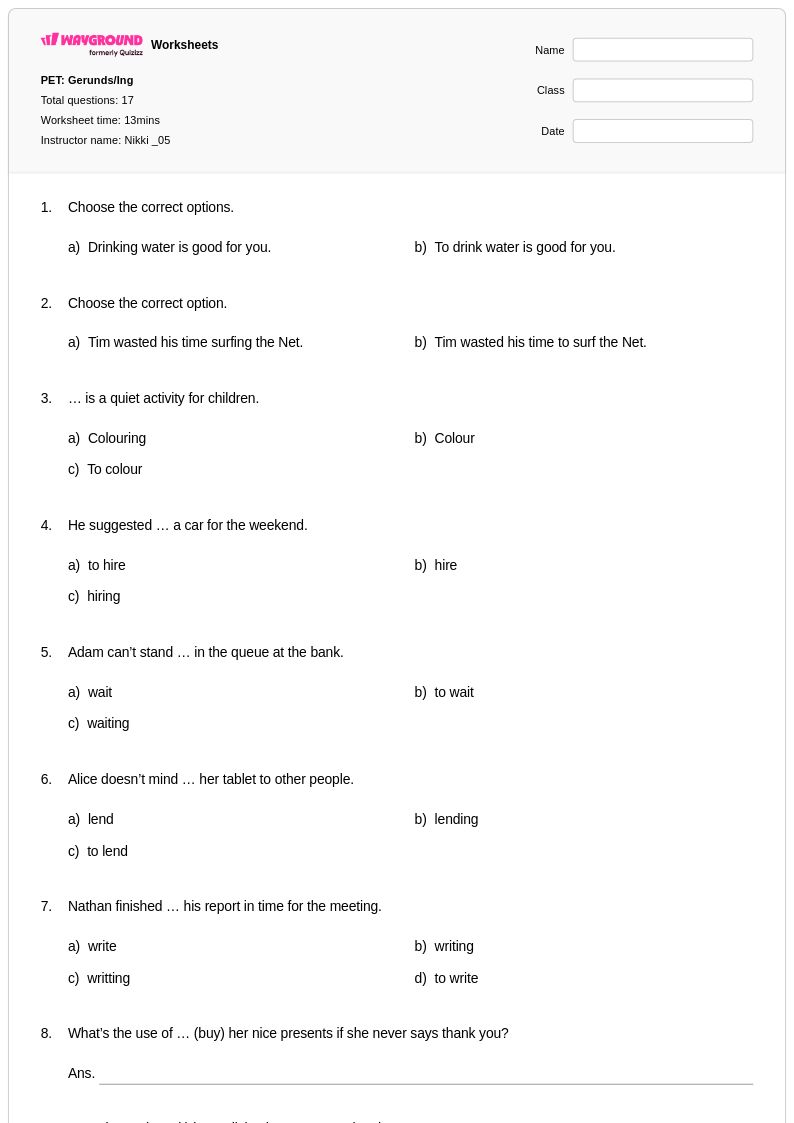
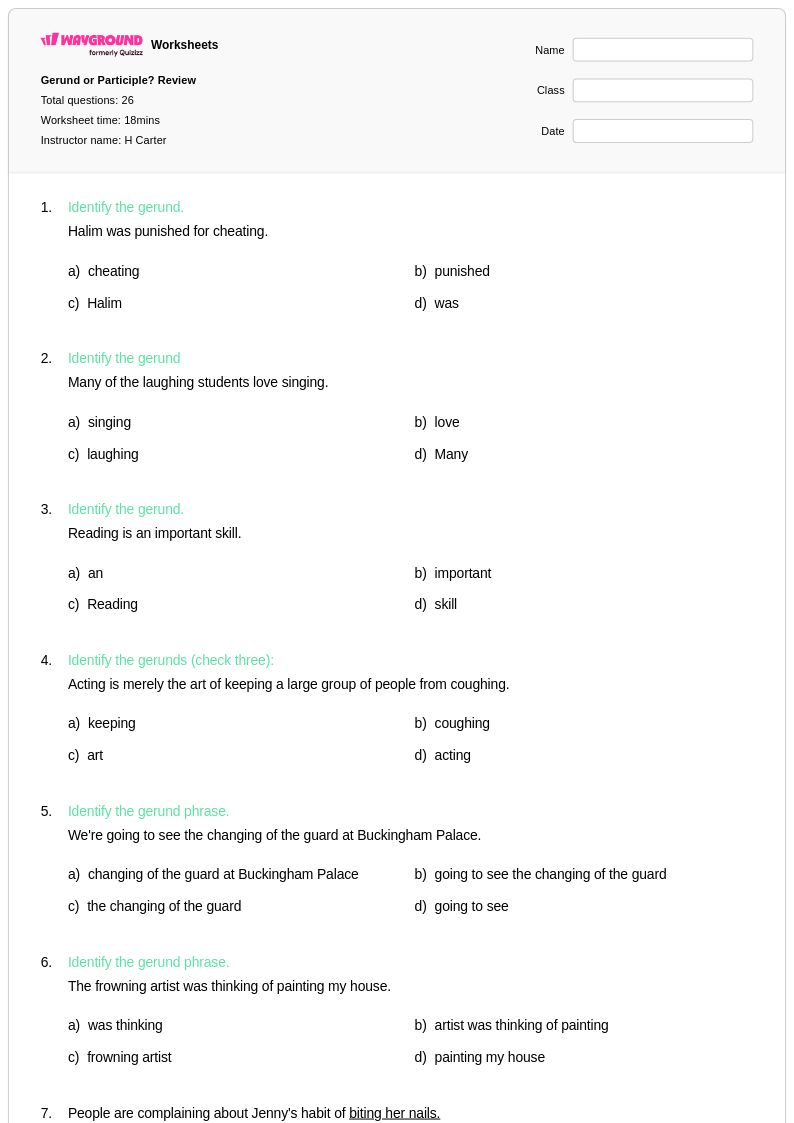
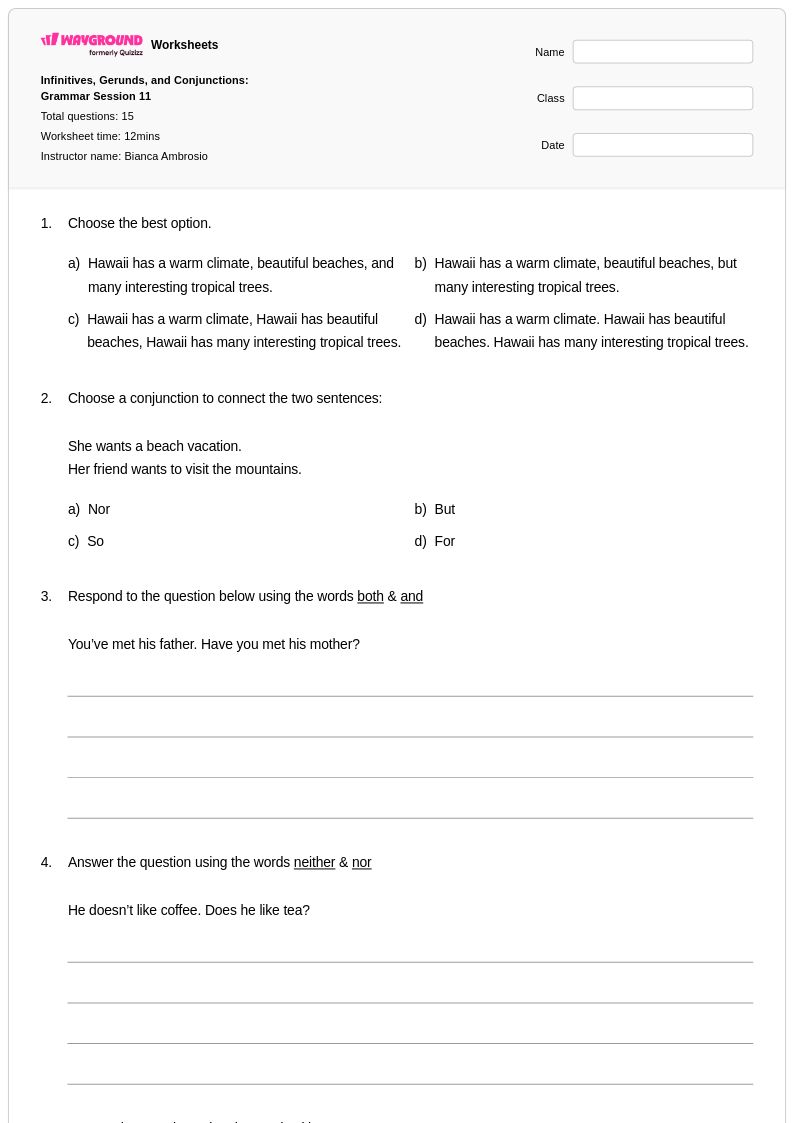
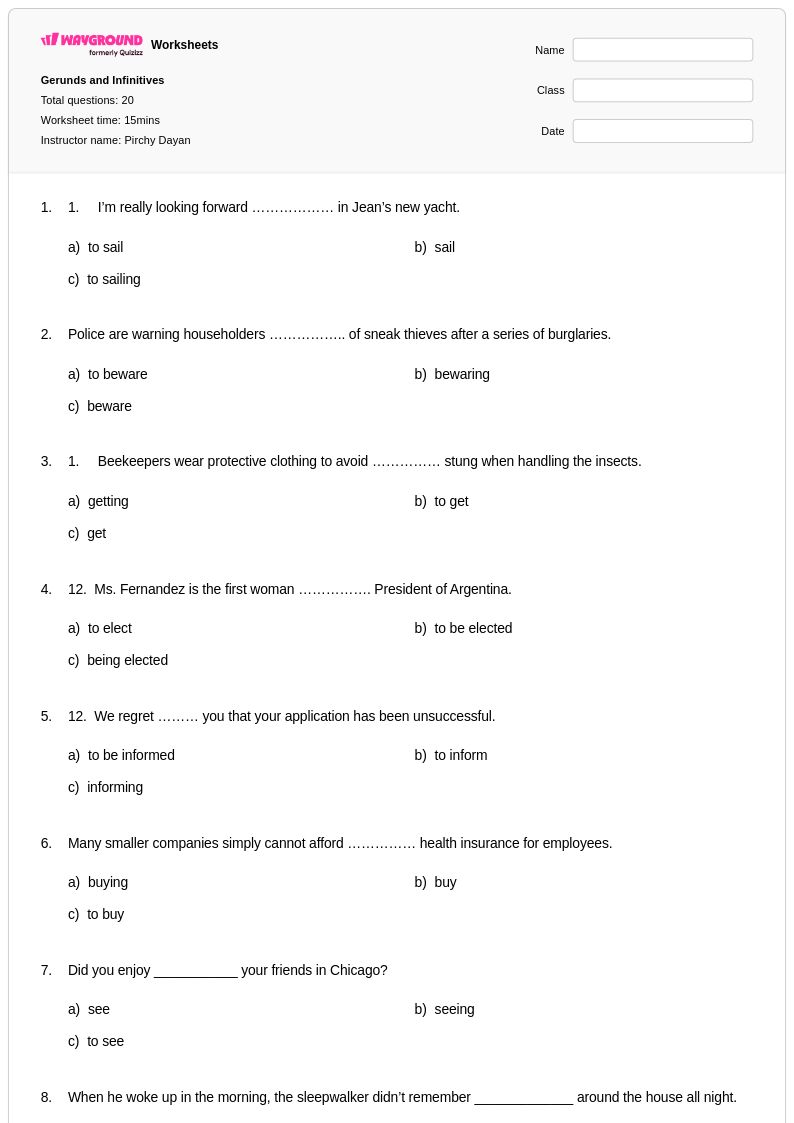
Grade 10 gerunds worksheets from Wayground offer comprehensive printables and practice problems to help students master verbal forms, complete with answer keys and free PDF downloads for effective grammar learning.
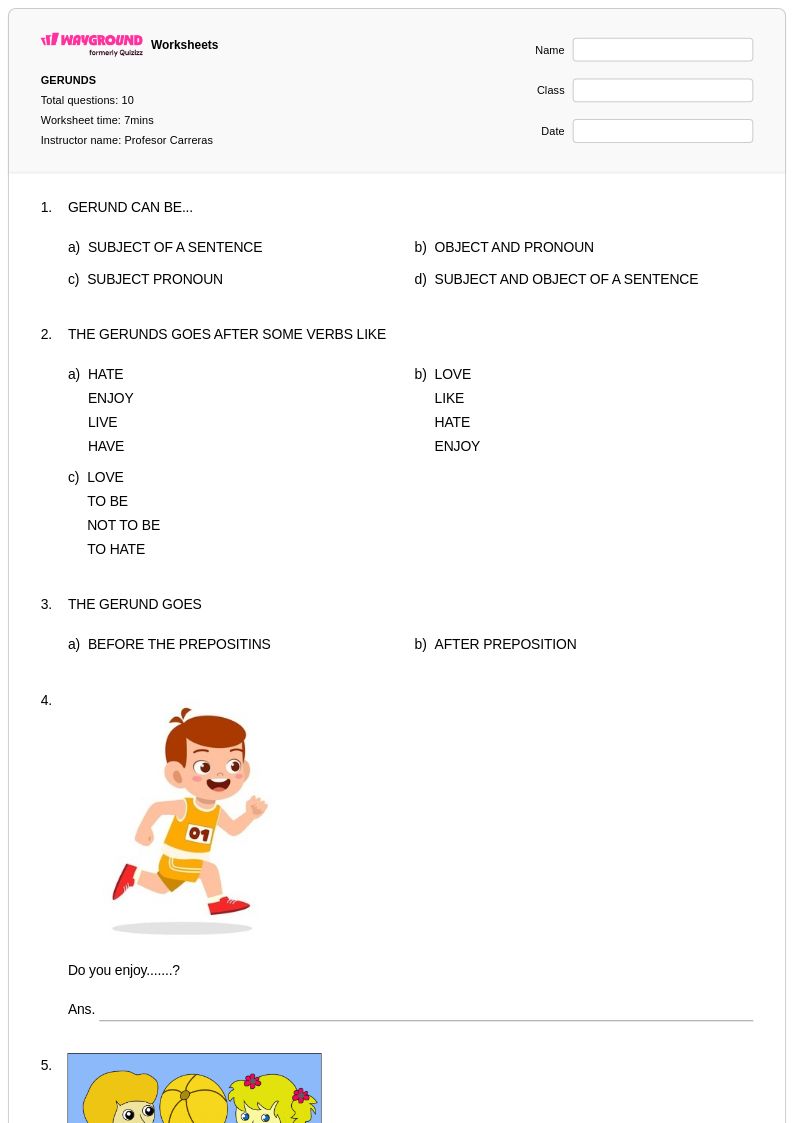
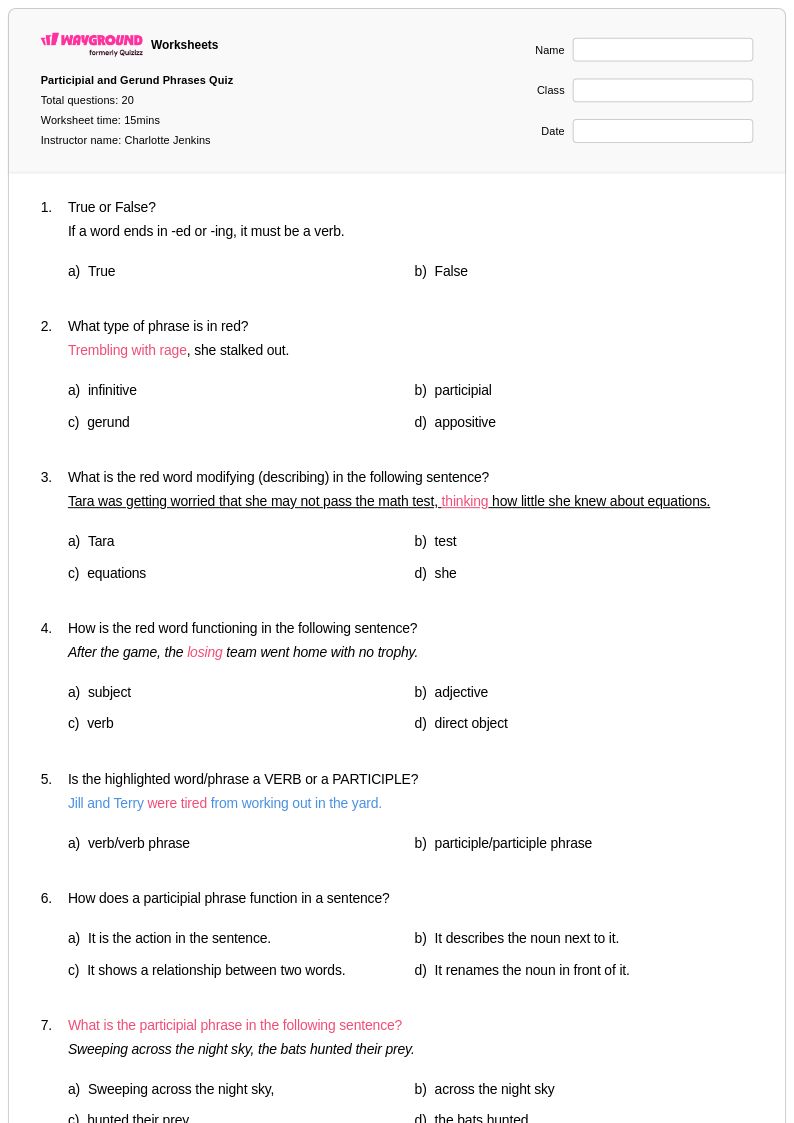
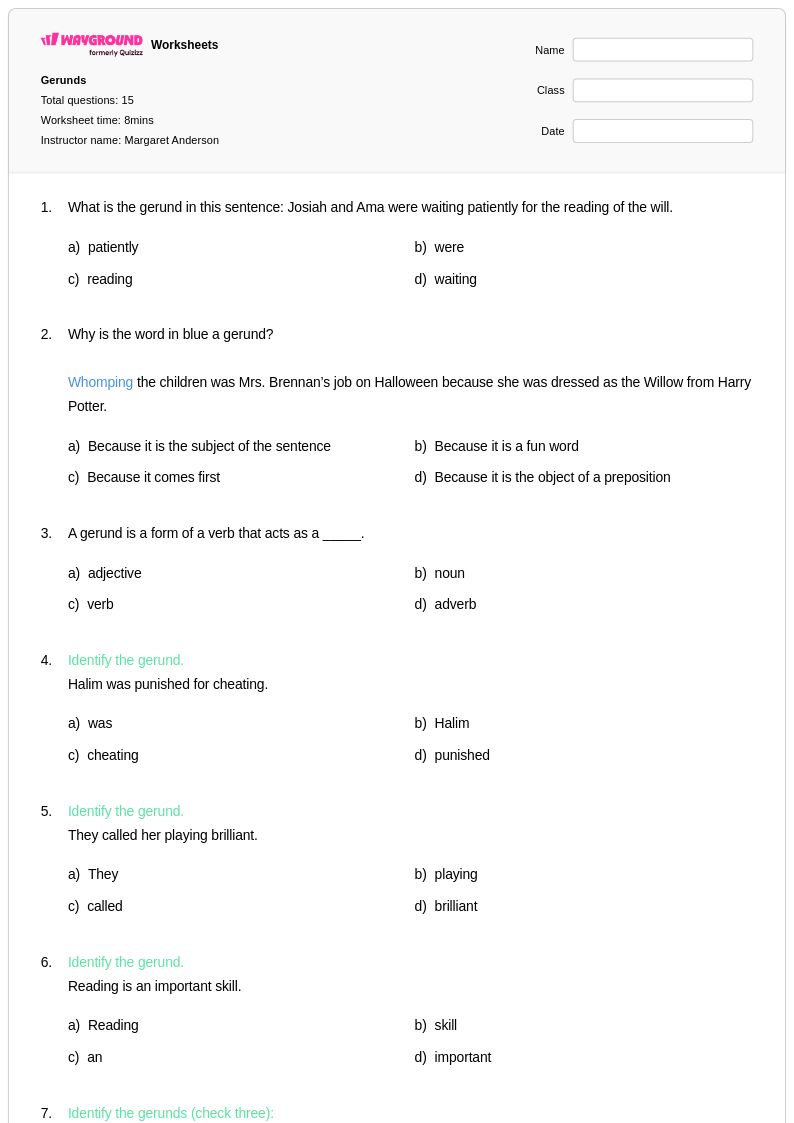
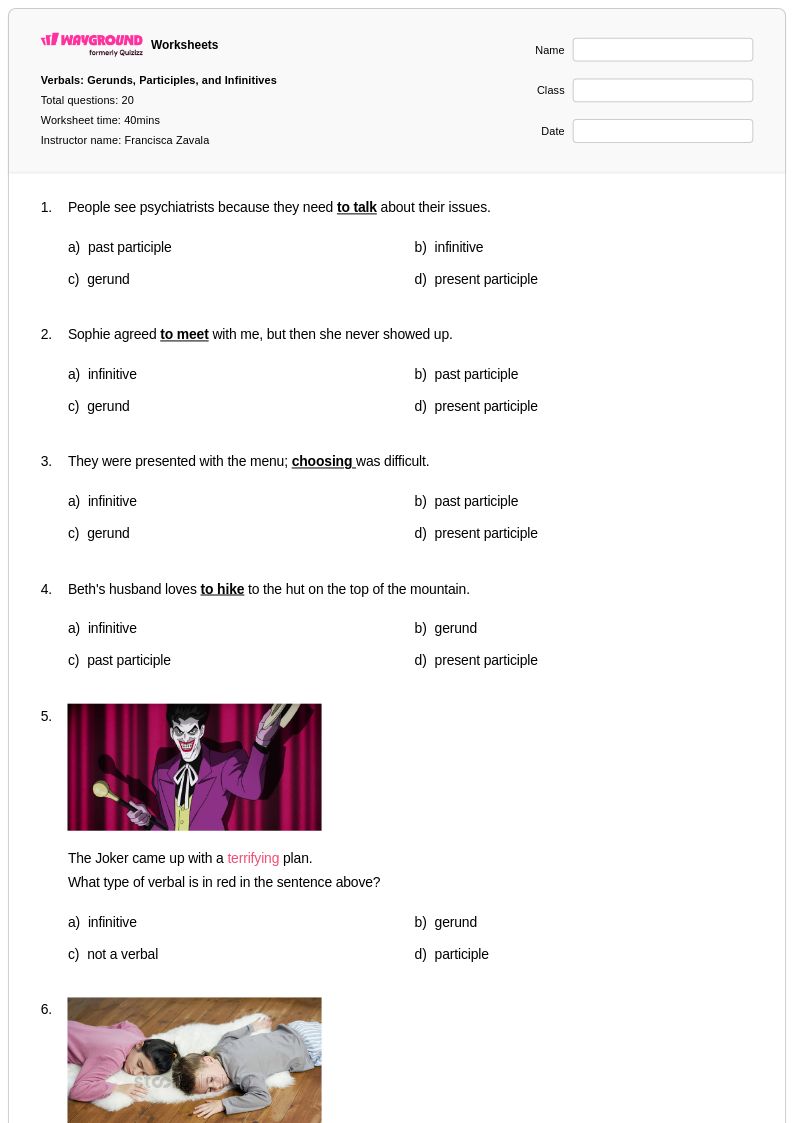
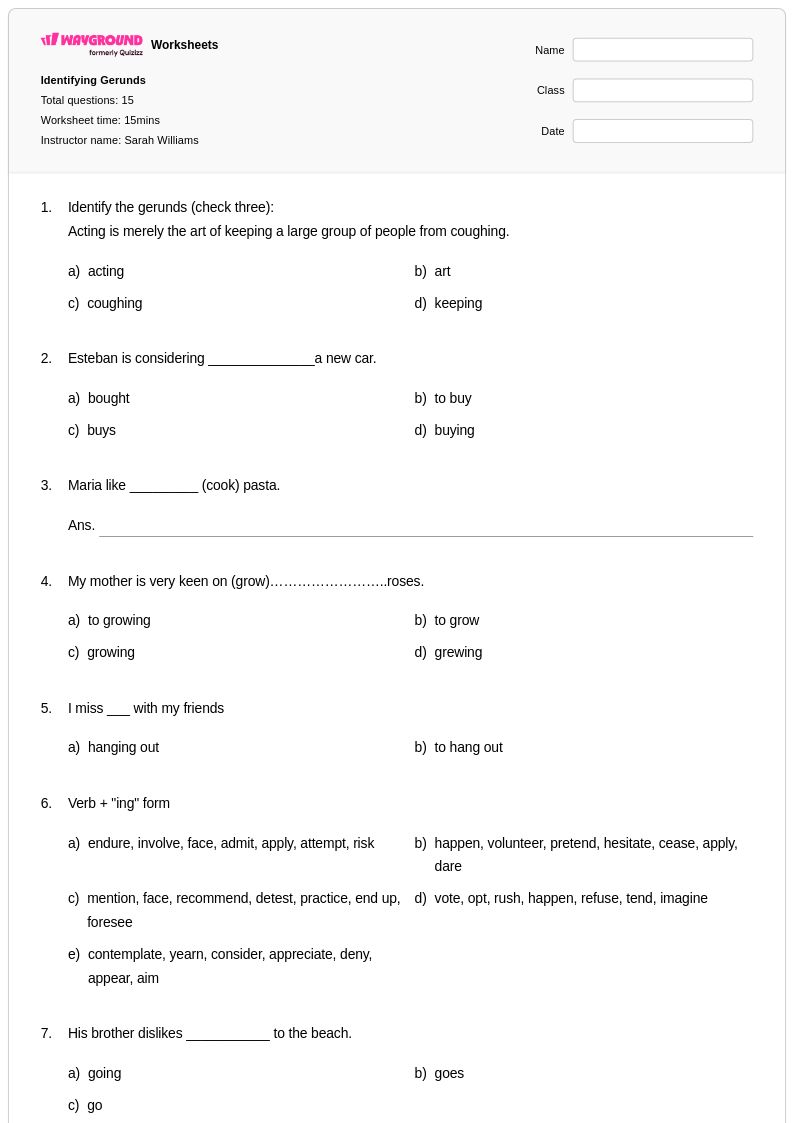
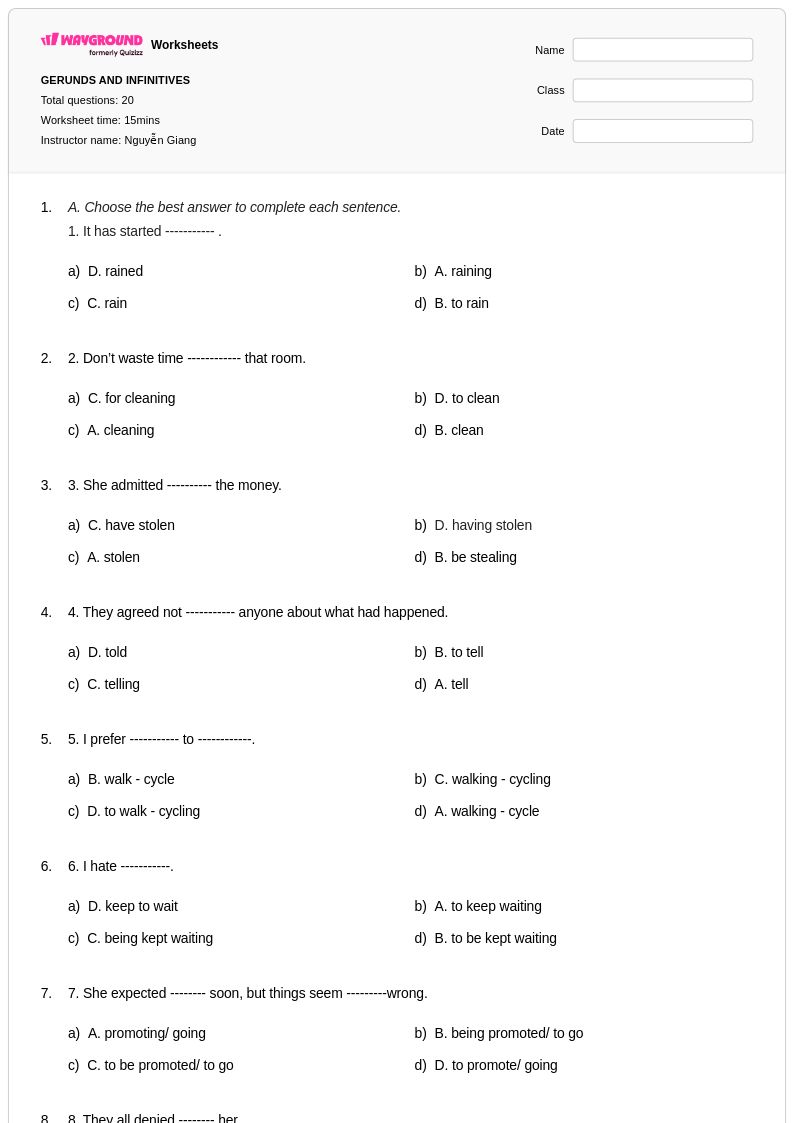
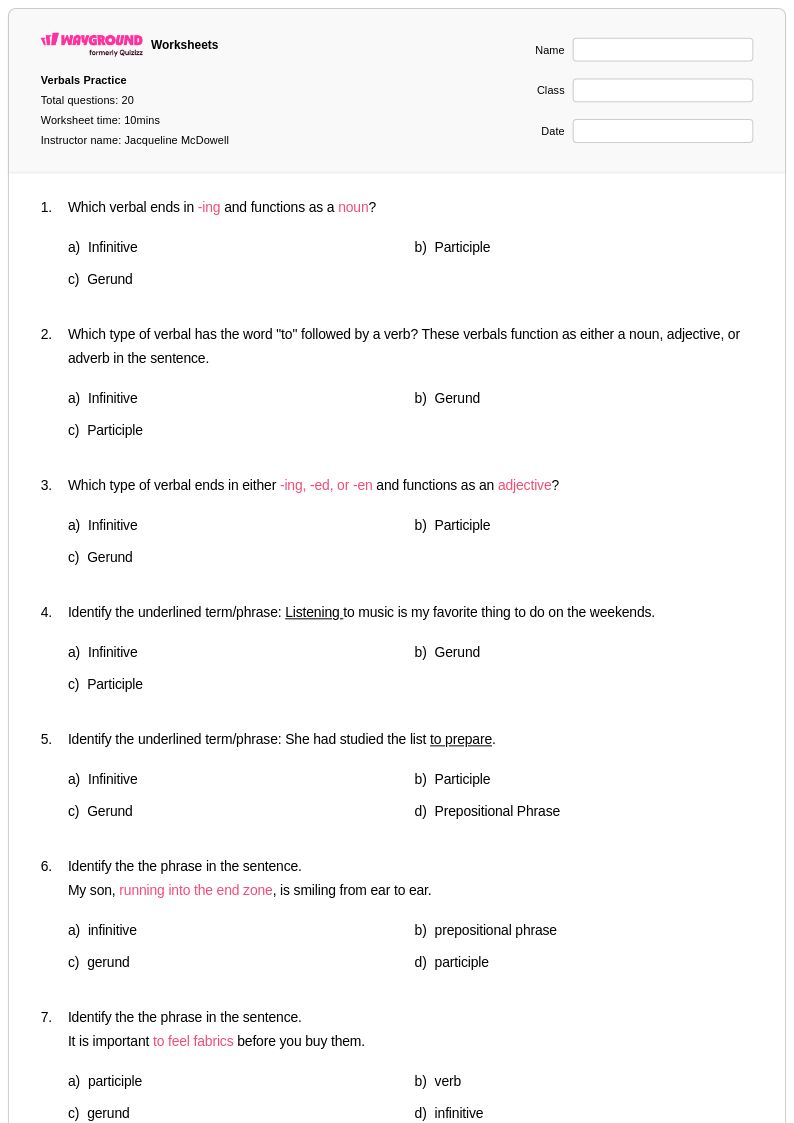
Gerunds represent a crucial grammatical concept for Grade 10 students, functioning as verbal forms that act as nouns while retaining some characteristics of verbs. Wayground's comprehensive collection of gerund worksheets provides targeted practice opportunities that help students master this complex aspect of English grammar through systematic exercises and real-world applications. These carefully designed practice problems guide learners through identifying gerunds in sentences, understanding their grammatical functions, and distinguishing them from other verbals like participles and infinitives. Each worksheet includes a detailed answer key that enables both independent study and classroom instruction, while the free printable format ensures accessibility for all learning environments. Students develop essential skills in recognizing gerund phrases, understanding their roles as subjects, objects, and complements, and applying this knowledge in their own writing to create more sophisticated and varied sentence structures.
Wayground's extensive platform, formerly known as Quizizz, empowers educators with millions of teacher-created resources specifically designed to support gerund instruction at the Grade 10 level. The robust search and filtering capabilities allow teachers to quickly locate worksheets that align with specific learning standards and match their students' proficiency levels, while built-in differentiation tools enable customization for diverse classroom needs. These gerund-focused materials are available in both printable PDF format and interactive digital versions, providing flexibility for traditional classroom settings, remote learning environments, and hybrid instruction models. Teachers can seamlessly integrate these resources into their lesson planning for initial instruction, targeted remediation for struggling students, or enrichment activities for advanced learners, ensuring that all students receive appropriate practice opportunities to strengthen their understanding of gerunds and their application in effective written communication.
FAQs
How do I teach gerunds to middle or high school students?
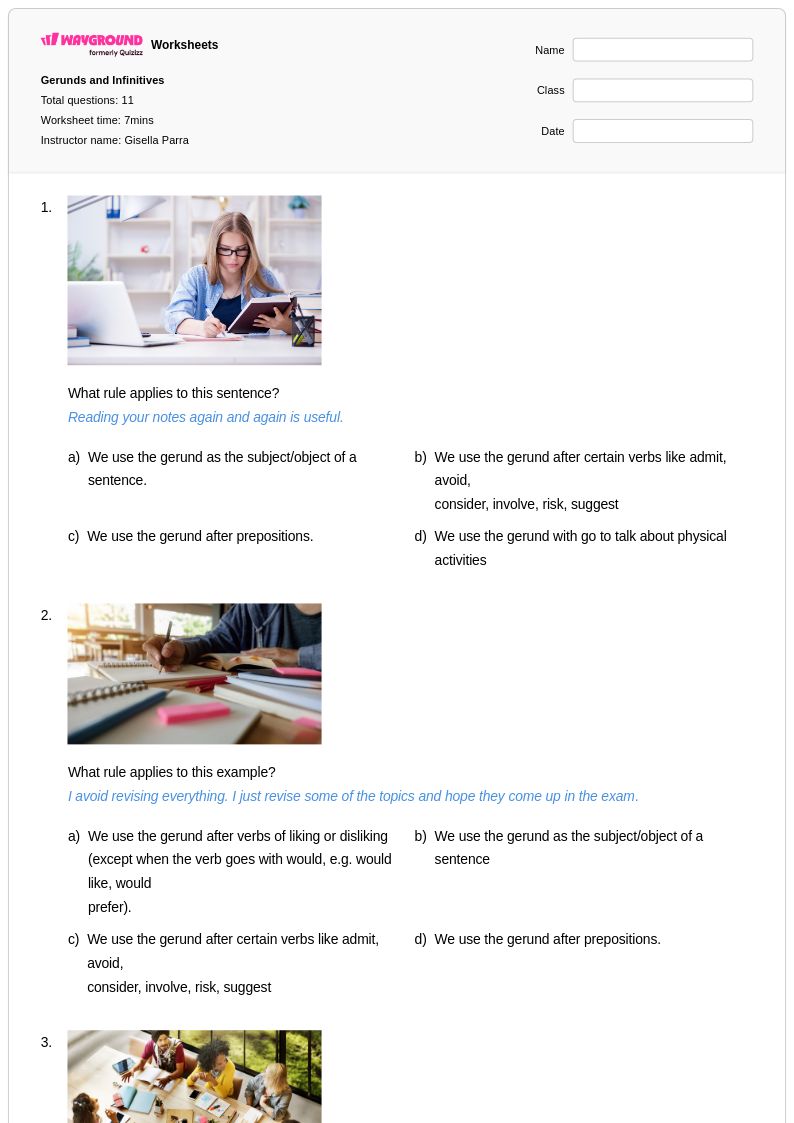
Start by distinguishing gerunds from present participles, since both end in -ing but function differently — gerunds act as nouns while participles act as adjectives. Use concrete sentence pairs to show the contrast, such as 'Swimming is fun' (gerund as subject) versus 'The swimming fish darted away' (participle as modifier). Once students can identify gerunds in isolation, move to sentence-level practice where they categorize gerunds by function: subject, object, or object of a preposition. Repeated exposure through varied sentence contexts builds reliable recognition before moving to original writing.
What exercises help students practice using gerunds correctly?
Effective gerund practice moves from recognition to production in structured stages. Begin with identification tasks where students underline gerunds in pre-written sentences, then progress to sentence completion exercises that require students to supply a gerund in a given slot. Sentence transformation tasks — rewriting infinitive phrases as gerund phrases — are particularly useful for reinforcing the noun function. Finally, guided writing prompts that require students to use gerunds in specific grammatical roles (subject, direct object, object of a preposition) consolidate understanding at the application level.
What mistakes do students commonly make with gerunds?
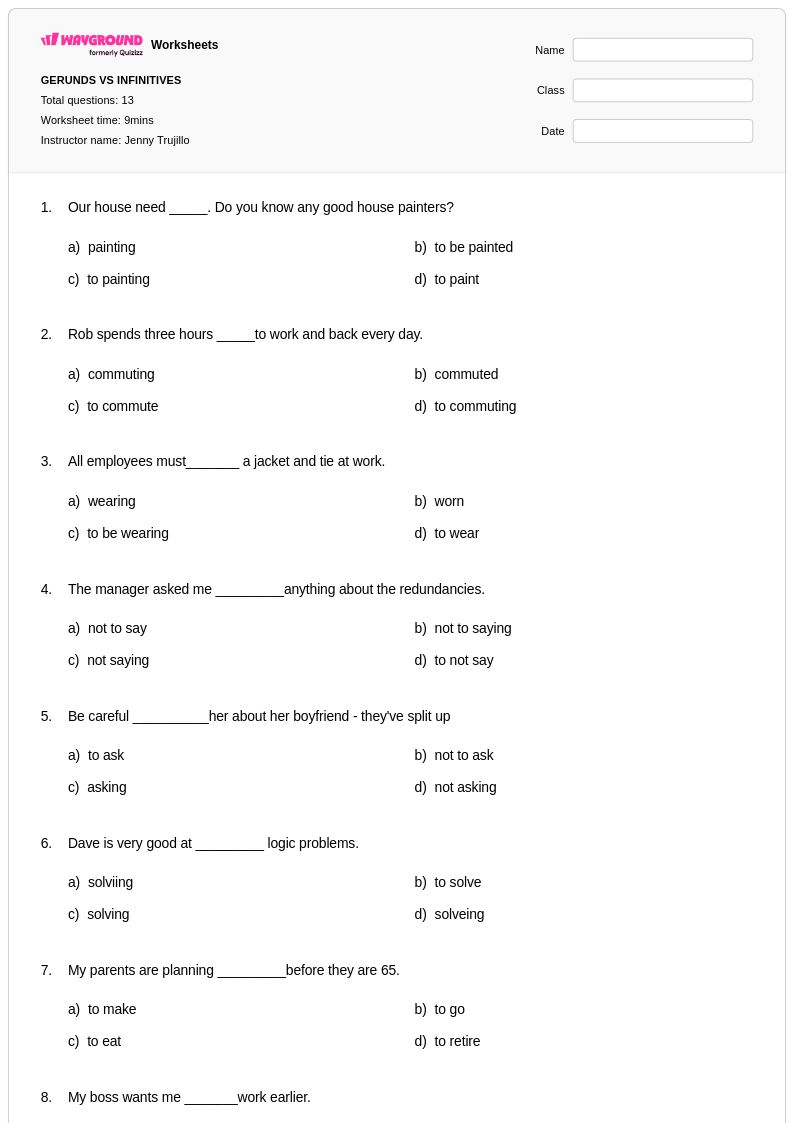
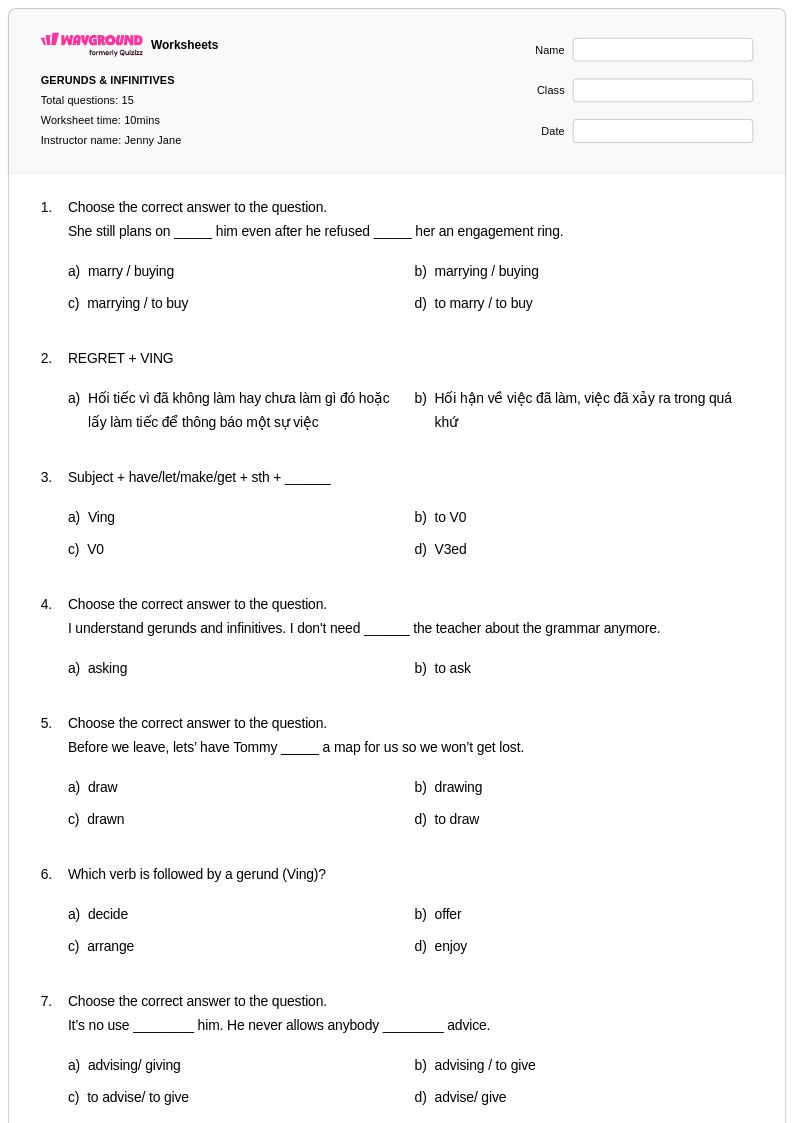
The most persistent error is confusing gerunds with present participles, since both use the -ing form but serve entirely different grammatical roles. Students also frequently misidentify the subject of a sentence containing a gerund phrase, leading to agreement errors. Another common mistake is using an infinitive where a gerund is required, particularly after certain verbs like 'enjoy', 'avoid', or 'consider' — for example, writing 'She enjoys to read' instead of 'She enjoys reading.' Direct instruction on verb-gerund collocations and consistent sentence-level practice helps correct these patterns.
How do I use Wayground's gerund worksheets in my classroom?
Wayground's gerund worksheets are available as printable PDFs, making them easy to distribute for in-class practice, homework, or review sessions. They are also available in digital formats, so teachers working in technology-integrated environments can assign them online, and can host them as a quiz directly on Wayground for immediate student feedback. Each worksheet includes a complete answer key, supporting both teacher-led correction and independent student self-assessment. The range of problem types — from identification to sentence construction — means a single worksheet can serve as introduction, reinforcement, or assessment depending on where students are in the learning sequence.
How can I differentiate gerund instruction for students who are struggling?
For students who struggle with gerunds, reduce cognitive load by focusing first on gerunds in subject position before introducing less familiar functions like object of a preposition. On Wayground, teachers can apply accommodations such as reduced answer choices, which limits the number of options a student sees in a question, and Read Aloud, which allows the question and answer choices to be read to the student. Extended time can also be configured per student so that pace differences do not penalize learners who need more processing time. These settings can be applied to individual students without alerting the rest of the class, keeping instruction seamless.
How do gerund worksheets support English language learners?
English language learners often struggle with gerunds because many languages do not have a direct equivalent to the English verbal noun form. Worksheets that pair gerund identification with explicit examples and sentence frames give ELLs the structural scaffolding they need before attempting open-ended writing tasks. On Wayground, the Read Aloud accommodation can support ELLs by having questions and content read to them, reducing the barrier of decoding written text while they focus on the grammatical concept. Repeated, varied practice with clear answer feedback — provided by the included answer keys — helps ELLs internalize verb-gerund collocations that must largely be memorized.