Free Printable Greek Mythology Worksheets for Grade 5
Explore Wayground's comprehensive collection of Grade 5 Greek mythology worksheets and printables that help students discover ancient gods, heroes, and legends through engaging practice problems, free PDF resources, and detailed answer keys.
Explore printable Greek Mythology worksheets for Grade 5
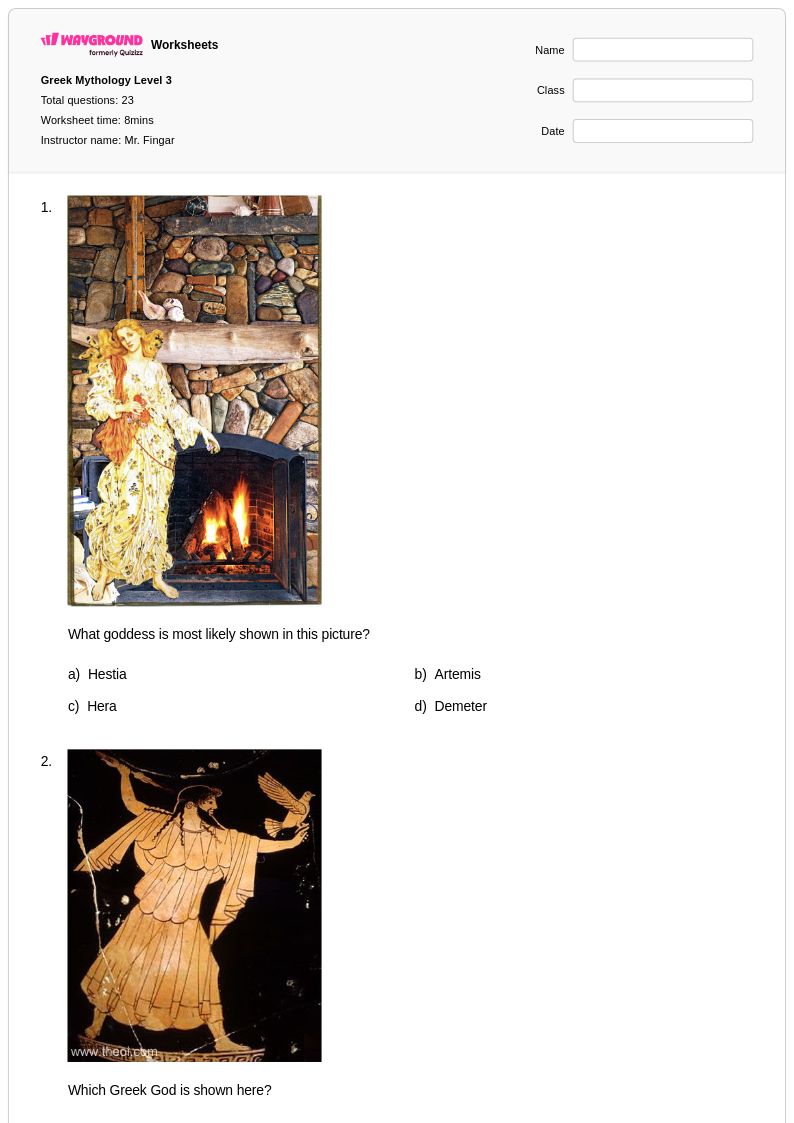
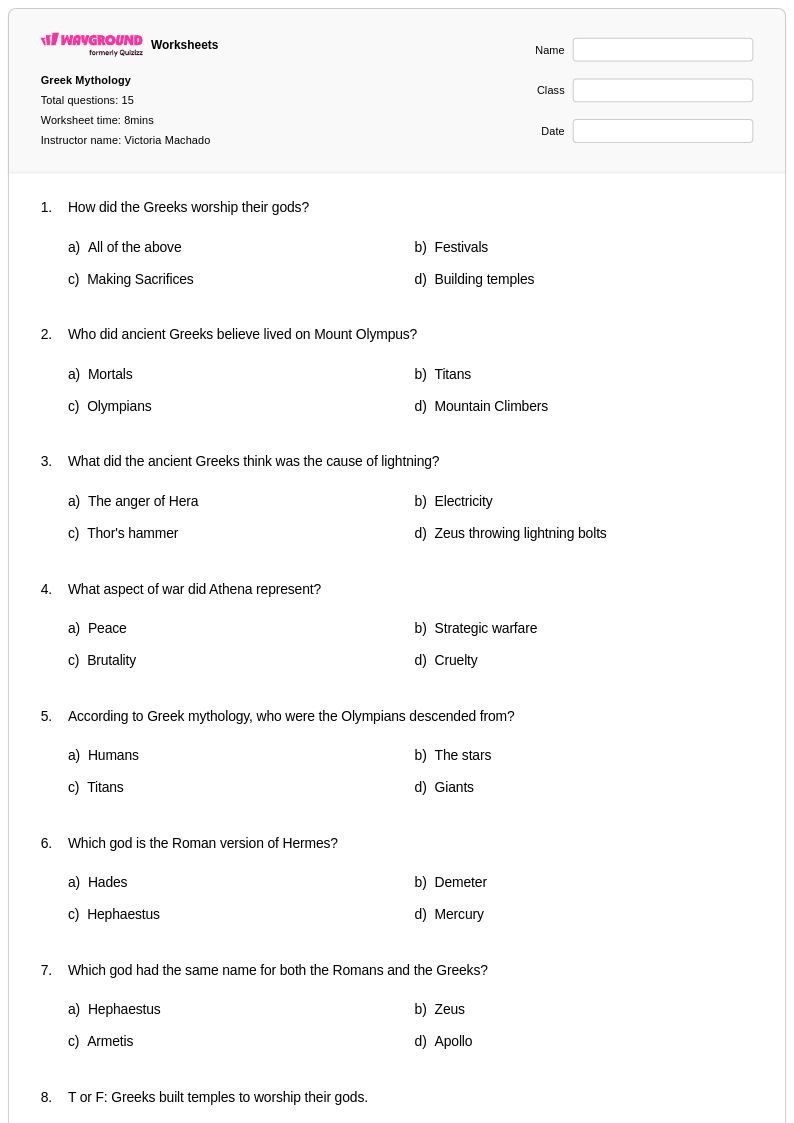
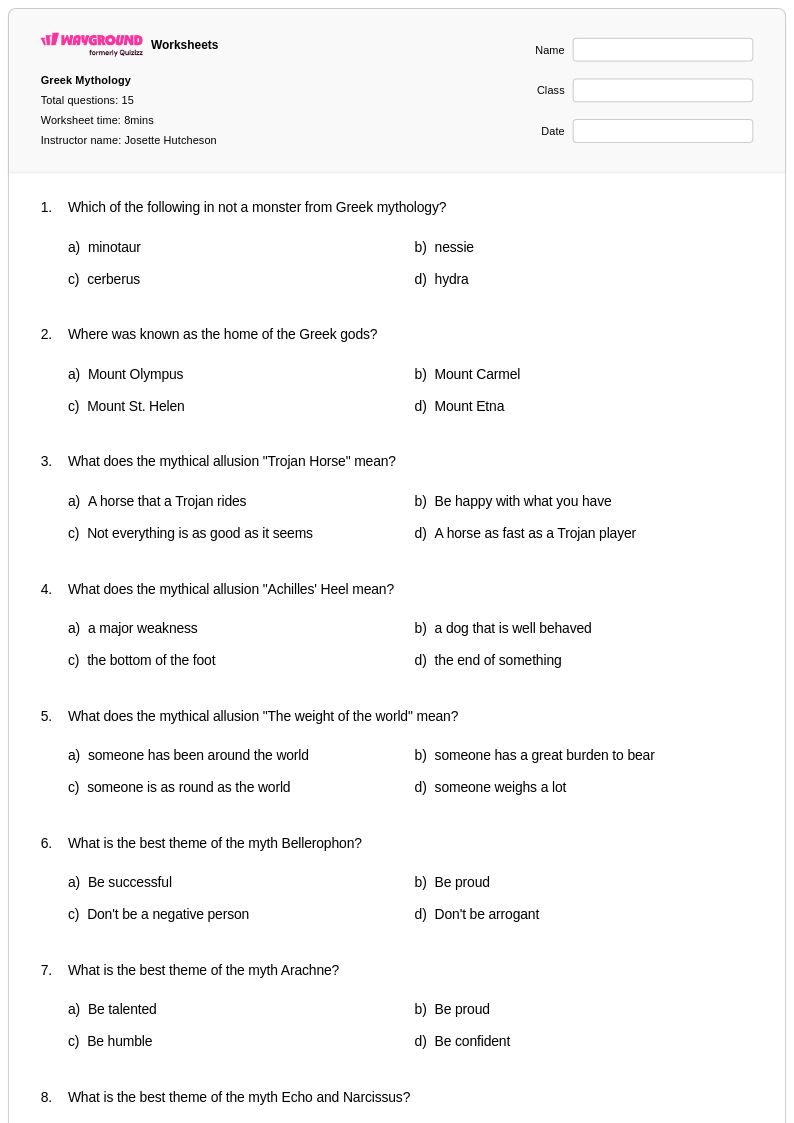
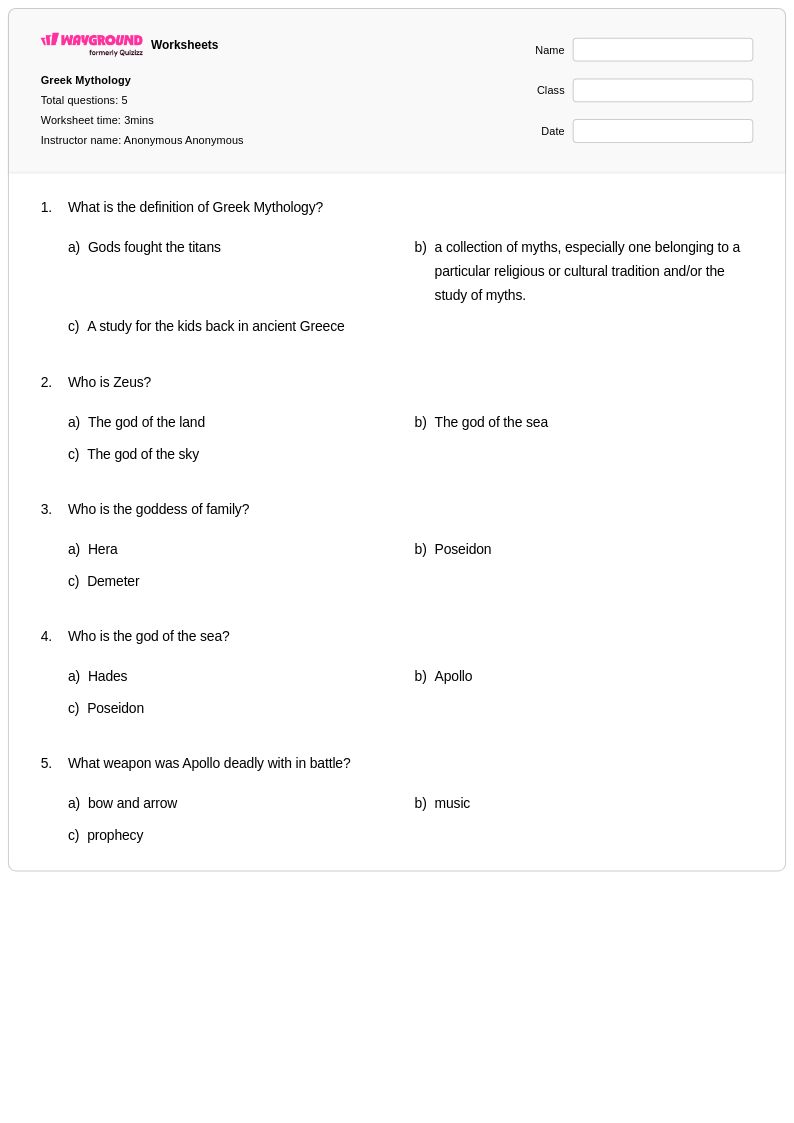
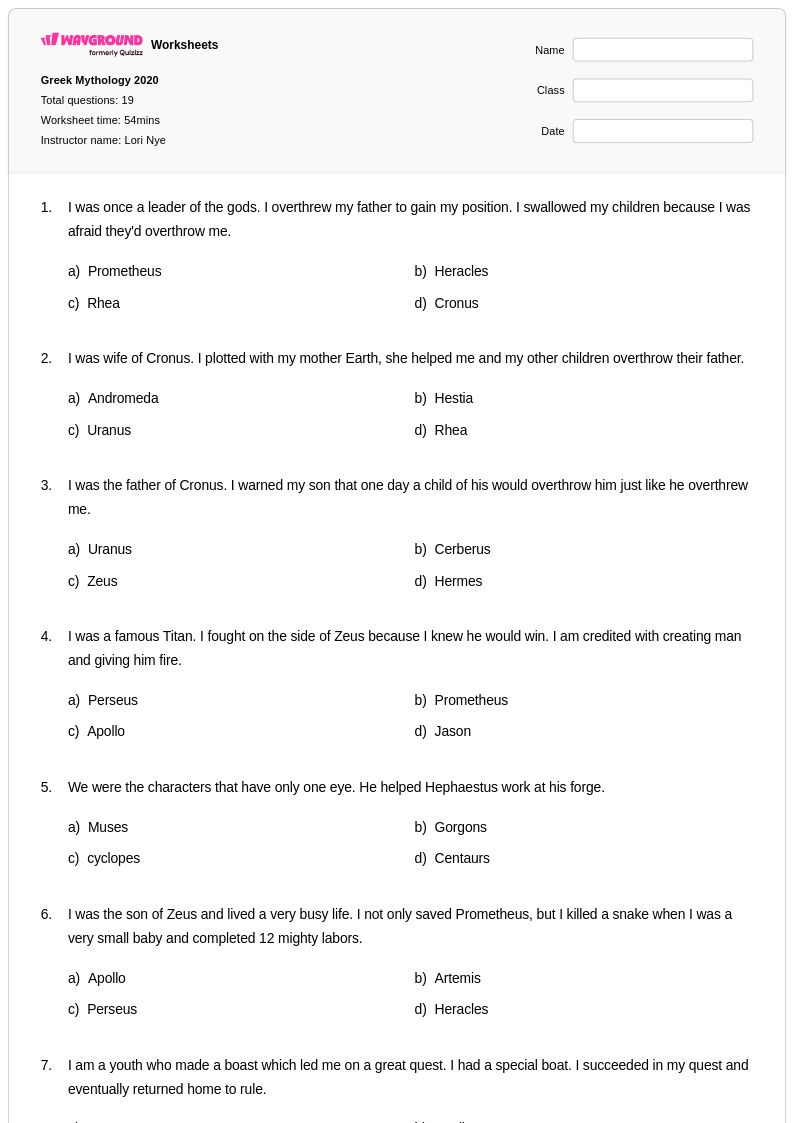
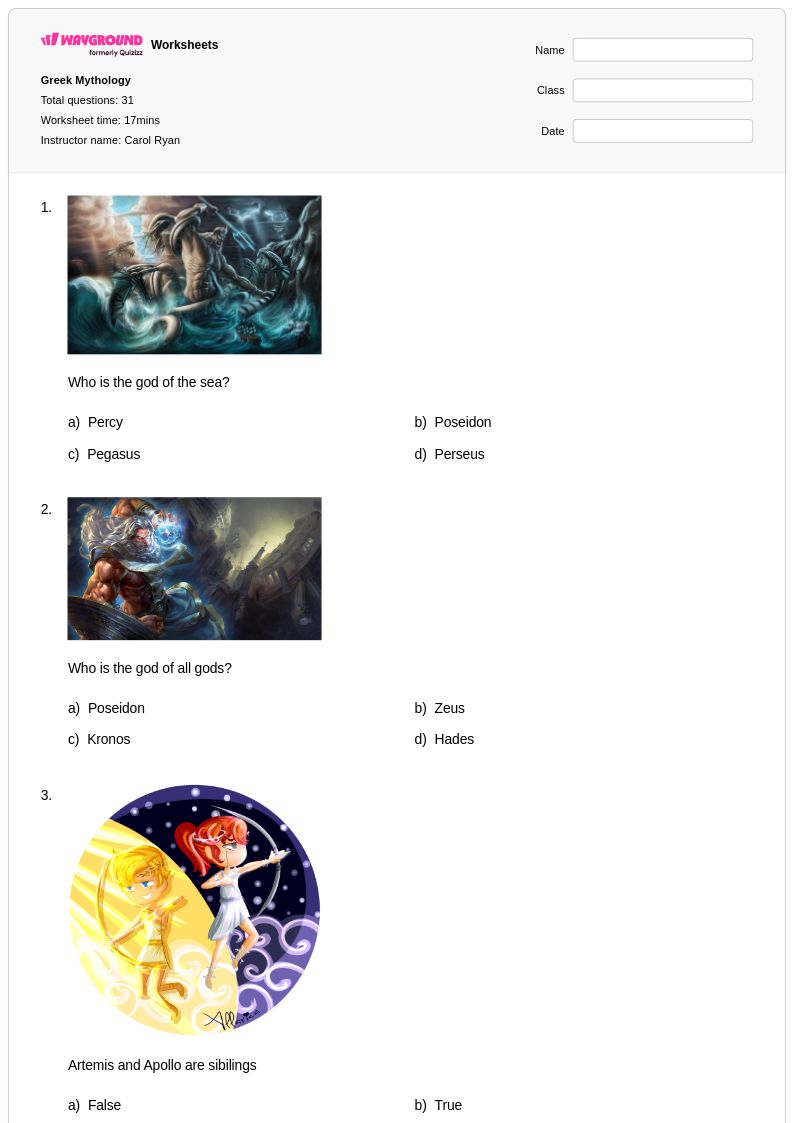
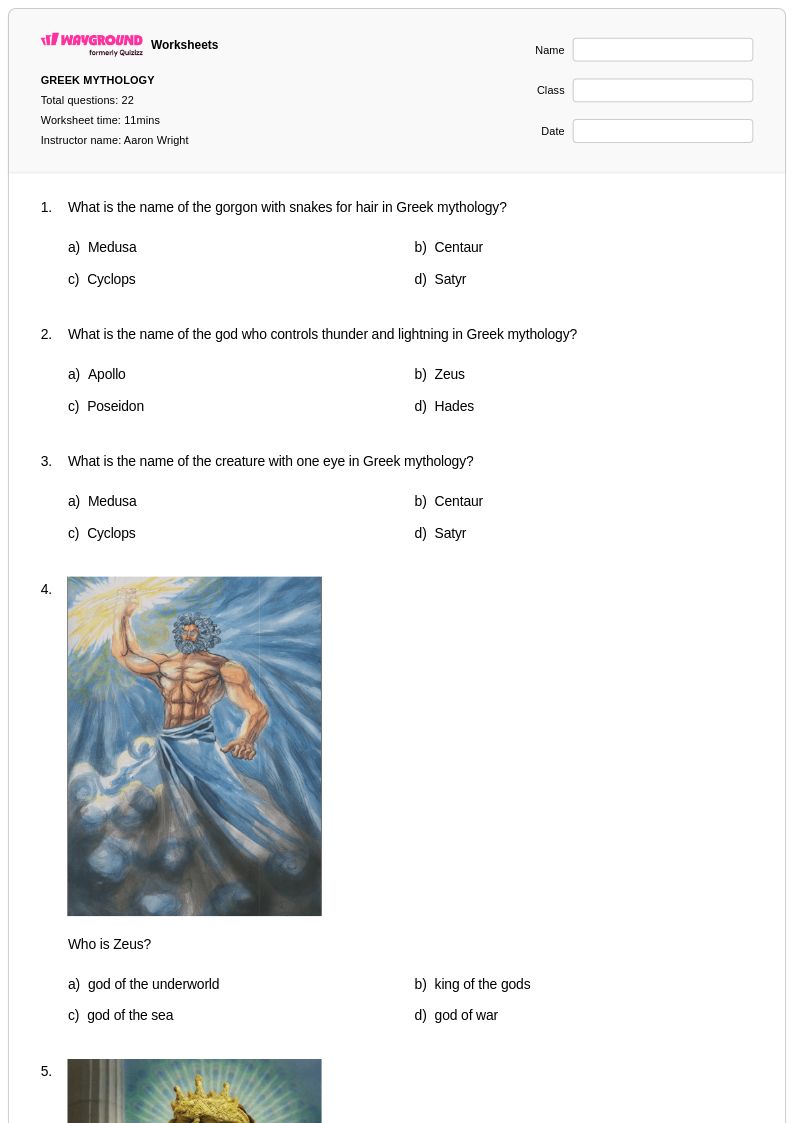
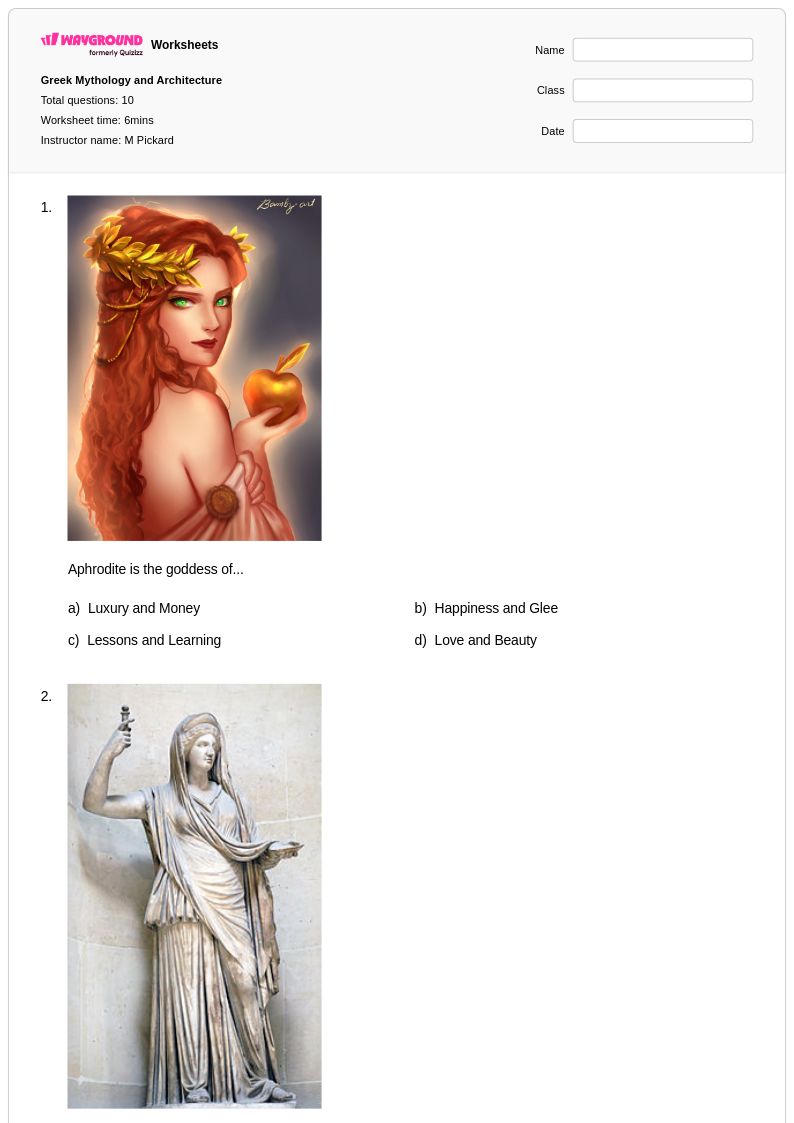
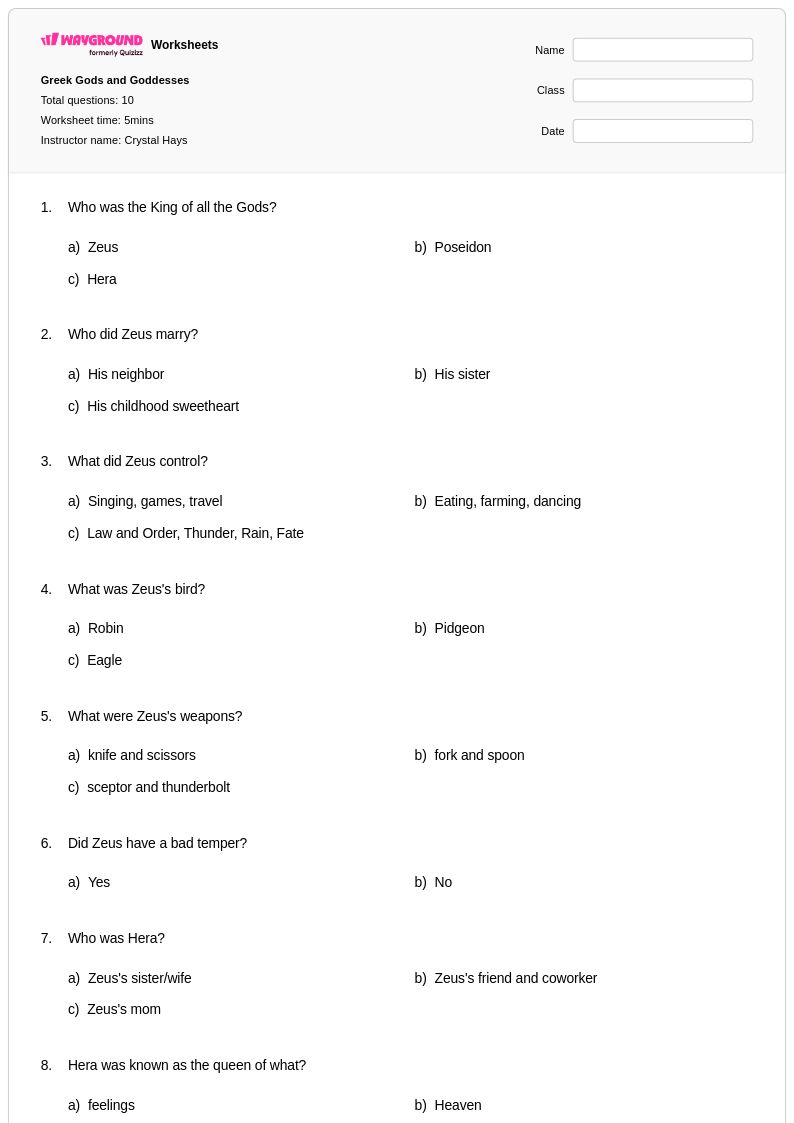
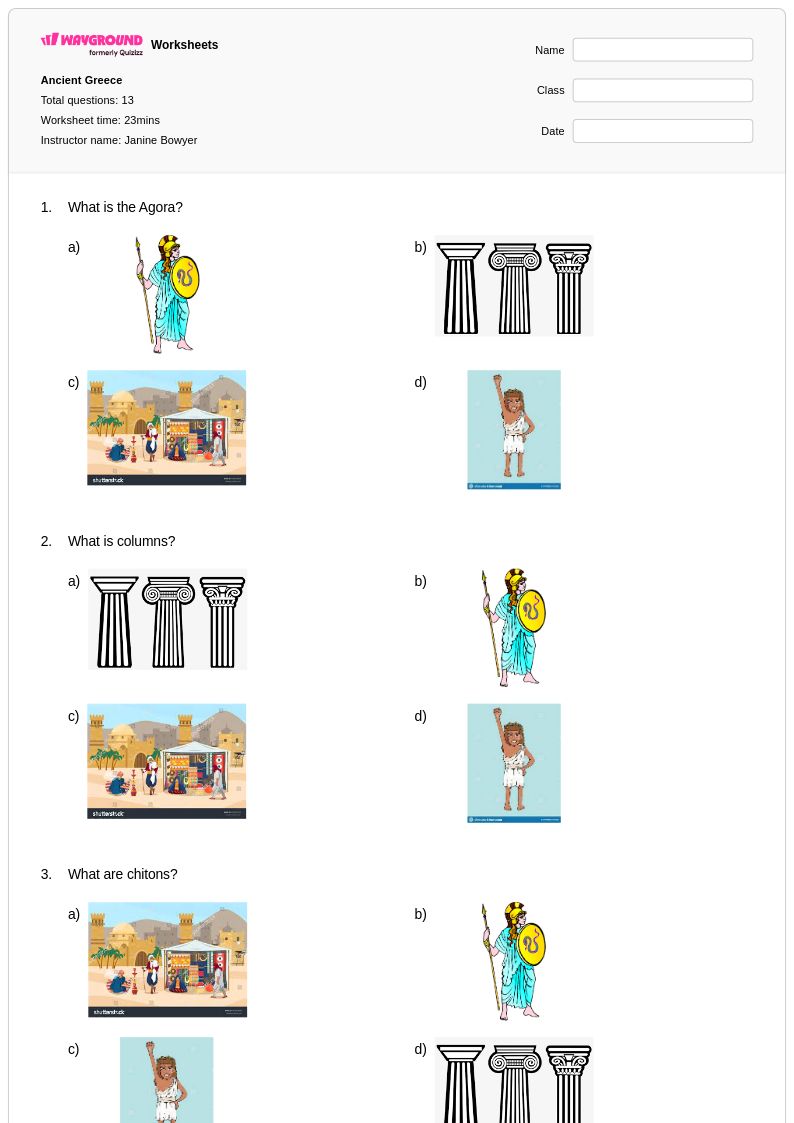
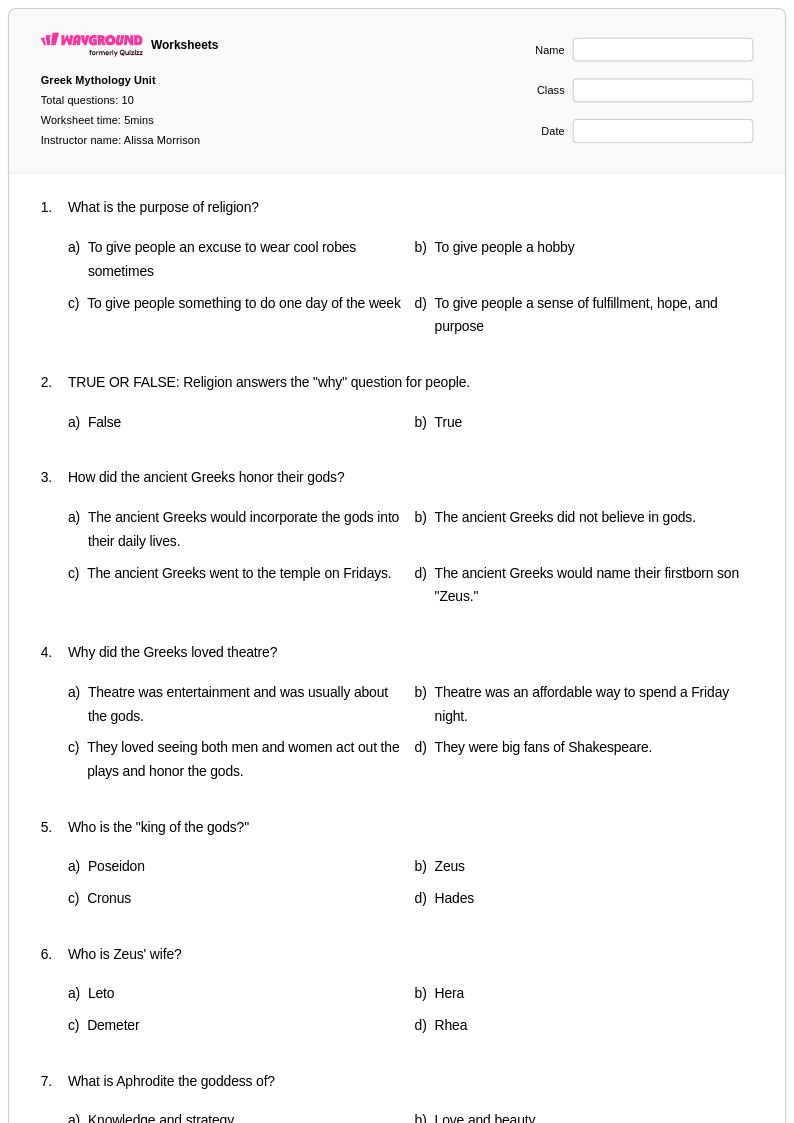
Greek mythology worksheets for Grade 5 through Wayground (formerly Quizizz) provide students with engaging practice materials that explore the fascinating stories, characters, and cultural significance of ancient Greek myths. These comprehensive worksheets strengthen critical thinking skills as students analyze heroic journeys, identify mythological themes, and connect ancient stories to modern literature and culture. The collection includes diverse practice problems ranging from character identification and story sequencing to comparative analysis activities that help students understand how Greek myths influenced art, language, and storytelling traditions. Each worksheet comes with a detailed answer key and is available as free printable pdf resources, making them accessible for both classroom instruction and independent study while building foundational knowledge about this essential component of ancient civilizations.
Wayground (formerly Quizizz) supports educators with an extensive collection of teacher-created Greek mythology resources, featuring millions of worksheets that can be easily located through robust search and filtering capabilities. The platform's standards-aligned materials help teachers differentiate instruction by offering worksheets at various complexity levels, from basic myth retelling to advanced analytical tasks that challenge Grade 5 students to explore deeper themes and cultural connections. Teachers can customize these flexible resources to match their specific curriculum needs, whether planning comprehensive units on ancient civilizations or targeting remediation and enrichment activities for individual learners. Available in both printable and digital formats including downloadable pdf versions, these mythology worksheets streamline lesson planning while providing consistent skill practice opportunities that enhance students' understanding of Greek culture and its lasting impact on Western civilization.
FAQs
How do I teach Greek mythology to students who have no background knowledge?
Start by grounding students in the structure of the Greek pantheon before introducing individual myths. Introduce the twelve Olympian gods and their domains first, then move into creation myths before tackling hero narratives like Perseus, Theseus, or Odysseus. Using character attribute charts and family tree visuals helps students build a mental map of the mythological world before they encounter stories that reference multiple gods and relationships at once.
What exercises help students practice identifying Greek mythology characters and their roles?
Character identification exercises that ask students to match gods to their domains, symbols, and associated myths are highly effective for building foundational knowledge. Worksheets that present short myth excerpts and ask students to identify who is speaking, what power they hold, and what moral lesson the story conveys push students beyond memorization into analytical reading. Covering figures across creation myths, the twelve Olympians, and heroic quests ensures broad exposure to the canon.
What mistakes do students commonly make when learning about Greek mythology?
One of the most common errors is conflating Greek and Roman mythology, particularly when students confuse deity names across the two traditions, such as mixing up Zeus and Jupiter or Poseidon and Neptune. Students also frequently misattribute myths, crediting the wrong hero or god with a specific feat. A related misconception is treating all versions of a myth as identical, when in fact many stories like the Odyssey have layers of cultural and moral interpretation that vary by source.
How do Greek mythology worksheets help students connect ancient stories to modern literature and culture?
Greek mythology is the foundation of countless Western literary tropes, archetypes, and cultural references, so strong comprehension of the source material gives students a lens for analyzing modern texts. Worksheets that examine the moral lessons embedded in stories like the Trojan War or the adventures of Theseus help students recognize how these themes recur in contemporary writing, film, and art. Building this fluency explicitly through structured practice makes the connection visible rather than incidental.
How can I use Greek mythology worksheets in my classroom, and are they available digitally?
Greek mythology worksheets on Wayground are available as printable PDFs for traditional classroom distribution and in digital formats for technology-integrated instruction, including the option to host them as a quiz directly on Wayground. This flexibility makes them usable for independent reading centers, homework assignments, test prep, or whole-class instruction. Each worksheet includes a detailed answer key, supporting both self-paced student work and direct teacher-led review.
How do I differentiate Greek mythology instruction for students at different reading and comprehension levels?
For students who struggle with complex mythological narratives, scaffolding through character organizers and simplified myth summaries before assigning analytical tasks reduces cognitive overload. Advanced learners benefit from prompts that ask them to compare archetypal patterns across multiple myths or analyze how Greek mythology influenced philosophical thought and later literary traditions. On Wayground, teachers can apply accommodations such as read aloud support and reduced answer choices to individual students, ensuring differentiated access without disrupting the rest of the class.