Free Printable Hammurabi's Code Worksheets for Grade 10
Explore Grade 10 Hammurabi's Code worksheets and printables that help students analyze ancient Mesopotamian laws, featuring free PDF practice problems with comprehensive answer keys for deeper understanding.
Explore printable Hammurabi's Code worksheets for Grade 10
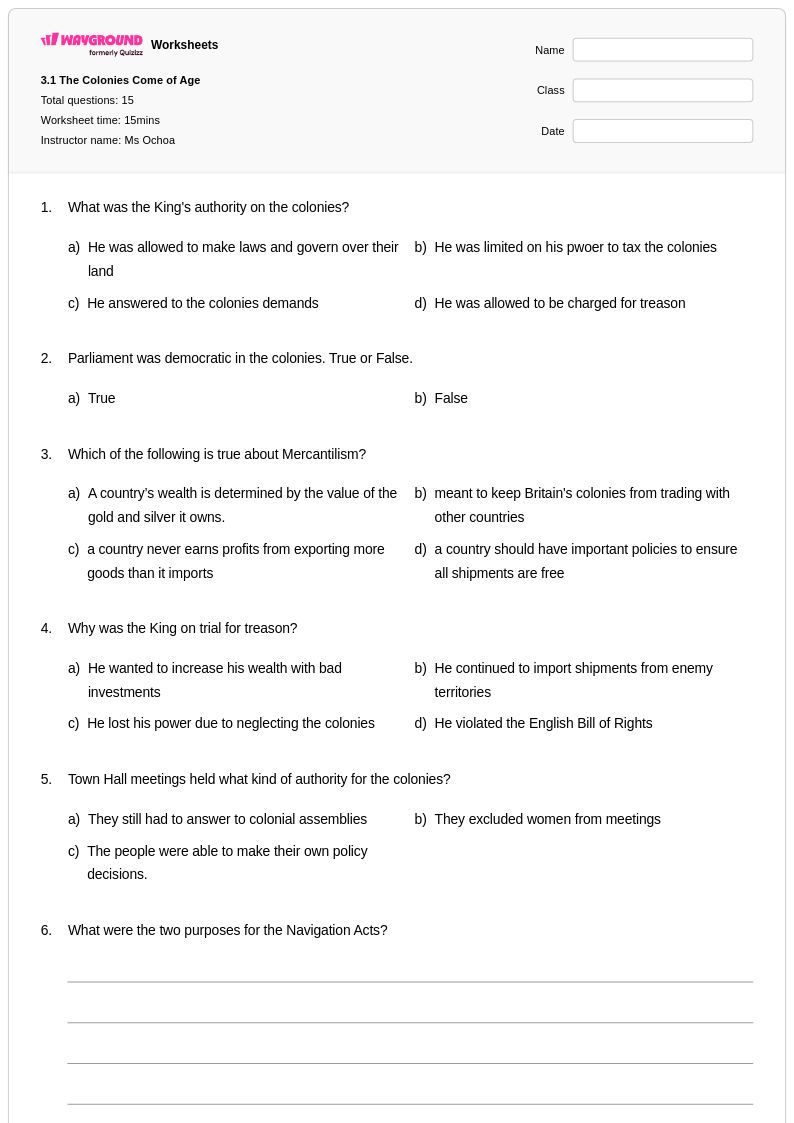
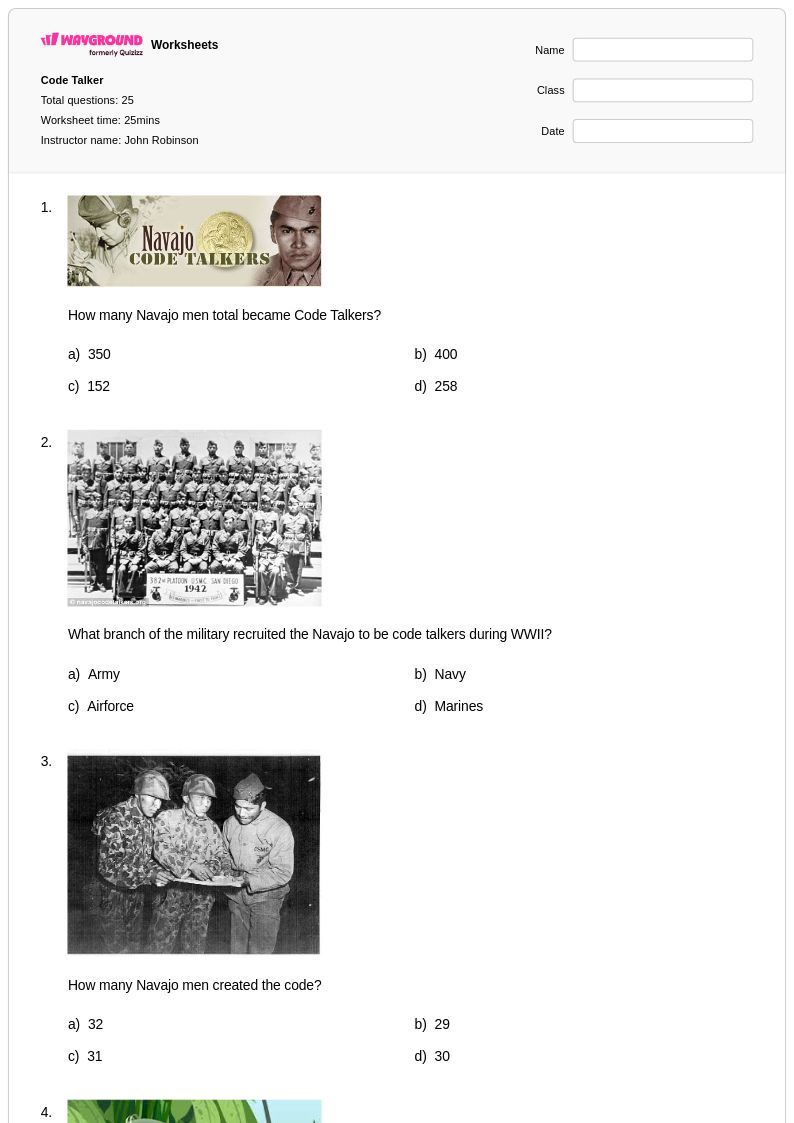
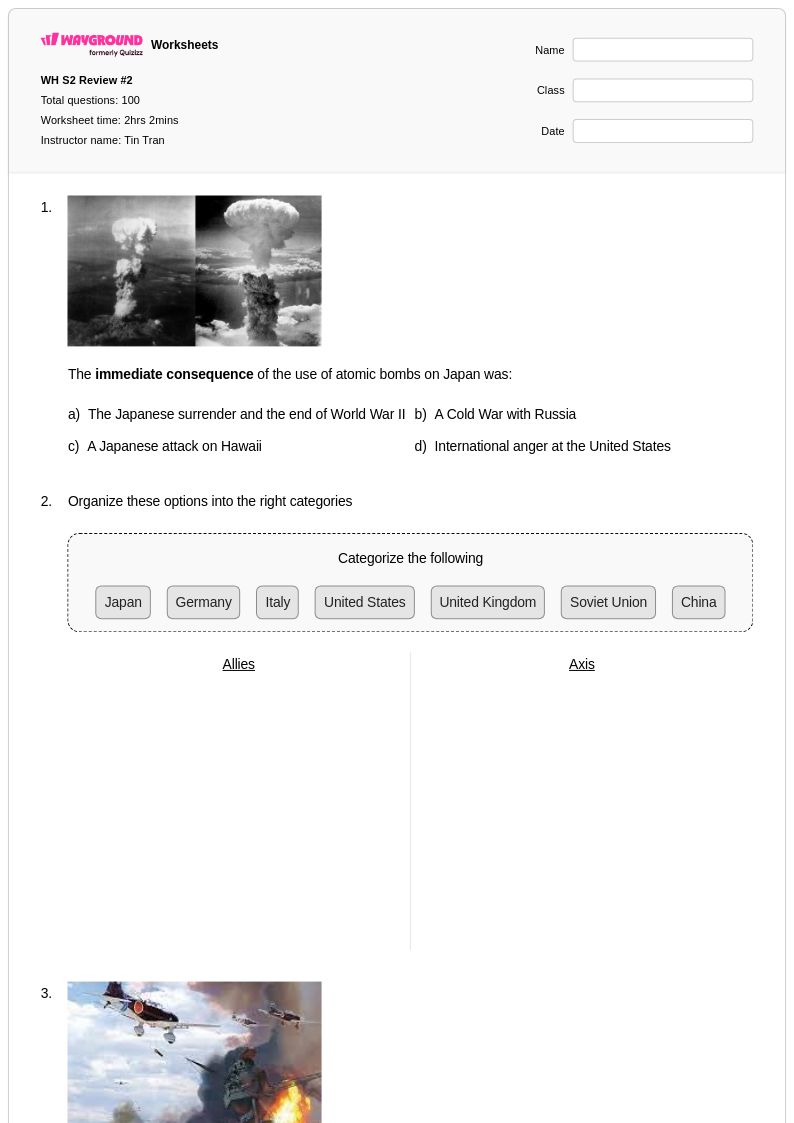
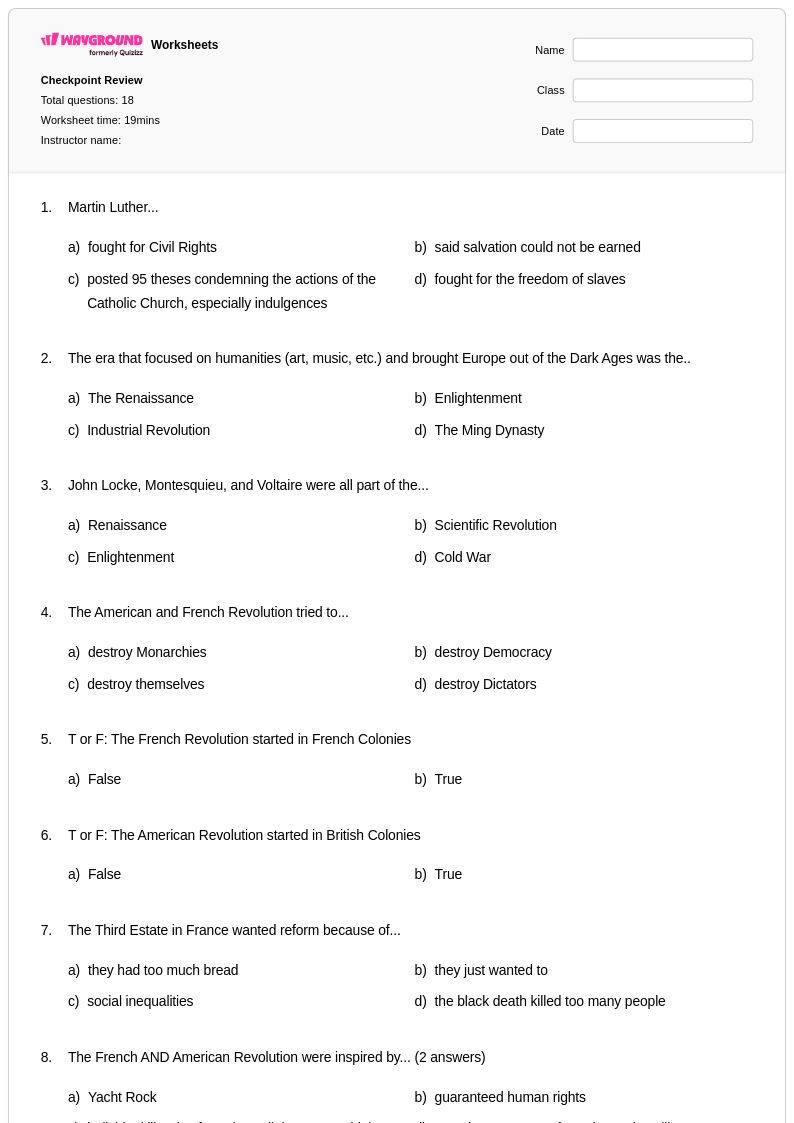
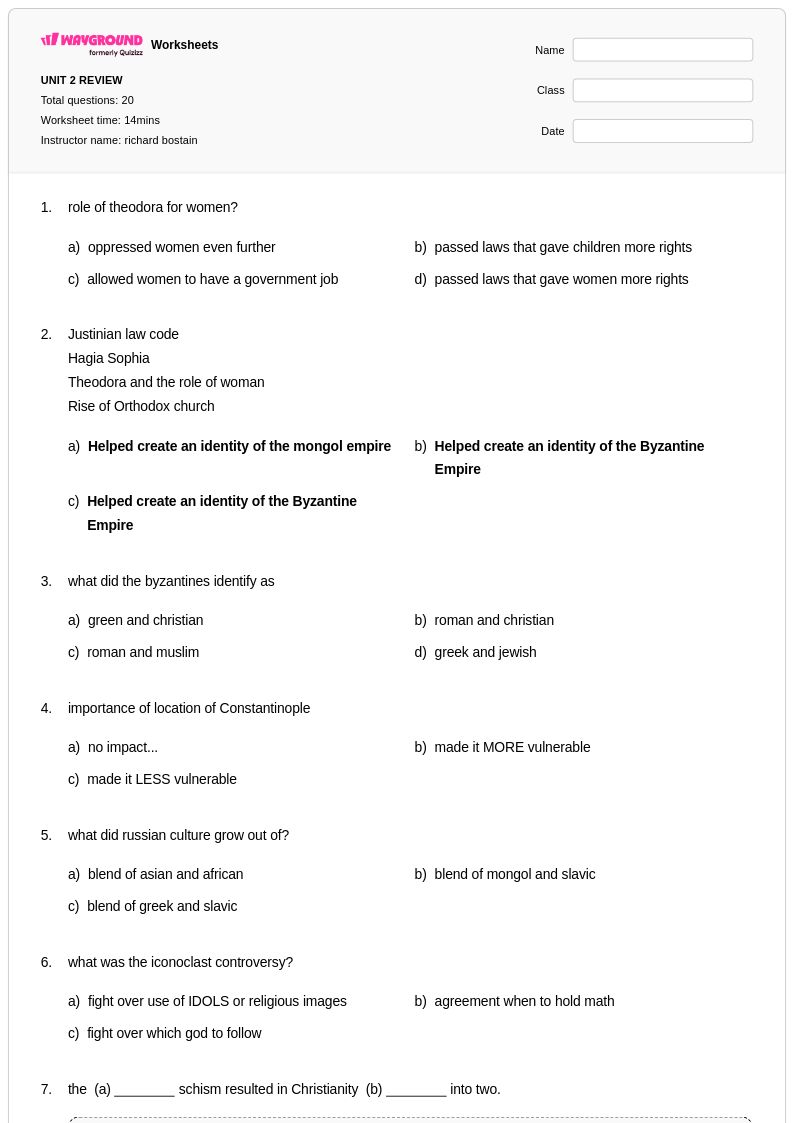
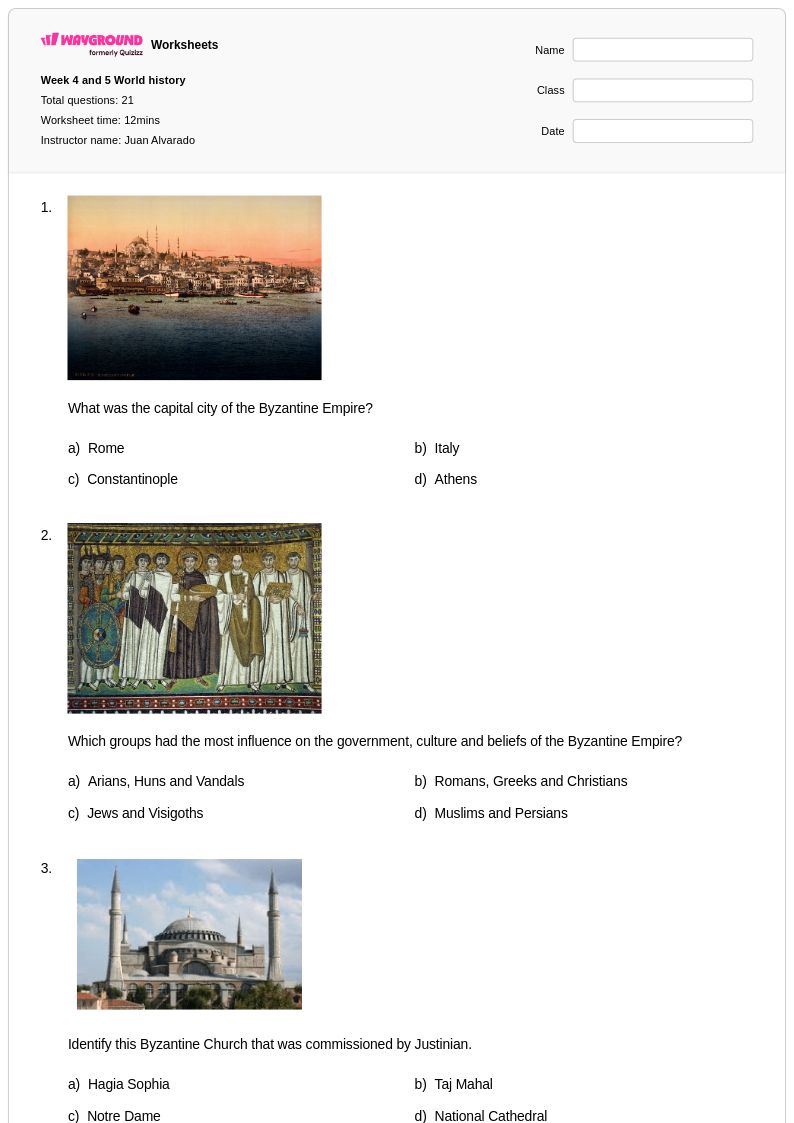
Hammurabi's Code worksheets for Grade 10 students provide comprehensive exploration of one of history's most significant legal documents from ancient Mesopotamia. These educational resources guide students through critical analysis of the world's first written legal code, helping them understand how Hammurabi's 282 laws shaped Babylonian society around 1750 BCE. The worksheets strengthen essential skills including primary source analysis, critical thinking about justice systems, and comparison of ancient and modern legal principles. Students engage with practice problems that examine specific laws, their social implications, and the concept of proportional justice through "an eye for an eye" philosophy. Each worksheet collection includes detailed answer keys and comprehensive explanations, with free printable pdf formats making classroom implementation seamless for educators seeking to deepen their students' understanding of ancient legal systems.
Wayground, formerly Quizizz, supports social studies educators with an extensive library of millions of teacher-created Hammurabi's Code resources specifically designed for Grade 10 instruction. The platform's robust search and filtering capabilities enable teachers to locate worksheets aligned with curriculum standards, while differentiation tools allow customization for diverse learning needs and ability levels. These comprehensive collections are available in both printable pdf and interactive digital formats, providing flexibility for traditional classroom instruction or technology-enhanced learning environments. Teachers utilize these resources for lesson planning, targeted remediation of historical thinking skills, enrichment activities for advanced learners, and regular practice to reinforce understanding of ancient legal concepts. The platform's extensive customization options ensure that educators can adapt materials to meet specific classroom objectives while maintaining rigorous academic standards in ancient civilizations instruction.
FAQs
How do I teach Hammurabi's Code to middle or high school students?
Start by grounding students in the historical context of ancient Babylon around 1750 BCE before introducing the code itself. Present a selection of the 282 laws and ask students to identify patterns — who is protected, who is punished more harshly, and what values the laws reflect. Connecting the principle of proportional justice, the 'eye for an eye' philosophy, to modern legal concepts helps students see the code's lasting relevance rather than treating it as a historical curiosity.
What are good activities for analyzing Hammurabi's Code as a primary source?
Effective primary source analysis activities include having students categorize laws by social group (slaves, free citizens, merchants) to examine how the code reinforced Babylonian social hierarchy. Comparison exercises — pairing specific Hammurabi laws with modern equivalents — build historical thinking and help students evaluate continuity and change over time. Structured annotation tasks where students identify purpose, audience, and point of view are especially valuable for developing close-reading skills with ancient legal texts.
What misconceptions do students commonly have about Hammurabi's Code?
A common misconception is that Hammurabi's Code was the world's first legal code — it was actually among the earliest surviving written legal codes, not the absolute first. Students also tend to interpret 'eye for an eye' too literally, missing that proportional justice was a significant advancement over arbitrary punishment. Additionally, many students assume the code applied equally to all people, when in fact penalties varied significantly based on social class and the status of both the offender and the victim.
How can I use Hammurabi's Code to teach historical thinking skills?
Hammurabi's Code is an ideal anchor text for teaching sourcing, contextualization, and corroboration — three core historical thinking skills. Ask students to consider why Hammurabi commissioned a written legal code and what it reveals about governance in early civilizations. Comparing the code's treatment of different social classes encourages students to practice perspective-taking and to recognize that primary sources reflect the values and power structures of their time, not a neutral record of events.
How do I use Hammurabi's Code worksheets from Wayground in my classroom?
Wayground's Hammurabi's Code worksheets are available as printable PDFs for traditional classroom use and in digital formats for technology-integrated instruction, making them suitable for in-person, hybrid, or remote settings. Each worksheet includes a complete answer key, so teachers can use them for direct instruction, independent practice, homework assignments, or formative assessment. Digital versions can also be hosted as a quiz on Wayground, giving teachers immediate visibility into student responses and areas that need reteaching.
How do I differentiate Hammurabi's Code instruction for students with varying reading levels?
For students who struggle with complex historical texts, pairing excerpts from the code with simplified annotations or sentence frames helps scaffold comprehension before moving to independent analysis. On Wayground, teachers can apply individual accommodations such as Read Aloud, which reads questions and content aloud for students who need it, and reduced answer choices to lower cognitive load for selected students — without alerting the rest of the class. Extended time settings can also be configured per student, ensuring equitable access to the material.