Free Printable Health Education Worksheets for Grade 6
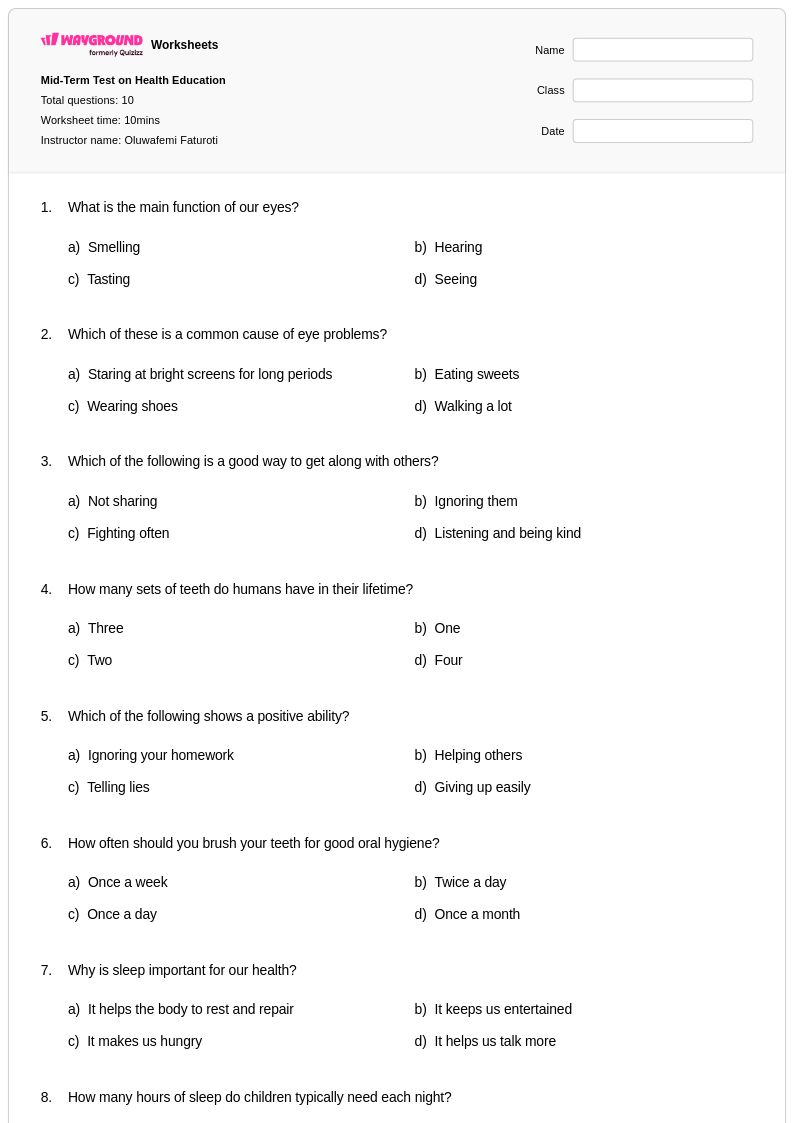
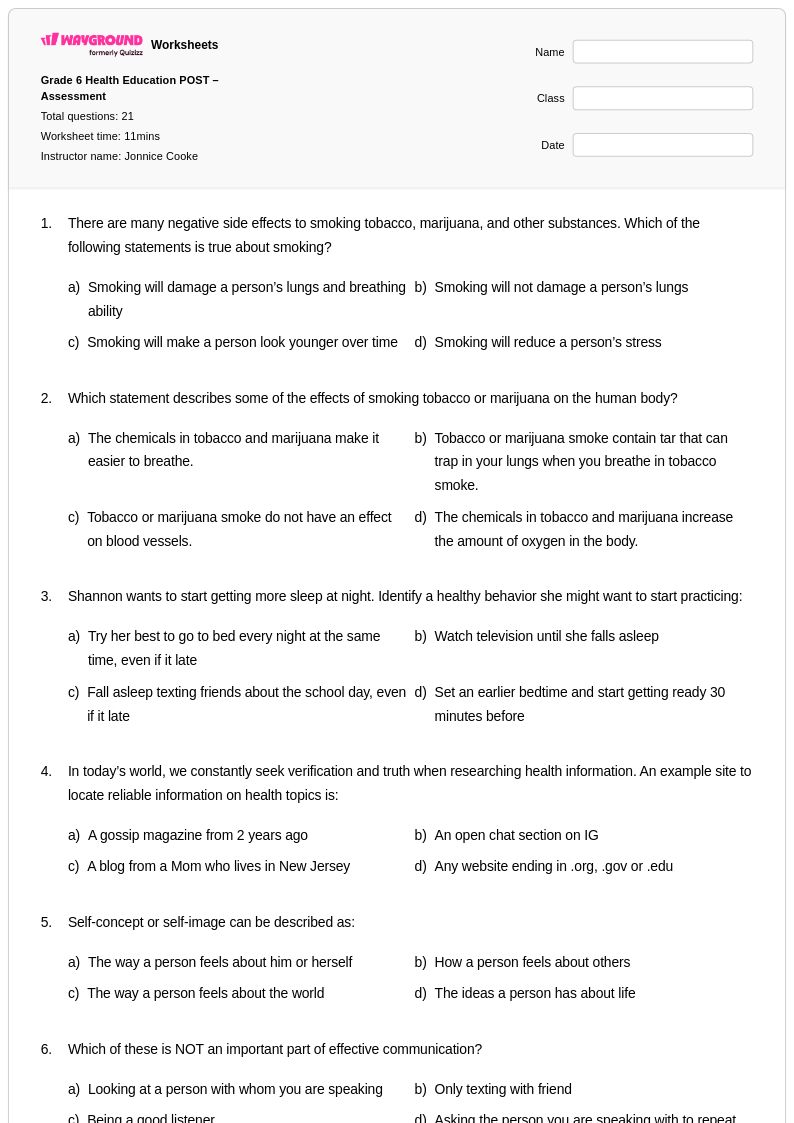
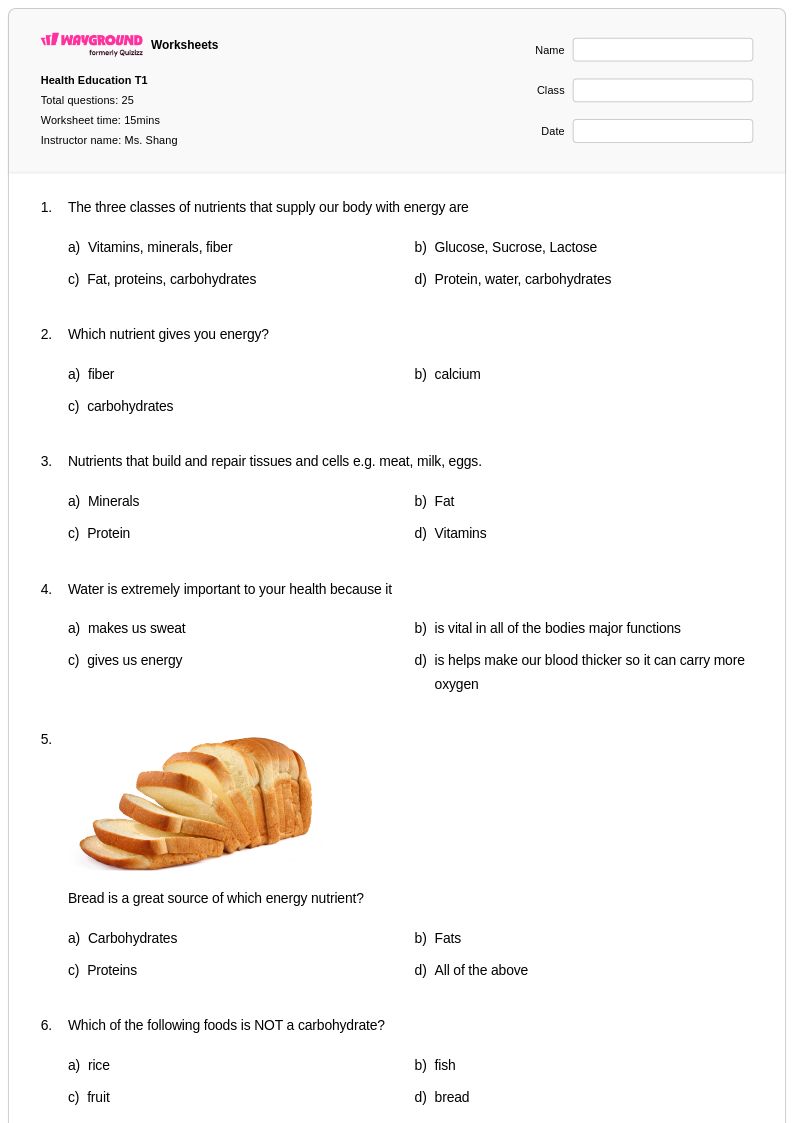
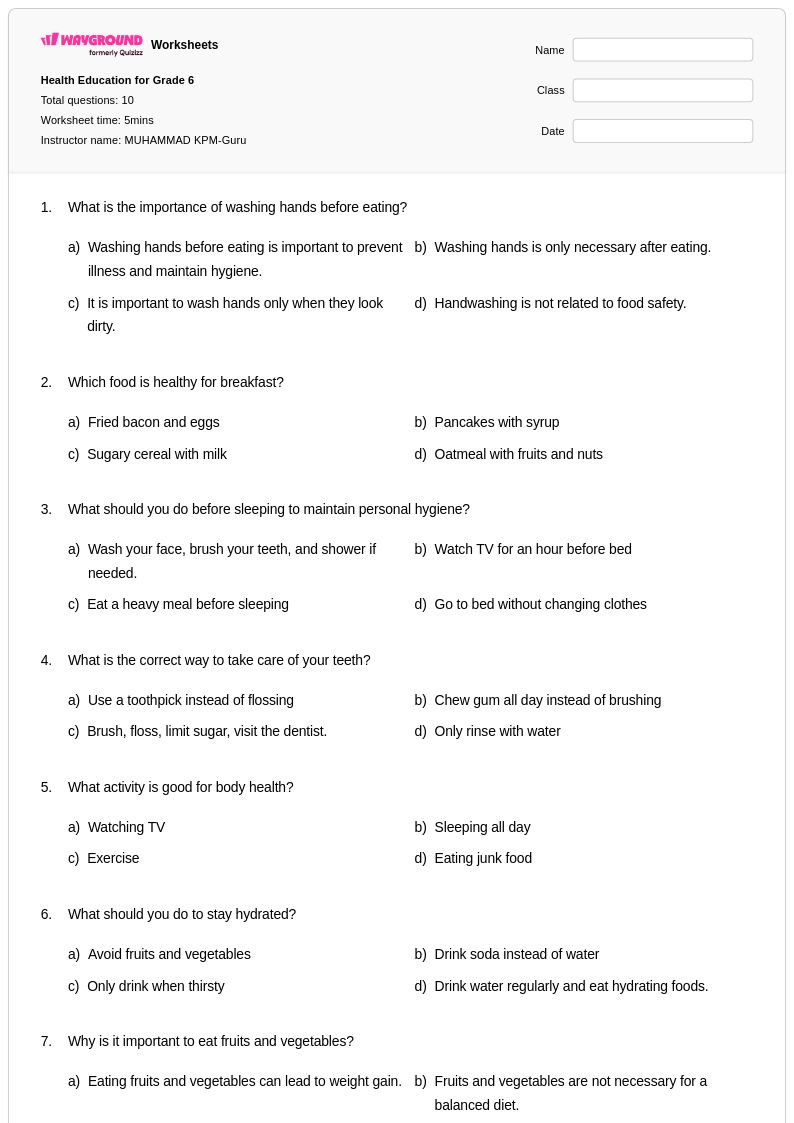
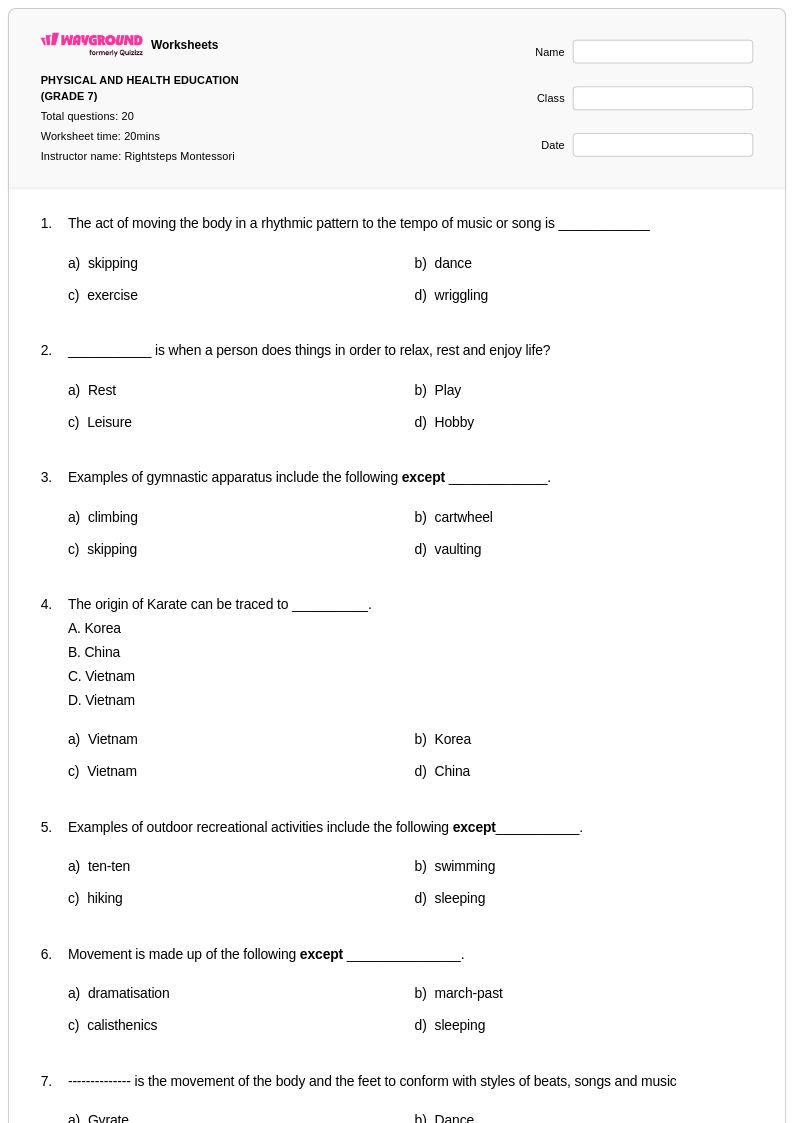
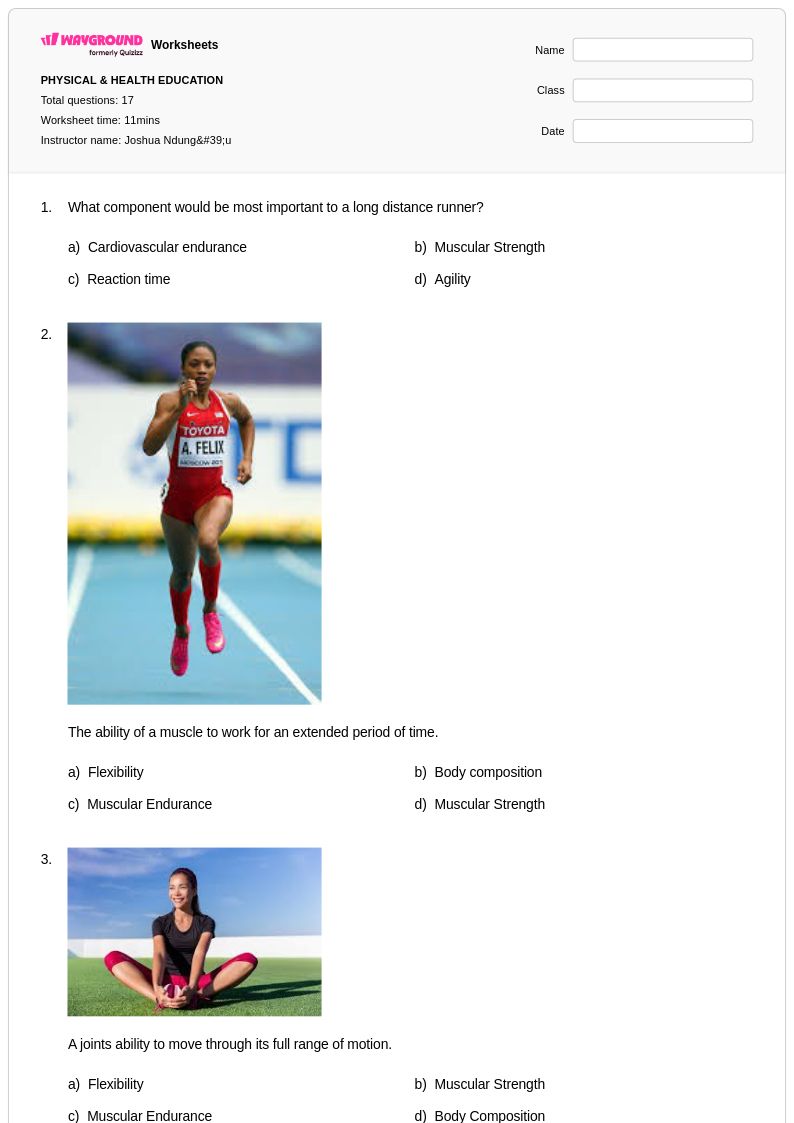
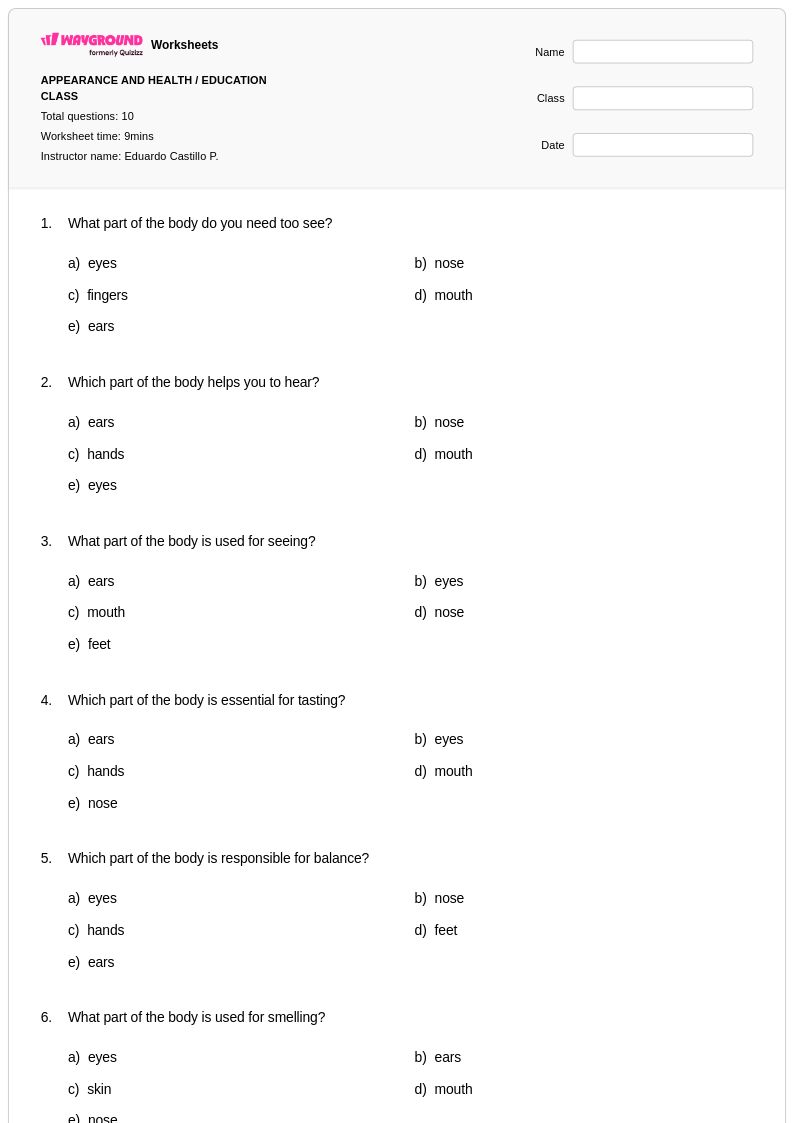
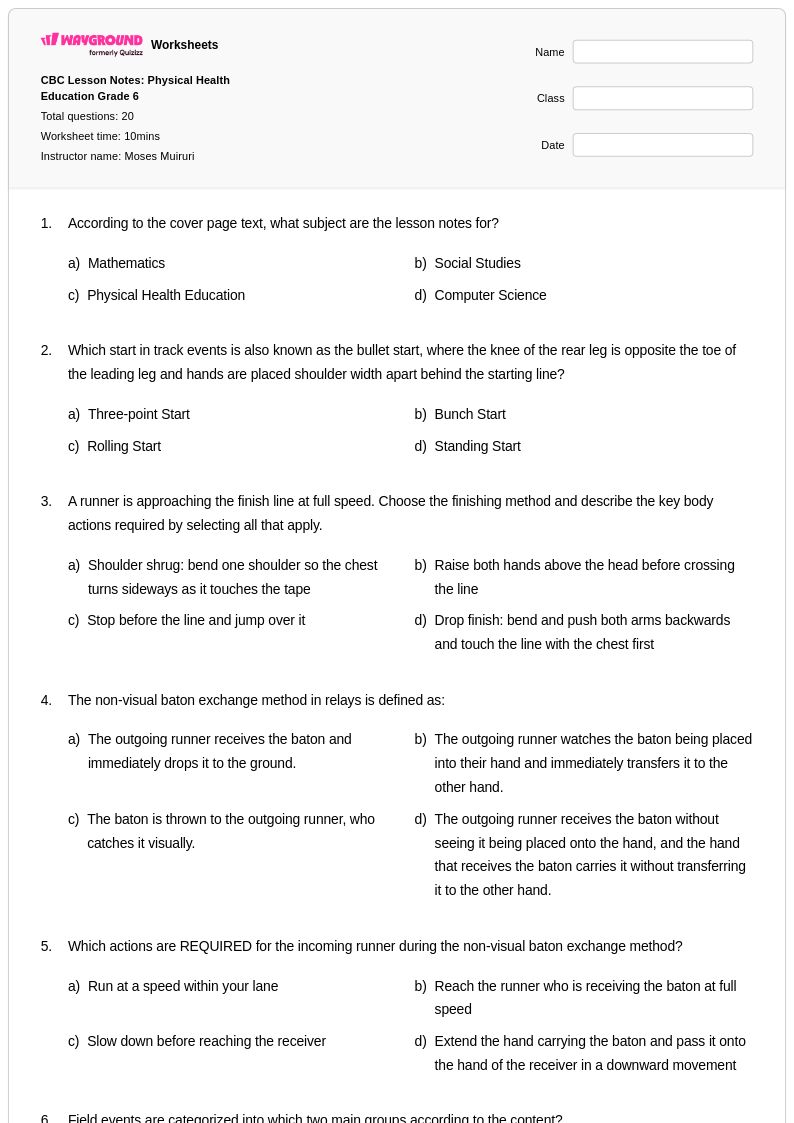
Grade 6 Health Education worksheets from Wayground offer free printables and practice problems with answer keys to help students learn essential wellness concepts, nutrition basics, and healthy lifestyle choices.
Explore printable Health Education worksheets for Grade 6
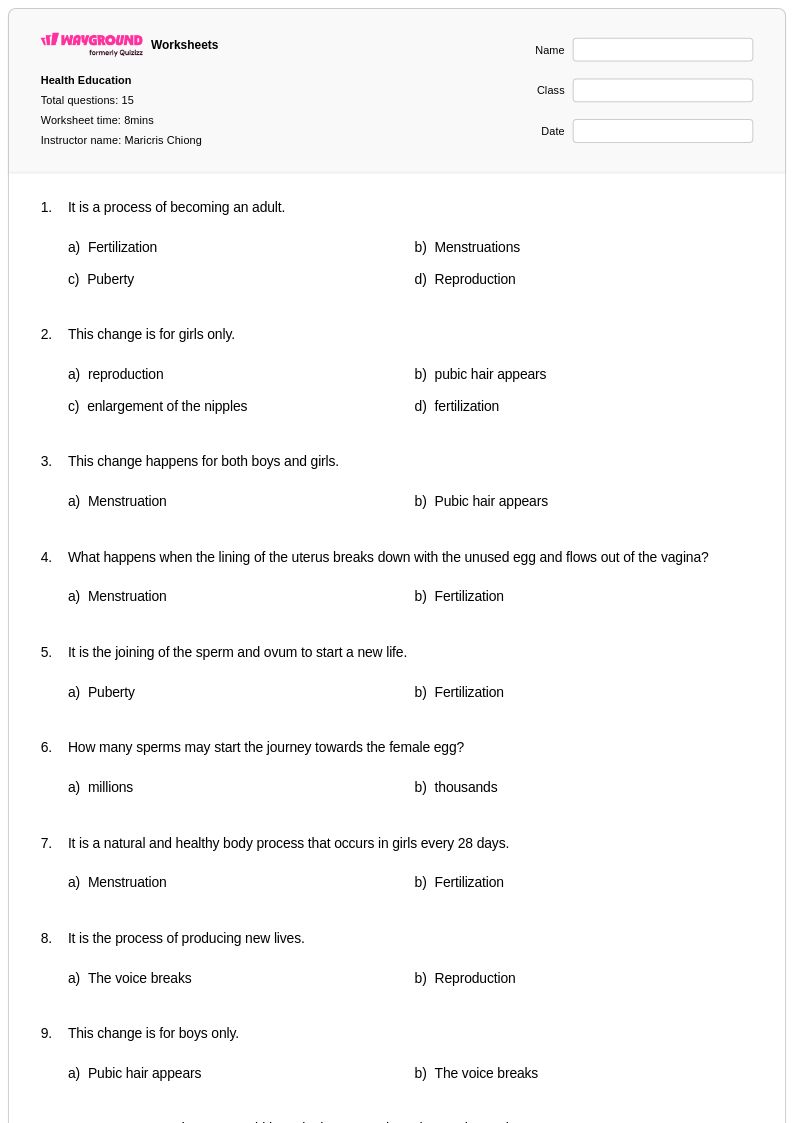
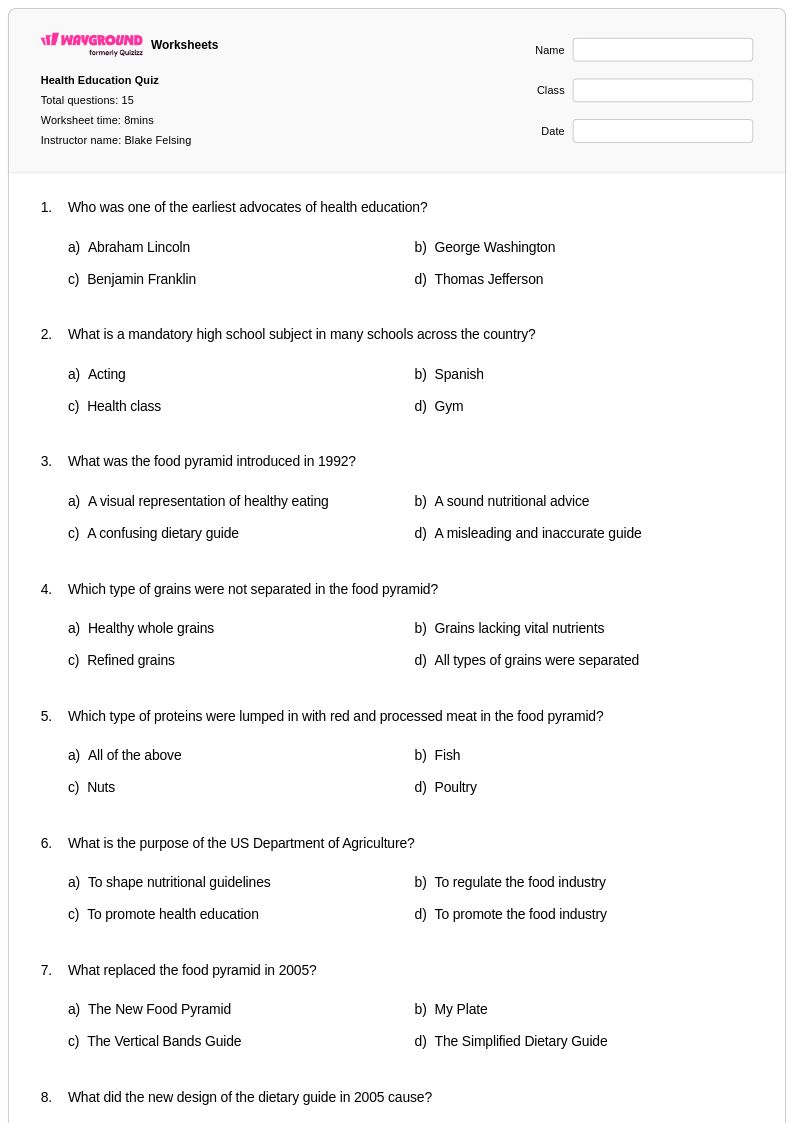
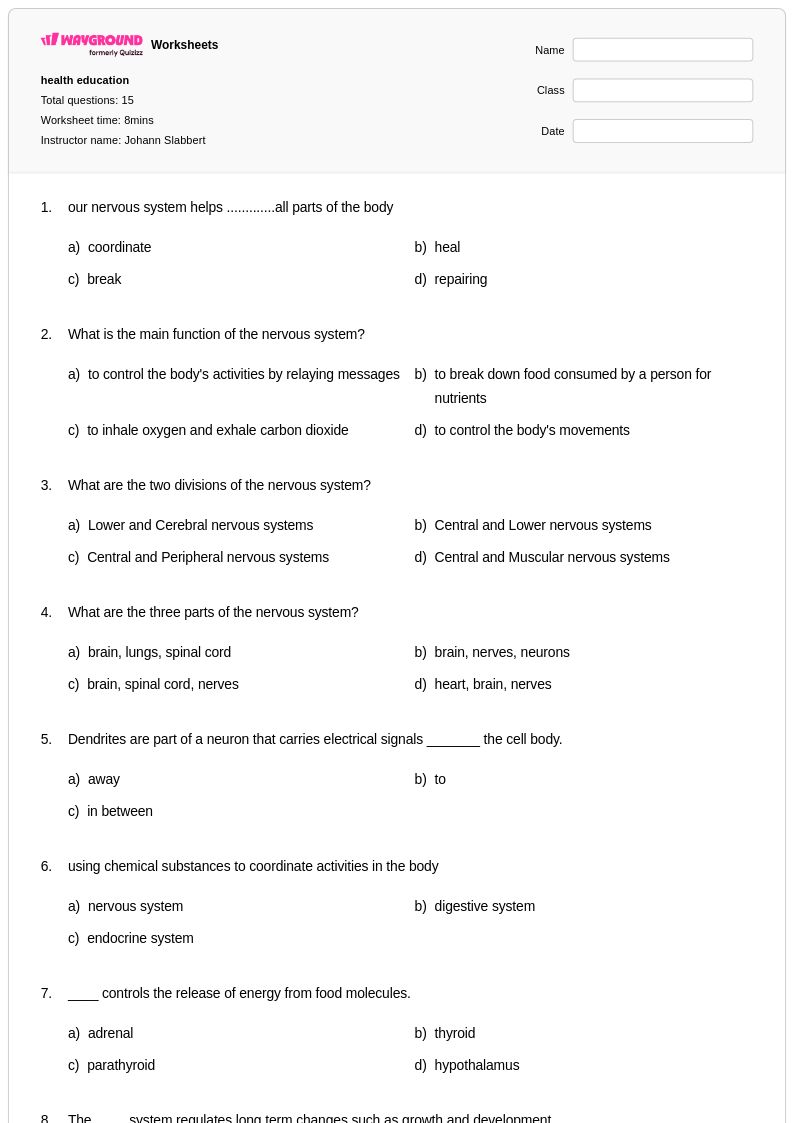
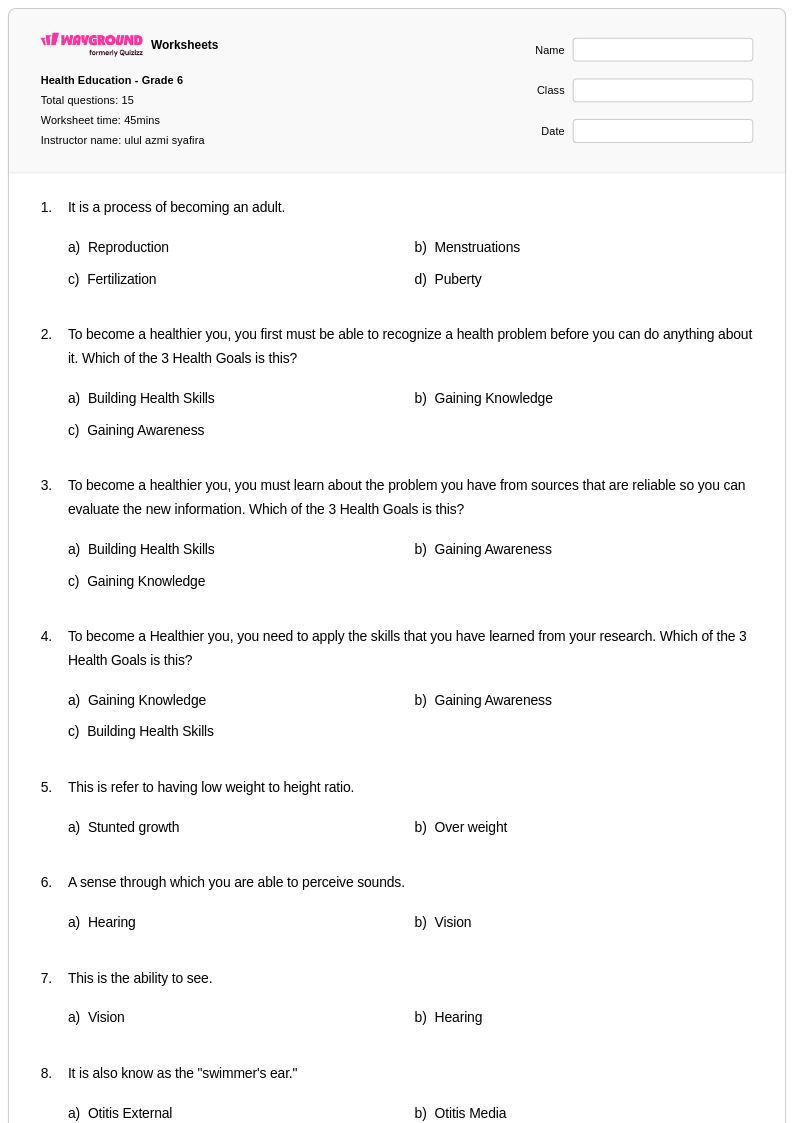
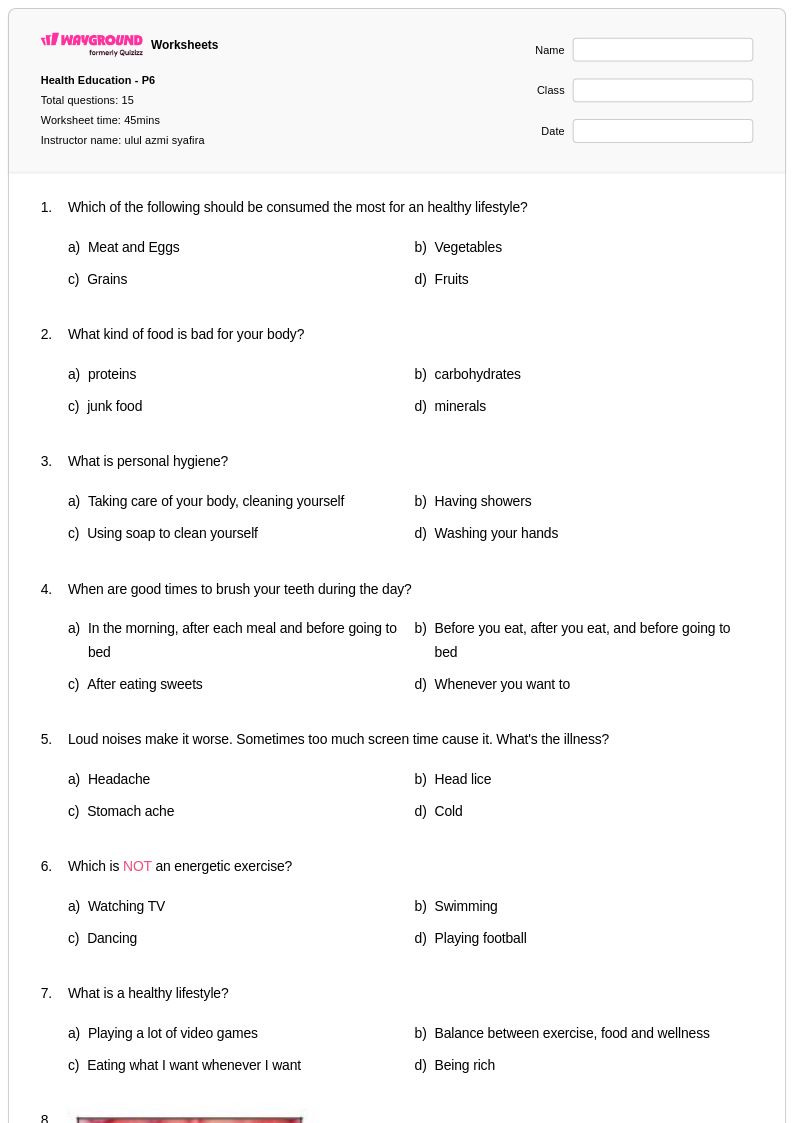
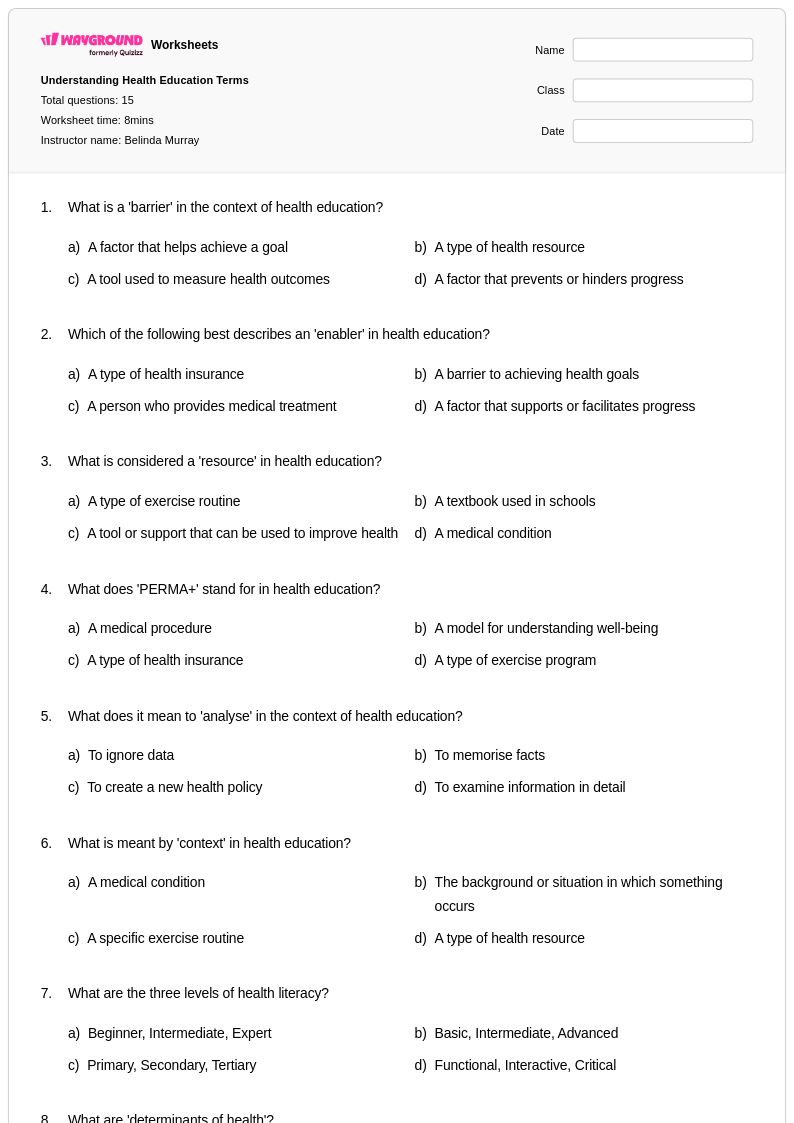
Grade 6 health education worksheets available through Wayground (formerly Quizizz) provide comprehensive resources that strengthen students' understanding of essential wellness concepts during this critical developmental stage. These expertly crafted materials cover fundamental health topics including nutrition and dietary choices, personal hygiene and self-care practices, physical fitness and exercise planning, mental health awareness, and basic anatomy and body systems. Each worksheet incorporates age-appropriate content that challenges sixth graders to apply health knowledge through practical scenarios, decision-making exercises, and reflective activities. Teachers can access complete answer keys alongside these free printables, ensuring efficient grading and immediate feedback opportunities. The practice problems within these resources are specifically designed to reinforce health literacy skills while encouraging students to make informed choices about their personal wellness and understand the connection between healthy behaviors and overall quality of life.
Wayground (formerly Quizizz) supports educators with an extensive collection of teacher-created health education resources, featuring millions of worksheets developed by experienced professionals who understand Grade 6 learning objectives and developmental needs. The platform's robust search and filtering capabilities allow teachers to quickly locate materials that align with specific health education standards and curriculum requirements. Advanced differentiation tools enable instructors to customize worksheets for diverse learning levels within their classrooms, while the availability of both printable pdf formats and digital versions provides maximum flexibility for various teaching environments. These comprehensive features streamline lesson planning by offering ready-to-use materials for skill practice, targeted remediation for students who need additional support, and enrichment opportunities for advanced learners. Teachers can confidently integrate these health education worksheets into their instruction knowing they have access to high-quality, standards-aligned content that promotes critical thinking about personal wellness and healthy lifestyle choices.
FAQs
How do I teach health education topics like nutrition and mental health in a way that actually resonates with students?
Effective health education instruction connects content to students' real-life decisions rather than presenting abstract facts. Use scenario-based learning where students analyze health choices, evaluate consequences, and apply evidence-based reasoning. Topics like nutrition, mental health, and substance abuse prevention land better when framed around situations students already encounter, which is why case studies and decision-making activities are cornerstones of health literacy instruction.
What kinds of worksheets help students practice health education skills like evaluating lifestyle choices and understanding nutrition?
Health education worksheets that include scenario analysis, dietary planning exercises, and substance abuse prevention case studies give students structured opportunities to apply what they're learning rather than just recall definitions. Practice problems that ask students to evaluate lifestyle choices or identify disease prevention strategies build the critical thinking and decision-making skills central to health literacy. Look for materials that connect directly to real-world applications so practice feels purposeful rather than rote.
What mistakes do students commonly make when learning about nutrition, hygiene, or substance abuse prevention?
One of the most common errors is treating health content as memorization rather than applying it to decision-making, which means students can recite nutrition facts but struggle to evaluate an actual meal plan. With substance abuse prevention, students often conflate awareness with resistance skills, knowing what a substance is without understanding how to navigate social pressure. In hygiene and disease prevention, misconceptions about how pathogens spread are persistent, so targeted practice that corrects these errors explicitly is more effective than general review.
How can I support students with different learning needs when teaching health education?
Health education content spans literacy-heavy topics like mental health awareness and procedural content like hygiene practices, so differentiation matters across multiple dimensions. On Wayground, teachers can assign individual accommodations such as read aloud support for students who struggle with dense health texts, reduced answer choices to lower cognitive load on complex scenario questions, and extended time for students who need it. These settings can be applied per student without other students being notified, making differentiation seamless during both in-person and digital sessions.
How do I use Wayground's health education worksheets in my classroom?
Wayground's health education worksheets are available as printable PDFs for traditional classroom use and in digital formats for technology-integrated or remote learning environments. Teachers can also host worksheets as a quiz directly on Wayground, making it easy to assign and track student responses in one place. Complete answer keys are included with every worksheet, supporting both teacher-led instruction and independent student self-assessment.
What health education topics are covered in Wayground's worksheet library?
Wayground's health education worksheets cover a broad range of wellness topics including nutrition and dietary planning, hygiene and disease prevention, mental health awareness, substance abuse prevention, and personal safety strategies. This range makes it practical for teachers to find materials aligned to specific units rather than building resources from scratch. The library is designed to support health literacy across multiple dimensions, from physical well-being to informed decision-making and lifelong wellness habits.