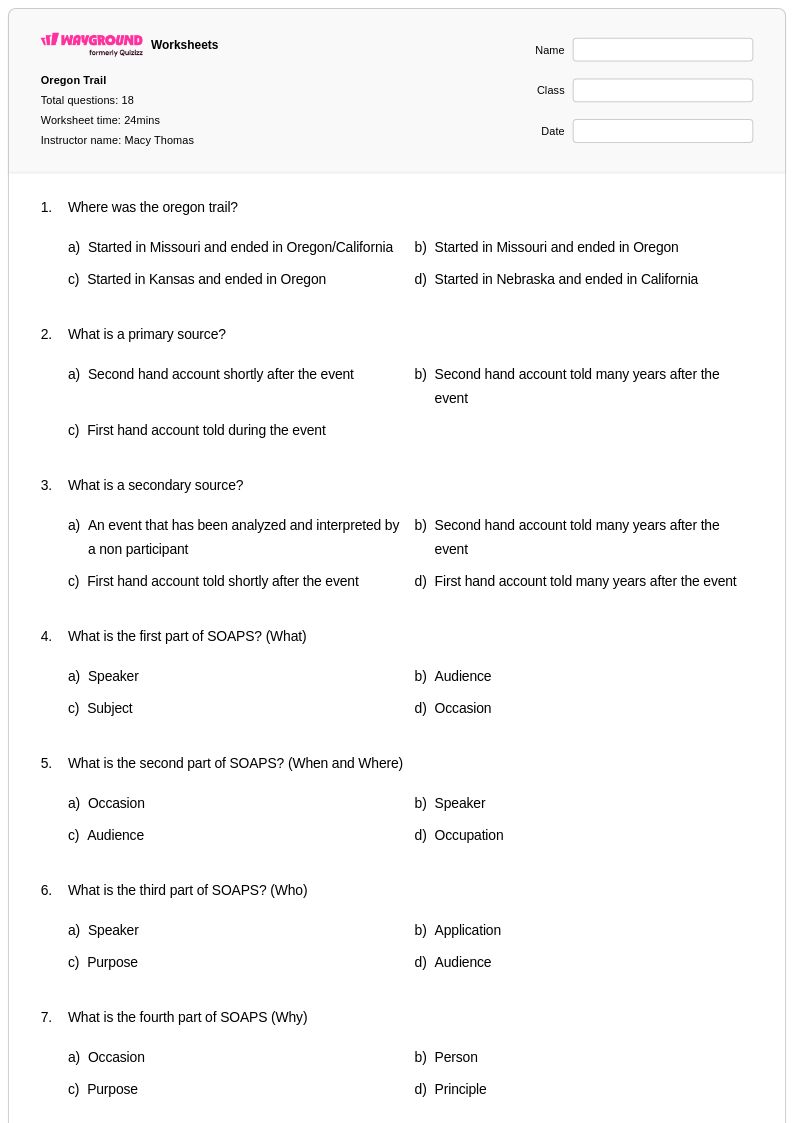
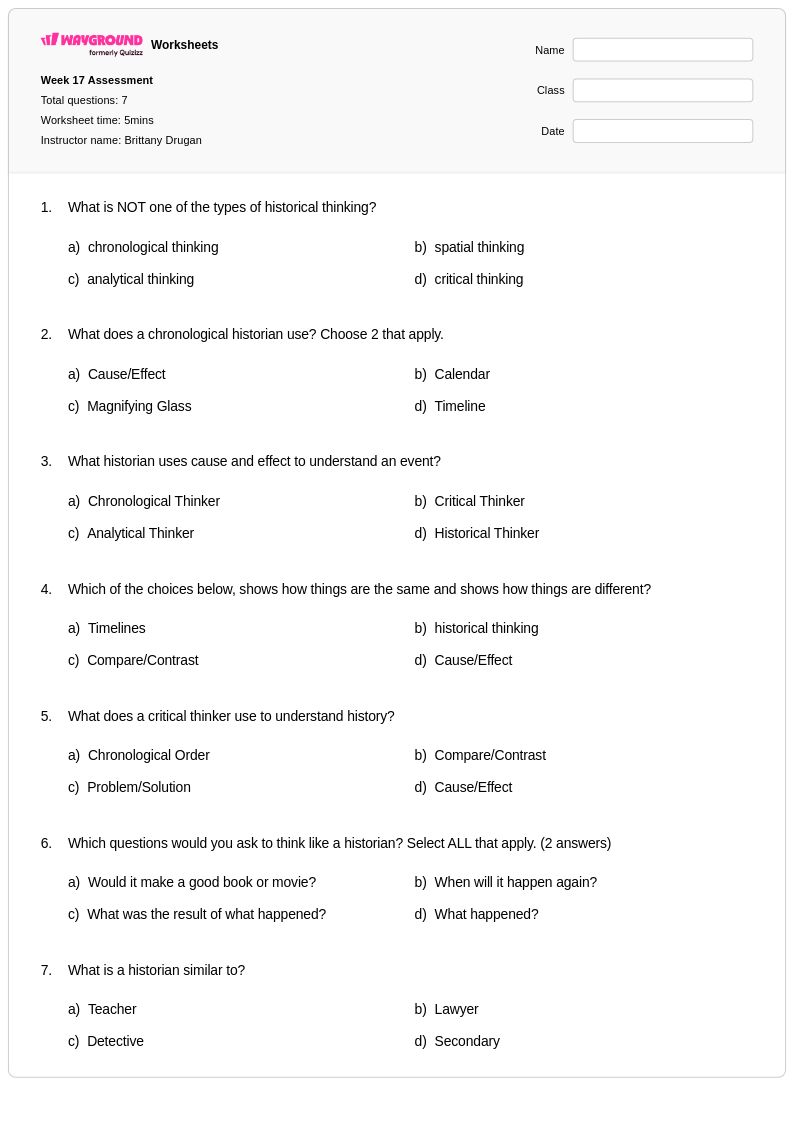
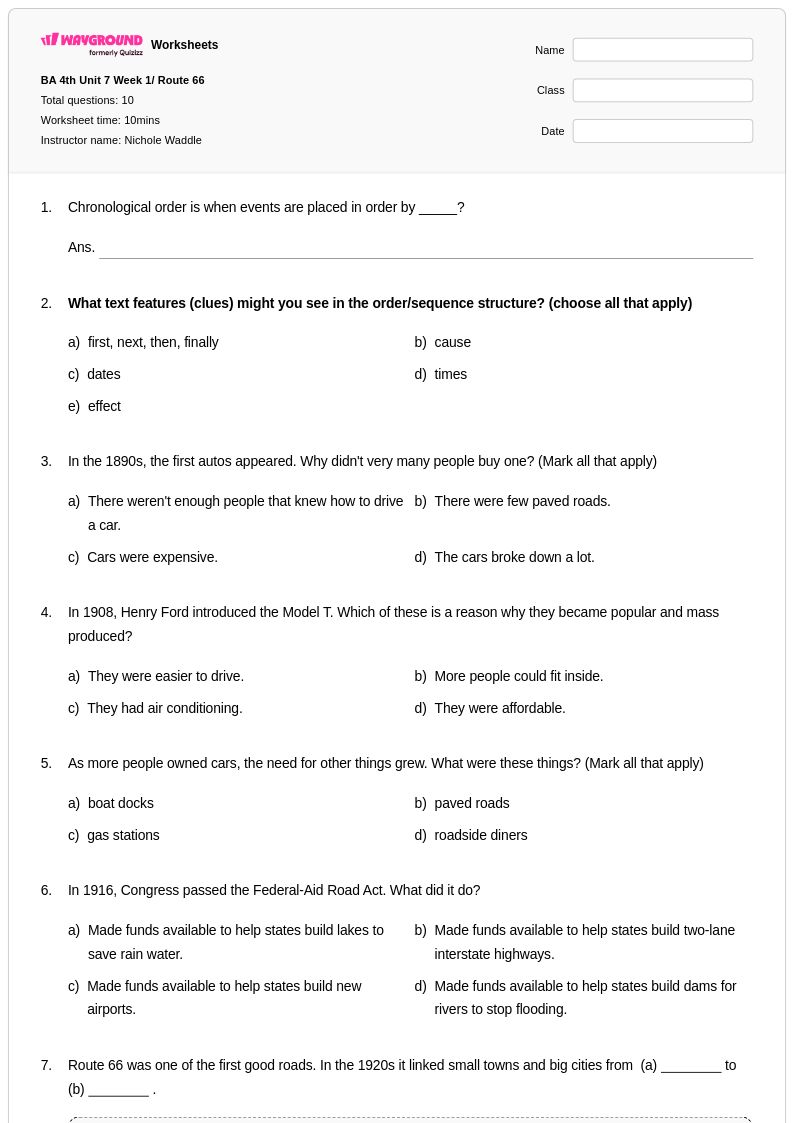
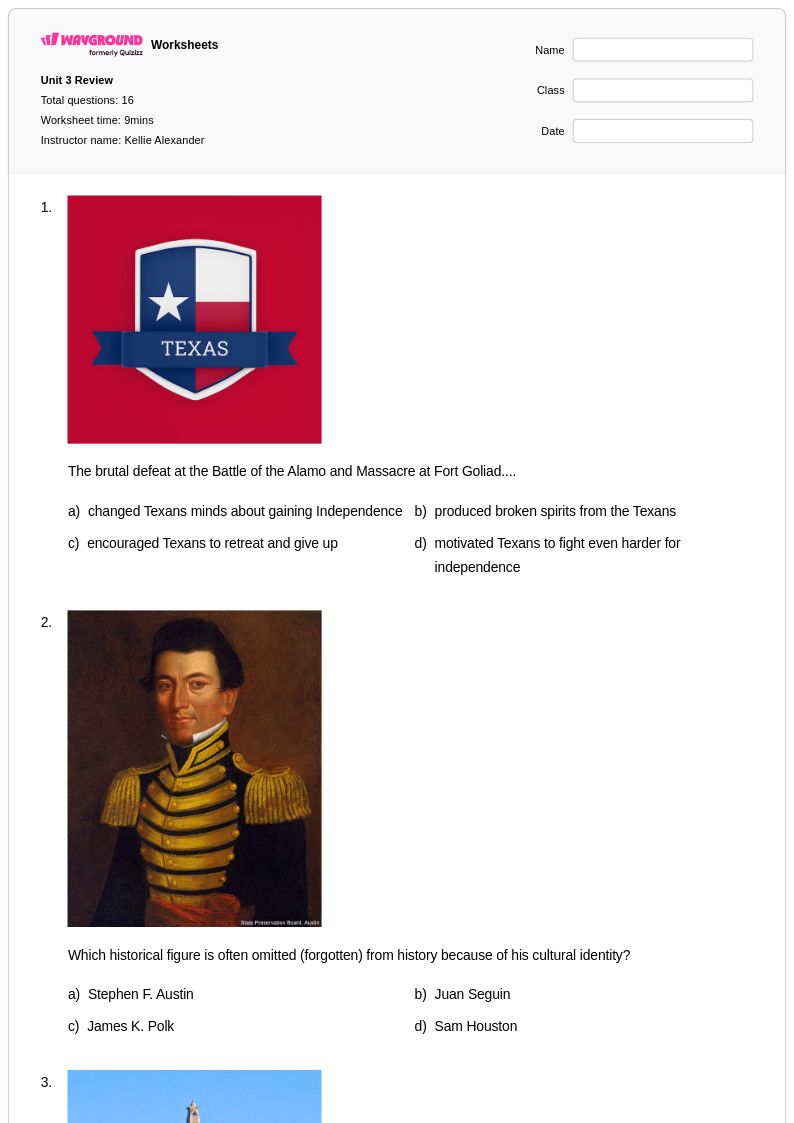
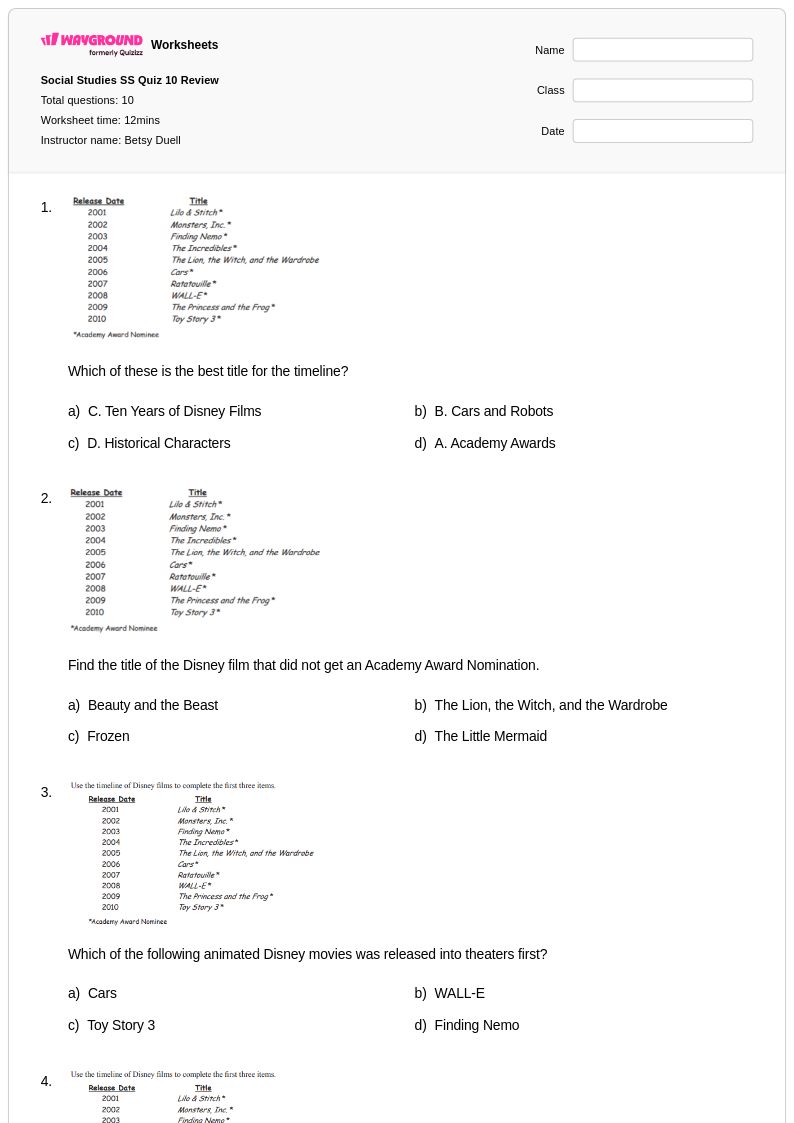
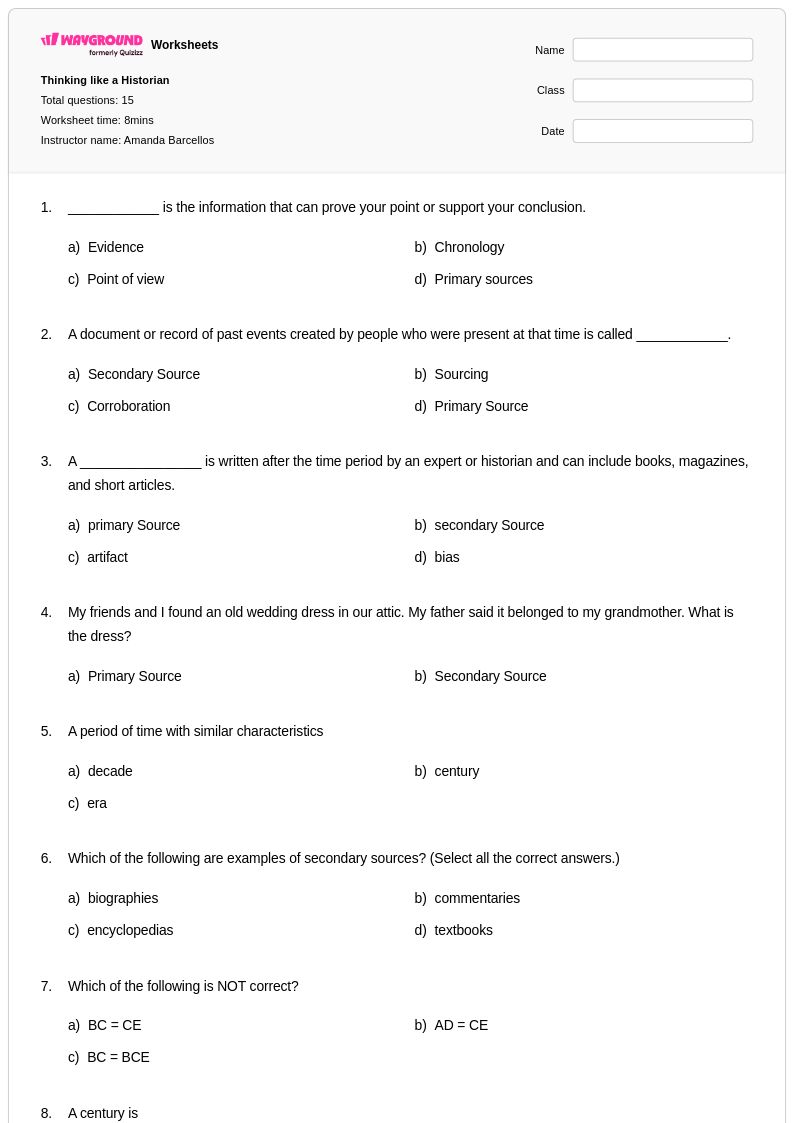
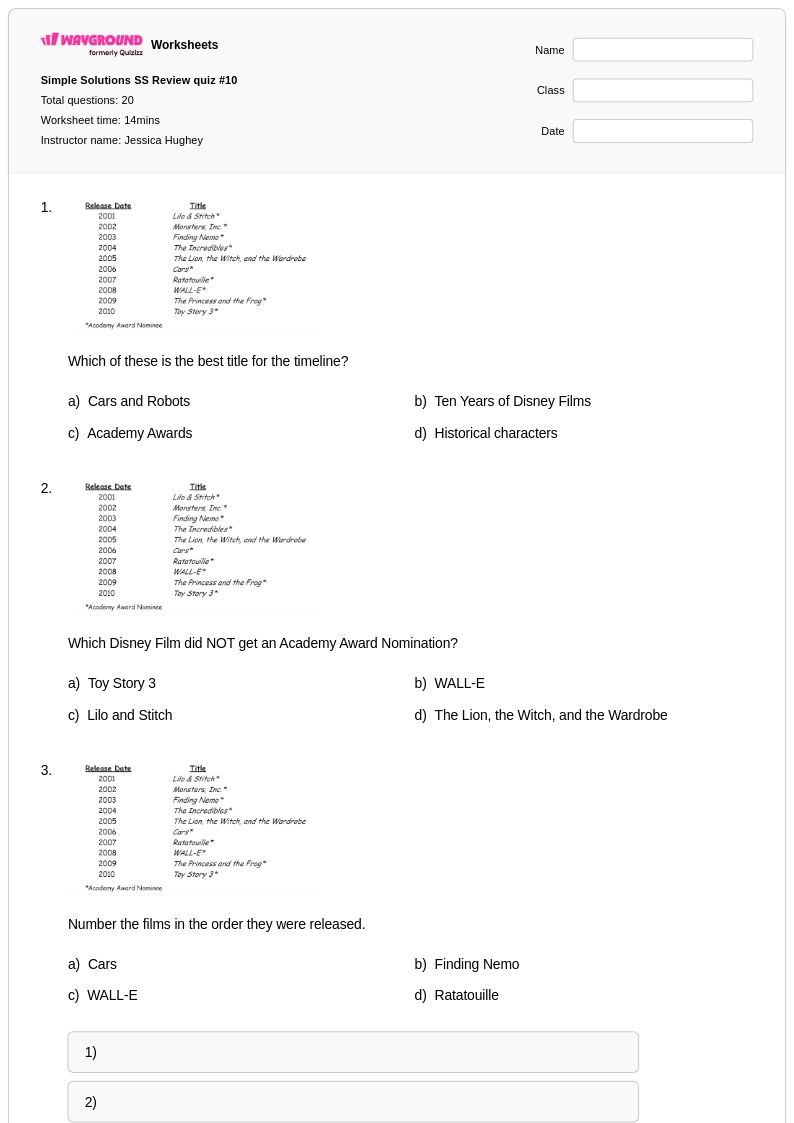
Free Printable Historical Timelines Worksheets for Grade 4
Explore free Grade 4 historical timelines worksheets and printables that help students practice organizing chronological events, understanding sequence in history, and developing timeline skills through engaging PDF activities with answer keys.
Explore printable Historical Timelines worksheets for Grade 4
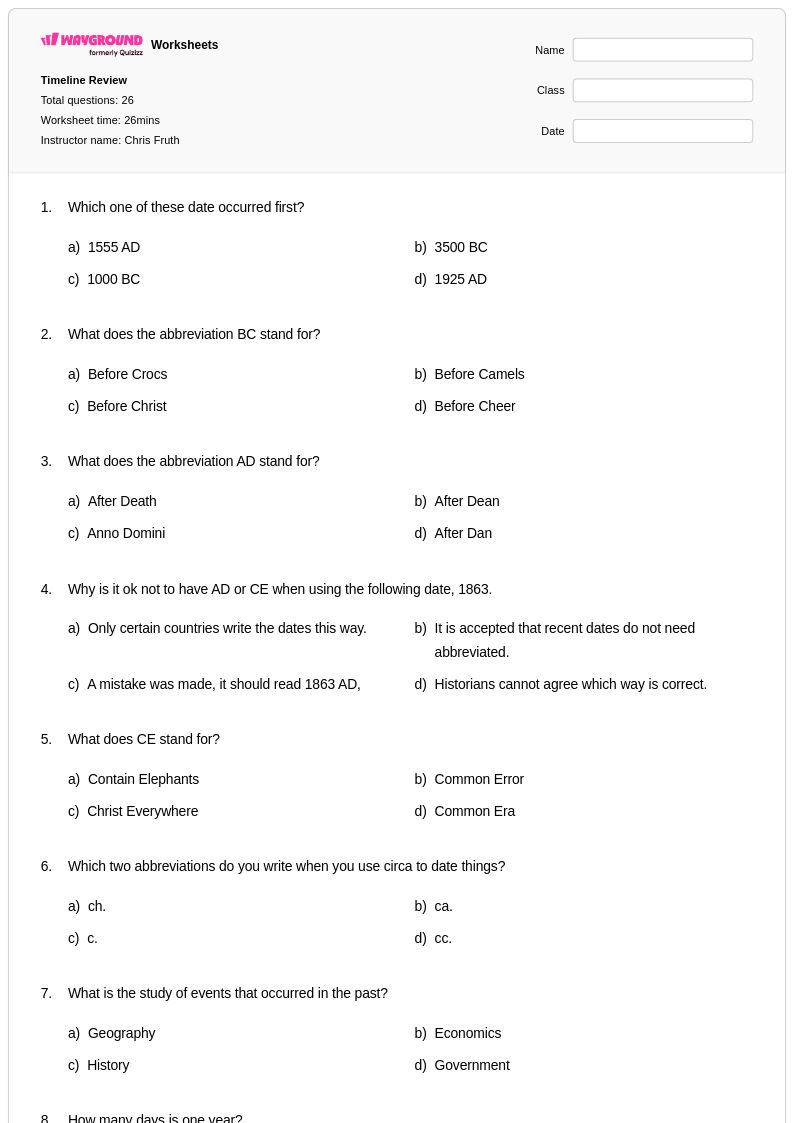
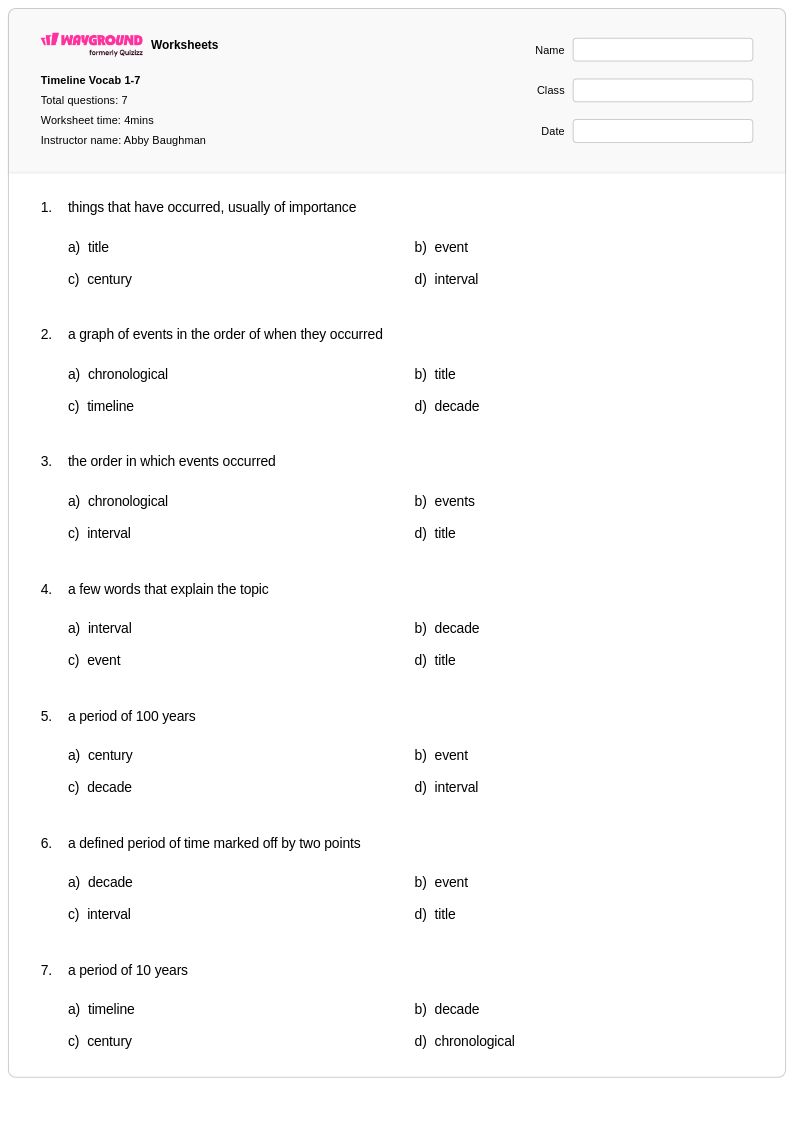
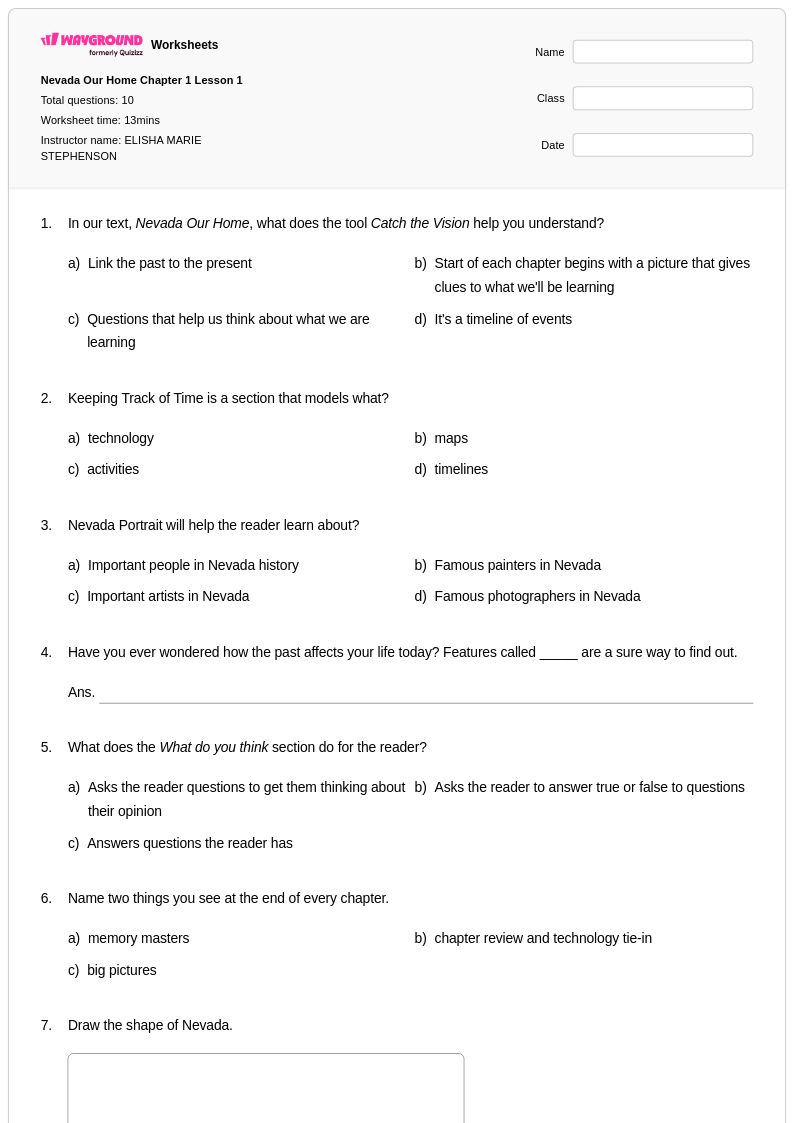
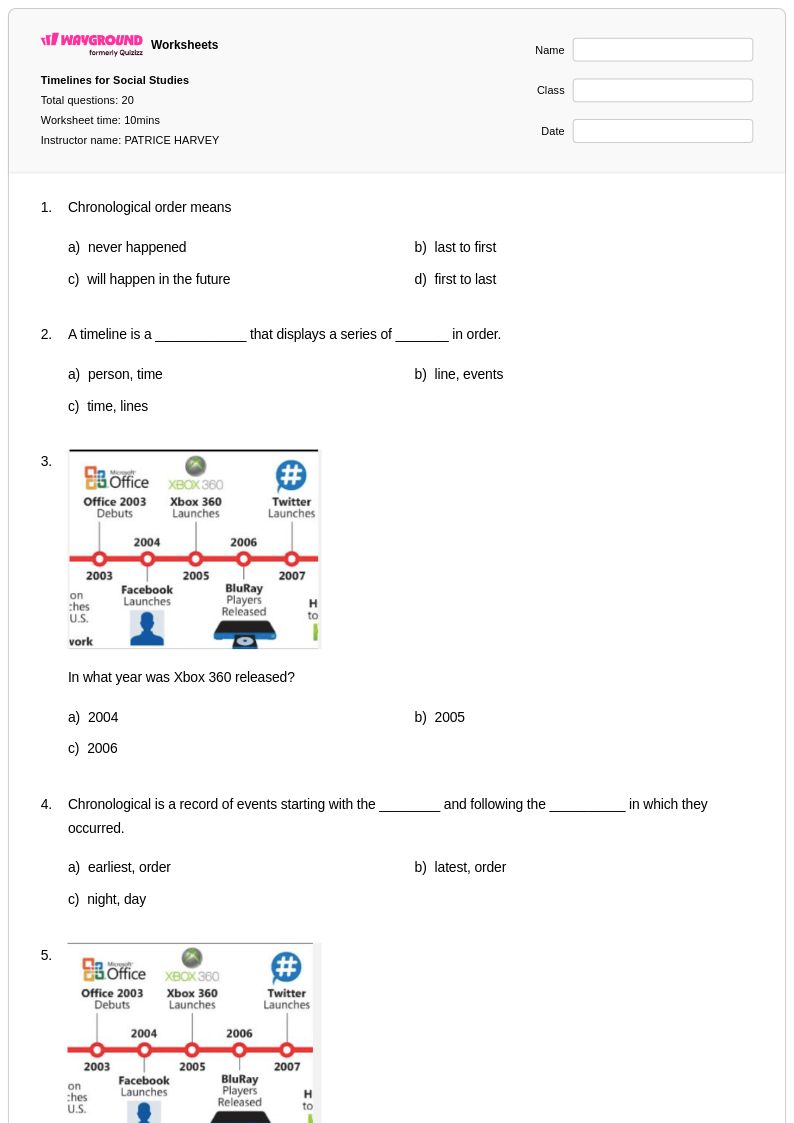
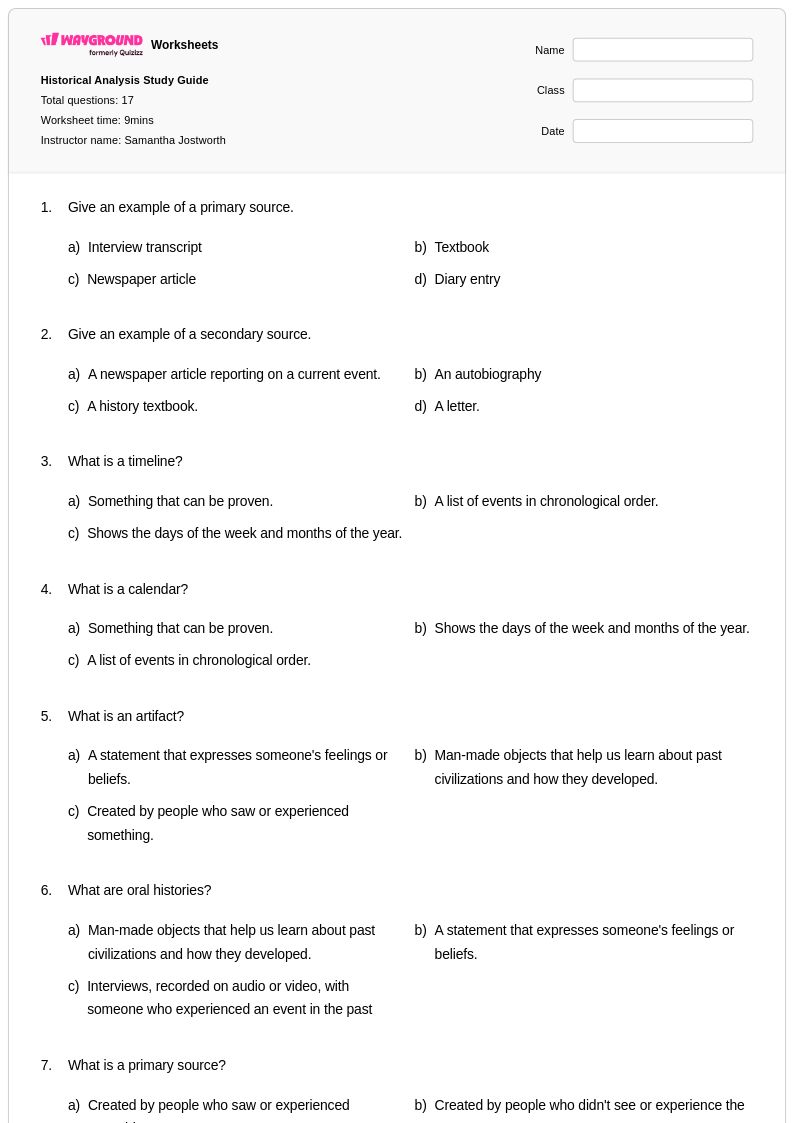
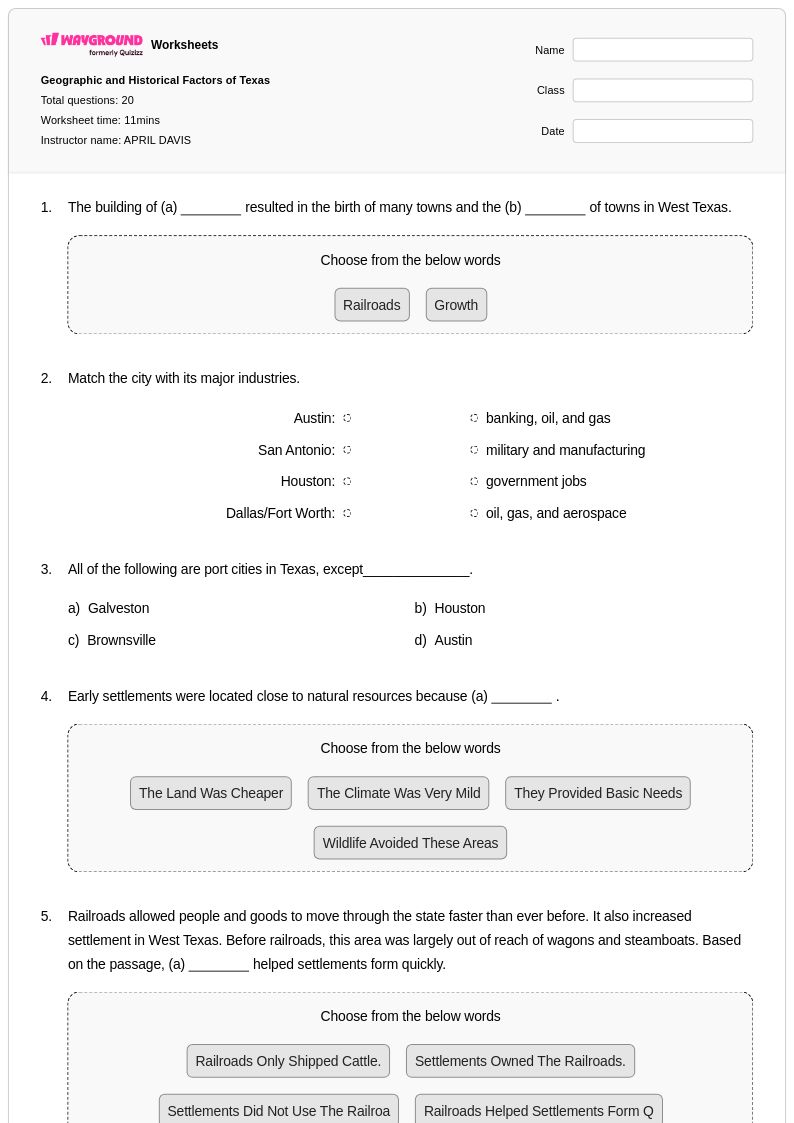
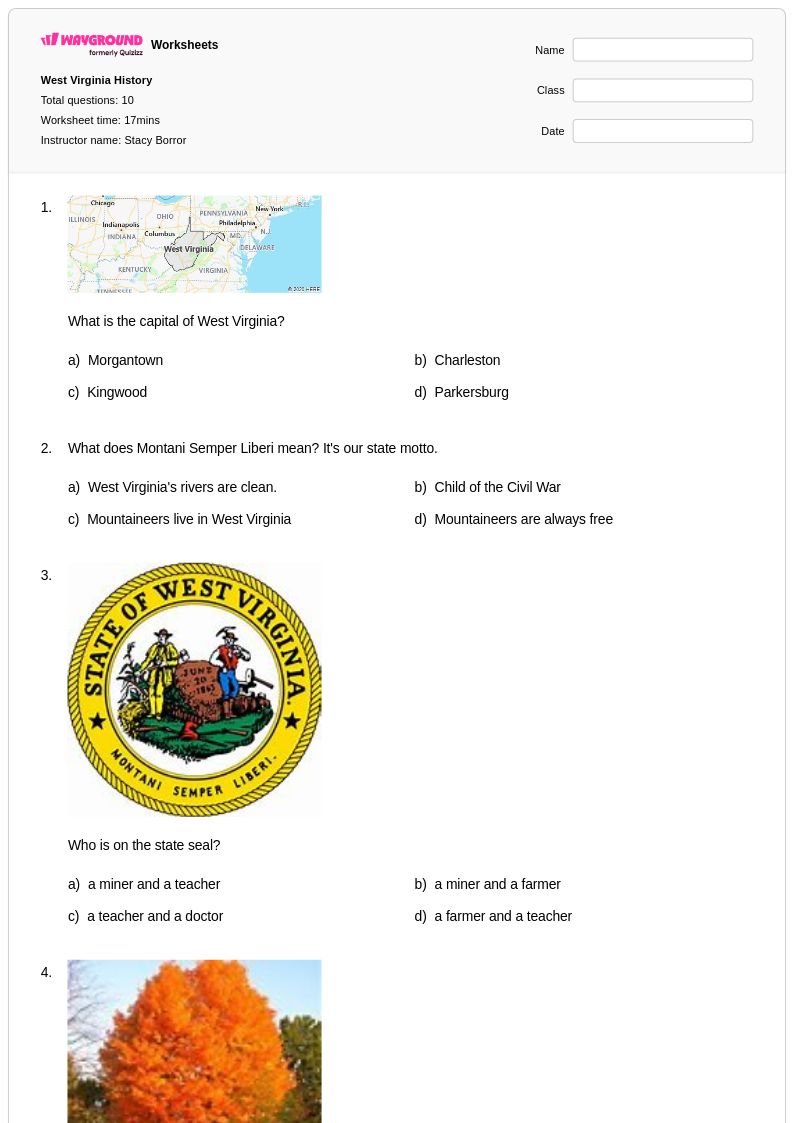
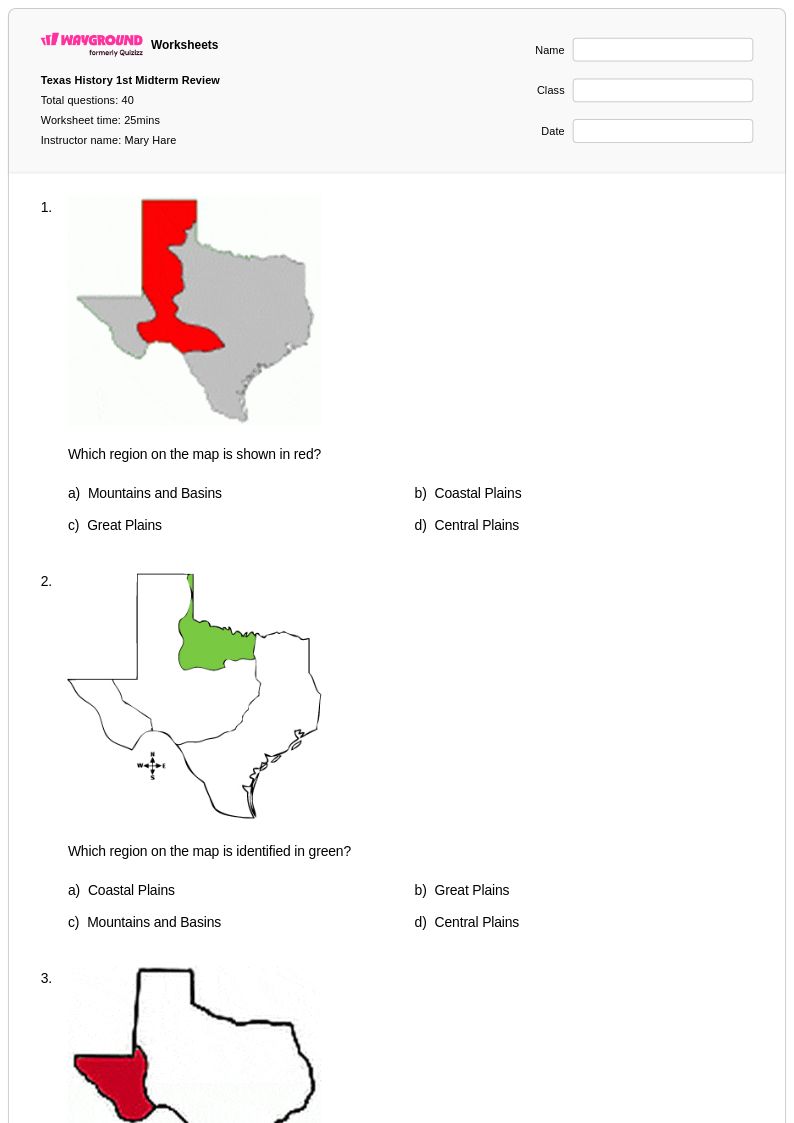
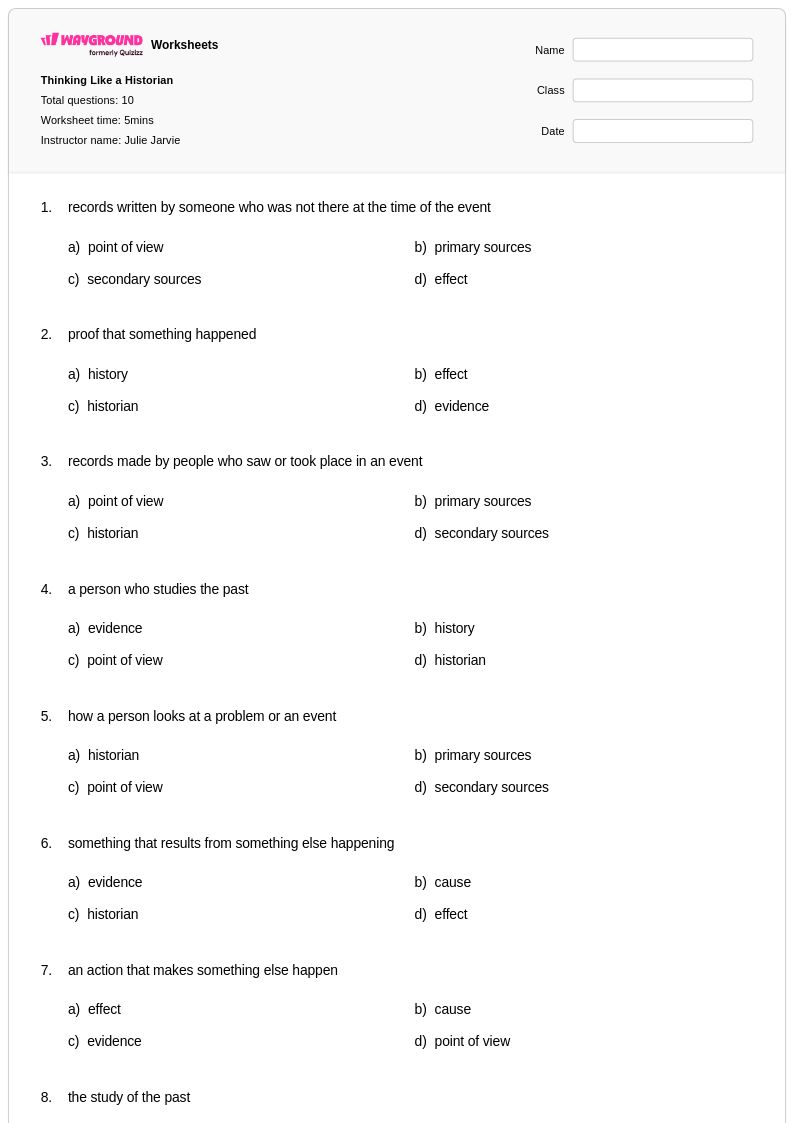
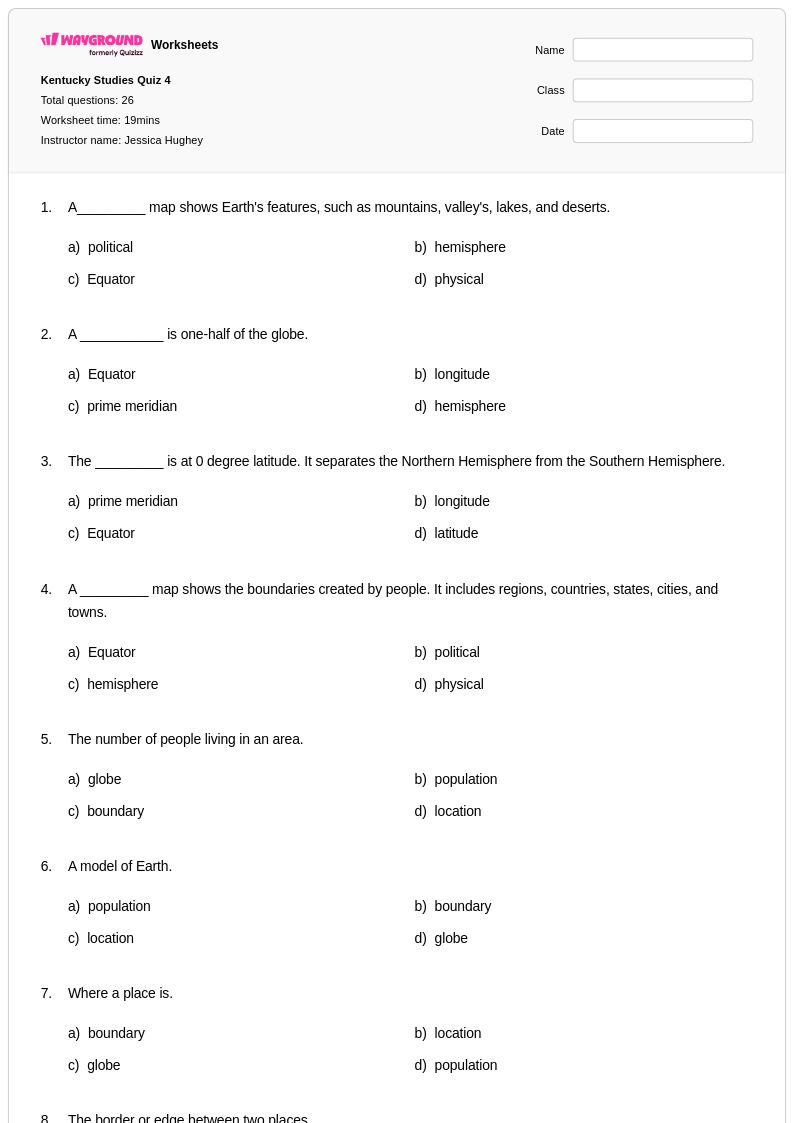
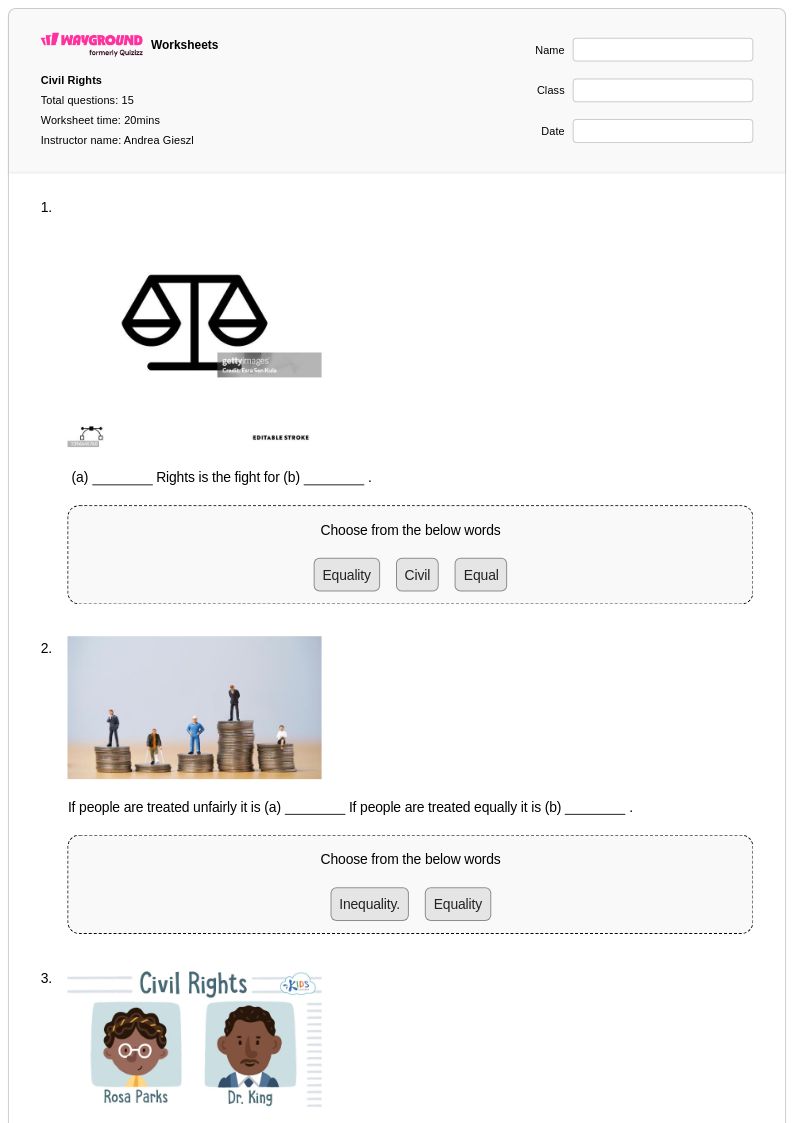
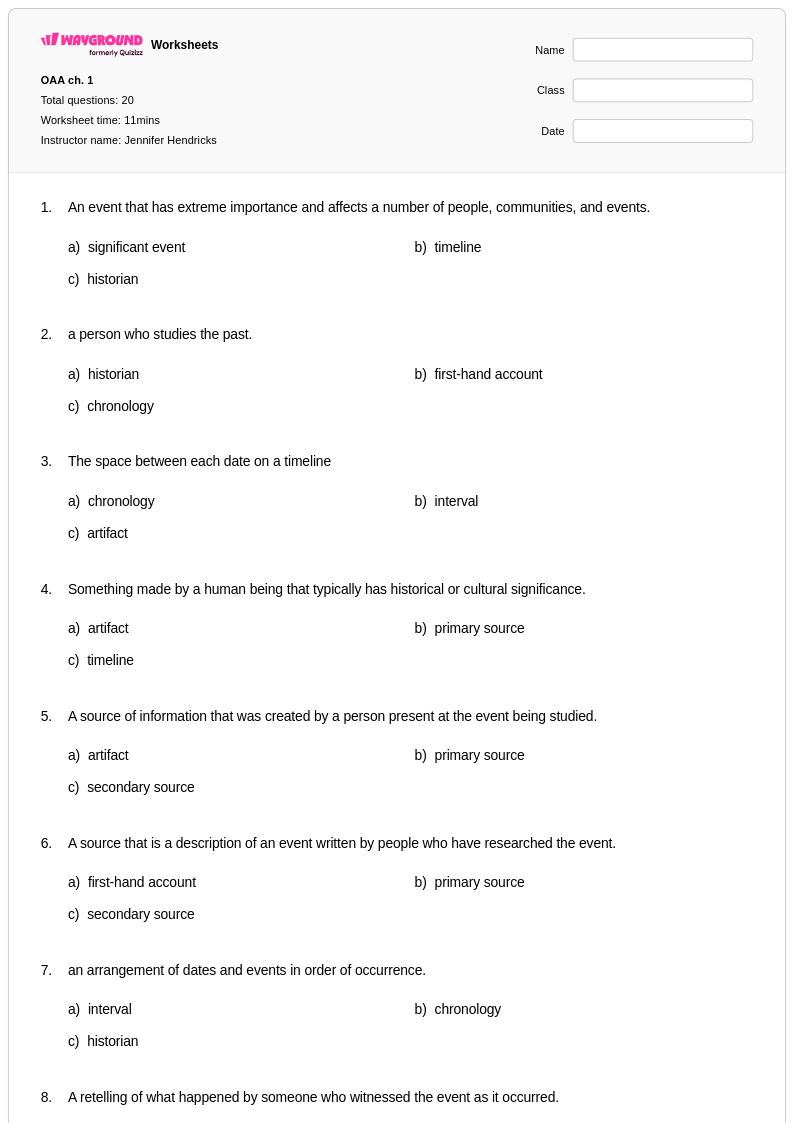
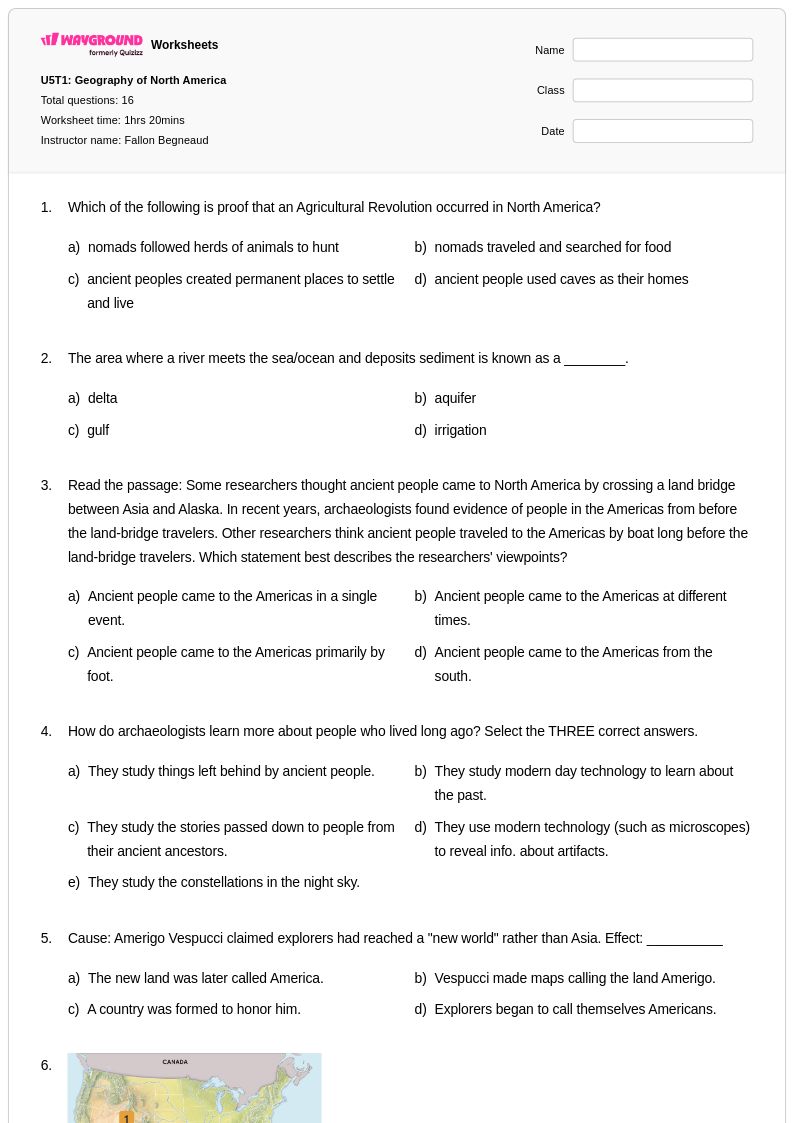
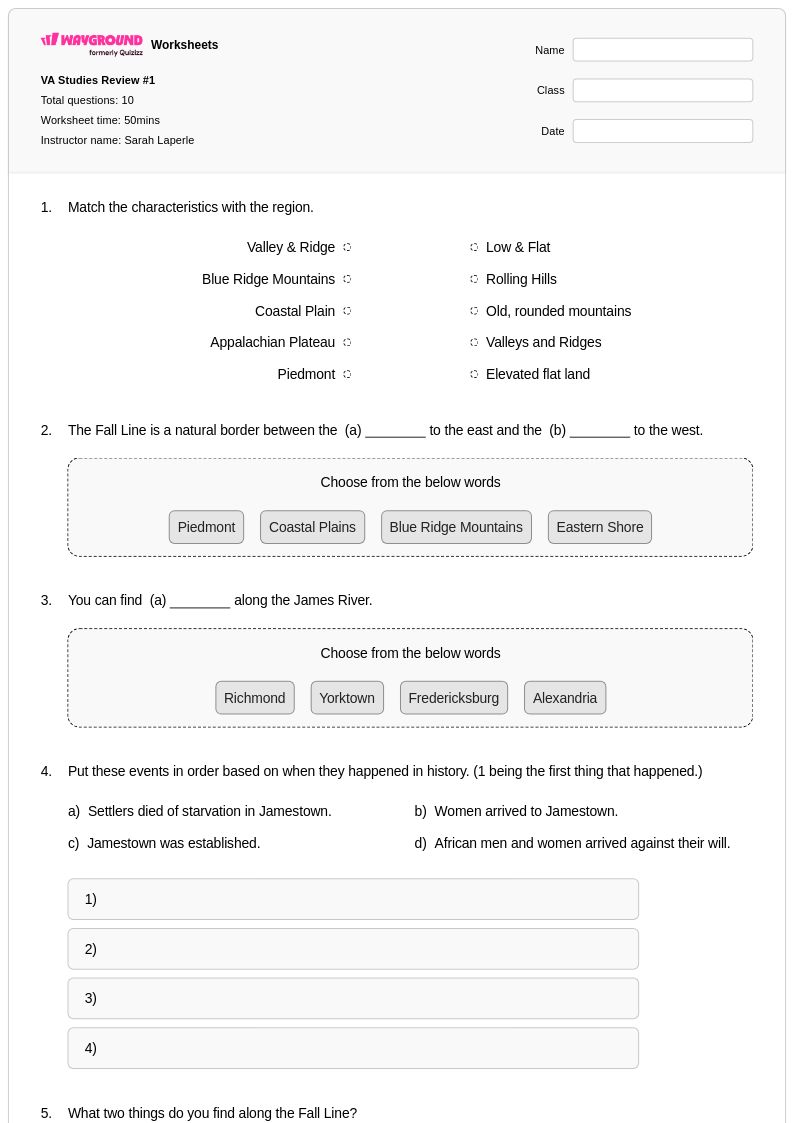
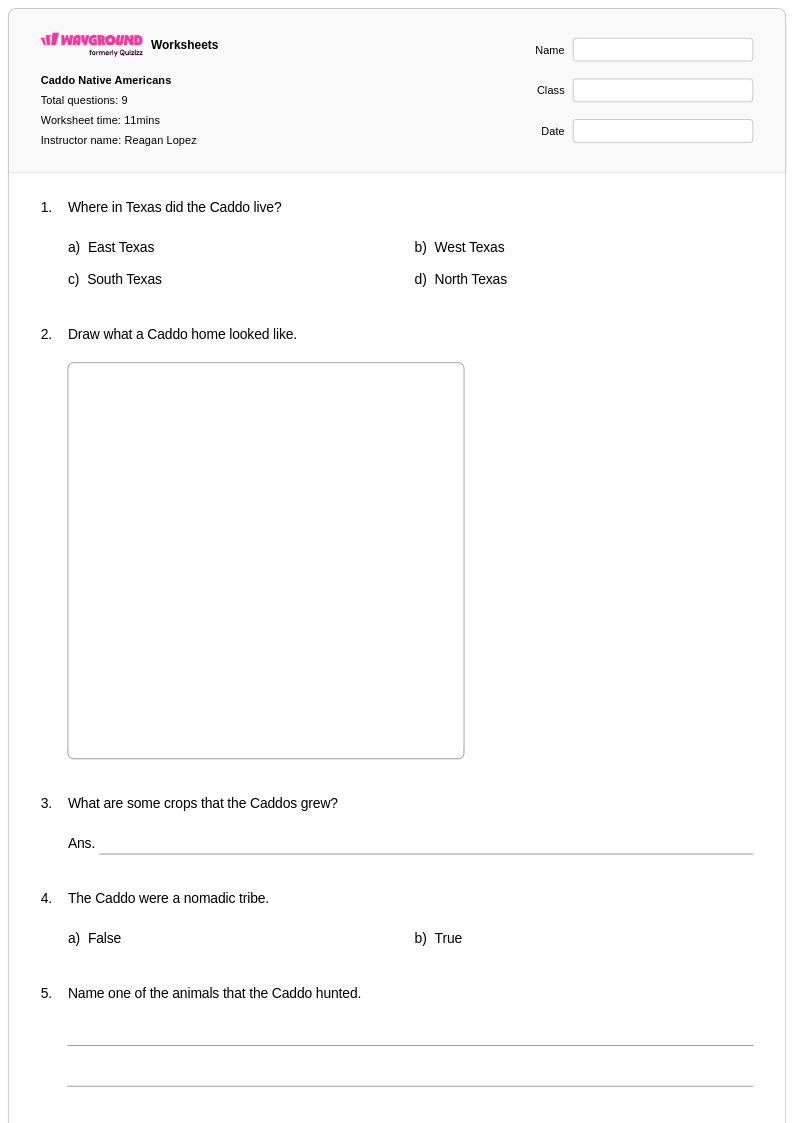
Historical timelines worksheets for Grade 4 students available through Wayground (formerly Quizizz) provide essential practice in chronological thinking and historical sequencing skills. These comprehensive printable resources help fourth-grade learners develop their ability to organize historical events in proper order, understand cause-and-effect relationships across time periods, and visualize how past events connect to create historical narratives. Students work with timeline creation exercises, event sequencing activities, and chronological analysis problems that strengthen their understanding of historical progression from early civilizations through more recent historical periods. Each worksheet comes with a complete answer key and is available as a free pdf download, making them accessible tools for both classroom instruction and independent practice at home.
Wayground (formerly Quizizz) supports educators with an extensive collection of teacher-created historical timeline worksheets that streamline lesson planning and provide targeted skill development opportunities. The platform's millions of resources include standards-aligned materials that can be easily searched and filtered by specific timeline skills, historical periods, or complexity levels appropriate for Grade 4 learners. Teachers can customize existing worksheets to match their curriculum needs, create differentiated versions for students requiring additional support or enrichment, and access materials in both digital and printable pdf formats. These flexible tools enable educators to provide focused remediation for students struggling with chronological concepts, offer advanced timeline projects for accelerated learners, and ensure consistent practice opportunities that build historical thinking skills throughout the academic year.
FAQs
How do I teach students to read and interpret historical timelines?
Start by teaching students the core components of a timeline: the time scale, labeled events, and directional flow from earliest to most recent. Model how to read intervals between events and interpret what those gaps mean historically. From there, introduce more complex skills like comparing parallel timelines across civilizations or analyzing how one event triggered another. Scaffolding these skills progressively helps students build genuine chronological thinking rather than surface-level memorization.
What activities help students practice putting historical events in chronological order?
Cut-and-sequence activities are highly effective — students physically arrange events in order before transferring them to a written timeline, which reinforces both recall and sequencing logic. Worksheets that ask students to calculate time spans between events or identify which event came first across two civilizations push beyond simple ordering into deeper analysis. Practice problems that combine chronological ordering with cause-and-effect questions are especially useful for building transferable historical thinking skills.
What mistakes do students commonly make when working with historical timelines?
The most common error is treating a timeline as a list rather than a proportional representation of time, which causes students to misread intervals and misunderstand the actual distance between events. Students also frequently confuse BCE and CE dating conventions, leading to errors when calculating time spans across eras. Another recurring misconception is assuming that events listed close together on a timeline happened in the same region or were causally linked, when in reality they may be geographically and contextually unrelated.
How can I use historical timeline worksheets to teach cause-and-effect relationships?
Timeline worksheets become powerful cause-and-effect tools when students are asked not just to sequence events but to annotate why each event led to the next. Parallel timeline formats are particularly useful here because they let students visually compare developments across regions and identify moments where one civilization's actions influenced another. Structured worksheets that prompt students to draw arrows between related events or write brief explanations beneath each entry make the analytical work explicit rather than implicit.
How do I differentiate historical timeline instruction for students at different skill levels?
For students who struggle with chronological concepts, start with shorter timelines covering a single era or event sequence, and provide word banks or partially completed timelines to reduce cognitive load. Advanced learners benefit from thematic or parallel timeline tasks that require them to synthesize information across multiple civilizations simultaneously. On Wayground, teachers can apply accommodations such as reduced answer choices or read-aloud support to individual students, ensuring that differentiation happens quietly in the background without singling anyone out.
How do I use Wayground's historical timeline worksheets in my classroom?
Wayground's historical timeline worksheets are available as printable PDFs for traditional classroom use and in digital formats for technology-integrated or hybrid learning environments. Teachers can also host these worksheets as interactive quizzes directly on Wayground, allowing for real-time student responses and automatic scoring. Both formats include complete answer keys, making them equally useful for in-class instruction, independent practice, or homework assignments.