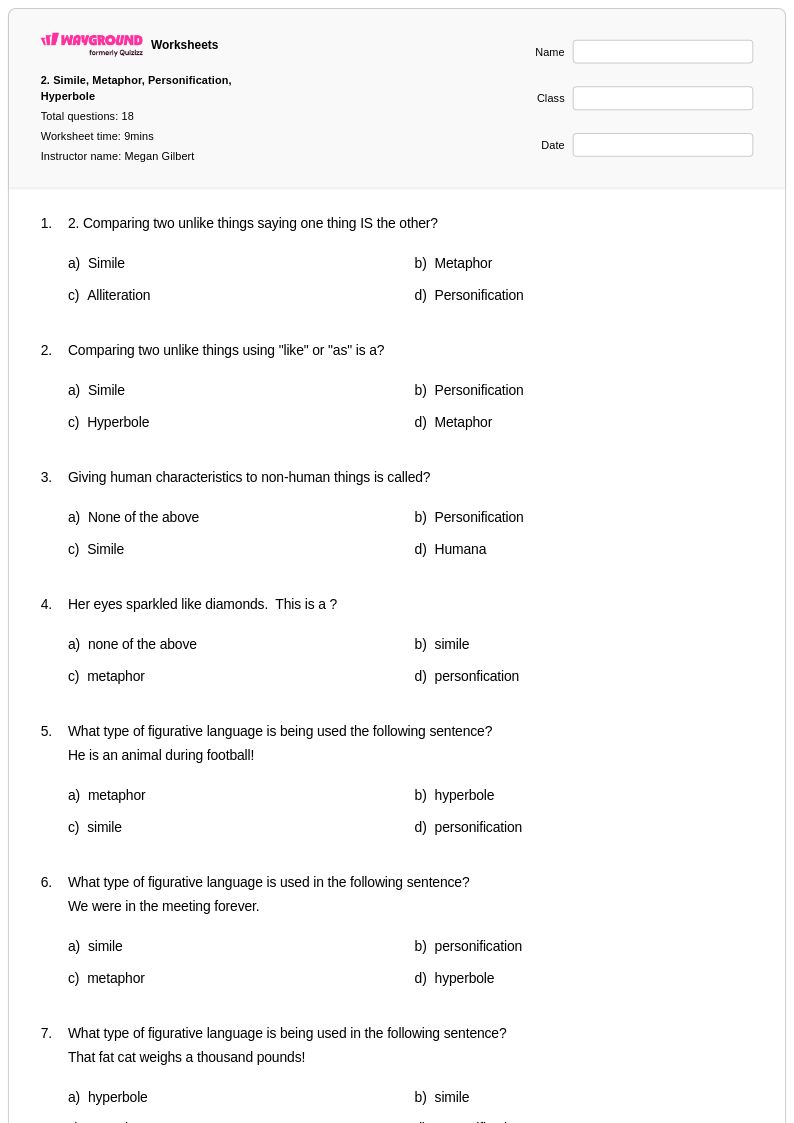
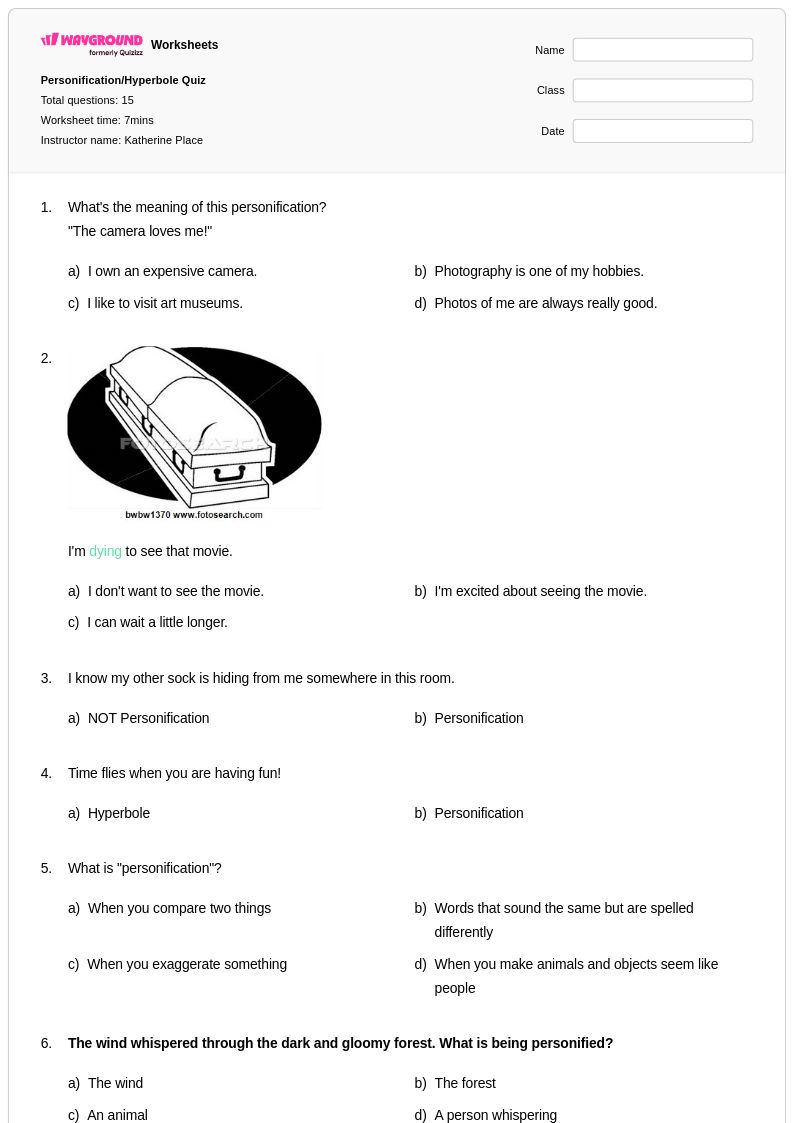
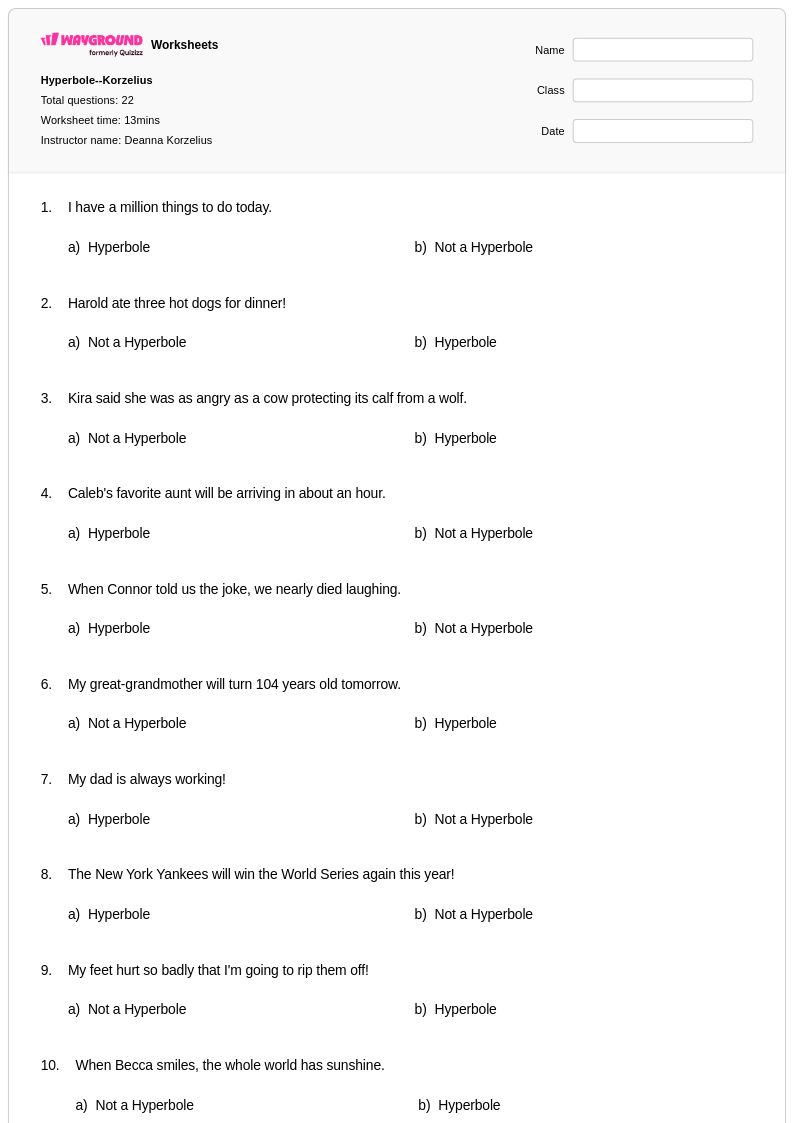
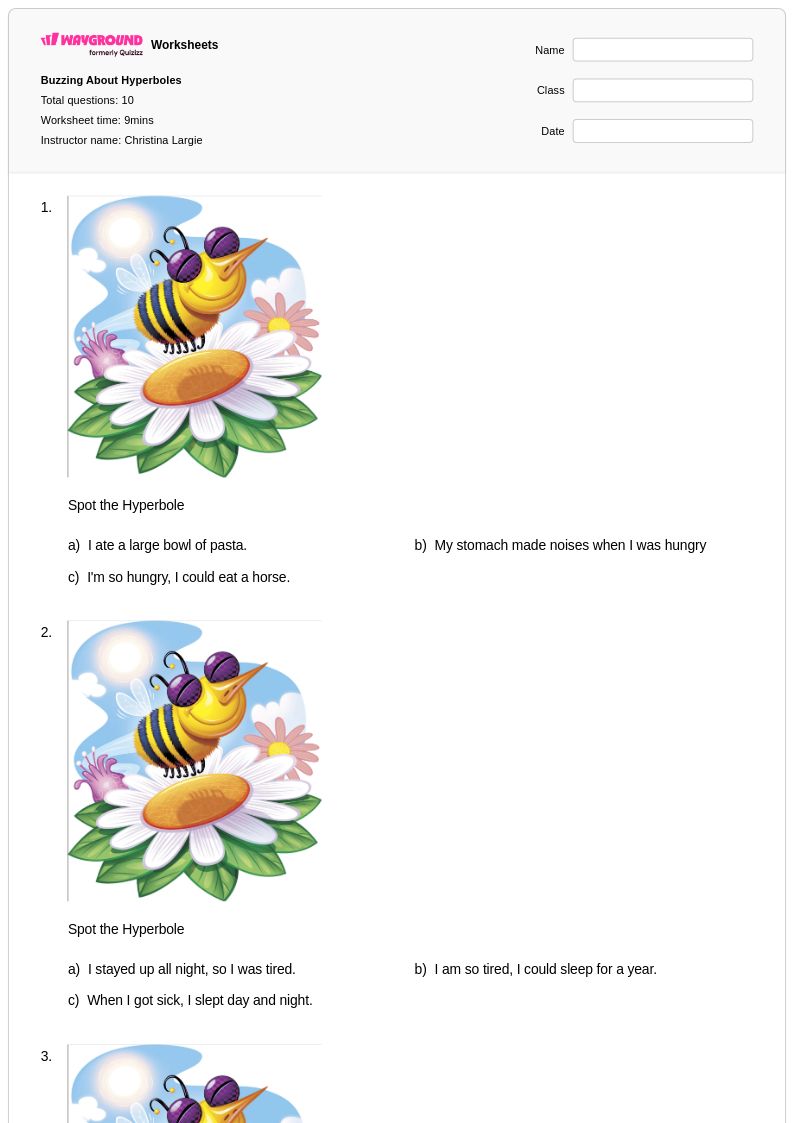
Grade 8 hyperbole worksheets from Wayground help students master exaggerated figurative language through engaging printables, practice problems, and comprehensive answer keys for effective learning.
Explore printable Hyperbole worksheets for Grade 8
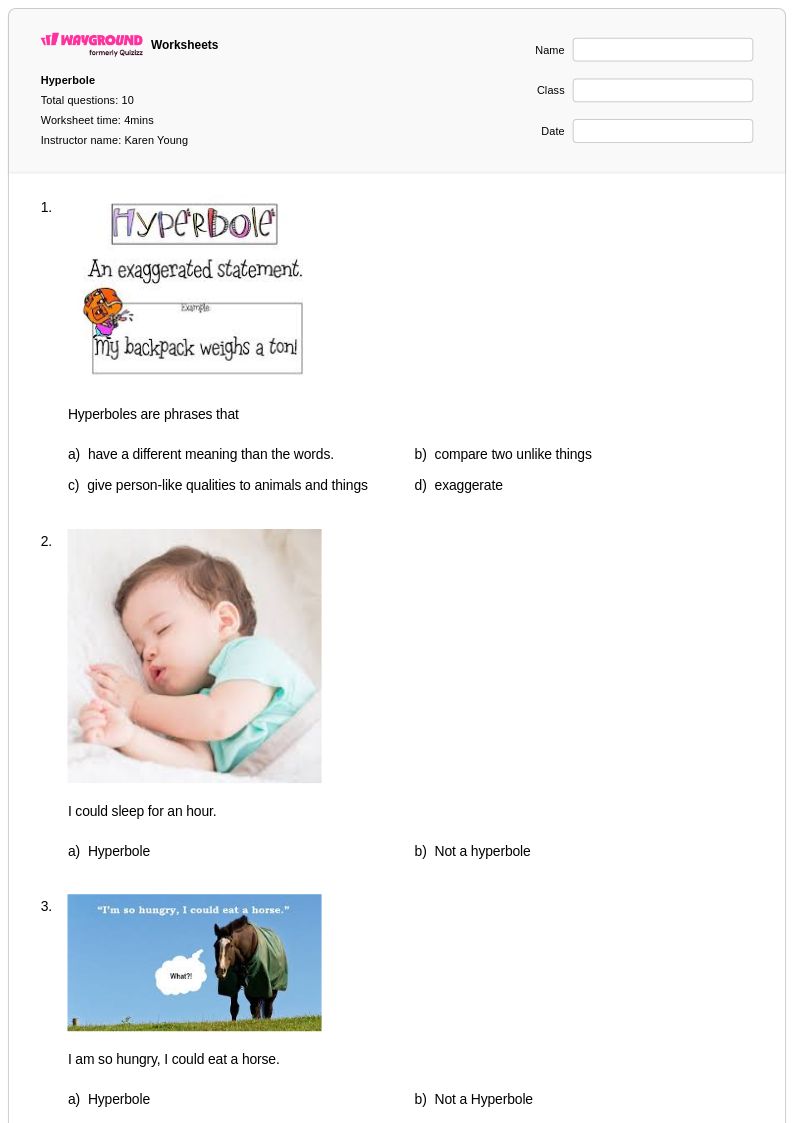
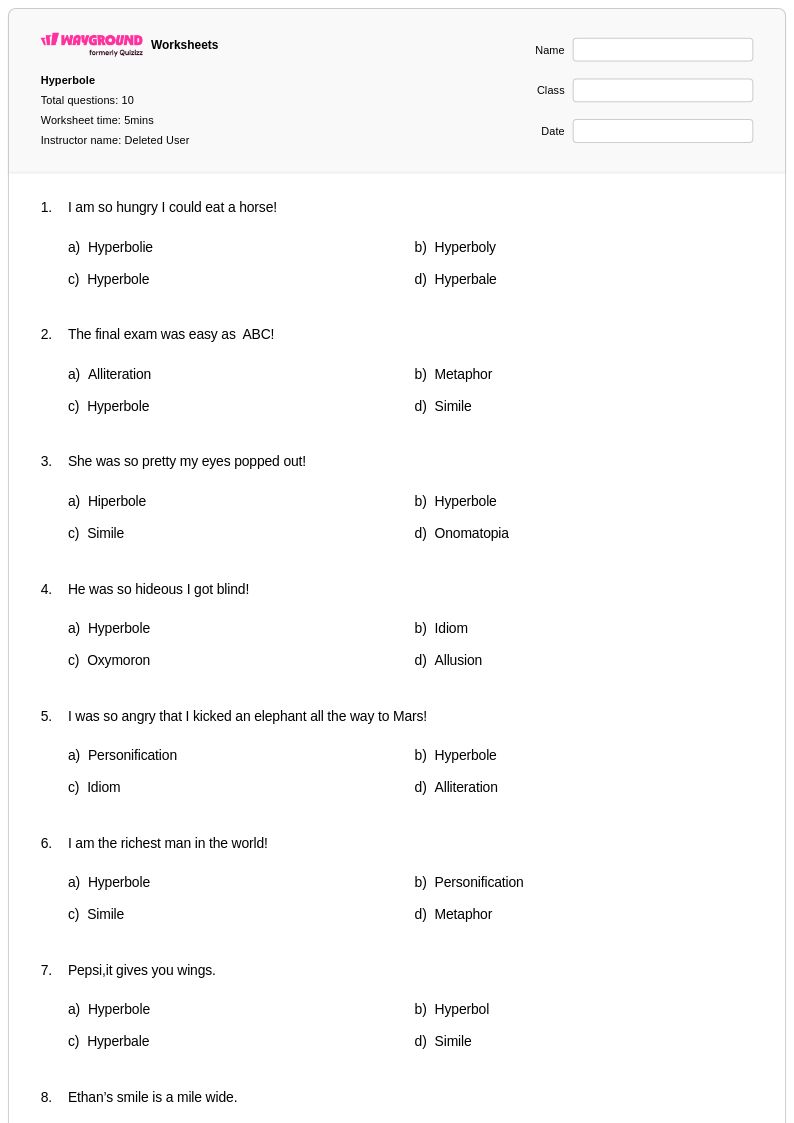
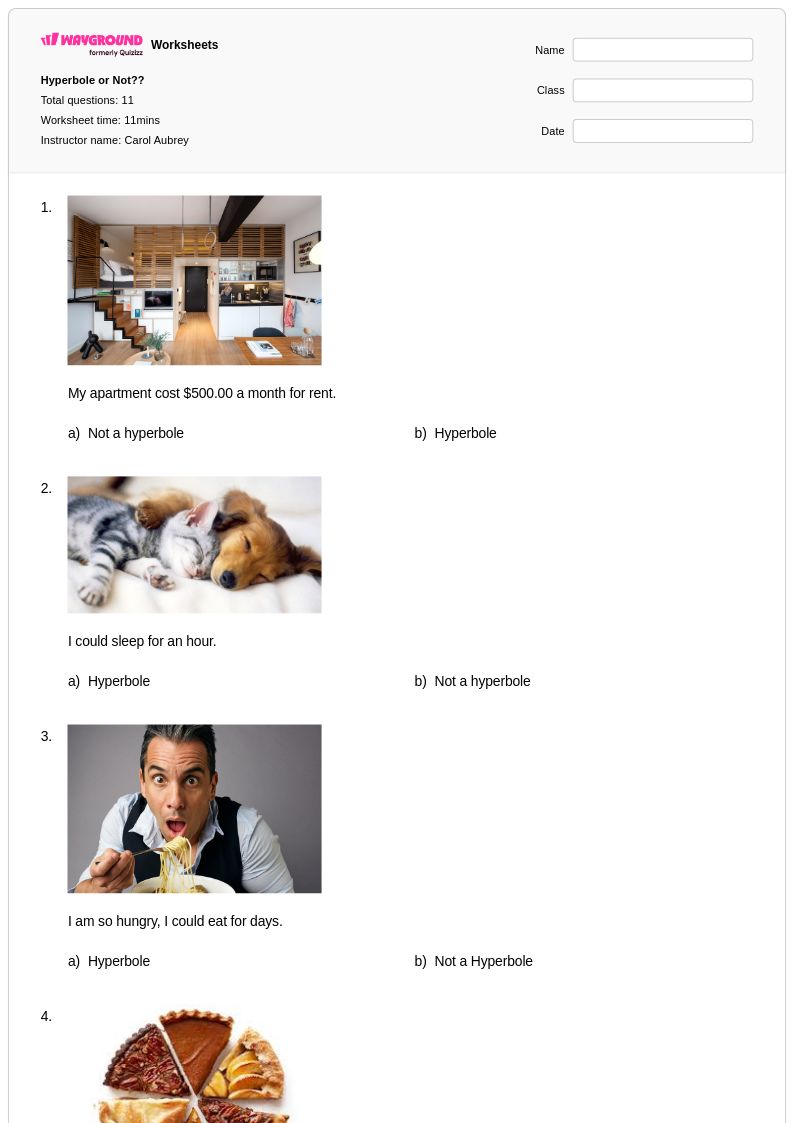
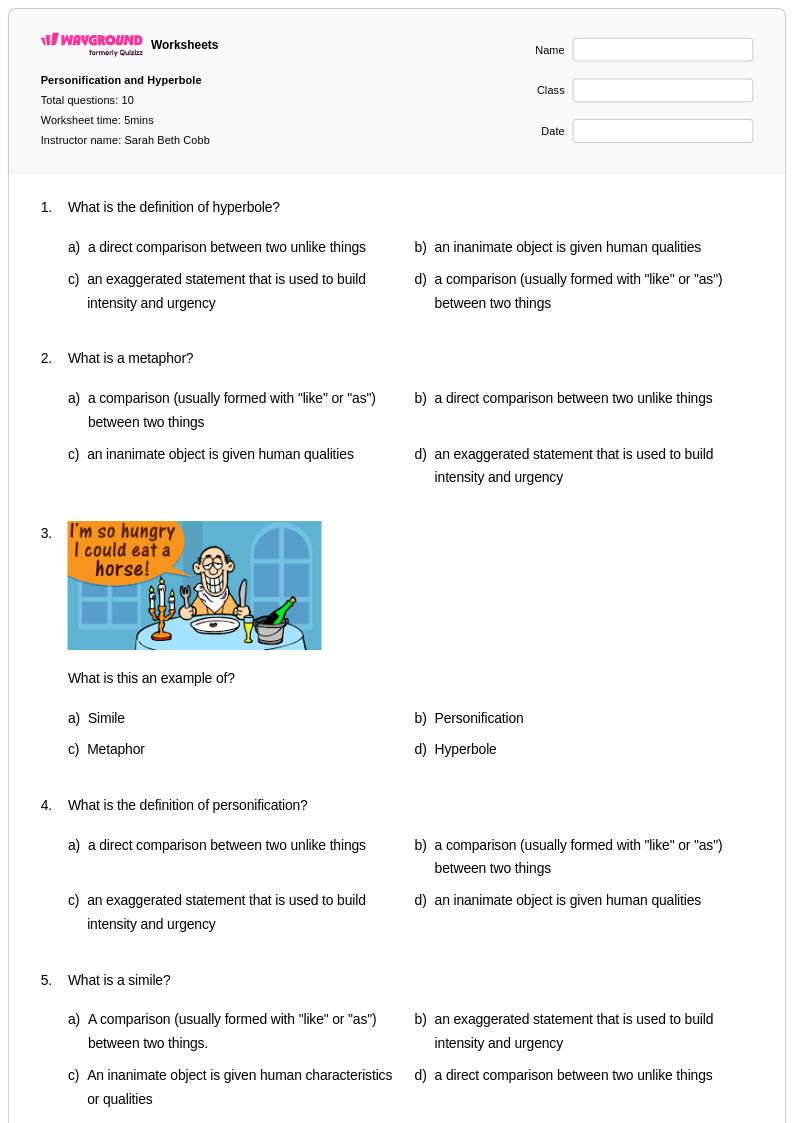
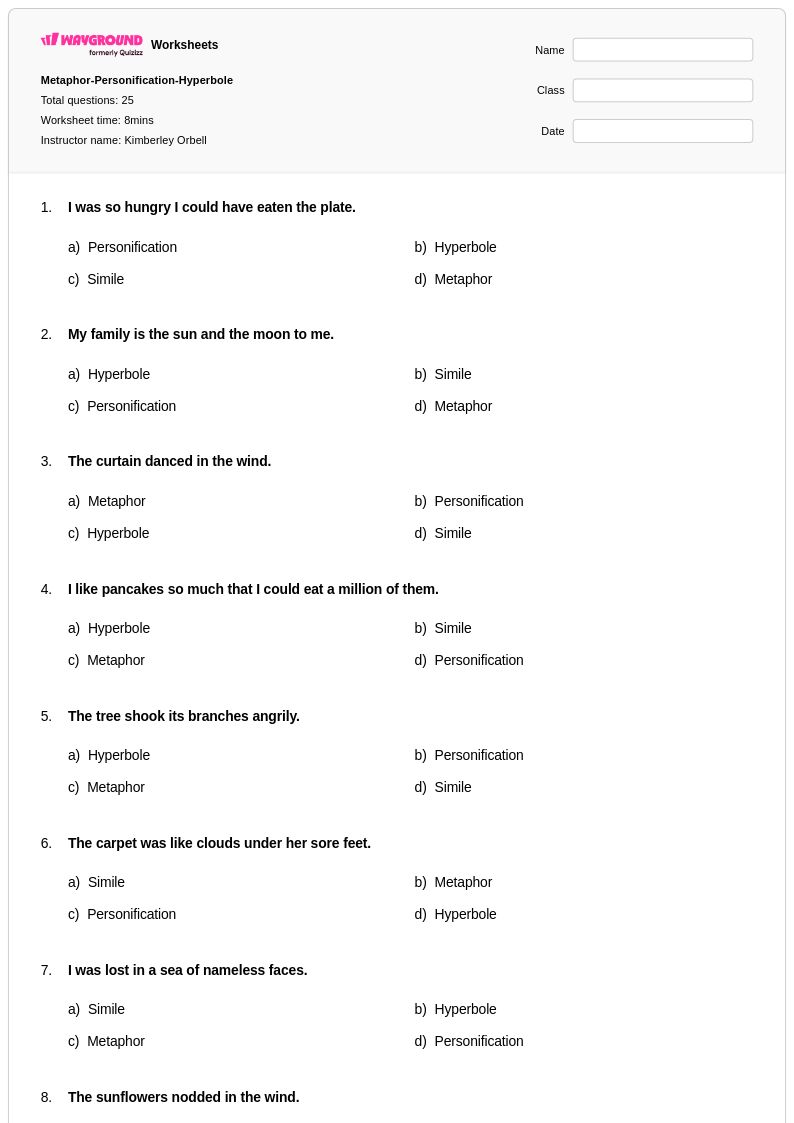
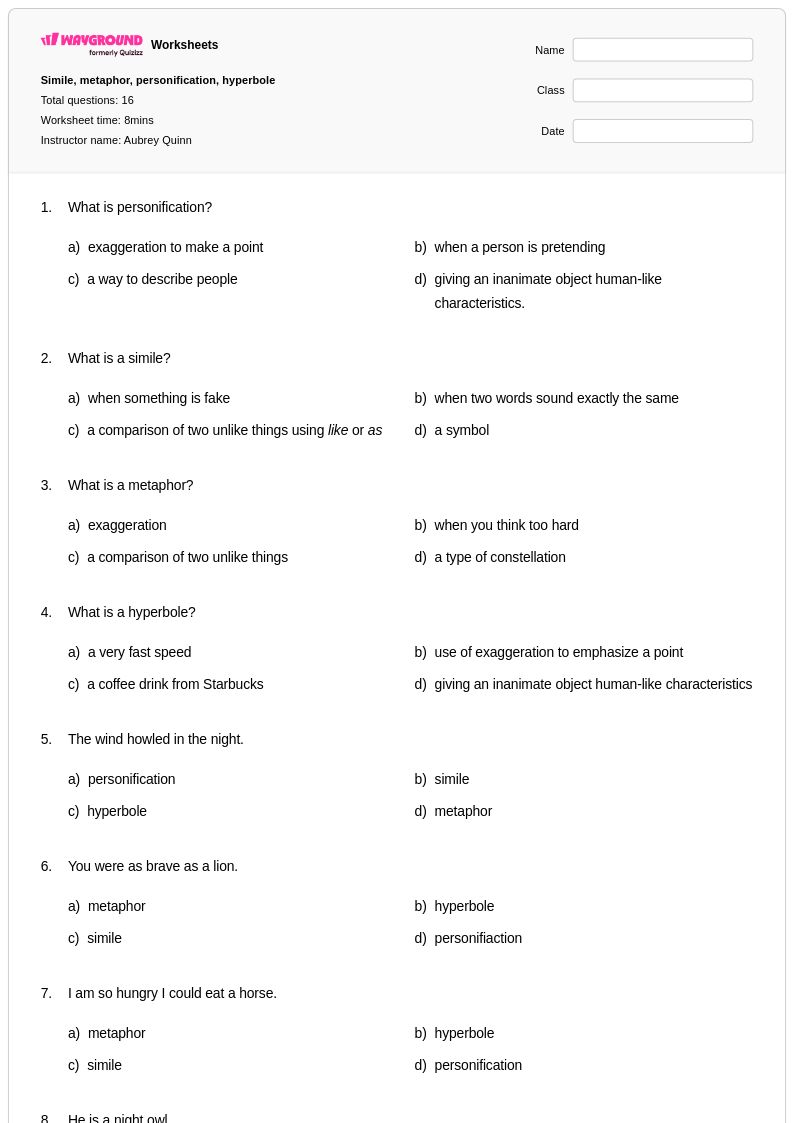
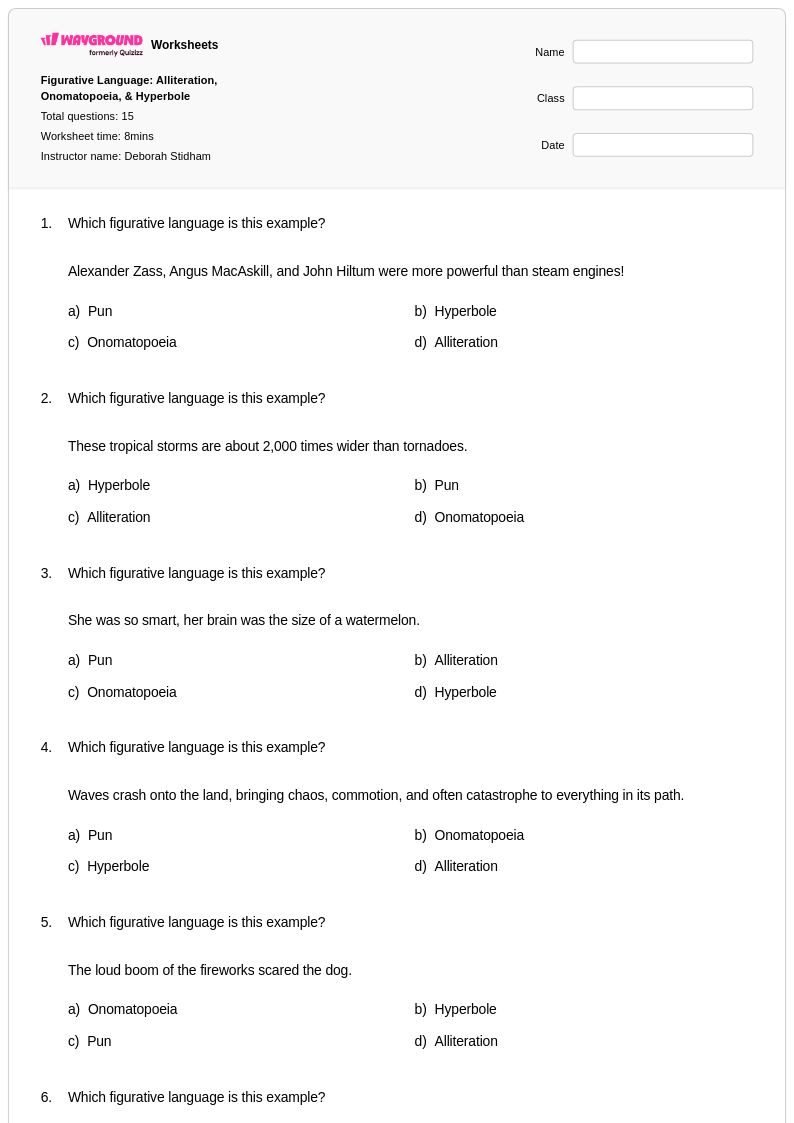
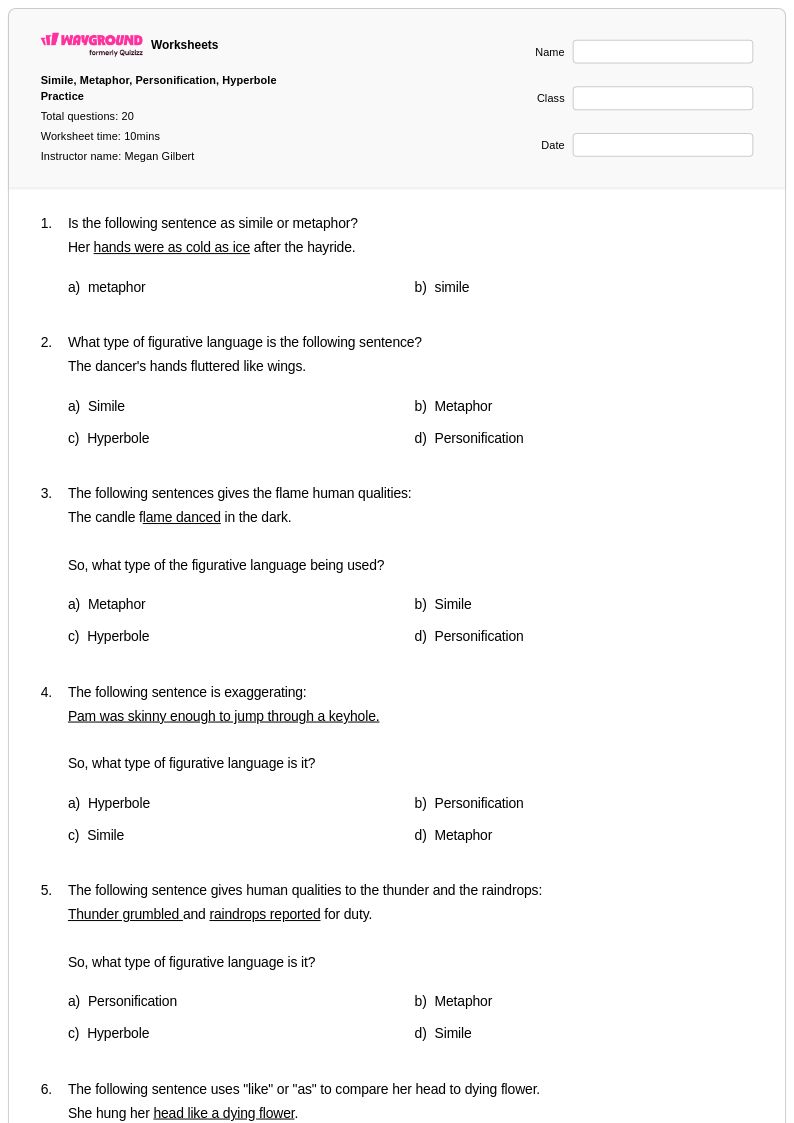
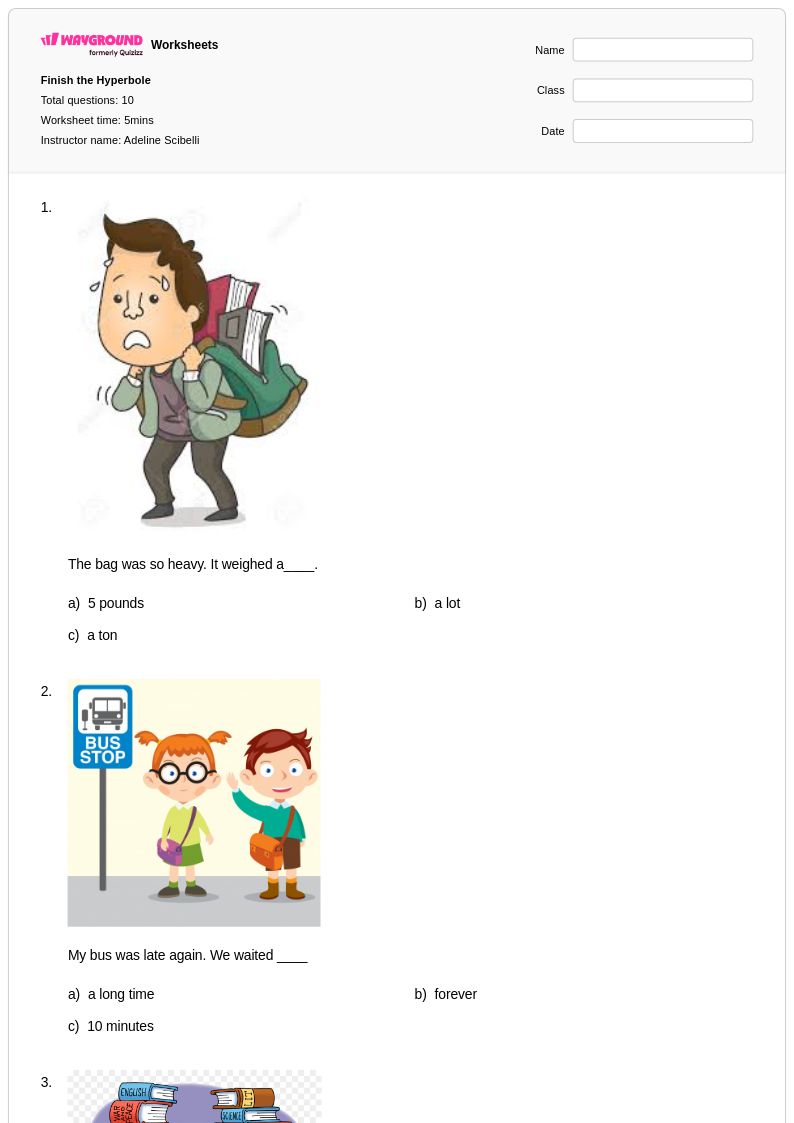
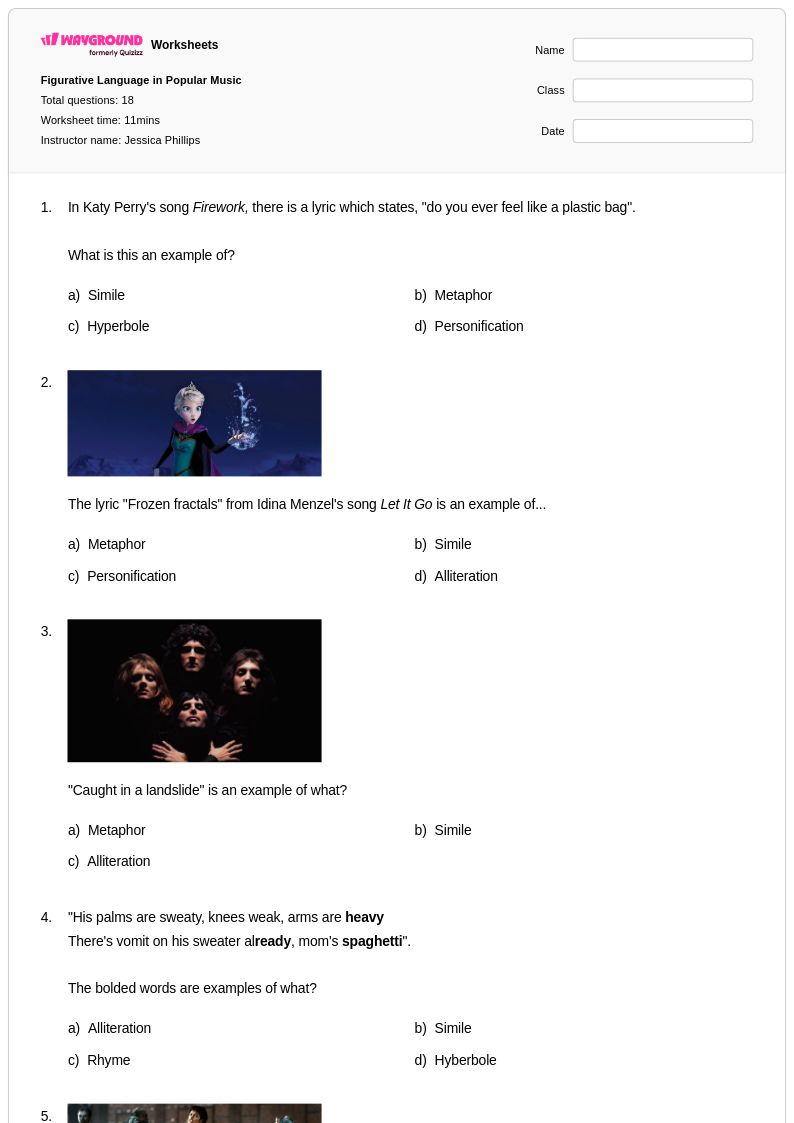
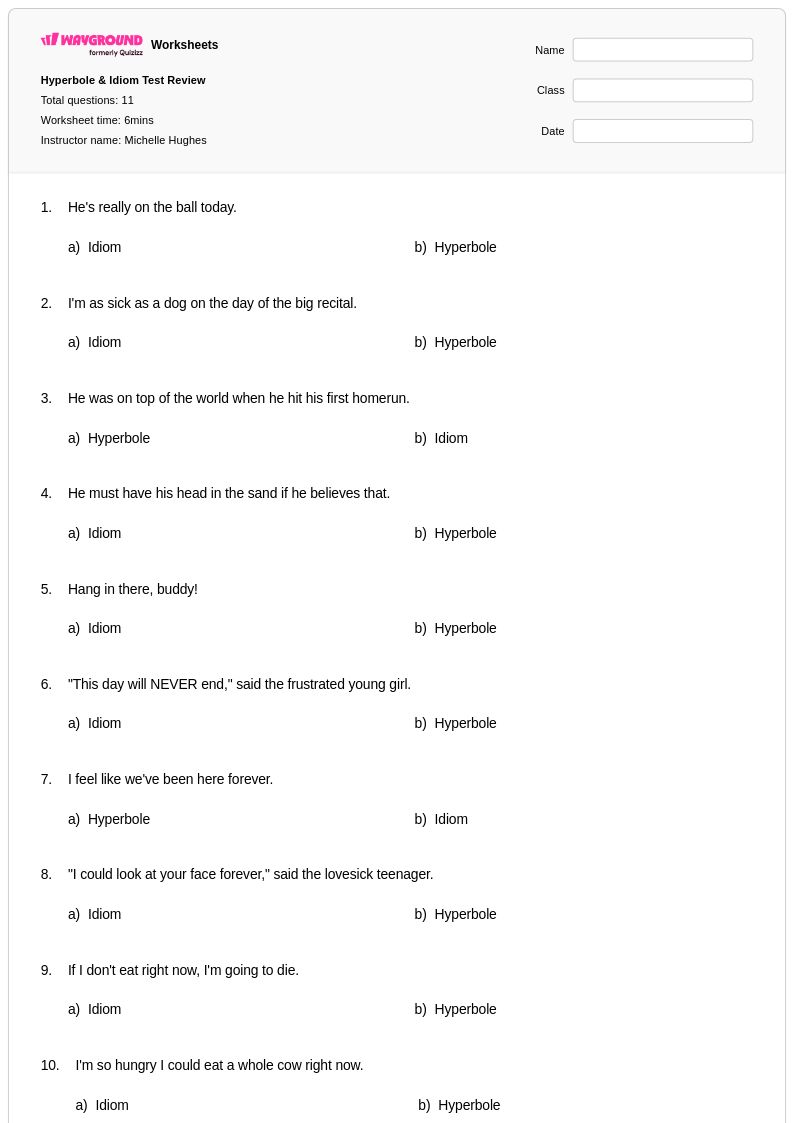
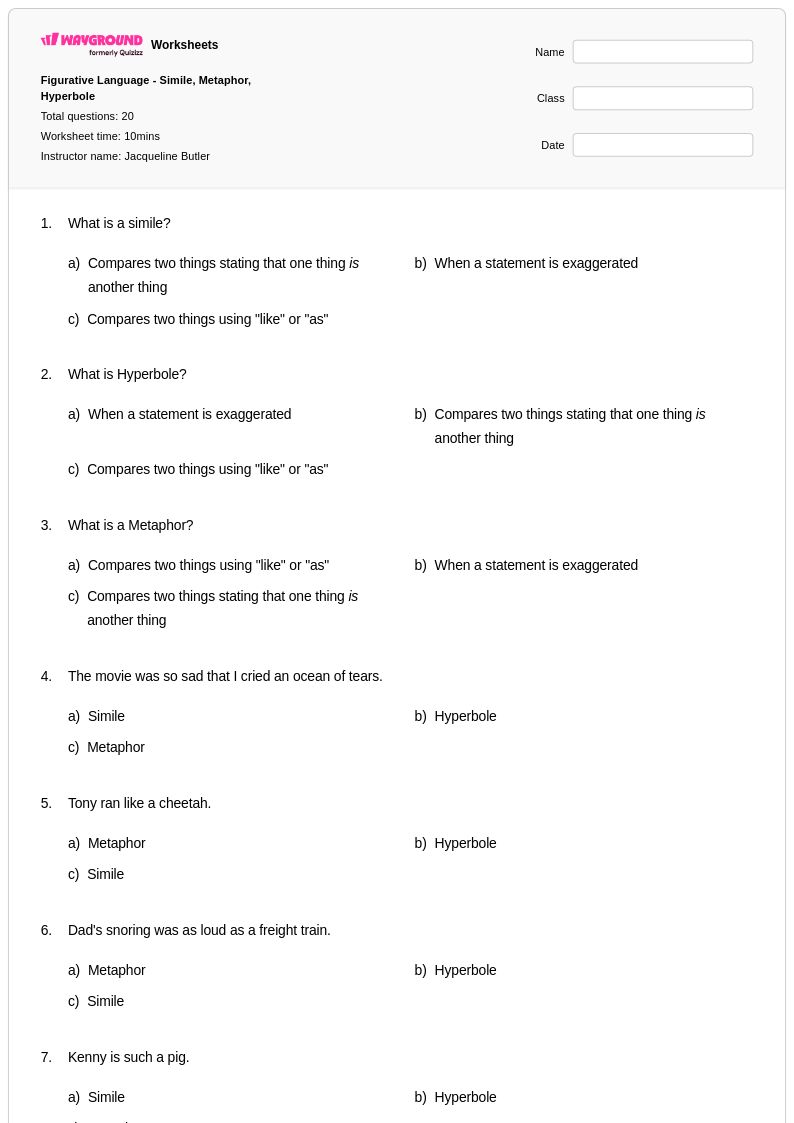
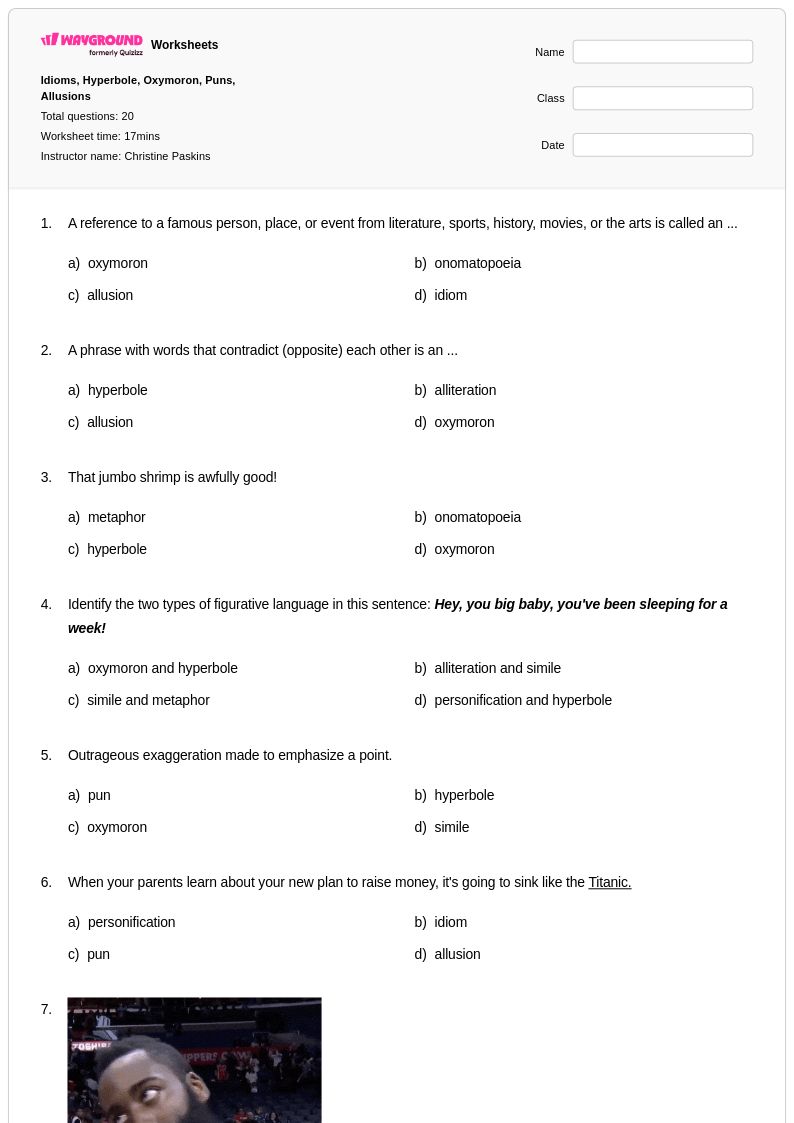
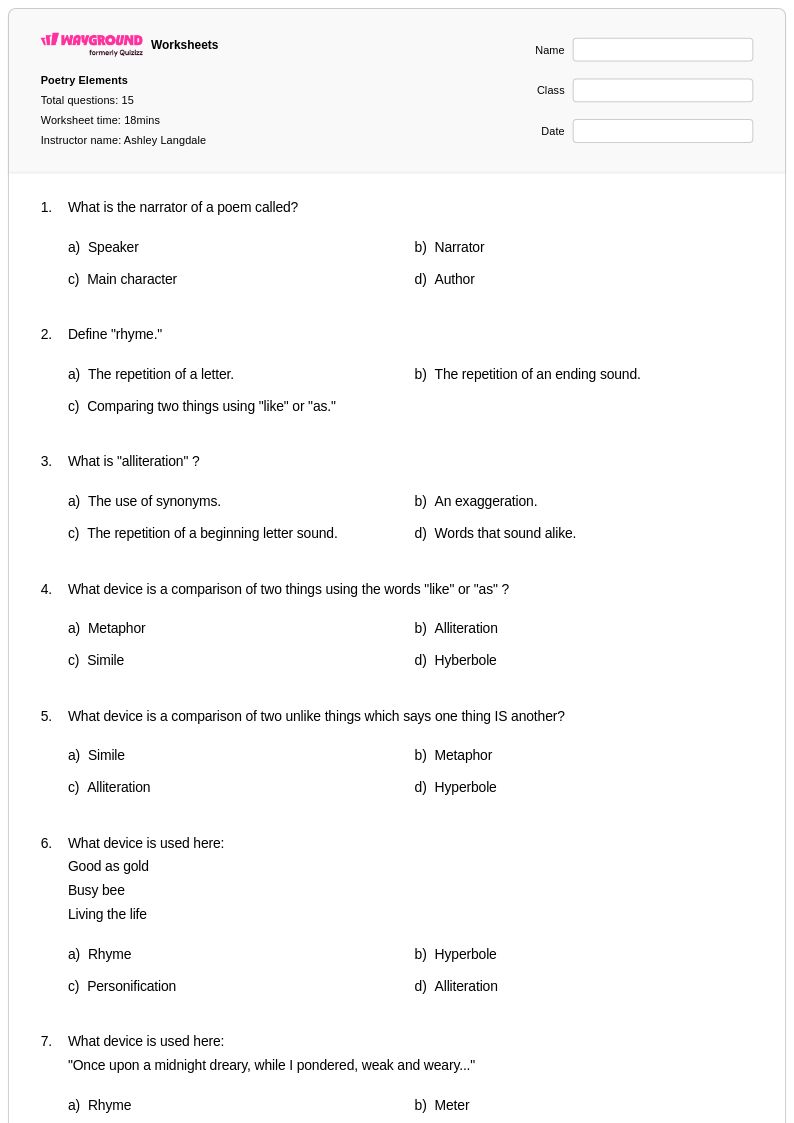
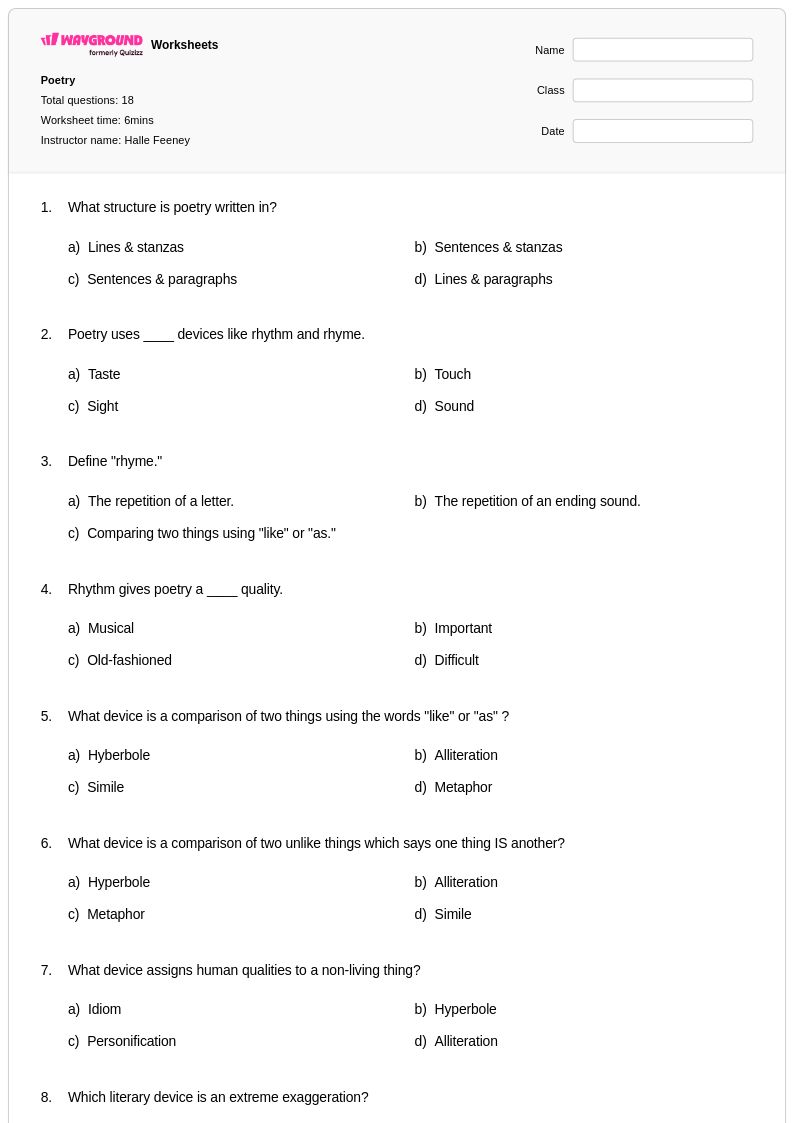
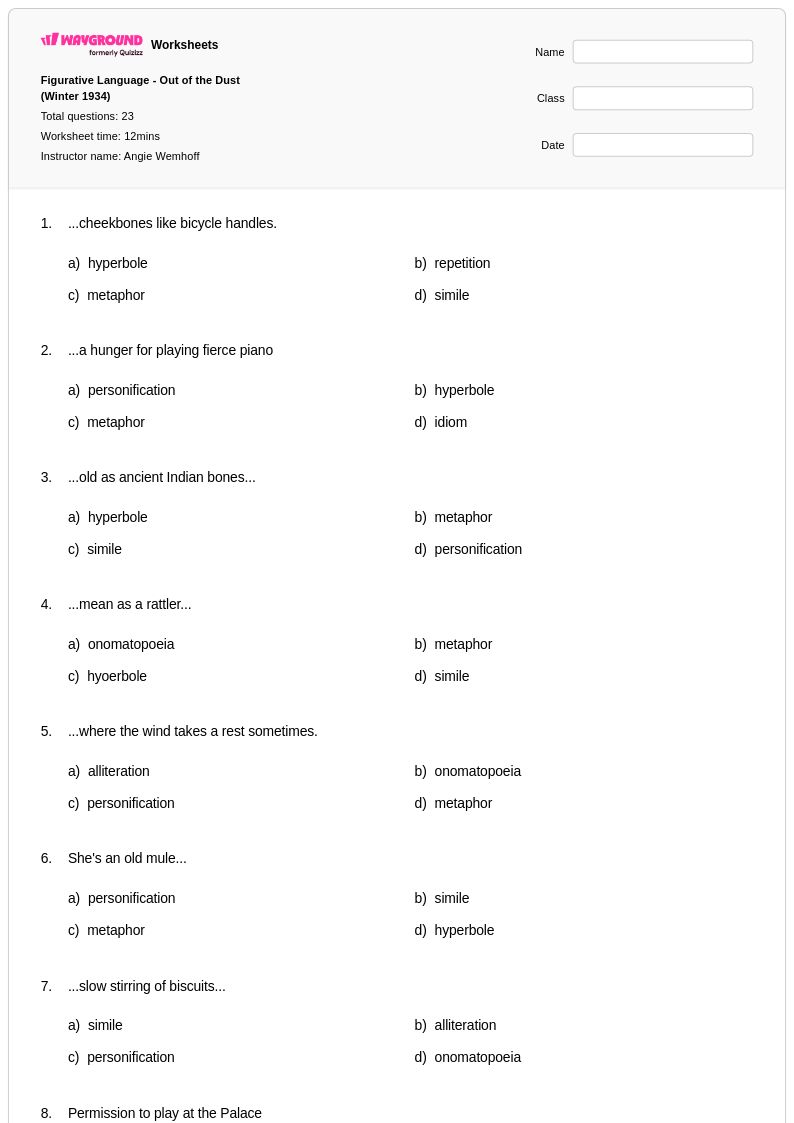
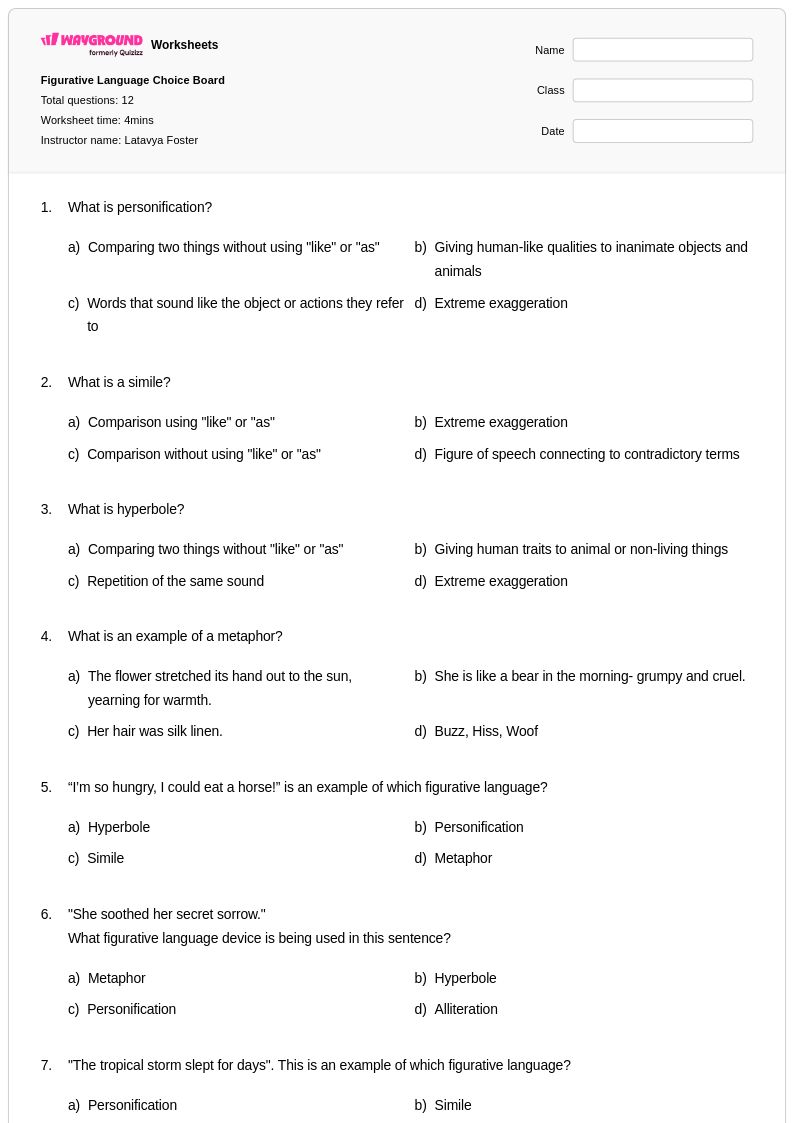
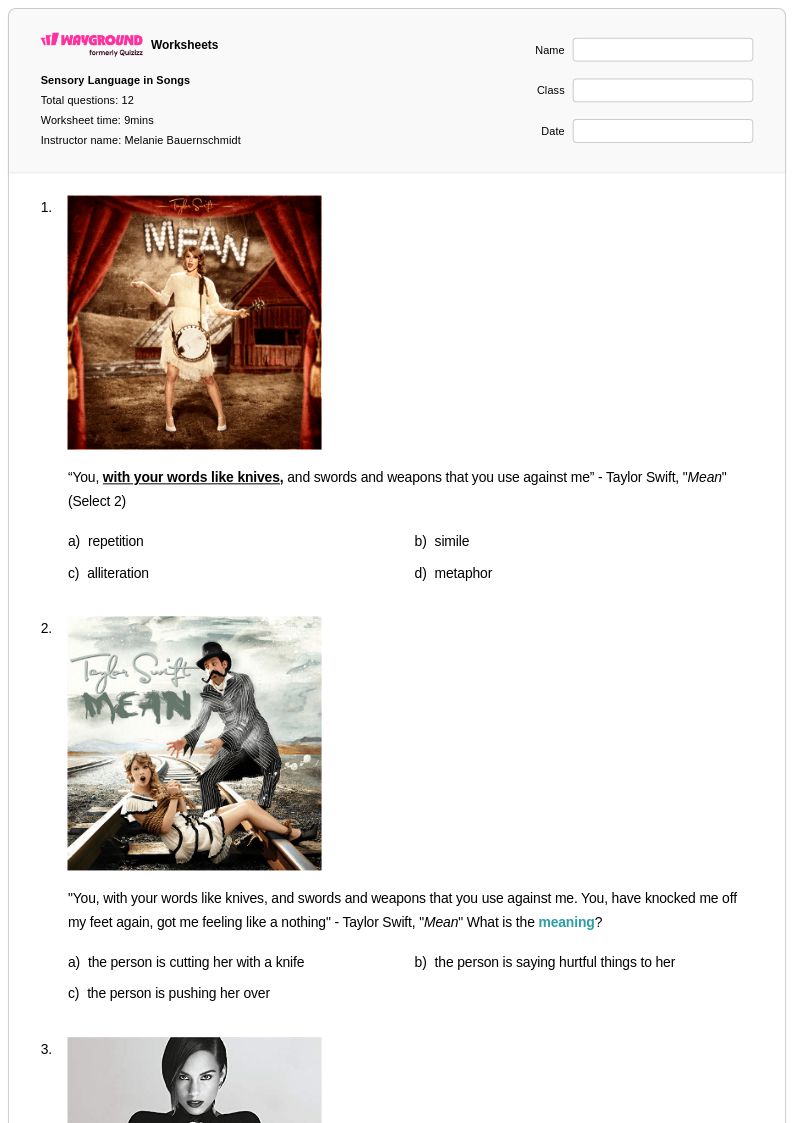
Hyperbole worksheets for Grade 8 students available through Wayground (formerly Quizizz) provide comprehensive practice with this essential figurative language device that involves deliberate and obvious exaggeration for emphasis or dramatic effect. These carefully crafted resources help eighth-grade students master the identification, analysis, and creation of hyperbolic expressions across various literary and everyday contexts, strengthening their ability to recognize when authors use extreme exaggeration to create vivid imagery, humor, or emotional impact. The worksheet collections include diverse practice problems that challenge students to distinguish hyperbole from other figurative language techniques, analyze the purpose behind exaggerated statements in poetry and prose, and compose their own hyperbolic expressions with clear intent. Each worksheet comes with a detailed answer key and is available as a free printable pdf, making it easy for educators to incorporate targeted figurative language practice into their curriculum while supporting students who need additional reinforcement in recognizing and interpreting non-literal language.
Wayground (formerly Quizizz) empowers teachers with access to millions of educator-created hyperbole worksheets and figurative language resources that can be seamlessly integrated into Grade 8 English instruction. The platform's robust search and filtering capabilities allow teachers to quickly locate materials that align with specific learning standards and match their students' varying skill levels, while built-in differentiation tools enable customization of content difficulty and complexity. Teachers can easily modify existing worksheets or combine multiple resources to create comprehensive practice sets that address diverse learning needs, whether for initial skill introduction, targeted remediation, or advanced enrichment activities. The flexible format options, including both printable pdf versions and interactive digital formats, support various classroom environments and teaching preferences, streamlining lesson planning while ensuring students receive consistent, high-quality practice with hyperbole recognition and application across multiple learning contexts.
FAQs
How do I teach hyperbole to students who confuse it with other figurative language?
The key to teaching hyperbole is anchoring the concept in its defining purpose: exaggeration so extreme it cannot be literally true, used for emphasis or dramatic effect. Start by contrasting hyperbole with simile and metaphor using the same idea expressed three ways, so students see the structural difference rather than just memorizing definitions. Ask students to rate how exaggerated a statement is on a scale of 1 to 10 — hyperbole always hits a 10, which gives them a practical mental filter to apply when identifying it in text.
What exercises help students practice identifying hyperbole in literature?
Effective practice exercises ask students to do more than circle a sentence — they should explain why a statement qualifies as hyperbole and what effect it creates on the reader. Strong practice includes distinguishing hyperbole from other figurative language devices within the same passage, identifying the literal meaning behind the exaggeration, and creating original hyperboles tied to a given emotion or scenario. This progression from recognition to analysis to creation builds the depth of understanding needed for literary analysis tasks.
What mistakes do students commonly make when identifying or writing hyperbole?
The most common error is confusing hyperbole with simile or metaphor, especially when a hyperbolic statement also uses comparative language. Students also frequently misidentify strong opinions or subjective claims as hyperbole, not understanding that true hyperbole involves impossible or wildly implausible exaggeration rather than simply enthusiastic language. When writing their own hyperboles, students often underexaggerate — producing statements that are merely dramatic rather than genuinely extreme, which weakens the literary effect and misses the defining characteristic of the device.
How can I use hyperbole worksheets to support students at different skill levels?
For students who are still building foundational skills, start with identification tasks using obvious, familiar examples before moving to analysis in authentic literary passages. More advanced students benefit from tasks that ask them to evaluate an author's choice to use hyperbole — why here, why this degree of exaggeration, and what would be lost without it. On Wayground, teachers can apply accommodations such as reduced answer choices or read-aloud support to individual students, allowing the same worksheet to work across a range of learners without requiring separate materials.
How do I use Wayground's hyperbole worksheets in my classroom?
Wayground's hyperbole worksheets are available as printable PDFs for traditional classroom use and in digital formats for technology-integrated environments, including the option to host them as a quiz directly on the Wayground platform. Teachers can use them for direct instruction practice, independent work, or formative assessment, with complete answer keys included so grading is efficient. The platform's filtering tools help teachers locate worksheets aligned to specific curriculum standards, making it straightforward to slot the right resource into a lesson without extensive planning time.
How is hyperbole used in literature, and why does it matter for students to recognize it?
Authors use hyperbole to intensify emotion, create humor, signal a character's perspective, and make abstract feelings concrete and immediate for the reader. When students can recognize hyperbole and articulate its effect, they move from surface-level reading to genuine literary analysis — understanding not just what a text says but how the author's language choices shape meaning. This skill is directly transferable to standardized reading comprehension assessments and to students' own persuasive and creative writing.