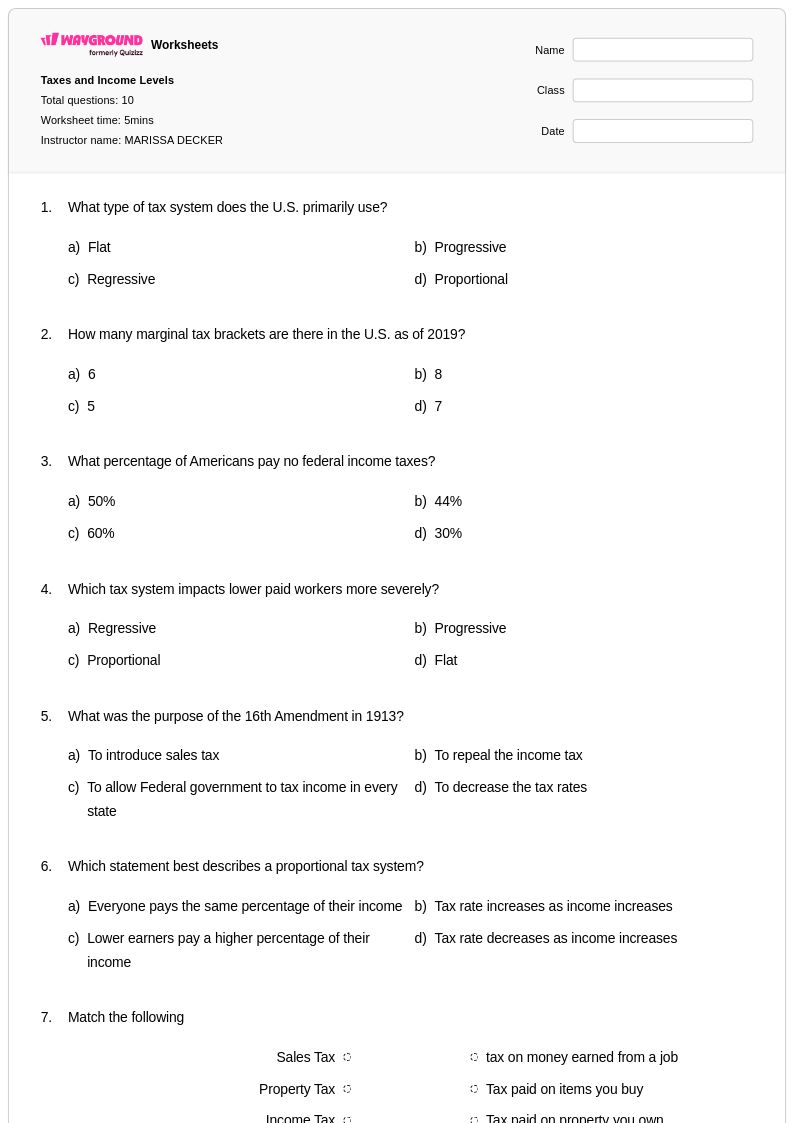
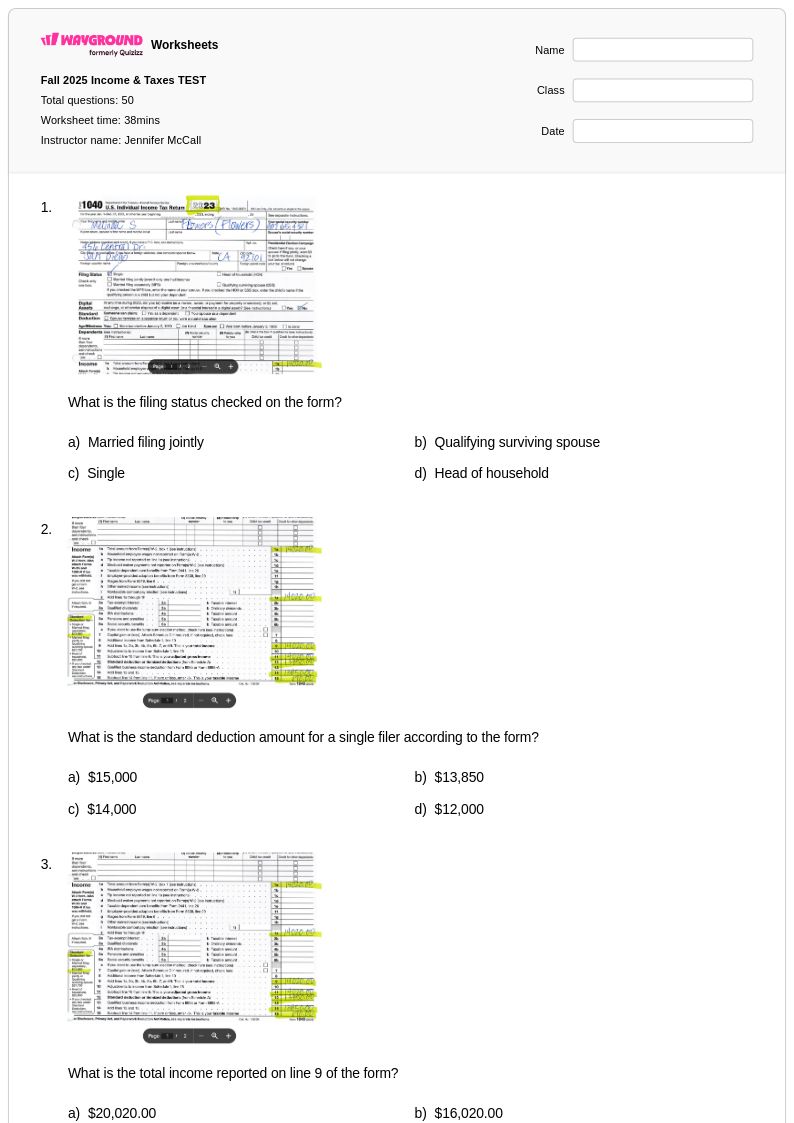
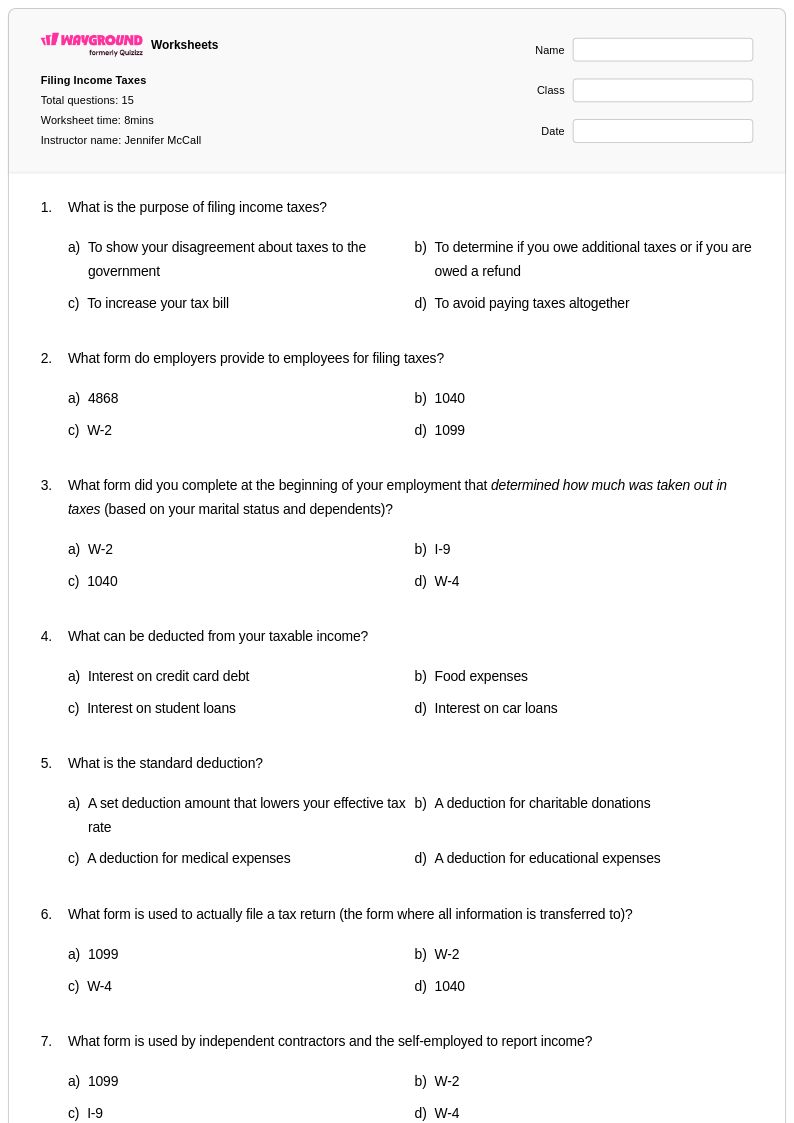
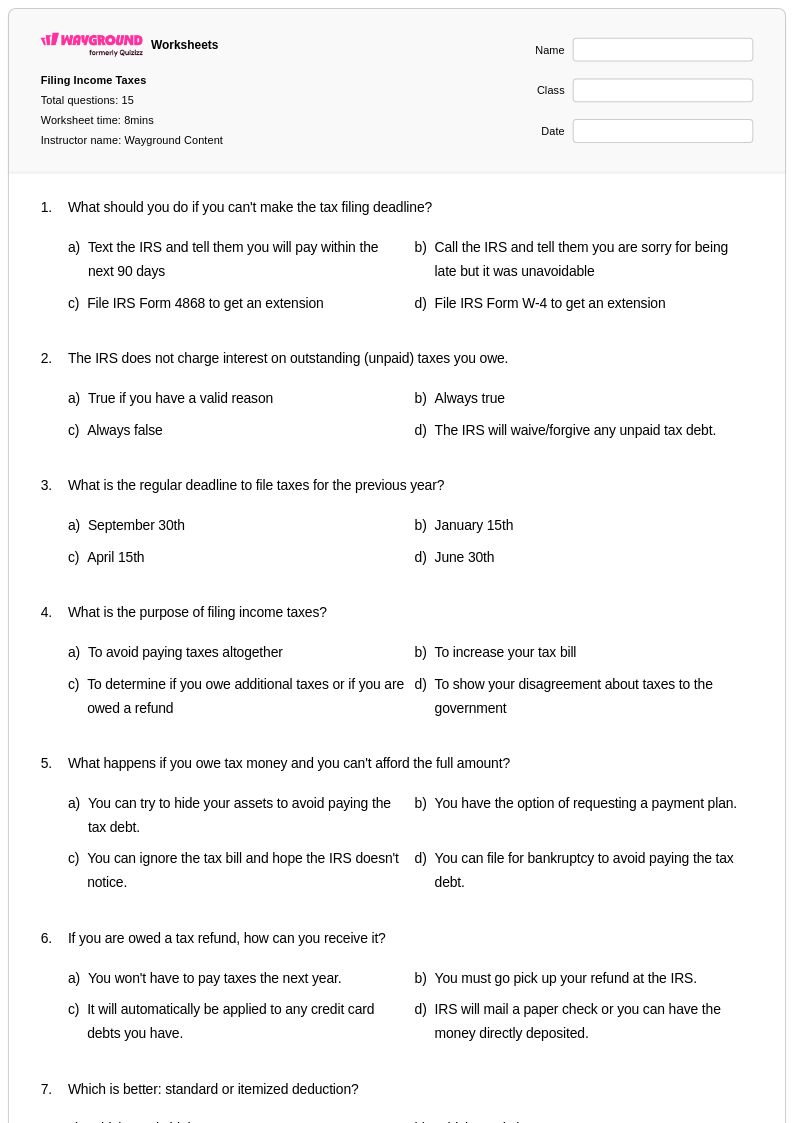
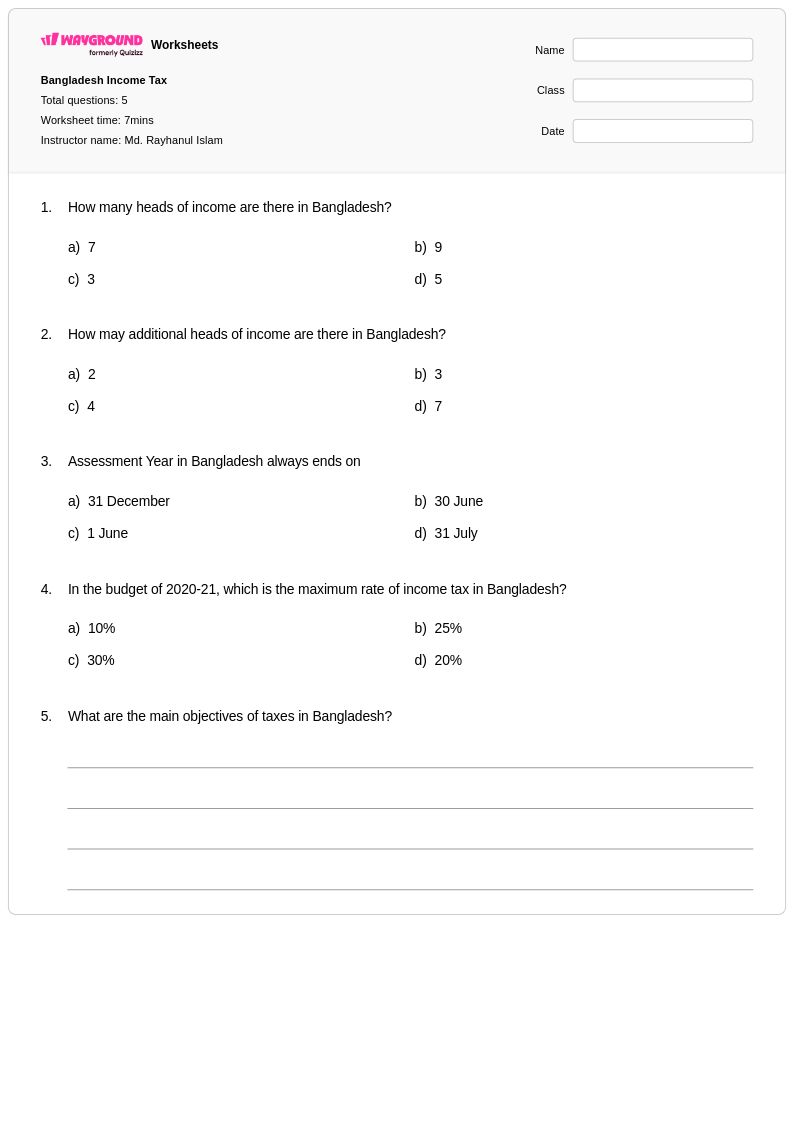
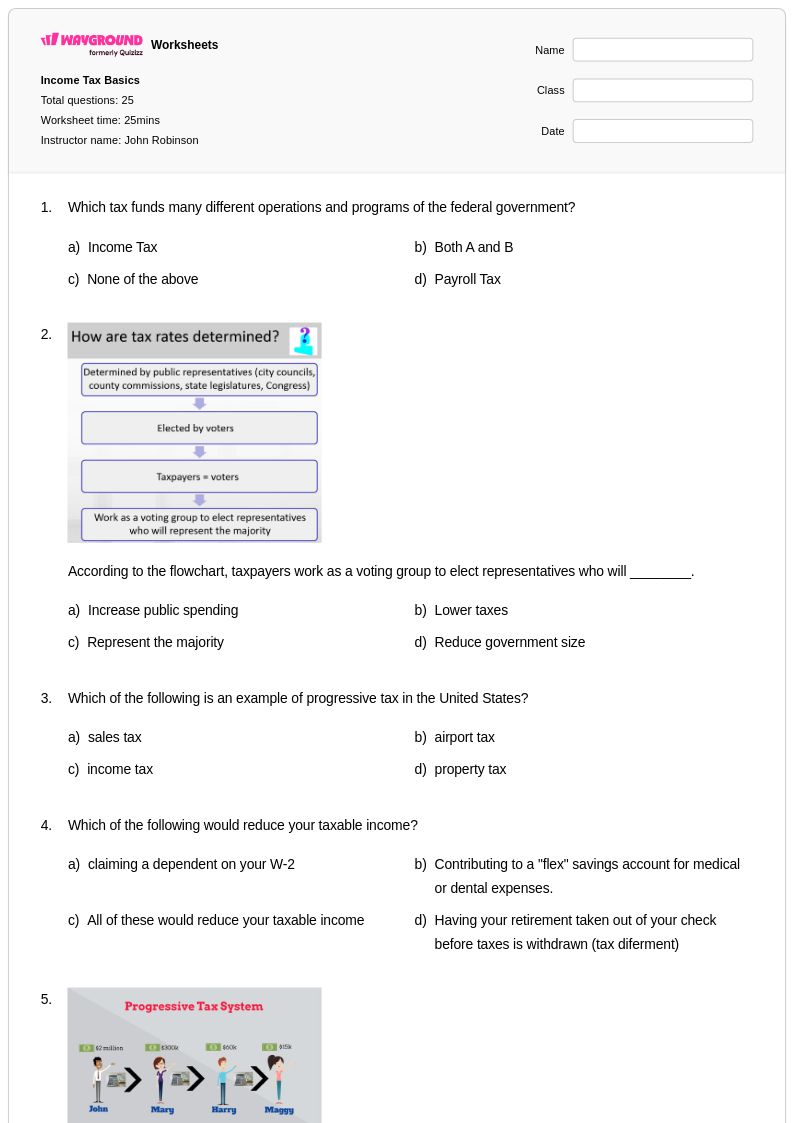
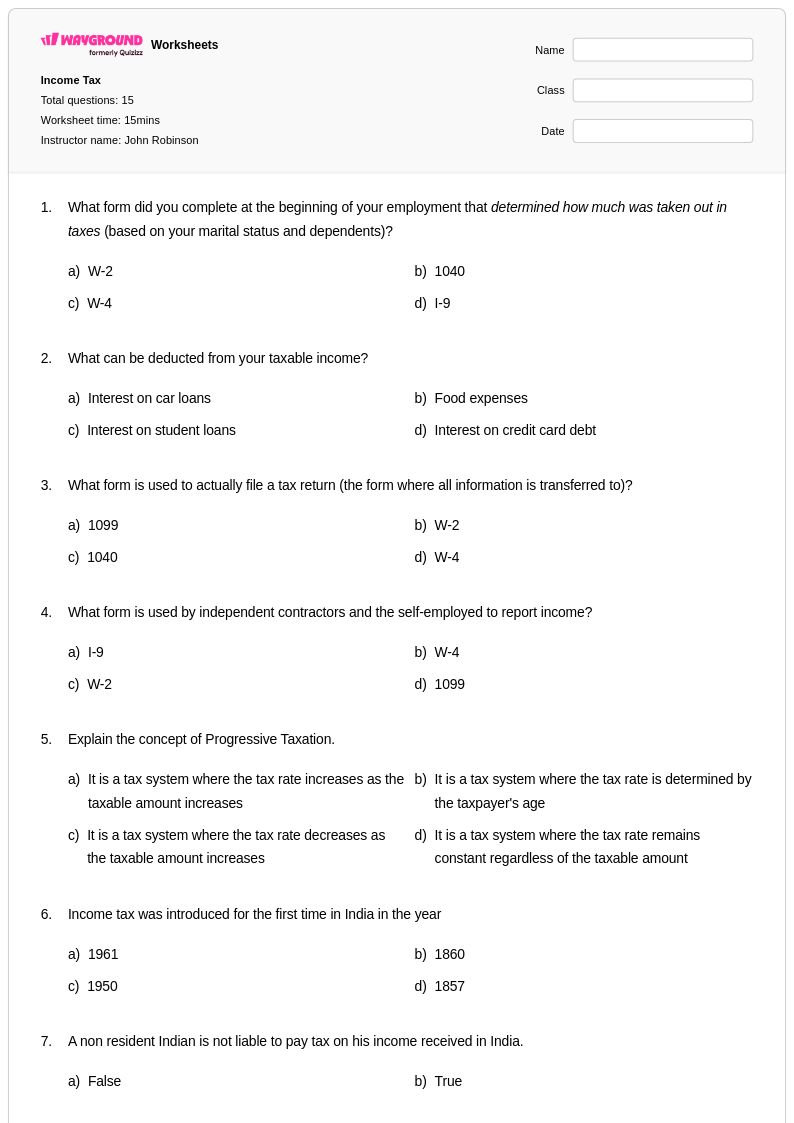
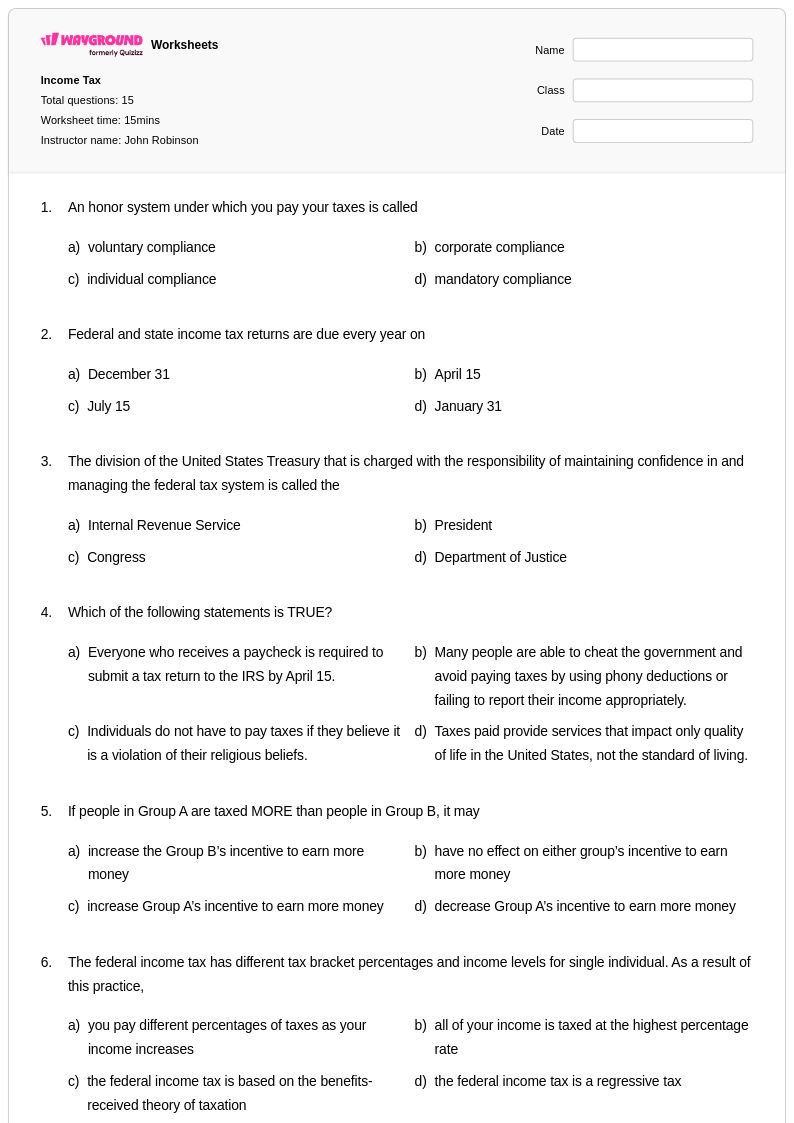
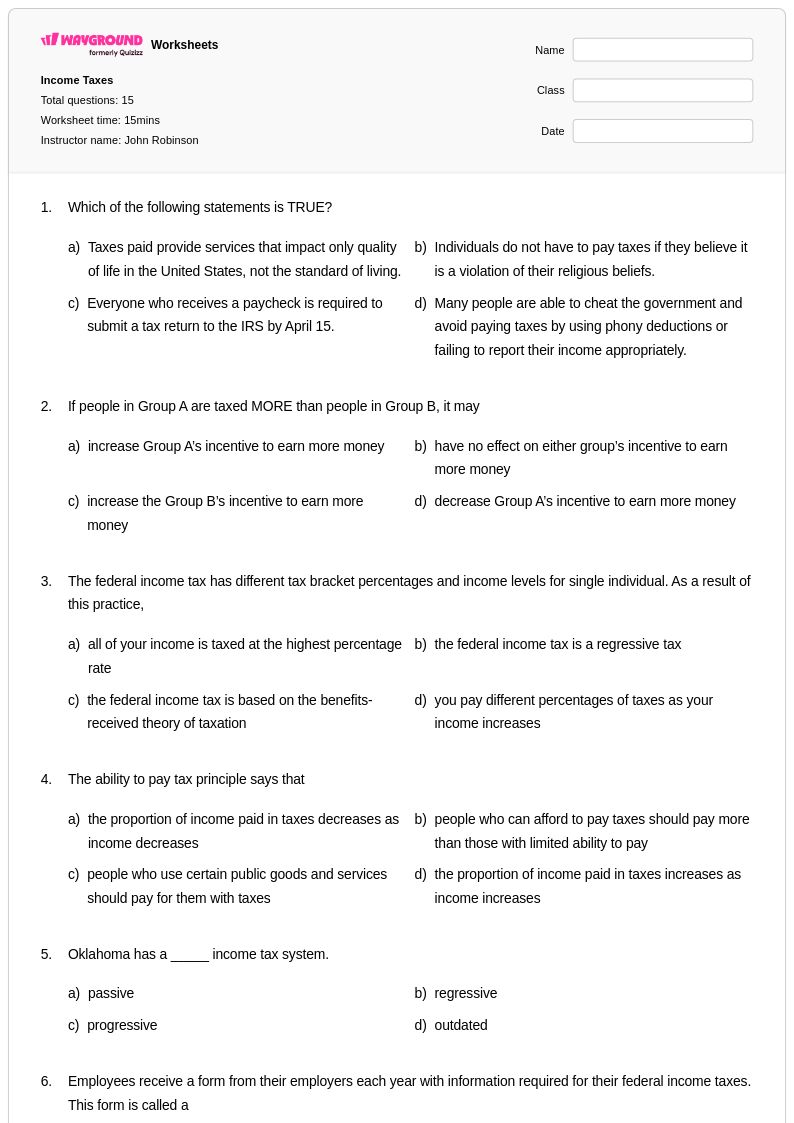
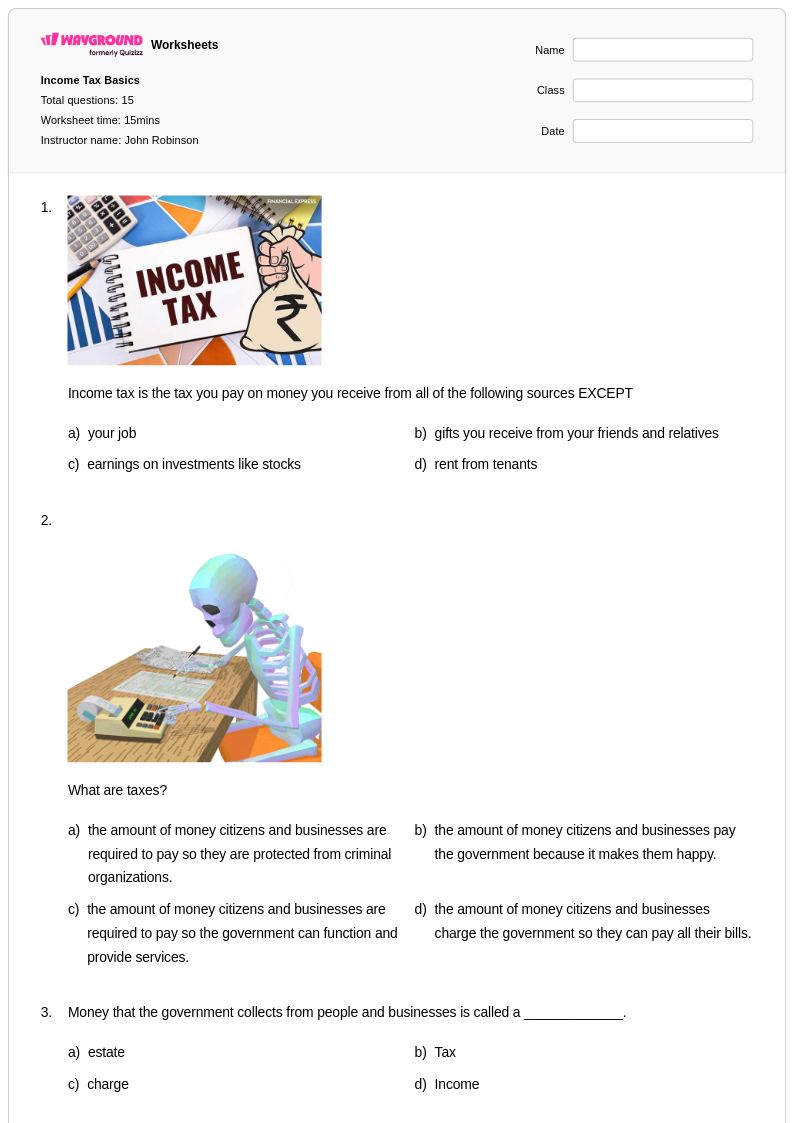
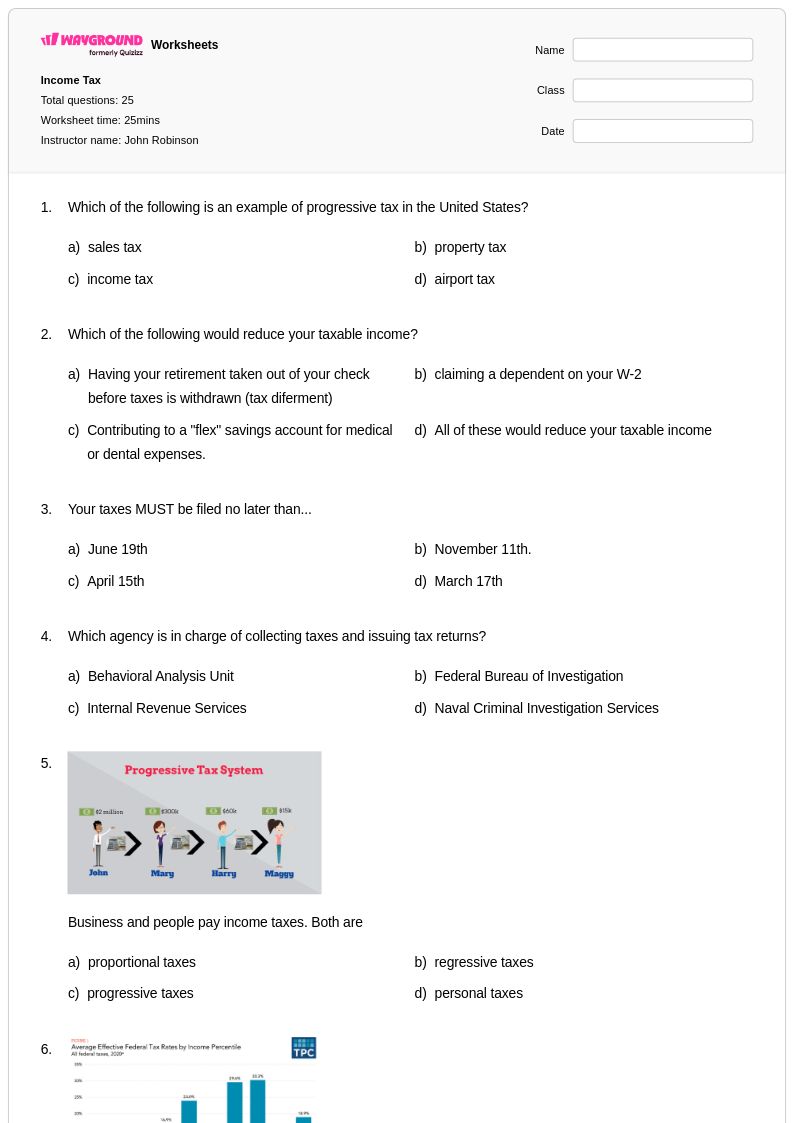
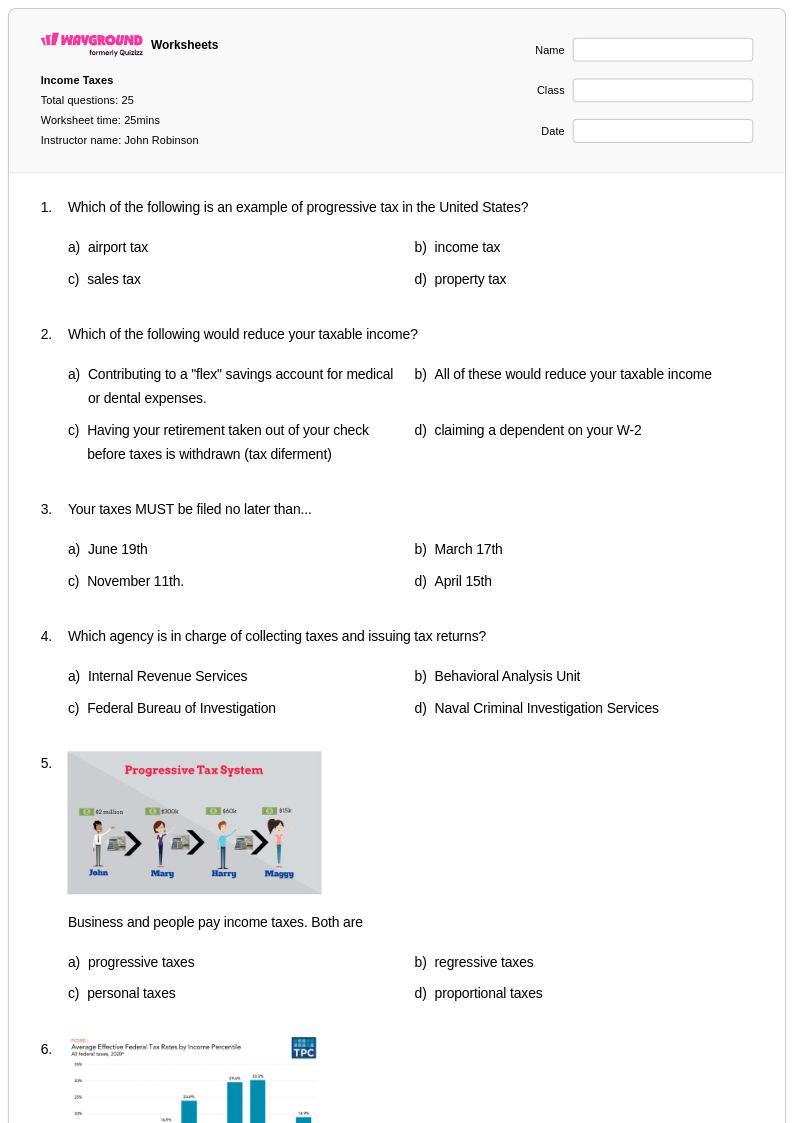
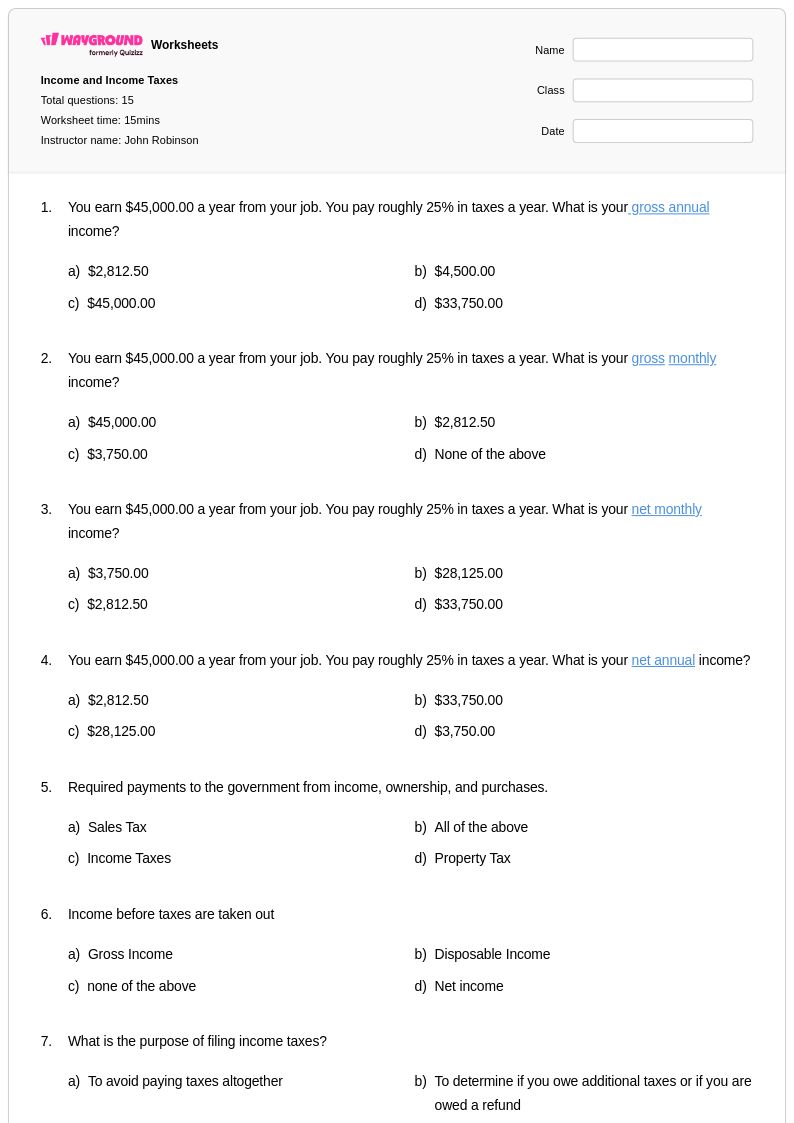
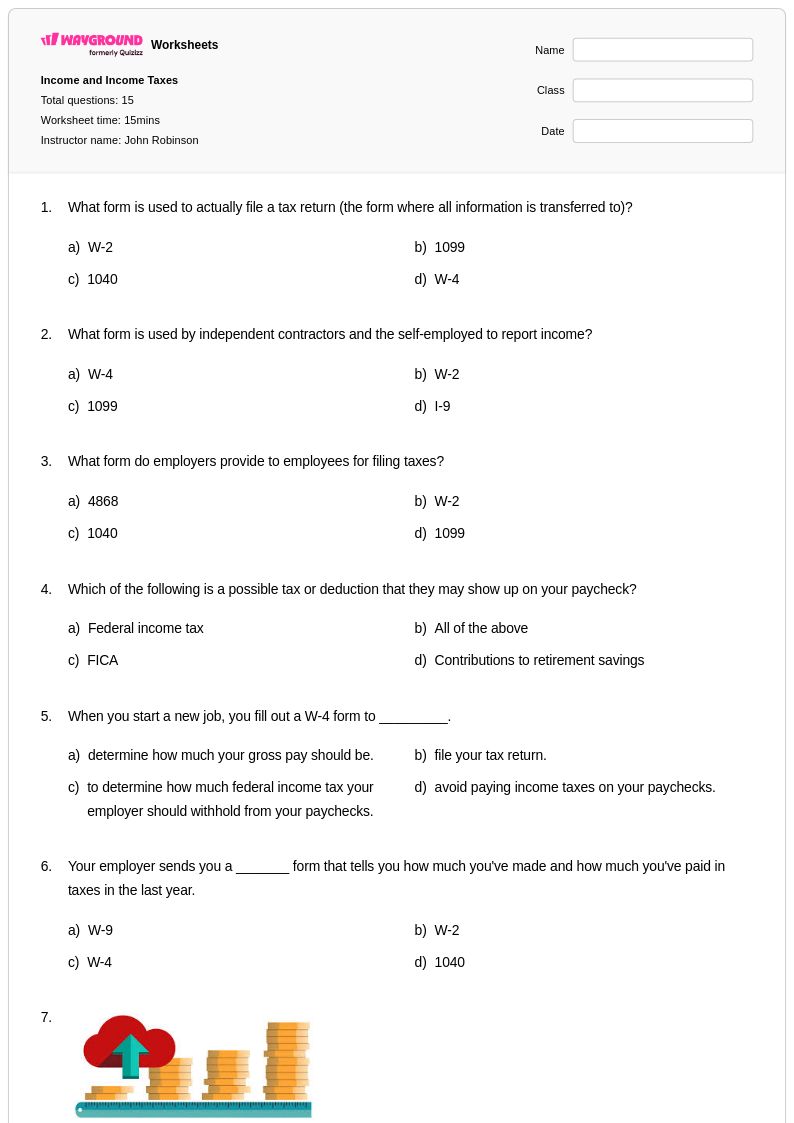
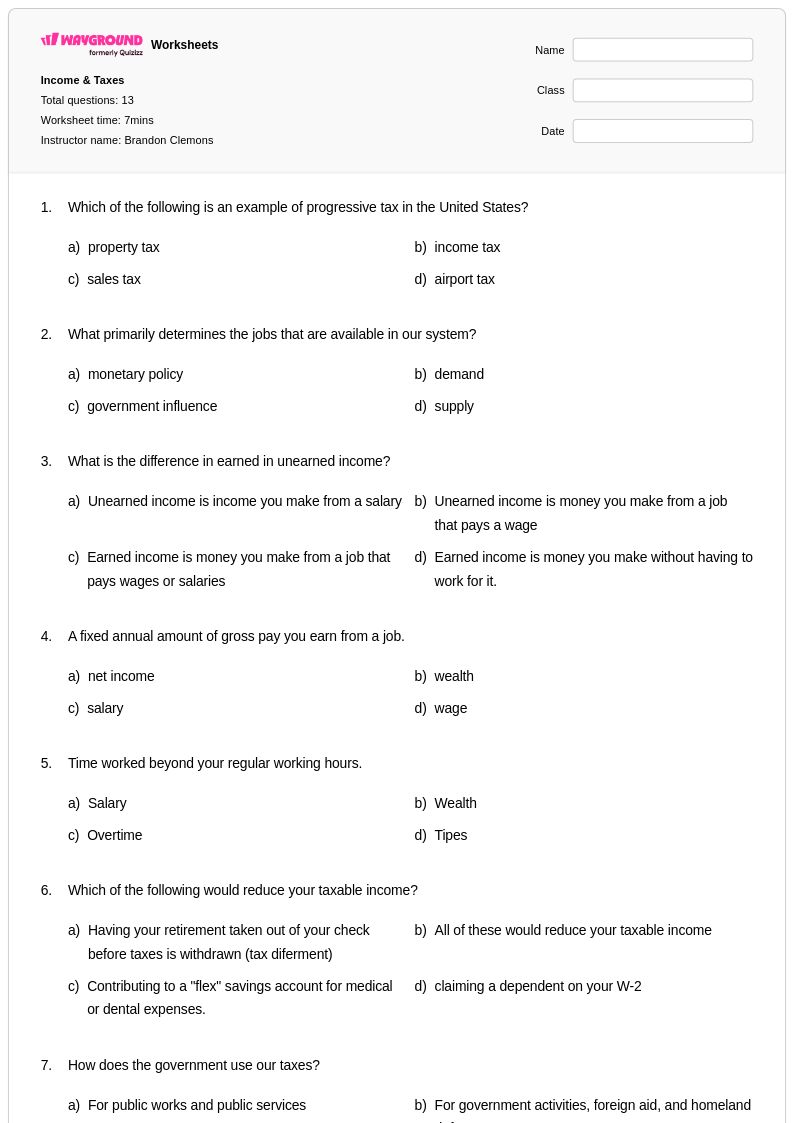
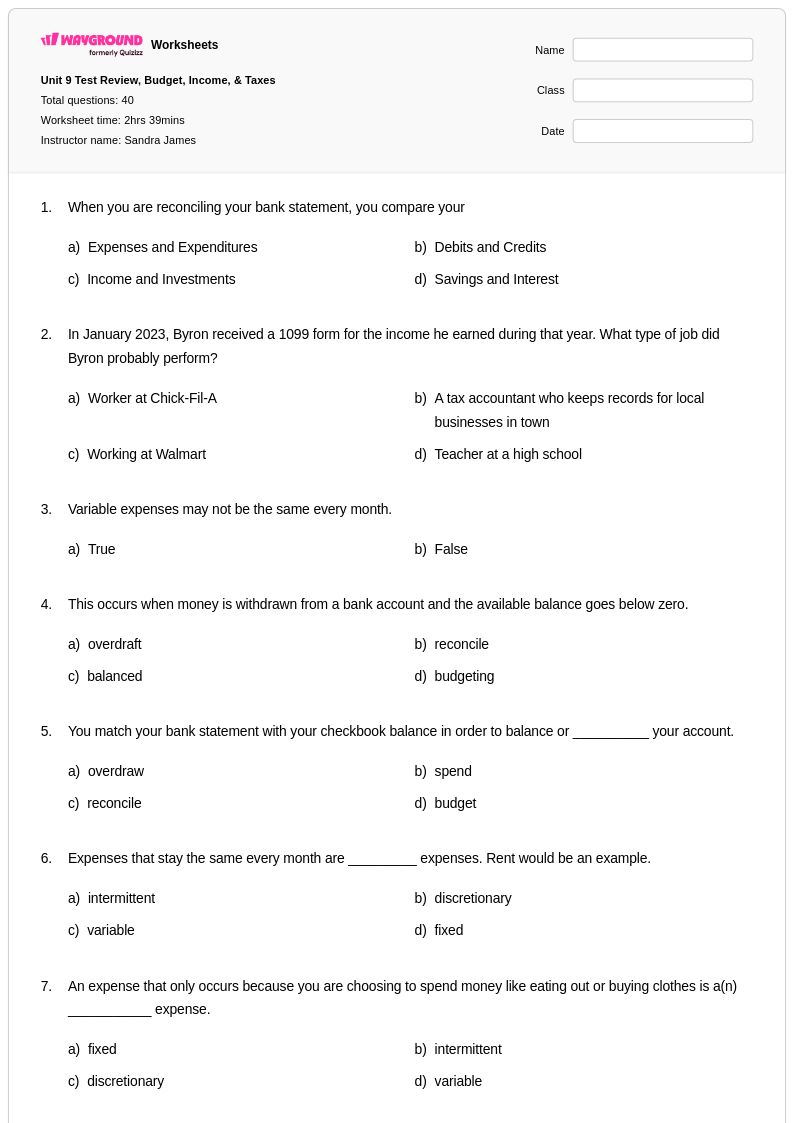
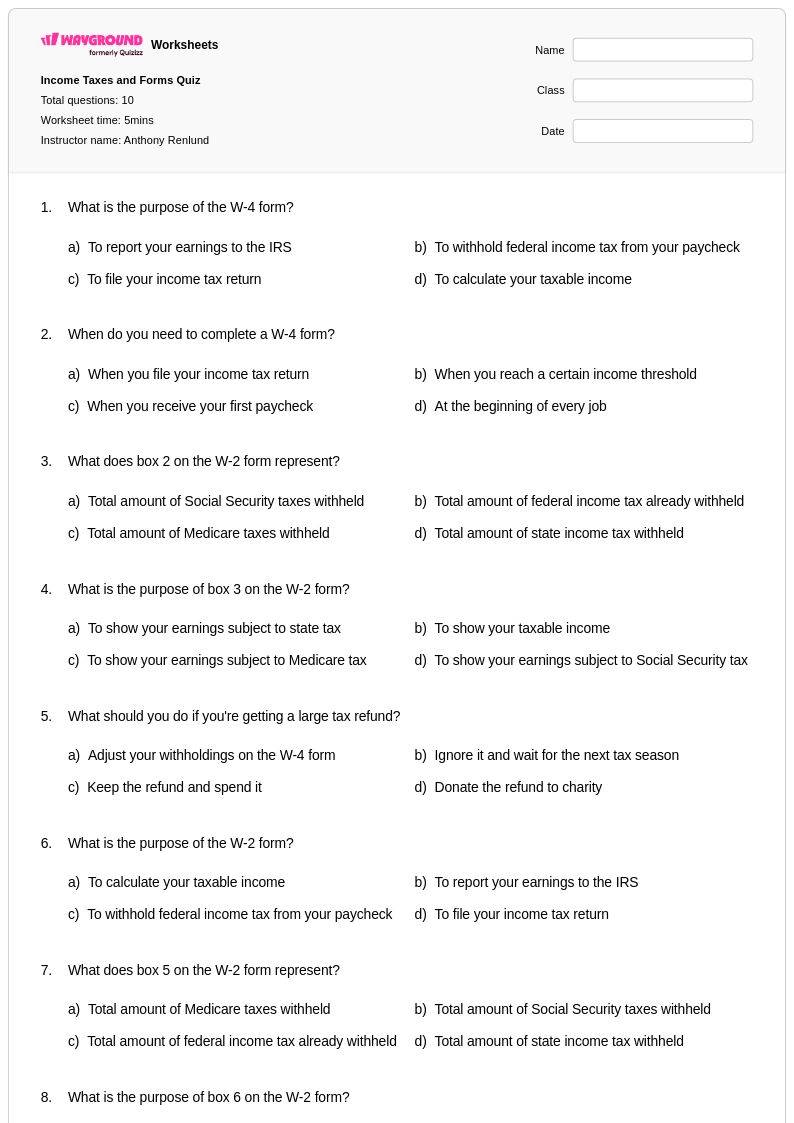
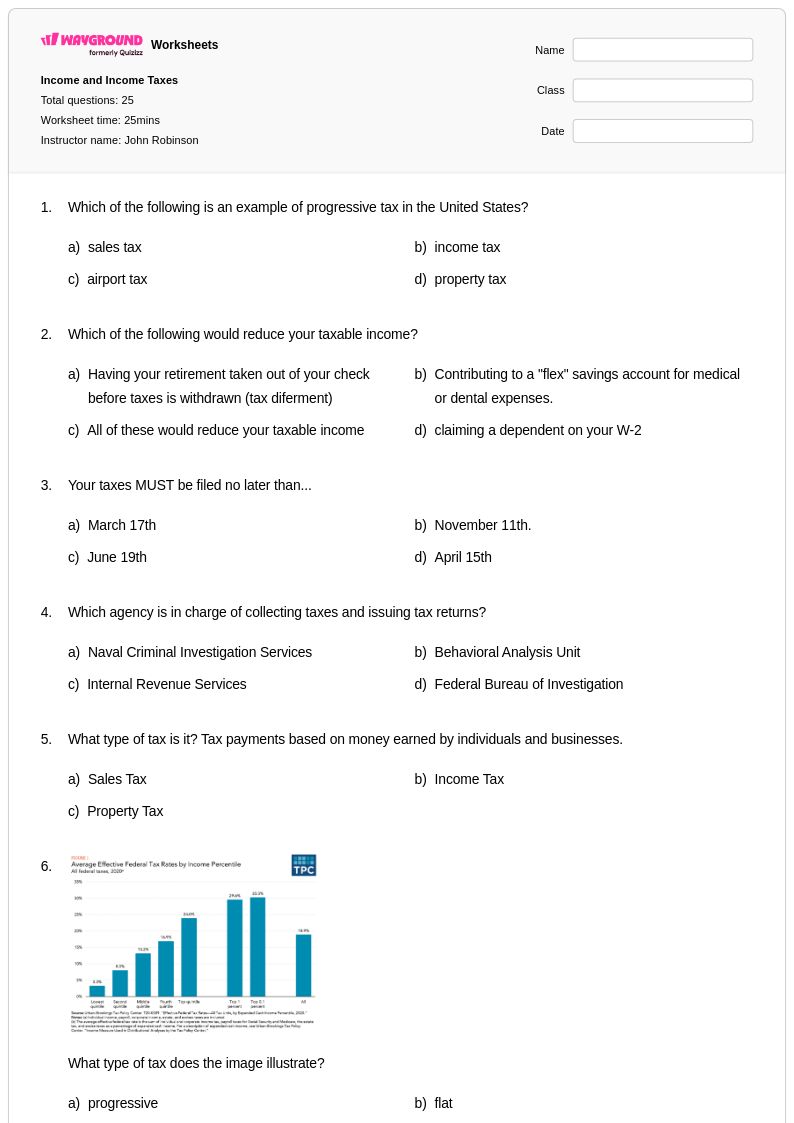
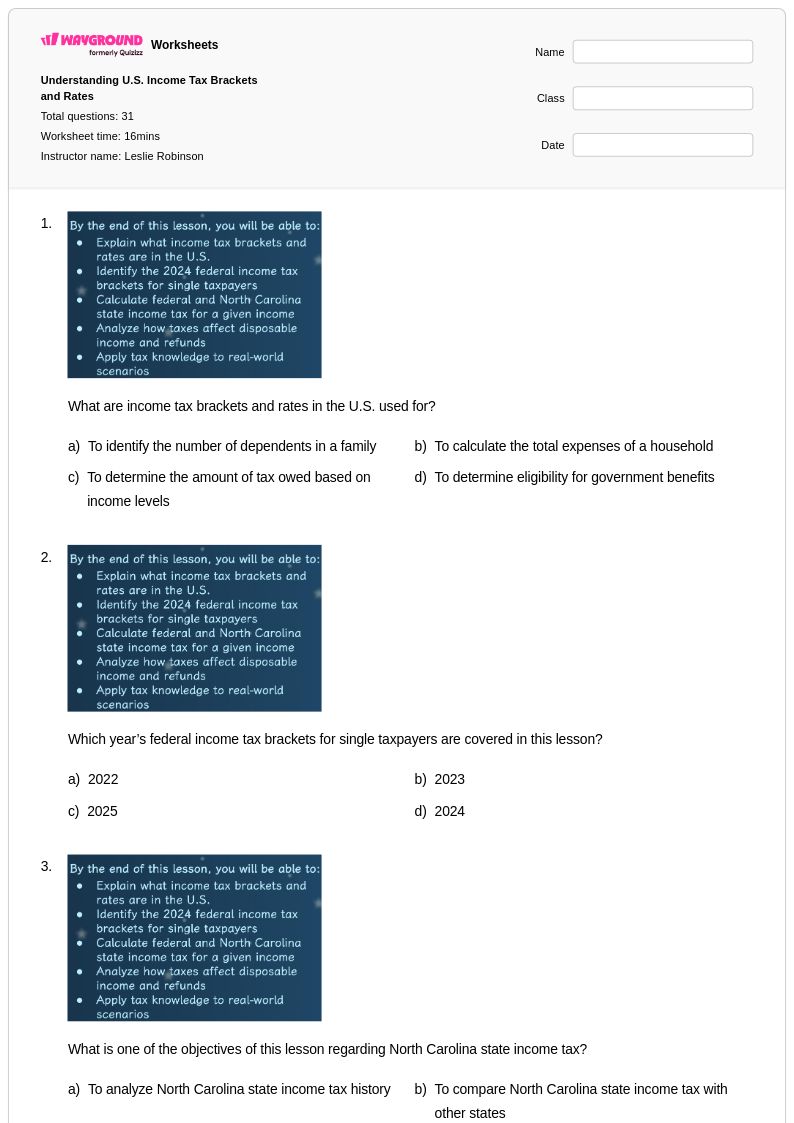
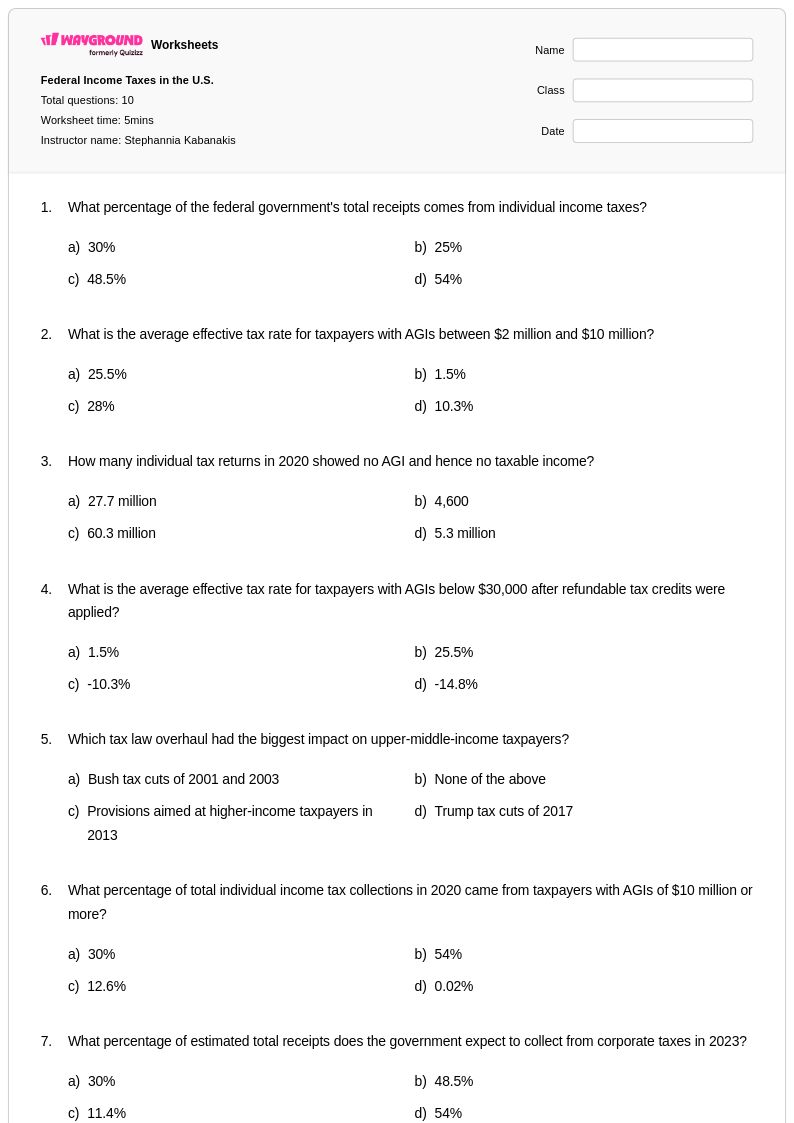
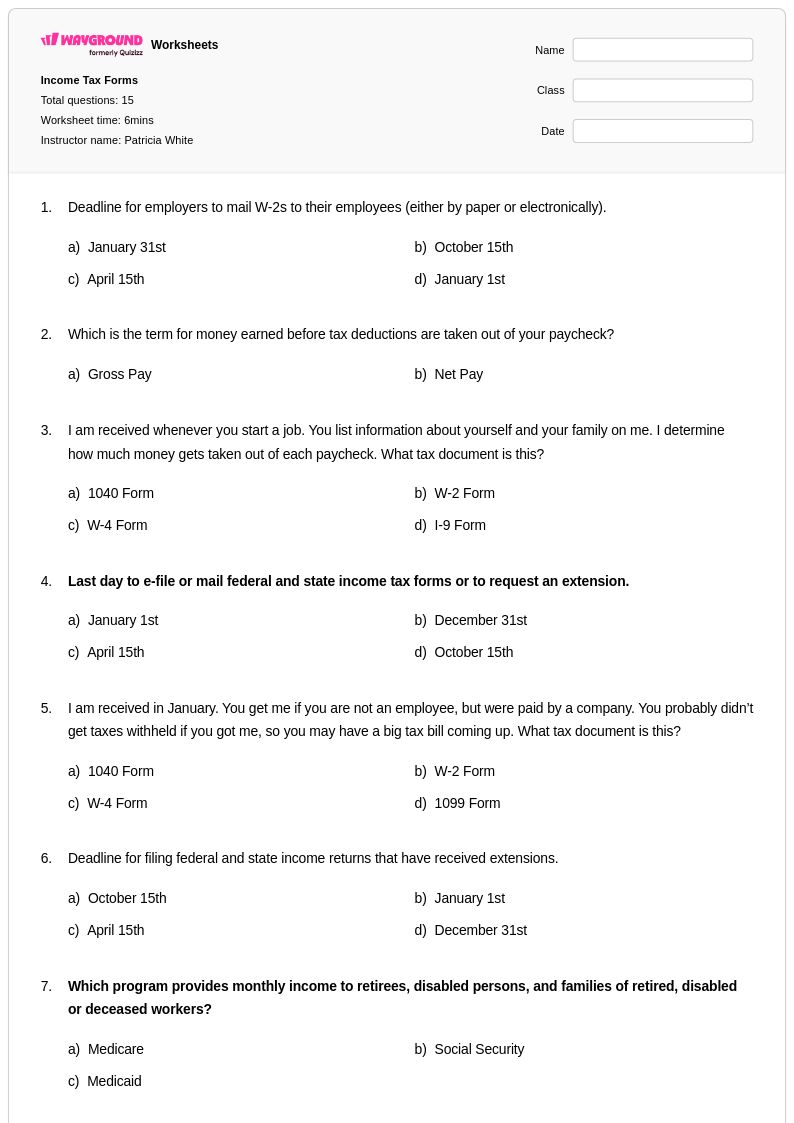
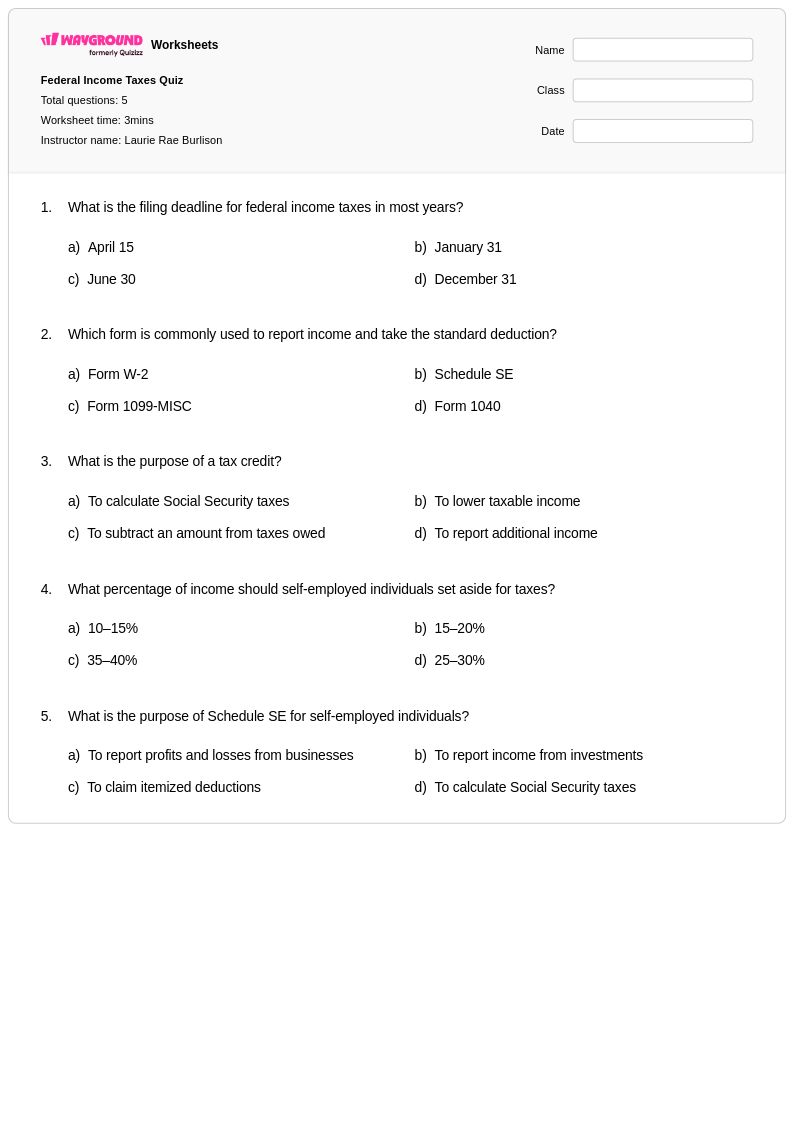
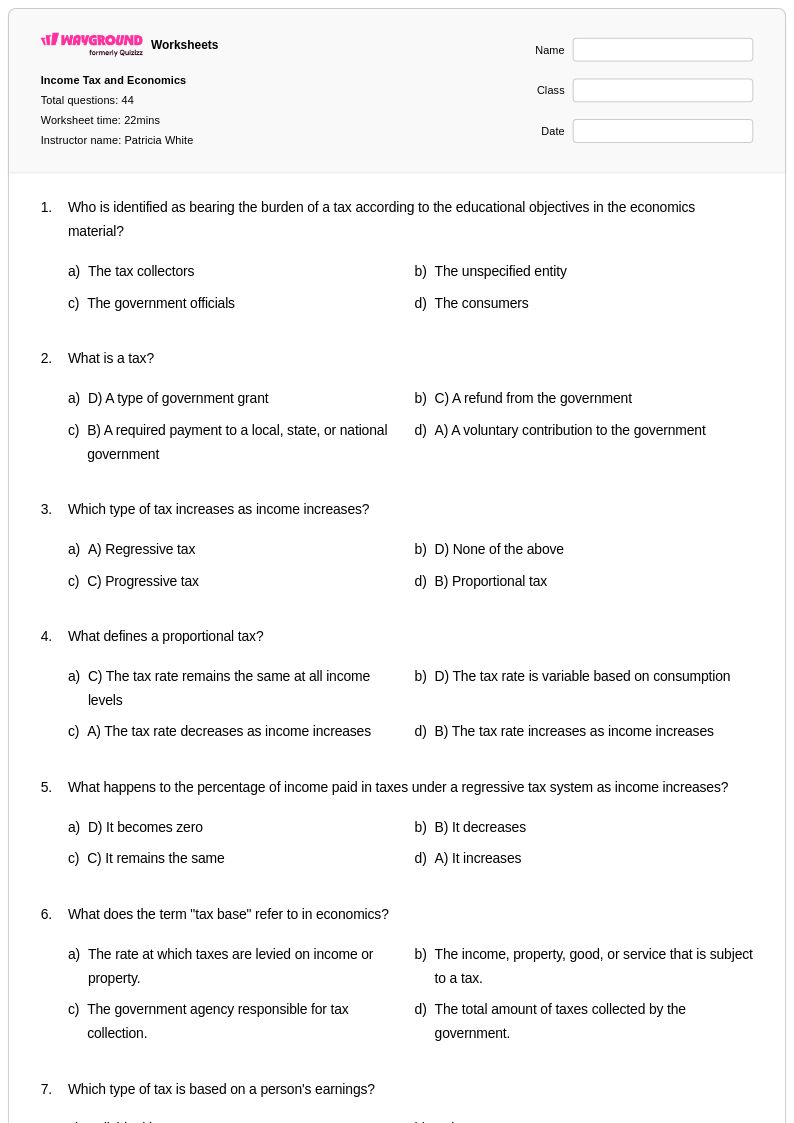
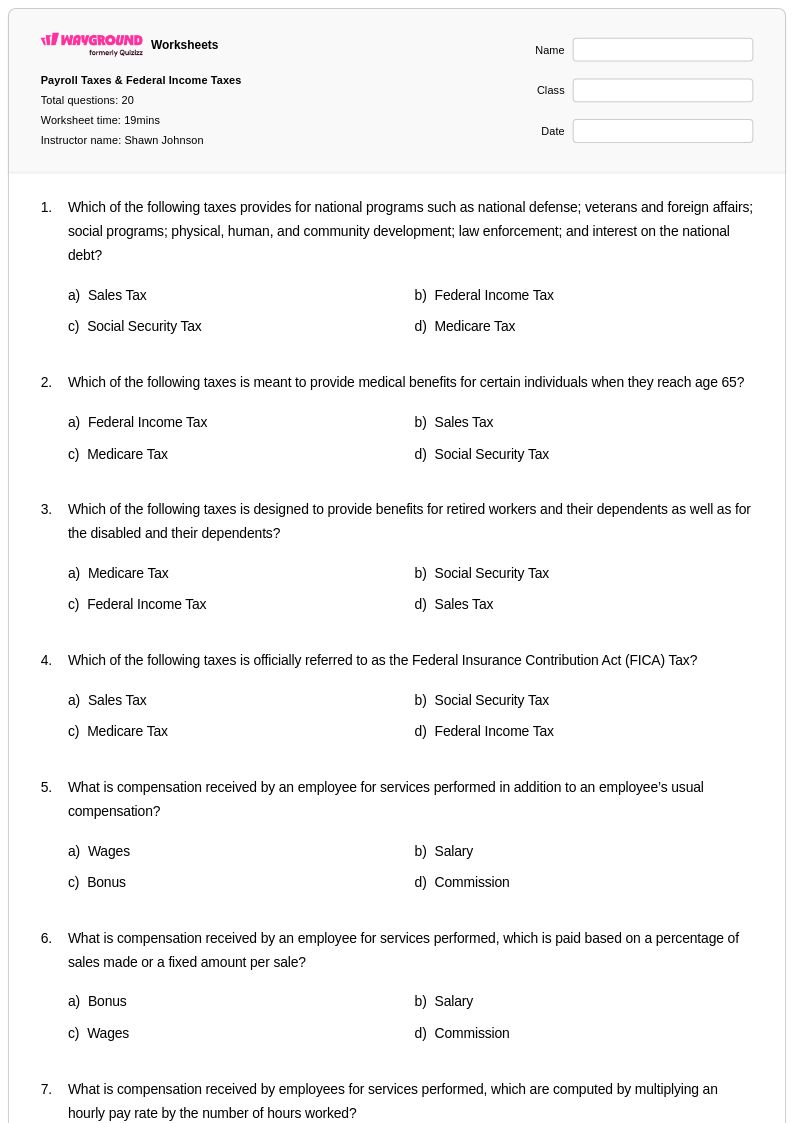
Free Grade 12 income tax worksheets and printables help students master tax calculations, deductions, and filing procedures through comprehensive practice problems with detailed answer keys from Wayground's economics collection.
Explore printable Income Tax worksheets for Grade 12
Income tax worksheets for Grade 12 students available through Wayground (formerly Quizizz) provide comprehensive practice with the complexities of personal taxation systems and their economic implications. These carefully designed resources help students master essential skills including calculating gross and net income, understanding progressive tax brackets, determining deductions and exemptions, and analyzing the relationship between taxation and government revenue. Students work through realistic practice problems that mirror actual tax scenarios, developing proficiency with tax forms, percentage calculations, and economic reasoning. Each worksheet collection includes detailed answer keys and explanations, making these free printables valuable for both guided instruction and independent study as students prepare for adult financial responsibilities.
Wayground (formerly Quizizz) empowers educators with millions of teacher-created income tax resources that streamline lesson planning and accommodate diverse learning needs in Grade 12 economics courses. The platform's robust search and filtering capabilities allow teachers to quickly locate worksheets aligned with specific curriculum standards, while differentiation tools enable customization for students at varying skill levels. These comprehensive collections are available in both printable pdf formats for traditional classroom use and digital formats for technology-integrated learning environments. Teachers can efficiently modify existing worksheets or combine multiple resources to create targeted practice sessions, whether for initial skill development, remediation of challenging tax concepts, or enrichment activities that explore advanced topics like tax policy analysis and economic impact assessment.
FAQs
How do I teach income tax concepts to students who have no prior finance experience?
Start with the foundational concept of a progressive tax system — the idea that tax rates increase as income rises — before introducing specific brackets and calculations. Use simplified versions of real tax forms to ground instruction in authentic documents students will eventually use as adults. Building from gross income to taxable income by walking through deductions and exemptions step by step helps students see the full picture before they encounter more complex filing scenarios.
What practice problems work best for helping students understand income tax calculations?
The most effective practice problems simulate real-world scenarios: given a specific income, filing status, and set of deductions, students calculate adjusted gross income and then apply the correct tax bracket rates. Problems that require students to compare tax liability across different income levels reinforce how progressive taxation works in practice. Layering in deductions and exemptions after students master basic bracket calculations prevents cognitive overload while building genuine competency.
What mistakes do students most commonly make when working through income tax problems?
The most frequent error is treating tax brackets as flat rates — students often apply the highest bracket rate to all income rather than only to the portion of income that falls within that bracket. A second common mistake is confusing gross income with taxable income, leading students to skip the deduction and exemption step entirely. Explicitly modeling both errors and their corrections in class helps students catch these misconceptions before they appear on assessments.
How can I use income tax worksheets to support students at different skill levels?
Differentiate by adjusting the complexity of the financial scenarios: beginning learners can work with single-income households and standard deductions, while advanced students tackle itemized deductions, multiple income sources, or self-employment tax situations. On Wayground, teachers can assign accommodations such as reduced answer choices or read-aloud support to individual students, so all learners engage with the same core content at an accessible level. This allows the entire class to work on income tax literacy simultaneously without requiring separate lesson plans.
How do I use Wayground's income tax worksheets in my classroom?
Wayground's income tax worksheets are available as printable PDFs for traditional classroom use and in digital formats for technology-integrated environments, giving teachers flexibility to deploy them however instruction is structured. Teachers can also host the worksheets as a quiz directly on Wayground, enabling real-time student responses and immediate feedback. Each worksheet includes a detailed answer key, making them straightforward to assign as independent practice, homework, or formative assessment without additional preparation.
How does understanding income tax connect to broader financial literacy skills?
Income tax instruction directly builds skills in reading complex documents, interpreting numerical data, and making informed financial decisions — all core components of financial literacy. Students who can calculate tax liability and understand the role of deductions are better equipped to evaluate employment offers, plan budgets, and understand government revenue systems. This makes income tax one of the most practically transferable topics in a personal finance curriculum.