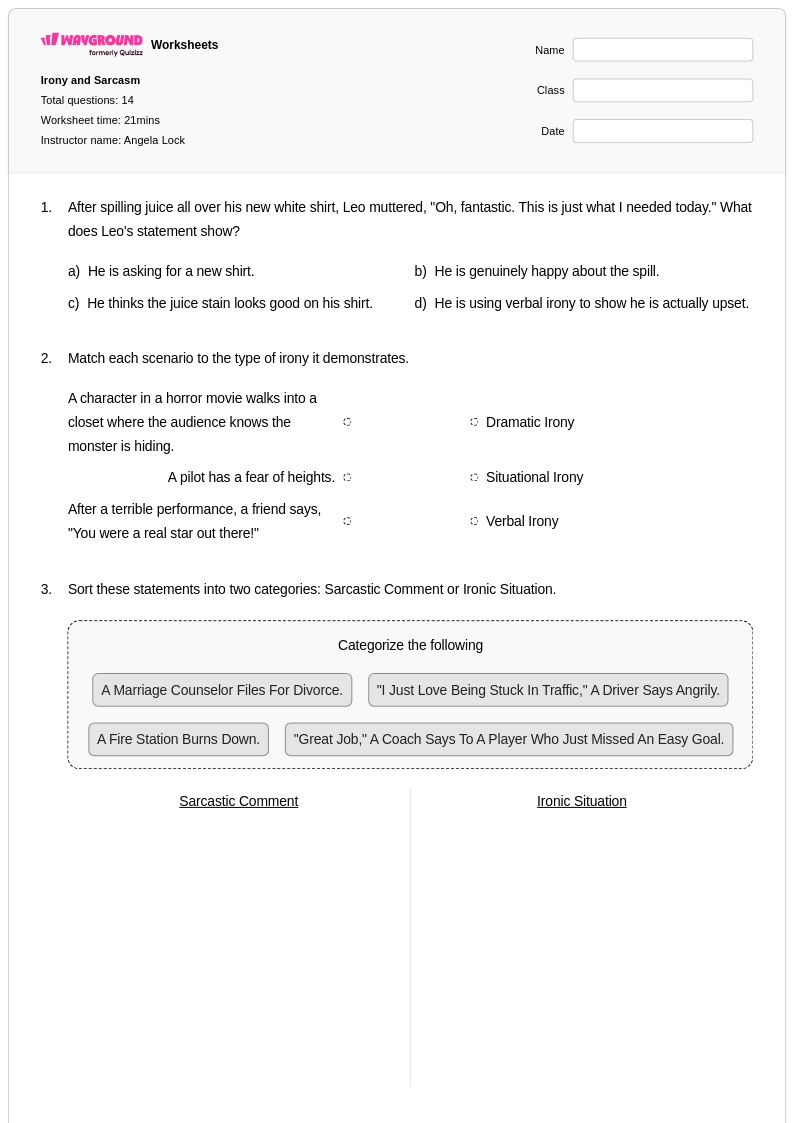
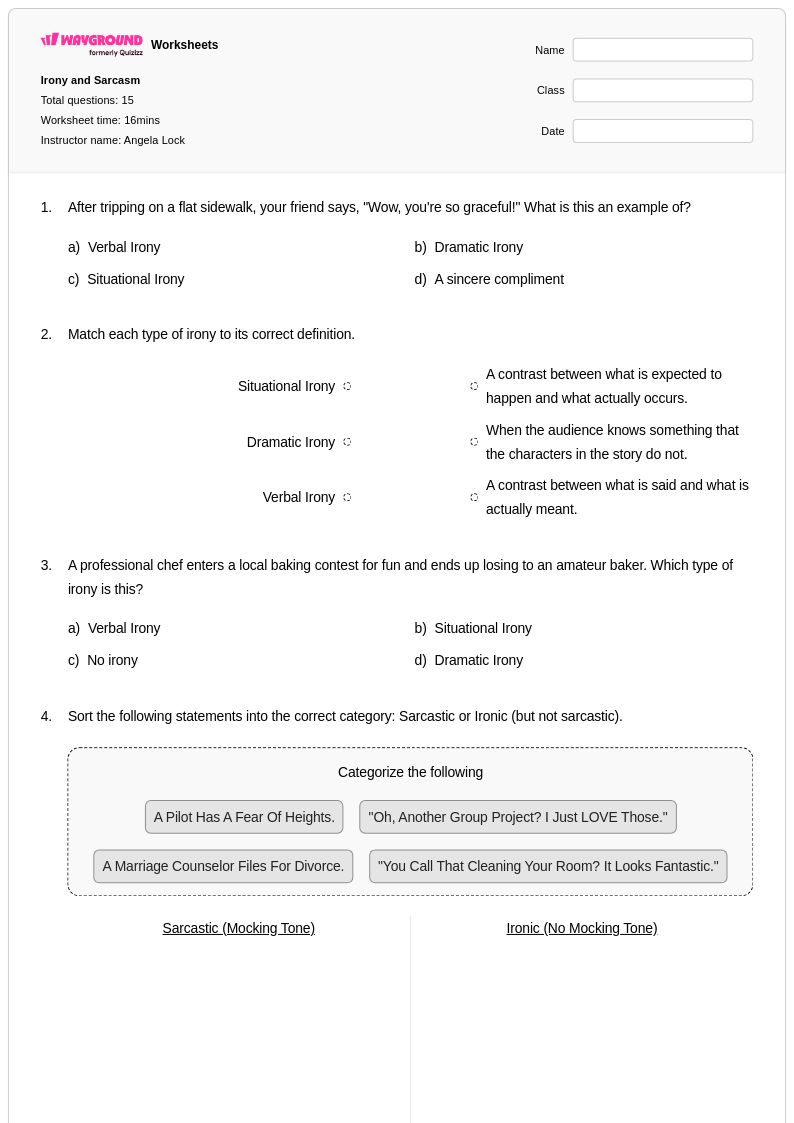
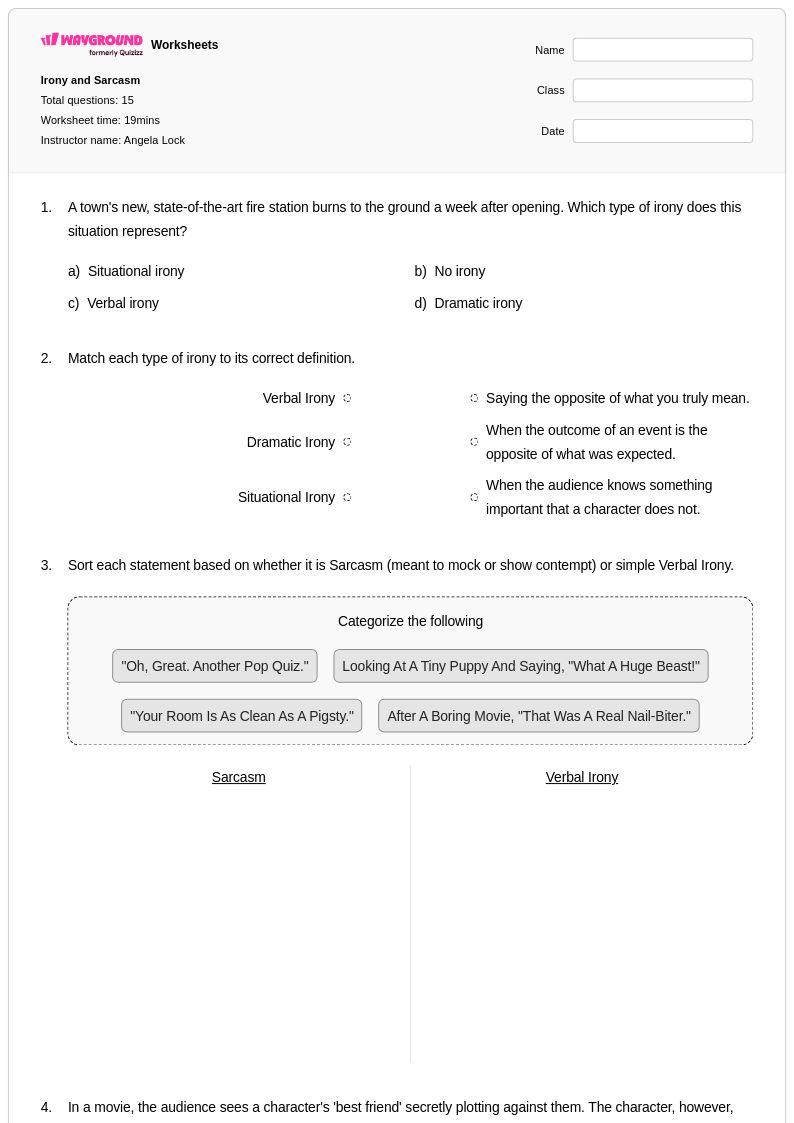
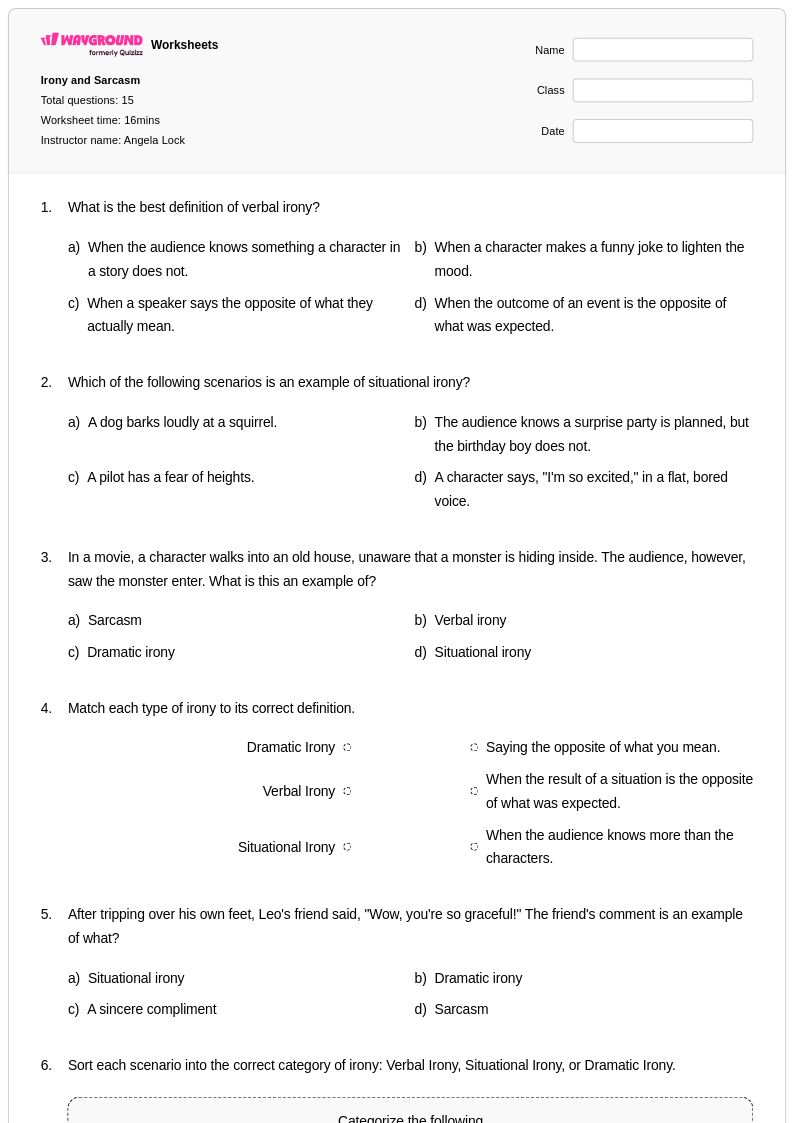
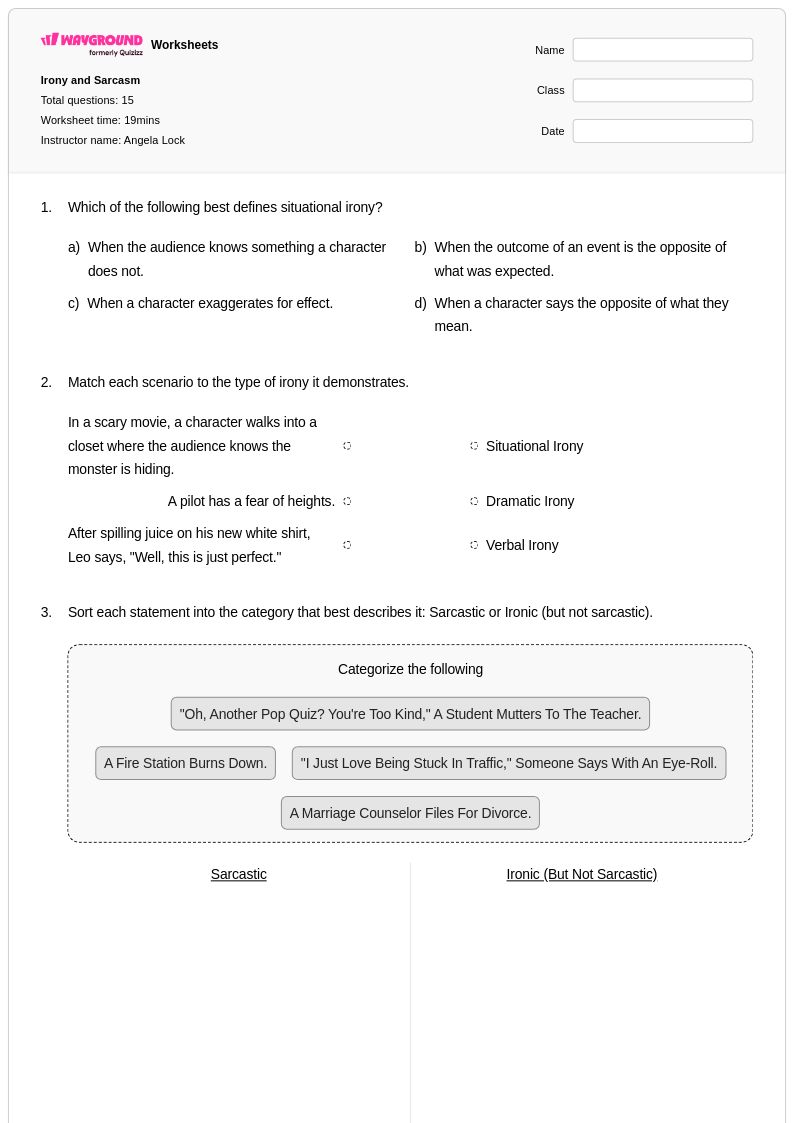
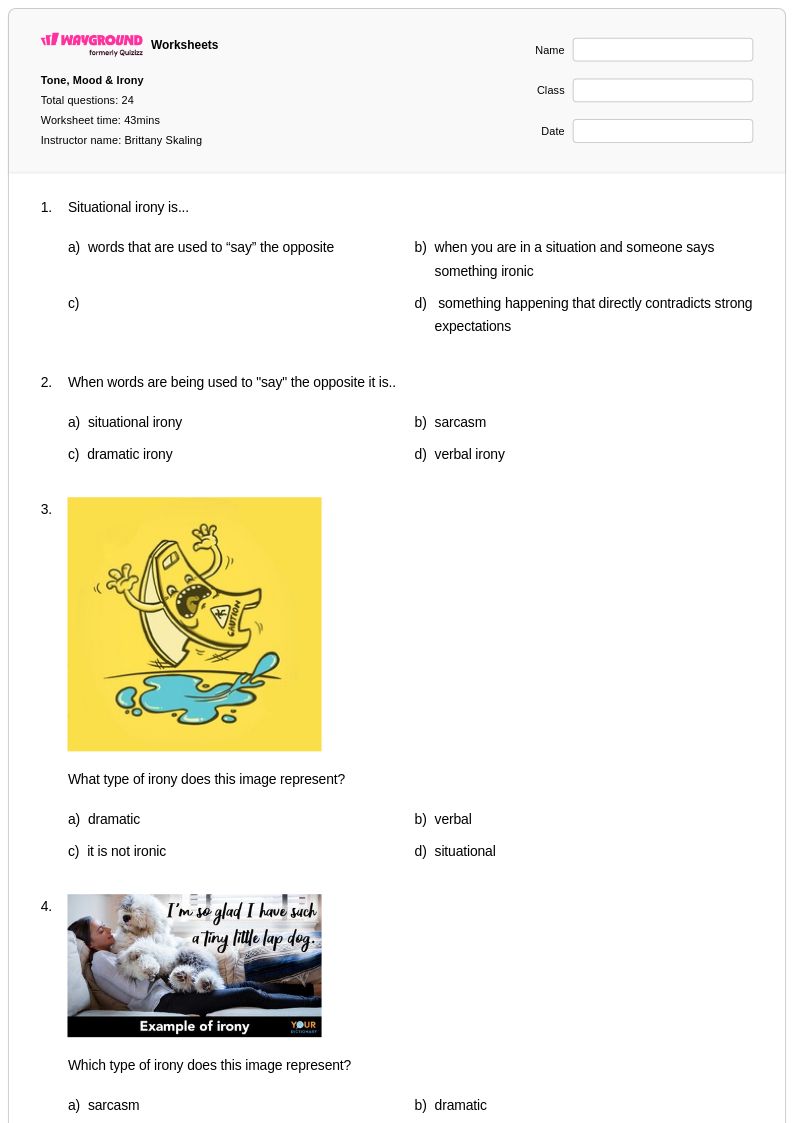
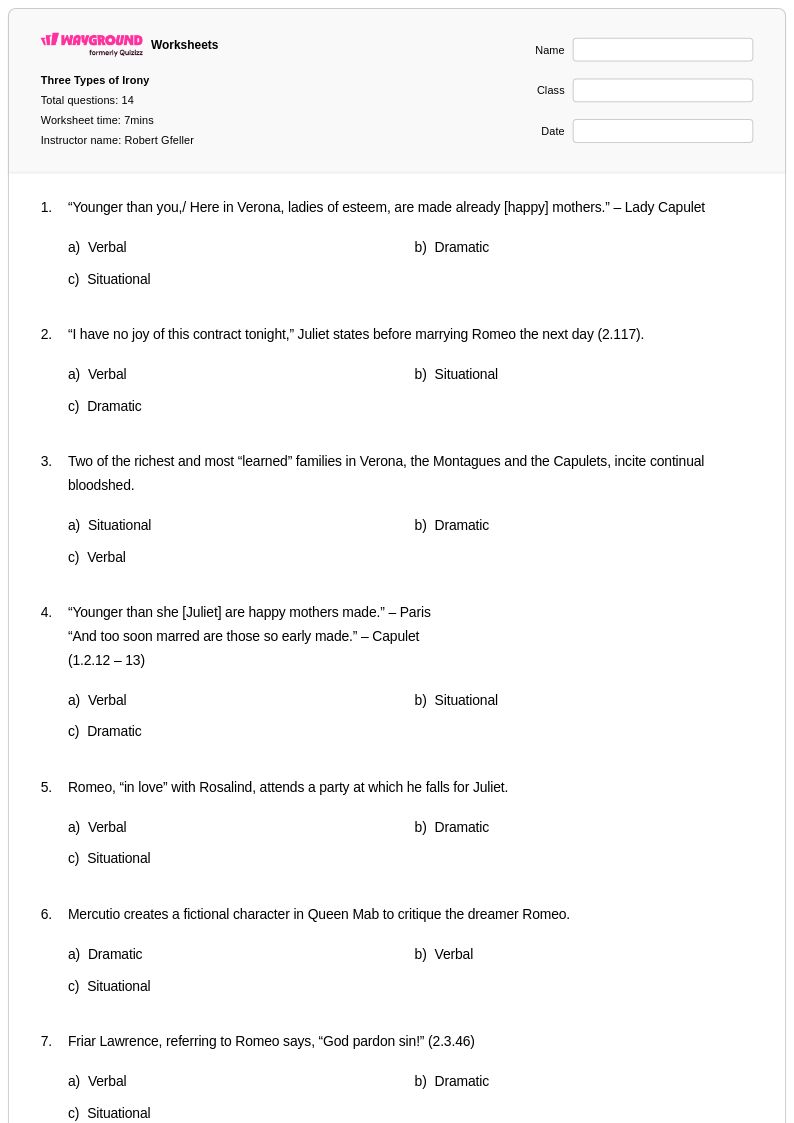
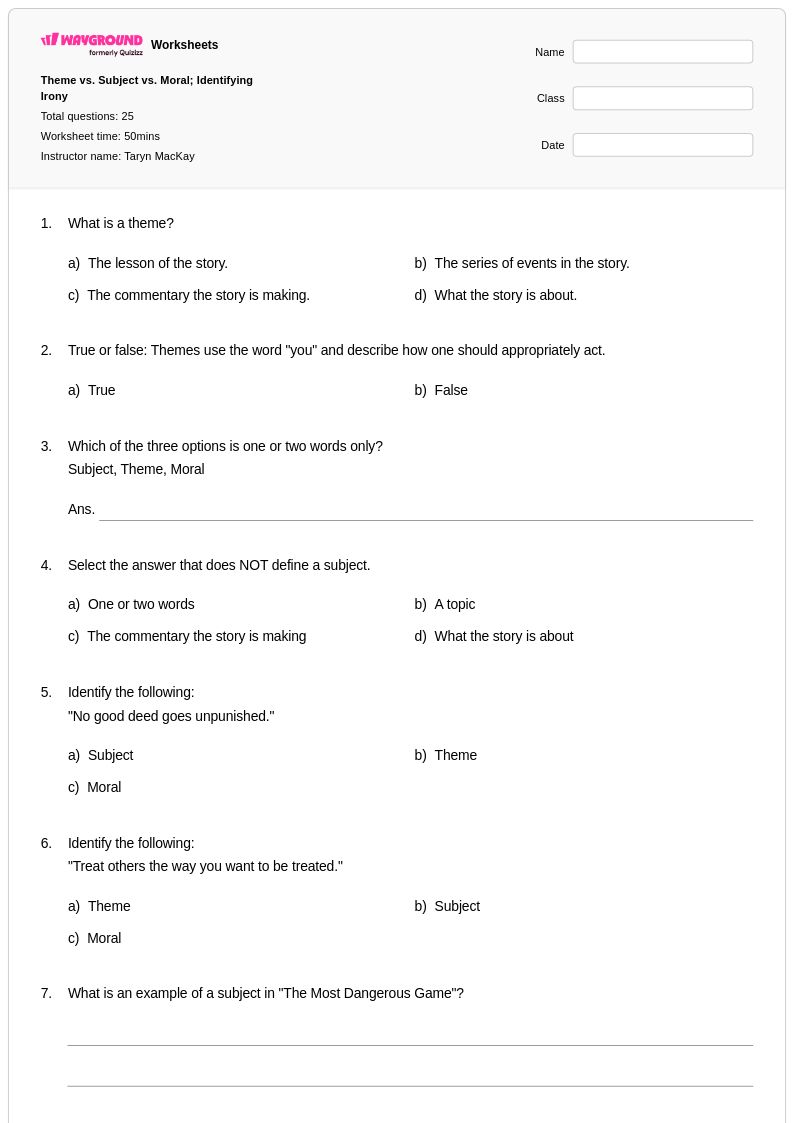
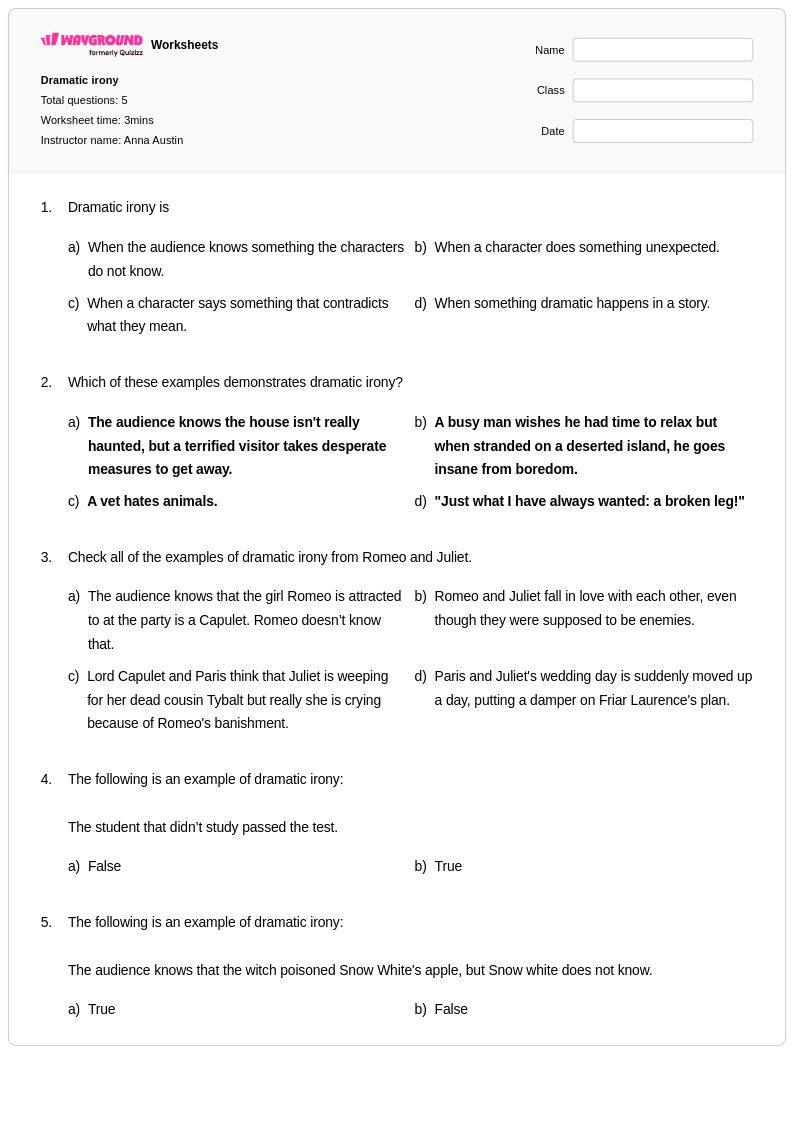
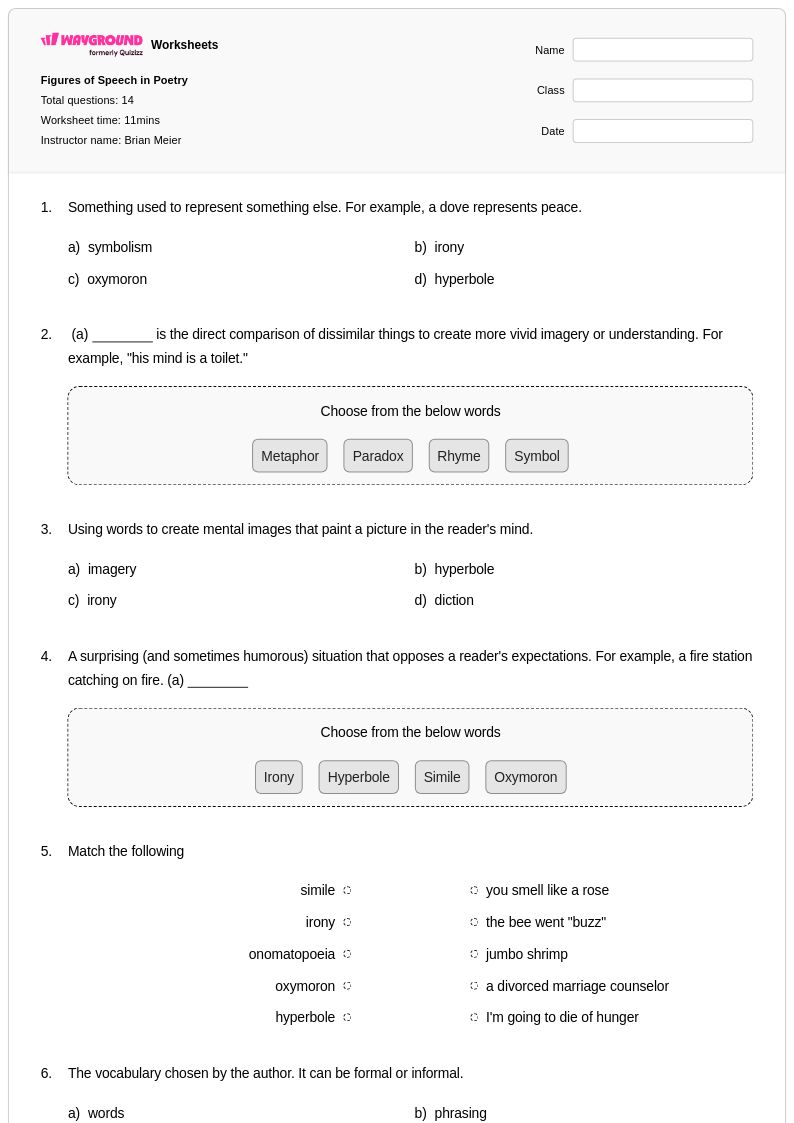
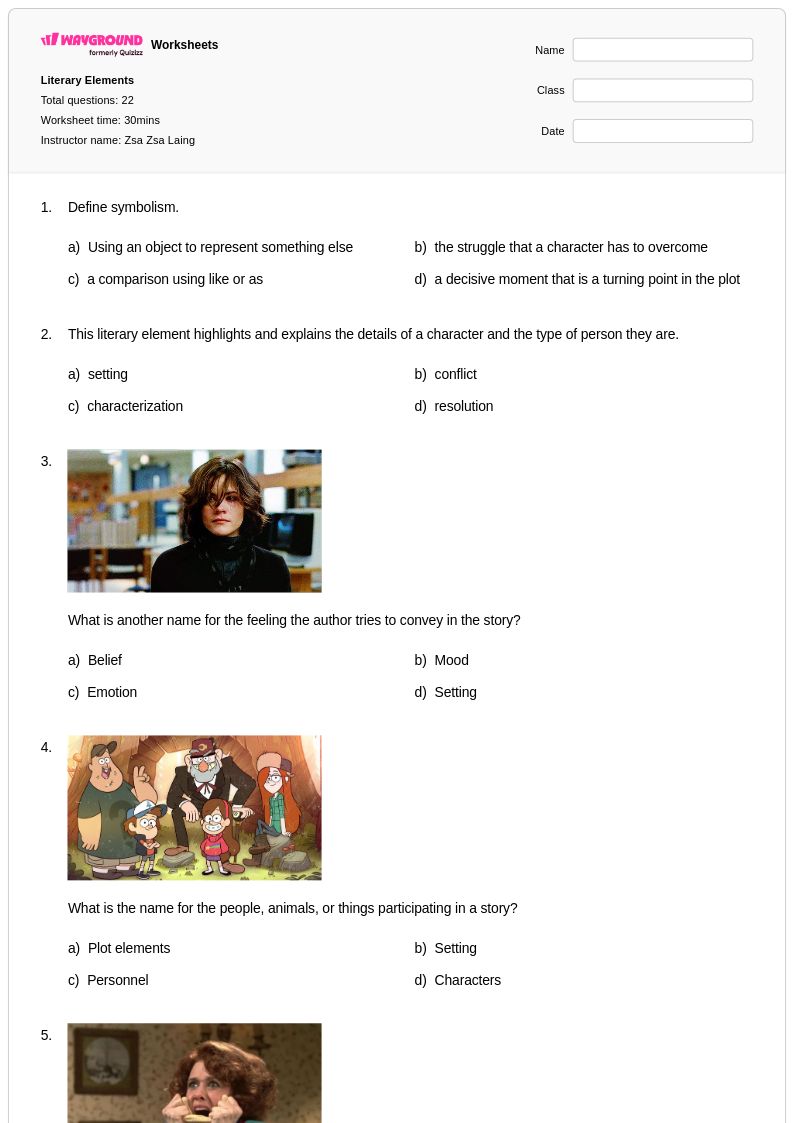
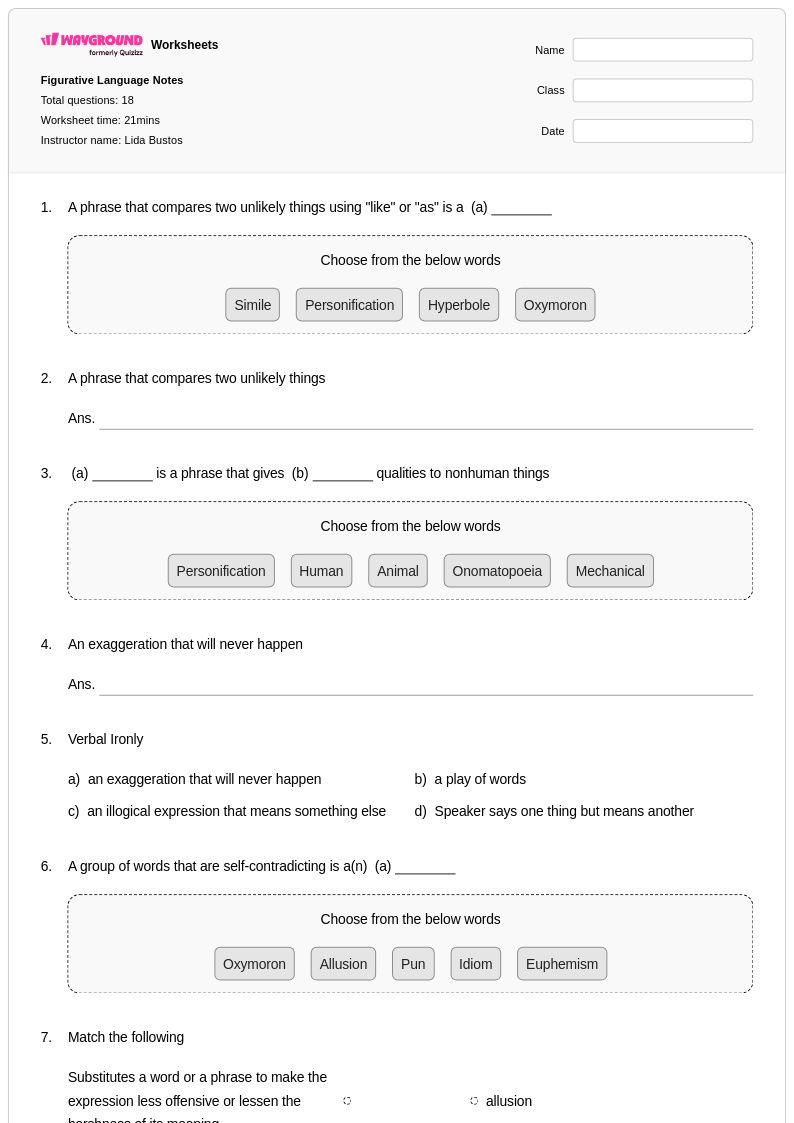
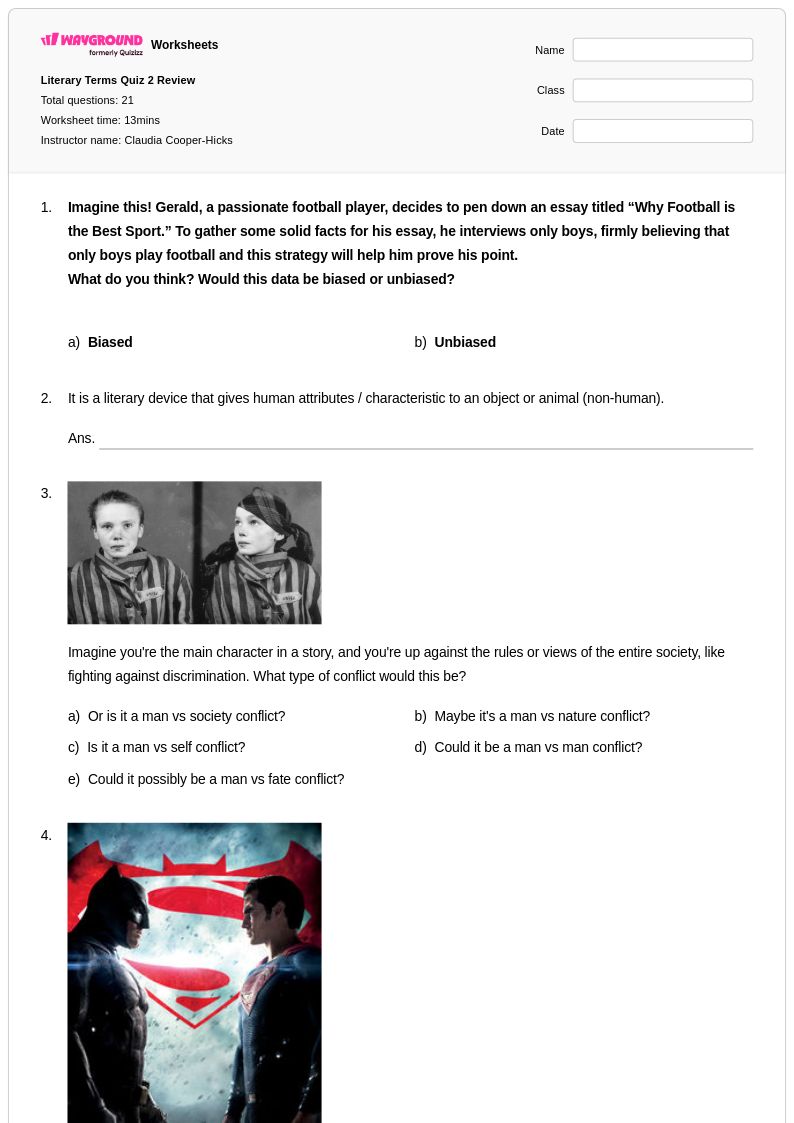
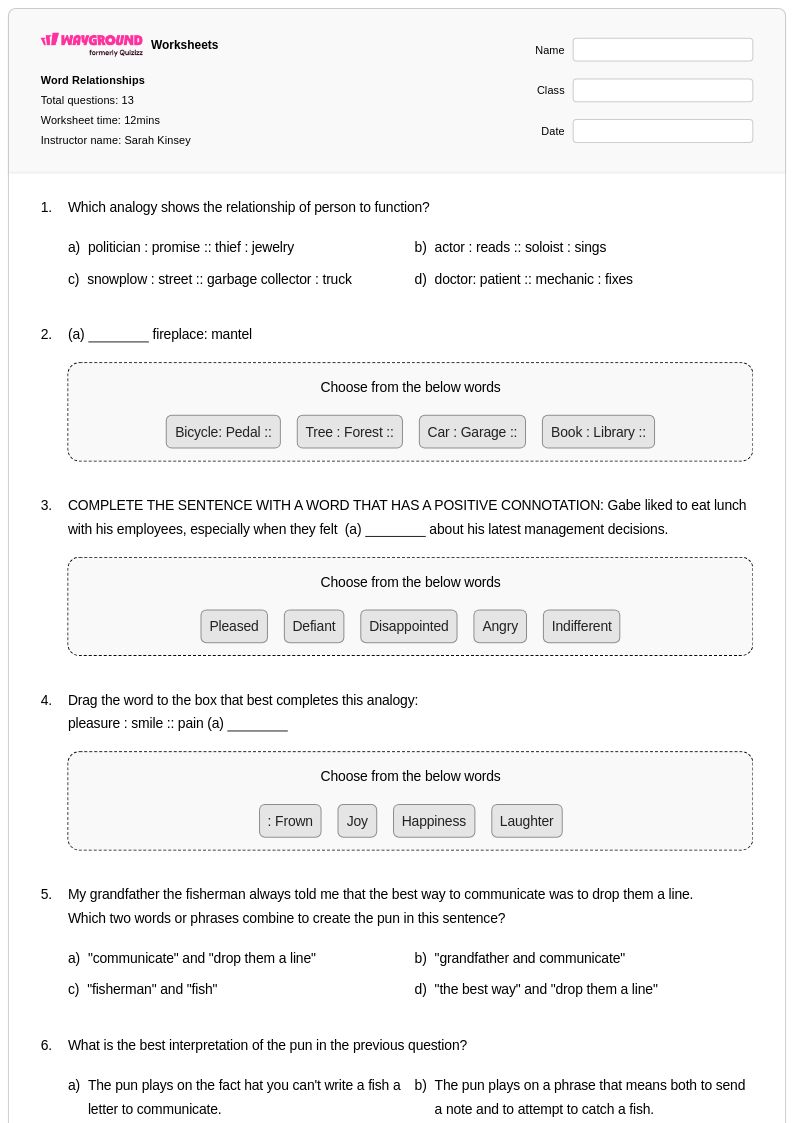
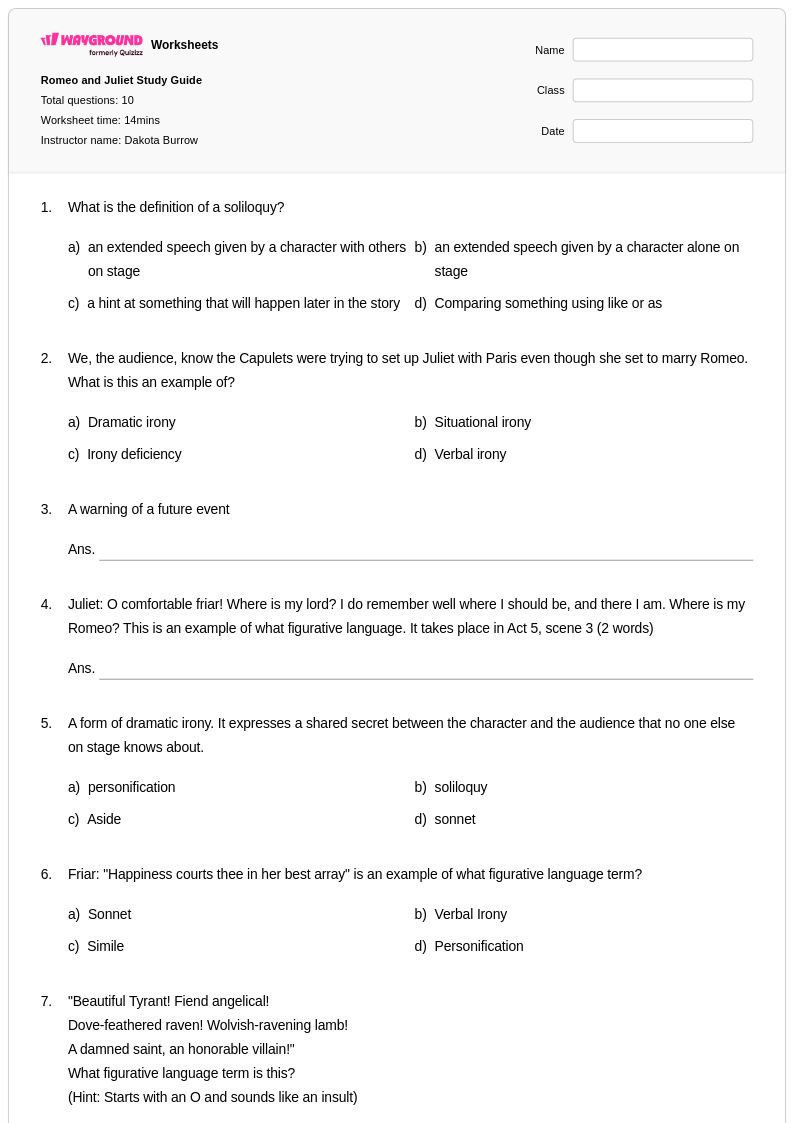
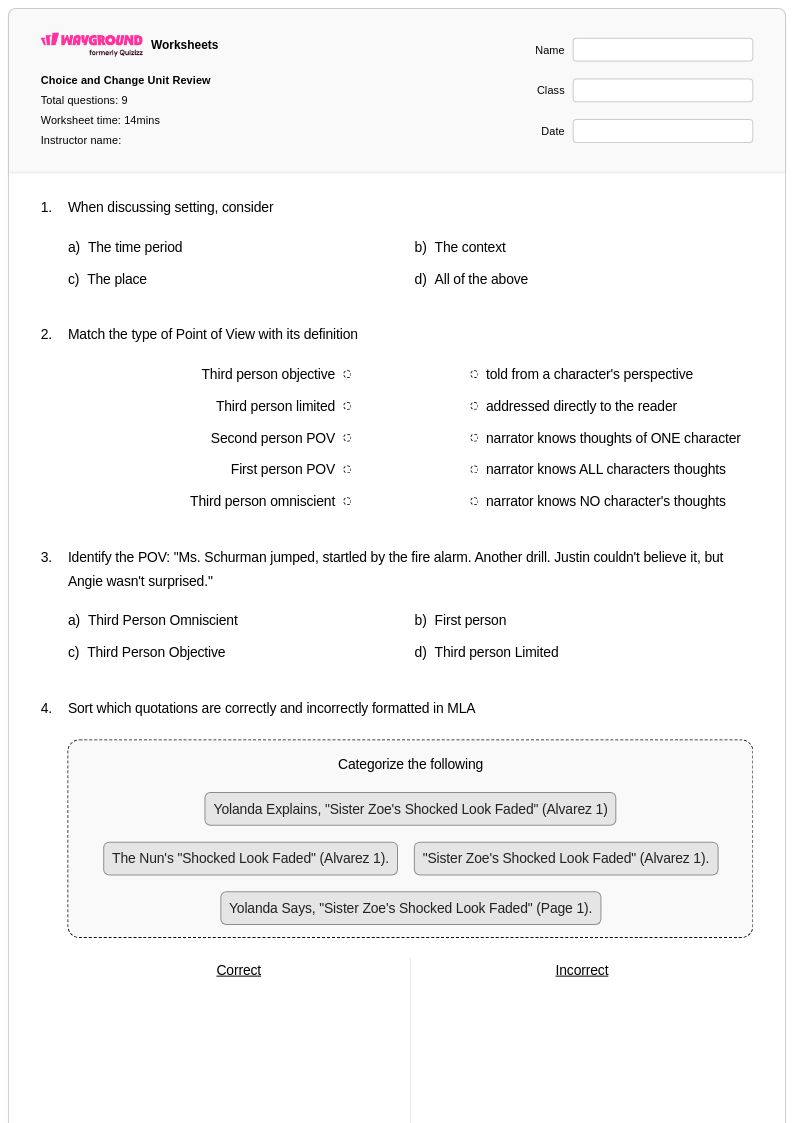
Master Grade 9 irony concepts with Wayground's comprehensive collection of free worksheets, printables, and practice problems featuring detailed answer keys to help students identify and analyze verbal, situational, and dramatic irony in literature.
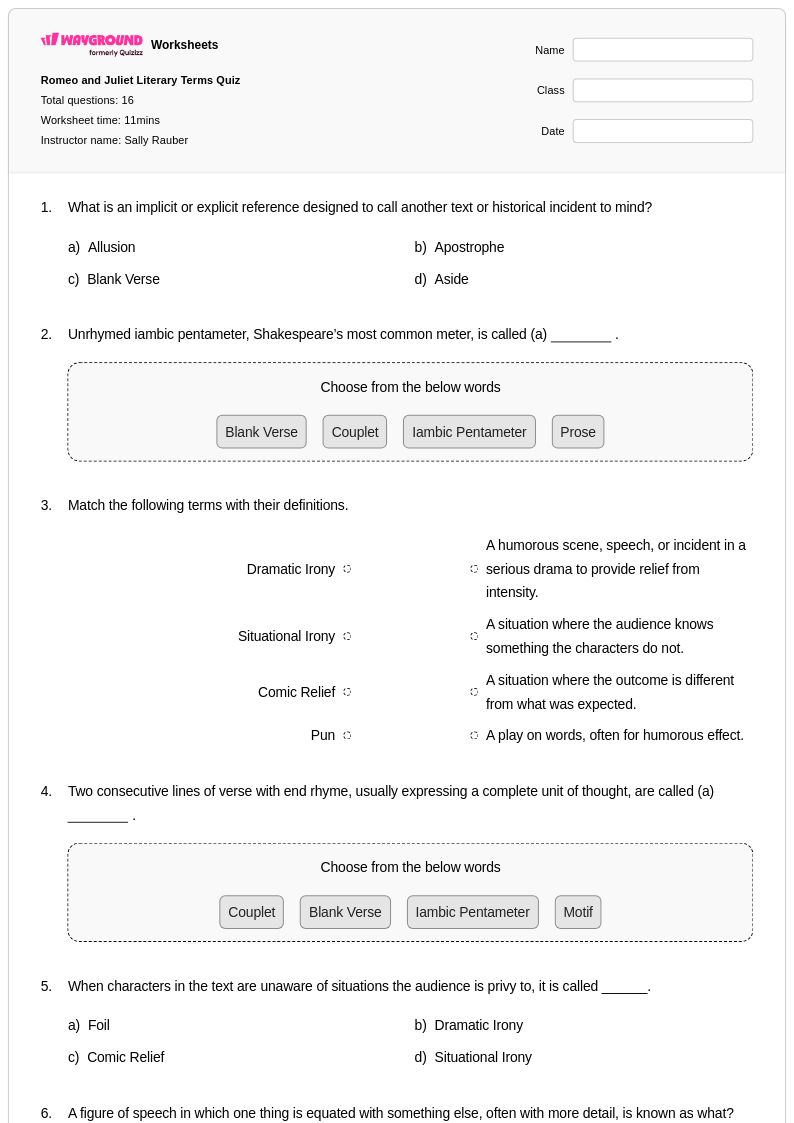
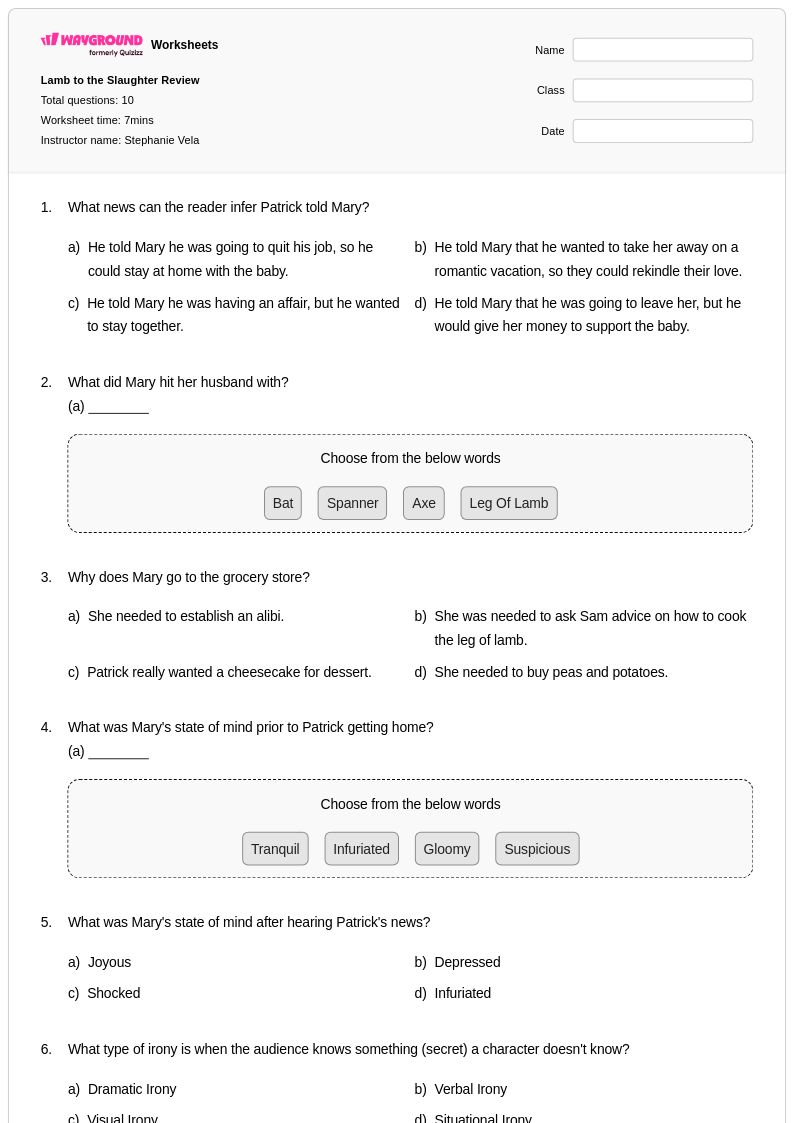
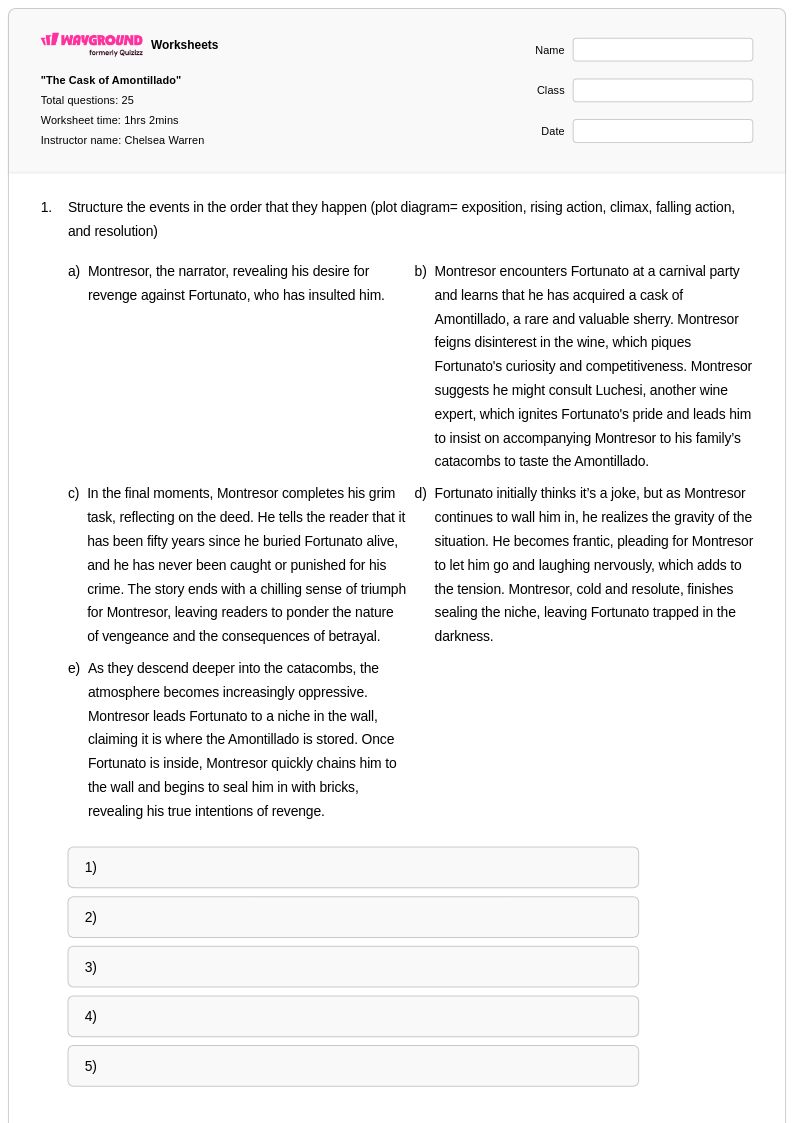
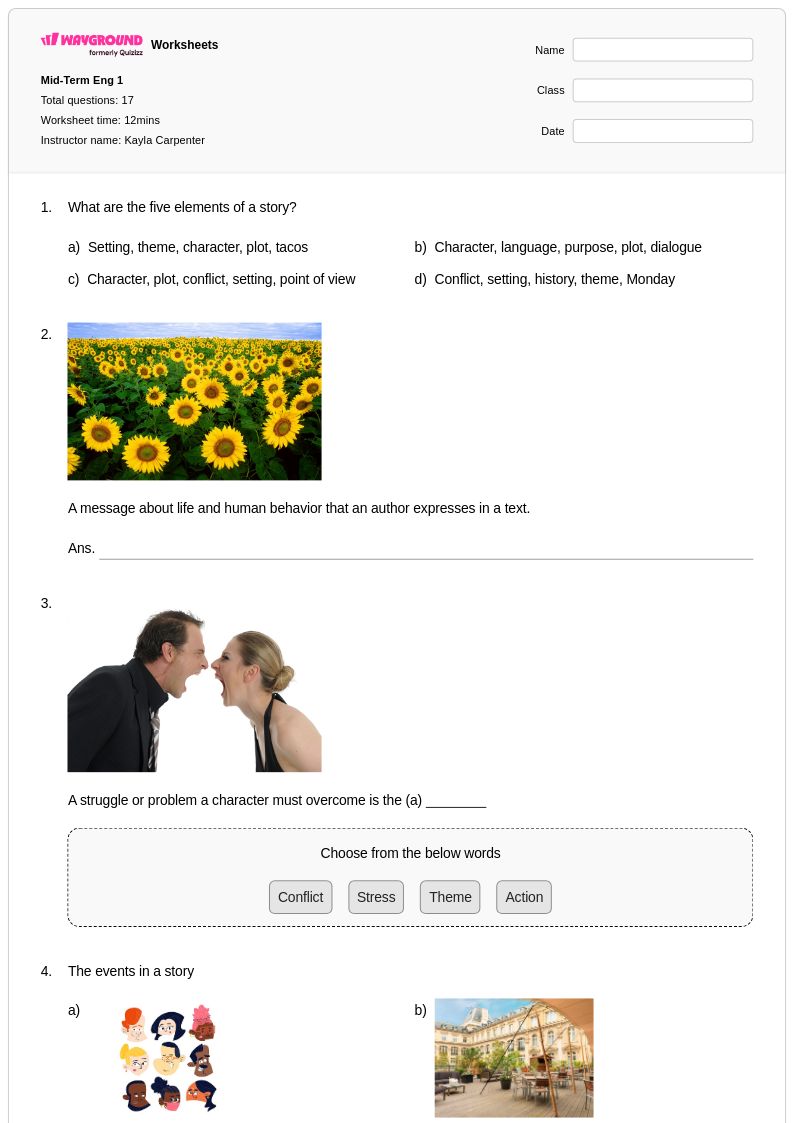
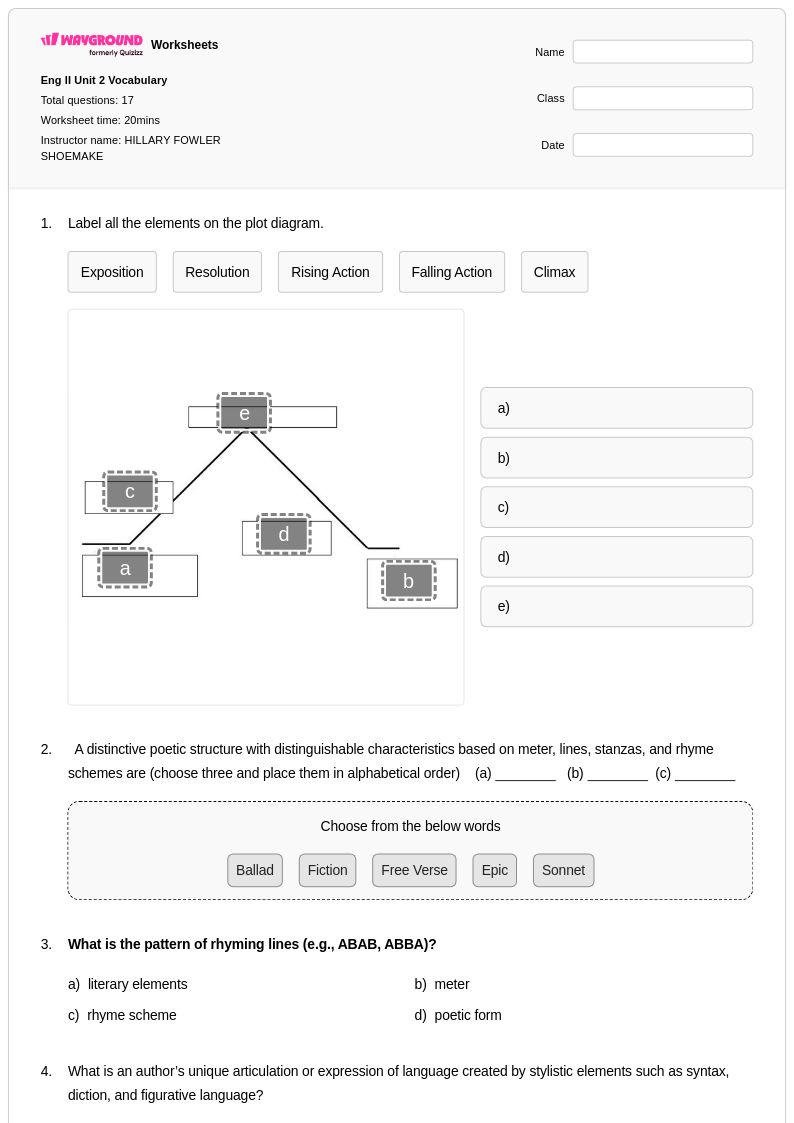
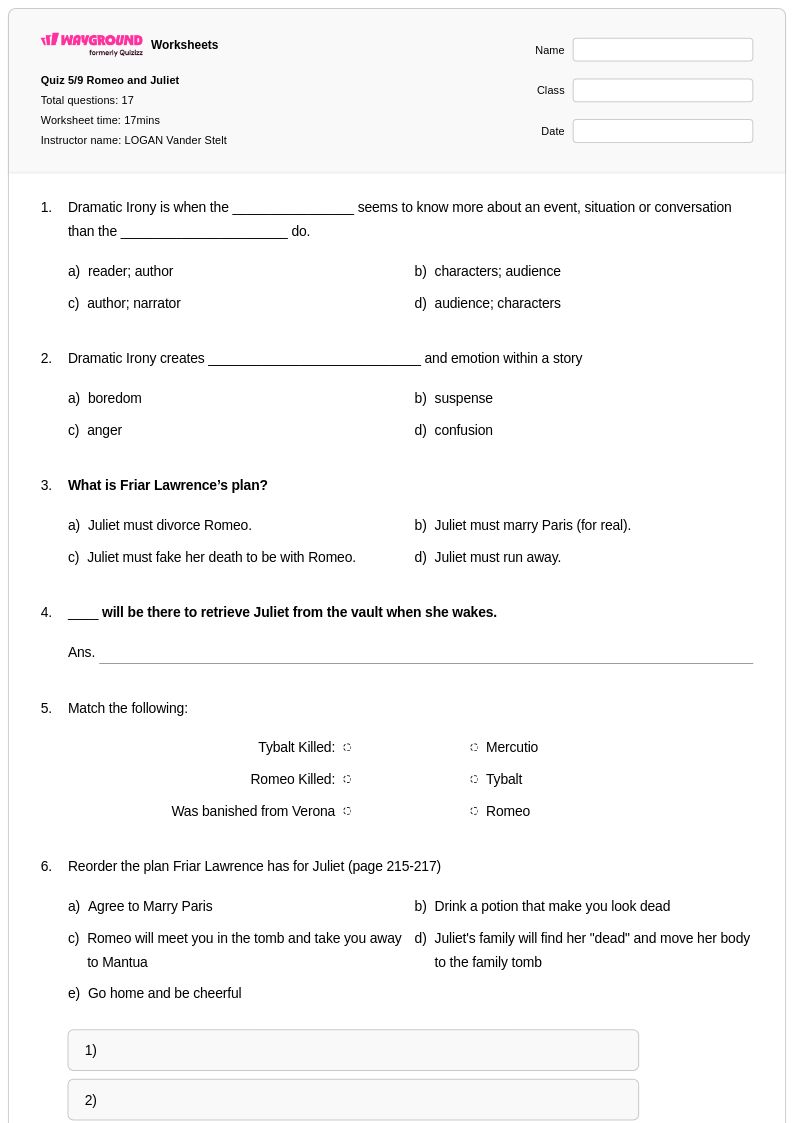
Grade 9 irony worksheets available through Wayground (formerly Quizizz) provide comprehensive practice with one of literature's most sophisticated and nuanced devices. These carefully designed resources help students distinguish between the three primary types of irony—verbal, situational, and dramatic—while developing critical thinking skills essential for advanced literary analysis. Students work through practice problems that require them to identify ironic elements in prose and poetry excerpts, analyze author intent, and evaluate the effectiveness of ironic techniques in creating meaning. Each worksheet includes detailed answer keys that explain the reasoning behind correct responses, enabling independent study and self-assessment. The free printables cover everything from basic irony recognition to complex analysis of how ironic devices contribute to theme development and character revelation in classic and contemporary literature.
Wayground's extensive collection of teacher-created irony worksheets draws from millions of educational resources, offering educators powerful search and filtering capabilities to locate materials perfectly suited to their Grade 9 curriculum needs. The platform's standards alignment features ensure worksheets meet specific learning objectives, while differentiation tools allow teachers to modify content difficulty and complexity for diverse learners. These customizable resources are available in both printable pdf format and interactive digital versions, supporting flexible classroom implementation and remote learning environments. Teachers can seamlessly integrate these worksheets into lesson planning for initial instruction, targeted remediation for struggling students, or enrichment activities for advanced learners, creating multiple pathways for students to master the sophisticated analytical skills required for understanding irony in literature.
FAQs
How do I teach the three types of irony to middle or high school students?
Start by clearly distinguishing situational, verbal, and dramatic irony with concrete, familiar examples before moving to literary texts. Situational irony is easiest to anchor with real-world scenarios, verbal irony connects naturally to sarcasm students already use, and dramatic irony is best introduced through film or drama where the audience gap is visible. Once students can label examples in isolation, move them toward identifying irony within context and explaining its effect on tone or meaning. Scaffolded practice that separates identification from analysis prevents students from conflating the three types.
What exercises help students practice identifying irony in literature?
Short passage exercises where students must identify the type of irony and explain what creates the ironic effect are among the most effective formats. Matching activities that pair ironic statements with their underlying meanings help build interpretive precision before students tackle full texts. Graduated practice that starts with labeled examples and progresses to unlabeled passages in authentic literary contexts builds the analytical reading skills students need for assessments and close-reading tasks.
What mistakes do students commonly make when identifying irony?
The most frequent error is conflating verbal irony with sarcasm, treating them as interchangeable when sarcasm is only one tone verbal irony can take. Students also frequently misidentify coincidence or bad luck as situational irony, when true situational irony requires an outcome that is the opposite of what was expected or intended. Dramatic irony is often missed entirely in written texts because students are not actively tracking what different characters know at different points in the narrative. Targeted error-correction exercises that present common misidentifications and ask students to explain why they are incorrect help address these patterns directly.
How can I differentiate irony practice for students at different reading levels?
For struggling readers, begin with shorter, high-context passages and reduce the number of answer choices on identification tasks to lower cognitive load. Advanced students benefit from open-ended analysis prompts that ask them to evaluate how an author's use of irony shapes the reader's relationship to a character or theme. On Wayground, teachers can apply accommodations such as reduced answer choices, read-aloud support, and extended time to individual students without alerting the rest of the class, allowing the same worksheet to serve multiple skill levels in one session.
How do I use Wayground's irony worksheets in my classroom?
Wayground's irony worksheets are available as printable PDFs for traditional classroom use and in digital formats for technology-integrated instruction, including the option to host them as a quiz directly on Wayground. The free PDF versions can be distributed as homework, used for in-class practice, or incorporated into assessment preparation without additional setup. Digital delivery allows teachers to track student responses in real time, making it easier to identify which students are misclassifying irony types and need targeted follow-up before moving to full-text analysis.