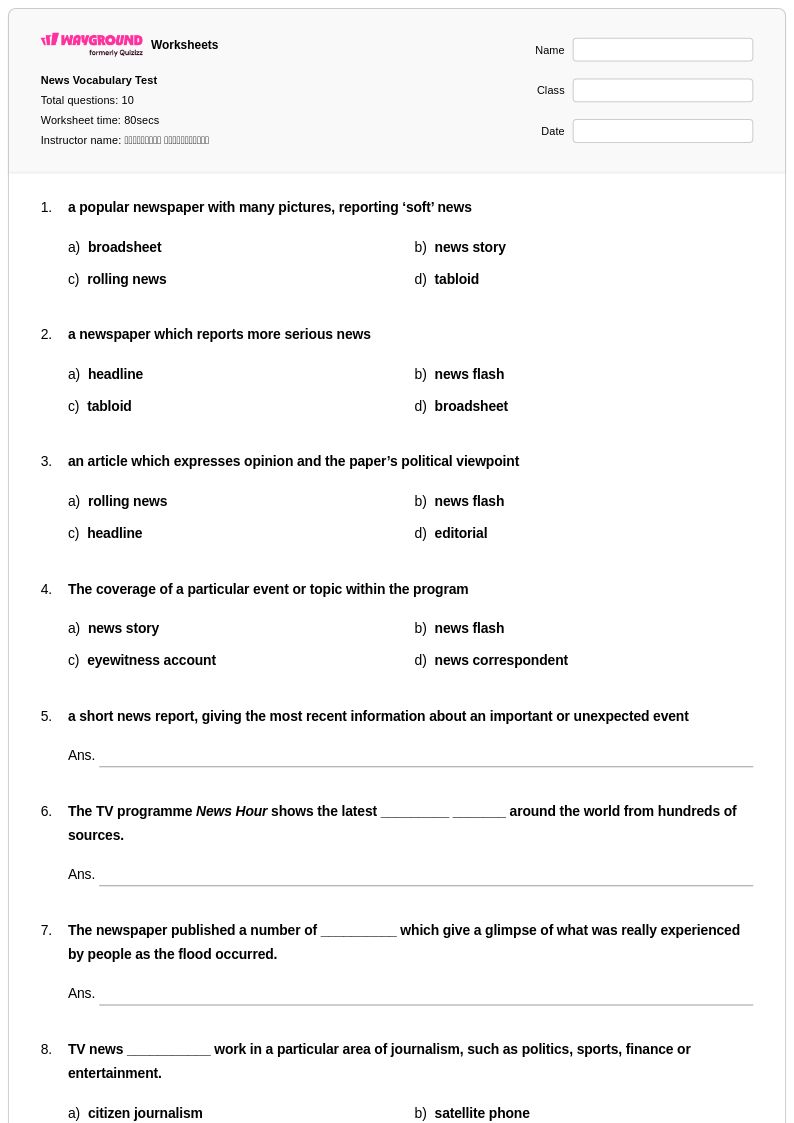
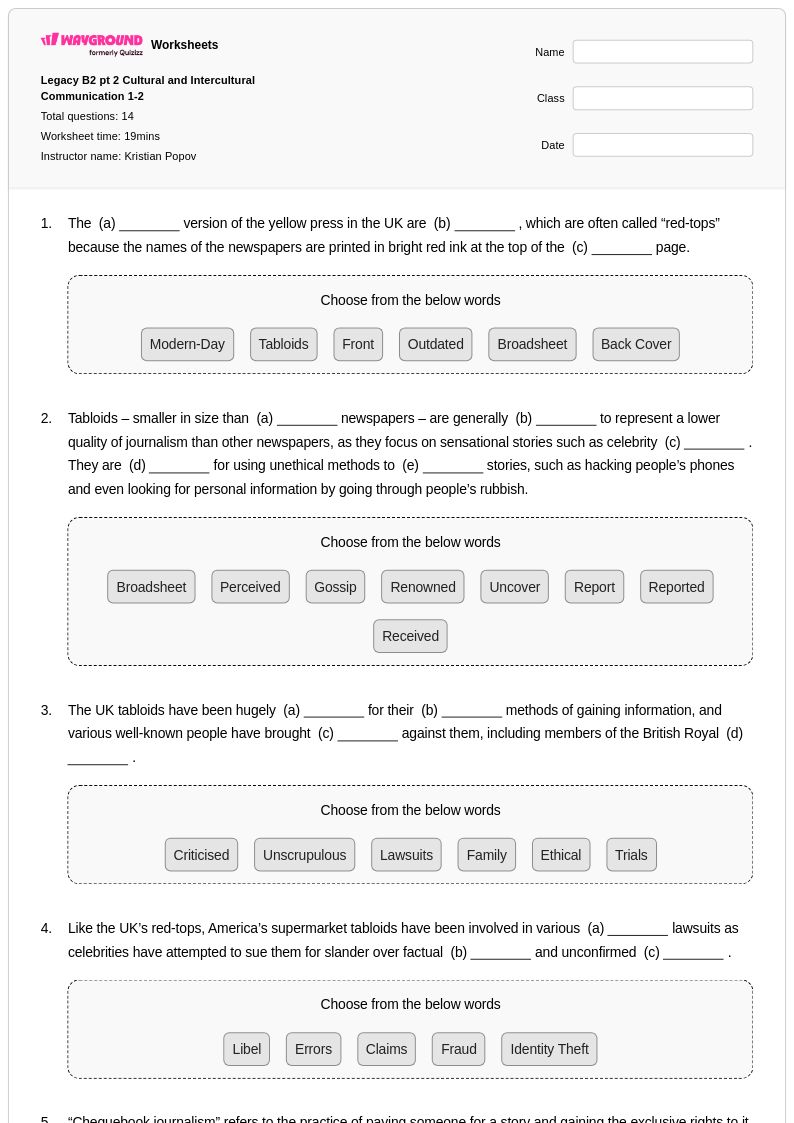
Grade 12 journalism worksheets and printables help students master news writing, interviewing techniques, and media ethics through comprehensive practice problems with detailed answer keys available as free PDF downloads.
Explore printable Journalism worksheets for Grade 12
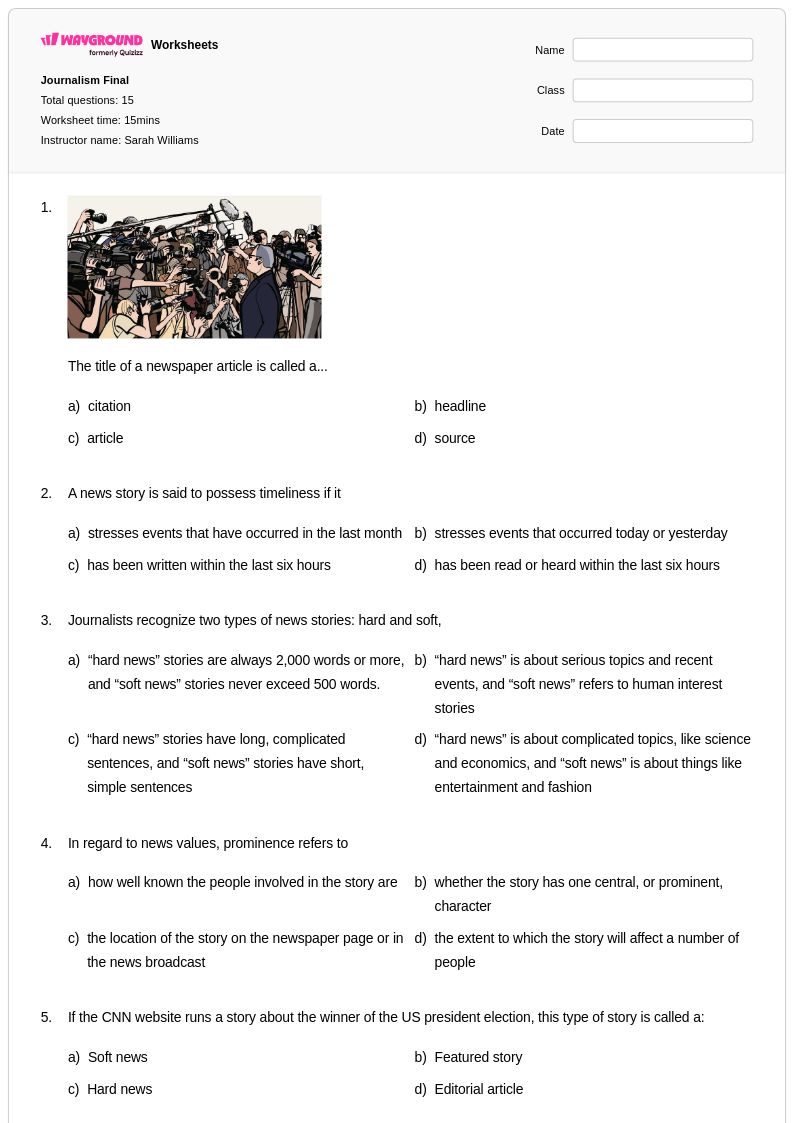
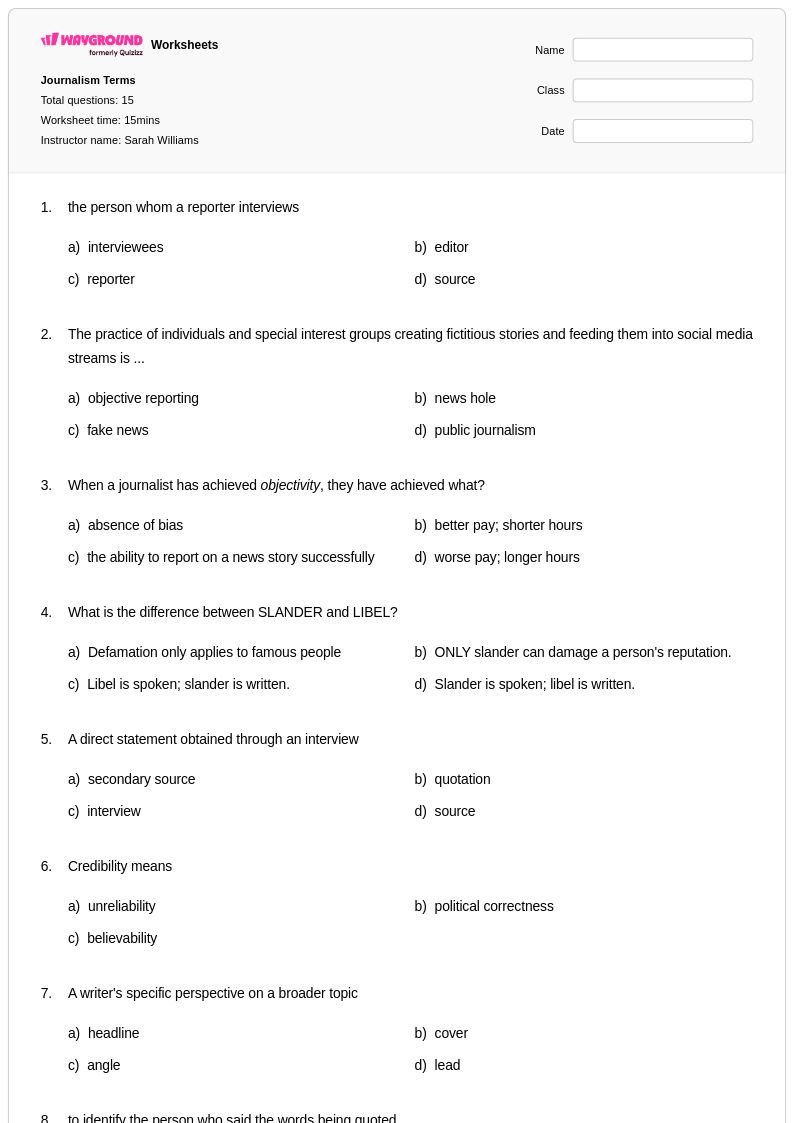
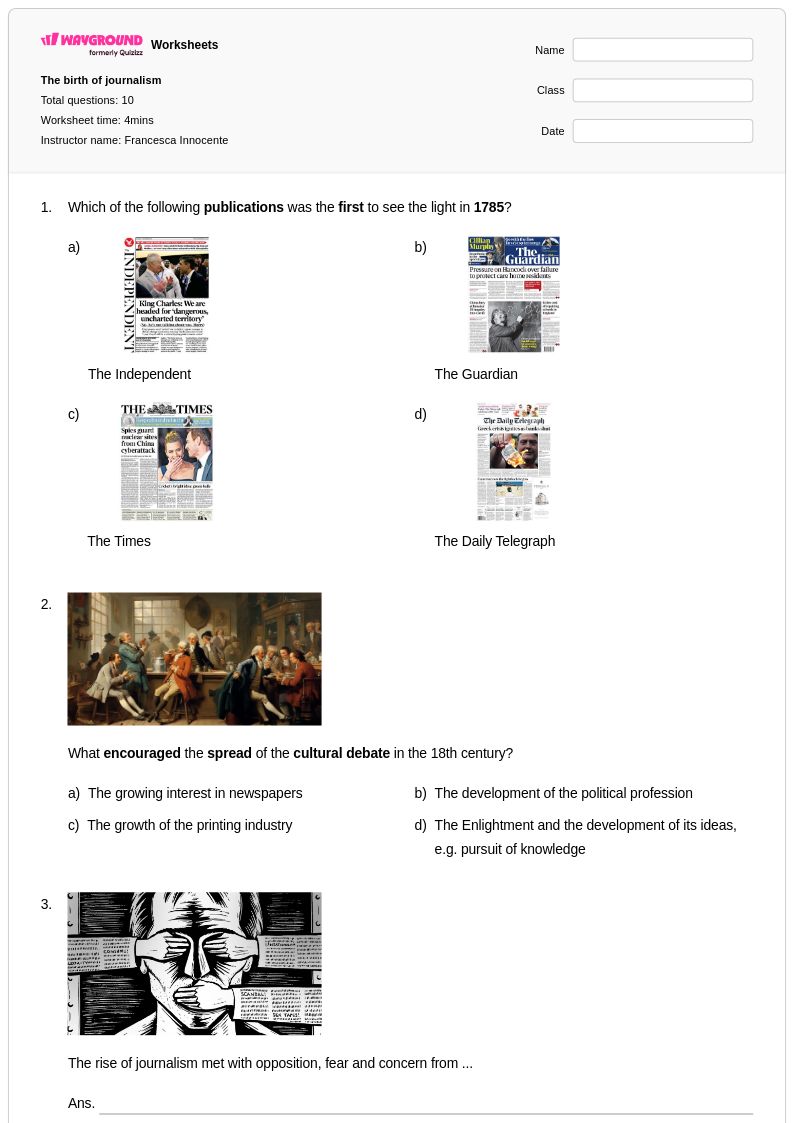
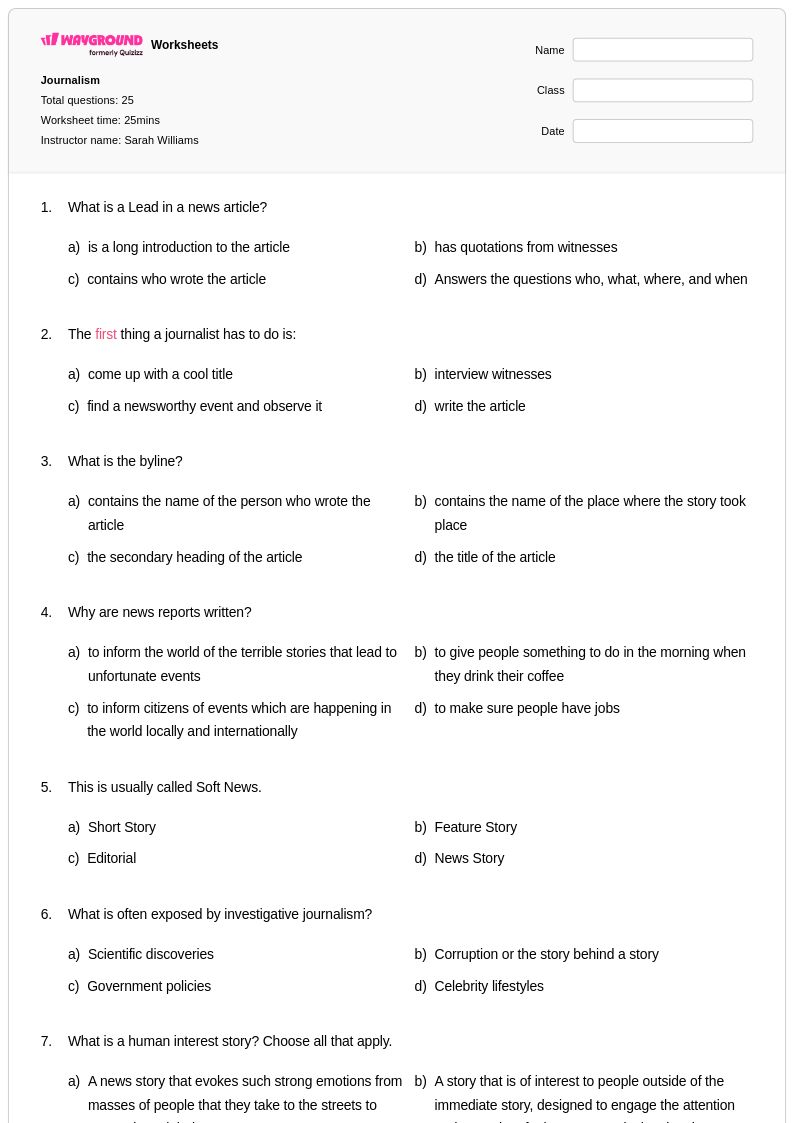
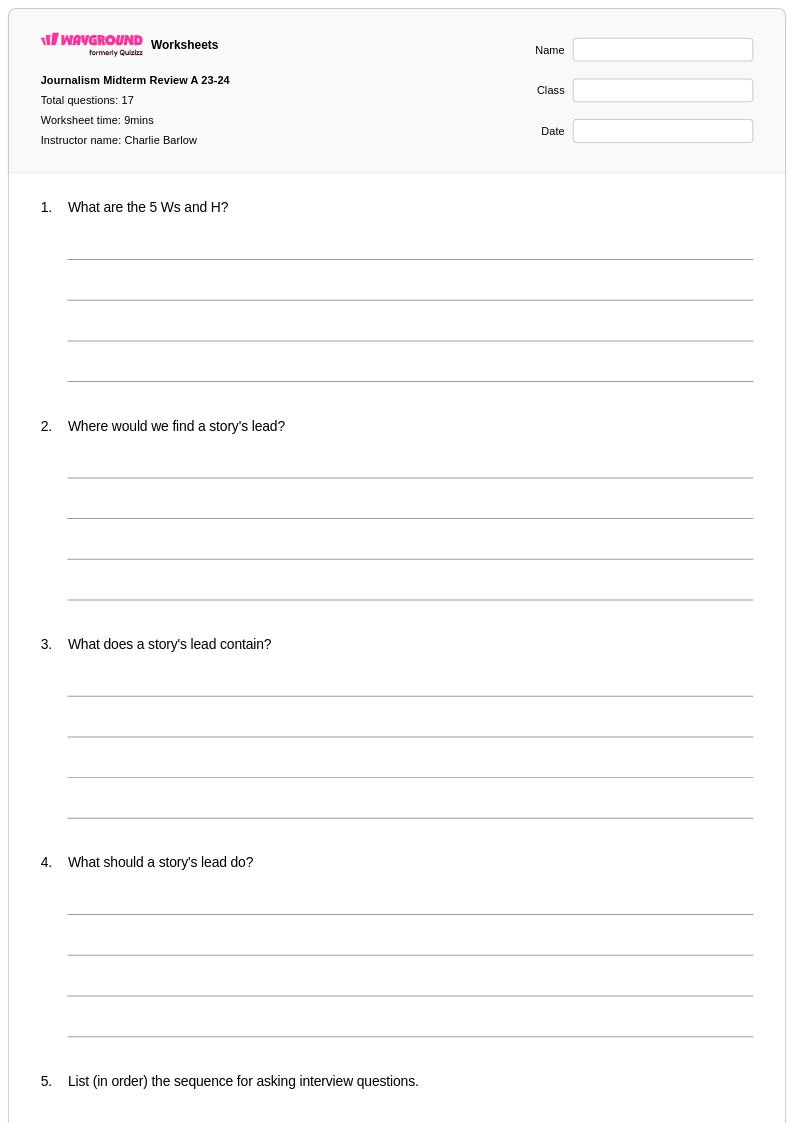
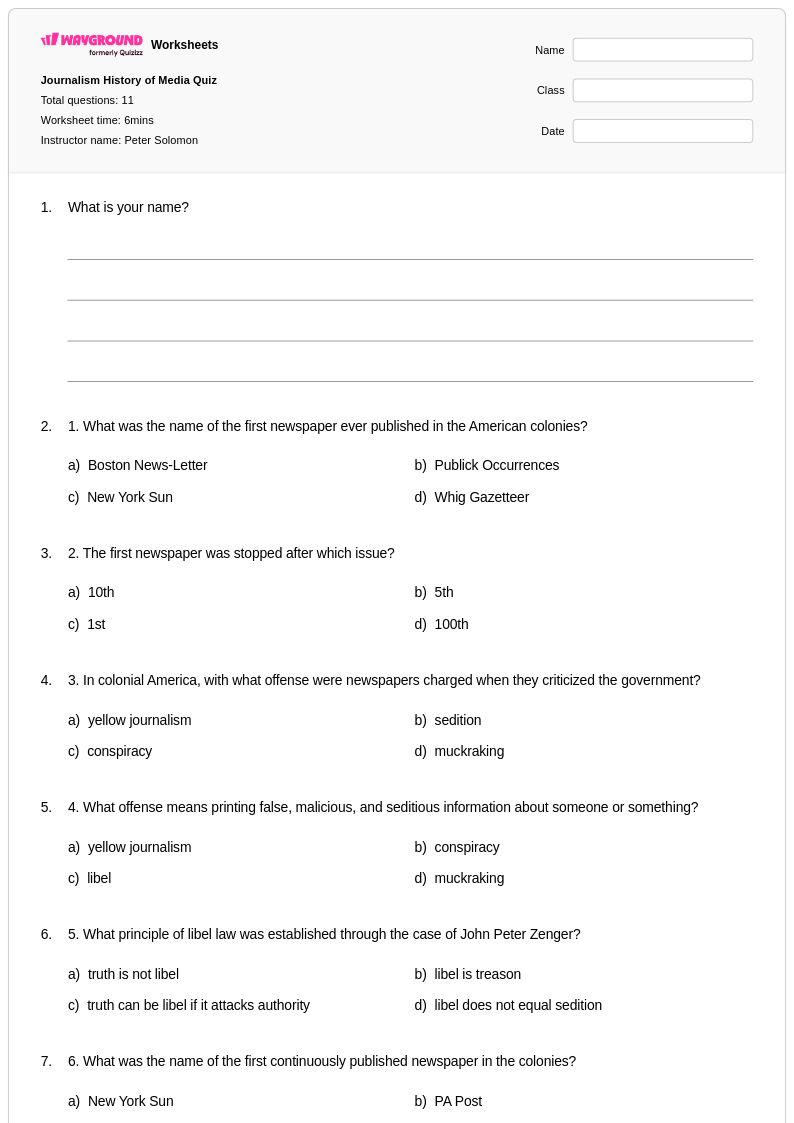
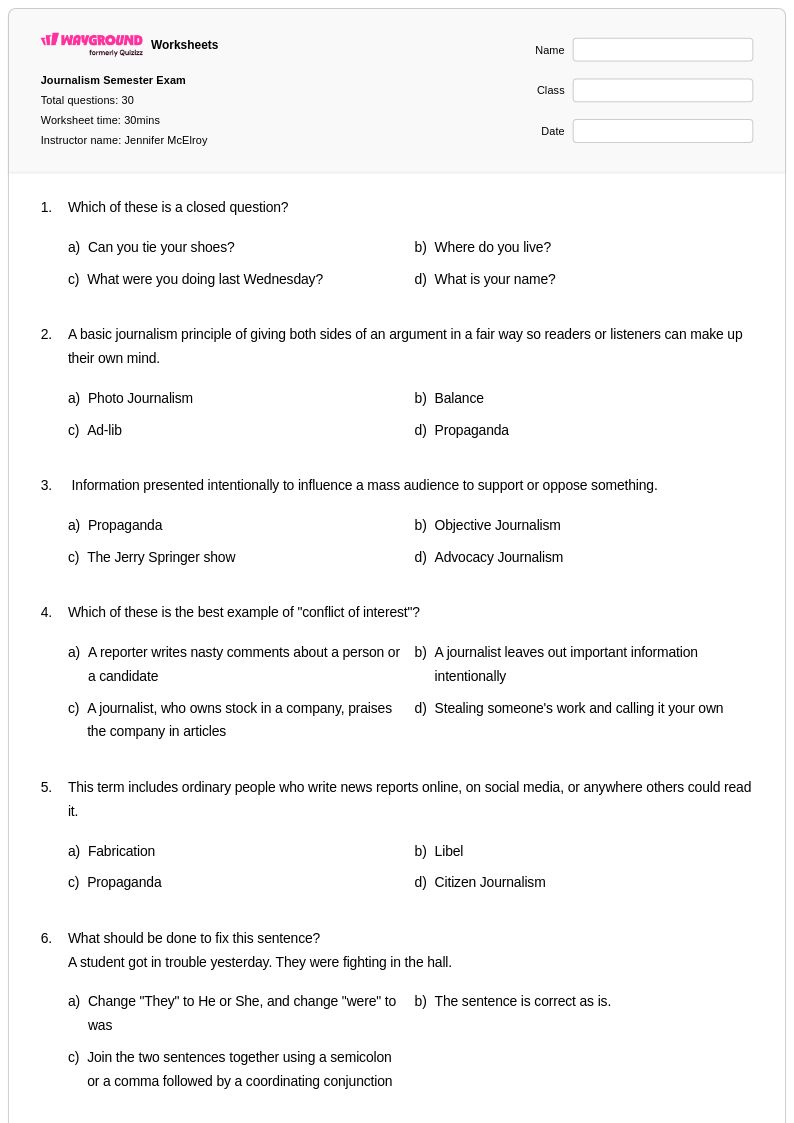
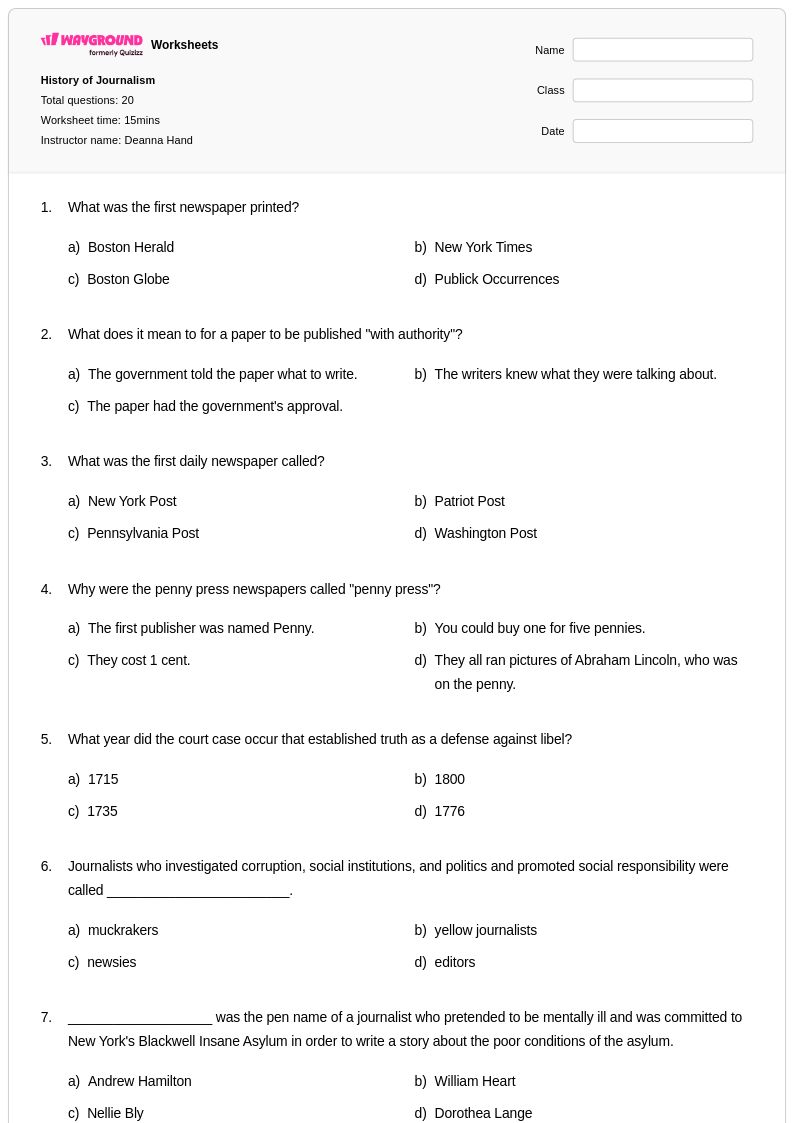
Grade 12 journalism worksheets available through Wayground (formerly Quizizz) provide comprehensive coverage of essential reporting and media literacy skills that prepare students for advanced writing careers and informed citizenship. These expertly crafted resources strengthen critical competencies including investigative research techniques, interview methodology, fact-checking protocols, and ethical reporting standards. Students engage with practice problems that simulate real-world newsroom scenarios, from crafting compelling leads and developing source networks to analyzing media bias and understanding libel laws. The collection includes detailed answer key materials that guide educators through complex journalism concepts, while printable pdf formats ensure accessibility for both classroom instruction and independent study. Free resources cover specialized areas such as broadcast journalism, digital media production, photojournalism ethics, and sports reporting, giving students exposure to the full spectrum of contemporary journalism practices.
Wayground (formerly Quizizz) empowers educators with millions of teacher-created journalism resources that streamline lesson planning and enhance instructional effectiveness across diverse learning environments. The platform's robust search and filtering capabilities allow teachers to quickly locate materials aligned with specific journalism standards and grade-level expectations, while differentiation tools enable customization for students with varying skill levels and interests. Whether delivered in traditional printable formats or engaging digital experiences, these worksheets support targeted skill practice in areas such as news writing structure, editorial analysis, and multimedia storytelling techniques. Teachers leverage the platform's flexible customization features to create remediation exercises for students struggling with journalism fundamentals or enrichment activities that challenge advanced writers to explore investigative reporting and opinion writing, ensuring every Grade 12 student develops the critical thinking and communication skills essential for media literacy in the digital age.
FAQs
How do I teach journalism skills to middle and high school students?
Teaching journalism effectively means grounding students in the core pillars of the craft: news writing structure, source evaluation, ethical reporting, and interview technique. Start with the inverted pyramid as a framework for organizing information by importance, then move into lead writing, headline crafting, and fact verification. Connecting each skill to real news examples helps students understand why journalistic conventions exist, not just what they are.
What exercises help students practice news writing and reporting skills?
Effective journalism practice exercises include writing leads from raw facts, rewriting poorly structured articles using the inverted pyramid, evaluating sources for credibility, and conducting mock interviews with structured question sets. Scenario-based practice — where students receive a set of facts and must produce a news article — is especially effective because it mirrors real reporting conditions. These exercises build the habits of accuracy, objectivity, and concise communication that define strong journalistic writing.
What are the most common mistakes students make when learning journalism?
The most frequent errors in student journalism include burying the lead, relying on opinion rather than verified facts, failing to attribute information to named sources, and neglecting to consider multiple perspectives on a story. Students also commonly confuse news writing with essay writing, producing work that is too narrative or informal in tone. Targeted practice with real examples of strong versus weak leads and structured feedback on source use helps correct these patterns quickly.
How do I teach media literacy alongside journalism skills?
Media literacy instruction pairs naturally with journalism because it asks students to apply the same evaluative standards to content they consume as to content they produce. Teach students to assess source credibility, identify bias, distinguish between news and opinion, and recognize the structural differences between responsible and sensationalized reporting. Worksheets that ask students to analyze existing articles for journalistic standards reinforce both their writing skills and their critical reading habits.
How can I use journalism worksheets in my classroom?
Journalism worksheets on Wayground are available as printable PDFs for traditional classroom distribution and in digital formats for technology-integrated or remote learning environments, and can also be hosted as a quiz directly on Wayground. Teachers can use them to introduce new concepts, reinforce writing conventions through structured practice, or assess student understanding of topics like interview technique, lead writing, and source evaluation. Each worksheet includes a complete answer key, making them efficient for both instruction and independent student review.
How do I support struggling writers in a journalism unit?
Struggling writers in journalism benefit from scaffolded tasks that isolate one skill at a time, such as practicing lead writing before moving to full article structure. On Wayground, teachers can apply student-level accommodations including Read Aloud for students who need audio support, reduced answer choices to lower cognitive load, and extended time for those who need more processing time during digital practice. These settings can be assigned to individual students without disrupting the rest of the class, making differentiation seamless within a shared assignment.