
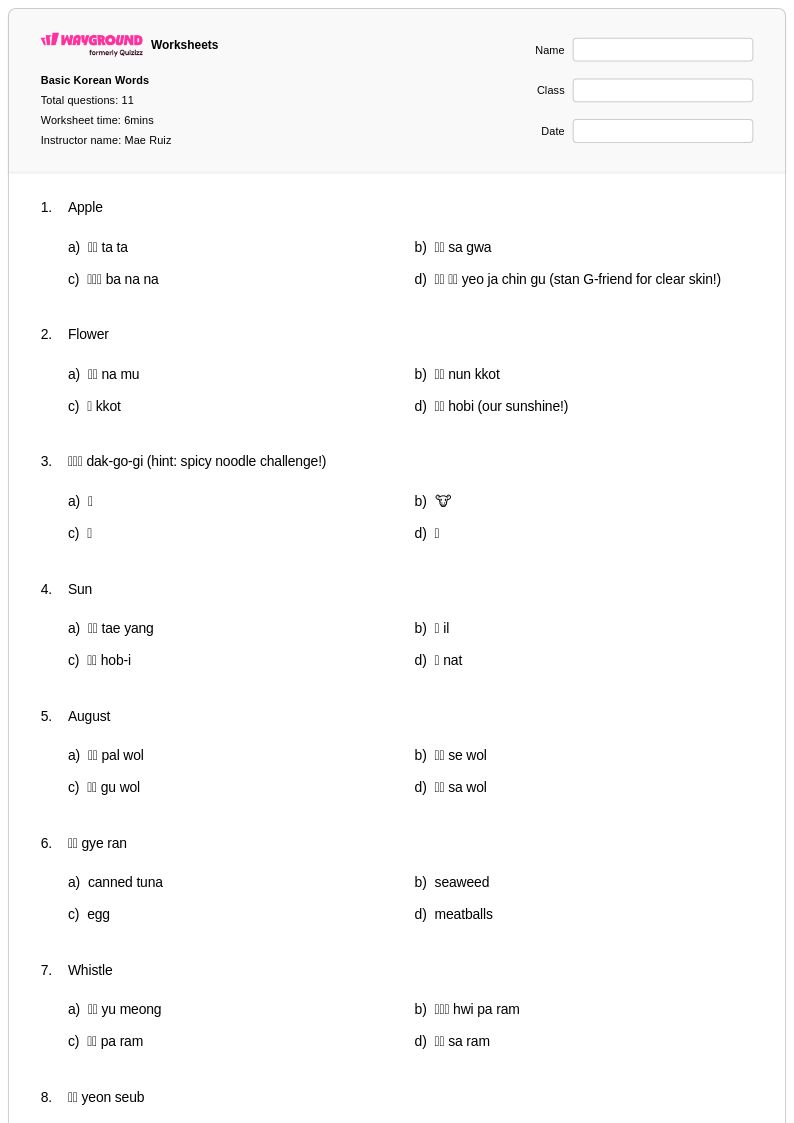
11 Q
5th - PD
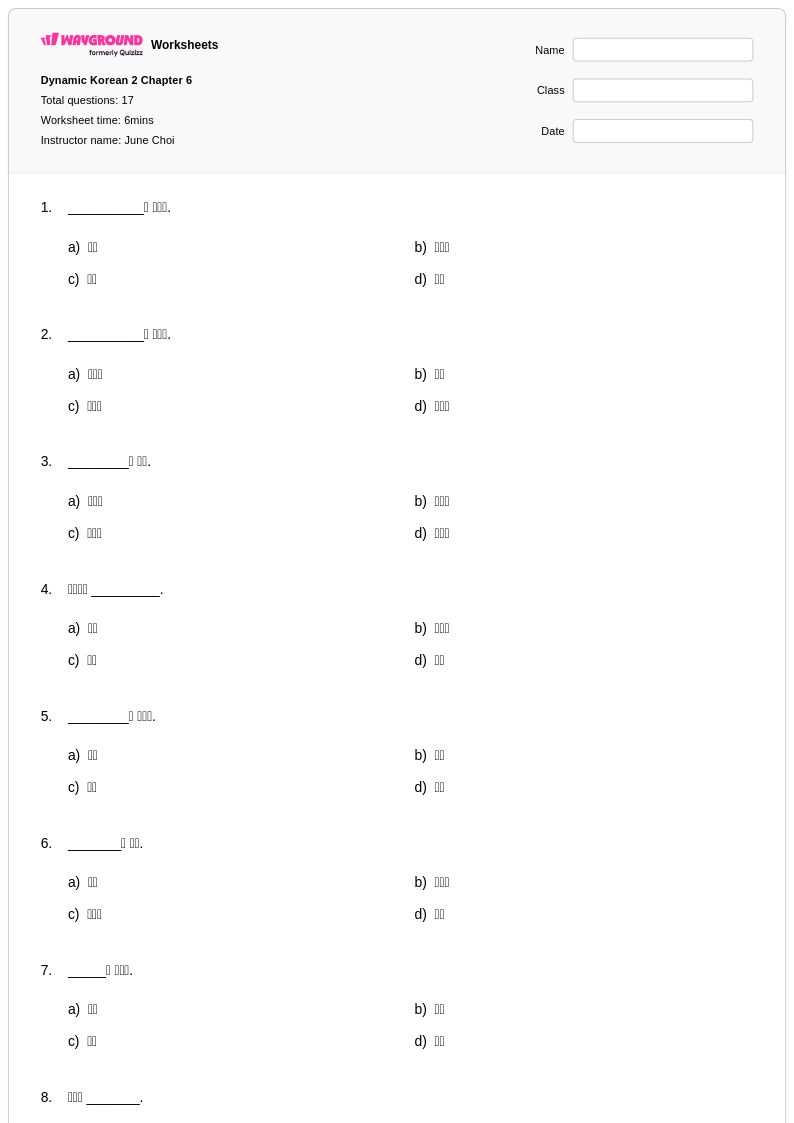
17 Q
9th - 12th
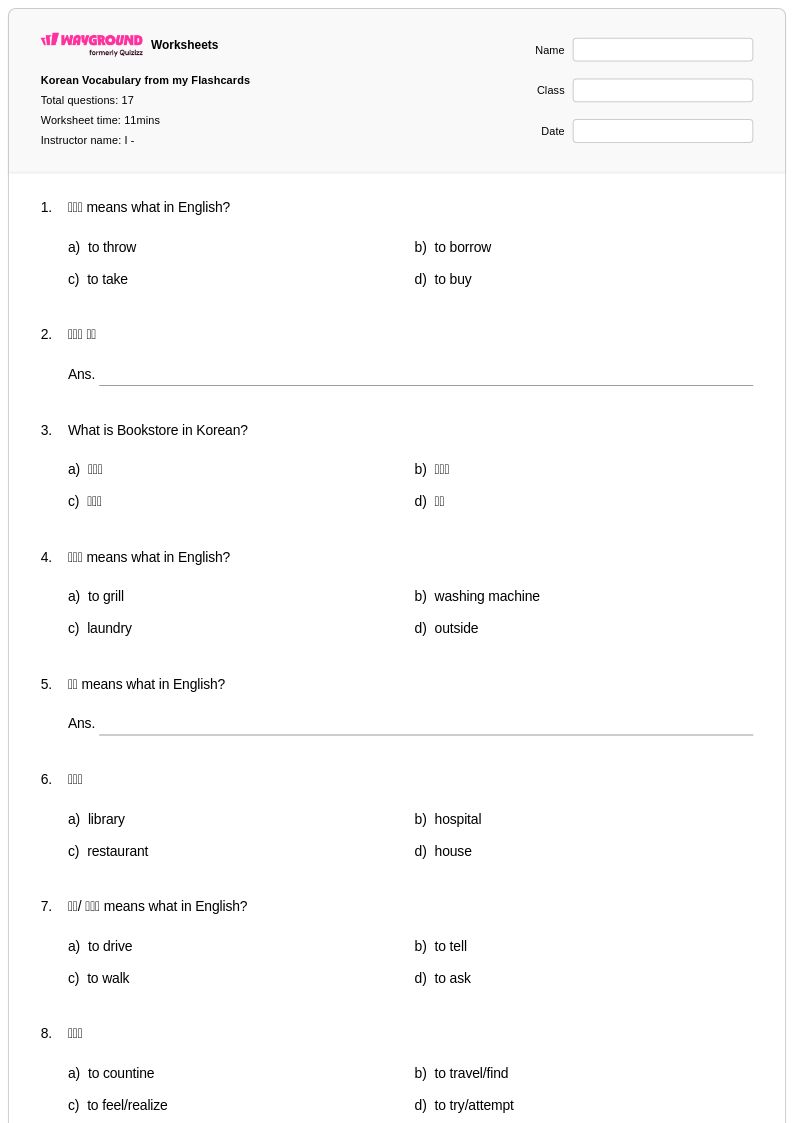
17 Q
9th - 12th
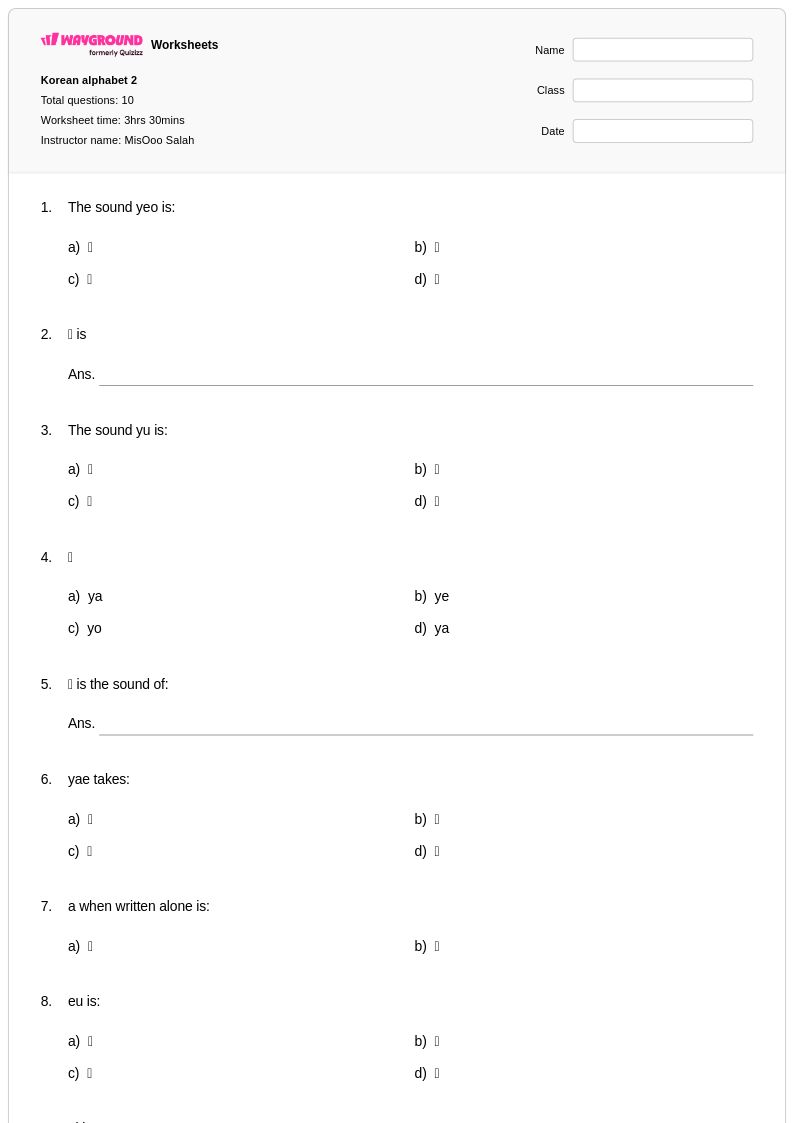
10 Q
6th - Uni
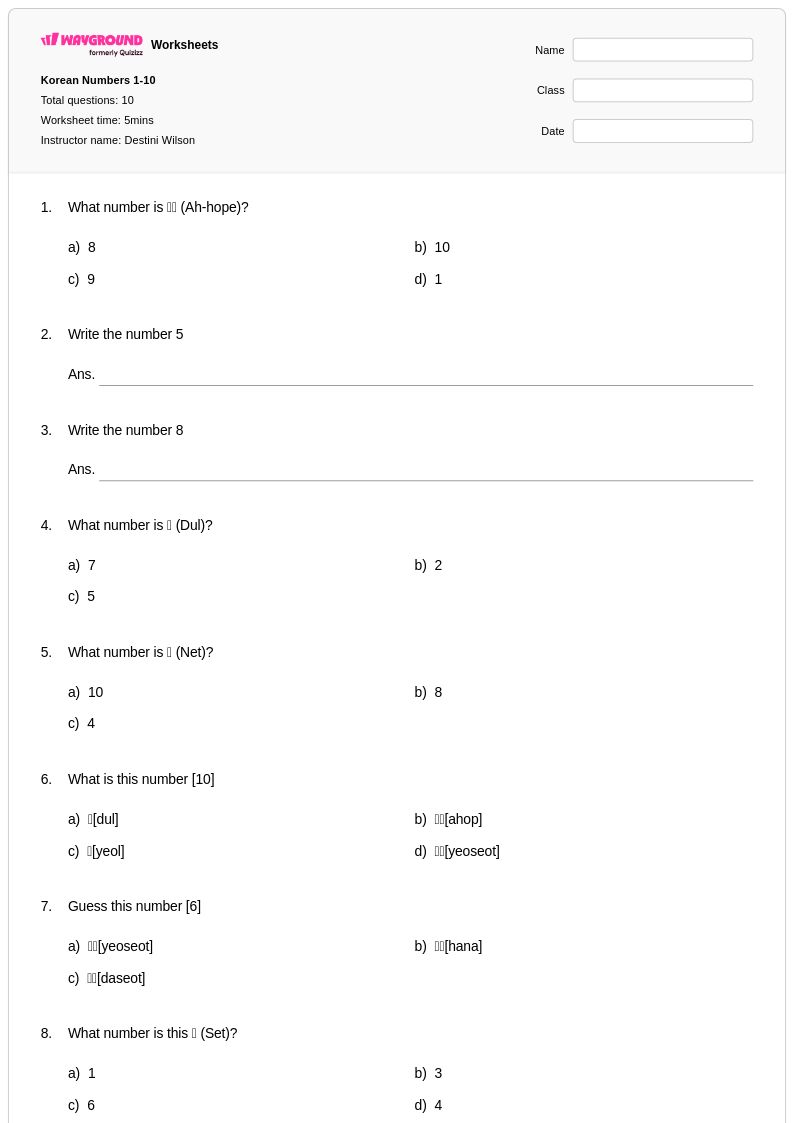
10 Q
KG - Uni
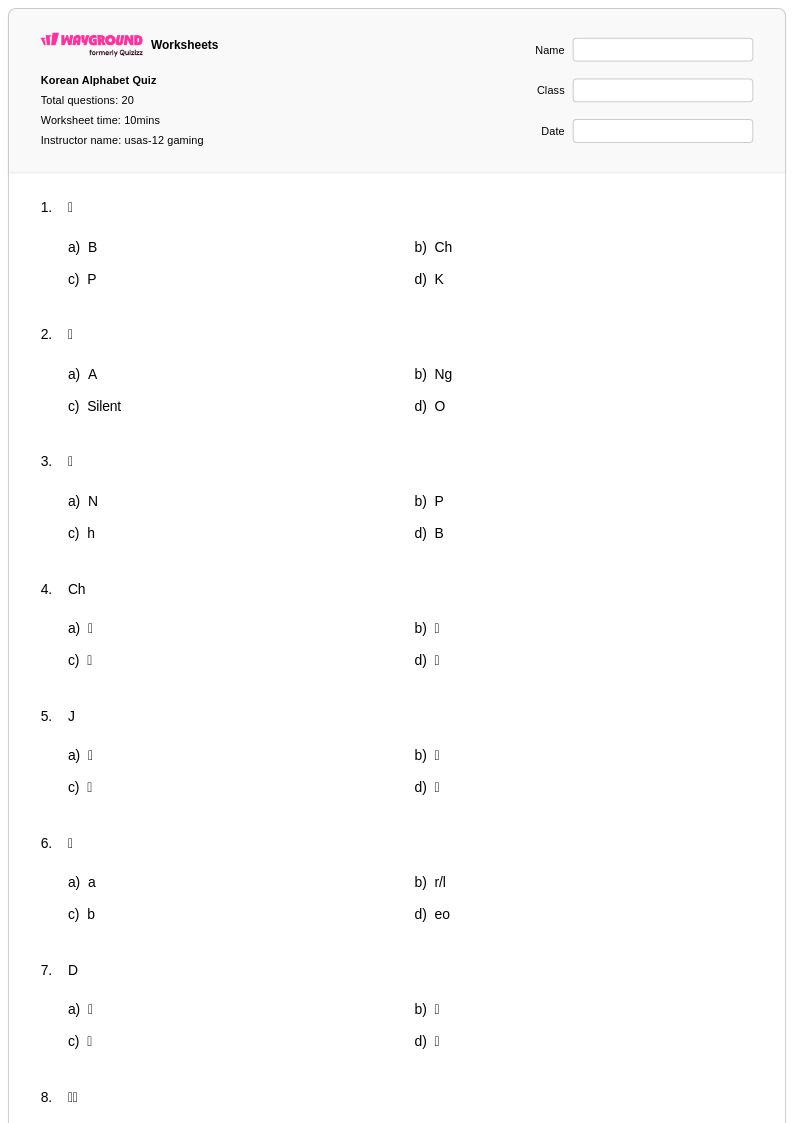
20 Q
1st - PD
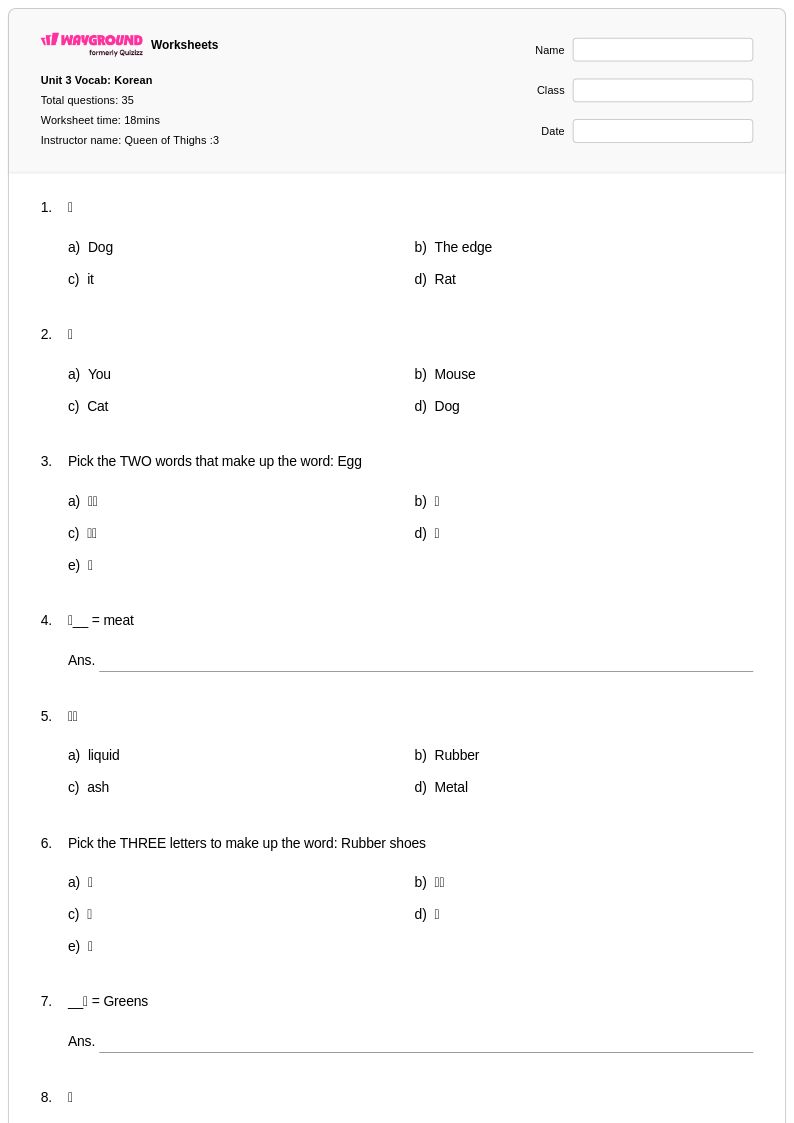
35 Q
KG - PD
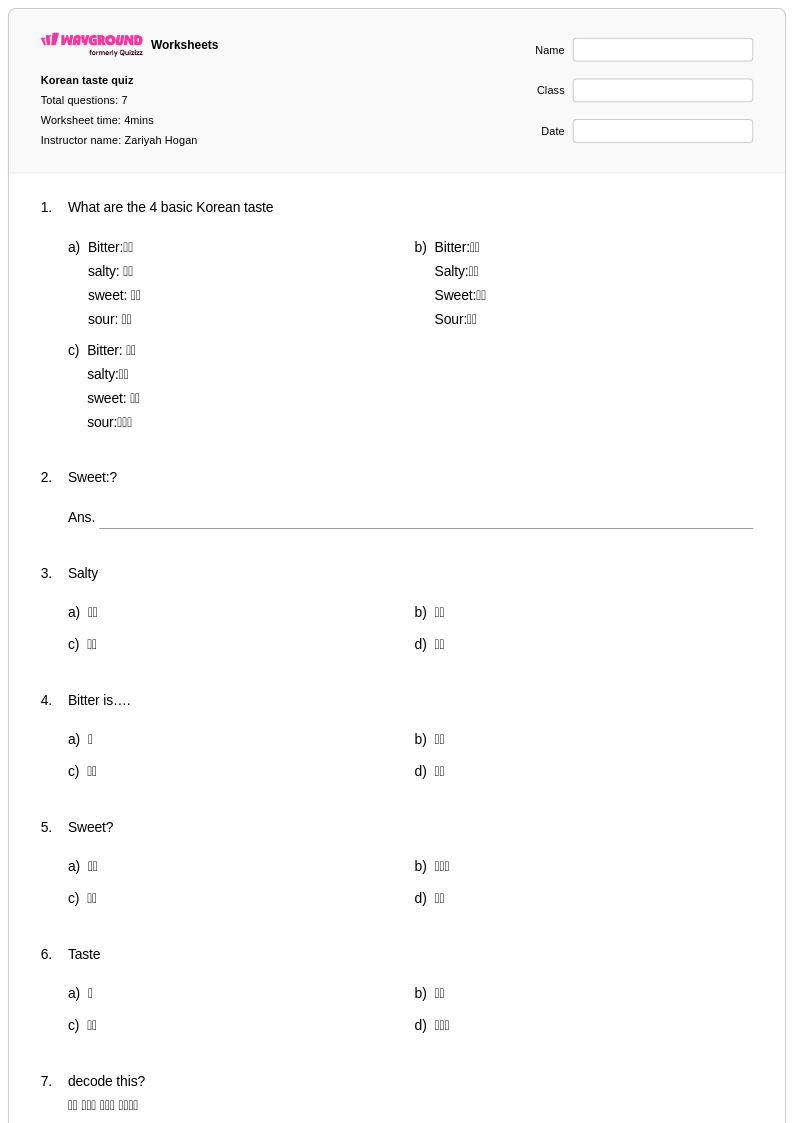
7 Q
KG - PD
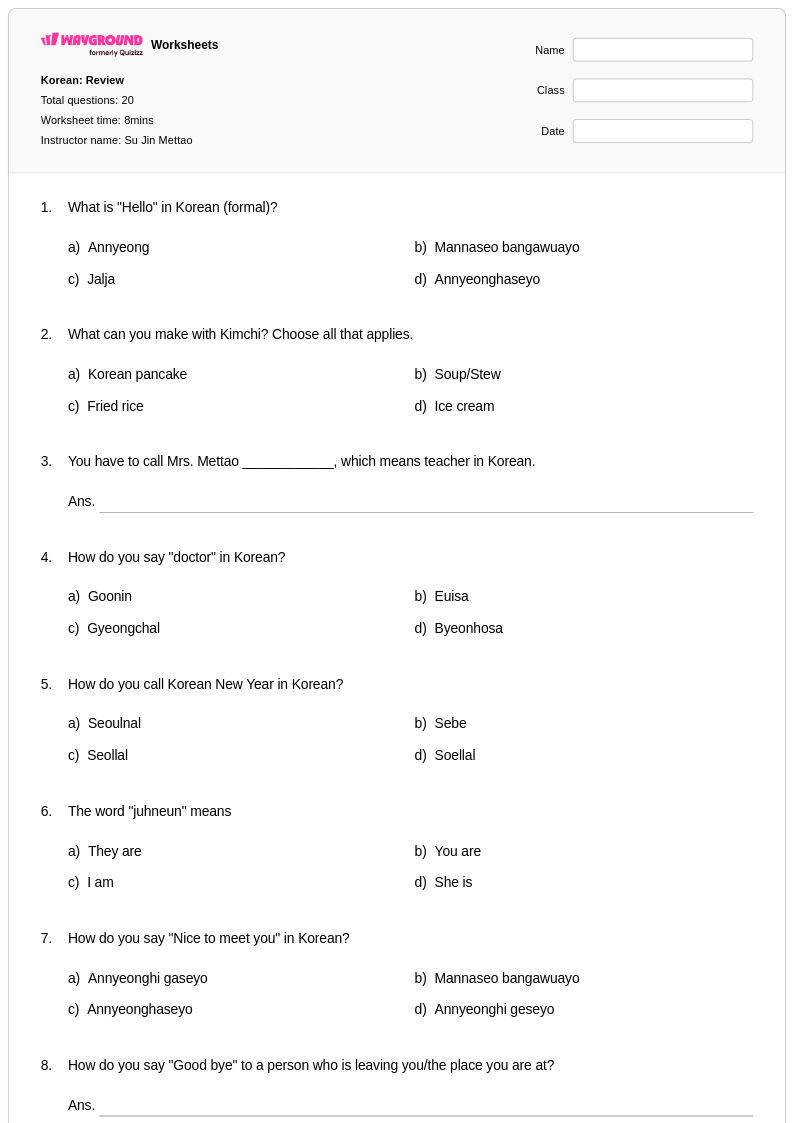
20 Q
9th - 12th
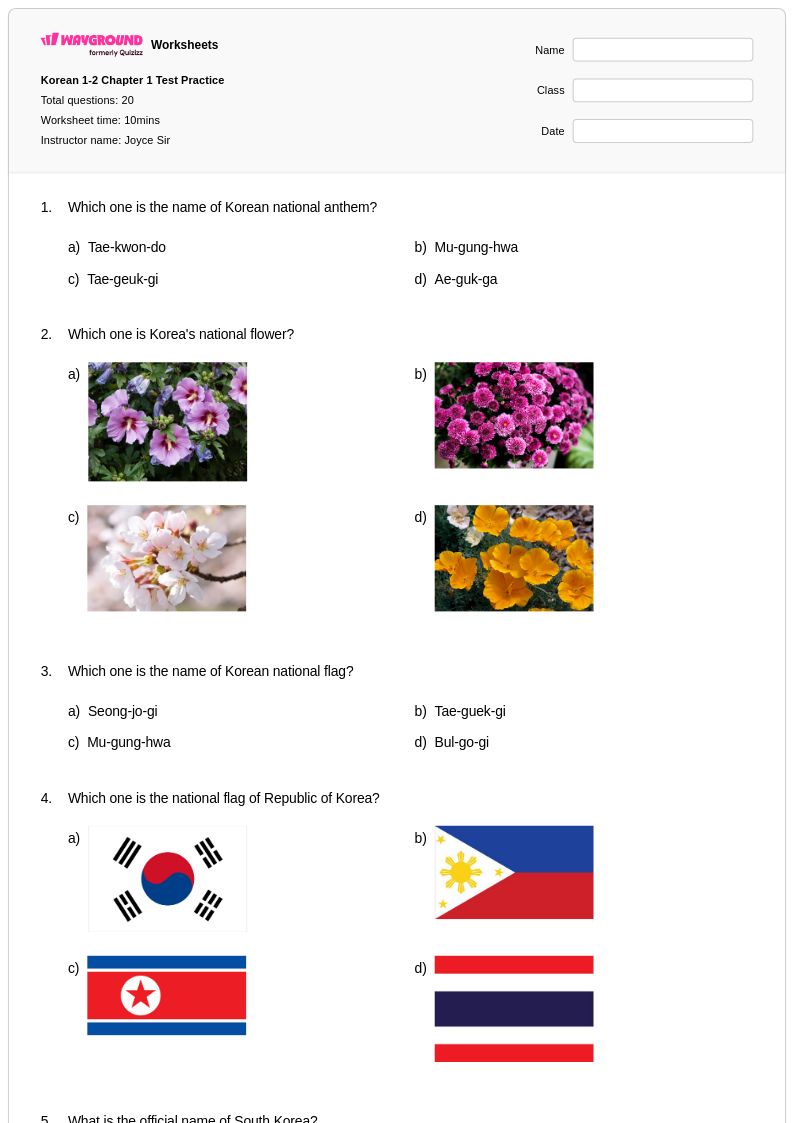
20 Q
9th - 12th
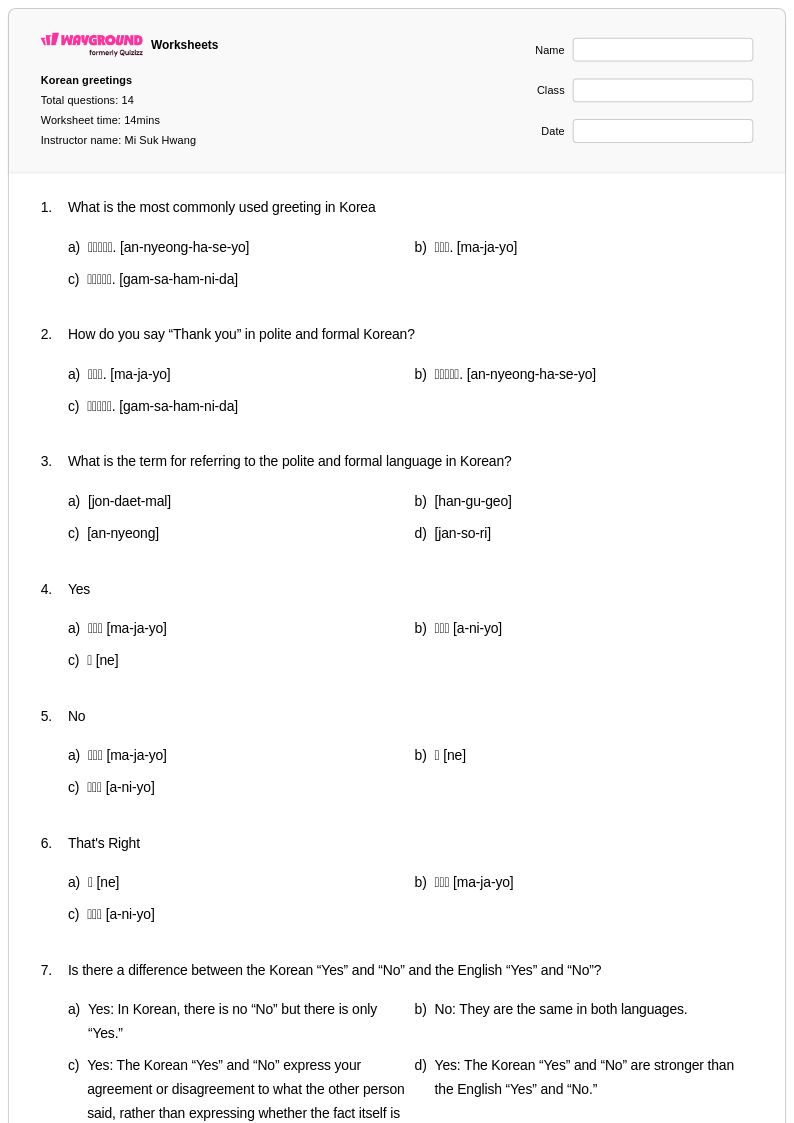
14 Q
6th - 12th
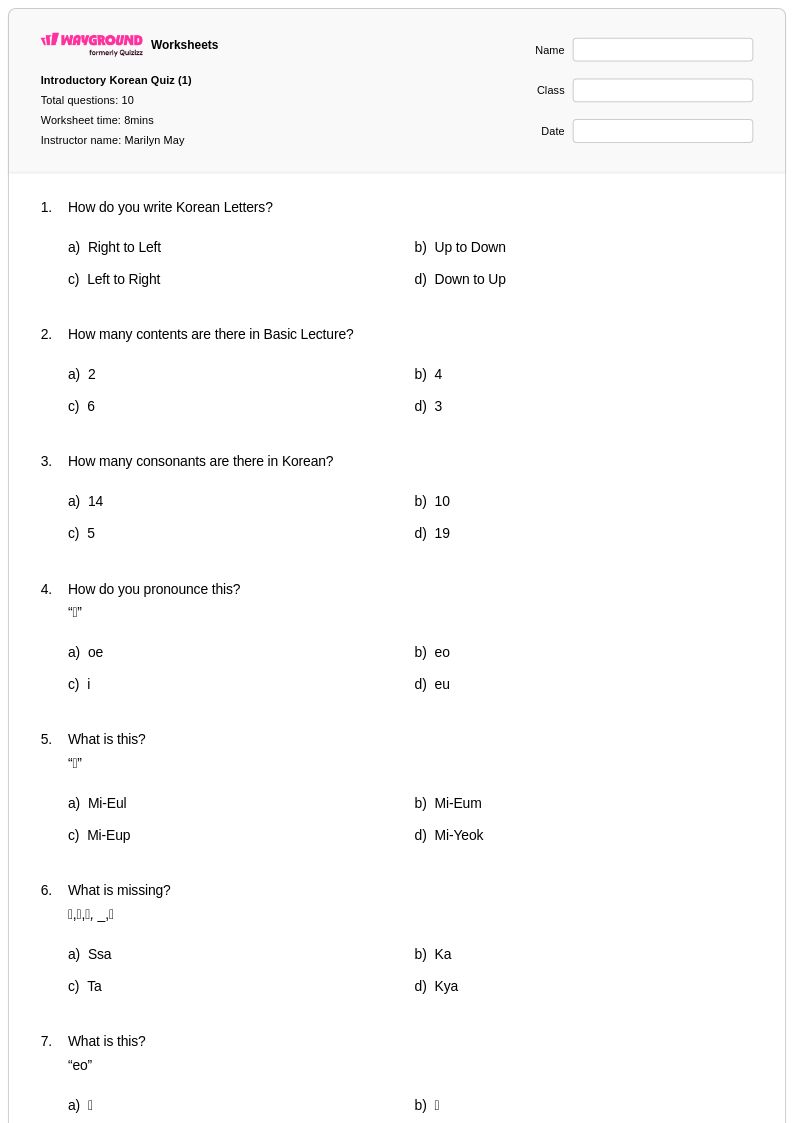
10 Q
8th - Uni
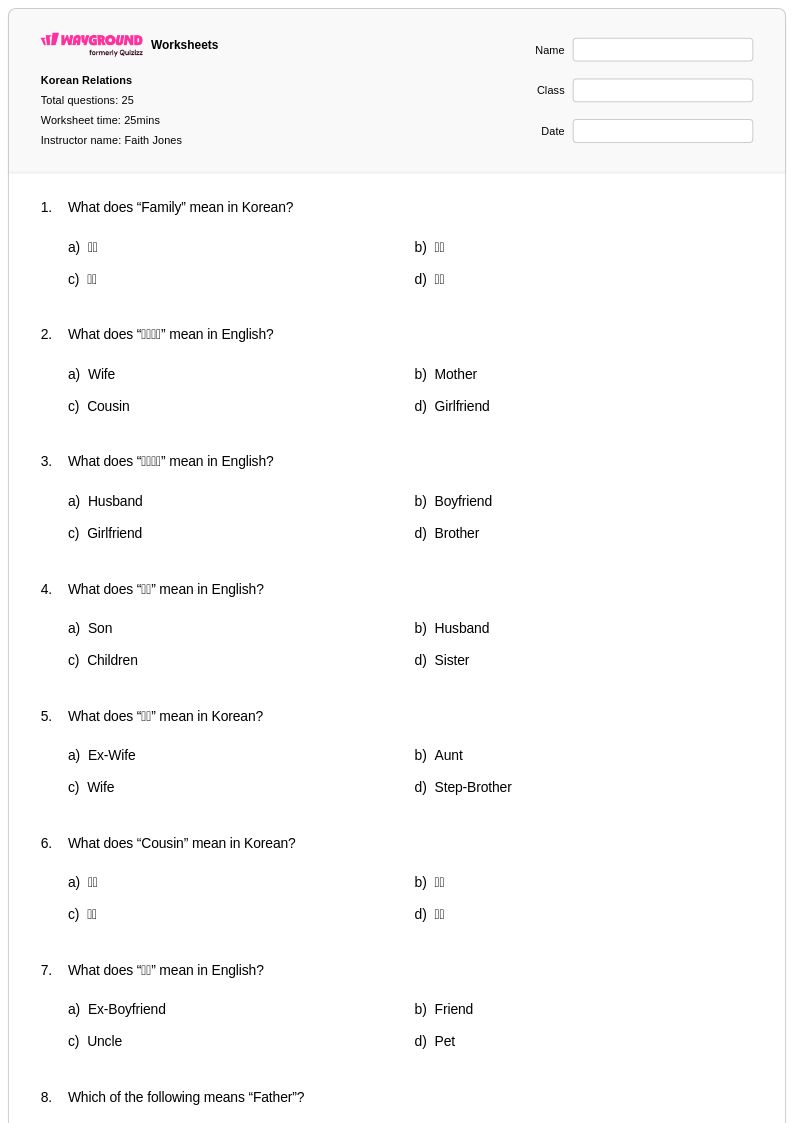
25 Q
KG - PD
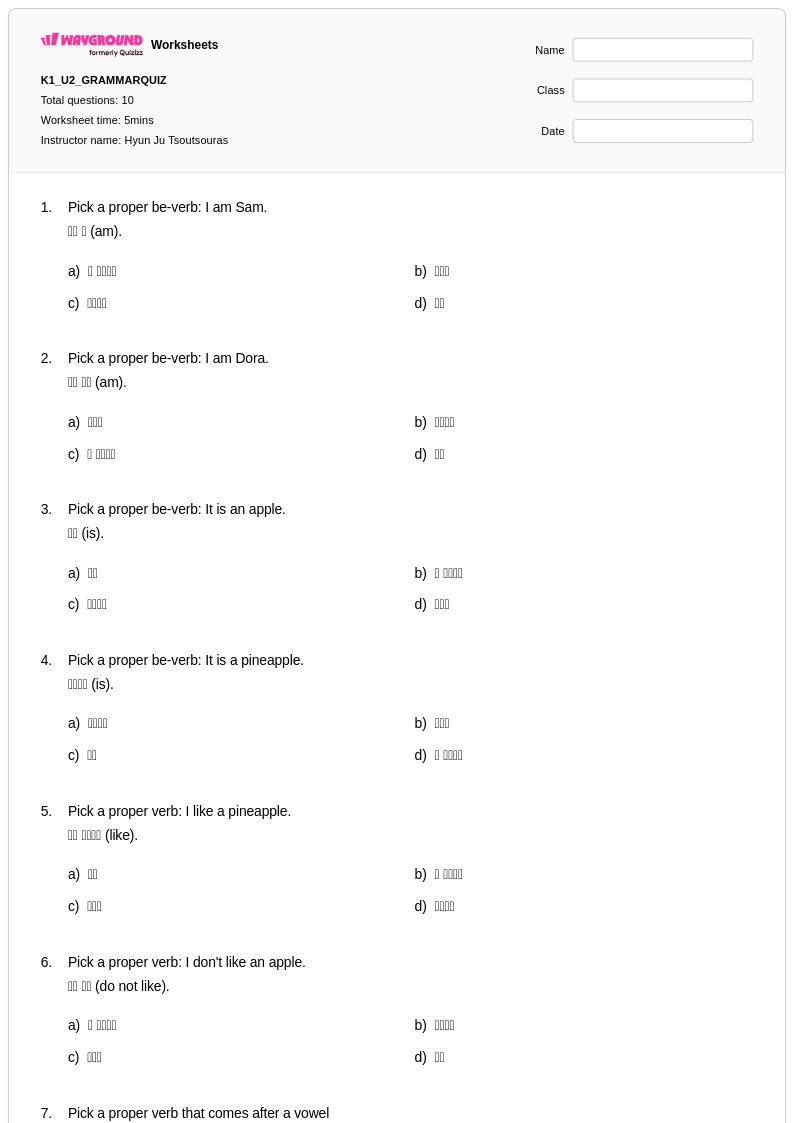
10 Q
10th
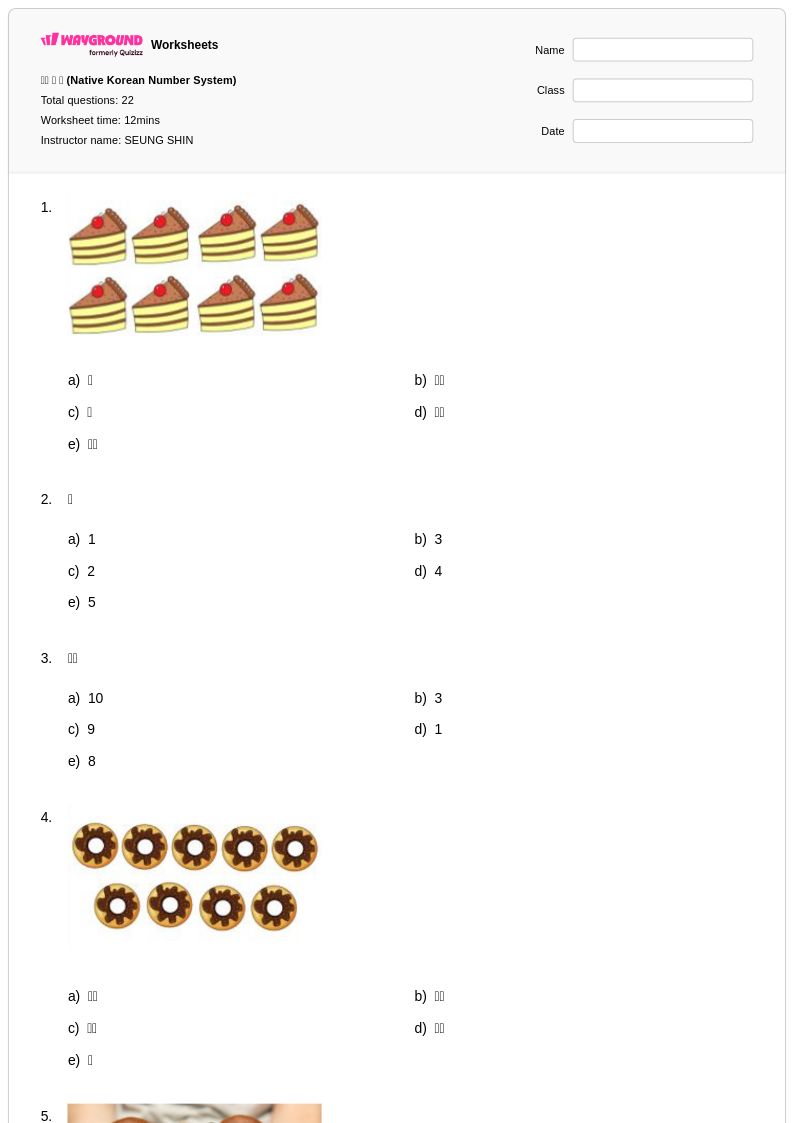
22 Q
9th - 12th
20 Q
10th - Uni

13 Q
9th - 12th
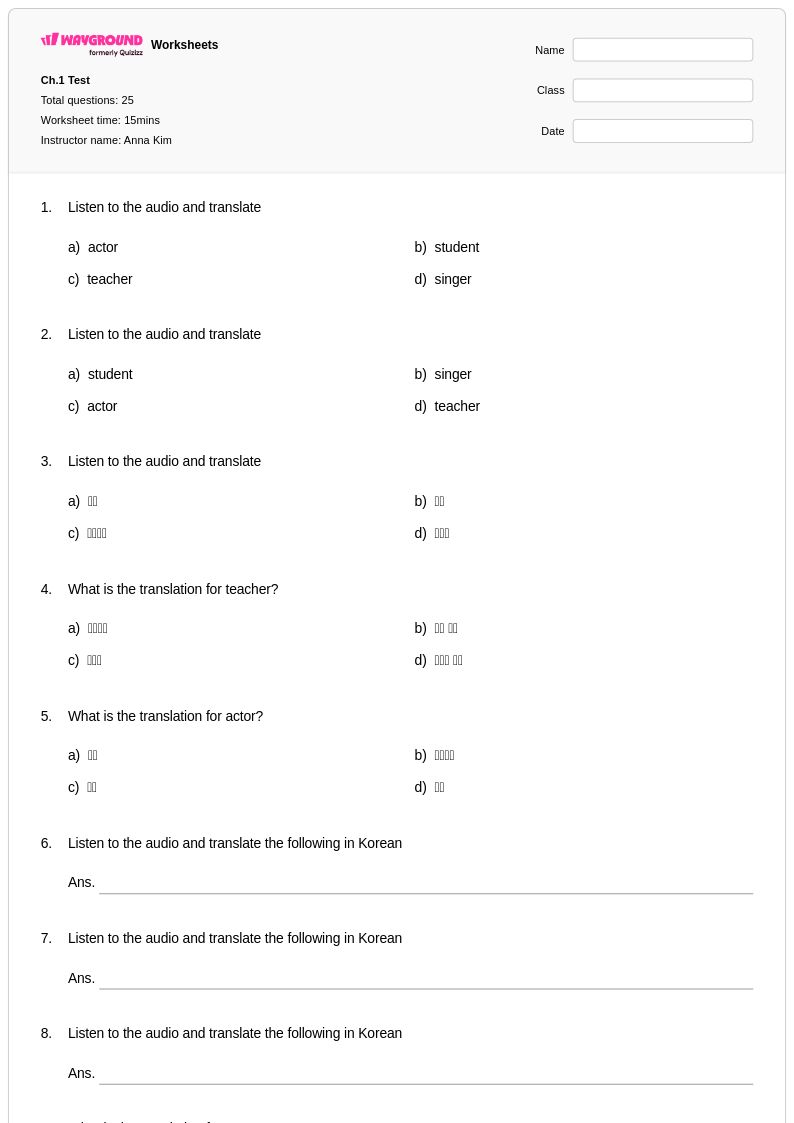
25 Q
9th - 12th
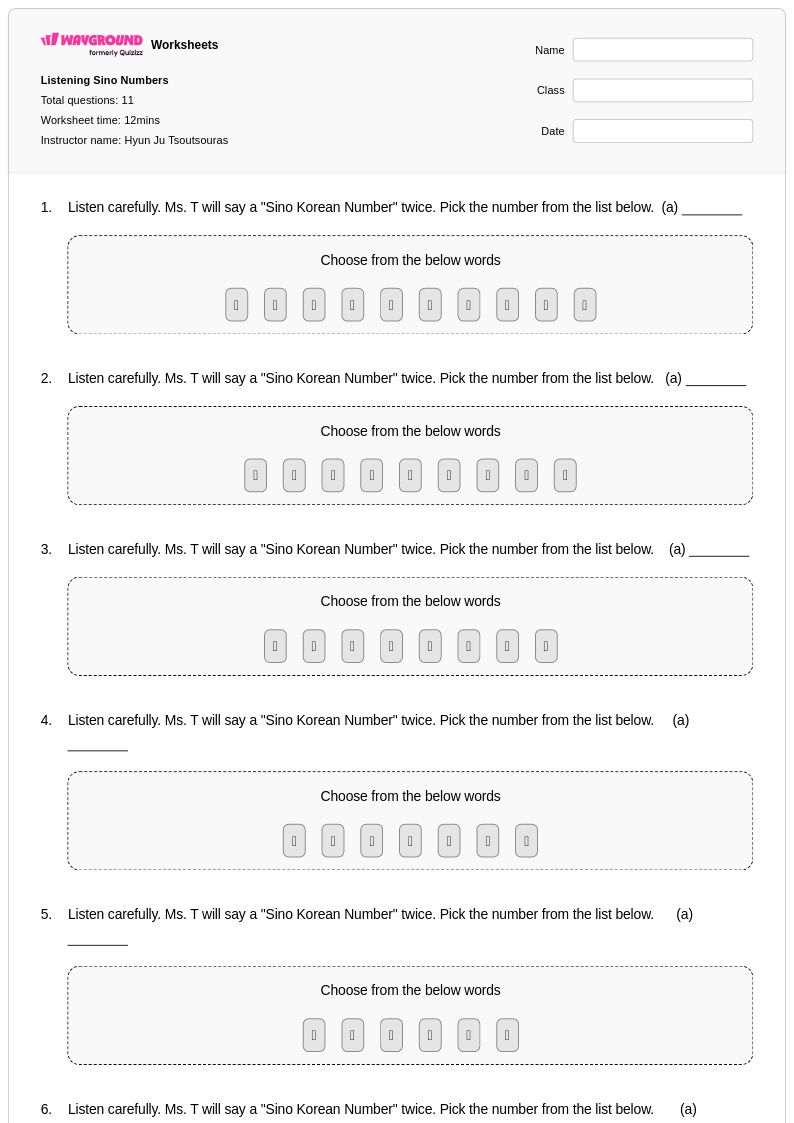
11 Q
10th
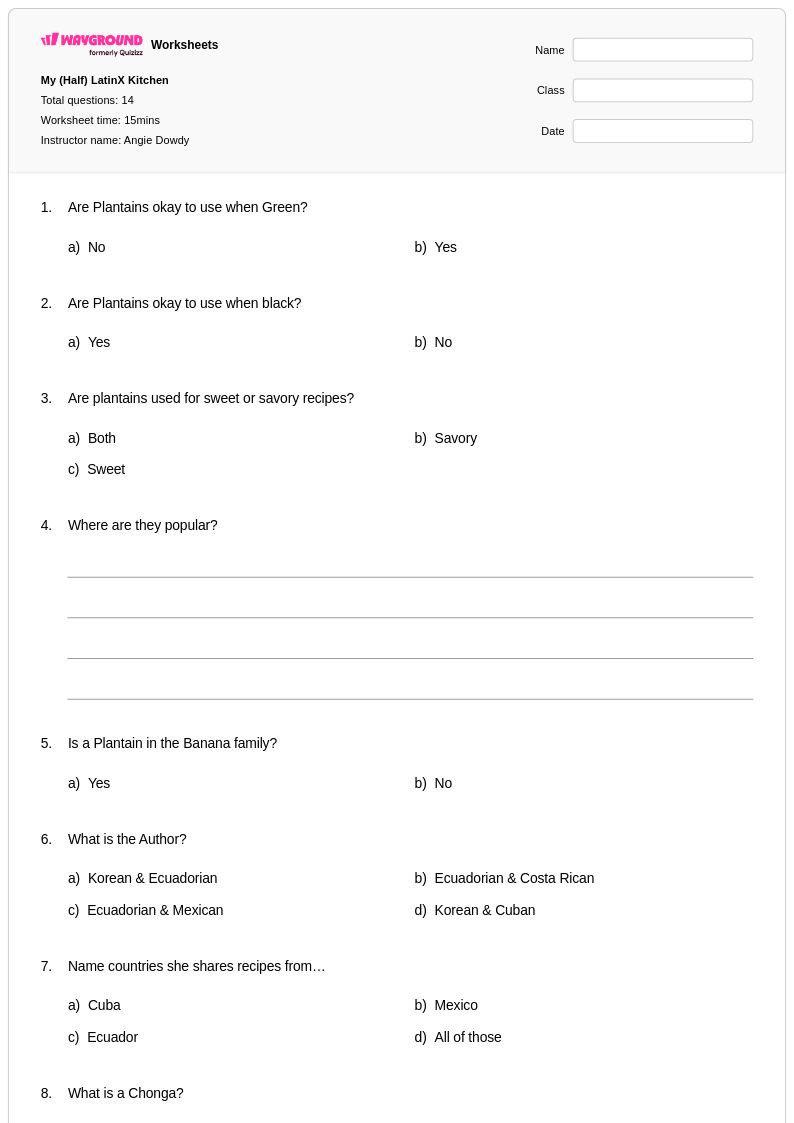
14 Q
9th - 12th
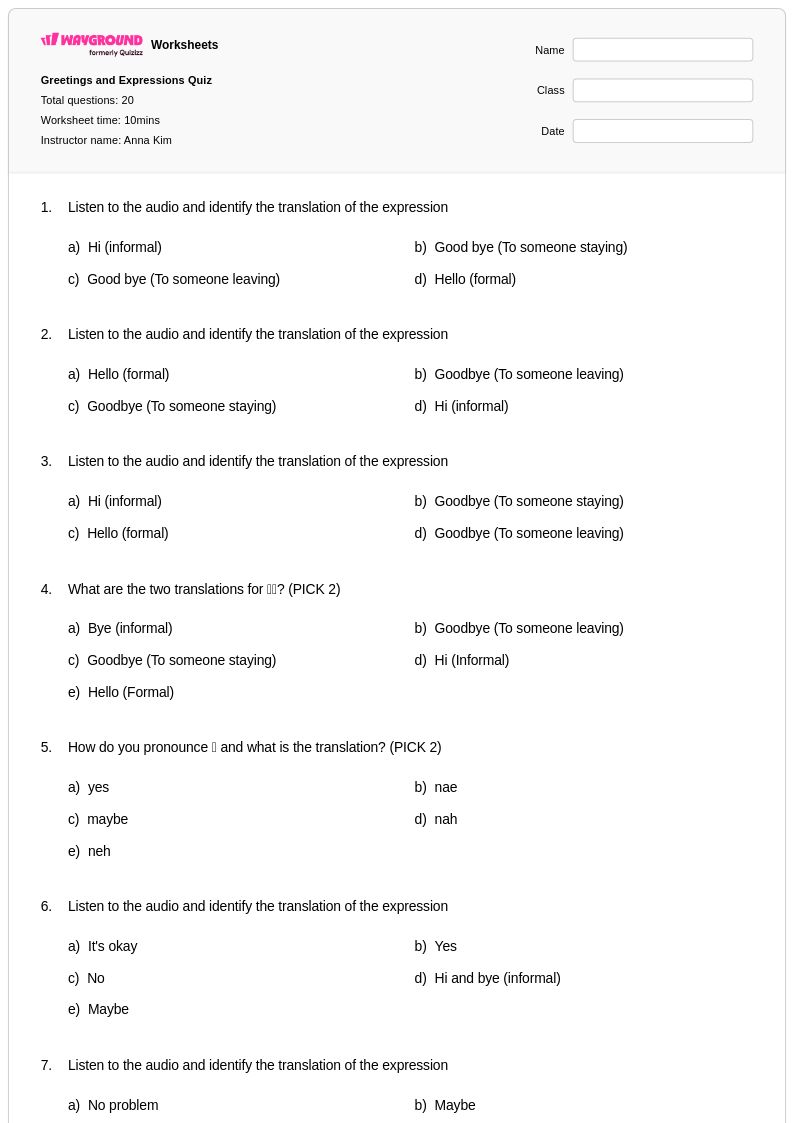
20 Q
9th - 12th
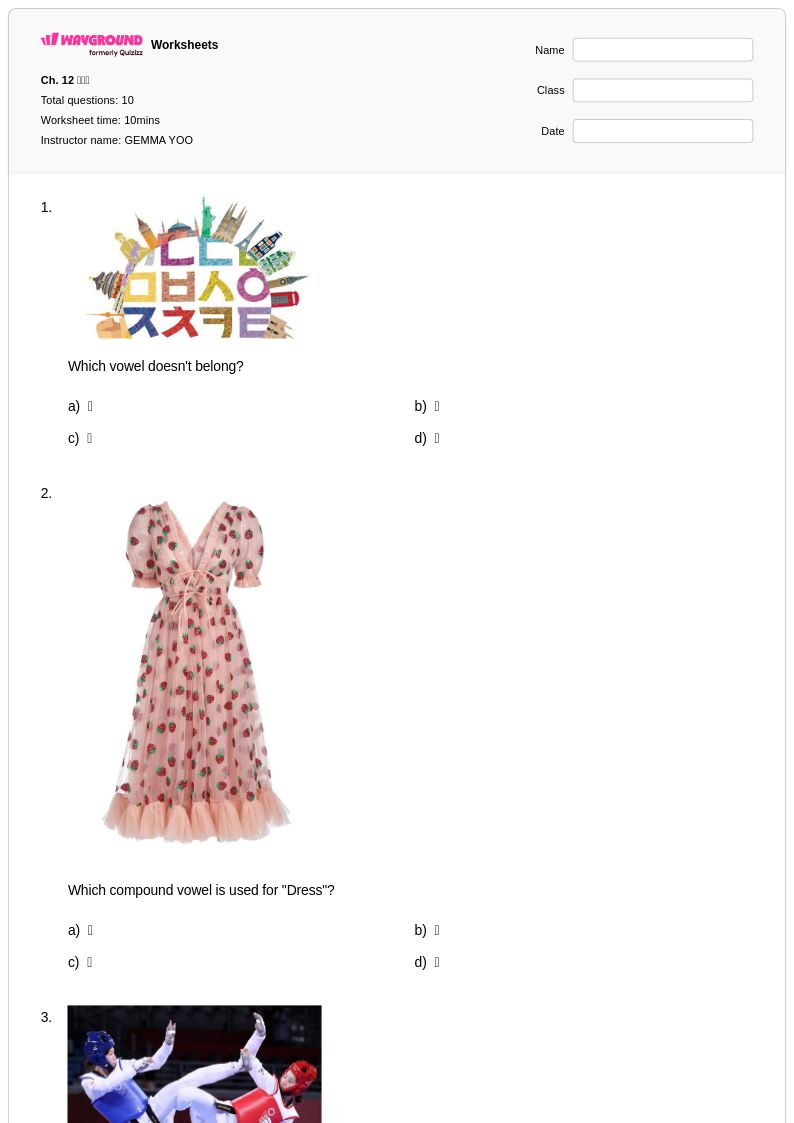
10 Q
9th - 12th
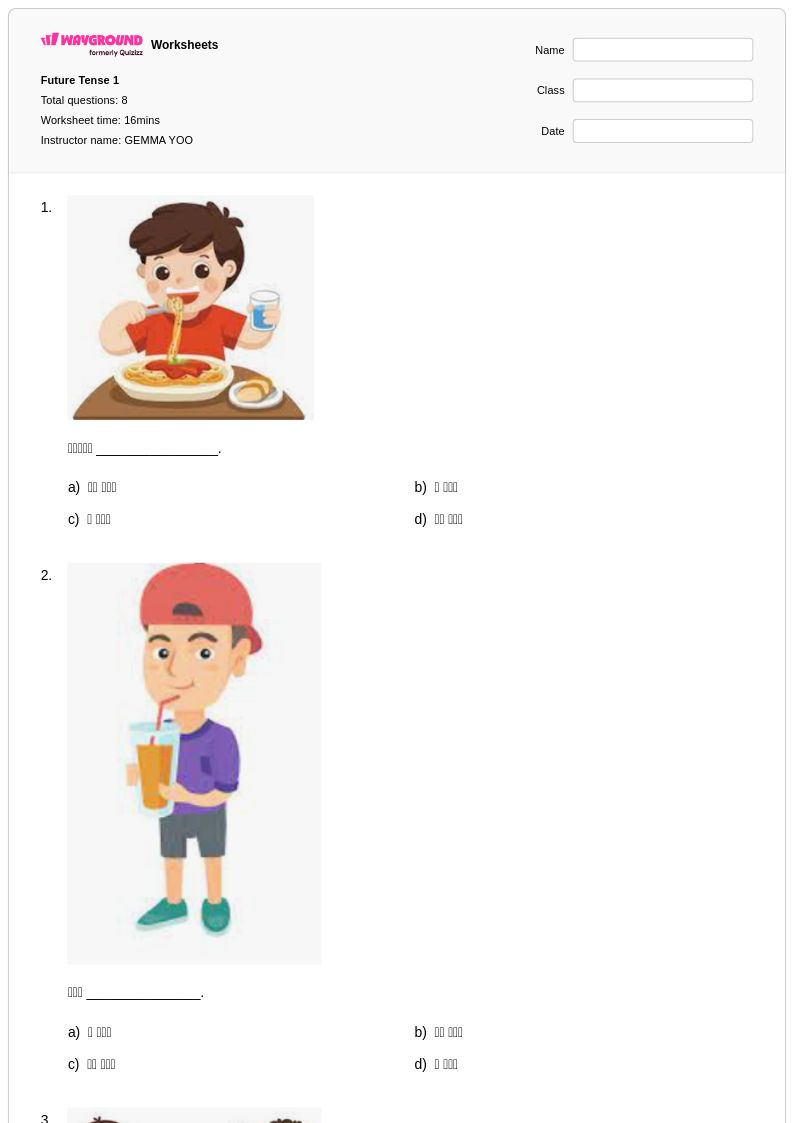
8 Q
9th - 12th
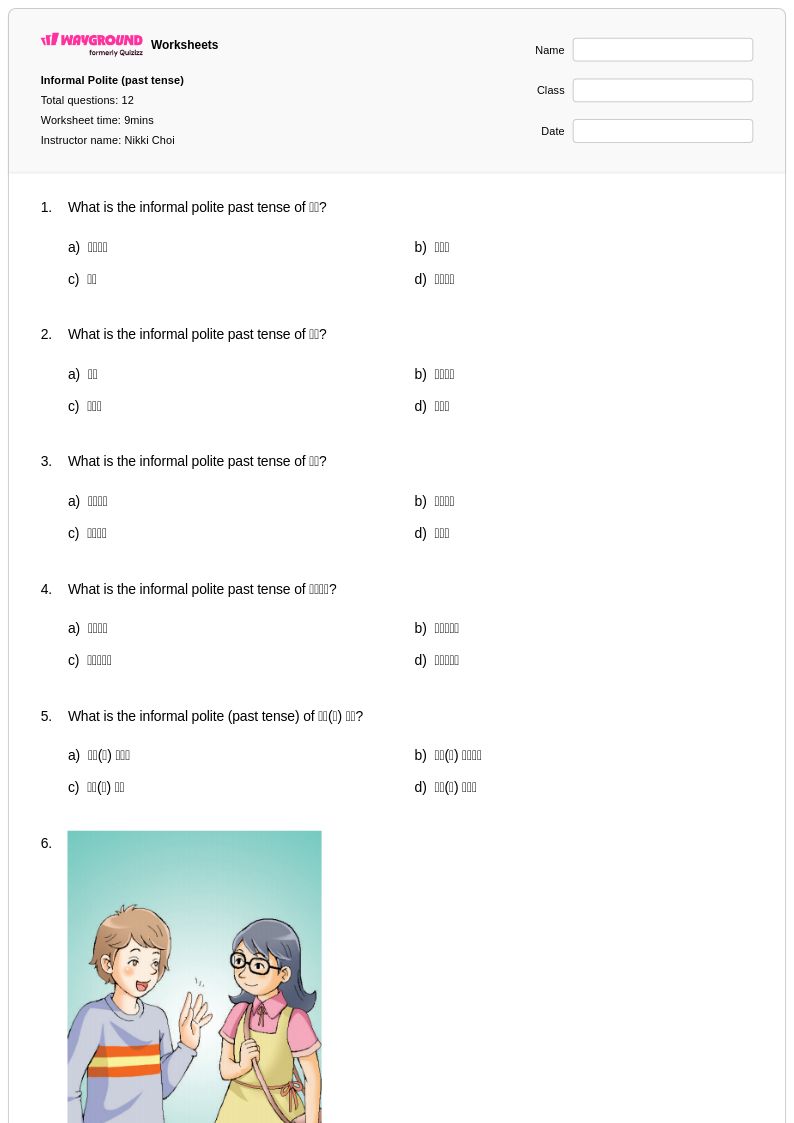
12 Q
9th - 12th
Explore Korean Worksheets by Grades
Explore Other Subject Worksheets for grade 10
Explore printable Korean worksheets for Grade 10
Korean language worksheets for Grade 10 students available through Wayground (formerly Quizizz) provide comprehensive practice materials that develop essential communication skills in reading, writing, listening, and speaking Korean. These expertly designed resources focus on intermediate-level Korean concepts including complex grammar structures, expanded vocabulary development, cultural context understanding, and practical conversation skills that tenth-grade students need to progress toward fluency. The worksheets incorporate authentic Korean texts, interactive exercises, and systematic practice problems that reinforce Hangul mastery, sentence construction, and comprehension abilities. Teachers can access complete answer keys and printable pdf versions of these free educational materials, making it easy to assign homework, conduct assessments, or provide additional practice for students who need extra support in mastering Korean language fundamentals.
Wayground (formerly Quizizz) empowers educators with access to millions of teacher-created Korean language resources specifically curated for Grade 10 learners, featuring advanced search and filtering capabilities that allow instructors to quickly locate materials aligned with their curriculum standards and learning objectives. The platform's differentiation tools enable teachers to customize worksheets based on individual student needs, offering both digital interactive formats and traditional printable pdf options that accommodate diverse classroom environments and learning preferences. These flexible resources support comprehensive lesson planning by providing materials suitable for initial instruction, targeted remediation for struggling learners, enrichment activities for advanced students, and ongoing skill practice that reinforces Korean language acquisition. Teachers can seamlessly integrate these worksheets into their daily instruction, homework assignments, or assessment protocols while maintaining consistency with established Korean language learning standards and pedagogical best practices.
FAQs
How do I teach Hangul to beginners?
What Korean grammar structures should I focus on first in my lessons?
What exercises help students practice Korean vocabulary effectively?
What mistakes do students commonly make when learning Korean?
How can I differentiate Korean language worksheets for students at different proficiency levels?
How do I use Wayground's Korean worksheets in my classroom?