
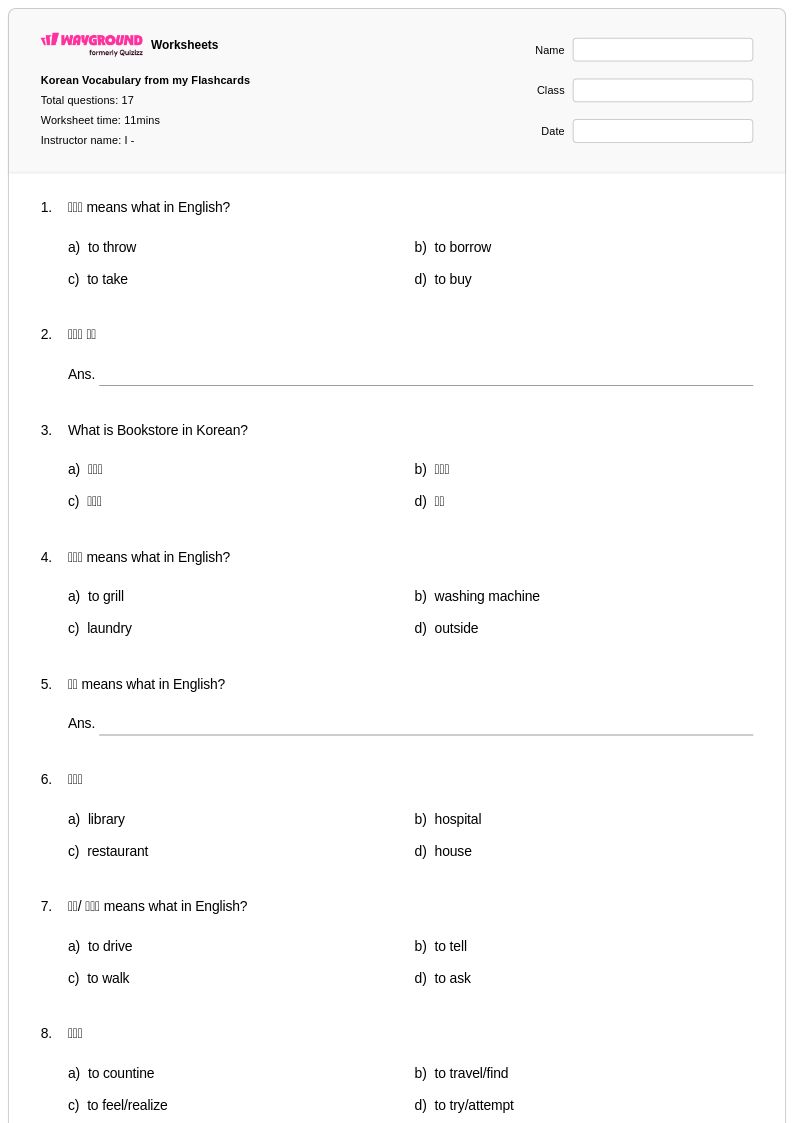
17 Q
9th - 12th
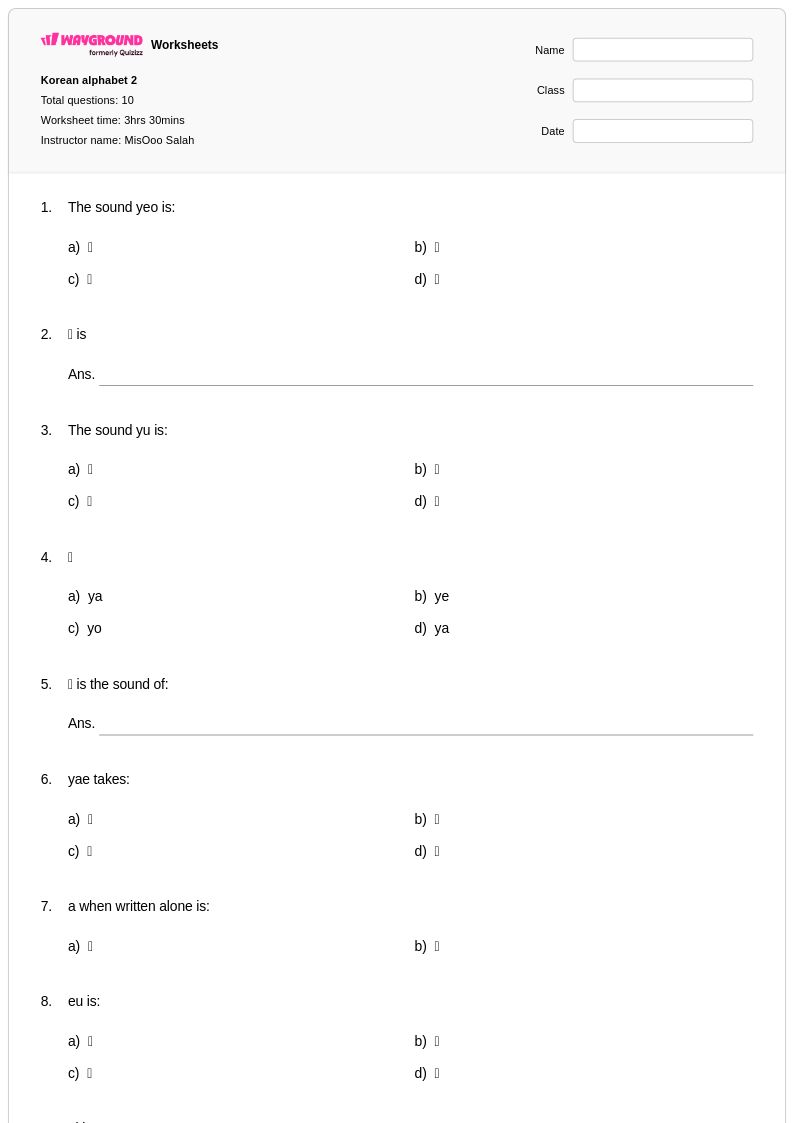
10 Q
6th - Uni
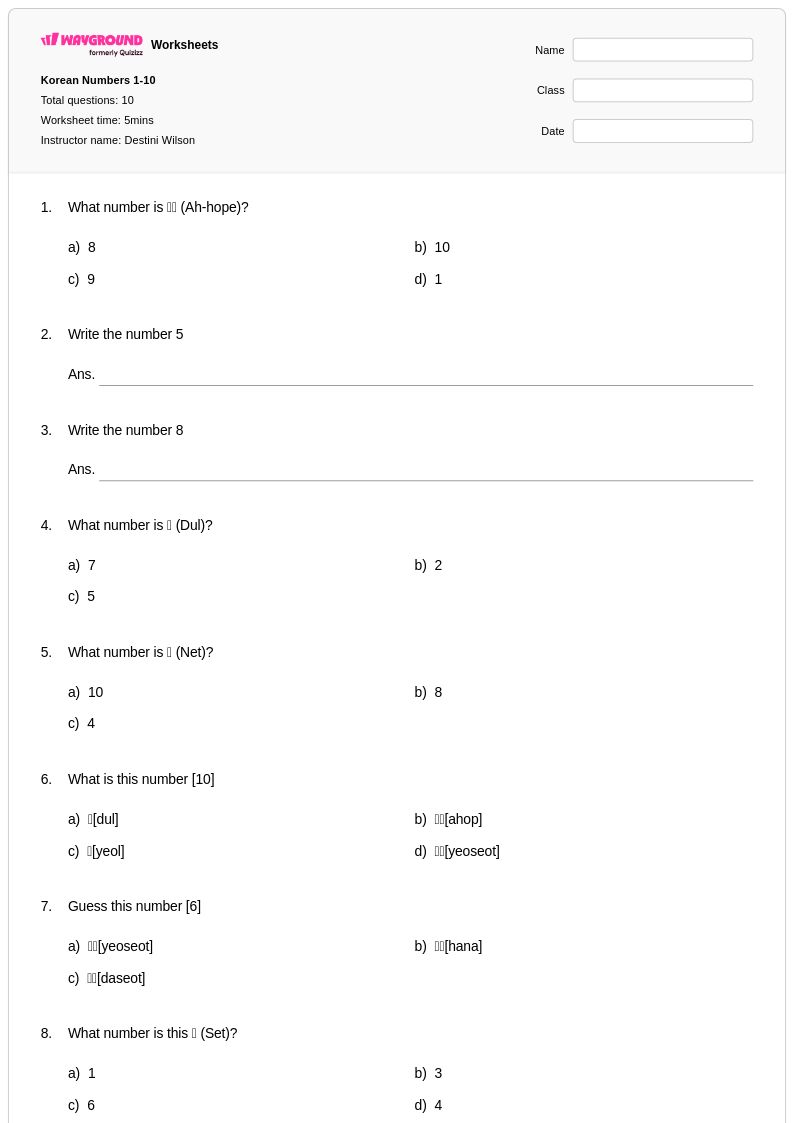
10 Q
KG - Uni
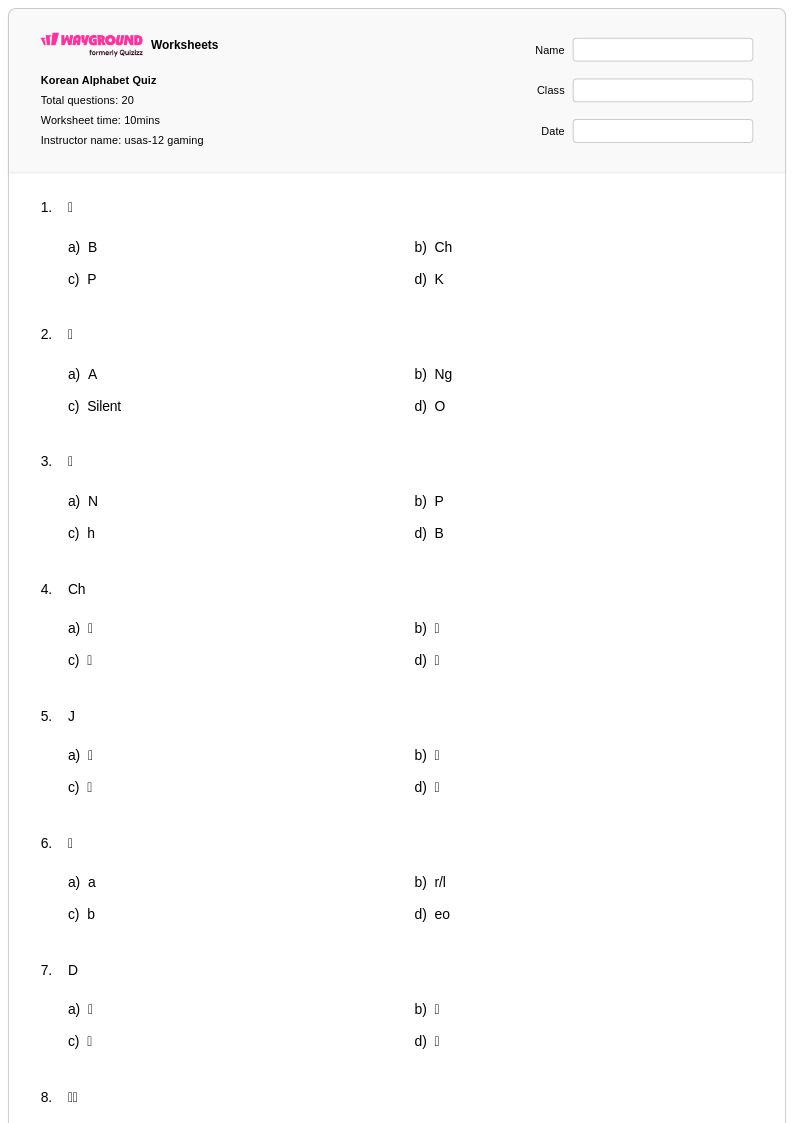
20 Q
1st - PD
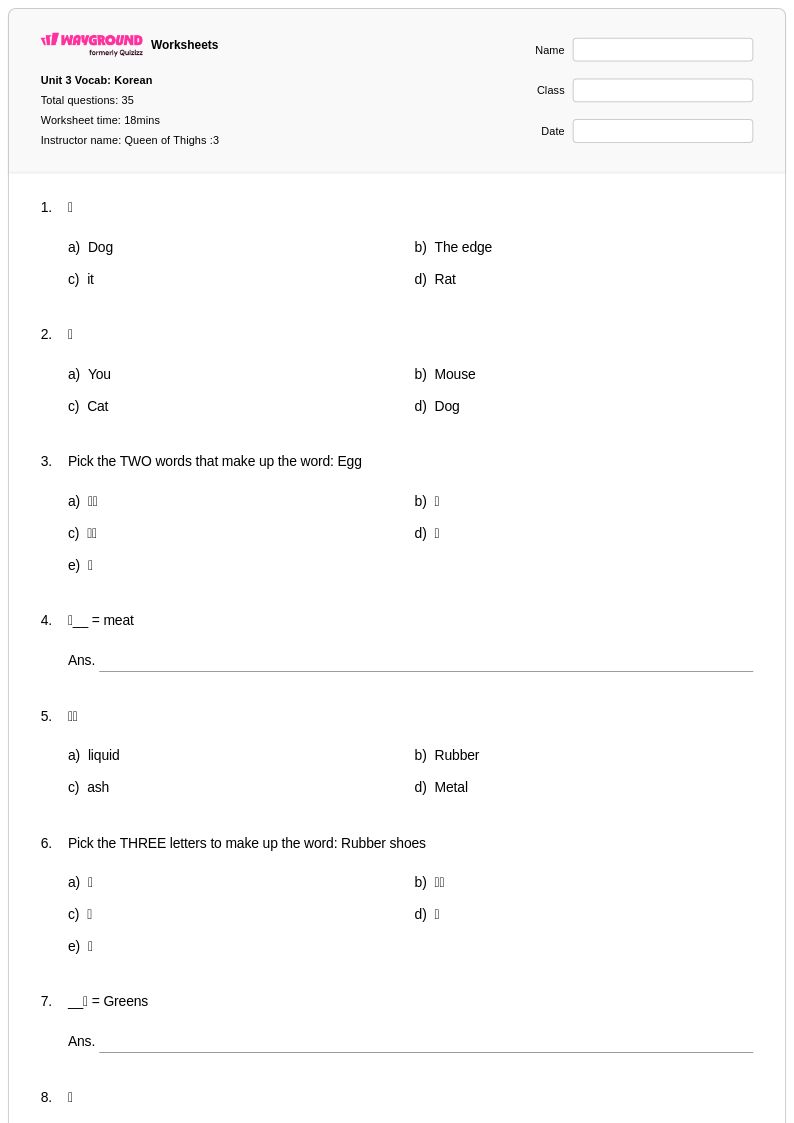
35 Q
KG - PD
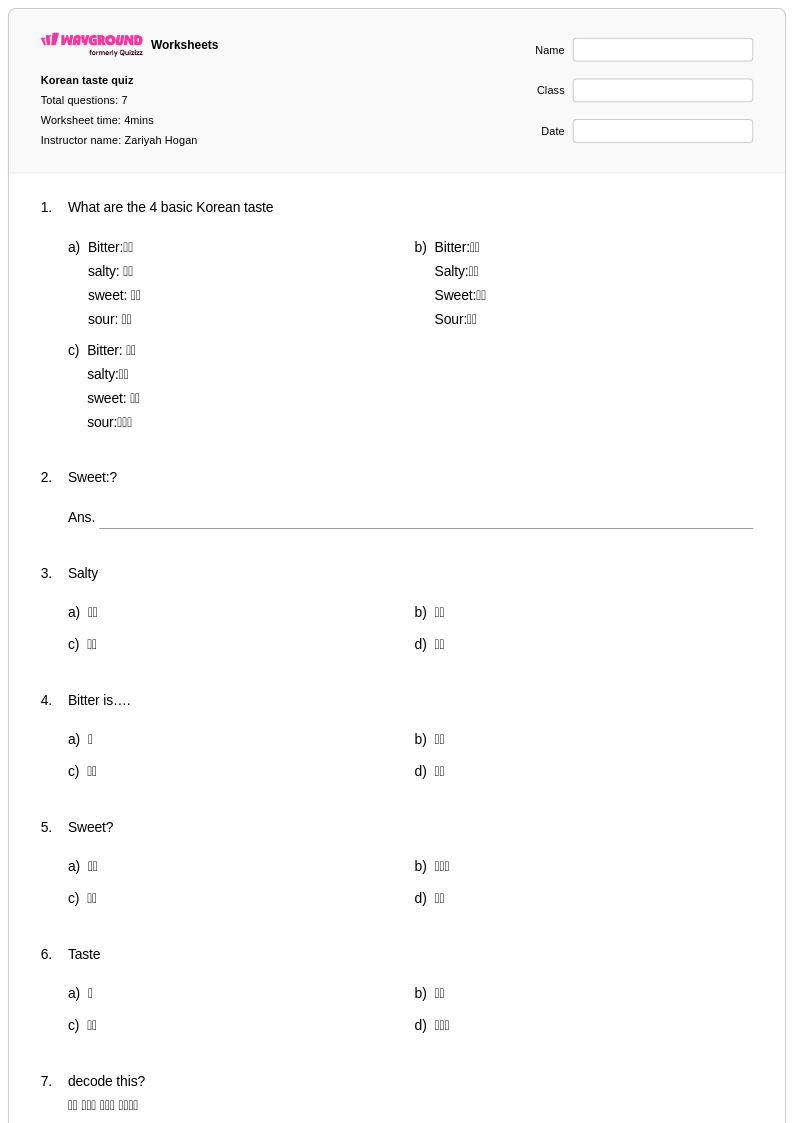
7 Q
KG - PD
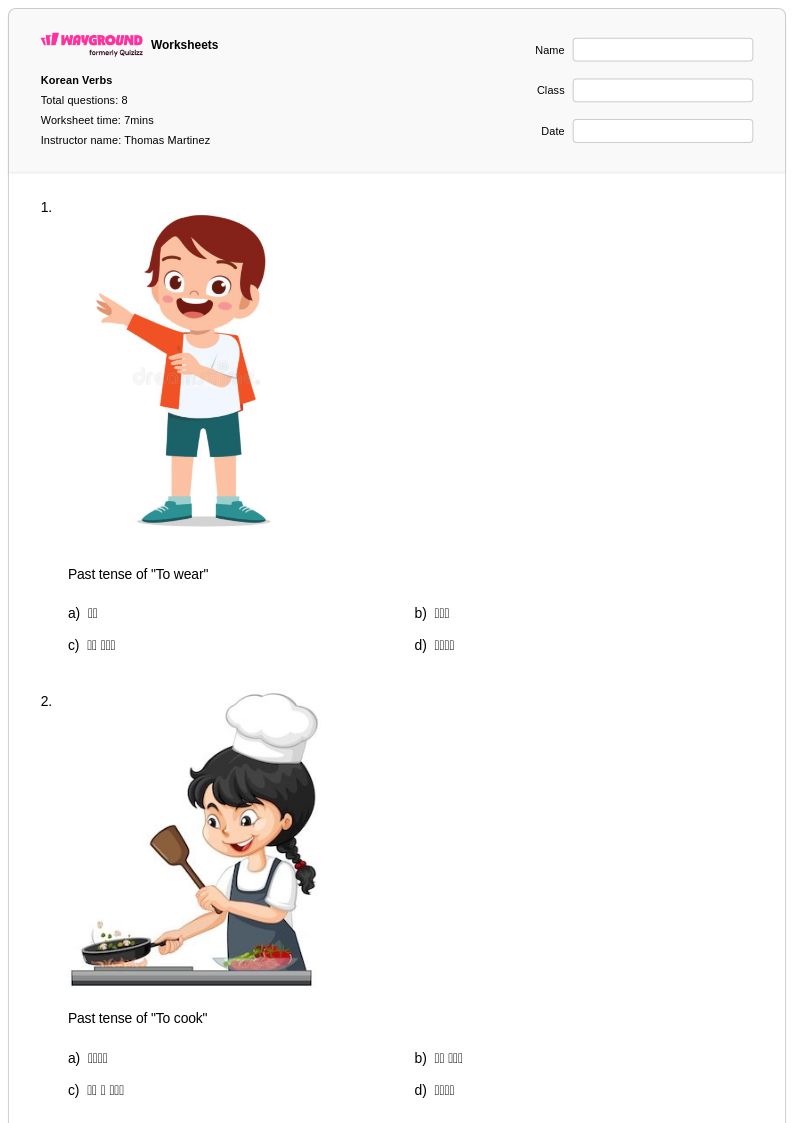
8 Q
9th - 12th
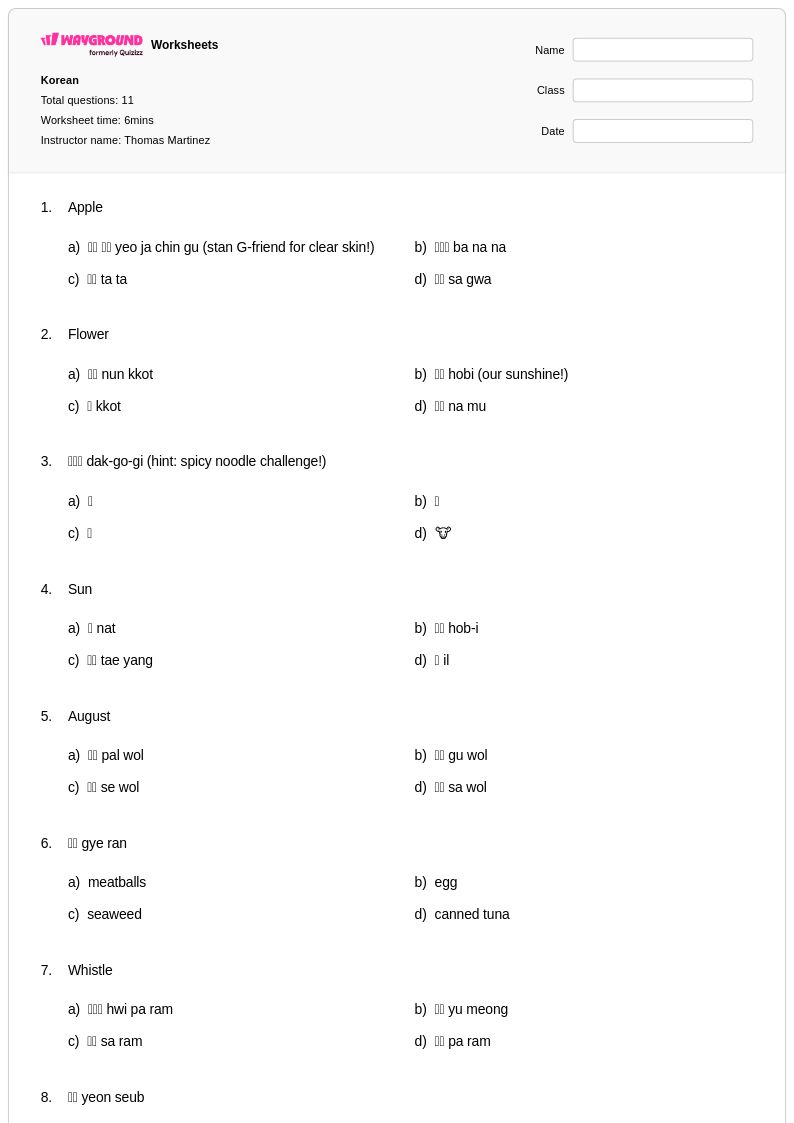
11 Q
5th - PD
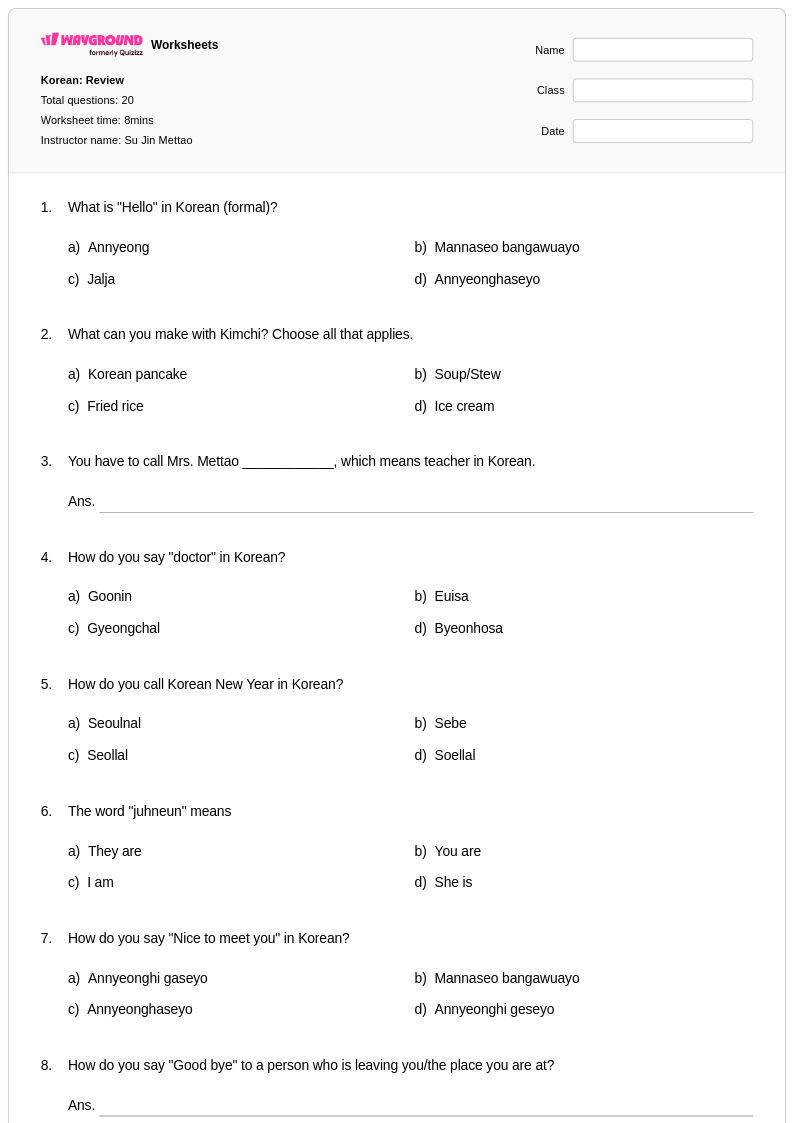
20 Q
9th - 12th
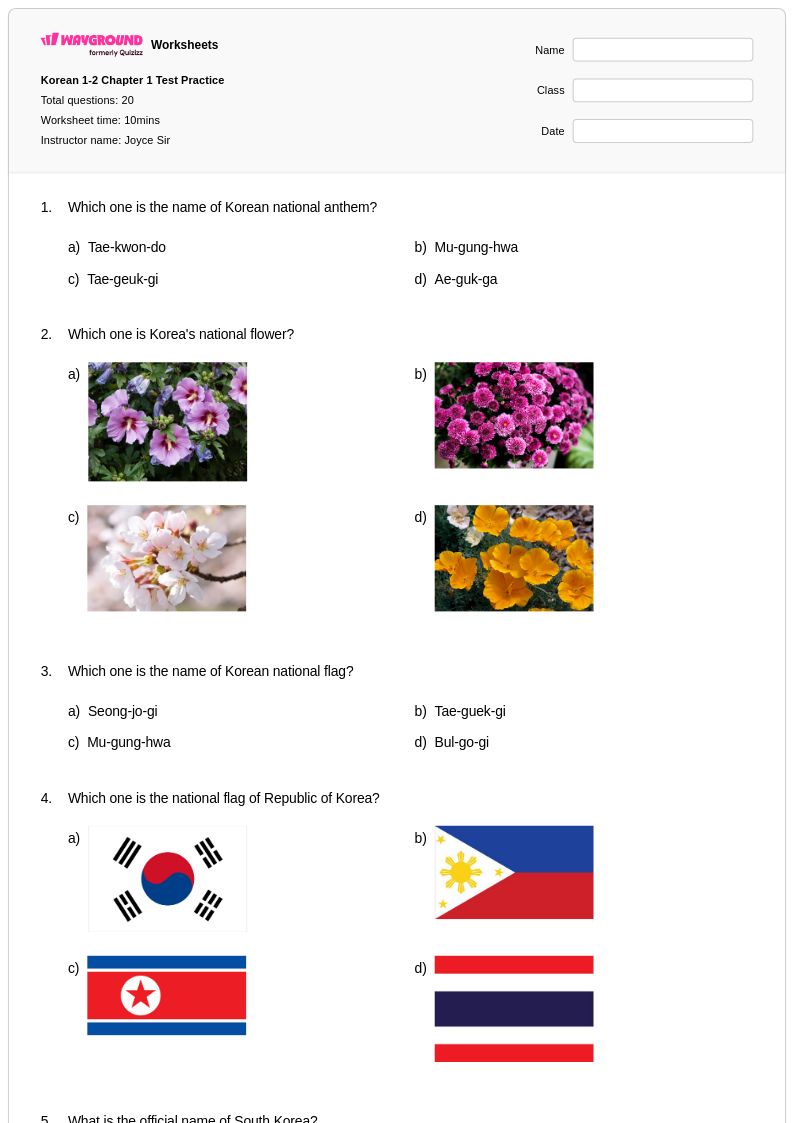
20 Q
9th - 12th
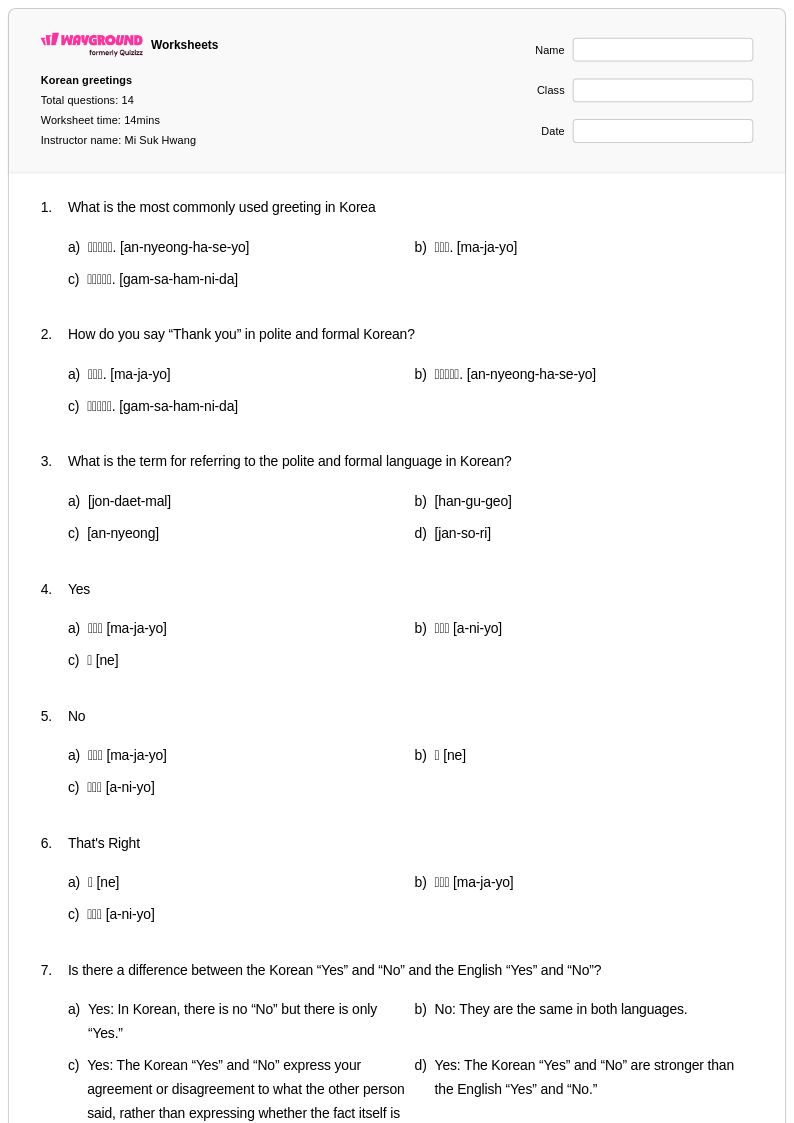
14 Q
6th - 12th

16 Q
9th - 12th

26 Q
3rd - 12th
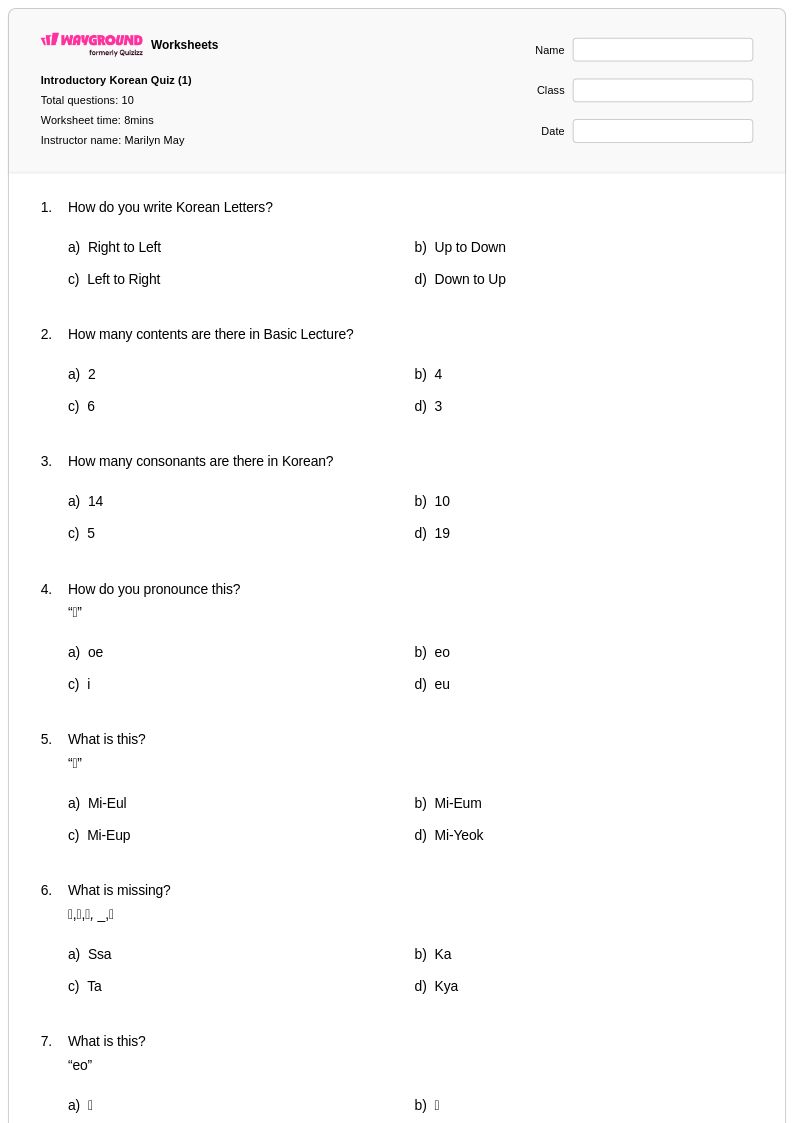
10 Q
8th - Uni
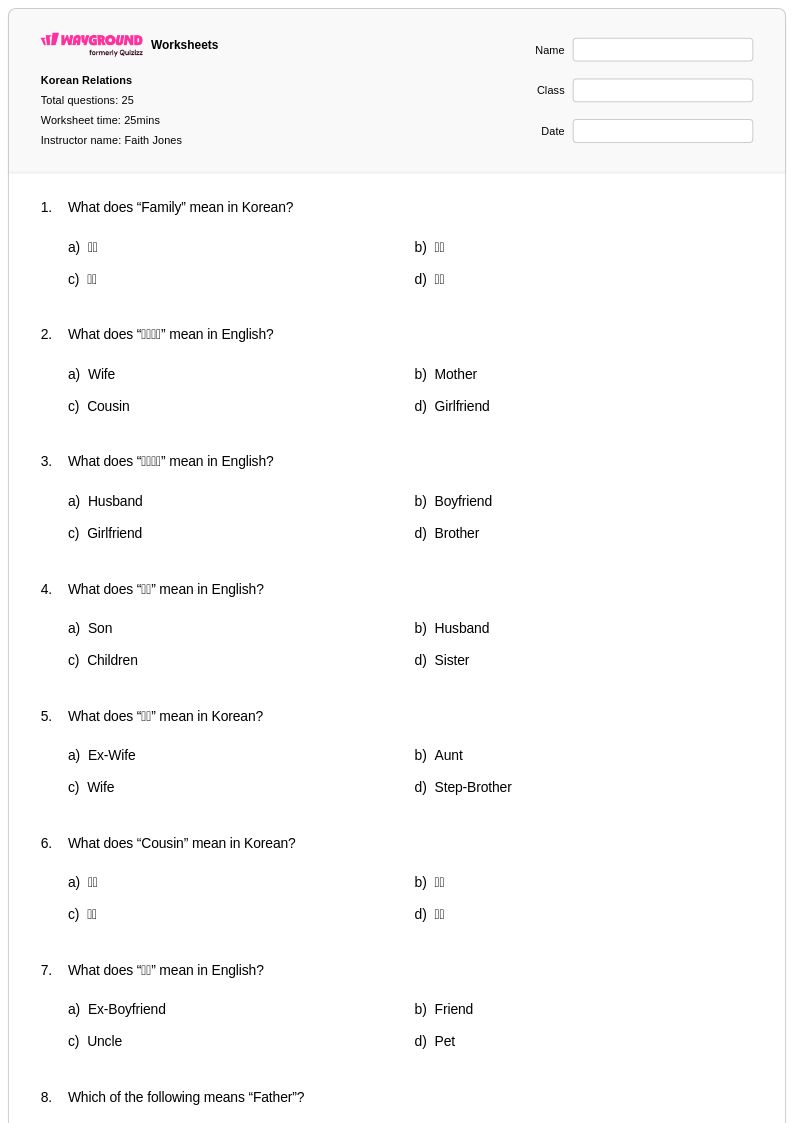
25 Q
KG - PD
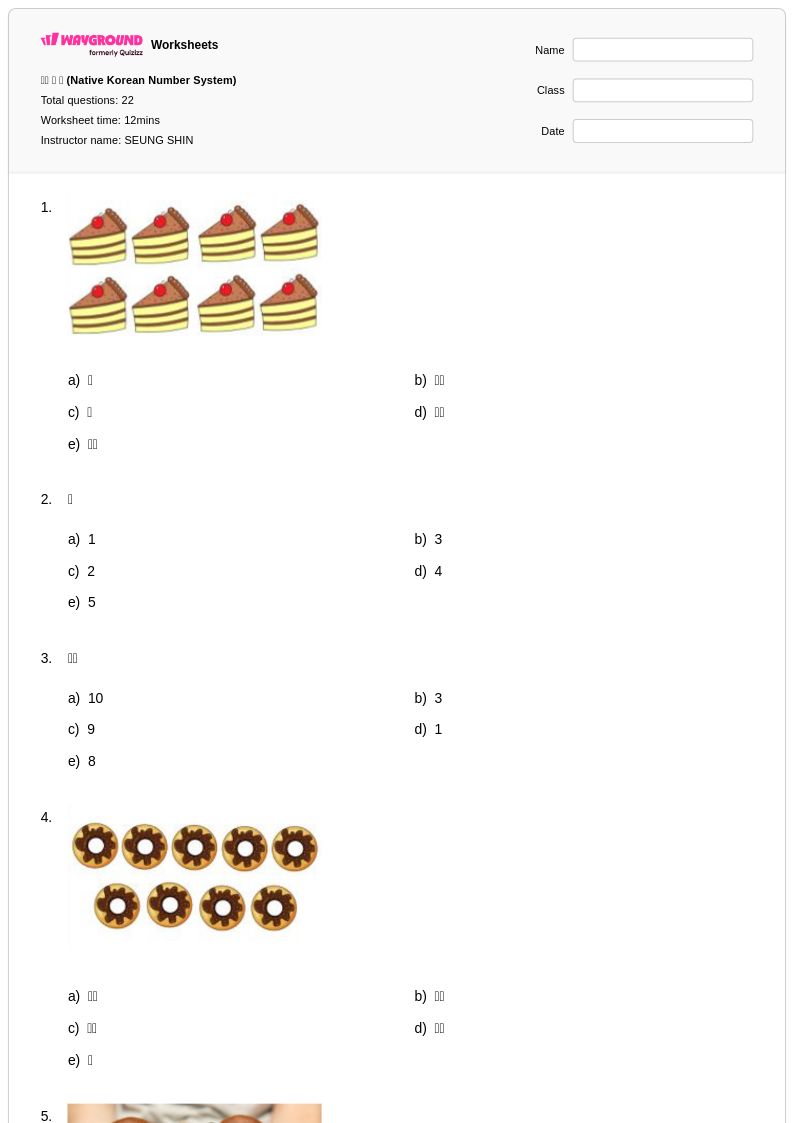
22 Q
9th - 12th

13 Q
9th - 12th
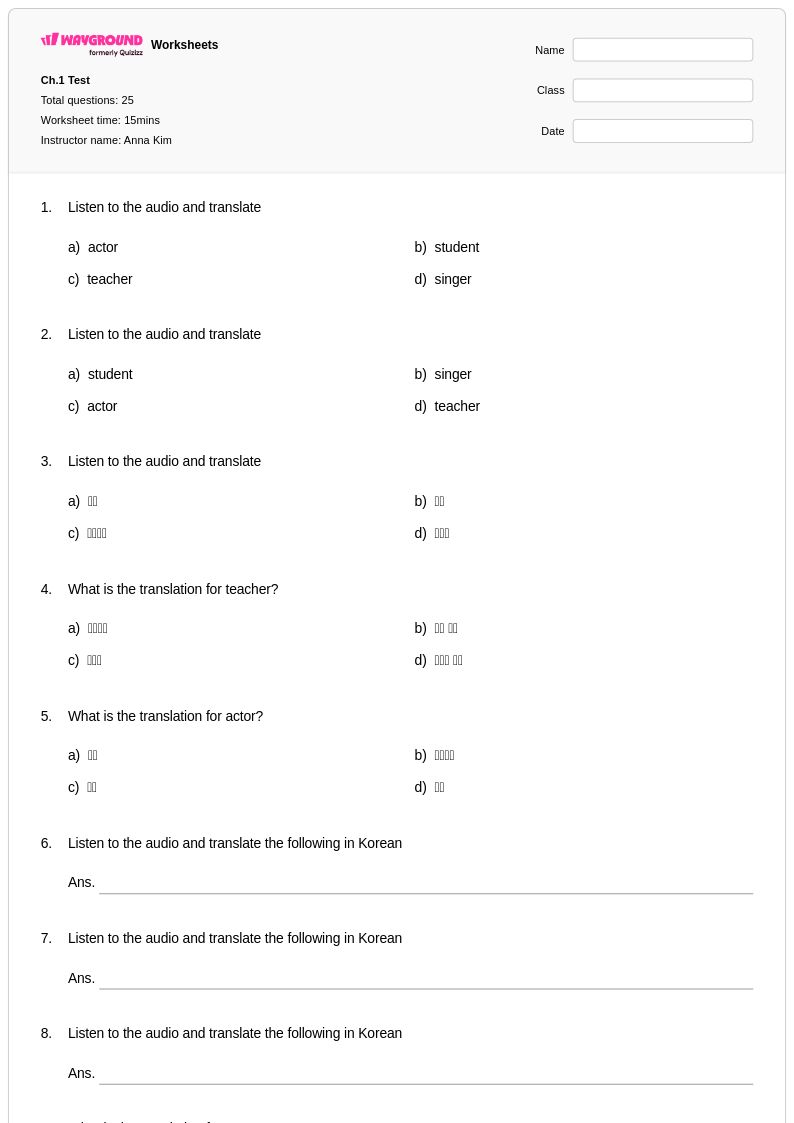
25 Q
9th - 12th
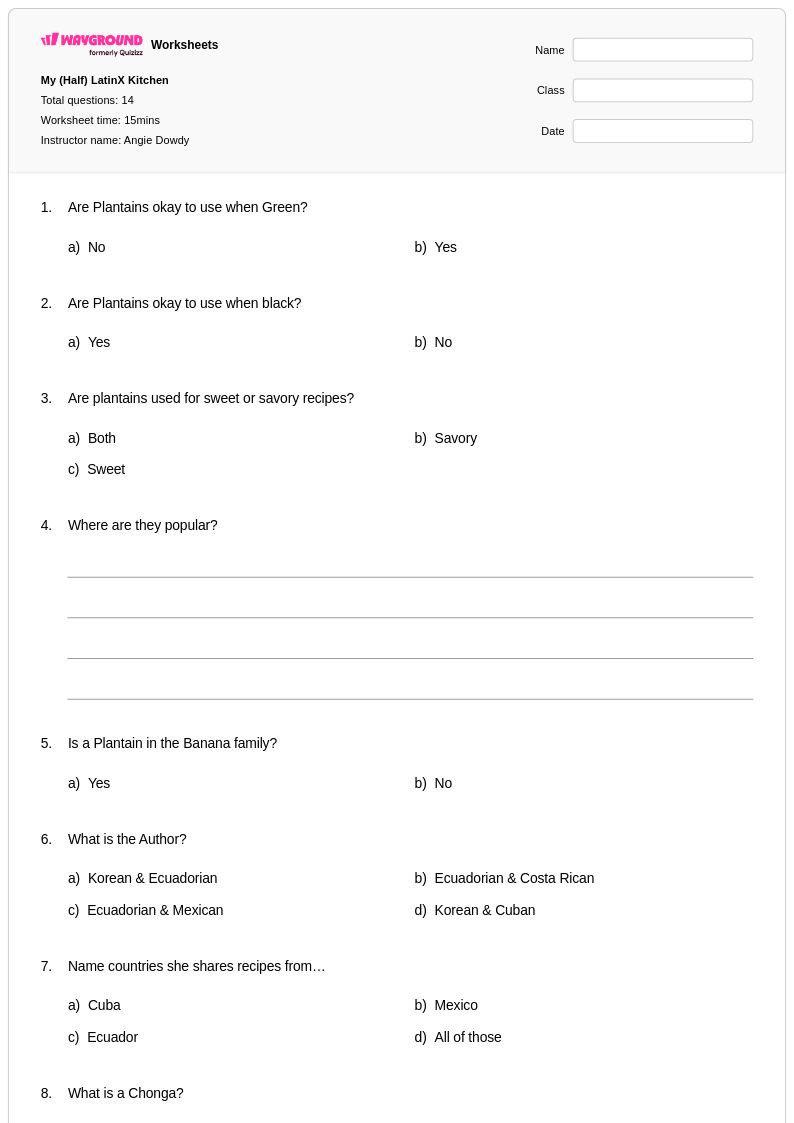
14 Q
9th - 12th
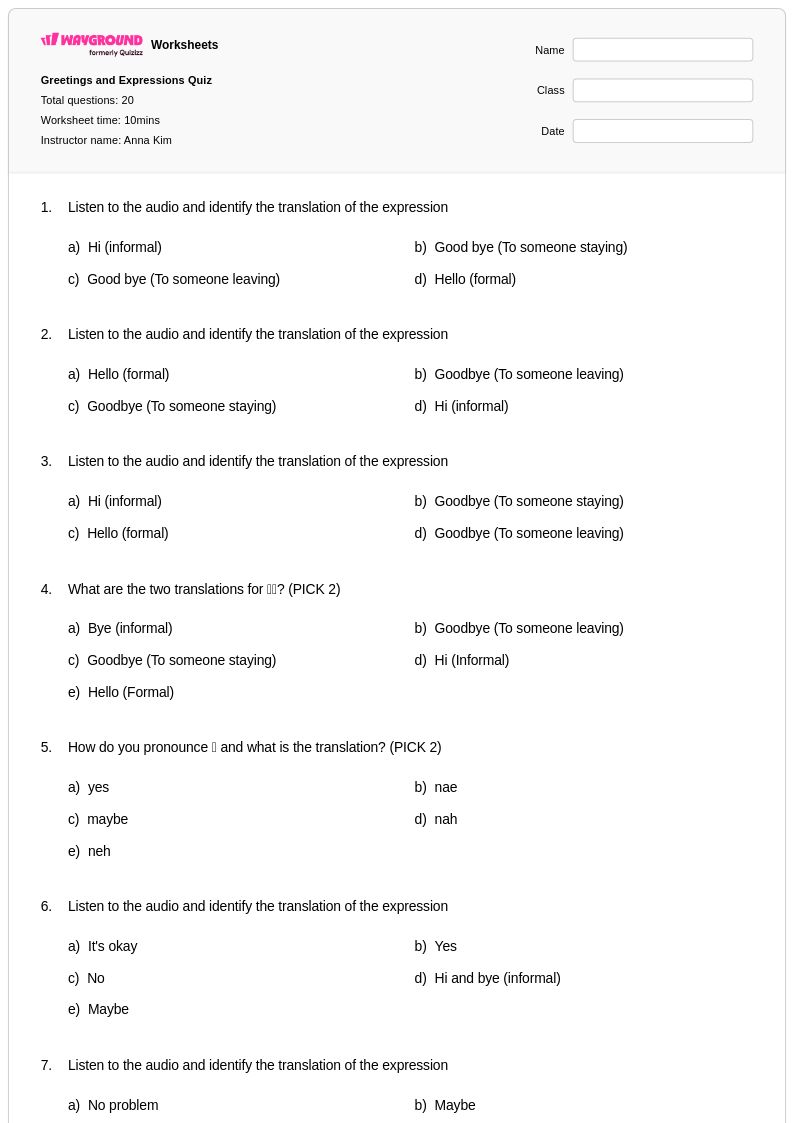
20 Q
9th - 12th
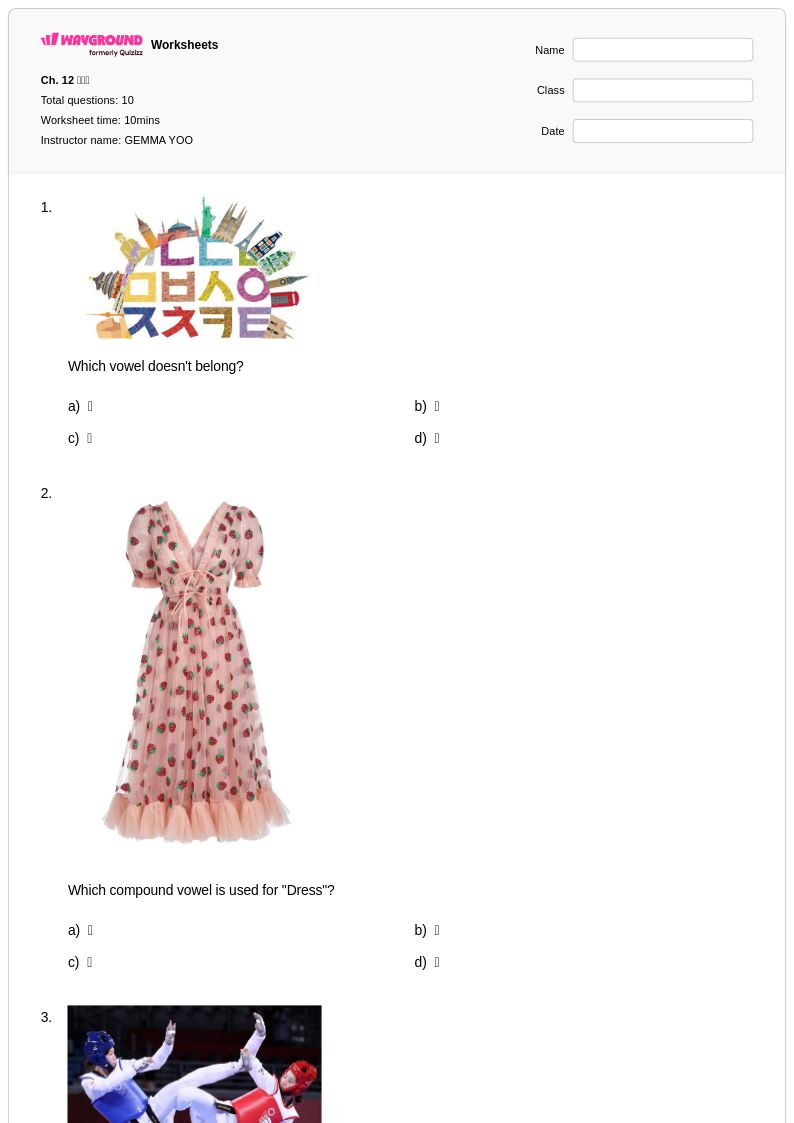
10 Q
9th - 12th
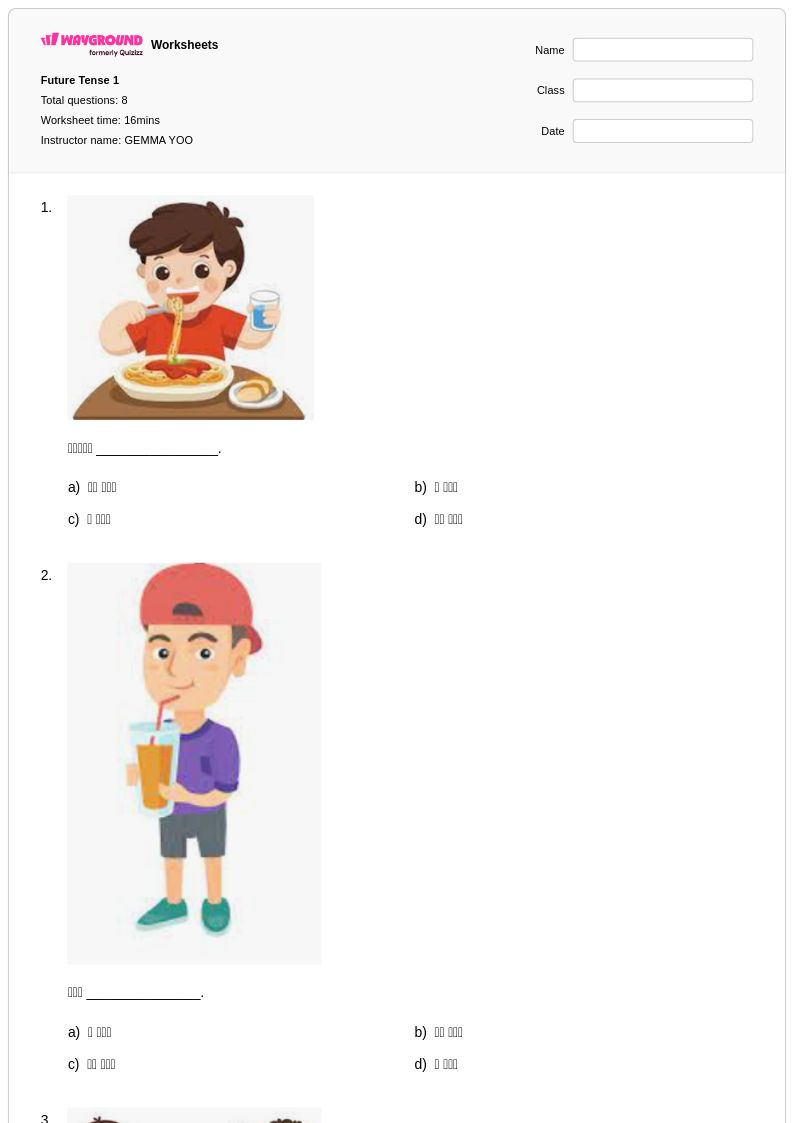
8 Q
9th - 12th
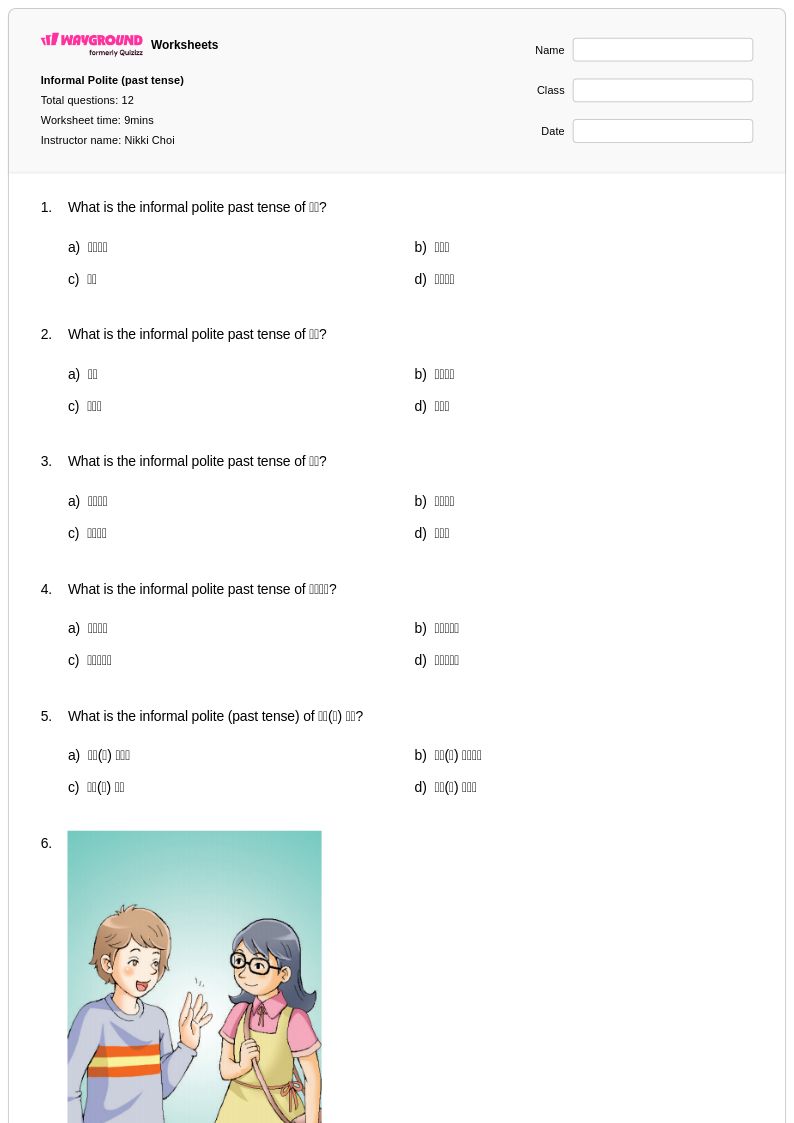
12 Q
9th - 12th
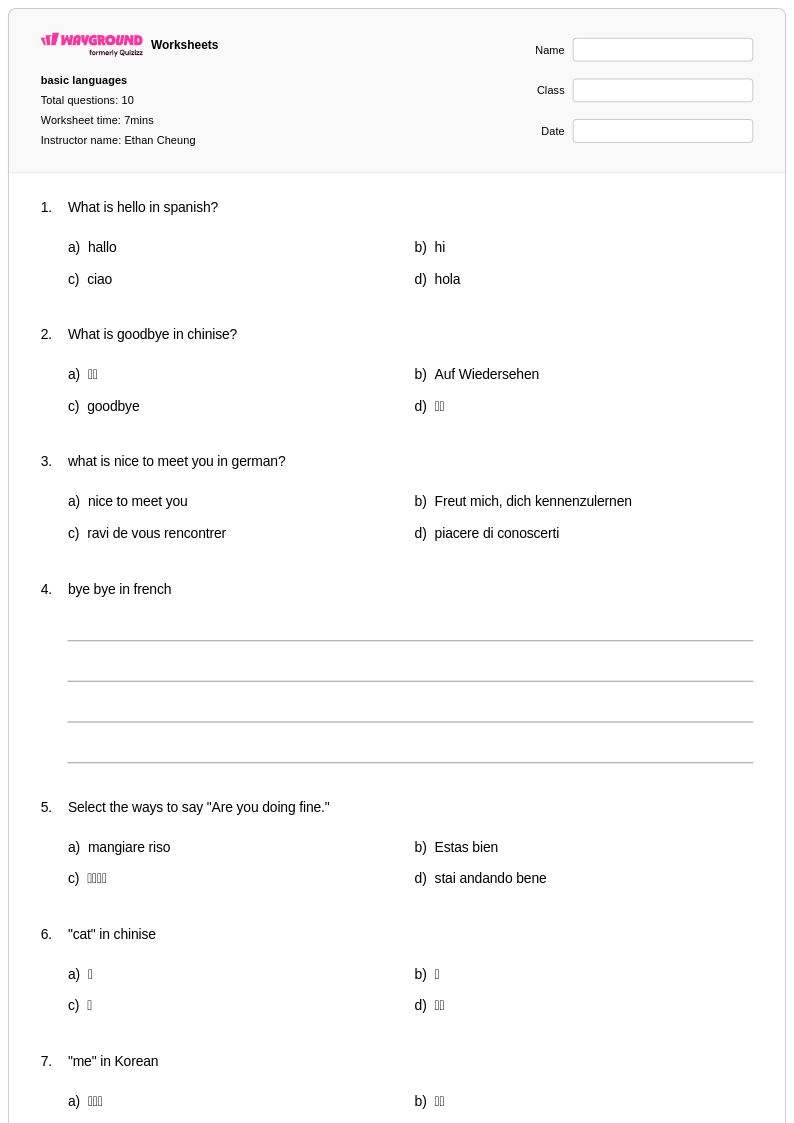
10 Q
10th - 12th
Explore Korean Worksheets by Grades
Explore Other Subject Worksheets for grade 12
Explore printable Korean worksheets for Grade 12
Grade 12 Korean worksheets available through Wayground (formerly Quizizz) provide comprehensive language learning resources that target advanced proficiency skills essential for senior-level students. These expertly designed materials focus on complex grammatical structures, sophisticated vocabulary acquisition, cultural competency, and authentic communication scenarios that prepare students for real-world Korean language use. The worksheets strengthen critical skills including advanced sentence construction, formal and informal speech patterns, idiomatic expressions, and reading comprehension of contemporary Korean texts. Each worksheet comes with a detailed answer key to support independent learning and self-assessment, while the free printable format ensures accessibility for all students. These practice problems cover essential topics such as advanced verb conjugations, honorific systems, and nuanced cultural contexts that are crucial for achieving fluency in Korean.
Wayground (formerly Quizizz) empowers educators with an extensive collection of millions of teacher-created Korean language resources, featuring robust search and filtering capabilities that allow instructors to quickly locate materials aligned with specific learning objectives and curriculum standards. The platform's differentiation tools enable teachers to customize worksheets based on individual student needs, supporting both remediation for struggling learners and enrichment opportunities for advanced students. These flexible resources are available in both printable and digital formats, including convenient pdf downloads that facilitate seamless integration into lesson planning and homework assignments. The comprehensive worksheet collection supports systematic skill practice across all aspects of Korean language learning, from foundational grammar concepts to advanced cultural competency, helping teachers create engaging and effective learning experiences that promote sustained language acquisition and cultural understanding.
FAQs
How do I teach Hangul to beginners?
What Korean grammar structures should I focus on first in my lessons?
What exercises help students practice Korean vocabulary effectively?
What mistakes do students commonly make when learning Korean?
How can I differentiate Korean language worksheets for students at different proficiency levels?
How do I use Wayground's Korean worksheets in my classroom?