
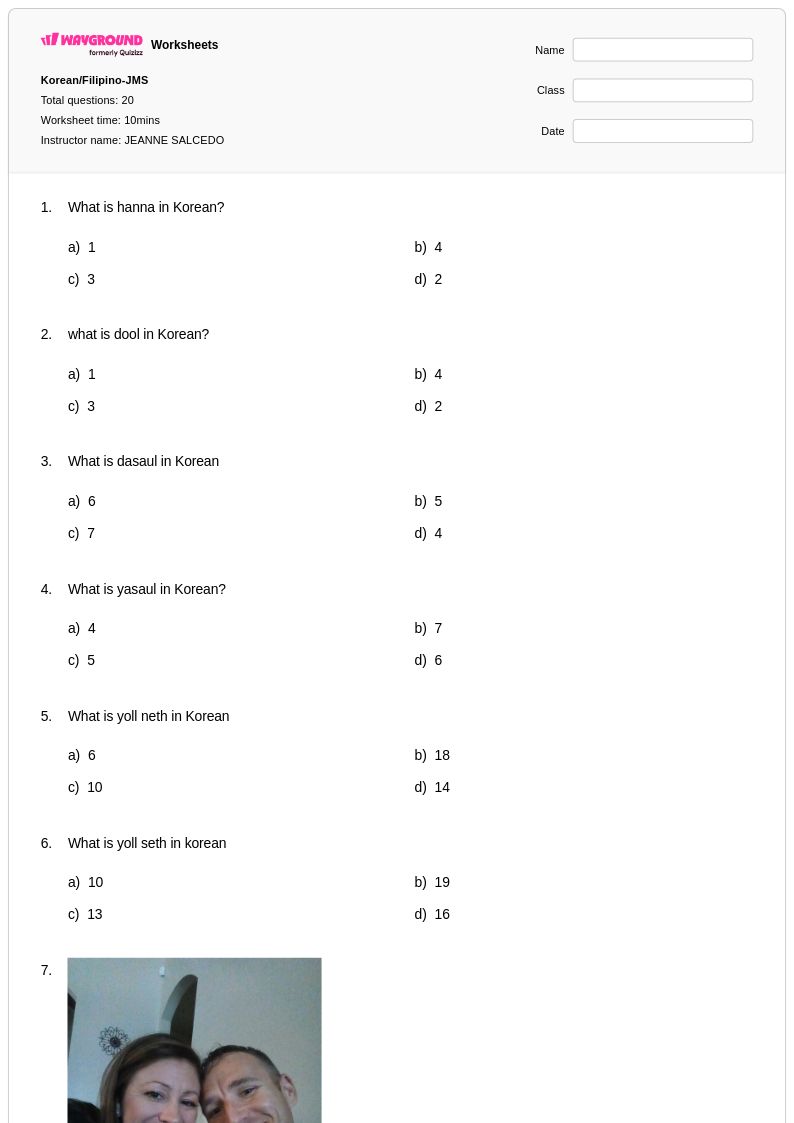
20 Q
1st - 5th
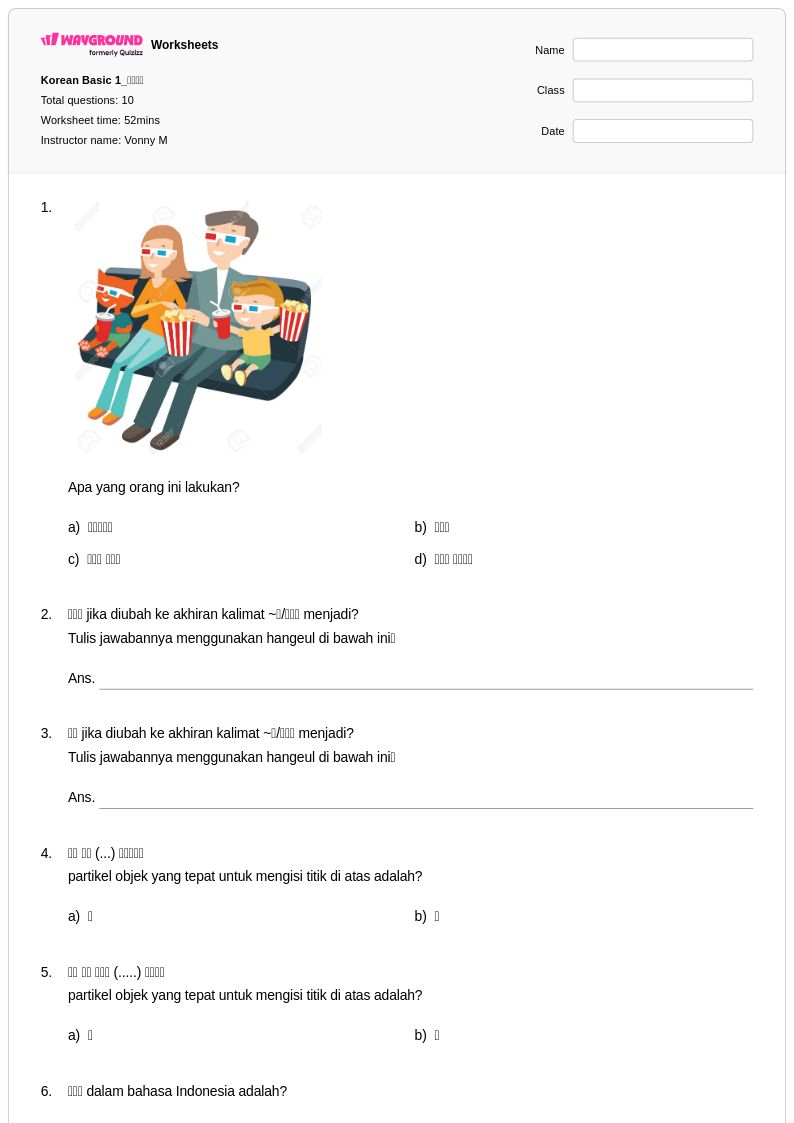
10 Q
4th - Uni
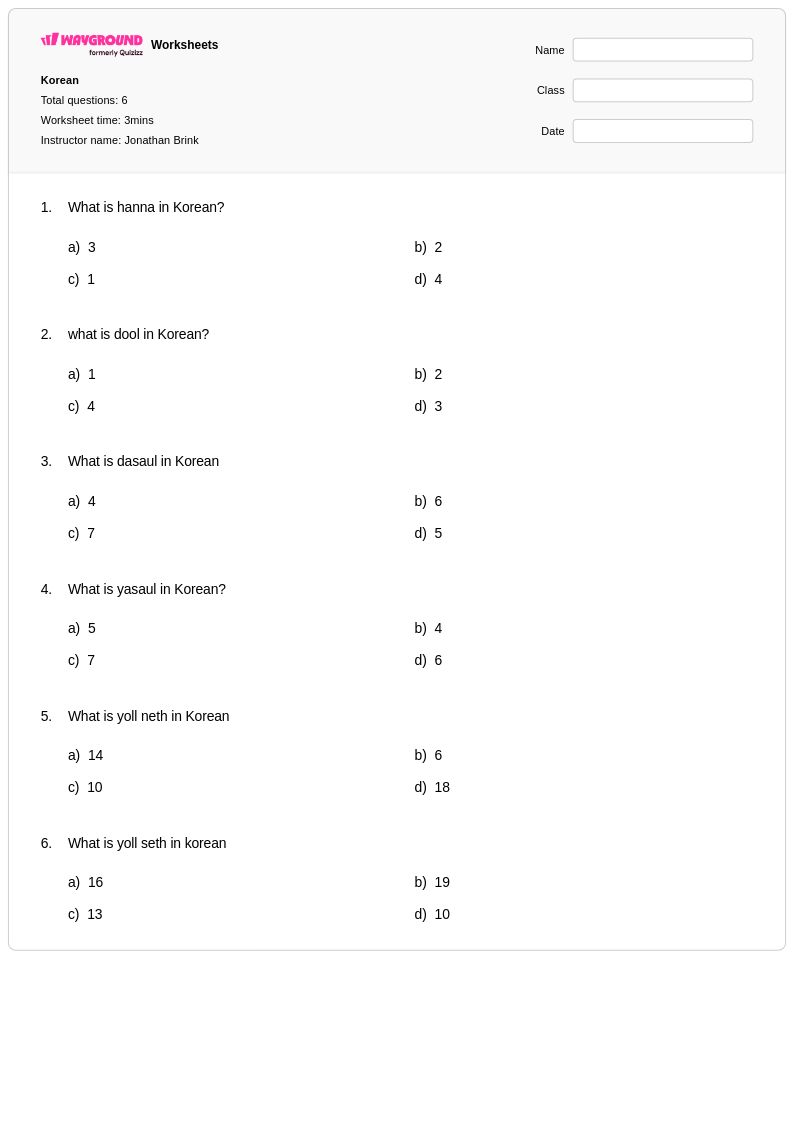
6 Q
3rd - Uni
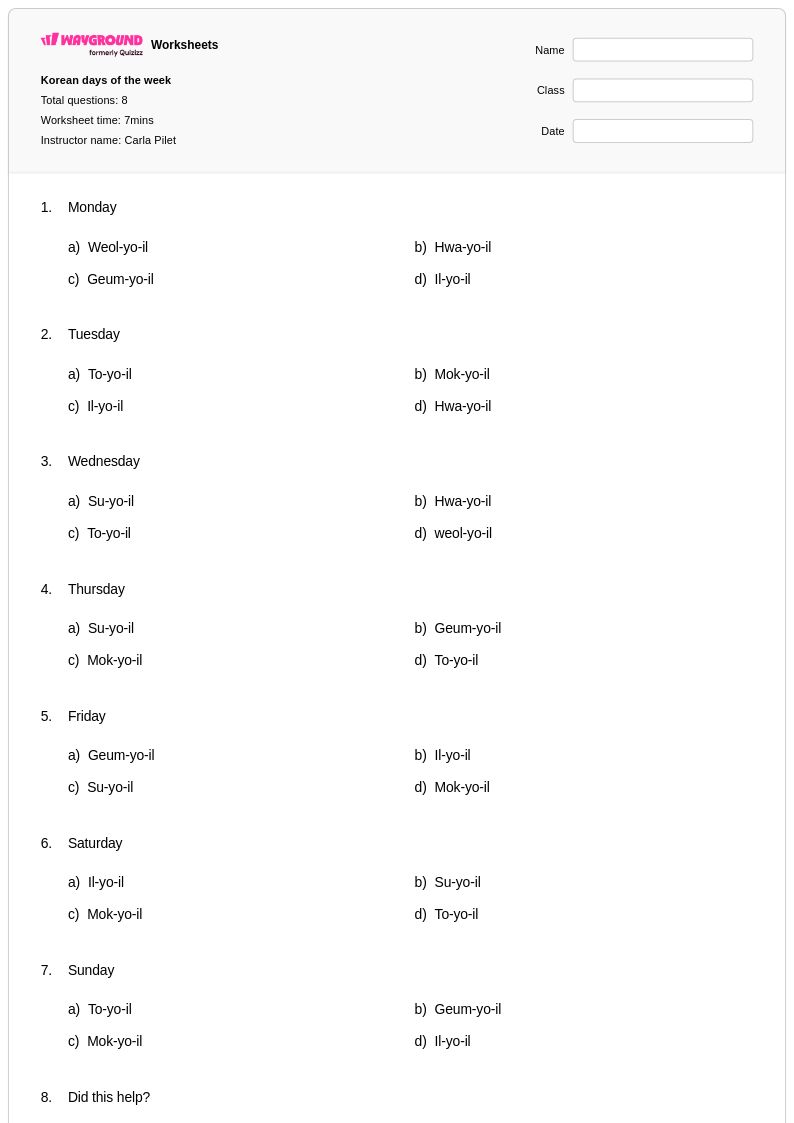
8 Q
KG - PD
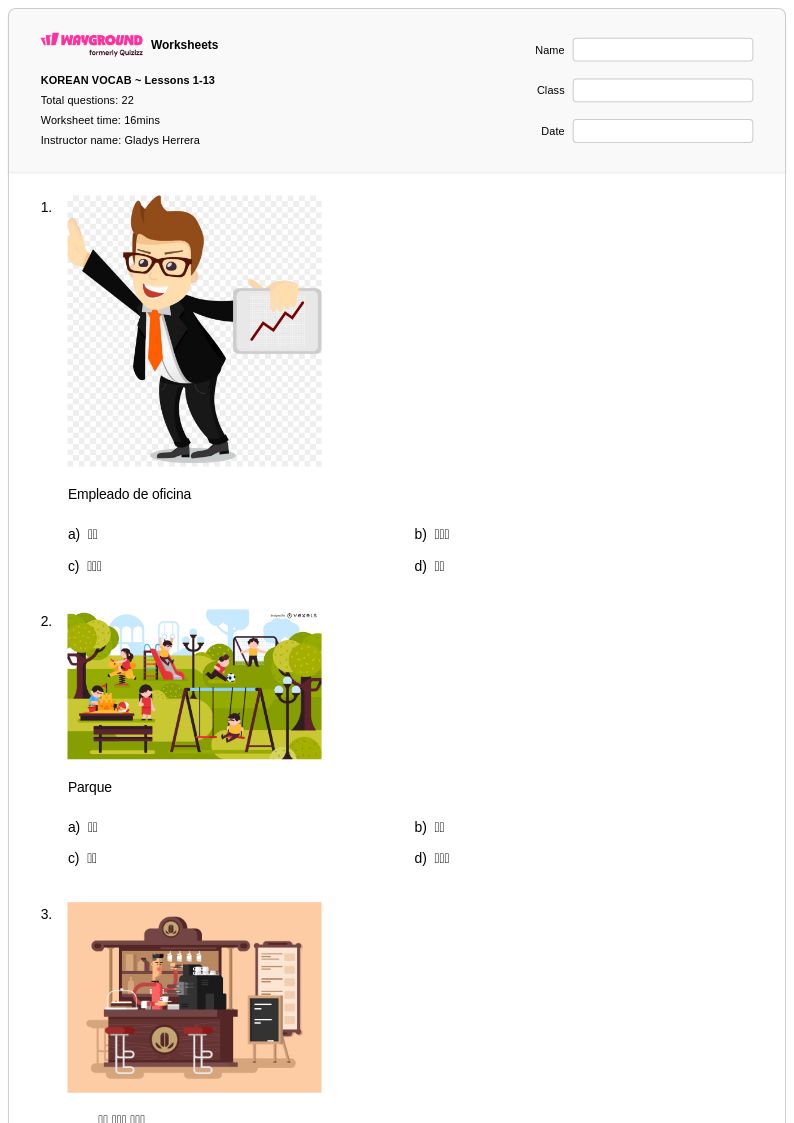
22 Q
2nd - Uni
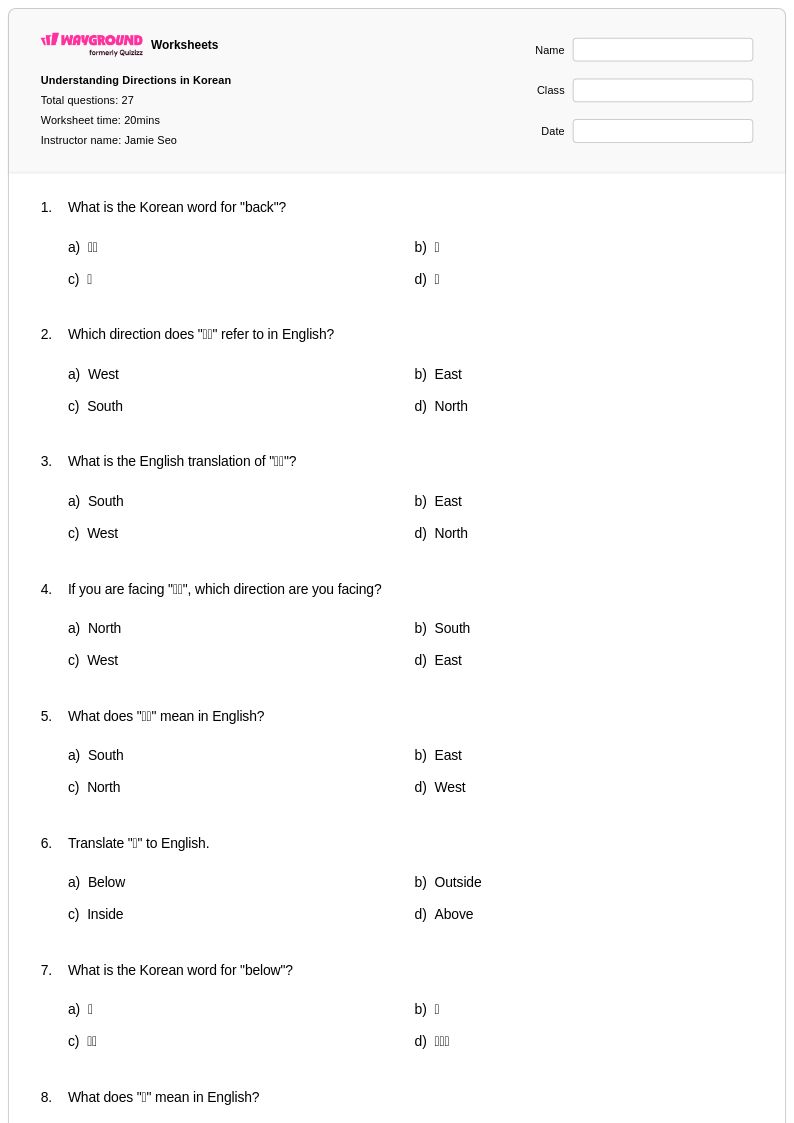
27 Q
5th
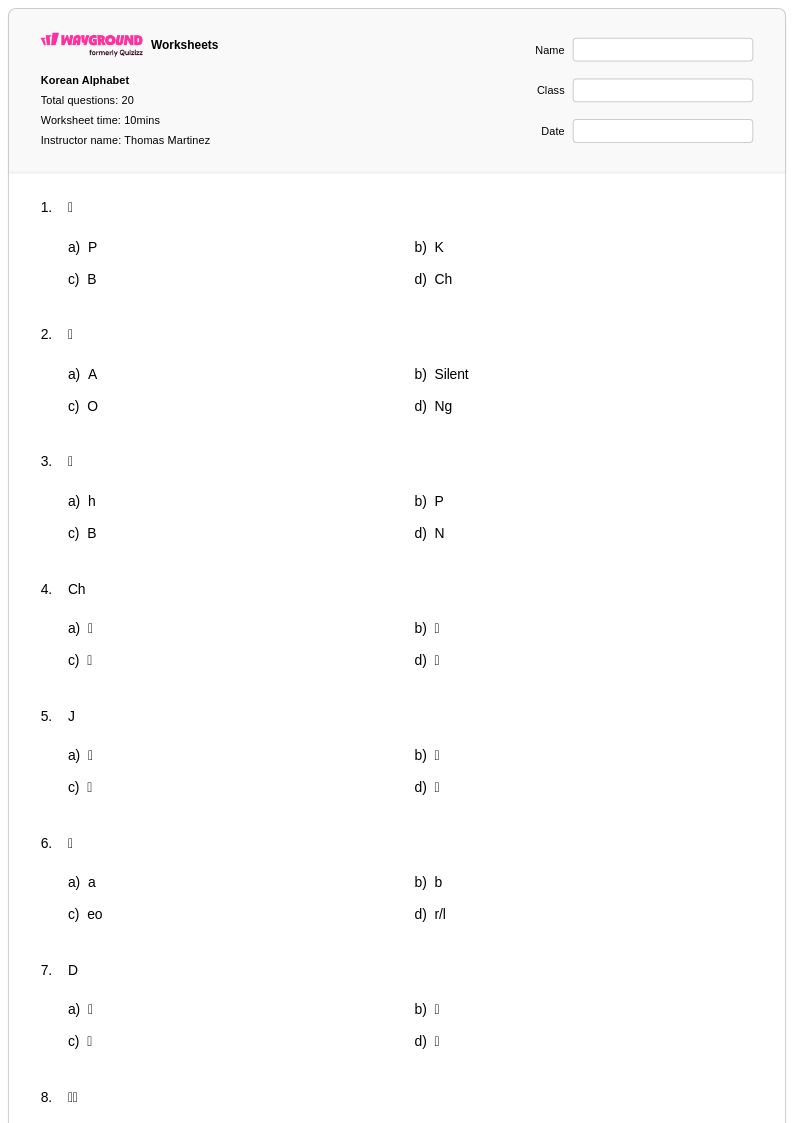
20 Q
1st - PD
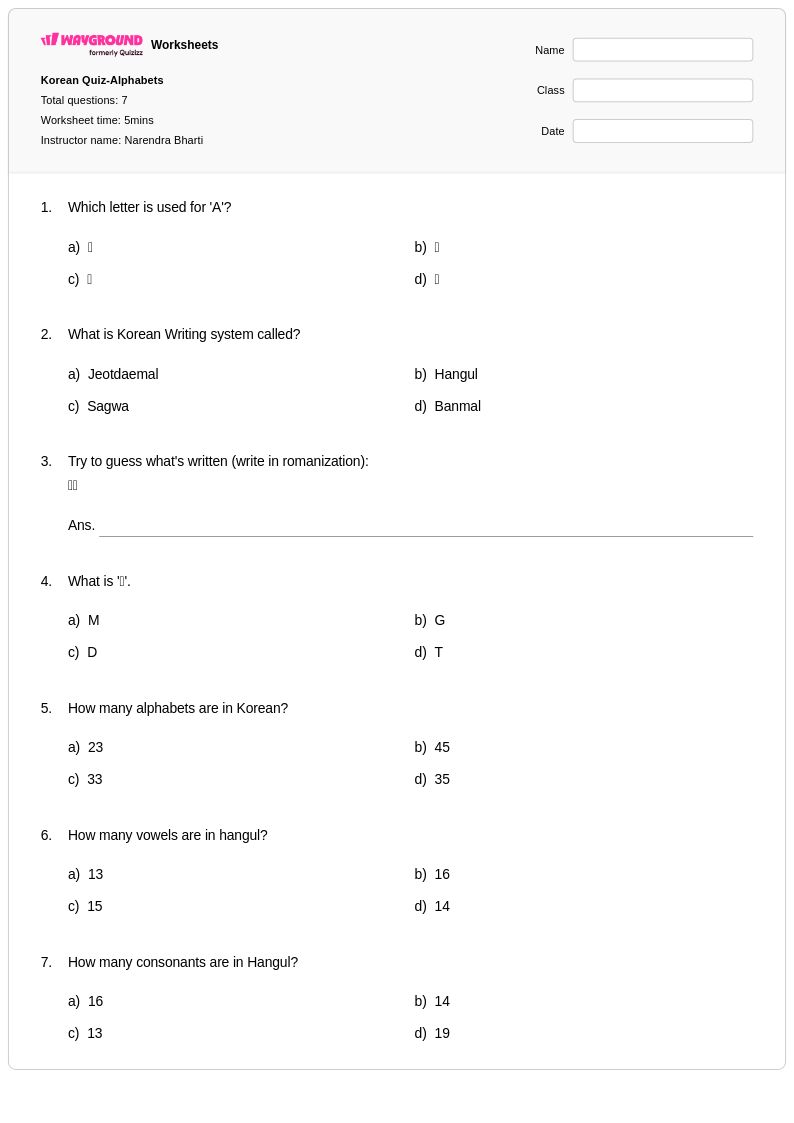
7 Q
4th - 6th
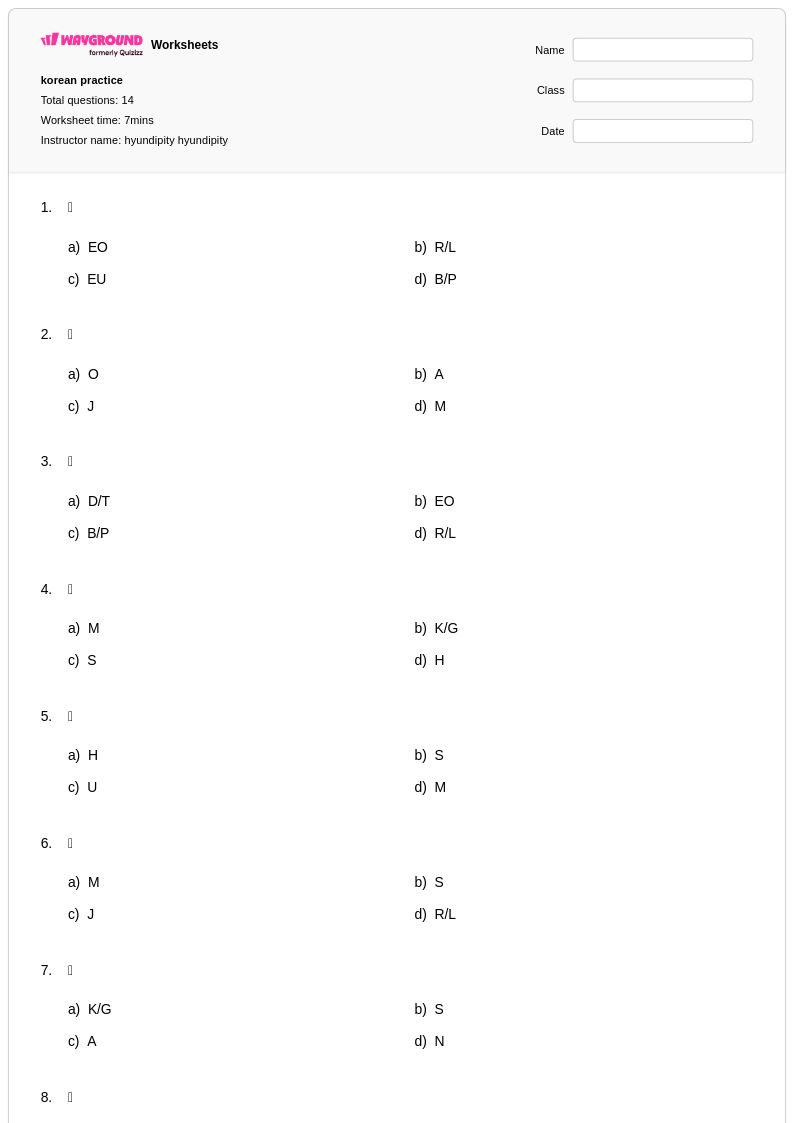
14 Q
1st - PD
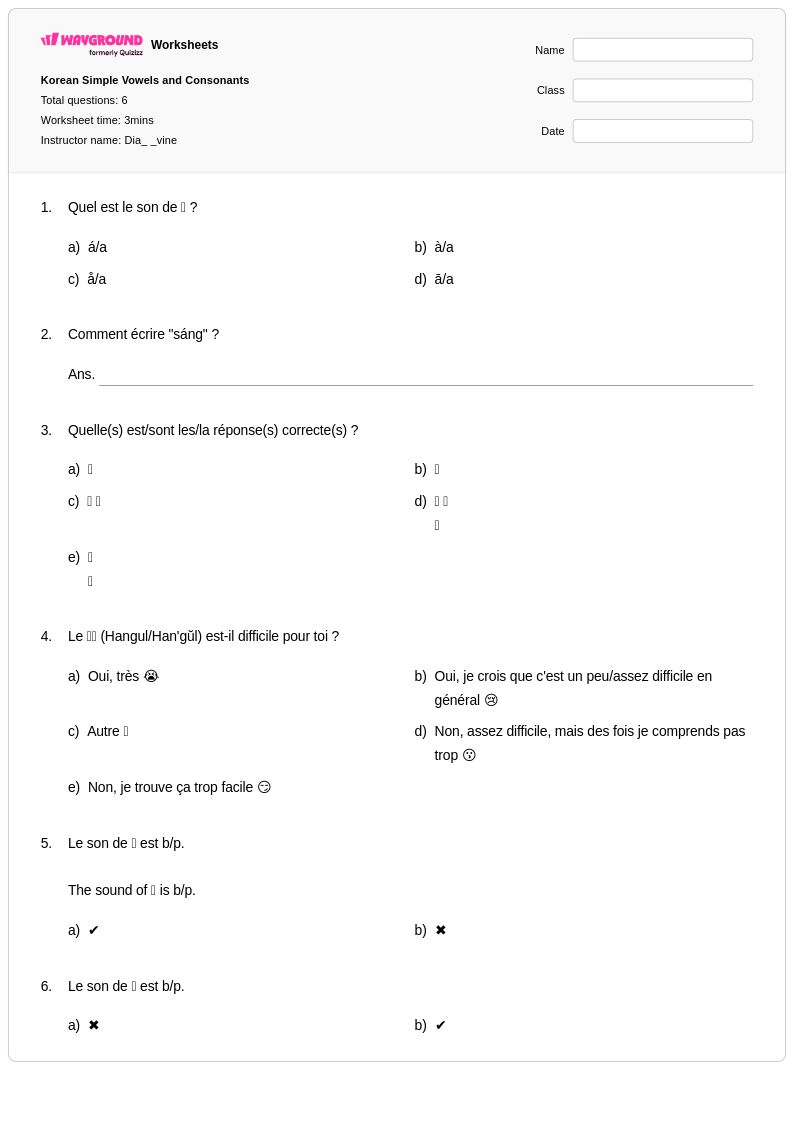
6 Q
5th - PD
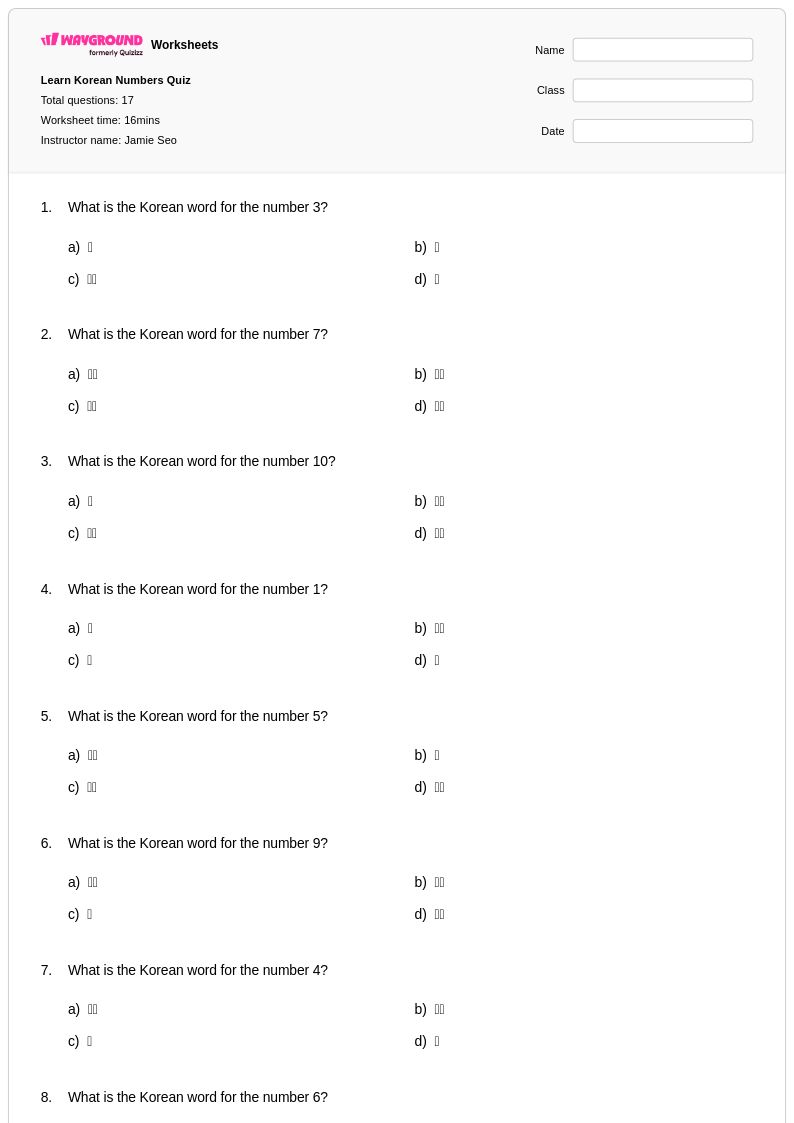
17 Q
5th
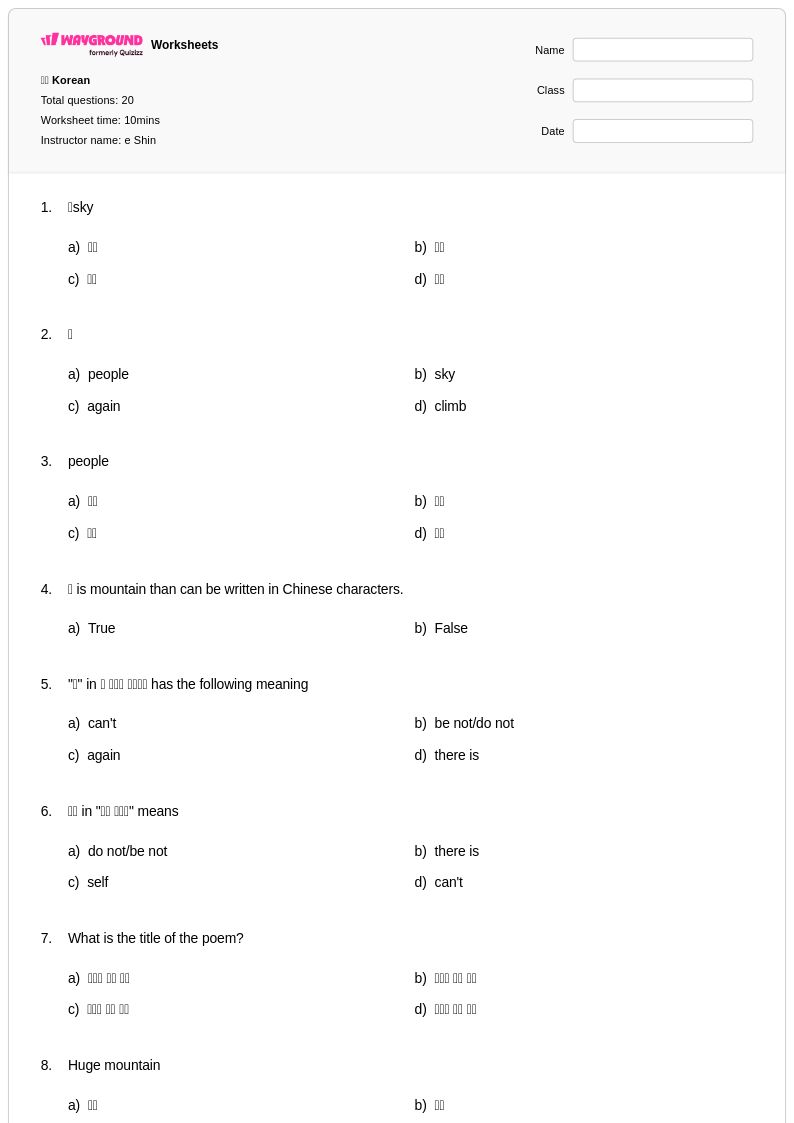
20 Q
5th

26 Q
3rd - 12th
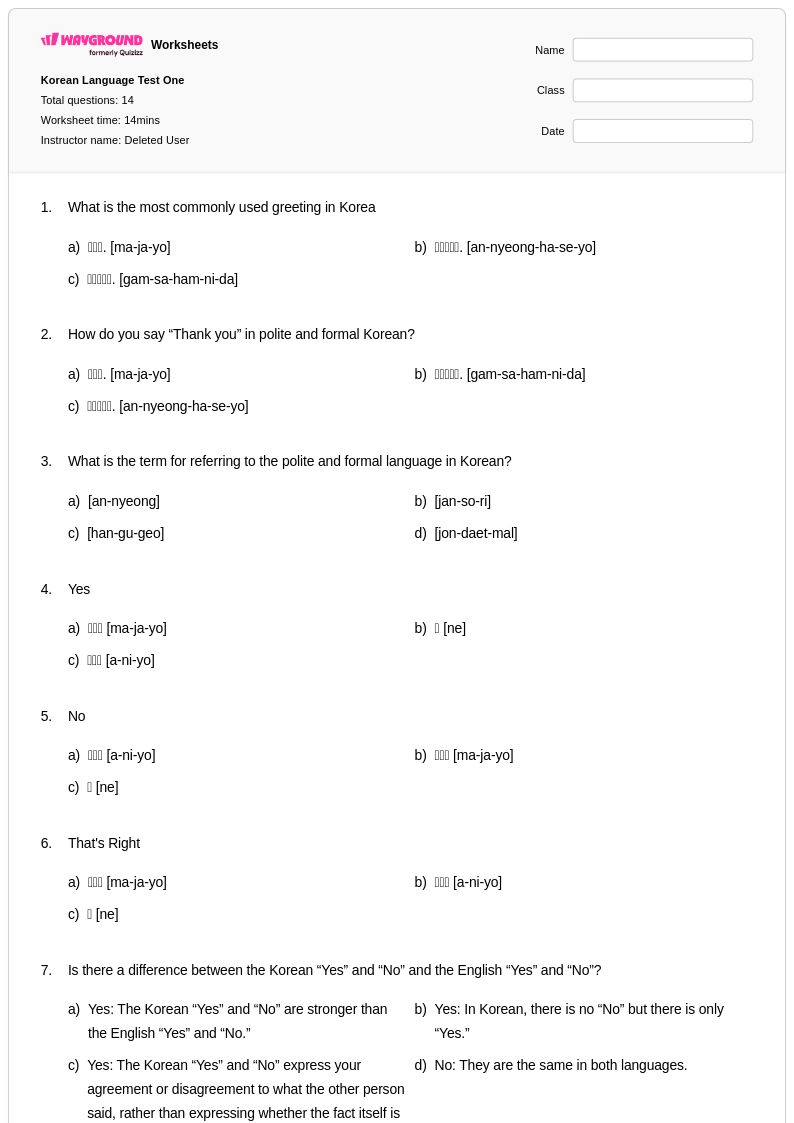
14 Q
5th - Uni
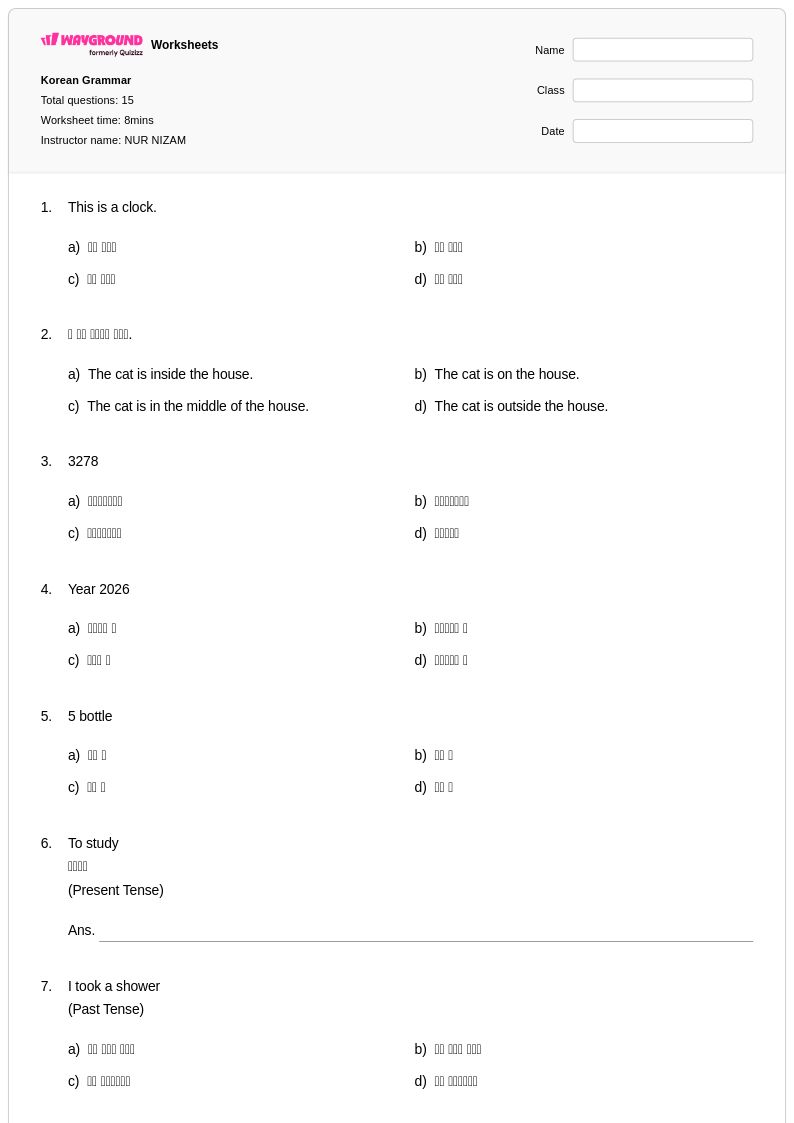
15 Q
5th - Uni
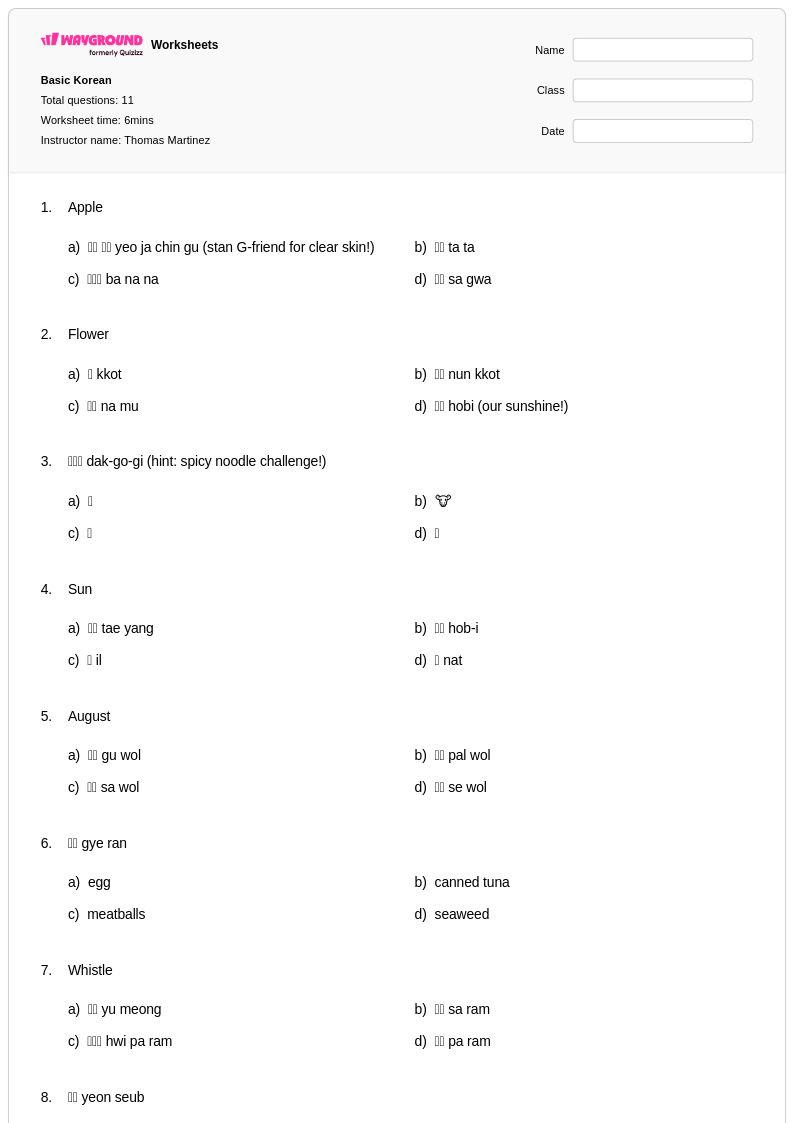
11 Q
5th - PD
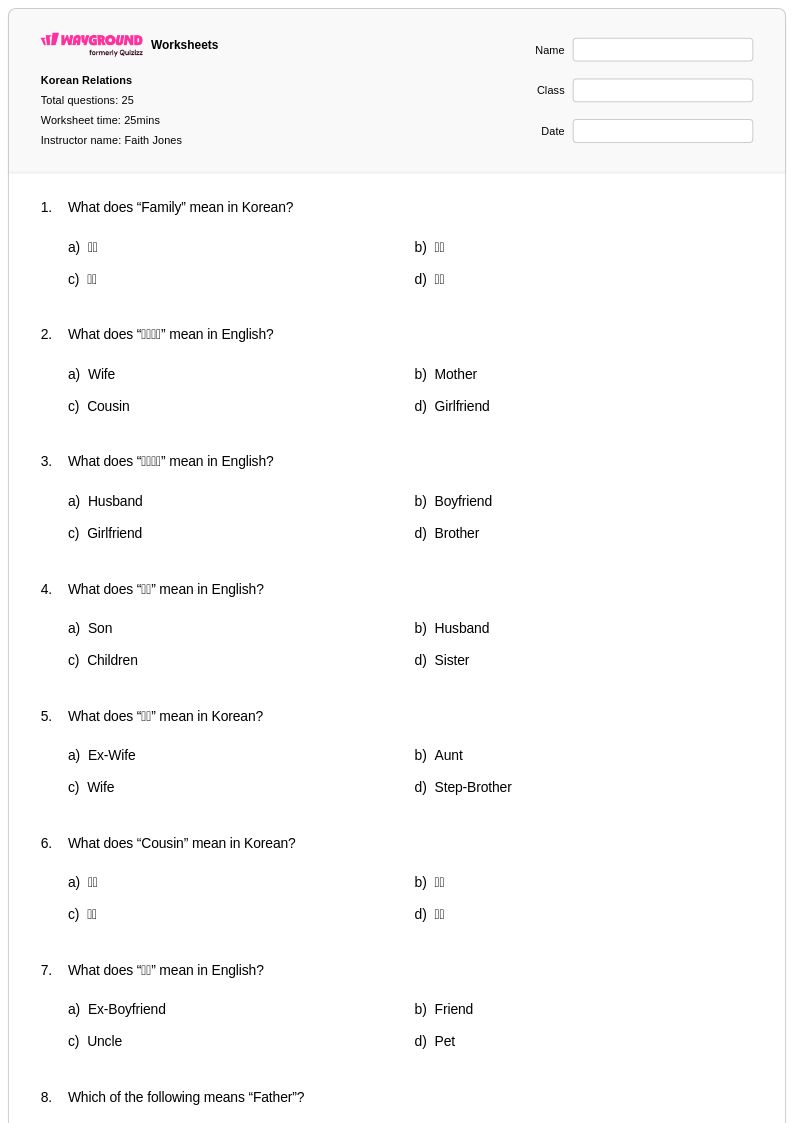
25 Q
KG - PD
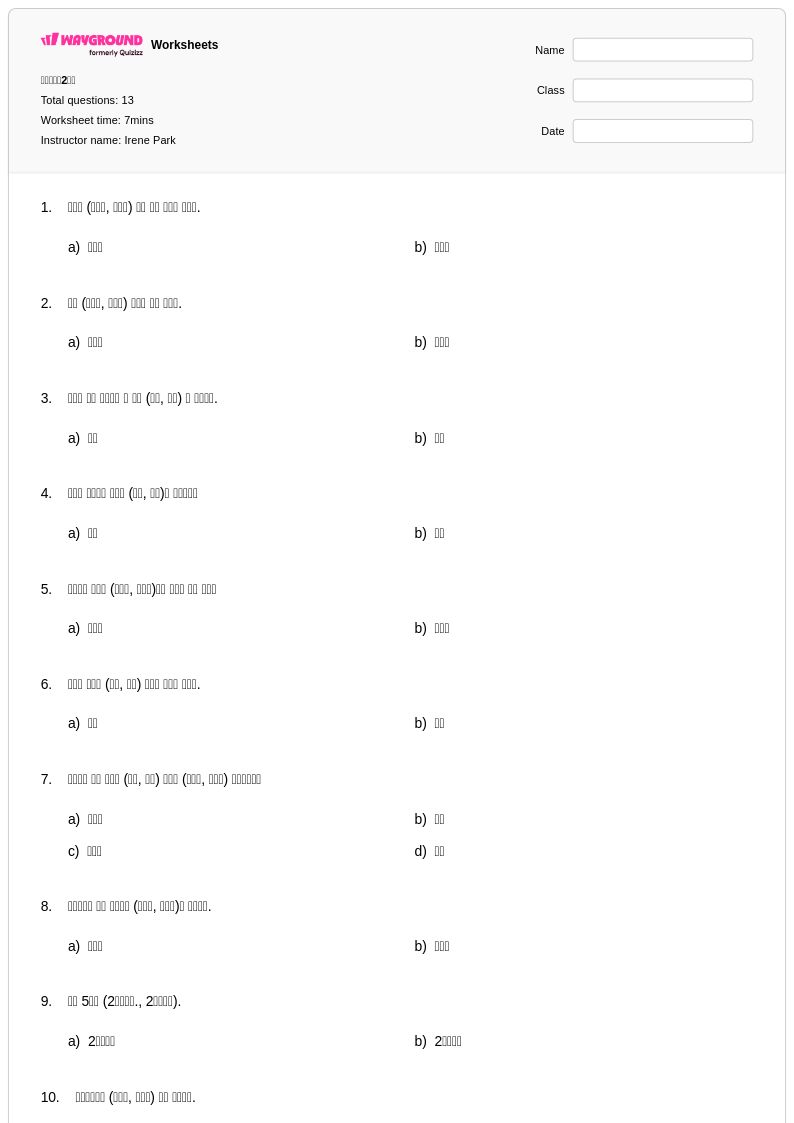
13 Q
4th - 6th
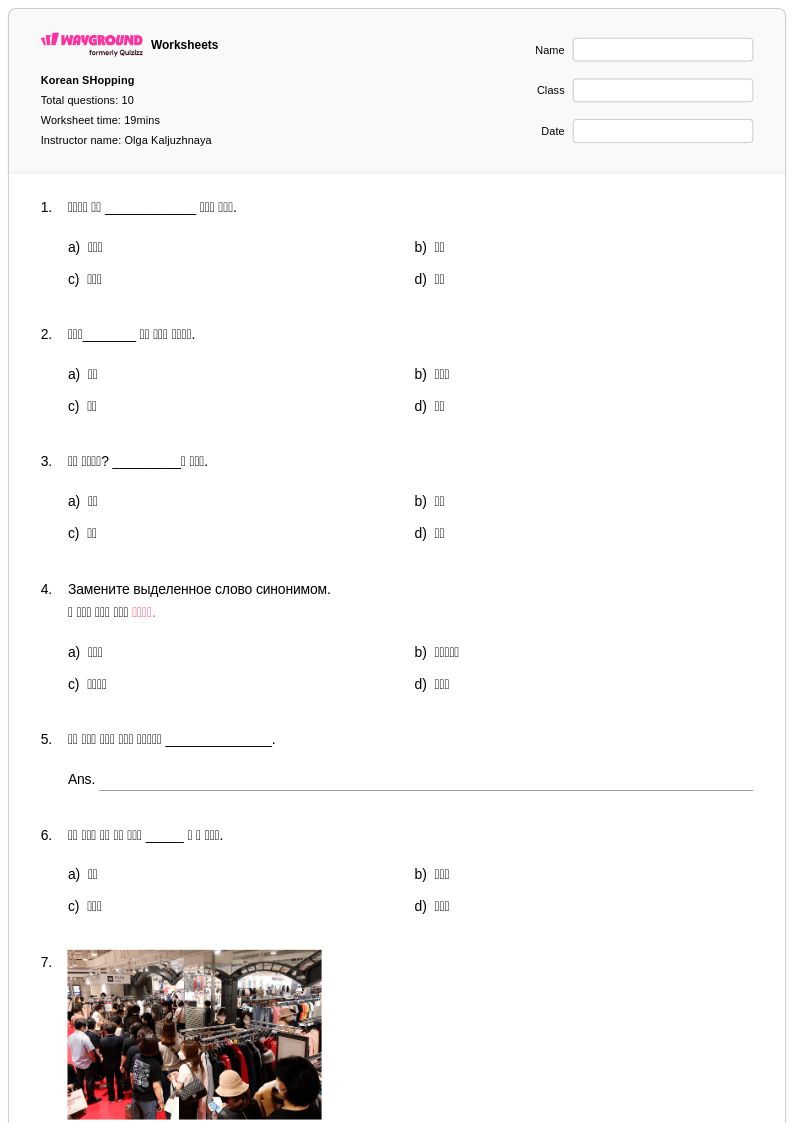
10 Q
3rd - Uni
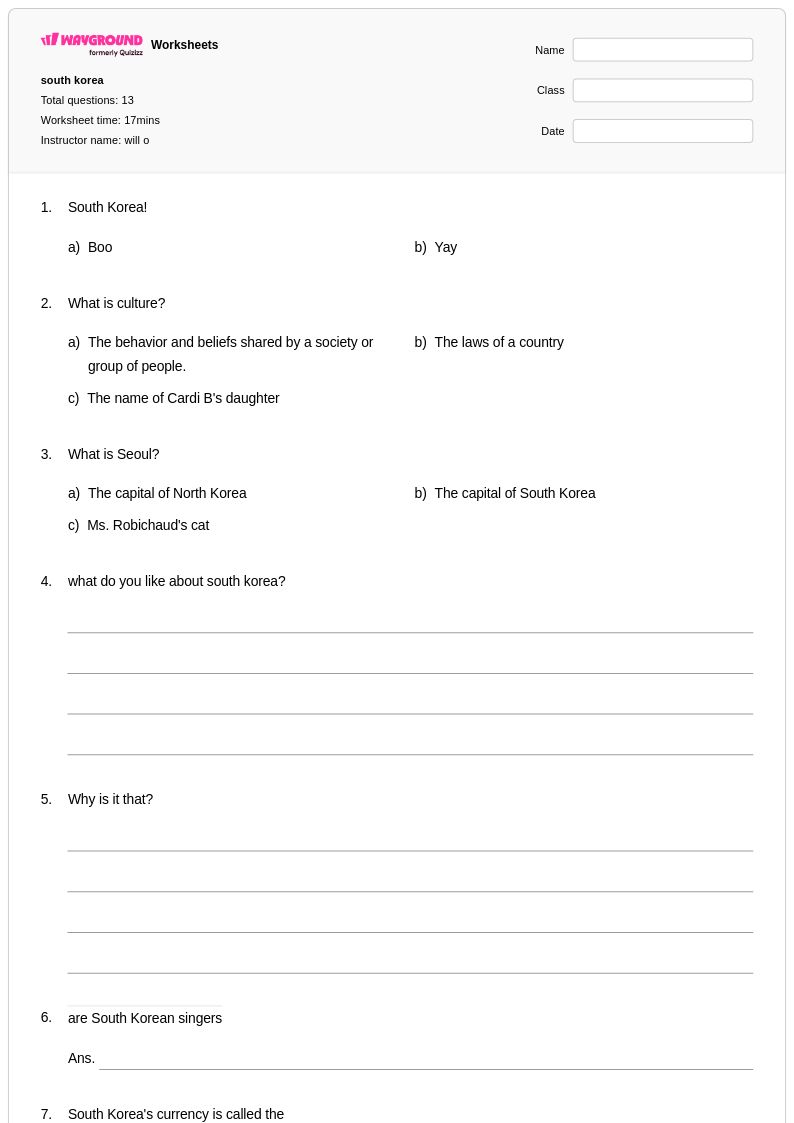
13 Q
1st - 5th
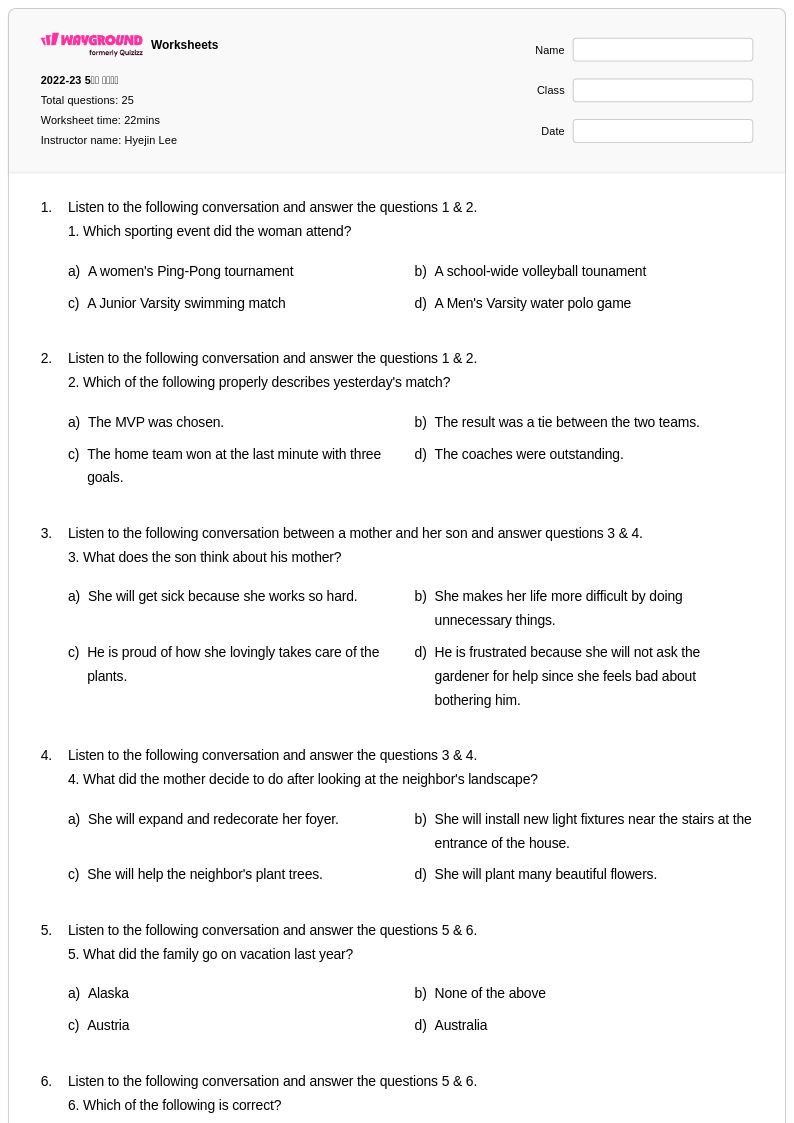
25 Q
5th
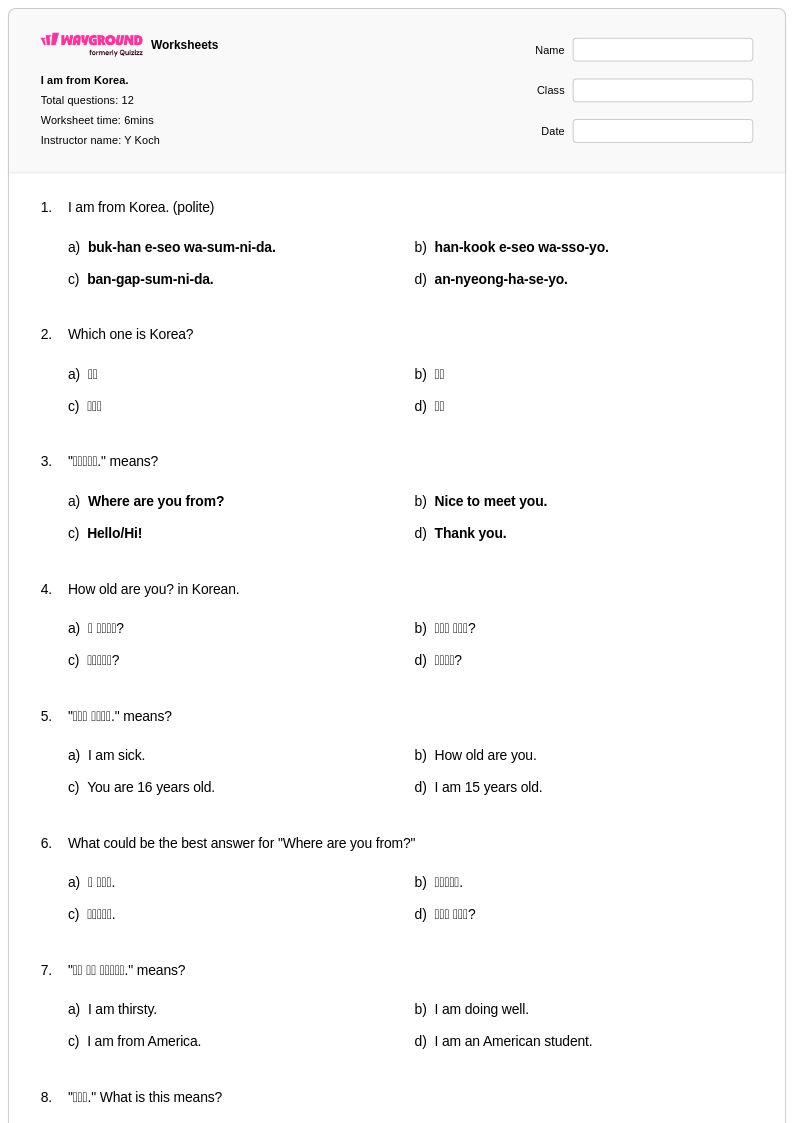
12 Q
5th - Uni
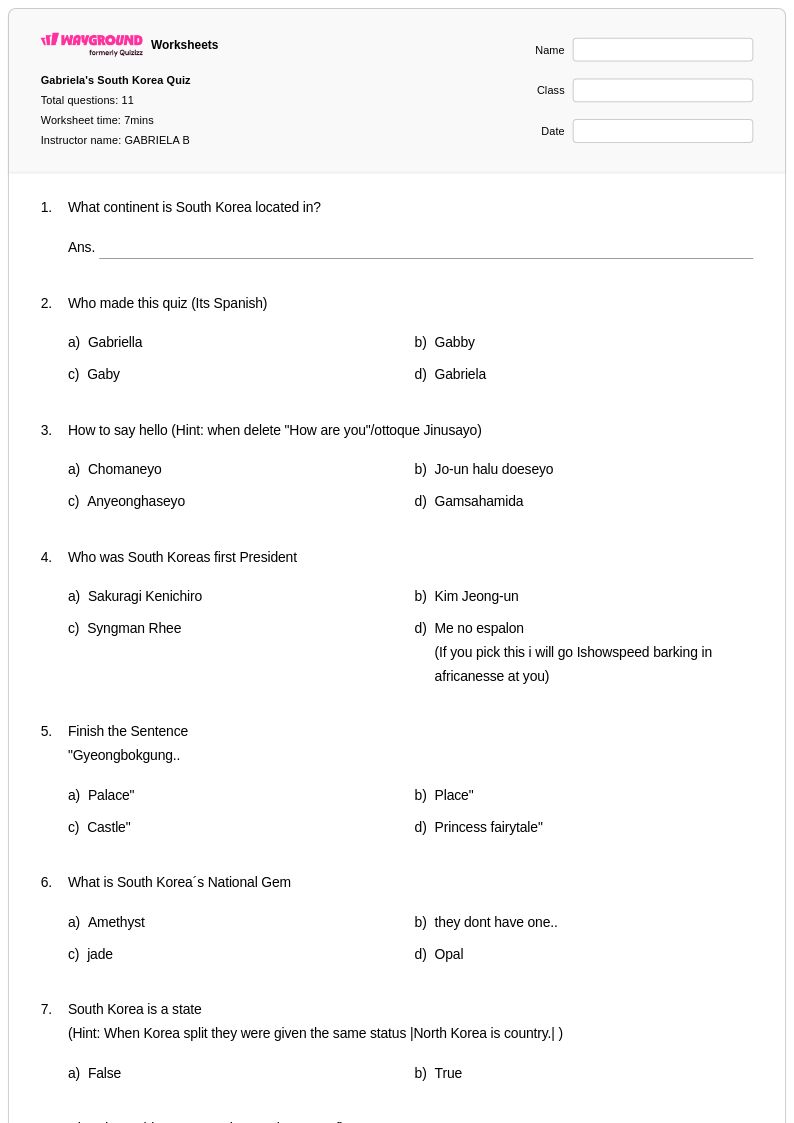
11 Q
5th
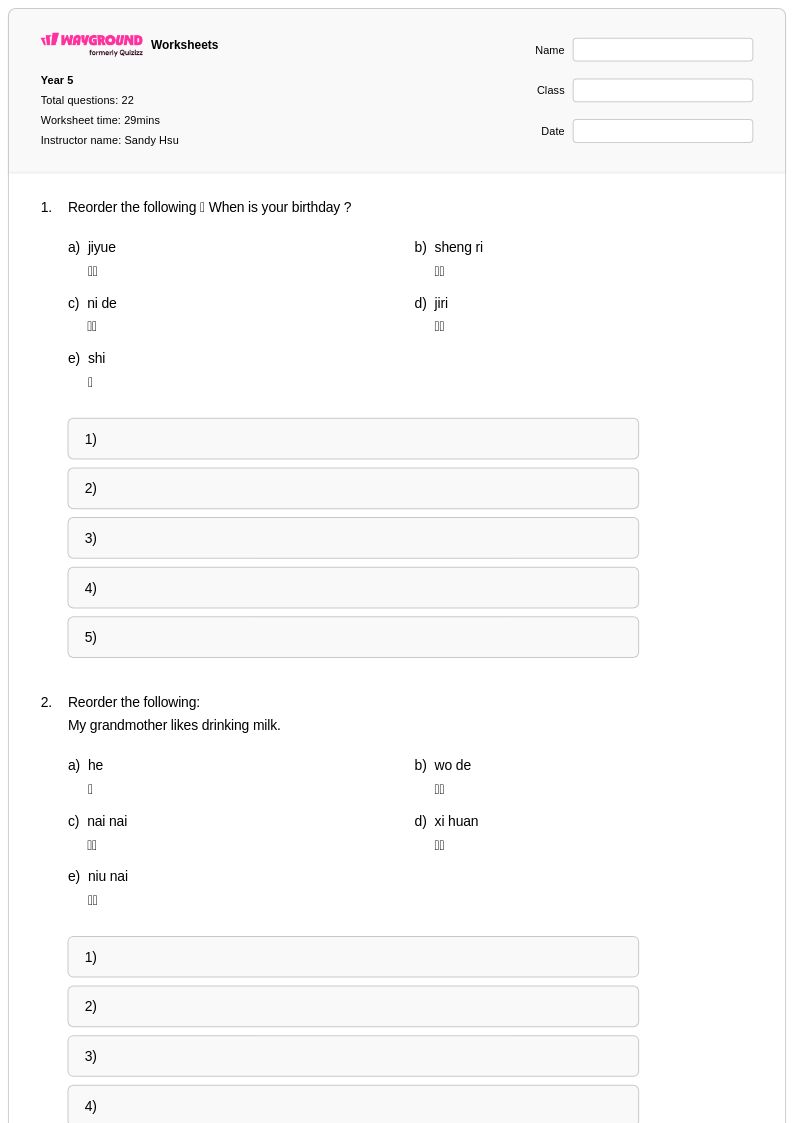
22 Q
5th
Explore Korean Worksheets by Grades
Explore Other Subject Worksheets for grade 5
Explore printable Korean worksheets for Grade 5
Korean language worksheets for Grade 5 students available through Wayground (formerly Quizizz) provide comprehensive foundation-building resources that introduce young learners to essential Korean language concepts and skills. These carefully structured worksheets focus on fundamental elements including Hangul alphabet recognition, basic vocabulary acquisition, simple sentence construction, and cultural awareness activities that make Korean language learning engaging and accessible for elementary students. Each worksheet collection includes detailed answer keys and practice problems that allow students to develop reading, writing, and comprehension abilities while building confidence in their Korean language journey. The printable pdf format ensures teachers can easily distribute these free resources for both classroom instruction and independent practice, supporting systematic skill development through age-appropriate exercises and interactive learning opportunities.
Wayground (formerly Quizizz) empowers educators with millions of teacher-created Korean language resources specifically designed for Grade 5 learners, featuring robust search and filtering capabilities that help instructors quickly locate materials aligned with curriculum standards and learning objectives. The platform's differentiation tools enable teachers to customize worksheets based on individual student needs, supporting both remediation for struggling learners and enrichment opportunities for advanced students ready to explore more complex Korean language concepts. Available in both printable and digital formats including downloadable pdf versions, these worksheet collections streamline lesson planning while providing flexible options for diverse classroom environments. Teachers can efficiently organize skill practice sessions, assess student progress, and adapt instruction using the platform's comprehensive Korean language worksheet library that addresses varying proficiency levels and learning styles within Grade 5 world languages curricula.
FAQs
How do I teach Hangul to beginners?
What Korean grammar structures should I focus on first in my lessons?
What exercises help students practice Korean vocabulary effectively?
What mistakes do students commonly make when learning Korean?
How can I differentiate Korean language worksheets for students at different proficiency levels?
How do I use Wayground's Korean worksheets in my classroom?