
13 Q
1st - 2nd
9 Q
1st
10 Q
1st
7 Q
1st
17 Q
KG - 3rd
20 Q
1st - 10th
15 Q
1st
10 Q
1st
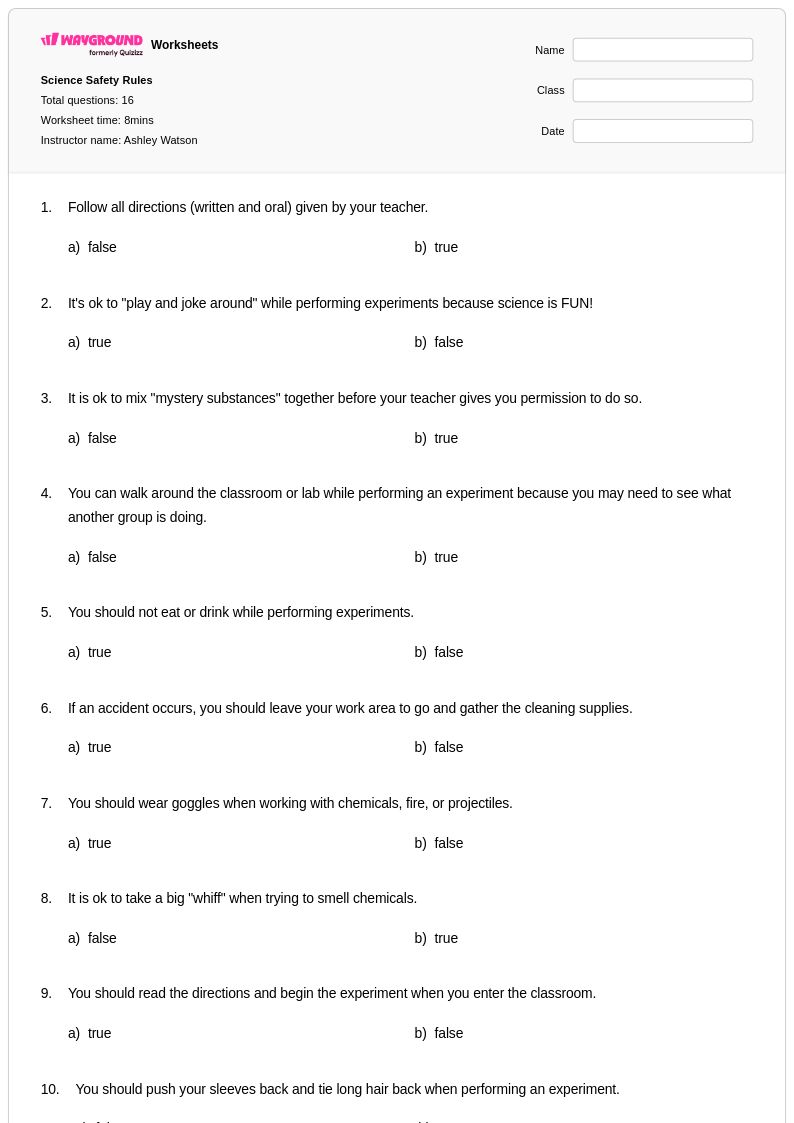
16 Q
1st - 5th
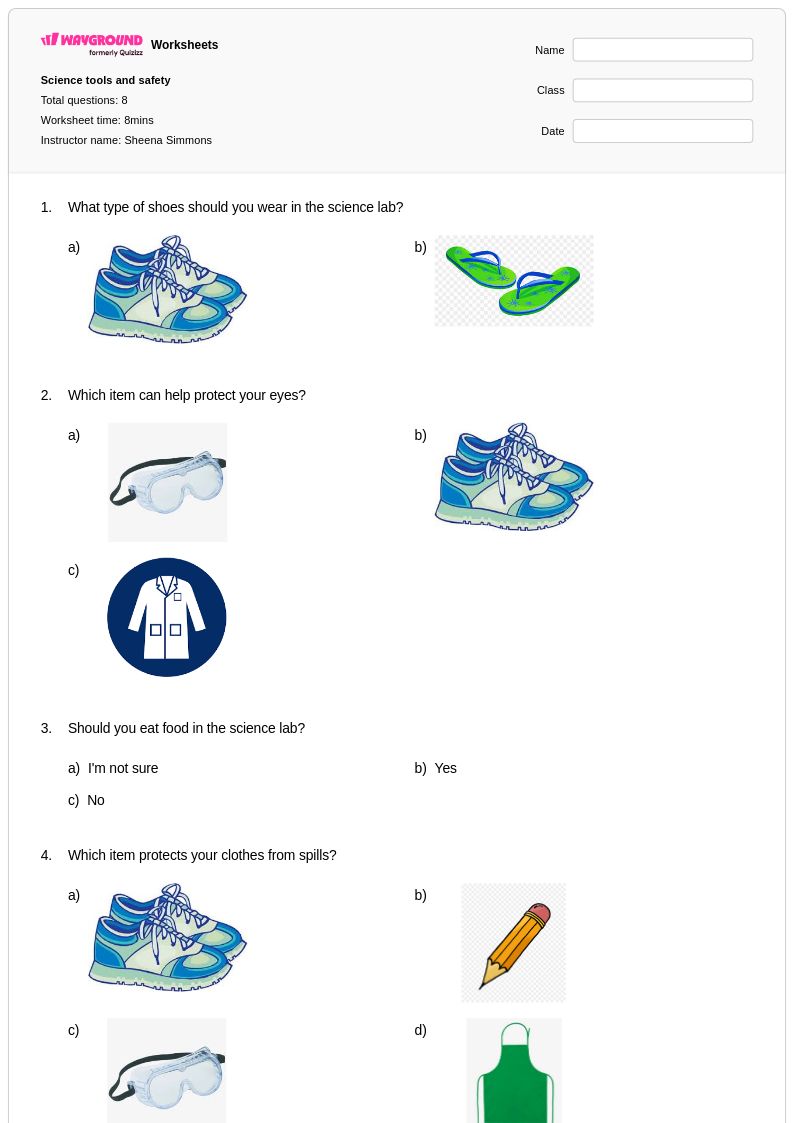
8 Q
1st
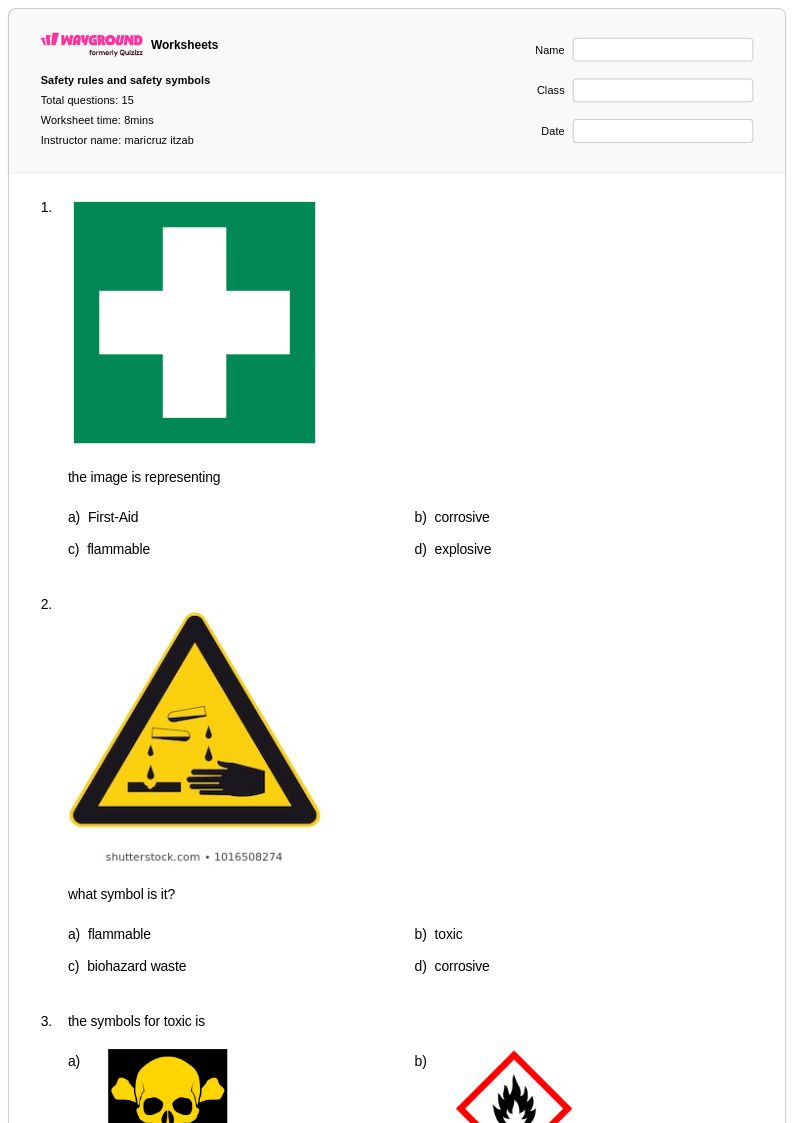
15 Q
1st
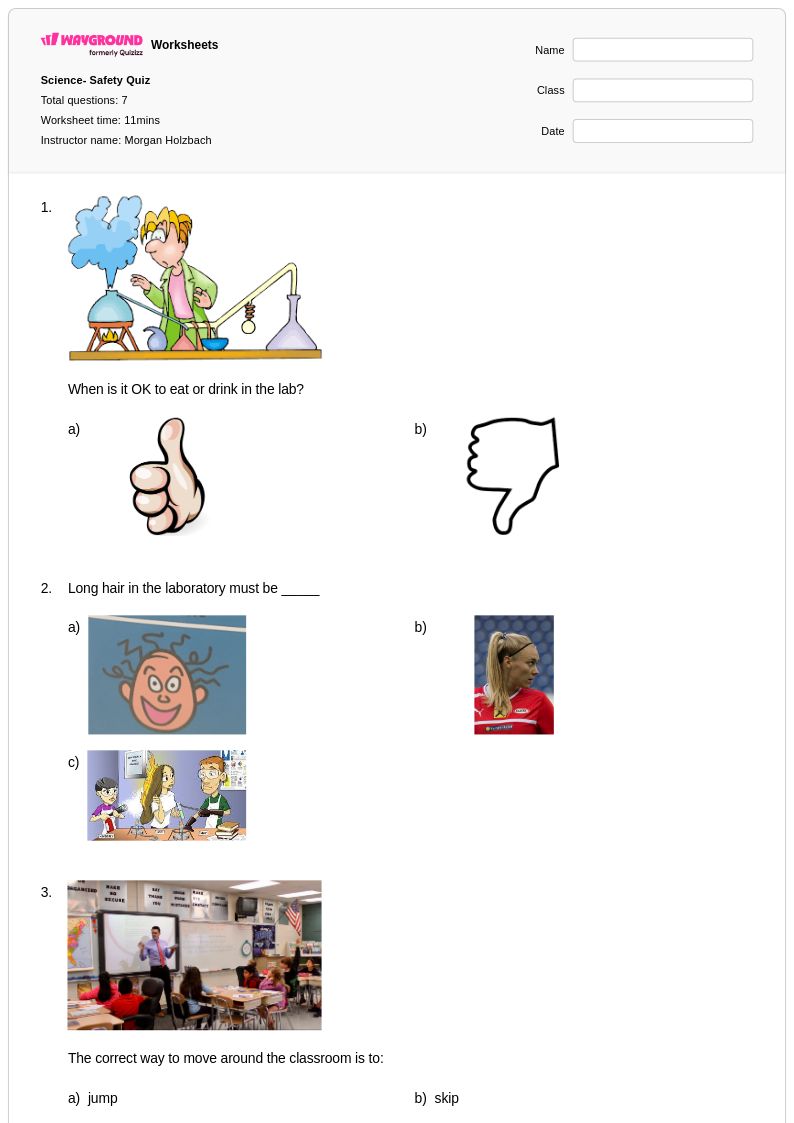
7 Q
KG - 2nd
15 Q
1st - 10th
23 Q
1st - 5th
20 Q
1st
10 Q
1st - 2nd
20 Q
1st
15 Q
1st - 4th
15 Q
1st - 5th
8 Q
1st
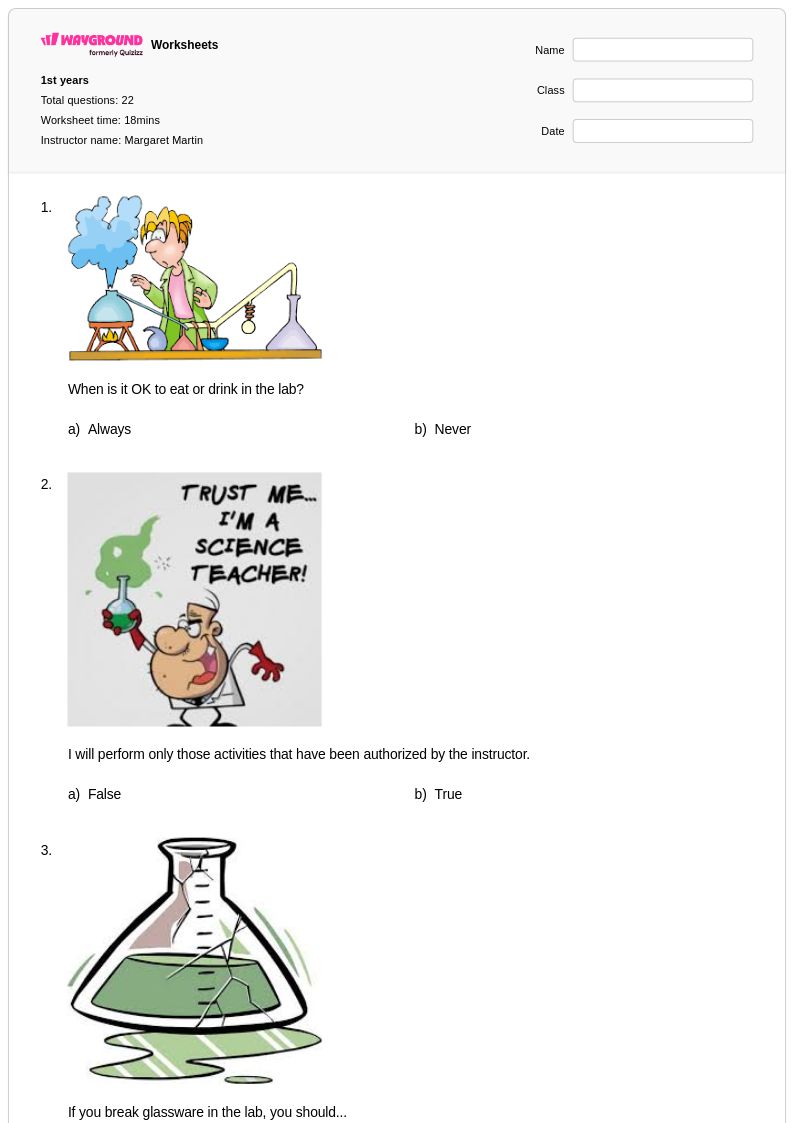
22 Q
1st
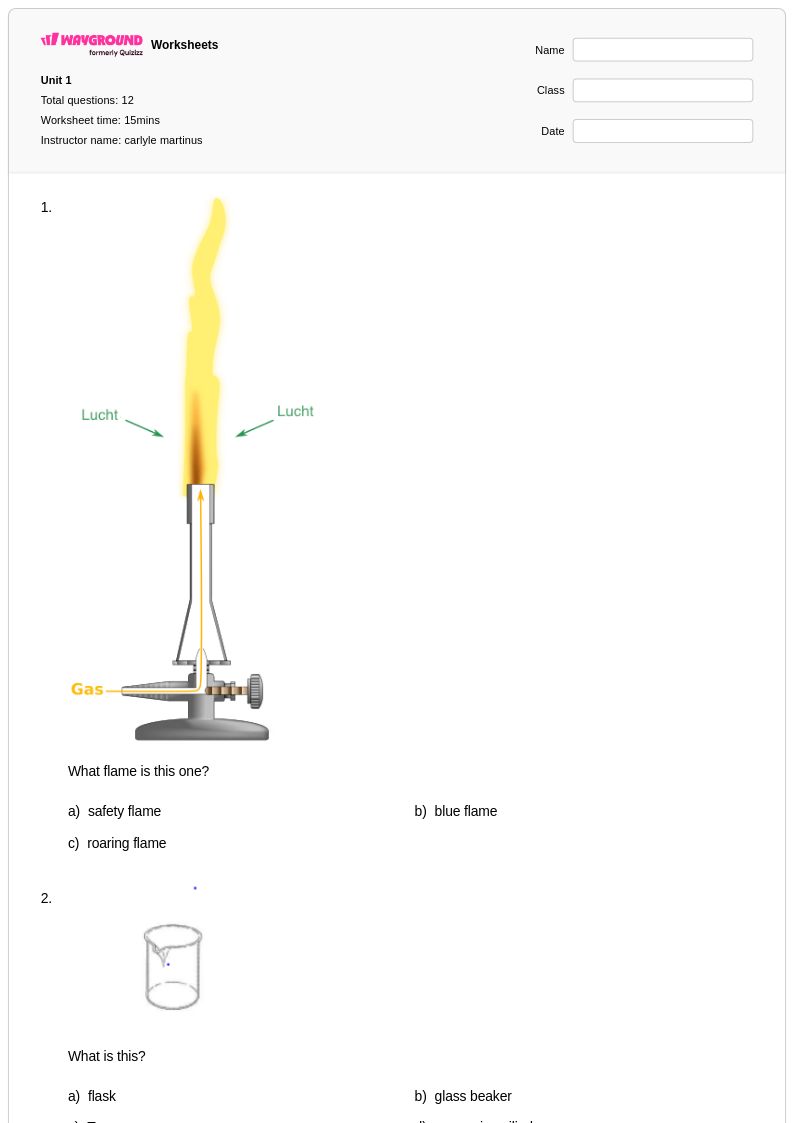
12 Q
1st
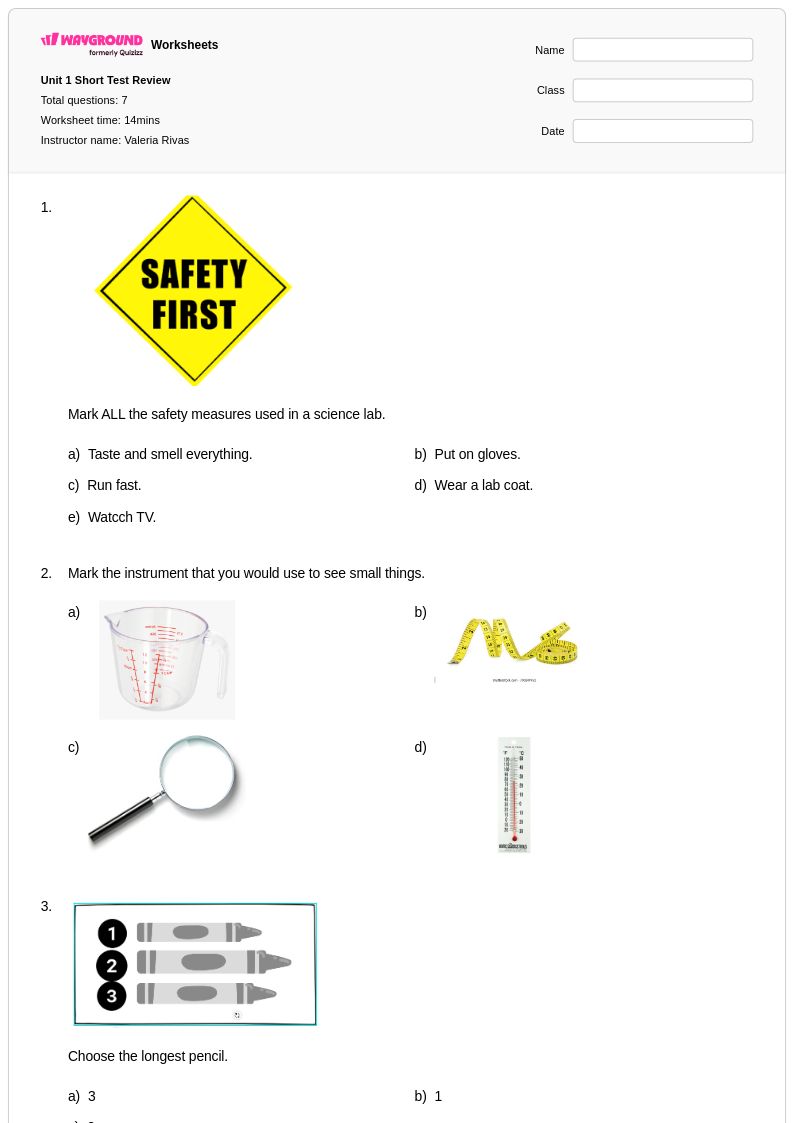
7 Q
1st
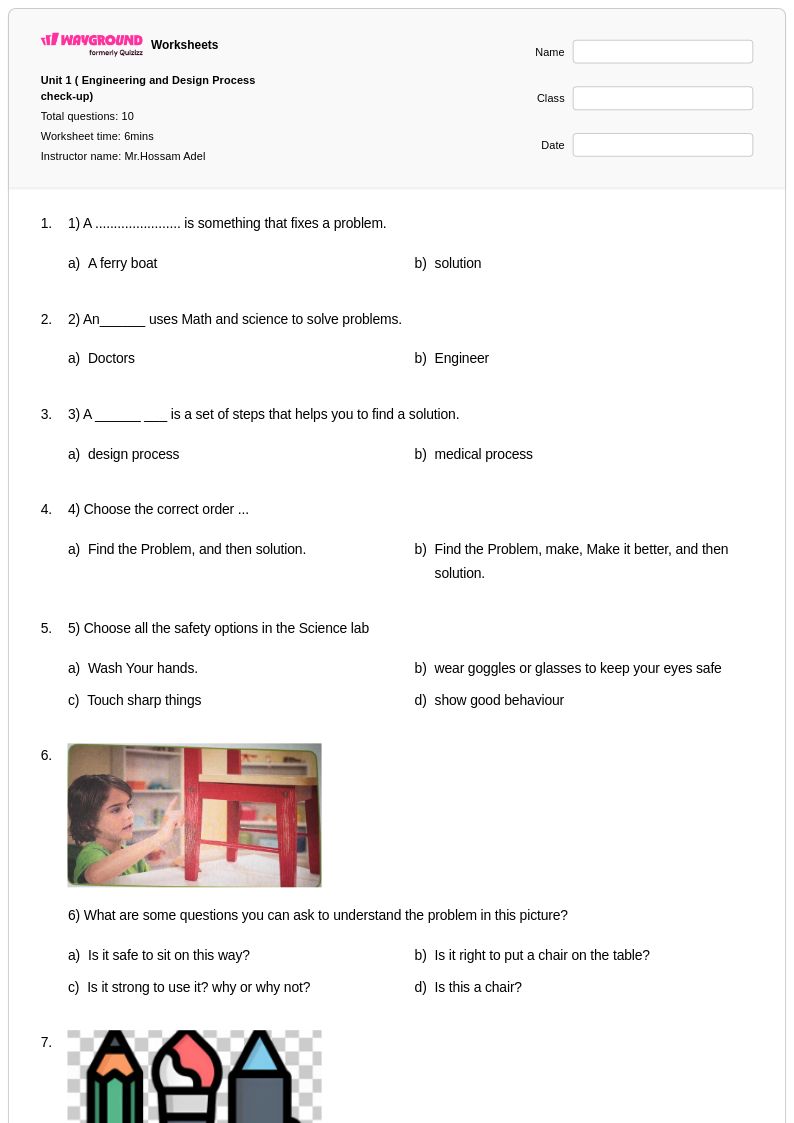
10 Q
1st
Explore Lab Safety Worksheets by Grades
Explore Other Subject Worksheets for grade 1
Explore printable Lab Safety worksheets for Grade 1
Lab Safety worksheets for Grade 1 available through Wayground (formerly Quizizz) introduce young learners to fundamental safety concepts essential for their first science experiences. These carefully designed resources help first-grade students develop critical awareness of classroom and laboratory safety rules through age-appropriate activities that emphasize recognition of safety symbols, proper handling of materials, and basic emergency procedures. The worksheets strengthen essential skills including visual identification of hazards, following step-by-step safety protocols, and understanding the importance of adult supervision during science activities. Teachers can access comprehensive practice problems that reinforce safety vocabulary, scenario-based questions that test student comprehension, and engaging exercises available as free printables with corresponding answer keys in convenient pdf format.
Wayground (formerly Quizizz) empowers educators with millions of teacher-created Lab Safety resources specifically tailored for Grade 1 instruction, featuring robust search and filtering capabilities that allow quick identification of materials aligned to science education standards. The platform's differentiation tools enable teachers to customize worksheets based on individual student needs, while flexible formatting options provide both printable pdf versions for hands-on classroom use and digital formats for interactive learning experiences. These comprehensive collections support instructional planning by offering varied approaches to safety education, facilitate targeted remediation for students who need additional practice with safety concepts, and provide enrichment opportunities through advanced safety scenarios that challenge students to apply their knowledge in new contexts.
FAQs
How do I teach lab safety to students who have never been in a science lab before?
What exercises help students practice identifying lab hazards?
What mistakes do students commonly make when learning lab safety rules?
How can I assess whether students understand lab safety before a practical experiment?
How do I use Wayground's lab safety worksheets in my classroom?
How do I differentiate lab safety instruction for students with different learning needs?