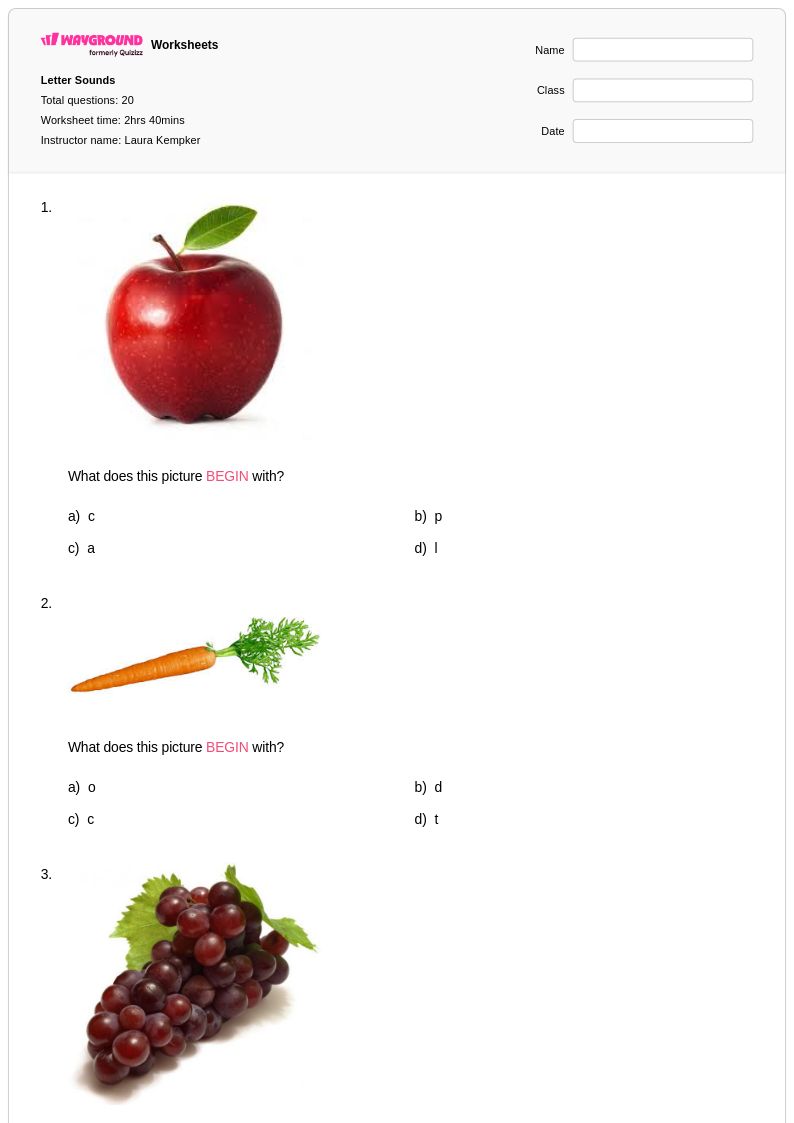
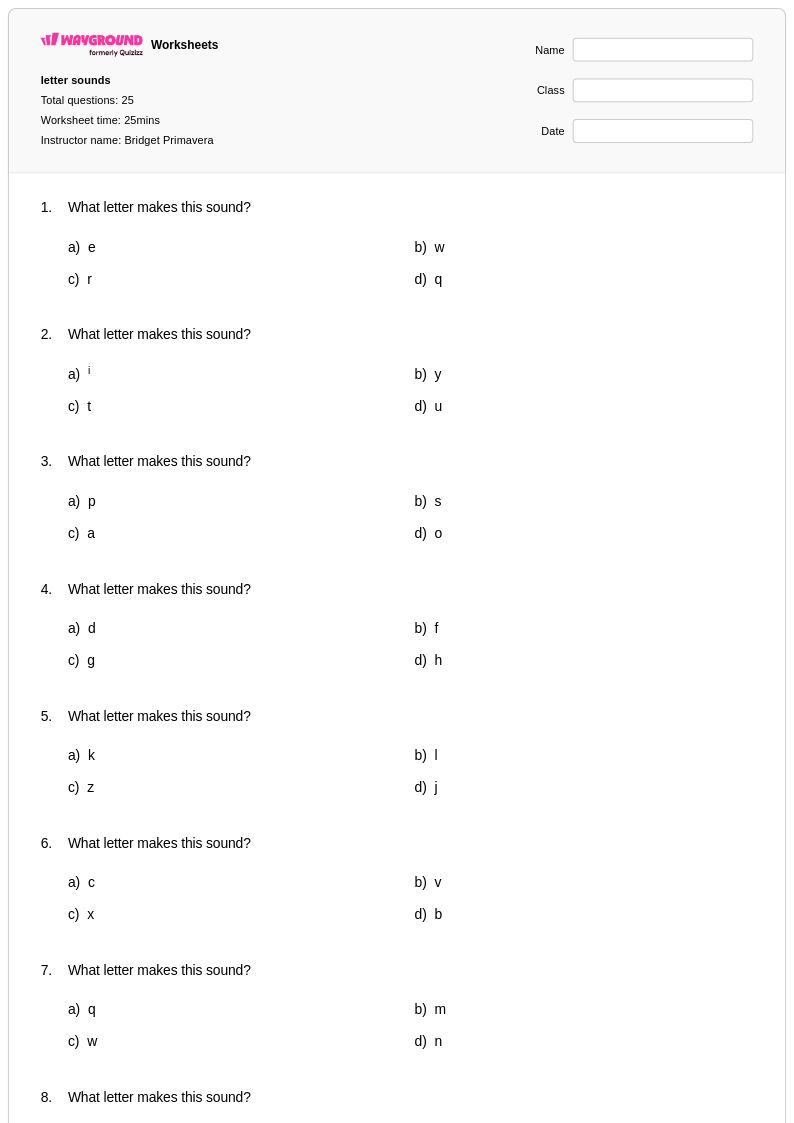
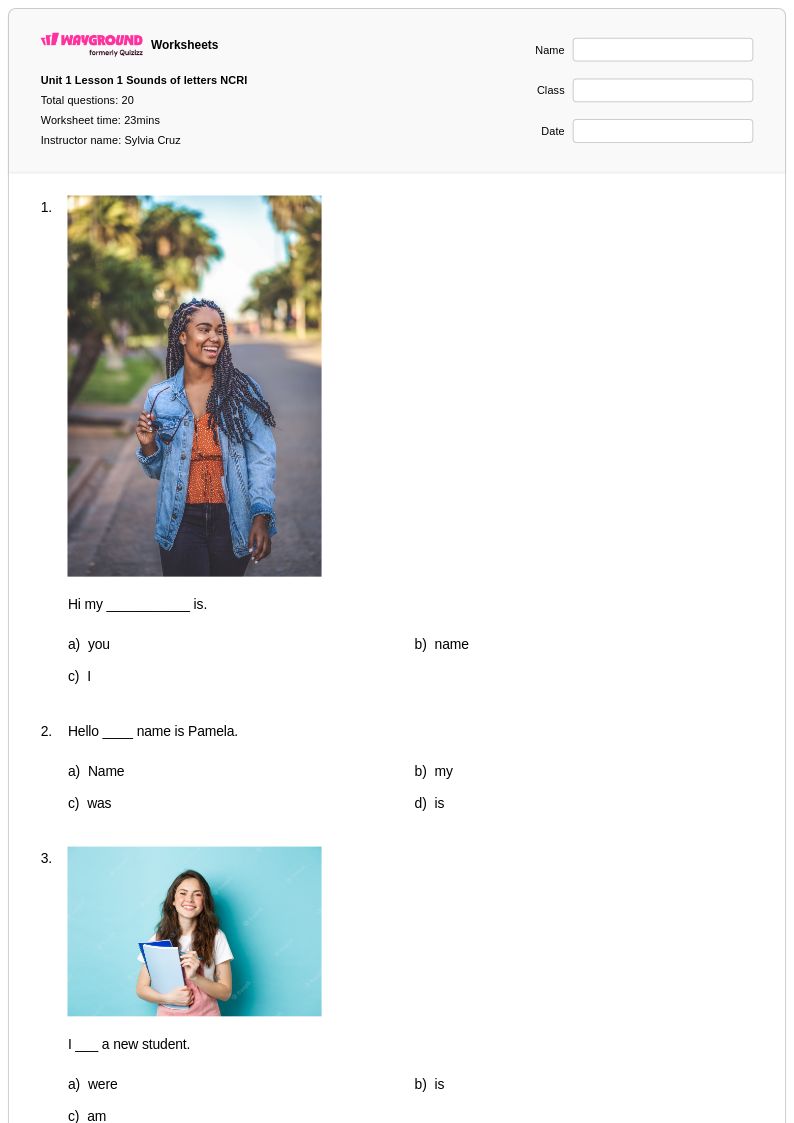
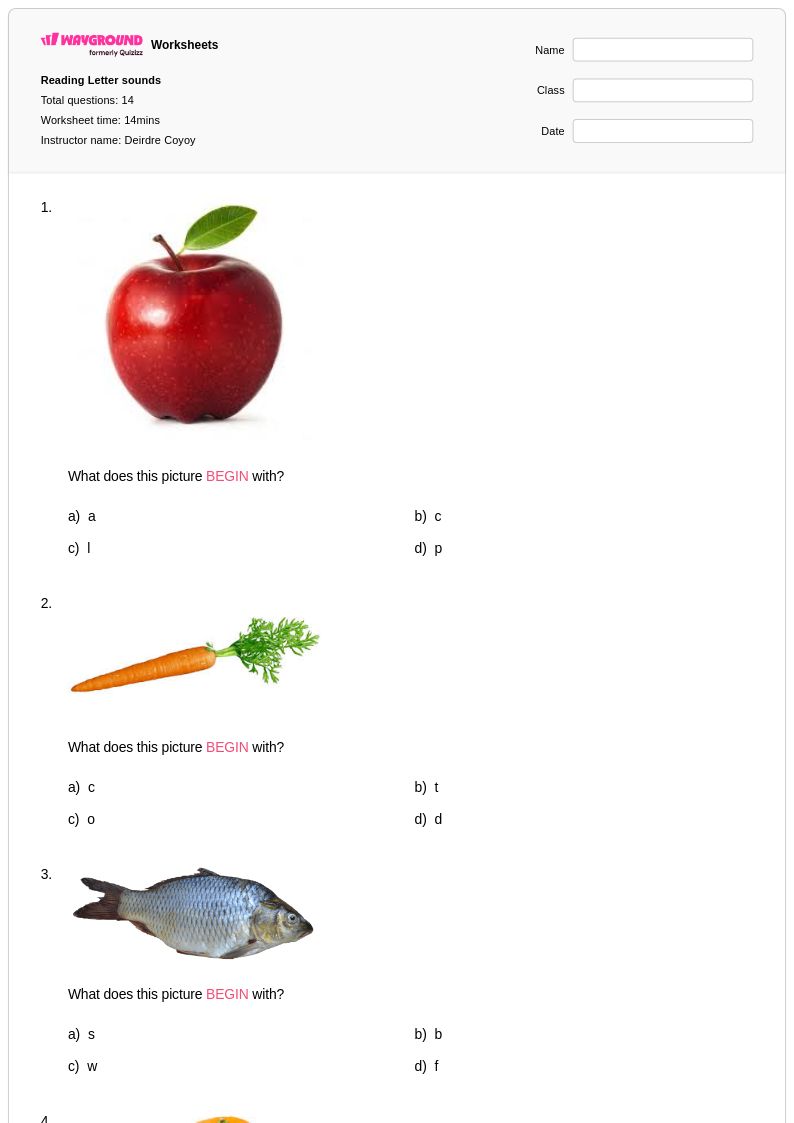
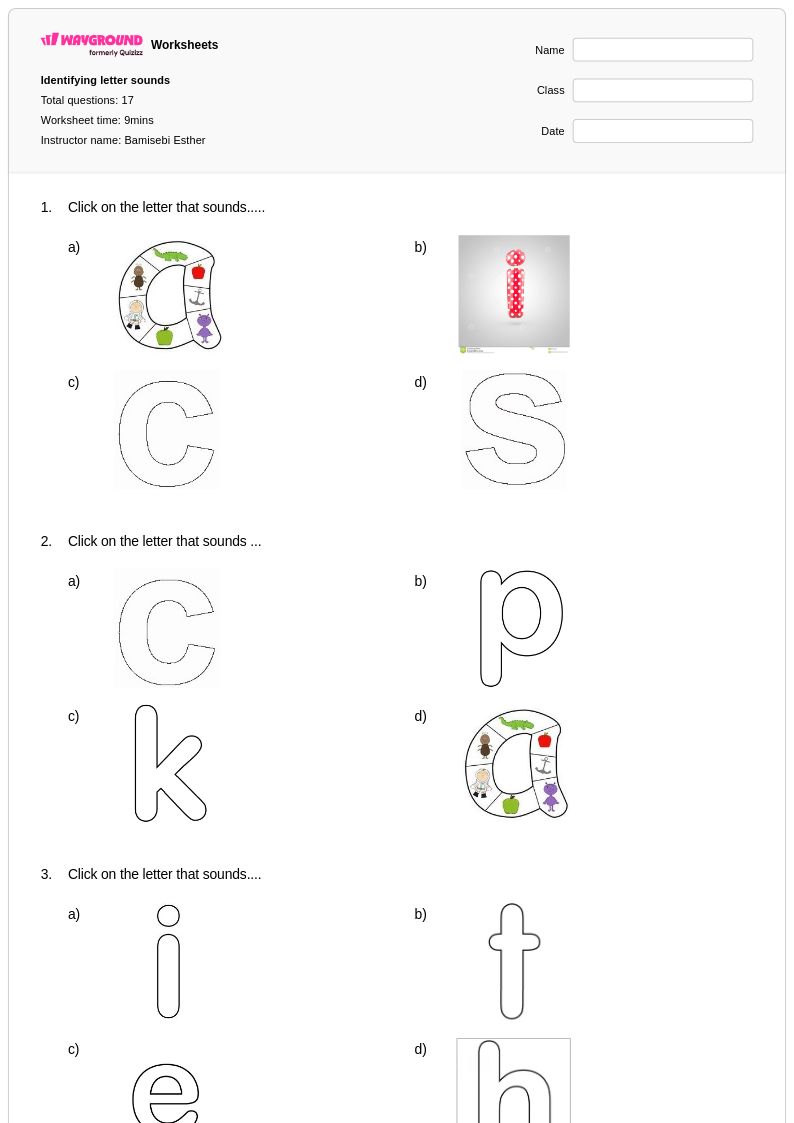
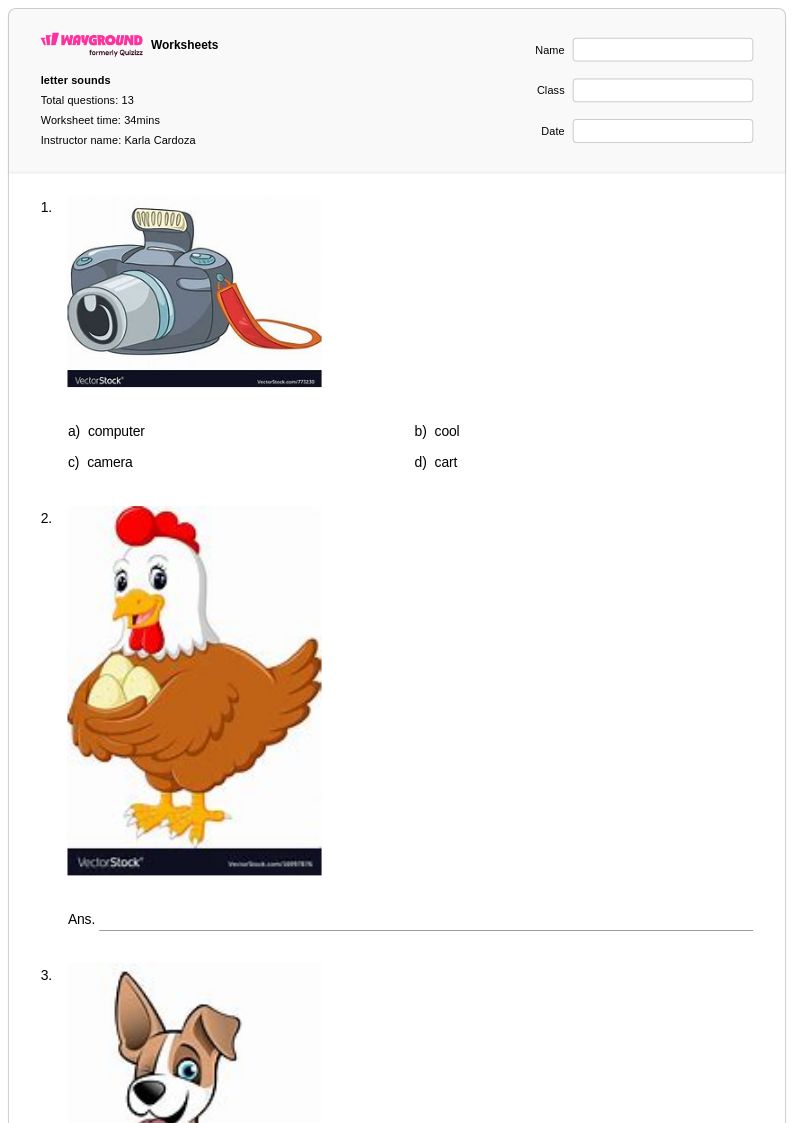
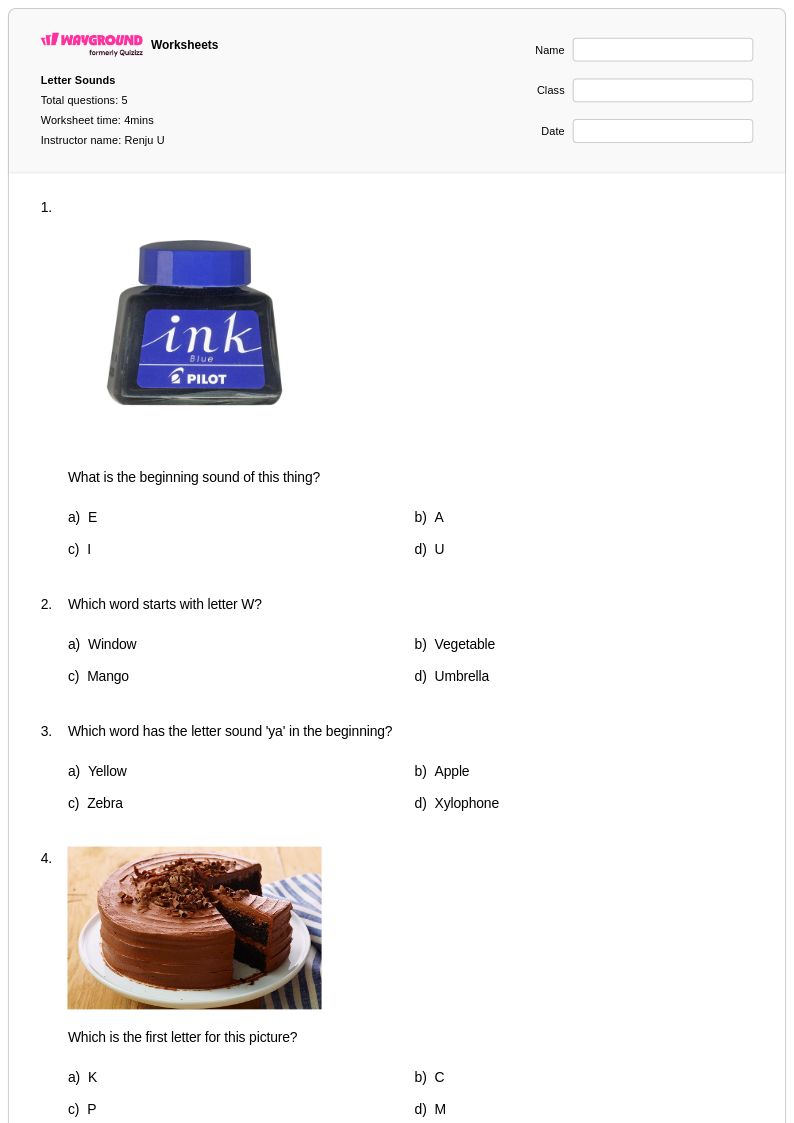
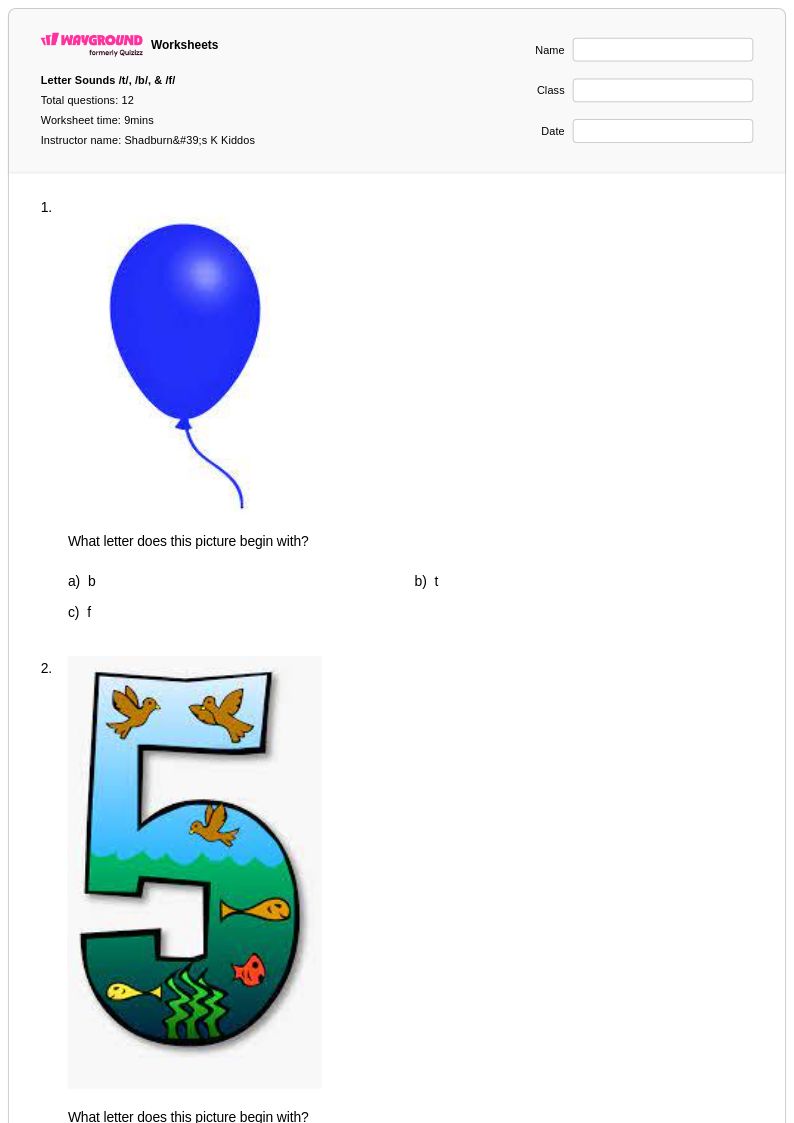
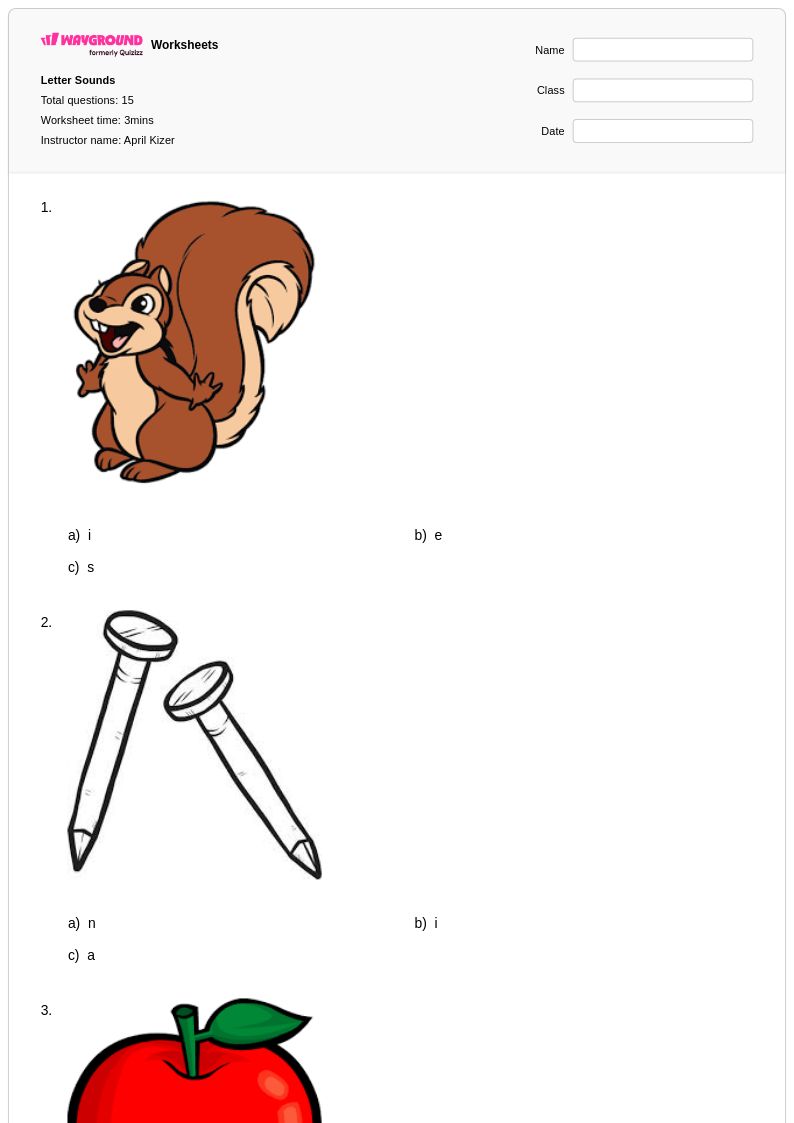
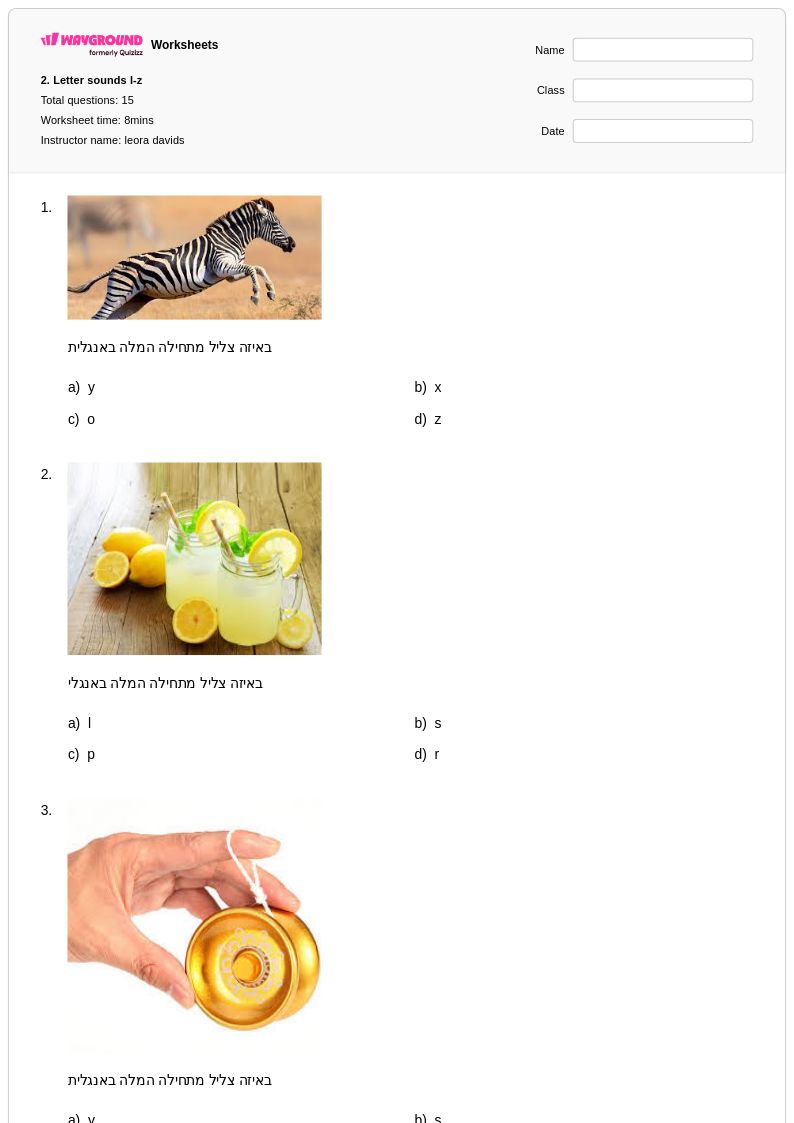
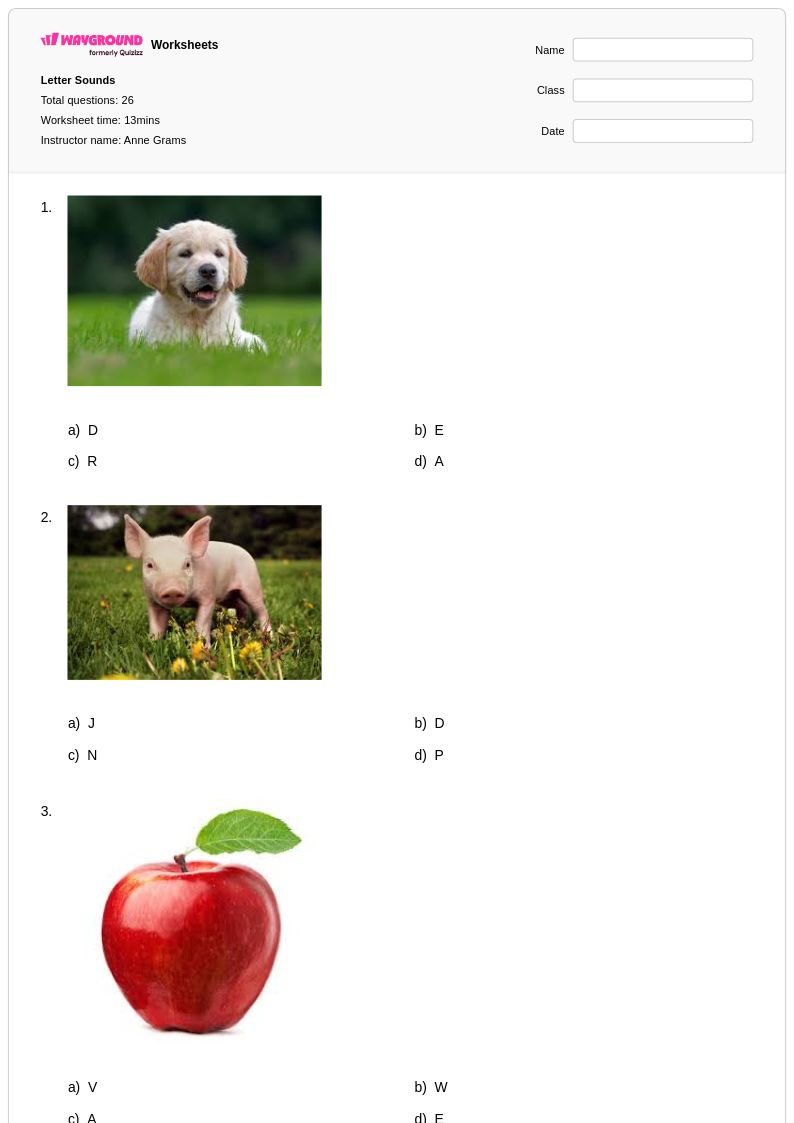
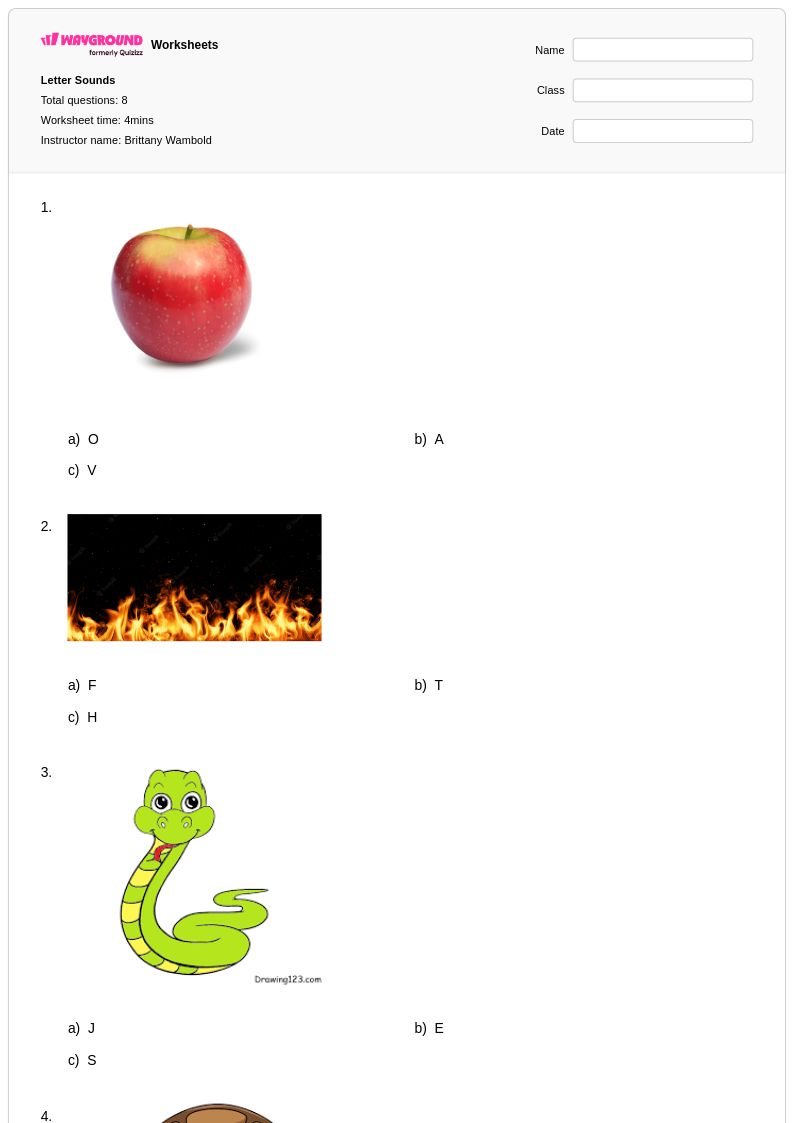
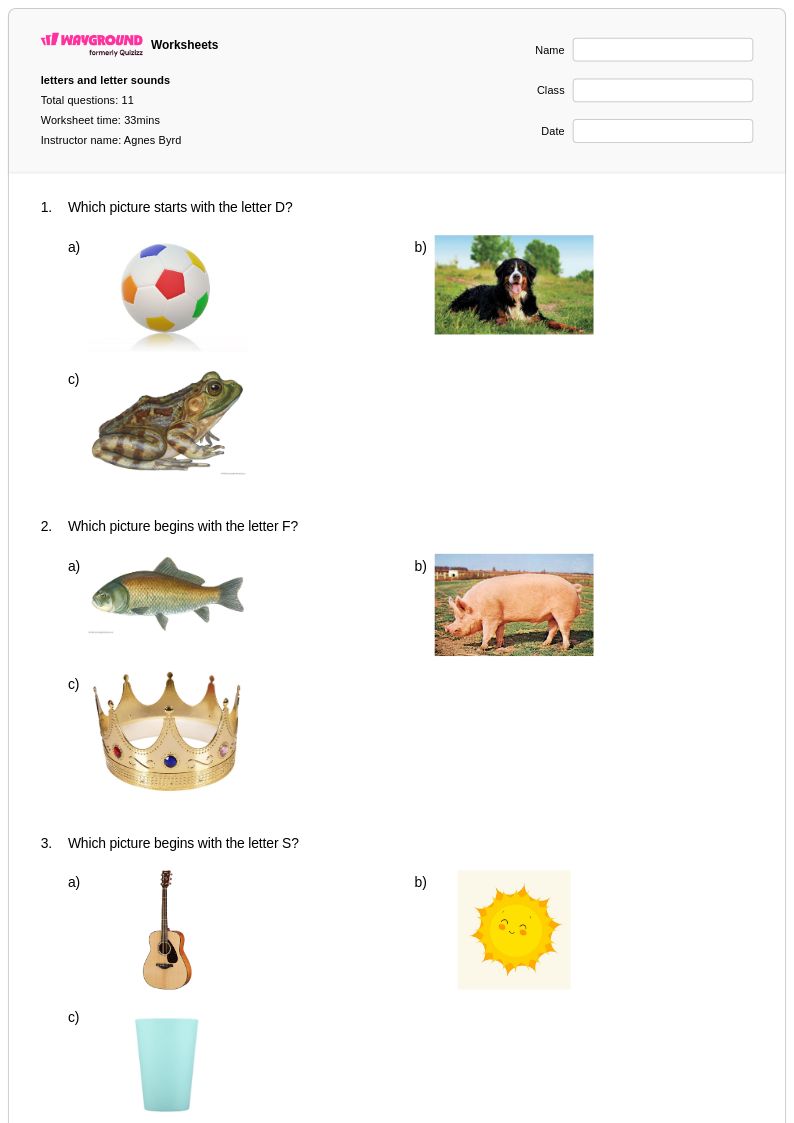
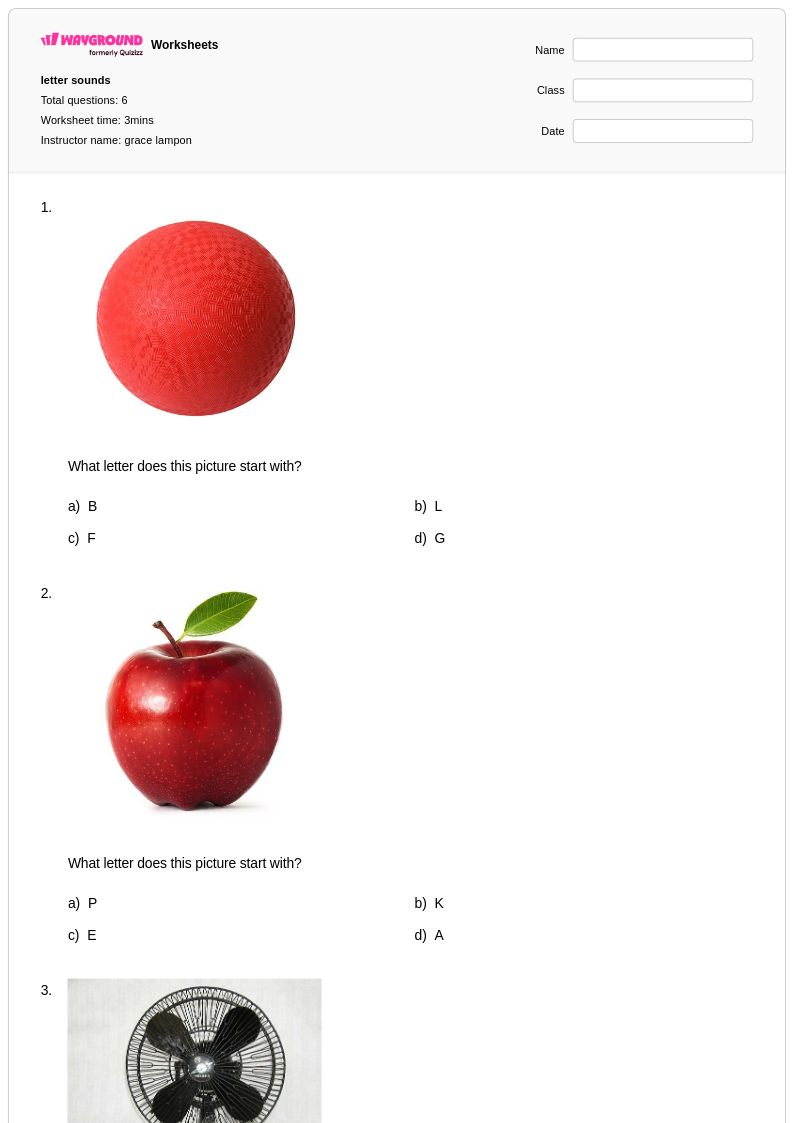
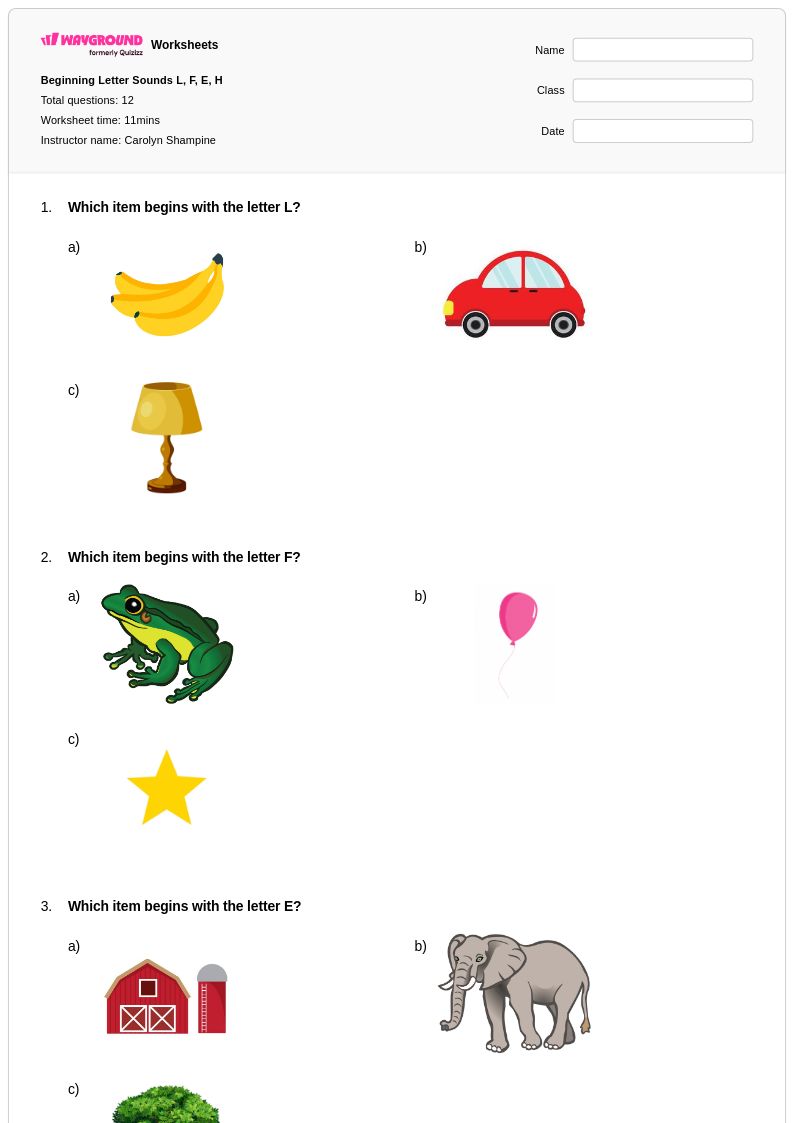
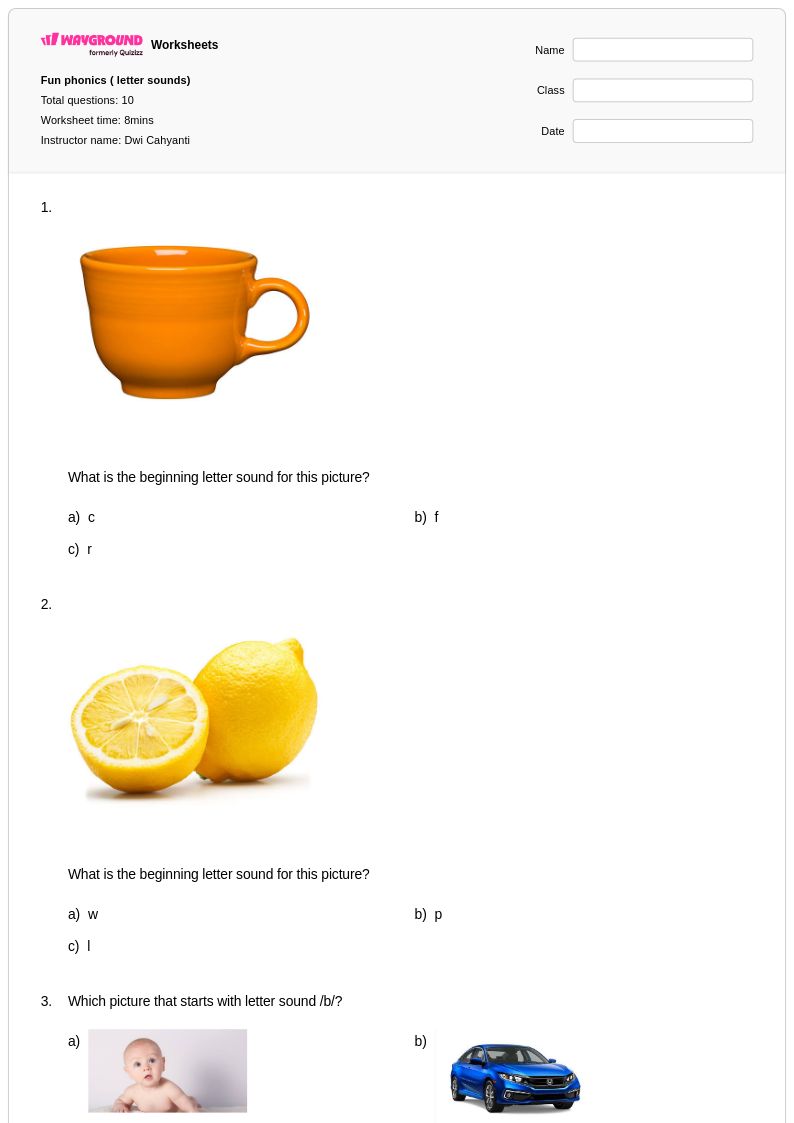
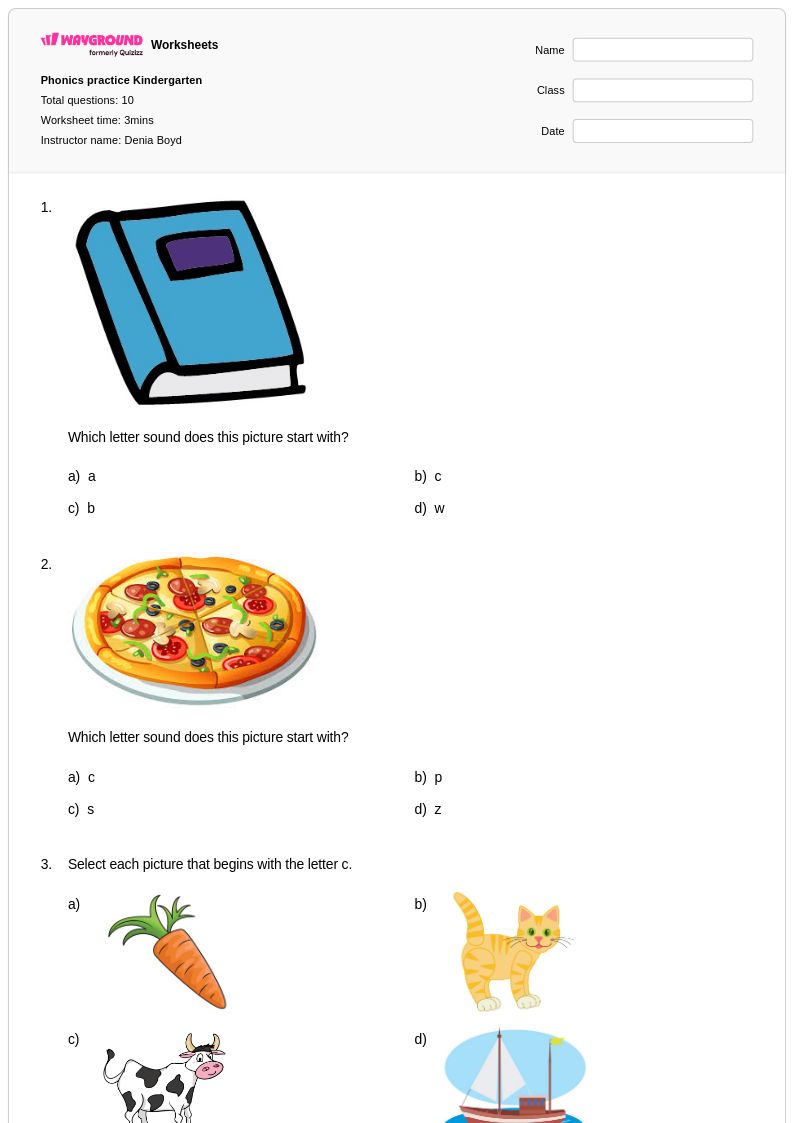
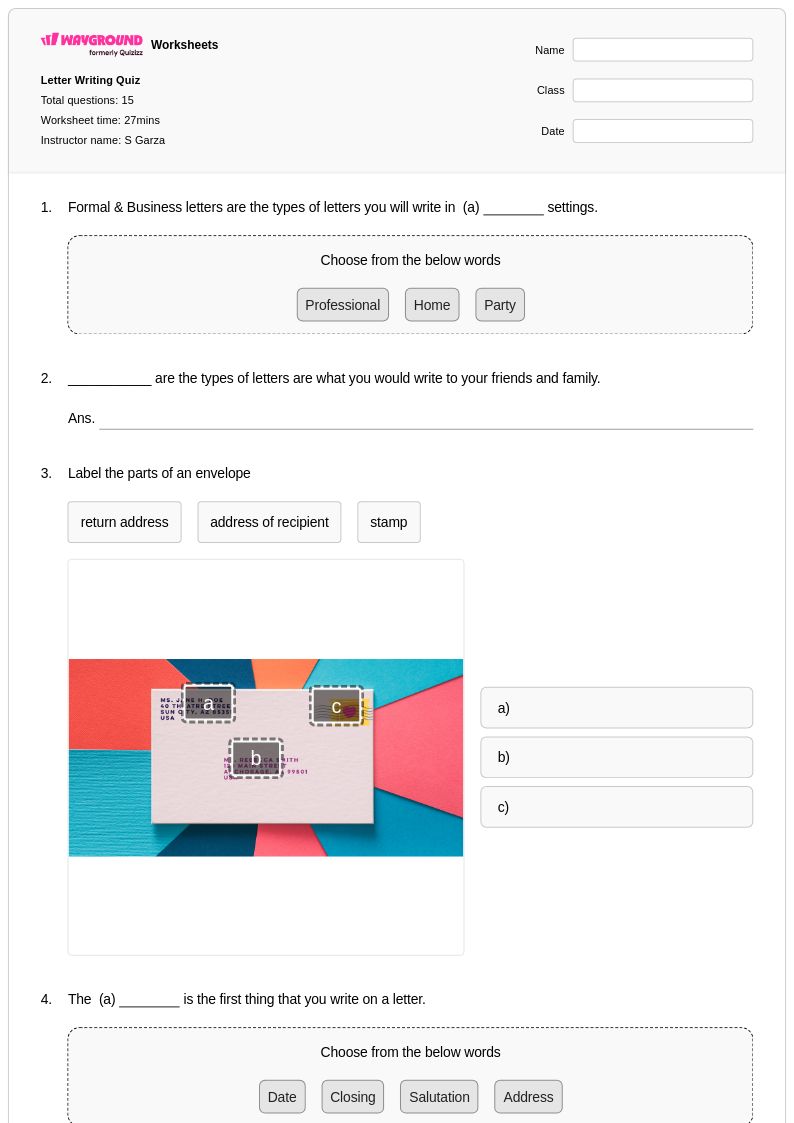
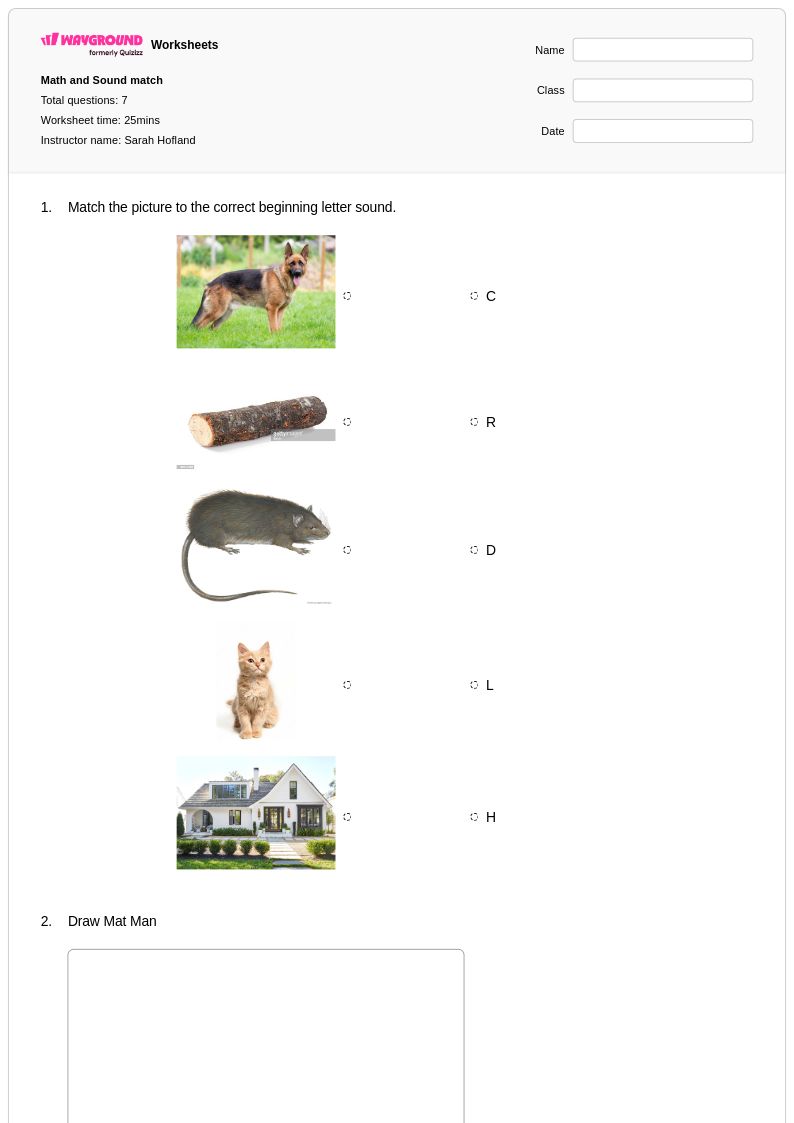
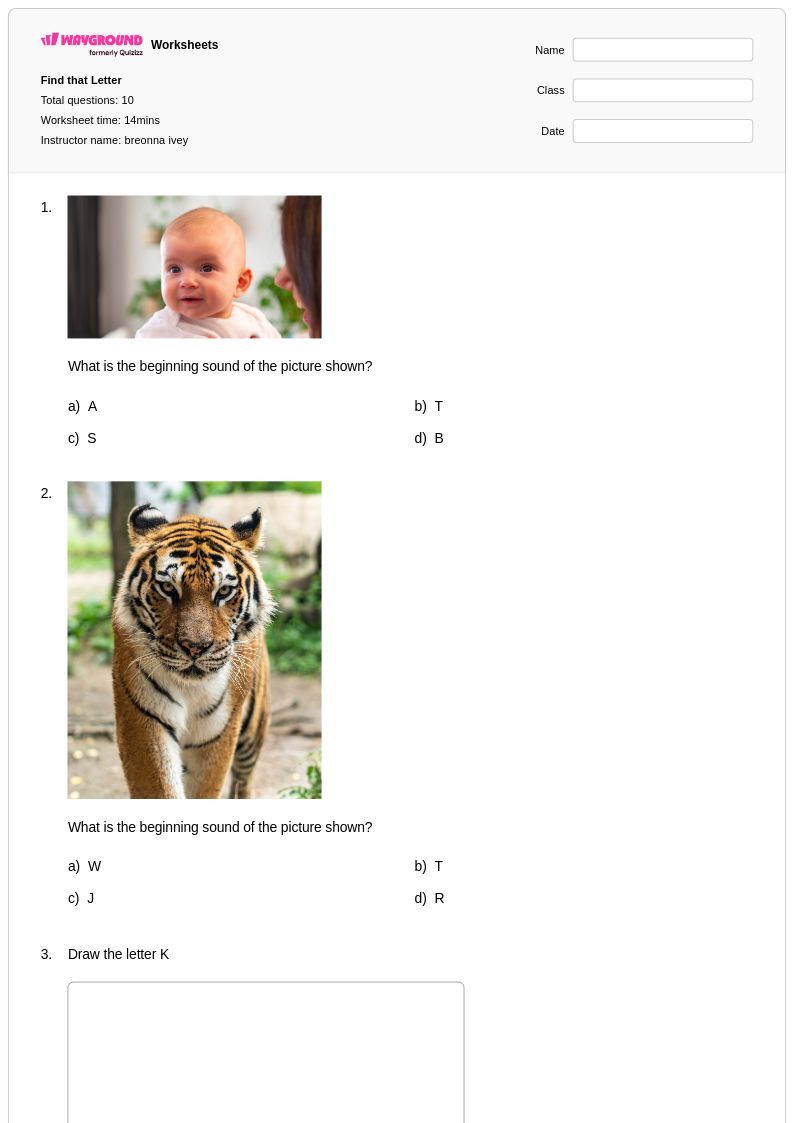
Master letter sounds with Wayground's free printable phonics worksheets and practice problems, complete with answer keys to help students build essential reading foundations through engaging PDF activities.
Letter sounds worksheets available through Wayground (formerly Quizizz) provide essential foundational practice for developing phonemic awareness and early reading skills. These comprehensive printables focus on helping students recognize, identify, and produce the individual sounds that letters make, which serves as the cornerstone of successful reading development. The worksheet collection includes systematic practice problems that guide learners through sound-symbol correspondence, beginning with single letter sounds and progressing to more complex phonetic patterns. Each free resource comes with a detailed answer key and is available in convenient pdf format, making it simple for educators to implement consistent phonics instruction that builds the auditory and visual processing skills necessary for decoding words.
Wayground (formerly Quizizz) empowers teachers with millions of carefully curated, teacher-created letter sounds resources that streamline phonics instruction across diverse learning environments. The platform's advanced search and filtering capabilities allow educators to quickly locate materials that align with specific phonics standards and match individual student needs. These differentiation tools enable seamless customization of worksheets for remediation, enrichment, or targeted skill practice, while the flexible digital and printable formats accommodate various teaching preferences and classroom configurations. The extensive collection supports comprehensive lesson planning by providing educators with immediate access to high-quality phonics materials that can be easily integrated into daily instruction, small group interventions, or independent practice sessions, ensuring that all students receive the systematic letter sound practice essential for reading success.
FAQs
How do I teach letter sounds to early readers?
Effective letter sound instruction begins with explicit, systematic phonics teaching, introducing one sound-symbol correspondence at a time before blending them into words. Teachers should use multisensory techniques, having students say the sound, write the letter, and identify it in words simultaneously. Starting with high-frequency consonants and short vowels, then progressing to blends, digraphs, and vowel patterns, gives students a reliable decoding framework they can apply independently.
What exercises help students practice letter sounds?
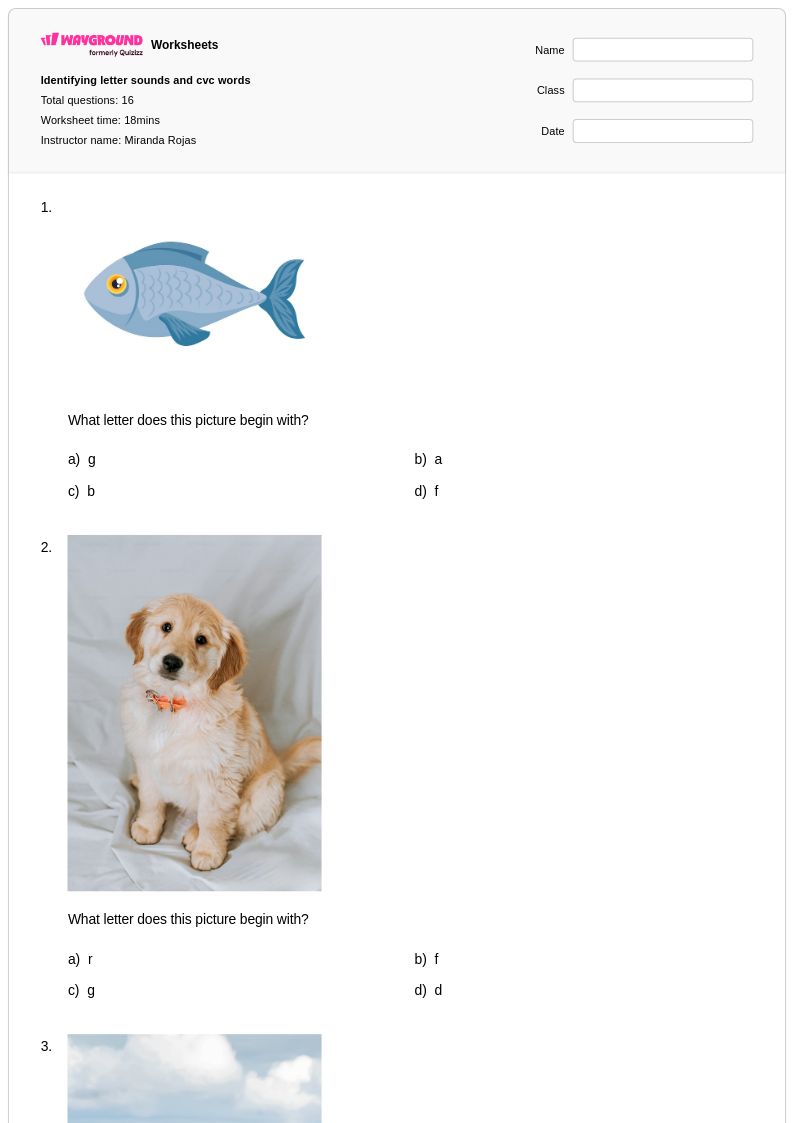
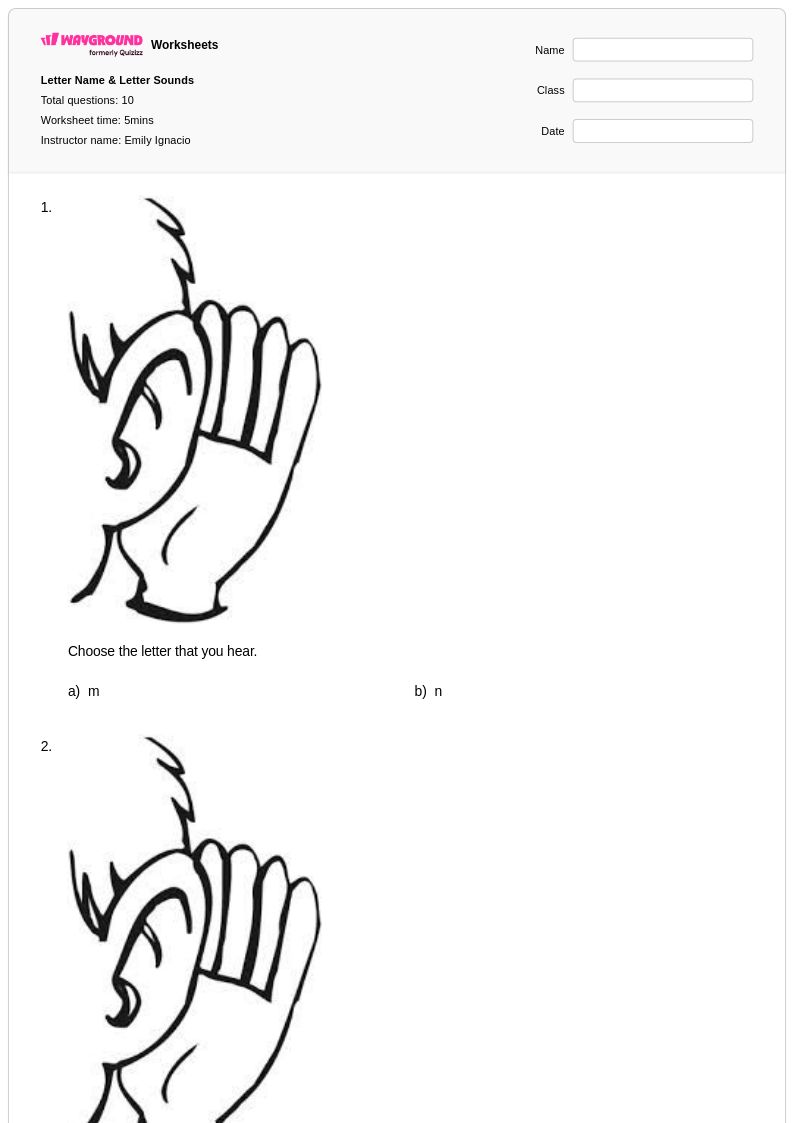
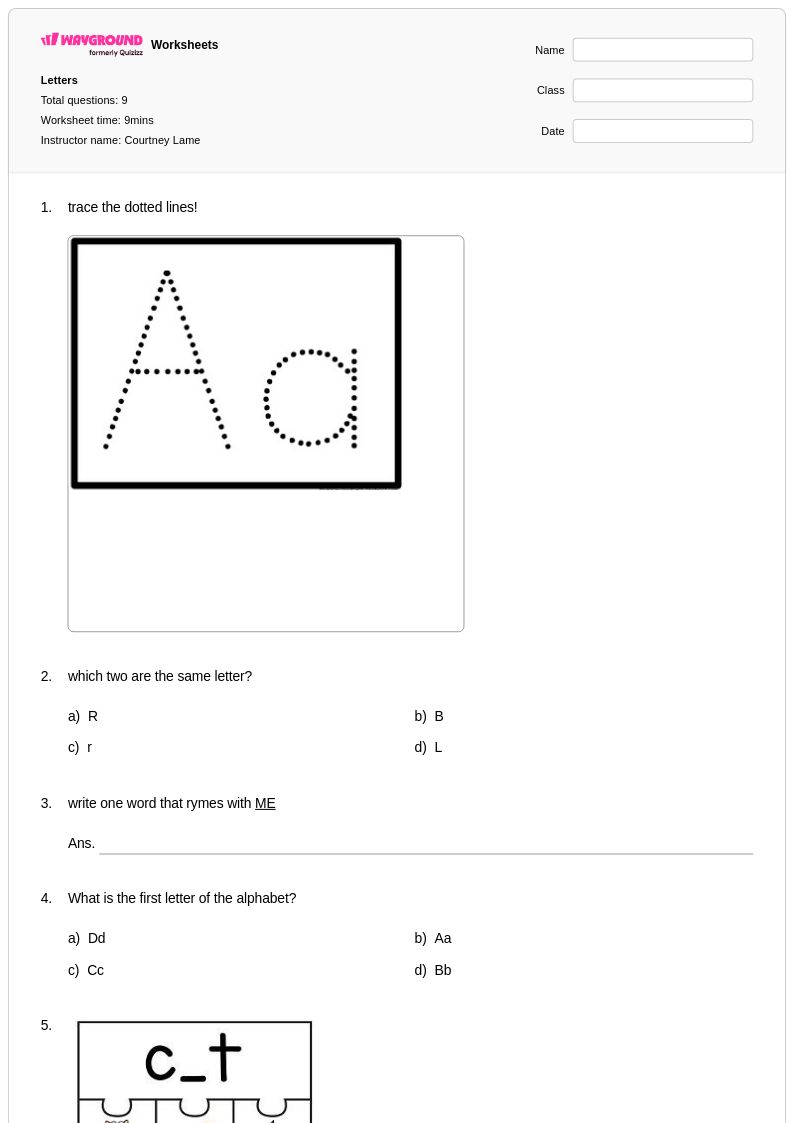
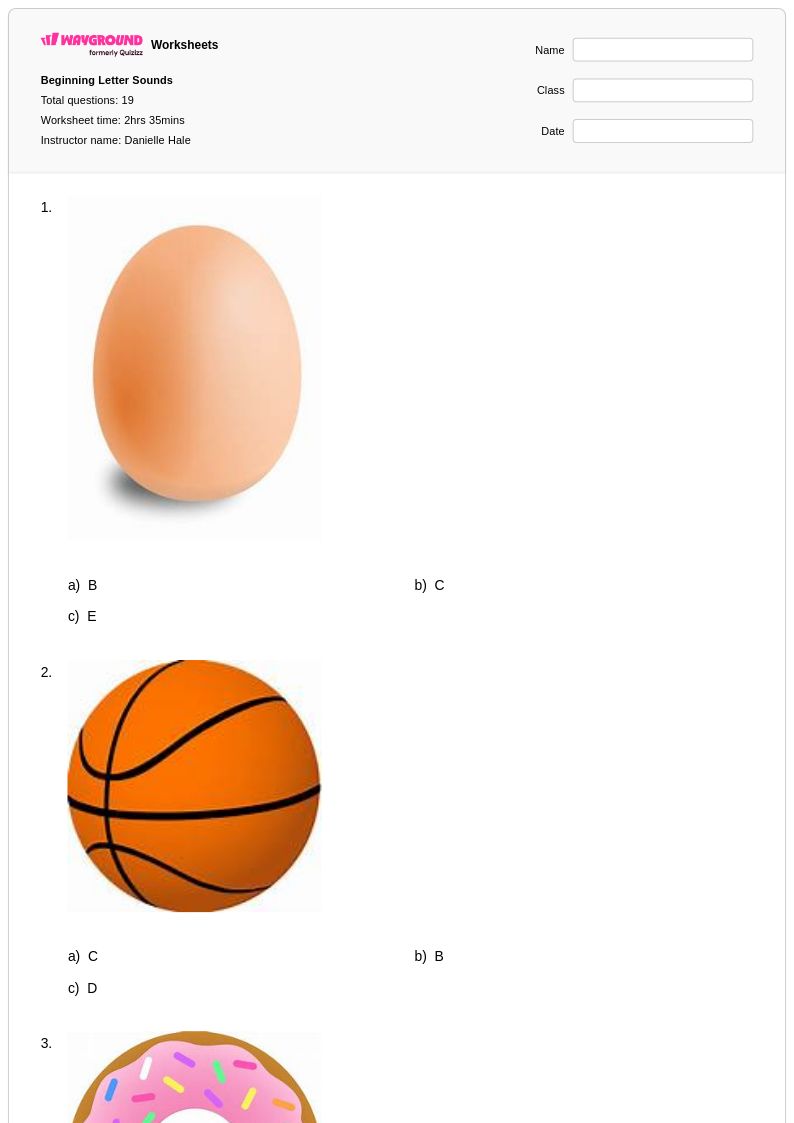
Targeted practice exercises include beginning sound sorts, picture-to-letter matching, CVC word building, and ending sound identification activities. Middle sound work is particularly valuable because medial vowels are often the last sound students isolate accurately. Structured worksheets that move from single letter sounds to consonant patterns and then to more complex phonetic structures give students repeated, scaffolded exposure that reinforces sound-symbol correspondence over time.
What mistakes do students commonly make when learning letter sounds?
One of the most frequent errors is confusing visually similar letters like b and d, or p and q, which leads to sound substitution errors during decoding. Students also commonly struggle to isolate the medial vowel in CVC words, often omitting or misidentifying it. Silent letters, vocalic R patterns, and double consonants are additional common stumbling blocks because they violate the one-letter-one-sound expectation students develop early in phonics instruction.
How can I differentiate letter sound instruction for struggling readers?
Struggling readers benefit from reduced complexity, such as focusing on one sound family at a time before introducing contrasting patterns. On Wayground, teachers can enable Read Aloud so students hear questions and words read to them, and Reduced Answer Choices to lower cognitive load during practice. Extended time settings can also be applied per student, ensuring that pace differences do not prevent accurate demonstration of phonics knowledge.
How do I use Wayground's letter sounds worksheets in my classroom?
Wayground's letter sounds worksheets are available as printable PDFs for traditional classroom use and in digital formats for technology-integrated instruction, making them flexible for whole-class lessons, small group intervention, or independent practice. Teachers can also host the worksheets as a live quiz on Wayground, giving students an interactive experience while automatically collecting results. The included answer keys make grading and formative feedback quick and consistent across all formats.
What letter sound topics should I cover in early phonics instruction?
A thorough early phonics sequence should cover initial sounds, ending sounds, middle sounds, basic consonants, short vowels in CVC patterns, and rhyming word families. From there, instruction should progress to consonant blends, double consonants, silent letters, and vocalic R, which are phonetic patterns that commonly appear in grade-level text. Covering this full range ensures students develop flexible decoding skills rather than relying solely on memorization.