Free Printable Line Tracing Worksheets for Kindergarten
Develop kindergarten students' foundational writing skills with Wayground's free line tracing worksheets and printables, featuring practice problems and answer keys to strengthen pencil control and pre-writing abilities.
Explore printable Line Tracing worksheets for Kindergarten
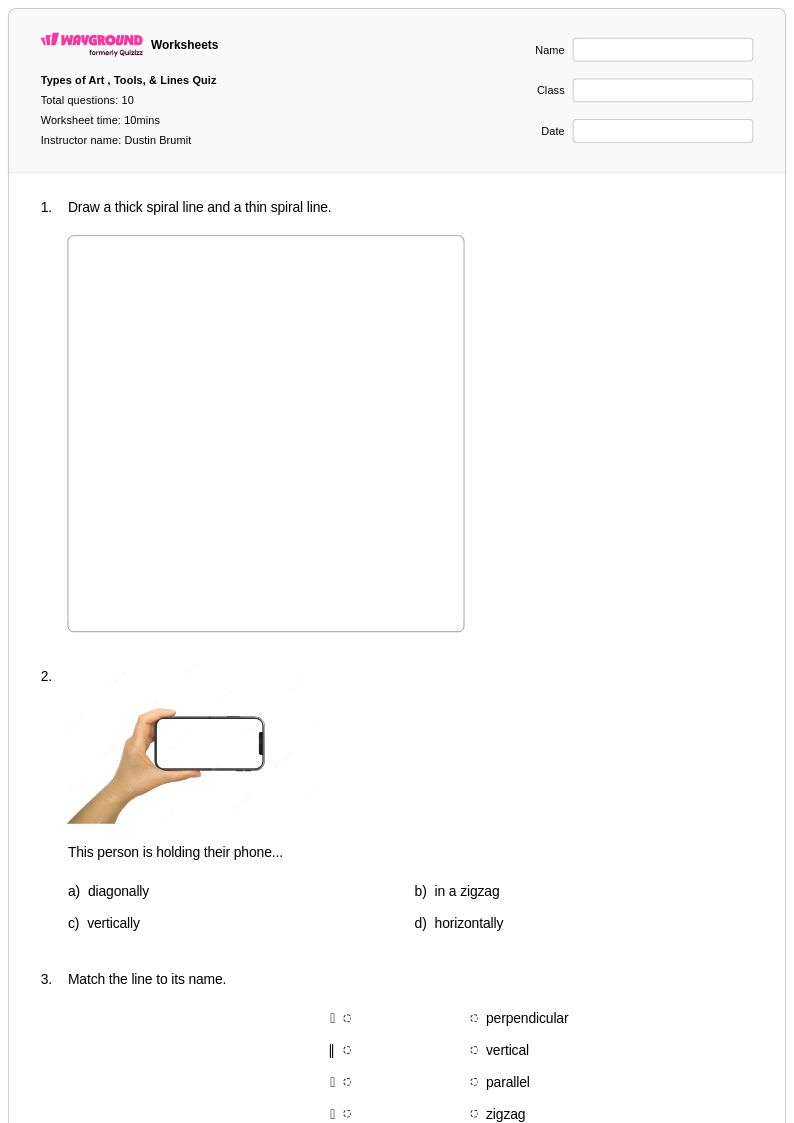
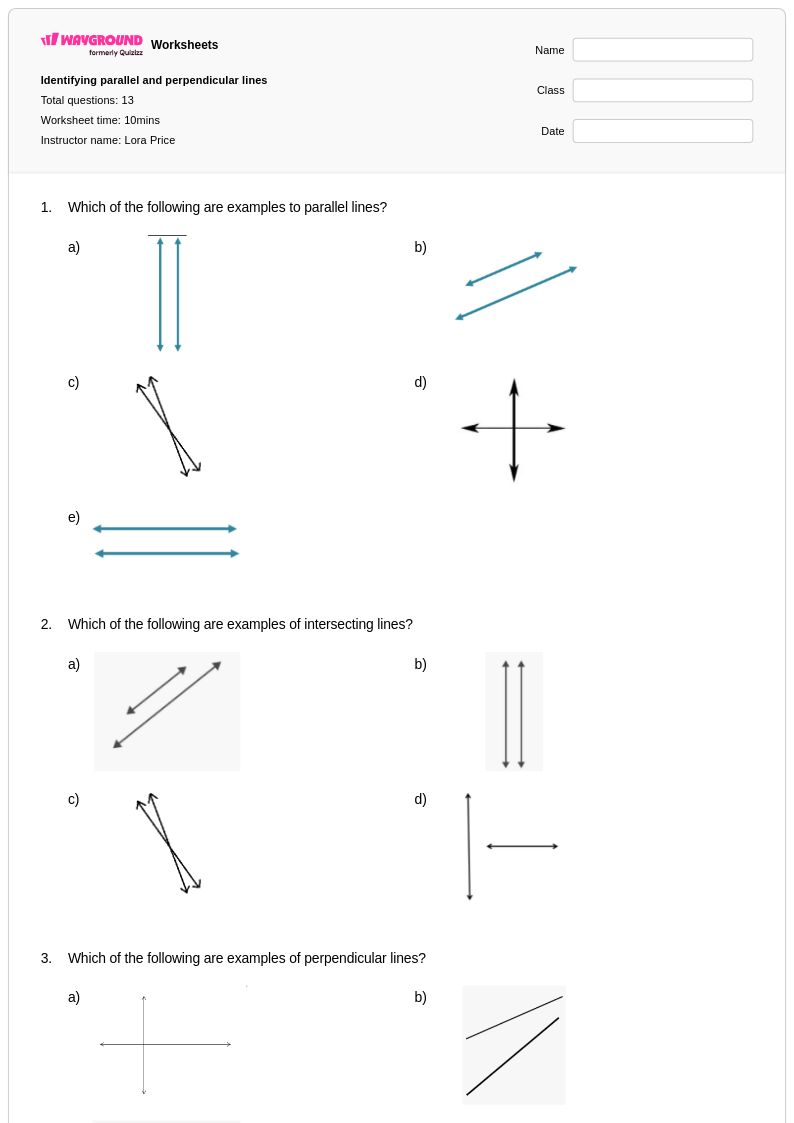
Line tracing worksheets for kindergarten students available through Wayground (formerly Quizizz) provide essential foundational practice for developing proper pencil control and pre-writing skills. These carefully designed printables focus on helping young learners master the fundamental motor skills needed for letter formation by guiding them through systematic tracing exercises with straight lines, curved lines, zigzag patterns, and basic shapes. Each worksheet strengthens fine motor coordination, hand-eye coordination, and spatial awareness while building the muscle memory necessary for successful handwriting development. Teachers can access comprehensive collections that include practice problems ranging from simple horizontal and vertical lines to more complex diagonal and wavy line patterns, with answer keys provided to support instructional planning and assessment.
Wayground (formerly Quizizz) empowers educators with millions of teacher-created line tracing resources that can be easily searched, filtered, and customized to meet diverse classroom needs. The platform's robust differentiation tools allow teachers to modify worksheets for varying skill levels, ensuring that both struggling learners and advanced students receive appropriate challenges in their handwriting development journey. These standards-aligned materials are available in both printable pdf format and interactive digital versions, providing flexibility for different learning environments and instructional approaches. Teachers can efficiently plan targeted skill practice sessions, implement remediation strategies for students who need additional support, and create enrichment activities that extend learning, all while having access to professionally designed resources that align with kindergarten developmental milestones and handwriting readiness standards.
FAQs
How do I teach line tracing to beginners?
Start with large, simple straight lines before progressing to curves, zigzags, and diagonal strokes. Model the correct pencil grip and directional movement explicitly, using verbal cues like 'start at the dot and pull down' to reinforce spatial awareness. Consistent short sessions build the muscle memory students need before moving on to letter formation.
What types of lines should students practice before learning to write letters?
Students should practice horizontal lines, vertical lines, diagonal strokes, curves, and zigzags in roughly that order of complexity. Each line type develops a specific motor pattern that maps directly onto letter components — for example, curves underpin letters like 'c', 'o', and 'a', while vertical strokes support 'l', 'i', and 't'. Building these patterns systematically reduces errors when students transition to actual letter writing.
What exercises help students practice fine motor control for handwriting?
Guided tracing exercises using dotted guidelines with clear starting points are among the most effective practices for developing fine motor control, because they give students a defined path to follow while still requiring deliberate hand movement. Progressing from wider dotted guides to narrower ones gradually increases the precision required. Repeated tracing of varied line types — straight, curved, and zigzag — builds the hand-eye coordination and directional consistency that handwriting demands.
What mistakes do students commonly make during line tracing activities?
The most common errors include starting from the wrong end of the line, inconsistent pencil pressure that results in faint or broken strokes, and drifting off the dotted path due to weak hand-eye coordination. Some students also rush through exercises without maintaining the intended direction of movement. Reviewing completed worksheets against an answer key helps teachers identify whether errors are grip-related, directional, or attentional.
How can I differentiate line tracing practice for students at different skill levels?
Offer simpler straight-line worksheets to students who are still developing basic pencil control, while providing curves and complex patterns to those who are ready for more challenge. On Wayground, teachers can apply individual accommodations such as Read Aloud for students who need instructions read to them, or adjusted font sizes and themes through reading mode for accessibility. These settings can be applied per student without other students being notified, allowing seamless differentiation within the same classroom session.
How do I use Wayground's line tracing worksheets in my classroom?
Wayground's line tracing worksheets are available as printable PDFs for traditional pencil-and-paper practice and in digital formats for technology-integrated classrooms. Teachers can assign them as independent seat work, small-group stations, or homework, and can also host them as a quiz directly on Wayground to track completion. Each worksheet includes dotted guidelines, starting points, and an answer key so teachers can assess technique without additional preparation.