
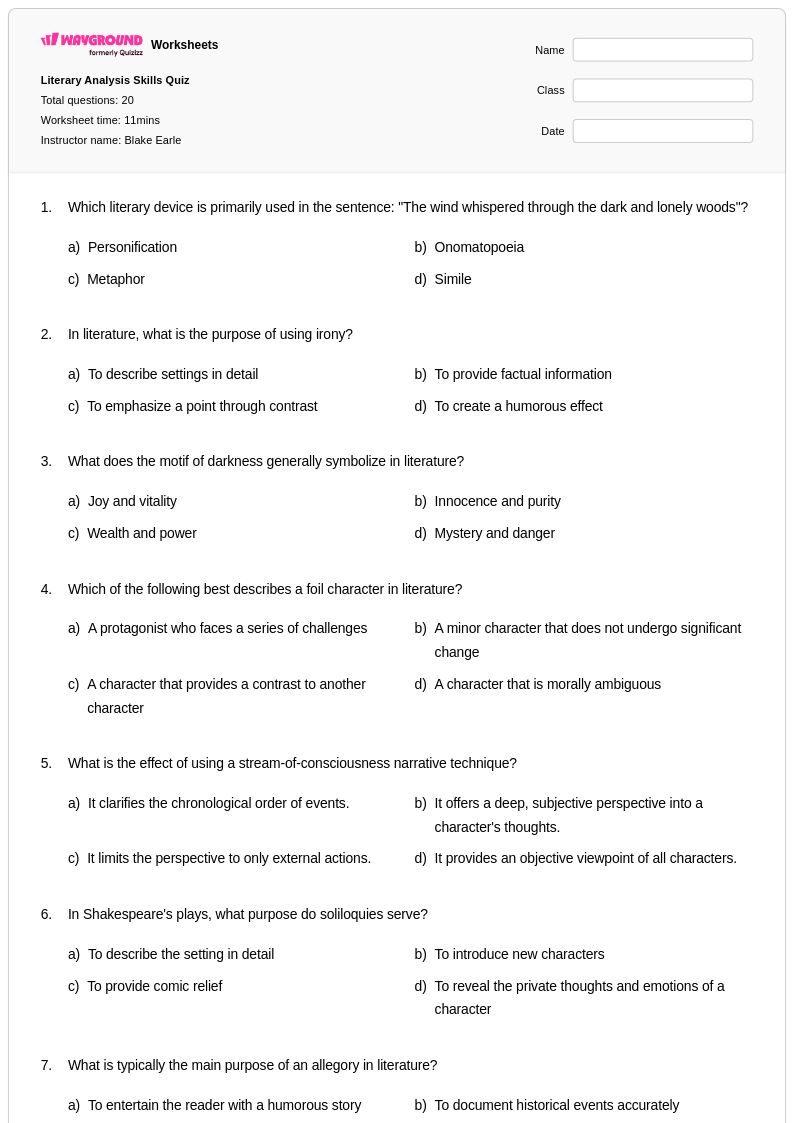
20 Q
12th
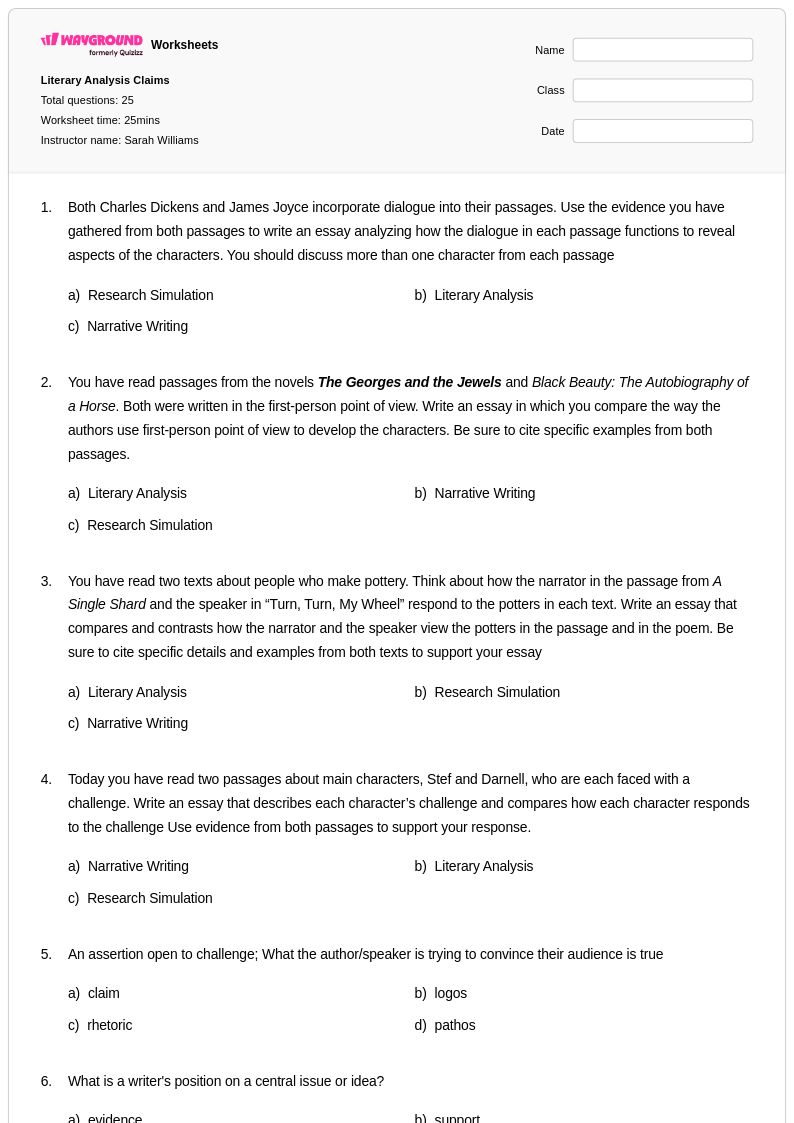
25 Q
10th - Uni
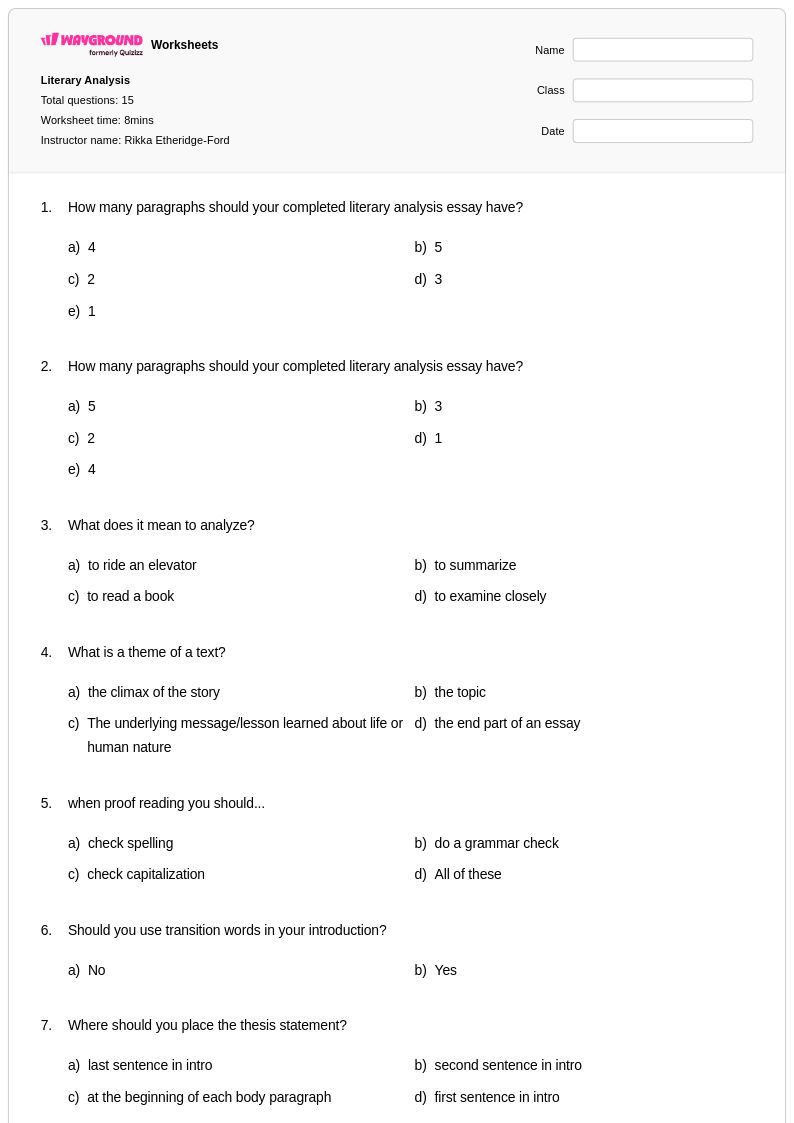
15 Q
8th - Uni
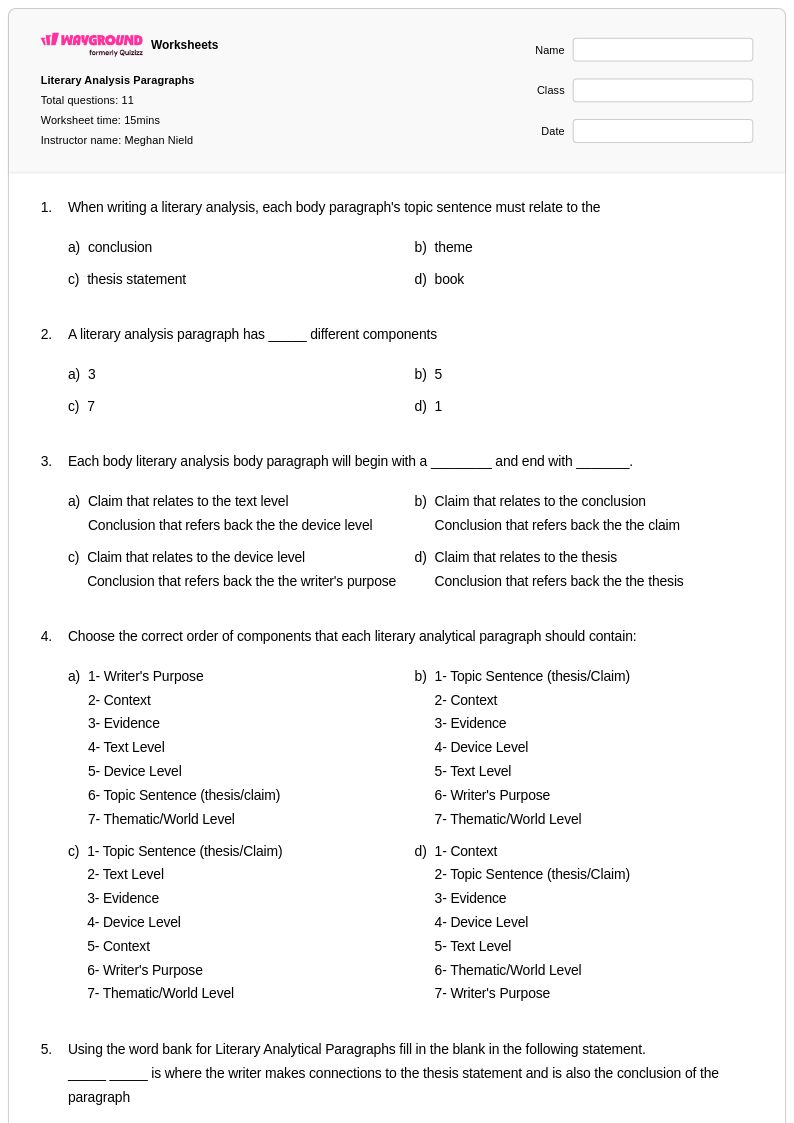
11 Q
12th
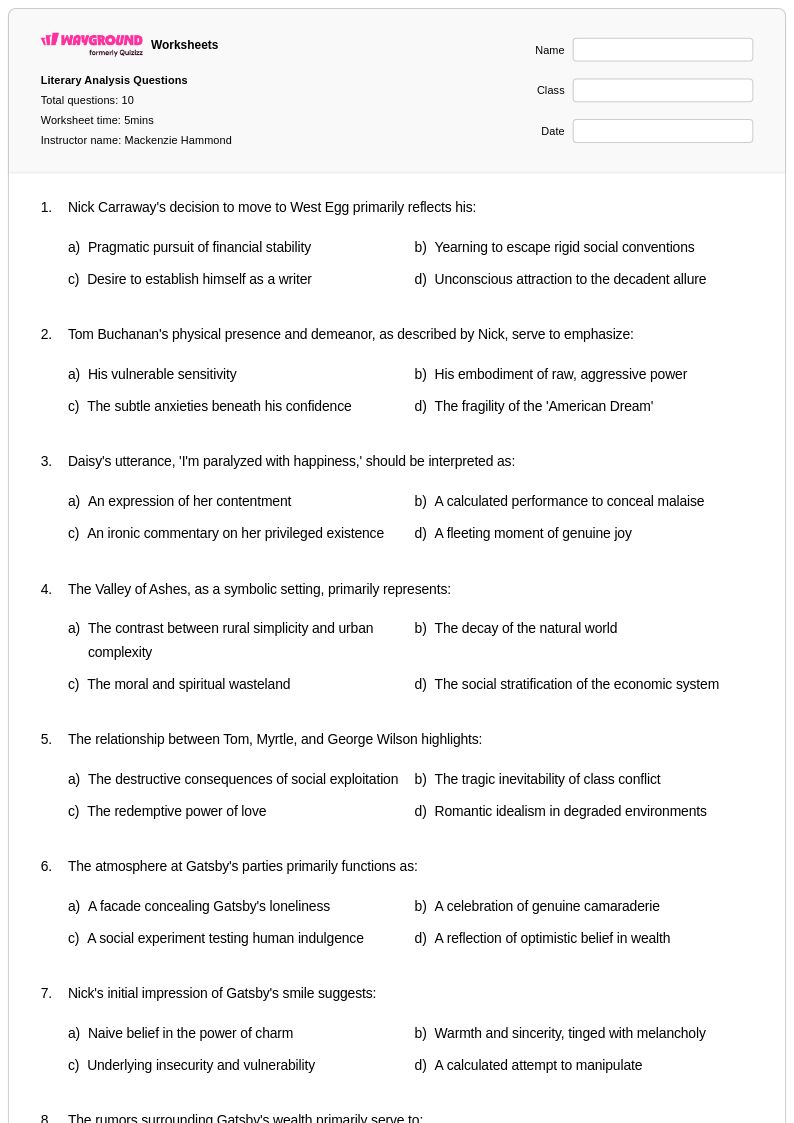
10 Q
10th - Uni
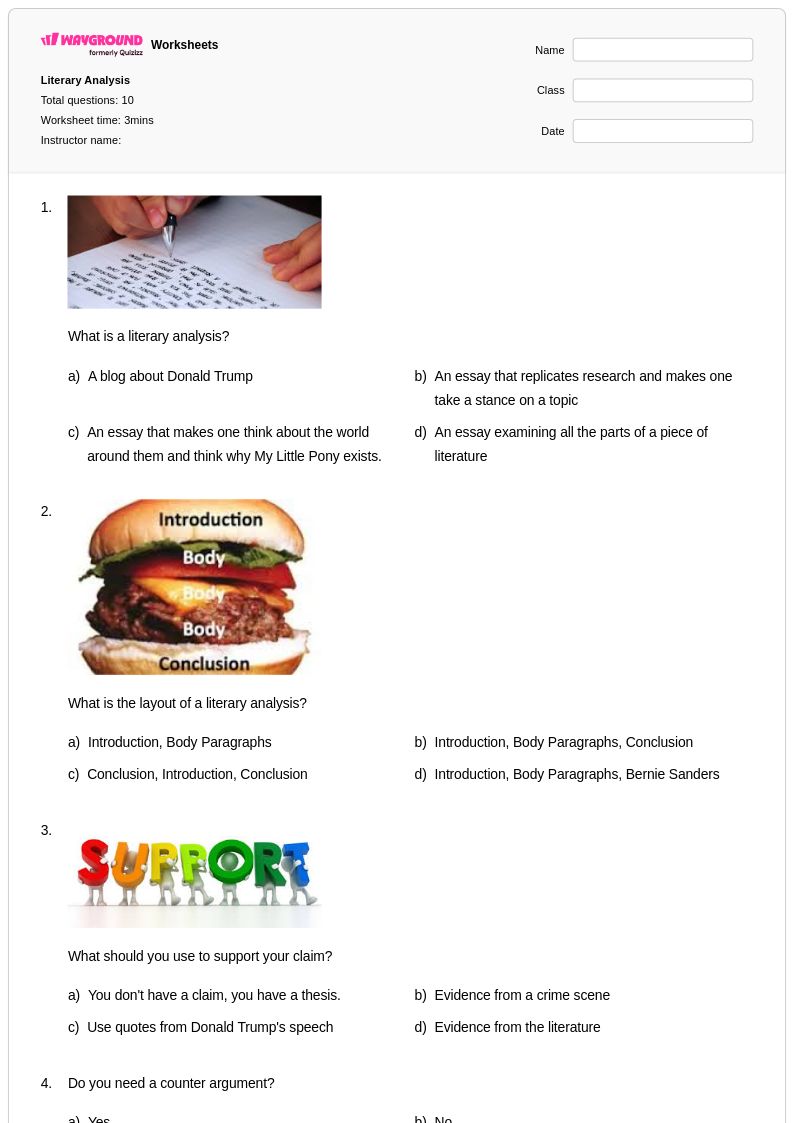
10 Q
4th - 12th
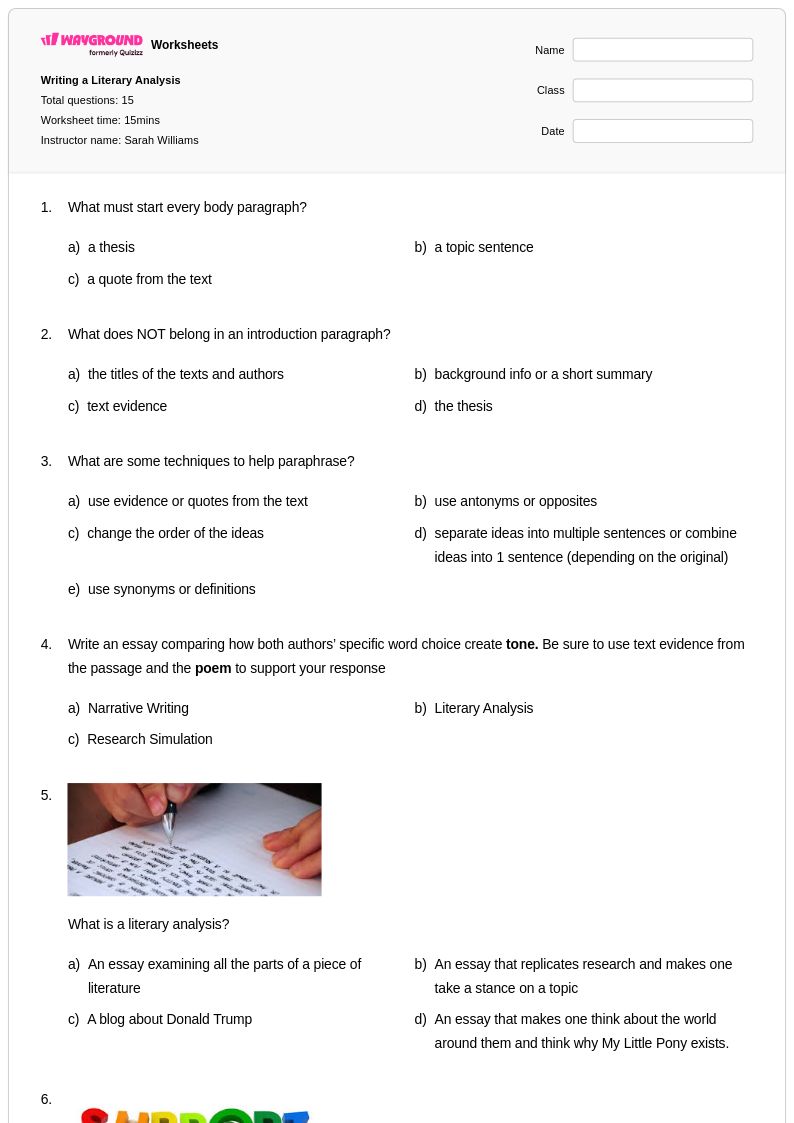
15 Q
6th - Uni
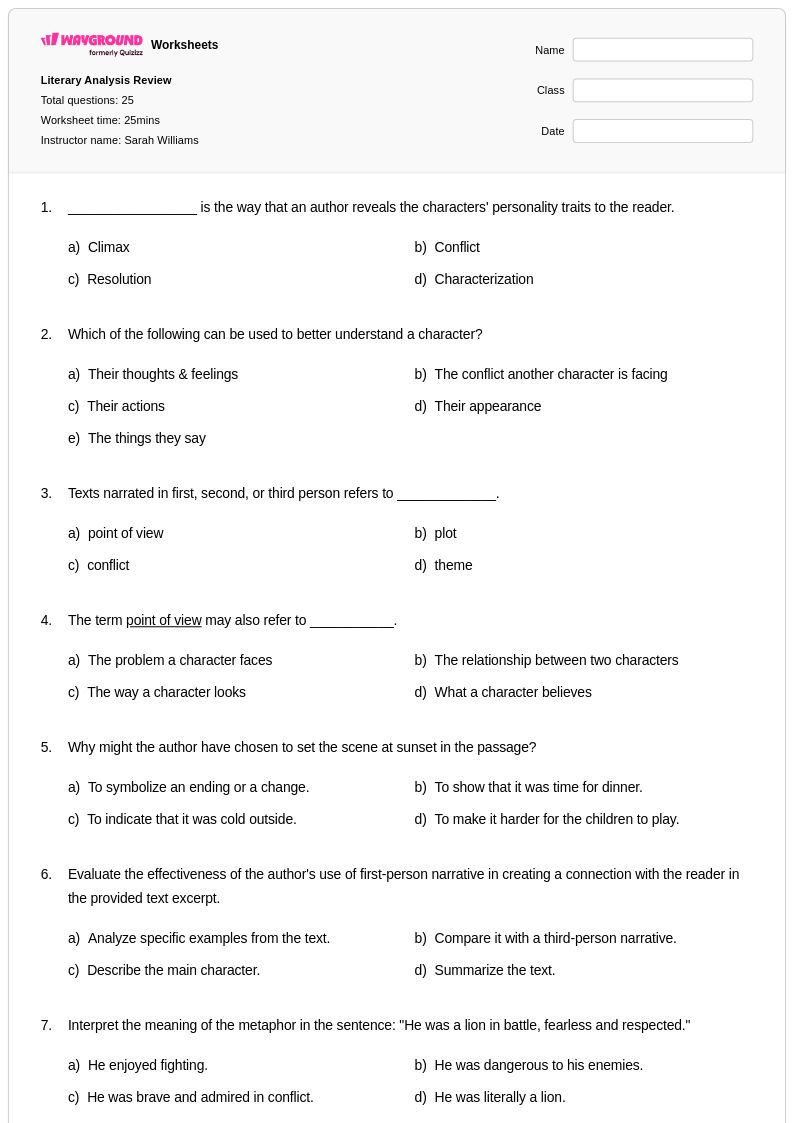
25 Q
6th - Uni
25 Q
8th - Uni
25 Q
7th - Uni
10 Q
9th - Uni
18 Q
10th - Uni
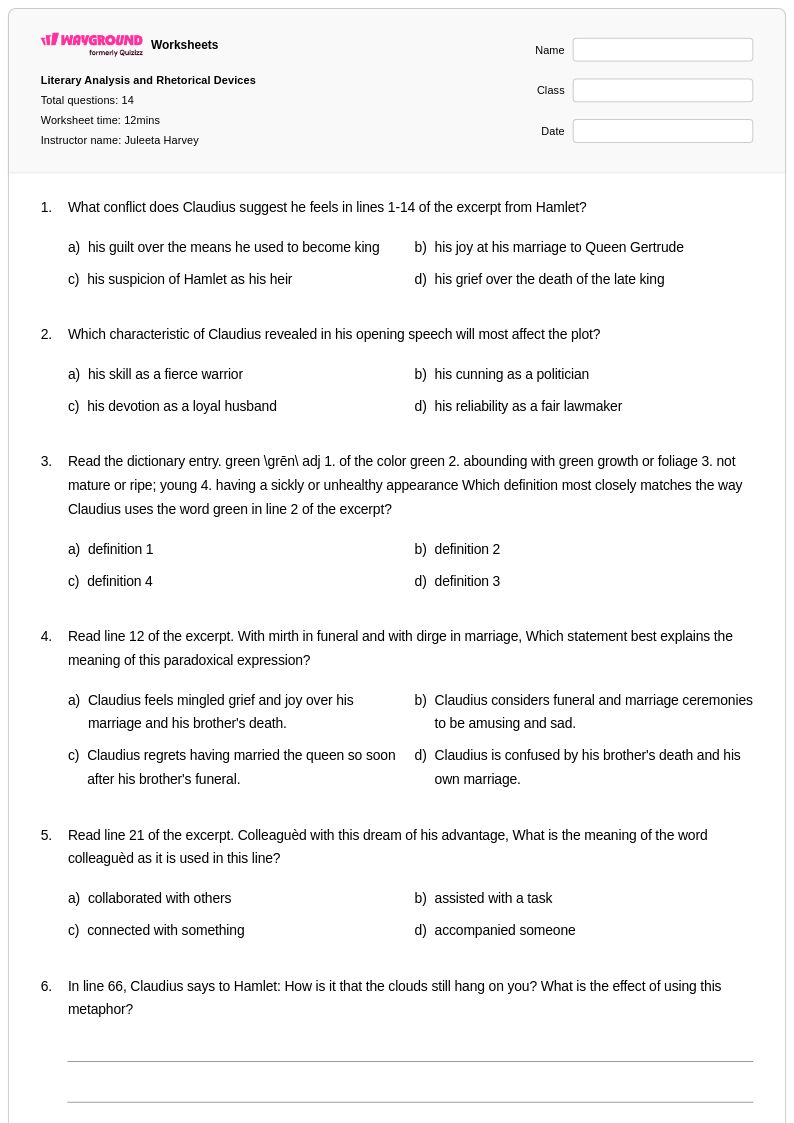
14 Q
12th
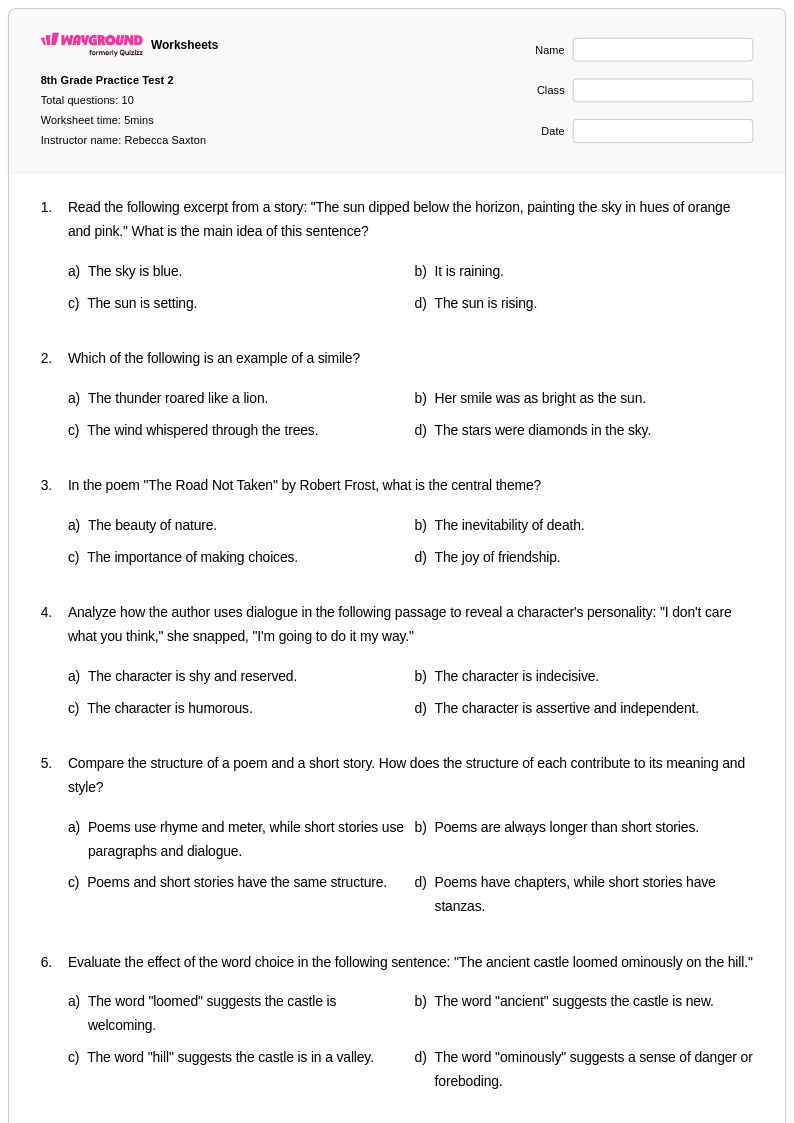
10 Q
8th - Uni
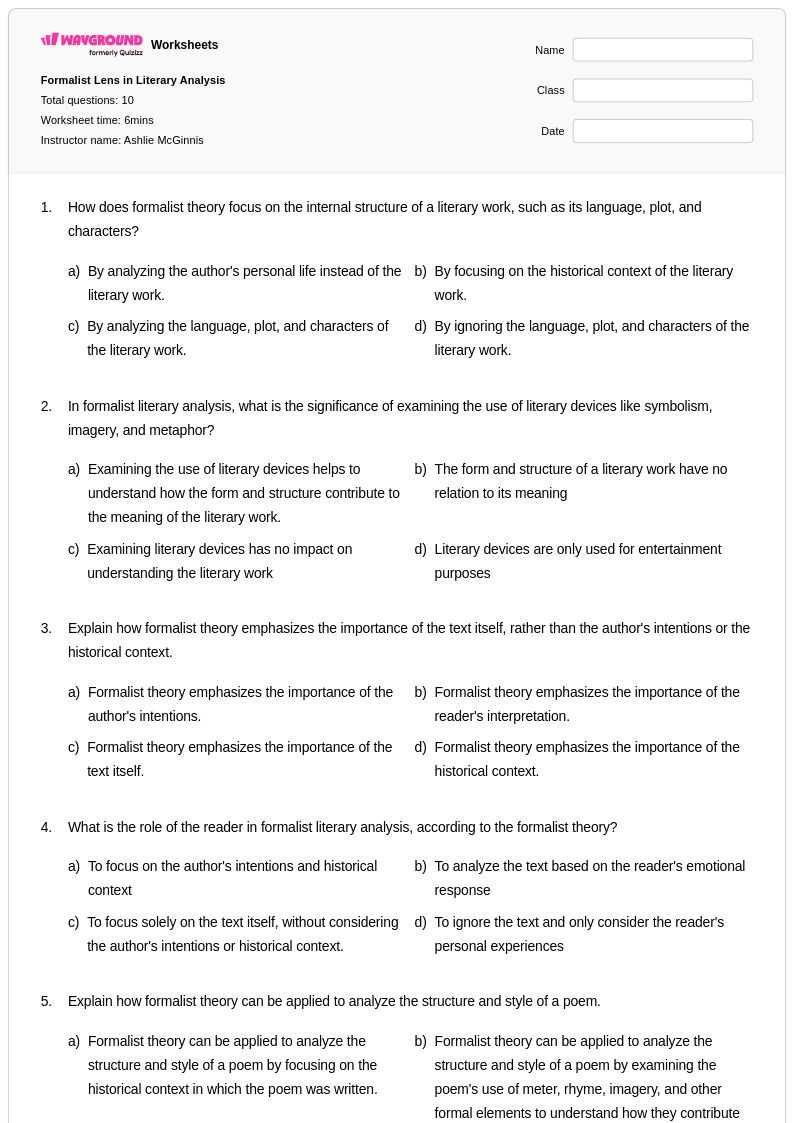
10 Q
12th
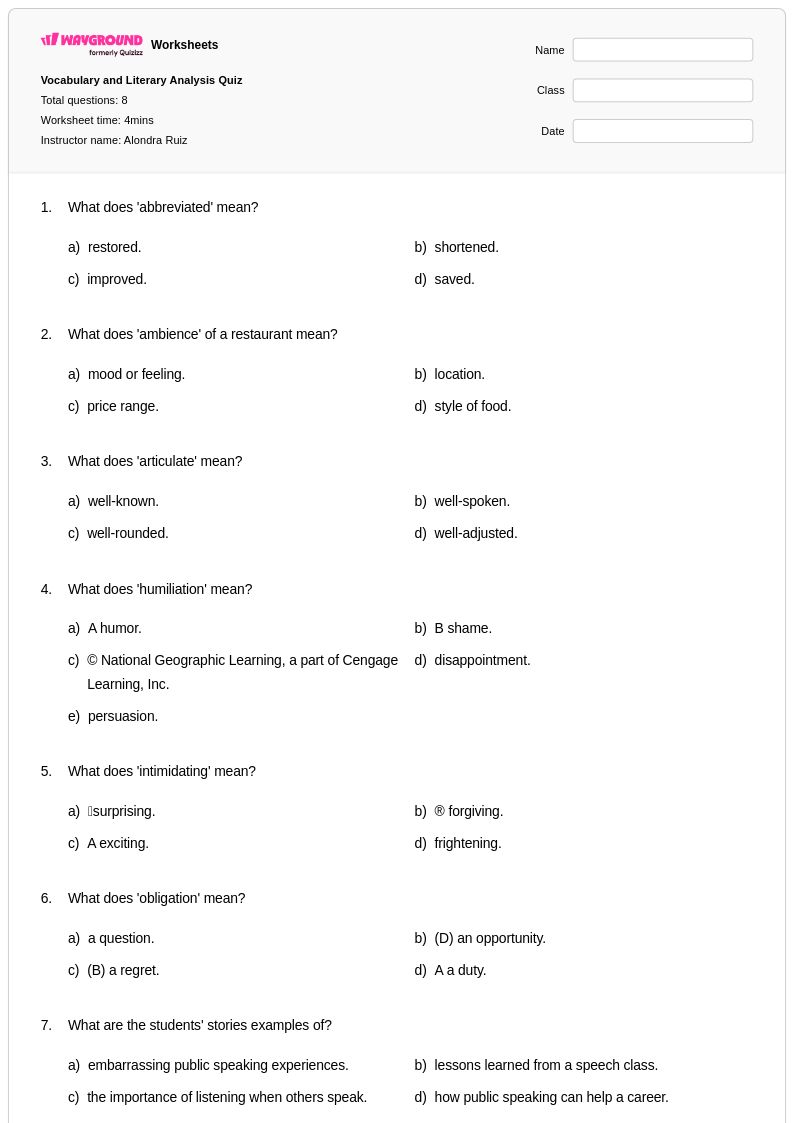
8 Q
12th
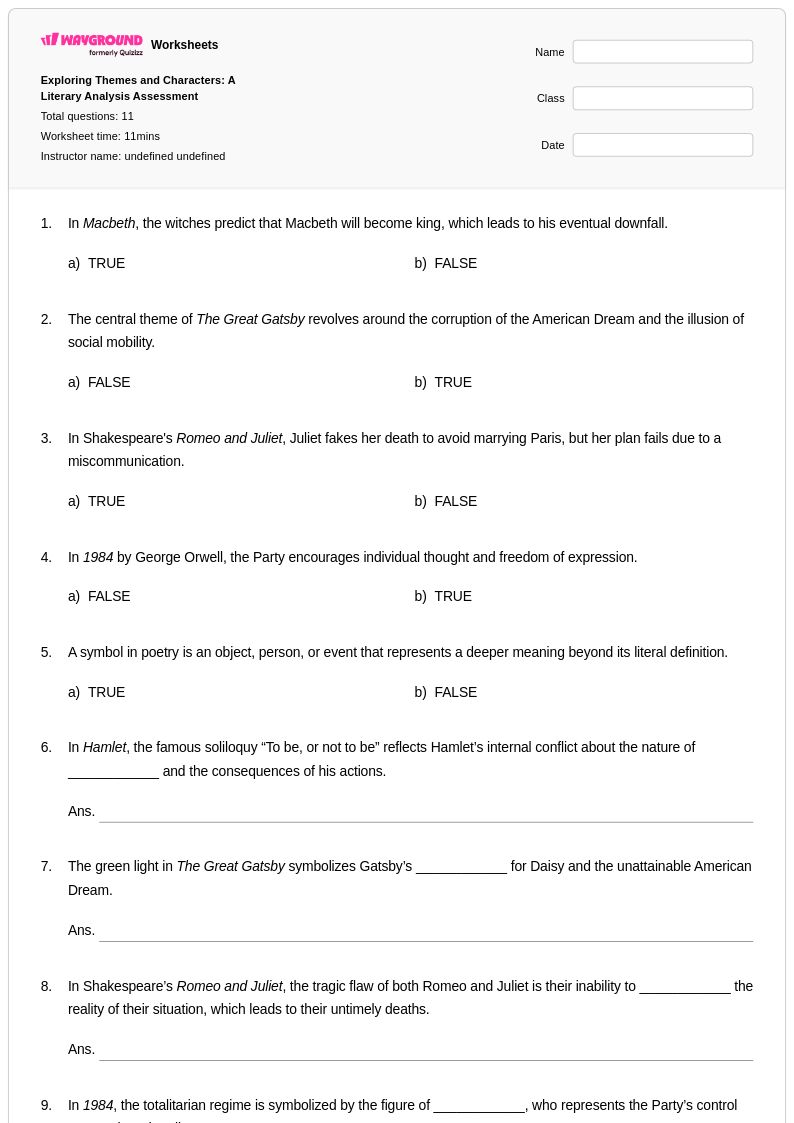
11 Q
12th
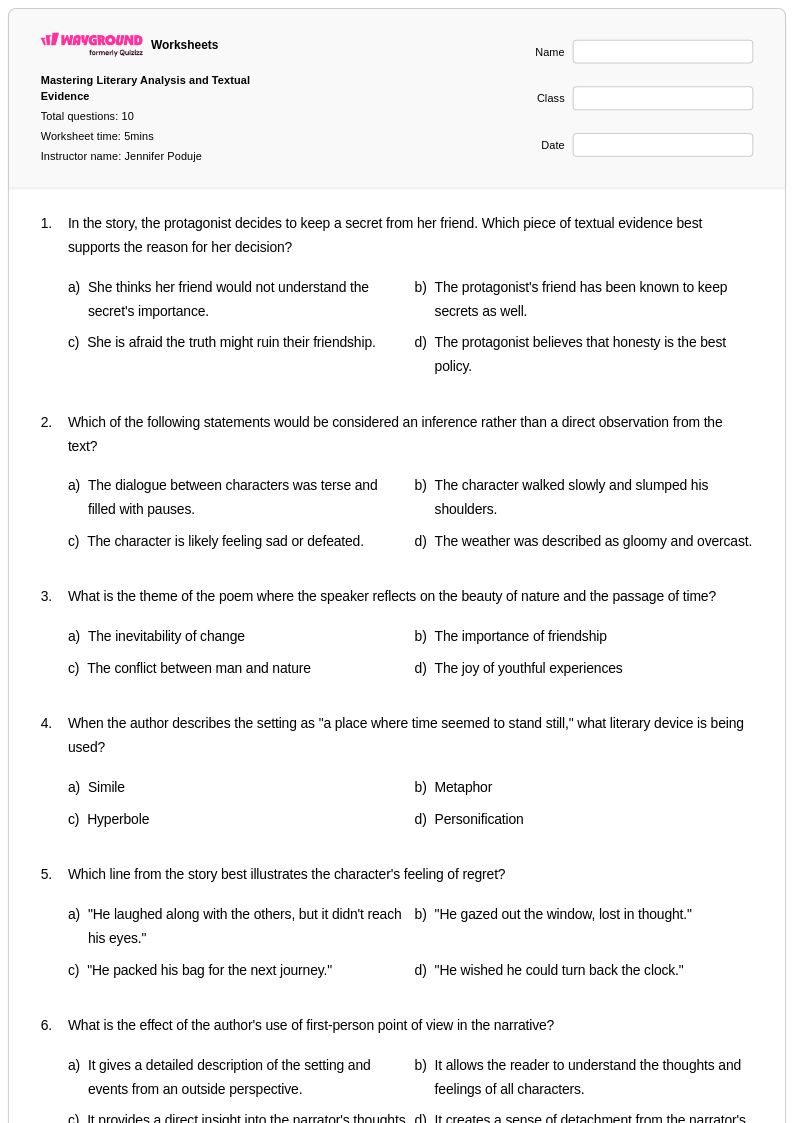
10 Q
7th - Uni
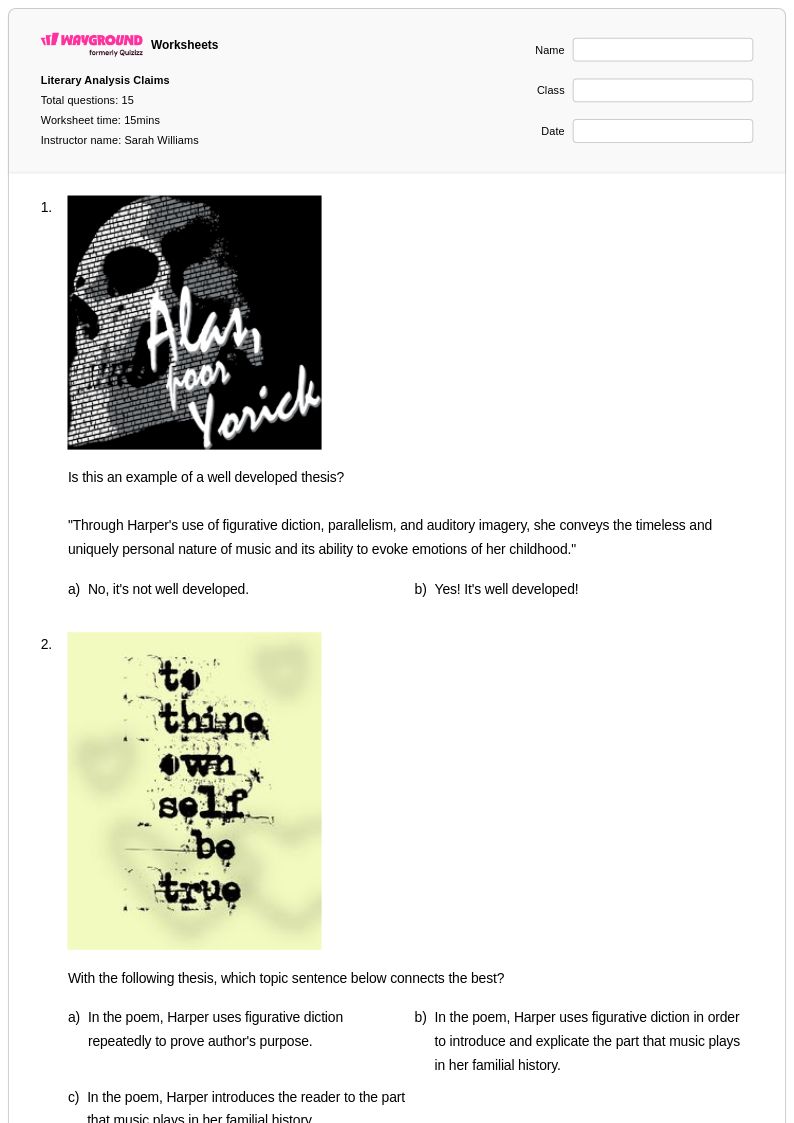
15 Q
10th - Uni
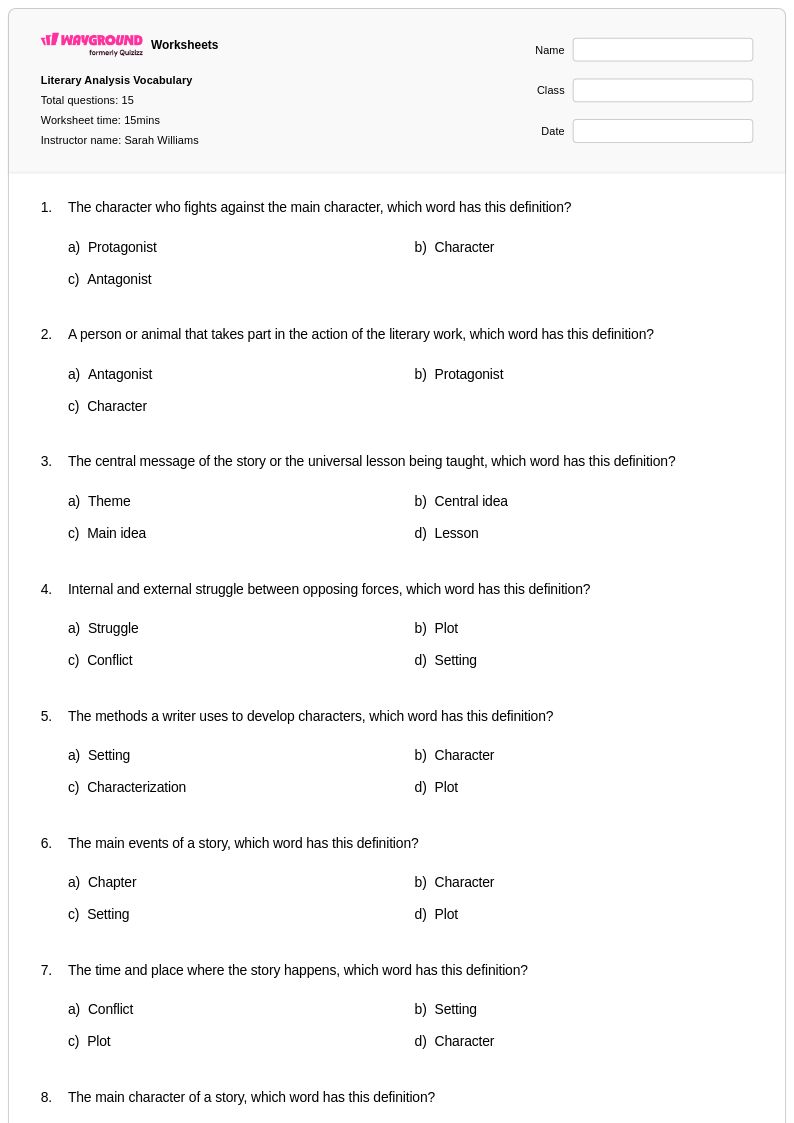
15 Q
7th - Uni
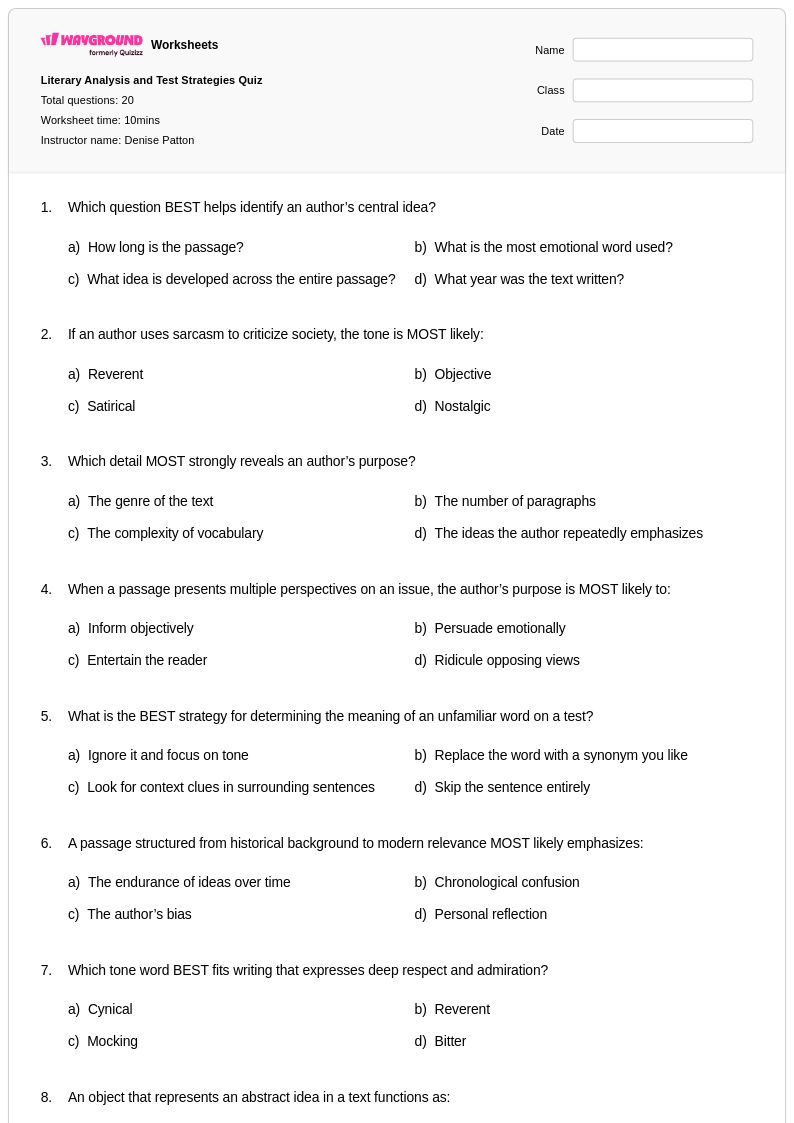
20 Q
12th - Uni
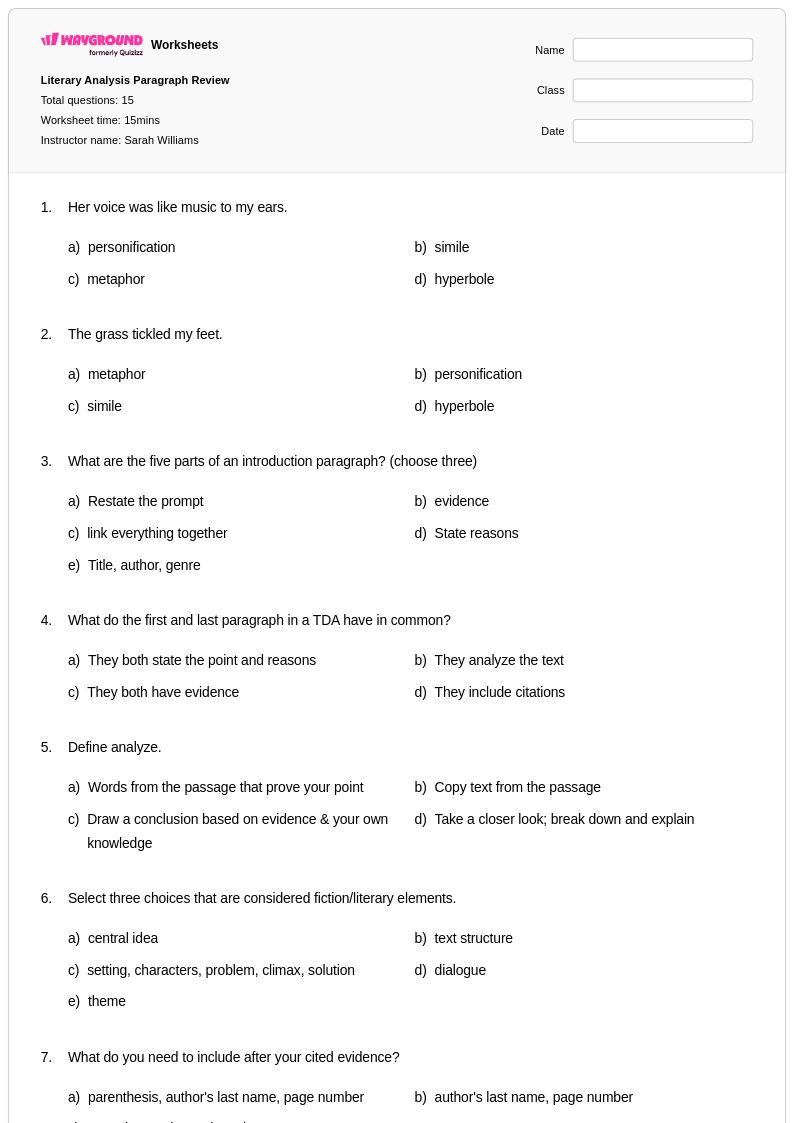
15 Q
6th - Uni
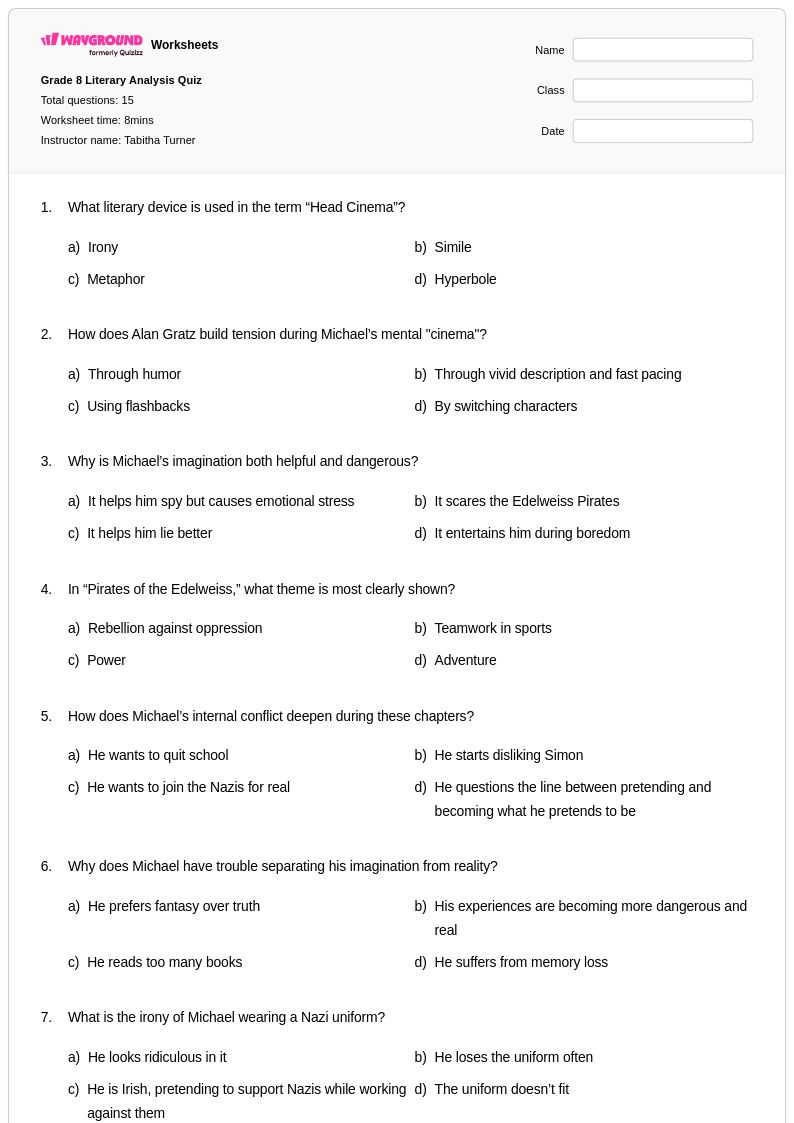
15 Q
8th - Uni
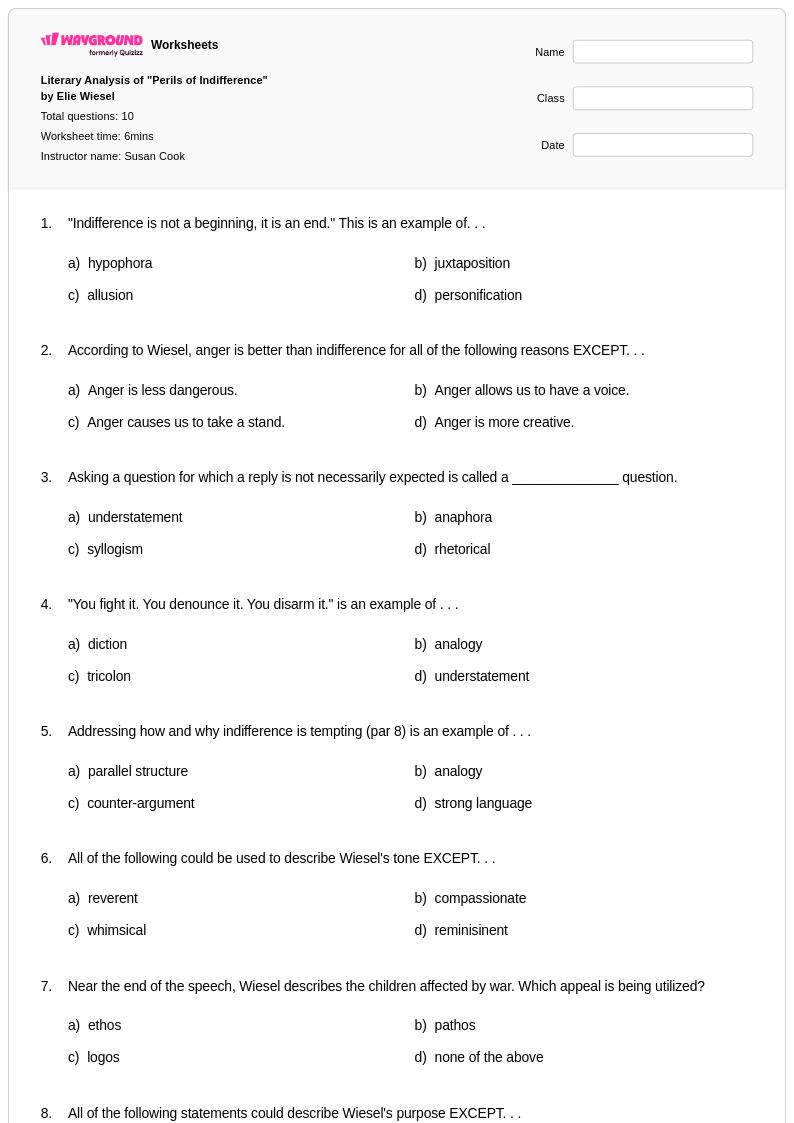
10 Q
8th - Uni
Explore Other Subject Worksheets for grade 12
Explore printable Literary Analysis worksheets for Grade 12
Grade 12 literary analysis worksheets available through Wayground (formerly Quizizz) provide advanced students with sophisticated practice in examining and interpreting complex literary works across multiple reading genres and types. These comprehensive resources strengthen critical thinking skills essential for college-level English coursework, including close reading techniques, thematic analysis, character development evaluation, and textual evidence identification. Students engage with challenging practice problems that require them to analyze narrative structure, literary devices, authorial intent, and cultural contexts within novels, poetry, drama, and contemporary literature. Each worksheet collection includes detailed answer keys that support independent learning and self-assessment, while printable pdf formats ensure accessibility for both classroom instruction and homework assignments. These free resources emphasize the development of analytical writing skills, requiring students to construct well-supported arguments about literary meaning and significance.
Wayground (formerly Quizizz) supports English educators with an extensive library of millions of teacher-created literary analysis resources specifically designed for Grade 12 reading genres and types instruction. The platform's robust search and filtering capabilities enable teachers to quickly locate worksheets aligned with specific literary works, analytical frameworks, and curriculum standards, streamlining lesson planning and instructional preparation. Advanced differentiation tools allow educators to customize worksheet difficulty levels and modify practice problems to accommodate diverse learning needs, supporting both remediation for struggling readers and enrichment opportunities for advanced literary scholars. The collection's availability in both printable and digital formats, including downloadable pdf versions, provides flexibility for various instructional models while maintaining consistent quality across all materials. These comprehensive resources facilitate targeted skill practice in literary interpretation, enabling teachers to assess student progress in critical analysis and provide focused support for college readiness in English literature studies.
FAQs
How do I teach literary analysis to students who struggle with reading comprehension?
What are the key literary elements students need to know for literary analysis?
What exercises help students practice literary analysis skills?
What mistakes do students commonly make when analyzing literature?
How can I differentiate literary analysis instruction for advanced and struggling readers in the same class?
How do I use Wayground's literary analysis worksheets in my classroom?