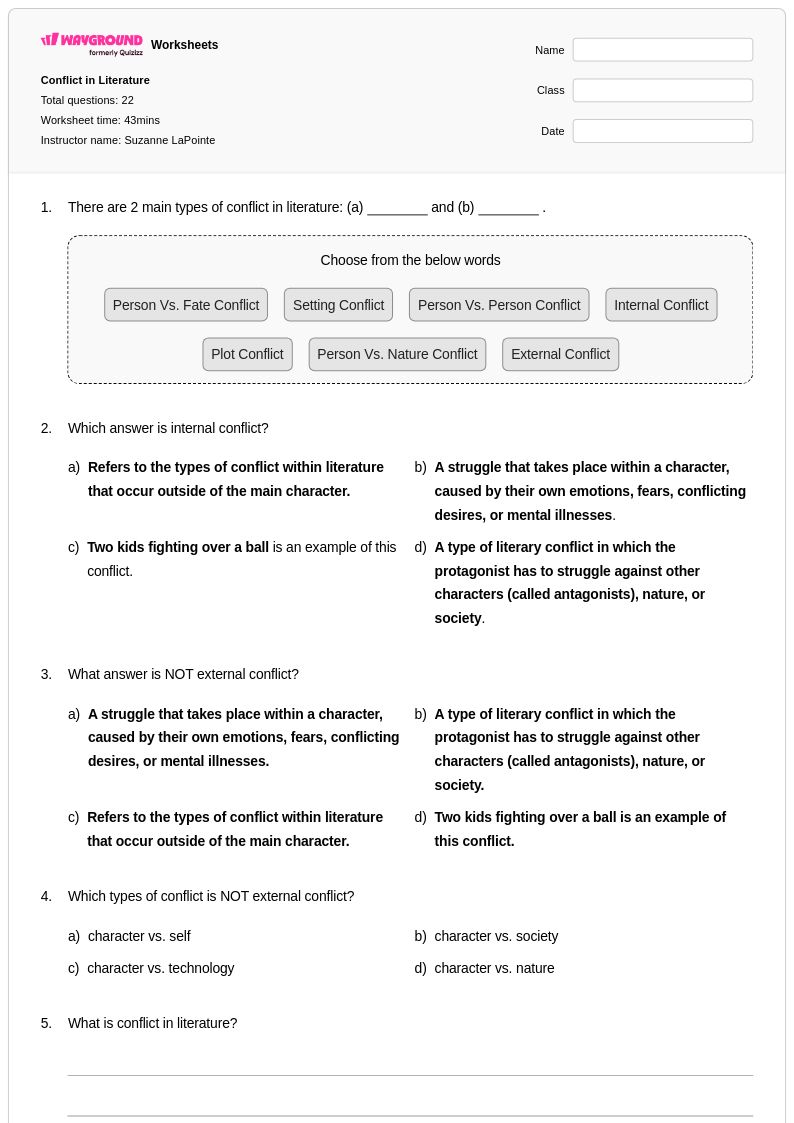
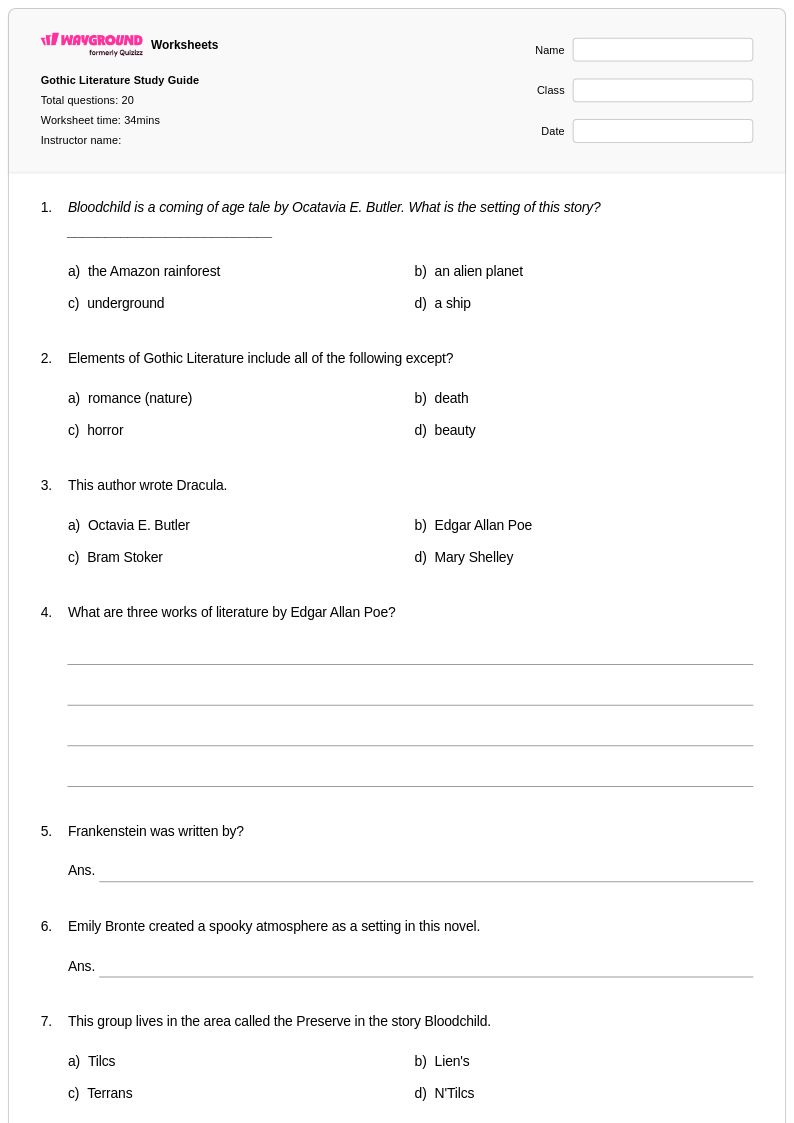
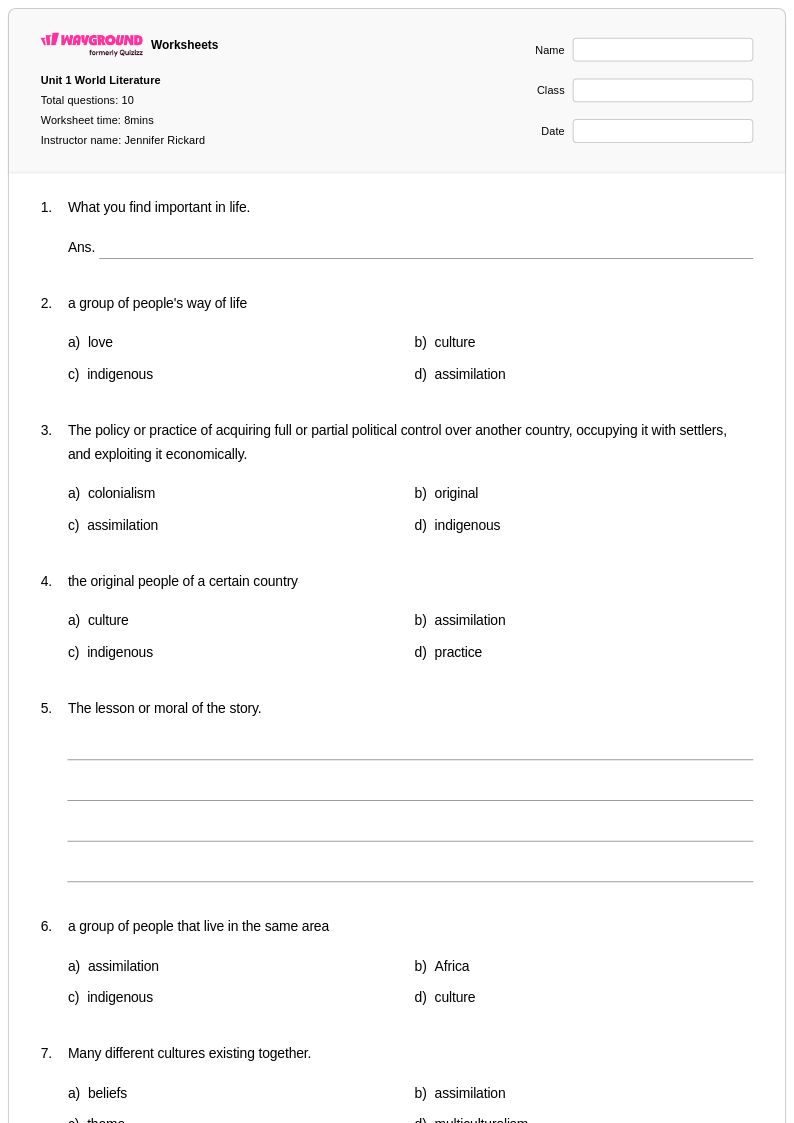
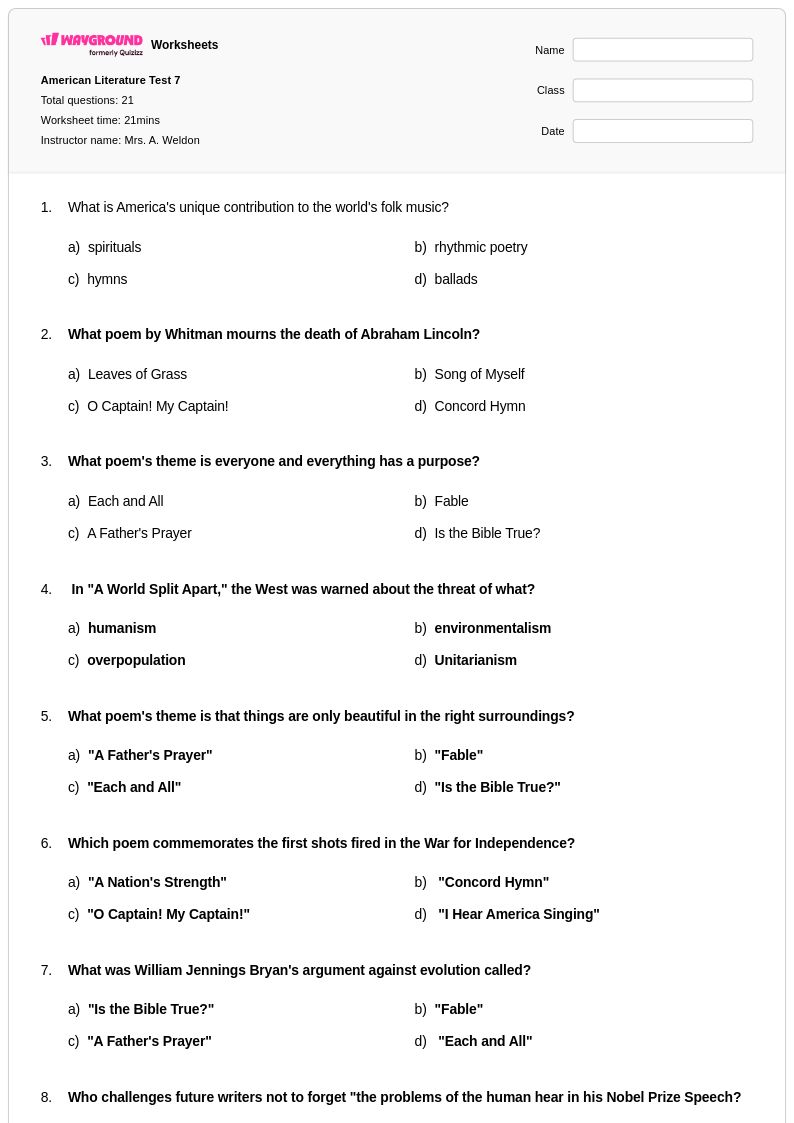
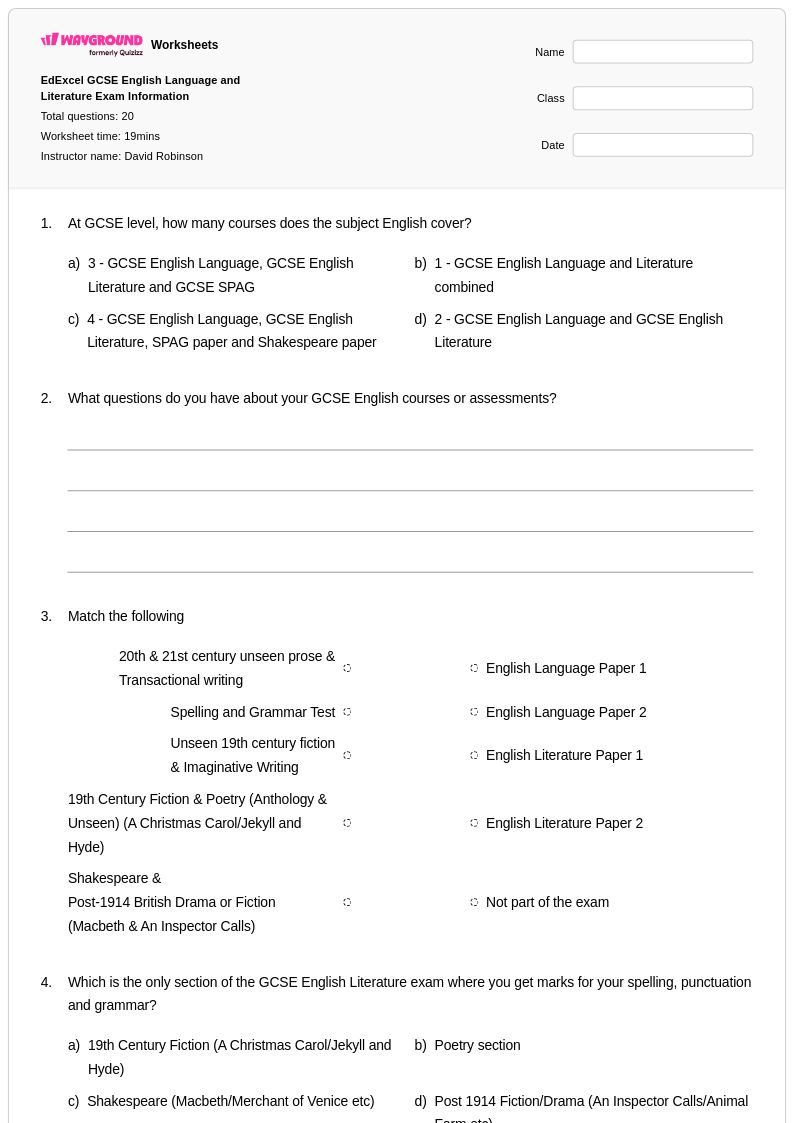
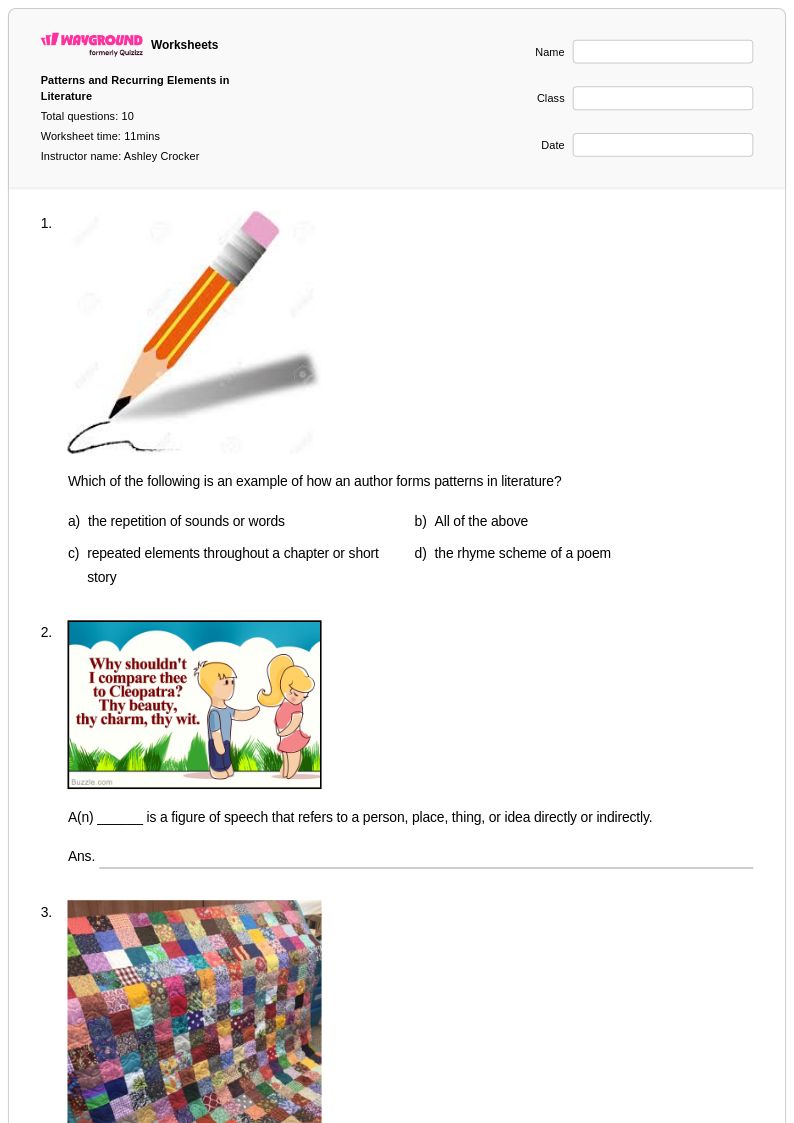
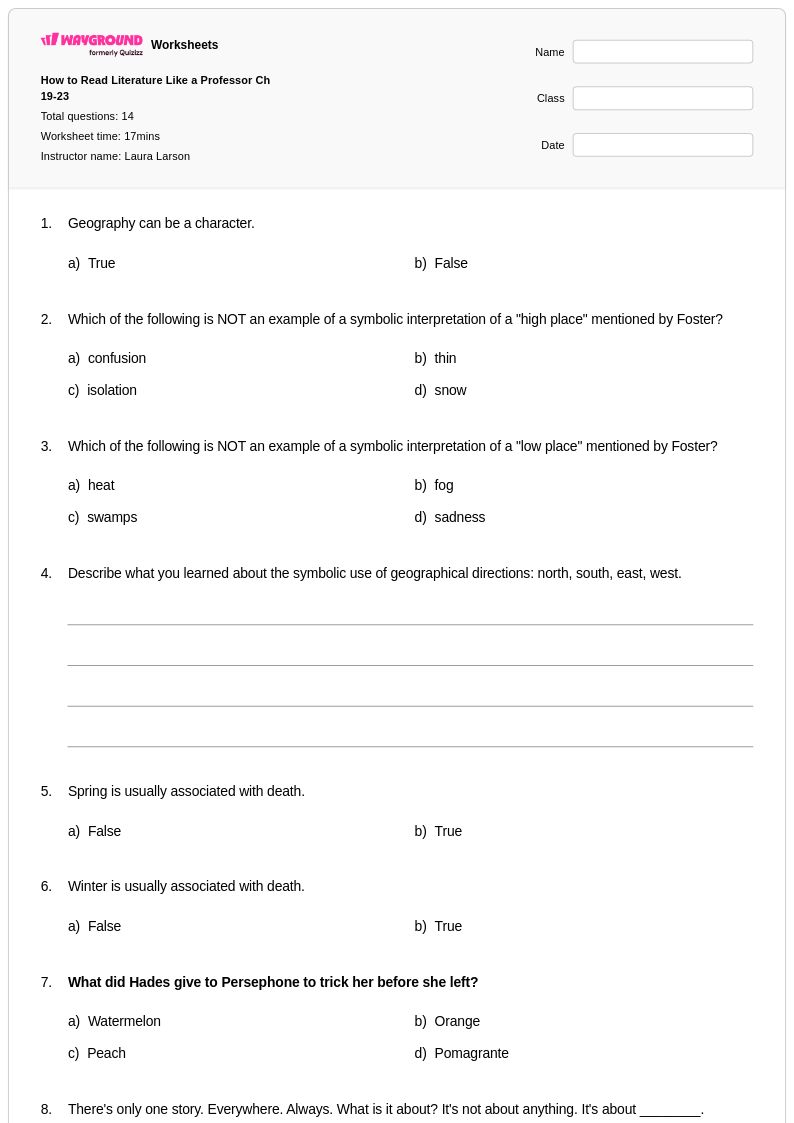
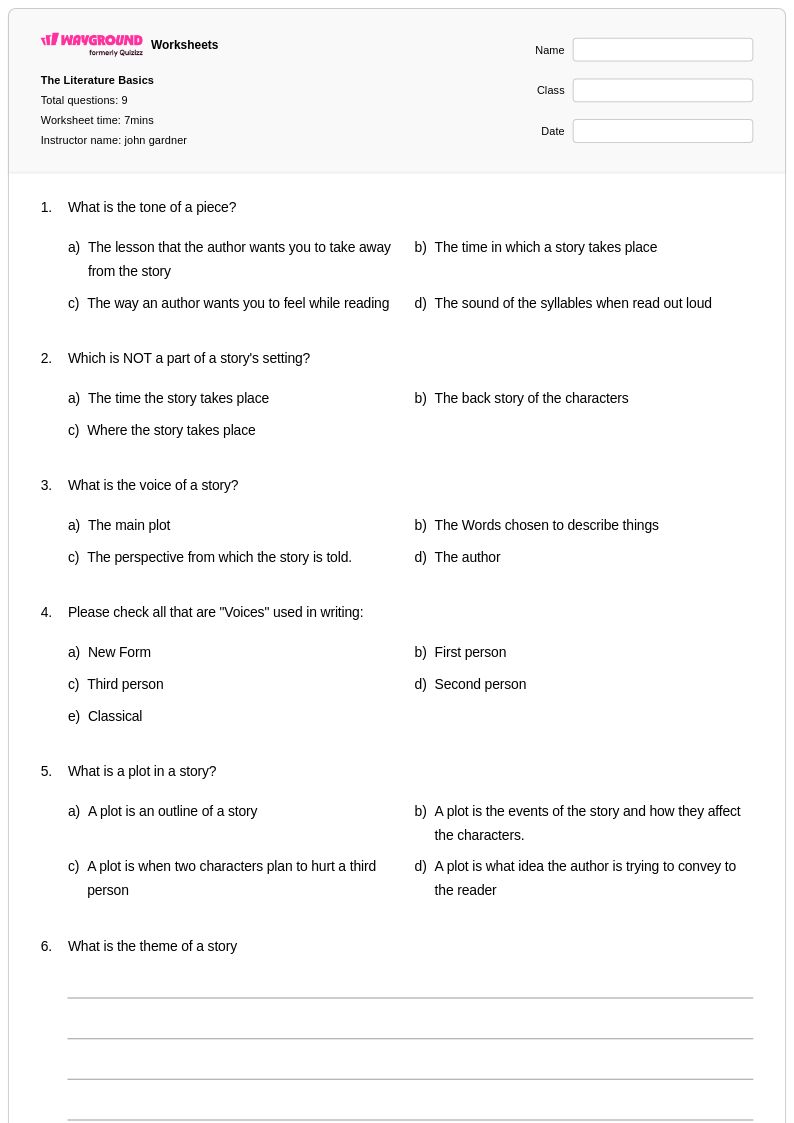
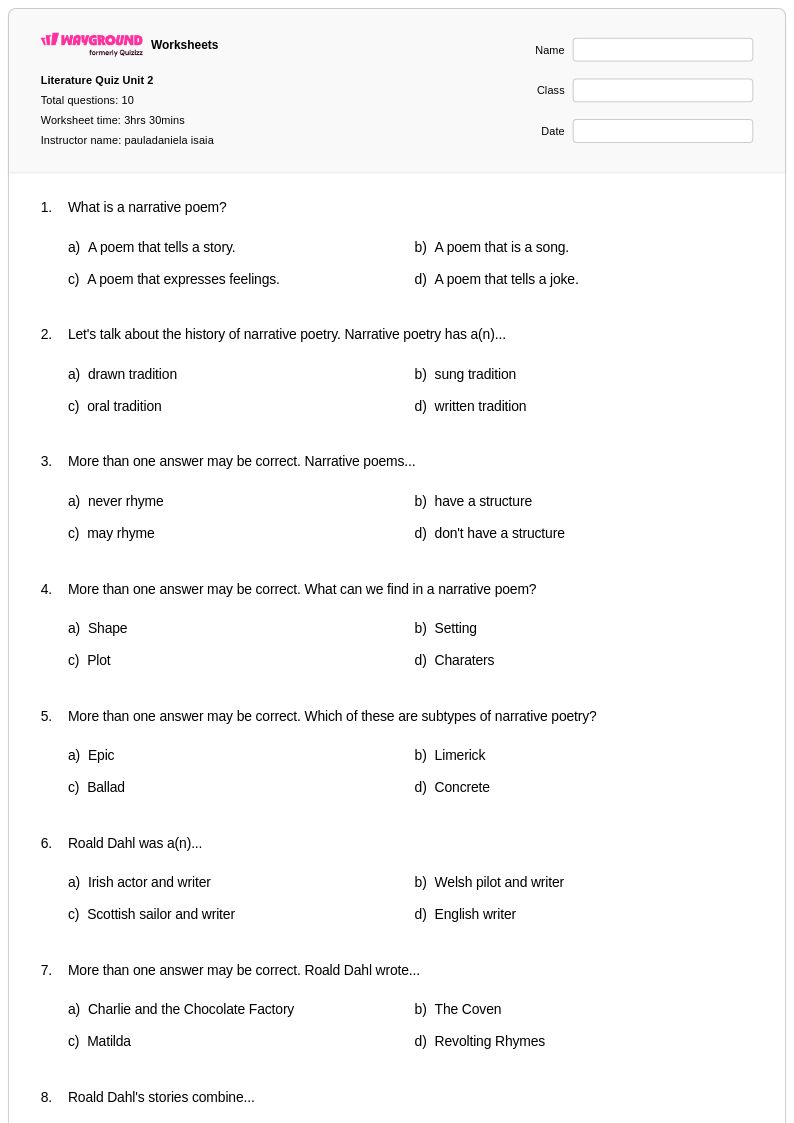
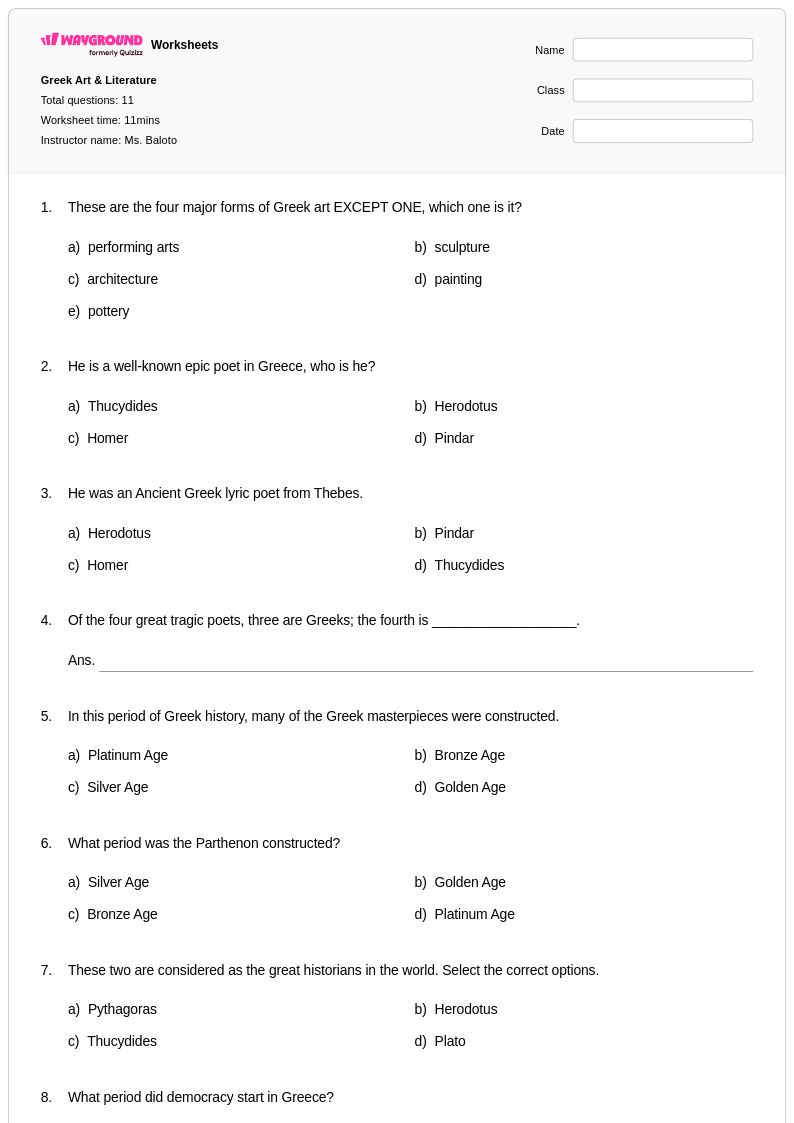
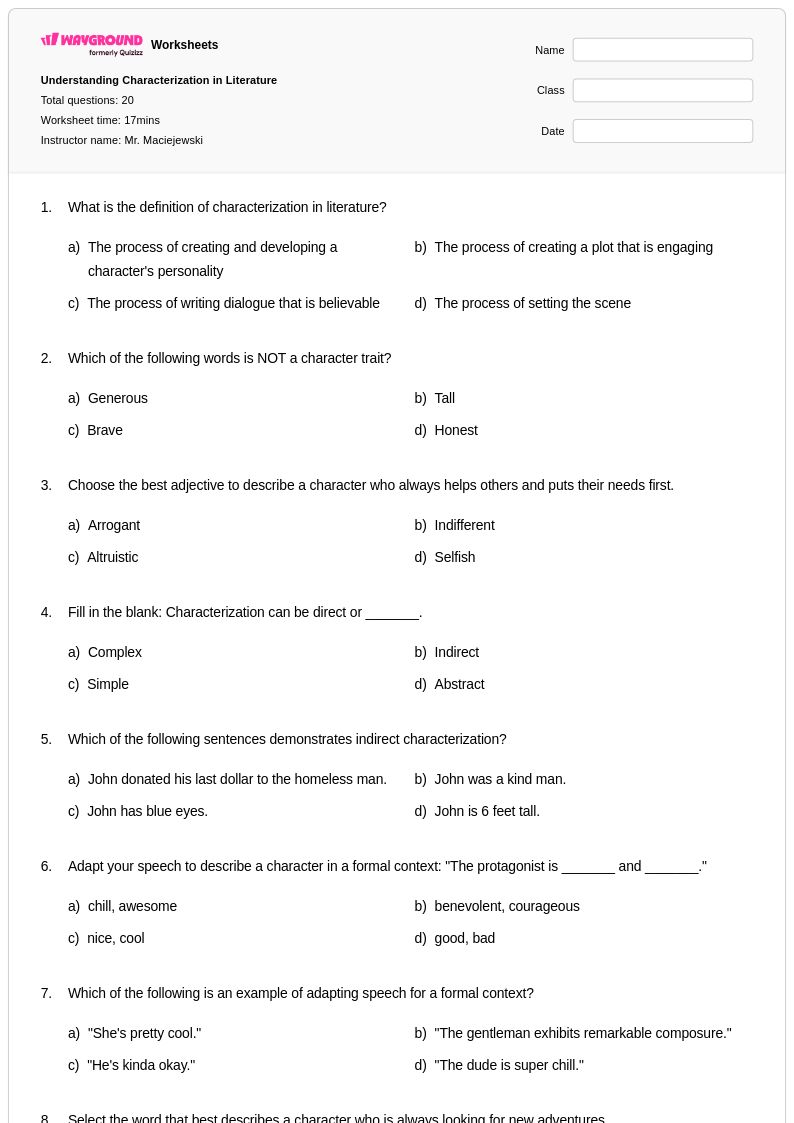
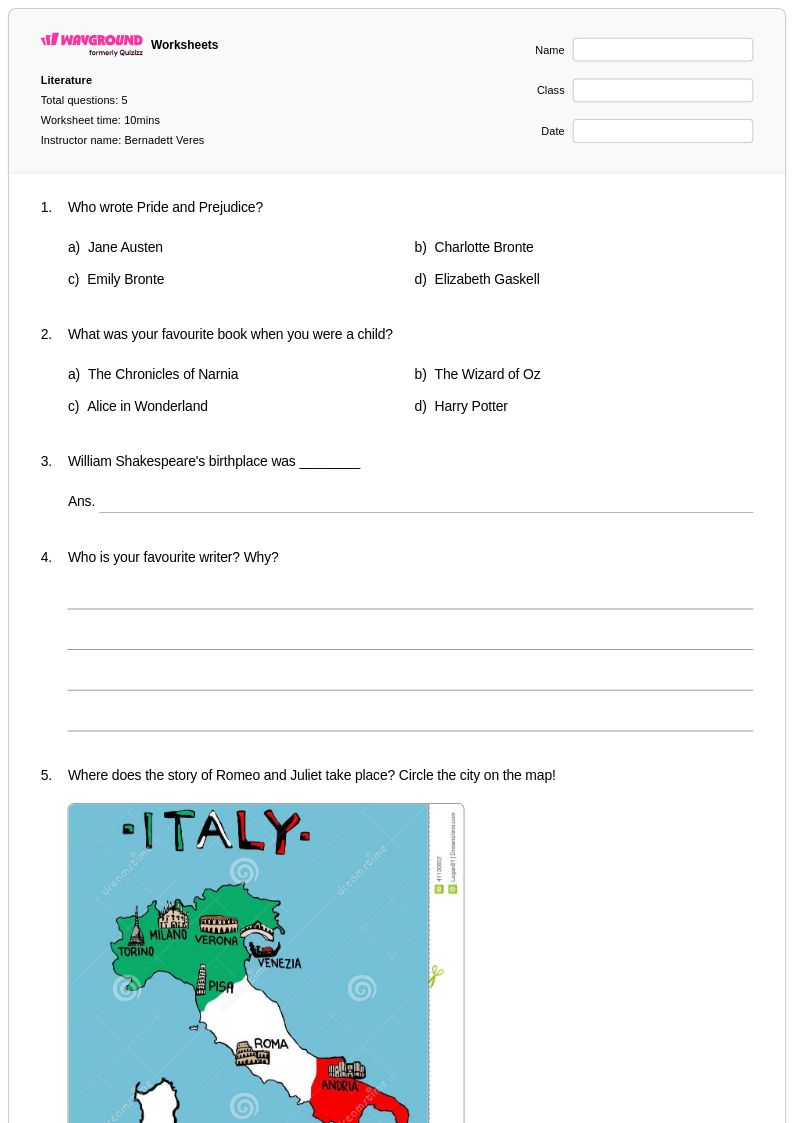
Explore Grade 9 literature worksheets and printables that help students analyze classic and contemporary literary works through engaging practice problems, free PDF resources, and comprehensive answer keys.
Explore printable Literature worksheets for Grade 9
Grade 9 literature worksheets available through Wayground (formerly Quizizz) provide comprehensive coverage of essential literary concepts, from analyzing character development and thematic elements to exploring narrative techniques and literary devices. These expertly designed resources strengthen critical reading skills by guiding students through close textual analysis, interpretation of symbolism, and examination of author's craft across various literary works including novels, short stories, poetry, and drama. Each worksheet collection includes detailed answer keys and practice problems that help students develop sophisticated analytical thinking, while printable pdf formats ensure easy classroom distribution and independent study opportunities for comprehensive literature comprehension.
Wayground (formerly Quizizz) empowers educators with millions of teacher-created literature resources that feature robust search and filtering capabilities, allowing instructors to locate materials perfectly aligned with curriculum standards and specific learning objectives. The platform's differentiation tools enable teachers to customize worksheets for varying skill levels within Grade 9 classrooms, supporting both remediation for struggling readers and enrichment activities for advanced literary scholars. Available in both printable pdf and interactive digital formats, these literature worksheet collections streamline lesson planning while providing flexible options for skill practice, formative assessment, and targeted intervention strategies that enhance students' appreciation and understanding of complex literary texts.
FAQs
How do I teach literary elements like theme, character, and symbolism in middle and high school?
Teaching literary elements effectively requires grounding abstract concepts in specific texts students are already reading. Start with character development by tracing how a character changes across key plot moments, then layer in theme by asking students what those changes reveal about human experience. Once students can identify these elements in one text, symbolism becomes easier to teach because students already have a framework for reading beneath the surface. Using structured worksheets tied to specific works — such as Lord of the Flies, The Outsiders, or Macbeth — gives students repeated, contextualized practice rather than isolated skill drills.
What are good worksheet activities for analyzing literature in high school English?
Effective literature worksheet activities at the high school level include close reading exercises that ask students to annotate passages for tone, diction, and figurative language, as well as character analysis charts that track motivation and conflict across a full text. Thematic comparison tasks — where students connect a theme from one work to another — build the synthesis skills required for essay writing. For texts like Frankenstein, Fahrenheit 451, or The Crucible, worksheets that prompt students to connect literary themes to historical or social context deepen critical thinking beyond plot-level comprehension.
What mistakes do students commonly make when analyzing literature?
The most common mistake students make is summarizing plot instead of analyzing meaning — restating what happened rather than explaining why it matters. A related error is treating theme as a one-word topic (e.g., 'friendship') instead of a complete arguable statement about human experience. Students also frequently misattribute tone to the characters rather than the author, and they struggle to distinguish between a symbol and a literal object unless they've had repeated practice identifying authorial intent. Worksheets that require textual evidence for every analytical claim help break the summarizing habit early.
How do I use literature worksheets to support students who struggle with reading comprehension?
For struggling readers, the most effective worksheet approach breaks a complex text into smaller, guided chunks with scaffolded questions that move from literal recall to inferential analysis. Graphic organizers for character traits or plot structure reduce cognitive load while still building analytical habits. On Wayground, teachers can enable the Read Aloud accommodation so students hear questions and content read to them, and reduced answer choices can be applied for individual students to make multiple-choice questions more accessible — all without signaling those accommodations to the rest of the class.
How can I use Wayground's literature worksheets in my classroom?
Wayground's literature worksheets are available as printable PDFs for traditional classroom use and in digital formats for tech-integrated or hybrid environments, making them flexible across instructional settings. Teachers can assign them as independent practice, small group work, or whole-class review activities. Digital versions can be hosted as a quiz directly on Wayground, which allows for immediate feedback and built-in differentiation tools. Worksheets span a wide range of canonical and contemporary texts — including Shakespeare, The Odyssey, Animal Farm, and Ghost by Jason Reynolds — so they can be matched to whatever your curriculum requires.
How do I teach students to write about literature using textual evidence?
Teaching evidence-based literary analysis starts with modeling the claim-evidence-reasoning structure explicitly and repeatedly. Students need to see that a quotation alone does not constitute analysis — they must explain how the specific word choices or literary technique in that passage support a larger interpretive claim. Structured worksheets that prompt students to write a claim, select a quote, and then explain the connection in two to three sentences are one of the most effective tools for building this habit. Practicing with shorter passages from works like Edgar Allan Poe or Langston Hughes before moving to full-length novels reduces overwhelm and keeps the focus on the writing skill itself.
What's the best way to assess student understanding of a literary text without just testing plot recall?
Assessments that go beyond plot recall ask students to explain the function of a literary choice — why the author structured a scene a certain way, what effect a metaphor creates, or how a character's internal conflict reflects the text's central theme. Short-answer questions tied to specific passages are more diagnostic than multiple choice alone because they reveal whether students can construct meaning, not just recognize it. For texts like The Crucible or Lord of the Flies, pairing a passage-based analysis question with a broader thematic prompt gives teachers a complete picture of both close reading and big-picture comprehension.